






Abstract
To address the growing complexity and stochastic behavior of modern power grids, a comprehensive strategy is proposed in this research to enhance the performance of a large-scale transmission network connected to a hybrid conventional and renewable generator system. While various methods have been applied to the Optimal Power Flow (OPF) problem, few effectively balance economic, technical, and environmental constraints under high-penetration renewable scenarios. This paper introduces a novel application of Circulatory System-Based Optimization (CSBO) on the adjusted IEEE 30 and 57 bus frameworks, with three scenarios taken into consideration for each system, starting with the minimization of the overall generation costs, followed by the reduction of the real power outages, and lastly, the minimization of generation costs including pollution effects. The proposed algorithm is compared alongside Mountain Gazelle Optimization (MGO), Artificial Rabbits Optimization (ARO), and Dwarf Mongoose Optimization Algorithm (DMOA), besides other algorithms highlighted in previous studies. The outcomes demonstrate the efficacy and superiority of the suggested CSBO algorithm over competing methods in terms of quality-feasible solutions and computational time required. For instance, the total generation costs were minimized to $787.359/h for IEEE 30-bus with a CPU time of 295.375 s, which translates to an 11% time frame reduction in comparison to MGO. Nevertheless, each metaheuristic technique presents distinct advantages in OPF with the presence of renewables: DMOA excels in broad search capability, MGO balances exploration with exploitation, ARO attains a fast convergence rate, and CSBO gives high precision and offers low computational time, making these algorithms vital for managing the uncertainties of Renewable Energy Resources (RERs).
Keywords
Introduction
Motivation
The share of RERs in the energy mix has increased exponentially in recent years due to massive investments pouring into this sector and backed by government policies that aim to overcome our dependence on fossil fuels, safeguard the environment and public health, and ensure the security of supply and energy independence (Fellahi et al., 2024). Conventional power networks are dominated by thermal plants as the primary source of energy, and despite being a stable source of electricity, they release harmful emissions that contribute significantly to rising global temperatures and shifts in climate patterns, which leads to severe weather phenomena and intense heat conditions, flash floods, cyclones, and tornadoes, causing devastating damage economically and loss of lives. On the other hand, renewables hold the advantage of being clean, sustainable, and eco-friendly, but they are also unstable, unpredictable, and difficult to monitor (Syama et al., 2024), which may lead to interruptions in the electricity supply. An example regarding this matter is the unprecedented power outage that occurred across the Iberian Peninsula on April 28, 2025, and lasted for a couple of hours. While analysts suggested that the blackout was triggered by a voltage surge followed by a series of disconnections that shut down the entire grid. The official investigation has yet to conclude the root cause of the blackout. This incident exposed the vulnerability of electrical networks to withstand high penetration of solar and wind; it also represents an opportunity to upgrade the transmission infrastructure to accommodate the fluctuations of RERs and improve the grid’s stability and resilience (Goiana-da-Silva et al., 2025).
The intermittent nature of RERs was and still is the main obstacle preventing a worldwide radical shift towards renewables. To solve this problem, OPF is an essential aspect that needs to be addressed. It is utilized to enhance the grid’s power flow by reducing designated target functions while ensuring satisfactory power system performance. The integration of stochastic renewable sources into traditional grids significantly complicates the OPF problem, requiring a switch from traditional calculus-based methods to more robust metaheuristic approaches that can handle non-linear constraints to increase the contribution of wind, solar, and other renewable sources while also balancing the supply and demand and lowering the electricity bill (Fellahi et al., 2025). Researchers have been using classical methods for quite some time to tackle real-world optimization problems. These traditional techniques have fallen short against large and complicated situations, so scientists shifted their focus towards metaheuristic algorithms as an effective tool to identify near-optimal solutions in complex and intractable problems during a short period of time. These new heuristics are nature-inspired and can be effectively implemented in various domains and fields, including power system optimization and stochastic renewable energy integration into high-voltage transmission lines (Dokeroglu et al., 2019).
Related investigation
Recent studies conducted on OPF optimization were predominantly based on metaheuristic algorithms with thermal, wind, and solar as the common sources; for instance, Bird Swarm Algorithm (BSA) is proposed in Ahmed et al., 2021 to handle the OPF issue while taking into consideration load uncertainty and stochastic RERs’ power output; White Sharks Algorithm (WSA) (Ali et al., 2022) is implemented based on a single objective function to minimize the overall generation costs; Slime Mould Algorithm (SMA) (Mouassa et al., 2022) is adopted for a large-scale restricted optimization problem with non-linear characteristics to lower the operating costs of the grid. Authors in Mouassa et al. (2024) provided an alternative to stochastic OPF challenges while preserving the system’s stability using Dwarf Mongoose Optimizer (DMO). Self-adaptive Bonobo Optimizer (SaBO) (Kouadri et al., 2024) is employed on the altered IEEE 30-bus network and the Algerian 114-bus networks to guarantee an economical, stable, and dependable system; and the Giant Trevally Optimization (GTO) (Hashish et al., 2023) is recommended to tackle the uncertainty-based OPF problem, taking into account the ambiguity of RESs. Mayfly algorithm (Zhu et al., 2024) is utilized to identify the ideal settings of the generating plants, including voltage magnitudes. Grey Wolf Optimizer (GWO) (Krishna Reddy et al., 2024), Jellyfish Search Optimization (JSO) (Farhat et al., 2021), Salp Swarm Algorithm (SSA) (El-Fergany and Hasanien, 2020), Multi-Objective Search Group Algorithm (MOSGA) (Huy et al., 2022), Non-dominated Sorting Colliding Bodies Optimization (NSCBO) (Pulluri et al., 2024), and Teaching-Learning-Based Optimization (TLBO) (Sulaiman, Mustaffa and Mohd Rashid, 2021) are some of the many techniques implemented in the same context with differences regarding the objective functions and the type of network tested.
A modified and improved algorithm can have better performance than the original one with near-optimum results, for example, Khan, Wang, Habib, et al. (2024a) introduced an Improved Liver Cancer Algorithm (ILCA) for a stochastic OPF framework Khan, Wang, Jamal, et al. (2024b) utilized a modified Artificial Rabbit Optimizer (ARO) to enhance solution accuracy. Furthermore, researchers have explored and developed Runge-Kutta optimizers to manage the integration of TCSC and renewable sources (Ebeed et al., 2023). Adaptive Lightning Attachment Procedure Optimizer (ALAPO) has shown promising outcomes in addressing the uncertainties inherent in modern power systems (Adhikari et al., 2023). Enhanced COVID Optimization Algorithm (COVIDOA) (Albaaj and Kaplan, 2025) introduces changes to the frameshifting technique and mutation phases of the original coronavirus algorithm to enhance its search efficiency. Improved Equilibrium Optimizer (IEO) (Nguyen et al., 2022) where the exponential value is substituted by a function that is independent of iteration count. This adjustment to the IEO method enhances its exploration capability in comparison to EO. Improved Particle Swarm Algorithm (IPSO) (Ahmed, Osman and Korovkin, 2021) is a novel variant of the PSO method known as time-dependent non-linear acceleration coefficient, proposed as a parameter change strategy that significantly improves the algorithm’s performance. Other examples for this matter include Modified Genetic Algorithm (MGA) (Li et al., 2022), Modified Rao-2 (MRao-2) algorithm (Hassan et al., 2021), Modified Turbulent Water Flow-based Optimization (MTWFO) (Alghamdi, 2022b), Mutation-based PSO approach (Samakpong et al., 2022), Modified Levy Interior Search Algorithm (LISA) (Karthik et al., 2021), and Improved Levy Coyote Optimization Algorithm (LCOA) (Kaymaz et al., 2021).
The hybridization approach consists of two or more metaheuristic algorithms merged and cultivated together; this concept makes it possible to benefit from the overall advantages of optimization methods (Bouaouda and Sayouti, 2022); for instance, a multi-population gorilla troop optimizer with chaotic-quasi-oppositional-phasor logic (Jamal et al., 2024) was proposed to solve the OPF problem for IEEE 30 and 57 bus systems. Hybrid Artificial Ecosystem-based Optimization and Chaos Game Optimization (AEO-CGO) (Hassan et al., 2023), where the validation of the modified optimizer starts by evaluating its performance on widely recognized benchmark optimization functions, showing that it outperforms CGO and AEO, Hybrid Firefly and JAYA (HFAJAYA) (Alghamdi, 2022a). This problem entails optimizing variables like online capacity, generator output, power stability, and bus voltage to minimize production costs. Hybrid Particle Swarm Optimization with Grey Wolf Optimization (PSO-GWO) (Riaz et al., 2021). This approach incorporates a hybrid inequality constraint handling mechanism that maintains only feasible solutions without modifying the original objective function. Gaussian Bare-bones Levy and Circulatory System-Based Optimization (GBLCSBO) (Ghasemi et al., 2023). This method seeks to improve solution accuracy by augmenting solution diversity via an optimization process. Other algorithms include Artificial Hummingbird and Manta Ray Foraging Optimization (AHMRFO) (Hassan et al., 2024) and hybrid spotted hyena algorithm, quadratic approximation operator, and grasshopper optimization (Suresh Babu et al., 2025).
This paper’s power system is made up of a unique combination of energy resources. While wind and solar are the common duo in RERs, the insertion of hydropower assimilates the advantage of being consistently available. This hydroelectric unit is relatively small and is incorporated with one of the solar stations. Studies have already addressed this system, and the outcomes were favorable among academia; for example, multi-objective evolutionary algorithm based on decomposition (Biswas et al., 2018) where an economic environmental bi-objective non-linear framework aims to penetrate more RESs into the grid, taking into consideration the power network security, transmission lines capacity, and voltage bus limits. In the second example, the authors implemented Barnacles Mating Optimizer (BMO) algorithm on the altered IEEE 30 and 57 bus networks in the presence of Solar Photovoltaic (SPV), wind, and SPV-hydro units alongside traditional generators to lower the total generating costs, the active power losses, and the overall emissions (Sulaiman and Mustaffa, 2021). Another study was conducted using the same system and objective functions with a different optimization method, which is weighted means of vectors INFO. The results illustrated INFO’s ability to balance exploration and exploitation while avoiding premature convergence (Belagra et al., 2023). Despite the relative success of these algorithms, a significant gap remains in achieving high-precision results for large-scale hybrid networks (like the IEEE 57-bus) without incurring prohibitive computational costs or falling into local optima. Consequently, there is a critical need for optimization frameworks that can better navigate the high-dimensional search space of modern grids. This study addresses this need by introducing CSBO and leveraging its unique dual-flow dynamics to ensure robust convergence where traditional methods falter.
Contribution and organization
This research analyzes the implementation of a bio-inspired algorithm to solve the OPF problem in a large-scale system associated with a combination of thermal, wind, Solar Photovoltaic (SPV), and integrated SPV-small hydro units. CSBO was selected for this study due to its unique ability to balance exploration and exploitation through simulated pressure-flow dynamics, which addresses the convergence limitations of traditional metaheuristics in high-dimensional OPF problems. The suggested method is tested alongside Mountain Gazelle Optimization (MGO), Artificial Rabbits Optimization (ARO), Dwarf Mongoose Optimization Algorithm (DMOA), and six other methods in previous studies: Mouth Flame Optimization (MFO), Barnacles Mating Optimizer (BMO), Gorilla Troops Optimizer (GTO), Artificial Ecosystem-based Optimizer (AEO), weighted mean of vectors INFO, and Particle Swarm Optimization (PSO). The novelty of this study lies in the first-time application of CSBO to the multi-objective OPF problem. Unlike existing methods, CSBO’s unique pressure-flow logic provides a dual mechanism for exploration and exploitation that is uniquely suited for the high-dimensional challenges of hybrid energy systems. The primary contributions and originality of this paper can be summarized pointwise as below: • Building upon previous and current state-of-the-art research to address the problems facing the electrical grid with the ever-increasing penetration of RESs. • Offering CSBO method as an alternative to solve the OPF problem with its ability to withstand a vast, interconnected, and complex high-voltage system. • Development of a comprehensive multi-objective optimization framework that simultaneously minimizes Total Generation Cost (TGC), Transmission Power Losses, and Environmental Emissions within a unified stochastic environment. • Analyzing the outcomes of CSBO implementation regarding the power, voltage, and security constraints, besides the computational time needed for the simulation. • A comparative analysis of the proposed algorithm with previous techniques is illustrated to show the superiority of CSBO over competing methods.
The core problem addressed in this research is the optimization of large-scale transmission networks under the uncertainty of hybrid energy sources. To this end, the study evaluates the CSBO algorithm across three distinct scenarios. The structure of the subsequent sections is as follows: Section two indicates the statement of the problem and the restrictions regarding the OPF problem, the target functions of each scenario, and mathematical models of all kinds of generators present in this system. The second section is dedicated to the optimization method (CSBO) and other algorithms, and the third section highlights the results obtained after the simulation with extensive analysis and interpretation, and finally, the conclusion in the fifth section.
Problem statement
Solving the OPF problem requires determining the control variable values to minimize a certain target function while maintaining security restrictions in check. The OPF problem is represented as (Abid et al., 2024b):


Objective function (OF)
The target functions in this research are divided into three scenarios: reduction of overall generation costs, reduction of active power losses (APLs), and reduction of generation costs, including emission effects.
OF 1: Reduction of the total generation costs (TGCs)
The minimization of the TGCs requires reducing the price of each generator in the system to the absolute lowest cost as follows:
A. The price of thermal generators (TGs)
The cost of a TG’s fuel can be expressed as (Mouassa et al., 2023):

To calculate the cost function of a TG precisely, the effect of the valve point must be included as a sinusoidal function, added to the previous equation, and written again as follows (Sulaiman, Mustaffa and Mohd Rashid, 2021):

B. The price of the wind turbine generator (WTG)
The direct price of the WTG in relation to its scheduled power is expressed as (Mouassa et al., 2024):

To evaluate the uncertainties in wind power, two scenarios are distinguished. The first is when the power delivered from the WTG is higher than expected; in this case, the wind source is underestimated, and the surplus may be wasted. To cope with this problem, the power network operator must decrease the output from TGs; otherwise, they must incur a penalty fee associated with the excess amount.
The penalty fee of the WTG is expressed by (Farhat et al., 2021):

The second circumstance happens when the power supplied from the WTG is less than expected; in this case, the wind source is overestimated. To cope with this problem, the power network operator must ensure a spinning reserve to avoid interrupting the power network and provide the electricity needed for the consumers.
The reserve fee of the WTG is expressed by (Altun et al., 2024):

The cost of the WTG is formulated as (Alghamdi, 2022a):

C. The price of the SPV generator
The direct price of the SPV unit in relation to its scheduled power is expressed by (Suman and Meena, 2021):

Like wind, the SPV station provides uncertain output, and two scenarios are taken into consideration. The first one is underestimation; it is modeled using lognormal PDF.
The penalty fee of the SPV unit is expressed by (Ali et al., 2022):

The second one is overestimation; the reserve cost is evaluated for the SPV unit using the following expression (Hassan et al., 2024):

The price of the SPV generator is formulated as (Huy et al., 2022):

D. The price of the SPV unit with a small hydropower generator
The system also includes a combination of an SPV unit with a small hydropower generator. The direct cost of the latter is (Belagra et al., 2023):

The penalty fee of the combined SPV-hydro station is formulated as (Sulaiman and Mustaffa, 2021):

The reserve cost of the combined SPV-hydro generator is expressed by (Biswas et al., 2018):

The cost of the SPV-hydro generator is formulated as:

The first objective function is the combined costs of the TGs (

OF 2: Reduction of active power losses (APLs)
The APLs illustrate the second objective function, which is modeled as (AlRashidi and El-Hawary, 2007):

OF 3: Minimization of the TGCs, including emission effects
Many harmful emissions are generated from conventional power plants, like CO2, SO2, and NOx. These gases rise with the increase in the power produced. They are calculated in t/h and expressed as (Ali et al., 2022):

To reduce greenhouse gases in the atmosphere, a carbon tax is imposed to put pressure on power companies to reduce their carbon footprint.
The emission cost

The third objective function is presented as the generation cost

Constraints
Solving the stochastic OPF objectives includes various equality and inequality constraints related to each power generator. These restrictions should not be violated, and the values obtained must be within the limits and bounds indicated as follows:
Equality restrictions
Equality restrictions ensure that the power produced on one side equals the demand and losses on the other. It is expressed using the following equations (El-Fergany and Hasanien, 2020):


Inequality constraints
Inequality restrictions are the limitations of elements within the power network, besides the security limits associated with the lines and the buses.
The active and reactive power outputs and the voltage limits are restricted by specific upper and lower limits as follows (Abid et al., 2024a):








Equations (24) and (25) represent the limits of the active and reactive powers from TGs, respectively. Equations (26), (28), and (30) refer to the limits of the active powers from wind, SPV, and SPV-Hydro generators, respectively. Equations (27), (29), and (31) denote the limits of the reactive powers from wind, SPV, and SPV-Hydro generators, respectively.
The security restrictions are represented as (Karthik et al., 2021):



For TGs, it is important to add the Prohibited Operating Zones (POZs) for more precise modeling as follows:

Modeling the uncertainty of renewables
To model the stochastic nature of RESs, we use the Weibull PDF, lognormal PDF, and Gumbel distribution for the WTG, SPV generator, and hydropower outputs, respectively, as follows:
Stochastic wind power
The wind distribution is approximated by employing the Weibull PDF as follows (Hasanien et al., 2023):

The Weibull distribution mean is expressed as (Nguyen et al., 2022):

The gamma function is represented by (Kaymaz et al., 2021):

The output of the WTG is influenced by the speed of the wind; thus, the power delivered is expressed as (Huy et al., 2023):

According to equation (39), when


The mathematical model of wind energy’s probability is formulated as follows (Sallam et al., 2024):

Stochastic solar power
The lognormal PDF of the solar irradiance

The conversion of solar irradiance into power is modeled as follows (Daqaq et al., 2022):

Hydropower
Unlike wind and solar, hydroelectricity is a relatively stable source of energy; it is modeled using the Gumbel distribution as follows (Biswas et al., 2018):

The power generated from the hydropower unit is formulated as:

Capacity determination of RESs
To illustrate how the capacity of RESs is determined, it is important to define the operating strategy of each flexible source under a reasonable capacity limit. For instance, in the adjusted IEEE 30 bus network, the WTG linked to bus 5 has a total of 25 wind turbines, each with a rated power equal to 3 MW. The overall capacity of this WTG is 75 MW; the energy output from the turbines is different according to the wind speed. Then in the case of TGC minimization, the augmented objective function involves direct, over- and underestimation costs on RESs. In this situation, we have either overestimation or underestimation of the scheduled power from renewable units. More precisely, due to the intermittence of flexible resources, the power produced can surpass the scheduled power, which leads to an underestimation of the available amount. Otherwise, the power produced is less than the scheduled power, which leads to an overestimation of the power output. It’s worth noting that the objective is to reduce the TGC while the output from RESs is optimal and does not exceed its maximum capacity limit to obtain a better operation point for the energy system, resulting in a minimum outcome for the TGC.
The target function of the OPF in this section takes into consideration the direct penalty and reserve costs of the RESs, including the production fees of the TGs. To this end, the operator of the system must provide a spinning reserve to ensure an uninterrupted electricity supply. The price of committing the reserve of the generation units to meet an overestimated amount is defined as the “reserve fee.” The underestimation is contrary to the overestimation scenario; at this point, the situation we tend to avoid is producing an energy surplus that will probably end up being wasted. In this case we reduce the power output from conventional units (thermal units), thus stabilizing the system with the amount of scheduled power from RESs and obtaining better values of control variables and minimum results regarding TGCs.
Metaheuristic optimization algorithms (MOAs)
Broadly speaking, a metaheuristic is viewed as a general algorithmic framework that can be applied to address a variety of optimization problems, requiring only minor adjustments to suit specific cases. MOAs are relatively easy to implement. They go through the search space to identify a satisfactory solution using different techniques. Exploration and exploitation are the primary mechanisms utilized in the search process. Nature-based MOAs can be divided into three main categories: swarm-based algorithms, bio-inspired algorithms, and chemistry/physics-based algorithms. This classification differs from one source to another (Abdel-Basset et al., 2018).
Proposed method: Circulatory system-based optimization (CSBO)
CSBO is a biologically inspired computational method developed to tackle complex optimization problems. This algorithm draws its conceptual foundation from the human circulatory system, particularly the dynamic behavior of blood flow through two primary circuits: the pulmonary and systemic circulations. By mimicking the regulatory mechanisms, flow patterns, and feedback processes within these biological networks, CSBO aims to efficiently search and utilize the solution space, making it an effective element for solving different optimization tasks in engineering, science, and beyond (Kanouni et al., 2025).
The human circulatory system
The body’s circulatory system is crucial for survival, as it ensures a steady supply of oxygen, nutrients, and waste removal to and from cells. This system comprises two circuits: pulmonary circulation, which transfers blood from the heart and lungs and vice versa, and systemic circulation, which delivers blood to all other body tissues. The heart, as the central organ, drives this essential process. The heart’s left and right ventricles collaborate to pump blood through rhythmic muscular contractions. Veins carry blood with low amounts of oxygen to the lungs through the pulmonary artery, where it absorbs oxygen and becomes oxygenated. This blood with a high amount of oxygen is then transported from the heart and distributed throughout the body to supply organs and tissues with oxygen (Kim, 2022).
Mathematical model of CSBO
CSBO is a bio-inspired algorithm. The optimizer draws inspiration from the blood vessel’s function in the human body, emulating both pulmonary and systemic circulation to carry out optimal tasks. Its straightforward design, ease of use, and absence of user-defined parameters are significant benefits (Bakır, 2024). The selection of the CSBO algorithm is justified by its unique hierarchical search structure. Unlike standard metaheuristics, CSBO mimics the dual-flow dynamics of the circulatory system, which provides a superior balance between global exploration and local exploitation. This is particularly advantageous for the OPF problem, where the search space is heavily constrained and non-linear. The algorithm’s ability to maintain population diversity through its flow-based position updating helps avoid the premature convergence issues often found in traditional methods like PSO. CSBO algorithm was initiated in 2022 by Ghasemi et al. and can be divided into four phases (Ghasemi et al., 2022).
A. Initialization phase
The initial population represents blood masses or particles; they range between minimum and maximum values as follows:

B. The vein’s blood flow
The


C. Blood flow in the pulmonary circulation
Pulmonary circulation handles deoxygenated blood, which mimics the weaker portion of the population. In CSBO, the population is coordinated in all iterations, and a specified number (NR) of the weakest individuals is sent into the pulmonary circulation, representing their transition to the lungs to acquire oxygen.

For the current population,

D. Blood flow in the systemic circulation
The remaining population

For this population,

The optimization cycle continues for a predetermined number of iterations. As with other algorithms, each population member adopts a new position if it achieves an improved fitness function value.
The mathematical framework of CSBO mimics the efficiency of a closed-loop circulatory system. In the context of the IEEE 30 and 57 bus systems, this allows for a more granular search of the feasible region, ensuring that constraints related to renewable energy volatility are handled with higher precision.
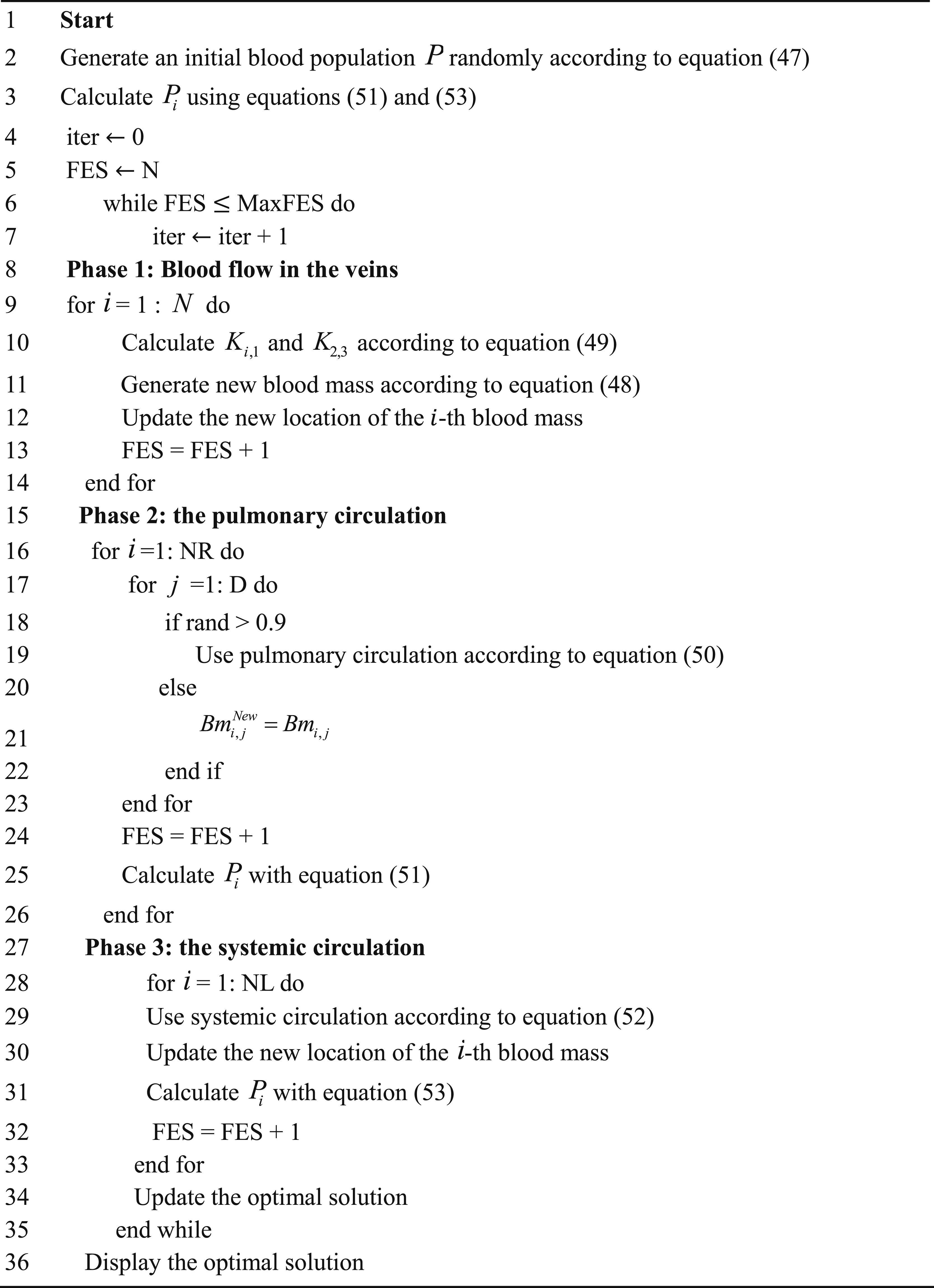
The flowchart and pseudocode of CSBO algorithm are highlighted in Figures 1 and 2, respectively. Flowchart of CSBO (Kanouni et al., 2025). CSBO algorithm pseudocode (Ghasemi et al., 2022).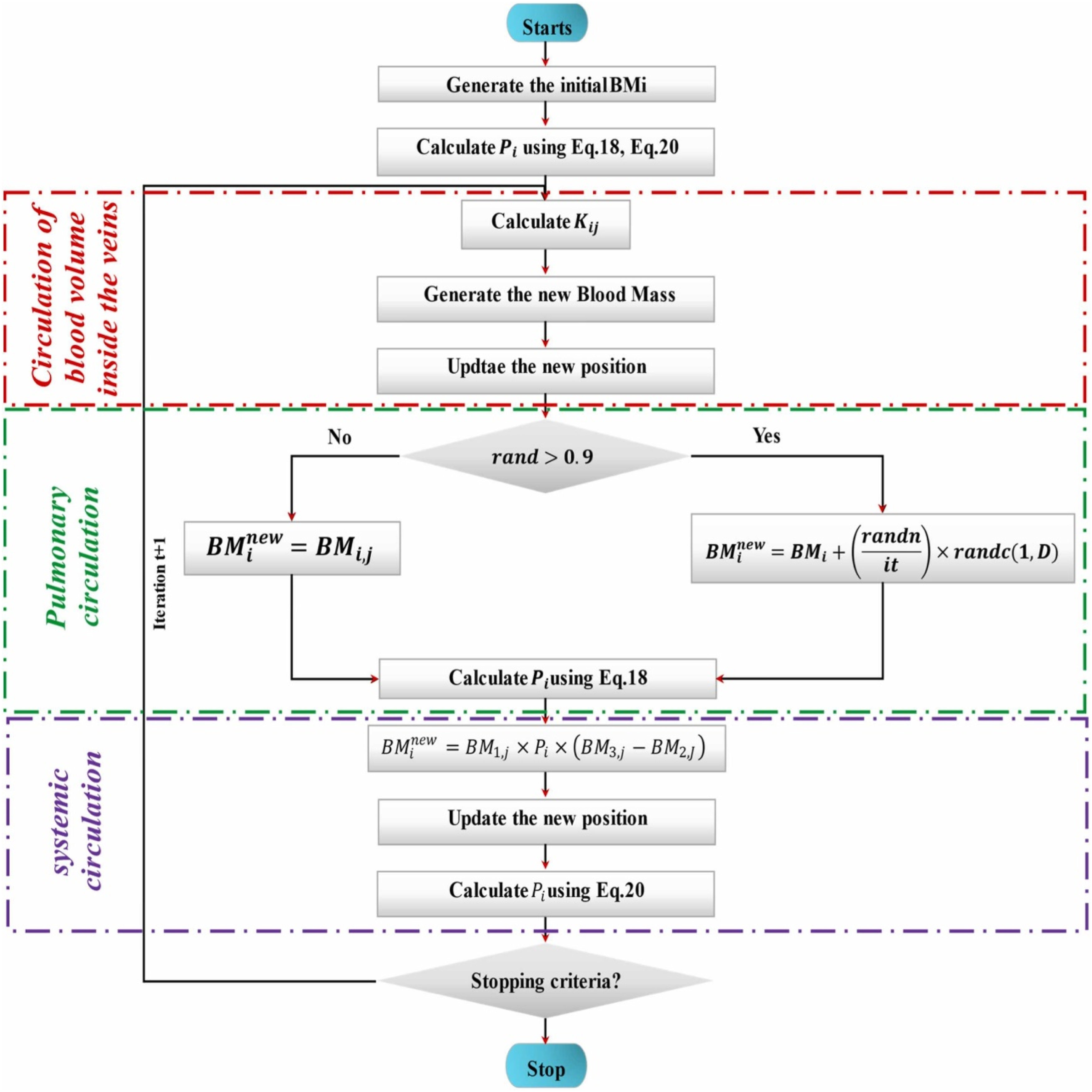
Mountain gazelle optimizer (MGO)
Drawing inspiration from the social behavior and hierarchical structure of wild gazelles that live in the mountains, MGO is an evolutionary metaheuristic technique that uses mathematical formulations of the communal and hierarchical order of mountain gazelles to create an optimization algorithm. This optimizer utilizes four primary components of bachelor males, maternal herds, solitary territorial males, and migration to investigate and locate food supplies. MGO preserves its search potential and performs well as the magnitude of optimization issues increases (Abdollahzadeh et al., 2022).
Artificial Rabbits Optimization (ARO)
ARO is inspired by the survival behaviors of wild rabbits such as deflection, foraging, and random concealing. Deflection foraging consists of feeding near the nests of other rabbits, which helps keep the rabbit’s own nest concealed from predators. In contrast, the random hiding strategy allows a rabbit to select one of its burrows at random for hiding, reducing the chances of being caught by predators. Additionally, when a rabbit’s energy levels drop, it tends to shift from detour foraging to the random hiding strategy. This algorithm has been validated, and the experiment’s results indicate its feasibility (Wang et al., 2022).
Dwarf Mongoose Optimization Algorithm (DMOA)
DMOA is a nature-inspired metaheuristic technique that simulates the foraging behavior of dwarf mongooses using their compensatory behavioral adaptations. The limited way of capturing prey has notably influenced the communal conduct and ecological adjustments of mongooses, driving them to adapt in ways that support effective family nourishment. These behavioral adaptations include changes in prey size, how they use their environment, the size of their groups, and their practices around sharing food. DMO can identify the global optimal solutions to various optimization problems (Agushaka et al., 2022).
Results and discussion
IEEE 30-bus modified network
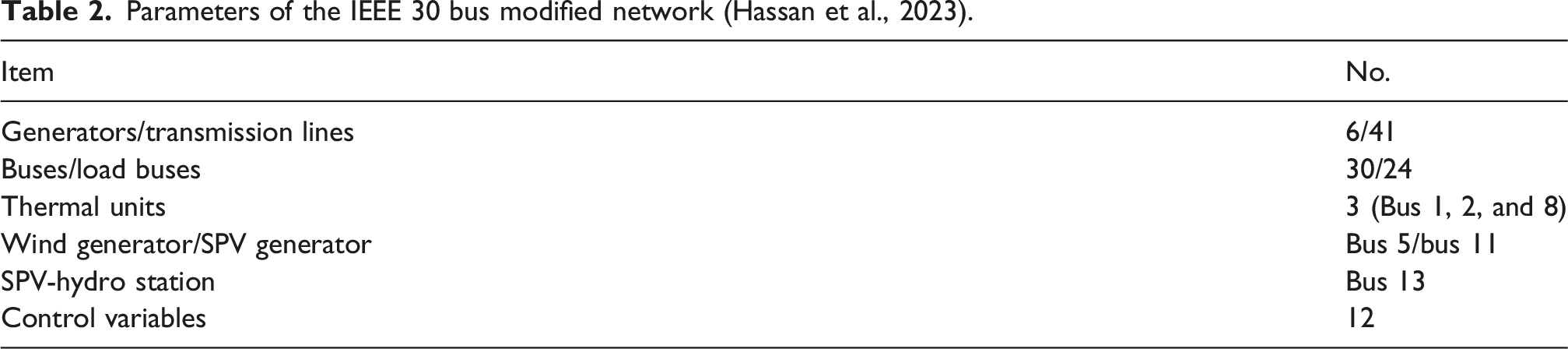
To demonstrate the efficiency of the CSBO method in solving the stochastic OPF problem, a power system comprising a mix of conventional and renewable energy resources is considered. The system consists of three thermal generators, one wind farm, one solar photovoltaic (SPV) unit, and one solar photovoltaic–hydro (SPV-hydro) station. These units are linked to an IEEE 30-bus network illustrated in Figure 1. The initial demand for real and reactive powers is 283.4 MW and 126.2 MVAR, respectively. Three scenarios are taken into consideration: • Scenario 1: Minimization of the total generation costs (TGCs) • Scenario 2: Reduction of the real power outages • Scenario 3: Reduction of the production price, including emission effects
The suggested CSBO method was implemented using MATLAB 2021a alongside MATPOWER package on a laptop computer characterized by an Intel Core i5 microprocessor with an execution speed of 2.6 GHz and a RAM memory of 4 GB. The parameters concerning the setting of the algorithm consist of a maximum iteration of 300 and a population of 30 individuals. This number is obtained after a trial of population sizes like 20, 30, 40, and 70 as an empirical test on the performance of the CSBO technique (results not reported herein). The outcomes show that 30 is the most favorable for all case studies because when we decrease the number of individuals (under 30), the algorithm struggles with premature convergence, and the more we increase the number of individuals (over 30), the longer it takes to finish the simulation with a huge computational effort required and no improvement in the results obtained. For that reason, we focused on solving the technical problem of the OPF at a fixed population size of 30 for all tested algorithms for a fair comparison.
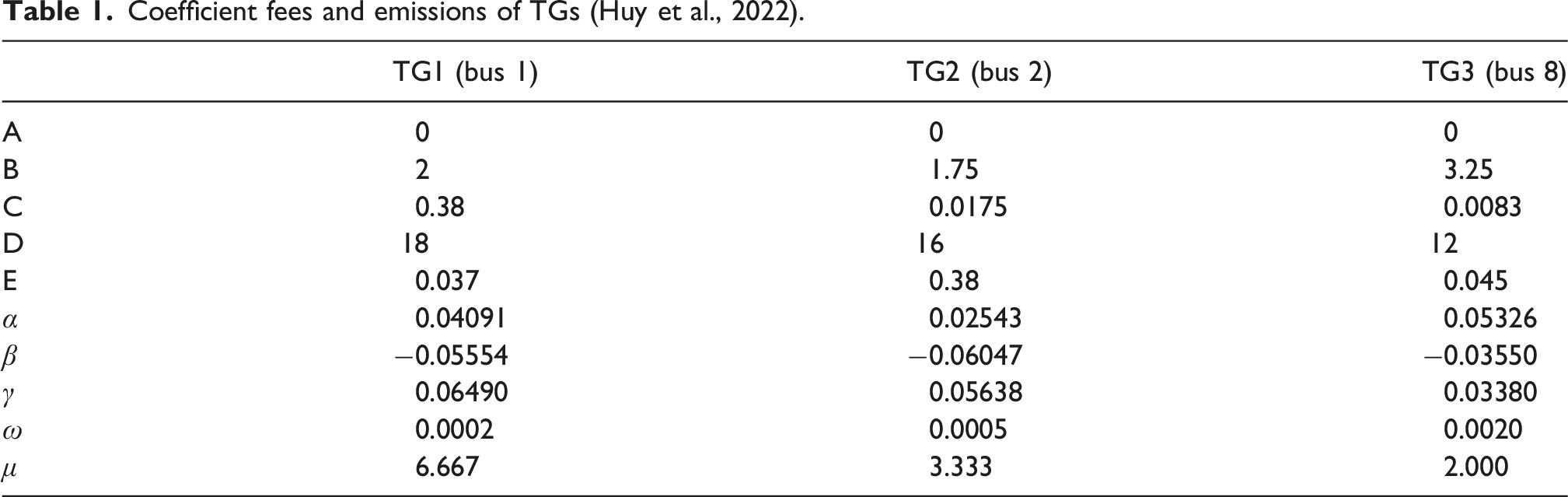
Coefficient fees and emissions of TGs (Huy et al., 2022).
Parameters of the IEEE 30 bus modified network (Hassan et al., 2023).
The limits of the control and state variables of each generator must not be violated to ensure stability and security of the power system; these boundaries are displayed in Tables 3 and 4, respectively.
Lower and higher limits of the control variables.

Lower and higher limits of the state variables.

Parameters of the renewable units.
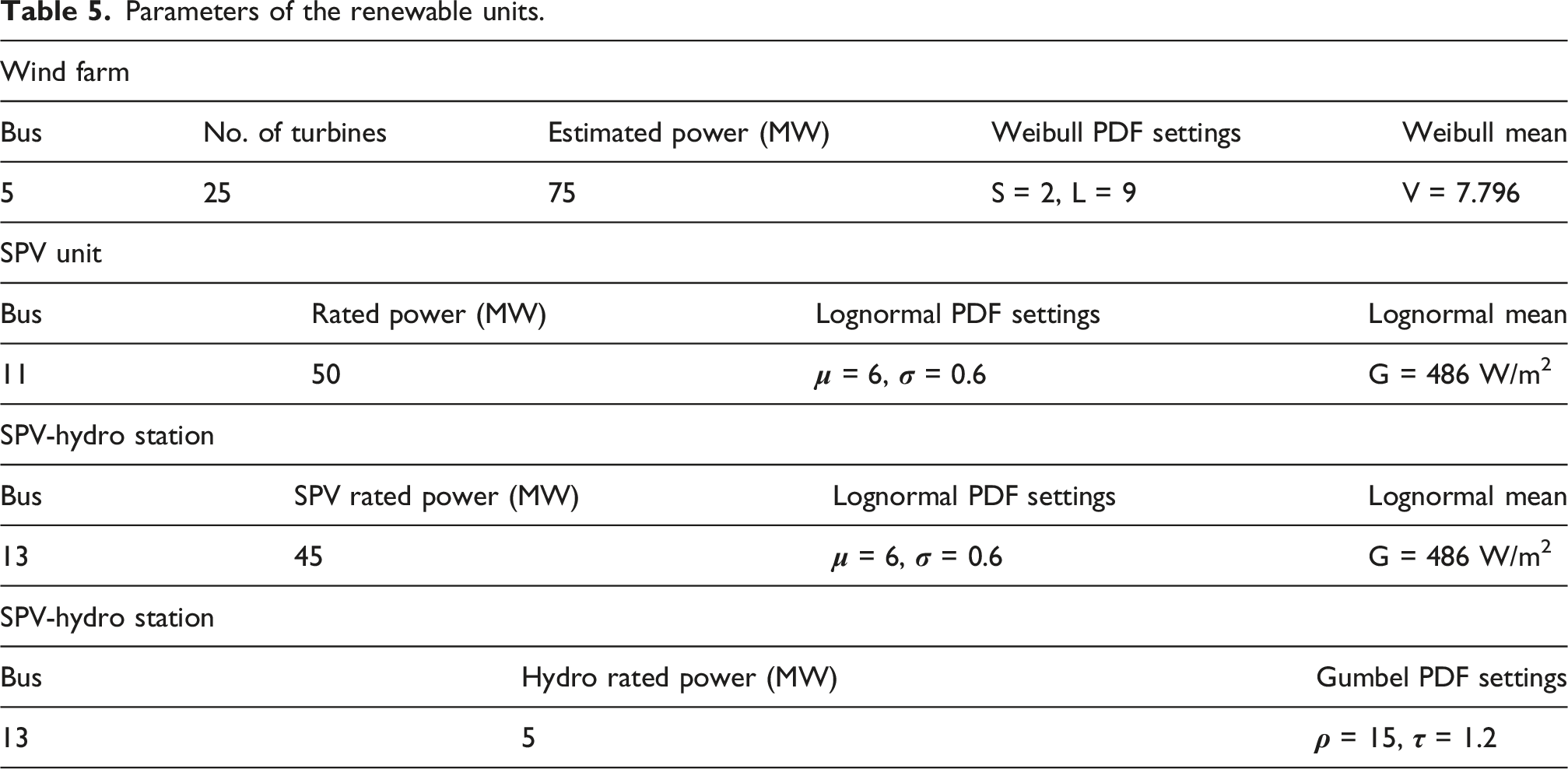
To ensure the practical relevance of the cost estimations, the coefficients used for the thermal units and the maintenance costs for renewable sources were cross verified against the International Renewable Energy Agency (IRENA) Levelized Cost of Energy (LCOE) benchmarks. The integration of SPV-hydro and wind generation at buses 5, 11, and 13 utilizes stochastic cost functions that simulate the real-world variability of energy prices and fuel consumption, bridging the gap between theoretical benchmark systems and practical grid operation (Figure 3). Altered IEEE 30 bus test network (Biswas et al., 2018).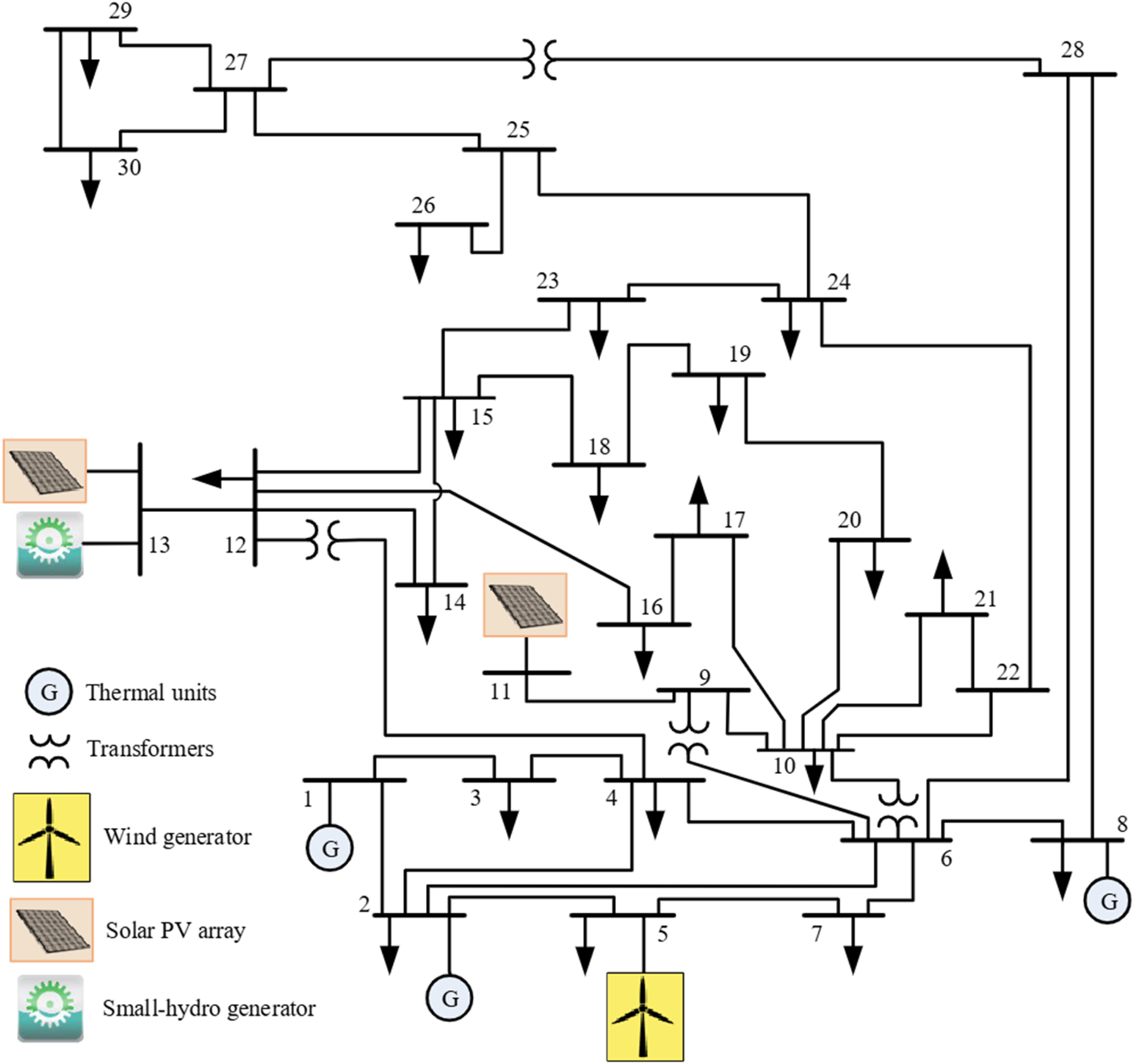
Weibull fitting curve and the wind distribution frequency at bus 5 are defined using the Monte Carlo method after executing 8000 samples, as shown in Figure 4. In a similar way, the SPV unit power output is obtained using the same method with the same number of patterns (Hassan et al., 2023). The lognormal PDF curve and the solar irradiance distribution at buses 11 and 13 are displayed in Figures 5 and 6, respectively. The real power output from the solar unit at bus 13 is presented in Figure 7, showcasing the matching of the available active power with the distribution of the solar irradiance. Wind speed distribution for the wind generator at bus 5. Solar irradiance distribution for the SPV unit at bus 11. Solar irradiance distribution for the SPV unit at bus 13. The active power from the SPV unit at bus 13.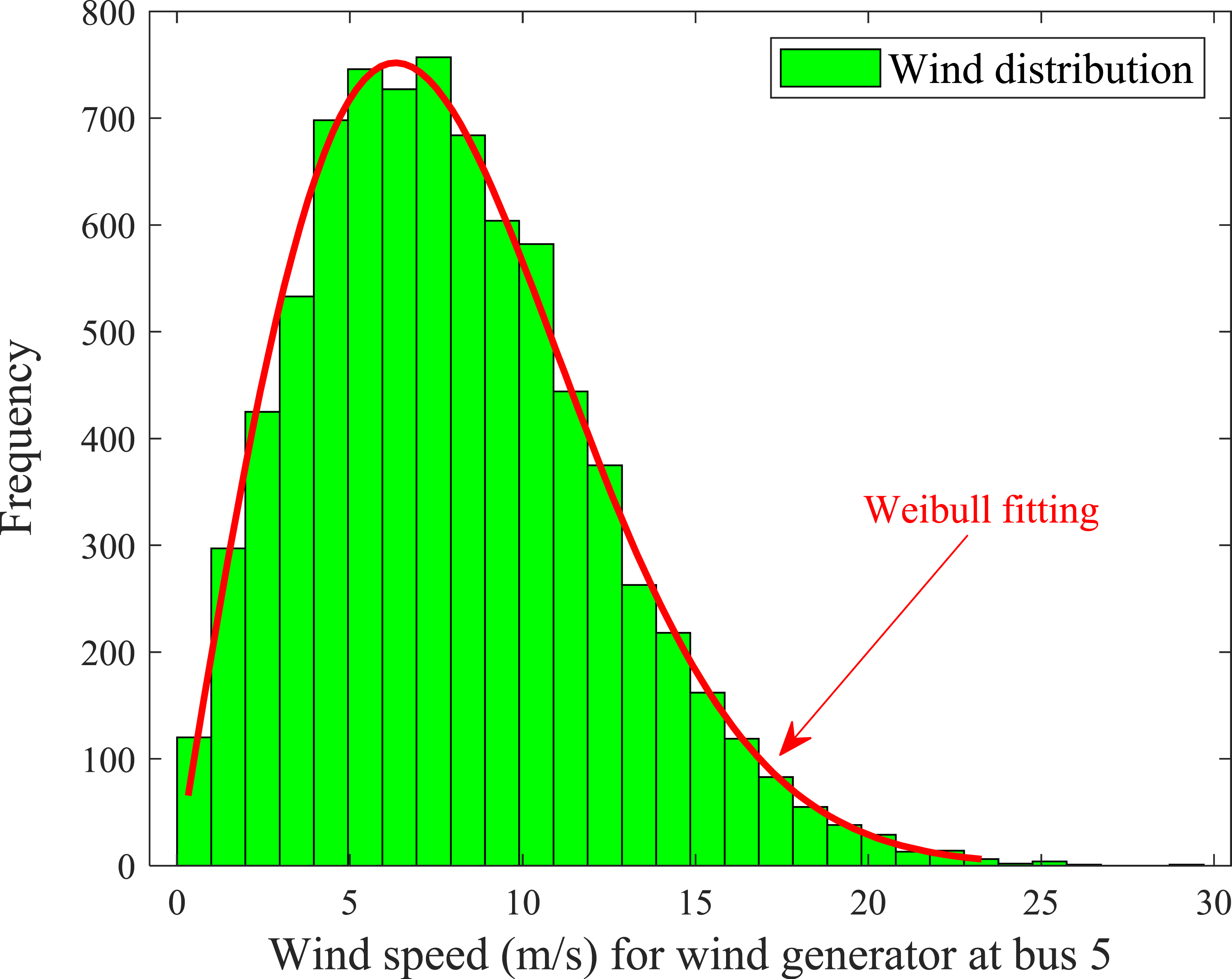
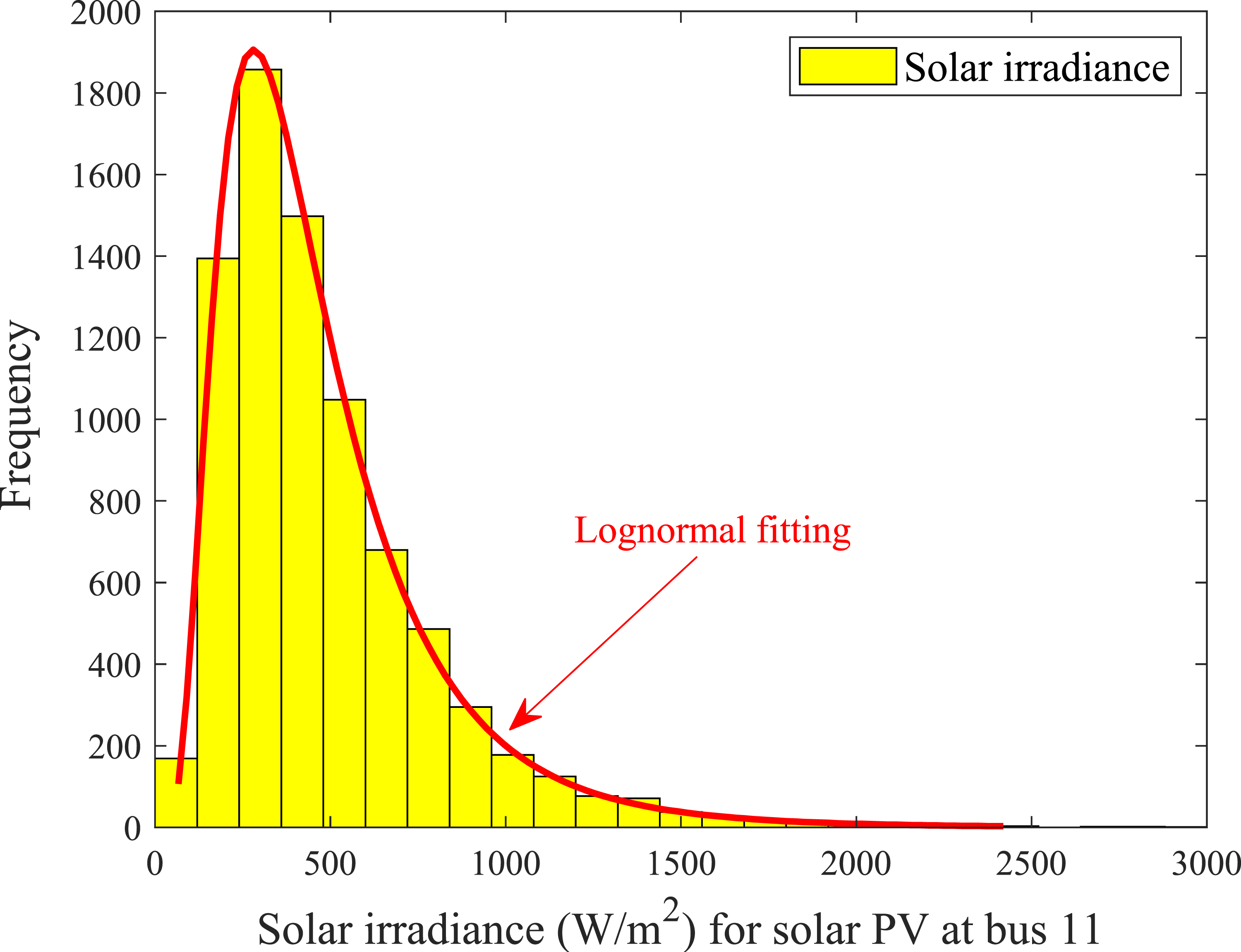
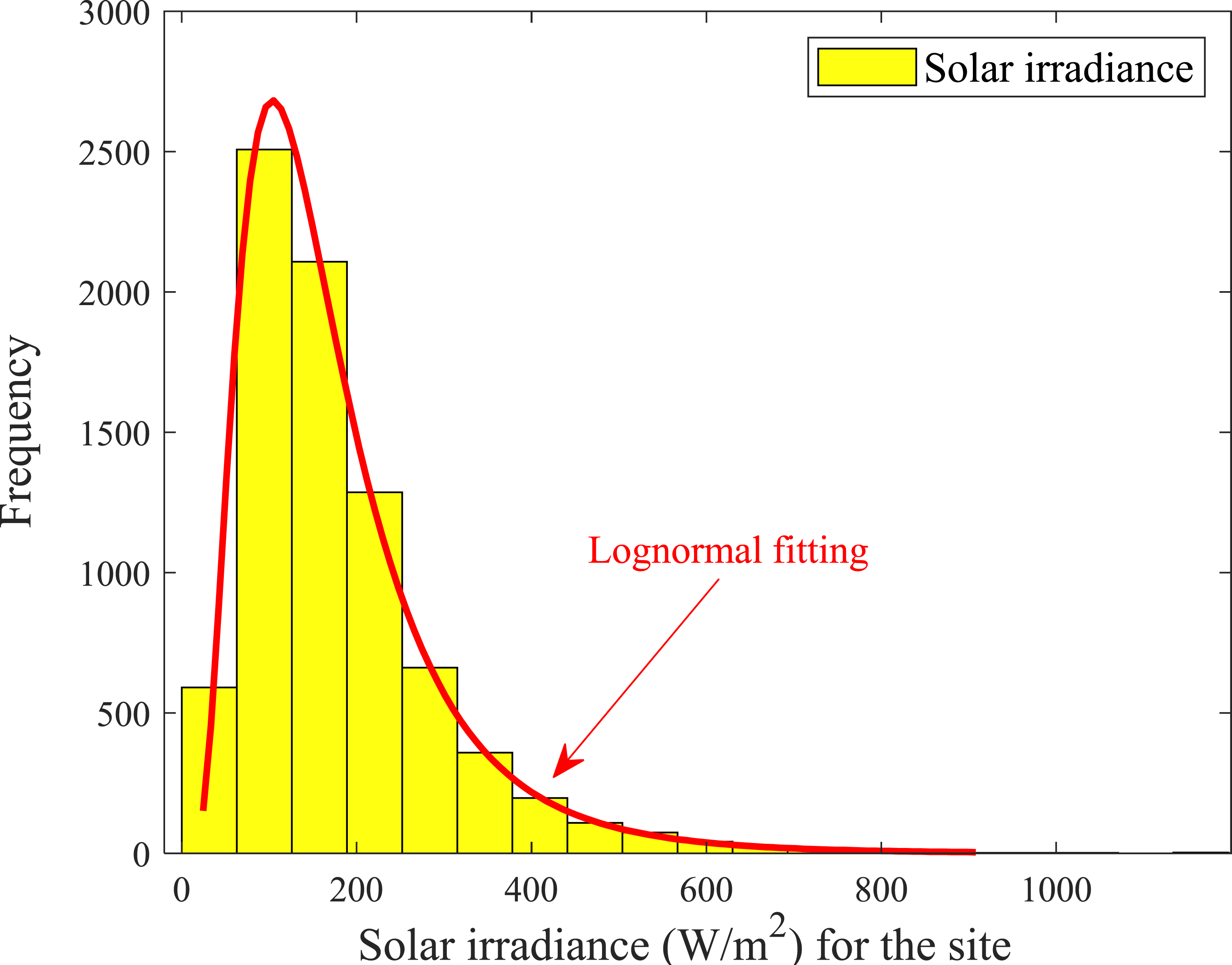
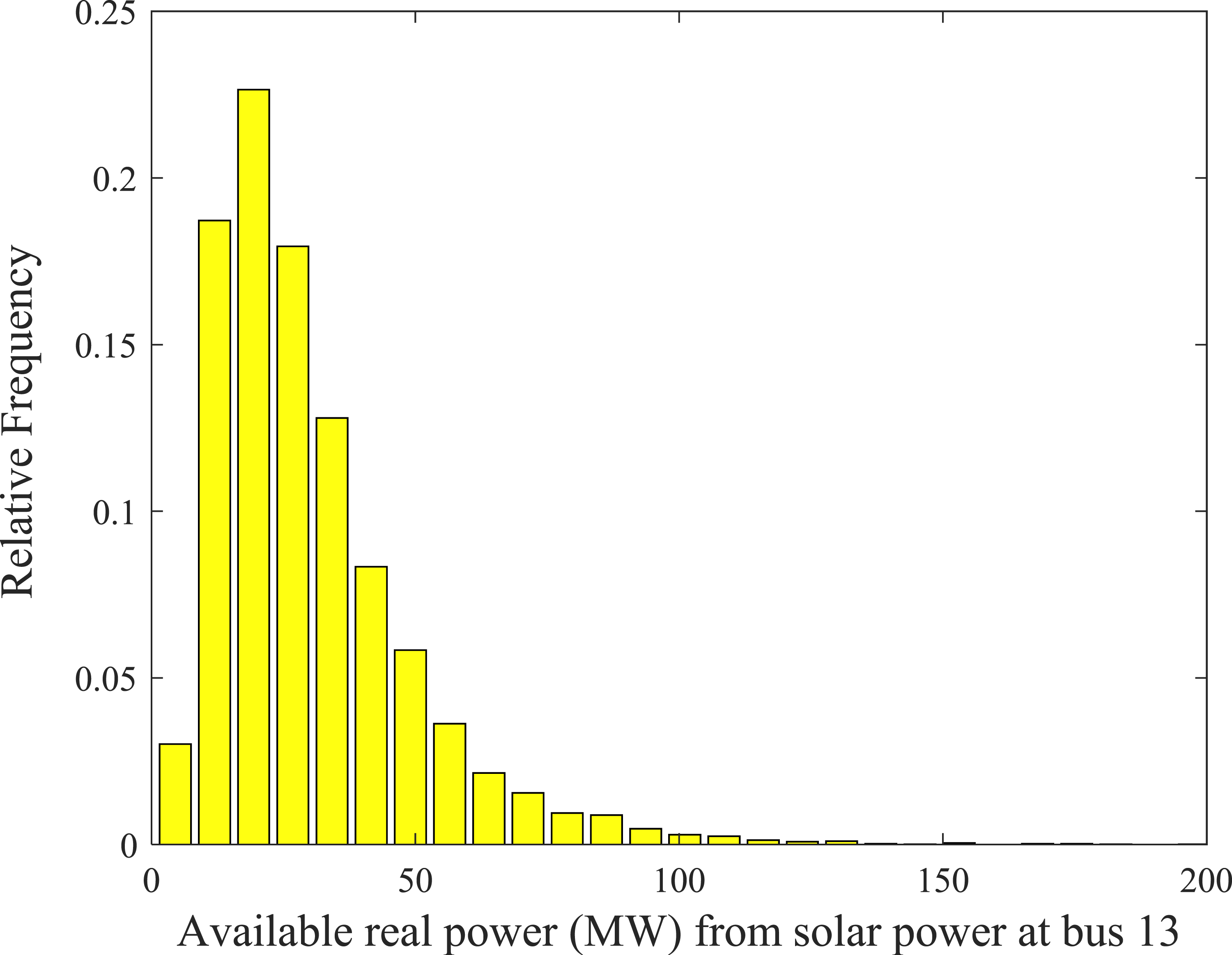
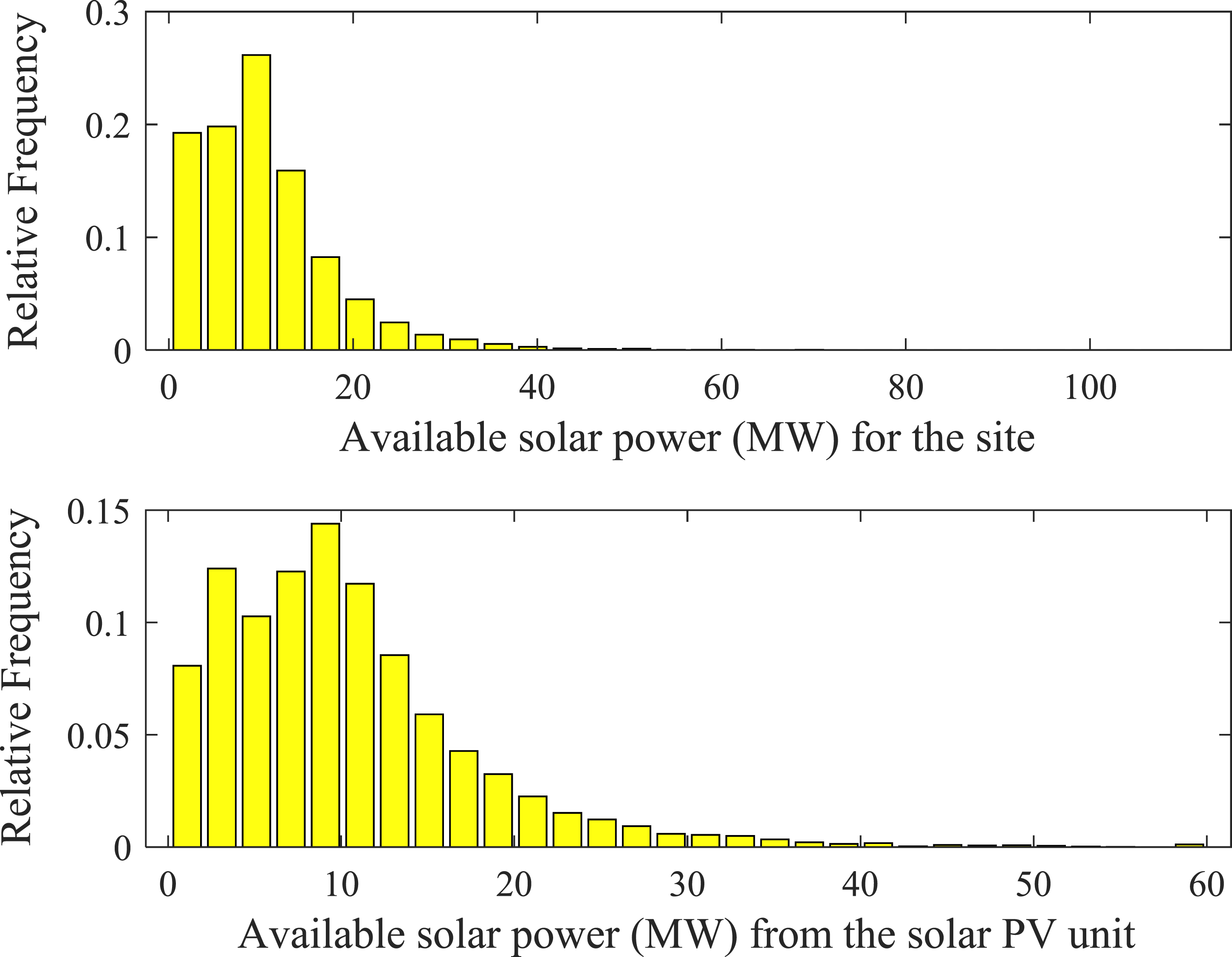
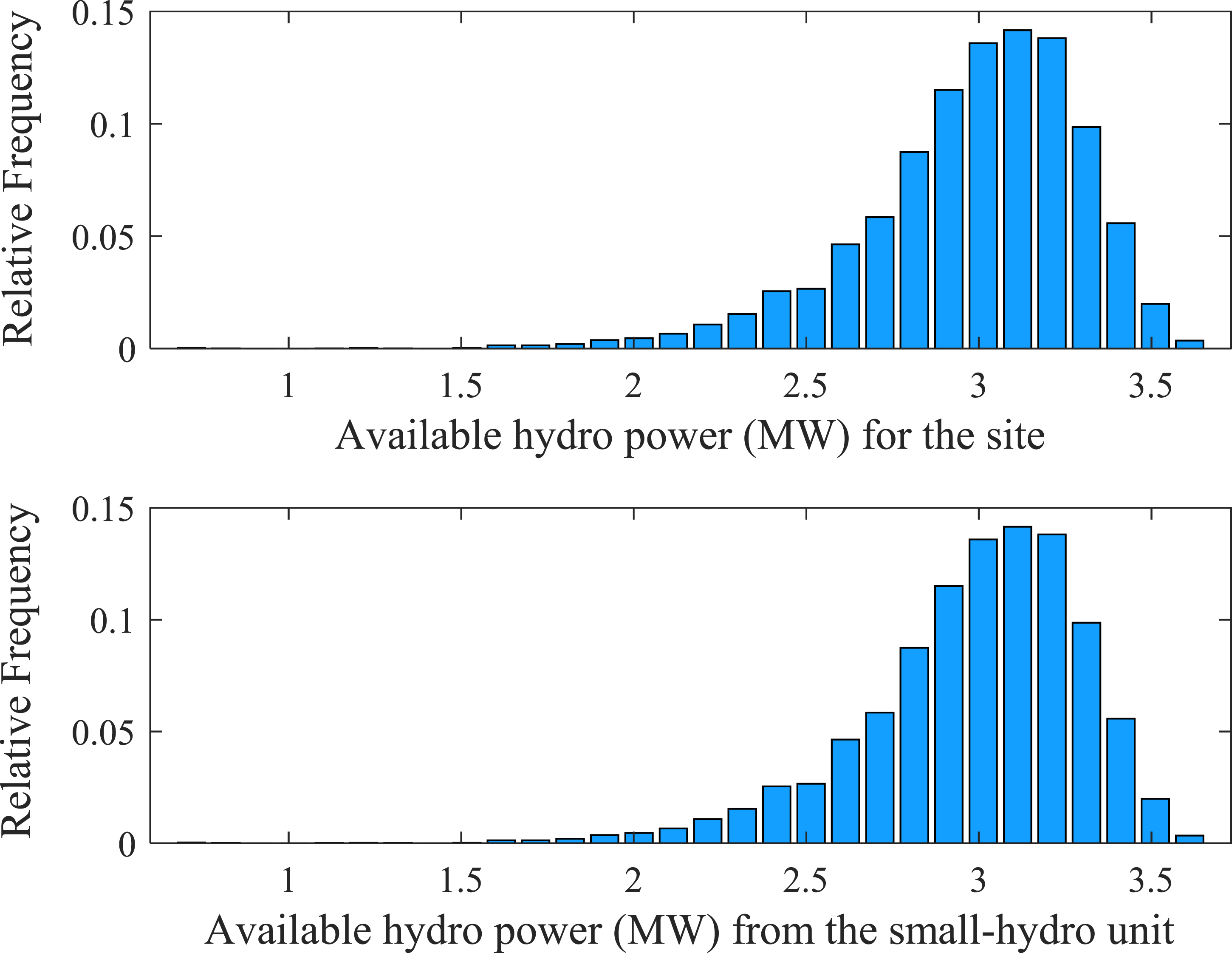
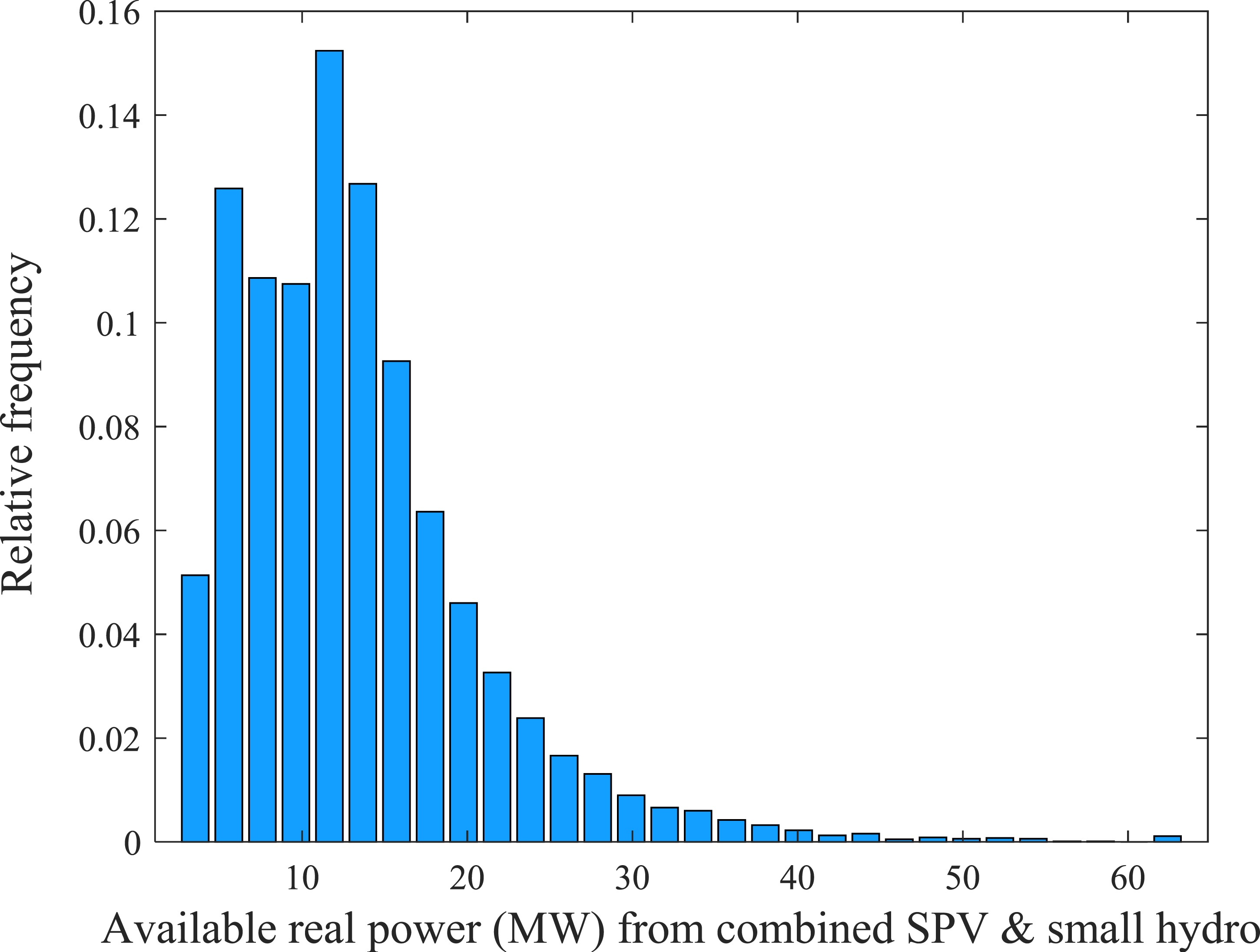
Figure 8 refers to the Gumbel fitting curve and the frequency distribution of the river stream for the hydropower station using the Monte Carlo method. The histograms in Figures 9 and 10 represent the accessible solar and hydropower from the designated site at bus 13 and for the SPV unit and the hydro station, respectively. Figure 11 displays the real power delivered from the combined SPV-hydro generator. It is worth noting that the following scenarios are all conducted using the Weibull PDF, the lognormal PDF, and the Gumbel fitting for the wind, solar, and hydropower, respectively. River influx rate for the hydroelectric station at bus 13. Accessible solar power from the location and for the SPV unit at bus 13. Accessible hydropower from the location and for the hydro station at bus 13. The active power for the SPV-hydro station at bus 13.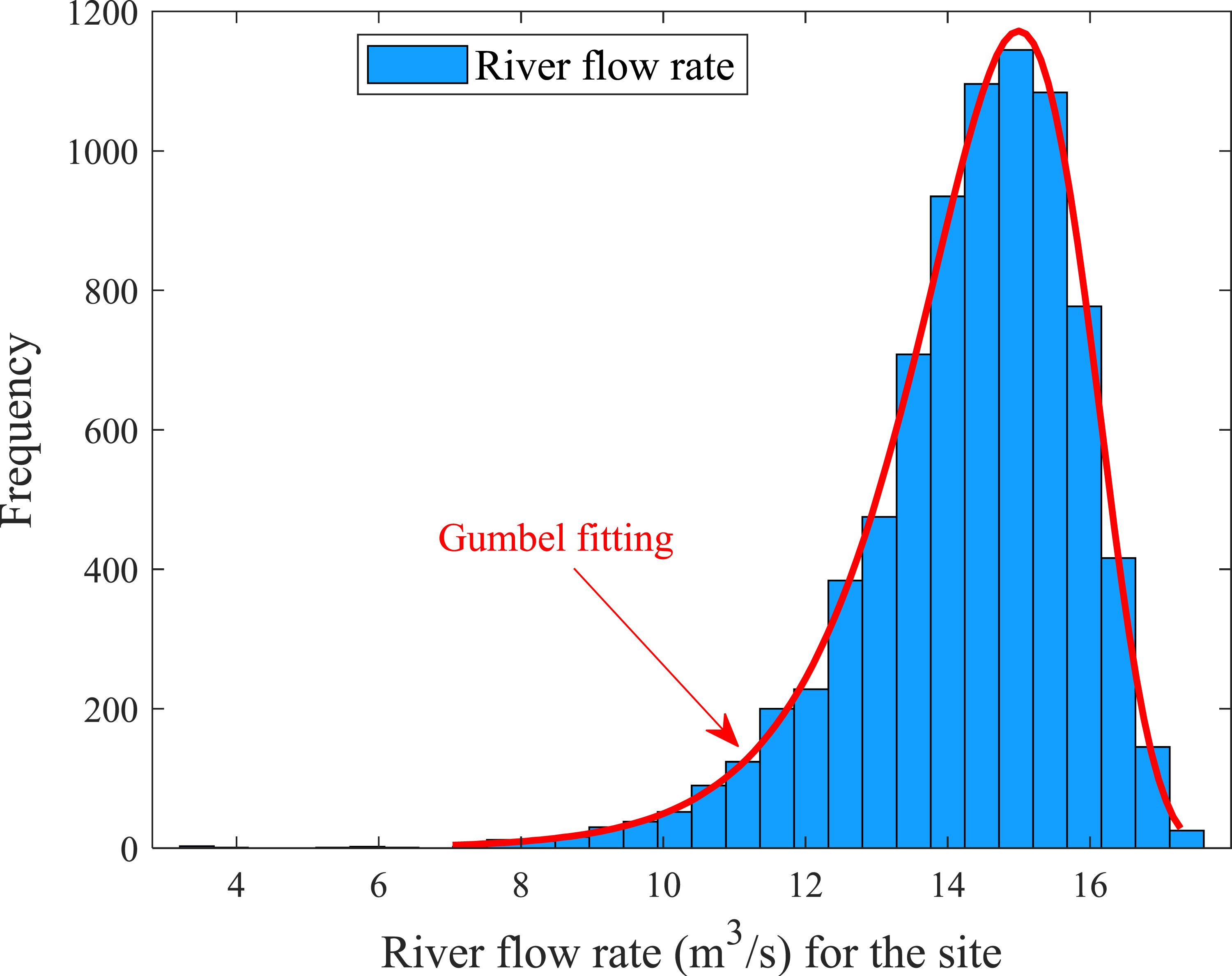
• Case 1: Reduction of the overall generation costs
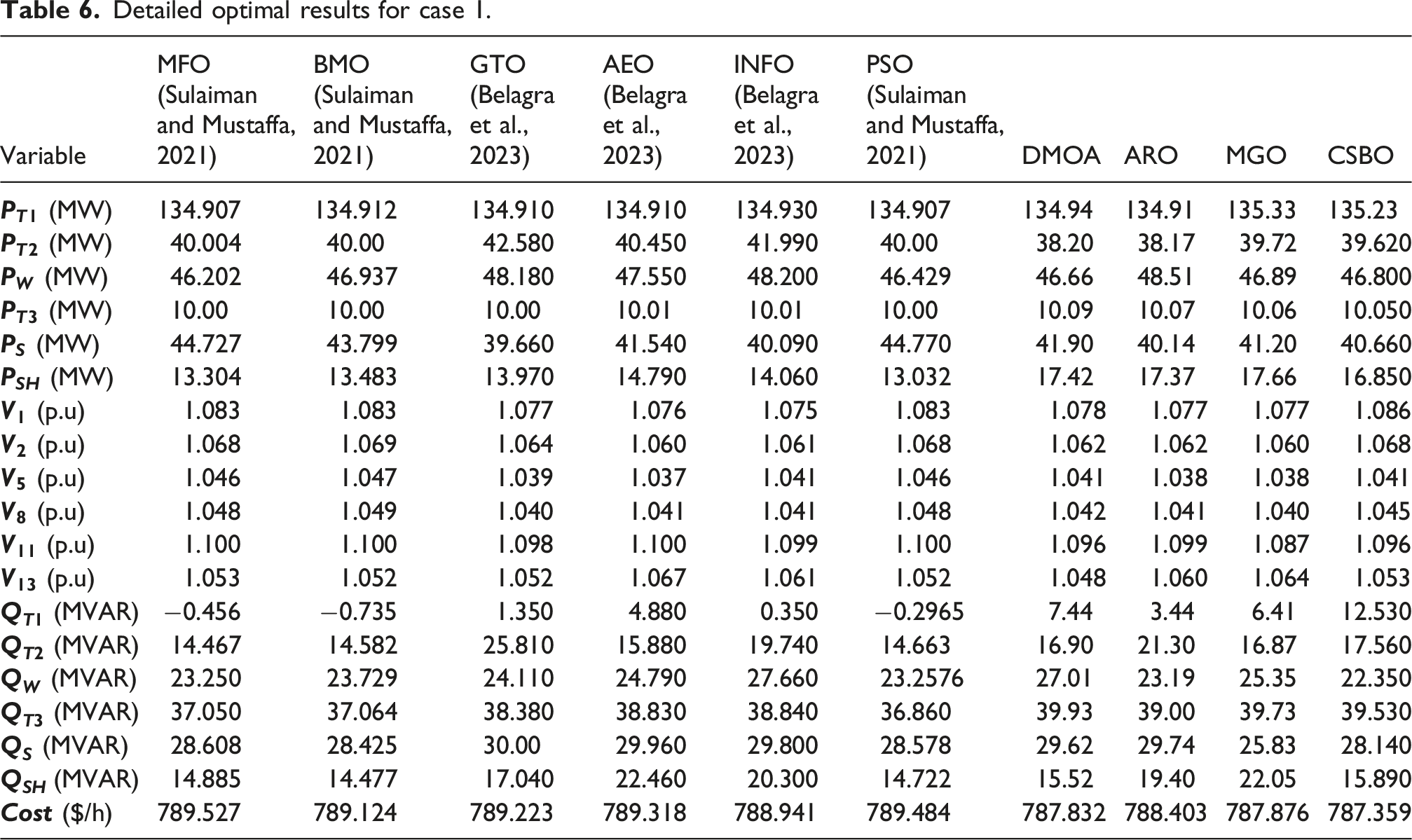
Detailed optimal results for case 1.
Results obtained from the studied methods for case 1.

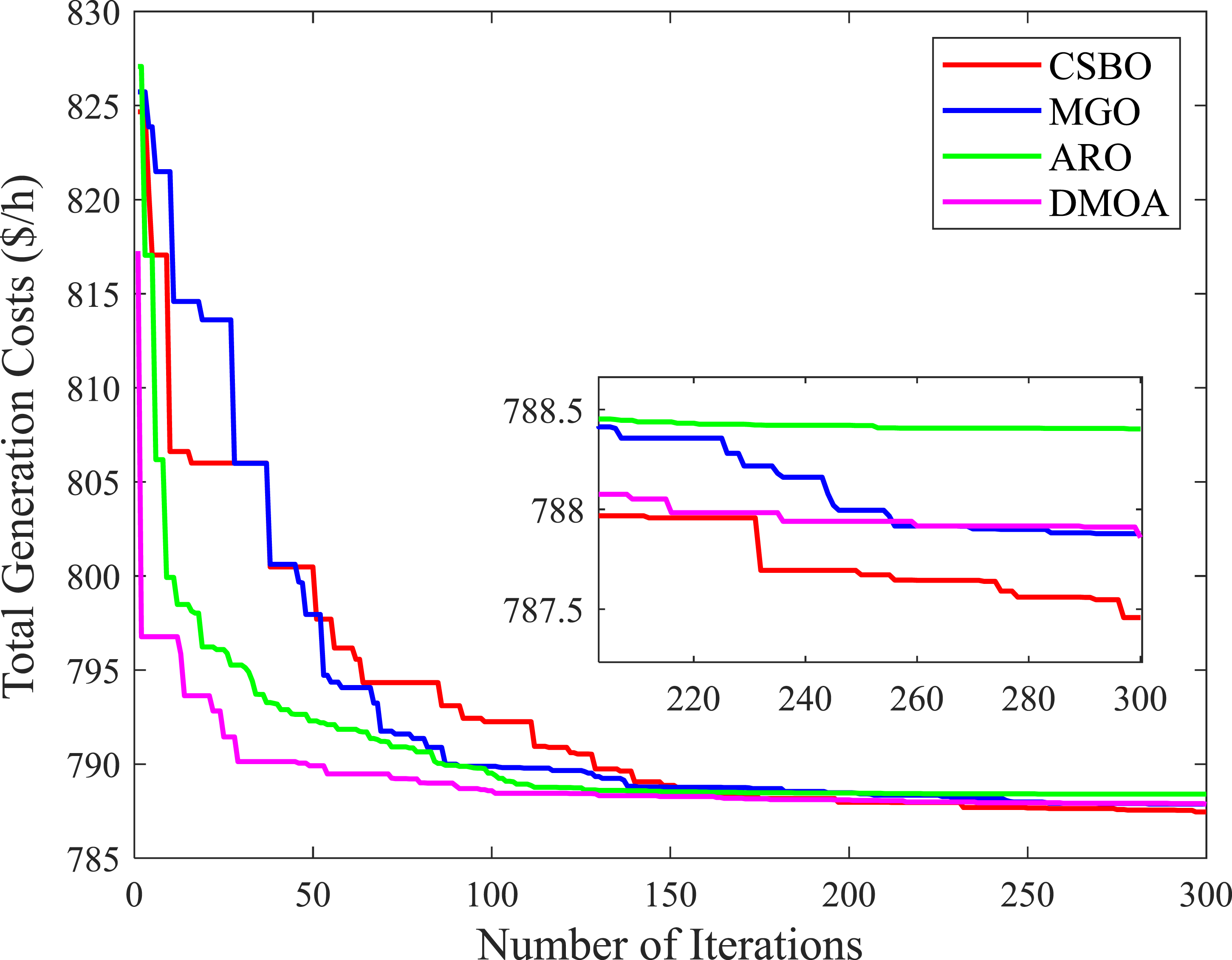
Convergence curves of the optimization methods for case 1.
• Case 2: Reduction of the real power losses
Detailed optimal results for case 2.
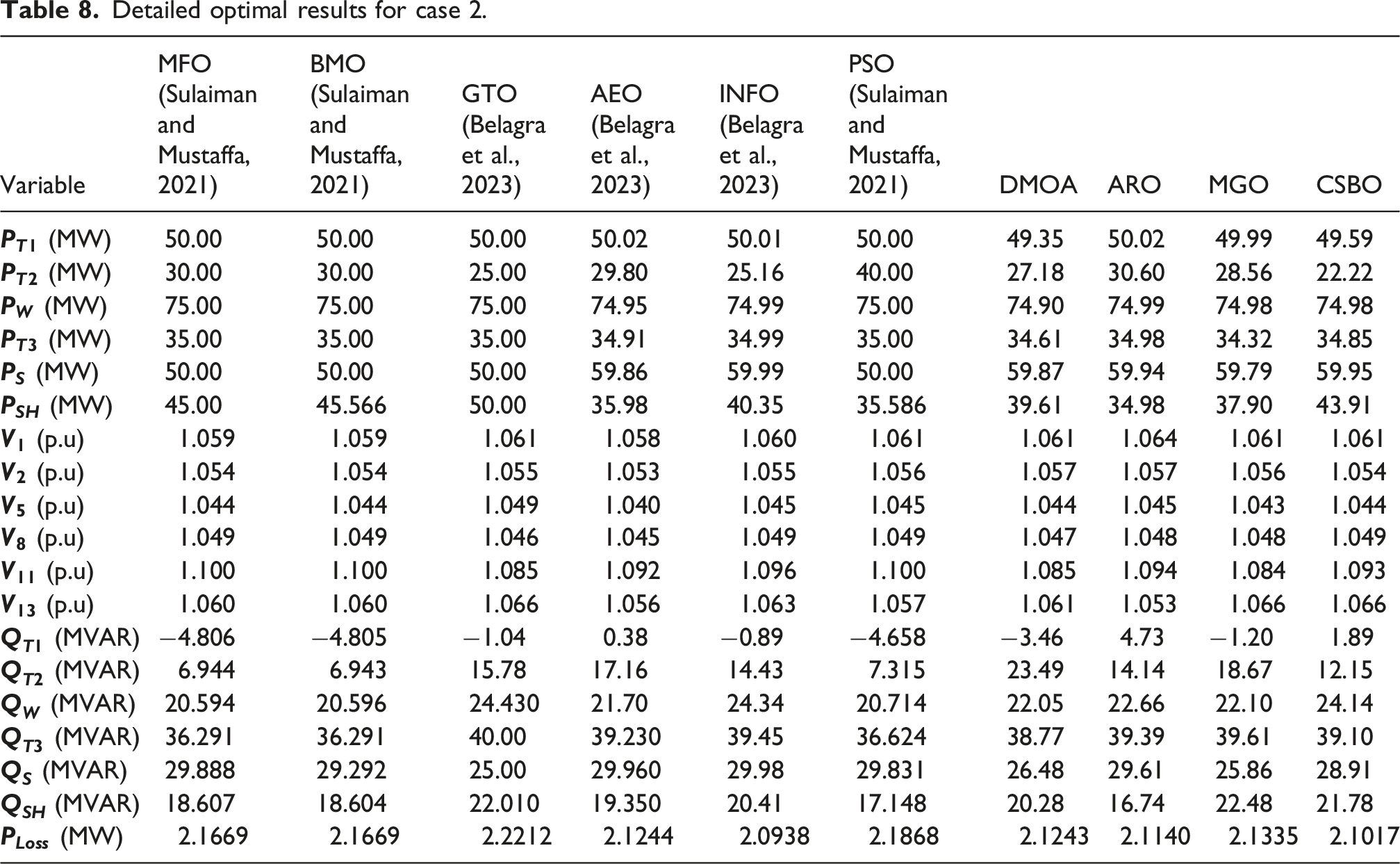
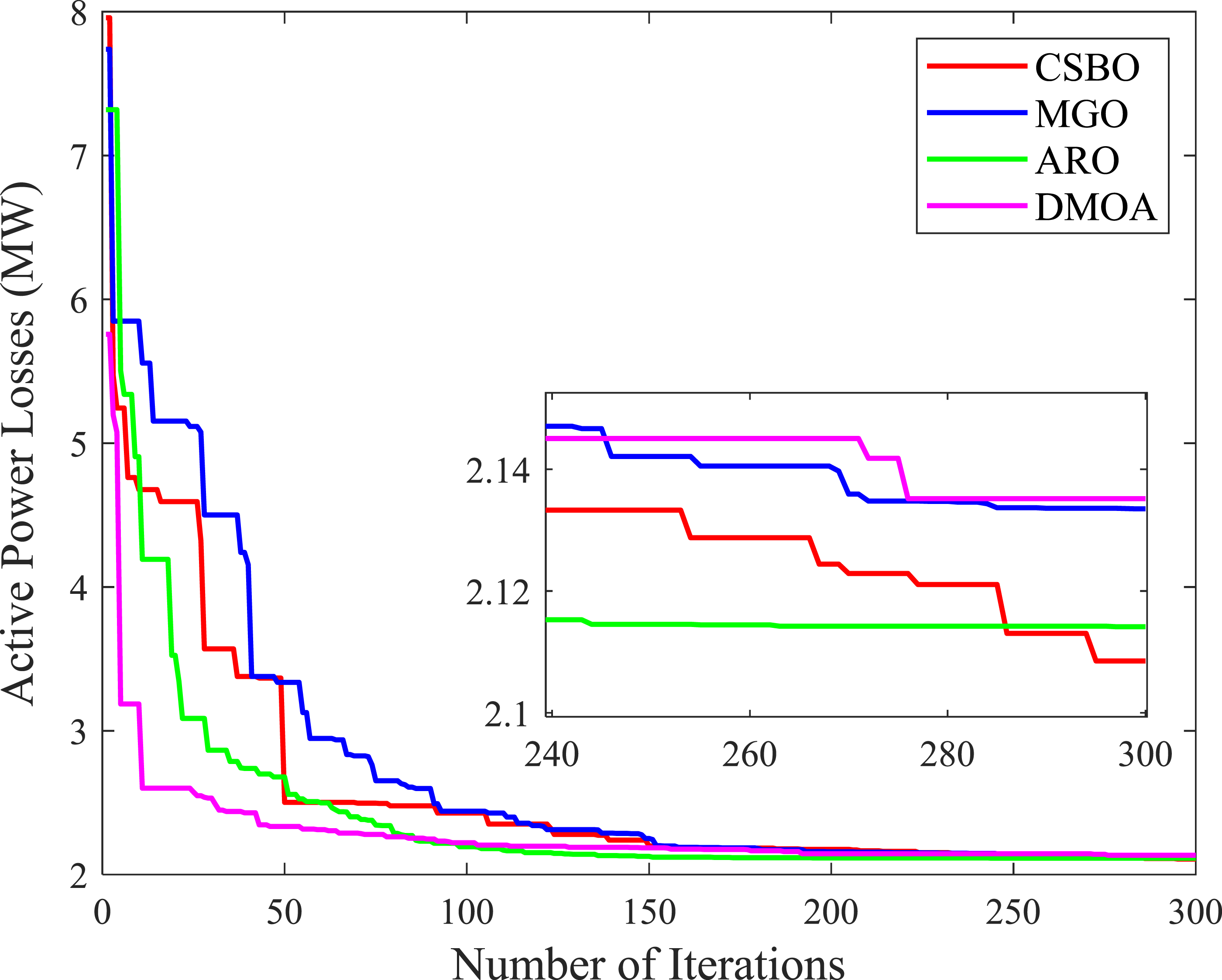
Convergence curves of the optimization methods for case 2.
Results obtained from the studied methods for case 2.

• Case 3: Minimization of generation costs, including emission effects
Detailed optimal results obtained for case 3.
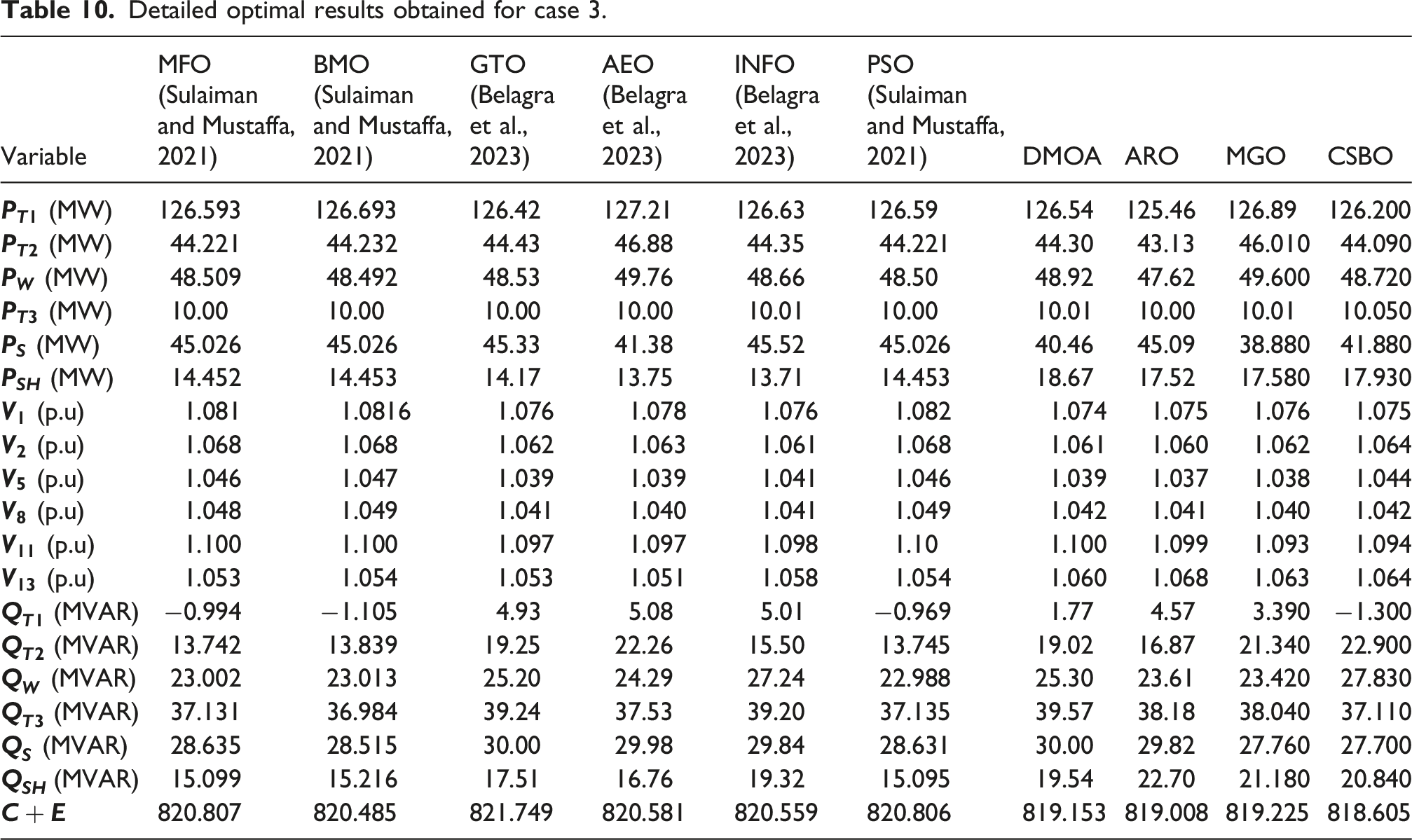
Results obtained from the studied methods for case 3.

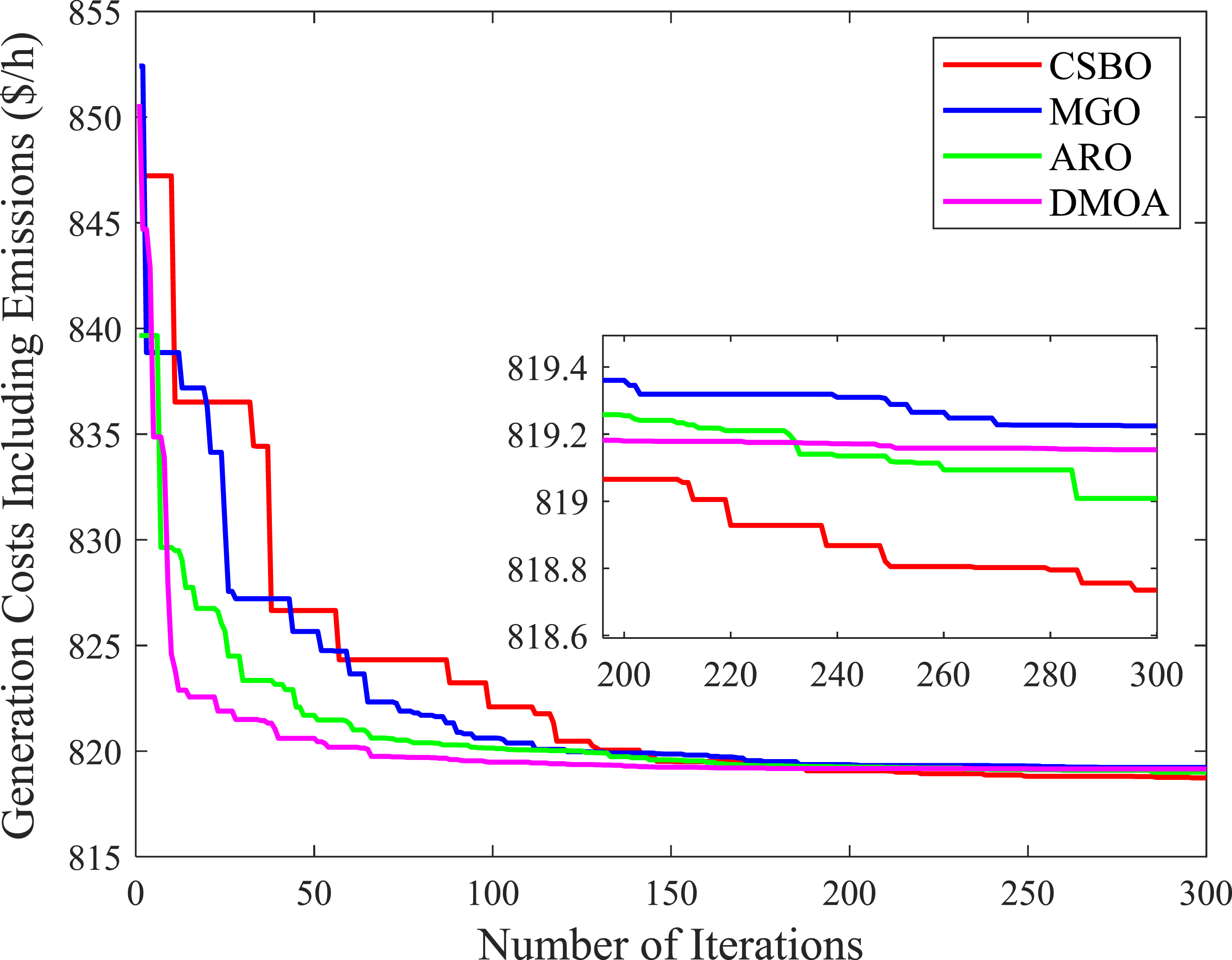
Convergence curves of the optimization methods for case 3.
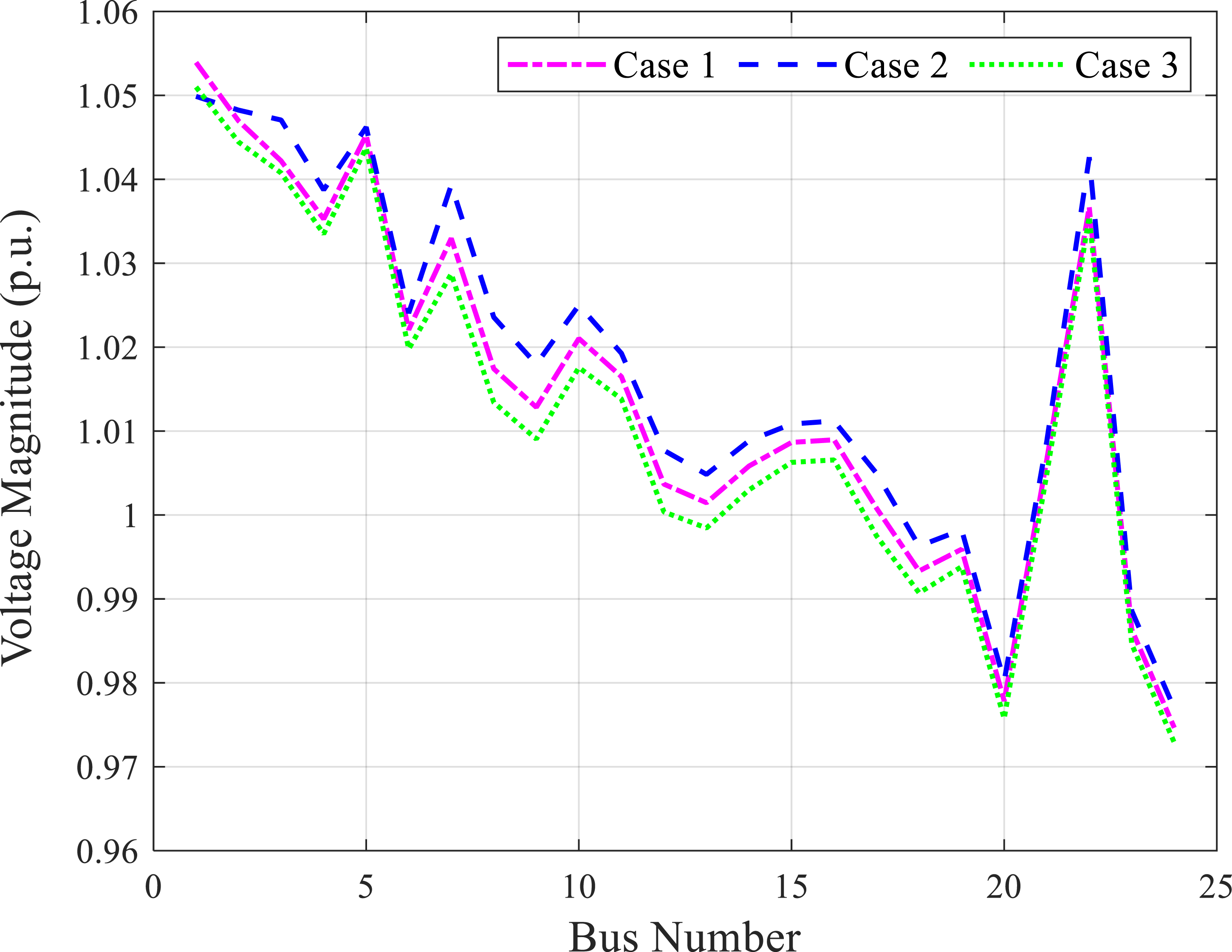
Voltage profiles of load buses using CSBO algorithm for cases 1-3.
IEEE 57 bus modified network
To further enrich this study, a second system is utilized to reinforce the validity of CSBO. The altered IEEE 57 bus network is adjusted to pave the way for renewable units to be connected as shown in Figure 16; it consists of 41 load buses besides seven other buses linked to generators. Four of them are thermal plants on buses 1, 2, 3, and 8; a WTG at bus 12; an SPV unit at bus 9; and an SPV-hydro generator at bus 6. The number of lines is 88, and the total number of control variables is 14. The initial demand for active power equals 1250.80 MW, while the reactive power is around 336.40 MVAR. The control and state variable limits are given in Table 11. Altered IEEE 57 bus test network (Sulaiman and Mustaffa, 2021).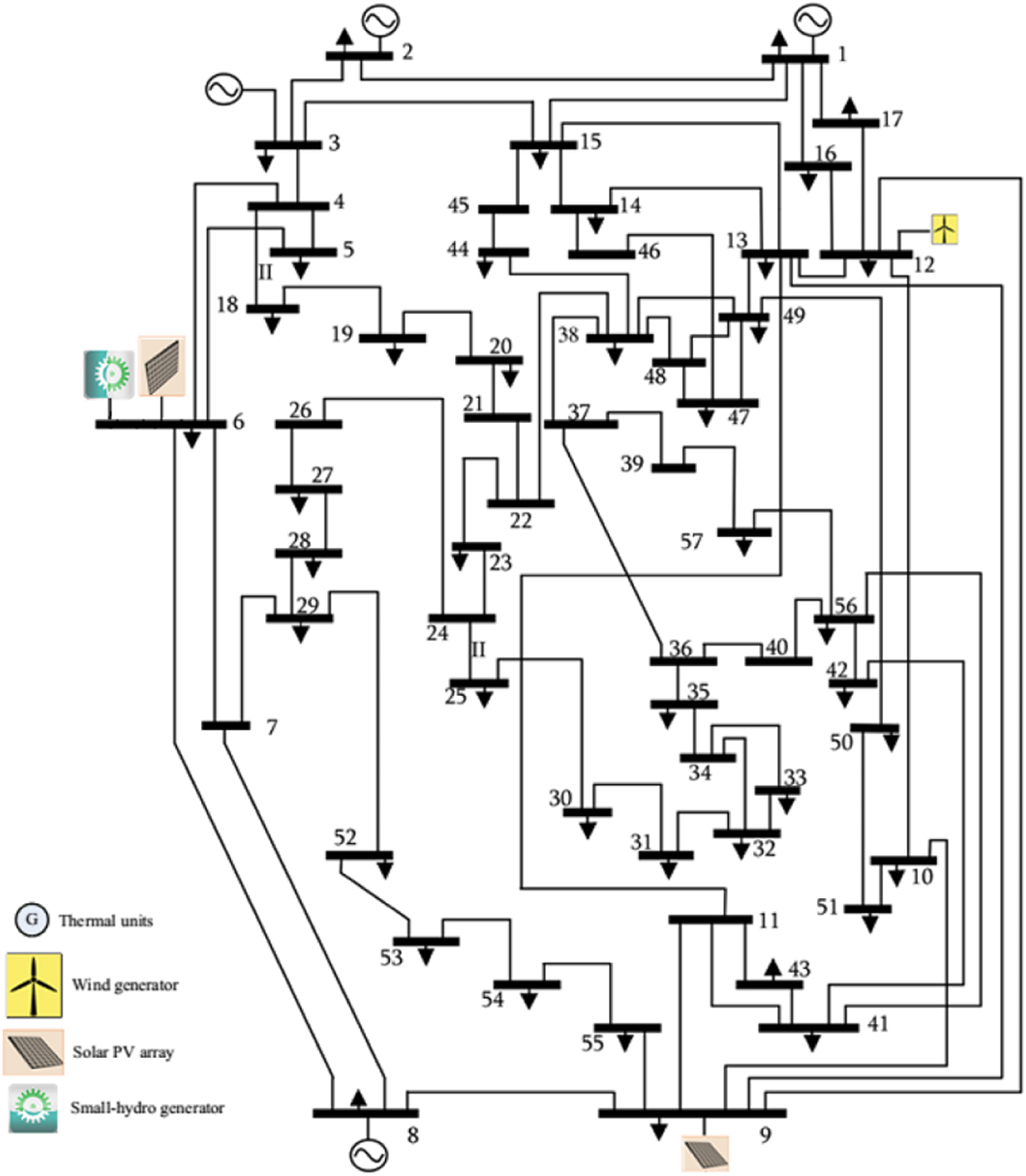
This system shows significant voltage drops (violations of reactive generators installed at busbars #2 and #9), especially when RESs are integrated, which makes it more difficult to guarantee the validity of the solutions. For example, in Rizvi et al. (2020), the authors examine how reactive power limits affect generator buses during load increase. This study directly shows that a violation of reactive power capability at bus 9 (and later bus 2 under high load) leads to significant voltage drops. Therefore, buses 2 and 9 are intentionally stressed in simulations to test the algorithms’ ability to restore voltage stability through VAR optimization or voltage control coordination.
Lower and higher limits of the control variables.

Lower and higher limits of the state variables.

• Case 4: Reduction of the TGCs
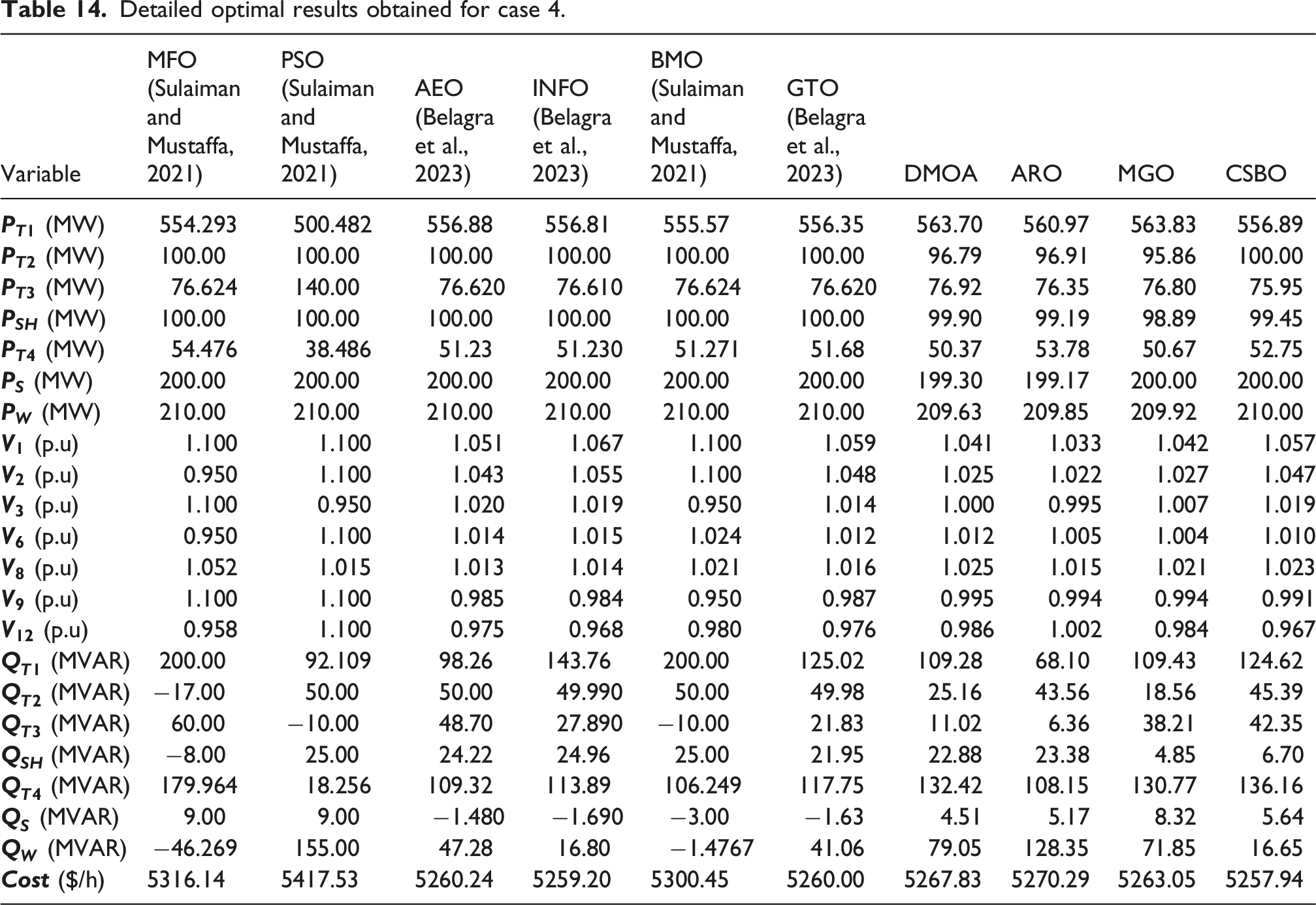
Detailed optimal results obtained for case 4.
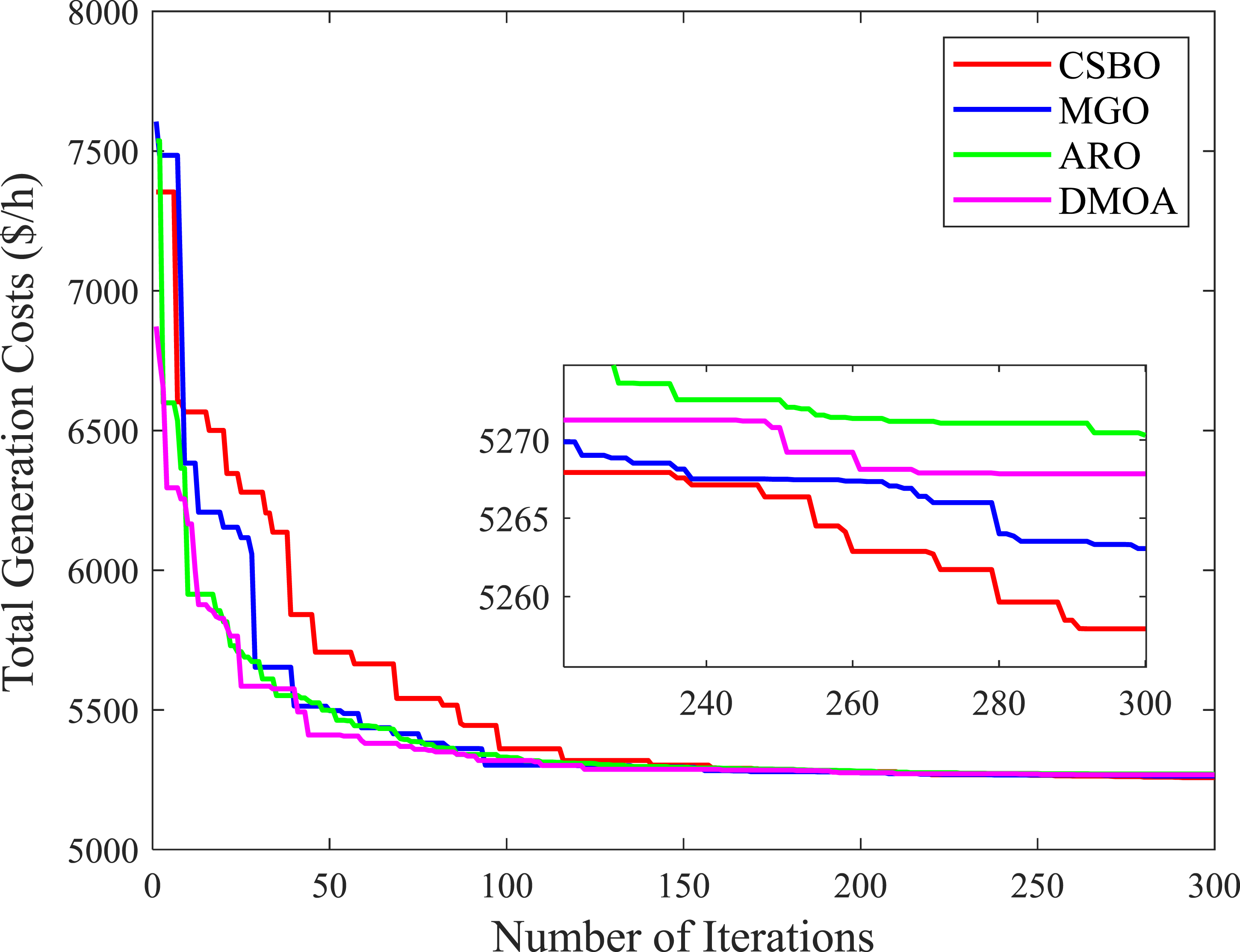
Convergence curves of the optimization methods for case 4.
• Case 5: Minimization of the APLs
Detailed optimal results obtained for case 5.
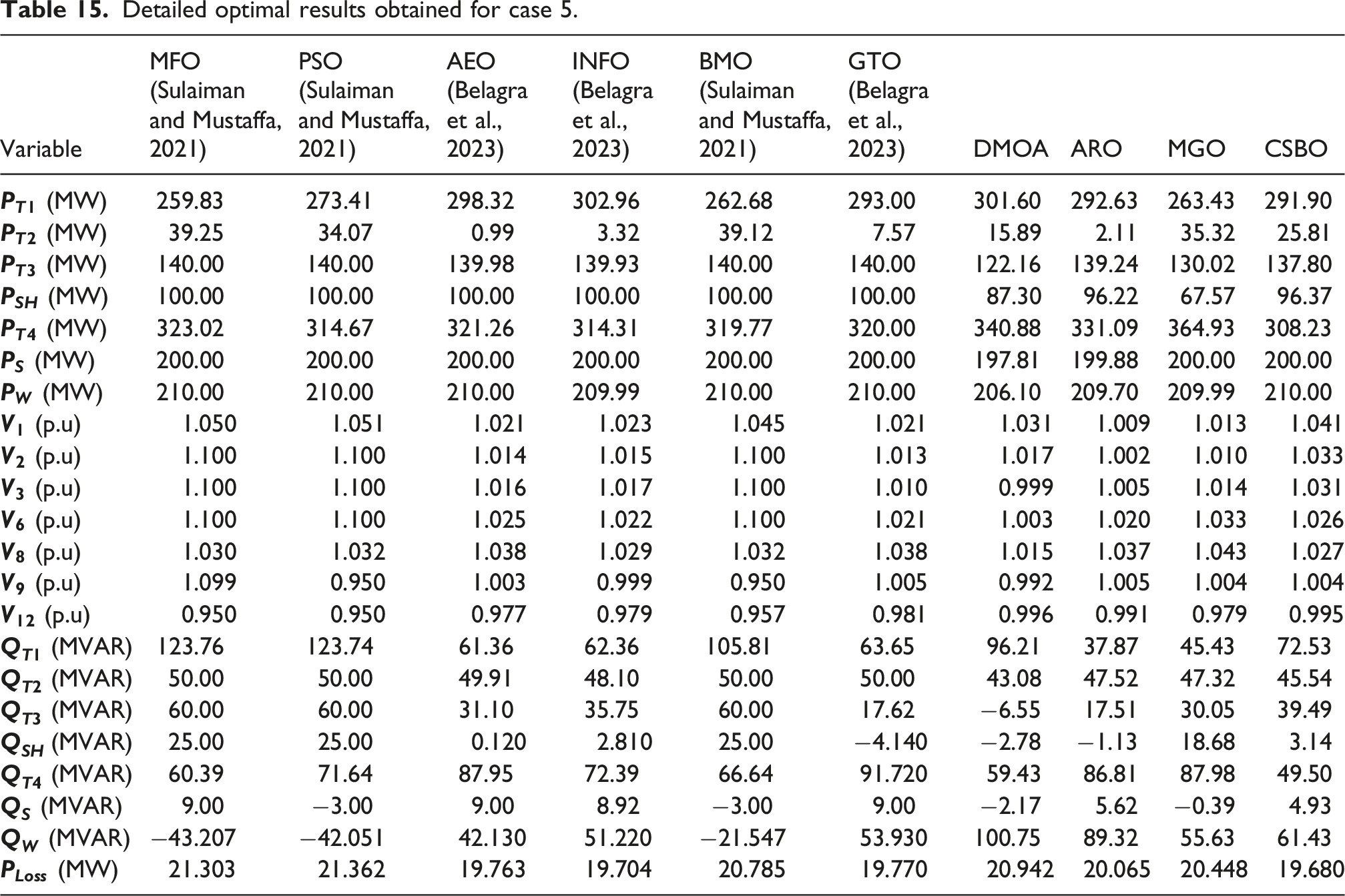
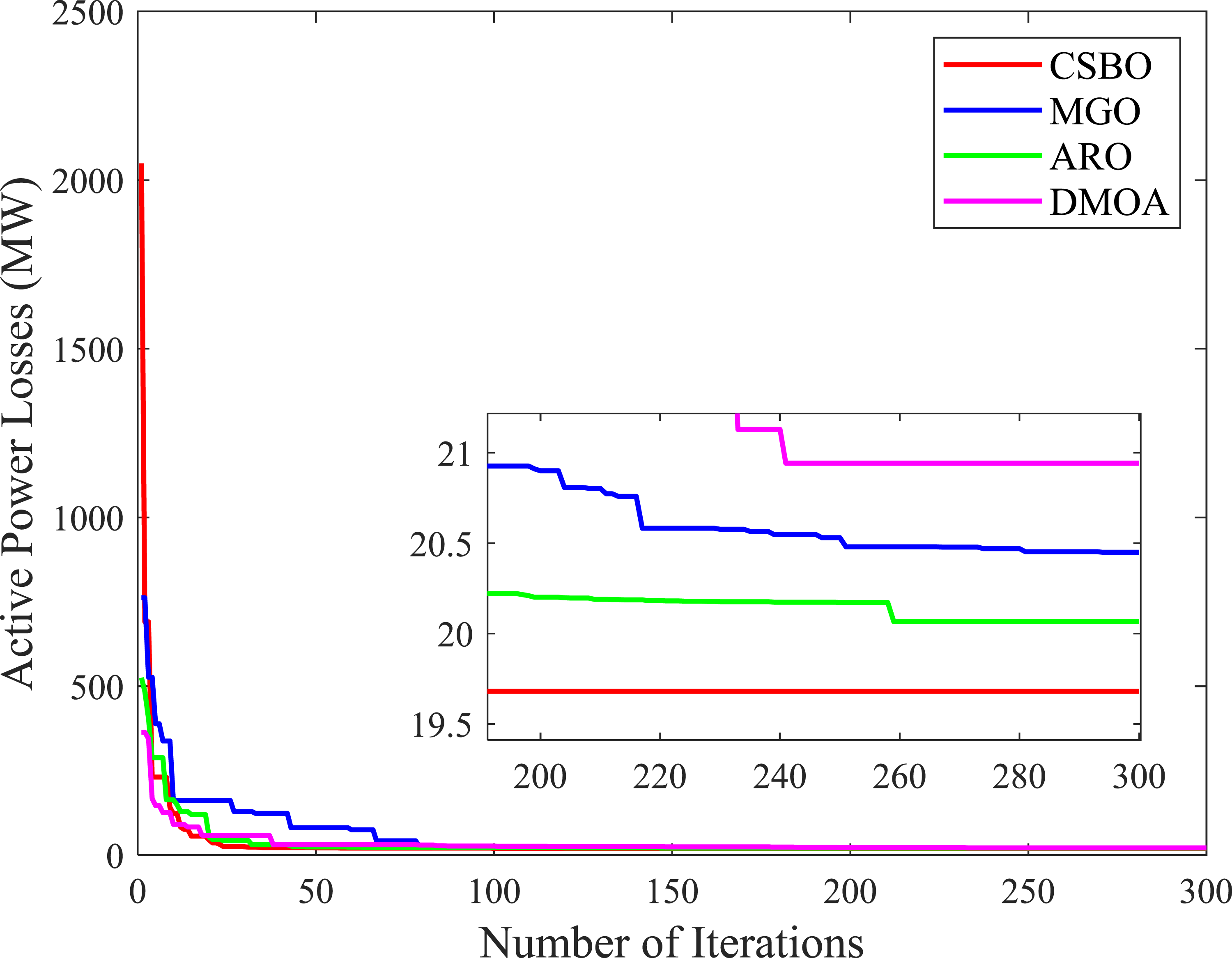
Convergence curves of the optimization methods for case 5.
• Case 6: Reduction of TGCs, including emission effects
Detailed optimal results obtained for case 6.
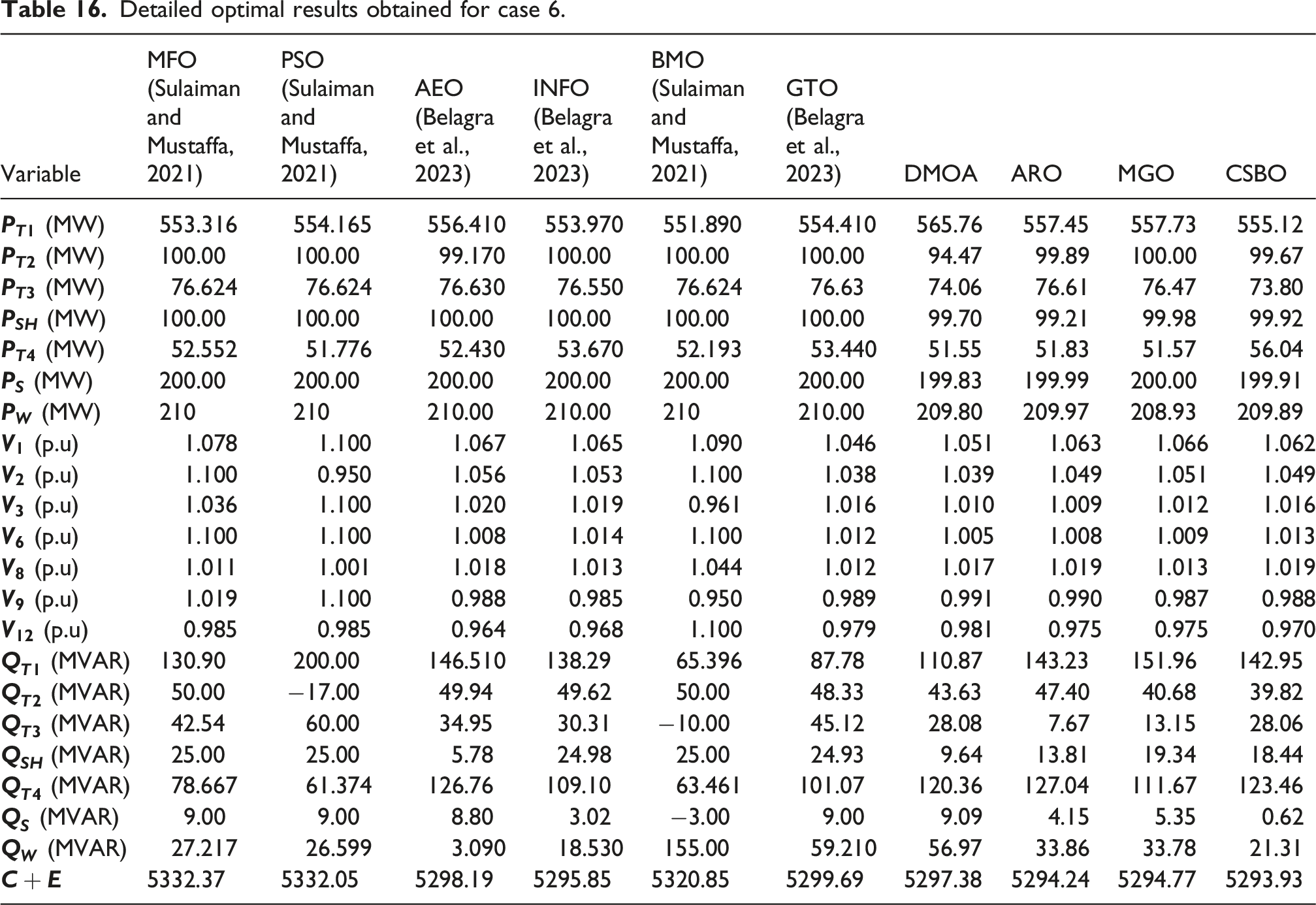
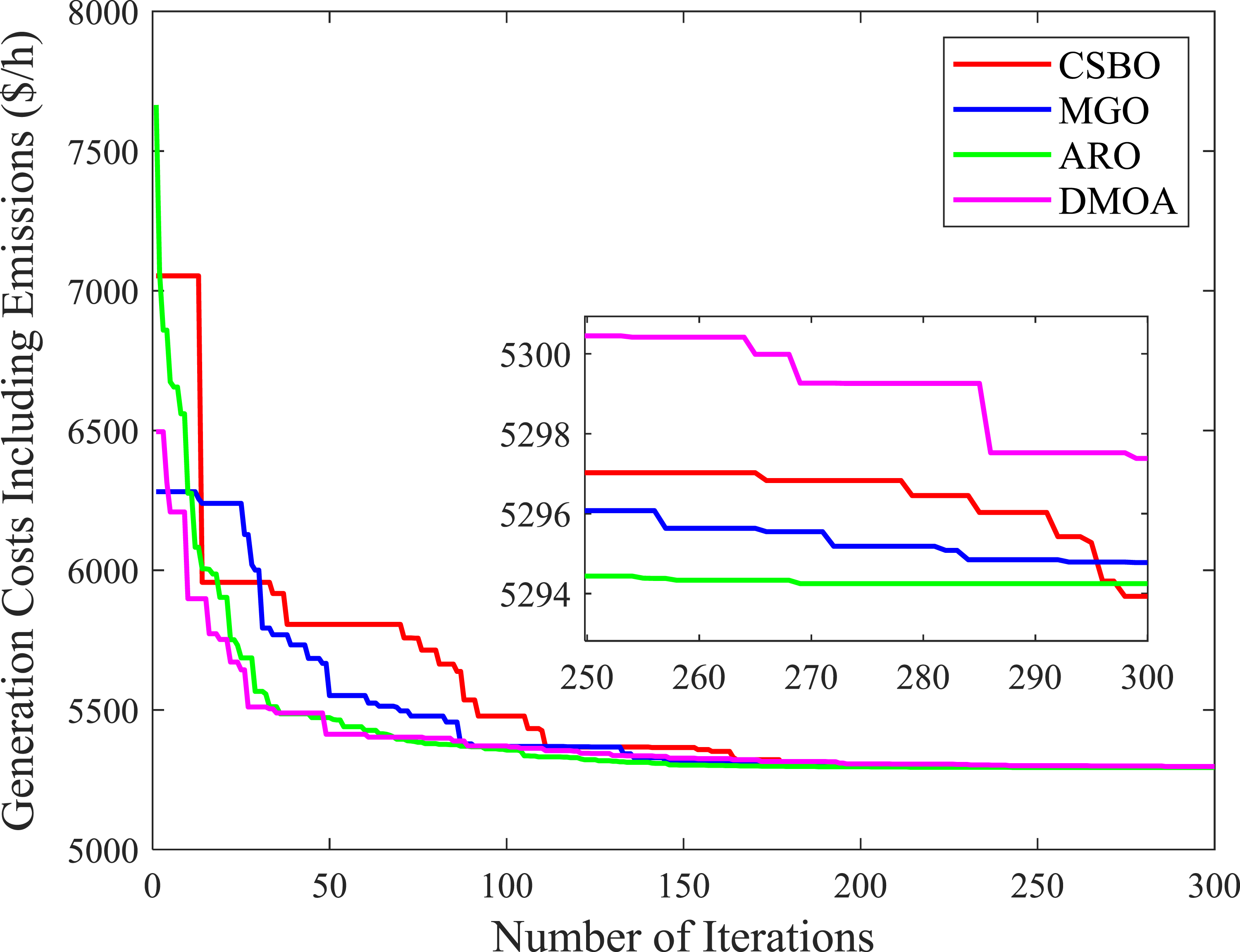
Convergence curves of the optimization methods for case 6.
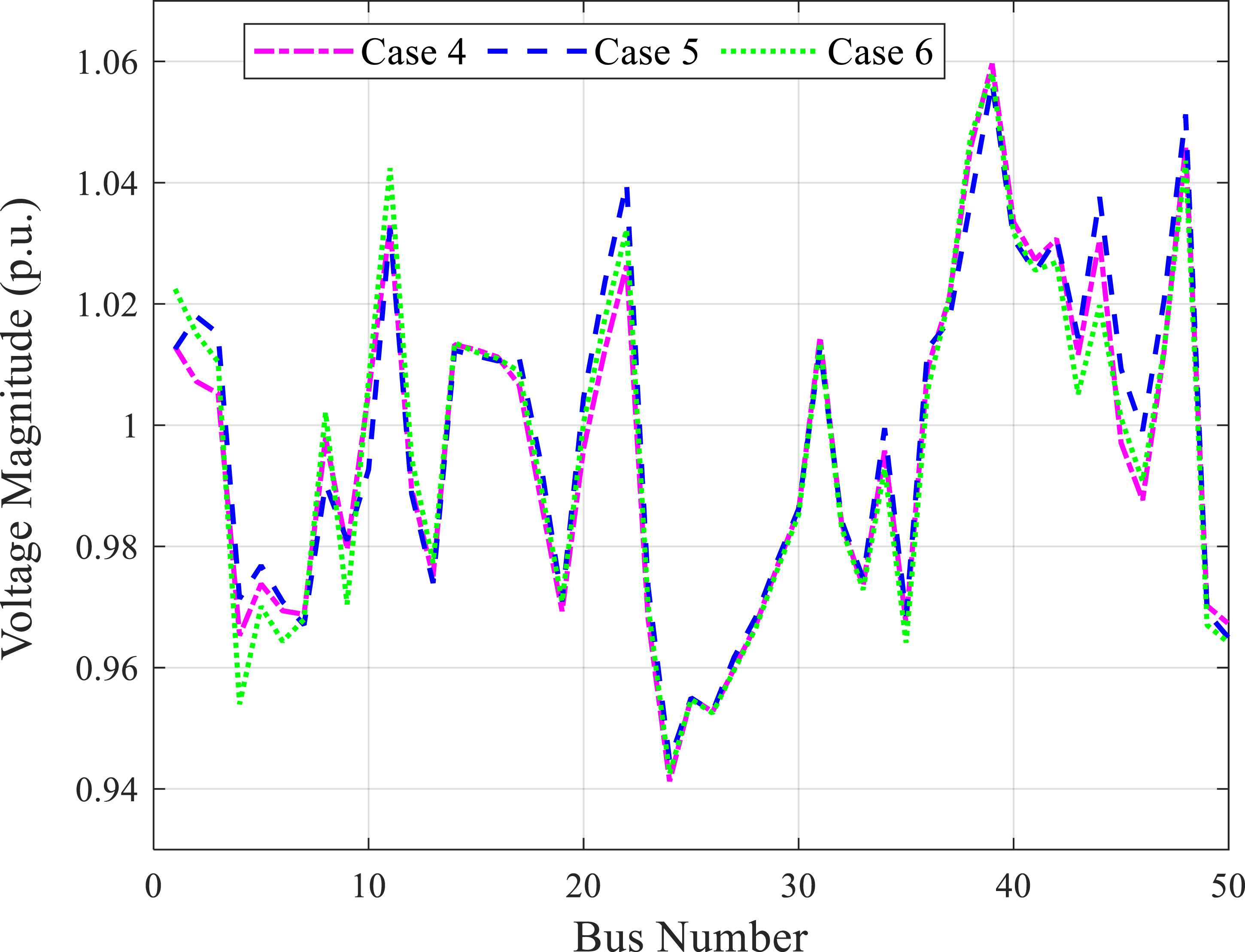
Voltage levels at load buses using CSBO algorithm for cases 4–6.
The execution time (CPU) is a useful way to compare how well different algorithms perform, with the simulation time for each method shown in the last column of Tables 7, 9, and 11 for cases 1, 2, and 3, where the proposed algorithm (CSBO) was the quickest and took the least time to reach near optimum results in comparison to other methods tested. Moreover, due to the complexity of the task, we use execution time as a metric of assessment.
Conclusion
The main objective of this work is to examine an overall pathway to optimize the conducting of energy networks with the participation of different power generators. A bio-inspired metaheuristic algorithm with the name of Circulatory System-Based Optimization (CSBO) was introduced and compared with other methods like MGO, ARO, and DMOA to process the OPF problem of a system connected to thermal, solar photovoltaic, wind, and joint SPV-hydroelectric generators. Two test systems were selected: the altered and adjusted IEEE 30 and 57 bus networks. To show the validity of the CSBO method, three target functions were adopted for each system: first, the reduction of the overall generation costs; second, the reduction of power losses; and lastly, the lowering of the total operating fees and emission effects simultaneously.
The novelty of this research lies in the successful implementation of CSBO algorithm as a robust alternative for managing the multi-objective complexities of hybrid energy systems. Unlike traditional metaheuristics, the unique dual-mode pressure-flow mechanics of CSBO allow it to bridge the research gap identified in existing literature, specifically the need for high-precision convergence in large-scale transmission networks. By effectively balancing technical, economic, and environmental objectives while maintaining low computational costs.
The findings revealed a clear superiority of the suggested framework over all previous ones conducted in the same circumstances; the TGCs, the APLs, and the combined cost-emissions were all reduced to minimum values in both test systems compared with previous competing methods like MFO, PSO, AEO, INFO, BMO, and GTO. This research showcased the astonishing results of the CSBO algorithm’s resilience, accuracy, and ability to balance exploration and exploitation while avoiding premature convergence, underscoring its applicability in multi-objective function situations and various power systems. This is evident with the reduction of the computational time (CPU).
In a broader global context, the findings offer significant implications for the transition toward decarbonized energy systems. By managing the stochastic nature of solar and wind energy, the CSBO-based approach enables grid operators to integrate higher shares of renewables without compromising system reliability. The reduction in total generation costs and power losses translates to lower operational expenditures for utilities, which can ultimately reduce energy prices for consumers. Furthermore, the ability to minimize environmental emissions directly supports international climate goals, offering a scalable decision-making tool for policymakers and engineers working to modernize aging infrastructure into resilient, intelligent microgrids. Future research will focus on the real-time implementation of the CSBO algorithm using Hardware-in-the-Loop (HIL) simulation to further validate its performance under physical hardware constraints and communication delays. CSBO method could also be modified, improved, or hybridized to obtain an even better-performing algorithm and utilize it for a wide range of purposes like distribution networks, microgrids, EV charging infrastructure, and energy storage units.
Footnotes
Acknowledgements
The authors extend their appreciation to the Ministry of Higher Education and Scientific Research, Algeria, for supporting this work through the project PRFU, under Grant No. A01L07UN100120230001. The first author would also like to express his deepest gratitude to Dr Souhil MOUASSA for his outstanding guidance, continuous support, and valuable contributions throughout the completion of this research work.

Ethical considerations
All authors have participated in (a) conception and design, or analysis and interpretation of the data; (b) drafting the article or revising it critically for important intellectual content; and (c) approval of the final version.
Credit statement (Author contribution)
All authors have read and approved the final manuscript.
Funding
The authors disclosed receipt of the following financial support for the research, authorship, and/or publication of this article: This work was supported by the Ministry of Higher Education and Scientific Research, Algeria, for supporting this work through the project PRFU, under Grant No. A01L07UN100120230001.
Declaration of conflicting interests
The authors declared no potential conflicts of interest with respect to the research, authorship, and/or publication of this article.
Data Availability Statement
The data presented in this study are available on request from the corresponding author.