







Abstract
Dark conditions are among the circumstances under which pedestrian fatalities have experienced the largest increases. This study examines the nighttime effects of continuous and triggered illuminators at crosswalks on driver behavior: yielding to pedestrians and reducing speeds by ≥10 mph (16 km/h) and by ≥5 mph (8 km/h). The study also compares the effects of rectangular rapid flashing beacons (RRFBs) in conjunction with crosswalk illuminators with RRFBs alone and with illuminators alone. Driver yielding to staged pedestrians as well as vehicle speeds were observed at four crosswalks (in Kalamazoo, Michigan, U.S.) at night under three conditions: baseline with existing street lighting, continuous illuminators, and triggered illuminators. At one site with RRFBs, observations were made in two additional conditions: RRFBs alone, and RRFBs in conjunction with triggered illuminators. Logistic regression models evaluated the effects of these conditions on driver yielding and speed reduction. The study found that adding continuous and triggered illuminators at two crosswalks with low existing lighting levels made motorists 222.4%–275.5% more likely to yield, 182.3%–211.6% more likely to reduce speeds by ≥10 mph, and 102.0%–130.9% more likely to reduce speeds by ≥5 mph at night. RRFBs plus triggered illuminators at one site made drivers more likely to yield and to reduce speeds than RRFBs alone or illuminators alone (1211.2% versus 487.2%–533.4% for yielding, 570.3% versus 204.0%–294.7% for reducing speeds by ≥10 mph, 282.3% versus 136.7%–184.2% for reducing speeds by ≥5 mph). Study findings could help agencies select appropriate nighttime treatments to enhance safety benefits for pedestrians.
Keywords
A total of 7,388 pedestrians were killed in motor vehicle crashes in the U.S. in 2021, an 80% increase since reaching their lowest point in 2009 ( 1 ). A large majority (77%) of pedestrian deaths occurred in the dark ( 2 ). Sullivan and Flannagan found that pedestrians were 3–6.8 times more likely to be killed at night than during the day ( 3 ). Dark conditions are among the circumstances under which pedestrian fatalities have experienced the largest increases ( 4 – 8 ). It has been one of the focus areas for deploying pedestrian safety countermeasures.
Low lighting levels at night reduce a driver’s ability to detect and recognize pedestrians. Measures such as road lighting and improved headlights can improve pedestrian visibility at night and reduce pedestrian crashes and injuries ( 9 – 11 ). Countries such as Australia and New Zealand apply lighting requirements for pedestrian crossings, which specify that crosswalks need intense lighting and must be illuminated at night ( 12 ). In the U.S., the Federal Highway Administration has published lighting design guidelines for locations with frequent pedestrian activities ( 13 – 16 ). For example, it is recommended that crosswalks have an average vertical luminance of 20 lux, and that pedestrians are illuminated in positive contrast by locating lighting in front of the crosswalk in the direction of approaching traffic. Both overhead lighting and illuminators can be used to improve pedestrian nighttime visibility at crosswalks. Overhead lighting is mounted high above the roads and points toward the ground; crosswalk illuminators typically use a narrow beam from light-emitting diode (LED) flood lights mounted on poles adjacent to the roadway and pointing toward the crosswalk area. Crosswalk illuminators are generally used at short crosswalks such as two-lane crossings, while overhead lighting can be used at wider crossings depending on the type of luminaires which could provide different light distribution.
Lighting at crosswalks can be continuously on regardless of pedestrian presence, or triggered when a pedestrian initiates a crossing. Triggered lighting reduces energy consumption and introduces less light pollution than lights that are continuously on. When lights are triggered, there is a sudden change in lighting intensity, which could alert drivers in addition to improving pedestrian visibility. No known research has compared the effects of these two lighting formats on driver behavior when pedestrians are present.
At pedestrian crossing locations, treatments such as rectangular rapid flashing beacons (RRFBs) or flashing signs that provide advanced warning of a pedestrian crossing make drivers more likely to yield during both the day and night ( 17 – 19 ). RRFBs were found to be more effective at night in increasing drivers’ yielding than during the day ( 18 , 20 ). However, these previous studies did not discuss existing lighting levels at night at sites where these treatments were placed. RRFBs and flashing signs do not improve pedestrian detection distances (the distance between a pedestrian and where a driver detects the pedestrian) in low-light conditions. They may be used in conjunction with light treatments at the recommended vertical illuminance to enhance pedestrian safety at night ( 14 ).
The majority of previous research on street lighting design and pedestrian safety evaluated the effects of lighting on visual performance measures such as detection distances or pedestrian contrast, and did not measure driver behavior such as yielding or slowing. This made it difficult to compare the effects of roadway lighting with other pedestrian safety countermeasures. Patella et al. found a reduction in vehicle speeds associated with an LED lighting system located in the pavement at a midblock crosswalk ( 21 ). Lighting a crosswalk from below is more expensive than from above, and this treatment has not been commonly used in the U.S. Nambisan et al. compared pedestrian and motorist behaviors during morning and evening peak hours (7–9 a.m. and 4–7 p.m.) before and after the installation of a lighting system at a midblock crosswalk in Las Vegas ( 22 ). The lighting system detected pedestrians, triggered increased illumination, and maintained the higher level of illumination for the duration that a pedestrian was detected in the crosswalk. The study found that the percentage of motorists yielding to pedestrians increased with the treatment. However, the study hours were not limited to dark conditions. Larger effects would likely be found in the dark, since increased lighting would increase pedestrian visibility more effectively in the dark than during the day.
Given the gaps in existing research, this study aims to examine the effects of continuous and triggered illuminators at crosswalks on driver behavior at night: yielding to pedestrians and reducing speeds. The triggered condition was expected to have a larger effect, because of the alerting function associated with the sudden change in lighting intensity. The second goal of the study is to compare the effects of RRFBs in conjunction with crosswalk illuminators with RRFBs alone and with illuminators alone. Since RRFBs alert drivers of pedestrians and illuminators increase pedestrian visibility, it was assumed that the combined treatments would produce larger benefits than either treatment alone. The study findings will facilitate comparison of lighting treatments with other pedestrian safety countermeasures, and help agencies select appropriate nighttime treatments to increase yielding and speed reduction, potentially enhancing safety benefits for pedestrians.
Method
The proportion of drivers who yielded to pedestrians and drivers who reduced speeds by 10 mph (16 km/h) or more and by 5 mph (8 km/h) or more before reaching a crosswalk at night with and without treatments were compared. All pedestrian crossings were made by a staged pedestrian, to assure crossings followed a safe protocol. All driver behavior recorded was publicly observable and no personal-identifying information was collected at any time. This project was reviewed and approved by Western Michigan University’s Institutional Review Board (IRB Project Number 21-09-21).
Study Sites
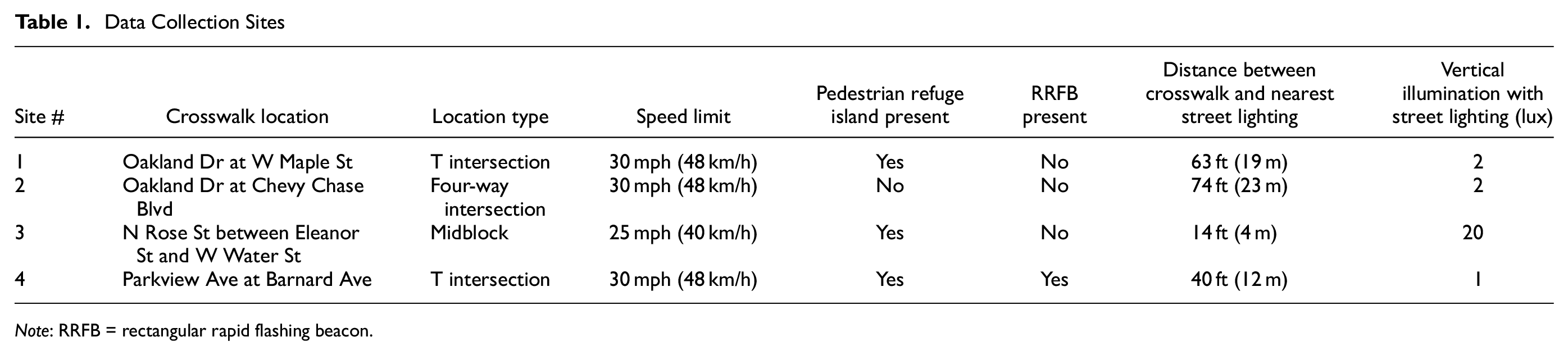
Four crosswalks with continental markings (longitudinal stripes) in Kalamazoo, Michigan, U.S., including one at a mid-block location and three at intersections, were selected (Table 1). The midblock crosswalk was located on a street with two lanes per direction and a speed limit of 25 mph (40 km/h). The three crosswalks at intersections were located on major approaches with one lane per direction and a two-way turning lane. The major approaches of intersections had no traffic control and minor approaches were stop sign controlled with light traffic. The speed limit at intersection crosswalks was 30 mph (48 km/h), and an RRFB treatment was present at one of them.
Data Collection Sites
Note: RRFB = rectangular rapid flashing beacon.
The vertical illumination with existing street lighting was measured at each crosswalk entry location by using an illuminance meter, with the sensor held 3 ft (0.9 m) above the ground. Staged pedestrian crossings occurred on the side of the road with the lower light level, which are reported in Table 1. Only the existing street lighting at site #3 provided the recommended illuminance.
Conditions
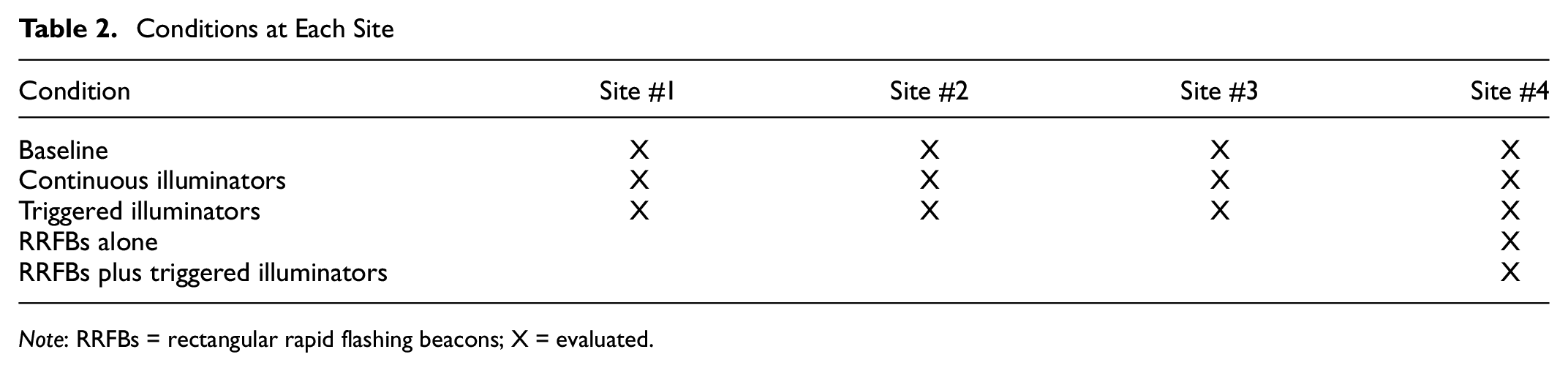
Data were collected under three conditions at each site: baseline condition with existing street lighting, crosswalk illuminators continuously on regardless of a pedestrian presence (referred to as continuous illuminators), and crosswalk illuminators s triggered when a pedestrian initiated a crossing. At the site with RRFBs, two additional conditions were evaluated: RRFBs alone under the baseline condition and RRFBs plus triggered illuminators when a pedestrian initiated a crossing. Illuminators were used instead of overhead lighting in this study, since they were portable and could be easily moved from site to site for data collection. Table 2 summarizes the conditions tested at each site.
Conditions at Each Site
Note: RRFBs = rectangular rapid flashing beacons; X = evaluated.
TAPCO Safewalk® crosswalk illuminators were purchased for this study to provide enhanced lighting at the four sites. Bhagavathula et al. measured that the same illuminators could provide a vertical illuminance of 20 lux at a crosswalk entrance ( 14 ). Commercially available illuminators, including the TAPCO products, can be activated automatically when the system passively detects pedestrians, or by pedestrians pushing a button. They are powered by connecting to solar panels or the electric grid. For data collection in this study, illuminators were mounted on tripods that were 7 ft 5 in. (226 cm) tall and powered by batteries for portability purposes. At each site, one illuminator was placed at each crosswalk entry location on each side of the road. At sites where there was a pedestrian refuge island (sites #1, #3, and #4), two additional illuminators were used, one at each side of the refuge island. Illuminators were placed on the side of the crosswalk closer to approaching vehicles, so that pedestrians were rendered in positive contrast. When a staged pedestrian pressed a key fob, illuminators were activated all together. Figure 1 shows two study sites under the baseline condition and with illuminators on.
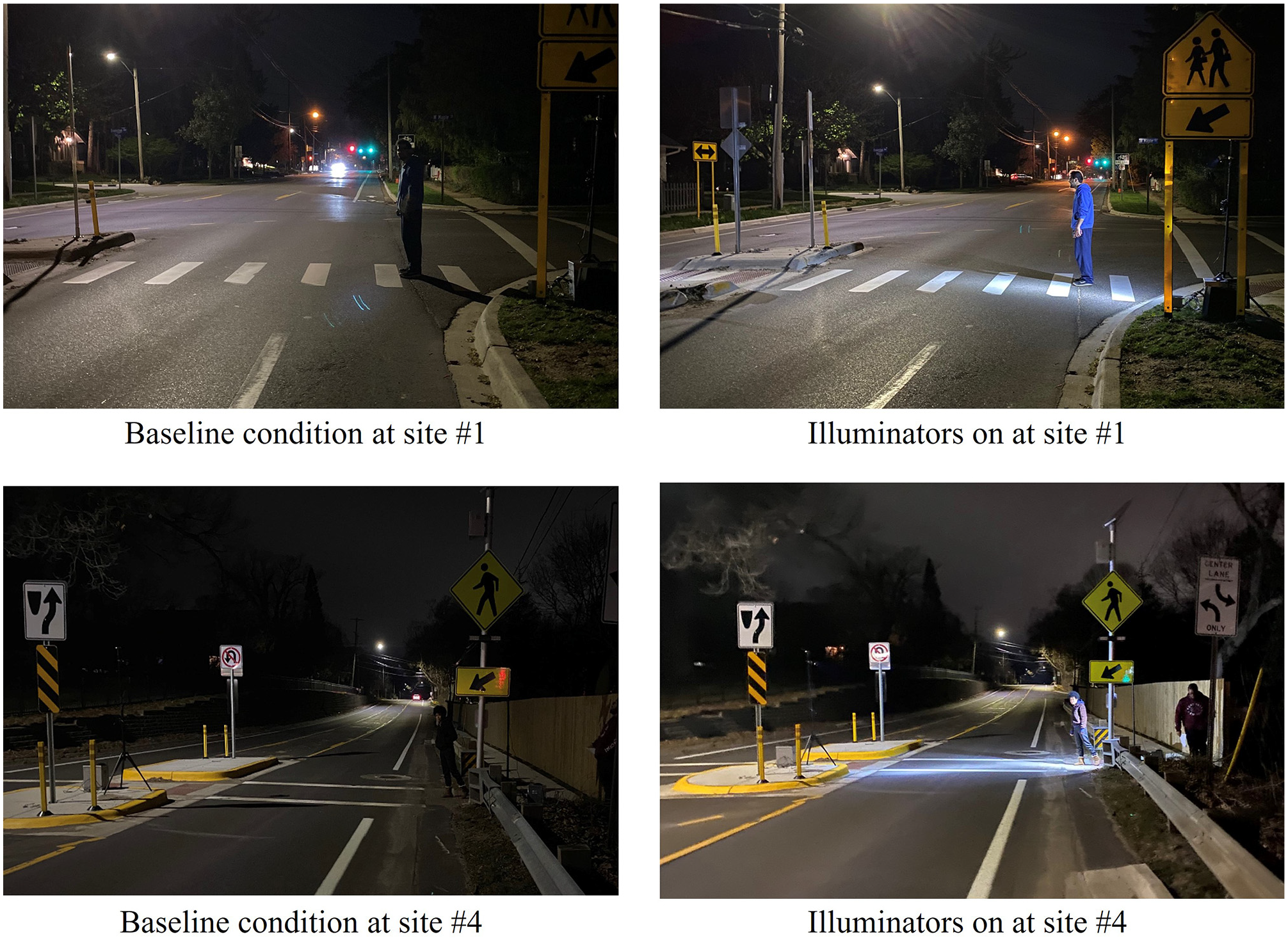
A staged pedestrian entering the crosswalk: under the baseline condition at site #1 (top left), with illuminators on at site #1 (top right), under the baseline condition at site #4 (bottom left), and with illuminators on at site #4 (bottom right).
Under the continuous illuminators condition, lighting was briefly turned off after the last vehicle passed the crosswalk when there was a gap in traffic, to conserve the battery. The lighting was turned back on when no vehicle was in view, so the illuminators would be active when the next vehicle appeared.
Data Collection
Data were collected beginning 1 h after sunset under clear and dry conditions during March–May at site #1, end of August–October at site #2, October–November at site #3, and November–December at site #4, in 2022. Summer was skipped because of the extended daytime and late sunset. Data collection started as early as 7:25 p.m. depending on the time of sunset, and ended as late as 11:30 p.m.
At each site, a stopping distance from the crosswalk was calculated based on the speed limit and was marked on the pavement, so that vehicles traveling at the speed limit could safely stop before reaching the crosswalk if they braked at or before reaching this marking. The calculated distances were 104 ft (32 m) at site #3 and 141 ft (43 m) at sites #1, #2, and #4, by assuming a driver reaction time of 1 s and a deceleration rate of 10 ft/s2 (3 m/s2) as recommended by the Institute of Transportation Engineers.
Only one direction of traffic on the side with a lower lighting level was observed. As a vehicle was about to reach the distance marking, a staged pedestrian initiated a crossing by placing a foot in the crosswalk, indicating an intent to cross. The pedestrian waited until a motorist yielded, or until the vehicle had passed if no yielding occurred, before beginning to cross. The staged pedestrian wore dark clothing without any reflective material. Staged crossing trials were not conducted when natural pedestrians were present. Only straight-moving vehicles (no turning vehicles) were recorded. If there was a line of vehicles approaching, only the first vehicle in line was observed.
Speeds of all the observed vehicles at the distance marking were measured with a handheld LiDAR unit (Ultra Lyte LTI 20/20 by Laser Technology Inc, with a speed accuracy of ±1 mph). If a vehicle stopped in front of a crosswalk, it was recorded as yielding. For vehicles that did not yield to the staged pedestrian, a second speed measurement was obtained as they reached the crosswalk. To minimize motorists’ awareness of the speed observation, the person who measured speeds stayed beside or behind an object in a poorly lighted area away from the road.
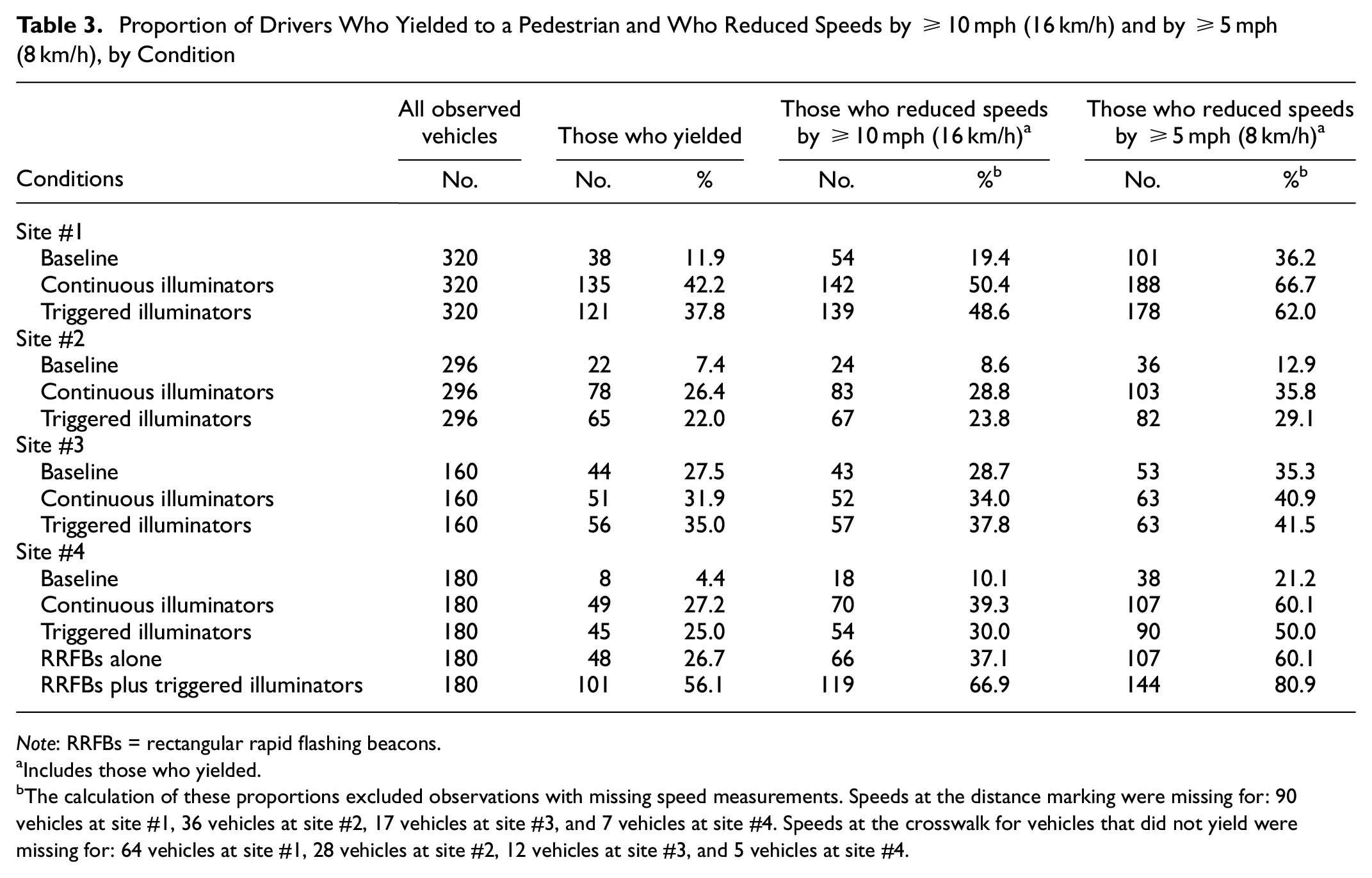
On each night of data collection at each site, conditions were provided in a random order, and the same number of staged crossings were conducted under each condition. The staged crossings followed the same protocol consistently between sites and between crossings at each site. The numbers of crossings per condition per night ranged between 5 and 55, depending on traffic volumes. A total of 960, 888, 480, and 900 crossings were recorded at sites #1, #2, #3, and #4, respectively (Table 3).
Proportion of Drivers Who Yielded to a Pedestrian and Who Reduced Speeds by ≥10 mph (16 km/h) and by ≥5 mph (8 km/h), by Condition
Note: RRFBs = rectangular rapid flashing beacons.
Includes those who yielded.
The calculation of these proportions excluded observations with missing speed measurements. Speeds at the distance marking were missing for: 90 vehicles at site #1, 36 vehicles at site #2, 17 vehicles at site #3, and 7 vehicles at site #4. Speeds at the crosswalk for vehicles that did not yield were missing for: 64 vehicles at site #1, 28 vehicles at site #2, 12 vehicles at site #3, and 5 vehicles at site #4.
Analysis
Logistic regression models evaluated the effects of the triggered and continuous illuminators compared with the baseline condition on driver yielding, by using data collected at sites #1–2 and at site #3. Separate models were estimated for sites #1–2 and site #3, since site #3 had a much higher baseline lighting level than sites #1–2. Another logistic regression model was estimated to examine the effects of RRFBs alone and RRFBs plus triggered illuminators, in addition to continuous and triggered illuminators, by using data collected at site #4.
In all three models, the dependent variable was a binary indicator of whether a driver yielded to the staged pedestrian (1 if yielding, 0 if not). The independent variables included observed speeds at the distance marking and indicators of data collection hours (9 p.m.–12 a.m. versus 7–9 p.m.), data collection site (site #2 versus #1, in the model of sites #1–2 only), and condition. The data collection site indicator in the model of sites #1–2 was included to account for differences between the two sites, such as the month of data collection and the road geometries.
In the models for sites #1–2 and site #3, the condition categories were continuous illuminators and triggered illuminators, with the baseline condition as the reference. In the model for site #4, the condition categories were continuous illuminators, triggered illuminators, RRFBs alone, and RRFBs plus triggered illuminators, with the baseline as the reference. Effects of the conditions compared with the baseline were calculated based on estimated parameters of the condition indicators. To compare effects between non-baseline conditions, these models were re-run by using a non-baseline condition as the reference for the condition indicators, while keeping all the other variables the same. Model estimates of the other independent variables remained the same regardless of the reference category of conditions, since this was a reparameterization of a variable without interaction terms.
Similarly, logistic regression models were estimated to examine the effects of treatments on the likelihood that a driver, including those who yielded, reduced speeds by 10 mph (16 km/h) or more and by 5 mph (8 km/h) or more before reaching the crosswalk. Separate models were estimated for sites #1–2, site #3, and site #4. The dependent variable of the models was a binary indicator of speed reduction (1 if speed reduced by 10 mph or more/by 5 mph or more, 0 if not). The independent variables were the same as in the models of drivers yielding.
Odds ratios (ORs) derived from logistic regression models are not good approximations for relative risk ratios (RRs) when the incidence of an outcome is not rare in the study population (i.e., greater than 10%), as is true for motorists yielding and reducing speeds to pedestrians. As a result, ORs were transformed into relative risks as RR = OR/[(1 −P0) + (P0 × OR)], where P0 represents the proportion of vehicles yielding to pedestrians or the proportion of vehicles reducing speeds under the baseline condition ( 23 ). Variables with p values less than 0.05 were considered statistically significant.
Results
At sites #1 and #2, the proportions of drivers who yielded to pedestrians and the proportions who reduced speeds by 10 mph (16 km/h) or more and by 5 mph (8 km/h) or more before reaching the crosswalk increased with the illuminators on (continuous or triggered), compared with the baseline condition (Table 3). These proportions were slightly smaller under the triggered than under the continuous illuminators condition.
At site #3, where existing street lighting had provided the recommended illuminance, the proportions were the lowest under the baseline condition, and the highest under the triggered illuminators condition. Differences in proportions under the three conditions were relatively small. Under the baseline condition, the proportions of drivers yielding and drivers reducing speeds by 10 mph (16 km/h) or more at site #3 were much higher than the baseline proportions at the other sites.
At site #4, these proportions were the lowest under the baseline condition, followed by triggered illuminators, RRFBs alone, and continuous illuminators, and the highest under the RRFBs plus triggered illuminators condition.
At sites #1, #2, and #4 with a speed limit of 30 mph (48 km/h), the mean measured speeds at the distance markings were all 34 mph (55 mph) and the 85th percentile speeds were 38 mph (61 km/h), 39 mph (63 km/h), and 38 mph (61 km/h), respectively. At site #3 with a 25 mph (40 km/h) speed limit, the mean speed at the distance marking was 25 mph (40 km/h) and the 85th percentile speed was 31 mph (50 km/h).
Logistic Regression Results on Drivers Yielding and Reducing Speeds
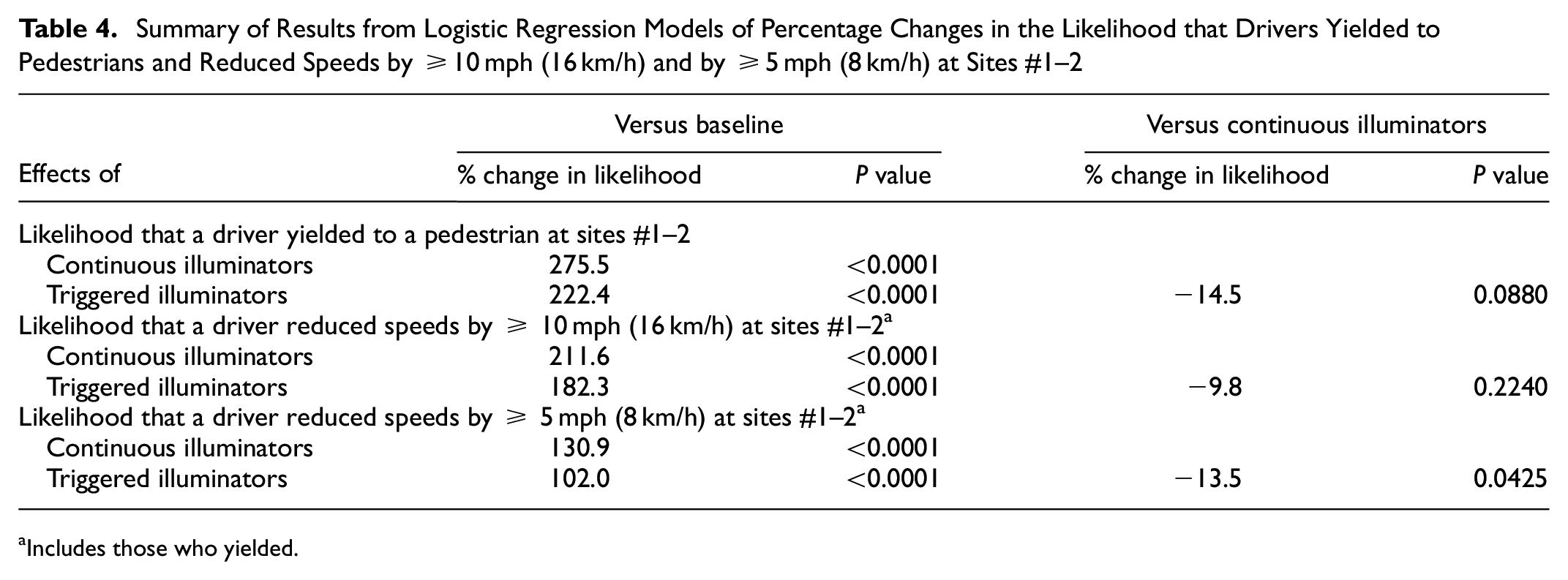
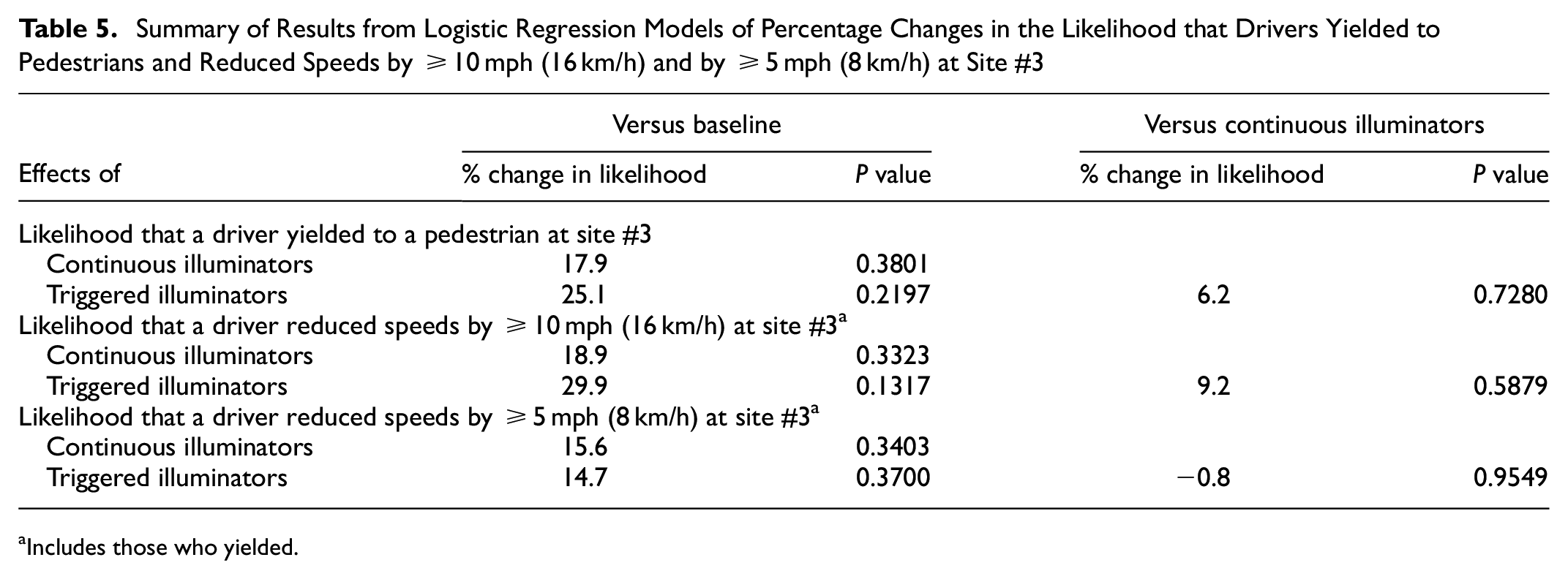
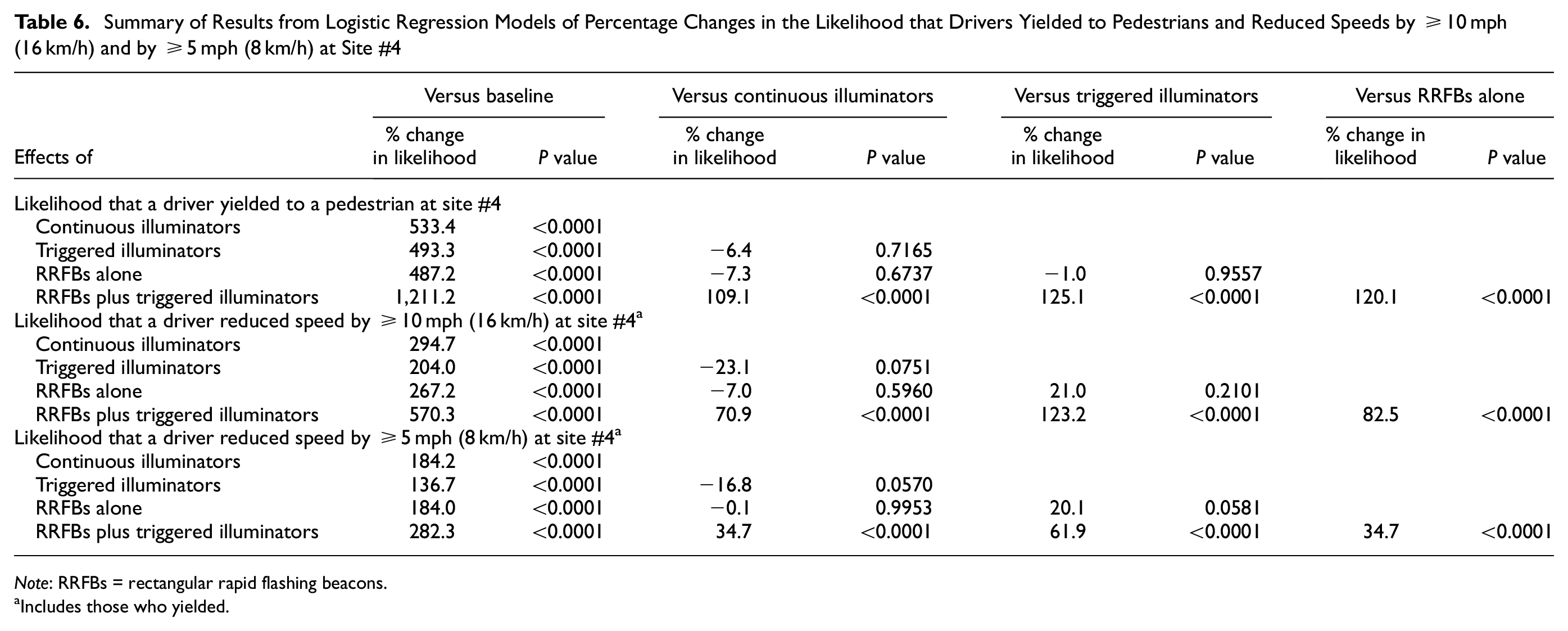
Based on logistic regression modeling results (Tables A1–A2), the estimated effects of continuous and triggered illuminators, RRFBs alone, and RRFBs plus triggered illuminators on the likelihood that a driver yielded to pedestrians and that a driver reduced the speed are summarized in Table 4 for sites #1–2, Table 5 for site #3, and Table 6 for site #4.
Summary of Results from Logistic Regression Models of Percentage Changes in the Likelihood that Drivers Yielded to Pedestrians and Reduced Speeds by ≥10 mph (16 km/h) and by ≥5 mph (8 km/h) at Sites #1–2
Includes those who yielded.
Summary of Results from Logistic Regression Models of Percentage Changes in the Likelihood that Drivers Yielded to Pedestrians and Reduced Speeds by ≥10 mph (16 km/h) and by ≥5 mph (8 km/h) at Site #3
Includes those who yielded.
Summary of Results from Logistic Regression Models of Percentage Changes in the Likelihood that Drivers Yielded to Pedestrians and Reduced Speeds by ≥10 mph (16 km/h) and by ≥5 mph (8 km/h) at Site #4
Note: RRFBs = rectangular rapid flashing beacons.
Includes those who yielded.
Sites #1– 2 (Suboptimal Baseline Lighting)
At sites #1 and 2, the likelihood that a driver yielded to a pedestrian was 275.5% higher with the continuous illuminators and 222.4% higher with the triggered illuminators, compared with the baseline condition (Table 4). Both effects were statistically significant. A driver was 14.5% less likely to yield under the triggered than under the continuous illuminators condition, but the difference was not significant.
The likelihood that a driver reduced the speed by 10 mph (16 km/h) or more was significantly higher under continuous and triggered illuminators (211.6% and 182.3%, respectively) than under the baseline condition. A driver was 9.8% less likely to reduce the speed by 10 mph (16 km/h) or more under the triggered than under the continuous illuminators condition, but the difference was not significant.
When compared with the baseline condition, the likelihood that a driver reduced the speed by 5 mph (8 km/h) or more was 130.9% higher with the continuous illuminators, and 102.0% higher with the triggered illuminators. Both increases were statistically significant. A driver was 13.5% less likely to reduce the speed by 5 mph (8 km/h) or more under the triggered than under the continuous illuminators condition, and the difference was significant.
Site #3 (Optimal Baseline Lighting)
At site #3, the likelihood of a driver yielding and slowing was 14.7%–29.9% higher under continuous and triggered illuminators, compared with the baseline condition, but none of the increases were statistically significant (Table 5). Under the triggered relative to the continuous lighting condition, drivers were more likely to yield or to reduce speeds by 10 mph (16 km/h) or more, and slightly less likely to reduce speeds by 5 mph (8 km/h) or more. None of the differences were statistically significant.
Site #4 (with RRFBs, Suboptimal Baseline Lighting)
At site #4, the likelihood that a driver yielded to a pedestrian increased significantly under all the treatment conditions compared with the baseline, with the highest increase of 1,211.2% associated with the RRFBs plus triggered illuminators condition (Table 6). Increases in the likelihoods relative to the baseline did not differ significantly among continuous and triggered illuminators and RRFBs alone. Under the RRFBs plus triggered illuminators condition, a driver was 109.1%–125.1% more likely to yield than under the other non-baseline conditions, and these differences were statistically significant.
All the treatments significantly increased the likelihood that a driver reduced the speed by 10 mph (16 km/h) or more and by 5 mph (8 km/h) or more, compared with the baseline condition. The triggered illuminators condition was associated with the smallest increases. Under this condition, a driver was 204.0% more likely to reduce the speed by 10 mph (16 km/h) or more and 136.7% more likely to reduce the speed by 5 mph (8 km/h) or more. The continuous lighting condition and RRFBs alone were associated with similar increases in the likelihoods that a driver reduced the speed by 10 mph (16 km/h) or more (294.7% versus 267.2%), and by 5 mph (8 km/h) or more (184.2% versus 184.0%). The largest increases in the likelihood that a driver reduced the speed occurred under the RRFBs plus triggered illuminators condition: 570.3% (by 10 mph or more) and 282.3% (by 5 mph or more).
Drivers were more likely to reduce speeds under the RRFBs plus triggered illuminators condition than under the other non-baseline conditions: 70.9%–123.2% more likely to reduce speeds by 10 mph (16 km/h) or more, and 34.7%–61.9% more likely to reduce speeds by 5 mph (8 km/h) or more. The speed-reducing effects were not significantly different among the continuous illuminators, triggered illuminators, and RRFBs alone.
While not summarized in Tables 4 to 6, speed at the distance marking was consistently a significant variable in these models: the higher the speed, the less likely a driver yielded to a pedestrian or reduced speed, at all four sites (Tables A1–A2).
Discussion
This study found that adding crosswalk illuminators at sites with low existing lighting levels made motorists more likely to yield to pedestrians and to reduce speeds before reaching the crosswalk at night. Increases in the likelihoods of drivers reducing speeds were greater as speed reductions became larger. Bhagavathula et al. found that crosswalk illuminators, including the product used in the current study, provided optimal nighttime visibility of pedestrians and long pedestrian detection distances ( 14 ). The current study further showed improvements in drivers slowing and yielding to pedestrians at night with crosswalk illuminators.
RRFBs plus triggered illuminators at one site made drivers more likely to yield and to reduce speeds in the presence of pedestrians, compared with RRFBs alone or illuminators alone. RRFBs flash with an alternating high frequency when activated. Flashing lights effectively capture drivers’ visual attention and alert them to the presence of pedestrians as a bottom-up system ( 24 – 26 ). However, they serve more of a warning than a lighting purpose ( 25 ). RRFBs and flashing signs do not illuminate pedestrians in any way and could not help drivers see pedestrians in low-light conditions ( 14 ). When RRFBs are used together with illuminators at the recommended illuminance at night, drivers’ awareness and pedestrian visibility both improve and, as a result, the combined treatments lead to greater benefits than RRFBs alone or illuminators alone. Although previous research has shown the safety benefits of RRFBs at night, it was not clear what the existing lighting conditions were at the study sites. Based on the current findings, and Bhagavathula et al., it is suggested that, when installing RRFBs at sites that are not well-lit, agencies should consider adding lighting to ensure optimal visibility of pedestrians and to maximize the safety benefits of RRFBs ( 14 ). There are commercially available products that combine RRFBs and illuminators.
The effects of the continuous illuminators were found to be generally larger than the triggered illuminators, although the differences were small and not always significant. When designing the current study, we expected larger effects for the triggered than the continuous light condition, since a sudden increase in light intensity could alert drivers in addition to an increase in the lighting level. However, the results indicate that the alerting effect might not be as significant as was expected at study sites. When used together with RRFBs at one site, the effectiveness of triggered illuminators significantly increased, indicating that flashing lights could provide a more effective warning than a sudden change in lighting intensity. How triggered lighting could be implemented in the real world would also have an impact on its effectiveness. For example, if it is triggered by a pedestrian pushing a button, there may be even smaller benefits than those which the current study found, since some pedestrians would not activate it ( 27 , 28 ). The underuse of triggered lighting can be overcome by a lighting system that automatically turns on when it detects pedestrians.
At the site with the optimal baseline lighting condition and a much higher baseline yielding rate than the other sites, adding the illuminators (triggered or continuous) did not significantly improve driver yielding or slowing. Higher lighting levels than recommended at crosswalks did not significantly increase pedestrian visibility and, as a result, may not provide much additional benefit for pedestrians ( 14 ). This site differed from the other sites in additional ways (i.e., midblock versus intersections, a lower speed limit), which might also have contributed to the different findings. Even though the treatments significantly improved driver behavior at the three study crosswalks with poor baseline lighting conditions, the percentages of drivers yielding with treatments in place were lower than nighttime yielding levels reported in some previous research of RRFBs; for example, over 90% reported by Shurbutt et al. ( 20 ). It is possible that the differences in driver yielding rates among the previous and current studies were because of differences in study site characteristics.
Several study limitations should be noted. The current study collected data at a limited number of sites (four), including one site with optimal baseline lighting and one with RRFBs. However, the current findings are intuitive and statistically significant, and this serves as a valuable initial study into the nighttime pedestrian visibility and safety issue. Future research could investigate the robustness of the effects reported here by collecting data at a larger number of sites with diverse characteristics that allow for control of environmental conditions such as speed limits, location type (e.g., intersection versus midblock), numbers of lanes, land use or nearby development, and street lighting levels. This study did not examine crash effects of crosswalk illuminators. It is believed that increased yielding and speed reduction in the presence of pedestrians could lead to fewer pedestrian crashes and less severe injuries to pedestrians.
This study used a driver reaction time of 1 s to calculate stopping distances which were marked on the pavement to determine when to initiate a crossing. While the normal driver reaction times vary from about 0.75 to 1.5 s, some pedestrian-related research used longer reaction times (e.g., 1.5–2.5 s) and, as a result, longer distances than those which were used in this study ( 18 , 29 , 30 ). In this study, drivers with reaction time longer than 1 s might not have been able to stop completely before reaching the crosswalk. If a larger reaction time and longer stopping distances had been used, the observed yielding rates would possibly have been larger than those which were reported in this paper. However, consistent results in yielding and speed reduction validate the yielding results in this study.
Speed is an important factor in pedestrian safety, as higher speeds substantially increase the risk of severe and fatal injury to a pedestrian ( 31 ). The faster a vehicle travels, the longer it takes for the vehicle to stop. The current study also found that the faster a driver was traveling, the less likely that the driver yielded to a pedestrian. Even if the lighting enhancement helps motorists see pedestrians better, a fast-traveling driver may not be able to stop the vehicle in time to avoid hitting the pedestrian. At all the crosswalks selected for the current study, the 85th percentile speeds were 6–9 mph (10–14 km/h) over the speed limits. Measures to reduce speeds, such as traffic-calming devices, lowering speed limits in urban areas, and speed safety cameras can increase yielding and pedestrian safety ( 32 – 40 ). In addition to improved lighting, other crosswalk visibility enhancements, such as highly reflective crosswalk markings and advance yield or stop markings and signs, can also help make pedestrians more visible and improve yielding rates ( 41 , 42 ).
Safe vehicles, together with other safe system elements such as safe speeds and safe roads, provide layers of protection to promote the safety of all road users. Pedestrian automatic emergency braking (AEB) systems can detect pedestrians and mitigate or avoid a crash with a pedestrian by warning the driver and automatically applying the brakes if the driver does not respond. Such systems have been found to reduce pedestrian crashes ( 43 , 44 ). These benefits were observed in dark and lighted conditions, but not under dark conditions without street lighting ( 43 ). Research that evaluates how different types of lighting treatments affect pedestrian AEB performance would help further improve these systems and pedestrian safety.
Footnotes
Author Contributions
The authors confirm contribution to the paper as follows: study conception and design: R. Houten; data collection: R. Houten, J. Engle, L. Shomaly; analysis and interpretation of results: W. Hu; draft manuscript preparation: W. Hu, J. Cicchino, R. Houten. All authors reviewed the results and approved the final version of the manuscript.
Declaration of Conflicting Interests
The author(s) declared no potential conflicts of interest with respect to the research, authorship, and/or publication of this article.
Funding
The author(s) disclosed receipt of the following financial support for the research, authorship, and/or publication of this article: This work was fully supported and funded by the Insurance Institute for Highway Safety. No funding or support in any format was received from any manufacturer of crosswalk illuminators.

Supplemental Material
Supplemental material for this article is available online.
References
Supplementary Material
Please find the following supplemental material available below.
For Open Access articles published under a Creative Commons License, all supplemental material carries the same license as the article it is associated with.
For non-Open Access articles published, all supplemental material carries a non-exclusive license, and permission requests for re-use of supplemental material or any part of supplemental material shall be sent directly to the copyright owner as specified in the copyright notice associated with the article.
