






Abstract
Crowdsourced deliveries have expanded globally, driven in part by an increase in online shopping demand. This study examines behavioral heterogeneity in crowdsourced delivery participation in South Korea using latent class analysis (LCA), with a particular focus on the differences between (a) individuals who are willing to participate but have no prior experience and (b) those who have actual experience working as crowdshippers. While prior studies have largely focused on stated willingness or intention to participate in crowdshipping, little is known about how these stated expectations differ from the actual participation patterns of experienced workers. The analysis identified three classes among prospective crowdshippers—Work–Life Balancers, Occasional Part-Timers, and Ambitious Crowdshippers—distinguished primarily by expected earnings and intended work intensity. Two classes emerged among experienced crowdshippers—Intermittent Gig Practitioners and Dedicated Crowdshippers—differentiated by realized earnings, delivery frequency, and vehicle utilization. The experienced sample was more male-dominated and younger, while the prospective sample was more gender-balanced and older. The findings offer practical implications for gig platforms and policymakers, including segment-specific scheduling, compensation design, and policy frameworks addressing worker safety and public-transport integration.
Introduction
The gig economy, where the general public flexibly engages in temporary work, is becoming increasingly popular ( 1 , 2 ). Gig workers engage in physical tasks including moving, yard work, on-demand delivery, ride-hailing, and other simple errands or remote (online) tasks including survey, translation, and designing. This emerging concept has recently shown a notable growth, particularly in the logistics field, coupled with an increasing demand for online shopping. E-commerce accounts for approximately 16.9% of total retail sales in the United States according to the US Census Bureau ( 3 ). It is remarkable given that the share was less than 4% in 2009. In this context, gig workers—also known as crowdsourced delivery workers, or crowdshippers—play an important role as part of home deliveries for parcels, groceries, and food. Companies including Amazon, Walmart, Instacart, Grubhub, and UberEats widely utilize crowdsourced delivery workers to complete their deliveries. In the crowdsourced delivery system, the general public is able to easily participate in this delivery task with minimal requirements and get paid on a daily or weekly basis. Individuals are required to meet some requirements such as age, valid identification and driver license, and vehicle ownership for parcel deliveries. For local food deliveries, the requirements are typically more relaxed. Individuals can deliver food using their own vehicle, bike, scooter, or even on foot.
Various stakeholders benefit from crowdsourced deliveries in different ways. Companies save operational costs associated with maintaining infrastructure, fleets, and labor by outsourcing deliveries to crowdshippers ( 4 , 5 ). From the public perspective, crowdsourced delivery systems contribute to enhancing employment opportunities in societies. In a survey by McKinsey & Company ( 2 ), 20% and 26% of respondents reported that they engage in the work to gain additional income and to support a family, respectively. They are also known to mitigate negative externalities including traffic congestion in cities ( 6 ). This is partly because deliveries can be completed by slightly modifying drivers’ original route and no additional fleets are needed, particularly in rural areas, that is, areas with sparse and low demand, by utilizing crowdsourced delivery workers. Furthermore, crowdshippers can use nonmotorized vehicles for their local delivery tasks including bikes, electric bikes, walking, or even public transit instead of internal combustion engine vehicles. While crowdsourced delivery accounts for a negligible share of total freight movements in South Korea, it represents a substantially significant proportion of the food delivery market.
Given that the crowdsourced delivery is open to the general public, a comprehensive understanding of participation behaviors is critical not only for companies’ strategic decision-making, but also for public sectors to ensure cities’ sustainability and workforce safety ( 7 ). There have been several academic studies investigating public intention to work as crowdshippers. However, there is a critical knowledge gap: the existing literature focuses solely on respondents’ stated behavior, that is, willingness, intention or preference, rather than their actual participating behaviors. Several previous studies have identified a discrepancy between travelers’ attitudes before use and their actual behaviors ( 8 , 9 ). Understanding this gap is essential because platform operators and policymakers who rely solely on stated preferences may overestimate labor supply, misallocate scheduling resources, or design incentive structures that do not reflect actual working conditions. There is a need to account for experienced crowdshippers’ revealed behaviors including primary delivery mode, time-of-day, day-of-week, and weekly earnings. Furthermore, not everyone exhibits the same motivation and participation pattern when participating as crowdshippers. Some may engage in crowdsourced deliveries as part of their commuting routine, while others may engage irregularly only when they need extra income during weekends. Understanding these heterogeneous patterns would offer valuable behavioral insights into why and how individuals participate in crowdsourced deliveries.
Meanwhile, the latent class model has already become an important tool in analyzing human behavioral patterns, and has been successfully used to capture hidden heterogeneity ( 10 ). In addition, research has shown that targeted interventions tailored to segmented groups are more important than uniform policies applied to the entire population ( 11 ). Thus, the present research aims to identify underlying behavioral clusters behind prospective (i.e., those without prior experience but willing to participate) and experienced (i.e., those with prior experience) crowdshippers using a latent class analysis (LCA) and to discuss implications by investigating behavioral patterns and discrepancies between prospective workers’ expectations and experienced workers’ actual behaviors.
Specifically, a survey was conducted in South Korea to collect information on participation behaviors including time-of-day, day-of-week, primary delivery mode, earnings, and product types. Respondents were classified into two groups (prospective and experienced individuals) based on their experience. The respondents were then classified using LCA and their profiles and participating patterns were discussed.
The remainder of this paper is organized as follows. The next section synthesizes relevant research on receiver and crowdshipper behaviors. The following sections present methodologies including survey data description and modeling framework, results for prospective and experienced crowdshippers, and in-depth discussions derived from the analyses. The last section concludes the present research.
Literature Review
Several studies have been conducted to examine the intention to use crowdsourced deliveries. Essentially, this research topic encompasses three distinct perspectives: (a) receiver (i.e., consumer), (b) worker (i.e., crowdshipper), and (c) consideration of both the receiver and worker aspects. Receiver-side intention refers to the willingness to receive deliveries by crowdshippers, whereas crowdshipper-side intention pertains to participation in the delivery process as a worker. Studies examining the intention to use crowdsourced delivery systems are summarized in Table 1. Examination of each of these perspectives is essential for a holistic understanding of the system, given the number of stakeholders involved in delivery systems.
A Summary of the Literature on the Willingness to Use Crowdsourced Deliveries
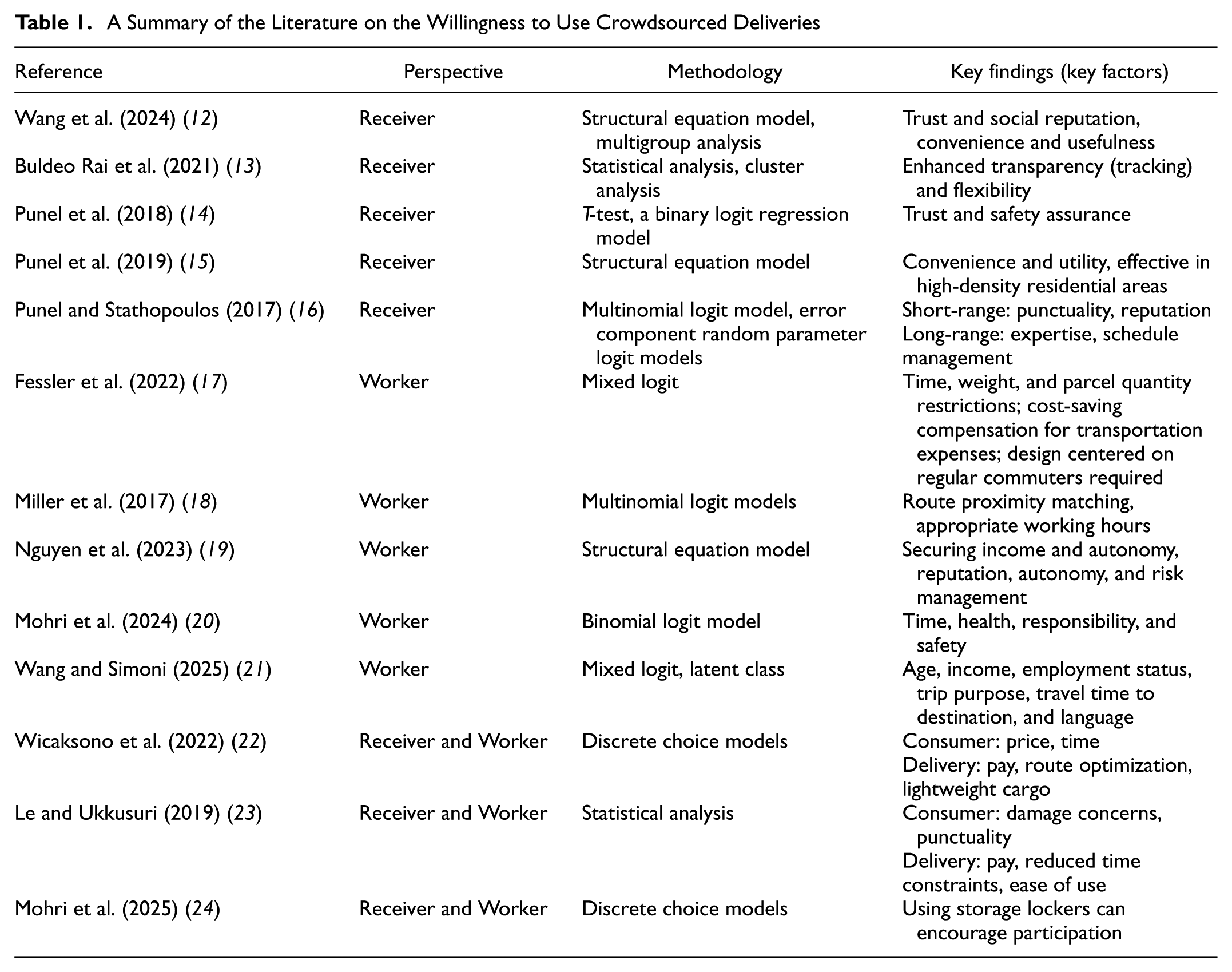
From the receiver perspective, deliveries by nonprofessionals (crowdshippers) may raise receivers’ concerns. Thus, trust and loss of privacy significantly influenced the behavioral intention to receive crowdsourced deliveries ( 12 ). To alleviate concerns concerning nonprofessional delivery, preference for delivery increased when the deliverer was an employee or neighbor rather than an “unspecified individual.” Preference also increased when information transparency (delivery notifications, tracking) and flexibility (possibility of changing time or location) were enhanced ( 13 ). Socioeconomic and demographic factors also contribute to the adoption. Demographically, usage rates were found to be higher among males, younger individuals (<34 years old), full-time workers, and low-income groups, whereas no significant difference was observed in educational levels. Usage rates were found to be higher in residential areas compared with commercial districts ( 14 ). Another study revealed that the utilization rate was higher among male, younger (under 44 years old) full-time workers, and willingness to use the service was higher in areas with low job accessibility ( 15 ). Furthermore, the acceptability of crowdsourced delivery has been shown to vary depending on distance. For shorter distances, speed and transparency are emphasized, whereas for longer distances, expertise and experience (trust) are prioritized. In the local delivery setting, shippers place value on transparency of driver performance monitoring along with speed, while longer shipments prioritize delivery conditions and driver training and experience ( 16 ).
Several studies have examined whether individuals were willing to transport cargo along their own travel routes. Analysis on willingness to participate as a crowdshipper revealed that younger individuals, students, and (to a somewhat lesser extent) employed individuals and the self-employed are more likely to participate in the crowdshipping concept, whereas older individuals aged 60 and above showed lower willingness to participate. The marginal disutility of time spent collecting and delivering parcels was found to be higher among older and higher-income respondents, while it was lower among those with short-term educational qualifications ( 17 ). Other studies found that an individual’s intention to shift from a commuter to a delivery driver depends not only on demographics but also on attitudes. A group who felt they had sufficient free time, those who felt they made good use of their time in the car, and those who were less averse to spending more time in the car if it meant earning money tended to be more receptive to delivery work. In contrast, a tendency to enjoy trying new things or prior awareness of crowdsourced delivery itself did not have a significant influence ( 18 ). Research analyzing the continued participation intention of crowdshippers revealed that economic benefits and work autonomy—categorized as benefit factors—positively influenced workers’ motivation to remain engaged in crowd logistics services ( 19 ). It further demonstrated that cost factors, namely perceived risks and work-related stress, exerted a negative effect on crowdshippers’ intention to continue delivering. The willingness of public transportation users to participate in crowdshipping, analyzing participation intent across demographic groups and based on whether individuals utilized parcel lockers, was also examined ( 20 ). The latent class model identified three distinct user segments—“leisurely,”“avid,” and “skeptical”—accounting for 19%, 53%, and 28% of respondents, respectively. Crowdshipping participation among public transportation users, specifically designing the service to avoid generating additional car trips, is also analyzed. This analysis revealed that demographic and travel-related factors—including age, employment type, income level, and individual travel patterns—significantly shaped respondents’ propensity to participate ( 21 ). In a related scenario, an examination was made of whether store-visiting customers would be willing to deliver packages ordered online by others on their way home. The findings indicated that higher compensation led participants to accept greater detour distances, whereas increased parcel weight tended to reduce their willingness to serve as couriers.
A study investigating the willingness to participate in crowdsourced delivery using bicycles was also conducted ( 22 ). Demand has been found to be sensitive to price and service improvements, whereas for supply, time and convenience matter more than monetary compensation. Therefore, attracting customers is relatively straightforward, whereas acquisition of riders represents the major challenge ( 22 ).
Crowdshipping has been identified as particularly promising for on-demand goods delivery in the United States, where consumers prioritize convenience and safety, while suppliers value compensation and time flexibility ( 23 ). The crowdsourced last-mile model demonstrates significant potential to contribute to cost reduction and environmental improvement, demonstrating particularly high effectiveness among small-scale transporters and sustainability-oriented consumers (young individuals familiar with parcel lockers) ( 24 ).
Following the review of the existing literature, critical knowledge gaps have been identified as follows. First, the existing literature focused solely on the respondents’ stated behavior (i.e., intention, preferences) of the public to work as crowdshippers, that is, they focused on individuals who do not have experience as delivery workers. Understanding experienced workers’ actual (revealed) behavior has been lacking. Second, while previous studies have examined determinants of participation in crowdsourced delivery services (e.g., demographic attributes and psychological factors), research on behavioral participating patterns—such as time window, cargo types, day-of-week, and time-of-day—remains limited, particularly in the context of comparing stated preferences with actual behaviors.
Thus, to fill the knowledge gaps, the present research examines both prospective and experienced workers and further explores participation behaviors by identifying underlying behavioral patterns. Understanding these patterns would offer valuable behavioral insights into why and how individuals participate in crowdsourced deliveries.
Methodology
This section presents a description of survey data and modeling framework.
Data Description
The study utilized survey data collected in South Korea during 2025. The purpose of the survey was to collect various information on participating behaviors of crowdsourced deliveries. Given that leading gig economy platforms mandate that workers must be a minimum of 19 years of age, the survey focused exclusively on adult populations and did not include individuals under 19 years old. The survey was conducted through a professional online panel provider in South Korea. The respondents were recruited from an online panel rather than a probability-based national sampling frame, thus the sample is considered as a nationwide panel-based sample. Detailed descriptions of the questionnaire modules, response formats, and variable coding are provided in Appendix Tables A1 to A3.
Based on participants’ answers to a screening question asking “Have you ever participated in crowdsourced deliveries?” respondents received one of two distinct questionnaire versions: one designed for those with prior work experience and another for those without such experience (prospective workers). The survey for those with prior experience focused on their revealed behaviors, while the survey for those without experience focused on preferred behaviors. The initial sample consisted of 900 participants. Following the elimination of responses deemed invalid, the final sample comprised 877 participants. Among the 877 respondents, actual participation patterns were obtained from those with previous experience in this work (n = 222). From the group lacking prior experience (comprising 655 participants), those who indicated “not willing” or “not at all willing” when asked “Are you willing to participate in crowdsourced deliveries?” were removed from the analysis; consequently, only participants who responded “very willing,”“willing,” or “neutral” were retained. Subsequently, the remaining respondents (n = 473)—those willing to participate—provided information concerning their preferences on delivery time slots, weekly scheduling, main transportation methods, expected compensation levels, and types of products delivered.
For the group without prior experience in crowdsourced delivery, survey questions addressed their willingness to participate, preferred days of the week for participation, desired daily working hours, expected earnings, weight (size) of deliverable cargo, most anticipated benefits, and primary concerns. In addition, for the group with participation experience, the survey collected information on frequency of participation, time spent participating, income, and transportation modes, and self-reported engagement with four primary platform types common in the South Korean crowdshipping market—same-day/next-day delivery, food delivery, quick consumer-to-consumer deliveries, and other normal-speed deliveries—each coded as binary based on participants’ selections.
Different income measurements were applied for the two groups because of the varying underlying constructs. Willing prospective workers reported their minimum acceptable hourly earnings (KRW/hour), reflecting the compensation threshold required to consider participation. Experienced workers reported their actual monthly platform earnings (KRW/month), capturing realized economic outcomes. Demographic information (including age, gender, marital status, education level, and income level) and general travel behavior (e.g., the number of trips on a weekday, car ownership, primary travel mode) were included for both groups. The sample characteristics for the two types of respondents are presented in Table 2
Sociodemographic Profile of the Respondents
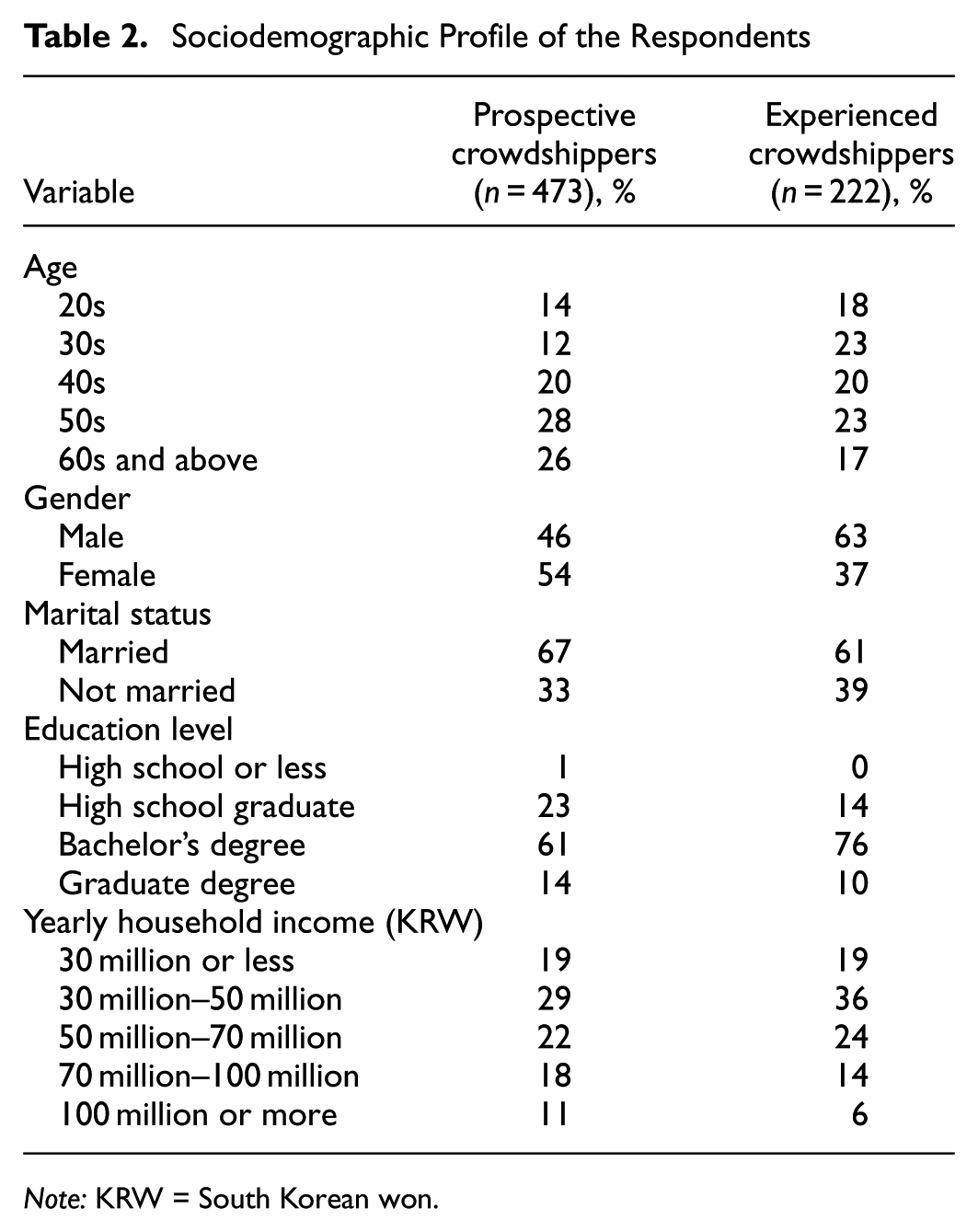
Note: KRW = South Korean won.
Latent Class Analysis
This study employs LCA to identify the underlying clusters behind behaviors. LCA is a statistical method that addresses heterogeneity in observed data. In LCA models, latent classes are employed to categorize individuals, with each class characterized by particular features. This approach provides a concise and comprehensive explanation of model specification, estimation, selection criteria (including the Bayesian information criterion [BIC], Akaike information criterion [AIC], and entropy), covariates, and the assumptions of local independence.
Population-level comparisons can describe average differences between willing prospective and experienced crowdshippers, but they treat each group as homogeneous. LCA was used to identify latent subgroups within each population based on the joint distribution of multiple delivery-related indicators. This approach captures within-group heterogeneity in combinations of time preferences, delivery modes, earnings, and product types that variable-by-variable comparisons cannot reveal.
The concomitant-variable LCA relaxes the standard LCA assumption that class proportions (

where
Y = observed response (often a vector of item responses)
X = observed explanatory variable (e.g., individual characteristics)
LCA has been widely employed in transportation behavior research to identify underlying groups that explain behavioral heterogeneity. Several studies have investigated behavior patterns in e-commerce. Furthermore, LCA has been extensively applied not only to e-commerce but also to transportation mode choice research ( 28 , 29 ). These studies indicate that, for marketing purposes, implementing a uniform policy for all individuals is not necessary. Instead, policies should be tailored to suit potential clusters ( 26 , 30 – 33 ).
In the present research, two latent class analyses (one for individuals who have personally participated in crowdshipping, and the other for individuals who have not experienced) were conducted using LatentGOLD 6.0 ( 34 ). More specifically, socioeconomic and demographic factors and general travel behavior were used as covariates, and crowdsourced delivery participation behavior (day-of-week, time-of-day, work hours, earnings, product type, and primary delivery mode) were used as indicators in the models as presented in Figure 1. Based on the classified clusters, practical and theoretical implications were derived.
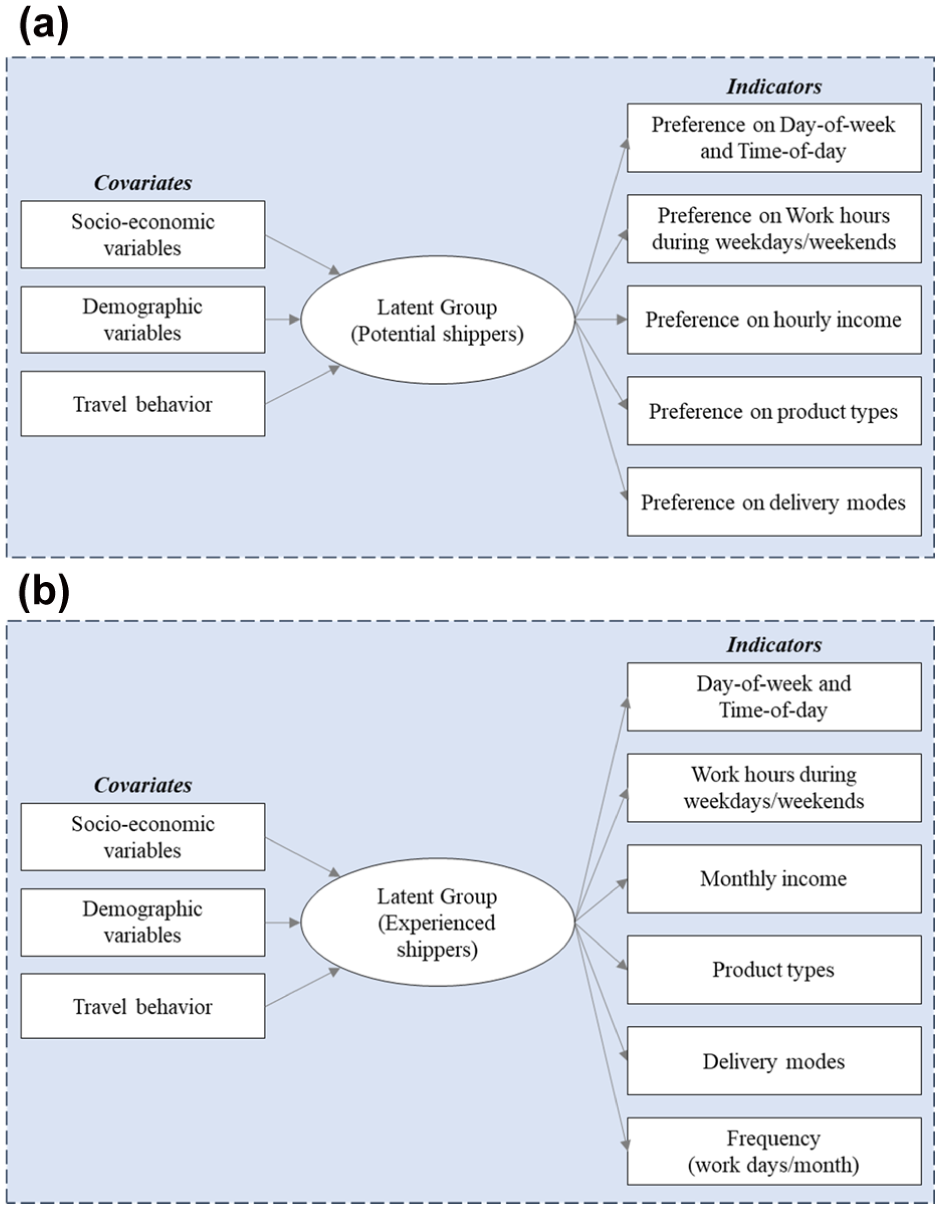
Latent class analysis framework: (a) prospective crowdshippers, and (b) experienced crowdshippers.
Results
Summary of Results
The LCA revealed distinct subgroups among prospective crowdshippers (individuals willing to participate in crowdshipping activities) and experienced crowdshippers (those with prior experience in crowdshipping deliveries). The analysis was conducted on the basis of observed indicators related to work preferences, income level, delivery characteristics, and sociodemographic profiles. To determine the optimal number of latent classes, model fit was evaluated through a comprehensive comparison of models with increasing class counts, employing established statistical criteria commonly used in LCA. Information-theoretic criteria were employed, including BIC, which accounts for model complexity relative to goodness-of-fit by incorporating both sample size and the number of estimated parameters. In addition, entropy values were assessed to evaluate the precision of class differentiation, with higher values (ideally approaching 1.0) indicating well-differentiated classes and minimal classification uncertainty. Class selection was based on multiple criteria rather than a single statistic. BIC served as the primary fit criterion as it penalizes model complexity and has demonstrated reliable performance in LCA. In addition, entropy, class proportions, parsimony, and practical interpretability were considered. The one-class solution was treated as the baseline model representing no latent heterogeneity.
The goodness-of-fit measures for both models are presented in Tables 3 and 4. The comprehensive evaluation revealed that a three-class solution provided the best fit for the subsample of prospective workers, showing superior model performance and theoretically meaningful subgroup distinctions without evidence of overfitting. In contrast, for the subsample of experienced workers, a two-class model represented the most parsimonious and empirically defensible specification, consistent with theoretical predictions concerning heterogeneity within this population. Tables 5 and 6 present the class membership models for the prospective and experienced workers, respectively. The class-membership covariates were chosen based on theoretical relevance to comprehensively profile the latent classes by demographic, socioeconomic, and mobility-related characteristics. Nonsignificant covariates are retained as profile descriptors as dropping them could alter the latent class structure, given that the class-membership model is estimated jointly.
Measures of Goodness-of-Fit (Prospective Workers)
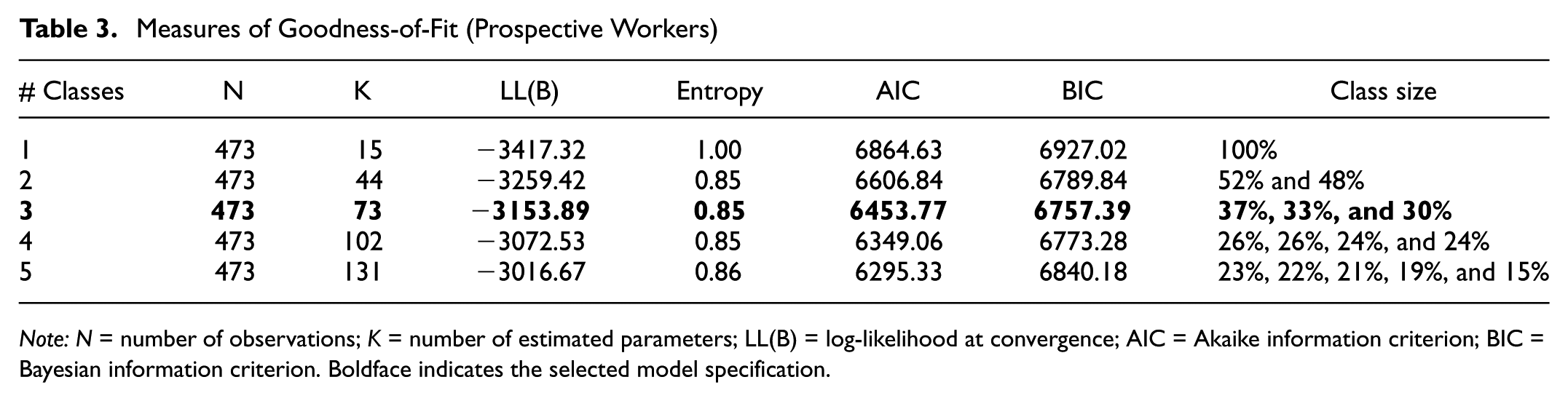
Note: N = number of observations; K = number of estimated parameters; LL(B) = log-likelihood at convergence; AIC = Akaike information criterion; BIC = Bayesian information criterion. Boldface indicates the selected model specification.
Measures of Goodness-of-Fit (Experienced Workers)
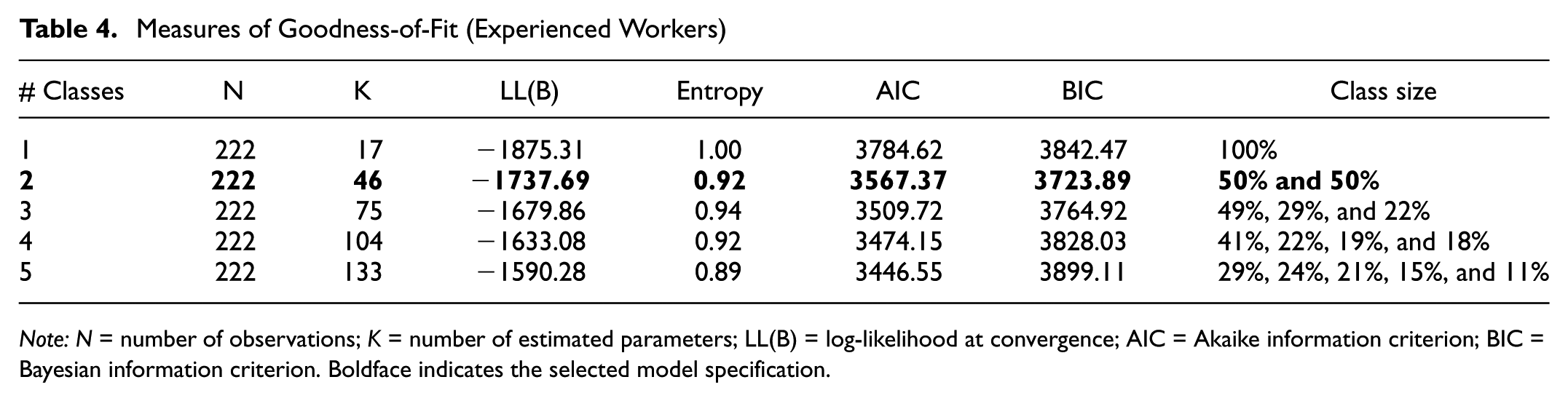
Note: N = number of observations; K = number of estimated parameters; LL(B) = log-likelihood at convergence; AIC = Akaike information criterion; BIC = Bayesian information criterion. Boldface indicates the selected model specification.
The Class Membership Model for the Prospective Crowdshippers
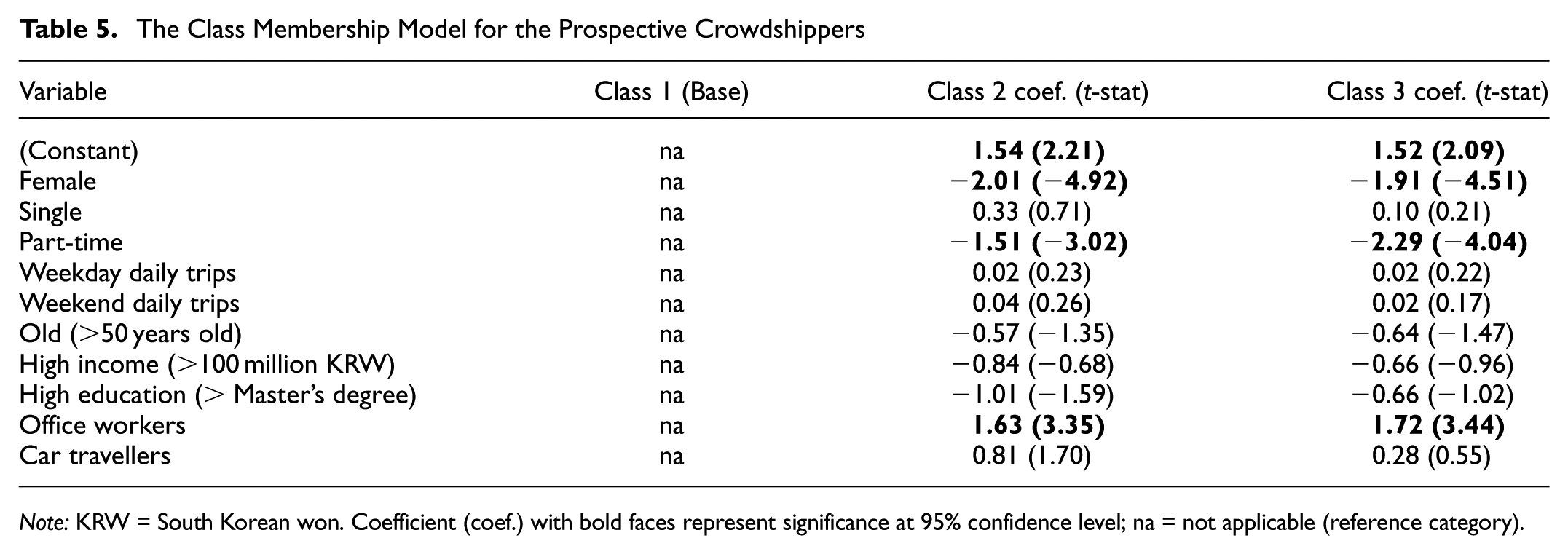
Note: KRW = South Korean won. Coefficient (coef.) with bold faces represent significance at 95% confidence level; na = not applicable (reference category).
The Class Membership Model for the Experienced Crowdshippers
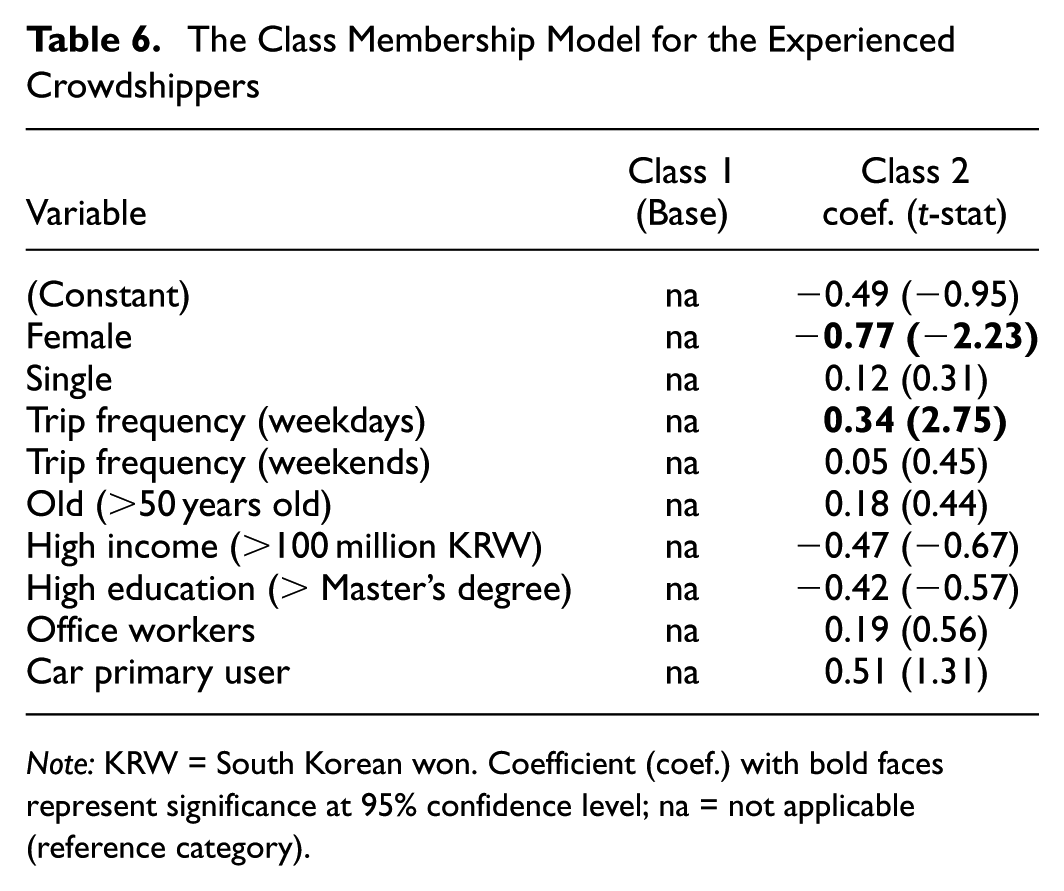
Note: KRW = South Korean won. Coefficient (coef.) with bold faces represent significance at 95% confidence level; na = not applicable (reference category).
Prospective Crowdshippers
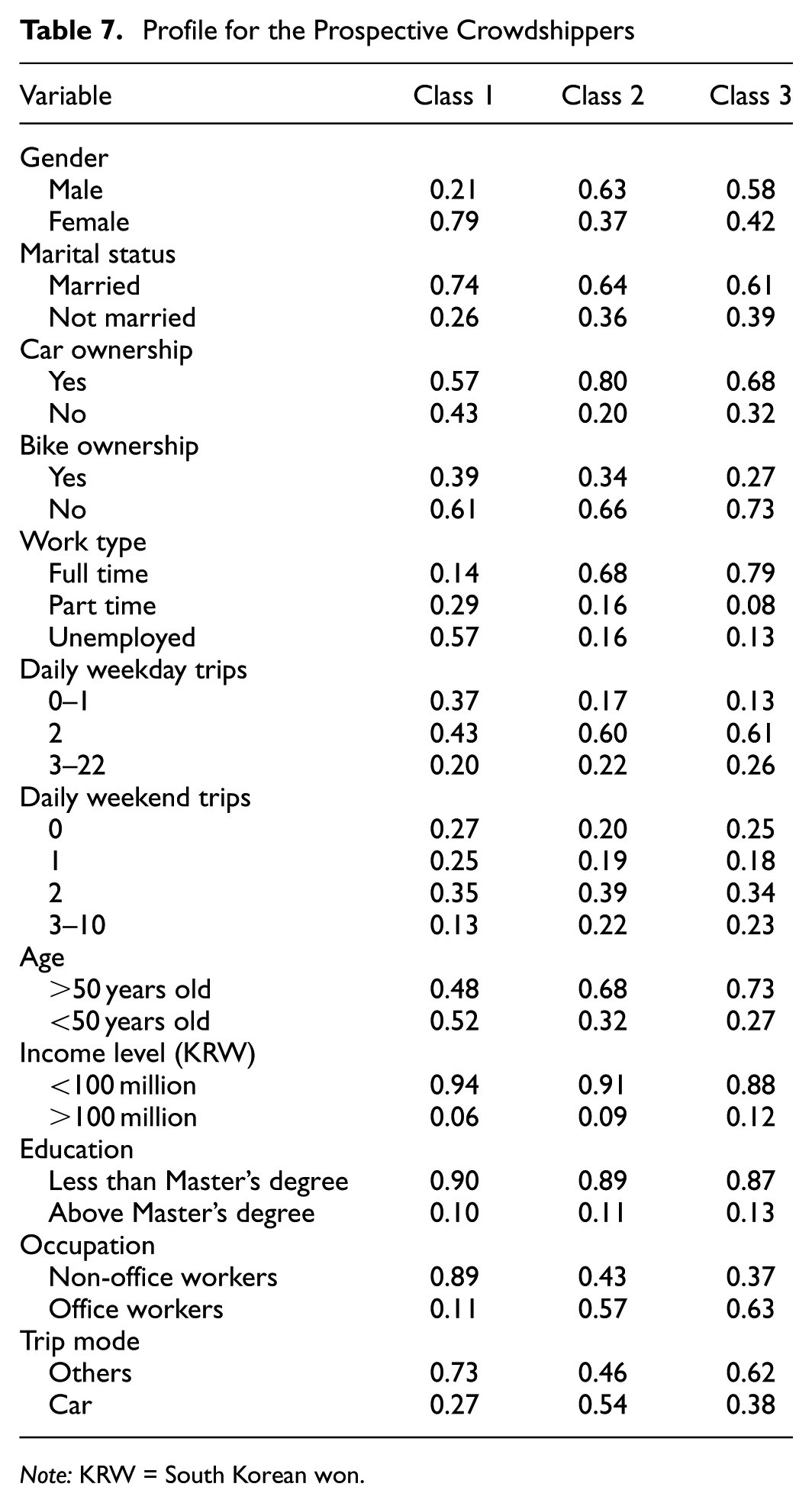
Three latent classes were identified among those without crowdshipping experience, revealing differences in engagement intensity and operational preferences. Distributions of the indicators are presented in Figures 2 and 3, and the sociodemographic profiles are presented in Table 7.
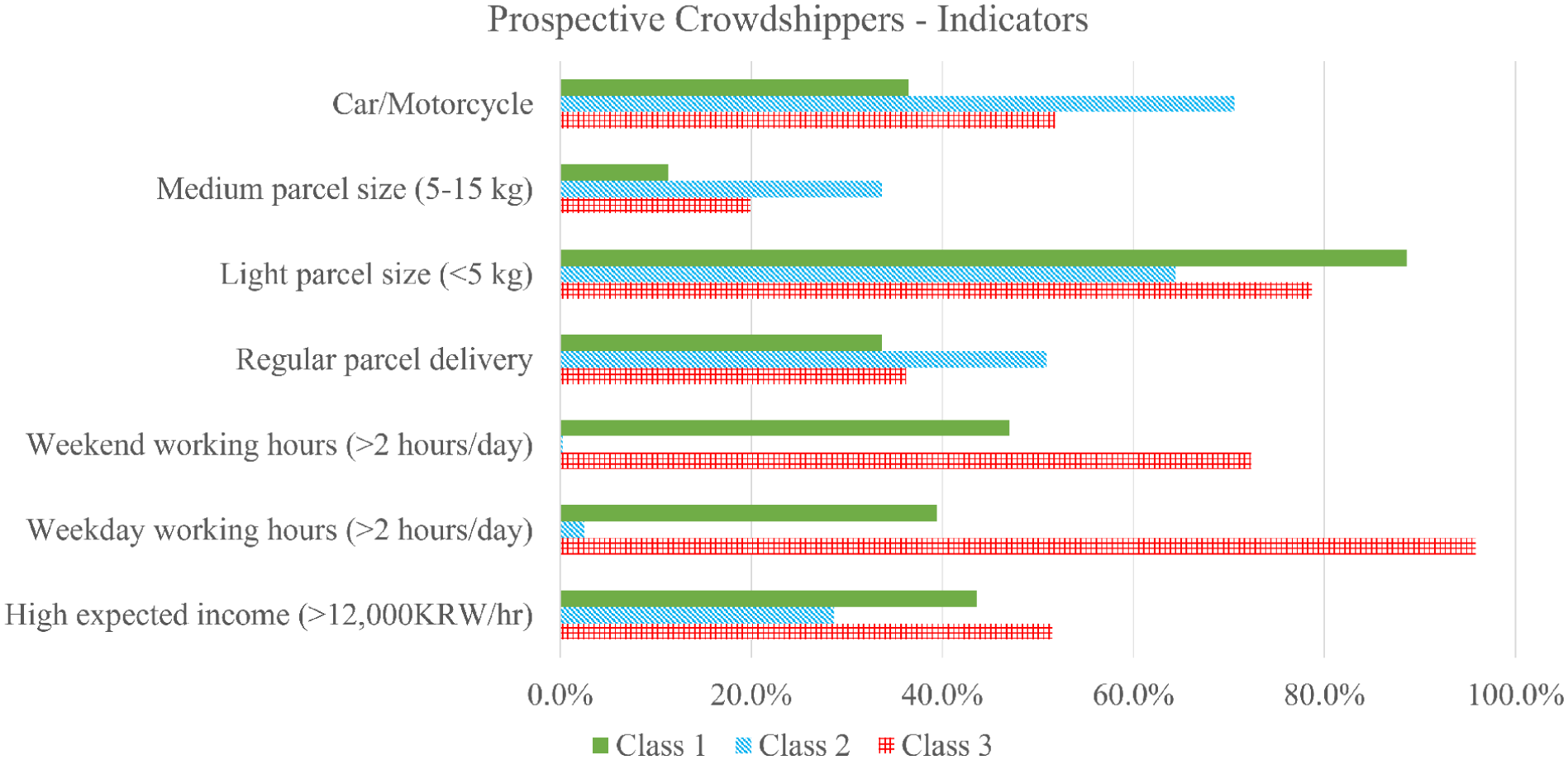
Distribution of indicators for the prospective crowdshippers (primary mode, cargo type, working pattern).
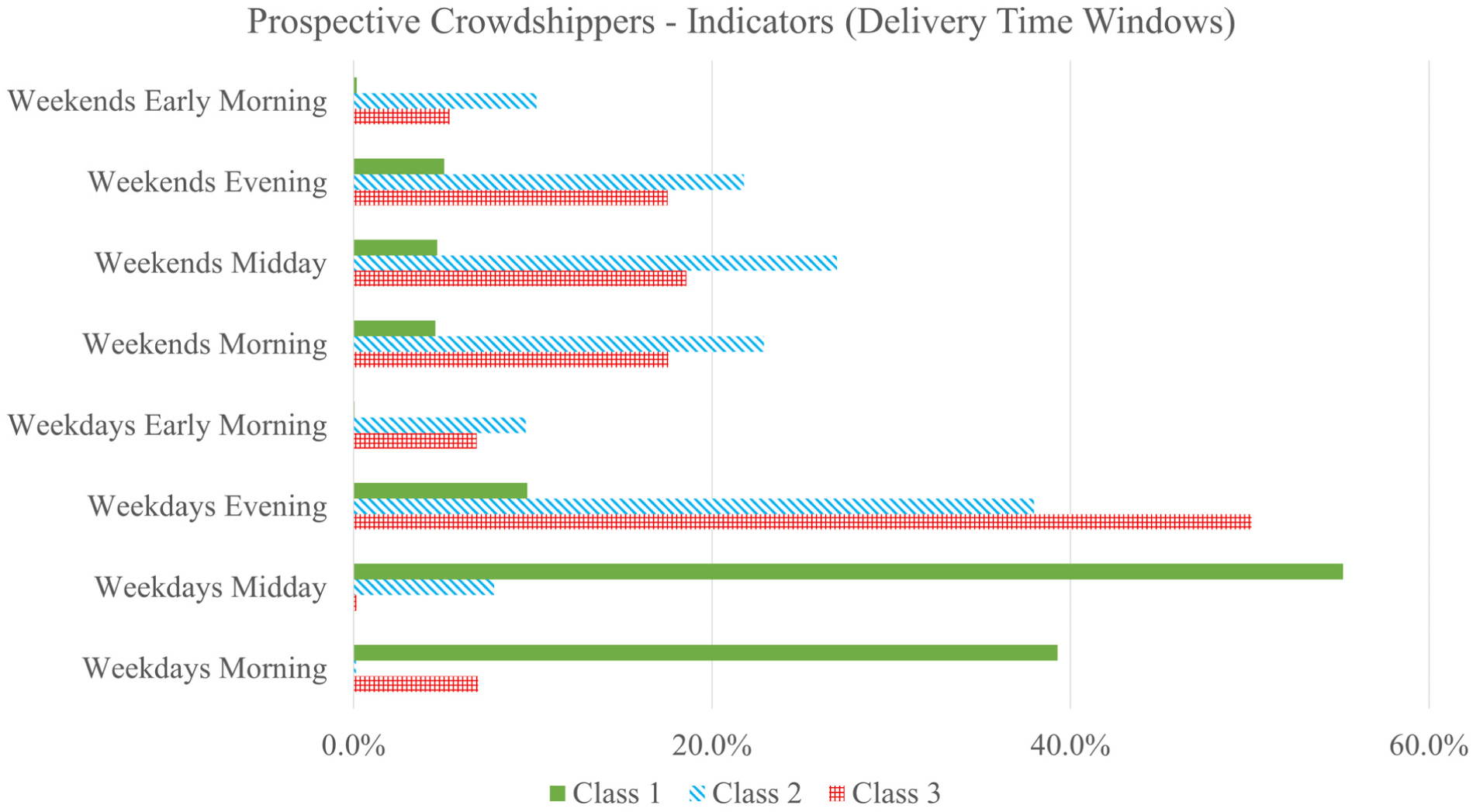
Distribution of indicators for the prospective crowdshippers (delivery time window).
Profile for the Prospective Crowdshippers
Note: KRW = South Korean won.
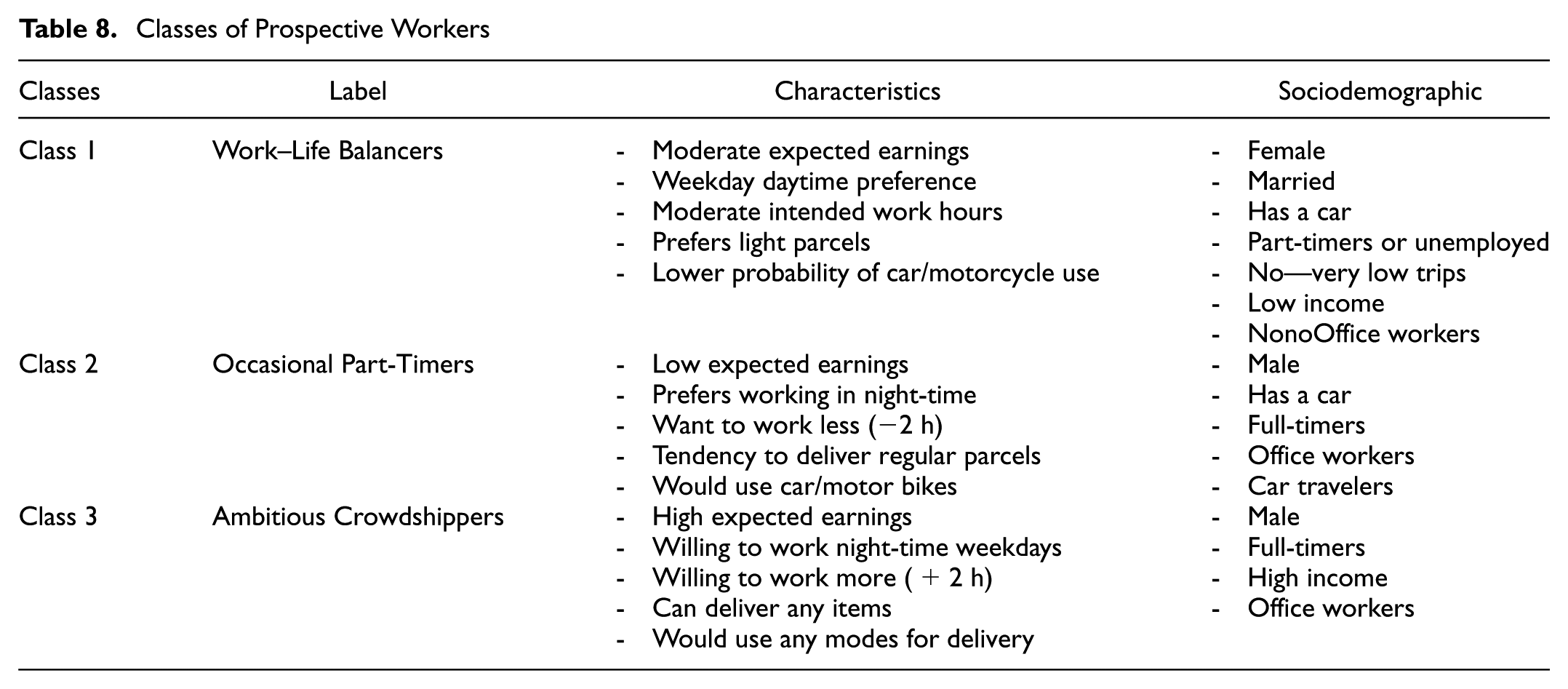
Class 1: Work–Life Balancers (37%)
The primary motivation for this group is to achieve a balanced, moderate expected income. Their interest follows a structured pattern. They show a clear preference for working additional hours exclusively on weekends. This pattern suggests a desire to categorize gig work as a distinct weekend activity. They prefer handling small-sized items, such as food or groceries, which indicates an inclination toward manageable, low-complexity tasks. This group demonstrates operational flexibility, showing a willingness to use delivery modes other than a personal car. This group consists predominantly of married females who own cars. Their employment status is primarily unemployed, and they are largely nonoffice workers. A notable characteristic is their very low daily trip frequency, which suggests a sedentary lifestyle. They aim to integrate a new earning activity into a stable life, making use of their weekends and preferring less demanding delivery types.
Class 2: Occasional Part-Timers (33%)
This class consists of individuals who are drawn to crowdshipping, viewing it as a source of income. This group is characterized by relatively lower-income expectations. Their desired level of engagement is minimal, with a preference for working fewer hours (approximately 2 h) during night-time hours on weekdays. They express a particular interest in delivering groceries, which helps them avoid the time pressures and complexities associated with other services. This approach suggests a strategy of minimizing stress and effort. From an operational standpoint, they show a preference for using cars or motorbikes. This preference aligns with their sociodemographic profile, which indicates a high probability of car ownership. This class comprises mainly male, predominantly full-time office workers.
Class 3: Ambitious Crowdshippers (30%)
This class represents a segment of the prospective workforce that regards crowdshipping as a serious, high-yield professional endeavor and is willing to invest considerable time and effort to maximize returns. Their primary driver is high expected income. They are prepared to dedicate substantial time, specifically expressing a desire to work additional hours (+2 h) during night-time hours on weekdays. This pattern suggests they view crowdshipping as a “second shift” or a primary evening occupation. They are willing to deliver any type of item, positioning themselves to accept any available job to maximize volume and profit. This group demonstrates high adaptability, showing willingness to use any delivery mode necessary to complete a job efficiently. Their sociodemographic profile is consistent with this ambitious mindset. They are predominantly male, high-income, full-time office workers. This profile indicates individuals who are already engaged in the workforce and possess a strong drive to further increase their earnings, approaching crowdshipping with a high degree of professionalism and intensity.
Participating Patterns
Respondents’ participating patterns as well as their profiles are summarized in Table 8.
Classes of Prospective Workers
Experienced Crowdshippers
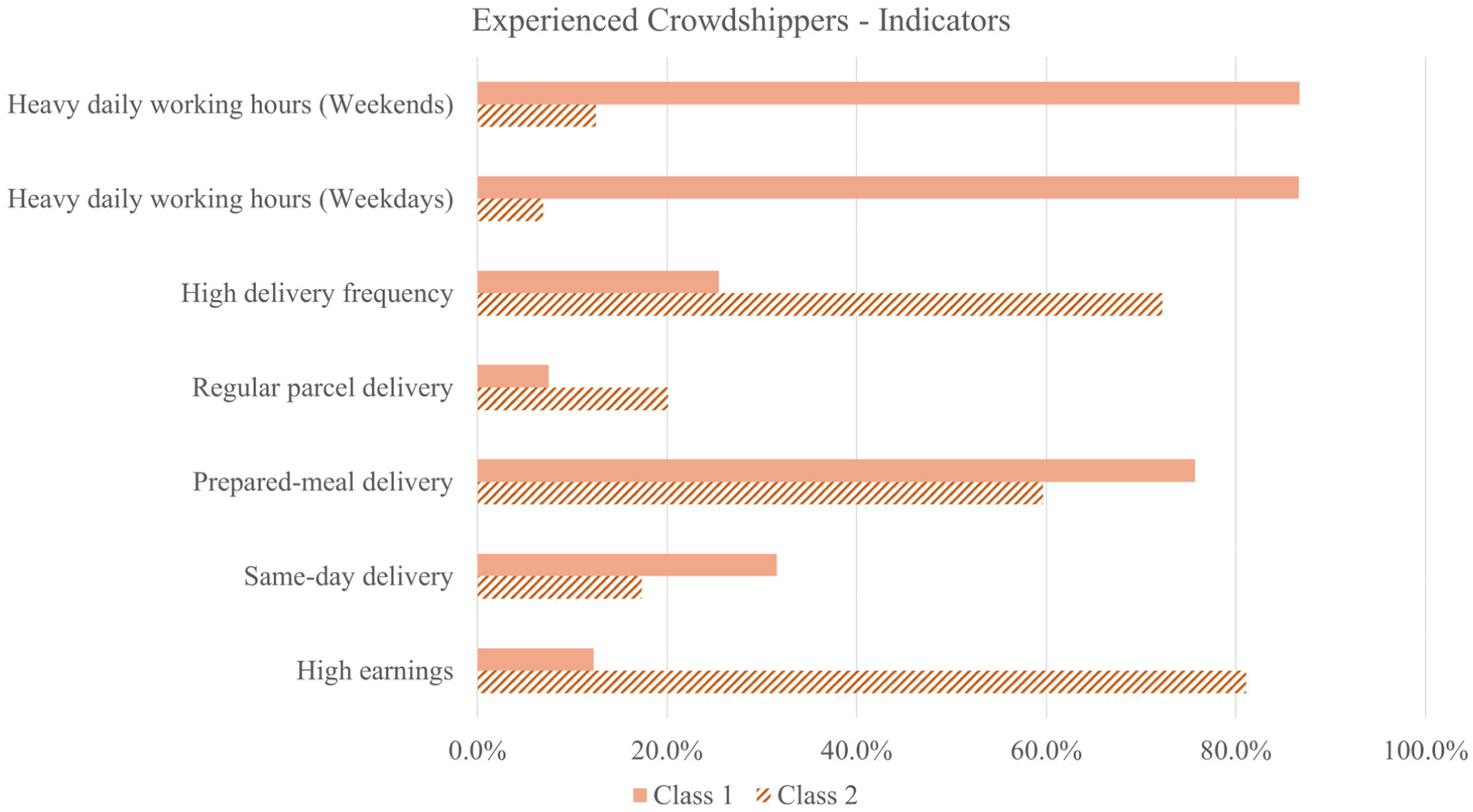
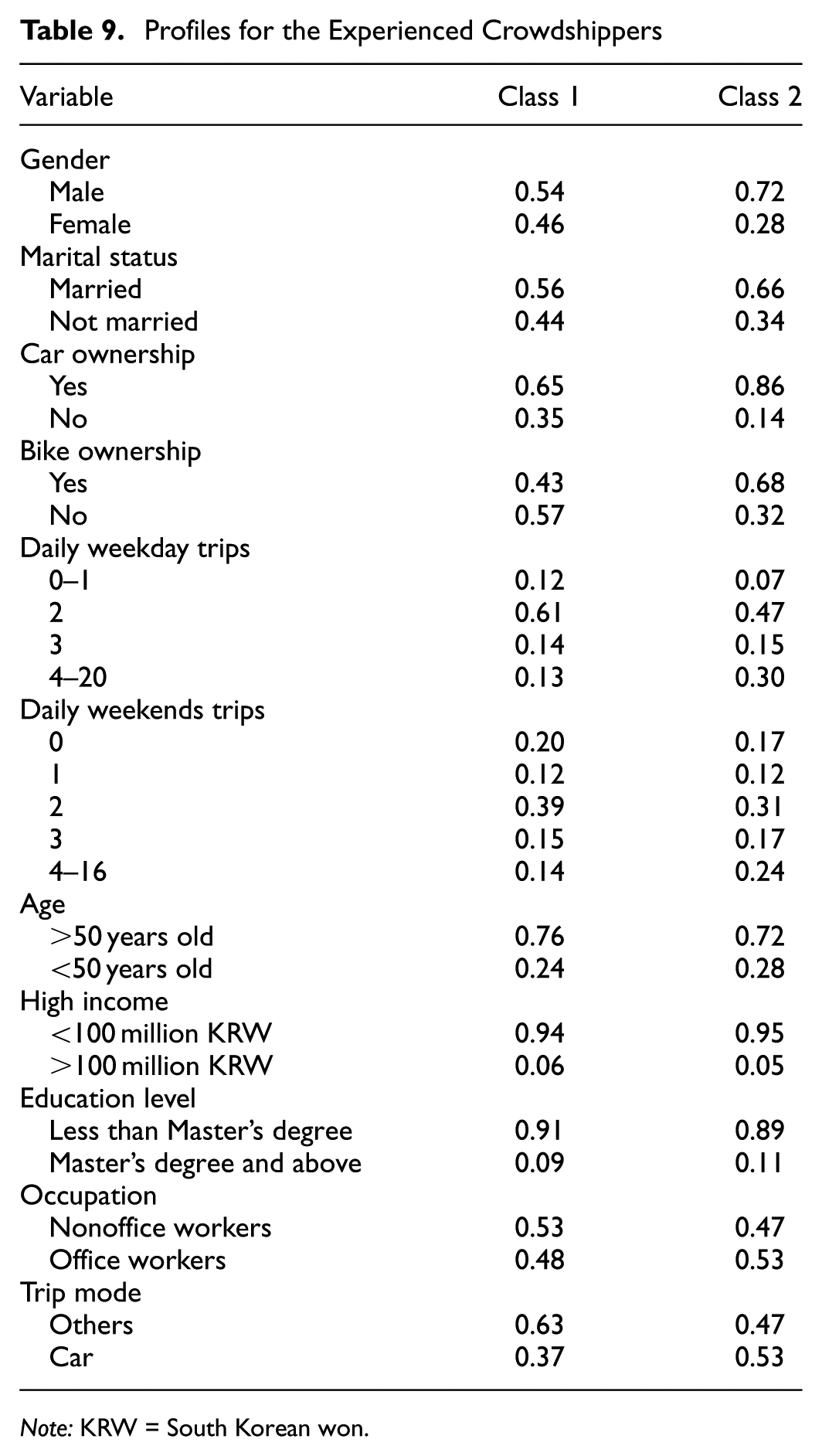
Two latent classes were identified among those with crowdshipping experience. The classes vary in relation to monthly earnings, delivery frequency, daily working hours, service type, time windows, and transport mode. Distributions of the indicators are presented in Figures 4 and 5 and the sociodemographic profiles are presented in Table 9
Distribution of indicators for the experienced crowdshippers (primary mode, cargo type, working pattern).
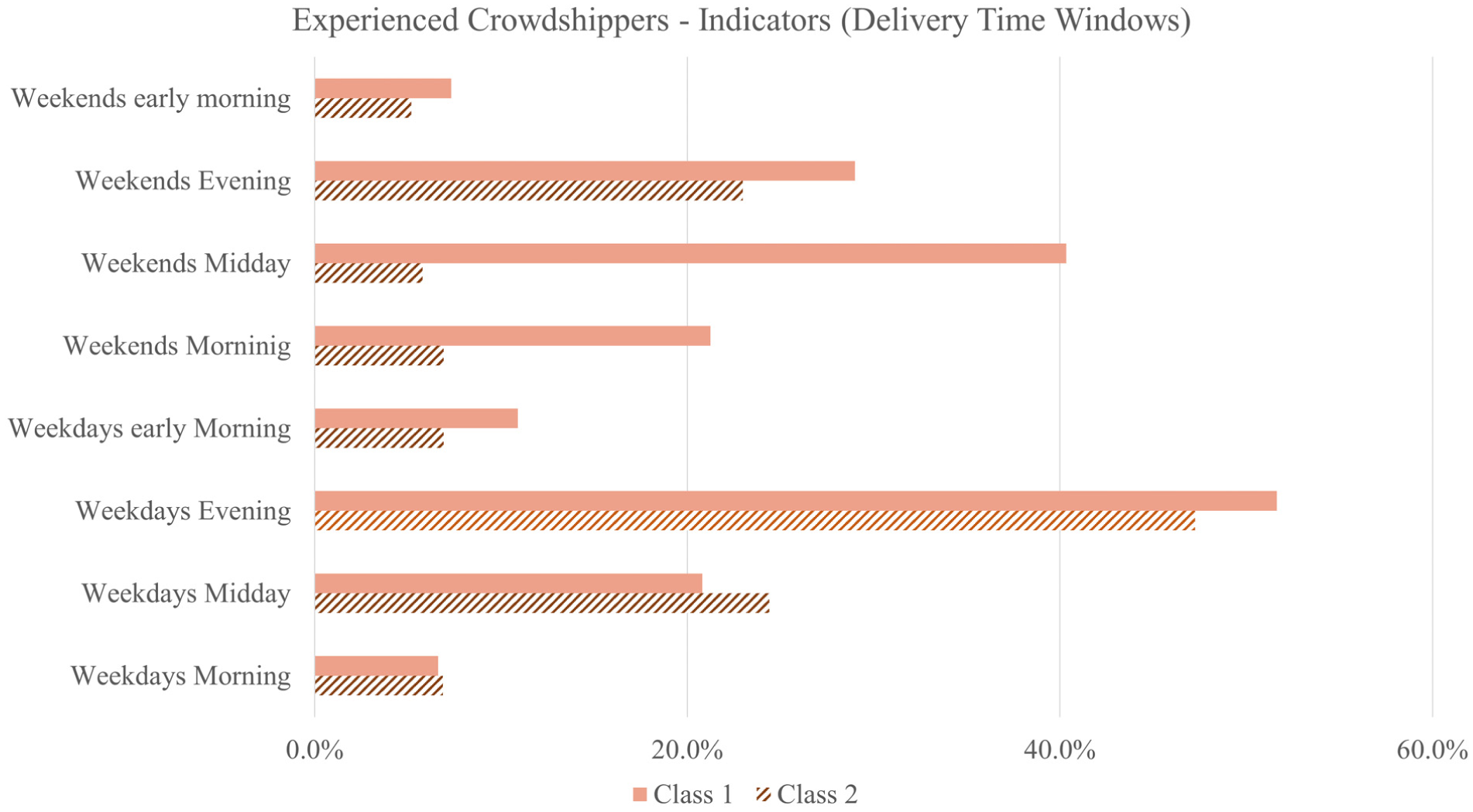
Distribution of indicators for the experienced crowdshippers (delivery time window).
Profiles for the Experienced Crowdshippers
Note: KRW = South Korean won.
Class 1: Intermittent Gig Practitioners (50%)
The key characteristic of this group is their low earning intensity, despite substantial daily working hours when active. Probabilities show that their earnings from delivery activities are considerably lower, falling well below the 250,000 KRW threshold. Their service profile is not limited to regular parcel delivery. Instead, this class shows the highest probability of prepared-meal delivery and some same-day delivery experience, while regular parcel delivery probability is relatively low. However, their monthly delivery frequency is low, suggesting that they participate less regularly across the month. When they do participate, they tend to work long sessions, with high probabilities of more than 2 h per day on both weekdays and weekends. Their preferred operational window is spread across weekday evenings and weekend periods. This class shows high modal flexibility, using various modes of transport for deliveries rather than relying on a specific vehicle. This operational flexibility is evident in their sociodemographic profile. Class 1 consists of relatively larger shares of females, unmarried respondents, and noncar primary users. This profile indicates that crowdshipping serves as an accessible, low-barrier side activity to supplement income, with long work sessions when active but lower monthly returns overall.
Class 2: Dedicated Crowdshippers (50%)
This group is characterized by high monthly earnings and high monthly delivery frequency. They show a high probability of earning more than 250,000 KRW from their activities. Their platform experience is broad, with high probabilities of regular parcel delivery and prepared-meal delivery, as well as some same-day delivery experience. Compared with Class 1, this class shows lower probabilities of heavy daily working hours but higher probabilities of frequent participation across the month. They primarily concentrate their efforts on weekday evenings, with some additional weekend evening activity. The regular participation pattern of this class is supported by their reliance on dedicated transportation assets. They show a very high probability of using motorcycles or cars for their deliveries. This pattern is consistent with their sociodemographic profile, which consists of relatively larger shares of married males with car and motorcycle ownership. Their general travel behavior reflects this pattern, showing a higher overall daily trip frequency and a clear reliance on the private car as their dominant mode of transportation. This profile reveals an individual who utilizes existing assets (vehicle, time) in a systematic way to maximize earnings from the gig economy.
Participating Patterns
Respondents’ participating patterns as well as their profiles are summarized in Table 10.
Classes of Experienced Crowdshippers
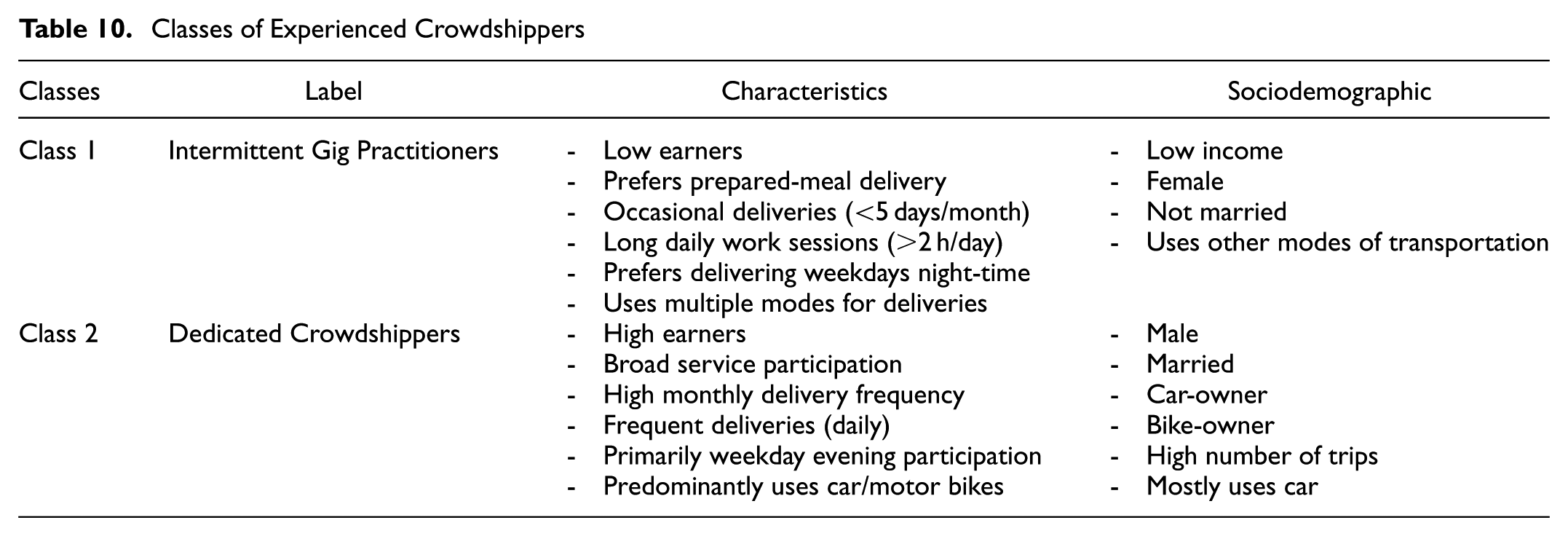
These findings suggest that the “gig economy” is not uniform but rather a heterogeneous market that accommodates different segments of the labor force with varying motivations, strategies, and resources.
Discussion
The results point to two levels of heterogeneity. At the aggregate level, Table 2 shows that the experienced sample is more male-dominated, whereas the willing prospective sample is more gender-balanced. Specifically, the experienced sample included a higher share of respondents in their 30s and a higher share of male respondents, while the willing prospective sample was more evenly distributed across age groups and gender. These aggregate differences serve as the population-level baseline for the subsequent within-group latent class analyses. At the within-group level, the latent class models reveal that each sample contains distinct segments with different combinations of work timing, work intensity, delivery type, and transport mode. Prospective crowdshippers were categorized into three distinct classes: Work–Life Balancers (moderate earnings seekers who prefer weekend engagement with low-complexity tasks), Occasional Part-Timers (relatively lower earnings expectations focused on regular parcel deliveries, characterized by car ownership and full-time employment), and Ambitious Crowdshippers (high earnings pursuers who engage in intensive weekday night shifts across diverse item types). By contrast, experienced crowdshippers were grouped into two classes: Intermittent Gig Practitioners (low earners despite substantial daily working hours, with high prepared-meal delivery participation) and Dedicated Crowdshippers (high earners with high monthly delivery frequency and greater reliance on motorized vehicles).
The observed differences between the two samples present several competing interpretations. One possibility is self-selection, in which respondents with vehicle access or schedule flexibility are more likely to enter crowdshipping work. Another is survivorship bias, in which the experienced sample overrepresents workers who adapted to platform conditions. A third is hypothetical bias, in which prospective workers overstate their participation intensity and earnings expectations ( 35 ).
The intention-behavior gap makes a contribution to theoretical frameworks in behavioral economics and gig economy research by showing how hypothetical bias leads to overestimation of both participation intensity and earnings potential ( 23 , 36 ). These findings are consistent with models of worker adaptation in which operational realities shape participation patterns—including specialization among Dedicated Crowdshippers or sustained low-reward engagement in Intermittent Gig Practitioners—though the cross-sectional design does not permit causal inference about individual-level transitions between these patterns ( 14 , 37 ).
Sociodemographic factors further contribute to these differences. Potential classes showed greater diversity, including married females in the Work–Life Balancers segment and high-income males in the Ambitious Crowdshippers group. Experienced classes, however, were predominantly composed of married males with vehicle ownership among Dedicated Crowdshippers and unmarried females with lower earnings among Intermittent Gig Practitioners, suggesting selective engagement driven by limited resources and vulnerabilities. The sociodemographic differences identified across classes further shed light on intersectional effects of gender, income, and asset ownership on gig work engagement, thereby enhancing theoretical perspectives on labor market vulnerability and entrepreneurial optimism within unstable employment sectors ( 20 ). Behavioral economics frameworks indicate that when a job market is unstable, new workers tend to be overly optimistic about potential earnings. However, after gaining experience, these workers typically either quit or become highly specialized in the area. These findings contribute to a more nuanced understanding of revealed preferences and suggest that future theoretical models should incorporate dynamic learning effects to improve predictions of long-term workforce composition and platform dynamics.
These patterns are broadly consistent with the existing literature on potential carriers. A study found three classes among potential public-transit-based crowdshippers, in which younger individuals and those with lower income showed higher participation propensity ( 38 ). Similar results found that younger individuals and those with lower education levels were more willing to participate ( 17 ). The present study extends these findings by comparing prospective and experienced workers in a market where crowdshipping platforms are already operational rather than hypothetical. The finding that experienced workers are more male-dominated and vehicle-reliant is also consistent with Le and Ukkusuri ( 39 ), reporting that compensation and time flexibility were the primary drivers for crowdshipping supply. Simultaneously, the exclusion of unwilling respondents means that the prospective-worker classes describe variation among willing respondents rather than the full boundary of potential labor supply.
Operational attributes also differed between groups. Prospective crowdshippers emphasized flexibility and item specificity (e.g., small food items or groceries), while experienced workers prioritized efficiency in time-sensitive platforms, adapting to demand peaks during weekends or evenings. This difference reflects revealed preferences in actual operations, where hypothetical low-barrier entry attracts broad interest, but sustained participation requires asset investment (e.g., motorcycles) and tolerance for irregular earnings ( 23 , 40 ). Comparative studies support this finding, showing that stated preferences overestimate modal adaptability, converging toward vehicle-reliant behaviors in practice because of efficiency demands ( 16 , 41 ).
Among prospective crowdshippers, the three classes revealed varied motivational landscapes. Work–Life Balancers, the largest segment, prioritized moderate income through structured weekend gigs involving small items such as food, using noncar transportation modes. Their profile—married females with employment status skewed toward unemployed and nonoffice work and low daily trip frequencies—indicates a desire to supplement stable lifestyles without disruption, possibly because of family obligations. This preference pattern may result from risk aversion, in which gig work is viewed as recreational rather than essential, which is consistent with research showing that females cite safety and flexibility concerns as participation barriers ( 4 , 23 ). The findings provide insights for promoting inclusive gig economy participation while addressing vulnerabilities experienced by underrepresented groups, including older females in the Work–Life Balancers class, who face barriers related to safety concerns, flexibility limitations, and insufficient earnings ( 4 ).
Occasional Part-Timers were characterized by the lowest income expectations and minimal intended work hours, with a preference for night-time participation and regular parcel delivery with cars or motorbikes, which corresponds with their high rate of vehicle ownership. They are male, full-time office workers, and their preferences suggest a strategy to utilize existing assets (cars) for supplemental income with limited time commitment ( 16 , 41 ). The identified class distinctions offer crowdshipping platform companies strategic insights for recruitment, retention, and operational optimization, enabling the development of customized incentives to transform ambitious potential segments—such as Ambitious Crowdshippers with elevated income expectations—into committed, high-performing workers through personalized training focused on time-sensitive task completion and transparent earnings information designed to reduce hypothetical bias ( 14 , 35 ).
Ambitious Crowdshippers demonstrated high-income aspirations through extensive weekday night shifts across all item types and transportation modes. As high-income, male, full-time office workers, they approached crowdshipping professionally, driven by earnings maximization ( 35 ). While this ambition reflects entrepreneurial mindsets, it may overestimate practical feasibility. Platform companies could enhance user interfaces by incorporating flexible scheduling features tailored to Work–Life Balancers and Occasional Part-Timers, emphasizing weekend availability and brief evening shifts combined with item-specific matching algorithms (e.g., groceries for workers preferring lower-complexity tasks), while simultaneously offering asset support or establishing partnerships for vehicle-dependent groups to reduce participation barriers.
Experienced crowdshippers displayed more streamlined classes, emphasizing practicality over aspiration. Intermittent Gig Practitioners, the dominant group, generated low monthly earnings despite substantial daily working hours, with high prepared-meal delivery participation and high modal flexibility. Characterized as unmarried, low-earning females with low trip frequencies, they used crowdshipping supplementally, avoiding high-pressure tasks because of limited assets or economic vulnerability. This high-effort, low-reward pattern likely results from work–life conflicts, as the literature shows that females experience higher dropout rates because of safety and equity issues ( 23 ). Low-earning unmarried females in the Intermittent Gig Practitioners class face barriers related to safety concerns, flexibility limitations, and insufficient earnings. Targeted interventions could include flexible scheduling applications, safety enhancements in designated delivery zones, and income-based incentives to sustain participation. For experienced workers, targeted retention approaches—including enhanced safety mechanisms for Intermittent Gig Practitioners—could reduce attrition rates and improve platform efficiency, ultimately enhancing profitability through alignment of service offerings with revealed preferences and sociodemographic characteristics.
Dedicated Crowdshippers achieved high earnings through regular, frequent participation with greater reliance on cars or motorbikes. Married, lower-income males with vehicle ownership and high trip frequencies optimized existing assets for profitability, treating crowdshipping as a primary source of income given their regular participation pattern. Their specialization reflects adaptive learning in which experience enhances efficiency in demand-responsive markets. Given that some studies have found crowdsourced delivery to paradoxically increase traffic volumes, future research should focus on developing crowdsourced delivery models that do not generate adverse effects on urban traffic ( 41 – 43 ). The prevalence of time-sensitive deliveries among experienced specialists further underscores the importance of infrastructure investments in sustainable transportation modes, encouraging modal flexibility to reduce traffic congestion and environmental impacts in densely populated urban environments ( 20 ). Performance-based bonus programs that reward Dedicated Crowdshippers’ regular participation could reduce attrition rates and improve platform efficiency.
When comparing experienced classes, reliability and earnings emerged as primary priorities, with lower-frequency intermittent workers engaging in longer daily sessions across diverse service types, while dedicated workers participated more regularly with higher monthly returns. This distinction reflects resource disparities in which asset-rich specialists trade convenience for income, while barrier-conscious intermittent workers face cost and access constraints ( 16 ). Subsidized vehicle access programs and enhanced safety regulations for night-shift work could help reduce the participation gap between prospective and experienced workers, while simultaneously improving urban mobility systems and decreasing dependence on conventional delivery fleets ( 41 ). In summary, the main factors distinguishing the two samples are earnings intensity, delivery frequency, daily working hours, service composition, transport mode, and gender composition. At the class level, the key differentiating factors are expected versus realized earnings, intended versus actual working hours, and the degree of vehicle reliance. Taken together, these findings support the implementation of labor protections addressing earnings instability and excessive work hours, thereby ensuring that crowdshipping systems contribute positively to economic resilience and social equity within evolving urban economies.
However, future research should address several limitations. First, the sample size is relatively small. To enhance precision, it is essential that future studies obtain more responses from active workers. In addition, a panel-survey methodology can document behavioral transitions. By examining which factors prove critical when Prospective Crowdshippers transition into Active Crowdshippers, the results can inform strategies to expand the gig economy. Among the 655 respondents without prior crowdshipping experience, 182 (approximately 28%) indicated not willing or not at all willing to participate. These respondents were excluded from the prospective-worker LCA because the behavioral preference indicators were not collected from unwilling respondents. The survey did ask unwilling respondents their main reason for nonparticipation. The most frequently cited reasons were sufficient current income, concerns about physical burden or health risks, reduced leisure time, and concerns about liability for damaged or lost items. Some respondents also cited lack of knowledge about how to participate, time constraints, or age-related limitations. A detailed analysis of these responses was beyond the scope of the present study but could help identify the main barriers to entry and inform strategies for expanding the potential crowdshipping labor pool.
Conclusion
The gig economy has experienced expansion on a global scale. In this context, examining behavioral patterns of two distinct groups—individuals with previous gig work experience and those without such experience—represents a timely research endeavor.
This study employed LCA to explore the heterogeneity among both prospective and experienced crowdshippers in South Korea, revealing discrete segments that highlight the heterogeneous nature of involvement in last-mile delivery operations. The analysis revealed three classes among prospective crowdshippers and two among experienced workers, providing insights into the ways in which sociodemographic characteristics, behavioral tendencies, and operational limitations influence crowdshipping adoption and continued engagement.
Three classes were identified within the prospective crowdshippers group:
Class 1: Work–Life Balancers. This group seeks a balanced arrangement that maintains personal time while achieving a modest income level.
Class 2: Occasional Part-Timers. This group aims to generate supplementary income through minimal effort and shows relatively low earnings expectations.
Class 3: Ambitious Crowdshippers. This group pursues elevated anticipated earnings and demonstrates readiness to undertake work at an intensity comparable to full-time employment.
Two classes were identified within the experienced crowdshippers group:
Class 1: Intermittent Gig Practitioners. This group exhibits high daily working hours, with relatively modest income; they also show utilization of a more varied array of transportation options.
Class 2: Dedicated Crowdshippers. This group generates elevated income, allocates greater time toward gig engagement, primarily during weekday evening, and executes deliveries using personal vehicles (automobiles or motorcycles).
The experienced sample was more male-dominated and concentrated in younger age groups, while the prospective sample was more gender-balanced and older. At the class level, the key differences between the two samples were earnings intensity, delivery frequency, daily working hours, service composition, transport mode, and gender composition. Prospective classes were primarily distinguished by expected earnings and intended work intensity, whereas experienced classes were distinguished by realized monthly earnings, delivery frequency, and vehicle utilization.
The findings provide valuable insights for corporations and platforms operating within the gig economy. For instance, the results can serve as evidence for determining the time periods during which gig economy workers favor participation and for projecting their preferred compensation levels. Platform administrators can use these results to attract gig workers through implementation of peak-demand–oriented scheduling, segment-specific task configuration, and asset-availability assistance (such as personal-vehicle rental/lease initiatives). Beyond the commercial perspective, from a public standpoint, implementing policies that address safety and liability hazards (such as accident coverage and night-time protection protocols) together with the creation of public-transport-integrated last-mile networks could further expand gig economy opportunities.
Supplemental Material
sj-docx-1-trr-10.1177_03611981261456272 – Supplemental material for Behavioral Profiles of Crowdsourced Delivery Workers: Comparative Analysis of Prospective and Experienced Workers
Supplemental material, sj-docx-1-trr-10.1177_03611981261456272 for Behavioral Profiles of Crowdsourced Delivery Workers: Comparative Analysis of Prospective and Experienced Workers by JungWook Lee, Youngwoong Park and Woojung Kim in Transportation Research Record
Footnotes
Authors’ Note
During the preparation of this work the authors used CHATGPT (GPT-4.1) to improve grammar and language. After using this tool, the authors reviewed and edited the content as needed and take full responsibility for the content of the published article.
Author Contributions
The authors confirm contribution to the paper as follows: study concept and design: J. Lee, W. Kim; data collection: J. Lee, W. Kim; analysis and interpretation of results: Y. Park; draft manuscript preparation: Y. Park, J. Lee. All authors reviewed the results and approved the final version of the manuscript.
Declaration of Conflicting Interests
The authors declared no potential conflicts of interest with respect to the research, authorship, and/or publication of this article.
Funding
The authors disclosed receipt of the following financial support for the research, authorship, and/or publication of this article: This work was supported by Incheon National University Research Grant in 2025.

Supplemental Material
Supplemental material for this article is available online.
References
Supplementary Material
Please find the following supplemental material available below.
For Open Access articles published under a Creative Commons License, all supplemental material carries the same license as the article it is associated with.
For non-Open Access articles published, all supplemental material carries a non-exclusive license, and permission requests for re-use of supplemental material or any part of supplemental material shall be sent directly to the copyright owner as specified in the copyright notice associated with the article.
