







Abstract
Girls are increasingly becoming involved with the juvenile justice system; however, what brings girls to engage in delinquency or what obstacles these girls face later in life resulting from adolescent criminal behavior is understudied. In the present study, we used latent class analysis to identify subtypes of risks among adolescent girls (N = 1,174) who have engaged in delinquent behaviors and mixture modeling to determine what distal psychological, social, educational, and economic outcomes in young adulthood are associated with each subtype. Four adolescent subtypes were identified, which were distinguished primarily based on the severity of their self-reported victimization experiences and mental health concerns. Classes with higher levels of victimization experiences tended to report more engagement with delinquent behavior in adolescence and had a larger proportion of Black and Hispanic girls than lower-victimization classes. Identified classes differed from each other on distal (i.e., young adulthood) measures of economic instability, educational attainment, drug use, depression, and adult arrests. Generally, latent classes which were characterized by higher rates of victimization and mental health concerns and lower educational performance in adolescence fared worse in young adulthood. Implications for those who care for girls who engage in delinquency, including suggestions for using trauma and culture informed screening, prevention, and intervention services, and directions for future research are discussed. Additional online materials for this article are available on PWQ’s website at http://journals.sagepub.com/doi/suppl/0361684320918243 .
Keywords
Girls and women have been shown to exhibit unique and gendered pathways into engagement in criminal activity (Chesney-Lind & Sheldon, 2003; DeHart, 2008, 2009; DeHart et al., 2014). Belknap and Holsinger (2006) identify abuse histories, family relationships, mental health problems, and to a lesser extent, school experiences as central to the development of delinquency in girls. These risks form a unique pathway into criminal behavior, which is characterized by persistent and severe trauma and associated relational, behavioral, and emotional risks (Belknap & Holsinger, 2006; Chesney-Lind & Sheldon, 2003; DeHart, 2008, 2009; DeHart et al., 2014).
Research suggests that girls who are involved in the juvenile justice system have “distinctive characteristics [from boys] that require special treatment” (Burgess-Proctor, 2006, p. 32). Girls who criminally offend differ from their male counterparts due in part to their differential experience of trauma. Girls who engage in crime often experience chaotic and abusive family environments (Asscher et al., 2015; DeHart et al., 2014; Dixon et al., 2005; Robertson et al., 2010; Walters, 2013). While the same is often true for boys, girls tend to experience family violence and disruption at more severe levels (Asscher et al., 2015). Nearly half of incarcerated girls have witnessed domestic violence (Dixon et al., 2004, 2005; Robertson et al., 2010), more than half reported experiencing physical abuse, and a quarter of girls experience emotional abuse (Asscher et al., 2015; Robertson et al., 2010). Girls often experience multiple types of maltreatment during childhood and adolescence (Dixon et al., 2005), suggesting they have more chronic experiences of trauma than their male peers (Asscher et al., 2015).
Girls who criminally offend are likely to have histories of experiencing sexual violence and violence within intimate relationships (Abram et al., 2003; DeHart et al., 2014; Dixon et al., 2004, 2005; Miazad, 2002; Robertson et al., 2010). The majority of girls who engaged in delinquency reported being a victim of sexual abuse (Abram et al., 2003; Dixon et al., 2004, 2005; Robertson et al., 2010) and/or have been a victim of violence committed by a romantic partner (Kelly et al., 2009; Oudekerk et al., 2014). These rates suggest that girls who engage in delinquent behavior have an increased likelihood of sexual victimization relative to male peers (Abram et al., 2003).
The increased incidence of chronic and relationship-based trauma among girls engaging in delinquency also puts them at increased risk for psychological disorders (Carlson & Shafer, 2010; DeHart et al., 2014; Hedtke et al., 2008; Kessler et al., 1995; Turner et al., 2006). Estimates suggest that 75% of girls who engage in crime (vs. two-thirds of their male counterparts; Wasserman et al., 2002) have at least one psychological disorder, and most have more than one (Teplin et al., 2006). Internalizing disorders are more common for delinquent girls than for males, with about 30% of girls experiencing depressive and/or anxiety disorders and this holds regardless of girls’ delinquency status (Cauffman et al., 2004; Graves et al., 2007; Ritakallio et al., 2006; Teplin et al., 2006; Wasserman et al., 2010). Substance use is problematic among this population as well, with more than half of incarcerated girls reporting that they used illegal or illicit substances in the past (Kataoka et al., 2001; Robertson et al., 2010). The prevalence and severity of mental health disorders among girls engaging in crime is an important variable to consider in efforts to understand female delinquent behavior.
In addition to victimization and mental health histories, the educational domain is important to consider in the investigation of risk for juvenile criminal behavior as well. Girls engaging in delinquent behaviors often experienced many of the educational risk factors traditionally associated with delinquency (e.g., school suspension, academic failure, and receipt of special education services; Belknap & Holsinger, 2006; Mullis et al., 2004). However, girls differ from boys in the severity of their academic risk and the relational aspects of their school experience. Girls who go on to engage in delinquency often receive less instructional time in school and have more severe academic difficulties than similarly offending males (Timmons-Mitchell et al., 1997). Related to academic difficulties, girls who engage in delinquency are more likely to drop out of school than their male peers (Belknap & Holsinger, 2006). Finally, a lack of school belongingness and emotional connection to school is especially risky for girls. Not having a connection to school puts girls at higher risk for delinquency than their male counterparts (Wood et al., 2002). When studying the risk factors for delinquency that are unique to females, there is reason to believe that educational factors are important to understand.
Research also suggests that race, because of its associations with systemic disadvantage and discrimination, is also associated with the extent to which girls are involved in delinquency, their connections with and experiences at school, and can correlate with rates of victimization as well. Numerous studies have found evidence of racial disparities in contact with the juvenile justice system (Rodriguez, 2010). Similarly, race/ethnicity is associated with experiences in and relationships with the educational system. For example, Black and Latino/a students’ report lower levels of school attachment (Johnson et al., 2001) and more conflicted relationships with teachers (Murray & Murray, 2004). They are also more likely to receive harsher consequences for misbehavior at school, regardless of the infraction (Fabelo et al., 2011). Race has also been associated with increased risk of victimization. The Fourth National Incidence Study of Child Abuse and Neglect (NIS-4) found that Black/African American children were more likely to be maltreated than White and Hispanic/Latino children (Sedlak et al., 2010). Child Trends (2019) also reported that in 2019 Black/African American and American Indian/Alaska Native children experienced maltreatment at higher rates than White and Hispanic children. Similarly, Black youth are at increased risk for violent crime victimization versus their White and Latino/a peers (Child Trends, 2018). The relationship between race and risk is clear, and important to investigate in relation to delinquency.
Future Outcomes for Girls Who Engaged in Adolescent Delinquency
In addition to assessing risk for delinquency in adolescence, risk in other domains at later points in life should be considered. Identifying the life domains where women who engaged in delinquency as adolescents struggle is critical for two reasons. First, while adult criminal behavior is uncommon among former female juvenile delinquents (Abram et al., 2017; Bright & Jonson-Reid, 2015; Gunnison, 2015), they fare much worse than their male counterparts in other critical domains of life including economic, relational, and psychological functioning (Cauffman et al., 2004). Abusive and violent relationships are common for young women who were incarcerated during adolescence (Bright et al., 2011). Women who engaged in crime as adolescents struggle with mental illness at higher rates than the general population (Bright et al., 2011), and report more mental health disorder than their male counterparts as well (Lanctôt et al., 2007). This is perhaps because of primary responsibility for childrearing or higher rates of psychological distress (Lanctôt et al., 2007). Findings related to economic and social functioning are mixed, with some studies finding that women who engaged in delinquency as girls use welfare services at higher rates and hold jobs for shorter periods than their male counterparts when they reach adulthood (Lanctôt et al., 2007), and others finding that women were more likely to be gainfully employed and have secure housing than male peers (Abram et al., 2017). Whereas the long-term effects of delinquent behavior for females are linked to economic and psychological outcomes, there is a dearth of information regarding the educational attainment of former female juvenile offenders.
Second, offending girls experience varied risk factors in adolescence, so it follows that their lives would diverge based on those risk factors as they enter adulthood (Odgers et al., 2007). Understanding the life domains where different types of young women are likely to struggle as they enter adulthood allows for the development of targeted services and interventions for a heterogeneous group of people.
The present study extends previous research on girls who engage in delinquent behaviors by first identifying subtypes of girls who engaged in delinquency based on risk factors identified in the feminist criminology and educational literature. Emerging research suggests that girls and women exhibit unique and gendered pathways to crime characterized by more serious trauma exposure, more relationship-based victimization, and the often sexual nature of victimization in female samples (Belknap & Holsinger, 2006, Chesney-Lind & Sheldon, 2003; DeHart, 2008, 2009; DeHart et al., 2014). Research has also identified that educational performance (both academic and behavioral) is an important risk factor for delinquency generally and may be especially relevant for girls (Belknap & Holsinger, 2006). While some studies have examined how various risk factors interact to predict delinquency in youth, only three studies identified subtypes of girls who engaged in delinquency (Cruise et al., 2007; Guthrie et al., 2012; Odgers et al., 2007). Notably, none of these studies included the participants’ educational performance or examined distal outcomes outside of future criminal behavior.
Thus, we examine differences between female subtypes on a variety of educational, social, and psychological outcomes in young adulthood. We do so because when researchers and practitioners can understand the obstacles that girls from different situations face as they move toward adulthood, they can plan and implement more targeted interventions to reduce additional risk factors and their effects. As a result, this study has implications for the improvement of prevention and intervention services which are delivered to girls who engage in crime, especially in addressing the need for gender-specific, trauma-informed care.
Method
Sample
Data were drawn from the National Longitudinal Study of Adolescent to Adult Health (AddHealth; Harris, 2009). The AddHealth data were collected in four waves from 1994 through 2008. Wave I of the study included surveys administered to adolescents in their schools. Some of the Wave I school-based survey participants additionally participated in in-home self and parent interviews. Wave I of data collection occurred in the 1994–1995 school year when participants were in 7th to 12th grades. Additional students were interviewed at Wave II in 1996. Wave III data collection took place in 2001–2002, when the participants were between 18 and 26 years old. At Wave III, some of the participants’ romantic partners were interviewed as well. Wave IV interviews occurred from 2007 to 2008 when participants were 24–32 years old.
Participants were included in the sample for the present study if they met three criteria: identified as female, responded to both the Wave I and Wave IV interviews, and reported engaging in at least one delinquent behavior (using a scale developed by Guo, 2011). A total of 1,974 participants were included in the study. The sample had a mean age of 14.41 years old (SD = 1.48). They were 52% White, 23% Black/African American, 17% Hispanic/Latina, and approximately 7% of another race/ethnicity. Their socioeconomic status (SES) was fairly diverse: 11% of participants reported their parents had less than a high school degree, 24% reported their parents had completed high school or a grade equivalency diploma (GED), 25% reported their parents had some post-high school education, and 27% reported parents had a bachelor’s degree or higher. Descriptive information for the sample is provided in Table 1.
Summary of Descriptive Statistics.
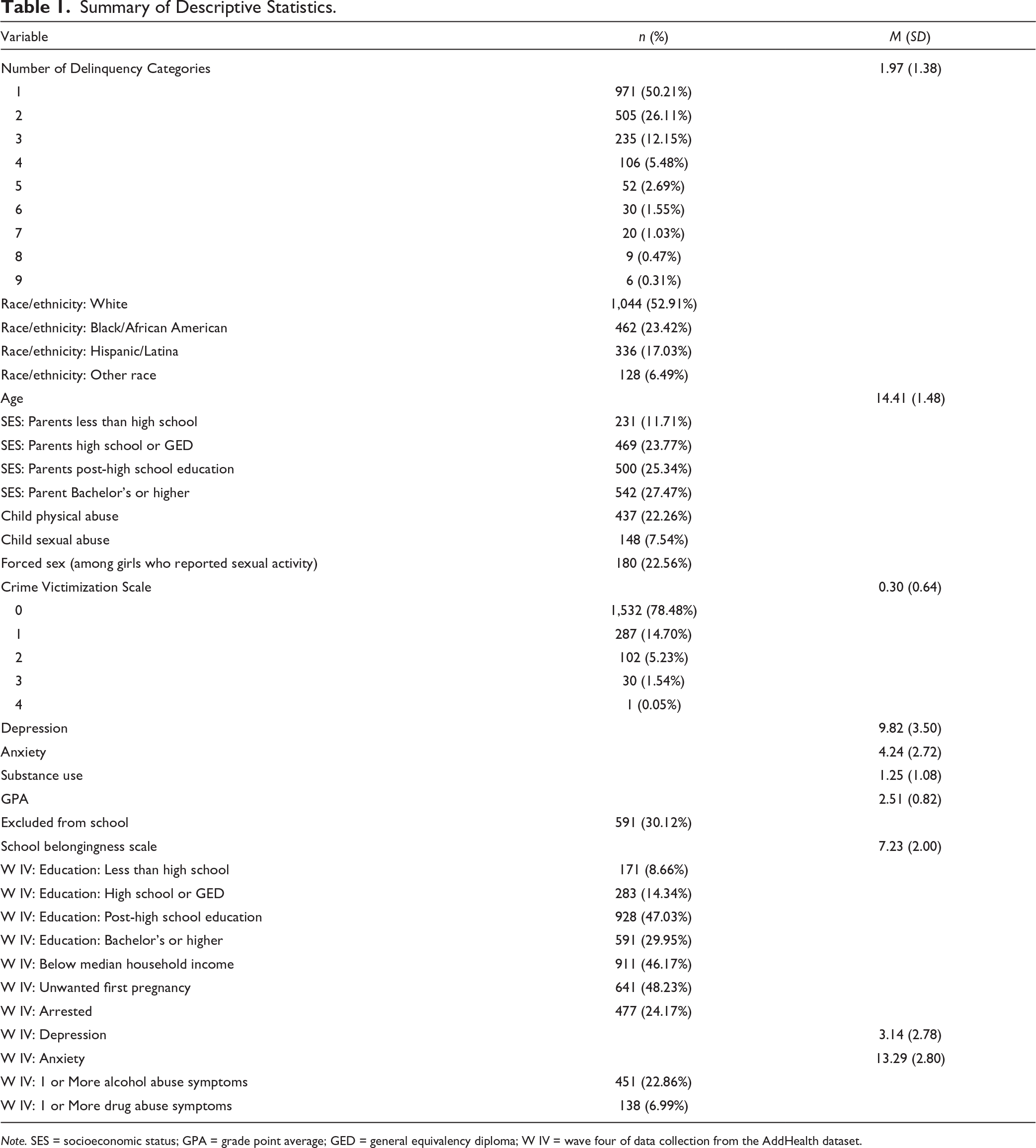
Note. SES = socioeconomic status; GPA = grade point average; GED = general equivalency diploma; W IV = wave four of data collection from the AddHealth dataset.
Measures
Demographics
Demographic information about respondents was obtained during Wave I. Age, grade, and race/ethnicity (White, Black or African American, Hispanic or Latino/a, other) were reported by participants as part of the school-based survey. Parents’ education level at Wave I was used as a proxy for SES given that parent education is highly associated with income over time and is often a stable measure of SES (Blake et al., 2017; Sirin, 2005).
Past Delinquency
Self-reported delinquency was measured using a serious delinquency scale (Guo, 2011) consisting of 10 items measuring the frequency of delinquent activities including theft, selling drugs, and physical violence. Previous research on teen delinquent behavior using AddHealth data have provided support for reliability and validity (Guo, Ou et al., 2008; Pechorro et al., 2019). Item responses were coded as ever or never occurring and summed to create a total score (α = .53).
Predictor Variables
Predictor variables are variables that were used in a latent class analysis (LCA) to identify subtypes within the sample. These variables (with the exception of variables assessing for childhood physical abuse and sexual abuse) were measured during Wave I of data collection. Child physical and sexual abuse variables come from Wave IV of data collection as they were not assessed at Wave I.
Child Abuse
A participant’s experience of child abuse was measured based on responses to two questions asked during the Wave IV in-home interview. A participant was coded as having experienced physical abuse in childhood if they responded yes to the item asking retrospectively whether their parents had “slapped/kicked/hit” them when they were children. A participant was coded as having experienced sexual abuse if they responded yes to the item asking if a parent or caregiver had “touch[ed] you in a sexual way, force[d] you to touch him or her in a sexual way, or force[d] you to have sexual relations.” Note that these items only assess the perpetration of abuse by parents, and as a result, leave out experiences of physical and sexual abuse which may have been perpetrated by others and are an underestimate of childhood abuse experiences. However, we include these items in the model as they are the only measures of child abuse experiences in the AddHealth dataset.
An item assessing participants’ experiences with forced sexual intercourse was also asked in the section of the Wave I in-home interview regarding romantic relationships. The survey was designed so that they responded to other items about their sexual activity/behavior if participants endorsed being sexually active. Among these questions was an item assessing experiences with being forced to have sex with someone against their will.
Violent Crime Victimization
Violent crime victimization was measured using a 4-item violent crime victimization scale (Tillyer & Tillyer, 2016). Previous studies of adolescent victimization have provided support for reliability and validity via associations with delinquent behavior (Tillyer & Tillyer, 2016). Participants reported whether they had been shot, cut or stabbed, jumped, or had a knife pulled on them in the past 12 months. Participants who reported experiencing these acts were coded as 1 and those who reported not experiencing these acts were coded as 0. Responses to the 4 items were summed to create a violent victimization score (α = .54).
Mental Health Problems
Participants were asked about having symptoms of depression and anxiety during the Wave I in home interview.
Depression
AddHealth researchers included the Center for Epidemiological Studies Depression (CES-D) scale as part of the interview conducted at Wave I (Radloff, 1977; Santor & Coyne, 1997). Researchers using the AddHealth data can choose to use either the standard CES-D or a modified 9-item version. We use the modified version as it has been identified as a more efficient identifier of depressed individuals than the full version and validity support has been provided (K-R 20 = 0.87; Santor & Coyne, 1997). Items such as “I felt that I could not shake off the blues even with the help from my family friends” are rated on a 4-point Likert-type scale ranging from 0 (rarely or none of the time) to 3 (most or all of the time). The internal consistency for the sample was 0.81.
Anxiety
An anxiety scale developed for AddHealth data by Jacobson and Newman (2014, 2016) was used to assess anxiety symptoms. Structural validity was supported via confirmatory factor analysis by Jacobson and Newman (2014) and reported internal consistency was 0.62. Responses to 6 items such as “trouble relaxing” were rated on a 5-point scale ranging from 0 (never) to 4 (every day) and summed to create the scale score. The internal consistency for the sample was 0.59.
Substance use/abuse
Participants were asked about their use of a variety of illegal or illicit substances, including alcohol, marijuana, cocaine, and other drugs at any point in time prior to participation in Wave I. Responses to these items were recoded categorically as “never used” or “used.” Responses were then summed to create the Number of Substances Used variable, which ranged from 0 to 4 with higher scores indicating a greater number of substance use categories endorsed (α = .61).
Education
Three variables related to a participants’ educational attainment and their relationships with their school were included in analyses as well.
Suspension and expulsion
Exclusionary discipline experiences were measured by two variables measured at Wave I: having ever experienced out of school suspension and having ever been expelled. Students who reported being suspended or expelled one or more times were coded as being excluded from school.
Academic performance
Students’ academic performance was measured by averaging the students’ cumulative grade point average across their English/language arts, math, history/social studies, and science classes from the most recently completed grading period. Reported grades were coded based on the commonly used 4-point scale (a self-reported A is coded as 4, a B is coded as 3, etc.; e.g., see Carbonaro & Workman, 2016; Delgado et al., 2016).
School belongingness
A scale comprised of 2 items (“I feel like I am part of this school” and “I am happy to be at this school”) rated on a 5-point scale from 0 (strongly agree) to 4 (strongly disagree) during the Wave I interview was used to assess participants’ feelings of school belongingness. This scale was also used by Delgado et al. (2016; α = .78). Items were reverse scored so that larger values indicate greater school belongingness. Internal consistency for the sample was 0.79.
Distal Outcome Variables
Distal outcome variables are those that were added to the model to answer research question 2. These variables were measured at Wave IV of AddHealth data collection, when participants were between 24 and 32 years of age.
Educational Attainment
Participants’ educational attainment was measured by the highest degree they had completed at Wave IV. Responses were coded into four categories: completion of less than a high school degree or equivalent, completion of a high school degree or equivalent, completion of some education post-high school, and completion or a bachelor’s degree or higher.
Income Level
Participants’ economic stability was measured by their self-report of their household income at Wave IV. For the present study, the common marker of income below twice the poverty line was utilized (Shierholz, 2009). In 2008 (the approximate year of Wave IV data collection), this income level was $34,692 (Shierholz, 2009). In Wave IV, household income data were collected categorically, so those with household incomes at the $30,000–$39,999 category and below were considered to have a low income level.
Pregnancy
Unwanted pregnancy was measured at Wave IV with the question “thinking back to the time just before this [first] pregnancy, did you want to have a child then?” to which respondents could respond yes or no. Wanting the first pregnancy was coded as ever or never.
Adult Criminality
Criminal behavior as an adult was assessed with the Wave IV item “How many times have you been arrested since your 18th birthday?”
Mental Health Problems
Mental health outcomes were assessed with scores on the Wave IV administration of the CES-D scale and the Wave IV anxious personality scale.
Depression
The AddHealth Constructed Variable “CESD Depression” was used to measure depression symptoms in young adulthood. This scale is comprised of 5 items (vs. a 9-item modified version which was used for the Wave I depression measure). It has been used in other studies of adult depression based on AddHealth data with adequate reliability and validity support (α = .79; Everett et al., 2016). Items such as “in the past 7 days you could not shake off the blues” were rated on a scale from 0 (never or rarely) to 3 (most of the time or all of the time) resulting in scale scores ranging from 0 to 15. Higher scores on the CESD depression scale denote higher levels of depression at the time of participation. Internal consistency for the sample was 0.79.
Anxiety
The AddHealth Constructed Variable “Anxious Personality Scale” was used to assess participants’ self-reported level of anxiety at the time of participation. It was constructed from 4 items measured at Wave IV, which were rated on a scale from 1 (strongly disagree) through 5 (strongly agree). An example of such an item is you “get stressed out easily.” Responses are coded such that higher scores represent a more anxious personality, with scale scores ranging from 4 to 20. Other studies of adult mental health outcomes with AddHealth data have provided support for reliability and validity of scores on the anxious personality scale (α = .70; Everett et al., 2016). Internal consistency for the sample was 0.68.
Substance use/abuse
The AddHealth constructed variables “number of DSM-IV alcohol abuse symptoms” and “number of DSM-IV other drug abuse symptoms” were used to measure substance use in young adulthood. Examples of these items are during the past year, have you “more than once gotten into situations while or after drinking that increased your chances of getting hurt (such as driving, swimming, using machinery, walking in a dangerous area, or having unsafe sex)?” and engaging in “recurrent substance use resulting in a failure to fulfill major role obligations at work, school, or home?” The DSM-IV criteria for Substance Abuse diagnosis required that participants endorse at least one symptom to meet criteria (note that this is different from Substance Dependence, which is a more severe diagnosis and requires the presence of at least 3 symptoms).
The 3-Step Method for LCA
Analyses are carried out using Mplus software (Muthén & Muthén, 2010). The present study used the 3-step method for latent class predictor variables (herein, the 3-step method), a mixture modeling approach to LCA described by Vermunt (2010) and later elaborated on by Asparouhov and Muthén (2013, 2014). First, LCA was used to identify naturally occurring subtypes or classes of girls who engaged in delinquency in adolescence based on educational, psychological, and victimization-related risk factors. Model fit was evaluated using the standard Akaike’s Information Criteria (AIC), Bayesian Information Criteria (BIC), and entropy (a measure of latent class separation) criteria. Next, participants were assigned to the class where they had the highest probability of belonging based on their response pattern to the items used to create the classes. Finally, regression analyses were used to determine what the developmental trajectory of education, income level, and mental health problems was for each identified profile. Readers should note that some study measures (e.g., the serious delinquency scale) had low reliability scored with this sample. This could indicate that engagement with delinquent behaviors or experiences of violent crime victimization are not likely to co-occur or this reflects weak measures of the constructs assessed in the present study. However, low alpha scores would not affect results in a LCA.
Results
Table 1 provides descriptive information about the sample. See Appendix for correlations of study variables. The sample had fairly low rates of engagements with delinquency. The mean number of delinquency categories endorsed was 1.97 (SD = 1.38). About half of the participants reported that they had engaged in just one of the delinquent behaviors. The sample reported fairly high rates of interpersonal victimization during adolescence. About a quarter of participants reported being physically abused by a parent/caregiver, 7.5% reported having been sexually abused by a parent/caregiver, and about a quarter of sexually active participants reported experiences with forced sex. They reported lower rates of violent crime victimization. The mean violent crime victimization score for the sample was 0.30 (SD = 0.64). The majority of the sample (78%) reported they had never been a victim of one of the types of violent crime assessed for, and 14% reported they had experienced one form. Participants had mean depression scores of 9.82 (SD = 3.50), mean anxiety scores of 4.24 (SD = 2.72) and reported using 1.25 substance categories on average (SD = 1.08). About 30% of them had been excluded from school for disciplinary reasons, the mean GPA was 2.51 (SD = 0.82), and the mean school belongingness rating was 7.23 (SD = 2.00).
At Wave IV about half of the participants were categorized as economically unstable, and a quarter reported being arrested as an adult. Most participants completed some education after high school (47%) or completed a bachelor’s degree or higher (30%). Of those who had children, about half reported that their first pregnancy was unwanted. In terms of their mental health, the mean depression score was 3.14 (2.78), the mean anxiety score was 13.29 (2.80), about a quarter of participants endorsed one or more symptoms of alcohol abuse, and about 7% endorsed one or more symptoms of drug abuse.
Classes of Girls Who Engaged in Delinquency
Descriptive statistics for the full sample can be found in Table 1. The first goal of the present study was to identify subtypes of girls who engaged in delinquency during adolescence using LCA. Variables included in the model assessed participants’ experiences with interpersonal violence, violent crime, psychological distress, and experiences in school.
Table 2 displays model fit results for 1 through 6 class solutions. The optimal model contained four classes. The 4-class model was chosen based on the last significant drop in BIC and AIC occurring between the 3 and 4 class solutions, and a high entropy value for the 4 class solution. The probability of participants being assigned to each class is displayed in Table 3.
Model Fit Statistics.
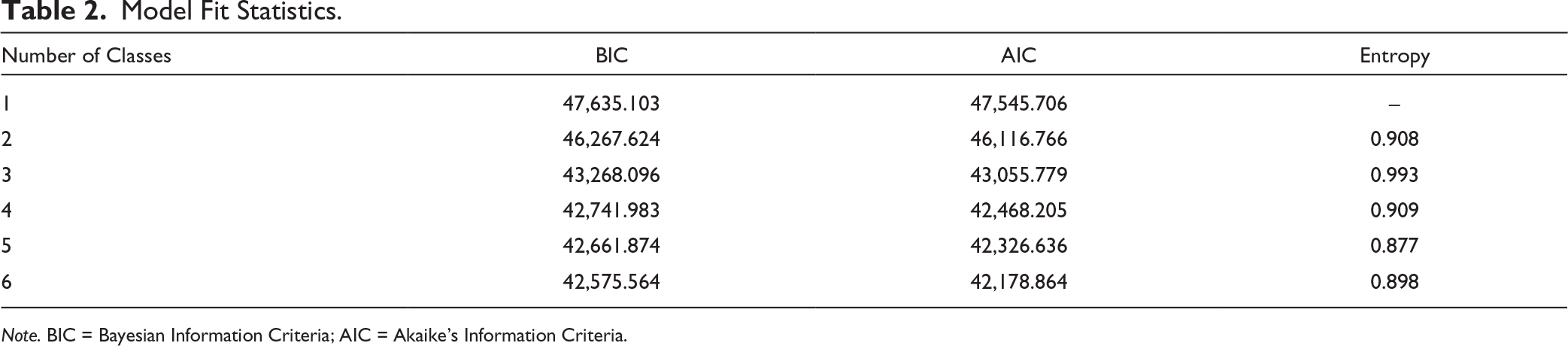
Note. BIC = Bayesian Information Criteria; AIC = Akaike’s Information Criteria.
Average Latent Class Probabilities for Class Assignment.

Results for the LCA are displayed in Table 4. Each column of the table represents an identified class of girls, with each row indicating the proportion of girls who endorsed a given variable (if categorical) or the class mean for the variable (if continuous). For example, girls in the moderate victimization class experienced one violent crime category on average and had a probability of .29 of experiencing physical abuse. The four subtypes identified include a Low Victimization class, a Moderate Victimization class, a Violent Victimization class, and a Psychological Distress class. Each class is described in detail below. Note that while we sometimes compare classes to each other to assist in this description, statistical differences between each class on the model variables are not assessed as part of LCA.
Results of Latent Class Analysis.
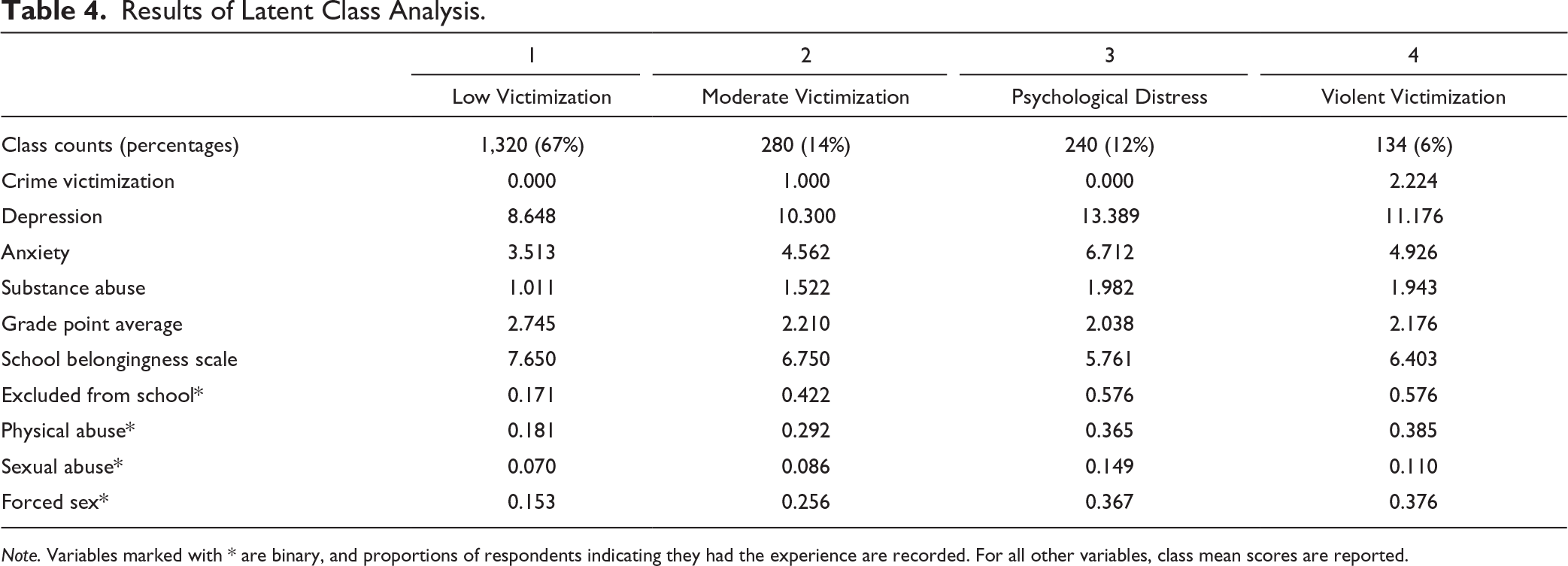
Note. Variables marked with * are binary, and proportions of respondents indicating they had the experience are recorded. For all other variables, class mean scores are reported.
As is shown in Table 4, girls in the Low Victimization class reported the lowest rates of interpersonal and sexual violence of any subtype. Low Victimization girls also reported the lowest mean scores of depression, anxiety, and substance abuse. Additionally, the Low Victimization class had the strongest school performance of any of the classes, demonstrating the highest mean GPA, the lowest proportion of school exclusion, and the highest levels of school belongingness. Demographically, 57% of the girls were White, 21% were Black/African American, 15% were Latina, and 7% were of another race/ethnicity. Low Victimization girls reported 1.64 delinquent acts on average.
Girls in the Moderate Victimization class demonstrated higher elevated levels of victimization and risk factors than Low Victimization girls. They reported experiencing one violent crime victimization category on average and also had higher rates of physical and sexual abuse than their Low Victimization peers. Girls in the Moderate Victimization class had scores on depression, anxiety, and substance use scales that were higher than those of girls in the Low Victimization Group, but lower than those of the High Victimization classes. Their success in school additionally fell between Low and High Victimization classes, with high rates of school exclusion, lower than expected mean GPA, and a mean school belongingness score that was below that of the sample mean. Demographically, girls in this class were 57% White, 13% Black, 20% Latina, and 10% of another race/ethnicity. There were no statistically significant differences by race or parents’ SES for this class. Girls in the Moderate Victimization class reported 1.74 delinquent acts on average.
Girls in the Psychological Distress class reported the highest levels of depression, anxiety, and substance abuse across classes. They fared the worst academically as well. Girls in the Psychological Distress class reported the lowest mean GPA, the lowest ratings of school belongingness, and the highest rates of school exclusion of any of the classes. These psychological and educational risk factors make sense in light of the victimization histories of these girls. They experienced high levels of childhood physical and sexual abuse, as well as high rates of forced sex. Note that girls in this class reported very low rates of violent crime victimization. Demographically, the girls in this class were 46% White, 32% Black/African American, 17% Hispanic, and 5% of another race/ethnicity. Latina girls were less likely to be in the Psychological Distress class than White girls (African American girls did not differ statistically significantly from White girls; OR = 0.19, p = .009). Girls in this class reported 2.35 delinquent acts on average.
Finally, girls in the Violent Victimization class reported experiencing the highest number of violent victimization categories—more than twice as many as the next highest group (Moderate Victimization). Girls in this class also reported experiencing high rates of physical and sexual abuse and forced sex. Violent Victimization girls reported elevated levels of anxiety and depression, and high rates of substance abuse. They fared somewhat poorly academically, with a lower than expected mean GPA and feelings of school belongingness, and the highest rates of school exclusion. Forty percent of the girls in this class were White, 25% were Black/African American, 31% were Latina, and 4% were of another race/ethnicity. There were no statistically significant differences by race or parents’ SES for this class. Girls in this class reported 3.61 delinquent acts on average, the highest of all the classes.
Young Adulthood Outcomes
The second goal of the present study was to understand how identified classes of girls who engaged in delinquency would fare on a range of distal outcomes measured at Wave IV, when participants were young adults. To answer this question, distal outcomes relating to participants’ social, emotional, and economic state were included as dependent variables in regression models (or logistic regression models for binary outcomes) with class membership as a predictor variable. Regression coefficients (or odds ratio for logistic regressions) are displayed in Table 5. Note that for all analyses in this step, the Violent Victimization class is used as the reference group because they had the highest rates of engagement in delinquency.
Distal Outcomes of Identified Female Classes (vs. Violent Victimization Class).
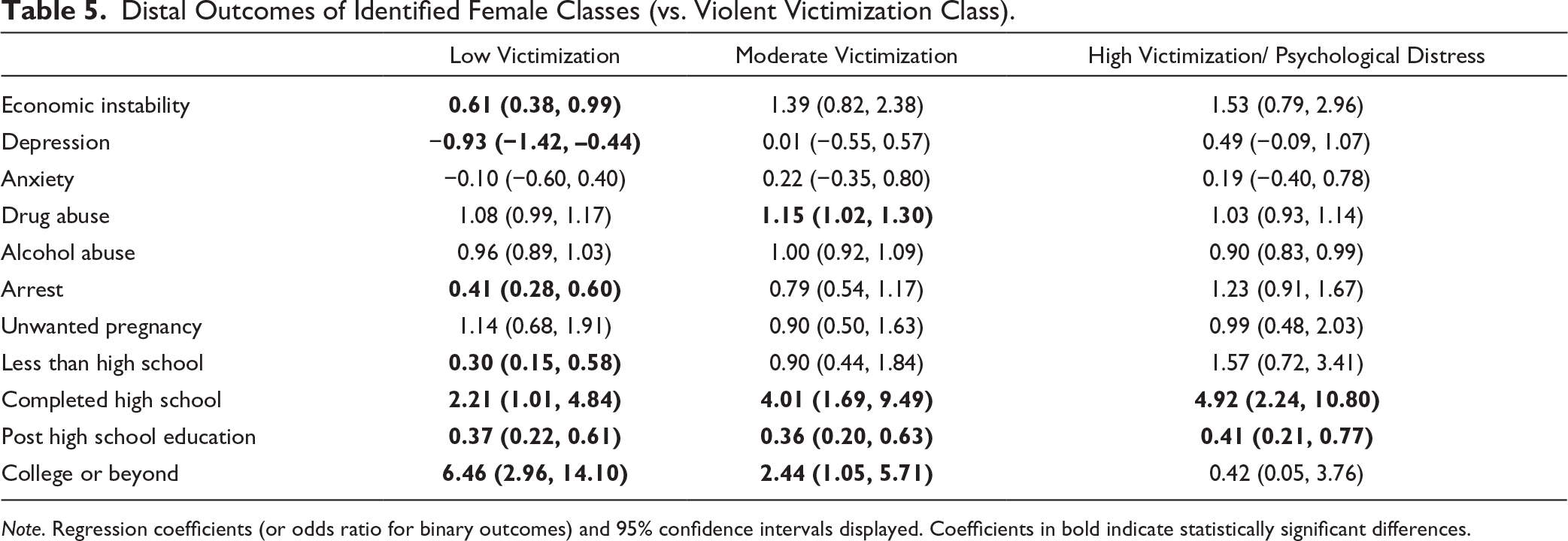
Note. Regression coefficients (or odds ratio for binary outcomes) and 95% confidence intervals displayed. Coefficients in bold indicate statistically significant differences.
There were no significant differences between the Low Victimization, Moderate Victimization, or Psychological Distress classes of girls versus the Violent Victimization class in their rates of unwanted pregnancy, alcohol abuse, or in ratings of anxious personality as young adults. Differences did emerge between classes regarding drug use, arrests, depression, economic instability, and educational attainment. Regarding arrests, girls in the Low Victimization class were less likely than girls in the Violent Victimization class to report being arrested as an adult (OR = 0.41, p < .001).
Mental health differences in young adulthood emerged based on class membership. Girls in the Moderate Victimization class reported statistically significantly more drug abuse symptoms than girls in the Violent Victimization class as adults (OR = 1.15; p = .045). Girls in the Low Victimization class reported significantly lower depression scores than girls in the Violent Victimization class (B = −0.93, p < .001).
Economic differences were noted as well. Girls in the Low Victimization class were less likely than their peers in the Violent Victimization class to be considered economically unstable in young adulthood (OR = 0.61, p = .029). Related to economic success, differences in educational attainment between classes of girls were also identified. Girls in the Low Victimization, Moderate Victimization, and Psychological Distress classes were all more likely than girls in the Violent Victimization class to complete high school or an equivalent degree (OR = 2.21, p < .001; 4.01, p < .001; and 4.92, p < .001, respectively), and girls in the Low and Moderate Victimization classes were also more likely than girls in the Violent Victimization class to complete a bachelor’s degree or higher (respectively, OR = 6.46, p < .001; OR = 2.44, p = .015).
Additionally, we tested the interaction effect between the type of risk/victimization and race on the distal outcomes. No significant interaction effects were found (ps > .05), indicating that the relationship between the type of risk/victimization and the distal outcomes did not vary by race (see supplemental material).
Discussion
In the present study, we sought to determine whether subtypes of female adolescents who self-report engaging in delinquent behaviors could be identified based on their experiences of interpersonal violence, psychological distress, and educational experiences (i.e., subtypes of risk and victimization). Additionally, after gaining an understanding of subtypes of girls who engaged in delinquency, the present study sought to identify life domains (e.g., education, mental health) where different risk-based subtypes of these girls might struggle when they reach young adulthood.
Four classes of girls who engaged in delinquency were identified based on their experiences of risk and victimization: one characterized by low victimization and better adjustment, one with moderate victimization and adjustment, one with high victimization and significant psychological distress, and one with high victimization and experiences of violent victimization. In all four classes of girls, interpersonal violence and psychological distress were present, though to varying degrees. Not surprisingly, classes of girls who experienced more violent, interpersonal, and sexual violence reported the most psychological distress and did not perform as well in school. Those girls who experienced both interpersonal/sexual and traditional violent victimization fared worst educationally and fared poorly in terms of their mental health as well. This is consistent with research that suggests that young people, especially girls, struggle with their mental health (Rossiter et al., 2015) and educational achievement (Boden et al., 2007) when they experience trauma.
We also note demographic differences and different rates of offending by class. Classes with high levels of victimization (the Psychological Distress class and the Violent Victimization class) reported more engagement in delinquent acts than the low and moderate victimization groups. This finding makes sense considering research suggesting that experiences of trauma can lead to engagement with crime (Belknap & Holsinger, 2006; Chesney-Lind & Sheldon, 2003; DeHart, 2008, 2009; DeHart et al., 2014). Additionally, high-victimization classes had a larger proportion of Black and Hispanic girls than lower-victimization classes. This finding also makes sense in light of research that suggests that Black and Hispanic youth are at increased risk for child maltreatment (Child Trends, 2019; Sedlak et al., 2010) versus White peers and that Black teens are at increased risk for violent crime victimization versus White peers as well (Child Trends, 2018).
Findings from this study additionally suggest that that adolescents’ experiences of victimization and risk are related to worse outcomes when they reach young adulthood and that to some extent, earlier risk factors are related to the same types of problems in adulthood. Differences between classes in economic instability, educational attainment, drug use, depression, and adult arrests were identified. Girls in the Low Victimization group were less likely to be considered economically unstable, to be arrested, and to struggle with depression in young adulthood than their peers in the Violent Victimization class. Girls in the Psychological Distress class reported more depression than girls in the High Violent Victimization class. Educationally, girls with lower levels of victimization tended to have higher educational attainment across all classes.
Practice Implications
The results of the present study have numerous implications for those who work with girls who experience significant victimization and/or girls who engage in delinquent behaviors. First, the findings of this study support previous research, which suggests that girls who engage in delinquency have specific gender-informed intervention needs (Belknap & Holsinger, 2006; Chesney-Lind & Sheldon, 2003; DeHart et al., 2014). Prevention and intervention programs should be targeted at girls who experience trauma and who are at risk for criminal behavior. To that end, policymakers and treatment providers might benefit from understanding subtypes of victimization/trauma and associated risks to improve service precision and assist in determining the level of care a girl might need. By extension, this suggests that screening for and assessment of potentially traumatic experiences, including screening for type of trauma, frequency, severity, and age the girl was when the trauma occurred is critical (National Child Traumatic Stress Network, 2019). Failing to do so could result in the unfair treatment of girls by the juvenile justice system, and the further “criminalization of girls’ efforts to escape abuse and other conditions of exploitation, maltreatment, and neglect” (Chesney-Lind & Merlo, 2015, p. 72). We also note the unique impacts of girls’ race/ethnicity and level of involvement with delinquent behaviors on their class membership. This makes sense in light of research demonstrating that experiences of systemic racism and discrimination put girls of color at increased risk for victimization and deeper involvement with the juvenile justice system (Rodriguez, 2010). It suggests that those who work with at-risk girls need to be especially aware of the impacts of culture and to ensure the use of culturally-sensitive preventative efforts and interventions.
The rates of sexual abuse and sexual assault identified in this sample were strikingly high, and the present study demonstrated how girls who experienced sexual victimization struggled in a variety of life domains as adults. To some extent, the domains in which they struggled were predicted by the difficulties they had as adolescents (e.g., girls in the Psychological Distress class reported higher depression scores during young adulthood, suggesting that the struggles they had with mental health in their teen years continued). This implies that understanding a girl’s needs when she is identified as at-risk for adolescent delinquency, and appropriately intervening, could prevent her from having similar struggles as she enters adulthood. It is important to not only work to prevent further criminal behavior but to also intervene in the psychological and social phenomena that result in the behavior.
This study additionally speaks to the importance of school performance and how students’ achievement and behavior in school is related to their histories. In classes where school performance was weak, levels of psychological distress and interpersonal violence tended to be higher, and vice versa. In combination, these implications extend to suggest that both schools and social service systems have an important role to play in preventing the onset of criminal behavior in girls. The treatment of trauma, reduction of abusive family dynamics, and improvement of school connectedness might all be helpful interventions to reduce the potential for criminal behavior among girls experiencing violence and abuse. Several evidence-based frameworks exist to help systems in accomplishing these goals, including the Neurosequential Model of Therapeutics (Perry, 2009) and the Attachment, Regulation, and Competency Framework of Trauma-Informed Care (Kinniburgh et al., 2005).
Limitations and Directions for Future Research
While the present study makes a significant contribution to understanding the symptoms and needs of girls who engage in delinquent behavior throughout their adolescence and young adulthood, it is not without limitations. First, we acknowledge limitations regarding the robustness of key study variables such as engagement in delinquent behavior, violent crime victimization, substance use, and child maltreatment. This is a result of the limitations of variables that were measured in the original AddHealth study and is a common problem with large-scale data collection efforts. Our child maltreatment variables retrospectively measure parental perpetration of physical and sexual abuse but neglect to measure abuse perpetrated by others. Additionally, our substance use measures are very broad and general, leaving out important aspects of substance use such as frequency, intensity, and duration of use. There is additional caution warranted in interpreting substance use results at Wave IV due to the DSM-IV criteria for alcohol use and substance use disorders including legal problems as a potential symptom, and the overlap of that with the Wave IV measure of arrest in adulthood. We hope that future examinations of this topic will use more precise measurements of the variables assessed in the present study.
The present study could also have benefited from a more robust initial measure of delinquent behavior. In the present study, participants who responded that they had engaged in one or more delinquent activities were included in the study. Engaging in delinquency was chosen as the inclusion criteria for this study over arrest because a very small number of participants reported arrests as juveniles. Although this allows us to better understand girls who engage in delinquent/criminal behaviors at lower levels and capture the experiences of girls who engage in delinquent behavior without formal justice system contact, a stronger measure (such as being involved with the juvenile justice system or being arrested) might provide a more accurate representation of the juvenile justice population.
Additionally, as the experience of trauma is theoretically related to violent and sexual victimization and serious delinquency in female populations, a measure of trauma symptoms would be beneficial for future researchers to include in their studies. Although the present study includes measures of participants’ depression, anxiety, and substance use symptoms, including trauma-specific symptoms in the analyses might have explained more of the girls’ delinquent behavior, mental health concerns, and educational difficulties.
Finally, from the results presented here, we are unable to determine a causal relationship between school performance and interpersonal violence/psychological distress in adolescence (due to these variables all being measured at the same time). It is possible that either (a) doing well and feeling supported in school is protective for students who might engage in delinquency or that (b) students’ potentially traumatic experiences, psychological distress, and engagement in crime reduce their ability to perform well in and build a strong attachment to school. Future research, and the future design of preventative interventions, would benefit from studies that directly test the directionality of these findings.
Despite these limitations, this study has contributed to the literature on girls who engage in delinquent behavior in many important ways. First, it allows for a greater understanding of the heterogeneous presentations and varying levels of victimization of offending girls during their adolescence. Second, it identifies areas of continuing need as girls who engage in delinquency age into young adulthood. The findings of this study suggest that a multi-level (individual and systemic) and trauma-informed approach to treatment is imperative for both the prevention of adult criminal behavior and the improvement of the future circumstances of girls who engage in delinquency.
Supplemental Material
Supplemental Material, 10.1177_0361684320918243-suppl1 - Subtypes of Girls Who Engage in Serious Delinquency and Their Young Adult Outcomes
Supplemental Material, 10.1177_0361684320918243-suppl1 for Subtypes of Girls Who Engage in Serious Delinquency and Their Young Adult Outcomes by Danielle M. Smith, Jamilia J. Blake, Wen Luo, Verna M. Keith and Tameka Gilreath in Psychology of Women Quarterly
Footnotes
Appendix
Correlations of Study Variables.

| W I: Delinquency | W IV: Physical Abuse | W IV: Sexual Abuse | W I: Forced Sex | W I: Crime Victimization Scale | W I: Depression | W I: Anxiety | W I: GPA | W I: School exclusion | W I: School belongingness | W IV: Level of Education | W IV: Inco-me | W IV: Unwanted 1st Pregnancy | W IV: Adult Arrest | W IV: Depression | W IV: Anxiety | W IV: Alcohol Use | W IV: Drug Use | |
|---|---|---|---|---|---|---|---|---|---|---|---|---|---|---|---|---|---|---|
| W I: Delinquency | 1.00 | |||||||||||||||||
| W IV: Physical abuse | .11* | 1.00 | ||||||||||||||||
| W IV: Sexual abuse | .08* | .18* | 1.00 | |||||||||||||||
| W I: Forced sex | .12* | .12* | .17* | 1.00 | ||||||||||||||
| W I: Crime victimization scale | .40* | .08* | .04* | .12* | 1.00 | |||||||||||||
| W I: Depression | .14* | .07* | .05* | .12* | .13* | 1.00 | ||||||||||||
| W I: Anxiety | .17* | .09* | .02 | .01 | .10* | .42* | 1.00 | |||||||||||
| W I: GPA | −.15* | −.09* | −.06* | −.05 | −.19* | −.16* | −.06* | 1.00 | ||||||||||
| W I: School exclusion | .21* | .09* | .08* | .08* | .20* | .16* | .07* | −.41* | 1.00 | |||||||||
| W I: School belongingness | −.16* | −.05* | −.03 | −.12* | −.14* | −.19* | −.17* | .13* | −.16* | 1.00 | ||||||||
| W IV: Level of education | −.16* | −.07* | −.06* | −.07 | −.15* | −.14* | −.08* | .57* | −.28* | .09* | 1.00 | |||||||
| W IV: Income | −.08* | −.06* | −.08* | −.08* | −.11* | −.06* | −.03 | .25* | −.20* | .09* | .33* | 1.00 | ||||||
| W IV: Unwanted first Pregnancy | −.05 | −.02 | −.01 | .02 | .00 | .03 | .02 | .05 | −.01 | .04 | −.03 | .03 | 1.00 | |||||
| W IV: Adult arrest | .15* | .11* | .06* | .05 | .09* | .04 | .02 | −.19* | .21* | −.07* | −.19* | −.12* | −.08* | 1.00 | ||||
| W IV: Depression | .08* | .16* | .10* | .12* | .09* | .20* | .15* | −.19* | .11* | −.12* | −.23* | −.16* | .00 | .14* | 1.00 | |||
| W IV: Anxiety | −.02 | .08* | .01 | .01 | .02 | .11* | .14* | −.05 | −.03 | −.03 | −.07 | −.02 | −.03 | .01 | .42* | 1.00 | ||
| W IV: Alcohol use | .06 | .09* | .03 | .04 | −.01 | .05 | .08* | .04 | .04 | −.10* | .03 | −.01 | −.04 | .25* | .11* | .14* | 1.00 | |
| W IV: Drug use | .01 | −.04 | .05 | .00 | −.02 | −.05 | −.05 | −.03 | .06 | −.04 | .02 | −.03 | −.14 | .22* | .04 | .06 | .26* | 1.00 |
Note. W I = wave one of data collection from the AddHealth dataset; W IV = wave four of data collection from the AddHealth dataset. *p < .05.
Declaration of Conflicting Interests
The author(s) declared the following potential conflicts of interest with respect to the research, authorship, and/or publication of this article: This research uses data from Add Health, a program project directed by Kathleen Mullan Harris and designed by J. Richard Udry, Peter S. Bearman, and Kathleen Mullan Harris at the University of North Carolina at Chapel Hill. Information on how to obtain the Add Health data files is available on the Add Health website ( ). No direct support was received from Grant P01-HD31921 for this analysis.
Funding
The author(s) disclosed receipt of the following financial support for the research, authorship, and/or publication of this article: This work was funded by Grant P01-HD31921 from the Eunice Kennedy Shriver National Institute of Child Health and Human Development, with cooperative funding from 23 other federal agencies and foundations.
References
Supplementary Material
Please find the following supplemental material available below.
For Open Access articles published under a Creative Commons License, all supplemental material carries the same license as the article it is associated with.
For non-Open Access articles published, all supplemental material carries a non-exclusive license, and permission requests for re-use of supplemental material or any part of supplemental material shall be sent directly to the copyright owner as specified in the copyright notice associated with the article.
