






Abstract
Blood pumps are often used for hemofiltration in patients with renal failure. To design effective centrifugal blood pumps for hemofiltration, it is important to suppress clogging caused by platelet aggregation. However, the optimal conditions for conducting anti-platelet aggregation tests in vitro have not yet been established. This study aimed to quantify the effect of the shear loading value and shear loading time on platelet aggregation and determine the optimal conditions for anti-platelet aggregation testing in vitro. To quantitatively evaluate platelet aggregation in terms of the negative logarithm-platelet aggregation threshold index (NL-PATI), which reflects the propensity of residual platelets to aggregate after shear loading, the following parameters were examined: blood collection method (collected from porcine vein using a syringe or collected from a slaughterhouse), type of anticoagulant (sodium citrate or heparin), shear rate, and shear time. The results showed that platelet aggregation in porcine blood increased under a high shear load applied at shear rates of approximately 20,000 s−1 or higher for 30 s. Platelet aggregation propensity was 2–3 times higher in heparin-anticoagulated blood than in sodium citrate-anticoagulated blood. Moreover, platelet aggregation was 1.5–2 times more in blood collected from the slaughterhouse than in syringe-collected blood. Testing with an integrated shear time of 30 s or less in relation to the total blood volume may be effective for conducting in vitro circulation experiments using hemofiltration blood pumps. The conditions established in this study may be useful for hemocompatibility testing of cardiovascular devices based on NL-PATI.
Keywords
Introduction
A hemofiltration blood pump is applied to a dialysis device for patients with renal failure. 1 In particular, small size and portability are essential in hemofiltration blood pumps for children, infants, and neonates 2 and/or in acute use. Roller pumps are generally used in hemofiltration systems; however, problems, such as tube damage or increased internal pressure due to thrombogenesis in the circuit, often arise. A low-flow centrifugal blood pump has better durability than a roller pump and can be small in size; therefore, it is expected to be applied to emerging hemofiltration blood pumps.3,4
A centrifugal blood pump for hemofiltration requires the suppression of blood cell clogging of the blood filtration components. Clogging is considered mainly due to platelet aggregation resulting from a cluster of activated platelets exposed to non-physiological shear stress in a blood pump 5 and their consequent adhesion. To suppress platelet aggregation, it is important to design an appropriate centrifugal blood pump.
To design a blood hemofiltration blood pump that suppresses platelet aggregation and clogging of the blood filtration components, in vitro hemocompatibility testing is required as a comparative study before animal testing. 6 However, optimal conditions for conducting anti-platelet aggregation in in vitro tests that simulate in vivo conditions have not been determined. 7 Platelet aggregation depends on the shear loading time and shear loading value, and the quantitative effect on platelet aggregation is not completely known. The first point that must be clarified is quantifying the relationship between the shear loading time, shear loading value, and platelet aggregation.
This study aimed to quantify the effect of shear loading value and shear loading time on platelet aggregation and find suitable conditions for in vitro anti-platelet aggregation tests.
Methods
Porcine blood was used in this study because bovine, goat, and porcine blood samples are usually employed in animal tests, and porcine blood is often used in commercial contract animal experiments for anti-thrombus tests.
Sodium citrate and heparin, which are often used for in vitro tests, were used as anticoagulants to investigate platelet aggregation. Blood collected from a slaughterhouse and blood collected from the porcine vein using a syringe were employed to investigate the difference in platelet activation due to shear loading force depending on the blood collection method.
Blood preparation collected from a slaughterhouse
Blood that was obtained from the slaughterhouse was collected in 1 L bottles containing 10 mL of heparin (final concentration with blood: 10,000 units/L) and 90 mL of sodium citrate (final concentration with blood: 0.32%). The bottles were soaked in water at approximately 20°C and transported to the experimental site. After confirming that platelet aggregation conditions did not change after blood collection using a screen filtration pressure (SFP) device (Hematoracer ZEN; LMS Co., Ltd., Japan) and a fully automated hemocytometer (Celltac α MEK—6450; Nihon Kohden Co., Ltd., Japan), the experiment started within 2 h and was completed in <6 h. The tests were conducted five times and used blood collected from five different pigs for each test.
Blood preparation collected from the porcine vein in animal tests
Blood samples were collected from five different Japanese-specific pathogen-free pigs for five-time tests. This study was approved by the appropriate institutional animal care and use committees (2019-0229; AIST, A2019-236A; TMDU). A sedation solution (2 mg/kg xylazine and 20 mg/kg ketamine) was injected subcutaneously at the start of the experiment. Isoflurane (1%–3%) was administered by inhalation and then intubation was performed. After the general and inhalation anesthesia was established, the femoral vein was catheterized using a standard cut-down technique. Fresh porcine blood (45 mL) was slowly collected under anesthesia from the porcine femoral vein (40–100 kg, WL/LW species, male, and female) using a 50 mL syringe through a 5 Fr. central catheter. The collected blood was anti-coagulated with 450 μL of heparin (final concentration: 10,000 unit/L) immediately after collection, and platelets were counted using a fully automated hemocytometer. Subsequently, the collected blood samples were preserved at room temperature and used for experiments shortly after collection to ensure freshness.
Shear stressor and shear conditions
A uniform shear load was applied on the target blood using the developed coaxial-cylinder-type shear stressor (Figure 1) to measure platelet aggregation with respect to shear rate. The output torque value was measured via a torque meter in the shear stressor. The relationship between the shear rate and torque was expressed as in equation (1), and the viscosity was obtained from the torque value. In addition, as a basic experiment, it was confirmed in advance with a viscosity calibrator that theoretically, the shear load was applied at a clearance gap of 0.3 mm in a viscosity range of 2.7–5.0 mPa
where
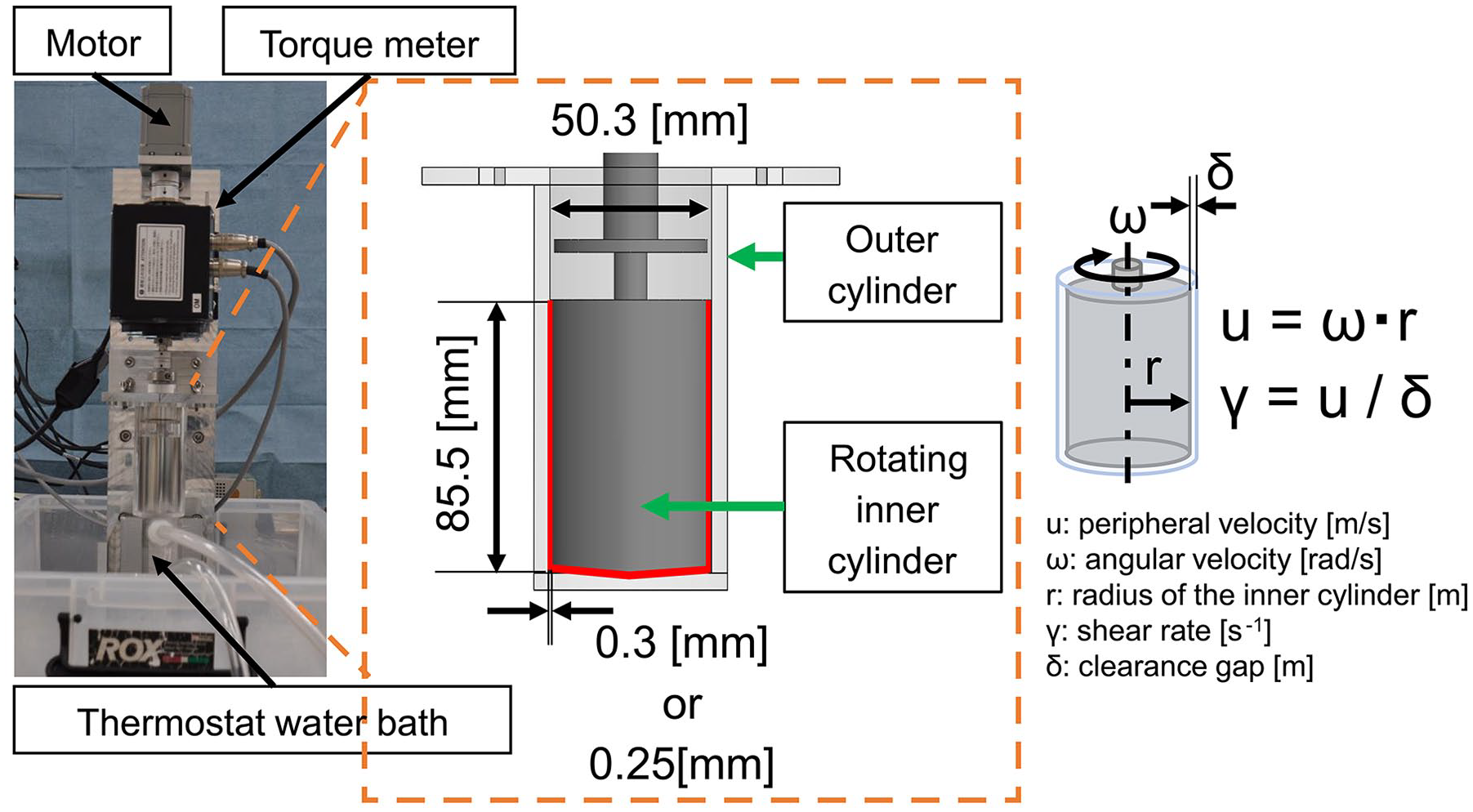
Development of coaxial-cylinder-type shear stressor. The shear stressor consists of a designed rotating inner cylinder, a designed outer cylinder, a commercial motor (AC SERVO MOTOR NXM620A, Oriental Motor Co., Ltd., Japan), and a commercial torque meter (TORQUE DETECTOR SS-002, ONO SOKKI Co., Ltd., Japan). The diameter and height of the inner cylinder are 50.3 and 85.5 mm, respectively. Two outer cylinder sizes were prepared, and the gaps between the inner cylinder and the outer cylinder are 0.3 and 0.25 mm. A cup connected to a thermostat-controlled water bath surrounds the outer cylinder, and the blood between the inner cylinder and the outer cylinder was warmed by keeping water in the cup at 37°C.
The shear stressor was used to apply shear load on 6 mL of the target whole blood at shear rates ranging from 10,000 to 30,000 s−1. The shear rate of 30,000 s−1 is the limit value for this shear stressor with a 0.3 mm gap between the inner rotating cylinder and the outer cylinder strainer based on the input rotational speed. The shear rate was selected as the evaluation value based on the input value of the rotation number and the invariant gap in the device.
First, the blood in the cylinder was pre-warmed in a thermostat-controlled water bath at 37°C for 30 s under a very low shear rate (approximately under 10 s−1) to prevent the first strong torque. Second, the blood was shear-loaded for 30 s to detect the influence of shear loading, which is platelet aggregation and blood cell damage. As a control, blood that filled between the inner cylinder and outer cylinder with no shear loading for 1 min was analyzed to evaluate platelet aggregation. Heparin anti-coagulated blood after shearing was removed from the shear stressor and placed in a 1.8 mL sodium citrate tube (Venoject II, Terumo Co., Ltd., Japan) to chelate calcium and prevent further platelet activation. Sodium citrate anti-coagulated blood was not placed in the sodium citrate tube after shear loading.
Similarly, platelet aggregation was measured at shear loading times of 1, 5, and 10 min. A one-sided gap of the shear stressor was 0.25 mm, and the maximum shear rate was 40,000 s−1 when the shear loading time was above these conditions.
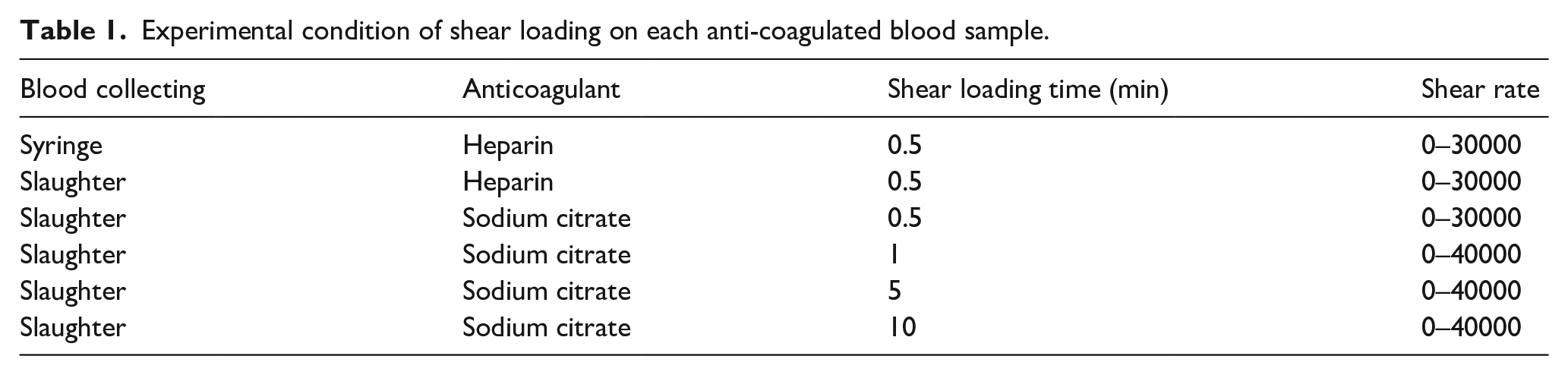
Table 1 shows the shear loading experimental condition for each anti-coagulated blood sample.
Experimental condition of shear loading on each anti-coagulated blood sample.
Evaluation of platelet aggregation and platelet count
The number of platelets and erythrocytes were counted using a fully automated hemocytometer immediately before and after shear loading. The propensity for platelet aggregation after shear loading in whole blood was assessed using an SFP device. 8 Collagen solution (22.0 μL of 0.125, 0.25, 0.5, and 1.0 μg/mL) was added to four reaction tubes containing 200 μL of whole blood after shear loading and incubated at 37°C. After incubation, the suction force through a micro-mesh square filter (30 μm × 30 μm) of 300 mesh per φ1.0 mm2 in the device was measured in each reaction tube. Platelet aggregation is indicated by the platelet aggregation threshold index (PATI) (Figure 2). PATI refers to the agonist concentration at 50% of the pressure rate through the micromesh filtration of aggregated platelets. Four blood samples added with a one-fold, two-fold, four-fold, and eight-fold concentration of the agonist (collagen) were sequentially suctioned, and the agonist concentration at the point where the attractive force became 50% was measured. When the PATI value is low, the degree of aggregation is high, and vice versa. PATI is expressed as an opposite plus/minus value and is calculated as a logarithm because double-diluted blood containing the agonist is suctioned in order. Platelet aggregation is graded from Class -II to Class III, and each class has a significant meaning, as shown in Figure 2. Therefore, we converted PATI to negative Log PATI (NL-PATI) to express the platelet aggregation level as a numerical value combining class and PATI. NL-PATI demonstrates the propensity for residual platelets to aggregate after shear loading. In addition, since the platelet count after shear loading differs depending on the shear rate, NL-PATI per unit platelet count (NL-PATI/PLT) was calculated for comparison.
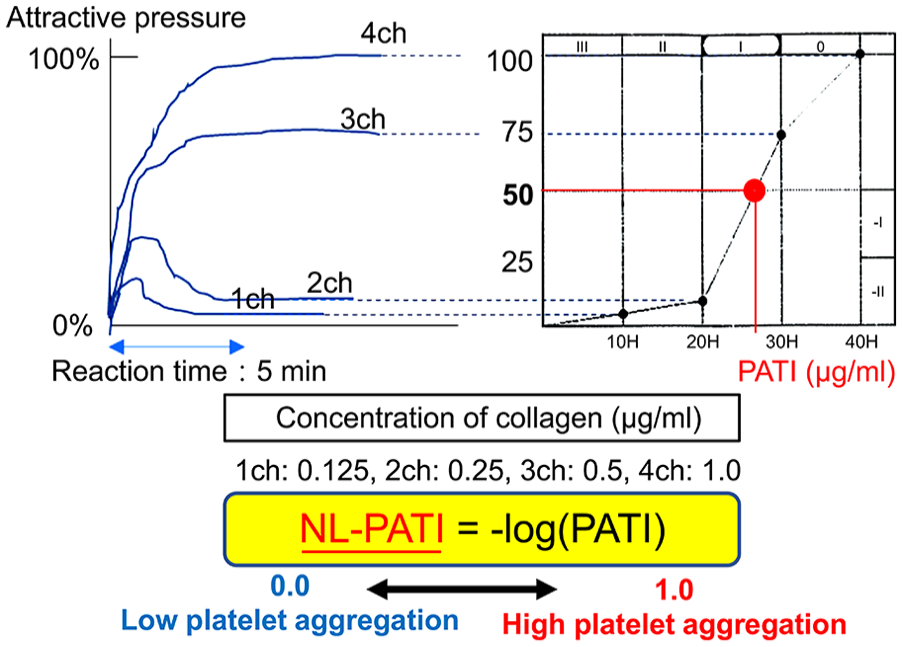
Description of PATI and definition of NL-PATI. The platelet aggregation threshold index (PATI) refers to the agonist concentration at 50% of the pressure rate through the micromesh filtration of aggregated platelets after the addition of four double-diluted agonist concentrations (collagen concentration: 0.125, 0.25, 0.5, and 1.0 μg/mL). The PATI is classified as follows: Class III = PATI = 0.1, Class II = 0.1 < PATI ⩽ 0.2, platelet aggregation is high; Class I = 0.2 < PATI ⩽ 0.4, platelet aggregation is very high; Class 0 = 0.4 < PATI ⩽ 1.0, platelet aggregation is high; Class I and II = 1.0 < PATI, platelet aggregation is low and very low. Negative log PATI (NL-PATI) is recalculated from PATI and represents −log (PATI). The maximum NL-PATI is 1.0 and the minimum is 0.
Hemolysis test for the evaluation of blood cell damage
A hemolysis test was conducted to verify the usefulness of the shear loading condition (shear rate and shear loading time) by the shear stressor for blood cell damage. Plasma was obtained to quantitate plasma-free hemoglobin after shear loading. Whole blood (2 mL) was centrifuged at 7830 × g for 10 min at 4°C (MX-150; Tomy Seiko Co., Ltd., Tokyo, Japan), and the supernatant plasma was collected. Plasma-free hemoglobin (fHb) was measured using the 3,3′,5,5′-tetramethylbenzidine method9–11 and a commercial kit (527-A plasma hemoglobin; Sigma Diagnostics Inc., St. Louis, MO, USA).
Statistics
Platelet aggregation, blood cell count, and hemolysis results were statistically compared with the F-test followed by a t-test using spreadsheet software (Excel, Microsoft Co., Ltd., USA). Statistical significance was set at p < 0.05.
Results
Platelet aggregation ability after shear loading
As shown in Figure 3(a), the mean NL-PATI/PLT (aggregation per unit platelet after applying shear force) in heparin anti-coagulated slaughterhouse blood was ⩾0.2 at a shear rate of 22,500 s−1. When the shear rate was ⩽15,000 s−1, the NL-PATI/PLT was approximately 0.01, and the highest mean NL-PATI/PLT at a shear rate of 22,500 s−1 was over 20 times higher than the value at a shear rate of 15,000 s−1. In addition, in citric acid anti-coagulated slaughterhouse blood, the mean NL-PATI/PLT was 0.07 at a shear rate of 25,000 s−1, which was approximately seven times higher than that at a shear rate of 15,000 s−1 in the same type of blood. Similarly, the mean NL-PATI/PLT was 0.04 at a shear rate of 25,000 s−1 in heparin anti-coagulated syringe-collected blood, which was approximately four times higher than that at a shear rate of 15,000 s−1 in the same type of blood. For heparin anti-coagulated blood, a larger change in platelet aggregation due to shear load was observed in slaughterhouse blood than in syringe-collected blood.
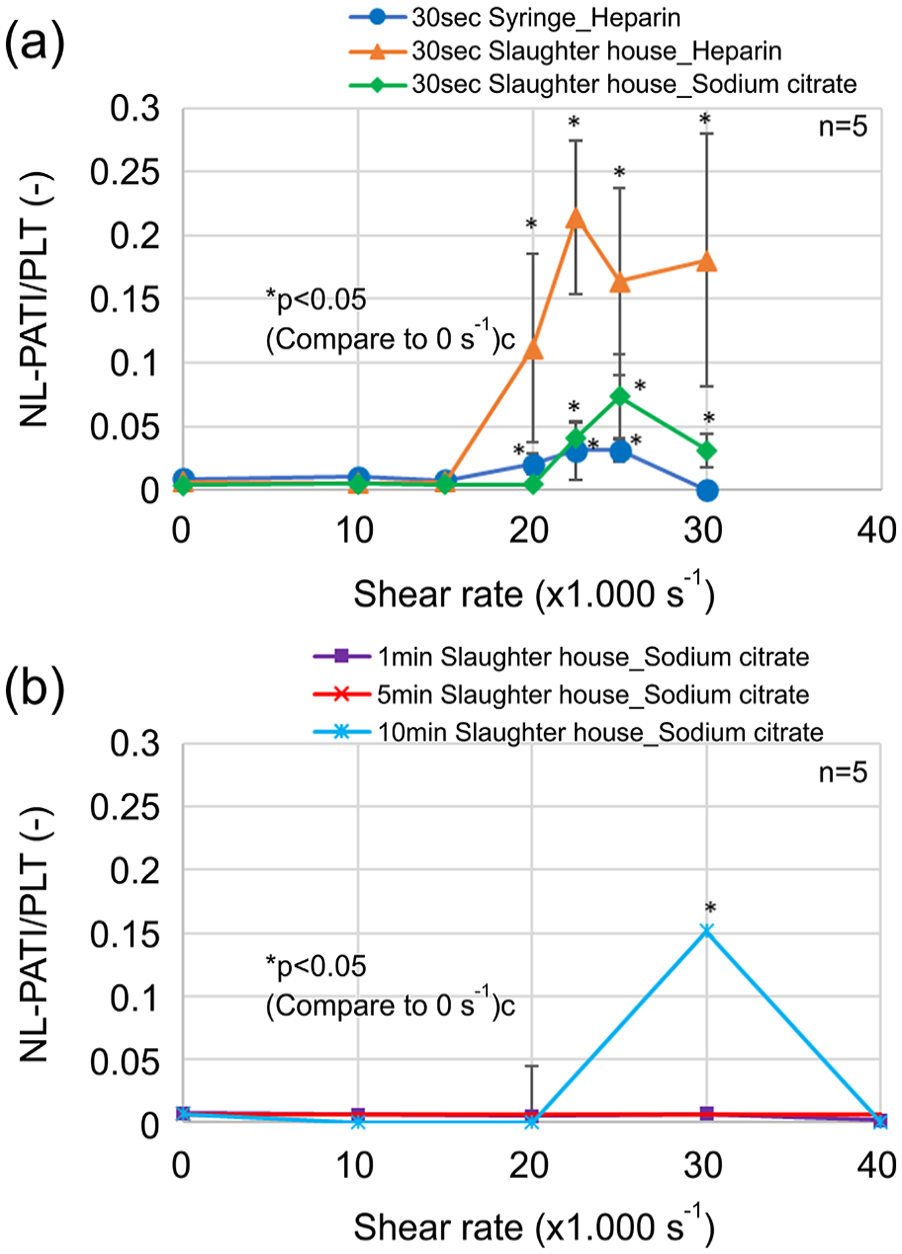
Result of mean ML-PATI (index of platelet aggregation) per unit platelet (PLT) count after shear loading: (a) NL-PATI/PLT for the shear loading time of 30 s and (b) NL-PATI/PLT for shear loading times of 1, 5, and 10 min.
As shown in Figure 3(b), subjecting citric acid anti-coagulated slaughterhouse blood to a shear loading time of 1 min or longer resulted in virtually no change (approximately 0.01) in NL-PATI/PLT in response to increased shear rate. However, the NL-PATI/PLT was 0.15 when the shear load on citric acid anti-coagulated slaughterhouse blood was applied at a shear rate of 30,000 s−1 for 10 min, approximately 15 times that of the same blood at a shear rate of ⩽10,000 s−1.
Changes in platelet count due to shear load
A change in the number of blood cells was observed before and after the shear load. As shown in Figure 4(a) and (b), the platelet count tended to decrease in both blood samples at shear rates of 15,000–20,000 s−1 and higher. However, as shown in Figure 4(b), a marked increase in the platelet count was observed after a shear load on citric acid anti-coagulated slaughterhouse blood at a shear rate of 40,000 s−1 for 10 min.
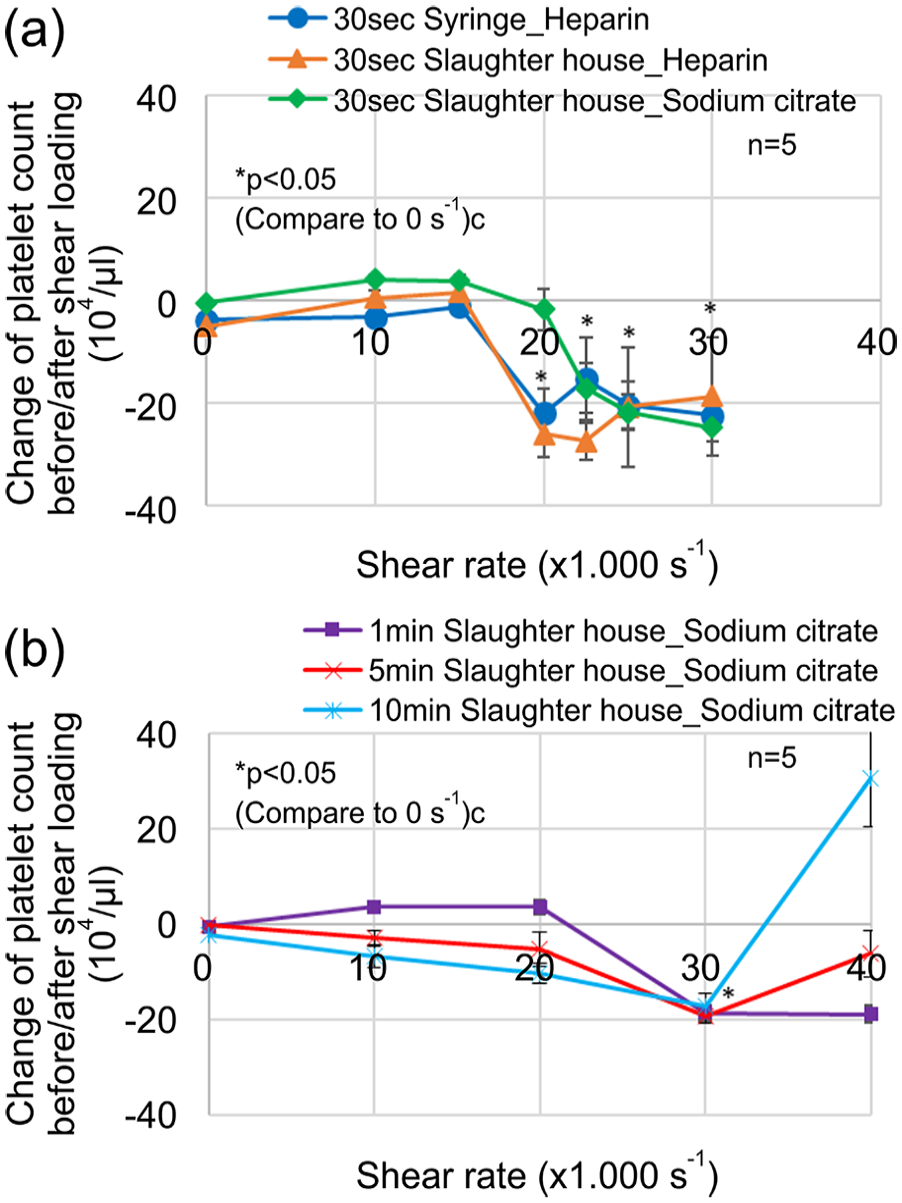
Number of platelets after shear loading: (a) differences in platelet count before/after shear loading for the shear loading time of 30 s and (b) differences in platelet count before/after shear loading for the shear loading times of 1, 5, and 10 min.
Hemolysis test results
Figure 5 shows the hemolysis test results in the form of a graph of the change in free hemoglobin levels in response to shear rate changes. At a shear loading time of 1 min, free hemoglobin levels significantly increased at shear rates of 10,000 s−1 and higher for slaughterhouse blood. In addition, in syringe-collected blood, the mean free hemoglobin level increased slightly at shear rates of 20,000 s−1 or higher when compared to a shear rate of 0 s−1, but the difference was not statistically significant. On the other hand, at a shear loading time of 1 min or higher, the free hemoglobin level significantly increased at shear rates of 30,000 s−1 or higher; the values were hundreds of times greater than the value at 0 s−1.
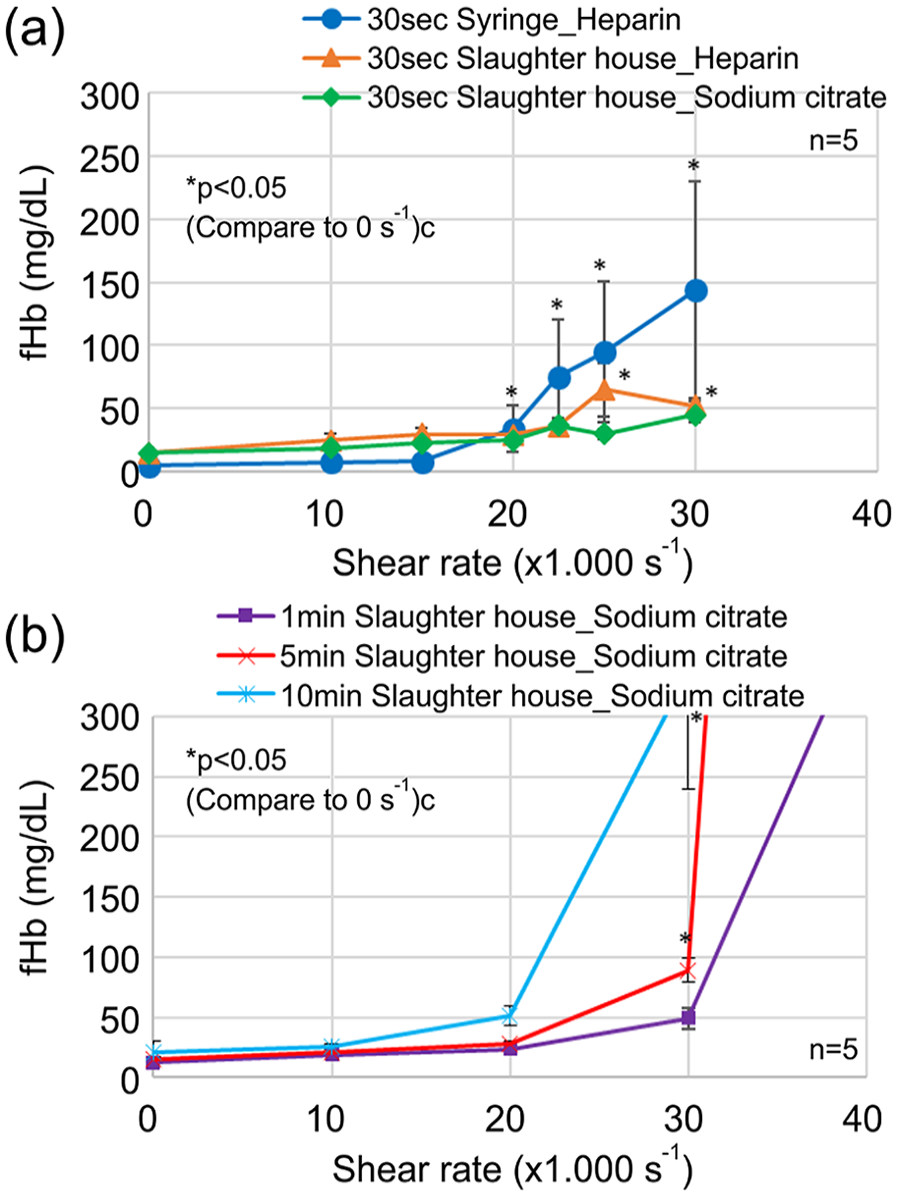
Results of free-hemoglobin (fHb) in plasma as an index of hemolysis.
Discussion
Platelet aggregation ability and blood cell damage/destruction
The anticoagulant and shear conditions increased the platelet aggregation propensity to 4–20 times that of the standard NL-PATI/PLT value (0.01). The results of different anticoagulant conditions in blood samples showed that heparin anti-coagulated blood had a higher NL-PATI/PLT (which indicates platelet aggregation ability) than that of sodium citrate anti-coagulated blood. Previous results have shown that platelet aggregation in heparin anti-coagulated blood is higher than in sodium citrate anti-coagulated blood using different blood samples.12,13 In sodium citrate anti-coagulated blood, Ca2+ in the blood, which is necessary for platelet activation and aggregation, chelates with sodium citrate. However, Ca2+ levels do not decrease in heparin anti-coagulated blood, as calcium chelation does not occur. Thus, Ca2+ is thought to promote platelet aggregation after platelet activation due to shear loading. 14
A comparison of collection methods for heparin anti-coagulated blood showed that slaughterhouse blood had a higher platelet aggregation propensity than syringe-collected blood. This might be because the initial platelet activation level was higher for slaughterhouse blood, where the blood was collected by stabbing the heart. Consequently, when using slaughterhouse blood for in vitro testing, one should always keep in mind that platelet aggregation due to shear loading is 1.5–2 times higher than that in syringe-collected blood. In addition, the significant increase in platelet aggregation levels at shear rates of 15,000 s−1 and higher may be due to the decrease in platelet count. Lu et al. 15 reported that human and bovine platelets require shear forces of 40 Pa (13,000 s−1) or higher for activation, consistent with our aggregation results using porcine blood.
Virtually no increase in platelet aggregation was found to accompany the shear force increase in citric acid anti-coagulated blood when the shear loading time was 1 min or longer. However, at a shear loading time of 10 min, even though Ca2+-chelated citric acid anti-coagulated blood was used, there were high platelet aggregation levels at a shear rate of 30,000 s−1. When the shear rate was further increased above 40,000 s−1, less platelet aggregation was observed; this is likely related to the shedding of glycoprotein VI (the receptor for collagen) and glycoprotein Ib, and the loss of the high molecular weight multimers of von Willebrand factor at that shear rate.5,16
In addition, hemolysis testing results showed a significant increase in hemolysis at shear rates of 30,000 s−1 or higher with a shear loading time of 1 min or longer, suggesting that a shear loading time of 1 min or longer may result in excess platelet stimulation. The above information suggests that testing with an integrated shear loading time of 30 s or less in relation to the total blood volume may be effective when conducting in vitro circulation experiments using a centrifugal blood pump for hemofiltration.
Study limitations
Our results indicate the accumulation of platelet aggregation by applying continuous and uniform shear loading to the blood using a shear stressor. The exposure time of blood in the centrifugal blood pump for hemofiltration was about 0.1–0.5 s because the pump volume was about 10 mL and the flow rate was about 100–500 mL/min. The anti-platelet aggregation effect should be calculated considering the amount of accumulated platelet aggregation caused by repeated shear loads in the in vitro circulation. In this study, we limited the species of test blood to porcine blood, which is usually used in the hemocompatibility test of cardiovascular devices; however, bovine and goat blood are also used in the hemocompatibility test. Therefore, it is necessary to investigate and compare other species in anti-platelet aggregation tests.
In conclusion, to investigate the effect of shear loading value and shear loading time on platelet aggregation in an attempt to find suitable conditions for in vitro anti-platelet aggregation tests, the present study examined the NL-PATI, which indicates platelet aggregation propensity in residual blood after high shear loading. Our results with the developed shear stressor showed that platelet aggregation increased when applying a high shear load at shear rates of approximately 20,000 s−1 or higher for 30 s. It was also found that the platelet aggregation ability was 2–3 times higher in heparin anti-coagulated blood than in sodium citrate anti-coagulated blood, and slaughterhouse blood showed 1.5–2 times more platelet aggregation than syringe-collected blood. The present study indicates that a test with a total shear exposure time of 30 s or less in relation to the total blood volume may be effective when conducting in vitro circulation experiments using a hemofiltration blood pump. In addition, it is possible to identify a hemofiltration blood pump design that causes low platelet aggregation by conducting anti-platelet aggregation tests in vitro with heparin anti-coagulated blood collected from a slaughterhouse as the worst condition and comparing several pump models with different shear stresses.
Footnotes
Acknowledgements
We would like to thank Dr. Katsuhiro Ohuchi at Tokyo Medical and Dental University for his efforts in collecting porcine blood for the animal experiments, and the Ibaraki Prefecture Central Meat Center for providing porcine blood.
Declaration of conflicting interests
The author(s) declared no potential conflicts of interest with respect to the research, authorship, and publication of this article.
Funding
The author(s) disclosed receipt of the following financial support for the research, authorship, and/or publication of this article: This work was supported by Grants-in-Aid for Scientific Research of Japan [grant number 18J40257].
