







Abstract
Flatfoot is a very common condition that alters gait mechanics and is usually accompanied by pain. In this current study, two types of custom-made insoles using polyethylene and silicon, respectively, were designed to help alleviate this condition. Such insoles are tested for their functionality using advanced 3D printing and finite element analysis. Tests were conducted at body weights of 60, 80, 100, and 120 kg. Results indicated that silicone insoles outperformed the others by effecting a better redistribution of pressure with higher magnitudes of strain and stress. Specifically, silicon had strain values between 1.44 × 10⁻⁷ and 2.88 × 10⁻⁷, much lower than polyethylene’s 5.92 × 10⁻⁵–1.18 × 10⁻⁴. Whereby, silicon would withstand stress levels to about 47,058 Pa, while polyethylene would do so at 31,932 Pa, making it more resilient under higher loads. Further validation through kinematic analysis proved that silicon insoles enhance the symmetry of walk and disperses the concentration of pressures of the feet, therefore providing more comfort and support during locomotion. These results suggest that silicon insoles offer significant benefits for managing flatfoot, paving the way for future innovations in personalized orthopedic footwear.
Keywords
Introduction
Flatfoot, also known as Pes Planus, represents a prevalent and chronic foot deformity associated with various symptoms, including lower extremity pain, swelling, abnormal gait patterns, and difficulty walking. 1 Its etiology encompasses multiple factors such as posterior tibial tendon dysfunction, midfoot laxity, trauma, and neuromuscular imbalances. 2 Despite its prevalence, the understanding of flatfoot remains incomplete, and consensus on optimal treatment approaches is lacking. Effective gait mechanics rely on the intricate coordination of foot bones, ligaments, and muscles, which are essential for postural stability and executing daily activities. 2 However, foot deformities like flatfoot can disrupt this stability, affecting not only mobility but also overall well-being. Ill-fitting footwear exacerbates these issues by exerting improper pressure on the foot, leading to discomfort and exacerbating deformities. Customized anatomical insoles offer a promising solution by redistributing foot pressure and alleviating pain, particularly in conditions like stiff flatfoot characterized by rigid deformities. 3 Recent studies have utilized FEA to investigate foot mechanics, plantar pressure distribution, and the impact of material selection on flatfoot correction.4,5 Notably, the mechanical behavior of foot skin, plantar pressure distribution, and plantar fascia during walking have been extensively investigated using FEA. Furthermore, the impact of material selection for therapeutic shoe outsoles and personalized insole attributes, such as arch height and hardness, on the correction and tissues of flatfoot conditions have also been explored using finite element analysis.4,5 While experimental models have traditionally been employed, computational models, particularly finite element (FE) models, offer advantages in studying complex foot biomechanics and treatment outcome. 6 Additionally, FEA has served as a valuable tool to assess foot strength and stiffness in relation to footwear usage. For instance, the reduction in longitudinal arch (LA) stiffness associated with flatfoot conditions has been attributed to the incongruity arising from wearing shoes that prioritize comfort and protection, at the expense of robust foot muscles. 7 The reliance on modern footwear diminishes the involvement of foot muscles in maintaining arch stiffness, potentially contributing to the development of flatfoot conditions. Material selection is a very crucial issue that has effects, especially on pressure injury prevention, in footwear design. The impact of several upper materials—leather and knitted fabrics—on stress distribution and subsequent deformation during locomotion was examined. The findings demonstrated the crucial effect of material selection on comfort and durability. The benefit of 3D-printed midsoles with varied densities in dispersing plantar stresses during ambulation was further noted.7,8 This new approach has been a hallmark of the growing emphasis on personalized design according to particular biomechanical needs. Injury prevention has become a major point of focus. Minimum, maximum, and typical running shoe conditions were studied for their influence on tibial stresses and the possibility of stress fractures using computational and probabilistic methods. Footwear designs including optimal cushioning evidently diminished tibial stresses and the connected incidence of stress fractures, underscoring the critical role of cushioning in footwear for high-impact activities. These results offer important insights into the function of modern analytical techniques in enhancing footwear design to augment performance and safety. 9 Recent literature has underscored the significance of material selection in the design of insoles, particularly in addressing foot conditions like flatfoot. Studies have shown that insoles made of diverse materials such as foam and polyurethane can effectively distribute pressure from high-pressure areas to larger regions of the plantar surface, consequently reducing foot pressure and mitigating the risk of foot ulcers and musculoskeletal disorders. 10 While investigating flatfoot biomechanics, both experimental and computational models have been employed. Experimental studies commonly utilize cadaver feet from healthy individuals due to donor limitations, although artificial models mimicking flatfoot characteristics have been developed by selectively releasing or sectioning specific ligaments and tendons.11,12 However, the functional limitations of these models in replicating realistic ligament behavior have been noted, as individuals with flatfeet possess attenuated yet still functioning ligaments. To address this issue, researchers have endeavored to create an artificial flatfoot model by attenuating specific ligaments, albeit with limitations on the number of cycles of attenuation due to time constraints. 13
This study aims to contribute to the understanding of stiff flatfoot treatment by conducting a comparative analysis of insole materials using FEA. Experimental investigations, FEA simulations, gait cycle evaluations, and cost analyses will be integrated to assess the biomechanical effects and economic implications of different insole materials. By combining experimental and computational approaches, this research seeks to provide valuable insights into the effectiveness and viability of insole materials for individuals with stiff flatfoot.
Materials and methods
The present study aimed to develop an innovative approach for designing and producing personalized footwear for individuals with foot deformities. To achieve this goal, 3D modeling and 3D-printing technologies were utilized as follows:
Computational analysis
Generation and comparison of 3D models
A 21-year-old male with a foot deformity was selected as the participant for this study. Firstly, a computed tomography (CT) scan image of the participant’s foot in DICOM format was obtained. This image was then processed using Mimics software to generate a 3D model of the deformed foot. Segmentation of the model was performed using thresholding techniques, resulting in a binary image of the region of interest. Additionally, another 3D model of a normal foot was created through a similar process.
The two models were compared to elucidate the differences between the deformed and normal feet, as depicted in Figure 1, which displays a transverse plane visual comparison of the two foot models. After generating the 3D models, they were exported as STL files for further modification and configuration.
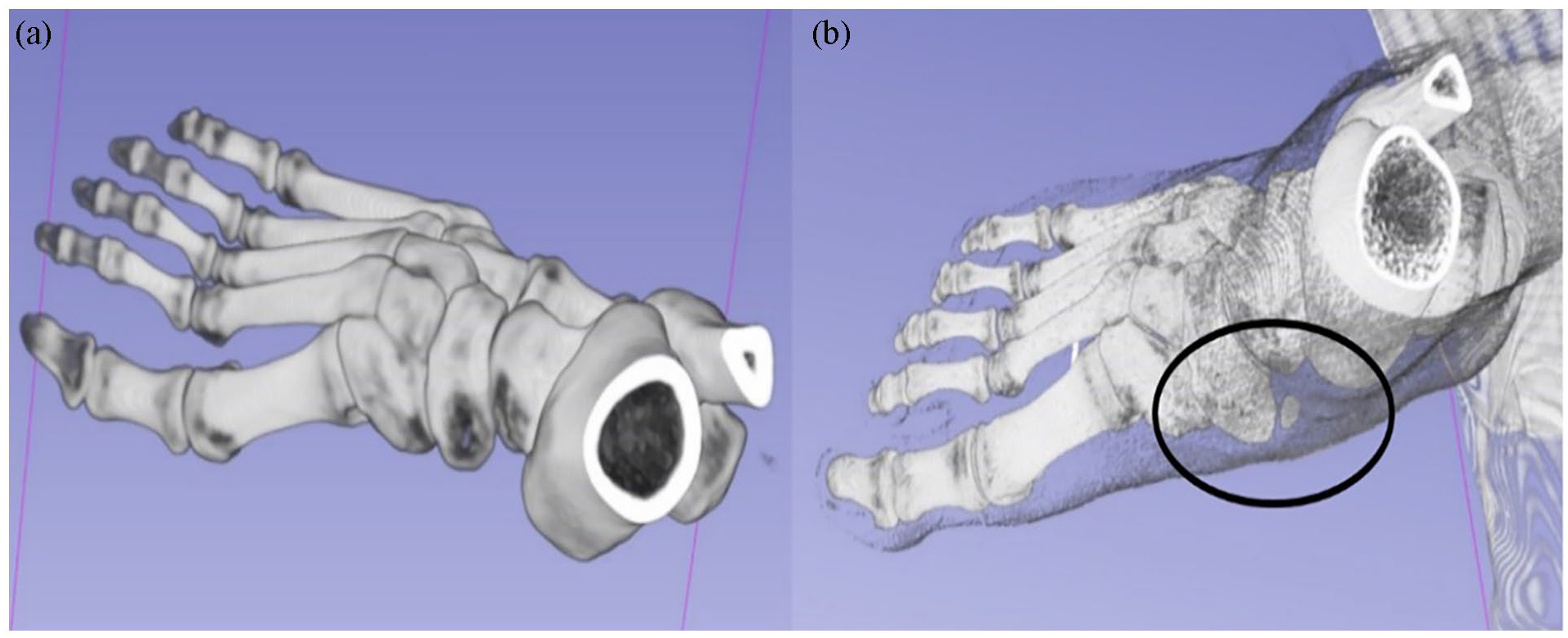
Visual comparison of transverse plane between (a) the healthy foot model and (b) deformed foot model.
Additionally, 3D modeling of the insole was performed using SolidWorks 2024 (Dassault Systems, France) software. This process involved precise modeling of the insole geometry and incorporation of arch support features to address flatness associated with flatfoot individuals. Tailored development of footwear considered in this research is performed by considering biomechanical principles, sophisticated computational modeling, and characteristics of the materials.
Polyethylene and silicon were chosen for the study based on their different mechanical properties, such as elasticity, resistance to stress, and response to strain, which earlier have been identified as playing a key role in pressure redistribution and enhancing further emphasizing material selection and computational modeling in designing therapeutic footwear. The insole design was optimized to distribute pressure evenly across the plantar surface and provide adequate support to the foot arch (Figures 2 and 3).
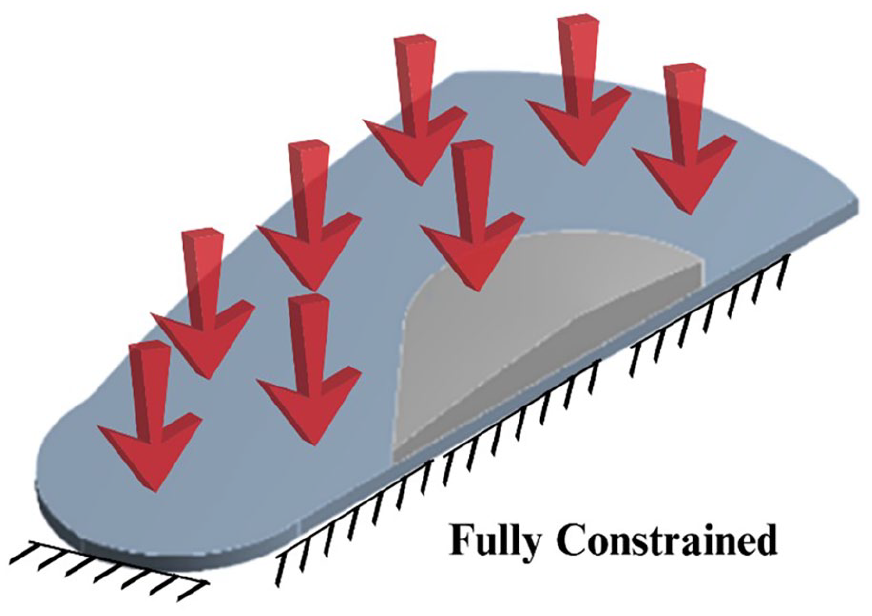
3D model of a loaded sole with boundary conditions. The upper surface depicts pressure distribution while the lower surface remains fixed for stability.
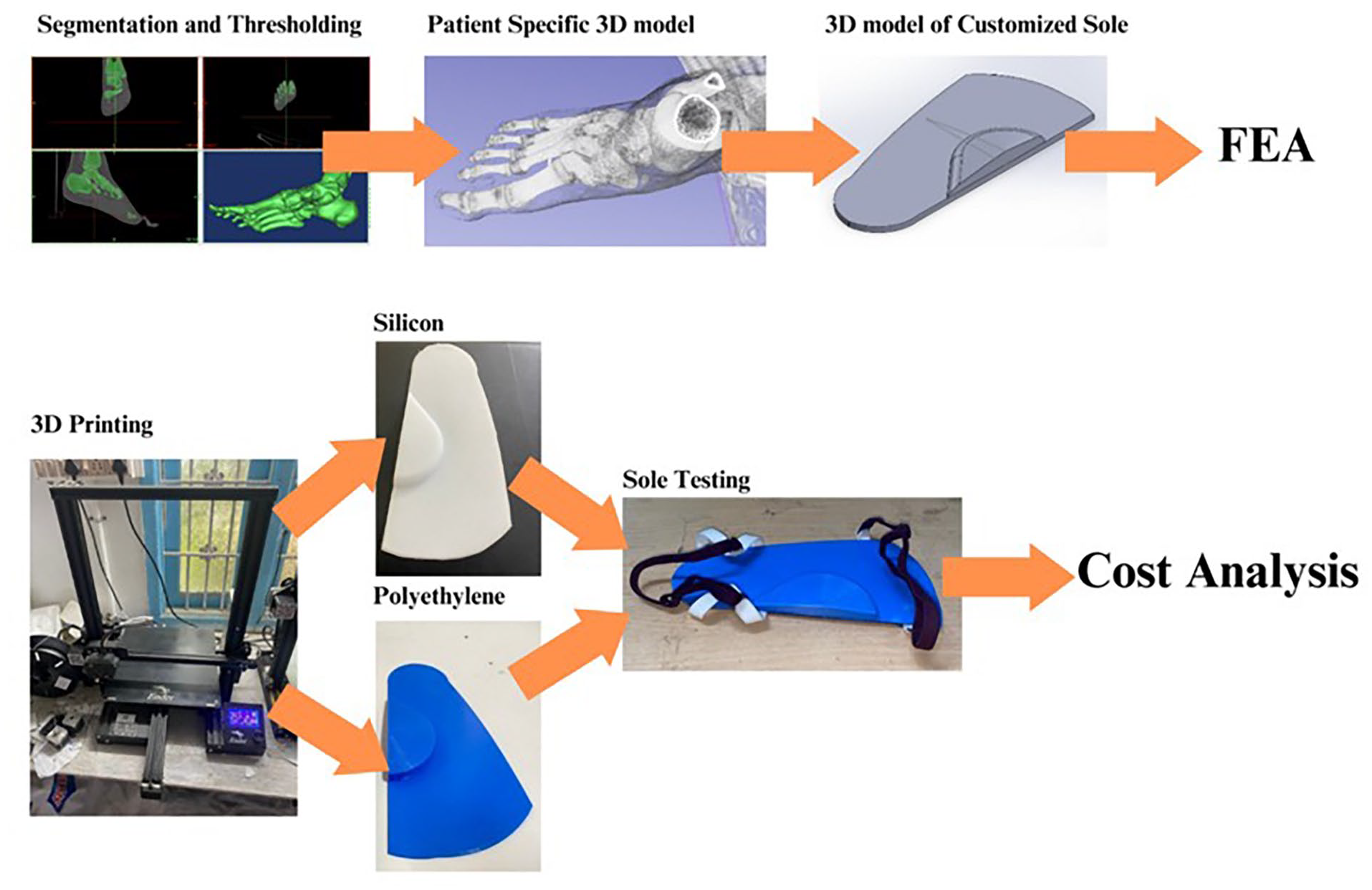
Schematic representation of the research methodology and process.
Finite element analysis (FEA)
ANSYS Workbench 2024 (ANSYS, Inc., Canonsburg, PA, USA) was utilized to conduct finite element analysis (FEA) of each insole. Material properties, such as density, Young’s modulus, and Poisson’s ratio, were assigned to the respective materials used in the footwear production (Table 1). Meshing was performed, and 3D-shell elements were utilized to develop the FE model. A static structural analysis was conducted by applying vertically downward pressure loads for the 60, 80, 100, and 120 kg body weights on the upper layer of the footwear (equations 1–4). Loading and boundary conditions applied to the models is represented in Figure 2.





Experimental analysis
Fabrication of prototypes
Two 3D printed footwears were generated: a 3D printed polyethylene footwear and an Indirect Additive manufactured silicon footwear. The first prototype comprises a 3D printed polyethylene footwear that was printed using a Creality FDM 3D printer with a 0.4 mm nozzle diameter and a build volume of 300 mm × 300 mm × 350 mm (Figure 3—polyethylene sole). The second model (Figure 3—silicon sole) is an Indirect Additive manufactured silicon footwear, created with a 3D network cellular structure using a quantitative flow simulation and investment casting methodology combined with 3D printing technology. The manufacturing process involved the creation of a mold using clay, imprinting of the 3D model into the mold, and pouring of silicon resin into it.
Motion analysis using Opengo software
Experimental investigation was conducted on the prototype models using Opengo software for motion analysis. Sensor insoles were inserted into non-specific footwear, and the prototype models were placed on top of these sensor insoles. The footwear was worn during activities such as walking, running, and jumping, while Opengo software recorded and analyzed the motion data.
Comparative analysis of foot conditions
A comparative analysis was carried out using different foot conditions, including normal left flatfoot without the prototype and left footwear flatfoot with the prototype. Gait analysis, static analysis, and symmetry reports were generated utilizing Opengo software for the evaluation of the prototypes.
Results
FEA results
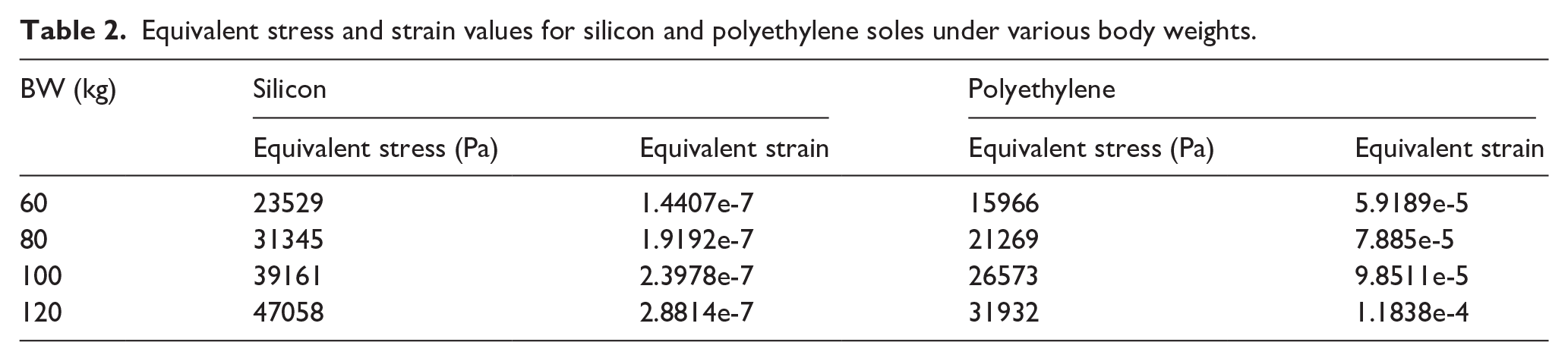
The FEA results for both silicon and polyethylene soles are presented in Table 2, showcasing the equivalent stress and strain values. Figure 4 illustrates the stress and strain distributions of the two types of materials, providing visual insights into their mechanical behavior under applied loads.
Equivalent stress and strain values for silicon and polyethylene soles under various body weights.
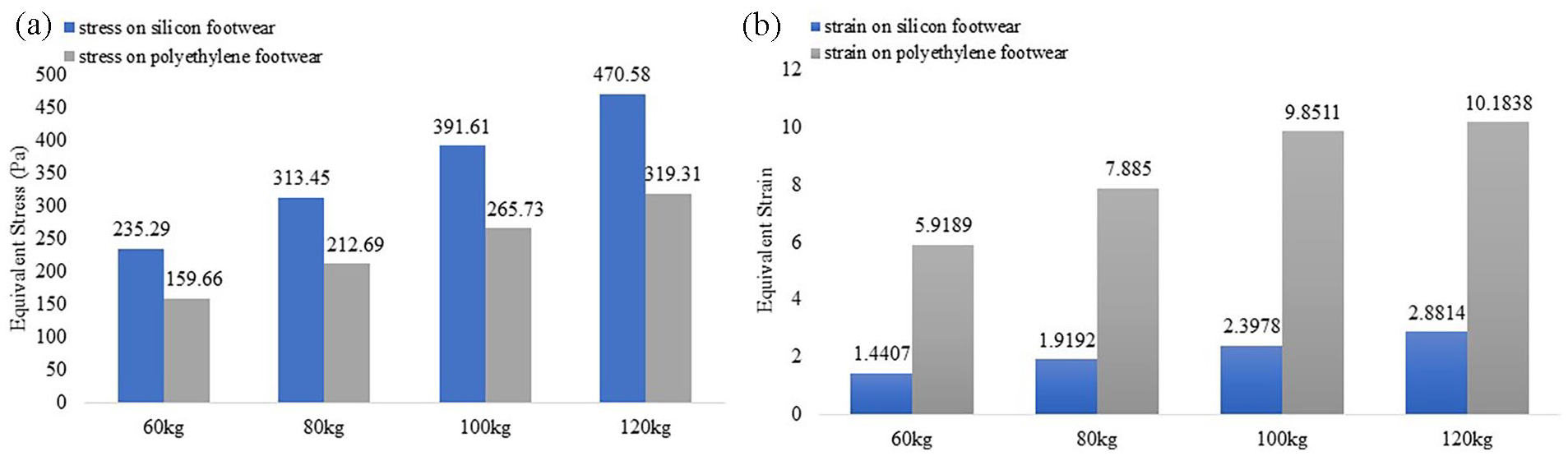
Comparison of maximum equivalent (a) stress and (b)strain on silicon and polyethylene soles under different body weights.
Gait analysis results
Gait analysis reports were generated to evaluate the effectiveness of the footwear prototypes. Figure 5 presents the symmetry analysis report, comparing flatfoot (FF) conditions with and without footwear. Figure 6 depicts the gait analysis report, illustrating various parameters such as gait line, total force stance phase, pressure values single sensors, boxplot total force stance phase, and pressure distribution, for flatfoot conditions with and without footwear.
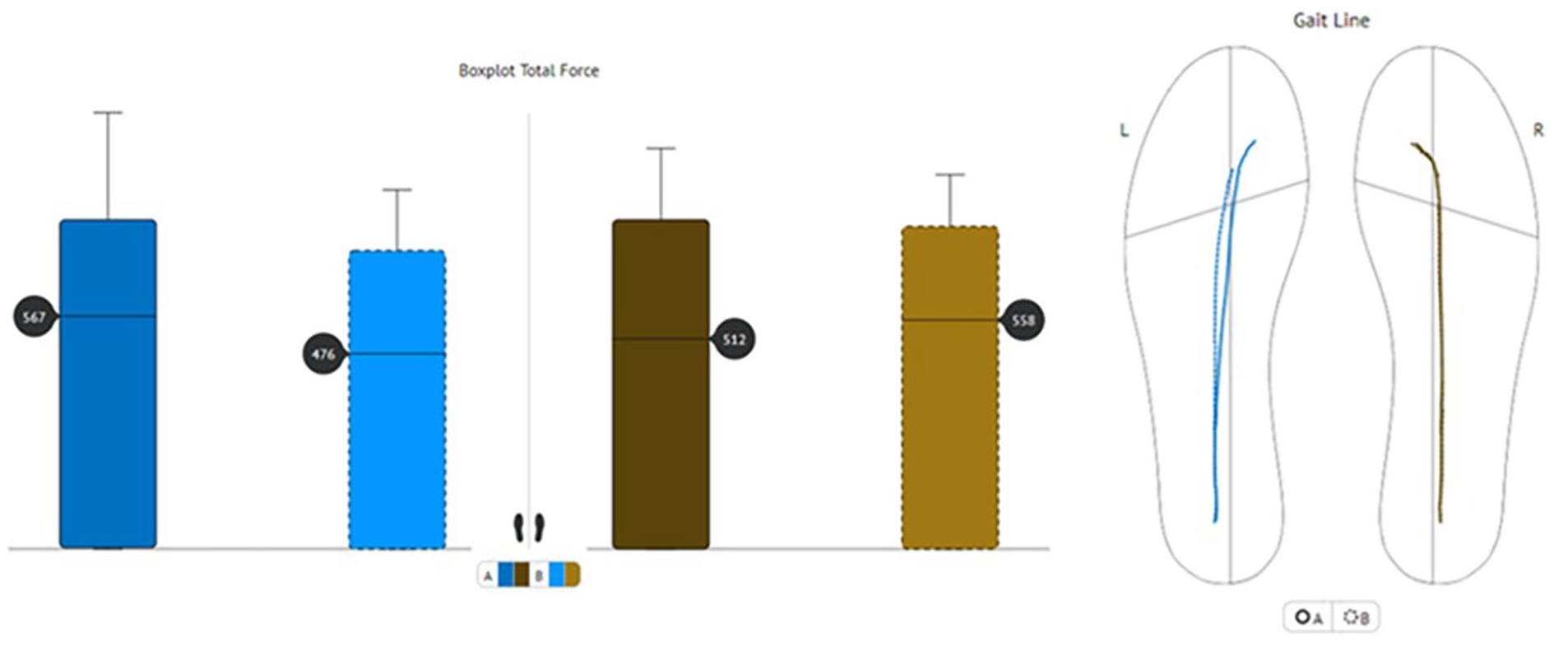
Symmetry analysis report, comparing total force (N) and gait line between flatfoot (FF) with footwear (B) and without footwear (A) for the left and right feet.
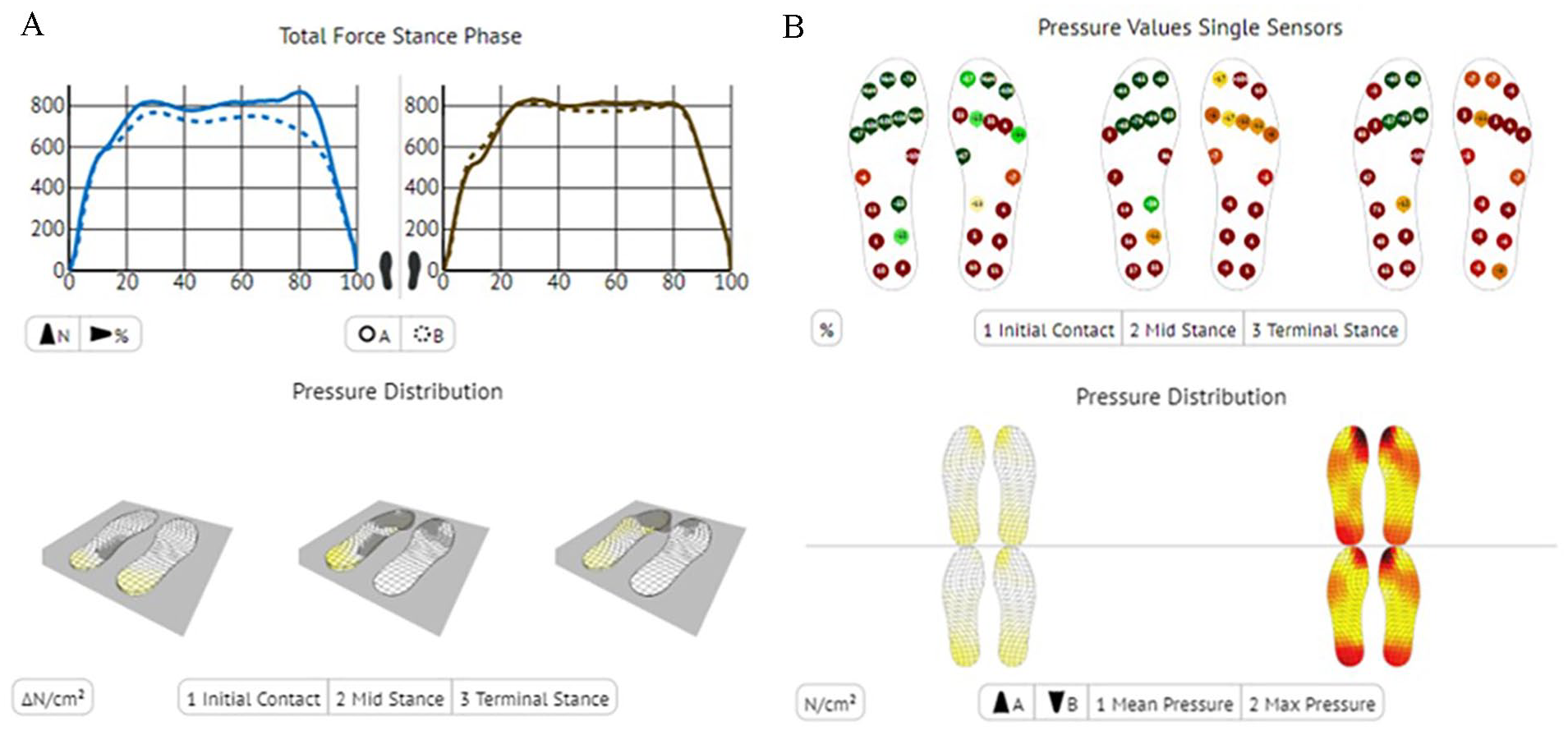
Gait analysis report, comparison between flatfoot (FF) with footwear (B) and without footwear (A) including total force stance phase (N), pressure values single sensors, and pressure distribution (N/cm2).
Cost analysis results
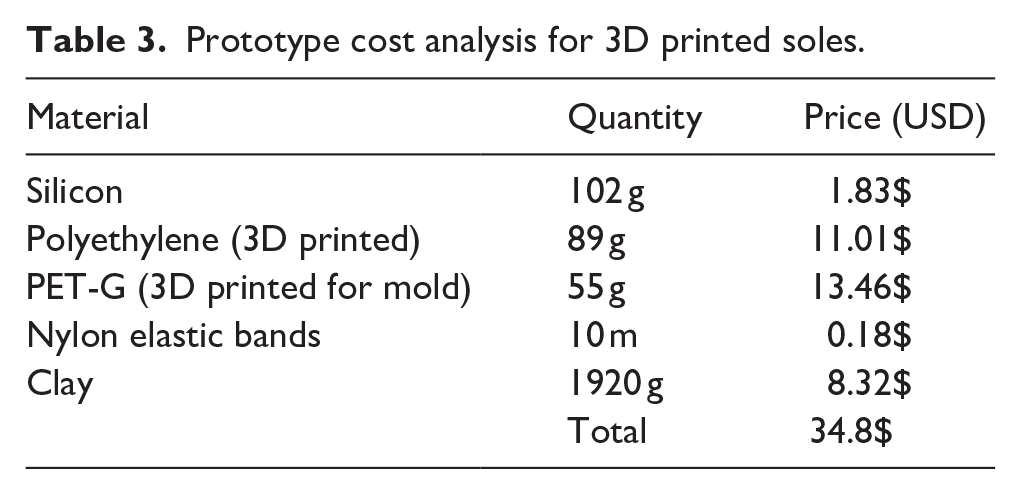
Cost analysis was conducted to evaluate the economic implications of the selected materials and fabrication processes. The results of the cost analysis are presented, highlighting the cost-effectiveness of the proposed footwear solution is shown in Table 3. Though it is a single quantity, for mass production, the overall cost will definitely be reduced.
Prototype cost analysis for 3D printed soles.
Discussion
The current paper has discussed the relative effectiveness of polyethylene versus silicone insoles for managing flatfoot deformity using FEA and gait analysis. Results have furnished some important information related to the advantage of silicone over polyethylene from the biomechanical and functional point of view, supported by visual analysis of stress-strain and experimental data on gait performance. These findings bring into focus the potential contribution of material properties to pressure redistribution, resisting stresses, and improvement in gait that will eventually enable better therapeutic solutions for personalized orthopedic footwear. The FEA results underscore the superior mechanical performance of silicone insoles, particularly under higher loads. Equivalent stress values for silicone ranged from 23,529 Pa at 60 kg to 47,058 Pa at 120 kg, surpassing polyethylene, which exhibited stress values of 15,966–31,932 Pa across the same weight range. Similarly, silicone displayed significantly lower strain values compared to polyethylene. This difference in results would therefore indicate that for silicone, the material is able to maintain its structural integrity with less deformation under similar loads. These findings are in line with previous studies, which indicated the importance of elastic materials, since they relieve localized stress and strain. 4 This is particularly applicable to neuropathy and flatfoot, in which pressure concentration is a critical component that promotes discomfort and contributes to the development of deformities. The stress distribution maps provide further confirmation that silicone holds a biomechanical advantage. Under a loading of 60 kg, “hot spots” of concentrated stress were evident in the arch and heel regions of the polyethylene insole, indicating poor pressure redistribution. The silicone insole showed wider and smoother distribution of stress with significantly lower stress intensity across high-pressure regions. The same results at high loads were represented, with silicone being more agreeable to stress distribution compared with polyethylene. This again verifies the findings that how insoles made from elastic material-like silicone can distribute plantar stress more evenly and remove peak points of pressure which could cause increased pain and eventual deformity. 3 Additionally, a uniform distribution of pressure is required to manage flatfoot since this not only reduces pain but also prevents further biomechanical disturbances, through an insole material simulation. 7 Gait analysis further supports silicone as a treatment for flatfoot deformity. Symmetry analysis showed that with the use of silicone insoles, gait alignment symmetry greatly improved to where the gait line became much more centralized and continuous in comparison to disrupted patterns without the use of insoles. This indicates that such a result, points out the capability of silicone in promoting biomechanical balance during locomotion. Despite its higher production cost ($34.80/pair), silicone insoles prove more cost-effective in the long run due to their superior durability and performance. Economic analyses further reinforce this observation, showing that high-performance materials, while initially expensive, reduce the frequency of replacement and provide better overall value. 8 This positions silicone as a practical and sustainable choice for long-term use in therapeutic footwear. However, some limitations should be considered. The number of subjects in the present study is one, which limits the generalization of its results. Besides, the static conditions around FEA might not fully develop the dynamic pattern of stress and strain that would have been developed with more intensive activities such as running or jumping. Further research in the future should expand the pool of participants and the demographics, along with incorporating dynamic simulations and long-term trials in order to establish these findings under real-time circumstances. This may involve further exploration into alternative materials that possess similar or improved properties, thus offering new opportunities for optimizing the design of therapeutic footwear. This study provides sound evidence for the use of silicone insoles in correcting flatfoot over polyethylene ones. It emphasizes that integration of high-level computation analysis with experimental validation is necessary for proper material property identification, thus improving foot biomechanics, pressure redistribution, and symmetry of gait. Such findings open new perspectives toward personalized innovations in orthopedic solutions, appealing for current research on material optimization, dynamic testing, and long-term validation to meet the demands of individuals with flatfoot and other complex foot conditions.
Conclusion
This study develops an intensive review of polyethylene and silicone insoles in the management of flatfoot deformities using FEA and experimental gait analysis. Their mechanical and functional performance was compared. Results indicated that silicone insoles outperformed polyethylene insoles in several aspects: stress and strain distribution, redistribution of pressure, enhancement of symmetry in gait, and durability. The superior material properties of silicone, including a high Young’s modulus, low Poisson’s ratio, and elasticity, mean that it can withstand higher loads and provide structural integrity under variable conditions. Attributes that enable it to alleviate pain, enhance walking symmetry, and long-term cost-effectiveness, despite its slightly higher initial production cost. The findings also confirm existing literature on the importance of elastic and durable materials in designing orthopedic shoes. This reinforces silicone’s potential as a preferred material for personalized insole development. Further, this study demonstrates the utility of integrating computational and experimental approaches toward designing and validating therapeutic footwear solutions. However, limitations to this study include the single-participant design and static loading conditions of the FEA. Future research should therefore be conducted with larger and more varied participant pools, while dynamic load simulations and long-term clinical trials will further validate the generalizability and real-world efficacy of the findings. It could also be that researching alternative materials with similar or better properties than silicone might enable an extension of the use of such therapeutic procedures for foot deformities.
In conclusion, the superior performance of silicone insoles, as realized in this work, underlines the potential of improving the quality of life in people suffering from flatfoot and related conditions. These results form a strong basis for further development in design and implementation of personalized orthopedic footwear, thereby driving innovation in patient-specific therapeutic solutions.
Footnotes
Declaration of conflicting interests
The author(s) declared no potential conflicts of interest with respect to the research, authorship, and/or publication of this article.
Funding
The author(s) received no financial support for the research, authorship, and/or publication of this article.
