







Abstract
In the standard Okishio-Morishima approach, the existence of profits is proved to be equivalent to the exploitation of labor. Yet, it can also be proved that the existence of profits is equivalent to the “exploitation” of any good. Labor and commodity exploitation are just different numerical representations of the productiveness of the economy. This paper presents an alternative approach to exploitation theory which is related to the “New Interpretation” (Duménil 1980; Foley 1982). In this approach, labor exploitation captures unequal social relations among producers. The equivalence between the existence of profits and labor exploitation holds, whereas it is proved that there is no relation between profits and commodity “exploitation.”
1. Introduction
A core insight of exploitation theory is that profits are one of the key determinants for the existence of exploitation: profits represent the way in which capitalists appropriate social surplus and social labor. In the standard Okishio-Morishima (henceforth, OM) approach to value theory and exploitation, this has been incorporated into the so-called “Fundamental Marxian Theorem” (Okishio 1963; Morishima 1973; henceforth, FMT). In the OM approach, the FMT proves that positive profits are synonymous with the exploitation of labor, and it is interpreted as showing that labor is the only source of surplus value and profits. Although the FMT is mathematically robust, its economic interpretation has been questioned.
One of the most devastating criticisms of the FMT highlights some conceptual issues with the standard definition of exploitation. In the OM approach, in fact, exploitation is essentially defined as the technologically efficient use of labor as a productive factor. The FMT itself can be interpreted as proving that the exploitation of labor is simply one numerical representation of the existence of surplus products in a productive economy using labor as the numéraire. The problem is that this property is not uniquely associated with labor, and whenever the (standard) FMT holds, the so-called, “generalized commodity exploitation theorem” (Bowles and Gintis 1981; Roemer 1982; henceforth, GCET) also holds, according to which exploitation as the technologically efficient use of any commodity as a productive factor is equivalent to positive profits. Thus, in the OM approach, there is no analytical basis for distinguishing labor exploitation from the “exploitation” of any other commodity: they are just alternative representations of the existence of a surplus product by means of different numéraire.
This paper argues that the key shortcoming of the OM approach lies with the notion of exploitation as merely representing the existence of a surplus in a productive economy. The standard OM approach defines exploitation as a purely technological, and in this sense asocial, phenomenon. Instead, exploitation should be seen as an inherently social phenomenon, which characterizes social relations between producers. The relation between exploitation and profits, then, has not only to do with the properties of the existing technology and its efficient use by capitalists. It reflects social relations of production and distributions among individuals.
This paper analyzes an alternative approach to exploitation theory related to the “New Interpretation” (Dumènil 1980; Foley 1982; henceforth, NI-form), which has been recently proposed by Yoshihara and Veneziani (2009) and Yoshihara (2010). In the latter papers, a complete axiomatic characterization of this new approach is provided, based on a small set of weak axioms which emphasize the relational nature of the concept of exploitation. Indeed, Veneziani and Yoshihara (2011) prove that, under the NI-form, the FMT characterizes capitalist economies with positive profits as generating exploitative social relations, rather than as guaranteeing the existence of surplus products in a productive economy.
Given this interpretation of the FMT under the NI-form of exploitation, it is not obvious what the counterpart-definition of commodity exploitation should be, nor is it clear whether the counterpart GCET holds or not. This paper shows that while the notion of commodity exploitation is well-defined even in the NI-form, the counterpart GCET no longer holds. Therefore the approach analyzed in this paper is arguably superior to the standard OM approach in that it characterizes exploitation as a social relation between producers whereby the creation and distribution of social surplus is uniquely mediated by the exchange of human labor. The exploitation of labor and the “exploitation” of goods are no longer equivalent.
To be sure, the paper focuses only on some aspects of exploitation theory. Yet it suggests that a theoretically sound and normatively relevant definition of exploitation can be identified which can help to understand the functioning of advanced capitalist economies, and to condemn the significant inequalities associated with the capitalist mode of production. Contrary to received criticisms, exploitation is a well-defined concept that captures social relations between agents. As in classical Marxian political economy, exploitation relates to the unequal exchange of labor, and the existence of profits is inherently linked to the exploitation of labor, and the associated inequalities in the distribution of well-being freedom. Therefore the notion of exploitation, and the related examination of trends in profitability, remain central in any radical analyses of advanced capitalism.
The rest of the paper is organized as follows. Section 2 presents the basic economic model. Section 3 discusses the classical definitions of labor and commodity exploitation. Section 4 defines the NI-forms of labor and commodity exploitation, and shows that in this approach the existence of positive profits and the “exploitation” of goods are not equivalent.
2. The Basic Model
The model analyzed in this paper is standard in the literature on the FMT (see, for example, Roemer 1981; Veneziani and Yoshihara 2011). An economy consists of a set H of agents who trade n commodities. Let

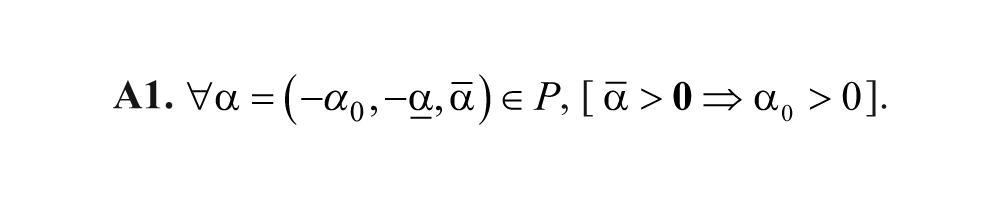
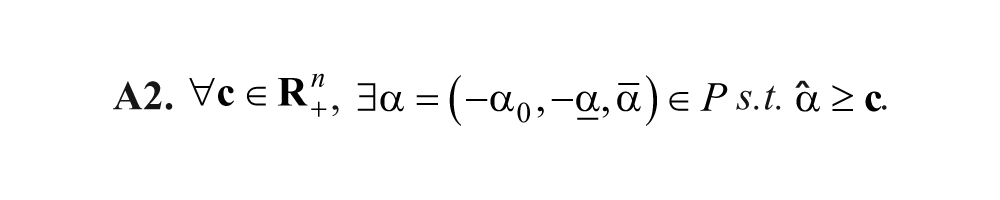

The standard Leontief production technology is a special case of the production sets satisfying
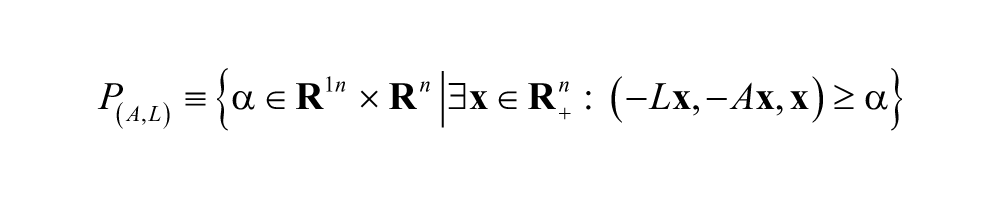
is the production set corresponding to (A,L) and P(A,L) satisfies
Given a market economy, a (row) vector
For a given price vector
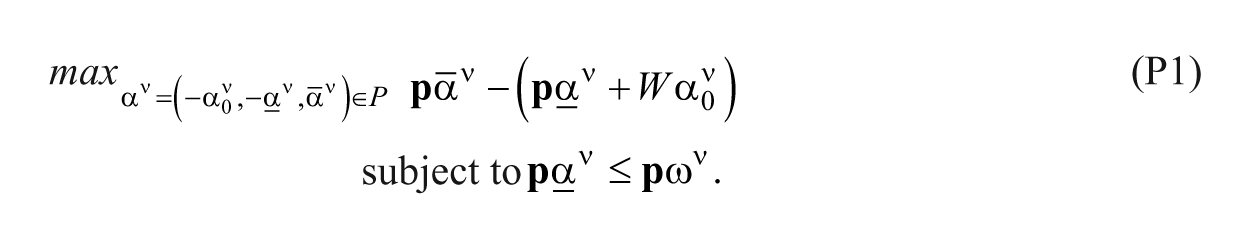
In line with classical political economy, capitalists do not work and do not consume: they use their revenues to accumulate for production in the next period. Moreover, workers supply a fixed amount of labor, equal to their labor endowment, and are abundant relative to social productive assets. This assumption reflects the Marxian view that involuntary unemployment is a structural feature of capitalist economies. Finally, workers consume a fixed subsistence bundle of commodities,
An economy is a list
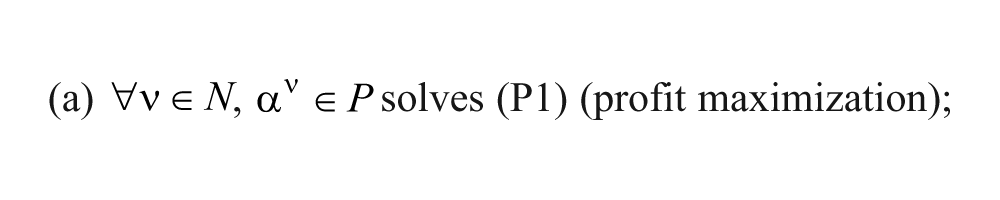


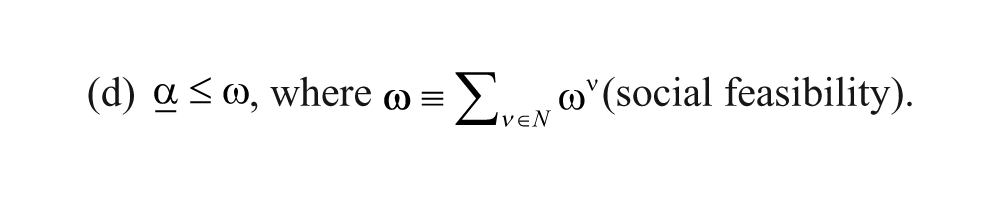
Part (a) is standard and needs no further comment. Part (b) states that net output in every sector should at least be sufficient for employed workers’ total consumption. This amounts to requiring that social endowments do not decrease (Roemer 1981: 41). Given that workers are abundant relative to productive assets, part (c) states that unemployment drives the equilibrium real wage rate down to the subsistence level. Finally, part (d) requires that intermediate inputs can be anticipated from current stocks, while wages are assumed to be paid after production.
3. Definitions of Exploitation in the Okishio-Morishima Tradition
Consider a worker µ ∈ W: exploitation is characterized by systematic differences between the labor contributed by µ to the economy and the labor “received” by µ, which is given by the amount of labor contained, or embodied, in some relevant consumption bundle(s). Therefore, for any bundle
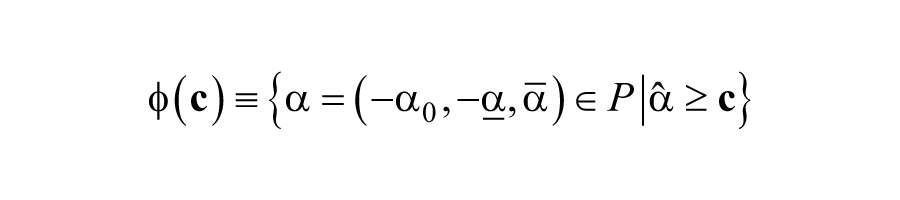
In the standard OM approach, the labor value of a bundle
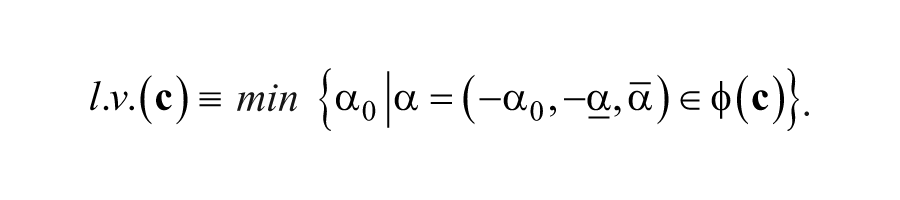
Given that the subsistence consumption vector
Analogously, for any good k, the k-value of a bundle
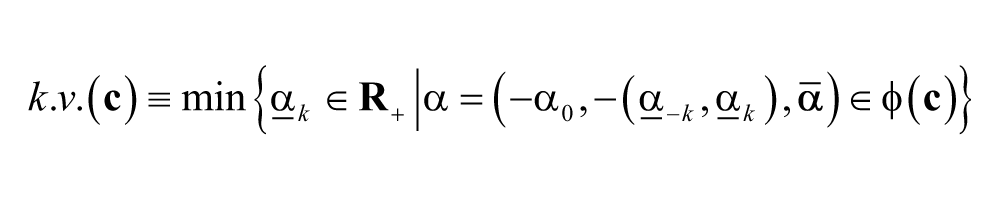
Then, let
Given definitions 2 and 3, the following proposition can be proved:
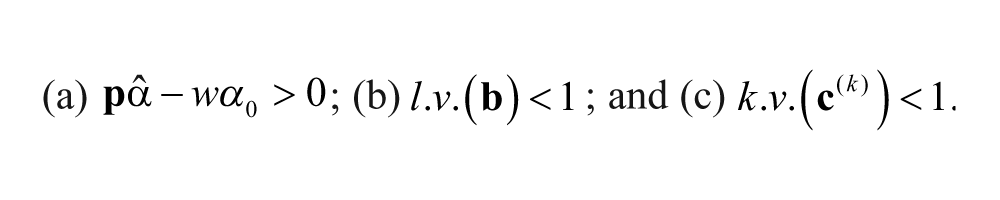
Thus, FMT holds if and only if GCET holds. As Fujimoto and Opocher (2010) and Veneziani and Yoshihara (2010) argue, Proposition 1 essentially implies the equivalence between positive profits and the productiveness of the economy. In other words, both labor exploitation and commodity k-exploitation, as defined in Definitions 2 and 3, are just numerical representations of the productiveness of the economy. The standard OM approach does not properly capture the inherently social and relational aspect of exploitation as the unequal exchange of labor between agents that is central in Marxian theory.
4. Definitions of Exploitation à la New Interpretation
In this section, a new definition is discussed, which has been recently proposed by Yoshihara and Veneziani (2009) and Yoshihara (2010). For any
In Definition 4, social relations play a central role, because the definition of labor content requires a prior knowledge of the price vector and of the social reproduction point, and labor content is explicitly linked to the redistribution of total social labor, which corresponds to the total labor content of national income. The exploitation of labor can be defined as follows.
Definition 5 is conceptually related to the “New Interpretation” (Duménil 1980; Foley 1982). For any µ ∈ W, τb is µ’s share of national income, and so τbα0 is the share of social labor that µ receives by earning income barely sufficient to buy
Similarly, for any good k, one can also define the k-value of a bundle
In Definition 6, the commodity k content of
Next, let
The notion of commodity k-exploitation in Definition 7 is therefore related to the production and distribution of national income and of the aggregate capital good k among producers. In this sense, as for Definition 5, Definition 7 also represents exploitative social relations, using commodity k as the value numéraire.
Veneziani and Yoshihara (2011) show that at the equilibrium of any convex economy every employed µ ∈ W is exploited according to Definition 5 if and only if profits are positive. Theorem 1 proves, however, that this equivalence no longer holds in general for commodity k exploitation.
In this paper, it is assumed that capitalist income consists solely of profit revenues. However, Theorem 1 can be extended to economies in which capitalists also supply one unit of labor to earn a wage as in Veneziani and Yoshihara (2011) and Yoshihara (2010), 4 which seems a more plausible behavioral assumption whenever agents aim to maximize revenues.
Theorem 1 implies that the notion of commodity k exploitation is not relevant in Marxian exploitation theory if the new interpretation is adopted, since the GCET no longer holds. Although commodity k exploitation as defined in Definition 7 does represent an unequal exchange-type of social relation among producers with commodity k as the value numéraire, Theorem 1 implies that the notion of exploitative social relations does not convey any relevant information about capitalist economies unless labor is the value numéraire.
Footnotes
Acknowledgements
We are grateful to Al Campbell, David Kotz, Don Goldstein, and participants in the WAPE 2011 conference (Amherst) for comments and suggestions.
Declaration of Conflicting Interests
The author(s) declared no potential conflicts of interest with respect to the research, authorship, and/or publication of this article.
Funding
The author(s) received no financial support for the research, authorship, and/or publication of this article.
1
For all vectors
2

3
Unlike in the standard Leontief model, this vector need not be unique, given that there may be multiple techniques to produce one unit of good k if P is a general convex cone.
4
In this case, every agent in H earns the same wage income, and so