







Abstract
The present study provides a comparative investigation and discussion on the influence of laminate thickness uncertainty on reliability of laminated composite. Laminate thickness uncertainty in three different scenarios is considered: component level thickness uncertainty, fiber-dominated ply level thickness uncertainty and matrix-dominated ply level thickness uncertainty. Monte-Carlo and Markov-chain Monte-Carlo methods are employed to calculate failure probabilities of symmetric and balanced laminate panels bearing uniaxial and multiaxial loads. It is shown that conventional considerations on laminate thickness uncertainty in the component level could underestimate or overestimate the composite failure probability. Ply level thickness uncertainty primarily caused by fiber or matrix quantity may also result in very different failure probabilities. This study highlights the importance of a thorough analysis and classification of the laminate thickness uncertainty in the ply level in order to achieve confident reliability evaluation of composite structures.
Introduction
The manufacturing process of composite materials involves many uncertainties such as variations in volume fractions of fiber and matrix, voids in the matrix, imperfect bonding between constituents, cracks, fiber damage, randomly packed fibers, misaligned fibers, residual stresses, etc.1,2 These uncertainties lead to significant stochastic variation on mechanical performance of composite structures, and consequently conservative design is often employed in conventional deterministic approaches, which is a serious limitation regarding efficient composite utilization.3,4
In contrast to deterministic methods, probabilistic methods allow estimation of structure reliability or failure probability by incorporating uncertainties. Researchers have considered uncertainties in composites at different scale levels, including constituent level (micro-scale), ply level (meso-scale) and component level (macro-scale).3,5–7 Most of relevant studies have considered composite uncertainty at the component level8–14 (to mention just a few), where considerations were given to the stochastic variation of the external load, structure geometry and dimensions, lamina stiffness and strength. In these studies, experimental data are required to derive ‘empirical’ distributions of the component level random parameters. Probabilistic distribution is normally selected by hypothesis testing methods such as chi-square, Kolmogorov–Smirnov (K–S) or Anderson–Darling tests.3,13,15,16 Generally, lamina stiffness shows a good fit to the normal distribution13,17,18 and lamina strength shows a good fit to the Weibull distribution1,16 or sometimes Lognormal distribution. 19 In studies considering constituent level uncertainties, uncertainties are modeled either through a large number of random variables on material properties of the fiber/matrix12,20 or considering random fiber packing architecture using representative volume elements (RVE).21,22 Uncertainty consideration at the constituent level is suitable if appropriate micromechanical models are available or certain micro-structural damage mechanism needs to be specifically taken into account. 23 A reliability analysis starting at constituent level can also offer insight into propagation of uncertainty across different scales5,24,25 and the statistical dependence of stochastic parameters at the component level.1,26 Probabilistic analysis considering ply level uncertainties is referred as an intermediate scale which addresses uncertainties associated with the plies. The distinguished feature of the ply level uncertainties lies in that lamina mechanical properties, ply orientation or ply thickness stochastically vary between different plies.27–29 Probabilistic analysis considering ply level uncertainties is more complicated in comparison to macro-scale probabilistic models, but it provides an insight into the stochastic elastic coupling of laminate which is often neglected in a macro-scale probabilistic model. 27
Among the amounts of previous studies on the probabilistic behavior of composite structures, only a few researches have considered the laminate thickness uncertainty, such as Lin,
30
Di Sciuva and Lomario,
31
Richard and Perreux
32
and Carbillet et al.
33
These aforementioned studies all consider thickness uncertainty at the component level, which essentially assumes that stochastic variation of all ply thicknesses in a laminate are completely correlated (i.e. only one random variable is used to represent the laminate or ply thickness uncertainty). However, practical laminate thickness uncertainty could be much more complex due to the random variation of resin viscosity, fiber packing condition, fiber quantity, textile surface condition, resin rich region, curing process, tool shape, etc.34–36 Figure 1 shows a cross-sectional view of a carbon fiber/epoxy laminated plate with stacking sequence of [+45/90/−45/+45/−45/0/90/0/−45/+45/−45/90/+45],
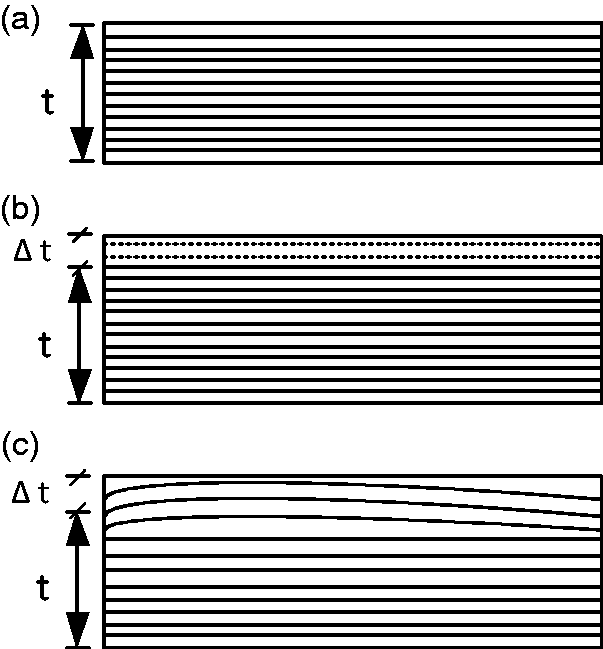
37
which illustrates clear ply level thickness uncertainty with the coefficient of variation (COV) at roughly 15%. In a viewpoint of the sources of the ply thickness uncertainty, it could be classified by two different categories: fiber-dominated ply thickness uncertainty and matrix-dominated ply thickness uncertainty, as schematically depicted in Figure 2. In the fiber-dominated scenario, the laminate thickness uncertainty is primarily caused by the fiber quantity uncertainty of each ply, and the resin quantity changes following the fiber quantity in order to sufficiently infuse the fibers. The fiber quantity variation could be introduced by the variation of fiber diameter and fiber number. Dandy et al.
38
show that the COV of the diameter of a type of carbon fiber (T700S 50 E manufactured by Toray Carbon fibers America Inc.) could be as high as 13%. From the discussion with fiber sheet manufacturers, the fiber number per tow also varies depending on the manufacturing process. In the matrix-dominated scenario, the ply thickness variation is mainly caused by the uncertainty of matrix quantity due to the variability in textile surface condition, resin viscosity, resin rich zone and curing environment, while the fiber quantity of different plies remains nearly identical (see Figure 2(c)). Consequently, if the ply thickness uncertainty is matrix dominated, there would be a negative statistical correlation between the ply thickness and the FVR (fiber volume ratio), i.e. a thicker ply possesses a smaller FVR. Since lamina mechanical properties are heavily dependent on the FVR, they will be also statistically correlated with ply thickness, which introduces extra difficulty in the probabilistic modeling to derive structure reliability and this issue has not been clearly addressed in previous publications (to the authors’ knowledge).
(a) A cross-sectional view of CFRP and (b) Variation of layer thickness of the plies along the bold dashed line. Schematic of fiber and matrix-dominated layer thickness variation: (a) nominal layer, (b) layer thickness increase due to increase of fiber quantity (including fiber number and also diameter) and (c) layer thickness increase due increase of matrix quantity.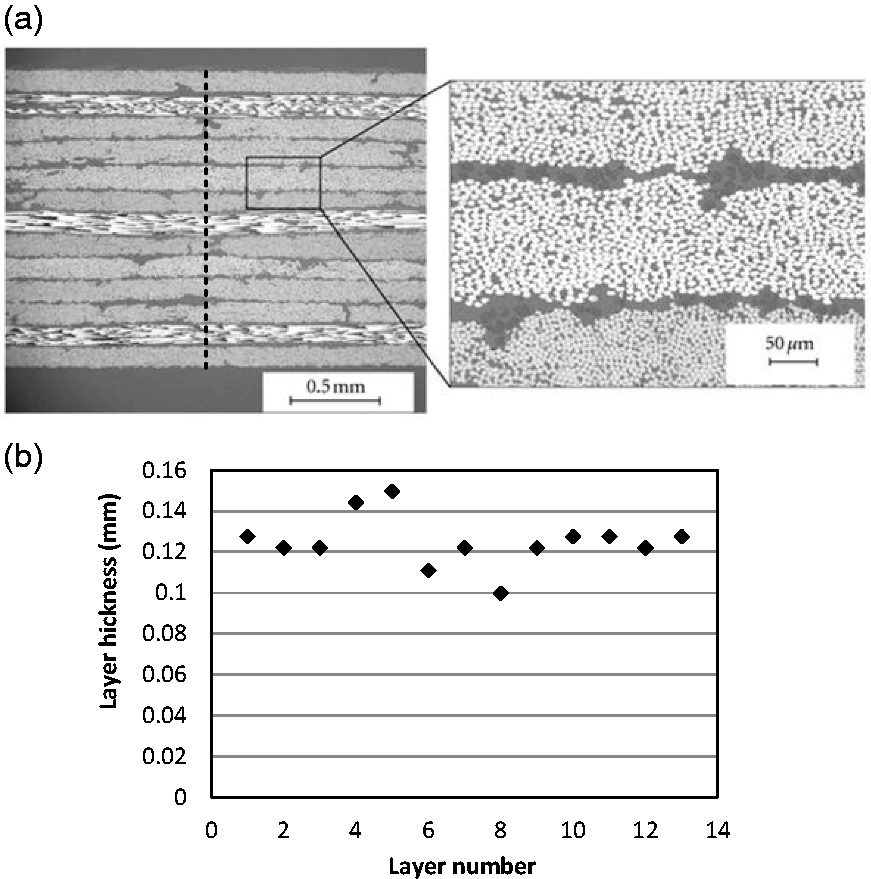
The present manuscript conducts a thorough and comparative study on the reliability evaluation of laminate panels by accounting for the laminate thickness uncertainty in three different scenarios: component level thickness variation, where the stochastic variation of all ply thicknesses is identical, 30 referred as S1; fiber-dominated ply thickness variation, where the stochastic variation of different ply thickness is independent, referred as S2; matrix-dominated ply thickness variation, where the stochastic variation of different ply thicknesses is independent but negative stochastic correlation exists between the ply thickness and the FVR, referred as S3. For a further comparison, reliability of composite panels is also calculated in another scenario where the laminate thickness uncertainty is neglected, which is referred as scenario S4. Failure probabilities of composite panel at the four different scenarios are evaluated and compared, and appropriate approaches to account for composite thickness uncertainty for accurate reliability evaluation are discussed and recommended.
Statistics of random variables
Statistics of ply thickness
For simplicity, this study focuses on laminates with identical ply thickness (in the deterministic viewpoint), but laminates with different ply thicknesses can also be incorporated by a similar approach. Here, it is assumed that the statistics of the total thickness of a N-layer laminate follows the normal distribution Φ(μ, ξ2), where μ is the average thickness of the laminate and ξ is the standard deviation. μ and ξ can be experimentally determined from the thickness measurement of a number of laminate panels.
In the scenario S1 which considers identical stochastic variation of all ply thicknesses in a laminate, the thickness of the i-th ply, ti, is expressed as

In the scenario S2 (ply level thickness uncertainty, and the stochastic variation is dominated by the fiber quantity), it is assumed that different layer thicknesses vary independently against each other and they all follow the same normal distribution. Hence, the thickness of the i-th ply is expressed as

In the scenario S3 (ply level thickness uncertainty, and the stochastic variation is dominated by the matrix quantity), the ply thickness statistics is the same as shown in equation (2), which has independent thickness variation of different plies. However, one distinguished feature of S3 is that a negative statistical correlation exists between the ply thickness and the FVR, i.e. a thicker ply possesses a smaller FVR. For demonstration in this study, −0.7 and −0.9 (strong negative correlation) are used for the linear correlation coefficient between the ply thickness and FVR.
It is important to notice that the above consideration on the laminate/ply thickness variability is mainly applicable for composites manufactured using the bag cure manner. 39 For the caul plate cure manner (such as RTM), the total laminate thickness shows a very small variability although significant ply thickness uncertainty is still observed. 39 Hence, for composite manufactured by the plate cure manner, there would be statistical correlation between the thickness variation of different layers, and the thickness variation of the interior and exterior layers might be dominated by different sources (matrix or fiber quantity).
Statistics of mechanical properties
Statistics of the micro-scale random variables. 20
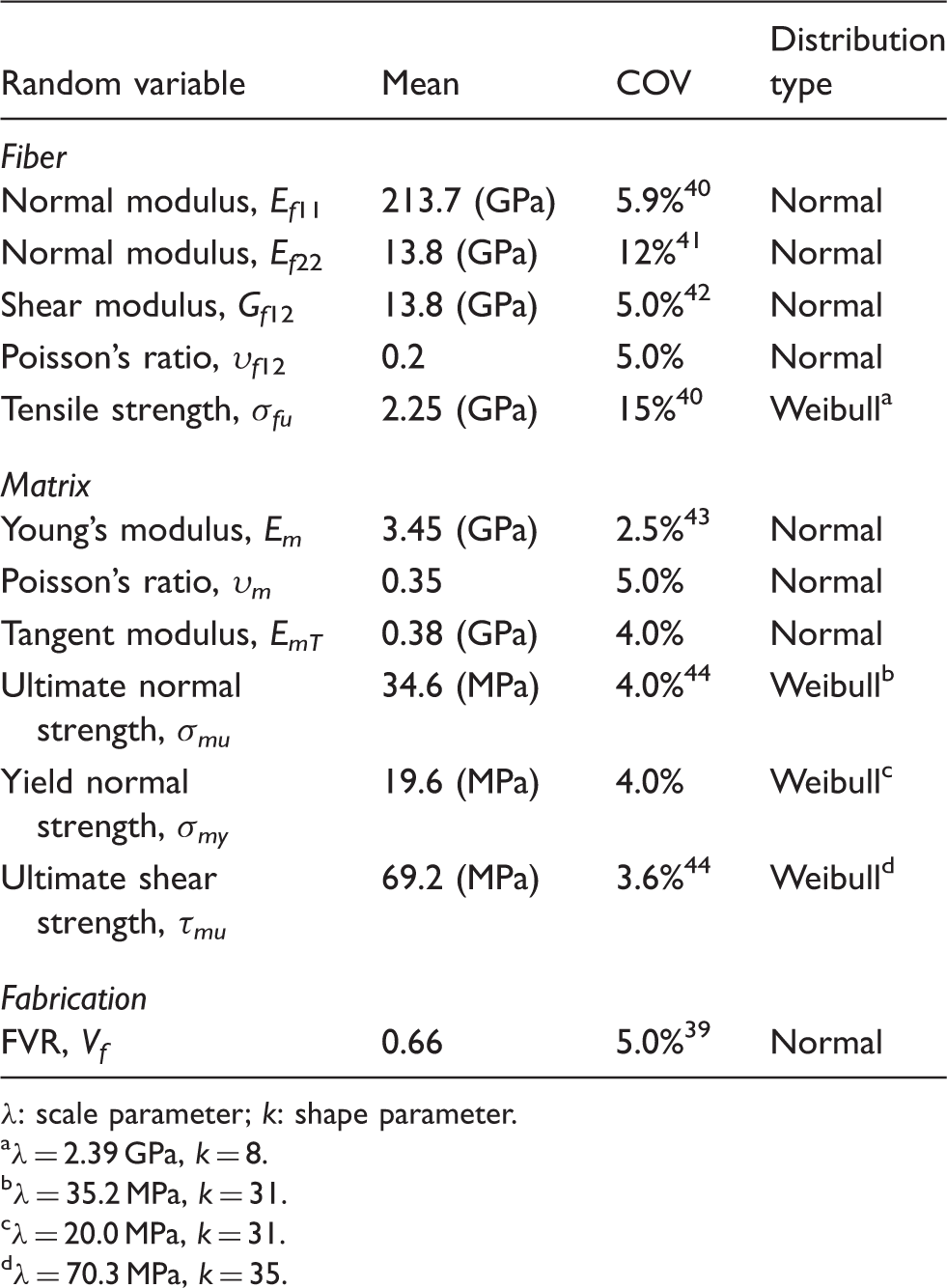
λ: scale parameter; k: shape parameter.
λ = 2.39 GPa, k = 8.
λ = 35.2 MPa, k = 31.
λ = 20.0 MPa, k = 31.
λ = 70.3 MPa, k = 35.







The statistics of unidirectional AS/3501-5.
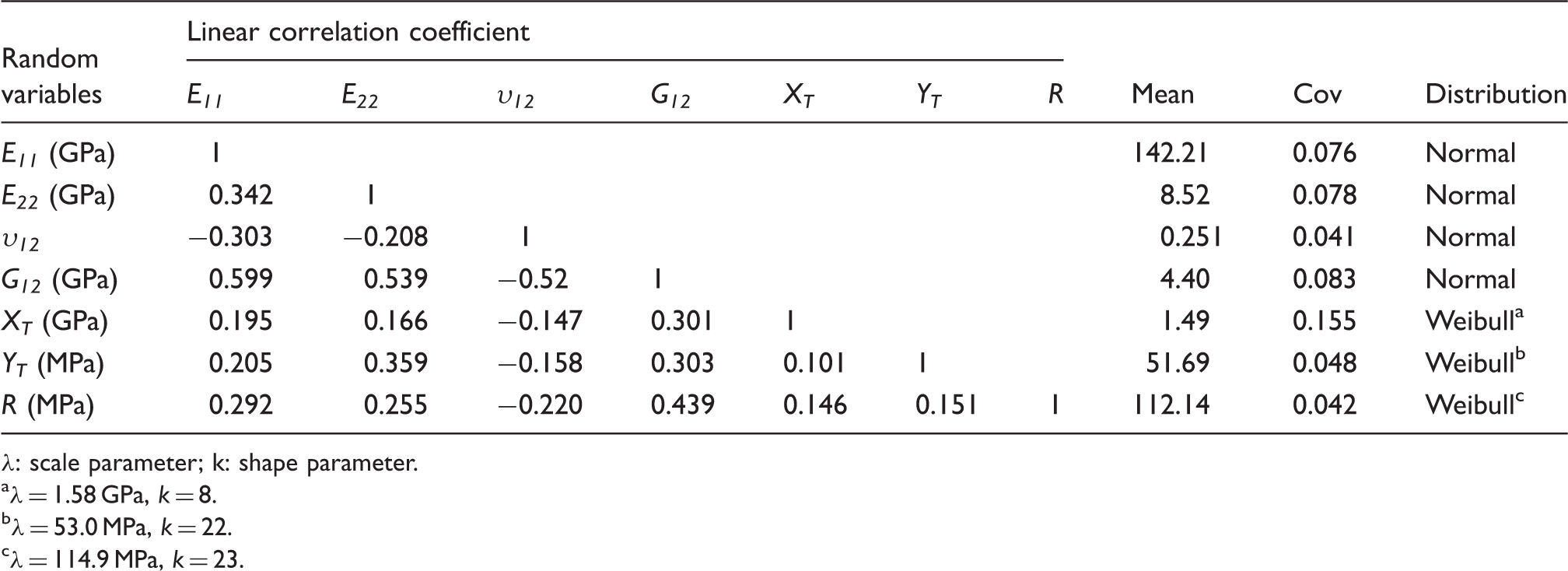
λ: scale parameter; k: shape parameter.
λ = 1.58 GPa, k = 8.
λ = 53.0 MPa, k = 22.
λ = 114.9 MPa, k = 23.
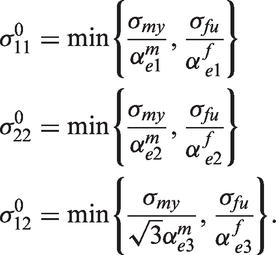
Here a11, a22, a12, Sf11,…, Sm12 and the α coefficients are functions of the elastic properties of fiber and matrix as given in Huang. 45
1 × 10⁵ groups of samples on the constituent random variables are drawn using the MC method, and they are substituted in equations (3) to (9) to obtain 1 × 10⁵ groups of the lamina mechanical properties (E11, E22,υ12, G12, XT, YT, R), from which the mean values, COV and linear correlation coefficient matrix are derived. The sampling number (1 × 10⁵) is selected so that the sampling error on the mean value of each constituent-level random variable is less than 1% of its standard deviation (under the confidential level of 0.95). 46
In Table 2, it is shown that the longitudinal tensile strength possesses the largest COV which is around 0.15, while other mechanical properties possess COVs around 0.05–0.10. This scatter on lamina mechanical properties shows a good agreement with experimental observation by Jeong and Shenoi. 13 It is also important to notice that significant statistical correlation exists between the lamina properties, and this correlation could lay great influence on the composite reliability. 26
Although most of previous studies considered uncertainties of lamina mechanical properties in the component level, Sarangapani and Ganguli 27 has recently shown that the ply level uncertainties on the mechanical properties (i.e. different plies possess independent stochastic variation on the mechanical properties) introduces unwanted elastic coupling for symmetric and balanced laminate. To incorporate the influence of unwanted elastic coupling, in this study, the uncertainties of the lamina mechanical properties are considered in the ply level.
Reliability formulation
The failure probability of a structure or system is normally written as

The LSF g(



The relative error of the estimated failure probability can be estimated by
13

For complex stochastic correlation between random variables, the direct MC sampling is difficult to implement because the complex correlation between random variables (see Table 2) introduces a very complex joint probabilistic density function (PDF). Alternatively, the Markov-chain Monte-Carlo (MCMC) method provides an approach which conducts the sampling by constructing a Markov-chain that has the desired distribution as its equilibrium distribution of the joint PDF. The construction of the Markov chain only needs the marginal PDF and their correlation (if the correlation exists) while the complex construction of the joint PDF is not required. A type of widely used sampling approach of the MCMC method is the Gibbs sampling,
46
with the procedure as follows
Initiation of independent random variable xi (i = 1, 2,… n); For t = 0, 1, 2,… do the iterative sampling as follows:
where
A set of samples by the Gibbs sampling and direct MC sampling (neglects the correlation) on the ply thickness t and the FVR (see Table 2) are shown in Figure 3, where 1 × 10⁵ samples were drawn. The ply thickness t follows normal distribution with mean value at 0.125 mm and standard deviation at 0.002 mm. The mean value and standard deviation of FVR is 0.66 and 0.033, respectively, and it also follows normal distribution. Figure 3(a) shows the results of direct sampling on t and FVR assuming that they are independent with each other. Figure 3(b) shows the results by Gibbs sampling of t and FVR assuming a linear correlation coefficient of −0.9, where a clear negative correlation is seen between the samples of t and FVR. The linear correlation coefficient of t and FVR calculated from the Gibbs samples is −0.895, which agrees well with −0.9.
Sampling results: (a) direct MC sampling which neglects the statistical correlation and (b) Gibbs sampling where the linear correlation coefficient between t and FVR is −0.9.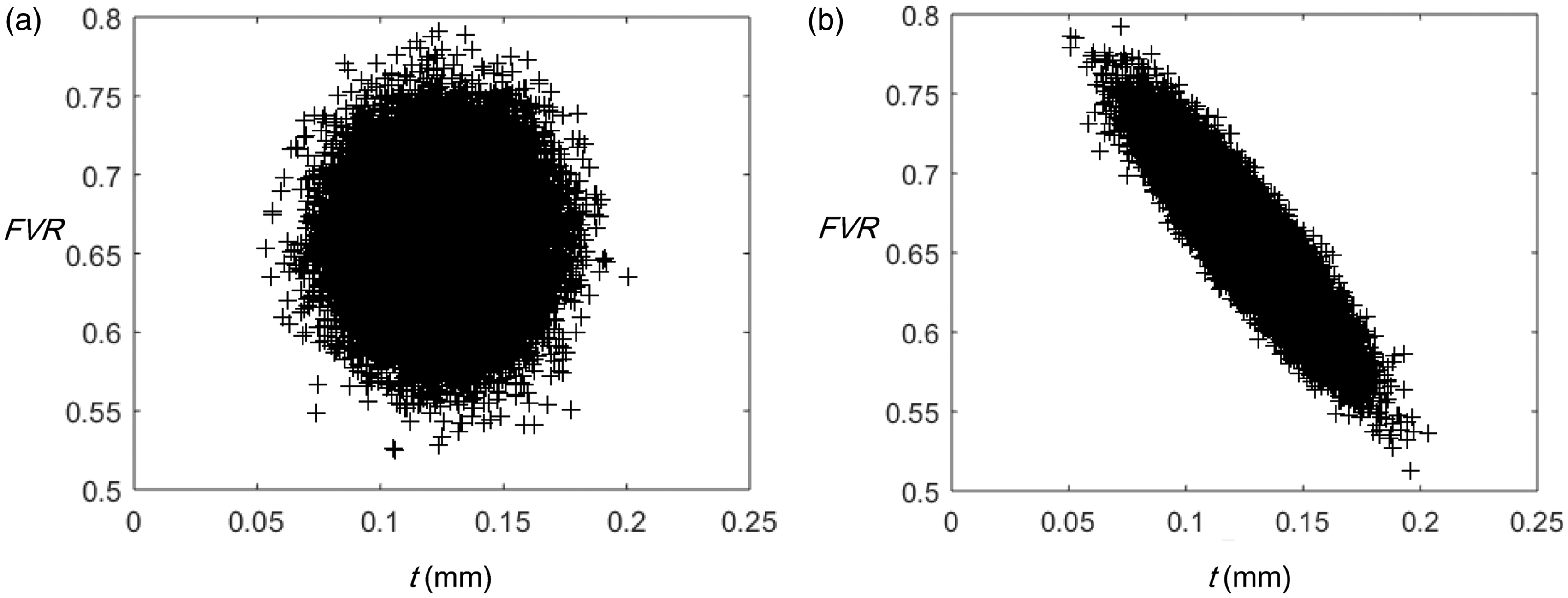
Reliability analysis: Case study
In this section, failure probabilities of laminate panels are calculated by considering different laminate thickness uncertainty, as aforementioned S1, S2, S3 and S4. The flowchart of the reliability calculation in each scenario is shown in Figure 4. In S1, the lamina mechanical properties are sampled by the MCMC method, and the ply thickness is sampled by the MC method following equation (1). In S2, the lamina mechanical properties are sampled by the MCMC method, and the ply thickness is sampled by the MC method following equation (2). In S3, FVR and ply thickness are first sampled by MCMC method which incorporates their statistical correlation, and constituent mechanical properties are sampled by MC method. Lamina mechanical properties are then derived using the Huang micro-mechanical model
45
from the sampled FVR and constituent mechanical properties. The FPF principal is employed to determine the failure of the laminate (i.e. the failure probability of laminate refers to the FPF probability), and the Tsai–Hill failure criterion is adopted to determine the failure of a ply.
Flowchart of the calculation of failure probability: (a) S1, (b) S2 and (c) S3.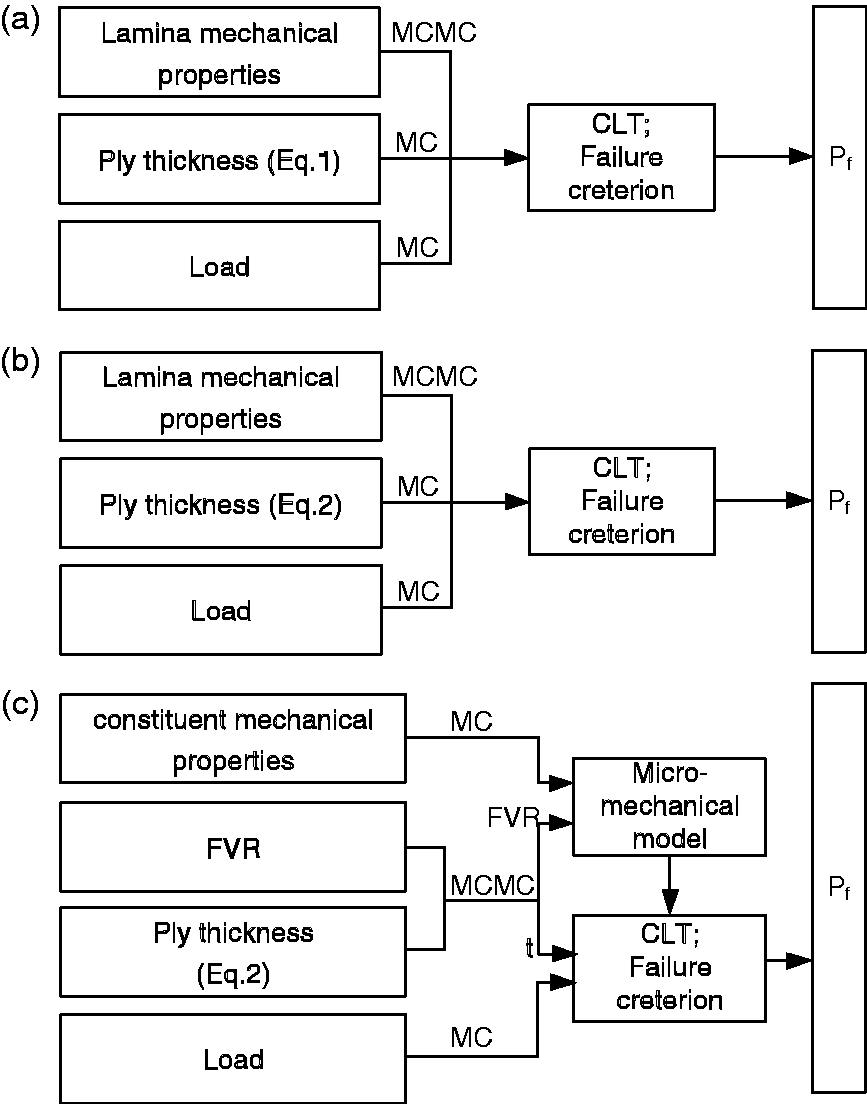
The strain and stresses of plies in laminate are calculated by the classic laminate theory (CLT
47
). The CLT assumes: (a) straight lines perpendicular to the mid-plane before deformation remain straight after deformation, (b) the cross-section plane are inextensible and (c) the cross-section plane rotates such that they remain perpendicular to the mid-plane after deformation. In CLT, the equilibrium equation about the external load and the deformation is written as

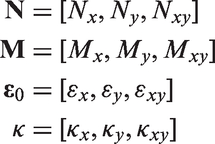

The stiffness matrix of a layer (lamina) with orientation of θ is written as

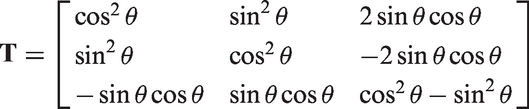
The CLT is an extension of the Kirchhoff’s classical plate theory from isotropic homogeneous plates to laminated composite plates. Due to the neglect of the transverse shear deformation, the CLT is generally limited to thin composite plates with thickness-to-width ratio normally smaller than 0.05. 47 If mechanical performance laminated composite plates with large thickness-to-width ratio is investigated, first-order or high-order shear deformation theory should be employed.
As symmetric, balanced laminated composite are mostly used in structural components due to the elimination of the bending-extension (Bij = 0, i, j = 1,2,6) and extension-shear coupling (A16 = 0, A26 = 0), reliability analysis of symmetric and balanced laminate panels would provide helpful enlightenment on the reliability evaluation of many practical composite structures. In this study, eight-layer symmetric and balanced composite plates with ply orientations at [0]8 and [0/–45/45/90]s are investigated as examples. The statistics of the laminate thickness is derived from the micro-image of the cross section view of a typical carbon fiber/epoxy plate as shown in Figure 1. In Figure 1, the mean value of the layer thickness is 0.125 mm and the standard deviation of layer thickness is about 0.018 mm. By assuming an independence of layer thickness variation, the mean value and standard deviation of the thickness of 8-layer laminated plates are 1 and 0.053 mm, respectively. This statistics of the laminate thickness is employed for the reliability evaluation in all the four scenarios, to illustrate the discrepancy of different consideration of the laminate thickness uncertainty on composite structure reliability.
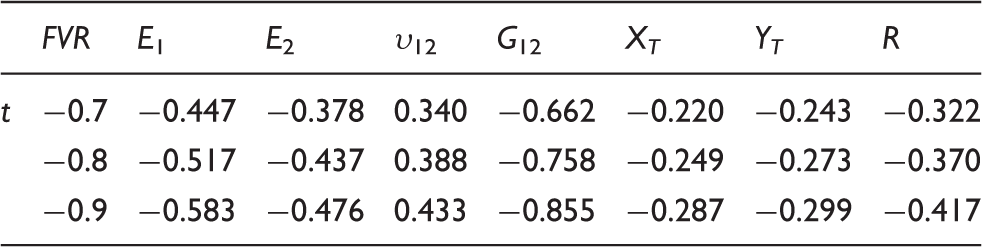
Statistical correlation between ply thickness and ply mechanical properties
Linear correlation coefficients between ply thickness and ply mechanical properties.
Unwanted elastic coupling
Standard deviation of elastic coupling terms in S1, S2 and S3 of [0/−45/45/90]s.
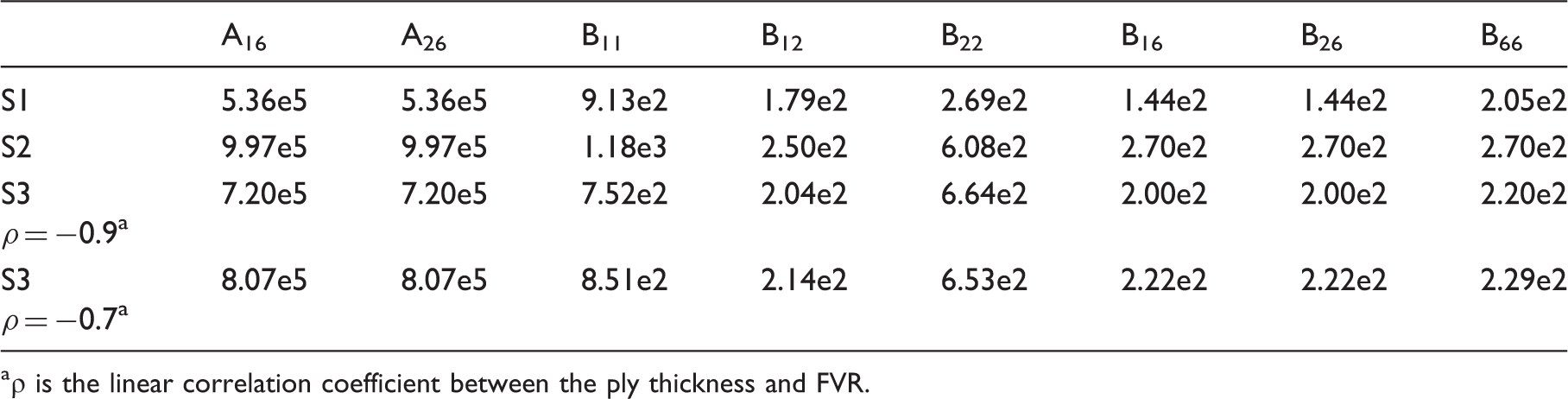
ρ is the linear correlation coefficient between the ply thickness and FVR.
Standard deviation of elastic coupling terms in S1, S2 and S3 of [0]8.
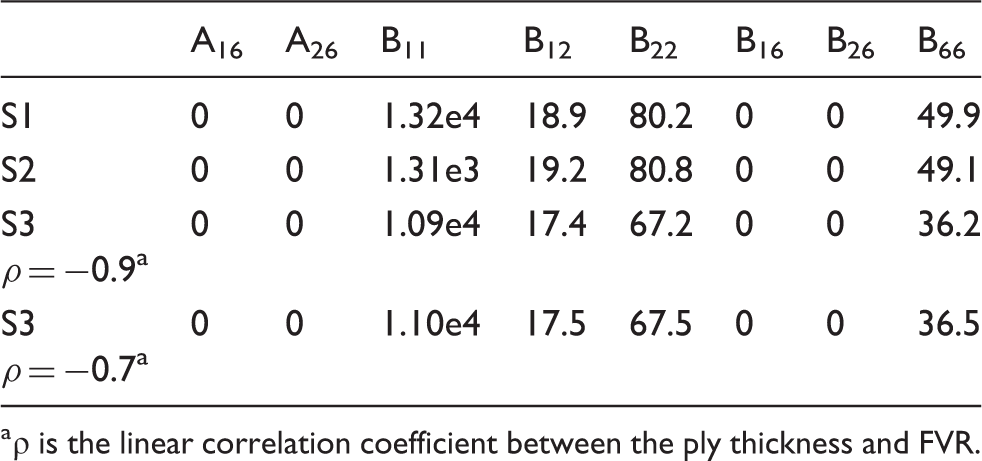
ρ is the linear correlation coefficient between the ply thickness and FVR.
Reliability of UD laminate plate
The failure probability of a [0]8 UD laminate plate bearing unidirectional tensile load is shown in Figure 5. The COV of the tensile load is assumed to be 10%. In Figure 5(a) where the tensile load is in the longitudinal direction, it is seen that failure probabilities in S1 and S2 are very similar and failure probabilities in S3 and S4 are very similar. It is observed that failure probabilities in S1 (or S2) are larger than that in S3 (or S4), by roughly 10%. It is important to notice that this difference between S1 (or S2) and S3 (or S4) is heavily dependent on the COV of fiber tensile strength. If the COV of the fiber tensile strength is 5% (this value varies for different manufactures and fiber type), the difference on failure probabilities between S1 (or S2) and S3 (or S4) is about 100%. This clearly demonstrates that the ply level thickness uncertainty caused by different sources (fiber or matrix dominated) lays different influence on the failure probability, and in this specific loading scenario the fiber-dominated laminate thickness uncertainty provides a heavier detriment on the laminate reliability. Figure 5(a) also shows that in S2 the failure probability can be practically evaluated by considering the laminate thickness uncertainty in the component level, which simplifies the calculation process but maintains a good accuracy in composite reliability. This agrees with the data shown in Table 5 where it is seen that the bending-extension and extension-shear coupling terms in S1 and S2 are actually very similar. On the contrary, the matrix-dominated laminate thickness uncertainty shows barely any influence on the reliability of the UD laminate. It agrees with the expectation of that the tensile load is mainly beard by the fiber so that the stochastic variation of matrix quantity should lay little influence on the failure behavior.
Failure probability of UD laminate bearing unaxial load: (a) load is aligned with the fiber direction and (b) load is introduced in the transverse direction.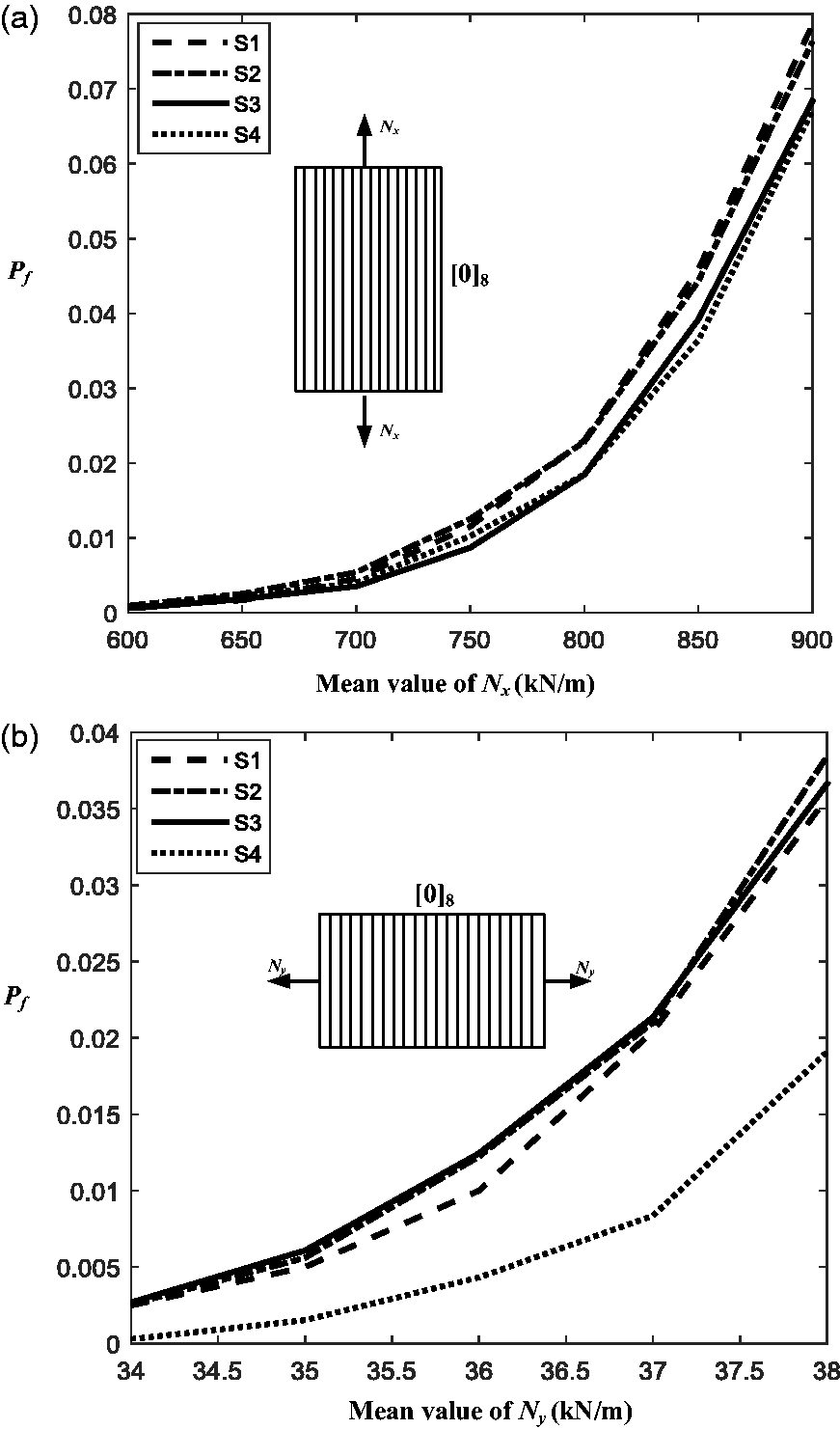
Figure 5(b) shows the failure probability of [0]8 UD laminate plate bearing transverse tensile load. Very different from Figure 5(a), it is seen that S1, S2 and S3 provide very similar failure probabilities and they are much larger than S4. This tells that the matrix-dominated laminate thickness uncertainty also introduce a large detriment on the composite reliability in the transverse loading scenario. Thereby, it is illustrated that the influence of ply level thickness variability on composite reliability also depends on the loading manners.
Reliability of multidirectional laminate plate
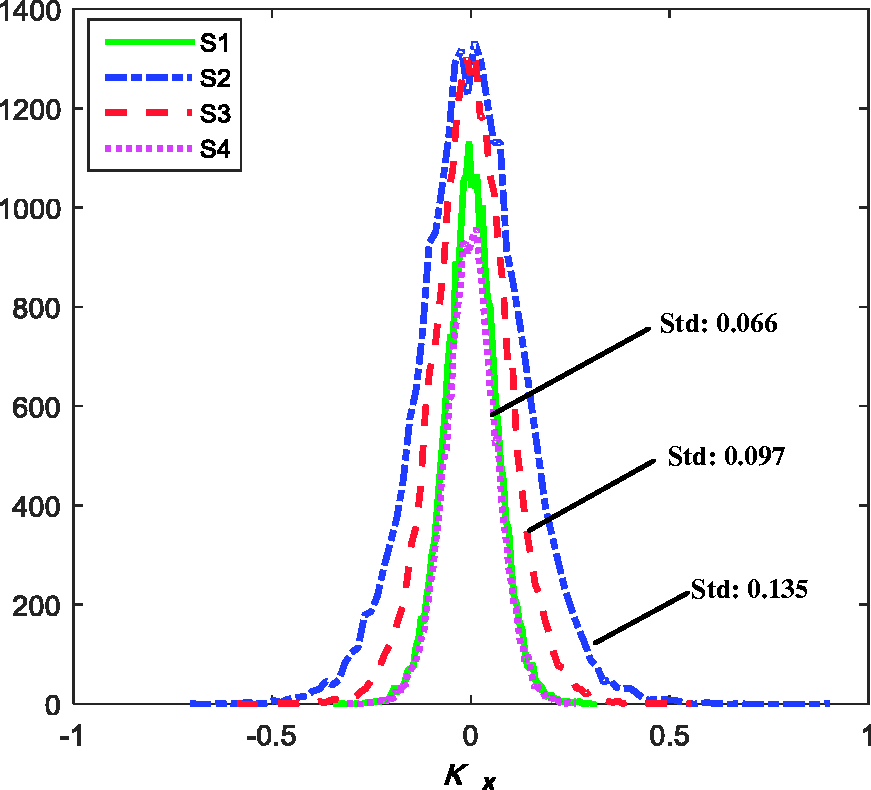
The failure probability of [0/–45/45/90]s composite plate subjected to distributed in-plane load Nx, Ny and Nxy is shown in Figure 6. The mean values of Nx and Ny are assumed to be identical, and they are five times of the mean value of Nxy. The COV of Nx, Ny and Nxy are all assumed to be 10%. Figure 6 clearly shows that the failure probability of S2 and S3 is much larger than that in S1 and S4, which indicates that the ply level thickness uncertainty significantly compromises the reliability of the composite plate, despite the ply level thickness uncertainty is fiber or matrix dominated. Table 6 lists ply failure probabilities of the [0/–45/45/90]s composite panel, showing that the laminate failure mainly occurs at the 0 and −45° plies in S2 and S3. However, in S1 it is seen that the laminate failure mainly occurs at the −45° ply, which indicates that the ply level thickness uncertainty may result a shift in the dangerous plies. The large failure probabilities of the exterior plies (0 ply and −45° ply) in S2 and S3 are resulted by the large mid-plane curvature as shown in Figure 7 (only x-direction curvature κx is provided). It demonstrates that the ply level thickness uncertainty could heavily detriment the symmetry of ideally symmetric composite, and consequently exterior layers could possess much larger failure probabilities than scenarios considering the thickness uncertainty in the component level. This observation agrees with bending-extension and extension-shear coupling terms shown in Table 4. The failure probability of S2 is slightly larger than that of S3 (regarding the difference between S1 and S4), showing no much difference between the fiber or matrix-dominated ply thickness uncertainty regarding to the influence on the composite reliability.
Failure probability of [0/–45/45/90]s laminate bearing multi-axial in-plane load. Probability distribution of mid-plane curvature (κx) of [0/–45/45/90]s, (Nx) = E(Ny) = 900 kN/m, E(Nxy) = 180 N/m (color figure in electronic manuscript). Ply failure probability of [0/–45/45/90]s, E(Nx) = E(Ny) = 220 kN/m, E(Nxy) = 44 kN/m.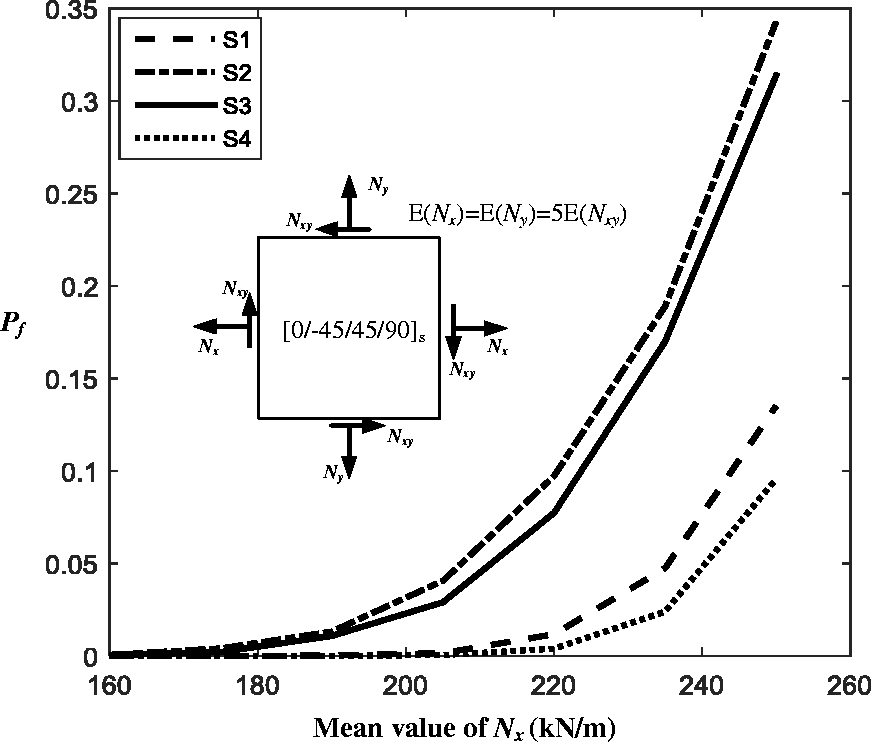

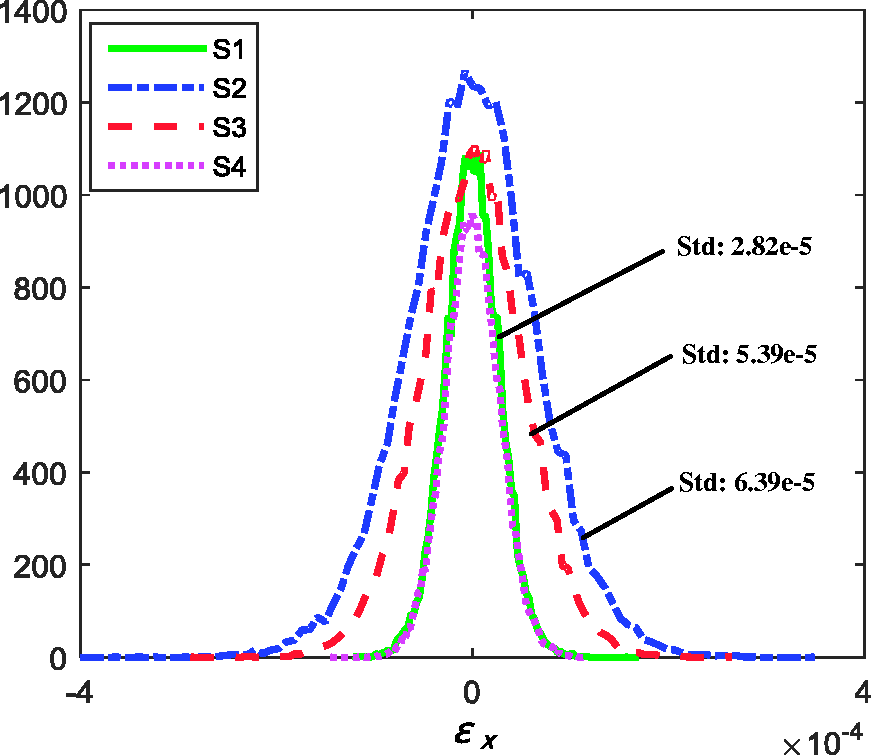
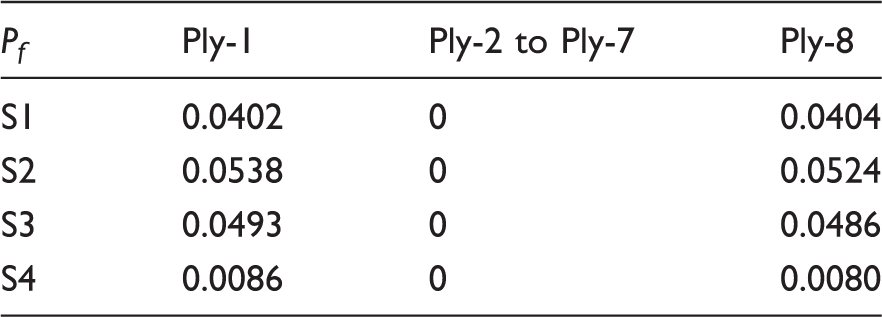
The failure probability of [0/–45/45/90]s composite plate subjected to distributed bending moment Mx and My is shown in Figure 8. The mean values of Mx and My are assumed to be identical, and their COV are both assumed to be 10%. In the loading configuration, the upper plies of the laminate bear compressive stress and hence the lamina compressive strength is required to determine the ply failure. As accurate micromechanical model of lamina in-plane compressive strength is under-development; in this study, lamina in-plane tensile strength is approximately used as the in-plane compressive strength. From Figure 8, it is seen that failure probabilities in S1, S2 and S3 are similar, albeit failure probabilities in S1 are slightly smaller and failure probabilities in S2 are slightly larger. Ply failure probabilities of the [0/–45/45/90]s composite plate are listed in Table 7, with both of the mean values of the Mx and My at 300 N. Table 7 shows that laminate failure occurs only in the two most exterior plies in all scenarios. This is as expected as exterior plies bear larger tensile or compressive stress regarding that only bending moment is loaded. The probability distribution of the mid-plane strain is shown in Figure 9 (only x-direction strain is provided), where it is seen that mid-plane strain is almost negligible (in the order of 10−5) in comparison to the lamina fracture strain (about 1%, see Table 2). This indicates that, in the loading configuration of bending moment, the laminate thickness uncertainty could be approximately considered in the component level which requires low computation effort but provides acceptable accuracy regarding the reliability evaluation.
Failure probability of [0/–45/45/90]s laminate bearing multi-axial bending moment. Probability distribution of mid-plane strain (ɛx) of [0/–45/45/90]s, E(Mx) = E(My) = 300 N (color figure in electronic manuscript). Ply failure probabilities of [0/–45/45/90]s bearing distributed Mx and My. E(Mx) = E(My) = 20 N.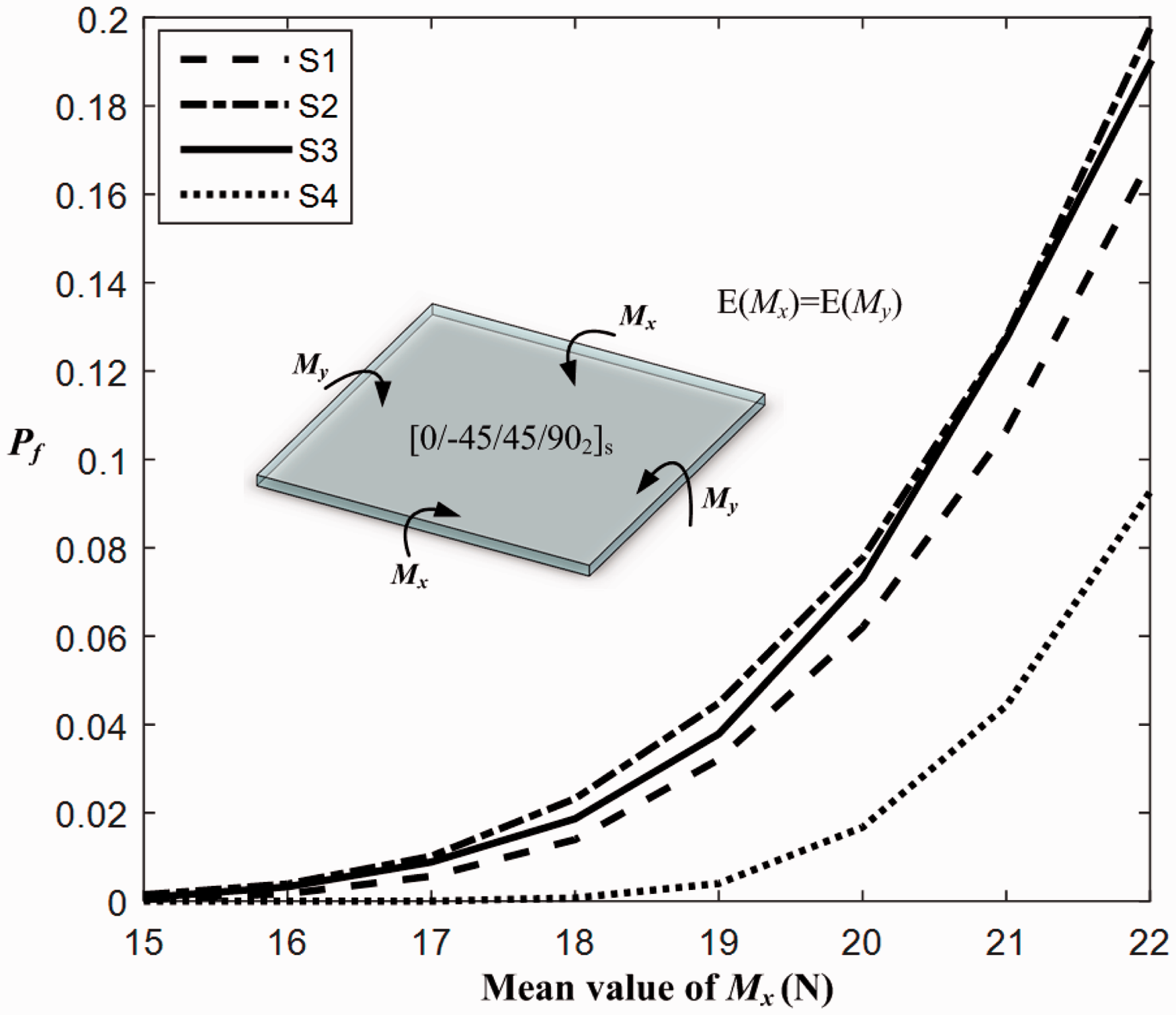
Results and discussion
Tsai–Hill terms of the most possible failure plies in different loading configurations.
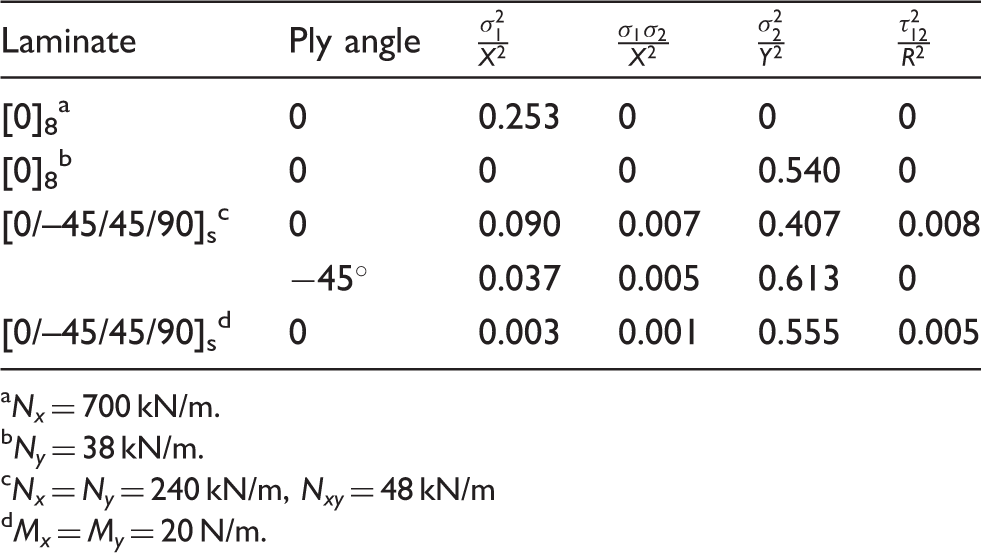
Nx = 700 kN/m.
Ny = 38 kN/m.
Nx = Ny = 240 kN/m, Nxy = 48 kN/m
Mx = My = 20 N/m.
This work highlights that the ply level uncertainty (ply thickness, ply orientation, ply mechanical properties) could result notable unwanted elastic coupling for designed symmetric and balanced composite plates. For the specific [0/–45/45/90]s composite plate in this work, the unwanted elastic coupling caused by the ply-level mechanical properties and ply-level thickness variability is in a similar magnitude (see Table 4). The unwanted elastic coupling leads to more complicated ply strain/stress state or even a shift of dangerous or weakest ply in a laminate system. Special attention needs to be paid on the unwanted elastic coupling of composite structures bearing in-plane loading, where a curvature is resulted (see Figure 7) and consequently the strain/stress state of exterior plies could be very different from ideal symmetric laminates (see Table 6). However, for laminates bearing pure bending moment, although the unwanted elastic coupling introduces extensional strain but this strain is practically very small in comparison with the ply ultimate strain (see Figure 9) and this strain is added to all plies by the same magnitude. Thereby, for laminates bearing pure bending moment, it is deemed that the unwanted elastic coupling introduces barely any influence on reliability of composite structures.
Conclusion
The present manuscript provides a comparative study and discussion on influence of laminate thickness uncertainty on the composite reliability. The laminate thickness uncertainty is modeled in three different scenarios: identical ply thickness uncertainty, fiber-dominated ply thickness uncertainty and the matrix-dominated ply thickness uncertainty. The matrix-dominated ply thickness uncertainty introduces significant correlation between the ply thickness and FVR, and consequently multiscale modeling is required to derive the failure probability.
In general, the fiber-dominated ply level thickness uncertainty results in significant unwanted elastic coupling and the largest detriment to the reliability of symmetric and balanced laminated composite. The matrix-dominated laminate thickness variability could introduce almost no or significant detriment to symmetric and balanced laminated composite, depending on the values of Tsai–Hill terms (if Tsai–Hill failure criterion is used to determine the failure boundary). If laminate failure is primarily dependent on Tsai–Hill terms decided by the lamina transverse or shear strength (would be similar for the Tsai–Wu or Hoffman terms 47 ), the influence of the fiber and matrix-dominated ply level thickness uncertainty on composite reliability are expected to be similar.
The conventional consideration on the laminate thickness uncertainty in the component level could underestimate or overestimate the composite failure probability, which remarks a clear requirement of thorough understanding on the ply level thickness uncertainty and its category (fiber or matrix dominated). In some practical occasions, it may be very difficult to experimentally determine the type of ply level thickness uncertainty or the thickness uncertainty is caused by a complex mixture of the fiber and matrix quantity. In these cases, a failure probability interval decided by the fiber and matrix-dominated ply level thickness uncertainty would be employed. The future work will focus on developing methodologies to accurately characterize ply level thickness uncertainty of composite structures with different shapes and fabrication manners.
Footnotes
Declaration of conflicting interests
The author(s) declared no potential conflicts of interest with respect to the research, authorship, and/or publication of this article.
Funding
The author(s) disclosed receipt of the following financial support for the research, authorship, and/or publication of this article: The work presented was sponsored by National Natural Science Foundation of China with the Grant Agreement 51405501. The financial support received is gratefully acknowledged. The helpful suggestion from Dr Ju Su in School of Aerospace Engineering (NUDT) is gratefully acknowledged.