






Abstract
While incentive mechanisms have been proven to motivate residents to separate their waste, empirical research is still needed to determine whether this separation behaviour could be maintained over time. The main objective of this paper is to investigate waste separation management activities in the city of Dongying, China, as a case study to clarify how local community citizens’ waste separation participation and recycling activities change over time cross-sectionally under the influence of an economic incentive mechanism – PS. This study used least square dummy variable analysis to investigate local waste separation behaviour in 98 communities over 22 months. Results showed that community resident waste participation and recycling behaviour tend to grow in the early stages and gradually show saturation without growth in the middle and late stages. This result implies limitations to the incentive mechanism, such that it could only motivate a part of residents to participate in waste separation; for those unaffected by financial incentives, it was suggested that educational or compulsory means be used to make them separate their waste.
Keywords
Introduction
In 2017, to solve waste separation at the source, the Chinese government promulgated a mandatory garbage classification policy to require 46 key cities, including Beijing and Shanghai, to implement compulsory waste separation at the source in the hope that those 46 cities might establish successful waste separation models by carrying out various types of waste classification pilot projects (Xiao et al., 2018; Yuchi Chen, 2020; Zhu et al., 2021). In this context, Chinese cities could be divided into two kinds based on the mandatory policy, ‘mandatory separation cities’ and ‘non-mandatory separation cities’. Unlike those 46 ‘mandatory separation cities’, more than 600 cities belong to ‘non-mandatory separation cities’ in China. Those non-mandatory cities have no clear, mandatory policies or regulations to manage waste classification at the source. However, regardless of whether it is mandatory or non-mandatory, local governments have launched multiple means of promoting various explorations of urban waste classification in an effort to explore effective waste classification models, such as seeking citizen opinions, organizing volunteer activities, encouraging private enterprises to participate in the pilot operation of waste classification, etc.
So far, many cities have been reported to have successfully implemented waste separation pilot projects focused on case studies in 46 mandatory cities, such as Shanghai, Beijing and Hangzhou (Liu et al., 2015; Fei et al., 2016). In those case studies, the main reasons for successful pilot projects are the promulgation of mandatory policies and economic incentive introduction (Li et al., 2019; Xu et al., 2018; Zhou et al., 2019). Identifying the reason for the success and actual situation of the waste separation pilot project is very important for China to effectively modify suitable waste separation policies and actions in the future. For example, if, without mandatory government policies, the economic mechanism still positively impacts waste separation in the start-up period, then those non-mandatory cities in China could widely introduce the economic mechanism in community waste separation activities. Therefore, this article aims to discern the contribution of the PS, which has been widely introduced as an economic mechanism in many Chinese cities, to activity concerning the separation of waste at the source. To explore the impact of the PS, this study used a non-mandatory city as a case study.
Economic incentives have already been applied to encourage domestic waste separation (Zhuang et al., 2008; Xu et al., 2015; Yoshida, 2018; Xue et al., 2019). For example, Yau (2010) took 122 private housing estates in Hong Kong as a research target and found that reward schemes have a significant positive relationship with the per-household weight of recyclables collected. Additionally, incentives could achieve more for residents with a lower initial separation rate (Harder and Woodard, 2007). Those researchers suggest that incentives can be given on an individual level and act as feedback about individual performance, increasing their willingness to contribute (Thøgersen, 2005). However, some researchers suggest that using incentives in those areas could backfire because extrinsic incentives may result in crowding out intrinsic motivations that are important for producing the desired behaviour. In other cases, incentives might have the desired effects in the short term, but they still weaken intrinsic motivations. Thus, once the incentives are removed, people may pursue the desired outcome less eagerly (Gneezy et al., 2011; Varotto and Spagnolli, 2017).
Synthesizing the insights from this literature, it can be speculated that the operation period of the incentive mechanism, if it is too long, will require that input costs increase and may not have a sustained long time positive impact on waste separation behaviour. If it is too short, it is also detrimental to the formation of resident waste-sorting behaviour. Therefore, an appropriate operating cycle period plays a vital role in the success of waste separation. However, systematic empirical evidence about the effects of recycling incentives on waste separation behaviour still needs to be discovered. The incentive operation period as a potentially critical factor needs to be addressed. As a result, there is a gap in the literature. This study attempts to fill this gap by investigating the changes in the PS’s operating time on waste-sorting participation and recycling and by identifying the factors influencing changes in participation and recycling.
Methods and materials
PS in China
The PS has been introduced and implemented in many cities in China. It has different names in different cities, such as ‘Bonus Point system’ in Beijing (Guo et al., 2017), ‘Green Account’ in Shanghai (Xiao et al., 2020) and ‘Green Points’ in Hongkong (Yau, 2010). This research referred to this system as the ‘PS’.
The PS is an incentive system for waste separation. Residents can earn reward points by putting the sorted waste into the designated equipment (intelligent garbage box) and can exchange those points for daily necessities. Residents usually use their mobile phones through WeChat or PS applications to register information. Generally, one household registers as one account, and each performance will get a bar code. When disposing of waste, it is necessary to use an intelligent garbage box to scan the bar code, and the points are stored in their accounts. These points can be exchanged for daily necessities on the online platforms set by the system. The process of the PS is shown in Figure 1.
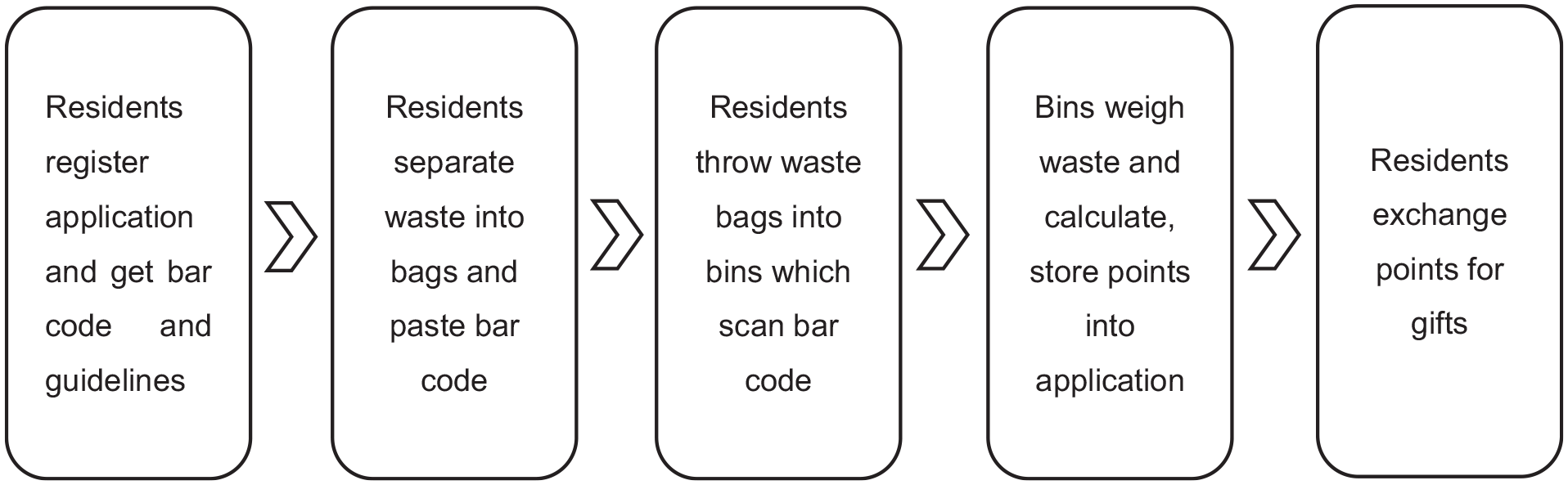
Process of waste separation and collection with the PS.
PS in Dongying City
Dongying City is classified as a non-mandatory city in the northern part of Shandong Province, China. It is an oil industry city that emerged from the Shengli Oilfield. Therefore, the city’s industries are mainly state-owned enterprises related to oil exploration and manufacturing. The research area is Dongying District, the central district of Dongying City. This district has 404 communities and 190,284 families with a population of 547,643. Six hundred tonnes of domestic waste are generated daily in Dongying District (Dongying City Statistical Yearbook, 2021). Therefore, the average daily domestic waste generation per household is 3.15 kg.
In 2020, Dongying City planned a waste separation pilot project in Dongying District and invited public bidding. In June 2020, the government made a 3-year contract with Dongying Huizhong Environmental Protection Co., Ltd. to implement the waste separation pilot project by the PS. The contract period is from September 2020 to September 2023. The contract requires that the participation rate of demonstration communities reaches 50% in the first year and 85% in the second year, achieving the replicable model in the third year. Besides, the Dongying District Urban Management Bureau takes the role of cooperating, supervising and accepting results. Dongying Huizhong Environmental Protection Co., Ltd. is responsible for the PS implementation and management.
The PS in Dongying City is slightly different from mandatory city models. Due to the permission of the community space, in addition to setting up an intelligent garbage box, there is also an environmental protection room in the community. The environmental protection room is a house of about 20 m2, where residents can exchange their points for daily necessities, and the staff can work and communicate with the residents. Some rooms also take over the function of the community express delivery simultaneously. Intelligent garbage boxes are open 24 hours, and environmental protection rooms are generally available from 8:00 to 19:00 every day except national holidays.
Waste is divided into four types in Dongying based on the provisions of the 2017 waste policy. The four types are kitchen waste, recyclable waste, hazardous waste and others. The types of collected waste considered by the PS are mainly separated recyclable waste, kitchen waste and hazardous garbage. Among them, recyclable waste could be exchanged and stored for reward points, while kitchen waste and hazardous waste cannot be exchanged for points (Table 1). Dongying’s PS parallels the former community waste recycling system. It is voluntary for residents to participate so that other unsorted waste can be thrown into the original waste trash. The PS would not recycle other and unseparated waste.
PS collected waste type and exchange points in Dongying City.
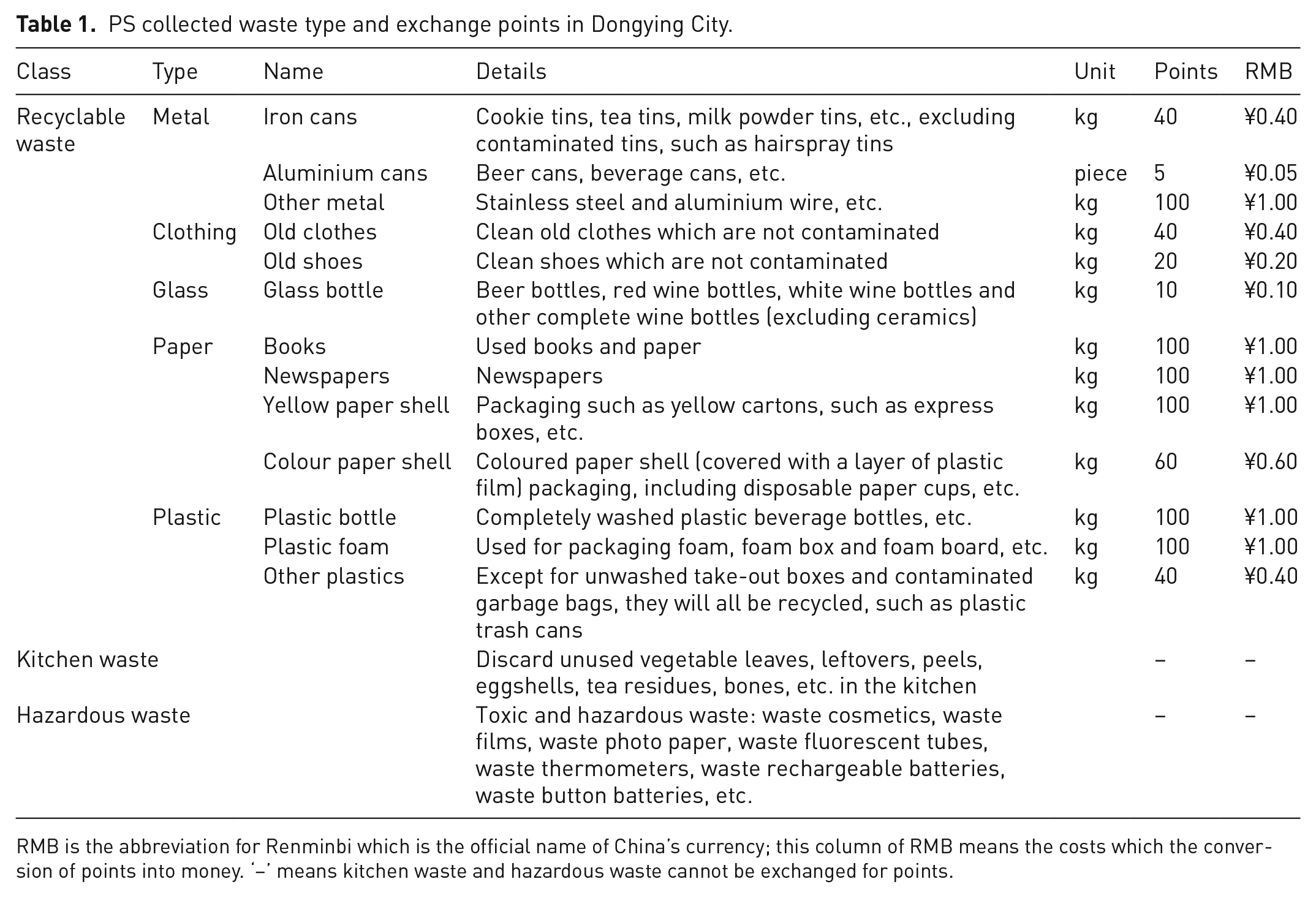
RMB is the abbreviation for Renminbi which is the official name of China’s currency; this column of RMB means the costs which the conversion of points into money. ‘–’ means kitchen waste and hazardous waste cannot be exchanged for points.
The Dongying PS receives its funding primarily from three sources. First, government financial support and subsidies, which comprise about 40% of all funding sources, are acquired through competitive bidding. Second is the back-end revenue from recyclable waste. The points in Table 1 are set at half the market price for resource waste. The recycled resource waste would be sorted and processed twice before being sold to the back-end factories as raw materials to generate revenue. About 50% of the revenue comes from this segment. Third is the online platform revenue, comprising about 10% of total revenue. The PS application will place advertisements to earn advertising revenue fees. (Data acquired by PS managers.)
Data collection
The data were collected from Dongying Huizhong Environmental Protection Co., Ltd. The PS data from September 2020 to June 2022 were chosen. The data include the number of participants and the amount of collected waste in the communities. Kitchen and hazardous waste are not exchanged for points, and the weight accumulated is limited. Therefore, those wastes are not considered evaluation indicators. This paper selects the weight of recyclable waste and the number of participants as the evaluation indicators. Within the period, 3299 tonnes of recyclables were collected by 98 communities. At the same time, each community operation time is different. Some communities have been in operation for 22 months, and some have only been in operation for 10 months.
Data analysis
Empirical framework
In the literature on incentives for lifestyle changes, enough incentive mechanisms had significant work in the short run, while in the longer run, the desired change in habits could disappear again (Gneezy et al., 2011). Therefore, the incentive mechanism is helpful in the short term, while whether it will continue to have an impact in the long term remains to be tested empirically. Based on this, this study hypothesizes that the impact of the incentive mechanism in the medium and long term is likely to be positive.
The empirical analysis in this study used several estimation methods. Firstly, the cross-sectional impact of point system (PS) operation on community participation and collection was examined using the ordinary least squares (OLS) method. Secondly, the effects of over-time variation in PS operation on community participation were explored. The panel fixed effects (FE) regression estimation method was displayed since this method is statistically preferred. Thirdly, the significant effect of over-time variation was estimated with panel random effects (RE) regressions. Fourth, the least square dummy variables (LSDV) estimate method is used for cross-section correlation problems in the model.
The base regression model is given by:
This paper also uses panel regressions with FE and RE to estimate the impact of over-time variation:
where i and t indicate the communities and months, respectively; WS is the evaluation indicator of waste separation, here representing community participation numbers (P) and recycled waste weight (R); D is an explanatory variable, which represents PS operation/influence time; this paper introduces the square of D to test the inverted U-shaped relationship between PS operation time and community participation numbers (P) and recycled waste weight (R);
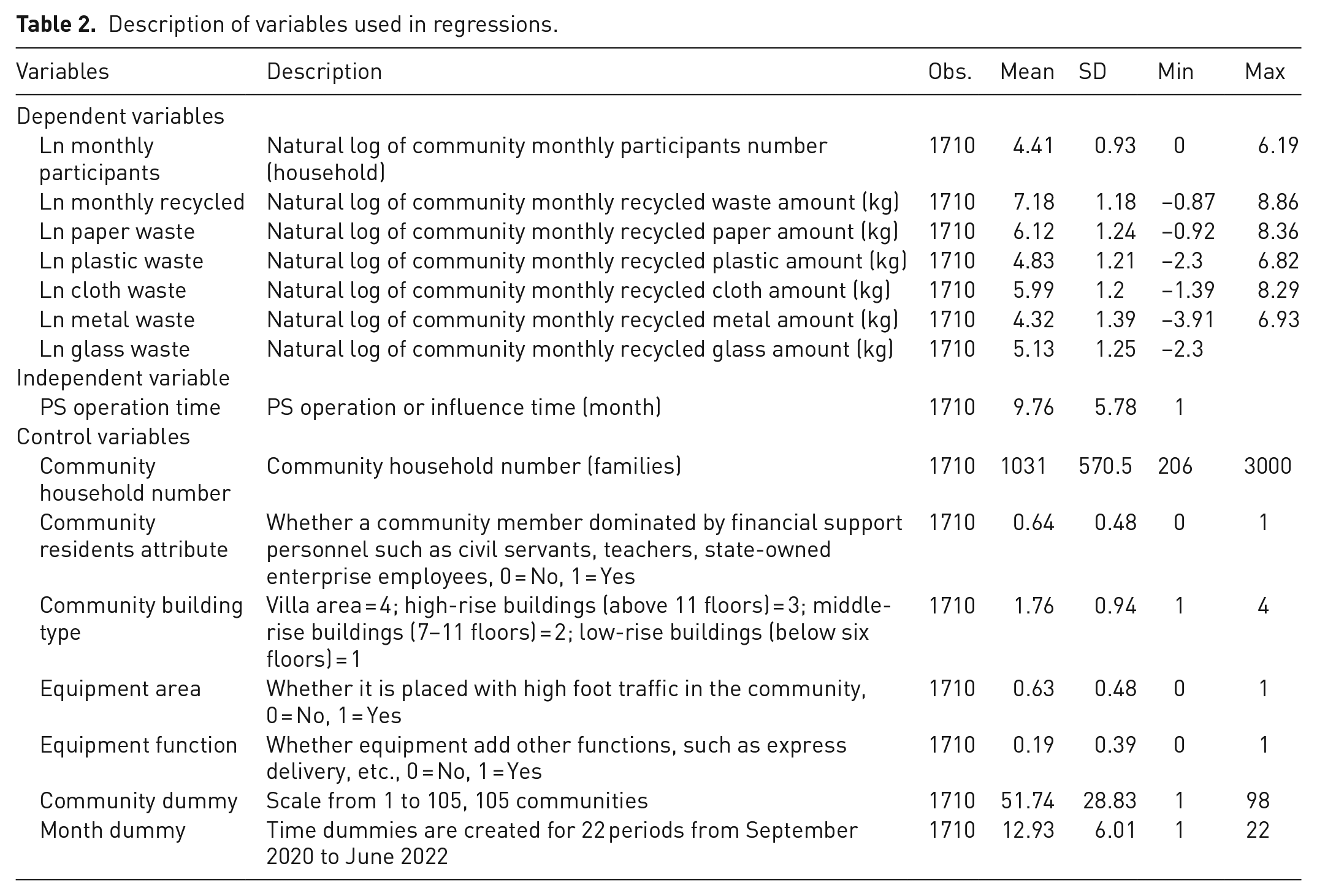
Description of variables used in regressions.
Variables
Dependent variables
Undoubtedly, the widespread participation of the public is the key to the success of waste separation in a society since it requires a concerted effort of social members (Olson, 1965). Therefore, the number of participants is often used as an indicator to assess the success of waste separation (Wang et al., 1997; Harder et al., 2006). At the same time, the amount of waste recycled is considered another essential indicator to test recycling capacity.
The primary purpose of this research paper is to explain how community participation and recycling activities are affected by PS operations after controlling for other determinants. Depending on the availability of data sources and literature papers, this paper chose monthly community participants as indicators to evaluate community participation levels; and monthly recycled waste weight as indicators to assess community recycling levels.
Independent variable
The independent variable is the PS operation time (month) which shows each community’s waste separation activities changing under the influence of PS operation.
Control variables
Those control variables were divided into two main aspects.
First, the community attributes were selected, which are normative variables commonly used in empirical community waste separation evaluation studies. Specifically, community size, community building type and community residents’ essential attributes.
The number of residential households in the community was used to measure community size. The community house building type is measured by the actual building type in the community. Based on the current building types of community in Dongying District, this variable could be divided into four classes: Villa District, High-Rise buildings (11+ stories), Mid-Rise buildings (7–11 stories level) and Low-Rise buildings (less than 6 stories). Based on the market price of building types in Dongying, the selling price per square metre is highest in the villa district, followed by high-rise, mid-rise third and low-rise lowest. Thus, controlling for the variable of building types, it is possible to detect the effect of the living housing type on residents’ waste-sorting behaviour (Yau, 2010).
Community resident attributes are measured by 65% of the community’s residential work characters. Depending on the characteristics of the Dongying community, those communities are generally a concentration of certain types of work members. For example, there are many civil service communities close to government institutions and many faculty staff communities close to schools in Dongying District. In addition, Dongying City has the famous Shengli Oilfield and therefore has many oilfield-related state enterprises equipped with many oilfield communities. Those above communities’ members, including those of civil service communities, faculty and staff communities and oilfield communities, are financially supported by the government and are the first to learn about the importance of waste separation behaviour by popularization or publicizing in their workplace. Apart from that, new communities are moved from rural areas through government administrative planning, known as new rural communities, and many commercial housing communities for purchase by the public, whose resident members are mainly business workers or general business employees. Those residents rely primarily on community publicity to receive information about waste separation activities. Depending on the actual situation, community resident attributes are divided into two main types, those with and without government financial support.
Second, the influence of the waste separation equipment on the results was controlled in this study, using the equipment location and function as indicators. Equipment placement is usually decided through consultation with the community property management agency; in some communities, the equipment is set near the community gates, gardens or activity centres, which are convenient for residents and have high traffic flow. In other cases, the equipment is set up in more remote areas, which do not affect community traffic due to the limited size of the community and less foot traffic. Choosing equipment placement as a control variable could examine the effect of the convenience of equipment on residents’ waste-sorting behaviour.
The study also controls for the equipment function. In some communities, the environmental protection house is large and aesthetically pleasing. To motivate the curiosity of the residents, functions such as courier collection and delivery and event handling are added to increase the stickiness of the residents’ continued participation; in other communities, the environmental protection house only has a single recycling function. Therefore, using this as a control variable makes it possible to ensure that adding features to the equipment does not impact the results.
Results and discussion
Measurement results of community participants and recyclables
Figure 2 shows the trend in the total number of participants per month and the total amount of recyclables collected monthly in the 98 communities under the PS operation, advancing on a timeline. As the graph shows, the data before October 2021 showed a trend of substantial and steady growth; the reasons are (i) the stimulation of the PS operation and (ii) the number of communities before October 2021 is constantly increasing. After October 2021, the data showed ups and downs and gradually tended towards a stable state. The highest peak during this period was in January 2022, when the number of participating communities was 98, the number of participants was 13,945 households, and the amount of waste collected was 256,075.2 kg. The peak is due to the Chinese New Year on 1 February 2022, when there were a large number of gift-giving parties for friends and relatives in January, which might result in a large increase in recyclable waste. The sudden drop in February 2022 is due to the Chinese New Year holiday when residents of rented houses in the community return to visit their parents’ homes, resulting in a sharp drop in the number of participants to 9899. In sum, through the results, the PS can indeed promote residents’ participation in waste separation behaviour.
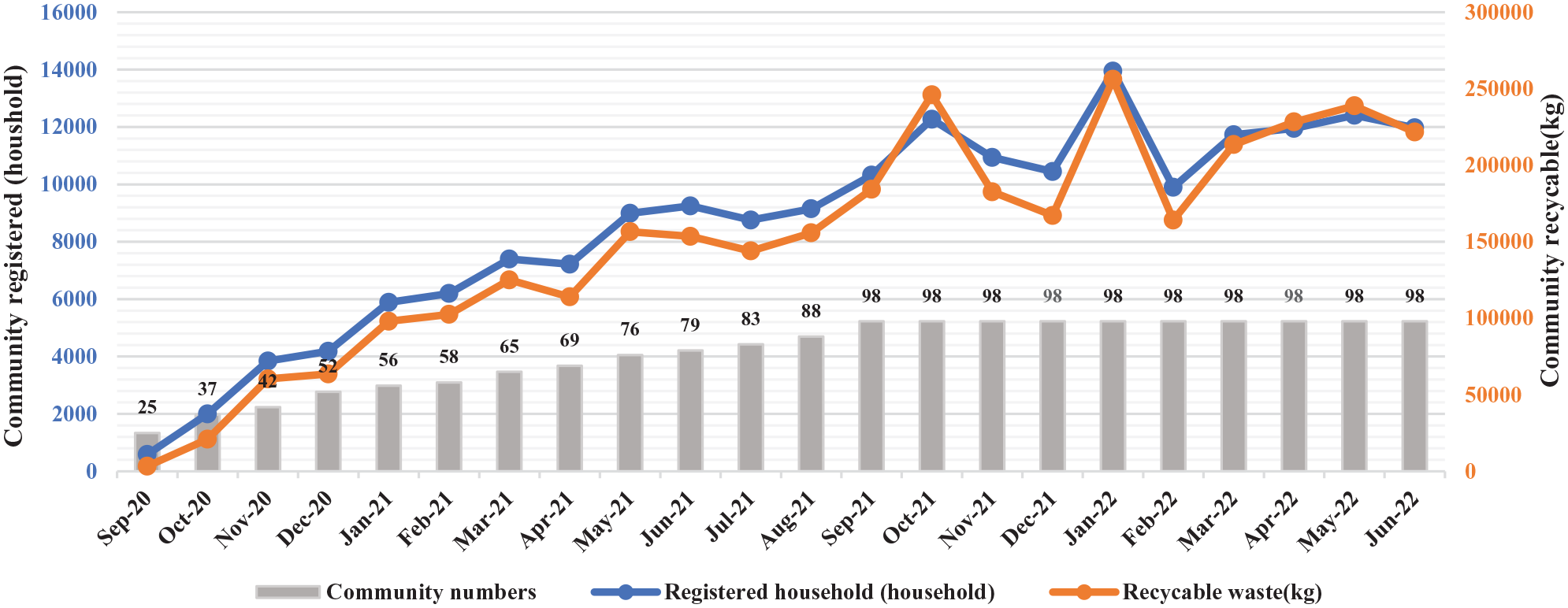
The trend of the monthly community participants and recyclables with the PS.
Panel data regression results
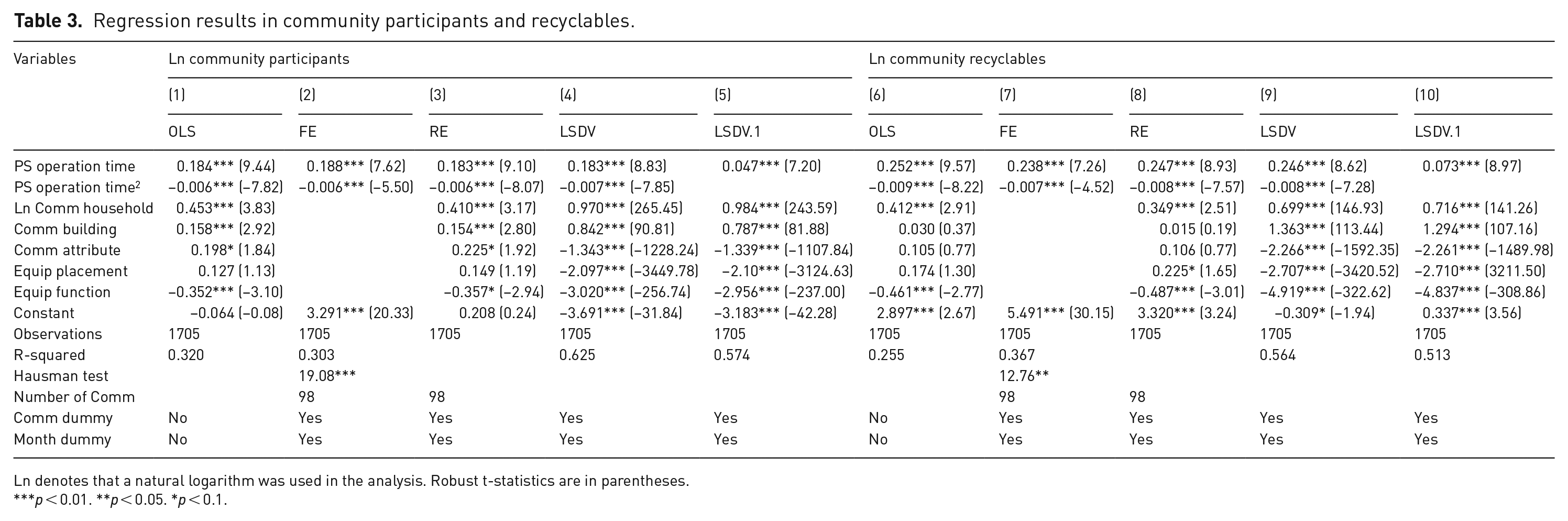
Based on the above results, further empirical tests were carried out. This section compares the OLS, FE, RE and LSDV estimations for empirical analysis (as shown in Table 3) with one other and selects the most suitable estimation method for the sample.
Regression results in community participants and recyclables.
Ln denotes that a natural logarithm was used in the analysis. Robust t-statistics are in parentheses.
p < 0.01. **p < 0.05. *p < 0.1.
First, OLS models were used to check the relationship between participants and recyclables between variables. In the models where community participation is the dependent variable, the OLS estimation shows that the coefficient of PS operation time and PS operation time square are 0.184, −0.006, 0.252 and −0.009, respectively. Those data pass the significance test at the level of 1%. However, those OLS models did not introduce community and month dummy variables. The OLS estimation model may miss some variables that affect the community participant number and recyclable amount. Hence, it was decided not to use OLS in favour of FE and RE. Second, in the FE estimation, the coefficient of PS operation time and PS operation time square are 0.188, −0.006, 0.238 and −0.007, respectively. This time, the FE models introduced community dummy and month dummy variables, and the coefficient is significant at the 1% level. While community and equipment variables change very little over time, they are not brought into the FE estimation. Therefore, the results did not show up on the FE models. Third, RE models were used to estimate for empirical analysis. The coefficient of PS operation time and PS operation time square also have significance at the 1% level. At the same time, we needed to figure out whether the FE or RE models were more suitable for the research samples. The Hausman test is suitable for choosing between FE and RE models. In the models where the community participant is the dependent variable, the result of the robust Hausman test is 19.08; in the models where the amount of community recyclables is the dependent variable, the result of the robust Hausman test is 12.76. Both effects are significant at the 1% level. Hausman’s test shows that the estimation gap between the FE and RE is too large, which indicates that FE results are more consistent than RE, so FE should be chosen. As mentioned above, a cross-sectional correlation problem exists in FE, so we used LSDV estimation to address this issue. The PS operation time and PS operation time square coefficients are 0.183, −0.007, 0.247 and −0.008, respectively, significant at the 1% level. Additionally, these results are very stable.
In summary, comparing the analysis results of OLS, FE, RE and LSDV, the LSDV model is the most suitable for the sample data. Based on LSDV, PS operation time was used as the independent variable for the calculation, yielding results (5) and (10). The results show that when PS operation time alone was the independent variable, the results were 0.047 and 0.073, positively correlated with community participants and recyclables, showing a moderate growth trend. When PS operation time and PS operation time square together were the independent variables, the results show a state of growth at the beginning and no growth afterward, indicating saturation. The graphical effects are consistent with Figure 2, which means that they start with a positive correlation structure and tend to a saturated form after a specific time has been reached. These results confirmed the hypothesis.
In addition, from the results of (5) and (10), we know that control variables also significantly correlate with participants and recyclables. Among them, the community household number is positively correlated with the dependent variable, which means that when the community population is larger, participants and recyclables will also increase. The type of community building is also positively correlated with the dependent variables. This means the higher the housing unit price, the higher the number of participants and recyclables. The control variables with a negative correlation include the attributes of community residents, equipment placement and equipment functions. This means that when the government financially supports the community residents, the garbage equipment is placed in the centre of the community. The garbage equipment has various functions, so the participants and recyclables will decrease over time.
Heterogeneity analysis
Heterogeneity refers to how the impact of the PS on the amount of recyclables varies from community to community and from one type of waste to another. The easiest way to solve the heterogeneity problem is to divide the sample into subsamples according to the needs of the research questions and then use the LSDV model to estimate community participants and recyclables separately.
Community recycling volumes for different types of recyclable waste
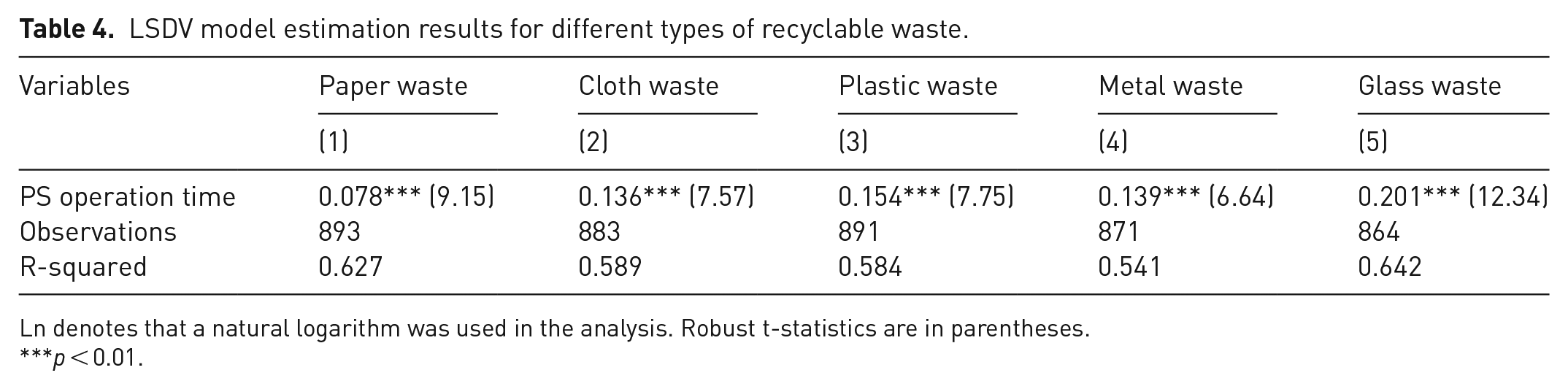
When the different amounts of different types of waste are the dependent variables, the relationship between the results and the independent variable and control variables is shown in Table 4.
LSDV model estimation results for different types of recyclable waste.
Ln denotes that a natural logarithm was used in the analysis. Robust t-statistics are in parentheses.
***p < 0.01.
According to the results in Table 4, when PS operation time is the independent variable, there is a positive correlation with the amount of waste collected (Woodard et al., 2006). The PS operation time has a strong significant positive impact on glass waste (the coefficient is 0.201); it has the weakest positive impact on paper waste which is the largest percentage of recyclable collection. Therefore, it can be inferred that the amount of glass waste will continue to increase with the operation of the points system. The amount of recycled paper waste is relatively large and will not increase significantly with the operation of the incentive mechanism (Table 4).
Participants and recyclables for different types of communities
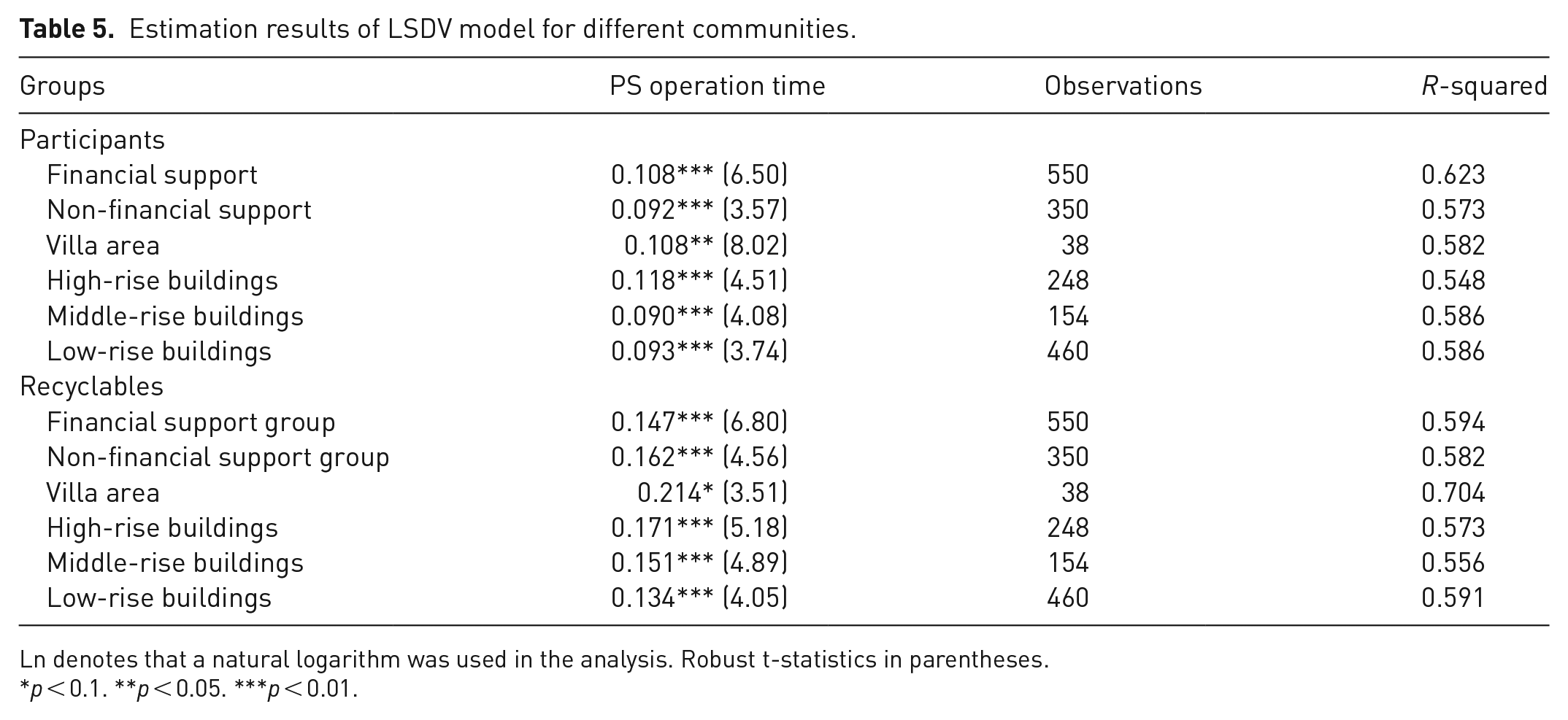
When discussing the impact of the operation of the PS on the participants and recyclables of different communities, group regressions are performed on different communities. To verify the result, the author referred to the community attributes and the attributes and community building types and divided the sample into six groups for comparison (Table 5). Some communities are financially supported by the government and communities that are not villa area communities, high-rise building communities, middle-rise building communities and low-rise building communities.
Estimation results of LSDV model for different communities.
Ln denotes that a natural logarithm was used in the analysis. Robust t-statistics in parentheses.
p < 0.1. **p < 0.05. ***p < 0.01.
The regression results in Table 5 show that when the dependent variable is community participants, the PS significantly impacts the financial support community group and the high-rise building community group (the coefficients are larger than other groups, 0.108 and 0.118, respectively). It means that when the residents of the community are financially supported, or when the community where the residents live is a high-building community, it is easier to use the points system to achieve better results. The number of community participants will continue to increase. When the dependent variable is the community recyclables, the PS has roughly the same impact whether or not it has financial support, but it also has a strong significant impact on the certification of the villa area (the coefficient is 0.214). This means that residents in high-building or villa areas communities may be more willing to separate their household garbage, and the amount of recyclable waste generation is larger than in other communities.
To sum up, residents in the high-rise buildings community and financial support community are more likely to participate in the PS. They are more likely to be affected by the incentive mechanism. On the contrary, residents in low-rise residences are less likely to affect by incentives to participate in waste-sorting behaviours. The results of this study are consistent with Ahsan et al.’s (2014) research which considered that waste management systems in high-rise residential buildings could be very effective and different from communities of other types of buildings for the following reasons: residents of high-rise buildings are higher-medium to upper-income group people with higher social and economic status. As a result, they are also more aware of social issues such as waste problems in local areas. Also, there is much more publicity related to waste classification that can be accepted by them from the employment unit. Therefore, the PS should provide more infrastructure and services in such communities.
Conclusion
The most important result of this study is to use empirical research to verify the promotion effect of the points system on the community participants and recyclable behaviours. First, the result shows that the PS plays a role in promoting community waste-sorting behaviour. However, the community participation and recyclable rates still need to be higher and have yet to reach the effect expected by Dongying City government. Second, the results showed that the PS has a short-term promotion effect on community residents’ participation and recycling behaviour. However, its effect will be saturated in the long run, and there will be no new participants and recycled volumes. Third, this study shows the factors that affect the amount of community participation and recycling, in addition to the impact of the incentive mechanism, including other indicators such as community household number, community attributes, community building types, equipment placement areas and equipment attributes. Finally, through heterogeneity analysis, glass waste is more positively affected by the PS, and high-rise residential communities are more likely to participate in waste-sorting behaviour.
In summary, the results of this study confirm the effectiveness of economic incentives in promoting waste separation and recyclable behaviours, but at the same time, point out the shortcomings. With the long-term operation, the operating cost will continue to increase, and the participation and recycling rate saturation will occur. Therefore, the operation time of the incentive mechanism needs to be measured with system operational costs and the duration of the impact on resident behaviour.
Footnotes
Acknowledgements
Thanks to my supervisor, Professor Misuzu Asari, for providing guidance and feedback throughout this research. Thanks also to Dongying Huizhong Environmental Protection Co., Ltd., for providing waste collection data for analysis, and thanks to the reviewers who helped the authors to improve this paper.
Declaration of conflicting interests
The authors declared no potential conflicts of interest with respect to the research, authorship and/or publication of this article.
Funding
The authors received no financial support for the research, authorship and/or publication of this article.
