






Abstract
This paper examines consumers’ hypothetical willingness to pay (WTP) for sustainable fashion products, distinguishing between green attributes (e.g., natural fibers) and circular attributes (e.g., second-hand and recycled materials). It focuses on how economic considerations and environmental attitudes jointly influence consumers’ valuation and purchasing behavior. Using original survey data from a sample of Italian consumers, we analyze stated WTP for identical t-shirts differing only in their production attributes: new (linear), second-hand (circular), made of natural fibers (green), and made of recycled materials (circular). Results reveal that while second-hand garments are perceived as highly sustainable, they display a significantly lower WTP, confirming the presence of a sustainability-related attitude–behavior gap. In contrast, t-shirts made of natural fibers and recycled materials receive positive and statistically significant green and circular premium, respectively. Regression results further show that pro-environmental behavior positively affects WTP only for second-hand products, whereas quality, comfort, and versatility negatively influence their valuation. Conversely, economic considerations significantly reduce WTP for green and recycled garments, highlighting the dominance of explicit economic preferences over environmental ones. Overall, the findings provide empirical evidence relevant to SDG 12, highlighting the challenges of promoting responsible consumption in the fashion industry.
Keywords
Introduction
The fashion industry is one of the sectors with the greatest environmental impact worldwide. In this context, the circular economy and waste management represent closely interlinked challenges, particularly in sectors characterized by globalized and complex supply chains such as fashion (Ahmed et al., 2025; Ezeudu and Bristow, 2025). This is particularly evident in the fast fashion model, which, due to its high production turnover and consumption rates, remains largely incompatible with circular economy principles and waste reduction objectives (Bartl and Ipsmiller, 2023). The transition to circular business models is increasingly considered essential, with technological investments expected to contribute to a significant reduction in emissions in the coming decades (Papamichael et al., 2023; Ricciardi et al., 2025). Among the most effective solutions, closed-loop recycling systems allow fabrics to be reused multiple times, reducing waste production and environmental pollution (Sanjrani et al., 2024; Solis et al., 2024). However, the success of such systems depends heavily on the efficiency of textile waste collection and sorting processes. Across Europe, municipalities and waste management companies are looking for effective solutions to meet the growing demand for separate textile collection (Aceleanu et al., 2019; Borchard et al., 2021). Although Nordic countries have developed advanced automatic sorting and recycling capacities capable of processing most recyclable materials, some challenges remain, particularly with regard to certain synthetic fibers (Dukovska-Popovska et al., 2023). Moreover, recent contributions highlight how waste management policies often confuse final objectives, such as environmental protection, with operational tools like circular economy strategies, emphasizing the need to refocus decision-making on clearly defined goals (Bartl, 2025).
The environmental impact is also influenced by upstream decisions regarding the location of production, the selection of raw materials, and manufacturing practices, which have a significant impact on the overall sustainability performance of the fashion industry (Thomasset and Benayoun, 2024). In this context, public intervention plays a decisive role. Regulatory frameworks, environmental standards, and emission reduction policies can directly influence pro-environmental behavior and accelerate the adoption of sustainable practices (Orviska et al., 2019). Empirical evidence suggests that both regulatory measures and economic incentives positively influence sustainable purchasing intentions, reinforcing the role of policy in steering markets toward circular solutions (Sun et al., 2023).
At the corporate level, circular business models such as take-back programs, recycling initiatives, and repair services aim to extend product lifecycles and create sustainable value (Abdelmeguid et al., 2024). Cities and regions can further support these initiatives by promoting circular fashion ecosystems at both the local and global levels (Kim, 2024). However, sustainable fashion requires alignment between the priorities of producers and consumers (Karadayi-Usta, 2023), as well as coordination between multiple stakeholders within highly complex supply chains (Heinze, 2020; Saha et al., 2024). Despite growing efforts to integrate sustainable practices (Ermini et al., 2024; Goel et al., 2025), significant gaps remain in translating supply-side initiatives into effective environmental outcomes (De Felice et al., 2025).
In this context, the contribution of consumers emerges as a critical but still insufficiently understood element. Circular strategies such as separate textile collection, recycling programs, and circular purchasing models require the active participation of consumers to be effective. Without adequate consumer involvement, even advanced technological infrastructures and regulatory frameworks risk not functioning properly (Bläse et al., 2024; Seock et al., 2024).
Consumer behavior plays a key role in the transition to circular fashion, influencing the effectiveness of sustainability strategies. Experimental evidences that pro-social and pro-environmental preferences, together with perceived product quality and production costs, significantly influence consumer purchase intentions and willingness to pay (WTP) for circular products (Cascavilla et al., 2025). Consumer preferences and WTP play a crucial role in shaping the effectiveness of sustainability-oriented policies and business strategies in the transition to circular fashion (Cascavilla et al., 2026). However, previous studies have shown that although consumers express pro-environmental attitudes, they are less willing to pay for second-hand clothing, highlighting a persistent attitude–behavior gap in sustainable fashion (Bläse et al., 2024; Pretner et al., 2021; Ryding et al., 2022).
Although the literature has documented the existence of a gap between attitudes and behaviors regarding sustainable fashion, less attention has been paid to how consumers distinguish between different sustainability characteristics. In this context, the present study aims to bridge this gap by distinguishing between circular characteristics (second-hand, recycled) and green characteristics (natural fibers) within a coherent product context, allowing for a more precise assessment of consumer preferences across the various dimensions of sustainability. The objective is therefore to analyze how these dimensions influence WTP and to identify the main factors driving consumer choices, providing useful insights for the design of policies and market strategies aimed at promoting sustainable fashion.
This paper investigates how the consumers’ WTP varies for alternative t-shirts that vary in their green and circular attributes. In order to carry out this study, an online survey was administered to a sample of 316 Italian consumers. In particular, after the analysis of attitudes and behaviors toward fashion in general, the main focus is put on the respondents’ differences between perceptions and habits toward fashion clothing items. Furthermore, the analysis focuses on the size and the comparison of the WTP for several versions of a similar t-shirt which vary in their sustainability attributes, namely (i) new (linear economy); (ii) second-hand (circular economy); (iii) made with natural fibers (green economy), and (iv) made with recycled materials (circular economy). Finally, the paper provides a quantitative data analysis based on a regression to estimate the factors influencing the WTP for each proposed t-shirt, including variables related to pro-environmental behavior, clothing characteristics, and sociodemographic information.
Literature review
This study draws on established behavioral and psychological models that help explain the discrepancy between pro-environmental attitudes and actual purchasing behavior. In particular, the gap between attitude and behavior can be interpreted through cognitive dissonance, which arises when stated values are not fully consistent with consumption choices (Celik and Ekici, 2025). This mechanism can further be understood as a dynamic process of realignment between attitudes and behaviors over time (Cairns et al., 2022).
At the same time, bounded rationality implies that consumption decisions are influenced by cognitive constraints and trade-offs between price, quality, and other product characteristics (Choi, 2017). In the context of sustainability, these constraints result in choices that reflect simplified and adaptive logic rather than fully rational optimization (Dziubaniuk et al., 2024). This distinction may reflect a tension between explicit economic preferences and implicit environmental preferences. In line with bounded rationality and the attitude–behavior gap literature, environmental values may remain abstract at the attitudinal level, whereas price and quality-related criteria become more salient in concrete purchase decisions.
In the fashion sector, these mechanisms help explain why pro-environmental preferences do not necessarily translate into consistent behaviors. This trade-off may also be interpreted as the coexistence of explicit economic preferences and implicit environmental preferences. While environmental concerns reflect broader value-based orientations, actual purchase decisions are often driven by more immediate and concrete considerations, such as price, quality, and convenience. In this sense, sustainable consumption choices may be shaped by a cognitive hierarchy in which economic evaluations remain more salient at the moment of choice, even when pro-environmental attitudes are positively endorsed at the abstract level. More recent approaches also highlight how the consumption of second-hand products is influenced by both cognitive factors and emotional and identity-related elements (Kessous and Valette-Florence, 2019). In particular, additional behavioral barriers emerge, including contamination and contagion effects (Argo et al., 2006) and perceived residual ownership (Baxter et al., 2016), which contribute to reducing the attractiveness of and WTP for these products. Other analyses also highlight concerns related to identity and status (Ferraro et al., 2011).
In this context, it is useful to distinguish between green and circular approaches. The green economy represents a macro-level paradigm oriented toward sustainability and the reduction of environmental impacts, whereas the circular economy translates into an operational model that redefines production processes according to circular principles, aiming to minimize waste and maximize resource reuse (Colasante and D’Adamo, 2021). Sustainability in the fashion industry is increasingly understood as a multidimensional concept encompassing environmental, economic, and social aspects, with consumer behavior playing a central role in determining outcomes in all three areas. Although awareness of the environmental and social issues associated with fashion consumption has increased, translating this awareness into sustainable purchasing behavior remains a challenge. The shift away from fast fashion is often associated with perceived losses in terms of price, variety, or convenience, which can hinder behavioral change (Bläse et al., 2024). Conversely, the spread of slow and circular fashion models requires a strong link between consumer knowledge, perceived value, and actual purchasing decisions (Seock et al., 2024).
Research highlights that consumers are more likely to adopt circular fashion when they perceive the emotional, functional, and environmental value of sustainable products (Papamichael et al., 2024). Trust, transparency, and recycling initiatives further contribute to shaping positive attitudes among consumers, particularly when sustainability claims are perceived as credible (Adamkiewicz et al., 2022; Hong et al., 2024). Education about circular practices has also been shown to play a crucial role in promoting sustainable consumption patterns (Sehnem et al., 2024). These factors collectively influence consumers’ WTP a premium for sustainable products, reflecting a broader shift in expectations toward more ethical and responsible fashion practices (Ryding et al., 2022).
Empirical evidence suggests that consumers often express a greater WTP for sustainable products, motivated by growing concern for the environment and a desire to contribute to its protection through their consumption choices (Zhang and Dong, 2020). This willingness is particularly evident for bio-based and recycled products (Zwicker et al., 2023), as well as for products accompanied by transparent environmental information, such as digital product passports, which increase trust and purchase intention (Becchi et al., 2026; Colasante et al., 2025). In contrast, second-hand clothing tends to attract a lower circular premium, highlighting differences in how consumers value alternative circular strategies (Colasante and D’Adamo, 2021). Technological innovations can support this change (Voukkali et al., 2024).
Fast fashion consumption remains problematic from a sustainability perspective, as it is associated with a substantially higher carbon footprint than traditional fashion models (Li et al., 2024). Despite growing awareness of these impacts, fast fashion consumers tend to prioritize price and show less propensity to purchase second-hand or circular alternatives (Colasante and D’Adamo, 2021). These dynamics underscore the importance of understanding the heterogeneity of consumer preferences and values.
Policy instruments such as carbon taxes and subsidies can support sustainable consumption by shaping relative prices and incentives. However, their effectiveness largely depends on consumer attitudes, norms, and perceptions. While taxes aim to internalize environmental costs (Nong et al., 2021) and subsidies can encourage positive behavioral responses (Osman et al., 2021), both instruments ultimately interact with consumer values and trust. Individuals who are more concerned about climate change are more likely to support and respond to such measures (Carattini et al., 2018; Fairbrother, 2022), reinforcing the centrality of demand dynamics in transitions to sustainability. Overall, the literature suggests that consumers play a key role in determining whether sustainability initiatives in the fashion industry translate into effective environmental and social outcomes. Analyzing consumer perceptions, values, and behavioral patterns is therefore essential to understanding the real potential of sustainable fashion models.
Despite the breadth of existing research, there remains a gap in our understanding of how consumers distinguish between green and circular features in comparable products, or how these differences translate into distinct patterns of WTP.
Methodology
To investigate consumer perception and awareness in the fashion industry, this study adopts an online survey methodology, a widely established approach in the literature for large-scale data collection and systematic analysis of consumer attitudes, preferences, and behavioral intentions (Colasante et al., 2025; Liu et al., 2023; Papamichael et al., 2024; Zhang and Dong, 2023). Online surveys allow for efficient outreach to diverse samples, while ensuring flexibility in questionnaire design and reliability in the measurement of variables of interest. This methodology has been widely applied in studies on fashion sustainability to examine the adoption of green and circular practices and solutions, including the consumption of second-hand clothing, the use of organic materials, and the implementation of digital innovations to support the circular economy (Cascavilla et al., 2025, 2026; de Aguiar Hugo et al., 2022; Islam et al., 2025; Sepe et al., 2025).
Considering that the present study aims to investigate the perceptions, attitudes, and behaviors of Italian consumers concerning circular and green clothes, we administered a survey over a subject pool of 316 respondents through Google Forms in Italy. The survey was structured in the following six sections (the structure of the survey is reported in the Supplemental Material):
Pro-environmental behavior;
Importance of clothing features;
Perception of sustainability in fashion;
Consumption habits;
Willingness to pay;
Sociodemographic information.
To ensure that all respondents had the same information, thereby enabling a fair comparison of products and highlighting the differences between the various options, brief descriptions of each type of t-shirt were provided in the questionnaire before the “Perception of sustainability in fashion” section. In particular, the explanations explicitly clarified that the “green” and “circular” options are not necessarily sustainable in and of themselves, as their environmental impact can vary depending on production processes and consumption patterns.
New (linear)
A t-shirt newly manufactured using conventional industrial processes and virgin raw materials; it follows a linear “produce–use–dispose” model, with no material recovery.
Second-hand (circular)
A t-shirt previously worn by another consumer and returned to circulation; it extends the product’s lifespan and reduces the demand for new resources, but may be subject to rebound effects (e.g., increased purchasing/consumption because it is perceived as more sustainable).
Natural fibers (green)
Newly produced t-shirt made from natural materials (e.g., cotton); natural fibers tend to be perceived as more sustainable and biodegradable, but their environmental impact varies depending on cultivation, water use, pesticides, and production processes.
Recycled materials (circular)
Newly produced t-shirt made from recycled fibers or recovered synthetic materials; this reduces waste and the use of virgin raw materials, but rebound effects linked to an increase in overall consumption may also occur in this case.
To identify the main determinants of consumers’ WTP for clothes with different characteristics, the analysis has been carried out following the strategy reported in Figure 1 that is based on both a descriptive and inferential analysis.
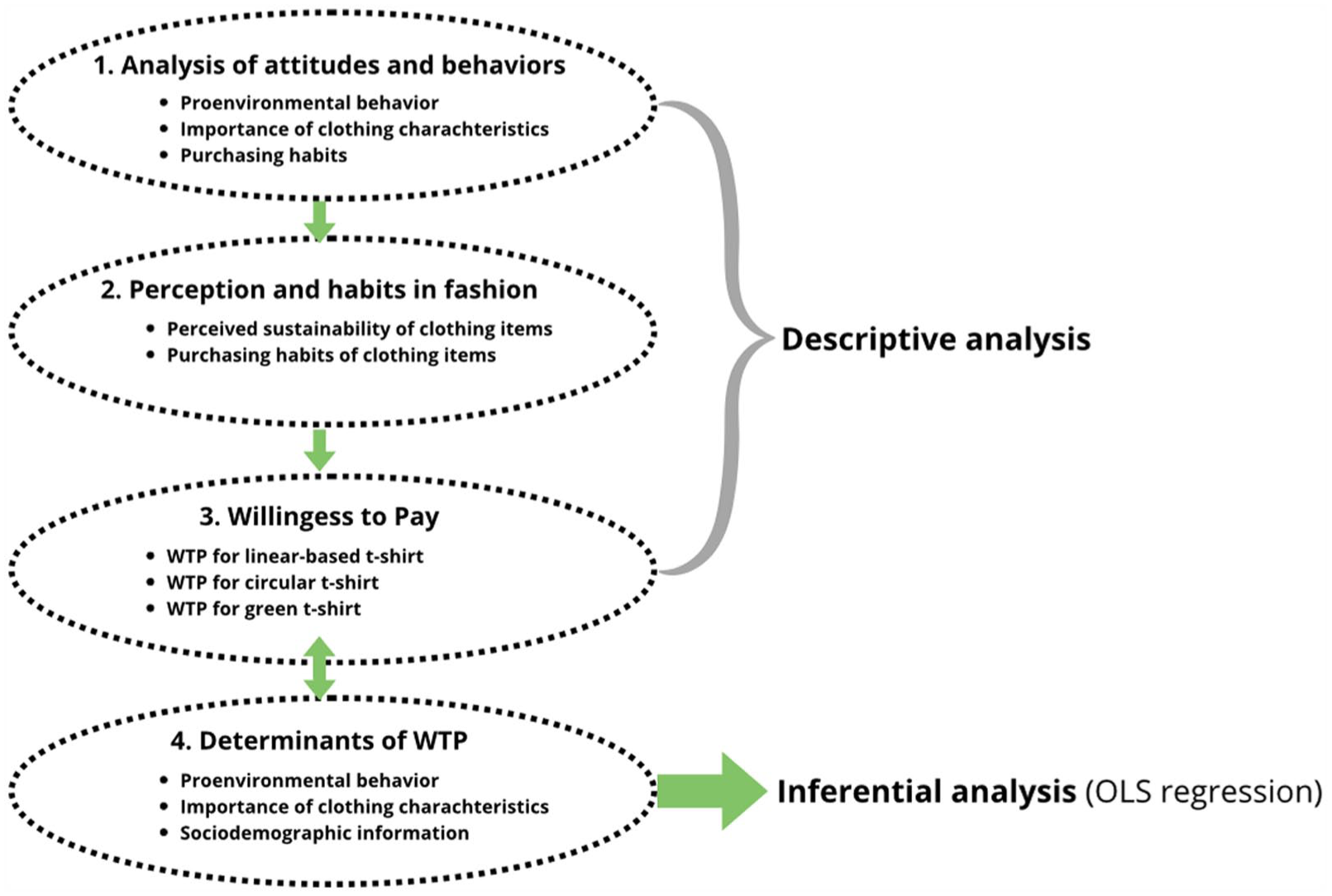
Empirical strategy.
In the first step of the analysis, we focused on attitudes and behaviors by summarizing and describing respondents’ pro-environmental behaviors (i.e., whether and in which components subjects show environmentally friendly attitudes), the importance they attach to clothing characteristics (i.e., whether respondents evaluate more importantly the economic or environmental aspect of clothing and vice versa), and, finally, their purchasing habits (i.e., the frequency of purchasing clothing items that ultimately go unworn, or if subjects tend to use clothing items for long time). The second step consisted in the assessment of consumers’ perceptions and habits in the fashion sector and, in particular, on checking whether an intention-behavior gap exists (e.g., do subjects buy more of those products that they perceive as more sustainable?). Finally, we aimed at studying the WTP for clothes with different characteristics and its main determinants. The analysis focused on the differences among WTPs for the proposed t-shirts which provide a measure of the respondents’ preferences for the green and circular economy. From a methodological point of view, separate ordinary least squares (OLS) specifications are estimated for each t-shirt category in order to identify the product-specific determinants of WTP across different sustainability attributes, in line with the empirical approach of Cascavilla et al. (2025). To assess the reliability of the empirical specification, we also performed standard diagnostic checks for multicollinearity, computing variance inflation factors (VIF), which remained below conventional critical thresholds in all models.
Results
Sample analysis
The sample was composed of relatively young respondents (i.e., millennials), with an average age of 37 years (range: 16–80 years old). Most of the sample (62%) is female. Regarding income distribution, roughly 65% of respondents belonged to the low-middle class (range 0–30,000 €), and more than 60% of respondents declared to have at least a bachelor’s degree, implying a high level of education. The sample was respectively composed of respondents belonging to the center of Italy (73%), the north (14%), and the south (12%). This sample turns out to be different from some of the examples proposed in the literature (Demyanova et al., 2023; Gazzola et al., 2020), but it is shown that these are all different from each other. This constitutes a limitation of the study, as the sample was selected using a convenience sampling approach and is not representative of the Italian population as a whole. The observed imbalances in terms of geographic origin, gender, income, and age could affect the generalizability of the results. In particular, the overrepresentation of women, highly educated and relatively young respondents may affect the interpretation of the findings, as these groups may display systematically different attitudes toward sustainability and consumption. As a result, the estimated WTP and pro-environmental orientations may be overstated relative to the broader population. Therefore, the results should be interpreted with caution and are intended to reflect specific consumer segments rather than the population as a whole. Therefore, future studies should rely on larger and more representative samples in order to improve the external validity and generalizability of the findings. In particular, broader geographic coverage and a more balanced representation across income groups would improve the external validity of the results. At the same time, certain characteristics of the sample are consistent with empirical evidence in the literature regarding sample size (Abbate et al., 2026), geographic distribution (D’Adamo et al., 2024) or alternative areas of Italy (Varese et al., 2025), income brackets (Colasante and D’Adamo, 2021), age (Becchi et al., 2026), and gender composition (D’Adamo et al., 2024; Di Pillo et al., 2025), suggesting that the results may nonetheless provide useful insights for specific consumer groups.
Analysis of attitudes and behaviors
Based on respondents’ assessment, the average overall pro-environmental behavior is equal to 2.97 (average scores of components related to environmental attitudes measured on a Likert-scale that ranges from 1—never to 5—always), signaling a relatively low attention to the environment in everyday behaviors. It is worth investigating its components since the variability across the average for each item is very high. Indeed, the highest score corresponds to recycling (4). On the extreme opposite, survey participants declared a limited use of public transportation (2.5), and demonstrated limited willingness to donate to environmental protection associations (2). If we focus on the item strictly related with clothes we may observe the emergence of a dichotomy: on the one hand, participants expressed a strong preference for durable wearables over rapidly changing fashion clothes being this item the second in the overall rank (3.7); on the other hand, they declare a poor attention in selecting fabrics that require colder water temperatures for washing or less ironing (2.5) or, more in general, to environmental information reported in the labels (2.7). All these informations are reported in the Supplemental Figure S1.
Besides the assessment of the pro-environmental behavior, we also gather information about respondents’ attitude toward the items they look at in buying clothes, based on the importance on a scale from 1 to 5 of alternative clothing features (Supplemental Figure S2). According to the survey answers, respondents assign particular importance to the clothes ability to fulfill a need (4.4), the quality-price ratio (4.3), comfort (4.3), and quality (4.3). The average of the items related to the environment is equal to 3.1, and, hence, it can be argued that the sample places greater emphasis on factors related to need and quality rather than sustainability features. A particularly noteworthy finding is the level of importance attributed to the economic aspect. Respondents attach a great weight to how expensive a garment is (3.7) and, interestingly, this is rated higher than the environmental related factor (3.1), on average. This implies that, contrary to what happens in other industries (e.g., food) where subjects pay particular attention to labels guaranteeing their sustainability traits (Ruggeri et al., 2021) in the fashion industry people, in making their choices, tend to prioritize economic savings over the potential environmental savings. A possible explanation of this result emerging from our sample could be the declared relatively low-income level (indeed, 65% of the sample reports an average gross annual income below 30,000 €). Indeed, it is well-known that low- or middle-income people are more prone to buy garments belonging to the fast fashion sector (Joy et al., 2012).
To deeper analyze the evidence that people with a high willingness to engage in pro-environmental behavior pay poor attention to the environmental impact in their clothes shopping, it is interesting to analyze the frequency of purchasing clothing items that ultimately go unworn (Supplemental Figure S3). Most of the sample tends not to buy garments that end up unworn (75.95% of the sample reports a level below 3 on a scale from 1—never to 5—always). Its average value is fixed equal to 1.9. Furthermore, analyzing the average purchasing habits on a Likert-scale ranging from 1 (never) and 5 (always) of the survey participants, a clear preference for wearing garments for the whole useful life emerges (the average value for this item is equal to 4).
Both the tendency to avoid buying unworn garments and use them for their useful life could be considered sustainable behaviors. The evidence based on the results are in contrast with the self-declared (average) value attached to environmental related issues in buying clothes. This attitude–behavior gap could be explained by the fact that people are not aware of the fact that the choices they made to care about their economic aspect have a positive impact in improving sustainability in the fashion sector. We may, hence, talk about explicit economic preferences and implicit environmental preferences.
Given these explicit and implicit factors, it is interesting to note the differences in preferences and behaviors among subjects classified based on the importance attributed to the economic factor compared to the environmental factor. To analyze these differences, we have divided the sample into subjects who show a higher level of importance for the economic factor compared to the environmental factor, and vice versa. This division allows us to create two subgroups of similar size, as 159 subjects prioritize the economic factor over the environmental factor, while 158 prioritize the environment. This distinction enables us to examine whether there is a significant difference in their environmental behaviors and choices.
Indeed, as shown in Figure 2, depicting the average pro-environmental attitudes for both categories of subjects, a higher level of pro-environmental behavior is noticeable among subjects who prioritize the environmental factor over the economic factor, and vice versa. In other words, those who are more environmentally conscious exhibit more frequent pro-environmental behavior (dashed red line, average 3.33), while those who prioritize the economic factor tend to have a lower level of all considered environmental attitudes (average 2.61). Moreover, according to a paired t-test, this difference is statistically significant (t = 8.45, p < 0.001).
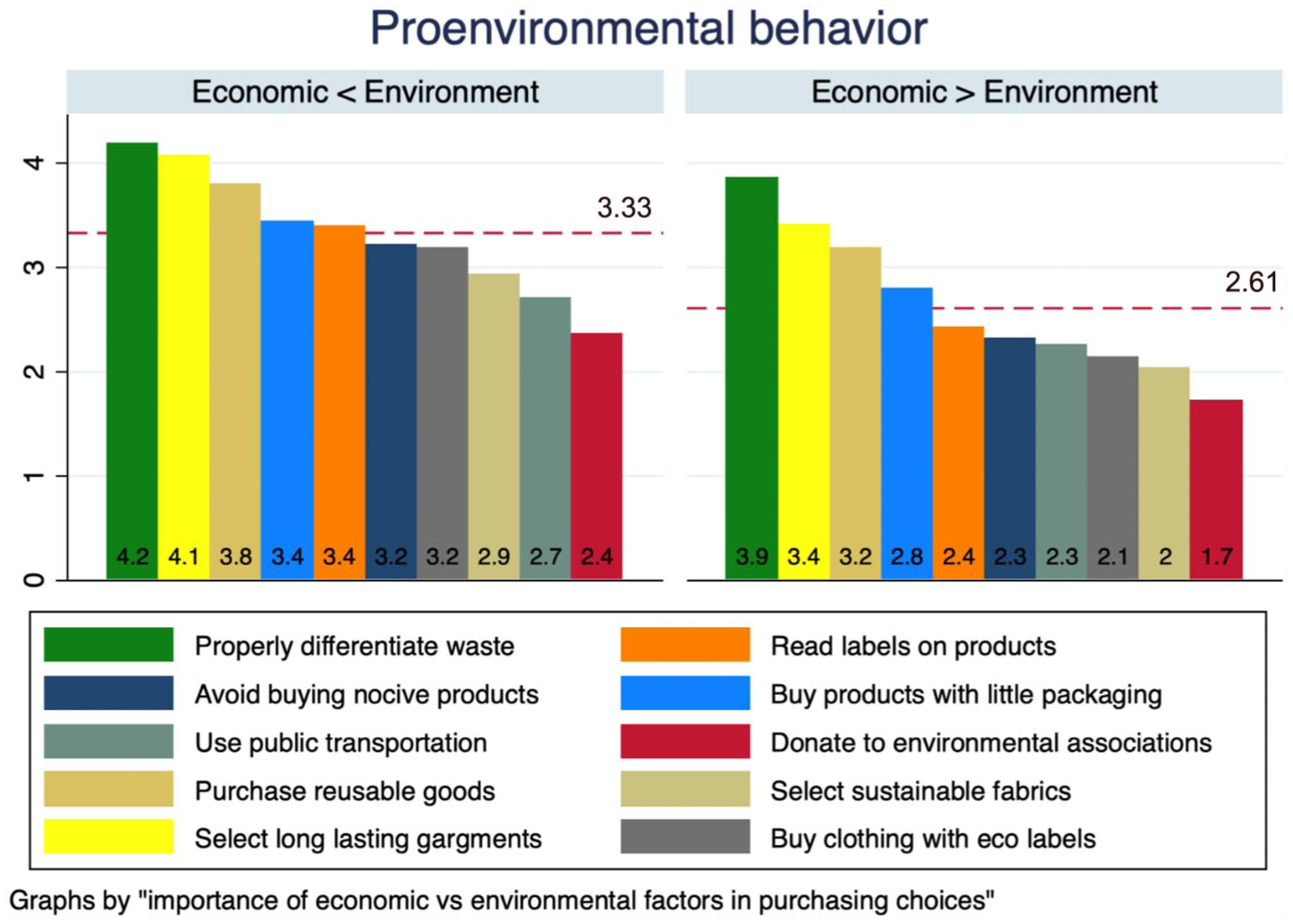
Economic and environment groups.
Perception and habits toward fashion clothing items
Based on the evidence discussed so far regarding subjects’ attitudes and behavior, it is necessary to assess whether there is a potential dissociation between perception and purchasing habits. In particular, it has been observed that subjects appear to make their choices primarily guided by economic rather than environmental reasons. Therefore, it is logical to expect that, due to the potential economic savings, the more frequent purchasing choice would be related to the category of clothing characterized by the lower subjective WTP.
Analyzing the average perceived sustainability for three alternative clothing items (Supplemental Figure S5), specifically second-hand ones, those made with natural fibers, and those made with recycled materials, it becomes apparent that subjects perceive the recycled t-shirt (7.5) and the second-hand one (7) as more sustainable in terms of circularity, while the one made with natural fibers, as a green alternative, is perceived as relatively less sustainable (6.4).
This evidence is particularly relevant when examined in complementarity with the behavior related to purchasing habits for these same three types of t-shirts. Specifically, considering the responses regarding the purchase of these t-shirts, the results reveal a reversal of ranking: based on past purchases, subjects are more inclined to buy t-shirts made with natural fibers (70%) compared to those made with recycled materials (57%) and second-hand ones (53%). This finding (Supplemental Figure S6) indicates a dissociation between perception and behavior. This pattern can be interpreted in light of a sustainability bias, whereby consumers tend to evaluate sustainability in a distorted way, favoring solutions perceived as more “green” (such as natural or bio-based materials) while penalizing others (such as second-hand products), even when the latter may be equally or more sustainable (Colasante and D’Adamo, 2021).
WTP for similar and unbranded t-shirts
We asked participants to indicate their WTP for the following four identical and unbranded white t-shirts. The question in the survey was as follows: “How much would you be willing to pay if the t-shirt was. . .?” 1
New.
Second-hand.
Made with natural fibers.
Made with recycled materials.
Figure 3 displays the box plots of the WTP for the four unbranded t-shirts.
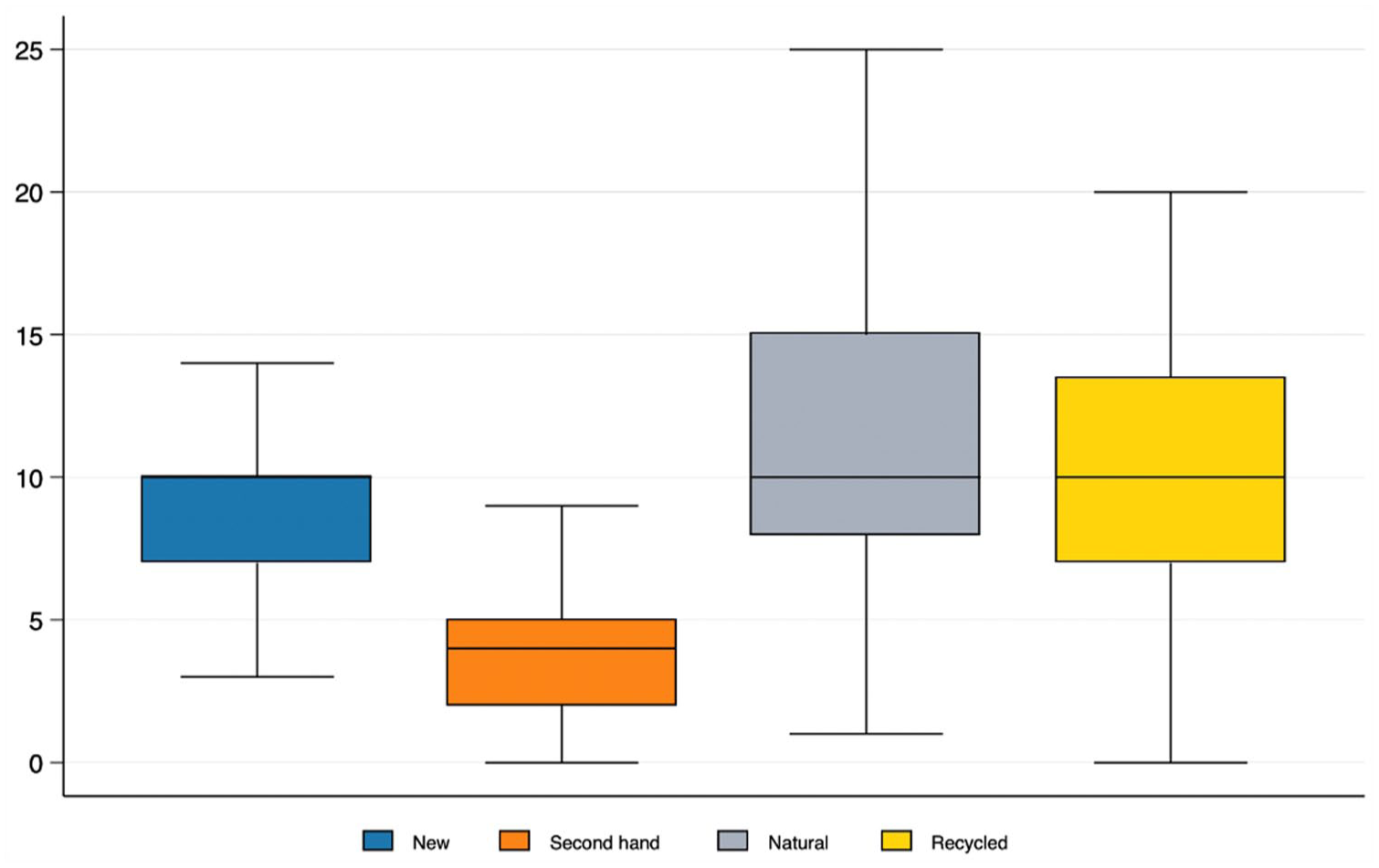
WTP for different kinds of t-shirts without brand (excluding outliers).
As it is visible, compared to a WTP of 10.18 € for a new t-shirt, the WTP varies for the remaining three t-shirts. In particular, participants exhibit a lower WTP for the second-hand t-shirt (−56.19%) that showed an average of 4.46 €. This finding aligns with empirical evidence in the literature and may be attributed to sustainability bias and a perceived lower product quality (Pretner et al., 2021).
Additionally, participants declare to be willing to pay a 22.1% extra price for the t-shirt made with natural fibers (+2.25 €), which can be interpreted as a green premium. Furthermore, respondents also recognize an extra value for garments produced with recycled fibers, declaring a WTP an additional 8% premium (+0.81 €). This can be defined as a circular premium, as it reflects consumers’ valuation of production processes based on material reuse and circularity. To assess whether these differences in stated WTP across product types are statistically meaningful, we conducted Wilcoxon signed-rank tests on paired WTP measures. The results confirm that the observed differences across the four t-shirt categories (new, second-hand, natural, and recycled) are statistically significant at the 1% level. In particular, WTP for second-hand t-shirts is significantly lower than for new ones, while t-shirts made of natural fibers command a significantly higher WTP compared to both new and second-hand products. Similarly, recycled t-shirts are associated with a significantly higher WTP than second-hand alternatives, though the premium remains lower than that observed for natural fibers. Overall, the non-parametric tests corroborate the existence of distinct and statistically robust valuation patterns across production types, supporting the interpretation of both green and circular premia in consumers stated preferences.
The determinants of WTP
In order to assess the reasons behind these individual preferences, it is useful to analyze the factors that influence consumers’ hypothetical WTP for t-shirt types varying in sustainability features. Specifically, given the nature and distribution of the WTPs described so far, we estimated equation (1) using a linear regression model (OLS).

where
Descriptive statistics.
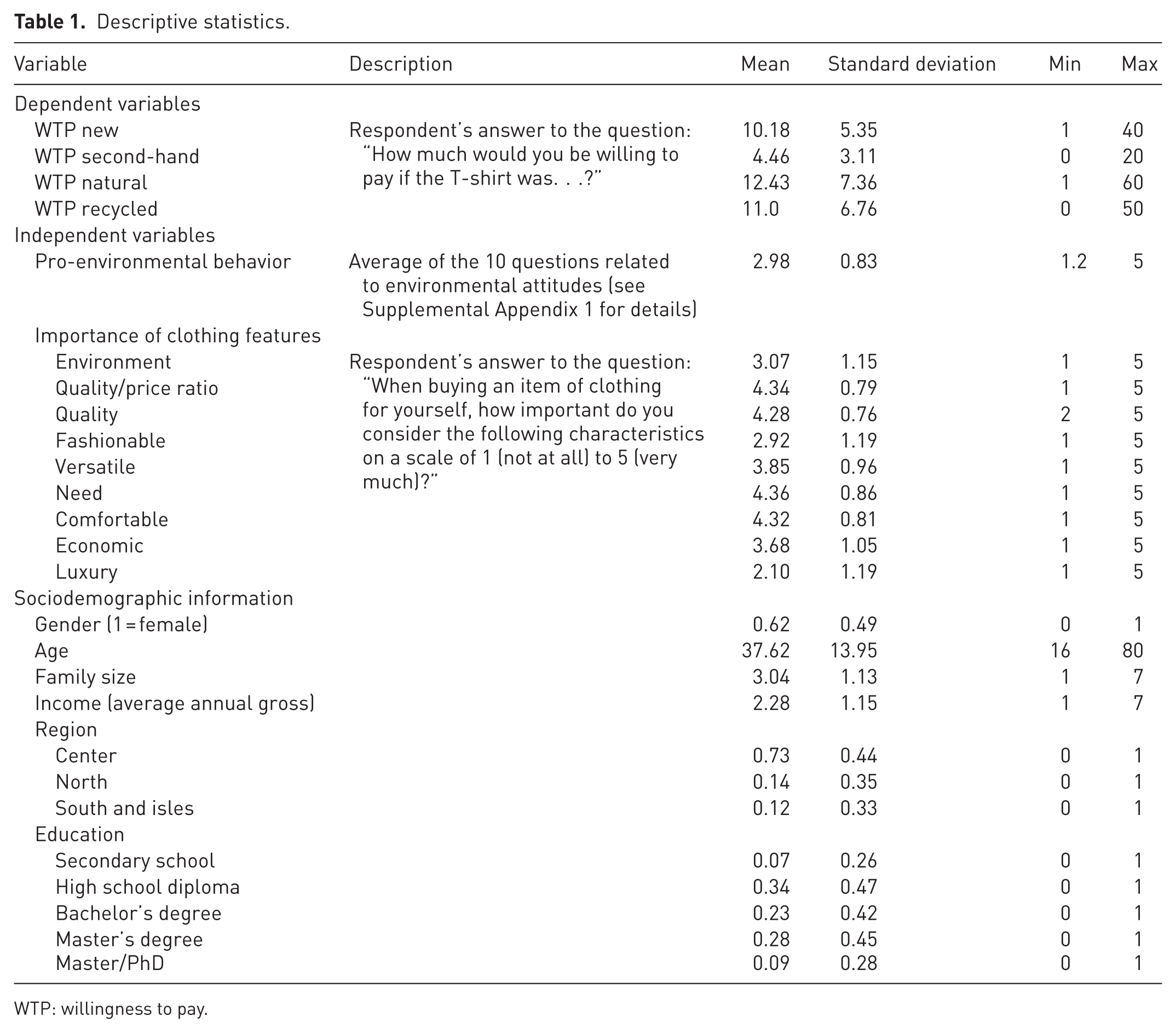
WTP: willingness to pay.
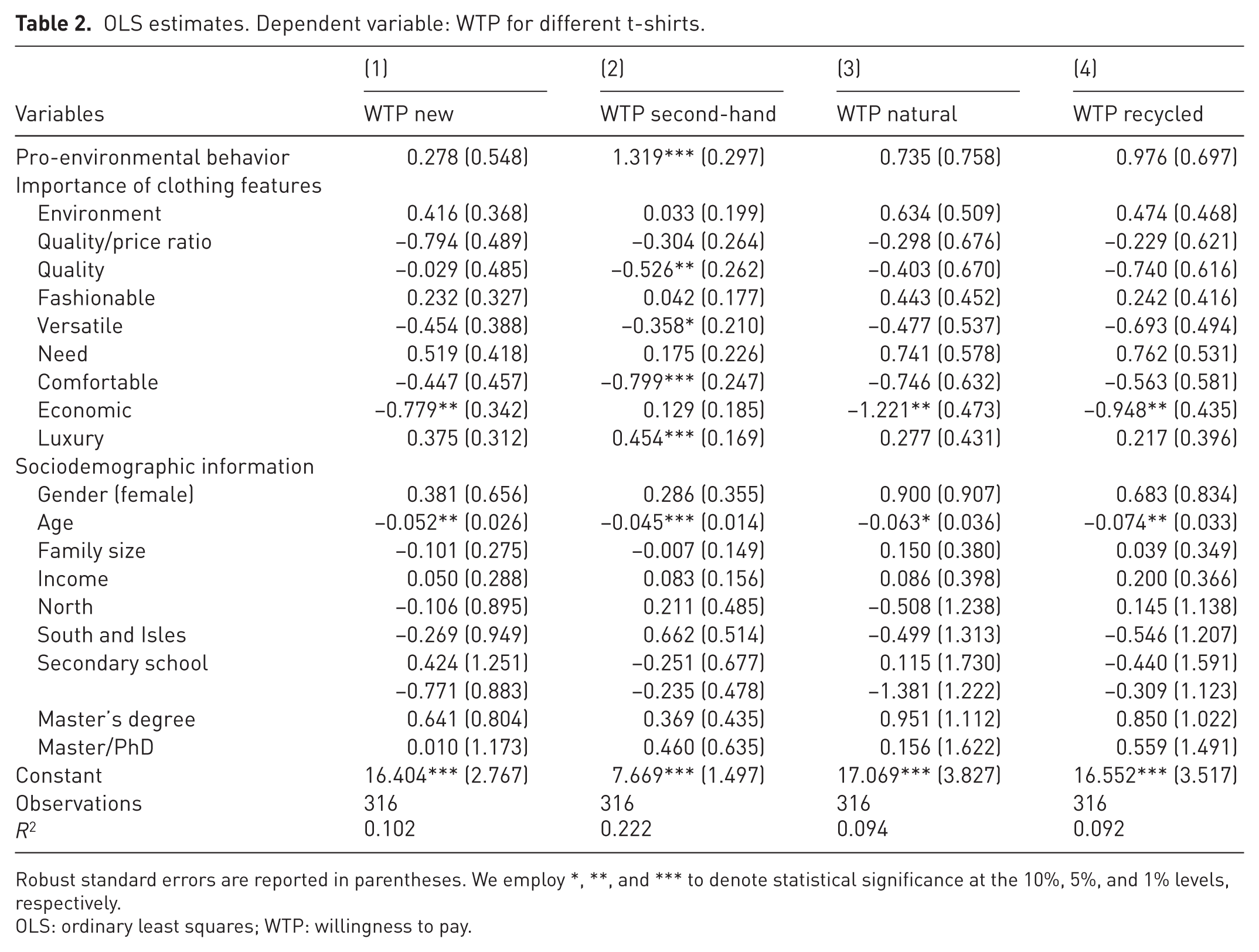
Table 2 reports the OLS estimates of equation (1), where columns 1–4 represent the estimates for WTP of new, second-hand, natural fibers and recycled material, respectively. Although the explanatory power of the models is relatively limited, this is a common feature in micro-level analyses of stated preferences and individual behavior, where a substantial share of variation is typically driven by unobserved heterogeneity and idiosyncratic factors (e.g., Colasante and D’Adamo, 2021). This suggests that additional psychological, social, and contextual variables may further explain consumers’ WTP and should be explored in future research.
OLS estimates. Dependent variable: WTP for different t-shirts.
Robust standard errors are reported in parentheses. We employ *, **, and *** to denote statistical significance at the 10%, 5%, and 1% levels, respectively.
OLS: ordinary least squares; WTP: willingness to pay.
From the estimates, it is easily observed that the WTP for various types of shirts is influenced by different factors. Despite the signs of the coefficients being generally consistent across all types of t-shirts, the significance and magnitude vary across columns. 2
Specifically, examining the second column, only in the second-hand category, we find that pro-environmental behavior has a significant impact. Thus, only participants with a marked tendency to behave pro-environmentally are more prone to recognize second-hand clothes as sustainable products and hence to pay a higher price to buy them (coeff: 1.319, p < 0.01). A significant factor with a negative coefficient is quality (coeff: −0.526, p < 0.05) implying that individuals who prioritize product quality in clothes purchases are willing to pay even less for second-hand ones because they do not recognize these as high-quality products. This finding aligns with previous studies (i.e., Pretner et al., 2021). The same effect holds for comfort (coeff: −0.799, p < 0.05) and versatility (coeff: −0.358, p < 0.1), which are negatively associated with the WTP for second-hand, thus diminishing their market attractiveness. These factors, holding all others constant, partially explain the negative premium of second-hand items compared to an equivalent new t-shirt. Finally, the role of sociodemographic information seems to be statistically negligible, except for the age, which is negatively related to the WTP across all the four t-shirts.
Shifting from second-hand to a t-shirt made with natural fibers (column 3) and, hence, produced coherently with the green economy principles, we find that individuals who prioritize the economic factor during purchase exhibit a lower WTP for natural products. This implies that individuals are aware of the higher price of natural products and, hence, they are less willing to purchase them. This is confirmed in columns 4 and 1, related to the recycled and new t-shirts, respectively. It is quite surprising, however, that this factor is not statistically significant in positively influencing WTP in the second-hand market (column 2), despite the coefficient’s sign being opposite to the others. One possible explanation for this evidence could be linked to the mediating effect of the perceived low quality of second-hand goods, which outweighs the advantage derived from potential economic savings. As seen earlier in Figure 3, survey participants, on average, declared a higher importance of quality compared to the economic factor in their purchases. Therefore, despite the lower WTP for a second-hand t-shirt and the associated economic savings, the characteristic related to affordability does not significantly explain the variation in WTP for second-hand garments.
Discussion
The fashion industry’s ability to transition to sustainability remains controversial, particularly due to greenwashing and the tension between profit maximization and sustainable practices (Badhwar et al., 2024; Bonelli et al., 2024; Hageman et al., 2024). This is further complicated by complex global supply chains that amplify environmental impacts and hinder circular waste management (Ahmed et al., 2025; Ezeudu and Bristow, 2025). Policy interventions and incentives can steer markets toward sustainable practices (Cascavilla et al., 2026; Orviska et al., 2019; Sun et al., 2023). This study examines how sustainability perceptions, economic factors, and product quality shape consumers’ WTP.
The results confirm the presence of an attitude–behavior gap (H1), particularly for second-hand products. Consumers prioritize emotional, functional, and material quality when evaluating sustainable products (Adamkiewicz et al., 2022; Papamichael et al., 2024). Positive attitudes toward the environment do not always translate into sustainable purchases, especially when quality, comfort, or social image are important factors (Aakko and Niinimäki, 2021; Pretner et al., 2021). The green attributes associated with natural materials are more readily appreciated than circularity alone.
The analysis identifies both a green and a circular premium. Natural fiber t-shirts have the highest premium, followed by recycled garments, while second-hand items have a negative rating. This reflects consumers’ perceptions in terms of status, convenience, and trust in circular initiatives (Cascavilla et al., 2025; Hong et al., 2024). It is important to acknowledge that the product categories adopted in the analysis may be interpreted heterogeneously by respondents. In particular, attributes such as “natural fibers” may not be perceived exclusively in terms of environmental sustainability, but also in relation to quality, purity, or premium positioning. This may contribute to a symbolic association between natural materials and higher social or product status. Consequently, the observed differences in WTP may reflect a combination of sustainability-related evaluations and broader product perceptions, including quality and symbolic attributes. Moreover, the use of a standardized, unbranded t-shirt allows us to isolate the effect of specific product attributes while minimizing confounding factors related to brand or design. However, as a low-involvement product, it may limit the external validity of the findings, which should therefore be interpreted as indicative of underlying preference structures rather than directly generalizable to higher-involvement or luxury fashion contexts.
From a conceptual perspective, second-hand products are part of a reuse strategy, as they extend a product’s useful life without further processing. Recycled materials, on the other hand, fall under the category of recycling, which involves reprocessing materials to create new products. In contrast, natural fibers do not necessarily imply a circular process but primarily concern the choice of raw materials.
This distinction is useful for understanding why consumers may react differently to reuse, recycling, and the “eco-friendly” characteristics of products, thereby influencing their WTP. Recent literature has also highlighted potential rebound effects associated with the consumption of sustainable and circular fashion. In particular, circular or “green” labeling could inadvertently legitimize higher levels of consumption by reducing consumers’ perceived environmental guilt, while sustainability-oriented practices often remain focused on purchasing rather than on reducing overall consumption volumes (Vesterinen and Syrjälä, 2022). At the same time, an excessive focus on recycling-based solutions can distort sustainability incentives and weaken broader waste reduction strategies within the fashion system (Eppinger, 2022). Conversely, extending and intensifying product use has been identified as a more effective path toward sustainable fashion consumption and improved consumer well-being (Vesterinen et al., 2024).
These mechanisms may also help explain why consumers attribute different economic values to green and circular fashion alternatives. The determinants of WTP confirm H2. Pro-environmental behavior increases WTP only for second-hand clothing, indicating that circular products require a stronger commitment. Economic considerations reduce WTP for eco-friendly and recycled clothing. This finding suggests that price-related considerations remain more salient than environmental concerns at the moment of purchase, even among consumers expressing pro-environmental attitudes. Quality, comfort, and versatility negatively influence the evaluation of second-hand clothing (Joy et al., 2012). Perceived value and credible green and circular initiatives strongly influence consumer engagement (Becchi et al., 2026; Colasante et al., 2025).
From a management perspective, the findings highlight the need to enhance the perceived reliability and quality of second-hand products, for example through the introduction of certification systems, quality labels, and greater transparency regarding product condition. These findings have significant implications for textile waste management systems. A lower WTP for second-hand clothing may reduce the proportion of garments destined for reuse, increasing the risk that they will end up in unsorted waste streams. Conversely, a positive WTP for recycled materials supports recycling markets, improving the value recovery of sorted materials. In operational terms, consumer preferences can therefore influence the composition of collected streams and the economic sustainability of sorting and processing activities.
From a policy perspective, the adoption of targeted measures, such as incentives for reuse markets, support for certified second-hand platforms, and information campaigns aimed at reducing perceived risks, can help translate pro-environmental attitudes into concrete purchasing behaviors. In this context, strengthening reuse markets makes it possible to extend the life cycle of textile products, reduce waste streams, and limit the demand for new resources, thereby directly contributing to the waste prevention and resource efficiency goals set forth in SDG 12. These findings also highlight a potential mismatch between consumer preferences and the needs of textile waste management systems, which depend crucially on effective participation in reuse and recycling processes. These findings suggest a need for targeted interventions. In particular, minimum quality standards and certification systems for second-hand clothing could reduce perceived risks and increase consumer confidence. Economic incentives for repair and reuse activities could further strengthen reuse markets and extend product lifecycles. At the same time, transparency tools (e.g., digital product information) and public awareness campaigns can improve consumers’ understanding of circular options. Finally, extended producer responsibility systems should account for demand-side dynamics, ensuring that collection and sorting systems are aligned with actual market demand for reuse and recycling toward SDG 12.
Another finding concerns the gap between self-reported pro-environmental attitudes and actual practices, such as using garments throughout their entire lifespan. Implicit sustainable behaviors contribute to environmental outcomes even without explicit motivation (Ryding et al., 2022; Seock et al., 2024). While consistent with sustainability, these practices challenge fast fashion models that rely on frequent consumption. These results highlight that bridging the attitude–behavior gap requires addressing not only environmental awareness but also perceived quality, risk, and social acceptance barriers associated with circular products.
This study has several limitations that open up interesting avenues for future research. First, the analysis focuses on a single product category (unbranded t-shirts), which may limit the generalizability of the results to other clothing items or fashion products characterized by greater consumer involvement. Future studies could therefore extend the analysis to different product categories, brands, and price ranges. This would help assess whether the observed WTP patterns also hold for higher-involvement and luxury fashion products. Second, the use of stated WTP may not fully reflect actual purchasing behavior, as responses can be influenced by hypothetical biases. A well-established stream of literature has proposed several methodological approaches to mitigate hypothetical bias in stated-preference elicitation. These include the use of cheap-talk scripts to explicitly warn respondents about overstatement tendencies (Cummings and Taylor, 1999), consequentiality scripts to increase the perceived relevance of responses (Carson and Groves, 2007), as well as budget reminders and ex-post calibration techniques. Moreover, incentive-compatible mechanisms, such as the “BDM” (Becker et al., 1964) procedure, can provide more accurate estimates by linking stated preferences to real economic consequences also in fashion context, as proposed in Cascavilla et al. (2025). While these approaches were not implemented in the present study, they represent important methodological improvements for future research aimed at estimating actual WTP rather than hypothetical valuations. Their adoption could improve the behavioral validity and policy relevance of future WTP estimates. In this regard, experimental approaches or analyses based on observed data could provide more robust evidence regarding consumers’ actual choices. Therefore, the results should be interpreted as indicative of consumers’ stated preferences rather than actual market behavior. Finally, further research could explore how consumer preferences integrate with textile waste management systems in different institutional and market contexts. Finally, individual heterogeneity may play an important role in shaping WTP, as factors such as income, age, gender, and pro-environmental attitudes can influence consumer preferences across product categories. Future research could therefore extend the analysis by explicitly modeling these dimensions through interaction terms or by adopting alternative econometric approaches (e.g., ordered models and/or WTP-space specifications). Such approaches could improve the explanatory power of the models and provide a more nuanced understanding of consumer preferences.
Conclusions
This study provides new empirical evidence on how consumers evaluate the attributes of sustainable fashion, distinguishing between preferences for green and circular solutions. The results indicate that, although sustainability is widely recognized, consumers show a clear preference for ecological attributes related to natural materials over circular options, such as second-hand clothing. At the same time, economic factors and perceived product quality remain the main determinants of WTP, often outweighing environmental motivations.
The findings also highlight that sustainability is not perceived as a single concept. Consumers distinguish between reuse (second-hand), recycling, and material characteristics, giving rise to differentiated WTP patterns. In this context, attributes such as natural fibers do not reflect exclusively environmental considerations but also aspects related to perceived quality and potential premium product positioning. More specifically, green attributes primarily relate to material choices in production, while circular attributes refer to strategies such as reuse and recycling aimed at extending product lifecycles and reducing resource consumption. This pattern may reflect a sustainability bias, leading consumers to favor perceived green options over equally sustainable circular alternatives.
The findings also underscore the importance of strengthening reuse and recycling practices within the fashion system. Improving the perceived reliability and quality of circular products, particularly in the second-hand market, can encourage greater consumer participation, helping to extend product lifecycles and reduce textile waste. From this perspective, promoting a more efficient use of existing resources is a key lever for increasing the sector’s overall sustainability.
Overall, this study contributes to the debate on sustainable consumption in the fashion sector and offers relevant insights regarding SDG 12. However, aligning consumer perceptions, market incentives, and sustainability goals remains a crucial challenge for fostering an effective transition toward truly circular and sustainable fashion systems.
Supplemental Material
sj-docx-1-wmr-10.1177_0734242X261462019 – Supplemental material for Determinants of consumers’ hypothetical willingness to pay for circular fashion
Supplemental material, sj-docx-1-wmr-10.1177_0734242X261462019 for Determinants of consumers’ hypothetical willingness to pay for circular fashion by Alessandro Cascavilla and Idiano D’Adamo in Waste Management & Research
Footnotes

Funding
The authors received no financial support for the research, authorship, and/or publication of this article.
Declaration of conflicting interests
The authors declared no potential conflicts of interest with respect to the research, authorship, and/or publication of this article.
Supplemental material
Supplemental material for this article is available online.
Notes
References
Supplementary Material
Please find the following supplemental material available below.
For Open Access articles published under a Creative Commons License, all supplemental material carries the same license as the article it is associated with.
For non-Open Access articles published, all supplemental material carries a non-exclusive license, and permission requests for re-use of supplemental material or any part of supplemental material shall be sent directly to the copyright owner as specified in the copyright notice associated with the article.
