







Abstract
Representative bureaucracy is one of the mechanisms used to achieve representative democracy. This article assesses how bureaucratic representation affects public access to administrative remedies, a recourse linked with social equity in public service organizations. Representative bureaucracy theory is applied to 14 years of Equal Employment Opportunity Commission demographics and outcomes data. The analysis asks whether passive representation trends parallel trends in active representation outcomes, using longitudinal workforce, charge, suit, and resolution data. Results suggest trends in client driven outcomes (charges) were consistent with passive representation, while organizational outcomes (suits and resolutions) outpaced disability representation but fell short of racial and gender representation. The trend analysis findings, which offer timely insights into the effects of human resource management, suggests organizational priorities and processes affect representation more than previously thought.
Introduction
Public administrators play an integral role in the pursuit of civil rights in the 21st century, but not always as imagined by scholars. Representative bureaucracy theory, which shares theoretical underpinnings with representative democracy, asserts that bureaucrats who share social and demographic identities with the public act in ways that benefit those they serve (Riccucci & van Ryzin, 2016). This article seeks to observe and assess alignment of trends in bureaucratic representation and organizational outcomes within the organizational context and broader human resource management (“HRM”) work of the Equal Employment Opportunity Commission (“EEOC”). By examining organizational workforce characteristics that could potentially influence bureaucratic outcomes, this article seeks to observe alignment of key trends. The trend analysis suggests regulatory and organizational factors both influence organizational outcomes, consistent with Atkins and Wilkins (2013), Meier and Bohte (2001), and Mosher (1968). This article also offers evidence that representative bureaucracy is beneficial to the equitable work of government (Hindera, 1993a), as bureaucratic representation can be a bridge to the pursuit of civil rights by increasing the public’s access to administrative remedies, a recourse linked with equity. In the alternative, regulatory and organizational factors may lead to a lack of representation, which may discourage pursuit of civil rights and reduce access to equitable, administrative remedies.
The pursuit of civil rights often requires victims of violations to seek redress. A key arena for seeking redress is the EEOC, the federal agency tasked with handling charges of workplace discrimination filed by the public. Building on prior studies (Bowling et al., 2006; Hindera, 1993a, 1993b; Keiser et al., 2002; Meier et al., 2005), this article assesses alignment of bureaucratic representation with organizational equity outcomes in the broader HRM context. It distinguishes those cases where decisions in how to respond to discrimination lie primarily with the client and where critical decisions lie primarily with the organization (Hirsh, 2008). To do this, the analysis uses EEOC longitudinal data to compare EEOC workforce demographic trends in charges filed by the public, an indicator of passive representation, with discrimination suits filed and resolved by EEOC, an indicator of organizational outcomes. The EEOC is the most direct arena for bureaucratic redress, so the outcomes of charges filed indicate establishment of organizational equity (Hindera, 1993a, 1993b; Hirsh, 2008; Meier et al., 2005).
To shed light on organizational equity in the context of workplace discrimination, this article examines trend alignment between workforce representation and organizational outcomes at multiple levels. To do this, we employ three approaches. First, we explore trends between demographic representation related to race, gender, and disability at the EEOC agency level, and organizational equity outcomes. Second, we examine differences in representation at three levels of the organizational hierarchy, namely executives, managers, and supervisors. Third, we compare trends between EEOC investigators and attorneys, which we have identified for active representation potential in the charge resolution process, and discretionary process decisions.
We begin with a review of the theory of bureaucratic representation and ripeness of the theory within the federal anti-discrimination agency context for exploration of external and internal factors that prior literature suggests influence passive and active representation. Following that, a discussion of the EEOC as an appropriate case for application of the theory of representative bureaucracy is presented. In particular, the EEOC offers an administrative venue for claims of discrimination, allowing for analysis of both externally driven and internally created bureaucratic representation. We state propositions that suggest the expected trend relationships and detail EEOC workforce and outcome data. Next, we discuss results of our 14-year trend analysis. Finally, in our conclusion, we present limitations of our study, along with alternative explanations and areas for future research.
Literature Review
Representative Bureaucracy Theory
The theory of representative bureaucracy was coined by Kingsley (1944) and asserts that bureaucracies that share social and demographic identity with the broader citizenry act in ways that benefit the citizens they serve (Bishu & Kennedy, 2019; Mosher, 1968). Discussing the descriptive composition of the British Civil Service, Kingsley (1944) argued that when bureaucrats mostly represent the upper social class, they indirectly maintain social control: The democratic state cannot afford to exclude any considerable body of its citizens from full participation in its affairs. It requires at every point that superior insight and wisdom which is the peculiar product of pooling of diverse streams of experience. In this lies the strength of representative government. Upon it depends the superiority of the democratic civil service over its totalitarian rivals. In a democracy competence alone is not enough. The public service must also be representative if the State is to liberate rather than enslave. (Kingsley, 1944, p. 185).
Kingsley (1944) argued democratic states are established not only when elected officials represent their constituents but also when bureaucratic demographic representation reflects the population they serve. While Kingsley (1944) focused on class representation in the British Civil Service, he also pushed for women to be represented in the British Civil Service. Pitkin (1967) further developed the theory, arguing that although passive representation, denoted by shared characteristics of the bureaucracy and the populace, is important, its impact is realized the most when bureaucrats who share social and demographic identities with the public actually act to benefit the public, a manifestation termed active representation. Following Pitkin (1967), Mosher (1968) expanded the theory, identifying two bureaucratic representation manifestations: passive representation and active representation. Mosher (1968) posited that passive representation occurs when bureaucracies share identities with populations they serve. Mosher (1968) further argued active representation manifests when bureaucrats who share social or demographic identities with populations that they serve actively take actions and make decisions that benefit those populations (Hindera, 1993b). Theoretical applications of passive representation generally assess descriptive representation of bureaucrats in light of the demographic makeup of the population (Russell, 1980). Theoretical applications of active representation assess when and how passive representation transforms into actions that benefit represented groups, and how and when shared social and demographic identities mediate beneficial bureaucratic actions (Selden, 1997). The next section further explores theoretical aspects of the two approaches to bureaucratic representation.
Passive representation
Passive representation scholarship examines descriptive representation of minorities and women in public organizations. Passive or descriptive representation occurs when bureaucrats reflect the identity of those they serve. As a concept, passive representation has been applied to diversity levels in public organizations (Pitts & Wise, 2009). For example, passive representation scholarship has examined representation of women or minorities in bureaucratic and legislative positions (Carnevale, 1990; Jamil & Dangal, 2009; Park & Liang, 2019), the ratio, percentage, or count of minority or female employees in decision-making roles (Andrews et al., 2005; Gidengil & Vengroff, 1997), women and minority representation in top or second-level management (Smith & Monaghan, 2013), geographic representation in civil service (Dauda, 1990), and representation of minorities and women at multiple levels of government (Dometrius, 1984; Dometrius & Sigelman, 1984).
Riccucci and Saidel (1997) summarized studies measuring representativeness of bureaucracies in government. They categorized measures of representativeness into three groups. The first group measured representativeness using the representativeness index ratio, where a representativeness index ratio of 1 indicated an entirely representative bureaucracy. A lower or higher than 1 index ratio indicated under or over representation. Another group of studies examined representation in terms of distribution and stratification within the bureaucracy, including distribution of women and minorities at managerial levels (Riccucci, 1987; Sigelman, 1976; Sigelman & Karnig, 1976). The third group studied critical mass as a representation prerequisite (Hindera & Young, 1998).
Active representation
Active representation scholarship explores the ways in which passive representation translates into active representation. Passive representation translates into active representations when shared social and demographic experiences and values result in bureaucrats acting in ways that benefit citizens they serve. Hindera (1993b) reports passive to active transformation occurs when: First, one may create policy congruent with that which the represented would create if given the opportunity. Second, the representative may provide services responsive to individuals in a represented population. Third, the representative may facilitate the allocation of public goods for the represented population. Finally, the representative may serve as a symbol that promotes the unity of a population. (Hindera, 1993b, p. 417).
Active representation occurs when passive representation results in action benefiting represented groups. Scholars applying the theory of active representation or the transformation from passive representation to active representation have examined outcomes measuring improved conditions for represented groups (Bradbury & Kellough, 2011). Some scholars have examined the ways in which active representation materializes in improved organizational performance as indicated by improved service delivery to represented groups (Andrews et al., 2005, 2014). Other scholars have explored ways that active representation results in improved organizational output (Atkins & Wilkins, 2013), bureaucratic assumption of advocacy role acceptance on behalf of represented groups (Bradbury & Kellough, 2008; Selden et al., 1998), budget priorities that benefit represented groups (Dolan, 2002a, 2002b), bureaucratic control that benefits represented groups (Daley, 1985; Dee, 2005), and workforce retention (Grissom & Keiser, 2011; Grissom et al., 2012). Active representation may also materialize through bureaucratic discretion. Lipsky (1980) described how street-level bureaucrats, public administrators on the front lines of policy implementation, exercise enormous discretion. The exercise of discretion may encourage or discourage use of public services, and is influenced by resource limitations and agency priorities (Percy, 2001).
Existing research also asserts that representation in bureaucratic roles at various levels correlates with positive outcomes for minority groups. Most of the research broadly assesses representation at organizational levels. Such research asserts the importance of demographic representation in government workers serving the public, revealing relationships between minority representation in administrative roles in government and advocacy roles they play that benefit minorities (Bradbury & Kellough, 2008). These researchers suggest broader organizational level representation matters and administrative role representation advances the interest of minority groups. Bradbury and Kellough (2008) examined the extent to which minority administrators and citizens share common values and the effects of shared values on administrators’ demonstration of advocacy roles that benefit citizens. They found that shared demographic characteristics (race) were statistically significant and positively correlated with attitude congruence between public administrators and citizens. Additionally, they found shared demographic identities and attitude congruence between administrators and citizens increased likelihood of administrators adopting advocacy roles. Similarly, Brudney et al. (2000) observed that shared demographic identities (racial and gender) of senior administrators in executive roles across 50 state agencies were correlated with administrator attitudes and behaviors beneficial to citizens with similar identities. At the federal level, Dolan (2000) found women in senior executive services roles (SES) were more likely to devote attention to policies that are beneficial to women. Similarly, Dolan (2002a) found gender representation in senior executive roles in the federal government correlated with attitudes toward spending priorities perceived to benefit women. In a different context, drawing on Lipsky (1980), Grissom et al. (2012) examined benefits of front line workers having supervisors with similar demographic identities and observed correlations between shared gender identity and front line subordinates’ reported job satisfaction and turnover. Overall, the aforementioned studies suggest that there are implications of bureaucratic representation at administrator/managerial levels in government.
Another prevailing narrative in the representative bureaucracy literature, also drawing on Lipsky (1980), speaks to the importance of representation among street-level bureaucrats with direct service delivery contact with citizens. These studies test the hypothesis that shared social and demographic identities manifest in outcomes that are beneficial to represented groups. This hypothesis has been widely applied in educational and public safety settings. Studies in educational settings have assessed relationships between student exposure to teachers with similar social and demographic identities and educational performance (Dee, 2004), as well as teachers’ subjective assessment of students (Dee, 2005, 2007; Grissom et al., 2009). In the public safety context, Meier and Nicolson-Crotty (2006) found effects of gender representation on the sexual assaults reporting and rape arrest rates. Meier and Nicolson-Crotty (2006) reported that higher percentages of women in law-enforcement were correlated with higher rates of sexual assault reporting and rape arrests. Last, in an institutional context similar to our study, Hindera (1993b) assessed the implications of gender and race representation among bureaucrats in EEOC district offices. Hindera (1993b) found representation to be associated with attitude congruence, communication, and advocacy roles that advanced clients’ interests.
Broadly speaking, the aforementioned studies suggest association between representation among bureaucrats who engage in delivering direct services and service outcomes that are beneficial to citizens. Building off prior findings of benefits of representation at administrative/managerial levels and in direct service delivery roles within the workforce, we assess trend in bureaucratic representation in three ways: within the general EEOC workforce, at three EEOC managerial levels (executives, managers, and supervisors), and within two discretionary groups (investigators and attorneys). Following that, we explore trend association between bureaucratic representation at the EEOC and related organizational outcomes. Longitudinal trend assessment of the EEOC workforce and related organizational outcomes is important for two reasons First, it provides a temporal comparison of measures of representativeness and organizational equity outcomes. Second, it lays the foundation for future research that examines the link between organizational workforce characteristics (passive representation) and substantive organizational outcomes that benefit minority employees seeking redress (suggesting active representation).
The Equal Employment Opportunity Commission
Rooted in the Civil Rights Act of 1866 and the Fourteenth Amendment, the modern American anti-discrimination framework includes the Equal Pay Act of 1963, Civil Rights Act of 1964, Age Discrimination in Employment Act of 1967, Equal Employment Opportunities Act of 1972, Rehabilitation Act of 1973, Americans with Disabilities Act of 1990 (“ADA”), Civil Rights Act of 1991, Americans with Disabilities Act Amendments Act of 2008 (“ADAAA”), Genetic Information Nondiscrimination Act of 2008, Lilly Ledbetter Fair Pay Act of 2009, amendments, executive orders, and court orders (Twomey, 1998). Title VII of the 1964 Civil Rights Act (“Title VII”) prohibits employment discrimination due to race, color, religion, sex (including sexual orientation and gender identity, as the Supreme Court recently held), and national origin, while the Rehabilitation Act, ADA, and ADAAA prohibit disability discrimination. Figure 1 presents a timeline of key laws, court rulings, and other factors related to the EEOC.
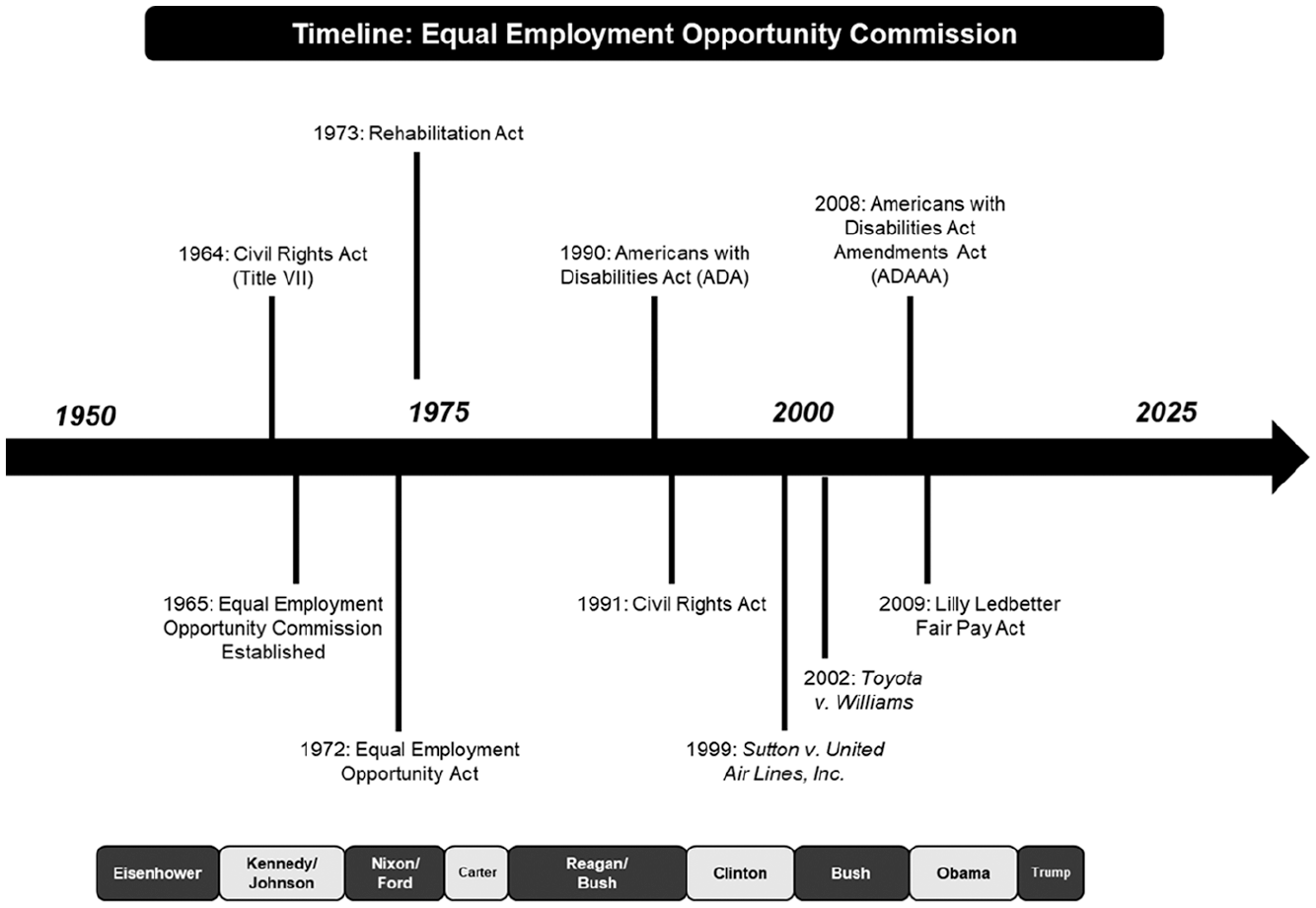
Timeline of key laws, court rulings, and other factors related to the EEOC.
The EEOC plays a key enforcement role, especially as most workers lack means to seek redress in court. To the public, the EEOC is tied to equity and represents the interests of workers (Meier et al., 2005). Yet its mission creates competing priorities of representation. Employees interview individuals, assist with filing, investigate, determine reasonable cause, and file lawsuits. At each stage, bureaucrats exercise enormous discretion in deciding whether to advance or ignore claims (Hirsh, 2008; Lipsky, 1980; Meier & Bohte, 2001; Moss & Johnsen, 1997; Percy, 2001).
The EEOC process generally begins when a worker goes to a local EEOC office, one of 53 field offices, or an applicable state or local agency, or inquires online. The worker is interviewed by an equal opportunity specialist and advised on how to file a formal charge of discrimination. At this stage, there is potential for bureaucratic representation in encouraging the worker to file (Meier et al., 2005; Hindera, 1993a), or lack of representation, which may deter filing. However, it is the worker who ultimately decides whether or not to file, so representation has less impact than later when the EEOC exercises discretion in deciding whether to proceed (Hirsh, 2008). This is despite evidence that workers rarely file charges over agency objections (Hindera, 1993b, p. 422). Additionally, there are strict time limits—generally, 180 days—for filing discrimination charges. Once a member of a protected class files a timely charge of discrimination, the EEOC investigates and convenes a fact-finding conference. The EEOC then determines if there is reasonable cause to believe that unlawful discrimination occurred. If the EEOC finds reasonable cause, it normally mediates, encouraging voluntary settlement. If unsuccessful, the EEOC decides whether or not to file suit against the employer, considering not only the merits but also likelihood of success and resource limitations (Hirsh, 2008). If the EEOC files suit, the government bears the cost. Suits are often settled before trial to avoid litigation. If the EEOC decides not to file suit, a far more frequent outcome, the EEOC issues the worker a right-to-sue letter allowing them to file a civil lawsuit in federal court within 90 days (Twomey, 1998).
At each stage of the process following a person’s decision to file a discrimination charge, there is potential for bureaucratic discretion and representation. Figure 2 shows each stage of the process, from filing to investigation to suit to resolution, including when charges may not be filed or may be dismissed (Hirsh, 2008, p. 244). Although there is potential for discretion and representation prior to filing, particularly by equal opportunity specialists assisting with filing, it is higher after filing, when key decisions shift from clients to the organization (Hirsh & Cha, 2018). In investigations, agency investigators gather evidence, and equal opportunity specialists weigh in. Investigators exercise substantial discretion in determining whether there is reasonable cause to believe that unlawful discrimination occurred (Hirsh & Cha, 2018; Percy, 2001). In deciding to file suit (or not) when the EEOC has found reasonable cause, agency attorneys similarly exercise discretion at a later stage in the process (Hirsh & Cha, 2018). They gauge the likelihood of success and if a case warrants expenditure of limited resources. EEOC attorneys also play a similar role in resolving cases. In other words, the investigators tasked with gathering the evidence used to determine whether there is reasonable cause to proceed play a gatekeeper role during the investigation phase, while the attorneys play a gatekeeper role in deciding whether to file suit and how to resolve them (Figure 2). Because there is potential for active representation at each stage, there is a need to explore factors that convert passive representation into active representation (Meier et al., 2005).
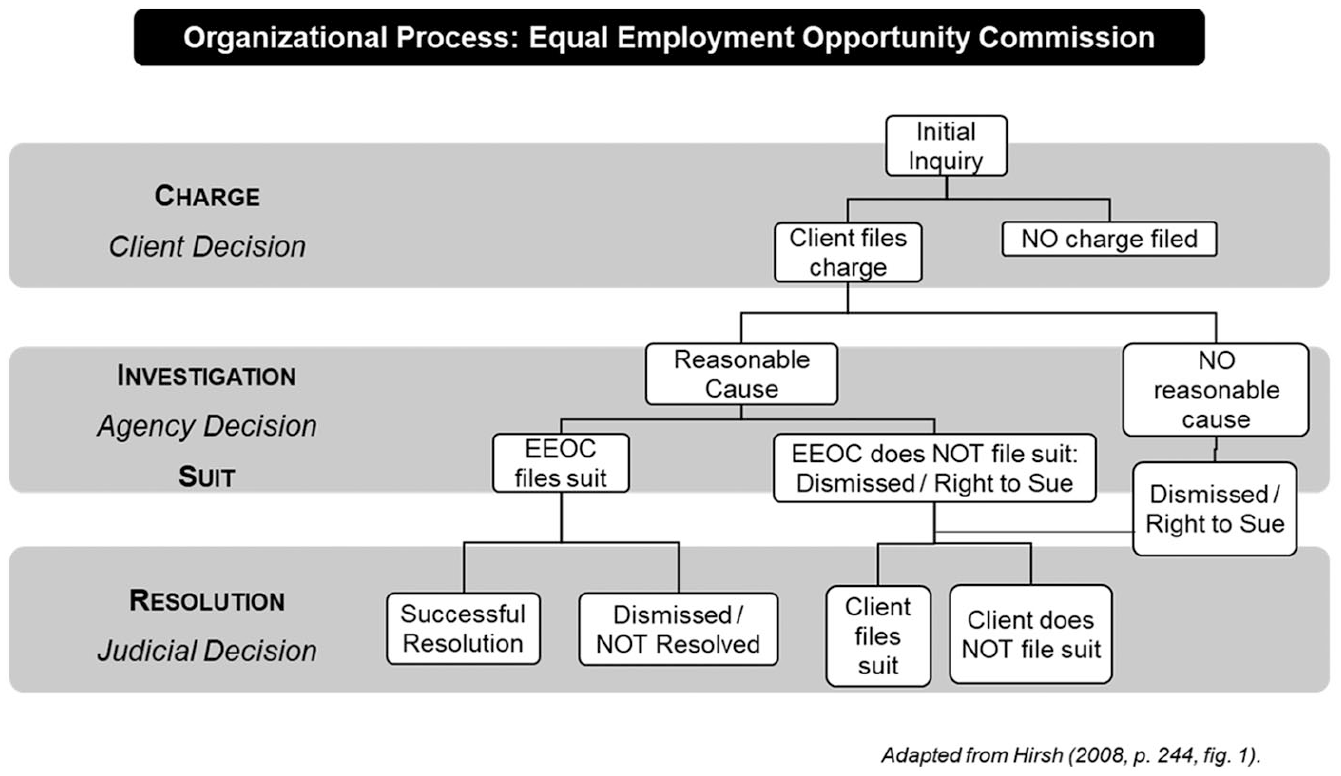
EEOC organizational process, from charge to investigation to suit to resolution.
Whether active representation outcomes parallel passive representation indicators warrants exploration beyond the original concept of representative bureaucracy. This is because the bureaucracy is expected to represent populace interests and demographics (Shafritz & Russell, 2005). Do active representation (outcome) trends parallel passive representation (workforce) trends? Results of prior studies have been mixed about when passive representation translates into active representation (Meier et al., 2005). External forces, in particular, have received little attention. Gordon (1986) argued this may be a consequence of efforts to keep politics out of the bureaucracy, making bureaucracy less responsive to public opinion. However, Meier et al. (2005) found gender discrimination prioritization in the early 1990’s occurred at the expense of race-based claims but was not accompanied by a significant increase in active representation. Left unanswered was whether prioritization by type of discrimination aligns with representation.
Shifting Priorities at the EEOC
Due to limited resources, prioritization of particular kinds of discrimination occurs at the EEOC as a matter of necessity. According to the agency’s budgetary and staffing data, enacted funding has varied but not kept pace with inflation. For example, 2017 enacted funding ($364,500,000) was lower, in real dollars (not adjusted for inflation) than 2010 enacted funding ($367,303,000). Similarly, staffing levels have fluctuated, but the number of staff members in three decades has never surpassed the staffing level in 1980 (3,390 FTE). Since 2004, funding peaked in 2013 ($370,000,000), while staffing peaked in 2011 (2,505 FTE). However, although budget and staffing affect capacity, the literature does not suggest that budget or staffing affect prioritization. By contrast, the literature suggests changes in regulatory pressures may lead to prioritization of particular types of discrimination claims over others (Keiser et al., 2002; Meier et al., 2005).
In the 1990’s, political prioritization of gender discrimination claims increased at the expense of more traditional claims based on race, due in part to sexual harassment allegations by Anita Hill against U.S. Supreme Court nominee Clarence Thomas, Hill’s former supervisor at the EEOC (Keiser et al., 2002; Meier et al., 2005). Prioritization of disability claims also increased. The ADA, in 1990, expanded the EEOC’s clientele, allowing the agency to review disability claims. In 1995, the EEOC acknowledged “unresolved” disability definitional issues ripe for clarification (EEOC, 1995). In 2000, President Bill Clinton issued Executive Order 13163, which encouraged agencies to hire more people with disabilities throughout the federal workforce (Clinton, 2000).
The ADAAA, in 2009, enlarged the EEOC’s clientele by dramatically expanding the definition of “disability” and eligibility to file claims based on disability (P.L. 110-325, codified at 42 U.S.C. § 12101 et seq., 2009). The law’s goal was to “restore the intent and protections of the Americans with Disabilities Act of 1990” in response to Supreme Court rulings in Sutton v. United Air Lines, 527 U.S. 471 (1999), and Toyota v. Williams, 534 U.S. 184 (2002), restoring the “broad scope of protection” of the ADA. President Barack Obama went further in Executive Order 13548, imposing federal performance targets for persons with disabilities (Obama, 2010).
During the period studied, fiscal years 2004 to 2017, the EEOC recognized that external factors influencing client and organizational decisions included social, political, and legal factors. The anti-discrimination agency acknowledged a wide array of external factors influenced its enforcement priorities, predicting in 2006 that the anti-discrimination agency “may be required to assume additional responsibilities under employment discrimination laws, regulations or executive orders” (Equal Employment Opportunity Commission [EEOC], 2006, p. 25). In 2008, the EEOC acknowledged that “individual cases, particularly those under the Americans with Disabilities Act, will remain an important component of the agency’s docket and will continue to be strategically selected to have impact beyond their individual circumstances” (EEOC, 2008). In 2012, it noted: “All federal agencies are impacted by legal changes, but this is particularly true of . . .the EEOC,” and “if new laws are passed under the EEOC’s jurisdiction . . . the implementation of those laws will necessarily affect the substantive priorities of the agency” (EEOC, 2012, p. 32). Prioritization was further reflected in strategic enforcement plans (EEOC, 2013, 2017). Like other federal agencies, the EEOC recognized prioritization effects (Wood & Waterman, 1994).
Representative Bureaucracy and the EEOC
Prior scholarship applying representative bureaucracy theory within the Equal Employment Opportunity Commission (EEOC) context has examined three overarching issues. The first group examined improvement of women and minority representation in the public sector or compared workforce representation in the private and public sectors. Eisinger (1982) studied descriptive representation of minorities and women in state and local agencies. Dometrius and Sigelman (1984) compared racial and gender diversity among state and local governments and the private sector. The second group conducted trend analysis of workforce representation using EEOC data. Moore and Mazey (1986) analyzed minority and women representation in state and local governments over 8 years and compared salary changes of minorities with whites and males. Von Schrader and Nazarov (2015) compared employer characteristics to disability charge rates. Von Schrader and Nazarov (2016) assessed broader trends in disability charges. The third group, also using EEOC data, examined passive and active representation relationships. This scholarship explored organizational and other factors to predict links between passive and active representation (Hindera, 1993a, 1993b; Hindera & Young, 1998; Kellough, 1990).
Building on existing research in the EEOC context, this study offers an assessment of trend alignment in workforce representation and organizational outcomes within the context of the EEOC. Also, adding to the literature assessing passive representation in public organizations, this research examines association between disability representation and ADA related outcomes. Data on workforce demographics and organizational outcomes across 14 years provide an empirical basis for trend analysis. Longitudinal trend analysis is used as a methodological tool to assess if trends in workforce representation align with trends in EEOC organizational outcomes.
Trend Analysis of Passive Representation and Organizational Outcomes
The theory of representative bureaucracy asserts passive or descriptive representation yields outcomes that benefit represented groups. Evaluation of representative bureaucracy scholarship in the EEOC context indicates missed opportunity for broader assessment of alignment of trends in workforce representation and organizational process outcomes. To fill this gap, we conducted a 14-year trend analysis comparing workforce demographic representation, including race and gender (Title VII) and disability (ADA), with related organizational level outcomes (charges, suits, and resolutions).
Based on our discussion of the literature, we offer three propositions designed to allow observation of broader trend alignment between EEOC workforce demographic representation and discrete organizational level process outcomes. These propositions generally predict expected trend relationships between bureaucratic representation within the EEOC workforce and organizational level outcomes (Creswell, 2007). We expect that trends in agency representation of minorities, women, and persons with disabilities, will be consistent with trends in organizational outcomes. Three propositions for phenomena we expect to observe through trend analysis are as follows:
These propositions call attention to the need to observe trends in organizational outcomes along with workforce representativeness that is reflective of the EEOC’s work and temporal in focus.
Data and Methods
Following Hindera (1993a, 1993b), Hindera and Young (1998), and Meier et al. (2005), we explored these propositions using data obtained directly from the EEOC. Other researchers have previously obtained EEOC data not available to the public through Intergovernmental Personnel Act agreements (Kerr et al., 2016; Reid et al., 2004). Although the EEOC no longer enters into Intergovernmental Personnel Agreements, the EEOC Office of Research, Information, and Planning graciously provided the authors with EEOC workforce data covering fiscal years 2004 to 2017, which was not previously available in an accessible format. Pursuant to Management Directive 715 (“MD-715”), federal agencies must report workforce demographic information annually to EEOC. MD-715 took effect October 1, 2003; the first reports submitted by federal agencies, including the EEOC, covered fiscal year 2004 (October 1, 2003 through September 31, 2004).
MD-715 data describes organizational characteristics aligned with the proposition that representation in the bureaucracy is associated with representation by the bureaucracy (Hindera, 1993a; Mosher, 1968). Race and gender, in particular, have long been identified as “highly salient characteristics” associated with bureaucratic outcomes (Hindera, 1993a, p. 97). Passive representation in public agencies is expected to manifest as active representation of the “segment of the people” represented (Hindera, 1993b, p. 422; Mosher, 1968, p. 12). Fewer scholars have studied disability, although that may stem from pre-ADA disability definition differences (Lewis & Allee, 1992). Even post-ADA, however, disability definitions and eligibility to file charges with the EEOC have fluctuated due to court rulings, ADAAA passage, and executive orders.
MD-715 tables offer data on EEOC worker demographics (gender, race, disability), management hierarchy (executives, managers, and supervisors), and discretionary roles in the charge process (investigators, attorneys). Specifically, the EEOC reports management demographics in three hierarchical categories in tables A/B 3: “executives,” who are in the Senior Executive Service (SES) or General Schedule (GS) grade 15 or above (previously referred to as senior/executive-level); “managers,” who are GS 13 to 14 (previously referred to as mid-level), and “supervisors,” who are GS 12 and below (previously referred to as first-level). These management categories are supposed to reflect “level of responsibility and influence in the organizational hierarchy” (EEOC, n.d., § IV(I)(I)). Thus, the EEOC differentiates between these managerial levels not only by pay grade but also by policy making ability (Smith & Monaghan, 2013). Similarly, the EEOC reports management demographics in “mission-critical occupations” in tables A/B 6, including investigator and general attorney. The literature has identified investigators and attorneys as key roles exercising discretion at different stages of the charge process (Hirsh & Cha, 2018; Lipsky, 1980; Percy, 2001). These roles are “occupations without which the agency cannot fulfill its mission,” and “typically follow a career path to senior leadership positions” (EEOC, n.d., § IV(II)(F)).
The EEOC provides public, online access to annually compiled discrimination charge, suit, and resolution data, covering fiscal years 2004 to 2017, allowing longitudinal matching. Although data from FY 1997 to 2004 is also available, this study only used data corresponding with MD-715 data. The EEOC Office of Research, Information, and Planning annually compiles both charge data, reflecting individual charges of discrimination filed with EEOC, and litigation data, reflecting suits filed and resolved in federal courts by the EEOC. Available data only includes charges filed with the EEOC, and not charges filed with state or local Fair Employment Practices Agencies. Charge data is delineated by type of discrimination. Discrimination types include gender, race, color, national origin, religion, and disability, covering the primary demographic characteristics found in the representative bureaucracy literature (Hindera, 1993a, 1993b). By contrast, litigation data on EEOC suits filed and resolved are categorized by the statute filed under, rather than filer characteristics. Suit and resolution data specify Title VII as a category, capturing race and gender in one category. Disability, on the other hand, is its own category, filed under ADA. However, the literature suggests disability data may be more prone to challenges to internal validity arising from definitional fluctuation and self-reporting (Lewis & Allee, 1992). Data manipulation included creating a category of charges covering Title VII by combining gender and race, allowing trend comparisons with data covering disability claims filed under ADA.
This study uses descriptive and trend analysis to apply representative bureaucracy theory to the relationship between workforce data and charge and litigation data. The lengthy period covered allows for more longitudinal observation than generally drawn from traditional, cross-sectional analyses. Wolf and Amirkhanyan (2010), who predicted future demographics, and Bowling et al. (2006), who assessed trends in gender representation, used similar methods, applying descriptive and trend analysis to longitudinal data. Dometrius and Sigelman (1984), who studied affirmative action, subjected EEOC data to methods similar to those applied here. Limitations of descriptive and trend analysis, however, include lessened ability to confirm causal relationships than more advanced regression analysis. Such limitations suggest potential avenues for future research.
Results
Descriptive and trend analysis results support our propositions under certain circumstances, but also unearth surprising findings that extend beyond prior studies of representative bureaucracy (Hindera, 1993a, 1993b; Hindera & Young, 1998; Meier & Bohte, 2001; Meier et al., 2005). Trends in outcomes (e.g., charges, suits, and resolutions) reflected increases in passive representation, indicated by workforce demographics. But not all demographic characteristics led to proportionate changes in representation. For example, increases in disability representation aligned with even greater increases in disability-related charges, suits, and resolutions. At the same time, Title VII charges, suits, and resolutions declined. Hierarchical level trends paralleled organizational more than client-side outcomes. Overall, the rise in disability cases suggests that organizational factors, such as prioritization of certain types of discrimination, may be at work.
Representation at Work
Based on the theory of representative bureaucracy (Hindera, 1993a, 1993b; Meier et al., 2005), we expected that EEOC workforce demographic trends related to race, gender, and disability, would be similar to trends related to organizational outcomes. Workforce representation held mostly steady and was largely consistent with charges. Disability suits and resolutions, however, rose in 2009 and over time, while Title VII suits and resolutions declined. Notably, disability-based charge, suit, and resolution levels all outpaced disability representation, while race and gender-based charges, suits, and resolutions, failed to exceed demographic levels.
Client-side outcomes appeared to reflect client-driven decisions, namely the decision to file charges with the EEOC. The proportion of discrimination charges based on gender and race remained relatively consistent between fiscal years 2004 to 2017, while starting after fiscal year 2008, the disability-related charge proportion rose more than 10 percent, overtaking gender (Figure 3). Mapping workforce descriptive representation and charges reflected stasis in charges based on race and gender (Figure 4), with charges lagging workforce representation, in sharp contrast to disability (Figure 5), where charges rose and exceeded descriptive representation. In short, representation trends appeared to be consistent with charges filed, suggesting association.
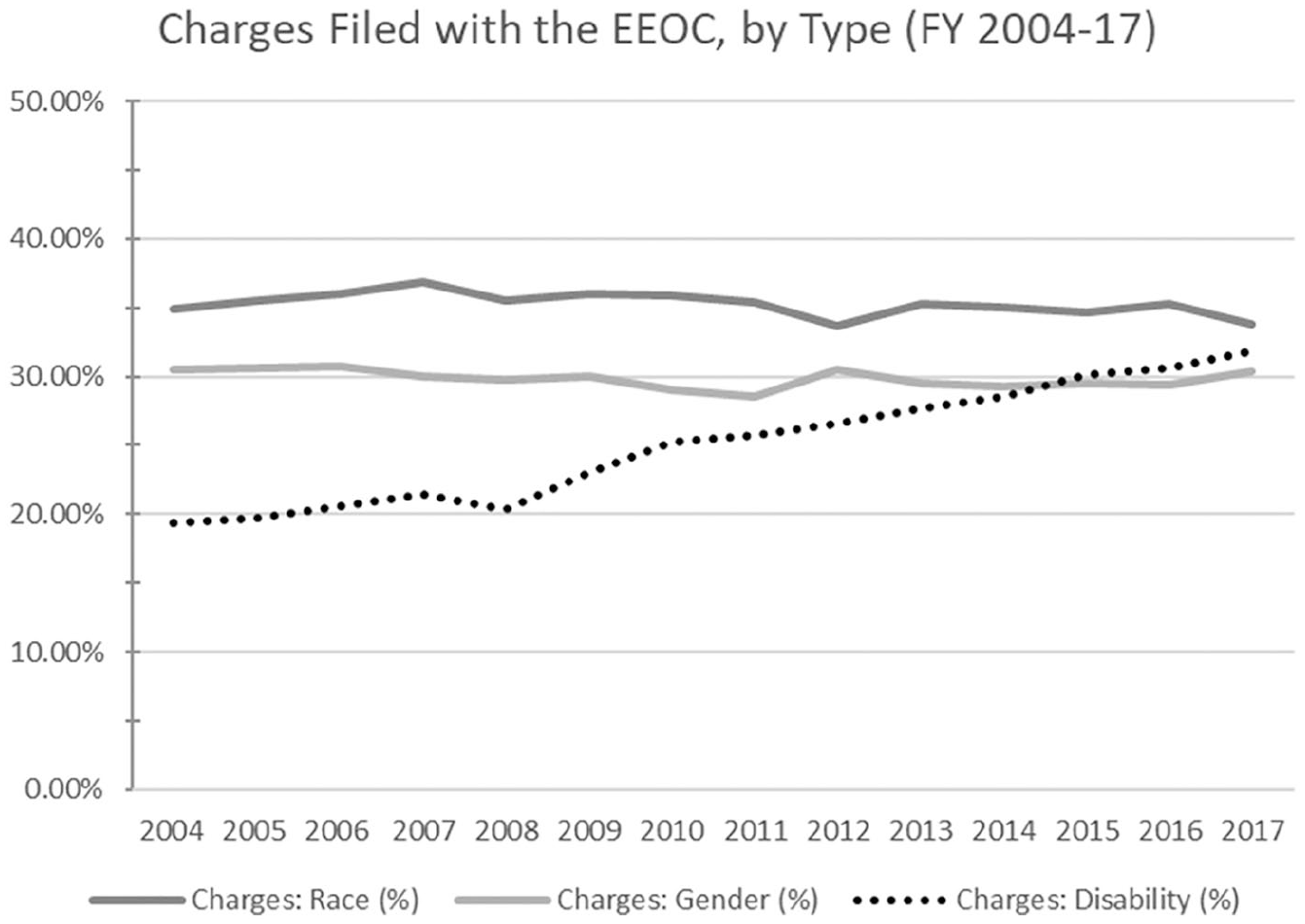
Disability-based charges increased over time, while race/gender-based charges did not.
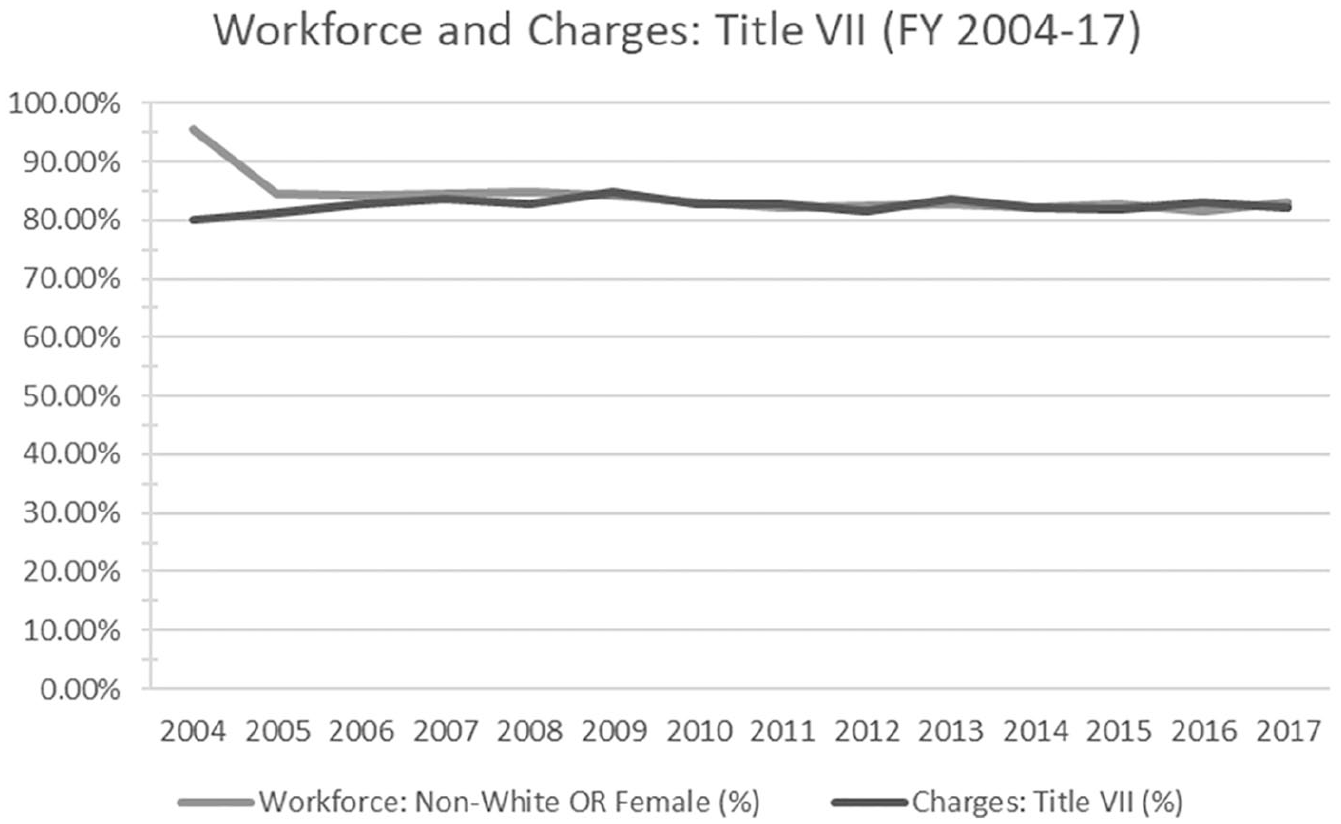
Title VII (race/gender) charges tracked workforce non-white/female representation.
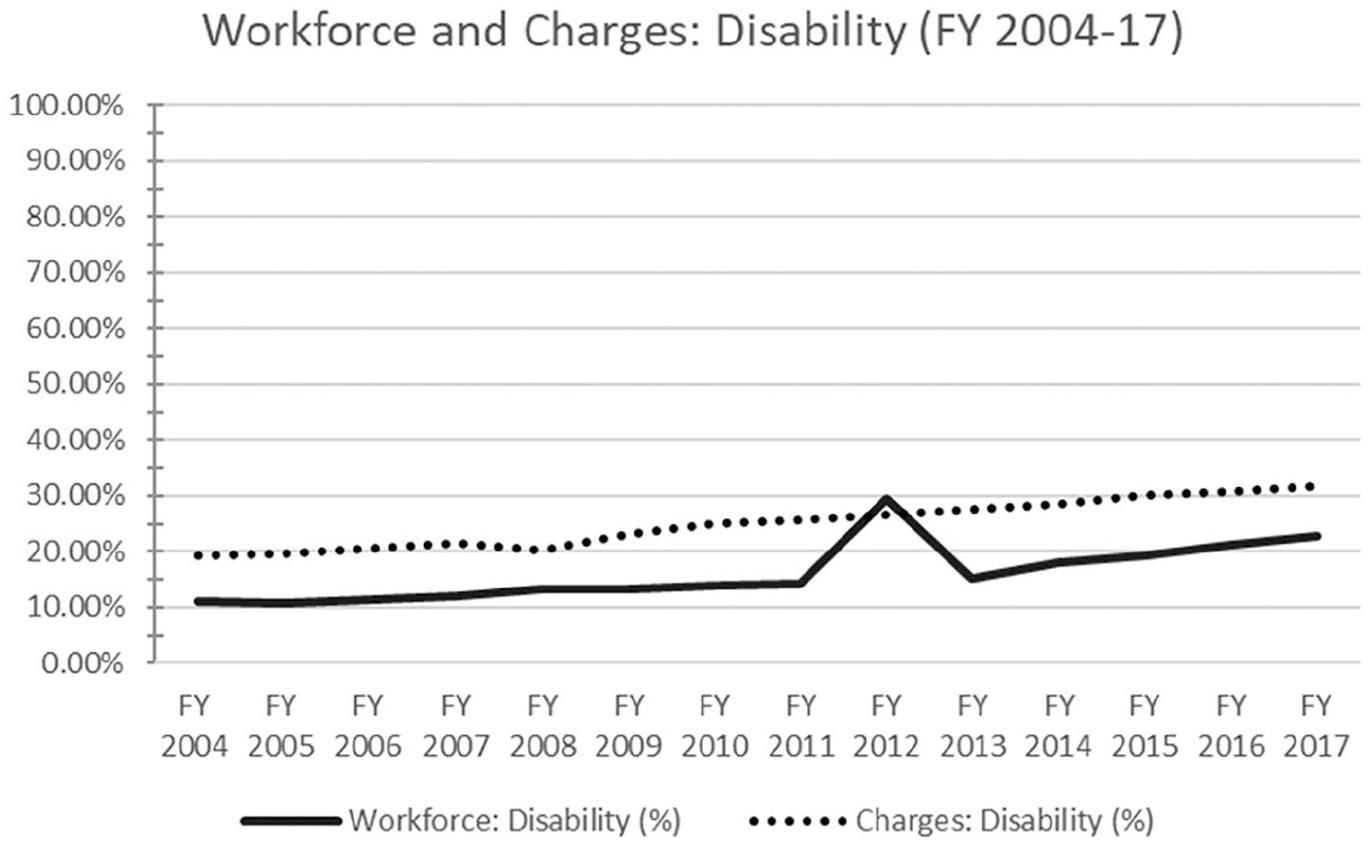
Disability-related charges rose and exceeded workforce disability representation.
Organizational level outcomes appeared to reflect organizational factors beyond demographics undergirding passive representation theory. The trend association between representation and organizational outcomes, which we expected to be reflected more in organizationally driven suits (Figures 6 and 7) and resolutions than client-driven charges, indicate much stronger trends alignment for disability than for race and gender. While disability suits and resolutions rose, Title VII suits and resolutions fell sharply below trend levels for minority/gender representation.
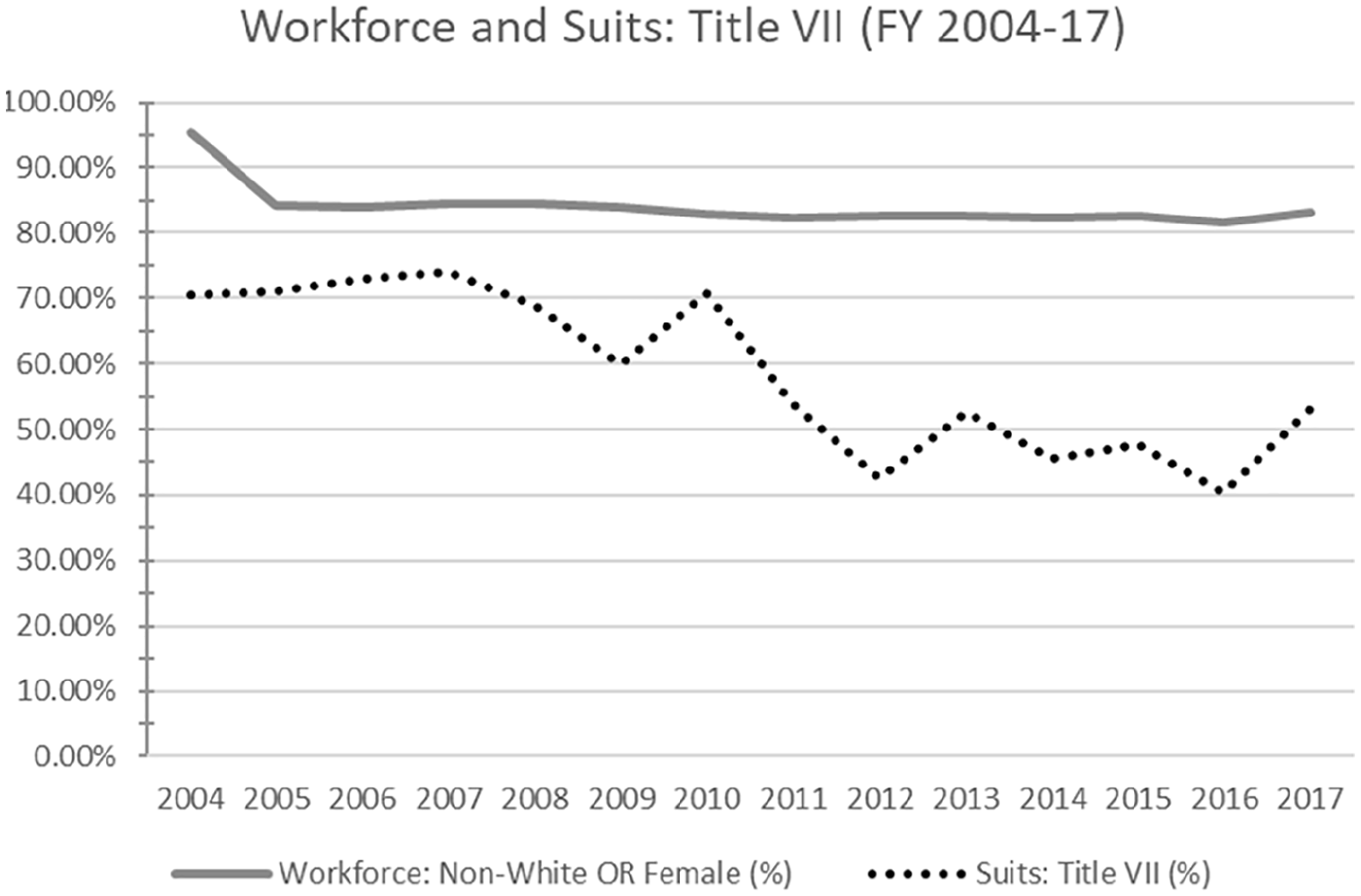
The proportion of Title VII suits lagged workforce non-white/female representation.
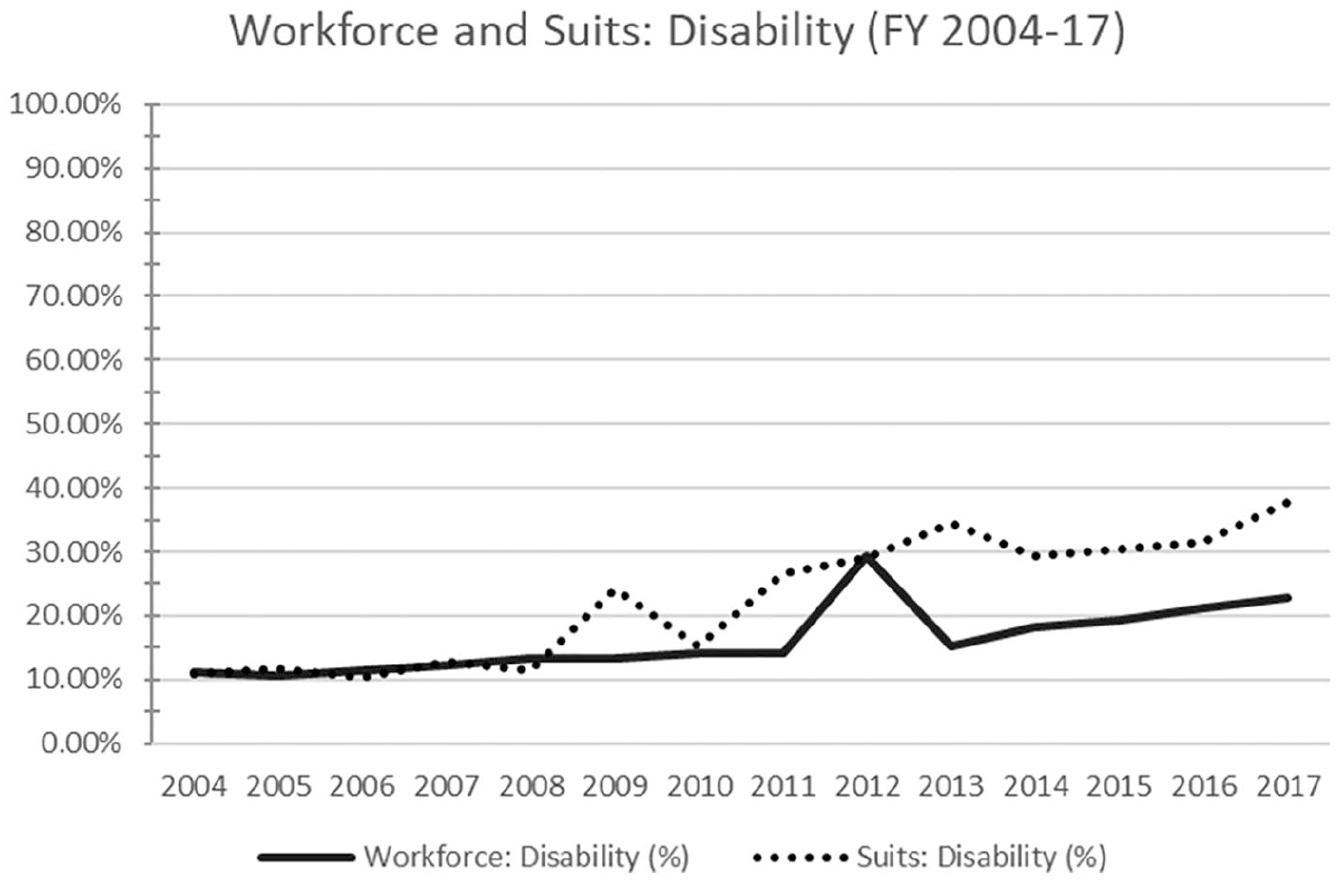
The proportion of ADA suits rose and exceeded workforce disability representation.
These organizational level trends suggest a stronger alignment between disability representation and ADA suits and resolutions than between racial and gender representation and Title VII suits and resolutions. Such results suggest workforce demographic representation does not always materialize into organizational outcomes benefiting represented groups. This may be indicative of differences between types of discrimination, suggesting more emphasis within the EEOC on addressing discrimination based on disability than based on race and gender during this time. On a broader level, the results reflected more nuance in outcomes than anticipated when framing the propositions. Such surprising trends were confirmed by the hierarchy and discretion analyses.
The Effects of Hierarchy
Prior research in the field suggests passive representation of minorities and women at higher organizational management levels produces higher levels of active bureaucratic representation (Keiser et al., 2002; Riccucci, 1987; Sigelman, 1976; Sigelman & Karnig, 1976). This study explored whether workforce demographic trends would reflect similar trend patterns across three managerial levels of the organizational hierarchy. Plotting representation and outcomes among executives, managers, and supervisors suggests stronger relationships at some levels than others. Notably, results revealed stronger alignment at certain levels for certain forms of representation and, generally, for stronger alignment with the suits and resolutions than with charges filed.
Trends in charges filed appeared to reflect stronger alignment between passive representation of individuals with disability and ADA charges than between passive representation of minorities and women and Title VII charges, which reflected weaker alignment than anticipated. The proportion of race and gender related charges remained stable across hierarchical levels, even as representation grew (Figure 8). By contrast, ADA charges exceeded passive representation levels. Charge trends may indicate relatively more organizational emphasis on ADA than on Title VII.
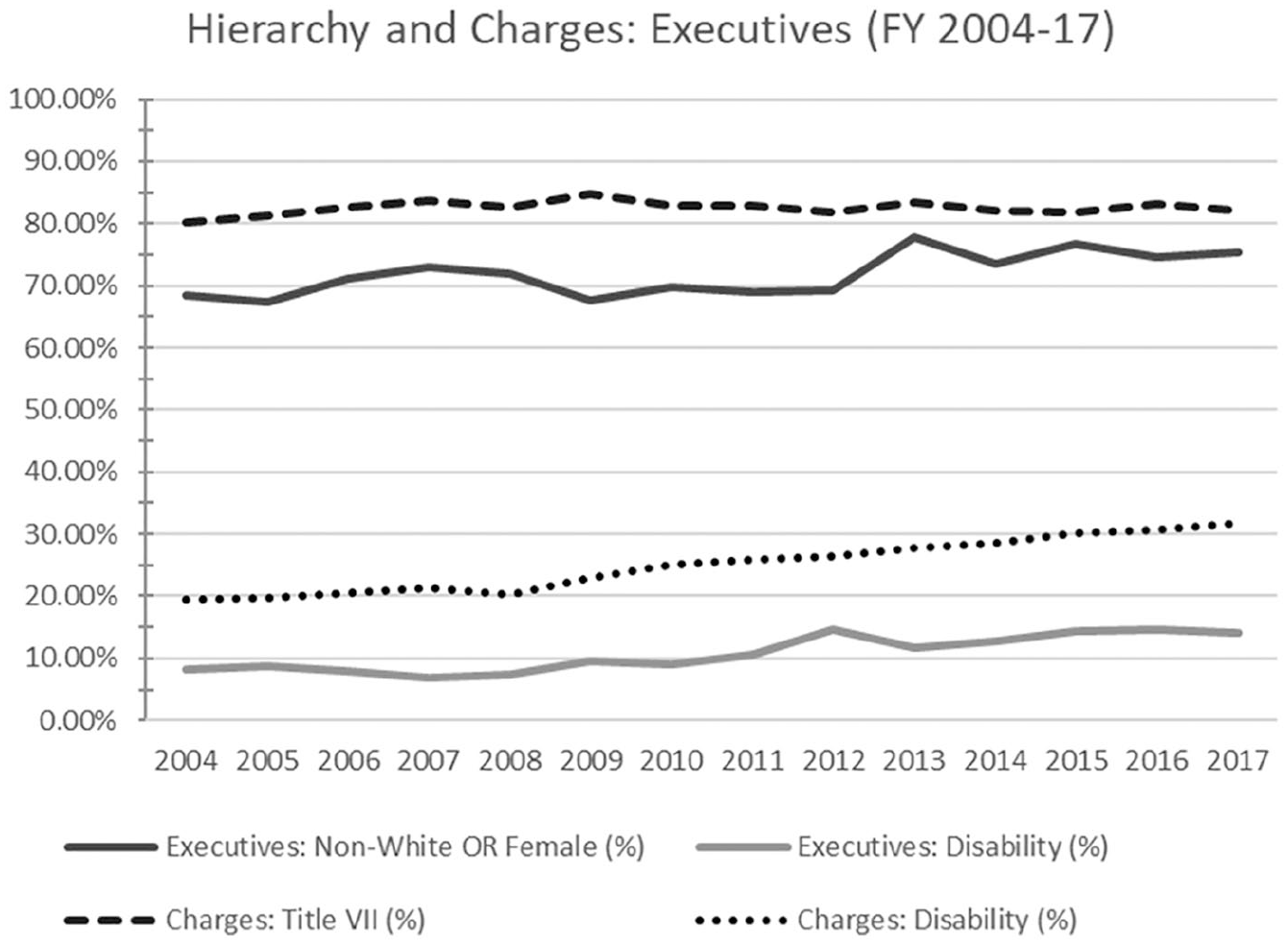
Disability, but not Title VII, charges exceeded representation among executives.
Organizational level outcomes appeared to reflect organizational factors at work, revealing clear outcome differences between Title VII and ADA suits and resolutions across hierarchical levels studied. On the other hand, suit and resolution trends bolstered the surprising result regarding less uniformity than expected among different discrimination types. However, such trends also support the proposition that passive and active representation trends would be consistent across managerial levels. Mapping workforce representation and organizational suits and resolutions by hierarchical management level (executives, managers, supervisors), reflected consistent trends across all three levels for EEOC suits (Figure 9) and resolutions.
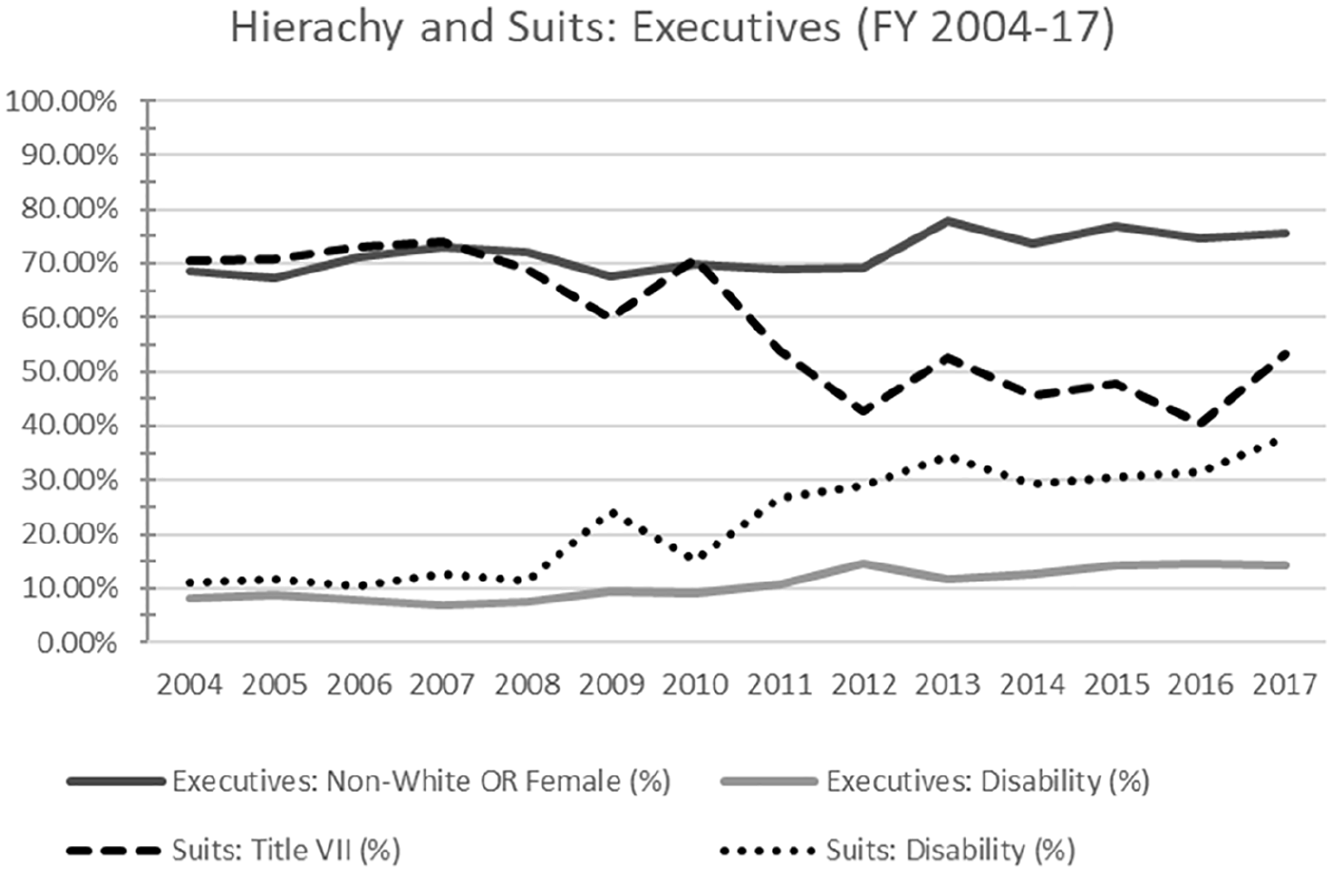
Disability, but not Title VII, suits exceeded representation among executives.
Overall, hierarchical results reveal more about trend differences between forms of representation and between types of discrimination than about trend differences between the hierarchical levels analyzed. Although client-side and organizational trends diverged, both suggest there may be stronger trend alignment between disability representation and ADA suits than between representation related to race and gender and Title VII suits, across all three hierarchy levels, which may indicate more organizational emphasis on ADA than Title VII. It remains unclear what effects hierarchical differences have on outcomes due to lack of apparent variance. On the other hand, rising ADA outcomes, exceeding rising representation levels, in contrast to falling Title VII outcomes, lends support for the inference that the type of discrimination is more salient than originally thought.
The Effects of Discretion
As prior research suggests that passive representation in discretionary roles can be a driver of active representation (Marvel & Resh, 2013; Sowa & Selden, 2003), this analysis included comparison of discretionary role representation and organizational outcomes. We expected that trends in EEOC workforce demographic representation of minorities, women, and individuals with disabilities, among two discretionary roles would reflect similar patterns as organizational outcomes. Analyzing the roles of investigator and attorney, which we identified as discretionary within the EEOC process, suggests less influence in this context from discretion than other factors that may influence Title VII and ADA based charges, suits, and resolutions. Trends in discretionary roles reflected minimal parallel with trends in charges, which did not vary noticeably from representation (Figure 10). Although attorney disability representation increased at a lower rate than investigator disability representation, this difference is not clearly reflective of the trends in charges (Figure 10). Nonetheless, larger increases among investigators than attorneys may suggest a role distinction if demographic representation is viewed as more important for investigators, who exercise more street-level discretion than attorneys in the investigative process (Hirsh, 2008).
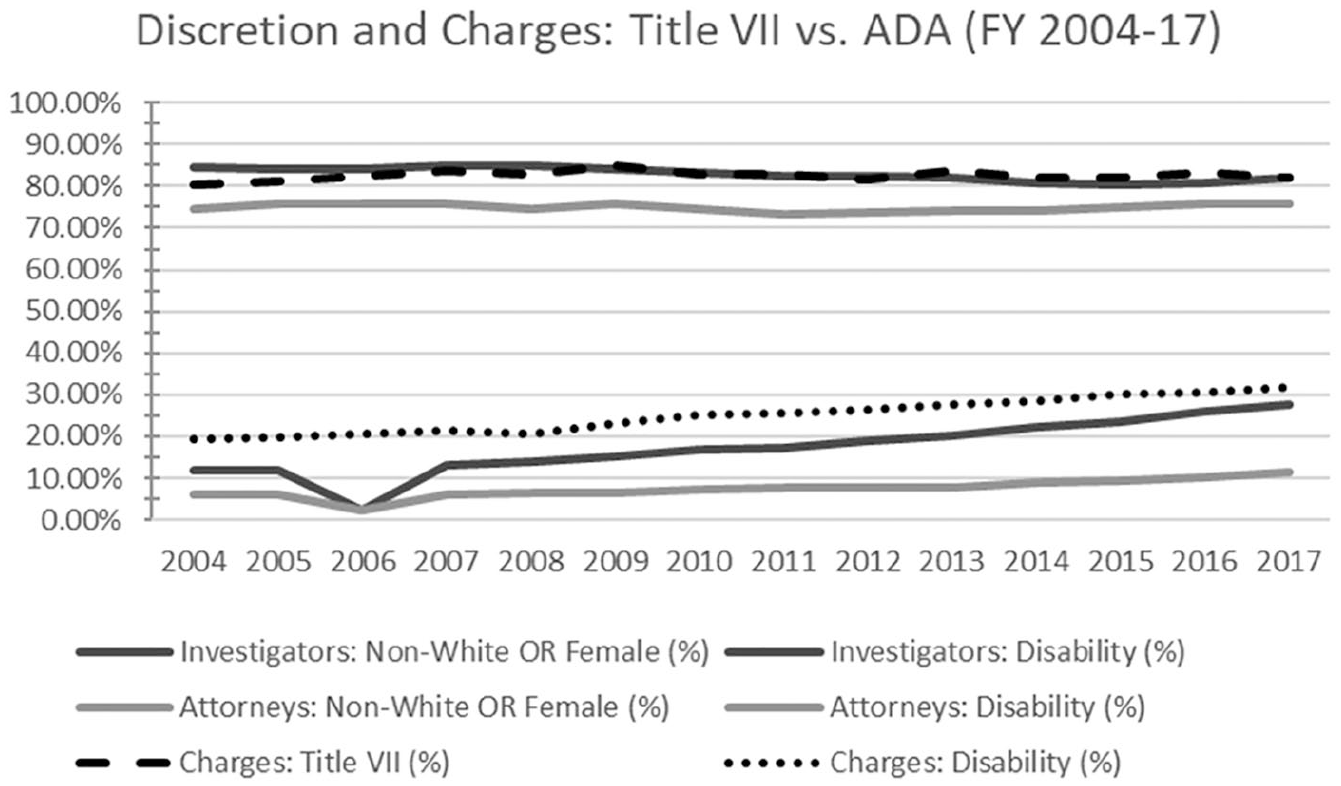
Race/gender/disability of investigators/attorneys did not noticeably influence charges.
Similar to general and hierarchical trends, organizational level outcomes appeared to reflect clear differences between Title VII and ADA for suits and resolutions, regardless of the role analyzed. The results revealed relatively constant Title VII representation for investigators and attorneys, in contrast to declining Title VII suits and resolutions starting in 2009 (Figure 11). This trend contrasted with rising ADA outcomes that outpaced discretionary role increases (Figure 12).
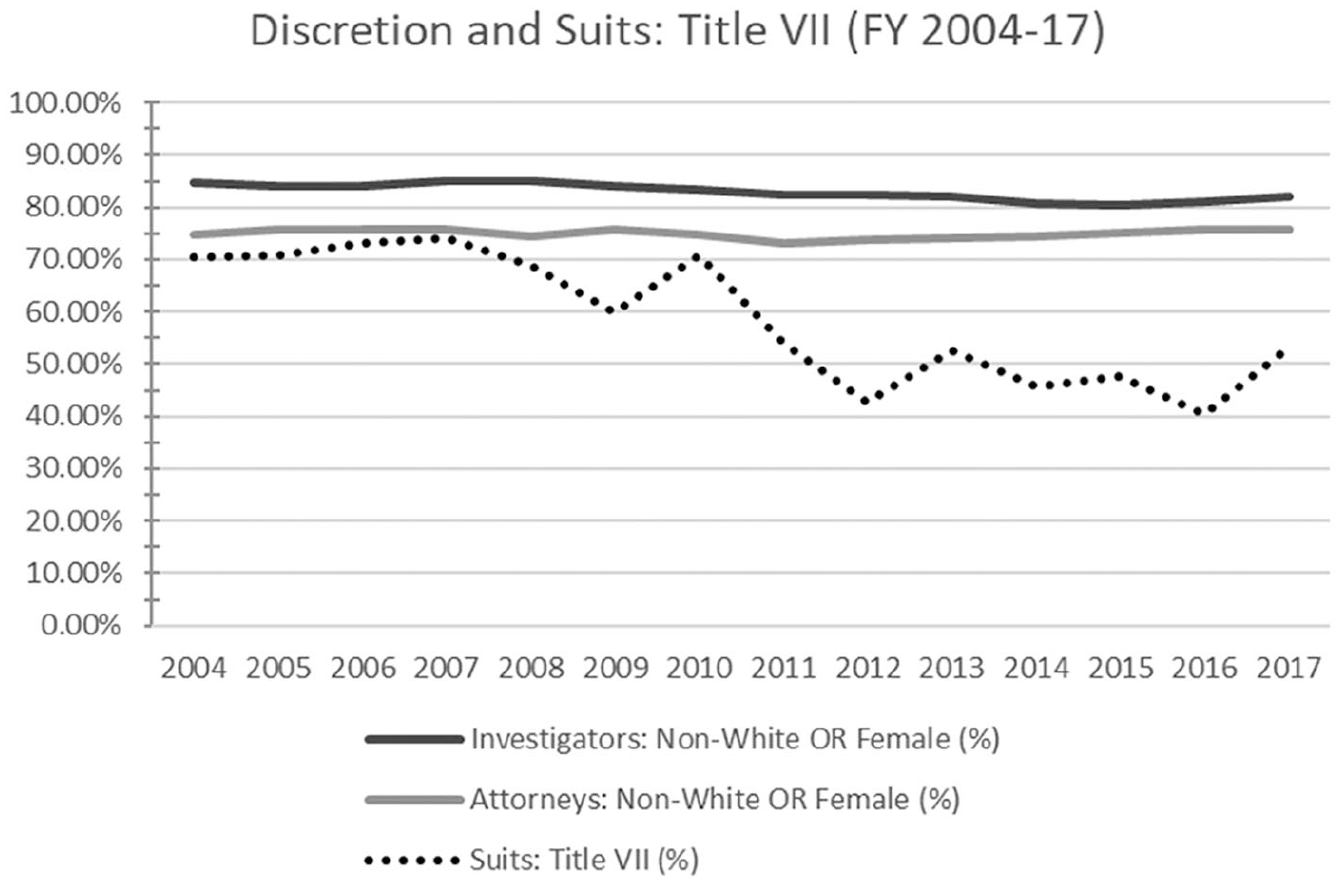
Race/gender of investigators/attorneys did not noticeably influence Title VII suits.
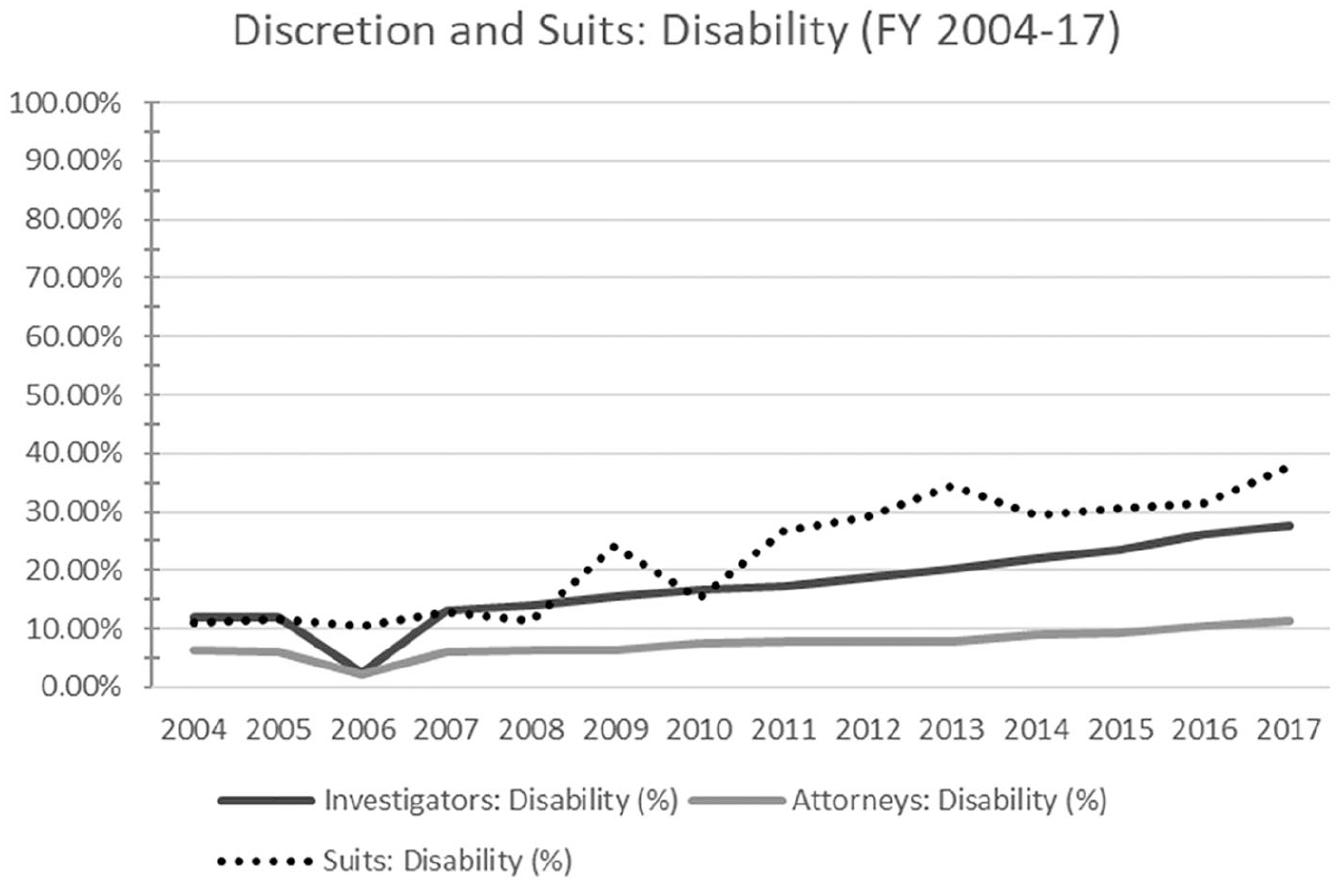
Disability suits rose and exceeded investigator/attorney disability representation.
The upshot is that mapping trends in representation among investigators and attorneys, roles predicted to be discretionary based on the literature, did not support the third proposition. Trends in discretionary role representation did not align with trends in organizational outcomes. Neither investigator nor attorney demographics noticeably influence charges (Figure 10). Although it is possible that disability representation contributed to increases in disability suits (Figure 12), the trends do not offer enough evidence to draw clear conclusions.
Overall, workforce representation at three levels of organizational hierarchy and two roles with discretion, remained relatively steady. Charge proportions also remained steady. However, the organizational level diverged: disability suits and resolutions rose and outpaced representation, while race and gender suits and resolutions declined, despite steady representation. Suits and resolutions tracked similarly, diverging in tandem. Differences in charges, as opposed to suits and resolutions, may be partially explained by mostly stable charge numbers (starting and ending around 80,000, with a high of 100,000 in 2010–12), in contrast to 50 percent declines in suits and resolutions. However, these trends do not explain clear differences between Title VII and ADA.
Discussion
Bureaucratic Representation and Organizational Outcomes
This research adds to the existing body of literature on representative bureaucracy, particularly on conversion of passive representation to active representation. Although trend analysis does not offer causal predictive association between workforce representation and bureaucratic outcomes, our trend analysis builds on predictive association scholarship (Hindera, 1993a, 1993b; Meier et al., 2005; Ng & Sears, 2015) to expose patterns in passive workforce representation and organizational outcomes. From the propositions, we expected alignment between organizational outcomes and (1) EEOC workforce representation related to Title VII and ADA, (2) three levels of the organizational hierarchy, and (3) two discretionary roles. However, the results suggest organizational outcomes do not always align with trends in representation.
Type of representation (Title VII vs. ADA)
Trend analysis shows consistent trend patterns for Title VII and ADA related charges, and strong similarities with trends of workforce demographic representation. In contrast, organizational outcomes (suits and resolutions) failed to follow similar patterns. This finding lends itself to two possible explanations. First, demographic representation may not affect suit and resolution handling the same way it affects charge filing. As previously discussed, filing a charge is an individual decision, while filing and resolving suits are decisions made by the organization. Second, although minority and female representation changed little, Title VII and ADA outcome trends differed. Those trends manifested in opposite directions, with ADA suits and resolutions increasing noticeably while Title VII suits and resolutions declined. Prior scholarship on the relationship between passive representation and organizational outcomes does not fully explain the differential outcomes of various forms of demographic representation.
While there is a need for further research on why that is the case, we proffer the following potential explanations: First, in an organization like the EEOC, where resources are limited, organizational choices on resource allocation may limit outcomes of representation. Second, we suspect not all types of discrimination are equal (Meier et al., 2005). What this may mean is that, compared to Title VII charges, disability charges receive more attention, resulting in charges proceeding to suits and resolutions. Last, exploration of the organizational process related to ADA also suggests that internal procedural changes may have created the more robust processing of disability related charges. Although prior scholarship indicates passive representation may yield organizational outcomes that might benefit represented groups, perhaps not all types of passive representation yield the same outcome.
Individual versus organizational processes
Outcomes of representation can be multi-dimensional. Representation can prompt coproduction during service delivery interactions. Representation can also prompt bureaucrats to coproduce in ways that benefit represented groups. Within the EEOC context, we find charges, worker actions in response to perceived discrimination, follow similar trends as workforce representation. Parallels between workforce representation and charges filed over the 14-year period are consistent across demographic representation types as well as across all levels of workforce representation (general workforce, three hierarchical tiers, and two discretionary roles). However, trends reflect a different result for organizational-level decisions. Not only are trends different for suits and resolutions compared to charges, but trends in organizational outcomes appear opposite in direction for the two groups (Title VII and ADA). Our interpretation is two-fold.
Despite comparable charge trends, the organization may have placed more or less emphasis, based on discrimination type (Title VII vs. ADA), on processing charges, which in turn may have contributed to the differences observed in suit and resolution trends. Hence, organizational process differences yield different organizational outcomes. The results suggest that organizational outcomes of representative bureaucracy may be different depending on the type of passive representation. Future research should examine why differences occur. In the EEOC context, understanding circumstances yielding different results is vital to ensure that all forms of discrimination get adequate attention.
Place and type of representation
In the trend analysis, we observe that representation at all three managerial levels and in two discretionary roles aligned with trends in charges related to race, gender, and disability. However, comparison of representation and outcome trends depict a different picture. Representation among levels and roles stayed relatively consistent, while Title VII outcomes declined and ADA outcomes increased. Such trends do not support the proposition that representation at higher managerial levels yields beneficial outcomes for represented groups (Keiser et al., 2002). This may reflect a unique circumstance where organizational process and priority setting leave little room for passive representation to become active representation. We suspect that transformation may differ in different types of organizations. In an organization like the EEOC, whose mission is to root out discrimination and where there is competition for limited resources and attention, representational outcomes may not be as predictable as in other contexts.
Conclusion
Limitations
Although this trend analysis offers insights into factors that drive organizational outcomes at the EEOC, the analysis is limited in multiple ways. First, the EEOC, as an organization, may not be representative of all organizations. Unlike most organizations, the EEOC is tasked specifically with enforcing anti-discrimination laws passed by Congress (EEOC, 1995). Whereas most other organizations handle discrimination claims internally, or in conjunction with an external agency such as the EEOC, the EEOC handles discrimination claims both externally and internally. The cases that reach the EEOC may also not be representative of discrimination that is occurring. As a result, the EEOC may be more attuned to bureaucratic representation than other organizations while its workforce and caseload may not be representative of organizational discrimination. This limits the external validity and the generalizability of the trends observed in this analysis.
Alternative Explanations
There are also alternative explanations for many of the trends observed in our study. For example, decisions by individuals to file claims with the EEOC and decisions by the EEOC to find reasonable cause, file suit, and settle suits, are not only affected by bureaucratic discretion but also by priorities set by Congress, the President, and the courts, as well as the organization itself (Keiser et al., 2002; Meier et al., 2005; Wood & Waterman, 1994). The rise in charges, suits, and resolutions, related to disability discrimination, relative to discrimination based on race and gender, may be a result of increased Congressional emphasis, as evidenced by the ADA in 1990 and ADAAA in 2009, which was a response to “unresolved” disability definitional issues and Supreme Court rulings in 1999 and 2002 (EEOC, 1995). The EEOC frequently acknowledged that a wide array of external factors influenced prioritization (EEOC, 2006, 2012, 2013, 2017). Disability trends, specifically, coincide with its admission that “individual cases, particularly those under the Americans with Disabilities Act, will remain an important component of the agency’s docket and will continue to be strategically selected to have impact beyond their individual circumstances” (EEOC, 2008).
Rising representation of people with disabilities at the EEOC, spiking in 2012, further coincides with increasing emphasis by multiple presidents on hiring persons with disabilities. As noted, Presidents Clinton and Obama both issued executive orders to encourage hiring (Clinton, 2000; Obama, 2010). President Obama’s ADA and ADAAA enforcement emphasis, in particular, may explain the workforce trends for persons with disabilities. President Obama recognized that prior efforts to increase hiring and improve enforcement had not achieved desired goals and further executive action was necessary. President Obama’s emphasis also may have affected willingness to file discrimination charges and the willingness of the EEOC to file suit in such cases. Because this analysis cannot fully sort out the effects of such factors, further research is clearly warranted. The next section contextualizes some implications for the representative bureaucracy literature.
Future Directions: Implications of Trend Analysis Findings for the Literature
This trend analysis sets the stage for further HRM research on factors that drive organizational outcomes of organizations like the EEOC. We initially anticipated that the EEOC’s racial, gender, and disability demographic representation would align with trends in charges, suits, and resolutions. Trend analysis of 2004 to 2017 data yielded different results. Instead of the anticipated alignment, we found demographic representation aligned with charges, which are driven by individual actions, while organizational outcomes diverged by discrimination type. Title VII suits and resolutions declined while ADA suits and resolutions rose. In addition to bureaucratic representation, future research should explore organizational factors that shape organizational outcomes. The findings raise new questions: Are all types of demographic representation equal? Should scholars and public personnel managers expect bureaucratic representation outcomes to be similar for all types of demographic identities? Further examination of factors that predict organizational outcomes is necessary to more fully answer these lingering questions.
Footnotes
Declaration of Conflicting Interests
The author(s) declared no potential conflicts of interest with respect to the research, authorship, and/or publication of this article.
Funding
The author(s) received no financial support for the research, authorship, and/or publication of this article.
