







Abstract
Immigrant-origin adolescents in the United States face a number of stressors across different social contexts (e.g., home, school), and yet, distress related to these stressors often goes unnoticed and access to resources is limited. This study examined how racial minority immigrant-origin adolescents in an urban setting construct and negotiate experiences of their ethnic and racial group membership, acculturative stress, and approaches to coping with acculturative stress. Guided by an integrative contextual framework of minority youth development, semistructured group interviews were conducted with 64 adolescents (35 girls and 29 boys) at an urban public high school located in the Northeastern part of the United States. Participants were either immigrants or children of immigrants from Afro-Caribbean (e.g., Haitian), Asian, Latino/a, and South Asian backgrounds. Analyses of the group interview data revealed four major domains related to experiences of ethnicity and race: (a) pride in and connection with heritage culture and language, (b) difficulties in cultural adjustment, (c) stereotypes and discrimination, and (d) coping and relational contexts, along with several themes within each of these domains. The implications of the findings are discussed with a consideration to adolescents’ desire to develop a bicultural identity, challenges to forming such an identity, and the importance of informal sources of support in coping with acculturative stress. Recommendations for future research and for clinical and community-based interventions with immigrant-origin adolescents are provided.
Between 2000 and 2012, the immigrant population increased by over 30% from 31.1 million to 40.8 million people. Immigrants composed approximately 13% of the total population of the United States in 2012, compared with 5.4% of the total U.S. population in 1960 (Center for American Progress, 2014). Over three quarters of newly immigrated people in the United States today have origins in Asia, Latin America, the Caribbean, and Africa (U.S. Census Bureau, 2010), and the number of children with immigrant parents from these regions is steadily rising (American Psychological Association [APA], 2012). It is estimated that by 2020, one third of the total child population in the United States will consist of immigrant-origin children and adolescents (APA, 2012). The adjustment experiences of racial minority immigrant-origin youth, both those born outside of the United States (first generation) and those born in the United States to immigrant parents (second generation) have been examined largely through quantitative studies focused on acculturation, ethnic identity, and discrimination. Indeed, research in these areas has yielded important new knowledge concerning the emotional, social, and academic adjustment of immigrant-origin youth (Rogers-Sirin & Gupta, 2012). However, extant studies have not adequately examined the processes underlying youth’s experiences of ethnic and racial membership, particularly those involving interactions within and across different contexts (home, community, school; Smith & Silva, 2011; Tummala-Narra, Inman, & Ettigi, 2011). Youth’s narratives and interpretations of their experiences with ethnicity and race still remain largely invisible in the psychological literature. Furthermore, many immigrant-origin youth lack access to engage in meaningful dialogue with each other about their lived experiences as immigrants and racial minorities, potentially contributing to a sense of isolation in coping with acculturative stress, and to a lack of recognition of emotional distress (Patel & Kull, 2011).
Findings from the few existing qualitative studies with immigrant-origin youth indicate that youth narratives reveal important meanings and contextual processes associated with migration and adjustment (Chao & Otsuki-Clutter, 2011; Daha, 2011), and as such, highlight the need for in-depth analysis of youth’s perspectives. The present study, guided by an integrative contextual perspective on minority youth development (García Coll & Marks, 2009, 2012), aimed to examine shared personal experiences of racial minority immigrant-origin adolescents with their ethnic and racial group memberships, and their approaches to coping with potential acculturative stress accompanying these experiences. With the purpose of creating dialogue on ethnic and racial group membership among youth, we conducted a qualitative study involving group interviews with adolescents whose countries of origin or whose parents’ countries of origin are in Asia, Caribbean (Haiti), Latin America, or South Asia, within an ethnically and racially diverse urban public school context. We were especially interested in the experiences of adolescents with ancestry in these geographic regions because, with the exception of Canada, these regions are the leading areas from which individuals have migrated to the United States over the past two decades (APA, 2012; U.S. Census Bureau, 2010). In addition, while some previous studies have examined the experiences of youth from a single ethnic group or racial group (Smith & Silva, 2011), we were interested in both overlapping and distinct experiences of immigrant-origin youth who identify with different racial and ethnic backgrounds. We believed that this study would provide sorely needed information directly from immigrant-origin youth that would inform culturally informed interventions. Specifically, the study was thought to expand existing knowledge on how immigrant-origin adolescents’ interactions at home, school, and broader community influence their experiences of racial and ethnic group membership and related stress. Interventions with immigrant-origin youth would benefit from a nuanced understanding of how youth experience different contexts and approach coping with potential stress related to acculturation. Furthermore, group interviews offer an opportunity for adolescents to engage in a dialogue about issues, such as ethnicity and race that are typically unaddressed in the school context. In the following sections, we review relevant literature concerning a contextual perspective on ethnicity and race, acculturative stress, and coping among racial minority immigrant-origin youth.
A Contextual Framework of Ethnicity and Race Among Immigrant-Origin Adolescents
Immigrant youth form their identities in the context of acculturation. The concept of acculturation, which is relevant to first and later generations of immigrants, refers to the process of psychological and cultural change resulting from contact between two different cultures (Birman & Simon, 2014;Sam & Berry, 2010). Psychological acculturation has been conceptualized as a process that involves multiple dimensions involving language, behavior, and identity (Birman & Simon, 2014). Identity development is of critical importance in adolescence, shaping various aspects of life such as emotional, relational, and academic trajectories (Erikson, 1964; Pahl & Way, 2006). Erik Erikson (1964) suggested that an adolescent’s sense of self and his or her social environment must have complementarity with each other, in such a way that a sense of continuity is preserved as an individual moves from one context to another. Securing a sense of psychological continuity is thought to be essential to healthy development (Erikson, 1964).
In the case of immigration, developing and maintaining a sense of continuity across cultural contexts is thought to be critical to healthy development. Research underscores the importance of bicultural identity in youth’s psychological well-being, where a connection with the heritage culture and the adoption of the new culture is maintained (Berry, Phinney, Sam, & Vedder, 2006; Birman & Simon, 2014; Feliciano, 2001; Marks, Ejesi, & García Coll, 2014). At the same time, studies suggest that the negotiation of identity for immigrant-origin youth can involve “discontinuous social, symbolic, and political spheres,” in which their interactions at home and school can be culturally and linguistically disparate from each other (Suárez-Orozco, 2000, p. 216). Furthermore, it has been noted that how well adolescents adapt to a new culture or navigate across cultures depends at least in part on the context in which they live (Berry et al., 2006). Scholars have increasingly recognized that identity development is situated in broader social contexts with accompanying values and demands, where youth navigate across divergent cultural systems (Birman, Trickett, & Buchanan, 2005; García Coll & Marks, 2009, 2012; Gonzales, Suárez-Orozco, & Dedios-Sanguineti, 2013). Suárez-Orozco (2000) developed the concept of “social mirroring” to describe the messages provided in a child’s interactions with those other than parents, such as relatives, caretakers, siblings, teachers, peers, and media. Positive social mirroring for immigrant youth where they receive messages from the external world that they are valued members of society is thought to be an important factor in the negotiation of bicultural identity. In contrast, negotiating identity in an environment that is characterized by negative social mirroring can impose challenges to a positive sense of self (Suárez-Orozco, 2000).
The development of bicultural identity for racial minority immigrant-origin adolescents involves the negotiation of ethnicity and race, in addition to other aspects of identity. Although there are no consensual definitions of ethnicity and race in psychology, generally ethnicity refers to one’s affiliation with a group’s shared nationality or national origins, cultural heritage, or language, whereas race refers to socially ascribed categories based on phenotype or visible physical features (e.g., skin color, eyelid shape, hair texture) that are constructed and perpetuated by the imposition of social, economic, and political power of majority or dominant groups (Betancourt & Lopez, 1995; Helms & Talleyrand, 1997). More recently, researchers have considered the overlapping features of race and ethnicity. Specifically, ethnicity and race are thought to involve dynamic sets of ideas and practices that are socially constructed to distinguish and organize groups and communities of people (Feliciano, 2009; Markus, 2008). Over the past several decades, ethnicity and race have been examined in the context of identity development (Helms, 1990; Phinney, 1996; Sellers & Shelton, 2003). For racial minority immigrant-origin youth, ethnic identity has been conceptualized as involving both a sense of connection and belonging to a particular ethnic group, and to a racial group which they are perceived to belong to in the new culture (Birman & Simon, 2014; Phinney, 1996; Schwartz, Zamboanga, & Jarvis, 2007). Many immigrants acquire racial labeling or relabeling in which new, racial categories are imposed on their identities upon arrival to the United States. As such, immigrants of color, in particular, acculturate to a dominant culture in the face of these new, often unfamiliar socially ascribed racial categories. Research indicates that as adolescents experience heightened exposure to and awareness of ethnic and racial differences in this particular developmental period, membership in an ethnic group and that in a racial group may be related and develop in parallel with each other (Chavous, Rivas-Drake, Smalls, Griffin, & Cogburn, 2008; Feliciano, 2009; Hall & Carter, 2006).
There is ample research indicating that a positive ethnic identity is associated with psychological well-being (e.g., self-esteem, depressive symptoms) and academic adjustment among adolescents and young adults across gender, social class, educational level, and diverse ethnic and racial backgrounds (Costigan, Koryzma, Hua, & Chance, 2010; Rogers-Sirin & Gupta, 2012; Smith & Silva, 2011). Some studies, however, indicate that a stronger, positive ethnic identity may not protect against emotional distress (e.g., low self-esteem, depressive symptoms), when faced with ethnic and racial discrimination (Stein, Kiang, Supple, & Gonzalez, 2014; Tummala-Narra et al., 2011; Yoo & Lee, 2005). These mixed findings call attention to the need for further examination of how contexts may play an important role in youth’s experiences of ethnic and racial group membership (Smith & Silva, 2011; Umana-Taylor, Diversi, & Fine, 2002).
The role of social context in psychological development and specifically acculturation has been underscored in recent theoretical approaches concerning immigrant youth’s development (Birman & Simon, 2014; García Coll et al., 1996; García Coll & Marks, 2012). From an integrative contextual framework of minority youth development, García Coll and Marks (2012) noted that immigrant-origin youth function within a larger system that categorizes them through the lens of race, ethnicity, social class, and gender. Social position factors such as ethnicity and race are thought to influence whether and how different contexts either promote or inhibit positive development (García Coll et al., 1996). At the heart of this model are youth’s interactions within their schools, families, heritage ethnic communities, and neighborhoods, all of which can either promote or interfere with positive development (García Coll & Marks, 2012; García Coll & Szalacha, 2004). Furthermore, contexts (e.g., home and school) are not isolated from each other, but rather demand that youth learn skills to interact effectively within each of them (Marks et al., 2014). From this perspective, various environments interact with each other across time, influencing the distinct developmental trajectories of youth. The adolescent’s social position within the context of a racially, socially, and economically stratified society, along with the nature of the adolescent’s school and neighborhood contexts, is a key determinant of the adolescent’s cognitive, emotional and behavioral development (García Coll & Szalacha, 2004). Each context can either place youth at risk of academic, behavioral, social, and emotional challenges or protect youth from these problems (Marks et al., 2014). Furthermore, each context can vary with respect to providing support to youth in their efforts to develop or maintain a sense of positive connection with their heritage culture and/or mainstream culture. For example, schools differ with respect to ethnic and racial composition, contributing to distinct positive and negative experiences and identifications with heritage and mainstream cultures and with racial groups (Chao & Otsuki-Clutter, 2011). As contextual factors influence acculturation processes, researchers have called for further examination of the quality and impact of contexts on acculturation and related identity formation (e.g., bicultural identity) among immigrants (Birman & Simon, 2014; Marks et al., 2014).
While previous quantitative research has focused on whether a sense of connection to one’s ethnic heritage or community and the identification with one’s racial group(s) are associated with psychological well-being, questions concerning how immigrant-origin adolescents experience ethnicity and race in different contexts, and whether these experiences influence positive and/or negative impressions of their ethnic and racial group membership have largely been unaddressed. In the present qualitative study, we aimed to address this salient gap in research by focusing on a nuanced understanding of how adolescents experience themselves as either immigrants or as children of immigrants, and as racial minorities, across multiple contexts (school, home, community). In an effort to better understand the potential influence of a diverse, urban context on identity development, we examined the shared experiences of ethnicity and race among adolescents living in a socioculturally diverse geographic region and attending a public school with a high concentration of immigrant and ethnic and racial minority students.
Immigrant-Origin Youth and Acculturative Stress
For many immigrant families, the decision to relocate to another country entails a sense of optimism and hope of securing a better life (Akhtar, 2011; APA, 2012). However, a sense of optimism is often juxtaposed against numerous challenges in navigating across heritage and receiving cultures (Berry et al., 2006; Sirin, Ryce, Gupta, & Rogers-Sirin, 2013). Acculturative stress, or the stress resulting from the challenges of acculturation, has been associated with internalizing symptoms (e.g., depressive, anxiety, somatic symptoms, suicidal ideation; APA, 2012; Cho & Haslam, 2010; Sirin et al., 2013). Acculturative stress is thought to be rooted in various layers of youth’s ecological context, such as in the home and at school (APA, 2012; Ko & Perreira, 2010; Sam & Berry, 2010; Suárez-Orozco & Suárez-Orozco, 2001). Within the home, acculturative stress has been conceptualized as influenced by problems such as social and economic stress faced by parents. Stress at home can also arise from acculturation gaps which result from variations in acculturation between children and adults who have different developmental and contextual experiences in a new or adopted culture. Parents may have a slower process of acculturating to a new culture in contrast to children whose acculturation may be accelerated as a function of attending school (Birman & Simon, 2014). Acculturation gaps, therefore, can produce interpersonal conflict across generations within a family (Birman & Simon, 2014; Chao & Otsuki-Clutter, 2011). Furthermore, barriers related to parents’ English language proficiency and communication, cultural norms, and parental expectations concerning school can affect adolescents’ academic and social adjustment within the school context (APA, 2012; Suárez-Orozco, Suárez-Orozco, & Todorova, 2008).
The school context is regarded to be another potential source of acculturative stress for immigrant-origin adolescents (Potochnik, Perreira, & Fuligni, 2012). Research indicates that the experience of discrimination in school is prevalent among racial minority adolescents of various ethnicities, and that perceived discrimination has negative effects on mental health and academic achievement (Benner & Graham, 2011; Seaton, Caldwell, Sellers, & Jackson, 2008; Weis & Fine, 2001). For example, among African American and Caribbean adolescents, perceived discrimination by teachers, manifested in lower teacher expectations and stereotypes of these youth as “bad kids,” has been associated with lower academic achievement (Rosenbloom & Way, 2004; Thomas, Caldwell, Faison, & Jackson, 2009). Furthermore, the racial and ethnic composition of the school can contribute to either a sense of belonging or to a sense of marginalization. Greater levels of perceived discrimination have been reported among immigrant-origin adolescents in schools with ethnically diverse student populations, less diverse teaching staff, and less emphasis on multiculturalism (Benner & Graham, 2011; Brown & Chu, 2012). Experiences of racial and ethnic discrimination within and outside of the school context are especially important to examine closely in adolescence, as adolescents develop a heightened awareness of how they are perceived by others (Chavous et al., 2008; Daha, 2011).
Bearing in mind that acculturation processes are complex, we were interested in both positive and negative experiences (interactions) within the home and school contexts, and whether these experiences contributed to adolescents’ feelings and attitudes concerning their ethnic and racial group membership. We were particularly interested in how youth from four different racial backgrounds (Afro-Caribbean, Asian, Latino/a, South Asian) experienced their ethnicity and race during a post-9/11 sociohistorical period in the United States that has witnessed a rise in anti-immigrant sentiment and heated debate concerning immigration policy (APA, 2012). While studies (Rosenbloom & Way, 2004) suggest that experiences of discrimination may vary across youth from different sociocultural backgrounds, we were interested in both shared and distinct experiences of acculturative stress that racial minority immigrant-origin adolescents may experience. We were mindful of the fact that youth from a particular racial group are often viewed by others (e.g., peers, teachers) outside of this racial group as sharing common characteristics, behaviors, and values, even though a racial group may be composed of youth from various ethnic backgrounds (e.g., Chinese Americans and Vietnamese Americans classified as Asian, rather than by ethnicity; Seaton et al., 2008). For example, in the case of Afro-Caribbean youth, it is possible to choose among a number of different racial and ethnic identifications, such as the parents’ national origins (e.g., Haitian) or the American racial category of African American or Black (Hall & Carter, 2006; Seaton et al., 2008). However, despite one’s self-identification, Afro-Caribbean youth are often viewed by others as African American or Black. We recognize that the mislabeling of adolescents can be detrimental to identity development (Birman & Simon, 2014; Seaton et al., 2008; Sirin & Fine, 2008). At the same time, it is important to note that adolescents’ experiences of ethnic and racial group membership may in part be influenced by others’ perceptions of them.
In the present study, we included participants who identified themselves as belonging to one of four racial groups: Afro-Caribbean/Haitian, Asian, Latino/a, South Asian. While noting that each of these broad groups is composed of individuals from diverse cultural backgrounds, we understand that mainstream constructions of race position youth within these categories, and that racial minority immigrant-origin youth are often viewed by peers, teachers, and others as belonging one of these broad groups. As such, we developed a group interview format in which adolescents who self-identified with one of these four groups (Afro-Caribbean/Haitian, Asian, Latino/a, South Asian) were invited to engage in a dialogue with peers from similar racial backgrounds concerning their experiences as immigrant-origin youth. We believed that this format would lend itself to more open dialogue about topics, such as discrimination, that may be experienced uniquely as a function of socially ascribed racial labels.
Coping With Acculturative Stress
Research suggests that immigrant-origin adolescents’ psychological distress and symptomology, which can be connected with the acculturation process, often goes unnoticed by family, friends, and teachers (APA, 2012; Patel & Kull, 2011). In fact, in a study with immigrant high school students, Patel and Kull (2011) found that teachers reported significantly less symptomology (internalizing and externalizing) when compared with immigrant youth self-reports. Much of the existing literature has focused on the importance of social support and social connectedness as protective factors in the face of acculturative stress (Cho & Haslam, 2010; Rajiva, 2006; Yoo & Lee, 2005). In addition, as many immigrant-origin youth value interdependence and familial relationships (Yeh et al., 2003), exploring the potential influence of family and peer contexts on youth’s approaches to coping is especially important.
Research has indicated that many immigrant-origin youth may be less likely to seek help from family in coping with acculturative stress to avoid criticism or disrupt a sense of harmony (Yoo & Lee, 2005). As such, these youth may be more likely to seek informal sources of support, such as friends, to avoid stigma of seeking help outside of their immediate social circles (Chang, Chen, & Alegría, 2014). Studies (Birman & Simon, 2014; Chan & Birman, 2009) have suggested that the ways in which immigrant-origin youth negotiate friendships relies partly on the diversity of the school context. For example, Chan and Birman (2009) found that Vietnamese immigrant adolescents from racially and ethnically more diverse schools reported having fewer friends from different racial backgrounds. Adolescents who attended schools with a greater percentage of Asian students reported having more friends of similar racial backgrounds, although the larger percentage of Asian students at school did not predict social support from friends of similar racial backgrounds. In addition, a greater degree of acculturation to mainstream American culture predicted higher levels of social support from friends of different racial backgrounds (Chan & Birman, 2009).
While there is mounting evidence for the harmful effects of acculturative stress (e.g., communication barriers, family conflicts, discrimination) on youth’s psychological well-being (e.g., depression, anxiety, suicidal ideation) and for the underutilization of formal mental health services among immigrant-origin youth (APA, 2012; Takeuchi et al. 2007), questions concerning youth’s coping strategies remain largely unanswered. Bearing in mind an integrative contextual perspective (García Coll & Marks, 2012) that considers the importance of multiple contexts in youth development, we were interested in learning about how youth form decisions regarding coping with acculturative stress, and about processes underlying these decisions (Cruz-Santiago & Ramirez Garcia, 2011).
Present Study
Previous research has primarily focused on associations between aspects of adolescents’ identity (e.g., ethnic identity) and psychological well-being (e.g., self-esteem). These studies have not adequately addressed how adolescents’ interactions in different contexts influence their experiences as racial minority immigrant-origin individuals. There is a critical need for in-depth understandings of adolescents’ experiences with identity development and stress, and the contexts in which they are produced (García Coll & Marks, 2012; Marks et al., 2014; Smith & Silva, 2011). In the present study, we recognized that immigrant-origin adolescents often occupy marginalized positions, and yet hold important knowledge regarding their own experiences in a receiving culture which may or may not provide a safe space for identity development (Fine et al., 2012). Specifically, we used qualitative methodology to bring voice to the lived experiences of racial minority immigrant-origin youth, and examine how they constructed and negotiated their experiences of ethnic and racial group membership, acculturative stress, and approaches to coping with acculturative stress. Our primary research questions in this study were the following:
Considering the importance of adolescents’ social contexts in the development of identity and in coping with stress noted in previous literature, (García Coll & Marks, 2012), we were particularly interested in the experiences of racial minority immigrant-origin adolescents living in an urban setting. As such, we examined how immigrant-origin (U.S. and foreign born) adolescents from Afro-Caribbean (e.g., Haitian), Asian, Latino/a, and South Asian backgrounds view their experiences (both positive and negative) of being ethnic and racial minorities in the context of a public high school located in an urban setting.
Method
Participants
Participants included 64 adolescents (35 girls and 29 boys) at an urban high school located in an urban area of Northeastern United States, with ages ranging from14 to 20 years (M = 15.58, SD = 1.39) and grade levels spanning 9th through 12th grades (9th: n = 24; 10th: n = 26; 11th: n = 8; 12th: n = 6). The city in which participants resided is racially, ethnically, and economically diverse and over 60% of the student body at the high school identifies as racial minorities. The racial diversity of the study body contrasts with a relatively less diverse teaching staff. Group interviews were completed with three sets of Asian American adolescents (n = 19), three sets of Afro-Caribbean (Haitian American) adolescents (n = 18), three sets of Latino/a American adolescents (n = 17), and two sets South Asian American adolescents (n = 10). We note that participants’ racial and ethnic labels reported in our description of methods and results in this manuscript are self-selected by the participants. Forty-four adolescents were born outside of the United States and 20 were born in the United States. Of the participants who provided information on their age of immigration to the United States, 18 immigrated before the age of 11, and 15 immigrated between the ages of 11 and 18 years. The countries of origin of the participants and/or their parents spanned regions in East and Southeast Asia (China, Vietnam, Cambodia), Caribbean (Haiti), Latin America (Guatemala, Cuba, Brazil, Colombia, El Salvador, Honduras), and South Asia (India, Pakistan, Sri Lanka, Nepal).
Group Interview
In the present study, we aimed to closely examine adolescents’ accounts of their experiences of being racial minority immigrant-origin adolescents across multiple contexts (e.g., home, community, school). Qualitative methods focus on revealing individual experiences within specific contexts, and bring voice, through personal narratives, to participants’ experiences and the ways in which participants construct meanings of these experiences (Li, 2009). This approach is well suited to minority youth, as personal narratives provide a lens through which positions of marginality can be understood rather than silenced. Group interviews have been used successfully in previous studies with immigrants, allowing for participants to find voice through collective storytelling, and for researchers to observe commonalities and variations in perspectives across racial and cultural groups among immigrant-origin populations (Ponterotto, 2010). Semistructured group interviews have the advantage of providing an opportunity for participants to reflect on their own views and those of others, to respond to each other, collaborate on developing shared perspectives, and to mitigate any potential effects of an interviewer’s presence (Crockett, Brown, Iturbide, Russell, & Wilkinson-Lee, 2009; Smithson, 2008).
The present study followed the group interview guidelines suggested by Krueger and Casey (2000). Each group of participants met twice (once a week across 2 consecutive weeks) to participate in the group interview. The number of participants in each group ranged from 4 to 8. Fifty-eight participants completed both meetings of the group interview. Six participants (3 Asian, 1 South Asian, 1 Haitian, and 1 Latino/a) were unable to complete the second meeting of their respective group interview due to scheduling conflicts or illness/absence from school. Each group interview was conducted by the first author, second author, or one of six graduate student assistants, all of whom were trained in conducting the interviews and moderating group discussions. All of the interviewers are female, and their racial and ethnic backgrounds are diverse, including Indian American (n = 2), Sri Lankan American (n = 1), Chinese (n = 1), African American (n = 1), and White, European American (n = 3). Although it would be ideal for the race and ethnicity of the interviewer to match those of the participants (Crockett et al., 2009; Krueger & Casey, 2000), the present study included adolescents from four broad racial backgrounds and a number of different ethnicities, and it was not possible to match the race and ethnicity of the interviewers and the participants in all of the groups. Each group interview, which lasted approximately 40 to 60 minutes in length, was audio-recorded and later transcribed verbatim by the authors and graduate research assistants.
Recruitment
In collaboration with the principal and the director of guidance of the high school, students who identified as racial minorities and immigrant-origin with ancestry in Asia, Caribbean, Latin America, or South Asia were invited to participate in the study. We recruited participants who identified with ancestry in these geographic regions, because we were interested in the experiences of immigrant-origin adolescents who are racial minorities in the United States. In addition, youth with ancestry in these regions represent the fastest growing segment of the immigrant population in the United States (U.S. Census Bureau, 2010). We collaborated with the director of guidance to identify self-reported regions of ancestry and racial backgrounds of immigrant-origin students enrolled in the school. As reported by students in school demographic records, these regions of ancestry included Asia, Caribbean, Latin America, and South Asia, and racial backgrounds included Asian, Afro-Caribbean, Latino/a, and South Asian.
Students who identified with these backgrounds received flyers from the director of guidance inviting them to participate in a study that focused on experiences of ethnicity and race among immigrant-origin youth. The flyer indicated that there would be an informational meeting with the first author, scheduled at various times after school, which would provide more detailed information regarding the study. Students who attended an informational meeting were invited to participate in the study if they were interested in discussing their experiences as immigrant-origin youth in a group format. Students were asked to participate in the study if they were comfortable discussing their experiences in English. All of the students who participated in the group interviews reported being fluent in English, and that they were comfortable discussing their experiences with other students and the interviewer in English. The first author collaborated with the director of guidance to schedule the group interviews with interested students during after school hours in a private conference room or classroom at the high school. Informed consent was obtained from participants, and participants were provided with a US$20 gift card to a department store as a token of appreciation for participating in the study. Refreshments were provided for the participants in the group meetings. Parents (or legal guardians) of participants were informed of the purpose and procedures of the group interviews, and their consent for their children’s participation in the study was obtained. The study was approved by the Institutional Review Board at the authors’ institution.
Measures
Background questionnaire
Prior to beginning the group interview, participants were asked to complete a background questionnaire. This questionnaire included questions, in an open-ended format, regarding age, grade, racial and ethnic backgrounds, country of origin, age of immigration to the United States if born outside of the United States, and parents’ countries of origin. The open-ended format of the background questionnaire allowed for participants to describe their identities (e.g., ethnicity, race) in their own words, without having to choose among preexisting categories.
Group interview and procedure
The interviewer established ground rules to secure a safe, confidential space that would encourage participants to engage in an open discussion (Krueger & Casey, 2000). The interviewer then opened the first week’s group discussion with a mapping exercise, which involved the interviewer writing the words “I am” in a circle on a poster board, and asking the participants to write a word describing themselves and then connecting this word with the circle by drawing a line. Exercises such as the one used in the present study have been developed from previously documented tasks such as maps used by Winnicott’s (1989) Draw-a-Self task, and Fine et al.’s (2012) identity maps. We used the “I am” map to help participants begin reflection on their identities, and to help facilitate dialogue among each other. In addition, we ended the group interview meeting with a similar mapping exercise involving the words “We are” in a circle on a poster board, and requested the participants to write a word describing their group. The purpose of the second mapping exercise was to provide a closing reflection to the group dialogue and process. A sample of the “I am” map can be found in Figure 1.
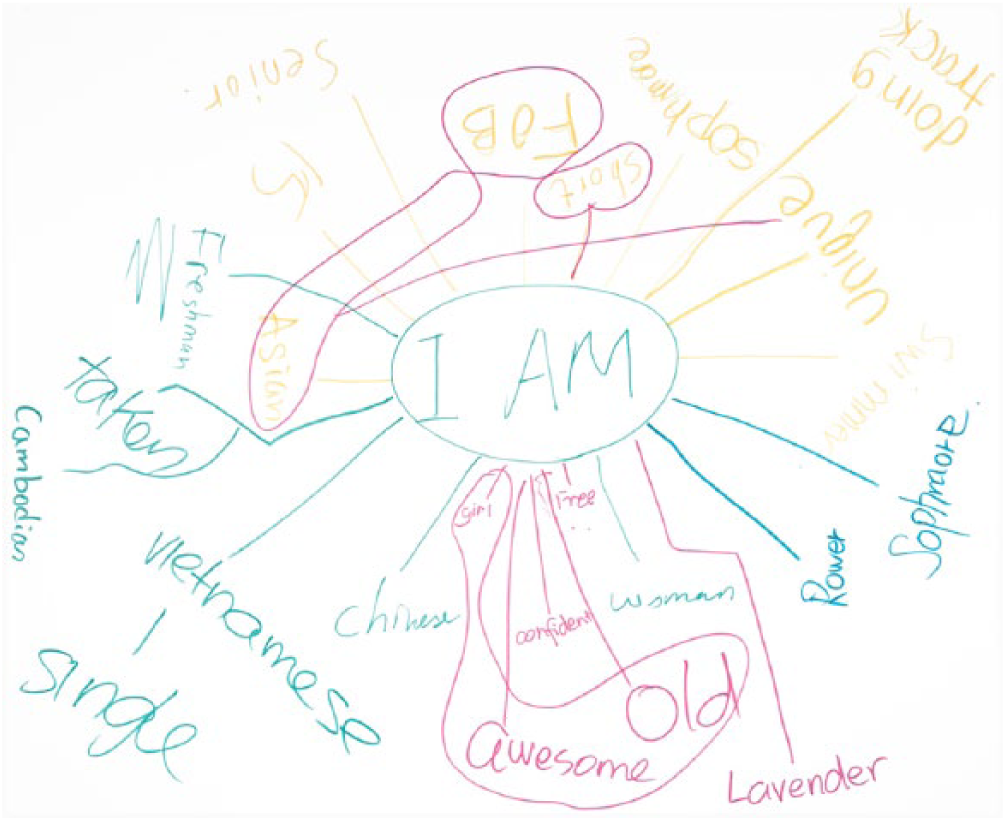
Mapping exercise in a group interview (first week) with Asian American participants.
The semistructured interview included questions that were derived from existing literature concerning identity development and socioemotional adjustment of immigrant-origin youth (Rogers-Sirin & Gupta, 2012; Smith & Silva, 2011; Yoo & Lee, 2005). In each group interview, the interviewer posed broad questions followed by probes. As we aimed to capture participants’ narratives of their experiences, we used the interview questions as a guide such that the course of the group discussion was not restricted (Kang, Okazaki, Abelmann, Kim-Prieto, & Lan, 2010). The broad interview questions concerned both positive and negative experiences as a young person from a particular racial and ethnic background (e.g., Asian American, Latino/a American), experiences of being treated unfairly due to their racial and/or ethnic background, and coping with stress related to negative experiences as an immigrant-origin youth of a particular racial and ethnic background. Sample questions included “Describe a time when you have felt good about being a young person from your particular ethnic and/or racial background”; “Describe a time when it’s felt hard to be a young person from your ethnic and/or racial background”; and “What helps you when you feel stressed (such as feeling sad or worried)?” Table 1 provides a complete list of the questions asked in the first and second meetings of the group interview. Sample probes included “Tell me more about that” and “Say more about what happened.”
Group Interview Questions.
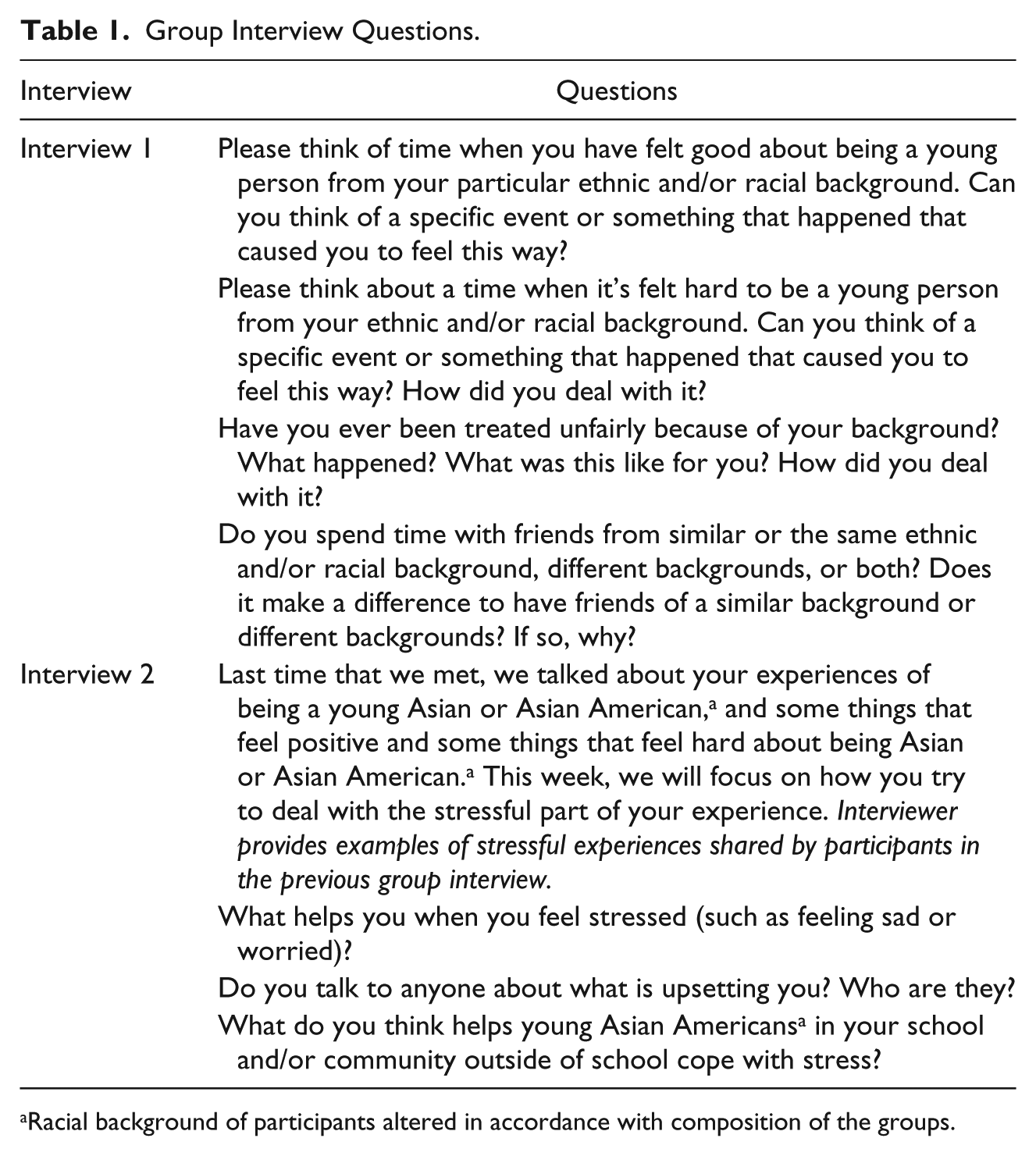
Racial background of participants altered in accordance with composition of the groups.
Data Analysis
The group interview data were analyzed using conventional qualitative content analysis (Hsieh & Shannon, 2005). The purpose of conventional content analysis is to describe a phenomenon in the absence of existing research and theory that adequately explains the phenomenon in question. This analytic approach was well suited to the aims of the present study, as we were interested in learning from adolescents their experiences with ethnicity, race, and related stress, including the contextual meanings of these experiences (Downe-Wamboldt, 1992). Qualitative content analysis involves the interpretation of text data by systematically classifying and identifying themes or patterns (Hsieh & Shannon, 2005). In this approach, the researcher allow for domains and themes to emerge directly from the participant’s narratives. An advantage of this approach is the ability to learn about participants’ experiences without imposing preexisting categories (Hsieh & Shannon, 2005). Data analysis begins with reading through the data several times and attending to the participants’ word to word responses, in order to immerse oneself in the data as well as to achieve a sense of the data as a whole (Hsieh & Shannon, 2005). The members of the research team, all of whom conducted group interviews, initially immersed in reading the interview transcripts, and then coded the data independently. Following this, over the course of numerous discussions, and rereading the interview transcripts multiple times, the team developed a final list of themes (Hsieh & Shannon, 2005). The team then categorized these themes into larger domains based on similarities and differences in content (Downe-Wamboldt, 1992; Hsieh & Shannon, 2005). We also identified similarities and differences within and across the experiences of participants in each of the racial groups.
Any disagreement concerning the interpretation of the data among the research team was addressed as members of the team discussed their perspectives, reread the interview transcript, and then discussed the participants’ responses until they reached consensus regarding the final list of domains and themes. When any member of the research team disagreed with another member of the team on the coding of participants’ responses, the transcript was reread by the team, and each rater discussed her perspective in team meetings. A response in question was then coded after all of the raters, through discussion, fully agreed on the content and contextual meaning of the particular response. We used the criteria of 100% agreement or consensus on raters’ coding of responses before classifying them into themes in order to ensure the reliability and interpretability of the data (Downe-Wamboldt, 1992; Krippendorff, 2004). The final list of domains and themes reflect the research team’s collective review and analysis of the data within and across the four broad racial groups (Afro-Caribbean, Asian, Latino/a, and South Asian; Downe-Wamboldt, 1992; Hsieh & Shannon, 2005).
As trustworthiness is essential to the quality of findings in qualitative research (Morrow, 2005), we implemented several strategies. First, to ensure the accuracy of the group interview transcriptions, we sent each participant a transcript of the interview in which they participated for his or her review. In addition, the authors checked each transcription for accuracy by reviewing audio recordings and written transcriptions of the interviews. Second, we attended to the standard of reflexivity in qualitative research (Morrow, 2005). Throughout the research process, the research team met regularly and discussed our biases, assumptions, and expectations that may potentially influence data analysis and interpretation. We discussed the ways in which our social locations, such as our racial and ethnic backgrounds and gender, may impact the process of conducting the interviews and interpreting the data. For example, we discussed the diversity of our cultural backgrounds and how our personal experiences with privilege and marginalization and social location may facilitate or interfere with participants’ willingness to talk openly about topics such as racism or discrimination. Following the end of each group interview, the team discussed the process and content of the discussion among participants and the interaction between the interviewer and the participants. This provided an opportunity to address any logistical issues in conducting the interviews (e.g., scheduling conflicts), and any challenging moments in the course of the interview when an interviewer or participant may have felt uncomfortable with the content or process of the discussion. In addition, each member of the research team maintained a journal to document their observations and experiences of the group process, throughout data collection and analysis. Third, the research team engaged in critical discussion, where the coders were encouraged to discuss alternative interpretations of the data, record their reactions to the interviews, and reread the transcripts to check the developing themes against the raw data. This approach secured an attitude of openness to the data, which is a critical aspect of qualitative constructive research (Strauss, 1987). Relatedly, in analyzing the data and reporting the results, we sought to represent the participants’ experiences in the participants’ own words.
Results
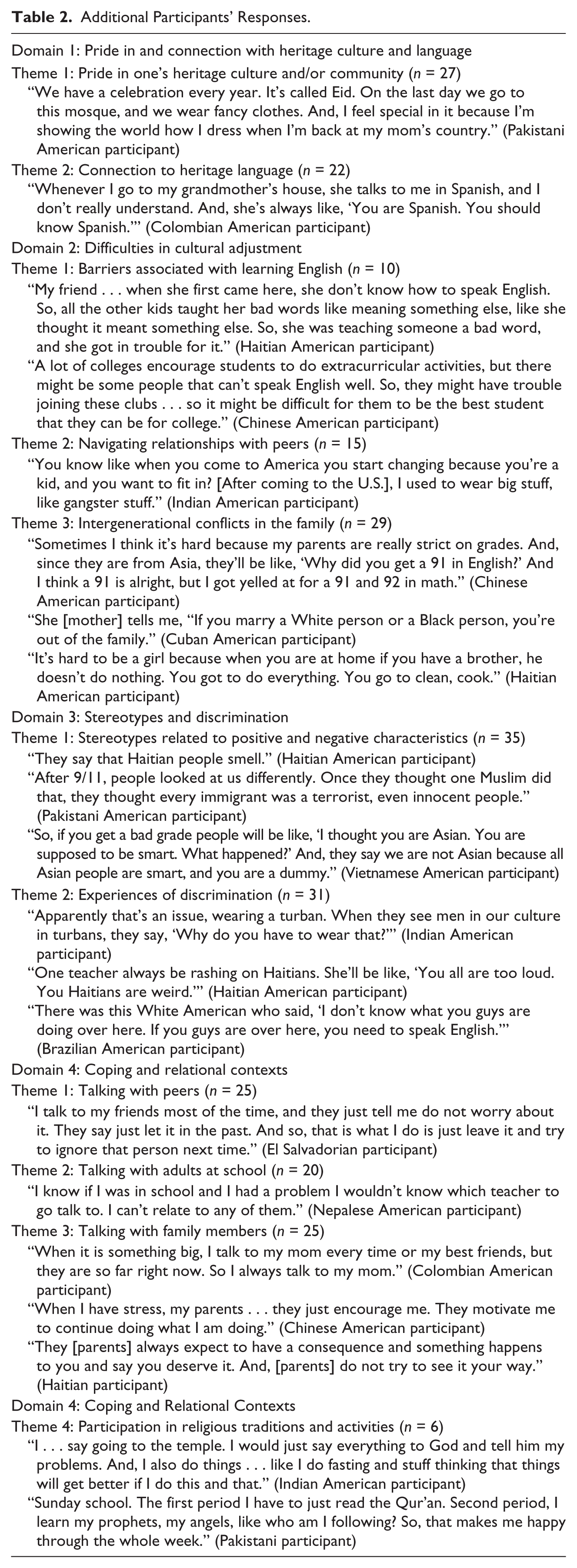
Four major domains related to participants’ experiences of ethnic and racial group membership, and several themes within each of these domains emerged from the data analysis. The four broad domains include (a) pride in and connection with heritage culture and language, (b) difficulties in cultural adjustment, (c) stereotypes and discrimination, and (d) coping and relational contexts. While these domains are reflective of the narratives of adolescents across all of the four racial groups (Asian, Latino/a, Afro-Caribbean, South Asian), we identified ways in which some experiences captured within these domains and themes are distinct across these subgroups of adolescents. In the following sections, participants’ responses illustrate the content of the domains and themes in detail. The “n” following each theme represents the number of participants whose responses reflected that particular theme. We present some of the participants’ responses in quotes in the sections below to illustrate these themes. Additional responses from participants reflecting the themes are provided in Table 2.
Additional Participants’ Responses.
Pride in and Connection With Heritage Culture and Language
Many participants from all four racial groups (Afro-Caribbean, Asian, Latino/a and South Asian) expressed feeling pride in their cultural and linguistic heritage. Specifically, they discussed how identifying with the culture of origin or parents’ culture of origin through engaging in cultural traditions and speaking in their heritage languages facilitated a sense of pride and positive feelings about their ethnic heritage.
Pride in one’s heritage culture and/or community (n = 27)
Participants indicated that identifying with their respective ethnic communities and heritage elicited a sense of pride, and that they enjoyed engaging in cultural activities and events with similar ethnic friends and relatives.
I’m very proud that Chinese have more than 5,000 years of history and culture and very rich and inspirational to the present generation . . . I’m pretty proud to talk about that and say that I’m Chinese. (Chinese American participant) I was at a West Indian carnival and they were bumping . . . kompa. I just loved the feeling. I just loved the fact I was Haitian. I could connect with everybody, and for that day I felt proud of being Haitian. (Haitian American participant)
Some participants reported that they felt a sense of pride in belonging to an ethnic community whom they perceived as making valuable contributions to broader U.S. society.
I feel really proud of being Latina because I remember after 9/11 a lot of people went to help clean up the city. The most people who went to help were Latinos. They made me feel very proud because we Latinos like to be together, harmony and help each other. (Cuban American participant)
Connection to heritage language (n = 22)
Participants either indicated that they valued being able to speak their heritage language or that their families valued the heritage language.
I’m really influenced by my family, because my family is really Asian. And, because of that I really wanted to take Mandarin. I wanted to learn Mandarin because it’s actually a very interesting language. And, I want to be able to communicate when I go to China. (Chinese American participant)
Difficulties in Cultural Adjustment
The second broad domain that reflected the responses of participants from all four racial groups concerned difficulties in simultaneously adjusting to mainstream American culture and to heritage ethnic communities. Analyses revealed three themes within this domain, including the barriers associated with learning English for participants arriving at a later age to the United States, the navigation of relationships with peers, and intergenerational conflicts between the participants and their parents.
Barriers associated with learning English (n = 10)
Some participants who had arrived to the United States in late childhood or early adolescence expressed feeling a lack of belonging in school, due to the difficulty of learning English and communicating with others, and to experiencing negative attitudes by peers.
I didn’t have enough friends when I first moved here because I was different from them. I didn’t know any English so I couldn’t communicate to my classmates. (Indian American participant) I went into [an English as a Second Language] class without knowing anything. I didn’t know how to communicate. It was really hard because people made fun of me. You know, the way I talk English. Or, they made fun of me because I didn’t understand what they were saying. (Guatemalan American participant)
Other participants described additional concerns about social and educational barriers (e.g., translating for parents who are not English proficient, understanding English at school).
My mom doesn’t know that much English. So, whenever she needs help with English, I need to help her like make phone calls and stuff. My brother used to do that but now he’s in college and so I have to do it now. (Sri Lankan American participant)
Navigating relationships with peers (n = 15)
Participants described challenges in their interactions with peers from similar and different ethnic and racial backgrounds. They indicated a preference for forming friendships with peers from similar ethnic and linguistic backgrounds, while also engaging with White and other racial minority peers.
It’s really comfortable talking to a close friend with the same culture because they’ll relate to you, as though they’ve been through the same things as you. (Vietnamese American participant) I have White friends, Asians, Blacks. I enjoy it because I feel like you learn a lot from being around different cultures and like it helps eliminate a little bit of the stereotypes. (El Salvadorian American student)
A few participants expressed that they feel embarrassed when they are approached by peers from a similar ethnic or racial background who speak in a heritage language in public, as they were concerned about how people of their ethnic or racial background would be perceived by others.
I hate like when you know a person and they’re Haitian, and they know you’re Haitian, and like they just come up to you in public and start speaking Creole. This is why people give Haitians bad names because they are yelling, making us look bad. (Haitian American participant)
Intergenerational conflicts in the family (n = 29)
Participants from all of the groups reported the importance of their relationships with their parents and family members in their experiences as immigrant-origin adolescents. Some participants discussed their parents’ own struggles with cultural adjustment, and gaps in understanding that resulted from differences in cultural experiences between themselves and their parents. Specifically, participants expressed feeling stressed by their parents’ restricted understanding of mainstream American culture and by cultural value differences between themselves and their parents. The particular descriptions of parental behavior and expectations varied across different ethnic groups. For example, Asian and South Asian participants specifically indicated that their parents had higher academic expectations, whereas participants from all four groups expressed that they had more restrictions socially when compared with “American” peers. In addition, participants across the four groups noted that parental expectations in the home differed between boys and girls, with girls being expected to engage in more responsibilities (e.g., chores) and having more restrictions around dating and socializing with boys.
I think parents don’t understand us sometimes. So, that’s why they have more expectations, and our thoughts and views are different from them because we are a new generation. (Nepalese American participant) They’re really strict. Haitian parents are strict. I just want to have American parents sometimes, because it would be easier. (Haitian American participant) Speaking about brothers, I feel like my parents delegate most of the chores to me. Once he (brother) like offers me some kind of help but they would say she has to do it. She’s the girl in the family. (Cambodian American participant)
Stereotypes and Discrimination
The third broad domain involved experiences of stereotyping and discrimination. This domain encompassed stereotypes related to positive and negative characteristics and experiences of discrimination both within and outside of the school setting.
Stereotypes related to positive and negative characteristics (n = 35)
Participants reported being exposed to racial and ethnic stereotypes across various contexts (e.g., school, home, community, neighborhood). Most of the stereotypes devalued the participants’ ethnicity and/or race, and some stereotypes held seemingly positive characteristics or traits about a particular racial or ethnic group. There were some important distinctions concerning positive and negative stereotypes across the four groups. For example, Afro-Caribbean participants reported stereotypes that devalued their cultural heritage and their ascribed racial status as Blacks or African American.
They always think of us like nasty, dirty. (Haitian American participant)
Latino/a participants described contradictory stereotypes about being perceived as “lazy” and “hard working” in different circumstances.
One day, I heard somebody saying that Spanish people are stupid, you know, lazy. (Honduran American participant) When we hear about Latinos it’s, “They work really hard in the garden,” and things like that. (Cuban American participant)
South Asian participants noted the effects of 9/11 on perceptions of their communities, and specifically the problem of being perceived as terrorists.
After 9/11, people looked at us differently. Once they thought one Muslim did that, they thought every immigrant was a terrorist, even innocent people. (Pakistani American participant)
Asian and South Asian participants reported that they were perceived as innately smart, reflecting the notion of “model minority.” The model minority stereotype refers to a conception of Asian Americans as an economically, professionally, and academically successful group, without consideration of the potential for individual or family distress (Choi, 2007).
The stereotype goes all Asians are smart. But, to be honest, I’m not really that smart. I just work really hard. I try really hard and try to get everything done, but then I don’t like it because they assume that I’m smart. (Chinese American participant)
In addition, some participants expressed feeling distressed when others misidentify their ethnicity (e.g., a Columbian American student being mistaken for being Mexican).
And they don’t see me as Nepali. They see me as Indian, and I try to point out how Nepali is different. And they’re like, “No, you’re Indian.” It makes me mad a lot. (Nepalese American participant)
Experiences of discrimination (n = 31)
Participants in all of the groups discussed being directly impacted by ethnic and/or racial discrimination in a number of different settings (school, community, neighborhood).
One day I was in Chinatown . . . and . . . a couple grown up kids yell to me, “Chinese stupid!” I was just so angry. (Chinese American participant) Like I didn’t get bullied, but I got teased by my friends a lot and like . . . when Osama died, they would say “Oh, your uncle died.” (Pakistani American participant) They always say, “If you get on my nerves, I’m going to deport your whole family . . . I’ll call immigration on you.” (Colombian American participant) A phone was missing off a teacher’s desk and I was blamed for it. They pulled me into the office. I didn’t know what was going on. And after that, I felt I was really discriminated. I’ve never stolen anything. (Haitian American participant)
Participants expressed feeling hurt when people make assumptions about their use of heritage language and their English speaking abilities, even when participants were born and raised in the United States. In fact, several participants stated that they were asked by others both within and outside of school if they know English. Notably, the particular form of discrimination experienced by participants varied across the four groups, typically aligned with stereotypes ascribed to racial and ethnic groups.
I get offended when we talk in our language and they say that we are FOBs [Fresh Off the Boat]. (Chinese American participant) My teacher came up to me, she grabbed my shoulder and she says loudly, “Hello, How are you? Do you understand? Nod if you understand!” (Guatemalan American participant who speaks fluently in English)
Furthermore, some participants indicated that the experiences of first and second generation immigrant-origin youth are distinct, and that they either experienced or witnessed similar ethnic peers discriminating against each other based on perceived cultural and linguistic differences across first and second generations.
I saw at the lunch table, and they’ll be calling the other Haitians FOBs at the other tables, and they’ll be like “oh come here.” “Don’t sit there,” and they would start saying whole bunch of Haitians bad words and pretend they speak Creole, trying to make fun of them. (Haitian participant)
Coping and Relational Contexts
The fourth domain reflected participants’ responses to being questioned about how they seek help when they face stress related to their experiences as racial minority, immigrant-origin youth. This domain encompassed four themes related to approaches to coping: talking with peers, talking with adults at school, talking with family members, and participation in religious traditions and activities.
Talking with peers (n = 25)
Participants from all of the groups reported that talking to their friends was helpful in managing their stress related to their adjustment as immigrant-origin youth. While most of these participants indicated that they have friends from diverse cultural backgrounds at their school, many participants stated that they prefer to seek help from friends from similar ethnic and/or linguistic backgrounds, as they felt that they would be better understood by a peer who shared a common cultural worldview and heritage language.
It is good to communicate within my own culture. We can talk in our own language. (Chinese American participant) I usually do not talk about it with my family. I kind of tell my friends, like I feel closer to them. I feel like if I tell them my problems, they would give better advice. (Indian American participant) When you talk to friends, you get a different perspective. (Haitian American participant)
Talking with adults at school (n = 20)
Participants in all four groups stated that they are not likely to seek help from teachers, guidance counselors, and other adults at school. Many participants stated that they would not consider seeking help from a counselor or teacher at school, due to their discomfort with discussing private matters with an adult at school, concerns about not being understood or their family not being understood, and concerns about their privacy. A few Haitian American participants stated that they do not feel understood by counselors who interpret physical discipline by parents as abuse. Some participants indicated that they were not aware that there were guidance counselors in their school.
I hate when they [guidance counselors] say that when they will keep it private but then they tell all the teachers. (Haitian American participant) I really wouldn’t talk to someone [adult] from the school ’cause that’s just weird. (Guatemalan American participant)
It is worth noting that a few participants also expressed that they are more likely to seek help from a teacher or staff member at school who is from a similar cultural background.
I know a teacher. She’s a Chinese person. She helps many Asian kids, many Chinese kids, even stays after school if someone came and asks for help. (Chinese American participant)
Talking with family members (n = 25)
Participants in all of the groups reported mixed feelings about seeking help from family members (e.g., parents, siblings, grandparents, cousins, aunts, uncles). Some participants reported that they have felt helped by family members when coping with stress (n = 13).
I think it just depends on the level of seriousness. If it is something that is pretty small, then I will go to my friends, but if it is something really serious, and can affect me or my health or just anything, then I will probably go to my older brother and my parents. (Haitian American participant) I talk to my sister, like if I get in trouble . . . Because my parents will just start yelling and stuff. My sister just listens, talks back to me, and then goes back to our parents. (Sri Lankan American participant)
Others (n = 12) stated that it was not helpful for them to seek help from their parents and other family members or they worried that they would burden their parents by openly discussing their stress with them.
I think because you do not want your parents to get worried about you and concerned about you. So, most kids like to keep hiding. I mostly do not tell my parents how I feel. I just put it on my journal and just let it be. (Cambodian American participant)
Participation in religious traditions and activities (n = 6)
A number of participants indicated that engaging in religious activities in places of worship was an important source of support in coping with stress. Involvement in religious activities was particularly salient among South Asian and Latino/a participants.
In church, you may feel more comfortable to talk. For example, if you’re doing a confession, you know the father is not going to talk to anybody. The father can help you and give some ideas to solve the problem. So, I think church can help us. (Cuban American participant)
It is important to note that some participants across groups indicated that they would not seek help from anyone, and rather cope with stress related to cultural adjustment on their own, either by avoiding thinking about the stress, writing in a journal, playing sports, listening to music, or watching movies. Other participants indicated that engaging in social media (e.g., blogging, playing games, Facebook, Twitter) provides an outlet for coping with stress. In addition, participants from all of the groups shared their perspectives on strategies to provide increased access to help in school for immigrant-origin adolescents. For example, they recommended the implementation of youth discussion groups to foster open dialogue about stressors faced by immigrant youth. In the hope of reducing stereotyping, participants also suggested that their school develop an annual “culture fair,” which would help students from all cultural backgrounds to learn more about each other’s cultural histories and traditions. They also recommended that the school hire more teachers of diverse cultural and racial backgrounds, and provide a list of professionals outside the school from whom students can seek help.
Discussion
The purpose of this study was to gain insight into processes involved with immigrant-origin adolescents’ experiences of ethnic and racial group membership, acculturative stress, and approaches to coping with acculturative stress in various social contexts. We included four groups of adolescents (Afro-Caribbean, Asian, Latino/a, South Asian) in order to identify shared experiences across youth perceived to belong to specific racial backgrounds. Furthermore, we included both some of the fastest growing immigrant subgroups in the United States (e.g., Latino/a and Asian), and immigrant subgroups (Haitian and South Asian) who are particularly underrepresented in the literature. The adolescents in our study, through active discussions with each other and with the interviewers, provided compelling narratives of their experience of living within and across divergent cultural contexts.
Our findings highlight the complexity of forming identity in the context of acculturation. They also suggest the importance of a “social mirror” that either facilitates or interferes with identity formation, and of the unequal power relations in youth’s microsystems (e.g., school) that contribute to stress (Daha, 2011; Li, 2009; Suárez-Orozco, 2000). Consistent with the integrative model of minority youth development (García Coll & Marks, 2012), participants in our study negotiated their identities as immigrant-origin youth within a broader system that has particular expectations of them due to social position factors (García Coll et al., 1996; Li, 2009) such as race, ethnicity, gender, and English language proficiency. The participants’ narratives reflected the ways in which interactions with family, peers, friends, and teachers, occurring in multiple, interacting contexts all influence the ways in which they construct their identities, experience stress, and approach coping. For these youth, identity development takes place against a backdrop of various stressors, such as limited financial resources, discrimination, and language barriers. At the same time, identity development is driven by a sense of optimism about obtaining better educational opportunities, a desire to engage in both their ethnic and/or religious communities and mainstream American culture, and access to support and resources from peers and adults (Suárez-Orozco et al., 2008).
Consistent with prior studies (Berry et al., 2006; Birman & Simon, 2014; Marks et al., 2014), our findings suggest that immigrant-origin youth engage in developing a bicultural identity which sustains their connection with the heritage culture and a sense of belonging in mainstream context. While previous research has focused on the association between positive ethnic identity and psychological health, we were able to gain a more in-depth understanding of how adolescents experience themselves and others in multiple contexts, and the processes implicated in bicultural identity development. Our study is among few studies that examine narratives reflecting both positive and negative experiences with ethnicity and race among immigrant-origin adolescents in a socioculturally diverse, urban public high school. Our study is also unique in that we examined the particular experiences of immigrant-origin youth who share a common socially ascribed racial labels (e.g., Afro-Caribbean or Black, Asian, Latino/a, South Asian), and the overlapping experiences across immigrant-origin youth from diverse ethnic and racial backgrounds. In the following sections, we describe our interpretation of the findings, particularly as they relate to a search for a bicultural identity, accompanying challenges and stress, and the importance of informal sources of support in coping with this stress.
Importance of Cultural and Linguistic Identity: Search for Bicultural Identity
Previous research has noted youth’s desire to develop a bicultural identity through which they participate both within their ethnic communities and within mainstream contexts (Berry et al., 2006; Birman & Simon, 2014; Feliciano, 2009; Fine et al., 2012). The present study expands prior research by providing a nuanced understanding of how racial minority immigrant-origin adolescents construct their identities within a particular social, cultural, and economic context. Our findings suggest that the formation of identity relies on relational contexts and processes, whereby adolescents develop their identity through interactions with others (Daha, 2011; Umana-Taylor et al., 2002). Both first and second generation participants from all of the four racial groups indicated a sense of connection with their heritage cultural and linguistic backgrounds. A sense of pride in the heritage culture was clear as participants discussed feeling special or unique when they engaged in cultural activities, or when they expressed valuing activities initiated by members of their ethnic communities that benefitted broader U.S. society. Participants also reported an interest in developing and maintaining a connection with mainstream context. For example, they shared that they wished to fit in or belong to their broader school environment. These adolescents appreciated having access to a culturally diverse group of peers and at the same time wanted their own cultural heritage to be recognized and valued. Therefore, they recommended a “culture fair” at their school in order to educate others about their cultural heritage and traditions, eliminate stereotypes, and foster a sense of community.
Consistent with prior research (Choi, 2007; Feliciano, 2009; Hall & Carter, 2006; Marks, Patton, & García Coll, 2011; Sirin et al., 2013), adolescents in our study negotiated identity in the context of socially ascribed racial labels and stereotypes. Our findings indicate that ethnicity and race are intertwined, as participants internalize both positive experiences of belonging to specific ethnic and racial groups and negative stereotyping and discrimination. The effects of a negative social mirror (Suárez-Orozco, 2000) are palpable in our participants’ experiences with ethnicity and race. For example, a Nepalese American participant spoke up in the group interview about not wanting to be labeled as Indian, but nonetheless found that his peers resisted recognizing his ethnicity. At the same time, the adolescents in our study did not want to be constrained by categories or labels imposed by others, including family members, peers, and teachers. Instead, they are actively engaged in multiple cultural contexts, perhaps in an effort to reduce stereotyping and increase a sense of belonging. This is evident as they seek friendships with peers from both similar and different ethnic and racial backgrounds, and as they question their parents’ beliefs. These youth did not necessarily view the different value orientations of home and school environments as contradictory, but rather seemed invested in developing multiple cultural identifications through connecting with peers and adults. Furthermore, it has been noted that youth experience different affective associations to ethnicity and race which are context dependent (Marks et al., 2011). We observed a variation in emotional experiences as participants discussed both positive and negative feelings toward others within their ethnic and racial groups and toward others outside of their ethnic and racial groups. As such, we underscore the importance of positive experiences and identifications with both heritage and mainstream contexts in the psychological adjustment and well-being of immigrant-origin youth.
Challenges to a Bicultural Identity
Although a bicultural identity is important to participants in our study, there are several challenges to their attempts in forming a positive bicultural identity. Specifically, the findings in our study are consistent with previous research suggesting that immigrant youth face various stressors, such as language barriers and conflicting values between their parents and peers, and the problems of negative social mirroring, such as discrimination (Ko & Perreira, 2010; Suárez-Orozco, 2001). Many first generation participants reported experiencing stress related to either their own limited English language proficiency and communication problems or that of their parents. Their accounts demonstrate the anxiety that is associated with how limited knowledge of English would place them at a disadvantage for achieving their future goals. Participants’ narratives also reflect the interpersonal strain of translating between heritage language and English for their parents, and of developing a sense of connection with peers at school where they felt alienated.
Participants in our study reported that although they were emotionally connected with their parents, they felt as though their parents’ expectations concerning their academic achievement and responsibility to their families were exceptionally high compared with that of their peers from other ethnic backgrounds. It is important to note that while participants from all four groups (Afro-Caribbean, Asian, Latino/a, South Asian) described strict parental expectations concerning social behavior and relationships (e.g., choosing a romantic partner from a similar ethnic background, completing tasks at home), Asian American and South Asian American participants reported high, sometimes excessively high, parental expectations concerning academic achievement. These findings are especially important when considering the potential longitudinal effects of intergenerational conflicts on immigrant-origin youth’s psychological well-being (Birman & Simon, 2014). Previous research indicates that immigrant parents tend to be stricter in their expectations of their daughters, and monitor their daughters more than sons (Crockett et al., 2009; Qin, 2009). Interestingly, participants from all four groups called attention to differential parental expectations with regard to gender, in which girls were expected to complete domestic chores at home, adhere to cultural expectations, and maintain identifications with heritage culture to a greater extent than boys.
Another source of acculturative stress described by the participants in the present study entailed tensions between their identifications with their heritage culture and with mainstream culture in the school context. These tensions were evident in difficult interactions with peers from similar and different ethnic and racial backgrounds. Participants indicated that they preferred friendships with similar ethnic peers, similar to findings in previous studies (Chan & Birman, 2009; Li, 2009). However, for many participants, interacting with similar ethnic peers posed a threat to a sense of belonging among peers from other backgrounds. The desire for a sense of belonging played a key role in how participants made decisions about interacting with peers from similar and different ethnic and racial backgrounds (Roche & Kuperminc, 2012).
Despite the fact that participants expressed an appreciation of attending a school that is composed of a culturally diverse student body, they reported feeling marginalized by peers and by teachers. Consistent with previous studies (Benner & Graham, 2011; Chavous et al., 2008; García Coll et al., 1996; Suárez-Orozco, 2000), discrimination was observed to be a normative experience among immigrant-origin adolescents. It is possible that attending a school with a relatively higher concentration of racial and ethnic minorities facilitated both an increased sense of identification with one’s heritage culture and community and similar ethnic peers, and an increased attunement to racial dynamics and relations among peers and teachers. The ways in which adults in the school setting (e.g., teachers) communicated their stereotypes to immigrant-origin youth is highly problematic and has important implications for participants’ academic, social, and emotional functioning. For example, first and second generation youth from all four groups shared that they experienced discrimination when teachers assumed that they did not know English, potentially underestimating adolescents’ academic abilities. In addition, teachers’ negative stereotypes of Haitian American adolescents as less competent may influence decisions about classroom placements and inappropriate approaches to discipline (Thomas et al., 2009). Conversely, teachers’ stereotypes of Asian Americans as the socially privileged model minority may contribute to a lack of recognition of economic stress, family strain, and academic, social, emotional challenges among Asian American adolescents (Patel & Kull, 2011; Stein et al., 2014). It is possible that teachers are also burdened by social inequities that are replicated in schools, and therefore may not recognize the needs of racial and ethnic minority students (Brown & Chu, 2012). Nevertheless, teachers’ valuing of school and classroom diversity is critical to facilitating positive identity development among immigrant-origin youth (Brown & Chu, 2012). Our findings raise concern about an impossible dilemma that youth face when coping with stereotyping and discrimination by peers when they feel that they cannot turn to adults in the school for help.
While experiences of stereotyping and discrimination were reported by participants from all four groups (Afro-Caribbean, Asian, Latino/a, South Asian), there were important distinctions among these experiences across the groups. Specifically, participants from each of the four groups reported being stereotyped in unique ways (e.g., “lazy,” “dirty,” “terrorist,” “smart”). Discrimination was evident primarily in verbal harassment, teasing, and bullying. For some Latino American participants, harassment consisted of verbal threats of deportation. For Haitian American participants, teachers’ negative attitudes and assumptions of misconduct contributed to feelings of mistrust and a lack of recognition. For Asian American adolescents, there was an assumption made by peers and teachers that they are innately intelligent, and therefore, expected to achieve academically at higher levels than their peers (e.g., model minority stereotype). Furthermore, contradictory stereotypes were pervasive, especially those reported by Latino/a and South Asian participants. For example, Latino/a participants reported that they are viewed as lazy but also that they work hard in certain circumstances, such as with gardening and landscaping. South Asian participants reported that they were perceived as terrorists and model minorities.
These experiences of stereotyping and discrimination fostered a sense of mistrust and negative social mirroring (Suárez-Orozco & Suárez-Orozco, 2001) such that participants typically did not seek the help of adults and peers whom they believed would not be empathic toward them. Even when participants reported having a positive sense of connection with their heritage culture, they did not seem to be protected from the negative effects of discrimination directed against themselves, their peers, or their families (Stein et al., 2014; Tummala-Narra et al., 2011). Our findings underscore the unique ways that discrimination may affect the lives of immigrant-origin youth, as they cope with multiple stressors across home (e.g., intergenerational conflicts, economic stress) and school (e.g., isolation, discrimination). The findings also indicate that in addition to stereotyping and discrimination by those outside of their ethnic and racial groups, some participants struggled with stereotyping within their ethnic groups. Within group stereotyping and discrimination can be understood as a way of managing anxiety connected with negative stereotypes of participants’ ethnic and racial groups, and securing a sense of belonging to mainstream culture. For participants who were born and raised, or primarily raised in the United States prior to high school, maintaining distance from similar ethnic peers whom they referred to as FOBs (Fresh Off the Boat) may have been an attempt to minimize the salience of their own feelings of racial and cultural differences at school.
Discrimination can create an inhibiting environment (Benner & Graham, 2011) in which the choice of self-identification, engagement with both heritage and mainstream cultures, and the choice of peers is constrained by imposed and internalized stereotypes and labeling. Relatedly, studies concerning stereotype threat have indicated that ongoing experiences of being stereotyped trigger anxiety and self-doubt among racial minority youth (Potochnik et al., 2012; Steele, Spencer, & Aronson, 2002). Even seemingly positive stereotypes (e.g., model minority) have been found to have detrimental effects on well-being (Wong, Brownson, & Schwing, 2011). Unfortunately, our participants’ narratives concerning their experiences with discrimination and stereotyping at school by peers and teachers seem to parallel those of immigrant youth in urban high schools a decade ago (Rosenbloom & Way, 2004). These findings call attention to the lack of progress made by educational institutions in promoting a positive academic and social climate for many of these youth. It is clear that adolescents in our study were engaged in an environment that replicated racial and ethnic stereotypes from broader society. At the same time, our participants expressed a desire to resist these stereotypes by making attempts to educate others about their heritage cultures and to develop friendships with peers from various cultural backgrounds. They readily recognized the falseness of stereotypes directed toward their ethnic and racial groups, and through dialogue in the group interviews collectively expressed their distress concerning discrimination and injustice. The participants seemed open, and even enthusiastic about finding ways to collaborate with their peers and with teachers to challenge stereotypes and in creating safe spaces for dialogue on ethnicity and race. The group format offered an opportunity to rethink collectively the inequality they face, and the resources that could be accessed to address this inequality, and facilitated a sense of empowerment that is critical to identity development (Weis & Fine, 2001).
Informal Sources of Support
Contrary to the notion that youth do not seek help from formal sources (e.g., mental health professionals, guidance counselors) due to stigma, participants’ decisions about help-seeking seemed to be guided by the interaction of various systemic issues and interpersonal interactions across both home and school contexts (Chang et al., 2014; García Coll & Marks, 2012; Patel & Kull, 2011). Not surprisingly, our participants tended to approach help-seeking in a way that paralleled their affective experiences within their heritage and mainstream contexts, and relied primarily on informal sources of support (e.g., family, friends). For example, participants who had experienced challenges with learning English reported seeking out friendships with peers from a similar linguistic background, and participants who experienced discrimination by peers outside of their ethnic group tended not to seek support from these peers. In addition, many participants described having a close relationship with parents, siblings, grandparents, and other family members from whom they drew support and encouragement. A sense of interdependence among family members was valued by many participants, who felt as though they could seek help from siblings and other family members when they felt concerned about burdening their parents by talking about their stress or when they felt as though their parents would not be able to understand their struggles (Yeh et al., 2003). Furthermore, for some participants, a connection to their religious community and traditions provided support in the face of acculturative stress. This is consistent with prior research suggesting that access to a supportive similar ethnic social group or enclave and a supportive connection with parents can help to mitigate the negative effects of acculturative stress (Cho & Haslam, 2010; Potochnik et al., 2012).
Negative or discriminatory experiences with teachers and peers played an important role in whether participants seek help in coping with acculturative stress. Our findings suggest that it is important to consider how youth from different ethnic and racial groups navigate seeking help in a context based on a history with other ethnic and racial groups and on their own trajectories of acculturation (Chan & Birman, 2009). Some participants, for example, stated that they did not feel that they could relate to a teacher or a guidance counselor from a different cultural background, and others expressed concern about whether adults in school would maintain privacy and confidentiality. Our findings indicate that youth were least likely to seek help from adults at school in coping with acculturative stress, perhaps reflective of a school climate challenged with complex racial and cultural dynamics among students and personnel.
Previous studies suggest that coping strategies may be influenced by the type of stress and stability of the stress over time (Yoo & Lee, 2005). Many participants in the present study stated that they are likely to wait until a problem is more severe before they seek help from others, possibly placing them at risk of greater levels of distress rather than early identification of distress. It is important to note that there were participants in all of the groups who stated that they would not seek help from anyone, and preferred to cope with stress through avoidance, or through engaging in various activities (e.g., writing in a journal, listening to music, engaging in social media). These approaches seem to indicate both resilience as youth find creative ways to cope with stress, and an avoidance of burdening others, particularly in their families whom they perceive as struggling with more severe stress, such as that related to financial limitations, unemployment, or language and educational barriers (Chang et al., 2014).
Limitations of Present Study and Implications of Findings for Research and Intervention
While adolescents’ narrative accounts provide critical, detailed information concerning experiences of ethnicity, race, and related stress, there are several limitations of the present study that are worth noting. We recognize that we used a convenience sample in one urban public high school in the Northeastern part of the United States with a culturally diverse student population, and that our findings may not fully reflect the experiences of immigrant-origin youth living in other regions of the United States and attending alternate school systems (e.g., charter, private) with a different concentration of racial and ethnic minority students. For many participants, engaging in group interviews may have been an empowering experience as they typically do not have safe spaces to discuss sensitive topics such as discrimination, and for other participants, the group format may have been a challenging space for them to discuss their perspectives.
In the present study, we observed both overlapping and distinct experiences of ethnic and racial group membership among adolescents across racial position, gender, and immigrant generation (first and second generation). Although we designed the group interview such that adolescents from similar racial backgrounds could engage in open discussions with each other, we were unable to create a space in which participants from similar ethnicities (e.g., Chinese American, Mexican American), with the exception of the Haitian American groups, could discuss issues that may have been more unique to members of their ethnic community. We also did not separate groups by gender, and this may have posed challenges to some boys and girls in sharing their perspectives. Future studies can attend to specific experiences of adjustment within ethnic groups, and to the unique experiences of boys and girls (Qin, 2009). It would also be important to conduct interviews with youth from one particular immigrant generation, especially when considering research on the immigrant paradox (Alegría et al., 2008; García Coll & Marks, 2012; Marks et al., 2014), which suggests that mental health outcomes for U.S.-born immigrant-origin individuals are worse when compared with foreign-born immigrants, implicating unique stressors faced by each generation. Furthermore, as interviews were conducted in English, the groups excluded newcomer students who are not proficient in English, and students who were not comfortable with discussing issues of ethnicity and race in English. We also did not include a measure of English proficiency or fluency in the study and, therefore, were not able to formally assess participants’ English language abilities. Our findings may be limited by differences in ethnicity, race, and gender between participants and interviewers. Although interviewers observed that participants spoke openly about their experiences, it is possible that some participants felt uncomfortable talking about ethnicity, race, and discrimination with interviewers whom they may have perceived as unable to understand their experiences. We also did not examine the role of other social identity factors, such as social class, sexual orientation, and disability which may have played a role in participants’ experiences of their ethnic and racial group memberships.
Despite these limitations, the present study has important implications for future research and interventions. Future research can examine the role of intersectionality in the experiences of racial minority immigrant-origin adolescents, and longitudinal studies would be better positioned to gain insight into how adolescents negotiate ethnicity and race in conjunction with other aspects of identity (e.g., social class) across time. Future studies can also examine the effectiveness of interventions aimed to provide safe spaces in which adolescents can discuss their challenges with acculturative stress and identity development. Research exploring the perspectives of teachers and other adults in the school context (e.g., guidance counselors, administrators), and the perspectives of parents/legal guardians on immigrant-origin youth’s experiences would further contribute to a more comprehensive understanding of systemic influences on adolescents’ identity and social, emotional, and academic adjustment.
Our findings suggest a closer attention to the design and implementation of interventions with racial minority immigrant-origin adolescents. The group interview provided opportunity for participants to share their perspectives with each other, find validation in their experiences, and examine the ways that systemic oppression affects their daily lives. They also provided a platform for discussing strategies to cope with stereotypes and discrimination. Participants expressed that they would benefit from regular discussions about stereotyping and identity in group format with their peers, including those who are from different ethnic and racial backgrounds. They underscored the importance of hiring teachers from diverse cultural and racial backgrounds, and hoped to find ways to collaborate with teachers to create safe spaces to discuss issues of discrimination and stereotyping and to educate others about their cultural heritage. Participants also shared that existing bullying prevention programming in the school did not address the problem of racial, ethnic, and linguistic discrimination. As such, they voiced the need for interventions to address the problems of discrimination, language and communication barriers, and related social isolation among immigrant-origin students.
Our study is unique in that by considering youth’s experiences across contexts, the findings can better inform interventions related to home, school, and broader community. From an integrative contextual perspective (García Coll & Marks, 2012; Marks et al., 2014), interventions should encompass multiple modalities (e.g., school-based, community-based, individual), and multiple sources of support (parents, peers, teachers) to foster positive bicultural identity and adjustment among immigrant-origin youth. School-based interventions should include workshops and other types of training for teachers and school personnel on recognizing and addressing adjustment issues related to immigration, such as language barriers, stereotyping and discrimination. Training for teachers and school personnel should emphasize the importance of their relationships with students in help-seeking decisions (Anyon, Ong, & Whitaker, 2014). In addition, teacher-student collaboratives can promote a sense of community and understanding of diverse cultural backgrounds. Exemplars of such collaboration have been described by scholars (Weis & Fine, 2001) who emphasize the central role of educators in working with adolescents to challenge social inequalities that are reproduced in schools through creating “counterpublics,” or spaces in which adolescents and adults question and challenge exclusionary practices related to race, ethnicity, language, gender, social class, and sexuality. We further highlight the importance of securing students’ privacy as an essential component of such collaboratives in order to ensure a sense of trust and belonging. It is through the creation of such safe spaces that youth can more freely express the full multiplicity of their identities. These safe spaces can also facilitate a movement away from stereotyping and blaming individuals for their emotional distress and toward recognizing that youth’s socioemotional and academic adjustment rests on systemic issues.
School-based and community-based interventions should further involve outreach to parents and caretakers in order to help bridge language and communication barriers between parents, teachers, and students. Language and communication issues should be central to the concerns of educators and clinicians. It is clear from our participants’ narratives that schools and communities need to provide increased emotional support for English language learners. It would be helpful for schools to engage in outreach efforts with cultural and religious organizations to foster dialogue concerning stress related to immigration and minority status, with the aim of increasing sources of support when identifying and coping with psychological distress. Interventions should further consider the role of peer relationships and friendships within and outside of school. Tapping peer networks can facilitate early identification of psychological distress and insight into adolescents’ experiences with cultural adjustment and identity. It is possible that social media and technology can also be used effectively for students and teachers to engage in safe dialogues concerning ethnicity and race, and provide opportunity for identity exploration and educating others about one’s heritage culture and values.
The participants in the present study interpreted their relationships with parents and other families in complex ways, feeling both supported and burdened in these relationships. As such, it is important for educators and clinicians to recognize the nuances in family relationships among immigrant-origin youth, including those connected with values and roles concerning gender. Both community-based and individual level interventions (e.g., psychotherapy) should aim to improve communication between adolescents and their parents or caretakers, address value orientation differences and intergenerational conflicts within families, and consider the systemic influences (e.g., racism, poverty) that intensify these conflicts (APA, 2012; Ying & Han, 2007). This is especially critical in diagnostic considerations as clinicians may be apt to view these family conflicts as pathological rather than as rooted in broader social oppression and immigration processes. Clinicians should make efforts to recognize the complexity of acculturation processes, the importance of bicultural identity, and specifically that immigrant-origin youth are engaged with exploring two or more sociocultural contexts often with similar investment (Berry et al., 2006; Birman & Simon, 2014; Rogers-Sirin & Gupta, 2012). It is also important for clinicians to recognize that adolescents’ identities are dynamic and fluid, and that they may have ambivalent identifications with both heritage and mainstream contexts. The integrative contextual model (García Coll & Marks, 2012; Marks et al., 2014) draws attention to the context of intervention itself. As such, clinicians should consider the role of social position factors within the therapeutic relationship. In particular, clinicians must be aware of their own ethnic and racial backgrounds, and their biases and assumptions which may potentially influence adolescents’ experiences of and engagement in counseling and psychotherapy. Finally, we underscore the importance of collaborating with youth and listening closely to youth’s narratives as a way of informing any type of culturally appropriate intervention (e.g., clinical, school-based, community-based).
Footnotes
Declaration of Conflicting Interests
The author(s) declared no potential conflicts of interest with respect to the research, authorship, and/or publication of this article.
Funding
This study was supported by the Collaborative Fellows Grant of the Lynch School of Education at Boston College.