







Abstract
Visions of future possible selves are powerful motivators of human behavior. In adolescence, a pivotal period for identity formation, how parents envision and interpret their children’s futures, and how these visions are expressed and enacted in daily life, constitute a critical yet understudied aspect of adolescent development. We examined these issues through in-depth interviews with 24 urban Chinese mothers of high school–aged adolescents. Thematic analysis revealed that mothers held multifaceted perceptions of their adolescents’ possible selves, encompassing aspirations for holistic long-term development alongside a short-term priority of academic achievement. Although mothers frequently emphasized the importance of autonomy support, they also stressed the need for parental guidance. Perceiving academic success as a key stepping stone toward ideal future possibilities, mothers expressed strong motivation and described their current parenting efforts as focusing on helping with preparation for the college entrance examination, while conversations about career development were limited. Findings are discussed in relation to major motivational theories (e.g., Identity-Based Motivation, Self-Determination Theory) and youth developmental frameworks (e.g., Positive Youth Development, Possibility Development), as well as the interplay between evolving societal expectations and enduring cultural values.
Keywords
Introduction
Adolescents often wonder what they will be like in the future, envisioning both hoped-for and feared possible selves. These visions of future selves can function as powerful motivators during adolescence, driving efforts toward positive possibilities and away from negative outcomes (Markus & Nurius, 1986; Nakkula, 2018; Oyserman & Horowitz, 2023). Importantly, these perceived possibilities do not emerge solely from within adolescents. Through goal-setting, communication, and direct engagement, parents likely play a crucial role in shaping how adolescents envision and pursue their future possibilities (Do et al., 2025; Marshall et al., 2008; Zhang & Zhang, 2008). Although extensive research has examined adolescents’ own possible selves (e.g., Oyserman & Fryberg, 2006) and some studies have highlighted the influence of parents on how adolescents imagine and pursue their future selves (Bi & Oyserman, 2015; Oyserman et al., 2007; Zhu et al., 2014), few studies have specifically examined parents’ perceptions and interpretations of their adolescent children’s future possibilities, a significant motivator for parental behaviors. Even less is known about how parental views of their children’s future are communicated within families or translated into parenting practices that shape children’s future development.
To address this research gap, the current study employs a qualitative approach to explore Chinese mothers’ perceptions and interpretations of their high school–aged children’s future possibilities and how these visions shape their communication and involvement around their children’s future planning. By focusing on urban mothers in China, the study also benefits from examining a cultural context in which strong traditional values and evolving societal changes intersect to shape parental roles in late adolescent development (Bi et al., 2020).
Possible Selves, Identity-Based Motivation Theory, and Possibility Development in Adolescence
Adolescence is a period marked by substantial identity exploration, commitment, and reflection (Crocetti, 2017; Erikson, 1968; Marcia, 1966). As adolescents’ abstract reasoning abilities develop, they become increasingly capable of constructing future-oriented self-concepts—possible selves—the cognitive images of who they hope to become, expect to become, or fear becoming (Markus & Nurius, 1986). These possible selves represent a range of future identities that go beyond individuals’ current appearance, abilities, and skills, offering material for exploration, experimentation, and reflection during the process of identity development (Oyserman & Fryberg, 2006).
Although possible selves were initially proposed as sources of motivation that drive individuals to pursue desired selves and avoid feared ones (Markus & Nurius, 1986), accumulating evidence suggests that merely having a possible self is rarely sufficient to initiate action or sustain self-regulation (Bi & Oyserman, 2015; Oyserman & Horowitz, 2023; Oyserman & James, 2011). Identity-Based Motivation (IBM) theory clarifies when and how possible selves become motivationally effective through the following three context-sensitive processes. Dynamic construction refers to the idea that a possible self shapes self-regulatory behaviors when a particular future identity is made accessible in the moment and feels connected and relevant to the current self. Action-readiness highlights that the steps required to achieve this future identity must feel congruent with one’s present sense of self; that is, they should involve actionable strategies that feel like something “I” or “we” would do. Procedural-readiness emphasizes that difficulties can be interpreted in two ways: as a signal that the goal is important, leading to persistence, or, alternatively, as a sign that it is impossible, leading to disengagement.
A broad empirical literature, much of it conducted in academic settings, converges on these theoretical insights. Across diverse adolescent samples, studies consistently show that academic possible selves—a salient component of adolescents' identity development—predict stronger self-regulation and improved outcomes when they are experienced as relevant to the current self and salient in the immediate context (Bi & Oyserman, 2015; O’Donnell & Oyserman, 2023). Their motivational power also depends on whether youth generate actionable strategies that translate the imagined future into feasible steps, and on how they interpret the difficulty encountered in pursuing these future identities (Efthymiadou et al., 2025).
Expanding on the concept of possible selves and in a parallel line to IBM theory, Nakkula and Toshalis (2006) introduced a developmental process framework, possibility development, to understand how young people imagine, understand, act on, and realize their future possibilities. Encompassing both ideal and everyday (proximal or readily achievable) aspirations and practical planning grounded in real-world supports and constraints, the model distills the processes of exploring and committing to possible selves into five steps (Shepard, 2020): (1) exploring interests, (2) prioritizing interests for goal development, (3) planning for goal pursuit, (4) acting on the plan for pursuing goals (either with or without strong external support), and (5) evaluating progress through reflection. Informed by existential and cognitive-behavioral traditions (Cohn, 2002; Nakkula, 2018; Sokol & Fox, 2019), these steps function reciprocally rather than linearly, with reflection often looping back to renewed exploration, revised plans, or the identification of new supports.
Together, IBM theory and the possibility development model highlight both the motivational significance of adolescents’ possible selves and the practical, iterative processes through which young people envision and work toward their future possibilities, offering key conceptual guidance for the present study.
Parents’ Roles in Adolescents’ Possible Selves Formation and Realization
Possible selves are socially constructed (Oyserman & Fryberg, 2006). Adolescents come to understand who they are and who they might become through direct interactions with others in their everyday contexts (Oyserman & Destin, 2010), as well as through the images, visible role models, and societal stereotypes available to them (Oyserman & Fryberg, 2006). Parents, constituting the most proximal and foundational social context and a primary asset supporting youth thriving (Lerner et al., 2015), contribute to adolescents’ possible selves by shaping what futures feel imaginable and attainable and by supporting the processes through which these futures can be realized. For example, through the meanings they convey about why the future matters, parents could provide narratives that orient youth toward “moving forward,” supporting the formation of academically focused future identities (Bi & Oyserman, 2015). Empirical evidence also suggested that parents’ involvement in schooling signaled that academic success is self-relevant and achievable, fostering school-focused and off-track-avoiding possible selves that promote engagement and achievement (Oyserman et al., 2007). In addition, by offering pragmatic support, parents could help adolescents generate concrete strategies and feel capable of reaching their hoped-for futures (Zhu et al., 2014). Taken together, through the values they transmit, the image they create, and the concrete support and involvement they provide, parents play a central role in adolescents’ formation and realization of possible selves.
Although some studies have demonstrated how parenting processes (e.g., involvement, pragmatic support) influence adolescents’ identity development and possible selves, we know far less about how parents themselves perceive their adolescents’ future possibilities—what they hope their children will become and what they view as possible or impossible for them. Even less is known about how parents interpret these possibilities and how these parental visions become a source of parents’ own motivation and self-regulation, shaping the content they choose to communicate with their adolescents about future possibilities (e.g., becoming a student at a top university) and the ways they provide support, potentially through processes proposed by IBM (e.g., action-readiness).
These questions are particularly intriguing in the Chinese context, a collectivistic society where the self is deeply embedded in relational networks and understood as fundamentally interconnected with significant others (Lam, 1997). Within such a cultural framework, adolescents’ possible selves as perceived by their parents are not merely projections of the child’s own future but, in important ways, extensions of parents’ own identities and future selves—the “we” rather than the “I” (see Markus & Kitayama, 1991). Therefore, understanding parents’ visions of their adolescent children’s future possibilities in the Chinese context is particularly meaningful and serves as the central point of the present study. To our knowledge, no research has directly addressed this question. Therefore, we review what is currently known about this topic in the following section.
Possible Selves and Parents’ Role in Contemporary Chinese Contexts
Both possible selves and parenting are embedded within and shaped by traditional cultural values as well as socioeconomic changes (Chen et al., 2010; Darling & Steinberg, 1993; Nakkula, 2018). Contemporary China, as a society deeply rooted in long-standing cultural traditions while simultaneously undergoing rapid social and economic transformations, offers a particularly rich setting for examining how these forces jointly shape adolescents’ possible selves and parental perceptions and practices.
Traditional Chinese Culture, Possible Selves, and Parenting
Traditional Chinese culture is often described as collectivistic and interdependence-oriented (Markus & Kitayama, 1991; Triandis, 1995), prioritizing group goals, interpersonal relations, and social harmony (Tamis-LeMonda et al., 2008). Academic achievement is also strongly emphasized, reflecting Confucian ideals and historically serving as a primary pathway to family honor and social mobility (Chao, 1996; Luo et al., 2013). These values provide young people with a culturally grounded framework for what constitutes desirable or appropriate future selves. Across studies, Chinese youths’ hopes, fears, and goals for future frequently centered on education as well as relationally oriented themes such as marriage and family, and parents’ and relatives’ well-being (Wang et al., 2023; Zhang et al., 2014; Zhao et al., 2018). Research suggests that adolescents’ efforts at self-exploration take place within this cultural context. For example, a study of rural Chinese youth (Guo et al., 2020) found that although ego identity exploration could foster flourishing, Chinese adolescents often balanced the desire for autonomy with traditional values that emphasized group interests and maintaining relational harmony.
Traditional cultural values are also reflected in Chinese parenting goals, which emphasize filial piety, obedience to authority, and family obligation (Chao, 1996; Miller et al., 2002; Tamis-LeMonda et al., 2008; Wang & Tamis-Lemonda, 2003). Such values substantially shape how parents engage with and invest in their children. For instance, Shi and colleagues (2023) found that Chinese mothers’ educational involvement was often motivated by expectations that children would eventually reciprocate and contribute to the family. Stronger expectations of adolescents’ family obligations predicted higher levels of parental involvement over time. Additionally, Chinese parenting styles are often characterized as authoritarian, emphasizing strictness, behavioral control, and lower levels of warmth and autonomy support (Baumrind, 1991), with research showing that Chinese parents tend to exert greater psychological and behavioral control, rely more on coercive strategies and physical discipline, and express love less frequently through verbal affection (Doan et al., 2017; Fung & Lau, 2012; Lekes et al., 2010; Ng et al., 2014; Wu et al., 2002; Xie & Li, 2019).
Shifts in Contexts, Possible Selves, and Parenting in China
Although traditional cultural values continue to exert substantial influence, China’s rapid social and economic transformations—notably the shift from a planned economy with guaranteed employment (“iron rice bowl”) to a market-driven system offering broader career flexibility but reduced job stability (Fung, 2001; Yoshikawa et al., 2012)—have begun to reshape how adolescents envision their possible selves. Cai and colleagues (2018) found that younger cohorts reported higher levels of need for uniqueness than older generations, pointing to a growing orientation toward differentiated and autonomous possible selves. In line with this trend, the study by Wang and colleagues (2023) discussed above found that while family well-being and academic achievement were the most commonly mentioned future goals, nearly half of Chinese adolescents also emphasized personal happiness—a very individual-oriented aspiration. Themes such as “independence” and “being alone” also frequently surfaced in their narratives. Together, these findings suggest that contemporary Chinese adolescents are increasingly integrating personal fulfillment, autonomy, and self-expression into the construction of their future selves.
Congruently, recent studies have also documented notable shifts in Chinese parenting ideologies and practices, especially in urban areas (Chen et al., 2010; Chen-Bouck et al., 2017; Liu & Wang, 2024; Way et al., 2013). China’s political and economic reforms have expanded individual opportunities while intensifying competition for top universities and desirable jobs (Chen-Bouck et al., 2017; Mok & Jiang, 2018), contributing to increasing concerns about youth mental health and emotional distress (Quach et al., 2015). In response, Chinese parents increasingly recognize the significance of non-academic development in children, particularly mental health and emotional well-being (Chen-Bouck et al., 2017; Way et al., 2013). They are also increasingly fostering independence, providing autonomy support, and adopting warmer, more emotionally expressive communication with their children (Chen et al., 2010; Fung et al., 2017; Lan, 2022; Lu & Chang, 2013).
In sum, in the context of China’s rapid social transformation, a growing body of work has documented how adolescents’ possible selves and parenting values and practices are evolving in response to shifting sociocultural conditions. Yet what remains largely unknown is how these two elements intersect—specifically, how parents perceive, interpret, communicate, and support their adolescents’ future possibility development. Addressing this question represents a critical next step in capturing the fuller scope of parents’ role in Chinese adolescent possibility development. This is the central goal of our research.
The Current Study
This qualitative study explores how Chinese mothers perceive and support their high school–aged children’s future possibilities. We focus on mothers because they are often primary caregivers in Chinese families (Liu et al., 2021). Their influence has been widely studied using both qualitative and quantitative methods (e.g., Shi et al., 2023; Way et al., 2013), providing a strong foundation for examining parental roles in possibility development among Chinese adolescents.
We aim to address several gaps in the literature. First, although many studies have examined adolescents’ own perceptions of their possible selves, we know little about how mothers perceive and interpret their adolescents’ future possibilities and, more importantly, how they communicate and enact those perceptions in daily interactions with their adolescents. Guided by the IBM model and the possibility development framework, we use in-depth interviews to explore these questions. Additionally, we focus on how parents navigate their adolescents’ high school years—a developmental stage that has received limited attention in qualitative research on Chinese parenting but is pivotal. This is a period during which parents may reassess their children’s future possibilities, adjust their strategies, and respond to adolescents’ increasing need for independence and career development. Finally, in line with global calls to broaden developmental research beyond Western, high-income contexts (Lerner et al., 2019), this study provides an in-depth account of how Chinese mothers understand and support adolescents’ futures within a distinctive sociocultural environment.
Method
Participants
A total of 24 mothers, aged 41 to 50 years (Mage = 45.63 years), participated in this study. All mothers belonged to the Han ethnicity, the predominant ethnic group in today’s China. The majority (83.3%) of them had professional careers, and the sample represented a wide range of socioeconomic backgrounds, with annual incomes ranging from 40,000 to 2,000,000 Chinese Yuan. Geographically, 11 mothers resided in Chongqing municipality, nine in Changchun, Jilin Province, and four in Chengdu, Sichuan Province. These cities are urban centers in contemporary China: Chongqing and Chengdu are classified as “New Tier 1” cities, just below Tier 1 cities like Beijing and Shanghai (China Daily, 2024). The per capita gross domestic product (GDP) in 2022 was approximately 90,700 Chinese Yuan for Chongqing and 98,149 Chinese Yuan for Chengdu. Changchun, a Tier 2 city, had a per capita GDP of 74,310 Chinese Yuan in 2022 (CEIC, n.d.).
At the time of the interviews, all mothers had children in or around the high school stage in China (Mage = 16.85, 11 girls, 12 boys, 1 gender undisclosed). All the children attended public schools and were preparing for or had recently taken the college entrance examination, a critical academic milestone in the Chinese education system. Specifically, three mothers had children who had recently graduated from middle school and were about to enter high school, two mothers had children just completing their college entrance examinations and had not yet started college, and the remaining mothers had children currently attending high school (three in grade 10, one in grade 11, and fifteen in grade 12). The sample included five single mothers. For families with more than one child (n = 2; 8.3%), mothers were asked to focus on the child within the required age range in the study.
Development of Interview Protocol
Given the exploratory nature of this study, a semi-structured interview protocol was developed based on the five-step model of possibility development (Shepard, 2020) and informed by the personal experiences of a group of Chinese graduate students familiar with local parenting practices (see Positionality Statements below). After several rounds of revision and refinement, the interview protocol was pilot-tested with six participants. Feedback from these pilots led to further adjustments, resulting in a final set of 14 interview questions that were organized into four main sections. The first section examined mothers’ perceptions of their children’s future, including aspirations, expectations, and unacceptable outcomes. The second focused on mothers’ perceived gaps between reality and aspirations, as well as expectations for the next five and ten years. The third explored parent-adolescent communication about the adolescents’ future planning, including whether and how discussions occur and any agreements or conflicts between them. The fourth examined mothers’ actions to support their children’s ideal future. See Supplemental Materials for the full interview protocol.
Positionality Statements
All contributors to the development of the interview questions were native Mandarin speakers who had spent the majority of their lives growing up in different cities across China and were pursuing graduate education in the United States or Canada. Born in the 1990s, the students themselves experienced changes in parenting practices brought about by great socioeconomic reforms and were highly familiar with the Chinese high school education system. They shared similar family backgrounds, cultural values, and school experiences with the children of the participating mothers in the present study. After going abroad, most of them still travel back to China for periodic visits. All contributors came from backgrounds in Human Development, allowing them to approach research questions with insights from a developmental perspective. The initial interview questions were developed in Chinese and later translated into English for review by the senior author of this paper, a U.S. professor with expertise in possibility development and a nuanced understanding of Chinese parenting. The participants of the present study were recruited through convenience sampling either through the personal connections of the native Chinese co-authors or based on the recommendations from the senior author’s Chinese collaborators who were often in contact with local schools and parents.
Procedure
After the study was approved by the Institutional Review Board at the University of Pennsylvania, announcements detailing the study’s purpose and basic procedures were distributed to potential participants. Interested mothers were sent a consent form along with a sociodemographic questionnaire. Those who agreed to participate returned the signed consent and completed questionnaire. The questionnaire included three key questions: “Are you listed as the emergency contact for your child at school?,” “Do you attend more parent-teacher meetings than other caregivers?,” and “Are you primarily responsible for managing your child’s daily life and schedule?” Only mothers who responded “yes” to at least one of these questions were considered primary caregivers and were thus eligible to participate in the study.
Between August 2022 and June 2024, the first, second, or third author conducted interviews in Mandarin, either online or by phone. Each interview lasted 30–60 minutes and was transcribed verbatim in Chinese. To preserve linguistic nuance and authenticity, all subsequent coding and analysis were also conducted using the Chinese transcripts. Translation of the codebook and selected quotes from Chinese to English was carried out toward the end of the analysis and as needed during coding. For the codebook, the second author translated the Chinese version into English, and the first author conducted the back-translation. The English version was then used to communicate with the senior author. For selected quotes, we also adopted a back-translation procedure, in which the first author translated the Chinese text into English and, blind to the original Chinese version, the second or third author re-translated it back into Chinese. The back-translated version was then compared with the original Chinese transcripts, and only minor discrepancies were identified and resolved.
We conducted a thematic analysis using a team-based, consensus approach to analyze the interview data (Nowell et al., 2017). One interview from each site (Chongqing, Changchun, and Chengdu) was randomly selected and independently coded by the first four authors. In this initial coding phase, the four coders followed a hybrid inductive–deductive approach. While the interview protocol provided an initial structure for the coding frame (deductive), the codes were iteratively refined and expanded based on patterns that emerged from the data (inductive). After this independent coding phase, the three pilot-coded transcripts were reviewed jointly. Through extensive team discussions, individual coding structures were compared, discrepancies were discussed and resolved, and the codebook was developed accordingly, including clarifying definitions and adding illustrative examples. The senior author, who has extensive expertise in qualitative research and possibility development, provided guidance throughout the process.
The final codebook was used to code all interviews, including re-coding the three pilot-coded transcripts. For each transcript, two researchers who were not its original interviewer independently coded the data. A punctuation-divided segment served as the coding unit. Each unit could receive multiple codes to capture its full meaning. After initial coding, one coder compared codes to identify units with discrepancies. These discrepant units were then independently coded by a third coder who was blind to the initial codes. This third coder then compared their new coding with the previous two. If two out of three codings were consistent, the third coder marked the discrepancies as resolved. Discrepancies that remained unaddressed were resolved through rigorous discussion among all coders, achieving consensus for the final coding of each unit. In some cases, the team selected a single code as the most fitting, while in other cases, multiple codes were retained to reflect a unit’s full complexity. Inter-rater reliability was not calculated, as the goal of the coding process was to develop a shared understanding while preserving the multiple interpretations that a single unit could convey rather than just achieving agreement (McDonald et al., 2019). The process remained rigorous, with discrepancies discussed collaboratively and a third coder providing an additional perspective, ensuring that final codes were carefully considered rather than assigned automatically. Therefore, the emphasis was on capturing the nuanced meanings within the data through collaborative discussion and consensus-building among the research team.
The full codebook is provided in Table S1 in Supplemental Materials. The processes of interview data collection, codebook development, and consensus coding are illustrated in Figure 1.
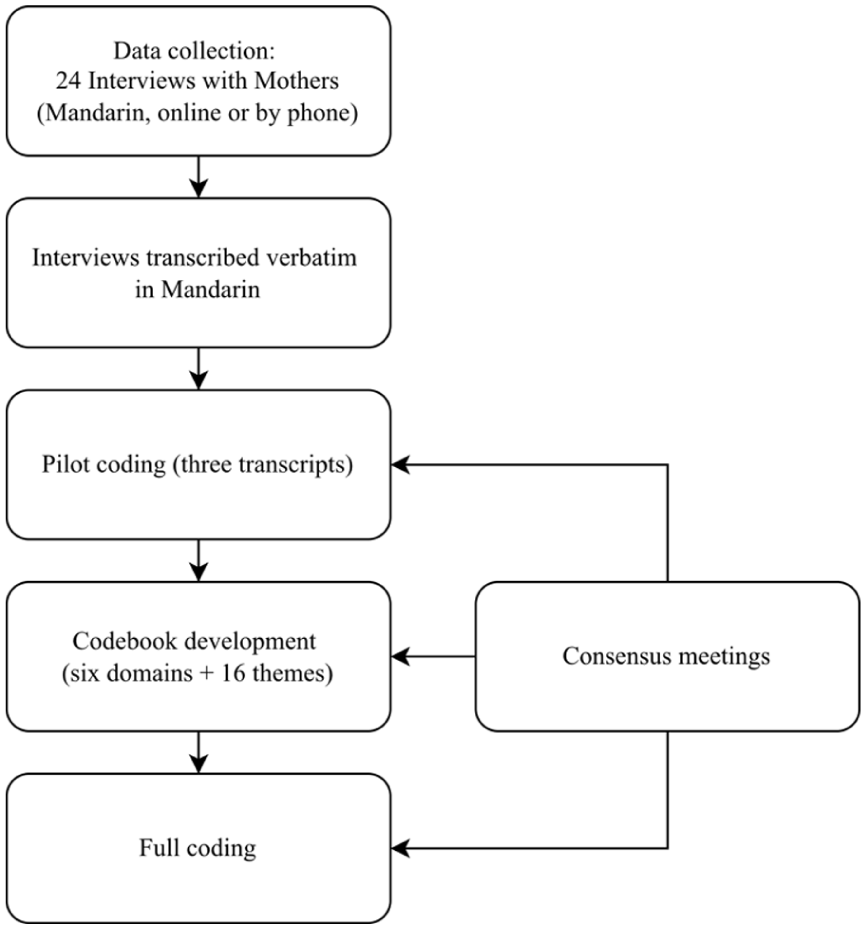
Qualitative data collection and consensus coding procedures.
Results
Our analysis identified 16 themes across six domains to address how Chinese urban mothers perceived, communicated, and supported their adolescent children’s future possibilities. The results are organized by the study’s three focal aspects—perception, communication, and action—within which the six domains and corresponding themes are presented.
Perception about Future Possibilities of Their Adolescent Children
The Best and Worst Possibilities
Autonomy Over One’s Own Life
When describing an ideal life for their adolescents, 16 out of 24 mothers emphasized the importance of autonomy in pursuing a life aligned with one’s own aspirations. One mother explained, “I hope she can pursue work she truly likes, and that in her job she can feel a sense of value, happiness, and overall fulfillment” (Cao, girl, Chengdu, 15; all names are pseudonyms). Another mother noted: “There are two kinds of lives: one where life chooses you, and one where you choose your own life. I hope she can have more choices” (Liang, girl, Chengdu, 15).
Life Stability and Subjective Well-being
Over half of the mothers (n = 14) prioritized life stability over wealth or extraordinary success, hoping their children would avoid hardships and excessive challenges. A simple and ordinary life is often seen as preferable, with stability linked to having a secure job, such as teachers, government officials, and white-collar positions. One mother, whose son had just finished the college entrance examination, expressed, “Regarding work, we don't have very high expectations. Nowadays, it’s common for people to start with ordinary, entry-level positions. I hope he can remain steadily employed in such a job, without needing substantial opportunities for promotion. . .” (Jin, boy, Chengdu, 18).
Seven mothers also emphasized overall health and happiness. One mother explained, “Many people rely on external sources for happiness, but what I most hope for is that my child will have the ability to make herself happy” (Sun, girl, Chongqing, 18). Maintaining a positive outlook during challenging times was also highlighted as crucial to happiness. One mother shared, “Even if she fails, she shouldn't be afraid—if she keeps working hard, she will eventually succeed. Whether she makes a lot of money or not, the most important thing is to be happy” (Zhu, girl, Chongqing, 15). Similarly, mothers wanted their adolescents to avoid unnecessary stress (n = 8). One mother viewed extreme success as a source of stress: “If he were to reach extreme success of life, what we would see is only the success itself, but the effort behind it would far exceed what the word “success” can convey. That’s why I don't want my child. . .to be under so much pressure” (Song, boy, Changchun, 17).
Self-Reliance and Personal Improvement
While mothers did not wish for extreme success for their adolescents, many emphasized self-reliance (n = 8). Thirteen mothers viewed 啃老 (kěnlǎo; an adult child living off one’s parents) as unacceptable, using terms like “parasite,” “lazybones,” and “wastrel” to describe such individuals. One mother said with strong emotion: “I cannot accept him becoming 废柴 (fèichái; a useless or unambitious person) or someone who kěnlǎo. I absolutely cannot accept that. As a parent, that would mean the education I gave him has failed, and that is something I cannot tolerate. I would kick him out—truly. Because kěnlǎo happens when parents are too indulgent. We spend so much money raising him, investing in him, and if he ends up doing nothing at home, isn’t that being a fèichái? That is my bottom line” (Chi, boy, Chongqing, 19).
Self-reliance was not solely about earning money, but also about being diligent, taking responsibility, and pursuing personal improvement. A mother further defined kěnlǎo: “What I’m describing is a kind of way of living without much drive—without ambition, not very proactive, even somewhat kěnlǎo, living off one’s parents, and just getting by as long as one can survive. I hope my child will have something to pursue; they don’t need to live the very best life, but they do need to strive for themselves” (Feng, boy, Changchun, 17). Additionally, reliance on parents or idling away one’s life was considered a burden to society, or “wasting resources” (Huang, boy, Chongqing, 16). As a mother pointed out, “I think (my child) should at least create some basic value for society. They don’t need to generate a lot of wealth, but they should at least be able to support themselves” (Li, unknown, Chongqing, 18).
Moral Development
Mothers mentioned positive moral traits such as kindness, responsibility, honesty, and social contribution, and eight explicitly emphasized avoiding illegal or criminal behavior. Morality also encompassed values and beliefs beyond outward behavior: “A person's values and worldview are also very important. Even if you excel academically, if your values are not right, you will not lead a good life” (Yang, girl, Chongqing, 15).
Having a Family and Raising Children
Although not the first thing mothers would say about their aspirations, having a family was mentioned by eight mothers. They expressed that a happy family with a loving partner and children would be a critical component of a fulfilling life. As one mother mentioned, “I've thought about it; he could get married early and have two kids, and I would help take care of them. Sometimes I joke with them about having one boy and one girl. Since both my husband and I are only children, our family is quite small, so if possible, I hope he can get married early and have two kids to make the family feel livelier” (Peng, boy, Changchun, 17).
The Realistic Picture of Children’s Future
A Certain Academic Expectation in an Unpredictable Future
When asked to predict what kind of person their adolescents would become, 14 mothers described the future as unpredictable. However, when envisioning their children’s futures in five and 10 years, 16 mothers saw college attendance as a given. The same number of mothers expected their children to pursue postgraduate studies rather than enter the workforce after college, viewing this path as essential for future employment and aligned with their children’s goals. The following quote is representative: “Because he’s about to take the college entrance examination, he already says he plans to pursue graduate school and even a PhD—there’s no way he would finish his bachelor’s degree and go straight into the workforce. . . . What I hope is that he can also excel in his studies and not end up like some university students who, once they get to college, just 摆烂、躺平 (bǎilàn, tǎngpíng; slang for “giving up,” “slacking off,” or “lying flat”). I hope he will be as motivated as he says he will be. . . . I also hope that the university he attends in the future will be a relatively strict one—one that has high academic and overall expectations for students. In that kind of environment, if he can go deeper and more specialized in his field, I think that would be great, and I would definitely support him in continuing his studies” (Chi, boy, Chongqing, 19).
Even when explicitly asked about career preparation and planning, half of the mothers focused solely on the importance of academic achievement. For example, one mother, whose son had recently completed the college entrance examination, described her support to help him get a better job by encouraging his academic pursuits: “I would hope that he applies to graduate school. . . I will try to keep him focused on his academic studies in college, and provide financial support for his academic success” (Jin, boy, Chengdu, 18).
Gaps Between Reality and Aspirations
While mothers appreciated their adolescents’ strengths, 17 noted at least one area for improvement, compared to 10 who said their adolescents met or exceeded their expectations. Common concerns included proactivity, academics, life skills, independence, self-regulation, and character. Interestingly, these perspectives did not seem to reflect their ideal aspirations, but rather dissatisfaction with their child’s current status. One mother mentioned several aspects in which she hoped to see improvement in her daughter: “I don't think there's anything that exceeds my expectations, but there are quite a few areas that need improvement. For example, I hope she can improve her time management, self-care abilities, and interpersonal skills. Are all parents just like me (being picky)?” (Cao, girl, Chengdu, 15). Another mother expressed dissatisfaction, responding: “Good aspects? I haven’t seen them yet. The bad aspect is that he is a “giant of words but a dwarf in action,” as I've often said to him recently. He can write out detailed management plans, so thorough they even move me, but when it comes to actually carrying them out, the gap is enormous” (Yang, girl, Chongqing, 15).
Factors Influencing Mothers’ Outlook
Attributes of Children
All mothers linked their outlook to their adolescents’ characteristics. Gender was a common factor (n = 11), especially for daughters (n = 9). One explained, “Since she is a girl. . . I just hope she can find a job in the future that isn’t too tiring; having something relatively stable would be perfectly fine” (Xie, girl, Changchun, 16). Another often cited factor was their adolescents’ own aspirations (n = 14). When their adolescents had specific career goals, mothers expected them to pursue paths aligned with those interests, though they sometimes doubted how stable these goals were. In other cases, the adolescents lacked clear aspirations, but mothers believed their futures should be shaped by the adolescents’ own wishes.
Another common factor mentioned by mothers was academic performance (n = 13). Many believed their adolescents’ future hinged on exam results and university placement. When scores fell short, mothers often expressed resignation, seeing expectations not as ideals but as constrained by reality. A mother described how their expectations dropped based on the child’s college entrance exam scores: “Initially, both our child's and our expectations were quite high. But after his college entrance exam results came out, he suggested studying a railway-related major (the field his parents work in), which he used to look down on. It seems he has realized that one’s abilities determine one’s opportunities. I didn’t even need to persuade him; he brought it up himself. . . We have been adjusting our expectations accordingly, mainly based on his grades” (Jin, boy, Chengdu, 18).
Another mother, whose child had not taken the exam but did not perform well academically, also explained why she expected her child to be “ordinary”: “They will probably do an average job and live an ordinary life. Because right now, I feel that their academic performance is still behind what is needed for good schools. I hope they can adjust according to their own situation, attend whatever school they can get into, and take on an ordinary job” (Li, unknown, Chongqing, 18).
Mothers’ Experiences
Mothers also used their own experiences as counterexamples when explaining aspirations for their children. One third expressed a desire for their children to live the lives the mothers had wished for but could not achieve. In particular, when emphasizing the importance of autonomy, they described the challenges and limitations their generation faced, which left little room for personal choice. Many felt they had worked primarily for survival rather than pursuing their dreams. Some also cited excessive pressure and instability in their own lives, hoping their children could attain the stability they lacked. As one mother explained: “I have personal interests or hobbies. But imagining a life where I can live as I want—at least now, I can’t achieve that. I want my child to be able to do that. . . I hope he can combine his work with his hobbies” (Yang, girl, Chongqing, 15).
Beyond their own experiences, four mothers cited others’ hardships as reasons for their aspirations, reinforcing their desire to help their children avoid similar struggles. For example, a mother who worked as a social worker explained her emphasis on mental health: “I interact with families of children with mental health issues. Some children have excellent academic performance but are overwhelmed and suffer mental breakdowns” (Huang, boy, Chongqing, 16).
Culture and Social Influences
Chinese culture and social influences were mentioned as factors influencing mothers’ perspectives. Five mothers considered their beliefs to be typical in China. As a mother said: “As Chinese people, we all hope for healthy children and grandchildren; these things are very important” (Huang, boy, Chongqing, 16).
Additionally, nine mothers cited fierce social competition and employment pressure as shaping their outlooks. One described academic success as a necessary stepping stone: “. . .having a good academic record can serve as a stepping stone for good jobs. . . .if you don't graduate from a top-tier university. . .many employers won’t even consider you; you won’t meet their basic threshold” (Chen, boy, Chongqing, 17). Another framed graduate school as a prevalent social trend: “Yes, in today’s society, that’s just the trend. After you get into college, you really have to pursue a master’s degree. It’s inevitable—going to graduate school is a must” (Liu, boy, Changchun, 18).
Mother-Child Communication about Future Plans
Context and Content
Casual and Informal Settings
According to most mothers (n = 16), conversations with their adolescents about the youth’s future happened casually and without deliberate planning. As one explained, “When we're driving or having a meal, we just chat casually about it. . . We just talk freely, and as we’re chatting, he’ll mention what he wants to do in the future” (Feng, boy, Changchun, 17). However, the meaning of this casualness varied. For some, it reflected open communication: “We talk about it very naturally. . . In our family, talking about anything is normal” (Chi, boy, Chongqing, 19). For others, it stemmed from limited time together: “He comes home only once a week, so. . . we occasionally ask about his plans” (Peng, boy, Changchun, 17).
Surface-Level and Lacking Concrete Planning
While conversations about the future occurred, many mothers (n = 10) described them as shallow or vague. Some knew little about their adolescents’ goals, noting the adolescents rarely shared interests or career ideas with parents. One mother recalled asking, “What do you want to do in the future?” and her son simply replied, “I haven’t thought much, just want to do well on the college entrance exam” (Gao, boy, Changchun, 17). Even in families with frequent discussions, plans often lacked specificity: “Sometimes we just talk about it when the topic comes up. . . To be honest, we haven't made any long-term plans specifically” (Cao, girl, Chengdu, 15). For some mothers (n = 8), this lack of depth reflected their children’s immaturity or limited exposure to career options. As one explained, “He probably hasn’t been exposed to it yet. . . That’s why he really doesn’t know what he wants to do in the future; it’s still unclear to him” (Zhao, boy, Chengdu, 18).
Power Dynamics in Mother-Child Interaction Regarding the Future
Multifaceted Roles of Mothers
To better understand power dynamics in future decision-making, we first asked mothers about their roles in their children’s lives. Many (n = 16) described themselves as friends to their children—especially mothers of daughters, who often likened the bond to that of sisters. Key features of this dynamic included sharing, discussion, negotiation, and mutual respect. Six mothers, however, identified with a more traditional role, emphasizing daily care and mentorship. The term 引导 (yǐndǎo), meaning “guiding,” was often used to describe teaching values and correcting behavior, with two mothers viewing it as a core parental duty.
Notably, traditional motherhood was not seen as incompatible with friendship. Four mothers described transitioning from a traditional role in early childhood to a more equal, friend-like relationship as their children matured. Even when teaching life lessons, mothers emphasized mutual respect and open communication, offering guidance without exerting authority.
Conditional Autonomy Support
Mothers generally did not see their outlook for their adolescents as conflicting with the adolescents’ own, believing both sides prioritized academic success in the high school years. When asked hypothetically about disagreements, half said they would respect their child’s decision. As one mother said, “If we disagree, I will respect her choice. Even if it doesn’t turn out as well as expected and she faces failures, that’s okay. I’ve told her, ‘I am your backup—I can accept whatever you choose’” (Lin, girl, Chongqing, 20).
Nevertheless, mothers’ support for autonomy was not unconditional. Mothers emphasized that choices must align with laws and ethics. Five said they would share concerns and discuss potential challenges if disagreements occurred. For those mothers, adolescents were immature, and it was their responsibility to provide guidance. As one mother said: “Sometimes he may not know enough—whether in terms of knowledge, perspective, or experience. As a parent, I know more than he does, so I try to reason with him and talk through different aspects to help him understand and develop his thinking” (Liu, boy, Changchun, 18).
Two mothers took a more directive stance, saying they would try to persuade their children if they disagreed. As one put it: “I think we would insist a bit and try to instill our ideas in her—especially if we feel her views are quite off. I believe both her father and I, given our personalities, tend to use our own perspectives to try to persuade her. But once she becomes an adult, I’m not sure how much influence we will still have. . . We would still accept some of her ideas, as long as they’re not too unreasonable” (Liang, girl, Chengdu, 15).
Shaping Values to Avoid Disagreements
Two mothers believed they could prevent future conflicts by shaping their children’s values early, instilling their vision of an ideal life during the early years. One mother shared: “[My daughter] is just a fifteen-year-old child, so her thoughts about the future are more like dreams. . . as an adult, I can envision what her life might be like if she follows a certain path. . . I often extend discussions about current events into future scenarios, telling her how things might turn out if she follows a particular path. I feel confident that even if her choice differs from mine. . . given her dependence on my suggestions, I doubt she would make a rebellious choice. From what I've seen, she’s not the type to suddenly make a drastic decision that deviates completely from our expectations” (Wang, girl, Chongqing, 16).
Mothers’ Actions for Possibility Realization
Support for Academic Development
Emphasizing Adolescents’ Own Efforts
For most mothers (n = 16), the main goal at the time of the interview was helping their children gain admission to a reputable college, a crucial step toward future success. As a result, their support focused largely on preparing for the college entrance exam. Four mothers felt limited in their ability to help due to unfamiliarity with high school subjects, while ten emphasized that their children’s future depended on their own efforts, believing improved exam scores were key to securing a bright future.
Direct and Indirect Support
Seventeen mothers reported taking actions to support their children’s goals. Eight focused on daily care—meeting basic needs, maintaining health, and providing a stable household. One mother even moved closer to school to shorten her child’s commute, despite lengthening her own, so her child could better focus on academics.
Mothers also arranged and financed tutoring (n = 6), while only three actively researched college and career options. As one mother shared: “If he wants to study computer science, I’ll help him look for schools in that area and see which ones are better. I’ve been learning about admissions every day and helping him figure out which schools are good” (Peng, boy, Changchun, 17). Additionally, four mothers said they supervised their adolescents to help them focus on academics, citing their lack of self-control and distractions like phones. To address these issues, a mother said: “Parents need to step in and supervise because the child’s laziness can affect his studies. . . parental supervision is necessary” (Wu, boy, Changchun, 17).
Finally, mothers also recognized the intense stress of preparing for college exams and saw emotional support as important. A mother noted: “We can talk about it, like emotions, we might not be able to do much in other areas, but we can provide some emotional support. I think giving the child some appropriate encouragement is important” (Liu, boy, Changchun, 18).
Discussion
Although research has demonstrated the motivational power of adolescents’ possible selves and the important role of parents in shaping them (Oyserman & Fryberg, 2006; Zhu et al., 2014), much less is known about how parents’ own perceptions and interpretations of their adolescents’ future possibilities inform their parenting. The present study addresses this gap by examining Chinese mothers’ visions for their high school–aged adolescents and how they communicate these visions and support the pursuit of those perceived possibilities. Focusing on China allows us to examine these processes beyond Western contexts and within a rapidly evolving cultural landscape (Sun & Ryder, 2016).
Consistent with work showing Chinese parents’ growing appreciation for holistic development alongside sustained attention to academic pathways (e.g., Chen-Bouck et al., 2017; Wang, 2023; Way et al., 2013), our study showed that mothers’ visions of their adolescents’ future possibilities are multifaceted, encompassing personal and social identities as well as spanning near- and far-future roles. For long-term development, mothers emphasized autonomy support with guidance, viewing their role as scaffolding adolescents’ growth while respecting their independence. Meanwhile, perceiving alignment with their adolescents on near-term academic goals, mothers prioritized supporting the development of adolescents’ academic identity, with less attention to holistic development and career exploration.
In the sections that follow, we focus on three aspects of our findings that correspond to major developmental tasks in adolescence—autonomy and independence, academic attainment, and career development (Christie & Viner, 2005). We draw on major theories of youth development and motivation, including IBM (Oyserman & Horowitz, 2023), Self-Determination Theory (Ryan & Deci, 2023), and Positive Youth Development (Lerner et al., 2019), to understand how mothers’ multifaceted visions of their adolescents’ futures shape their parenting motivations and practices. We further discuss how these visions and actions, informed by both traditional and modern Chinese values, may represent adaptive strategies for fostering adolescents’ positive future possibilities amid rapid social change.
Autonomy Support Accompanied by Guidance
Autonomy and independence have long been identified as core developmental tasks in Western cultures (Zimmer-Gembeck & Collins, 2003). Although traditional Chinese parenting emphasizes obedience and filial piety (Ho, 1996), recent research shows that Chinese parents increasingly endorse individualistic traits and support autonomy in parent-child interaction and daily decision-making (Chen et al., 2021; Liu et al., 2005; Way et al., 2013). Extending this work, our study showed that Chinese mothers strongly valued adolescents’ autonomy in major life decision-making and were willing to respect the adolescents’ own choices even amid disagreement.
Mothers’ emphasis on autonomy suggests an awareness of the importance of autonomy for adolescents’ development and long-term well-being, a link well documented in prior work (see Vasquez et al., 2016, for a meta-analysis). Such awareness may foster adaptive parenting practices that support positive developmental outcomes. For example, mothers’ autonomy support can help satisfy adolescents’ psychological needs for autonomy and competence (Ryan & Deci, 2023), and strengthen mother–child relationships that serve as essential ecological assets for positive development (Theokas & Lerner, 2006). By respecting adolescents’ choices, mothers also signal that adolescents’ own perceived possible selves are valued within the family, thereby enhancing identity–context congruence—an IBM mechanism that facilitates the transformation of possible selves into motivation and self-regulation (Oyserman et al., 2017).
Alongside supporting autonomy, mothers consistently emphasized the importance of parental guidance in adolescents’ decision-making, reflecting beliefs about the value of parental structure and monitoring as core components of effective parenting (Grolnick et al., 1997; Ryan & Deci, 2019). While adolescence is viewed as a stage marked by plasticity and potential for positive development (Lerner et al., 2019), this same plasticity also presents risks for negative developmental pathways (Nakkula, 2018). Our findings suggest that mothers recognize both the potential for growth and risks of negative pathways, and accordingly, view themselves as responsible for channeling this plasticity toward positive developmental directions.
Culturally, our findings can be understood in light of both traditional Chinese values and recent sociocultural shifts (Greenfield, 2009; Liu & Wang, 2024). Although mothers’ emphasis on adolescents’ autonomy aligns with China’s broader movement toward individualization and more child-centered parenting (Liu & Wang, 2024), our interviews suggest that it also served as a way to respond to mothers’ own constrained pasts, as well as a means of promoting adolescents’ happiness, which mothers viewed as central to the well-being of the family as a whole (see Yan, 2016). Likewise, mothers’ emphasis on guidance—embedded within autonomy support and distinct from controlling practices—still resonates with long-standing cultural beliefs that proactive involvement is a core responsibility of good parenting, as reflected in the saying “子不教,父之过” (“If a child is not taught, it is the parent’s fault”) from San Zi Jing (三字经, Wang, 1200).
Academic Identity as a Pathway to Positive Development
Academic development is widely recognized as a key indicator of positive youth development (Benson & Scales, 2009; Bowers et al., 2010; Masten & Coatsworth, 1995). This is particularly true in the Chinese context, where youth face intense academic pressure arising from cultural expectations and social competition (Xie et al., 2025). Recent cross-cultural work has shown that Chinese college students’ self-defining memories (i.e., meaningful personal memories that shape one’s sense of self) center more on academic experiences and parental expectations than those of American students, further suggesting a deeply internalized academic identity in Chinese youth’s sense of self (Wang & Singer, 2021). In the current study, mothers’ strong emphasis on academic success provides converging evidence that Chinese culture and educational contexts shape both adolescents’ identity and mothers’ perceptions of their adolescents’ future possibilities.
This narrow academic focus might seem at odds with mothers’ aspirations for holistic development and adolescents’ autonomy. Nevertheless, these perceptions can coexist in mothers’ visions when viewed through the lens of dynamic identity construction in IBM, which proposes that identities are multifaceted and situationally activated (Oyserman et al., 2017). During high school, adolescents’ identities as a “college entrance examination candidate” or “future college student” are especially salient and thus prioritized in mothers’ perceptions. Supporting academic effort then feels appropriate because it aligns with these perceived identities, shaping parental goal-setting and everyday practices in ways that reinforce academic success.
Mothers’ prioritization of academic achievement can also be understood as a strategy for promoting adolescents’ long-term autonomy and holistic development. Consistent with cultural beliefs of academic success as the most reliable pathway to valued futures (Xie et al., 2025), mothers described educational attainment as a stepping stone to securing stable opportunities in an increasingly competitive society. From an IBM perspective, this instrumental view suggests that mothers perceive academic striving as the link between adolescents’ current selves and their ideal future selves, which helps reconcile their emphasis on academic and holistic development. This perception may also heighten their action-readiness to provide culturally appropriate forms of support to keep adolescents on track academically, such as financing tutoring or monitoring study habits (see Oyserman et al., 2004; Zhu et al., 2014). Extending this identity-based interpretation, mothers’ academic emphasis may also reflect efforts to align adolescents’ strengths with the societal resources that support positive development, a mechanism emphasized in the Positive Youth Development framework (Lerner et al., 2019). Specifically, because access to future opportunities in China remains closely tied to educational credentials (Wu, 2019), cultivating academic competence becomes a means of equipping adolescents with strengths to fit the ecological resources of their contexts. Thus, mothers’ focus on academics reflects both a feeling of fit (supporting the identity most salient at this stage) and an effort to create a future fit (positioning adolescents to thrive in the future).
Importantly, mothers’ focus on academic achievement may have multiple adaptive outcomes. First, because academic performance is also strongly emphasized in adolescents’ other contexts—such as their schools and the broader cultural norms—parents’ focus becomes part of a consistent message that academic pathways matter. This alignment across contexts likely strengthens adolescents’ attention to academic goals, which can in turn support positive development by fostering a selective focus in adolescents’ self-regulation and goal pursuit (Napolitano et al., 2011). Importantly, when adolescents themselves adopt this academic focus, an identity–context congruence emerges. This congruence can strengthen adolescents’ motivation to engage in academic behaviors (i.e., action-readiness) and help them interpret difficulties as meaningful challenges rather than signs of misfit (i.e., procedural-readiness; Oyserman et al., 2017). Furthermore, as mothers in the current study described providing practical and informational support, their actions may also promote adolescents’ own use of strategies to pursue their possible selves and strengthen their perceived likelihood of attaining the futures they envision (Zhu et al., 2014).
Nevertheless, this exclusive focus on academic performance may come at a cost. For example, research on self-defining memories indicates that Chinese undergraduate students disproportionately recall high school academic stress, including Gaokao-related guilt and shame, as central to their sense of self (Jiang et al., 2023; Wang & Singer, 2021). Importantly, when such academic stress is tied to high parental expectations, it is also linked to stronger negative emotion in Chinese students’ memories (Jiang et al., 2023). Additionally, as we elaborate below, this narrow emphasis on academic development leaves limited space for career-related communication and planning, which may be a double-edged sword for Chinese adolescents’ long-term development.
The Dual Implications of a Limited Focus on Career Development
Career exploration is a key task during late adolescent development (Christie & Viner, 2005), and parental support plays an important role in facilitating this process (Dietrich & Kracke, 2009). Career is also a salient dimension of Chinese adolescents’ own perceived possible selves (e.g., Chang et al., 2006; Zhu & Tse, 2016). However, in the current research, Chinese mothers rarely mentioned specific career paths in their outlooks, and career-related conversations and planning were largely absent from mother–adolescent communication, with several mothers reporting limited awareness of their adolescents’ career interests.
One possible explanation lies in the close connection between academic and career development during high school. Conceptually, career possible selves can be understood as subcategories of academic possible selves (Efthymiadou et al., 2025), and several studies have combined academic and career possible selves or expectations in their analyses (e.g., Zhou, 2024; Zhu et al., 2014). Practically, recent work shows that adolescents commonly pursue their occupational possible selves through school-based efforts (Li et al., 2023), and career-focused possible selves predict increased academic effort (Chang et al., 2006). Given that employment opportunities in China remain closely tied to academic credentials, attention to career development may naturally become subsumed within a broader focus on academic development.
Indeed, delaying career development tasks may fit better with Chinese educational realities and thus have adaptive value. Although career-specific parental behaviors have been found to shape adolescents’ career development in Western contexts during secondary school (e.g., Dietrich & Kracke, 2009; Keller & Whiston, 2008), large-scale longitudinal studies of Chinese high school students have not provided consistent evidence that parental lack of engagement in career development prospectively predicts poorer career development outcomes (Zhang et al., 2019; Zhou, 2024; Zhou et al., 2024). Instead, this research highlights the central role of parental expectations, adolescents’ perceived congruence with parents’ career hopes, and adolescents’ own sense of autonomy or self-efficacy during high school in fostering adaptive career attitudes (Zhang et al., 2019; Zhou, 2024; Zhou et al., 2024). In contrast, among Chinese undergraduates, specific parental career behaviors become more predictive of students’ active career exploration and planning (Guan et al., 2015), suggesting a developmental shift in the relevance of parental behaviors for adolescents’ career development across educational stages in the Chinese context.
Nevertheless, limited communication and weak parental awareness of adolescents’ career goals still have negative implications. First, because Chinese high schools lack formal career guidance programs, parents often function as adolescents’ primary source of career-related input (Zhang et al., 2019). Indeed, although lack of parental career engagement is not found to directly predict career self-efficacy, Zhang and colleagues (2019) showed that high parental career support coupled with high engagement boosts adolescents’ career decision-making confidence—suggesting that parental involvement can still be beneficial when parents are highly invested in adolescents’ career development. Second, while postponing detailed career planning until college can help adolescents focus on academics and avoid diffusing their attention, having no articulated career goals at all may leave adolescents uncertain about the purpose of their academic effort, which can undermine motivation to sustain academic engagement (Bi & Oyserman, 2015; Oyserman & Destin, 2010).
Additionally, recent longitudinal work shows that parental expectations promote adolescents’ career confidence only when adolescents perceive alignment between their own career goals and those of their parents (Zhou, 2024). Therefore, communication about future career goals may still be necessary to foster this perceived agreement and support positive career-related attitudes during high school. Because the present study only interviewed mothers, it remains unclear whether adolescents actually experience the agreement or autonomy support that mothers describe. Future research should incorporate adolescents’ perspectives to determine whether they perceive the same congruence as their mothers and the role of communication and planning in supporting adaptive career development in Chinese adolescents.
Limitations and Future Directions
This study has several limitations and points to directions for future research. First, because parental influence depends on adolescents’ perceptions (Grolnick et al., 1991), future work should include parent–adolescent dyads to examine how youth interpret parental input and how future plans are negotiated. Second, given fathers’ substantial role in long-term decision-making in many Chinese families, incorporating fathers’ perspectives is essential for a fuller understanding of family dynamics. Future studies could also extend this work to Asian American families, who share some values with Chinese parents but navigate a bicultural context blending Chinese and Western norms (Chao & Tseng, 2002). It is also worth extending the investigation to other cultural contexts, as prior work has shown that the ways parents shape salient memories central to the sense of self differ between Chinese and U.S. students (Wang & Singer, 2021). Finally, building on our findings, future work could develop quantitative measures of possibility development and explore antecedents of parental perceptions and involvement (e.g., socioeconomic status) and outcomes (e.g., academic achievement, mental health, identity development, and career adaptability) across cultural contexts.
Supplemental Material
sj-docx-1-jar-10.1177_07435584261457022 – Supplemental material for Envisioning Forward, Parenting Now: How Chinese Mothers’ Perceptions of Adolescents’ Possible Selves Motivate Their Current Parenting Practices
Supplemental material, sj-docx-1-jar-10.1177_07435584261457022 for Envisioning Forward, Parenting Now: How Chinese Mothers’ Perceptions of Adolescents’ Possible Selves Motivate Their Current Parenting Practices by Lingyan Hu, Hou Xie, Jing Lin, Qinglin Bian and Michael Nakkula in Journal of Adolescent Research
Footnotes
Acknowledgements
We are grateful to Dr. Bo Feng of Jilin University and Dr. Fei Jiang at Northeast Normal University, China, for their assistance with participant recruitment and valuable feedback on our interview protocol. We also thank Zihan Li for contributing initial ideas to the project and Yansu Fang for providing feedback on our coding manual.

Ethical Considerations
This study was approved by the University of Pennsylvania Institutional Review Board (Protocol #: 844849) on December 4, 2020.
Author Contributions
Lingyan Hu: Conceptualization, Methodology, Data curation, Investigation, Formal analysis, Project administration, Writing—original draft, Writing—review & editing.
Hou Xie: Conceptualization, Methodology, Data curation, Investigation, Formal analysis, Writing—original draft, Writing—review & editing.
Jing Lin: Methodology, Investigation, Formal analysis, Writing—original draft, Writing—review & editing.
Qinglin Bian: Conceptualization, Methodology, Formal analysis, Writing—original draft, Writing–review & editing.
Michael Nakkula: Supervision, Writing—review & editing.
Funding
The authors received no financial support for the research, authorship, and/or publication of this article.
Declaration of Conflicting Interests
The authors declared no potential conflicts of interest with respect to the research, authorship, and/or publication of this article.
Data Availability Statement
The data that support the findings of this study are not publicly available due to ethical restrictions approved by the Institutional Review Board and to protect the privacy and confidentiality of participants. The interview protocol and codebook are available as online supplementary materials.
Consent Statement
All participants were adults and provided both written and verbal informed consent prior to participation.
Supplemental Material
Supplemental material for this article is available online.
Author Biographies
References
Supplementary Material
Please find the following supplemental material available below.
For Open Access articles published under a Creative Commons License, all supplemental material carries the same license as the article it is associated with.
For non-Open Access articles published, all supplemental material carries a non-exclusive license, and permission requests for re-use of supplemental material or any part of supplemental material shall be sent directly to the copyright owner as specified in the copyright notice associated with the article.
