







Abstract
Resilient urban design is vital for community renewal; however, a systematic understanding of how public perceptions shape its outcomes is absent from the literature. This review synthesizes evidence on public responses to examine their facilitative and constraining roles in renewal processes. The findings highlight five core public perceptions: healing and relaxation, basic livelihood security, sense of place, equity of opportunity, and empowerment. Furthermore, the study identifies 12 key strategies for achieving positive resilient urban design outcomes. The review ultimately provides policymakers with a human-centered framework for integrating resilient design into community renewal.
Introduction
Under the dual pressures of urbanization and climate change, many urban communities face challenges such as environmental degradation, aging infrastructure, and social inequality. In response, community renewal has become a key strategy to address intertwined social, environmental, and economic issues. Central to these efforts are social equity and inclusiveness, which involve tackling poverty, unequal access to services, segregation, inadequate living conditions, population aging, and the loss of cultural identity and belonging (Donaldson and Du Plessis 2013; Carstensen et al. 2022). Renewal initiatives also enhance social safety by reducing crime and improving public security (Alonso, Andrews, and Jorda 2019), while environmentally they promote efficient resource use and mitigate degradation and emissions (Yuhui, Chengcheng, and Yue 2015; Gilderbloom et al. 2016). Economically, they help alleviate fiscal pressures and stimulate local growth (Malcata 2022; Gao et al. 2023). Overall, by aligning community services with residents’ needs and responding to urban and climatic challenges, renewal supports the broader pursuit of sustainable development (Liu et al. 2021; King et al. 2015). The present study defines community renewal as a process aimed at improving environmental quality, enhancing well-being, and strengthening community sustainability.
However, previous studies have identified several challenges in community renewal implementation. Large-scale demolition and redevelopment often erode local identity and social cohesion, weakening residents’ sense of cultural belonging (Qian and Yin 2018; Yung, Zhang, and Chan 2017). In response, scholars increasingly advocate for the integration of resilient urban design principles as a corrective strategy to enhance inclusivity, adaptability, and multifunctionality in anticipation of future risks. Research indicates that combining multiple strategies—either through integration or parallel implementation—and promoting multifunctional spatial configurations can more effectively meet the diverse needs of community members (Donaldson and Du Plessis 2013; Ricciardelli, Amoruso, and Liddo 2025).
Recent reviews reveal that resilient urban design research primarily addresses challenges arising from both natural and anthropogenic factors. The first category concerns climate- and urbanization-induced hazards such as heat islands, flooding, droughts, pandemics, earthquakes, and ecosystem degradation (Mukherjee and Takara 2018; Villanueva and Cruz 2025; Amirzadeh et al. 2020). The second focuses on chronic anthropogenic stressors, including social inequality, crime, urban–rural interdependence, energy consumption, infrastructure failure, and economic decline (Franco-torres, Rogers, and Harder 2021; Tahmasbi et al. 2025). In addition, many reviews emphasize the conceptualization of resilience, framing resilient design as a strategy to address urban complexity and uncertainty through adaptability, transformability, rapid recovery, and anticipatory capacity (Eldesoky and Abdeldayem 2023; Mehvar et al. 2021). Over the past decade, scholarly attention to resilient urban design has increased markedly.
In the past three years, reviews on resilient urban design have commonly focused on infrastructure related to resources, energy, and ecology, particularly in the context of urbanization and climate adaptation. The application of artificial intelligence and digital technologies has also emerged as a prominent topic. In 2023, reviews began to address resilience in urban form, and by 2024, there had been growing attention to governance strategies, especially self-organizing approaches in which local communities and stakeholders coordinate actions and manage collective issues without relying solely on top-down governmental control, shaped by public perception.
Although previous reviews have examined the resilience of urban form and infrastructure, as well as the participatory and strategic dimensions of resilience, a significant gap remains regarding the implementation challenges of resilient urban design within community renewal—particularly those stemming from public responses to design interventions. This study argues that public perception plays an indispensable mediating role between resilient design and successful renewal, as the benefits of technical interventions depend fundamentally on how communities perceive and respond to them (Li, Nassauer, and Webster 2022; Leite et al. 2019).
To address this gap, this review systematically examines two interconnected dimensions: (1) the integration of resilient design into physical infrastructure and urban form (e.g., transportation, green spaces, adaptive reuse); and (2) public perceptions of, and engagement with, these strategies. The core of the analysis traces how the interaction between design and public perception translates into supportive, resistant, or negotiative social actions, which ultimately facilitate or hinder the broader social benefits of renewal.
Community renewal implements comprehensive interventions across the physical, economic, social, and cultural dimensions of declining or multichallenged communities, focusing on problem-oriented improvements and transformative outcomes. Resilient urban design provides the principles and technical tools for these interventions, proactively embedding capacities for adaptation, recovery, and learning through spatial planning to help communities mitigate, respond to, and recover from shocks. Public perception mediates between spatial interventions and social outcomes. It encompasses the cognitions, emotions, attitudes, and behavioral tendencies of community members toward renewal projects and their resilient design elements. These perceptions shape public participation and, more critically, determine whether a design is accepted, adapted, or resisted, ultimately regulating the social efficacy of community renewal. This review, therefore, offers a timely reference for practitioners and policymakers aiming to integrate resilience into community renewal in a more adaptive and socially meaningful way.
Methods
Inclusion and Exclusion Criteria
This review adopted a PICo (Population, Phenomenon of Interest, Context) framework to guide the formulation of inclusion criteria (Lizarond et al. 2020). The aim of this review was to examine, through an analysis of empirical studies on resilient urban design applied across various infrastructure types, how the public perceives and interacts with such design interventions, particularly within community renewal contexts.
Studies were included if they met the following criteria: (1) the study population consisted of general public members, community residents, or urban infrastructure users (not exclusively technical experts or government officials); (2) the study examined public perceptions, understanding, experiences, or responses to resilient design implemented in urban community renewal or related settings; (3) the study focused on urban or periurban environments, particularly community spaces and infrastructure; (4) the study addressed urban design, planning, or policy practices related to community development, renewal, governance, or resilience; and (5) the study was empirical (qualitative, quantitative, or mixed-methods), peer-reviewed, published as a full-length journal article in English.
Studies were excluded if they did not incorporate a public perspective and focused solely on design concepts or policy frameworks; if they were not situated in urban communities or were unrelated to community renewal; or if they were theoretical or conceptual papers without empirical data or concerned with nonresilient design contexts and nonurban settings. Conference proceedings, book chapters, reviews, editorials, and other nonarticle formats were also excluded.
Search Strategy
We conducted a literature search in the Web of Science Core Collection to identify relevant studies published between 2008 and 2025. The search strategy combined the following keywords and Boolean operators within the Topic field: “urban infrastructure” OR “public space” OR “green infrastructure” OR “transport infrastructure” OR “service facilities” OR “public perception” OR “community perception” OR “community engagement” AND “resilient urban design” OR “urban resilience” AND “community renewal” OR “neighborhood regeneration” OR “neighborhood upgrading” OR “urban renewal” OR “urban regeneration.” As of May 14, 2025, the search initially returned 214 records. After limiting the results to English-language publications and the document type “Article,” a total of 162 studies remained for further screening.
Study Selection
Following the search, two independent reviewers screened the titles and abstracts of the retrieved records based on predefined inclusion criteria, which led to the exclusion of 84 studies. We then imported potentially relevant studies into Mendeley and recorded their bibliographic details in an Excel spreadsheet. The two reviewers then conducted a detailed assessment of the full texts against the inclusion criteria and documented reasons for excluding studies that did not meet them. This process resulted in the inclusion of 34 studies for the final synthesis. All disagreements were resolved through discussion. A flow diagram illustrates the overall selection process (see Figure 1).
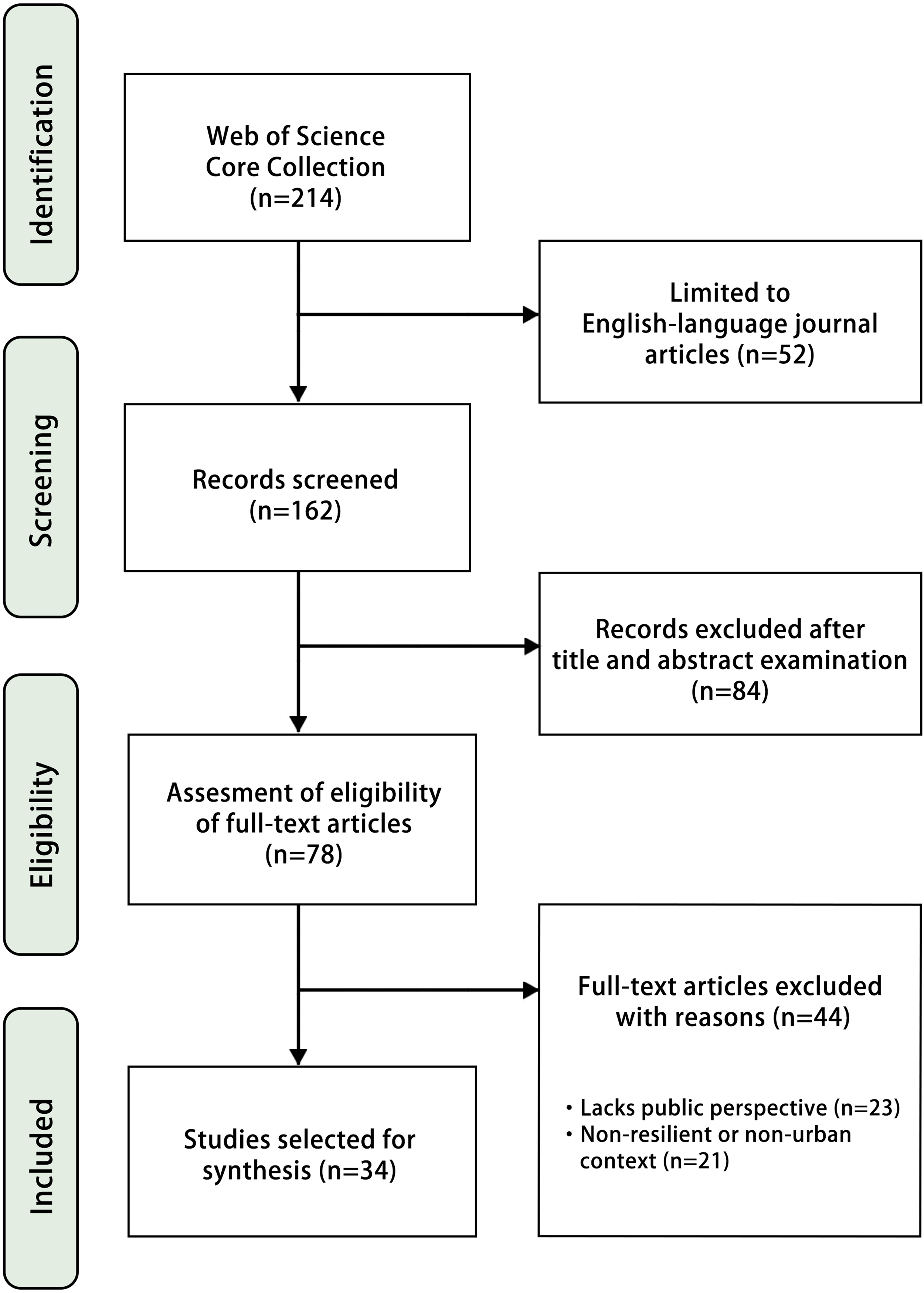
PRISMA Flow Diagram.
To ensure consistency and quality, we limited the search to English-language articles indexed in the Web of Science and excluded grey literature. However, these restrictions may have introduced potential selection bias.
Data Extraction and Synthesis
Two reviewers independently extracted data from the included studies using the JBI data extraction tool (Lizarond et al. 2020). The extracted information covered: (1) basic study details, including the title, authors, year of publication, journal, and the date the article was reviewed; (2) research methodology, such as whether the study employed quantitative, qualitative, or mixed methods; (3) characteristics of the study population or participants, including general public, community residents, or infrastructure users; (4) the phenomenon of interest, such as specific practices of resilient design and how the public perceived, understood, experienced, or responded to them; (5) the type of community renewal context in which the study was situated; (6) key findings, particularly regarding how the public interacted with or responded to resilient design interventions and the resulting impacts on community renewal; (7) the study's conclusions; and (8) reviewers’ comments, including assessments of the study's quality, relevance, and completeness of the data. Any discrepancies between reviewers were resolved through discussion. The appendix presents the information and data extraction of the included studies.
The synthesis followed a convergent integrated approach. This process involved transforming quantitative data into a qualitative form (“qualitized” data) and integrating it with qualitative data (Lizarond et al. 2020). Subsequent thematic categorization and synthesis of the combined data yielded key insights into how public interactions with resilient urban design contribute to facilitating or hindering community renewal.
Results
Overview of the Included Studies
The 34 studies included in this review were published between 2011 and 2025, with the vast majority (n = 30, 88%) appearing after 2018 (see Figure 2). This trend reflects a growing scholarly interest in how the public interacts with resilient design in the context of community renewal.
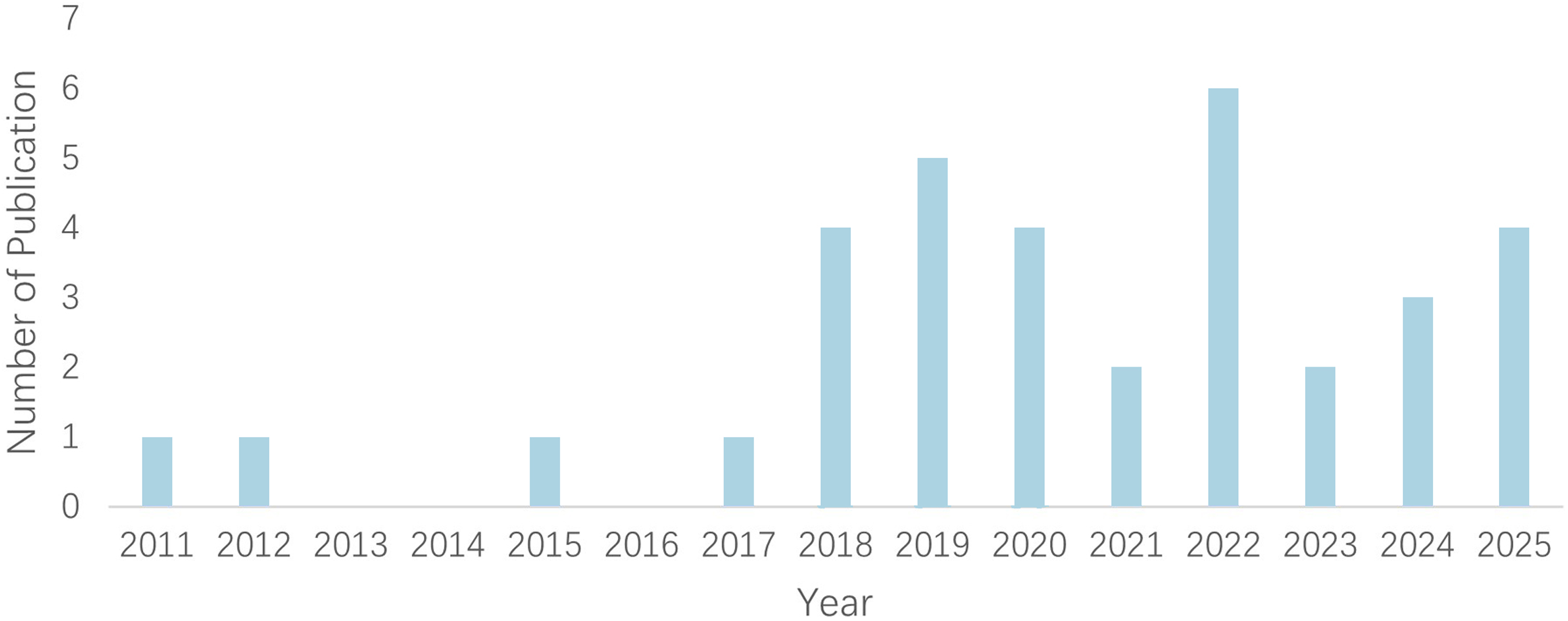
Distribution of Studies by Publication Year.
The included studies were conducted in a range of countries: four studies each from China, the United States, and Italy; three each from the United Kingdom, the Netherlands, and South Korea; two each from Poland, Spain, New Zealand, and Japan; and one each from France, Germany, Ireland, Indonesia, Norway, Cuba, Denmark, Nigeria, Australia, South Africa, Greece, and Romania. In terms of regional distribution, more than half of the studies (62%) were conducted in Europe, followed by Asia (29%), North America (15%), Oceania (9%), and Africa (6%). As certain studies encompassed multiple countries, regional percentages are not mutually exclusive and therefore sum to more than 100%.
Among the 34 included studies, 30 (88%) employed qualitative methods, while 12 (35%) involved quantitative methods. Of these, 22 studies used purely qualitative approaches, 4 used only quantitative methods, and 8 adopted mixed-method designs. Observation (n = 17) and interviews (n = 17) were the most commonly used qualitative techniques, with 12 studies incorporating both. Most quantitative studies employed questionnaires (n = 11). This methodological trend highlights the importance of exploring both observable behaviors and perceived experiences in the public's interaction with resilient design features within urban public spaces.
We categorized the included studies into seven types of community renewal initiatives, each of which incorporates resilient design interventions. The detailed analysis reveals that while some categories place greater emphasis on the social dimension, others also encompass cultural, ecological, economic, or spatial dimensions. Among the included studies, urban infrastructure upgrading emerged as the most prominent domain (n = 9), encompassing transportation, energy systems, ecosystems, and social welfare facilities (Drosou et al. 2019; Tubridy 2020; Mashi et al. 2020; Ong 2021; Shokry, Anguelovski, and Connolly 2023; Koo 2024; Dyason et al. 2025; Grano 2025; Chan 2025). The core design principles were reflected in the adoption of modular structures to facilitate assembly and maintenance, the integration of multifunctional facilities to enhance spatial and service diversity, and the optimization of materials and structural design to strengthen robustness. In addition, these designs emphasized adaptive use and promoted resource circulation to improve overall efficiency.
Seven studies focused on urban agriculture regeneration, adopting garden communities and agricultural parks as key components of foodscapes (Solomon 2012; Saporito 2017; Mancebo 2018; Säumel, Reddy, and Wachtel 2019; Ma et al. 2020; Rusciano and Gatto 2022; Lindemann 2019). The specific interventions included developing diverse forms of agriculture according to local conditions and efficiently utilizing underused urban spaces for cultivation activities. Five studies focused on residential area upgrading as a response to emerging urban development models (Andres and Round 2015; Zhang et al. 2019; Chung and Lee 2019; Green 2021; Jin and Shao 2024). Their primary efforts included the preservation of historic buildings, improvement of environmental quality, and enhancement of cultural identity. Specific interventions involved the establishment of multifunctional community spaces, the integration of resources, and the redesign of road networks to improve residents’ use efficiency and strengthen regional connectivity. Furthermore, four studies focused on the regeneration of brownfields and postindustrial sites (Lee and Hwang 2018; Vardopoulos 2022; Janiszek and Krzysztofik 2023; Popa, Pop, and Marian-Potra 2025). These projects revitalized underutilized spaces through the introduction of cultural and creative strategies, the implementation of green infrastructure, and the adaptive reuse of cultural heritage assets.
In contrast, three studies focused on coastal regeneration, with interventions that included destination marketing strategies, nature-based solutions, and green–gray hybrid infrastructure (McElduff and Ritchie 2018; Toomey et al. 2021; Sauer, Roca, and Villares 2022). These measures enhanced adaptability by allowing infrastructure to adjust its functions in response to environmental and social changes and improved efficiency by maximizing the use of resources and space. Similarly, three studies focused on green space renewal, involving home gardens and urban community gardens (Burrage 2011; Langemeyer et al. 2018; Gwedla, Shackleton, and Olvitt 2022). The interventions included adjusting the functions and uses of green spaces and promoting citizen participation, allowing gardens to better adapt to social development and enhancing the efficiency of green space utilization. Finally, three studies focused on the transformation of urban form and structure, primarily involving the adjustment of land allocation and functional use (Majewska et al. 2022; Hobbs et al. 2022; Polci and Pierantoni 2024). The specific interventions included optimizing land use to reduce land consumption and expand green areas, improving road networks to achieve better integration with natural landscapes, and implementing temporary modular service facilities to enhance operational efficiency.
Public Response to Resilient Urban Design
Findings indicate that public responses to resilient urban design are multidimensional, encompassing both internal cognitions (e.g., attitudes and perceptions) and external behaviors (e.g., adoption and resistance), which may manifest in supportive or oppositional forms. These responses are closely related to the extent to which resilient design fulfills individual needs. Accordingly, this review employs Maslow’s (1943) hierarchy of needs as its analytical framework.
Maslow's theory conceptualizes human motivation as progressing from basic to growth needs across five levels: physiological needs (the necessities for survival); safety needs (the desire for security and health); love and belonging needs (the need for interpersonal relationships, affection, and community); esteem needs (the need for self-respect, confidence, and recognition from others); and self-actualization needs (the pursuit of realizing one's full potential and ideals).
By systematically classifying and mapping public response elements reported in the existing literature onto this hierarchical structure, this review demonstrates that public evaluations of resilient design range from basic concerns such as functionality and safety to higher-level aspirations such as belonging, recognition, and meaning. From this foundation, five core themes emerge.
Healing and Relaxation
The study found that, at the level of basic physiological needs, healing and relaxation are key factors shaping public responses to resilient urban design. The continuous encroachment on natural landscapes has diminished communities’ restorative environments and intensified problematic behaviors among certain groups with addiction, thereby raising concerns about community safety (Rusciano and Gatto 2022). In response, community renewal initiatives have increasingly incorporated public activities aimed at psychosocial well-being and community healing, such as the cocreation of urban gardens and other healing spaces (Lindemann 2019). These interventions provide psychological and behavioral support for people with addiction and other vulnerable groups (Saporito 2017). When urban spaces support physical and mental well-being, local residents are more likely to engage in health-related practices and actively promote the values underpinning such restorative environments, reflecting a shift from recognition to engagement.
Additionally, natural disasters, human-induced damage, and the expansion of degraded spaces have diminished opportunities for stress relief and everyday rest (I. Lee and Hwang 2018) and weakened people's emotional ties to place (Majewska et al. 2022). In this context, many renewal projects seek to remove waste (Janiszek and Krzysztofik 2023), restore green spaces (Polci and Pierantoni 2024), and introduce aesthetic and recreational designs to meet residents’ needs for relaxation and psychological adjustment (Burrage 2011; Hobbs et al. 2022). Such improvements in environmental quality are also reflected in behavioral changes. Longer stays and more frequent use have been observed following aesthetic and ecological enhancements to urban green spaces (Langemeyer et al. 2018). In a different context, another study showed that community-managed green spaces fostered not only relaxation but also spontaneous participation in maintenance and beautification activities (Gwedla, Shackleton, and Olvitt 2022), indicating a stronger sense of stewardship. By contrast, landscapes lacking aesthetic and recreational quality often fail to provide such restorative experiences, leading to emotional detachment and reduced willingness to use public space (Ma et al. 2020).
Basic Livelihood Security
The study found that basic livelihood security, closely associated with safety needs, encompasses the maintenance of favorable conditions in dimensions such as health, environmental protection, economic security, safety, and infrastructure support. The stability and continuous assurance of these dimensions significantly influence public responses to resilient urban design.
First, rapid urbanization has created a range of health-related challenges, including growing resident concern over access to healthy food (Ma et al. 2020) and persistent food insecurity in impoverished and socially isolated communities (Säumel, Reddy, and Wachtel 2019). These structural vulnerabilities were further exacerbated during epidemic outbreaks, when the suspension of public activity spaces and disruption of everyday routines intensified residents’ feelings of health-related uncertainty and risk (Majewska et al. 2022). Such conditions point to an underlying need among residents for access to supportive (e.g., restorative, safe) environments and health-promoting resources. In this context, resilient urban design that provides opportunities for physical exercise and access to safe food can enhance residents’ trust and support (Andres and Round 2015; Chan 2025). This positive attitude further encourages the effective use of health-promoting facilities and active participation in urban agricultural practices like cultivation (Solomon 2012), which in turn promotes the consumption of locally grown food (Saporito 2017), thereby sustaining the long-term operation of related systems.
Second, the decline of manufacturing has left behind extensive brownfields and vacant land, intensifying spatial degradation and environmental pollution (Lee and Hwang 2018; Janiszek and Krzysztofik 2023), while rapid urbanization has weakened public awareness and understanding of local ecosystems (Langemeyer et al. 2018). These combined processes have increased residents’ exposure to environmental risks and undermined the ecological quality of everyday living environments. Driven by environmental awareness, local residents generally support maintaining a clean environment, as evidenced by their active participation in environmental maintenance or opposition to polluting initiatives. Examples include urban gardeners and cultural associations transforming a derelict park into an energy-positive community through an innovative governance process (Mancebo 2018), as well as residents protesting an in-river barrier that would exacerbate environmental pollution in the estuary (Toomey et al. 2021).
Third, population decline has weakened local economic development (Green 2021), while large-scale displacement associated with urban renewal (Zhang et al. 2019) and the downturn of key industries have further contributed to socioeconomic deterioration (Popa, Pop, and Marian-Potra 2025). These processes have increased everyday life pressures for residents. For example, the shift away from traditional industries has reduced employment opportunities in local fishing (McElduff and Ritchie 2018). In this context, strategies that generate employment, increase income, or enhance private assets are more likely to gain public acceptance, effectively motivating individuals to seize related economic opportunities, as seen in the ability of local citizens to launch their own businesses and develop market distribution networks for edible urban products (Säumel, Reddy, and Wachtel 2019). Conversely, policies that impose economic burdens tend to provoke resistance and diminish public confidence. For instance, requiring residents to bear the costs of maintaining urban agriculture has been shown to generate dissatisfaction (Ma et al. 2020). In some cases, such economic pressures may even result in residents relocating or being forced to alter their lifestyles (Tubridy 2020).
Fourth, climate-related natural hazards, such as coastal erosion from storm events (Sauer, Roca, and Villares 2022), have intensified safety risks in everyday urban spaces. Coupled with the proliferation of vacant land left by industrial decline (Lee and Hwang 2018), these conditions constrain residents’ use of public space and heighten perceptions of insecurity in their living environments (Dyason et al. 2025). Although protective measures against natural disasters (such as responses to coastal erosion and climate change) and those addressing man-made hazards (such as improvements in traffic safety) are generally accepted, they have failed to mobilize the communities and stakeholders most directly affected into active participants. Local inhabitants tend to respond only when disasters directly affect their daily lives, and such responses are usually manifested as passive avoidance behaviors (Polci and Pierantoni 2024).
Finally, the increasing frequency of natural disasters has exposed the critical role of infrastructure in mitigating hazard impacts (Mashi et al. 2020), while disruptions to infrastructural functions have directly impeded transportation systems and everyday mobility (Chan 2025). Moreover, inequalities in the provision and accessibility of infrastructure services have undermined residents’ rights and deepened social vulnerability (Koo 2024). In terms of infrastructure support, professional management emerges as a primary concern. Infrastructure that suffers from inadequate maintenance (Drosou et al. 2019), poor management (Rusciano and Gatto 2022), or restricted access often triggers complaints (Popa, Pop, and Marian-Potra 2025), whereas facilities that offer convenience and ease of use are more likely to gain users' support and encourage consistent utilization (Sauer, Roca, and Villares 2022; Polci and Pierantoni 2024).
Sense of Place
Sense of place is a key factor in fulfilling the need for belonging and love. This study found that sense of place is primarily shaped by “social networks and social trust” and “sociohistorical and cultural.” Together, these dimensions foster a sense of belonging and place identity, which in turn influence public responses to the outcomes of resilient urban design.
In the dimension of social networks and social trust, industrial restructuring and economic decline have weakened residents’ attachment to place (McElduff and Ritchie 2018), while large-scale displacement associated with urban renewal has intensified social inequality, disrupted existing social networks, and eroded social trust (Zhang et al. 2019; Lindemann 2019; Koo 2024). These processes have contributed to a loss of social cohesion within affected communities (Dyason et al. 2025; Säumel, Reddy, and Wachtel 2019). The study indicates that social interaction is a crucial mechanism for the formation of a sense of place. For households with children, intergenerational activities effectively strengthen parent–child relationships, which in turn increase their inclination to participate in community events as a family unit and reinforce kinship bonds (Saporito 2017; Ma et al. 2020; Rusciano and Gatto 2022). Furthermore, cooperation and mutual assistance within communities not only enhance residents’ capacity to cope with difficulties but also foster interpersonal trust and social capital. For example, local community members who jointly built a park and reshaped its symbolic image not only gained direct benefits but also activated a local economy centered on sustainably produced food (Ong 2021). Such social spaces provide a foundation for building stable relationships. However, shifts in land-use patterns often lead to a reduction in opportunities for collaboration, which in turn weakens the frequency and quality of social exchanges (Andres and Round 2015).
In the sociohistorical and cultural dimension, which concerns heritage values, collective memory, and community cultural practices, industrialization has led to the decline of community culture (Chung and Lee 2019), a reduction in residents’ sense of belonging (McElduff and Ritchie 2018), and the neglect, marginalization, and inequality of historic districts (Jin and Shao 2024). Coupled with economic deterioration and the loss of heritage assets, these processes have intensified the local community's concern for the protection of cultural and historical resources (Dyason et al. 2025; Grano 2025). Immersive cultural experiences and ambient atmospheres play a crucial role in shaping individual and communal heritage consciousness, thereby cosustaining collective place memory. Citizens generally believe that direct participation in historical activities can significantly strengthen their cultural identity and sense of belonging. This perception is clearly reflected in the active engagement of communities and cultural practitioners across the domains of traditional craftsmanship, commemorative events, heritage site development, and artistic innovation (Green 2021; Vardopoulos 2022; Hobbs et al. 2022). Conversely, the lack of such experiential opportunities is often perceived as an erosion of local cultural continuity and may even provoke collective resistance or protest (Toomey et al. 2021; Shokry, Anguelovski, and Connolly 2023).
Equity of Opportunity
Equity of opportunity is a key means to fulfill the need for self-esteem, primarily reflected in access to knowledge and skills, as well as fair treatment in society. The study indicates that resilient design related to “acquisition of knowledge and skills” and “social acceptance of fairness and justice” shapes public attitudes and interactive behaviors.
Professionally improved infrastructure has often deteriorated due to resident neglect or improper use, indicating a gap in relevant knowledge and skills within the community (Chan 2025). This highlights residents’ need for access to knowledge, which can strengthen their autonomy and stimulate participation in the management of their own community (Langemeyer et al. 2018; Solomon 2012). They believe that mastering professional techniques can expand their knowledge base, enabling more effective use of high-tech facilities to improve problem-solving capacity and enhance daily convenience (Grano 2025). The study reveals an active participation of community members in professional training and knowledge-sharing programs organized by local institutions (Rusciano and Gatto 2022), with some participants advancing to become key nodes in local knowledge networks (Saporito 2017). Conversely, a lack of professional knowledge prevents certain groups from effectively using specialized facilities, leaving them unable to contribute to maintenance efforts, which exacerbates disparities in capability (Drosou et al. 2019).
Secondly, the inequities produced by gentrification have intensified feelings of alienation and displacement among vulnerable residents, who experience exclusion and eviction (Shokry, Anguelovski, and Connolly 2023; Lindemann 2019). Meanwhile, infrastructure upgrades are increasingly tailored to the preferences of privileged groups, reinforcing socioeconomic inequalities and deepening social polarization (Tubridy 2020). These dynamics reveal a strong public demand for equitable social inclusion and fair social acceptance. However, the study found that even when such activities aim to promote social integration, exclusionary behaviors may still occur in practice (Andres and Round 2015). In contexts of complex social composition, certain groups, in an effort to protect their self-esteem and social status, often form closed circles and deliberately avoid interaction with others, thereby deviating from the original intent of inclusion (Chan 2025).
Empowerment
Owing to top-down management approaches imposed by higher-level authorities, public agency has been eroded, and community cohesion has weakened (Koo 2024; Säumel, Reddy, and Wachtel 2019). This situation indicates a growing need for empowerment among those directly impacted by such renewal processes, as they require greater decision-making power and autonomy to restore collective capacity in community affairs. The study found that empowerment plays a pivotal role in the pursuit of self-actualization and significantly influences their participation. Members of communities undergoing or having undergone renewal generally endorse participatory and collaborative shared mechanisms. For example, initiatives that transform vacant land into orchards and mini-gardens have been shown to empower residents with management authority, food growing and cooking responsibilities (Solomon 2012; Mancebo 2018), as well as the right to use and control spaces (Säumel, Reddy, and Wachtel 2019). These practices not only operationalize empowerment but also reflect community members’ active endorsement of participatory mechanisms. However, the empowerment process can also present challenges; for instance, decision-making can reach an impasse when conflicts of interest or divergent perspectives arise among groups (Lee and Hwang 2018; Grano 2025).
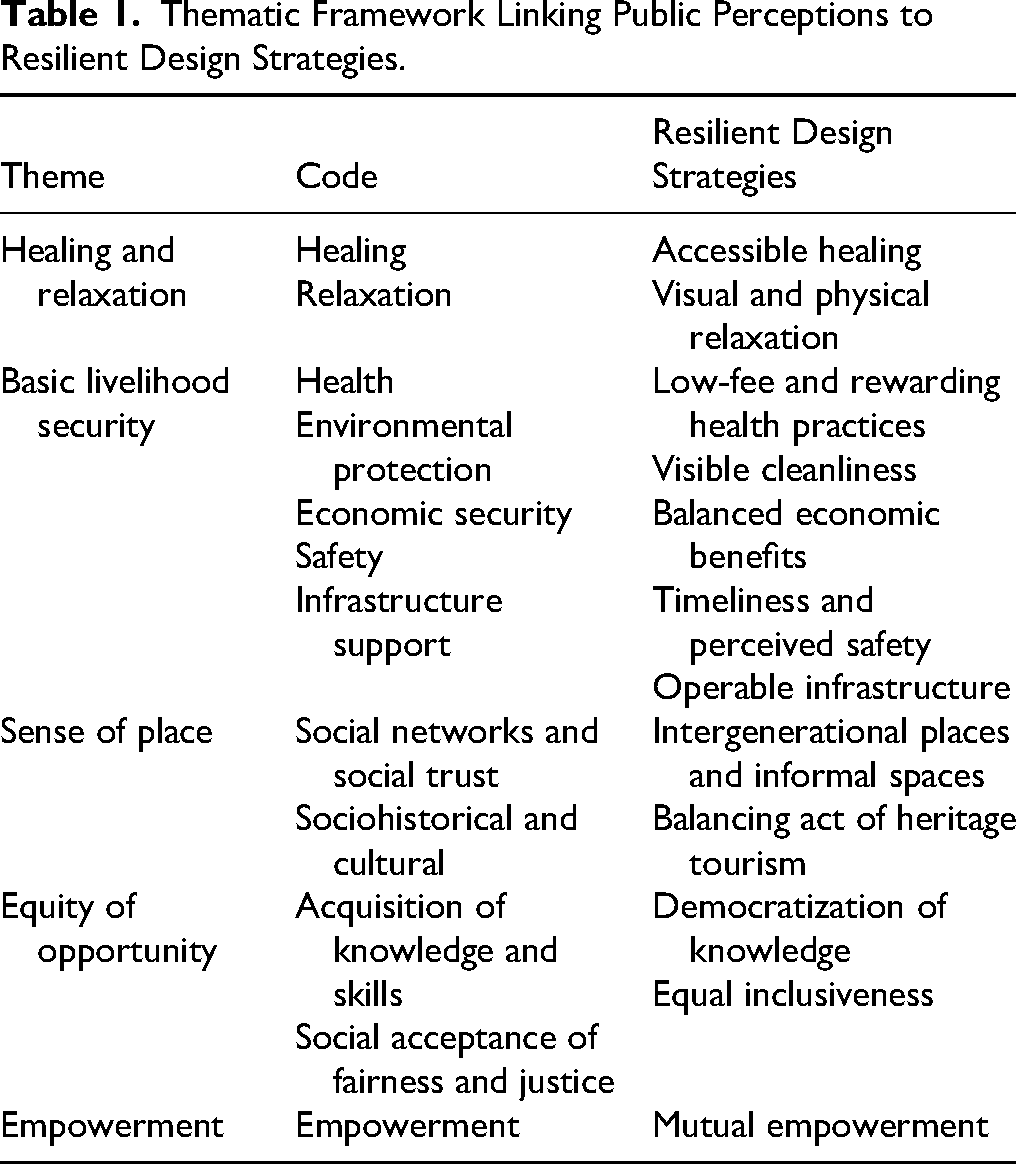
Table 1 organizes the five core themes derived from Maslow's hierarchy of needs. For each theme, it specifies the associated public perceptions and needs, and the corresponding manifestations and strategies in resilient urban design.
Thematic Framework Linking Public Perceptions to Resilient Design Strategies.
Discussion
Analysis of the studies included in this review reveals several distinctive characteristics of the current research on public responses to resilient urban design, while also highlighting its limitations. First, in terms of temporal trends, scholarly interest in this topic has grown notably since 2018, accumulating a substantive body of knowledge over approximately seven years. Second, geographically, over half of the studies originate from Europe. This distribution suggests that the current evidence base is predominantly built upon contexts in developed regions, leaving the circumstances in less developed areas markedly underexplored. Furthermore, regarding methodological approaches, the vast majority of studies (approximately 90%) employed qualitative methods, such as observations and interviews, with only a small fraction (around 10%) utilizing quantitative surveys alone. This methodological pattern may reflect the view that quantitative surveys alone are insufficient to capture the full complexity of public responses, or alternatively, that the field remains in an exploratory phase where qualitative approaches are prioritized. In either case, quantitative methods have typically been used as a supplementary source of data.
In addition, this study identifies that public responses to resilient urban design are shaped by factors thematically categorized as “Healing and relaxation,” “Basic livelihood security,” “Sense of place,” “Equity of opportunity,” and “Empowerment.” These responses, manifested through positive or negative attitudes and behaviors, directly influence the process of community regeneration. This influence, in turn, becomes a critical determinant of a community's overall resilience, ultimately deciding whether its development is promoted or hindered. The following section will detail how specific resilient design strategies trigger public responses and will offer recommendations for implementing positive resilience measures.
Accessible Healing
This study elucidates how accessible healing spaces, exemplified by urban agriculture, enhance urban resilience. Functionally, their shift from production to healing embodies the resilience principle of multifunctionality, enabling urban systems to absorb diverse shocks, from personal health crises to community stressors, by serving both daily well-being and critical recovery needs (Lindemann 2019; Saporito 2017). Moreover, as participants perceive these spaces as vital to their own recovery, their heightened health awareness fosters a culture of self-care and mutual monitoring (Rusciano and Gatto 2022), building a shared knowledge base for proactive community health management. Socially, these practices strengthen supportive networks, directly bolstering social resilience.
While nature's role in healing is well-established, this study highlights two specific mechanisms that make urban agricultural spaces particularly effective. First, they operationalize accessible nature by providing low-cost, integrated health opportunities within daily life (Rusciano and Gatto 2022; Saporito 2017). Second, participatory agricultural labor fosters a sense of ownership, which concurrently strengthens both perceived control and place attachment (Lindemann 2019). Thus, the resilience and renewal potential of accessible healing spaces are not inherent but are activated through a cycle where design fosters positive public perception, which motivates engaged behavior, and in turn generates the social and adaptive resources that constitute community resilience.
Visual and Physical Relaxation
Relaxing spaces contribute to resilience through both visual and physical dimensions. Aesthetically restorative natural environments reduce cognitive load (Qiu et al. 2023), motivating local community members to visit and maintain them—a behavioral translation that enhances socioecological capacity and reinforces shared community values (Janiszek and Krzysztofik 2023; Burrage 2011). This collective engagement strengthens social cohesion and everyday stewardship of natural elements (Langemeyer et al. 2018), allowing “visual relaxation” to be understood as a tangible pathway toward socioecological resilience.
Beyond nature, designed artistic and leisure spaces also provide physical relaxation (Zheng et al. 2024). Their multifunctionality translates public preference for visually appealing and varied features into sustained use (Lee and Hwang 2018; Hobbs et al. 2022). This sustained engagement improves spatial efficiency, promotes healthy lifestyles, and generates economic value, collectively building adaptive capacity against socioeconomic stress (Majewska et al. 2022; Polci and Pierantoni 2024; Koo 2024).
However, quality improvements can raise local costs and displace residents (Ma et al. 2020). Therefore, advancing spatial design that emphasizes both visual and physical relaxation must be accompanied by inclusive mechanisms to prevent such upgrading from becoming an implicit form of social exclusion.
Low-Fee and Rewarding Health Practices
With growing health awareness, individuals who engage in regular physical activity show a preference for fitness facilities that are more affordable than nearby commercial alternatives (Chan 2025). Although fully free facilities lower the threshold for participation, their long-term operational sustainability is often constrained by insufficient maintenance funding, which in turn discourages continued use over time among consistent users (Lin et al. 2022). In contrast, low-fee facilities can build resilience in two ways: they generate a dedicated revenue stream for ongoing maintenance and upgrades, and they foster a sense of collective ownership, which motivates voluntary care and builds social resilience (Majewska et al. 2022; Andres and Round 2015). This model contributes to locally base health-related spending and service use, thereby enhancing urban economic resilience.
Similarly, urban agriculture leverages tangible rewards (food, income) as positive feedback to drive sustained participation (Solomon 2012; Saporito 2017). Such tangible rewards serve as a key driving force for sustained community participation in urban agriculture (Audate, Cloutier, and Lebel 2021), while such widespread engagement simultaneously generates broader social and environmental benefits beyond individual rewards. It directly enhances ecological resilience through greening and promotes economic resilience by integrating local products into a circular economy (Säumel, Reddy, and Wachtel 2019; Rusciano and Gatto 2022). In both cases, public perception of benefit (value for fee, direct reward) is what motivates the enduring participation necessary to produce community-scale ecological and economic resilience and renewal.
Visible Cleanliness
In environmental protection, the public—particularly those whose well-being is directly tied to local ecosystems—is shifting from passive users to active stewards, driven by the recognition that ecological quality directly affects their well-being (Lee, Kim, and Koo 2024; Piñeiro-Rodriguez et al. 2025). This motivates an emphasis on visible cleanliness and active participation in maintenance (Janiszek and Krzysztofik 2023). Visible cleanliness serves as immediate, intuitive feedback that motivates and sustains this stewardship role. Such bottom-up engagement strengthens both social resilience through cooperation and urban ecological resilience through reduced management costs.
Nevertheless, lay reliance on visual cues can diverge from expert assessments. For instance, some residents misperceive urban agriculture as polluting or levees as causing blockages (Toomey et al. 2021). This reflects a perceptual bias where visible cleanliness overrides an understanding of systemic ecological functions, potentially hindering beneficial projects. Therefore, enhancing visible cleanliness remains crucial to reinforce positive stewardship, but must be coupled with efforts to guide public understanding beyond visual cues toward a deeper comprehension of ecosystem functionality.
Balanced Economic Benefits
The effectiveness of community transformation hinges on improving individual economic benefits, such as new employment or compensation from upgrades (Andres and Round 2015; Zhang et al. 2019). Increased income enhances life satisfaction and pro-environmental engagement (Du, Cao, and Huang 2022; Lous and Graafland 2022), stimulating local consumption and services to create a virtuous cycle of regional economic growth (Säumel, Reddy, and Wachtel 2019; Green 2021). In other words, active participation in the local labor market by those embedded in the transformation process contributes to the sustained use and stable development of facilities and spatial functions.
However, these positive dynamics have been primarily documented in developed-country contexts. When turning to developing countries, the process often reveals unequal distribution. Certain groups, particularly those with lower education, may experience net losses. Where the social security system is weaker, and the proportion of informal employment is higher, residents who lose rental income due to redevelopment face much greater difficulty reentering the labor market than comparable groups in developed countries (Zhang et al. 2019). This “loss aversion” underscores the acute sensitivity of those facing economic losses (Yaman, Cubí-Mollá, and Ungureanu 2023), a factor frequently overlooked in policy design.
Private property can serve as an intrinsic motivator, encouraging investment in what is perceived as “one's own.” However, individuals are often reluctant to act for the public good at personal cost (Niu et al. 2023; Liu et al. 2024). Consistent with this notion, but extending it to the property rights context, an empirical study from South Africa points out that in low-income communities, simply granting private property rights is not sufficient to incentivize ecological investment, because residents prioritize basic livelihood security (Gwedla, Shackleton, and Olvitt 2022). Without institutional guidance, such self-interested motives rarely evolve into sustained collective action. Thus, resilience strategies based on private ownership may yield short-term gains but risk undermining long-term social equity and collective responsibility.
Collectively, these findings position “balanced economic benefits” as a critical yet complex dimension of resilient design. Resilience is achieved not by maximizing aggregate growth or privatizing gains but by carefully calibrating the distribution of economic rewards and losses. This balance directly shapes how outcomes are perceived and how communities behave—from “loss aversion” to conditional engagement driven by ownership. When the distribution is perceived as equitable, it fuels socioeconomic renewal through sustained cooperation. When perceived as unequal, it triggers disengagement and social fragmentation, eroding the very cohesion essential for long-term resilience.
Timeliness and Perceived Safety
Despite holding positive attitudes, individuals facing risks perceived as distant or low-probability rarely act on preventive safety measures. This gap stems from measures that target low-probability, distant, or gradual risks are embedded in complex systems, and yield delayed, uncertain outcomes (Sauer, Roca, and Villares 2022). These characteristics make it difficult for them to perceive tangible improvements in safety (Lennox 2022), undermining motivation for participation.
Facing such imperceptible risks, individuals often adopt an avoidance strategy rather than proactive prevention (Sauer, Roca, and Villares 2022). This passive stance represents a behavioral adaptation to an unsafe environment rather than an active assertion of the right to safety (Roy and Bailey 2021). While these strategies are crucial for resilience, their lack of immediate and perceptible outcomes limits public engagement, thereby reinforcing reliance on government-led interventions. This dependency increases long-term administrative costs and weakens systemic resilience by failing to build communal adaptive capacity.
Therefore, building resilient safety systems requires closing the gap between institutional design and public perception. Designing measures to be timely and perceptible is fundamental to engaging the public. By emphasizing relevance to daily life and making preventive effects visible, such design can shift public behavior from passive compliance to active participation, transforming citizens into coproducers of community safety and resilience.
Operable Infrastructure
Infrastructure is widely used due to accessibility and ease of use, with perceived ease of understanding boosting trust and satisfaction (Netzel et al. 2021). For instance, simplifying digital interfaces has improved equity and comprehensibility for older adults (Chan 2025).
However, this positive engagement remains at the use level. The willingness of users to evolve into comanagers is limited because “ease of understanding” does not imply “in-depth understanding.” A lack of technical knowledge weakens the sense of ownership and fosters excessive reliance on professional institutions (Wang et al. 2022). When management measures lack interpretation for this broader community, they risk causing misunderstandings and eroding trust (Drosou et al. 2019; Mashi et al. 2020).
Thus, while user-friendly design ensures access, it fails to foster the adaptive resilience that comes when people understand and care for a system. Residents lack the knowledge of how the system works (e.g., its maintenance needs, failure modes) and the skills to contribute to its upkeep. This gap makes the system vulnerable. True resilient design must therefore bridge this gap by embedding interpretable feedback and simple maintenance interfaces, transforming passive users into capable first responders and daily stewards.
Intergenerational Places and Informal Spaces
At the level of social networks and trust, intergenerational interaction and mutual aid contribute unique value to social resilience. Shared, financially and socially inclusive spaces (e.g., urban gardens) are key venues for such activities (Rusciano and Gatto 2022; Saporito 2017). Intergenerational engagement alleviates loneliness, strengthens identity and belonging, and boosts willingness to participate (Kelly and Nicholson 2022). In this process, older adults contribute by sharing their experiences and wisdom, middle-aged participants offer physical effort and organizational capacity, while children gain opportunities for growth and learning within natural environments. The complementary relationships formed among different groups not only foster mutually beneficial intergenerational connections but also directly contribute to ecological management and sustainable development at the community level (Zeunert, Hawken, and Gowers 2025; Zhong et al. 2025).
Meanwhile, neighborhood mutual assistance often emerges through informal cooperation that emphasizes everyday convenience rather than economic gain (Andres and Round 2015). Once community restructuring reduces the informal spaces that support these activities, spontaneous interaction and trust among residents tend to decline (Saldivia-Mansilla, Carmona-Monferrer, and Serrano-Blasco 2024; Martini 2024). Research indicates that such everyday cooperation can effectively enhance social resilience, cultivate civic awareness (İnal-Çekiç, Kozaman-Aygün, and Bilen 2024), and reveal the potential for community self-governance. However, the randomness inherent in informal spaces is a double-edged sword. While they can stimulate social vitality in contexts with insufficient public facilities, the lack of order may also lead to deteriorating environmental hygiene and compromised spatial equity. These observations suggest that the sustainability of social cohesion fostered through informal interactions is heavily contingent upon spatial conditions and governance mechanisms.
Balancing Act of Heritage Tourism
Local stakeholders’ enthusiasm for cultural heritage is often driven by tourism's economic benefits (McElduff and Ritchie 2018; Chung and Lee 2019; Grano 2025). As communities gain income and witness revitalization, members become active cultural promoters (Al-Badarneh et al. 2025). Engagement in cultural activities fosters strong emotional bonds and place identity, translating into sustained actions that support heritage transmission and societal cultural continuity. Heritage tourism thus creates a positive cycle of “tourism development–cultural dissemination–place attachment–cultural continuity.”
However, this process is complex. When cultural transmission becomes functionalized for tourism growth, it triggers cultural anxiety. Residents may see generic consumption landscapes displacing local distinctiveness and livelihoods, eroding their cultural agency and discursive power (Toomey et al. 2021; McElduff and Ritchie 2018). Thus, “heritage revitalization” is often less about preservation than a reconfiguration of local power dynamics (Mejía 2024), involving intertwined processes of cultural regeneration, identity renegotiation, and power rebalancing.
Consequently, pursuing “balanced heritage tourism” is pursuing resilience. Resilience in this context is not the unbridled growth of visitor numbers but the system's capacity to sustain its core cultural assets and social fabric amidst economic development.
Democratization of Knowledge
Community engagement in both traditional and innovative learning is vital for cultural and social resilience. Learning traditional skills ensures cultural continuity (Grano 2025), while acquiring digital and innovative competencies facilitates communication with professionals and strengthens social networks (Koo 2024; Chan 2025). This marks a shift from passive observers to active contributors, strengthening place attachment (Hsu et al. 2025; Jones 2025). However, knowledge alone does not drive action; active participation requires individuals to perceive their contributions as meaningful and recognized (Day et al. 2022).
The study also finds that collaborative learning remains constrained by unequal power relations (Audia et al. 2021; Gladkova 2025). When discourse and innovation are dominated by higher-income, educated groups, and user guidance is insufficient, “knowledge barriers” arise. These barriers marginalize disadvantaged groups, weaken social vitality, and become systemic vulnerabilities (Koo 2024; Chan 2025).
Therefore, knowledge democratization, with its dual capacity to build resource resilience and connective resilience, is central to equitable and resilient urban development. Its success depends on creating conditions where learning is accessible and public contribution is both meaningful and visibly valued.
Equal Inclusiveness
Groups from diverse social identities do participate in inclusive activities, which can amplify voices, boost self-esteem, and strengthen networks for disadvantaged groups, fostering place attachment and cohesion (Saporito 2017; Säumel, Reddy, and Wachtel 2019; Lindemann 2019).
Inclusivity operates on two levels. Physically, it promotes participation through improved spatial environments and infrastructure. Digitally, online networks expand dialogue and inclusion, accommodating more diverse groups. Ideally, social inclusion envisions coexistence and equality (Askarizad, He, and Dastoum 2025). However, in stratified societies, inclusion mechanisms often reinforce exclusion. Higher-status groups may reshape spaces to serve their interests, deepening sociospatial divides and weakening belonging (Murphy, Parker, and Hermus 2023). Similar contradictions appear in digital inclusion. Although online platforms broaden participation, frequent social media users tend to label others and show lower acceptance of diversity (Aslan et al. 2025). Their aggregation fosters social closure, hindering new participants’ integration and undermining inclusivity (Andres and Round 2015).
Thus, both physical and digital inclusions remain constrained by structural inequalities, limiting their transformative potential. Achieving genuine equity in inclusion requires continuous institutional and social efforts. In essence, the quest for “equal inclusiveness” is a quest for a higher order of social resilience—one built on diversity, cohesion, and legitimacy.
Mutual Empowerment
Empowerment provides community members with opportunities to participate in community design. This collaborative engagement fosters citizenship, ownership, and motivates maintenance of public spaces and culture, thereby reducing costs, strengthening cultural continuity, and enhancing equity. As primary stakeholders, citizens often better understand their own needs than governments or professionals; thus, their participation in spatial planning helps generate solutions aligned with public interests and enhances policy efficiency and sustainability (Jin and Shao 2024; Polci and Pierantoni 2024).
Community members’ enthusiasm stems from the pursuit of autonomy, recognition, efficacy, and belonging, allowing citizens to perceive their value in collective processes (Storm et al. 2023). However, true empowerment requires equal accessibility and capability. Low-income groups are often constrained by dominant actors whose preferences are favored by authorities, undermining fairness (Shokry, Anguelovski, and Connolly 2023; Tubridy 2020).
Empowerment must be reciprocal, not unidirectional (Smet, Kesdi, and Pak 2025). Partial authority creates an illusion of inclusion while restricting actual influence (Qin and He 2022; Stiman 2024), leading to temporary engagement but long-term distrust (Durnová 2021). Conversely, excessive decentralization may cause decision-making paralysis. Therefore, effective empowerment requires a dynamic balance between equity, power effectiveness, and decision-making efficiency. Achieving this balance means realizing mutual empowerment as a key design for fostering adaptive and governance resilience within communities.
Conclusion
This review constructs an analytical framework based on Maslow's hierarchy of needs by synthesizing literature from the past decade to examine public responses to resilient urban design. Five interrelated drivers are identified—healing and relaxation, basic livelihood security, sense of place, equity of opportunity, and empowerment—whose interactions shape public behavior and determine community renewal outcomes. Correspondingly, this review proposes 12 integrated strategies to guide the implementation of positive resilience.
The findings indicate that resilient urban design translates into operational pathways for practice via multilevel strategies. At the spatial level, planners and designers can enhance adaptability to both everyday use and emergency conditions by providing healing spaces with convenient access to nature, incorporating landscape elements that promote visual and physical relaxation, installing low-fee facilities that support health-promoting activities, designing flexible and operable infrastructure systems, and strengthening the perceived cleanliness, timeliness, and safety of public spaces. In addition, the creation of place types that support intergenerational interaction and cultural connections can further reinforce local place identity.
At the governance and economic levels, achieving a sustainable balance between economic benefits and heritage tourism development is key to optimizing outcomes and preventing the erosion of community resilience by commercialization. At the social and participatory levels, communities can strengthen resilience by promoting knowledge democratization and establishing participatory mechanisms based on equal inclusion and mutual empowerment, thereby enhancing the agency and collaborative capacity of diverse social groups in community renewal processes.
However, of the 34 reviewed studies, 26 (76%) are from developed countries. While the literature covers all three major governance models—government-led (13 studies, 38%), community-driven (5 studies, 15%), and collaborative (16 studies, 47%)—not a single study (0/34) directly compares them. This prevents any evidence-based conclusion about how different governance arrangements shape public responses to similar risks. Accordingly, future research should extend the investigation to underdeveloped contexts and adopt comparative case study designs. This would enable the collection of public perception data on resilient design under different governance models for cross-model comparison. Future studies should also compare intended resilience goals with actual outcomes reflected in public responses.
Overall, this review provides a human-centered roadmap for policymakers and planners. It argues that successful resilient city development must begin with meeting diverse public needs, transforming resilience from an abstract ideal into tangible, participatory, and beneficial everyday experiences.
Supplemental Material
sj-docx-1-jpl-10.1177_08854122261459059 - Supplemental material for Resilient Urban Design with People: A Review of Public Interaction in Community Renewal
Supplemental material, sj-docx-1-jpl-10.1177_08854122261459059 for Resilient Urban Design with People: A Review of Public Interaction in Community Renewal by Shuai Yuan and Nor Zarifah Maliki in Journal of Planning Literature
Supplemental Material
sj-docx-2-jpl-10.1177_08854122261459059 - Supplemental material for Resilient Urban Design with People: A Review of Public Interaction in Community Renewal
Supplemental material, sj-docx-2-jpl-10.1177_08854122261459059 for Resilient Urban Design with People: A Review of Public Interaction in Community Renewal by Shuai Yuan and Nor Zarifah Maliki in Journal of Planning Literature
Footnotes

Ethical Approval and Informed Consent Statements
Ethical approval was not required for this study because it is a review of previously published literature and involved no human subjects, identifiable data, or interventions.
Funding
The authors received no financial support for the research, authorship, and/or publication of this article.
Declaration of Conflicting Interests
The authors declared no potential conflicts of interest with respect to the research, authorship, and/or publication of this article.
Data Availability Statement
Data sharing is not applicable to this article as no datasets were generated or analyzed.
Supplemental Material
Supplemental material for this article is available online.
Author Biographies
References
Supplementary Material
Please find the following supplemental material available below.
For Open Access articles published under a Creative Commons License, all supplemental material carries the same license as the article it is associated with.
For non-Open Access articles published, all supplemental material carries a non-exclusive license, and permission requests for re-use of supplemental material or any part of supplemental material shall be sent directly to the copyright owner as specified in the copyright notice associated with the article.
