







Abstract
Witnessed community violence has been linked to a number of internalizing and externalizing problems in adolescents. Guided by Cicchetti and Lynch’s (1993) ecological-transactional model, this study aimed to examine the impact that family-level factors had on negative outcomes associated with witnessed community violence. Using a nationally representative sample, we explored the moderational role of family cohesion in the relationship between witnessing community violence and delinquent behavior while taking demographic variables into account. Results from the investigation suggested that low levels of family cohesion were predictive of delinquency after controlling for race, gender, past delinquency, and direct trauma. In addition, the findings suggested that family cohesion moderated the impact of witnessed community violence on future delinquent behavior. Future directions for research and implications for practice were also discussed.
According to recent findings, nearly 9.8 million (37.8%) of youth residing in the United States have witnessed some form of community violence (Zinzow, Ruggiero, Resnick, et al., 2009), ranging from witnessed physical assaults to violent deaths. A number of studies have indicated that witnessed community violence is related to internalizing problems such as depression and posttraumatic stress disorder (PTSD; Buka, Stichick, Birdthistle, & Earls, 2001; Zinzow, Ruggiero, Hanson, et al., 2009) as well as externalizing problems, including delinquent behavior, aggression, and substance abuse (Buka et al., 2001; Zinzow, Ruggiero, Hanson et al., 2009).
Cicchetti and Lynch (1993) developed the ecological-transactional model to emphasize the importance of taking contextual factors under consideration when examining the impact of youth’s exposure to violence. An assumption in this model is that there are individual variations in response to violence exposure. Specifically, the authors contended that individual-, family-, community-, and societal-level factors either protect youth from deleterious outcomes (compensatory factors) or exacerbate the negative impact of witnessed violence (potentiating factors; Cicchetti & Lynch, 1993; Hanson et al., 2006).
There is evidence that family functioning, particularly family cohesion, can moderate the negative impact that witnessing community violence has on delinquent behavior. Family cohesion is defined as the “emotional bonding that family members have toward one another” (Olson, Russell, & Sprengkle, 1984). Using a nationally representative sample, the current study aimed to explore the moderating role of family cohesion in the relationship between witnessing community violence and delinquent behavior. In the following section, we reviewed the relevant research regarding the interconnections among these variables.
Family Functioning as a Protective Factor
Previous research has indicated that family functioning can protect youth from the deleterious impact of witnessed community violence. Buka and colleagues (2001) conducted an extensive review of the literature regarding the antecedents, consequences, risks, and protective factors related to witnessed community violence. Based on this review, the authors concluded that family structure may moderate the relationship between witnessing violence and negative outcomes. They hypothesized that higher levels of family cohesion and structure will protect youth exposed to violence from negative psychosocial outcomes because they have a supportive environment to process these potentially traumatic events.
There are a number of studies that support Buka and colleagues’ (2001) assertion. For example, Ceballo, Ramirez, Hearn, and Maltese (2003) examined the moderating effect of parental monitoring on the relationship between violence exposure (both direct and witnessed) and psychological well-being in fourth- and fifth-grade youth living in an urban neighborhood. Their findings suggested that high parental monitoring reduced the risk for exposure to violence. Moreover, they found that youth who had been exposed to violence (both direct and witnessed) and high parental monitoring had lower levels of depression and hopelessness than those who had been exposed to violence and had low parental monitoring. Similarly, Bacchini and colleagues (2010) found that family monitoring moderated the relationship between violence exposure and psychosocial outcomes in a sample of adolescents in Italy. Specifically, findings suggested that increased family monitoring reduced the impact of violence exposure on antisocial behaviors (violating social norms and laws to varying degrees) and depression.
In addition, in line with Buka et al.’s (2001)hypothesis, Gorman-Smith, Henry, and Tolan (2004) identified family functioning as a protective factor against perpetrating violence following trauma exposure. Specifically, the authors compared outcomes for African American families with varying levels of cohesion, monitoring, discipline, and beliefs in the importance of families. The authors found that youth from “exceptionally functioning families,” which were defined as high-functioning families over various domains, including family cohesion, monitoring, and effective discipline, were less likely to engage in violent behavior than those from families with lower functioning. Similarly, Plybon and Klewer (2001) found that youth living in a high-crime neighborhood were less likely to exhibit behavior problems if they were a part of a highly cohesive family compared with those living in a low-cohesive family.
Gaps in the Literature
There are several limitations in the existing literature concerning the links among witnessed community violence, family cohesion, and delinquency. First, although a number of studies support the hypothesis that family cohesion moderates the relationship between witnessed community violence and delinquency, these studies typically use relatively small, nonrepresentative, and/or convenient samples. In addition, these studies combined all types of witnessed violence and failed to differentiate between the unique types of violence that one may have witnessed. This is especially critical, given evidence suggesting that the negative impact of witnessing violence may be dependent on the type of violence observed (Zinzow, Ruggiero, Hanson, et al., 2009; Zinzow, Ruggiero, Resnick, et al., 2009). Finally, previous research has examined this relationship without controlling for important variables found to affect delinquent behavior, most notably, direct victimization (i.e., physical assault, sexual assault, and natural disaster; Kilpatrick et al., 2000, 2003). Specifically, a number of studies have noted the correlation between direct victimization and witnessed violence (Lynch & Cicchetti, 1998; Osofsky, 1999). In addition, direct sexual abuse and physical abuse have been linked to delinquent behavior (Hanson et al., 2006; Kilpatrick et al., 2000). Therefore, it is essential that direct victimization be taken into account to investigate whether witnessed violence makes a unique contribution to the prediction of delinquent behavior.
The Current Study
Zinzow, Ruggiero, Hanson and colleagues (2009) examined the relationship between witnessed community/parental violence, delinquency, and substance use. Using the National Survey of Adolescents–Revised (NSA-R), a nationally representative sample, relationships between witnessed community and parental violence, delinquency, and substance use were explored, controlling for direct trauma and demographic factors. Findings from this study indicated that youth who had witnessed violence reported higher rates of delinquency.
The current study aimed to build on Zinzow and colleagues’ (2009) findings. Specifically, the study had two aims: (a) to examine whether witnessed community violence remained significantly related to delinquency at a 1-year follow-up and (b) to explore the moderating role of family cohesion on this relationship. Using the same sample (NSA-R), the project examined specific types of witnessed community violence reported at Wave 1 and delinquency reported at Wave 2, approximately 1 year later (M = 15.29 months, SD = 4.58 months). In addition, the interaction between family cohesion and witnessing community violence was examined to explore moderating effects.
This investigation addressed the limitations in the extant literature in a number of ways. First, the study used a nationally representative sample. In addition, it controlled for factors that have been associated with delinquent behavior, including demographic factors (race and gender), past delinquency, and direct victimization. Finally, the current study examined specific types of witnessed community violence (e.g., shooting, stabbing, mugging, threat with a weapon, and sexual assault), as opposed to one composite variable, to better understand the complex relationships among witnessed violence, family cohesion, and delinquent behavior.
Method
Participants
The study sample was obtained from the 2005 NSA-R, an epidemiological study of 3,614 youth aged 12 to 17 years. The primary goal of the NSA-R was to identify the population prevalence of potentially traumatic events, including physical assault, sexual assault, and witnessed violence in the home, school, and community, and to examine risk factors associated with trauma exposure. Sampling methodology and data collection procedures were similar to the 1995 National Survey of Adolescents (see Kilpatrick et al., 2000).
A total of 6,694 households were contacted during recruitment, in which parents completed a brief structured interview and were asked to identify at least one eligible adolescent living in the home. Of these, 1,268 (18.9%) parents refused participation for their adolescents, 188 (2.8%) adolescents refused participation after parental consent, 119 (1.8%) adolescent interviews were started but not completed, and 1,505 (22.5%) identified eligible adolescents were unreachable or unavailable for interview. The remaining 3,614 adolescents completed interviews at Wave 1, including 2,459 in the national cross-section and 1,155 urban-dwelling adolescents. Of these adolescents, 2,511 (69%) completed the follow-up assessment at Wave 2 (mean length of time between Wave 1 and Wave 2 = 15.29 months, SD = 4.58 months). The uncompleted Wave 2 assessments were due to telephone problems such as technical difficulties or a nonworking/disconnected number (29%), inability to reach the participant (i.e., always busy, no answer, parent or adolescent never available, 24%), adolescent refusal during Wave 2 recontact (17%), wrong telephone number (12%), ineligibility (9%), or only partial completion of the interview (9%). To examine attrition of the sample over time, effect sizes were calculated to compare participants who completed versus those who did not complete the Wave 2 assessment. Effect sizes were small (Cohen, 1988) for all victimization and high-risk behavior variables (range of d = .01 to .20), thus indicating minimal differences between completers and noncompleters on all study variables.
As adolescents were oversampled in urban areas, cases were weighted to maximize representativeness of the sample to the 2005 U.S. adolescent population. A weight was created to restore the urban cases to their true proportion of the urban/suburban/rural variable, based on 2005 U.S. Census estimates. Next, weights were created to adjust the weight of each case based on age and sex. Sample frequencies were generated by age cohort and sex. We compared this distribution with the U.S. Census estimates, and weightings were assigned to each Sex × Age group cell within the sample. This procedure resulted in weighted sample distributions that closely approximated 2005 U.S. Census estimates.
Measures
Demographic characteristics
Demographic variables, including adolescent age, gender, and ethnicity, were assessed with standard questions used by the U.S. Bureau of the Census (1988). Specifically, adolescents reported on their current age at the time of the interview, gender, and race. The race variable was coded into four dummy-coded variables (African American, Hispanic, Asian/Pacific Islander, or Native American) where 0 indicated European American and 1indicated the ethnic group.
Direct trauma history
Wave 1 direct trauma history was assessed using a module based on the trauma assessment for adults, which has been widely used to screen community and medical populations for trauma history in face-to-face and telephone interviews (Kilpatrick et al., 2000; Resnick, 1996 ). Validity of this measure has been supported through high correspondence with other structured assessments of traumatic events as well as consistency with stressor events recorded in archival records of mental health patients (Saunders, Kilpatrick, Resnick, & Tidwell, 1989). Several behaviorally specific questions assessed lifetime exposure to four types of events (serious accident, physical assault, sexual assault, natural disaster), which were used to create a dichotomous variable representing lifetime trauma history (i.e., yes or no to any of the four trauma types). A serious accident included the endorsement of having experienced a serious motor vehicle accident or other type of accident. Physical assault was defined as (a) experiencing an attack with or without a weapon in which the participant was badly injured or beaten up and/or (b) being threatened with a dangerous weapon (i.e., gun or knife). Sexual assault was defined as (a) forced anal, vaginal, and/or oral sex, (b) forced digital and/or object penetration, and/or (c) forced touching of genitals. A natural disaster included the endorsement of experiencing a hurricane, tornado, or flood.
Witnessed community violence
Wave 1 community violence was assessed using six questions in which adolescents reported whether they had ever witnessed someone being (a) shot, (b) stabbed, (c) molested or sexually assaulted, (d) mugged, (e) threatened with a weapon, and/or (f) beaten up so badly that medical attention was required. Each type of witnessed violence was dummy coded (0 = no and 1 = yes) to indicate if participants had witnessed each type of violence. Internal consistency for this sample was acceptable (Cronbach’s α = .66).
Family cohesion
Wave 2 family cohesion was based on participants’ responses to six questions, which assessed their perception of the closeness they felt with family members. Specifically, questions addressed family connectedness (e.g., “How much do family members like to spend free time with each other?”) and communication (e.g., “How willing are you to be available when others in the family want to talk to you?”). Each question was rated on a 3-point scale ranging from 1 (not at all) to 3 (very much); items were reversed and summed to create a total score ranging from 6 to 18, where lower scores indicated more cohesion and high scores indicated less cohesion. For the purposes of this study, a dichotomous variable was created using a median split (where approximately half of the sample was in the low-cohesion group and half was in the high-cohesion group) in which 46.7% of adolescents indicated high levels of family cohesion (N = 1,183) and 53.3% indicated low levels of family cohesion (N = 1,350). Internal consistency for this sample was adequate (Cronbach’s α = .71).
Delinquency
Delinquency was measured at both Waves 1 and 2, with a series of nine items relating to crime index offenses as defined by the Federal Bureau of Investigation’s Uniform Crime Reports. The delinquency module was modified from a scale used by Elliott, Huizinga, and Ageton (1985) in the National Youth Survey. Items assessed the following delinquent acts: (a) beating up or physically attacking someone else, (b) selling drugs, (c) invading a home with intent to steal, (d) stealing a motor vehicle, (e) using force to obtain money or objects, (f) attacking someone with a weapon, (g) attacking someone with intent to seriously kill or injure, (h) being arrested, and (i) being sent to jail or juvenile detention. At Wave 1, past year delinquency was assessed. At Wave 2, participants were asked to report if they had engaged in delinquent behaviors since the first interview (approximately 1 year prior). Internal consistency for Wave 1 delinquency was Cronbach’s α = .64 and Wave 2 delinquency was Cronbach’s α = .57. Two dummy variables were created to indicate whether participants endorsed at least one of the nine types of delinquent acts at Wave 1 and Wave 2.
Procedure
A highly structured telephone interview with specially trained interviewers was used to collect information regarding a variety of topics, including demographic characteristics, trauma variables (six types of witnessed community violence and direct trauma), family variables (family cohesion), and delinquency. The interview included behaviorally specific terminology and introductory statements to orient adolescents to questions and to obtain more accurate information (Kilpatrick et al., 2003). Wave 1 responses were based on lifetime prevalence, whereas Wave 2 responses included incidences and behaviors that occurred since the last interview (approximately 1 year).
Interviews were conducted in English using computer-assisted telephone interviewing technology. (For a review of this technology, please refer to Kilpatrick et al., 2000.). Parent consent was obtained during a brief interview which included a description of the study and an overview of the topics discussed with adolescents. As consent was obtained in English, youth with non-English-speaking parents were not eligible to complete the survey. In addition, adolescent assent was obtained and participants were informed that they could discontinue the interview at any time.
Due to the sensitive nature of the questionnaire, steps were taken to ensure that the adolescent could answer the questions openly and privately. Specifically, interviewers asked participants if they were in a private setting where they could answer sensitive questions. If not, the interviewer would reschedule the interview. In addition, the interview was composed of primarily close-ended questions to reduce the likelihood that others would ascertain the content of the interview if they were to overhear the phone conversation. Following completion of the interview, adolescents received an NSA-R certificate of participation and monetary compensation of US$10.
Several steps were taken to recontact participants for the Wave 2 assessment, including (a) contacting participants at the telephone number on file, (b) obtaining three additional telephone numbers from past residences using ChoicePoint Credit Information Bureau, (c) sending letters to the last known address, and (d) recontacting ChoicePoint after 3 months to obtain updated telephone numbers.
Statistical Analysis
Descriptive statistics (see Table 1) and correlational analyses (see Table 2) were conducted for all study variables. A chi-square analysis was conducted for the youth who had witnessed community violence to determine if those with low family cohesion were more likely to engage in delinquent behavior than those who had high family cohesion. Next, logistic regression analyses were conducted to identify variables within each predictor set: demographics (race/ethnicity, gender), trauma variables (six types of witnessed community violence and direct trauma), and family variables (family cohesion) that were associated with delinquency (see Table 3). Wave 1 delinquency was included in each analysis as a control in each predictor set. Significant predictors emerging from these analyses were entered into a multivariable logistic regression analysis predicting delinquency (see Table 4).
Frequency of Criterion Variables (N = 2,560)
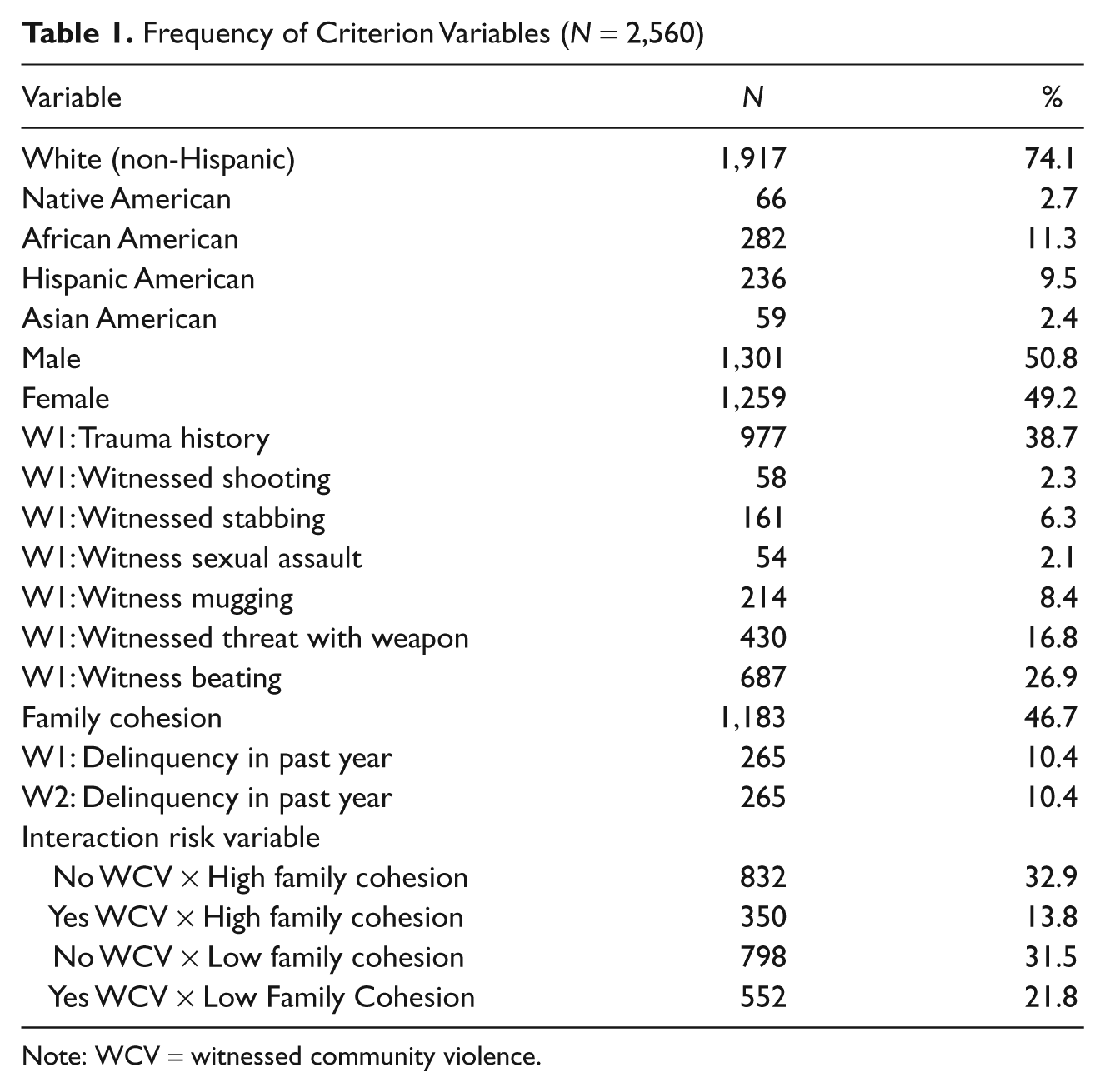
Note: WCV = witnessed community violence.
Summary of Intercorrelations for Criterion and Outcome Variables
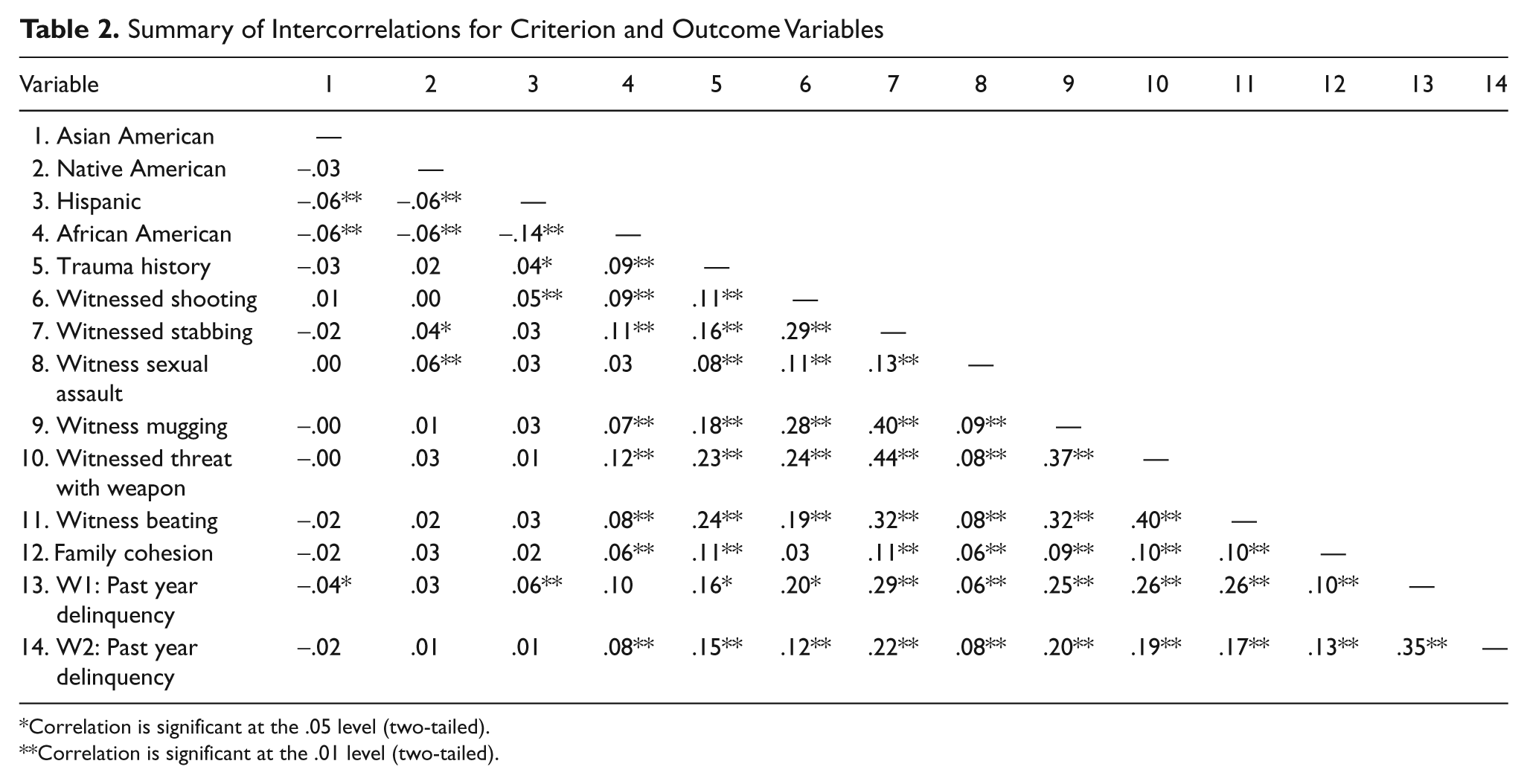
Correlation is significant at the .05 level (two-tailed).
Correlation is significant at the .01 level (two-tailed).
Logistic Regression Results: Wave 2 Delinquency Controlling for W1: Past Year Delinquency
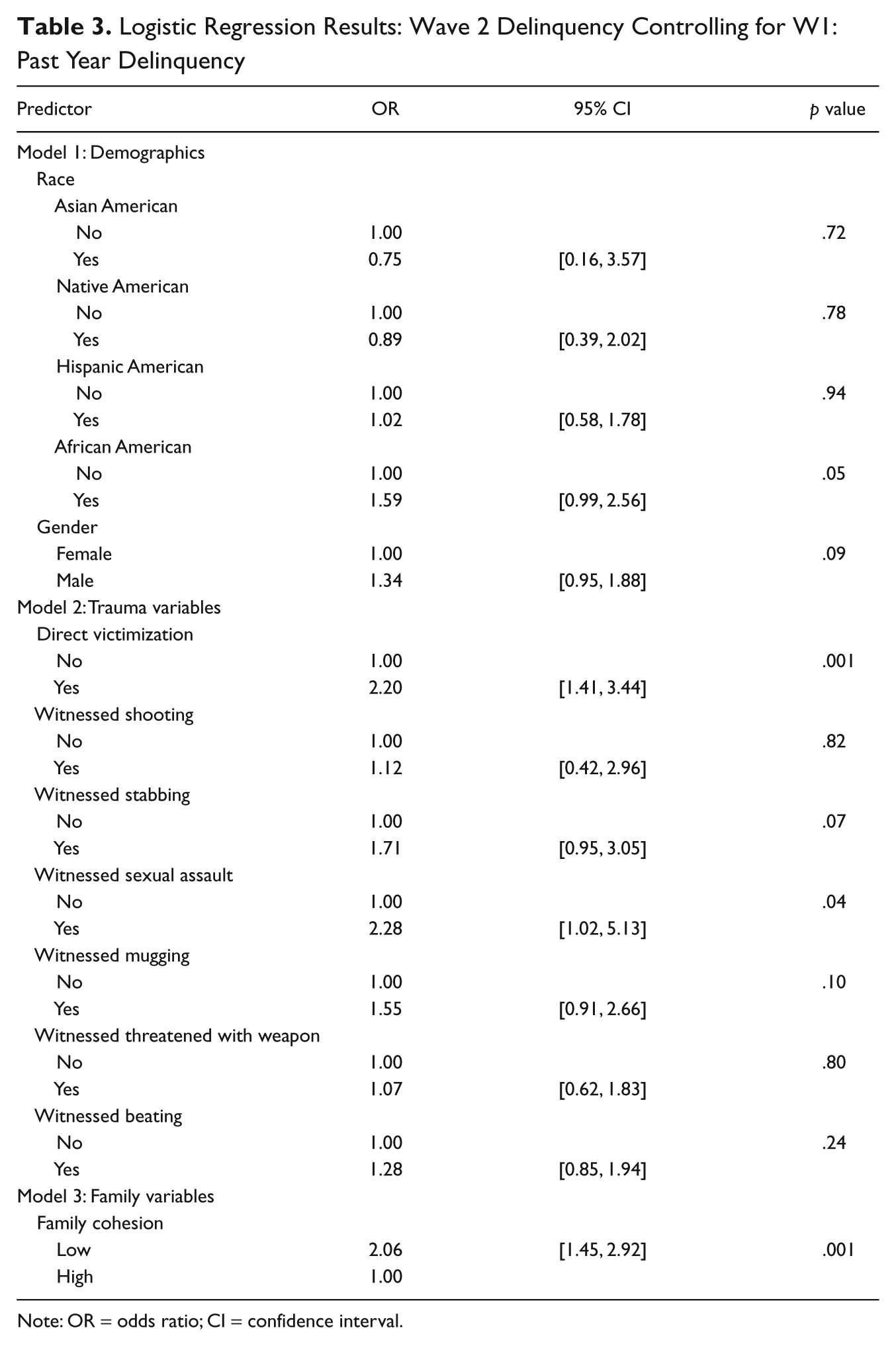
Note: OR = odds ratio; CI = confidence interval.
Logistic Regression Results: Wave 2 Delinquency
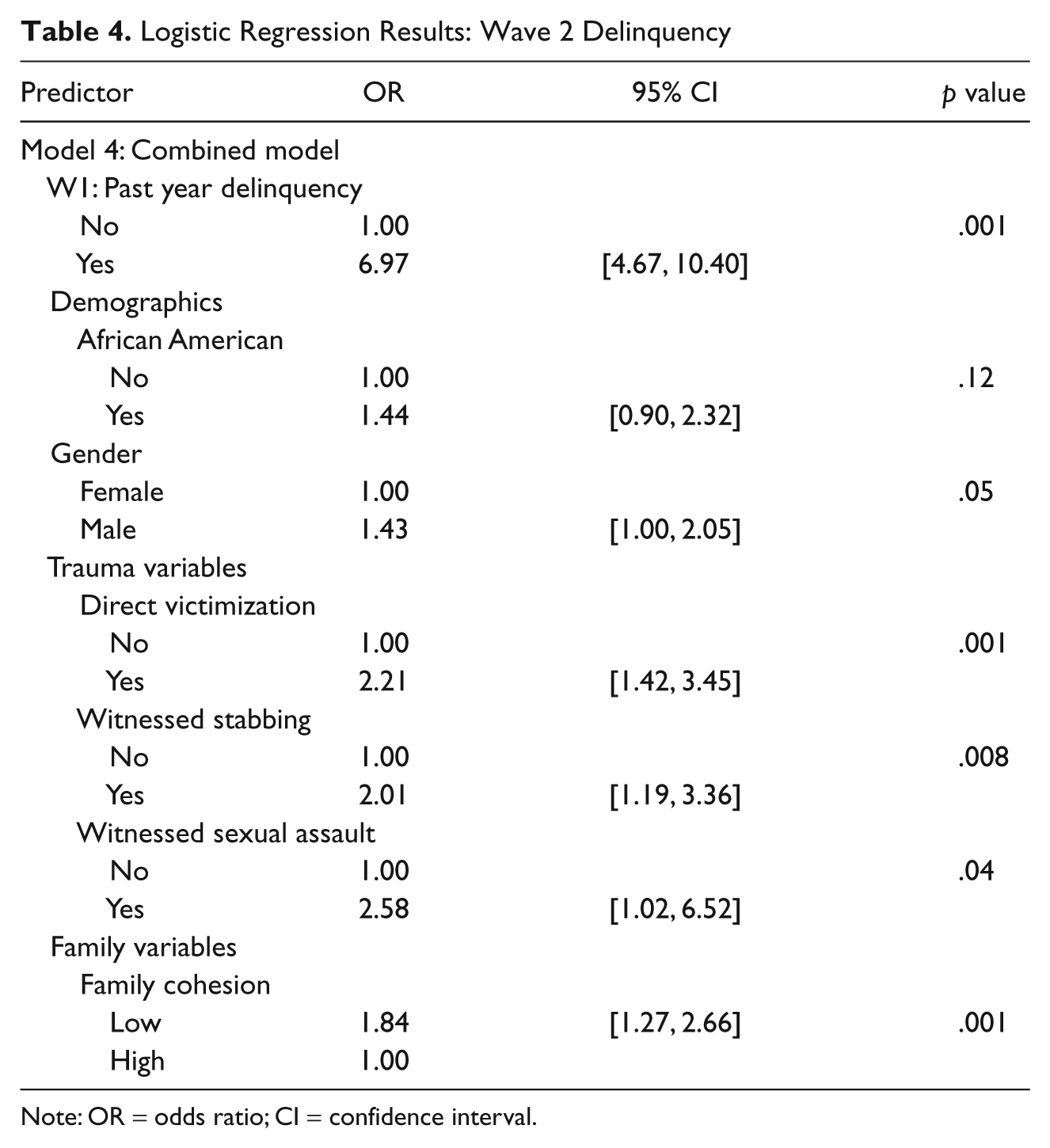
Note: OR = odds ratio; CI = confidence interval.
To examine moderator effects, a new combined risk variable was created to assess the interaction between family cohesion and witnessed community violence. First, participants’ overall witnessed community violence was determined by calculating whether a participant endorsed any of the six types of witnessed community violence. Then, a four-level combined risk variable was created (1 = No witnessed community violence × High family cohesion, 2 = Yes witnessed community violence × High family cohesion, 3 = No witnessed community violence × Low family cohesion, and 4 = Yes witnessed community violence × High family violence). Significant predictors emerging from the previous logistic regression analyses and the new combined risk variable were entered into a multivariable logistic regression predicting delinquency (see Table 5). SUDAAN (version 10.0) was used for all regression analyses to account for complex survey design and sample weighting.
Logistic Regression Results: Wave 2 Delinquency
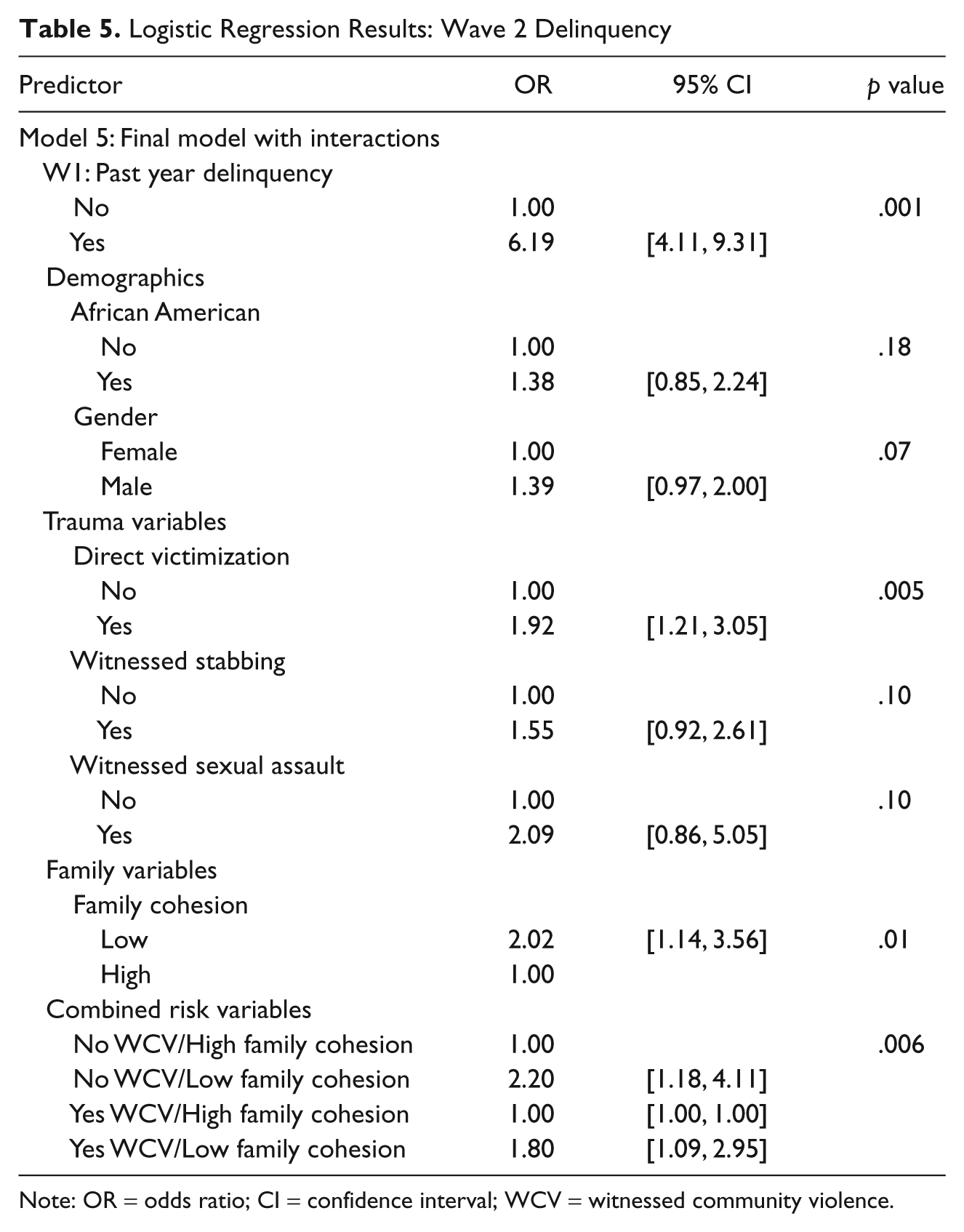
Note: OR = odds ratio; CI = confidence interval; WCV = witnessed community violence.
Results
Descriptive Information
Only participants who had completed both Wave 1 and Wave 2 were included in the current investigation. The weighted sample of 2,560 participants included 1,301 boys and 1,259 girls between ages 12 and 17(M = 14.47, SD = 1.69). Seventy-four percent (N = 1,840) self-identified their race as White, 11.3% (N = 282) as African American, 9.5% (N = 236) as Hispanic, 2.4% (N = 59) as Asian/Pacific Islander, and 2.7% (N = 66) as Native American. Three percent (N = 77) did not report race information. Descriptive statistics on delinquency, direct victimization history, witnessed community violence, family cohesion, and combined risk are reported in Table 1.
A phi correlation analysis was conducted to assess the relationship between the study variables. Table 2 provides the correlation coefficients for demographic factors, delinquency at Waves 1 and 2, direct victimization history, witnessed community violence, and family cohesion. A number of statistically significant correlations were identified across the variables. Of particular interest were the correlates of past year delinquency at Wave 1 and Wave 2. Specifically, Hispanic race, trauma history, all types of witnessed community violence (shooting, etc.), and family cohesion were statistically correlated with Wave 1 delinquency. African American race, trauma history, all types of witnessed community violence, family cohesion, and Wave 1 delinquency were significantly correlated to Wave 2 delinquency.
A chi-square analysis was conducted among youth who had witnessed community violence. Youth who had low family cohesion were more likely to engage in delinquent behaviors than those who had high family cohesion (χ2 = 12.76, odds ratio [OR] = 1.93, 95% confidence interval = [1.34, 2.79]).
Demographics
Only African American race significantly predicted delinquency reported in Wave 2 after controlling for Wave 1 delinquency. Compared with other races, African Americans were 1.59 times more likely to report engaging in delinquent behavior. In addition, gender was approaching significance after controlling for Wave 1 delinquent behaviors. Specifically, boys were more likely to engage in delinquent behavior when compared with girls (OR = 1.34).
Trauma Variables
Of the six types of witnessed community violence assessed, only witnessed sexual assault (OR = 1.71) was a significant predictor of Wave 2 delinquency when compared with those who had not witnessed these types of violence after controlling for Wave 1 delinquency. In addition, witnessed stabbing (OR = 2.41) was approaching significance when predicting Wave 2 delinquency. Direct victimization was also significantly predictive of delinquent behavior compared with those who had not been victimized (OR = 2.20).
Family Cohesion
Family cohesion significantly predicted delinquency. Specifically, when compared with those who endorsed high family cohesion, those who reported low family cohesion were more likely to engage in delinquent behavior at Wave 2 (OR = 2.02).
Combined Model
All significant predictors from the individual models were entered into a final multivariable model (see Table 4). Wave 1 past year delinquency was a significant predictor of Wave 2 past year delinquency. Not surprisingly, those who engaged in past delinquency were almost seven times more likely to engage in future delinquent behavior (OR = 6.97). Gender was a significant predictor of delinquency, and, similar to the above model, boys were more likely to engage in delinquent behavior than their female counterparts (OR = 1.44). Similarly all of the witnessed violence variables remained significant in the final model (witnessed stabbing, OR = 2.01; witnessed sexual assault, OR = 2.58). Direct victimization (OR = 2.21) and family cohesion (OR = 1.84) also remained significant in the combined model. African American race failed to remain significant in the combined model.
Final Model With Moderator Effects
All significant variables and the interaction risk variable were entered in the final model (see Table 5). A history of past delinquency continued to predict future delinquent behavior (OR = 6.19). Gender also remained a significant predictor of delinquency where boys were more 1.48 times more likely to engage in delinquent behavior than girls. African American race failed to remain significant in the final model. Similar to previous models, direct victimization continued to significantly predict delinquency in the final model (OR = 1.92). Neither witnessing stabbing nor witnessed sexual assault remained significant in the final model. Youth reporting low levels of family cohesion were 2.02 times more likely to report delinquency than those who reported high levels of family cohesion. The interaction between family cohesion and witnessed community violence significantly predicted delinquency. When compared with youth who had not witnessed violence and had high family cohesion, youth with low levels of family cohesion and who had not witnessed violence (OR = 2.02) and youth with low family cohesion and who had witnessed violence (OR = 1.80) engaged in significantly more delinquency.
Discussion
The primary goal of the current investigation was to examine the relationships among witnessed community violence, family cohesion, and delinquency. This study contributes to the current literature by using a nationally representative sample of adolescents to explore these relationships. Consistent with past research, African American race, male gender, past delinquency, and direct trauma experience significantly predicted delinquency (Hanson et al., 2006; Zinzow, Ruggiero, Resnick, et al., 2009).
Findings from this study also indicated that low levels of family cohesion were predictive of delinquency after controlling for race, gender, past delinquency, and direct trauma. A number of studies have reported similar findings (Cashwell & Vac, 1996; Clark & Sheild, 1997; Lucia & Breslau, 2006; Matherne & Thomas, 2001). For example, Lucia and Breslau conducted a longitudinal examination of the relationship between family cohesion and behavior problems (reported by parents and teachers) in youth at ages 6 and at a 5-year follow-up (age 11). The authors found that youth from less cohesive families were more likely to engage in externalizing behavior problems at age 6 and age 11 than youth from families that had high levels of cohesion. The findings from our study support the notion that family cohesion continues to remain important in the adolescent years.
Congruent with previous literature, witnessed community violence was predictive of future delinquent behavior. Findings from this study suggest that witnessing stabbing and sexual assault prior to the Wave 1 assessment were particularly strong predictors of delinquent behavior 1 year later, after controlling for previous delinquent behavior, demographic factors, and direct victimization. This study extended the findings of Zinzow and colleagues (Zinzow, Ruggiero, Resnick, et al., 2009), which used the first wave of data from the same sample and found that reported lifetime witnessed shooting/stabbing, mugging, beating, and threatening with a weapon were associated with lifetime delinquent behavior assessed at Wave 1. Taken together, the findings from the Zinzow study and the current study suggest that witnessing violence has both short-term and long-term implications for delinquent behavior. It should also be noted that delinquent youth may be at higher risk of witnessing community violence because they place themselves in situations where violence is more likely to occur.
The current study’s main contribution to the extant literature was its examination of the moderating role of family cohesion in the relationship between community violence exposure and delinquency in a large nationally representative sample of adolescents. Findings suggest that youth who had not witnessed community violence and had less cohesive families were more than two times more likely to engage in delinquent behavior than those in highly cohesive families that had not witnessed violence. Furthermore, adolescents with low family cohesion who had witnessed community violence were almost two times more likely to have delinquent behaviors than those who had cohesive families and had not witnessed violence. Congruent with our hypothesis, those youth who had witnessed violence but had high family cohesion were indistinguishable from those who had not witnessed violence from high-cohesion families.
A study by Plybon and Klewer (2001) garnered similar results. In this study, the authors conducted structured interviews with the female caregivers of youth (ages 8-12) who lived in neighborhoods with moderate to high crime levels in Richmond, Virginia. Results indicated that youth living in high poverty-moderate crime neighborhoods with low family cohesion were more likely to display behavior problems than youth from the same type of neighborhood in highly cohesive families. The current investigation extends these findings to a nationally representative sample of adolescents.
Overall, the findings from our study lend support to Cicchetti’s (1993) ecological-transactional model of community violence, which proposed that contextual factors can either exacerbate or protect against the negative outcomes associated with witnessed community violence. Congruent with this hypothesis, our findings suggest that high levels of perceived family cohesion can serve as a protective factor against delinquent behavior for youth who have witnessed violence. In fact, when comparing youth who had witnessed community violence from families with high cohesion and low cohesion, we found that youth with less cohesive homes were almost two times more likely to engage in delinquent behavior.
Limitations
In addition to the many strengths of this study, including use of a nationally representative sample, structured interview, and behaviorally specific measure of witnessed community violence, several limitations must be noted. First, only self-report measures were used in the investigation, which may have led to inaccurate or biased information. Constructs such as family cohesion and delinquency may have been uniquely impacted by this data collection strategy due to subjectivity and the sensitive nature of the questions. Alternative strategies such as family observation on structured tasks or obtaining ratings from other family members may have resulted in more accurate information. Obtaining the criminal and school records for each participant would have also garnered more accurate information regarding engagement in delinquent behavior. Second, the study is retrospective in nature. Participants may have given inaccurate or biased information due to recall bias or intervening events. Finally, although this study examined the specific types of violence witnessed, other important characteristics of the violence were not included in the current analyses. For example, Zinzow, Ruggiero, Hanson and colleagues (2009) found that the location of the crime, relationship with the perpetrator, and relationship with the victim was related to delinquent behavior. Future studies should examine the influence of these constructs on the relationship between witnessed community violence and delinquency.
Practice Implications
Our findings lend support to the idea that some types of witnessed violence (witnessed stabbing and sexual assault) are more likely to be associated with future delinquent behavior than others. This suggests that it is important to incorporate delinquency prevention into treatment efforts for those exposed to community violence. The findings also point to the necessity to incorporate families into the clinical interventions designed to treat adolescents who have witnessed community violence. Specifically, our results indicated that family cohesion can protect against the negative impact that witnessing violence may have on delinquent behavior in adolescents. Empirically supported treatments aimed at reducing drug abuse and delinquent behavior in youth, such as brief strategic family therapy (BSFT; Szapocznik & Williams, 2000), explicitly focus on repairing family cohesion to address behavior problems. Similarly, our findings suggest that family treatment should be incorporated into therapy aimed at reducing the negative impact of witnessed community violence. Empirically supported treatments for children and adolescents such as trauma-focused cognitive behavioral therapy (TF-CBT; Cohen, Mannarino, & Deblinger, 2006) target cognitive distortions in both the identified patient and their caregiver. In addition, TF-CBT incorporates family building exercises into the intervention. Specifically, these activities are aimed at strengthening the relationship between the caregiver and their child and improving communication between both parties.
Conclusions
Overall, our findings suggest that both witnessed community violence and family cohesion are related to delinquency after controlling for past delinquent behavior, demographic factors, and direct victimization. Furthermore, our results indicated that family cohesion moderates the impact of witnessed community violence on delinquent behavior. Future studies should examine if this relationship exists with internalizing problems such as depression and PTSD. Furthermore, future research should continue to examine other potential moderating factors on the relationship between witnessed community violence and negative outcomes.
Footnotes
The authors declared no potential conflicts of interest with respect to the research, authorship, and/or publication of this article.
The authors disclosed receipt of the following financial support for the research, authorship, and/or publication of this article: This research was supported by National Institute of Child Health and Human Development Grant 1R01 HD046830-01. Preparation of the manuscript was supported by the National Institute on Drug Abuse grant no R01DA023099-03S1, “Prevention of Postrape Drug Abuse: Replication Study, Diversity Supplement” (Heidi Resnick, PI). The views in this article do not necessarily represent those of the agency supporting this research.