






Abstract
Rapidly growing numbers of female survivors of intimate partner violence (IPV) who are the primary caregivers for their children are being mandated to services by child protective services (CPS) and/or the court system. Research is needed to better understand the experiences of these children; however, such research is hindered by the dearth of empirical evidence to guide researchers in how best to recruit and collect data about and from IPV-exposed children whose families are mandated to services. From a qualitative study with 21 CPS- and/or court-involved mothers, this article reports findings about participants’ perspectives regarding research with their IPV-exposed children. Our analyses determined three key findings: (a) mothers’ reasons or motivations for allowing their children to participate in research, (b) mothers’ reasons for refusing consent for their children to participate, and (c) strategies for increasing research participation among this population. Based on these findings, we offer recommendations for enhancing research participation among IPV-exposed children from CPS- and/or court-involved families mandated to services, including specific recruitment and data collection strategies. These recommendations and strategies also hold value for research with other vulnerable families and children struggling with violence.
Intimate partner violence (IPV) between heterosexual marital or cohabiting partners affects an alarming number of U.S. families each year. According to a telephone survey conducted by National Violence Against Women (NVAW), 24.3% of women living in the United States have been victims of severe physical violence by an intimate partner (M. C. Black et al., 2011). Recent estimates have suggested that more than 42 million women—35.6% of adult U.S. women—are lifetime survivors of violence perpetrated by a current or former opposite-sex marital or cohabiting intimate partner (M. C. Black et al., 2011). In addition to the immediate personal trauma inflicted by IPV, survivors of IPV frequently develop long-term mental health problems including debilitating levels of depression, anxiety, posttraumatic stress disorder (PTSD), and substance abuse (Frazier et al., 2013). Many female IPV survivors are the primary caregiver for their children, which equates to millions of children exposed to IPV each year (McDonald, Jouriles, Ramisetty-Mikler, Caetano, & Green, 2006).
Although not the direct target of IPV victimization, children who witness or are otherwise exposed to IPV can suffer numerous negative consequences, including poor psychosocial outcomes, cognitive and academic problems, and longer term problems that persist into adulthood (Bedi & Goddard, 2007; D. Black & Newman, 1996; Kitzmann, Gaylord, Holt, & Kenny, 2003; Kolbo, Blakely, & Englemen, 1996). The behavioral, social, and emotional problems associated with IPV include aggression, acting out, psychosomatic disorders, conduct disorders, oppositional behavior, anxiety, fear, posttraumatic symptoms, depression, isolation, and low self-esteem (Bedi & Goddard, 2007; D. Black & Newman, 1996). Cognitive and academic problems associated with IPV exposure consist of poor school performance, lower cognitive functioning, and learning difficulties (D. Black & Newman, 1996). Long-term consequences of IPV include adult mood disorders as well as difficulty developing healthy adult relationships. Furthermore, research has suggested children who are exposed to IPV are more likely to experience other forms of child maltreatment, including neglect and physical abuse (Edleson, 1999; Hamby, Finkelhor, Turner, & Ormrod, 2010; Zolotor, Theodore, Coyne-Beasley, & Runyan, 2007). Nationwide, 28.5% of children involved with child protective services (CPS) presented with a caregiver victimized by IPV (U.S. Department of Health and Human Services [U.S. DHHS], 2013).
CPS- and/or Court-Involved IPV Survivors and Their Children
Increasingly female, IPV survivors who are their children’s primary caregivers become involved with CPS and/or the courts systems. Child welfare policies of many states now include IPV exposure as a form of child maltreatment, and IPV survivors involved with CPS are often mandated to services (Moles, 2008). Moreover, growing numbers of female IPV survivors are becoming involved with the court system when arrested for using violence, even when their use of violence is for self-defense or to defend their children from male perpetrators (Swan & Snow, 2006). Once adjudicated, survivors are often mandated to services in lieu of jail time (Simmons, Lehmann, & Dia, 2010). Mandated services typically include parenting programs and/or traditional batterers’ programs (Simmons et al., 2010). Even if children are not mandated to attend these services, the lack of safe and affordable childcare often means that IPV-exposed children accompany their mothers to the service delivery setting. Thus, the mother’s mandatory receipt of services can provide a fortuitous opportunity to address the negative child outcomes associated with IPV exposure if efforts are made to develop, provide, and evaluate services for these children.
Research With IPV-Exposed Children From Vulnerable Families
Unfortunately, evidence-based practices are generally unavailable for female IPV survivors mandated to services and are particularly absent for the children in the care of these women (Rizo, Macy, Ermentrout, & Johns, 2011; Simmons et al., 2010). One reason for the scarcity of well-researched practices for this population stems from the challenges of involving children in research. Research with children is not only distinct from research with adults (Christensen & James, 2008; Punch, 2002) but also presents the investigators with a unique set of ethical dilemmas. As compared with adult research participants, children are more vulnerable to unequal power relationships, and thus research with children requires extensive consideration of informed consent and confidentiality (Punch, 2002). These issues are especially salient when researchers are working with highly vulnerable or traumatized children such as those exposed to IPV. Before children can participate in research, researchers must gain the child’s assent, as well as the consent of his or her caregiver, who can restrict or refuse the child’s research participation. Therefore, conducting effective research with children requires efforts to establish a trusting relationship with both the caregiver and the child, as well as efforts to ensure both are comfortable with the research and the interests of both parties are protected.
Despite these challenges, it is the obligation of researchers to include children in research, particularly vulnerable or at-risk children so that steps can be taken to reduce risk and improve outcomes. In 1996, the National Institute of Child Health and Human Development examined abstracts of research funded by the National Institutes of Health (NIH) and found 10% to 20% of the projects inappropriately excluded children. Subsequently, NIH developed a policy promoting the inclusion of children in research to collect child data when scientifically and ethically warranted (NIH, 1999). This NIH policy sets an important standard for all programs and services involving children. To the extent that the risks and benefits of a child- or family-focused intervention are unknown, researchers should seek to include children in their data collection efforts and investigations concerned with such interventions.
Current Study
Researchers investigating family violence should seek to find ways to promote children’s research participation by ensuring the research process is comfortable, transparent, and meaningful for families. However, little empirical guidance is available for researchers in choosing the best methods or strategies for engaging children from vulnerable families that have experienced IPV, are involved in multiple systems (e.g., CPS and/or the court), and have been mandated to services. Given that the consent of a child’s primary caregiver and/or parent is the first important step to engaging children in research, understanding female survivors’ opinions about data collection with their children is critical. Unfortunately, no prior studies have explored female survivors’ opinions about data collection with their children.
The dearth of best practices and guidance on conducting research with and about IPV-exposed children from vulnerable families became evident when our team faced a related research challenge. In an effort to evaluate a safety and parenting program for female IPV survivors mandated to attend services by CPS and/or the court system, mothers attending the program were invited to participate in an outcome evaluation study (Macy, Rizo, Guo, & Ermentrout, 2013). Participation consisted of providing self-report data about their IPV experiences, mental health, parenting, and help-seeking at three time points (i.e., program entry, program completion, and 3-month follow-up). Mothers who consented to participate in this aspect of the research were also invited to provide data on their children’s internalizing and externalizing behaviors; this additional component of the study was not a required aspect of their participation. Of the 73 women who consented to provide data on themselves, only 29% (n = 21) chose to provide data on their children. The low response rate of child data provided by the mothers was worrisome given that our team was preparing to evaluate the children’s program offered concurrently with the mothers’ safety and parenting program by collecting data from mothers and their children.
To address this crucial knowledge gap, help researchers respond to calls for the inclusion of children in research (NIH, 1999) and address our research team’s own research challenges and knowledge needs, an exploratory qualitative investigation was conducted to assess the perspectives of CPS- and/or court-involved, service mandated mothers regarding research with their IPV-exposed children. The study was guided by two research questions:
Method
This exploratory qualitative study was conducted over an 8-month period with CPS-and/or court-involved IPV survivors mandated to a community-based program called Mothers Overcoming Violence through Education and Empowerment (MOVE). MOVE is a comprehensive 13-week program that includes a psychoeducational therapeutic parenting group for mothers and concurrent therapeutic support-group services for their children. Details of the MOVE program have been published elsewhere (Ermentrout, Rizo, Macy, 2014; Macy, Ermentrout, Rizo, 2012; Macy et al., 2013), but a brief overview of MOVE is provided in the next section. Data were collected through focus groups and a brief demographic questionnaire. Before data collection began, all methods were approved by the Office of Human Research Ethics at the research team’s university.
MOVE Program and Research Eligibility
MOVE program eligibility
The MOVE program was developed specifically for IPV survivors arrested and court mandated to treatment for violence against their male partners. The program was later expanded to include women mandated by CPS to attend an IPV parenting program. Whether through court or CPS involvement, IPV survivors were facing a service mandate with negative consequences for failing to participate in those services (e.g., jail time or losing child custody). Accordingly, the service providers who developed and delivered MOVE determined that both CPS- and court-involved IPV survivors could benefit from the program.
To be eligible for the MOVE program, participants had to meet the following inclusion criteria: adult female mandated to the program by the county court and/or CPS; self-identified as the biological mother, adoptive mother, foster mother, stepmother, or other primary caregiver to a related or non-related child; and screened positive for past or present IPV in the home, with the caveat that potential participants were not primary abusers. The distinction between victim and abuser was determined through a detailed biopsychosocial assessment conducted during program intake, in which a master’s-level social worker with expertise in family violence assessed the women’s histories of violence generally and issues of family violence specifically.
Research participant eligibility
IPV survivors were eligible for inclusion in the present research study if they had participated in both the MOVE program and the evaluation study of MOVE between September 2009 and July 2010. Findings from the MOVE outcome evaluation have been published elsewhere (Macy et al., 2013). Participants were eligible for study participation without regard for program completion or the number of MOVE group sessions attended. Furthermore, participants were eligible for study inclusion regardless of their children’s participation in either the MOVE children’s groups or the MOVE evaluation (i.e., whether the mother consented to provide data on her children as part of her participation in the evaluation).
Research Participant Recruitment
Study participants were recruited by the research team during MOVE program sessions. Members of the research team provided an overview of the planned study to the MOVE participants and then asked about their interest in participating in a focus group. The research team offered potential participants a variety of research supports (e.g., childcare, security, meals, beverages, transportation) to maximize participation, ease the burden of research participation, and ensure participants’ safety. Participants received a US$45 gift card in appreciation of their time.
Data Collection Procedures
The study data were obtained from four focus groups (three to seven women in each group; N = 21) and a questionnaire designed to gather relevant demographic data. All focus groups were co-led by two members of the research team and were conducted in private offices in an urban area of the Southeastern United States. Focus groups were held in the child abuse–prevention agency that delivers the MOVE program (i.e., a setting familiar to study participants) and scheduled after regular business hours. Informed consent was obtained from participants prior to the focus group discussions. The focus group leader used a semi-structured focus group guide with open-ended questions and probes developed by the research team to reflect the study’s research questions. Example questions include, “What are your opinions about research on children exposed to domestic violence?” and “What kinds of information do you think should never be asked about children who have been exposed to domestic violence?” The focus group discussions were digitally recorded, and one of the research team members co-facilitating the focus group took notes on the discussion and non-verbal exchanges that occurred during and after the focus group. Research team members transcribed and reviewed all transcripts for accuracy.
The initial pool of prospective participants included 30 women who had participated in the MOVE intervention and evaluation; of these women, 21 (70%) agreed to participate in the study. Focus groups had 3 to 7 participants, and the group composition was intentionally designed as a cohort group composed of women who had attended the same cycle of MOVE (i.e., participants in each focus group were known to each other). The strategy for arranging focus groups by MOVE cohort was used not only to promote participants’ comfort but also to maintain participant confidentiality because the women’s status as an IPV survivor mandated to services was already known to those in the same MOVE cohort. The focus group discussions ranged from 75 to 105 min, with an average of 90 min.
Data Analysis
The focus group transcriptions were imported into ATLAS.ti (Version 6) and independently analyzed and coded by two research team members (Weiss, 1994). The coders developed a preliminary code list by using an open-coding approach with representative transcripts (Padgett, 2008). The research questions, the focus group guide, and the extant literature also informed the initial coding scheme (Padgett, 2008). Using this coding system, each transcript was systematically reviewed to create a comprehensive codebook. The coders independently identified themes and sub-themes by searching for themes common to each data source as well as applying negative case analysis. The use of negative case analysis allowed for the identification of invalidating and conflicting perspectives (Anastas, 2004; Padgett, 2008). As each transcript was reviewed, the coders compared results, applied increasingly nuanced definitions to existing codes, hierarchically sorted the codes, and added or discarded codes as needed. Constant comparative procedures were implemented, and transcripts were reanalyzed as new codes emerged (Glaser & Strauss, 1967). Coding was conducted iteratively until no novel themes could be identified, and a cluster of common themes emerged as key findings (Weiss, 1994). Multiple strategies were used to increase rigor, including memoing and creating an audit trail (Padgett, 2008). Data from the demographic questionnaires were analyzed using univariate statistics to describe the study sample.
Results
Research Participants
Slightly more than a third of the sample (38.1%; n = 8) was solely court mandated to MOVE, nearly a quarter of the sample (23.8%, n = 5) was solely CPS-mandated, and about a third of the sample (38.1%, n = 8) was involved with both the court and CPS systems. Participants’ ages ranged from 22 to 41 years (M = 30 years; SD = 5.53 years). The majority of participants identified their race/ethnicity as African American or Black (52.4%, n = 11) followed by White (23.8%, n = 5), multiracial (19%, n = 4), and Other (i.e., Latina; 4.8%, n = 1).
Nearly all participants had graduated from high school, with over 75% of the sample reporting they had completed some post-secondary school coursework or had completed undergraduate or graduate degrees. Slightly more than half of the participants (52.4%; n = 11) were employed full-time, about 14% (n = 3) were employed part-time, and a third were unemployed or full-time homemakers (n = 7). At the time of the data collection, more than two thirds of the participants (71.43%, n = 15) described their relationship status as single or separated. Among participants who were in an intimate relationship, 50% (n = 3) remained with the abusive partner involved in the incident that brought them to the attention of CPS or the court system (i.e., same intimate partner as when referred to MOVE program). All of the participants were mothers and the primary caregiver for their children. The mean number of children living either in or out of the participants’ homes was 2.38 (SD = 1.80; range = 1-9 children). The mean number of children living with the participant was 1.48 (SD = 0.98; range = 0-3 children). On average, participants had one child 5 years old or younger (SD = 0.6; range = 0-2 children). Approximately 38% of the participants in the current study provided data on their children as part of their participation in the prior MOVE outcome evaluation study.
Qualitative Findings
Qualitative analysis determined three key findings: (a) mothers’ reasons or motivations for allowing their children to participate in research, (b) mothers’ reasons for refusing consent for children to participate, and (c) strategies for increasing research participation among this population. The following sections provide a detailed overview of these three key themes. In addition,
Theme 1: Reasons to Participate
Focus group participants identified a variety of reasons why IPV survivors mandated to receive services might allow their children to participate in research. The primary reasons were categorized as (a) benefit child, (b) benefit self, (c) benefit others, (d) contribute to improving IPV research and services, (e) nothing to hide, (f) positive motives of researchers, and (g) compensation.
Benefit child
Universally, the mothers reported that participating in research on IPV exposure would benefit their children. Many of the mothers indicated they thought the research could help their child by creating a “safe zone” in which the child could express his or her feelings. Participants noted the issue of IPV is typically not discussed in their families and the topic is off limits in most other social contexts (e.g., schools, churches). Given the general taboo on discussing IPV, the mothers regarded the inclusion of children in IPV research as beneficial because it would provide an opportunity for the children to express their thoughts and feelings about the violence that occurred within their families. One mother elaborated, “I think it might make . . . some kids feel like they’re important, and like there’s actually somebody out there that would listen to them.” Another mother emphasized the importance of giving children an outlet to speak with adults who are not their parents, as an “escape” to talk about their problems.
The mothers also emphasized possible benefits of including and allowing young IPV-exposed children to participant in research. Many of the mothers were concerned their babies and toddlers reenacted or were otherwise negatively affected by the violence within the household. These mothers regarded the inclusion of young children in IPV research (and therefore a greater understanding of the experiences of these young children) as a means of protecting children with less capacity than older children to speak or express themselves.
Benefit self
For many of the women, their own and their children’s participation in IPV research was thought of as one avenue of getting information and help for their families. Many of the participants reported they felt participating in research could help them process their experience, foster their self-awareness, and improve their parenting knowledge and skills. A participant explained her reason for participating in the study, “[Research] could help me think about things that [my child] needs.” This participant noted that reading through and completing questionnaires pertaining to her child’s experiences and well-being allowed her opportunity to thoughtfully reflect on her child’s needs. Some participants saw research participation as a maneuver or tactic that could assist them in parenting a child exposed to violence, particularly if feedback on the child could be reported back to the mother. One mother explained this reasoning when discussing why she would allow her child to participate in IPV research: “I’m trying to nip the problem in the bud before it expands. Because once it expands, it’s out of your hands. Then you create a new problem.”
Benefit others
Many participants envisioned their and their children’s participation in IPV research would help women and children in similar situations by promoting knowledge and education. One woman explained the potential of research to benefit others was, in part, her motivation for participating in IPV research: “There’s somebody else out there just like me 10 years from now that’s going to need the same help that I needed today.” In emphasizing the importance of children’s involvement in research, another participant added, “I think that it would be beneficial for other moms in a situation to hear it from the children’s point of view. I think it has . . . a greater impact.”
Women reported perceiving IPV research on children as valuable not only toward promoting knowledge among families involved in IPV situations but also toward increasing knowledge about IPV among judges, CPS workers, and other professionals involved with these families. The focus group members discussed the importance of disseminating the research findings on IPV-exposed children to these broader audiences through journals and other media. Participants noted that disseminating research findings on IPV and IPV-exposed children is an important means of challenging the stereotypes of families that experience partner violence. The comment of one participant reflected the opinions of many participants:
The research should . . . not only encompass helping the children, helping the moms and dads, but take it out there. Take it [findings] to the police officers. Take it to the troopers. Take it to the Sherriff’s department. Give it to the judges. Give it to the bailiffs. Give it to the woman who sits beside the judge . . . the CPS workers too.
Contribute to improving research and services
Many of the women thought it was important to allow their children to participate in research to contribute to improving research and knowledge about domestic violence. One mother elaborated by saying,
You have an opportunity to voice [your] perspective or your family’s perspective. You want to be included in that . . . [so] you kind of feel as though, “OK, I had a say in that,” as opposed to, “Well, nobody ever asked me.”
Other women noted they were motivated to contribute to research to ensure they and their children were not just a “statistic” and to disprove the misrepresentation of families that experience IPV or domestic violence by statistics. Several other mothers discussed the importance of having their children participate in research that contributes to developing and improving programs and services to ensure that available services are appropriate and beneficial.
Nothing to hide, positive motives of researchers, and compensation
Participants offered additional reasons they chose to allow their children to participate in research. Several participants mentioned that they allowed their children to participate in research because they were not afraid of possible legal and/or CPS repercussions based on what their children might disclose; however, participants mentioned that this might be a fear for some women (as elaborated in Theme 2). For example, one mother said, “I said yes . . . because I have nothing to hide, because I wasn’t the abuser.” Some women explained they participated in research because they believed the researchers had good motives, cared about the women and their children, and were genuinely interested in learning from and helping families exposed to IPV. Last, the research incentives offered were an important motivator for some of the women to allow their children to participate in studies. The comment of one participant indicated the research supports and compensation offered legitimized the research study:
I agreed to do it [consent to have myself and my child participate in the study], but I was a little worried; “Is this going to come back on me?” But I was just like, “Well, they are paying us for this knowledge, so it doesn’t seem so, you know, uncool.”
Theme 2: Reasons Not to Participate
Participants also identified reasons why IPV survivors mandated to services might refuse to allow their children to participate in research. The primary reasons discussed fell into four categories: (a) suspicion, fears, and concerns, (b) pride/denial of IPV and extent of its effects on children, (c) misunderstanding of research, and (d) burden of participating in research.
Suspicion, fears, and concerns
When first approached about participating in the MOVE evaluation research study, many of the IPV survivors reported they were suspicious of the researchers’ motivations. Specifically, participants reported the researchers’ dual roles as social workers and researchers posed a significant concern that information obtained from their children or themselves might lead to new or increased CPS involvement in their families’ lives. The following comment from one mother was typical of many:
Well, think about it. You’re telling me that you’re a researcher and you wanted this information . . . [the] reality is you’re a social worker and the only way you’re going to find out what’s really going on is by saying you’re a researcher. And you’re really doing research, but you happen to be a social worker at the same time. You’re wearing two hats. Next thing I know, I’m right back in the courthouse trying to get my baby back. So, that’s how I was looking at it.
Another mother elaborated on this concern stating,
[A] social worker is a social worker. You don’t have to be a CPS worker . . . you can go to [the CPS] division and make a report, but because you have that social worker title, it carries more weight.
The promise of confidentiality did little to assuage some of the mothers’ fears of CPS involvement. One noted,
When a child is part of a study, and the child says one thing, and then the next day Social Services is at your door, where is the confidentiality? Because they say it is confidential . . . but if they feel like the child is being harmed, then you have to report it.
Some mothers were concerned their children would not be able to accurately describe what occurred in their households, leading to misinterpretation by the researchers. A mother said, “[Children] sometimes say things that they don’t really understand they’re saying . . . They say something to the researchers or to the people. So, and then it becomes this huge thing.” Mothers also feared the researchers might coerce children to say certain things, particularly if the child was young. A participant explained,
If the child was 10 or older, you know, I might be more willing to do it. But if you’re looking at a 9- or 8-year-old, somebody less than that, then I probably would say no, because children don’t always perceive what you’re telling them, or the data you’re collecting. Sometimes [children] just do things for show. Or, you know, you can tell them one thing, then they go out and repeat it and it’s something different, because they’re trying to make it seem like something it’s not.
Another woman relayed her concern about researchers misinterpreting discipline as abuse:
You cannot . . . ask a 5-year-old, “Have you been harmed?” because if I give a child a spanking, but you’re telling them that they’re not supposed to get a spanking. I know I’ll say no [to research] because of that reason.
The mothers were very concerned about their children’s safety related to the research, particularly when an abusive partner was still involved in their life. A participant explained, “[IPV survivors’] men might be controlling them and hurting them if they say that they’re going to give away information about anything. You never know what could go wrong in the house and someone ends up dead.” The mothers were concerned the children might accidentally tell an abusive partner about their participation in a research study, which could bring repercussions to the mother and/or child. One mother described a possible scenario in which research participation could lead to violence:
Children, they talk. And they’re going to go home . . . and say to the significant other, “Well, I went to this place with Mommy, and I said all this stuff about what you did, Daddy to this lady that I don’t know.” Mom’s going to get the crap beat out of her, or little Susie’s going to get the crap beat out of her. I mean, you don’t know because you can’t control the situation.
Participants stressed the possibility of “repercussions and consequences of [study information] getting back to their spouse or partner . . . [is] a heavy burden for any woman to shoulder.”
Ensuring their children’s safety was an ongoing concern for many of the women, as one elucidated, “I don’t let my kids talk to just anybody. There has to be a real good reason, and that being one, safety. That’s just my way of protecting them.” Another participant added, “Women come in here, they’ve been screwed over so many times they just don’t know if they can trust you, especially with their children.” In addition, one participant noted the children’s heightened awareness of safety issues could pose a challenge to the research. This participant declared even if she allowed her daughter to be involved in research, her daughter might be reluctant to participate, “My daughter for a long time was scared if people talked to her, if she said something and Daddy found out. So I was a little deterred at first, with having her speak with someone outside of my presence.”
Confidentiality was an enormous concern of the mothers because a breach of confidentiality could not only lead to CPS involvement or partner violence but also cause the child to be stigmatized at school or in their community. One mother said,
A lot of things that’s supposed to be kept confidential in today’s world is not kept confidential . . . Before you know it, people talking so much, it may get back, and the kids in school, the kid is a target.
Shame/guilt/pride/denial
Beyond their concerns about a child’s answers leading to CPS involvement, participants described emotions such as shame, guilt, and pride related to the IPV in their homes as reasons why they would not want their child to participate in a research study. One participant noted that denial might play a factor because women might not label their situation as IPV or recognize that their children have been affected by witnessing violence in the home: “You know, [mothers] like pretend that nothing’s really wrong, and like you really think that nothing’s really wrong, like this is life.”
Misunderstanding of research
Some participants mentioned misunderstanding the goals of research as a possible reason why mothers would refuse consent for their children to participate in research. Participants offered examples of such misunderstanding, including mothers’ perceptions of the researcher as having bad motives (e.g., “Like an interviewer who’s like heartless and they’ll just, just drill the kid, drill the kid. And they don’t even know what’s going on and all you want is answers, but you don’t care about their feelings.”), perceptions of research as a waste of time (e.g., “I don’t know what’s going to be done with it afterwards . . . so I kind of felt like it was a waste of time”), and perceptions of research used to misrepresent or provide misleading statistics (e.g., “I think when people think about research, I mean, you could use numbers to say good things and use numbers to say bad things”).
Emotional burden of children participating
Although confidentiality and safety were primary concerns, the mothers were also cautious about allowing their children to participate in lengthy interviews that might elicit negative emotions in their child. One participant explained she needed to be “comfortable with how my child will perceive [the questions] after this study is over.” Participants explained that participating in research could cause their children to have emotions and questions that they as parents might not be prepared or equipped to address.
Theme 3: Strategies for Increasing Participation
Participants noted that to carry out this important research, researchers must be attentive to and respectful of the mandated status of potentially participating families, and their involvement in CPS and/or the court system. The women mentioned that involvement in these systems and the experience of being mandated to a parenting program could elicit anger, defensiveness, and fear of increased system involvement. Participants also clearly expressed that it was important for researchers to remember these families are often involved in multiple, fragmented systems. Given the complex lives of these families and existing obligation of participating in mandated services, having their children participate in research might be perceived as an additional burden. With this in mind, participants identified various strategies that researchers should consider using to increase participation of IPV-exposed children from CPS- and/or court-involved families that have been mandated to services. Specifically, participants discussed (a) recruitment strategies and (b) data collection strategies.
Recruitment strategies
Focus group participants discussed a number of potential recruitment strategies that could increase participation (see Table 1). Suggested recruitment strategies fell into three categories: (a) characteristics and role of the researcher, (b) understanding of research and study, and (c) control over participation.
Recommended Research Strategies.
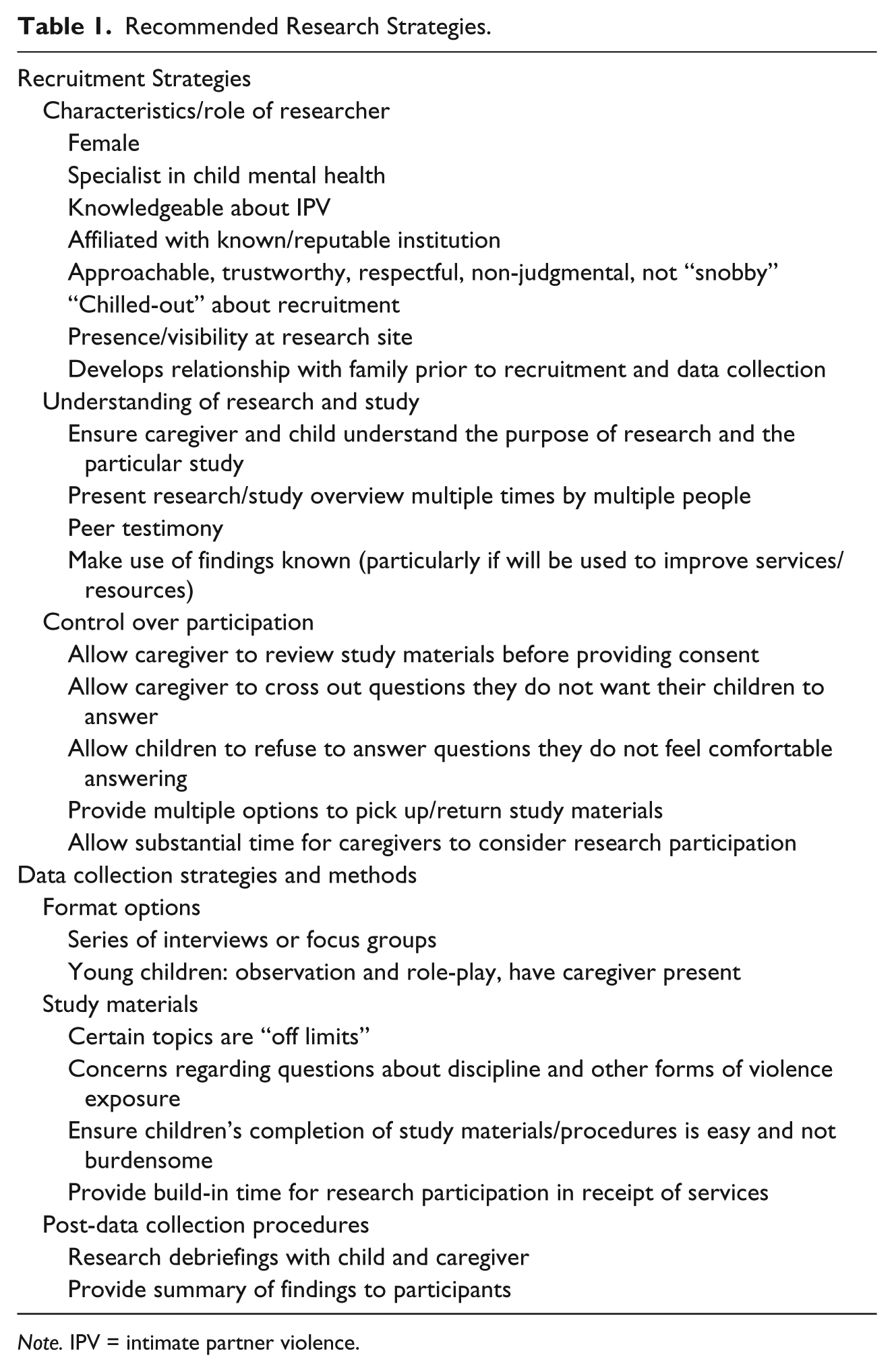
Note. IPV = intimate partner violence.
Characteristics and role of the researcher
The participants stated they would be more likely to allow their children to participate in research when the researchers involved in recruitment and data collection had certain characteristics and clearly defined roles that would make the mothers comfortable in consenting to research participation. Specifically, participants mentioned they would be more comfortable if the researcher was (a) female (e.g., “If you were a male, I probably wouldn’t feel comfortable”), (b) a specialist in child mental health, and (c) knowledgeable about IPV. A few participants noted that a researcher’s association with a known and reputable institution was an important factor in building trust. One participant stated, “Knowing that this was a reputable research study, you know, based off of the university itself, I was definitely on board.” In addition, the mothers identified a researcher’s personal characteristics, such as being approachable, trustworthy, respectful, non-judgmental, and not “snobby” as critical factors in study recruitment. The following selected quotes are representative of these sentiments: “I felt more comfortable also because . . . you guys were more personable. It wasn’t like . . . uptight? I didn’t feel you guys were being very sneaky or anything about it” and “And nicely asking about personal life, a nice ice breaker of, you know, ‘how are you guys doing,’ or just a nice little ice breaker I think helped.”
In terms of the role of the researcher in recruiting participants and collecting data, participants mentioned they would feel more comfortable allowing their children to participate in research if the researcher was “chilled out” about recruitment, meaning that the researcher did not pressure women and their children to participate. One participant’s comments reflected this theme, “Yeah, I just love that you guys didn’t pressure or anything and that’s what made me grow more comfortable with releasing my information to you.” Participants also discussed the importance of the research team having an ongoing presence and visibility at the research site. In a sentiment echoed by many, one participant stated, “I think it was also helpful too that ya’ll were a presence here. It’s not like we met you the first time and then we didn’t see you no more.” Related to the theme of the researchers’ presence, participants also mentioned the importance of the researcher or research team establishing a relationship with the family before embarking on recruitment and data collection. One participant reflected, “If you’d waited like several weeks and then came back and said, ‘We’d like to interview your kid’ I’d be okay as long as you let me ask you about your background so I felt more comfortable with you.”
Understanding of research and study
Participants stressed the importance of ensuring mothers have a clear understanding of the purpose of the research and the particular study for which they and their children are being recruited. Participants explained they found it helpful to be presented with an overview of the research multiple times by multiple people, including during intake by the program facilitator, immediately after intake by a research team member, and days later by a research team member (e.g., once participants started the mandated program). Participants also discussed that it might be helpful to hear about research participation from a past participant. Several participants suggested the use of peer testimony as a strategy for easing the fears and concerns of potential participants. One participant elaborated,
That’s maybe something you might want to do . . . have someone who would be willing to come in and say that they [and their children] did the study, that it’s a benefit, something like that, just kind of back up what you guys are doing.
In addition, participants also thought study recruitment would benefit from ensuring potential participants had a clear understanding of how the findings of the study might be used to improve services and the lives of other families in similar situations (e.g., “Tell them that it will provide more resources for the future. You know, this will help us maybe open another building [for women and children] in this area, or this area, or wherever”). In addition, participants discussed the importance of making sure the children also have a clear understanding of the overall purpose of the study as well as the researcher’s purpose in asking certain questions. Participants also suggested the use of peer testimony in explaining the research to and recruiting children.
Control over participation
Given that the study sample had been mandated to receive services, it was not surprising that they stressed the importance of assuring potential research participants that they could control their family’s research participation. One suggestion for ensuring participants’ sense of control was to allow mothers to read through the study packet and review the child interview questions before agreeing to participate in the study. Participants noted that allowing mothers to review the study materials during recruitment would help potential participants to better understand the study’s purpose and what study participation would involve for the mother and/or her children. Participants stated, “I think it was when I was reading the questions, I got a little more understanding about what the research was about. I know what to expect,” “I want to know what’s being asked, and what they’re, what kind of data they’re trying to collect, so I can make a decision if I want my child to participate or not,” and “I think it would help a little the parents get to see the survey.” Other strategies discussed in the focus groups included allowing mothers to cross out survey questions they do not want their children to be asked, allowing children to opt out of questions they do not feel comfortable answering, and providing participants multiple opportunities to pick up/return study packets.
Data collection strategies and methods
Participants discussed data collection strategies and methods for research focused on IPV-exposed children from CPS- or court-involved families (see Table 1). As part of this discussion, participants provided suggestions regarding (a) data collection format options, (b) study materials, and (c) post-data collection procedures.
Format options
Participants discussed different format options for collecting data that might enhance an IPV survivor-mother’s comfort with her child’s research participation. For example, participants in one focus group developed the idea of having a series of data collection points that build from one another. These participants reported thinking that a series of interviews or focus groups could help children form a connection with the researcher and feel more comfortable answering questions, as well as help the researcher determine whether the child would be a reliable research participant. One mother suggested that the first interview could take place over the phone. Participants also suggested options for collecting data from young children (5 years or younger) as opposed to relying on data provided by an adult (e.g., parent, caregiver, therapist) about children in this age group. Several participants mentioned using observational and interactive methods, including role-play (e.g., having children act out what they have seen in their homes, their feelings, or what makes them feel safe) and play therapy techniques: “You know like under 5 [years], the role-playing is very good with that [age group],” “As far as infants and children up to the age of five . . . [have them] draw pictures and make them feel comfortable about role playing about what happened in their day,” and “the child might role play what’s actually going on.” Participants also suggested that when collecting data with young children, it might be best to have a parent present (e.g., “I think parents need to be present for children 5 [years] and younger”).
Study materials
Participants identified content areas they would and would not feel comfortable with their children being asked in a research study. Participants generally indicated they felt comfortable with their children being asked for demographic and personal information, including their age, gender, geographic information, certain family information (i.e., their relationship with parents and siblings, interparental dynamics, parent’s relationship status, who they live with), their relationships with peers and peer interactions, their role models, their school experience (including their relationships with teachers, academic performance, discipline problems), their concerns about safety, their feelings and behaviors, and their activities (e.g., sports, clubs, family activities/outings, video games, music). Participants felt particularly comfortable with their children being asked questions about program effectiveness, helpful/unhelpful program elements, and resilience strategies. In fact, several participants in one focus group indicated a greater level of comfort with their children participating in research focused on program and service evaluation rather than research primarily focused on exploring their children’s experiences with IPV exposure. The mothers also thought it would be appropriate to ask adolescents about their sexual activity. However, participants would not like their children to be asked about their parents’ financial information, occupation, and education; politics; religion; or why the child thinks IPV is occurring in his or her family.
Participants expressed mixed feelings regarding asking children about race/ethnicity, other forms of violence (e.g., community violence, school/gang violence, child abuse, sexual abuse, and dating violence), and discipline experiences. Regarding race/ethnicity, one participant in particular voiced substantial concerns that findings could be used to support racial profiling and noted that collecting accurate racial/ethnic data might be difficult given the increasing number of children of mixed race/ethnicity. All participants indicated they felt comfortable with their children being asked about their experiences with community violence, school violence, and dating violence. Moreover, if the child reported exposure to these other forms of violence, the participants wanted to be informed of that exposure so they could take appropriate measures to ensure their children’s safety and well-being. In contrast to the consensus on these forms of violence, some parents voiced discomfort with researchers asking children questions about sexual abuse and child abuse. Although participants generally acknowledged that sexual abuse and child maltreatment were important topics that need to be researched, many mothers indicated they would not allow their children to participate in research that included questions on these topics. When probed for more information, participants explained they would feel comfortable with questions about extreme abuse, but not questions about forms of discipline that could be misconstrued as abuse (e.g., spanking). Despite these concerns, several participants thought that researchers should include any questions they are interested in learning about as long as mothers and children had the option of skipping questions or opting out of answering questions that they were not comfortable in answering. One participant stated,
I was just going to say questions that you were saying you shouldn’t ask—I think if you want to find out answers, then you ask, ask, ask until that child says, “I don’t want to talk about that anymore!”
Several participants briefly discussed the length and ease of completing the study materials. These participants stressed that researchers should develop well-thought-out questionnaires and interview guides that include only pertinent questions to increase the ease and reduce the burden of children’s participation. For research focused on evaluating mandated services, participants suggested that researchers and service providers consider incorporating time for the families to complete study materials into the time allotted for the mandated services.
Post-data collection procedures
Participants suggested several post-data collection procedures including debriefings with the children and mothers and providing participants with summaries of the study findings. Participants stressed the importance of conducting debriefings with the children after data collection to help the children process any negative feelings evoked by the interview or survey questions. The participants also thought it would be important to debrief with the parents to discuss any relevant referrals. For instance, one participant mentioned, “If there was some type of plan after that survey to [debrief with the parent], ‘Okay, this is what I got from her, and she may need this.’” Participants also mentioned that mothers might be interested in learning about the findings of their research participation. One participant stated,
By bringing us back, showing us what you did with it. I mean, I’m not saying everybody here [participating in the focus group] is going to want to come back . . . but you have to bring these people that do care. I know I would come. If you called me a year or two from now . . . It makes me happy to see that they helped somebody.
Furthermore, some women reported they thought study recruitment would be enhanced if potential participants knew they would be given feedback on how their family’s data were used and the key findings of the research study. Possible formats suggested by participants included a follow-up meeting or reunion, a research newsletter, and a research website.
Discussion and Limitations
This study presents an exploratory qualitative investigation examining the perceptions of CPS- and/or court-involved female IPV survivors mandated to services regarding conducting research with their children. The study focused on investigating female survivors’ opinions about data collection with their children because the consent of children’s primary caregivers and/or parents is an important first step to engaging children in research. Overall, participants acknowledged the importance of conducting research with children exposed to IPV. Although participants discussed the importance of including IPV-exposed children in research, the findings highlighted various factors related to whether a mother might allow her child to participate. The primary factors facilitating children’s research participation included perceived benefits to the children and mothers involved in such research, as well as possible future benefits to families in similar situations. Additional factors associated with allowing children to participate in research included improving research and services, having nothing to hide, helping researchers perceived as having positive motives, and being compensated for time and participation.
However, despite the presence of these factors, participants identified a variety of reasons why a mother might still be reluctant to allow her IPV-exposed child to participate in a research study. The reasons for refusing consent included (a) suspicion, fears, and concerns related to confidentiality, possible repercussions, and the accuracy of child self-report data; (b) the mother’s feelings of shame, guilt, pride, and/or denial of IPV and its effects on children; (c) misunderstanding of research generally as well as the purpose of a particular study; and (d) the potential of research participation to create an emotional burden on the child.
Recommended Research Strategies
The focus group findings also provide suggestions for conducting research with IPV-exposed children from CPS- and/or court-involved families. In particular, the IPV survivors recommended strategies for enhancing recruitment and conducting data collection. Although these suggestions were specific to conducting research with IPV-exposed children from CPS- and/or court-involved families that have been mandated to services, the findings also have potential implications for conducting research with IPV-exposed children generally as well as with other vulnerable families and their children.
Recruitment
The focus groups identified a number of potential recruitment strategies that participants felt might increase participation rates of CPS- and/or court-involved IPV survivors and their children. Study participants recommended that the researchers involved with recruitment should be female, personable, trustworthy, respectful, non-judgmental, and have specialized knowledge in children, mental health, and partner violence. These suggestions are consistent with prior recommendations for recruiting and conducting research with adult, female IPV survivors without system involvement or service mandates (Logan, Walker, Shannon, & Cole, 2008). Logan and colleagues (2008) reported the intentional use of an all-female research team can attend to safety concerns by addressing possible jealousy and repercussions on the part of the survivor’s abusive partner. Furthermore, Logan and colleagues discussed the importance of increasing the comfort of IPV survivors participating in research by ensuring the researchers involved in recruitment and data collection are friendly, warm, and non-judgmental.
Our findings also showed research recruitment was positively influenced by the researchers’ and study’s affiliation with a respected, reputable institution. The perception of a study’s credibility based on a university association has also been noted in prior research focused on recruiting adult, female IPV survivors (Logan et al., 2008). In addition, the current study’s findings align with the ethical principle of not pressuring or coercing research participation. However, counter to the emphasis on separation between researcher and the study phenomenon (particularly as related to intervention research and internal validity; e.g., Shadish, Cook, & Campbell, 2002), our findings suggest that service mandated IPV survivors involved with CPS and/or the courts perceive researcher presence, visibility, and rapport as critical elements in gaining their trust and building relationships to support their and their children’s research participation. Similarly, Logan and colleagues (2008) suggested research teams recruiting adult, female IPV survivors could enhance research participation by purposefully ensuring the same researcher was involved with a participant throughout the duration of her study participation.
Another recruitment strategy suggested by the study participants was ensuring that potential research participants and their caregivers had a clear understanding of the purpose of research studies, the objectives of the particular study for which they were recruited, and the specifics of what research participation entails. To ensure such understanding, findings from this research point to the importance of repetition. In other words, participants valued multiple presentations of the research overview and objectives given by multiple people (e.g., research team member, service provider, past research participant) in multiple formats (e.g., face-to-face, flyer, informed consent form; Logan et al., 2008). In addition to explaining the purpose of the study and study procedures, study participants noted it was equally important to convey how the study’s findings would be used, especially if the findings would be used to improve services or help families in similar situations. Prior recommendations for recruiting and conducting research with adult, female IPV survivors have also emphasized the role of beneficence in motivating survivors to participate in research (Dutton et al., 2003; Logan et al., 2008).
Flexibility and control over research participation are also important factors to consider when designing research and recruitment protocols for studies focusing on IPV-exposed children from CPS- and court-involved families mandated to services. Although flexibility in research participation and location have been discussed in prior research focused on IPV survivors generally (Dutton et al., 2003; Logan et al., 2008), this study identified strategies such as allowing mothers to preview research materials, allowing substantial time for mothers to consider research participation, and permitting mothers to cross out questions they do not want researchers to ask their children. Although these strategies might enhance recruitment, they not only pose certain trade-offs between recruiting and collecting data from vulnerable families but also could sacrifice measurement validity and reliability. In addition, using a rolling recruitment period (i.e., allowing mothers days or weeks to consider their research participation) could negatively affect the researchers’ ability to collect pre-test data before intervention exposure.
Data collection
Suggested methods for data collection that emerged from this research included conducting a series of interviews with older children to build a relationship with the child, and using play and observation with younger children. To address safety concerns, study participants recommended that researchers consider giving mothers the option to be present during the data collection with young children. In addition, the focus group findings highlighted the importance of post-data collection procedures, such as debriefing sessions with children to answer questions or help them process emotions brought by their research participation. This suggestion resonates with Dutton and colleagues’ (2003) recommendation that when conducting research on sensitive topics, particularly IPV research, it is critical that researchers develop protocols for assessing and processing participants’ reactions following their research participation. Other strategies suggested for conducting research with IPV-exposed children from CPS- and/or court-involved families mandated to services included holding debriefing sessions for the mothers and providing referrals as needed. Furthermore, study participants strongly endorsed the idea of making the research findings available to participants (Dutton et al., 2003). Participants also highlighted study material content they considered to be “off limits” as well as concerns regarding questions about discipline and other forms of violence exposure.
Implications of recommended research strategies
Although many of the recommended research strategies echo best practices for recruiting and collecting data from adult IPV survivors generally, this study provides additional and unique guidance on conducting research with IPV-exposed children from families mandated to services by CPS and/or the court systems. As alluded to above, incorporating many of the suggested recommendations requires trade-offs between research rigor, acceptability, feasibility, and ethics. For example, although allowing mothers to be present during data collection with their children might increase participation (acceptability/feasibility), it could also affect the validity of the children’s data (rigor) as well as the children’s comfort, confidentiality, and privacy (research ethics). The implications of various suggested recommendations generated from this study have similar trade-offs. In particular, allowing mothers to preview research materials and cross out questions, using a rolling recruitment period, and having a visible and constant presence at the research site, all may lead to increase research acceptability but may also lead to compromised research rigor.
While ensuring study rigor is important, recruitment is essential to conducting research. The findings from this study highlight the tensions among acceptability/feasibility, ethics and rigor in IPV research, particularly as related to research with IPV-exposed children from vulnerable families. It is outside the scope of this article to address the trade-offs among ethics, rigor, and recruitment in IPV research. Nevertheless, we call on IPV researchers to begin to develop consensus standards and best practices for conducting rigorous research with IPV-affected families in ways that are acceptable, feasible, and ethical. Such consensus standards and best practices can lead to meaningful research that produces rigorous and robust results.
Limitations
Readers are encouraged to consider this study’s findings in light of the limitations. Despite the research team’s efforts to ensure confidentiality and describe study protocols to participants, some participants might not have been fully honest for fear of disclosure and/or negative repercussions. Furthermore, given the use of focus groups, some participants might not have felt comfortable presenting minority or opposing viewpoints. It is important to note that each focus group was composed of women who attended MOVE together as a cohort. Although this shared history might have helped to address issues related to being comfortable and honest in the focus group, it is possible that unknown group dynamics (e.g., under-participation, over-participation, group norms, groupthink) might have surfaced and influenced data collection.
Given the exploratory nature of this research and the dearth of available literature to guide the study, it is also possible that the focus group guide was not comprehensive and failed to elicit all relevant responses. The research team attempted to address this concern by using open-ended questions with multiple prompts. Furthermore, the analytic approach also addressed this concern by remaining open to emerging themes and using negative case analysis.
It is important to note that this research did not distinguish between survey research and intervention research. Although participants were separately asked about their perceptions regarding the importance of both forms of research with IPV-exposed children, participants often referred to research more broadly in their responses to the focus group questions (unless otherwise indicated). Given some participants’ comments regarding feeling more comfortable with their children participating in intervention research versus IPV survey research, future studies should explore potential differences in perceptions, concerns, and recommendations about recruitment and data collection strategies across various forms of research (i.e., survey/observational and intervention). Future research is also needed to better understand whether a mother’s relationship status and living arrangements with the abusive partner is associated with her perceptions regarding the involvement of her children in research. Although some of the findings suggest potential concerns related to safety when an abusive partner is still involved with the family, the use of focus groups limited the ability to statistically examine the relationship between involvement with the abusive partner and perceptions regarding children’s involvement in IPV research.
Although a 70% participation rate is notable given the complex lives of CPS- and court-involved IPV survivors mandated to services, it is possible that the women who were eligible for study inclusion but who chose not to participate differ in systematic ways from those who did participate in this study. It is also important to note that all of the current study participants had participated in a prior research study conducted by the same research team. Given that this study was about participation in research studies, survivors who have never participated in research as well as eligible survivors who chose not to participate might have additional fears, concerns, or logistical considerations regarding allowing their children to participate in research. Finally, it is important to note that this study did not include children or their perspectives regarding participating in research. Although this is an important next step, the current study addresses the first challenge in including IPV-exposed children in research—parental consent.
Nevertheless, this study makes an important contribution toward better understanding the research-related concerns of mothers affected by IPV, involved with CPS and/or the court systems, and mandated to services. The findings are timely given the limited guidance on how best to conduct research with these families. The findings are made even more critical by the pressing need to better understand the experiences of IPV-exposed children from families involved in multiple systems and the urgent need to ensure that interventions developed for these children are effective and helpful.
Footnotes
Acknowledgements
We acknowledge the staff of InterAct and SAFEchild for their help with this research. We also acknowledge Diane Wyant for her comments on and edits of an earlier draft of this manuscript.
Declaration of Conflicting Interests
The author(s) declared no potential conflicts of interest with respect to the research, authorship, and/or publication of this article.
Funding
The author(s) disclosed receipt of the following financial support for the research, authorship, and/or publication of this article: The Duke Endowment supported this research.