







Abstract
School principals must rely on state statutes and district policies to navigate reports of school bullying. Investigating reports to determine the outcomes may vary depending upon the districts definition of bullying, the investigation process, and follow through to reporting the findings of the investigation to the involved children and youth’s parents. However, investigating reports can be challenging due to the confusion of what constitutes bullying. This confusion can be especially troubling for parents who believe their child is being bullied. In order to understand principals' perspectives on bullying, two focus groups were conducted with nine urban school principals. Researchers examined principals’ perceptions of how state- and district-level policies were used within their bully investigation practices. These principals suggest that a clear, specific district wide definition of bullying and step by step procedures to investigate reports, along with the state anti-bullying statute, provide a valuable guide for follow-through and back up in determining cases of school bullying. In addition, they identified how policies and district mandates affected parents, particularly when reporting their investigation findings. Implications for bully prevention policies are discussed.
School safety is a critical issue in the United States, with increased attention to student behavior and wellness (Cuellar, 2018). Each of the 50 states has established statutes on the prevention of bullying to guide the efforts of school district leaders and principals in promoting safe environments (Hatzenbuehler et al., 2015; Melik-Stepanyan, 2014). However, as the term bullying has become commonplace, these state statutes often lack specificity in their definition of bullying. Without a precise definition, the efforts of districts and schools to prevent and provide intervention can be significantly compromised (Weaver et al., 2013). The present study examines the experiences of urban school principals in their utilization and implementation of state-informed district policies for bully prevention.
Literature Review
Understanding Bullying
The definition of bullying first emerged in the social science literature in the early 1970s. Bullying is defined as . . . any unwanted aggressive behavior(s) by another youth or group of youths who are not siblings or current dating partners that involves an observed or perceived power imbalance and is repeated multiple times or is highly likely to be repeated. Bullying may inflict harm or distress on the targeted youth including physical, psychological, social, or educational harm. (Gladden et al., 2014, p. 7)
As an adverse experience, bullying has been associated with significant reductions in students’ mental, physical, and relational wellness (McDougall & Vaillancourt, 2015; Patchin & Hinduja, 2018). Students who are bullied, in contrast to those who have not been bullied, experience higher rates of depression and loneliness, poorer self-perception, and increased discomfort in social situations—regardless of age, gender, or type of bullying (Hawker & Boulton, 2000). They often perceive the school environment as unsafe, feel detached from their schools, and experience poorer academic performance. Given the complexity and far-reaching impact of bullying, students who are bullied are also at increased risk of substance use and suicide (Hinduja & Patchin, 2010; Lacey & Cornell, 2016; Radliff et al., 2012; Waasdorp et al., 2011).
Differentiating Bullying From Other Types of Behavior
For over four decades, Olweus has differentiated bullying from other forms of violence or conflict by specifying three distinct characteristics to bullying: (a) “aggressive behavior or intentional ‘harm doing’”; (b) “carried out repeatedly and over time”; and (c) “an imbalance of power . . . occurring without apparent provocation” (Olweus, 2003, p. 12). As such, a particular individual or group of individuals is targeted on two or more occasions. Within the bullying dynamic, there is an imbalance of power associated with physical, social (popular vs. unpopular), and socioeconomic status (SES) differences (from a wealthy intact family vs. from a poor single-parent family). The imbalance of power uniquely differentiates bullying from reciprocal acts of aggression or conflicts between persons of comparable strength (Cornell et al., 2006; Tippett & Wolke, 2014). Although these three defining features of bullying have been widely accepted by other scholars (e.g., Camodeca & Goossens, 2004; Hilarski et al., 2004; Smith et al., 2003; Xin, 2002), nearly 50% of U.S. State statues on the prevention of bullying fail to differentiate bullying from other student behavior, like peer conflict (Cascardi et al., 2014; Cornell & Bandyopadhyay, 2009; Gladden et al., 2014).
A clear definition that differentiates bullying from other types of student behavior is critical. First, it can provide a foundation for the advancement of legislation and policy, as well as the development and implementation of prevention and intervention strategies (Cascardi et al., 2014; Stuart-Cassel et al., 2011). Second, an overly broad definition of bullying can result in the erroneous categorization of student behavior and inflate prevalence rates, hinder the interpretation and generalization of research findings, and result in the implementation of inappropriate interventions (e.g., friendship group for both the bully and the victim; Donoghue et al., 2015; Espelage & Swearer Napolitano, 2003; Sawyer et al., 2008). The implementation of an appropriate intervention is critical. For example, research has shown that the erroneous use of conflict resolution for bullying has resulted in further victimization of the victim by the bully (Limber, 2010).
Legislation and Definitional Clarity
The importance of definitional clarity regarding bullying is further noted amid legislation and policy implications. Failure to explicitly define bullying in policy can have far-reaching implications, including increased vulnerability among students who are not a protected class under Title IX that details harassment-based specific characteristics (e.g., gender, ethnicity, disability, or religion), and increased financial and time burdens on schools (Cascardi et al., 2014; Cornell & Limber, 2015). For instance, Cascardi et al. (2014) noted that a lack of specificity in the definition of bullying could result in schools being “required to report and investigate every aggressive transgression” such as playground rough housing (p. 255).
In 2010, the U.S. Department of Education (DOE) engaged key stakeholders (i.e., researchers, policy makers, and educators) in a school safety and bullying summit. They examined evidence-based bullying prevention strategies and identified criteria for state statues. The criteria included purpose and definition of bullying, where purpose referred to laws and policies describing a school’s jurisdiction for regulating behaviors that fell under the definition (Stuart-Cassel et al., 2011). These criteria were endorsed and allowed for interstate comparisons of the translation of laws into practice (Stuart-Cassel et al., 2011). As of March, 2016, all 50 states had enacted laws requiring school districts to implement policies that address bullying (Swearer et al., 2017). However, despite an association between schools’ implementation of DOE criteria and lower rates of bullying, variations in policies continue to persist between states (Hatzenbuehler et al., 2015; Terry, 2018). Notably, the present research was conducted in a state that enacted a state bully prevention statute in 2005. Later in 2013, this state expanded their definition of bullying, and the statute required personnel training and student education, discipline and intervention strategies, and annual school reporting of incidents (Goodpaster, 2018).
School Principals
School principals play a central role in the implementation of district policies and school safety, as well as organizational commitment to anti-bullying efforts. Through their leadership, principals foster school capacity in preventing or responding to bullying (Li et al., 2017). However, their efforts to address school bullying can be compromised by competing demands such as the prioritization of federal policies (e.g., No Child Left Behind), staff development, and student attendance (Dake et al., 2004; Dornfeld-Januzzi, 2006; Limber & Small, 2003; MacLeod, 2007; Patchin & Hinduja, 2016). Despite the centrality of principals to school safety, there is a lack of research exploring the experiences of principals and the translation of state-level policies on bullying at the district level. Using qualitative methodology and a phenomenological approach, this study examined school principals’ interpretation and implementation of state-informed, district policies on student bullying.
Method
Background
The current study took place in an urban school district in the state of Indiana. In 2013, the respective district amended their policies such that their schools were required to adopt evidence-based programs and practices to promote positive school and classroom environments. In addition, the policies required schools to provide age-appropriate, research-based materials for bullying prevention. Subsequently, from 2014 through 2016, the district adopted a newly developed, evidence-informed and developmentally sensitive classroom bullying prevention program. A local nonprofit public health agency developed the program that consisted of two lessons following the procurement of funding through a community grant. Health educators from the public health agency delivered the program twice annually to students from third to seventh grade. Following institutional review board (IRB) approval, in the fall of 2015 and spring 2016, the program was independently evaluated by researchers from a nearby university. The evaluation was comprehensive, and included principals, social workers, bus drivers, parents, and students. The current study focuses on qualitative interviews that were conducted with principals from this district.
Procedures
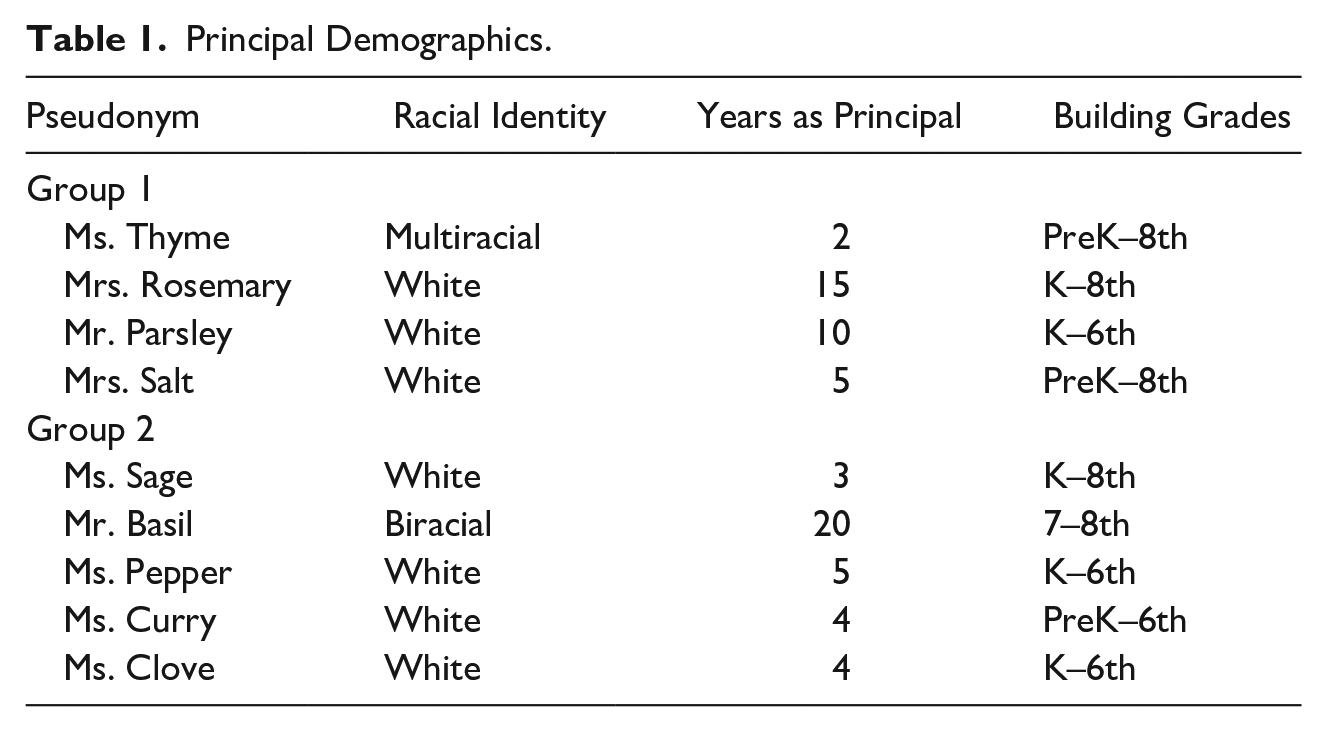
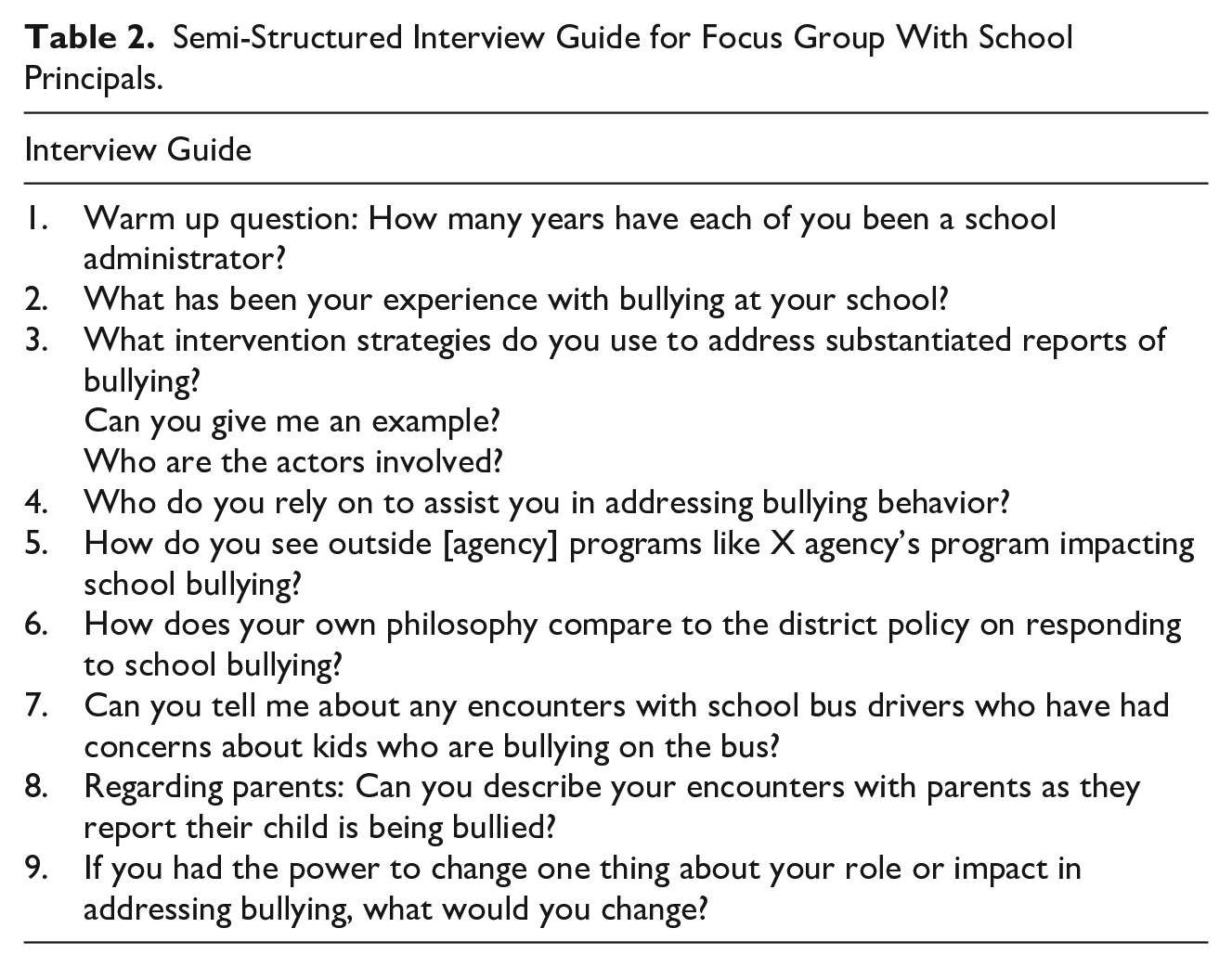
The aforementioned agency recruited principals using nonprobability sampling. Workers at the public health agency emailed and telephoned school principals to ascertain their willingness to participate in focus groups related to student bullying prevention efforts in their schools. Of the 19 potential participants, nine principals agreed to participate in the study. They were from schools that ranged from prekindergarten through the eighth grade. Sample demographics are displayed in Table 1. The length of time each participant was a principal ranged from 2 to 20 (M = 7.5) years. Seven of the principals were White and two principals described themselves as bi-/multiracial. The nine principals were divided across two focus groups with each group including one of the two bi/multiracial principals. The focus groups were conducted on separate days in a private room at a centrally located high school. After fully consenting to participate, principals chose pseudonym name cards to protect their identities. Three researchers facilitated the focus groups using a semi-structured guide as displayed in Table 2. The focus groups were audio-recorded and lasted for approximately 90 min each.
Principal Demographics.
Semi-Structured Interview Guide for Focus Group With School Principals.
Analysis
Audio-recordings were transcribed and analyzed using a thematic analysis approach. Thematic analysis focuses on the identification of patterns and themes embedded within data (Braun & Clarke, 2006). The thematic analysis process was used to ensure congruence with interpretative phenomenology based on an inductive approach (Braun & Clarke, 2006). Thematic analysis was done on a semantic or latent level. At the semantic level, the analysis was generally restricted to explicit semantic content. At the latent level, the analysis involved an exploration and examination of the data to uncover underlying ideas. Finally, thematic analysis was approached within a constructionist or realist framework (Braun & Clarke, 2006). The researchers explored and examined the underlying ideas of the data and the sociocultural contexts that influenced the focus group discussions.
Several steps were taken to keep with the standard of trustworthiness. First, after each focus group, peer debriefing took place between the two of the lead researchers who facilitated the focus groups to foster critical reflection, questioning of assumptions, and impartiality in how the information was received from the participants. In addition, each interviewer shared notes that were independently taken during the focus groups. These notes documented their thoughts and experiences during the focus group process. Second, member checking was conducted by sending each of the school principals a typed copy of the transcript of the focus group they attended, encouraging responses for any changes or clarification (Guba, 1981). Finally, the two lead researchers independently coded the data and developed memos. The memos provided documentation of the researchers’ thoughts about the data as it was being reviewed. Afterward, codes (operational definitions) and memos (reflective notes about ideas that emerged) were compared and discussed by the first and third authors, which led to some codes being renamed through consensus. From this process, broad and prevalent patterns were identified and examined for viability as themes. The viability of the themes was dependent upon how well they reflected the content of the data (Patton, 2002).
Results
Several key findings emerged from the focus group data. These included (a) the principals’ reliance on district and state mandates that guide principals in the investigation; (b) their use of a comprehensive district-wide definition that allowed them to discern bullying from peer conflict and aided them in working with parents; (c) sensitivity to student diversity and mental health needs; and (d) the importance of adopting a school-wide program that helped to enhance the school environment. These findings and the principals’ practices to address bullying are illustrated in Figure 1 and presented in detail next.
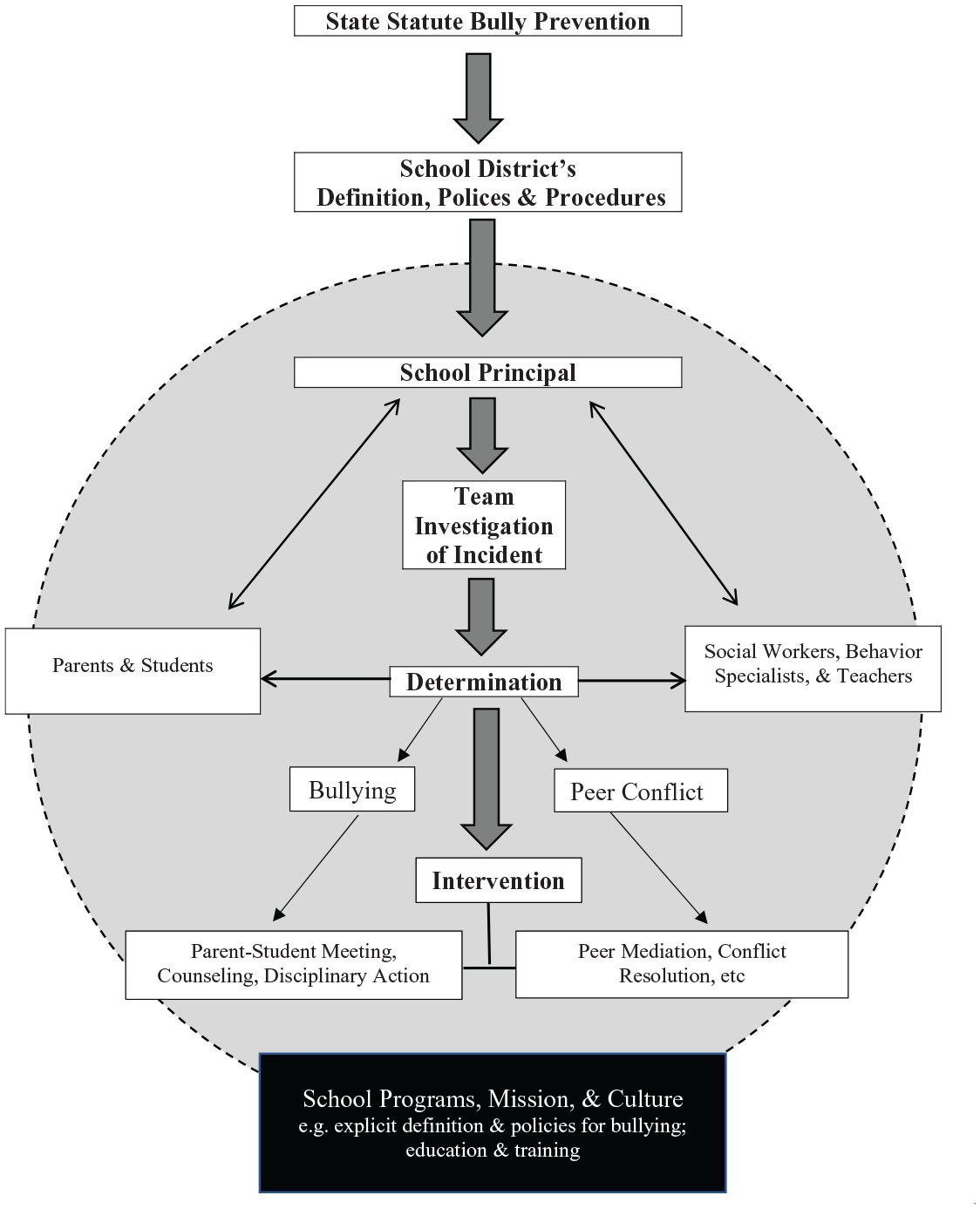
Principal policy to practice model.
Principals’ Reliance on District and State Mandates
The efforts of school principals to address alleged incidents of bullying were guided by state-informed, district policies. The following excerpt illustrates the importance of the state mandates that “put some meat and teeth to” addressing bullying: Mrs. Rosemary: . . . when someone reports bullying there is a form . . . that says we investigated it, you only have so many hours to investigate it, and then what was the finding, okay? So if it wasn’t that [bullying], if it was a conflict or something else, one of the things that we do, is try to make sure that the child who was reporting it, we don’t want them not to report just because it didn’t turn out to be what they thought it was. We want to make sure that child still knows we are concerned that they were upset by the behavior, talking to the other child we almost use peer mediation . . . But if it was substantiated, we bring the parent of the bully in for a conference, the first time. If it happens again then there is a suspension involved. Because they need to know right away this is not going to be tolerated. And we bring out the state law, and tell them it’s the state law, and that you cannot do this. And usually that has taken care of it. Mrs. Salt: I know the training as far as what deems a situation as bullying is uniform . . . The system I’m talking about with the tracking, and the step one, step two, that’s just what we do. Ms. Rosemary: What I like is it puts some meat and some teeth to it. Sometimes when the legislature passes more laws about things we are supposed to do in school it’s like, “oh my gosh this is one more thing that we are trying to add to!” We’ve got to train everybody by such and such a day we have to do this many times a year and so forth. But for this one, you know, having had your coaches and volunteers go through training, doing things for your parents it just puts some teeth to it that this isn’t just the principal saying, “no, you can’t act that way.” This is state law, you cannot do this you know, and so if you really do have somebody that’s bullying and you are talking to the parents and you are explaining all the things that can happen that sometimes that’s been the impetus to get a parent taking it seriously and maybe getting their child to some counseling or letting you sign permission for them to see the social worker instead of just brushing it off.
The principals identified how their state bullying statute, P.L.285 (Stopbullying.gov, n.d.), that is a more comprehensive version than the first, P.L.106, supported their district to help provide “step by step” processes, especially in discerning if a reported incident is or is not bullying. Furthermore, they used the state statute in communicating to parents the seriousness of the substantiated bullying. The state statute provided backing for these principals in addressing the significance of bullying with students and parents.
Follow the process
The principals referred to “following the process” of bullying reports. In the previous section, there was mention of steps. Here, Mrs. Salt describes how she used the steps and followed the process: We have a process at my school we follow . . . there are only two staff members at my building who can deem if its bullying . . . the district I think has come out with some really good parameters as far as, is there an imbalance of power, and that’s how we really define bullying, and if we deem that that’s the case then we start to file, we start to file for the one who did the bullying and the one who was bullied. And we keep track of every incident and we have a system, you know.
Mr. Basil provides his prospective on using the investigative process to reported bullying: . . . is a systemic process that the social workers have to go through, they interview witnesses, you don’t interview witnesses together, you interview them separately, you match stories, . . . you follow the process, we have to enter it and record it on the discipline system so that there’s some type of a record on it as well . . . I think one of the most important pieces too is . . . we notify parents. We let them know whether it’s the target or the bully . . . Usually, it’s me and my social worker interviewing witnesses or targets, and bullies to try and figure out and be as consistent as possible in applying that definition to situations but it’s also subjective in that you are looking at witnesses, what adults and students see, you’re trying to gather as much information as possible.
The principals all had at least one other person assist in the investigative process. Mrs. Salt illustrated how the definition’s inclusion of power imbalance was used to qualify an incident as bullying. However, Mr. Basil suggested that if a person was found to be bullied “three times,” then he would take steps to ensure that the student was supported. Although the principals verbalized consistency in using the investigative process, there was variation in their interpretation of what constituted “repeated” acts of bullying. It is important to note that the differences in interpretation may alter the determination process and outcome for alleged incidents of bullying.
Using a Comprehensive, District-Wide Definition
The principals stated that a form with the district-wide definition of bullying guided their duties to investigate reports of bullying. During the focus groups, the principals endeavored to recall the definition: Mr. Basil: . . . its somewhere in that form where there is a definition of (pause) there are certain categories too, that when we are recording incidents of bullying. Ms. Sage: It is kind of a narrative. Ms. Pepper: We have categories on, and I put it in my staff handbook, there are different . . . Mr. Basil: Sexual types, and possible consequences for those that line with the [district] code of conduct. Ms. Sage: It’s a pretty big narrative. It’s not a simple sentence. Like a paragraph.
The principals were further queried about the definition of bullying, and shared the following: Ms. Pepper: Repeated behaviors that are making another person feel uncomfortable, intimidated or unsafe [intentional]. Mr. Basil: With the emphasis on “repeated” we have to constantly remind our students. There is a definition that we have that we actually roll out with students when we talk about it and we use that definition a lot so that they are very clear when they report it they know exactly what they are reporting. Ms. Sage: And Ms. Sage would add that there is usually, the way that we define it also, is that there is an imbalance of power. Interviewer: Power in terms of? Ms. Sage: In terms of the accused bully over the victim, I suppose. Mr. Basil: Target, I think. Isn’t that the term that we use? Ms. Sage: If I could just revisit the whole definition thing again. I think it may be a little heavy to have such a comprehensive definition. I think the fact that we have different branches of bullying, I think we almost need that narrative because it kind of differentiates it in terms of, you know, identifying, what’s going on, and your response cannot be the same in one vein as it would be in another so, we almost as a district if we’re gonna have a common language about it, we need to be able to cover the types of things we are likely to see and it’s not a one-size or one-response-fits-all kind of thing.
Mrs. Sage suggested that the district’s definition was comprehensive and provided a common language to describe several “branches” of bullying, including verbal, physical, or relational (cyber) bullying. The principals’ descriptions seemed to follow the long-standing Olweus’s (1993) definition of bullying that defined bullying as repeated and intentional with an imbalance of power. Ms. Sage offered a justification for having a “comprehensive” definition: that it allowed her to discern the “different branches of bullying,” the dynamics of bullying, and develop unique responses to each situation. This definition seemed to include a breadth of bullying behaviors and dynamics. However, collectively, the principals had notable challenges in recalling the entire bullying definition and relied on each other to fill in the forgotten parts. It was important for these principals to have easy access to the “one page form” with the district definition during investigations and when in contact with a student’s parents.
Bullying or peer conflict
According to the principals, the term bullying was often used by students and parents to capture an array of behaviors. As such, principals often provided ongoing education to foster a consistent understanding of bullying with a recognition that doing so could facilitate intervention and resolution for students and parents: Ms. Pepper: . . . I think sometimes it’s misunderstood by students because the term [bullying] is used so loosely. Sometimes it can just be age-appropriate misconduct. . .but we take every instance and investigate and talk and we have appropriate measures in place whether its meeting with a social worker, calling parents, having parent meetings or just peer remediation and conflict resolution. Ms. Clove: . . . We do have a handful, each year it seems like that we do all the investigation and determine that it is truly bullying and not just peer conflict. Mr. Basil: I would agree. Sometimes we have to be very careful about what is peer conflict and what is bullying, and when we do bullying investigations, I mean, we have to adhere strictly to the [district] policy and procedures as far as documenting and recording, and our discipline program, communicating to parents making sure that we follow the letter of the process, . . . I don’t think its malicious, I just think its peer conflict. . . Mr. Parsley: It’s hard to detect. It takes a lot of time and research just to get to the story and see who was involved. So I know . . . whenever something is brought to me it opens up all these other doors. So I always have my notepad ready because if someone said this to me, well then they are involved and you have these two witnesses so it’s a lot of time and commitment to get to what you think is an accurate story. Ms. Sage: Almost every complaint that comes to my office, it is a parent who is furious that wants retribution on another kid because they feel that their kid was somehow bullied. It could be that two friends just have a little argument, and the way that it’s rolled out to me is that it’s been bullying since, for three years now, you know, that kind of thing. So, there is a misconception . . . about the difference between true bullying and peer conflict. About 95% of our reported bullying is peer conflict.
Although students and parents often reported student incidents as bullying, principals noted that most incidents were found not to be bullying by district definition standards but rather peer conflict. The principals acknowledged the utility of a written definition from the district, determining bullying from peer conflict is a process. As Mr. Parsley pointed out, even with a definition, investigating bullying was not a linear process. “It opens up all these other doors” underscores the complexity of an investigation that often required a substantial investment of resources, including time and commitment.
Working with parents
The principals acknowledged having experienced challenges with parents in understanding what constituted bullying and what did not.
Ms. Curry: I would agree . . . Most of mine its conflict among the students but the students feel they have been bullied so they go home and say that, and then you are dealing with the parents who do have that misconception. Mr. Basil: I would agree because we do the teaching about the whole power disproportionality and bullying and the control issue. There is also some, the language that parents use. I’ve even had my parents say that teachers bully students because they are not aware that if you have a high expectation, you want them to turn in their homework or they will use the word bullying in that case . . .
The principals discussed various strategies to support parents. Here is an example of a tactic used by the principals to communicate effectively with parents: Ms. Pepper: It depends [Participant: Yes]. There are some parents that [Participant: Absolutely] you have a better relationship that you can be very direct with, “Your child has been bullying blah blah blah.” There is other parents that you can’t because you’re going to get, like Ms. Sage said, the defense. So I think it depends on the parent . . . Ms. Sage: I think the fact that we have the District Code of Conduct helps, I think, to normalize that conversation and kind of come up with some of that language. It’s kind of a lengthy document but I find it, it’s helpful to kind of have it in front of me as I am communicating. Ms. Pepper: Sometimes if they are older kids I’ll have the kids call home and then I will follow-up the conversation. Nothing is more powerful than the parents hearing it from the child first.
However, some principals pointed out that parents of a student who bullies may resist having a substantiated incident of “bullying” on their child or youth’s discipline record: Ms. Rosemary: Parents do not want that on their child’s discipline record. [Female Participant: No]. You can have a lot of things on this one record but they do not want the word “bully” to show up on their child’s record[Female Participant: Yea, they don’t like that]. Interviewer: So that title or label has a lot of weight? [Mr. Parsley: Hmm hmm] Ms. Thyme: I think the specificity of the legal definition what is an actual bully so it provides an opportunity to really have conversation with children, adults, ehm, you know, teachers and families that this is what that is, we’ve moved beyond your annoying, we’ve moved beyond bothering. This now meets the legal definition and that’s a big thing.
Diversity, Unmet Need
Several principals demonstrated sensitivity toward, and recognition of, diversity among students when attempting to understand incidents of student bullying. For example, Mr. Basil noted sensitivity toward students receiving special education services. Similarly, Ms. Thyme, who identified as a biracial principal, pivoted from the definition and shared the economic and social depravity she witnessed in her school: Mr. Basil: . . . occasionally we have had to deal with things like special education, where students might have a disability, that has come up from time to time, and we deal with it very quickly and take it very seriously. Ms. Thyme: . . . the kiddos that come to me that are the most desperate, and that even in our building [inaudible] are normally the most economically disadvantaged. And they are using the coping skills that they know, and that’s because the people around them have modeled them.
Mr. Basil’s response indicated sensitivity to duration when responding to alleged incidents of bullying that involved students with disabilities. Notably, Ms. Thyme demonstrated sensitivity to the impact of SES on student behavior, suggesting that their coping strategies were influenced by the broader context of their life experiences and home environment.
Some principals noted that students who engaged in bullying may warrant further intervention, beyond the investigative process and outcomes: Ms. Pepper: I will add that typically those kids that are bullying have mental health issues so getting them in with services right away is very critical . . . Mr. Basil: I would agree. The earlier the better . . . If we can teach them some different skills when they are in pre-school or kindergarten or first grade then it kind of puts out some fires that might develop later on so they don’t become older bullies or more physical bullies.
Although bullying has been acknowledged as a public health issue (Srabstein & Leventhal, 2010), some of the principals saw it as a red flag, warranting a student referral to mental health services to reduce the continuation of bullying behavior.
Importance of Adopting a School-Wide Program
As the principals worked with students and parents, the broader school environment was often part of the process. In this large urban district, each principal reported that their school was responsible for adopting an ongoing, evidence-based program to promote school safety and the development of prosocial behaviors. (This program was above and beyond what the researchers were evaluating, as noted in the methodology.) Ms. Curry: The district just mandated that we had something [Participant: Something!]. Whether it was PBIS [Positive Behavior Intervention Supports], restorative justice, responsive classroom, [Unidentified Participant: Right] that we had some type of system [Mr. Basil: Bucket Fillers, Grace and Courtesy] some type of program in our building but they allowed us to choose. Ms. Clove: I think that many of us use a lot of Positive [Behavior] Interventions and Supports to help build the climate and culture of the building as one of being a peaceful environment. And so, when we look at antibullying strategies, there are big ones like our Bucket Fillers, and our Townhall meetings, and our morning meetings where we talk about social and emotional issues and concerns and recognizing students, and doing, having the social worker have the groups, and going into the classrooms and do lessons. We . . . are actually seeing some transfers whereas students were actually, are using the language now—“is that a big problem, is that a little problem?” And it’s nice to see them taking some . . . actually being able to see that they are learning something from us.
The principals stated that the district mandated schools’ freedom to choose their own prosocial school-wide program that was implemented by school personnel, such as school social workers. The programs required an investment of time and resources with an intended impact on fostering prosocial language and interactions among the student body. Here is an exchange that principals shared about what they have noticed with bullying prevention efforts: Ms. Pepper: I think in the beginning it [bullying] was overly emphasized but I think as we educate our staff, we educate our students, we educate our parents, it’s starting to come down. Mr. Basil: I would agree . . . until we became administrators we probably didn’t think as defensively as we do now but we have to protect students especially those that are weak, those that might be in danger. So, I think I always tell parents “I’m not gonna overreact but I’m gonna respond appropriately.”
State funding for bully prevention and staff training has been recommended for years (Limber & Small, 2003) as an effective vehicle for schools to train school faculty, staff, students, and their parents about bullying. There is evidence that demonstrates schools providing parents ways to handling bullying with their youth can enhance their relationship while learning prosocial interventions (Lester, Pearce, et al., 2017). Mrs. Pepper acknowledged that she has seen bullying “starting to come down” in what she attributes to educating school stakeholders. The integration of prosocial programming into the school context created an environment that was associated with decreased bullying while the policies foster these principals work to investigate incidents while having to report to parents. These Policies to Practice are demonstrated in Figure 1.
Discussion
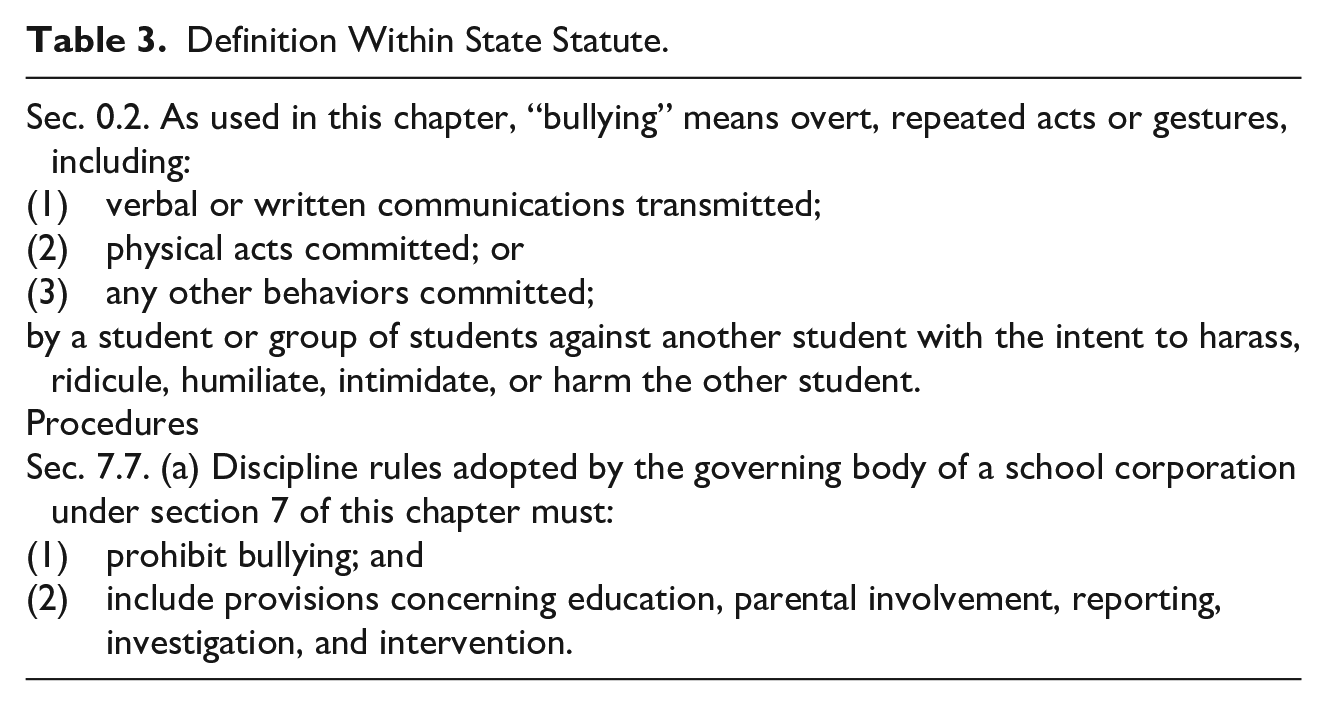
Each state works independently to define and communicate how their schools should address bullying, both at the state and at the district levels. This Indiana urban school district mandated that the district use a long-standing definition from a pioneer, Olweus (1993). The definition the principals recalled from memory that they used to investigate reports was more specific than the definition in their own state’s bullying prevention statue, as referenced in Table 3, in that bullying must be repeated, and there must be a power imbalance—two aspects that were not included in the state statute. By using a more precise definition, these principals were able to discern bullying from harassment and peer conflict (Cascardi et al., 2014; Gladden et al., 2014). Compared with the more narrow and research-informed definitions used by principals and their investigative teams, broader state statutes appear to differentiate bullying from other forms of aggression as illustrated in Table 4. Bullying definitions that are too broad place the burden of undue cost and time on schools by being too ambiguous in determining which report will be required and investigated (Cascardi et al., 2014). As a result, the outcome for the principals in present study would likely be that their district would have a lower level of bullying than other districts that use the state statute’s definition. This is evidenced by principals stating 90% to 95% of the time reported incidents are found to be peer conflict, not bullying. This could warrant further research to examine the high number of findings that are not considered bullying by principals. It is possible that by school officials not identifying bullying as such, victimization may continue, leading to further exposure to abuse and other types of abuse (Finkelhor et al., 2011).
Definition Within State Statute.
Discerning Types of Aggression.
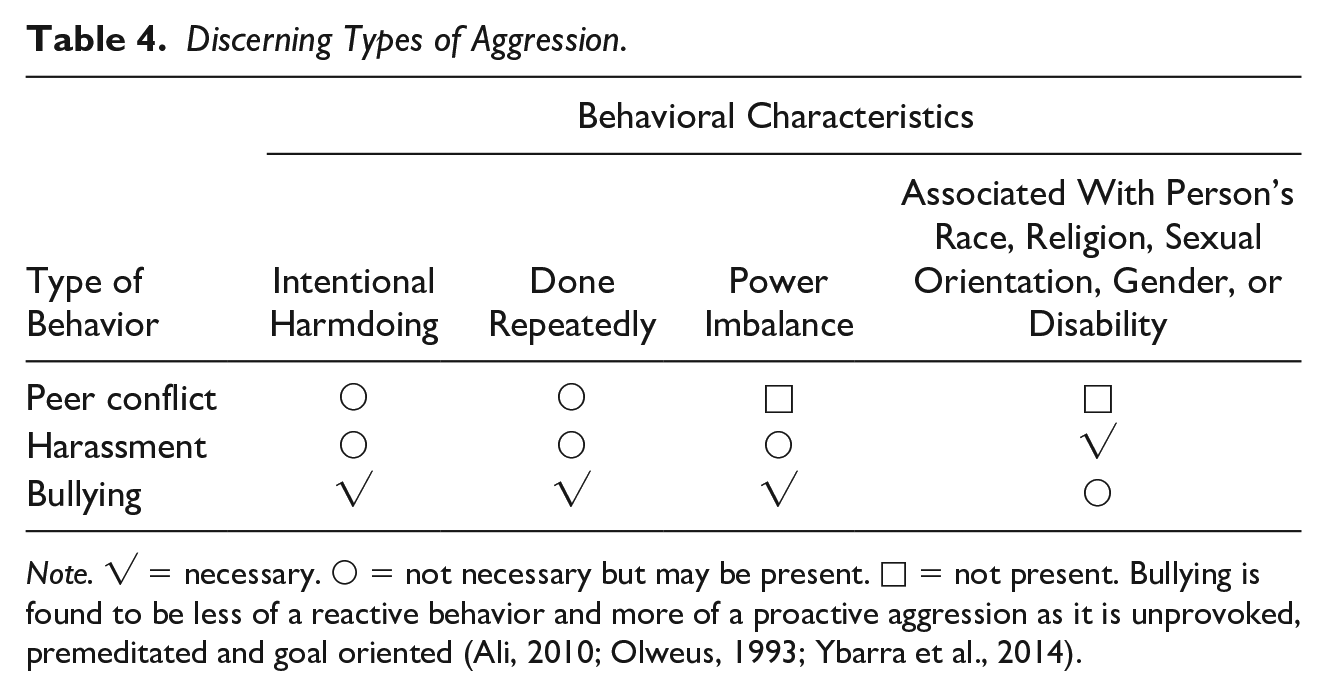
Note. √ = necessary. ○ = not necessary but may be present. □ = not present. Bullying is found to be less of a reactive behavior and more of a proactive aggression as it is unprovoked, premeditated and goal oriented (Ali, 2010; Olweus, 1993; Ybarra et al., 2014).
Despite using a common district-wide definition, principals varied in their interpretation of the definition. For example, the word “repeated” was understood to have different meanings (e.g., three acts of bullying behavior) suggesting the threshold to meet the criteria for bullying may differ between principals. This difference in interpretation may warrant additional inquiry so that students may avoid having to experience bullying three times instead of twice before the threshold of being bullied is met and intervention is provided. Discrepancies at the school level have been associated with students’ misunderstanding and lack of clarity regarding bullying (Donoghue et al., 2015). Simply stating and agreeing on what substantiates “repeated” could add clarity.
Principals in this study indicated that reports of bullying, when investigated according to definition, are often peer conflict rather than bullying. They did not equate peer conflict with bullying and, in fact, used the “district wide definition of bullying” to discern these acts. The distinction is important. Peer conflict is a different dynamic than bullying because it may not meet the threshold of bully criteria which includes all of the following: “repetition,” “intentional harm doing,” or “power imbalance” (Cascardi et al., 2014; Gladden et al., 2014). This level of definitional precision in assessing the type of aggression is necessary for principals to assign the correct intervention strategy and reporting (e.g., conflict resolution for peer conflict and a referral for counseling and parental notification for bullying). These steps are important because if a child or youth is being bullied, that act goes beyond conflict and therefore, using conflict resolution can revictimize the victim (Brown et al., 2013).
As Gladden and colleagues (2014) state, peer conflict often excludes the critical component of a power imbalance between students, and, as Olweus (2013) suggested, peer aggression may not consider provocation or premeditation, which can be explicit to bullying. Of additional importance, Cascardi and colleagues (2014) argued that despite some overlap between bullying and peer conflict, aggression, or harassment, important differences between these behaviors can be useful in establishing discrete explanatory models, legal remedies, and policy implications, and appropriate and effective intervention. Based on earlier research, it is evident that the discernment of bullying from other behaviors is a long-standing challenge that has persisted for some time (Mishna et al., 2006).
Principals indicated that children and youth report what they perceive as bullying to their parents, which results in parents informing the school principal. Waasdorp and colleagues (2011) suggested that in schools with high rates of bullying, children may be more likely to communicate incidents of bullying to their parents. However, what may be perceived as bullying initially by a student or their parent, may be something different, like peer conflict (Mishna, 2004). The definition or understanding what constitutes actual bullying may be confusing for both students and parents. For the parents of a child whom has been found to be bullying, parental reactions to being confronted by a principal can result in defensiveness and hostility toward the principal. In one U.S. urban study, when principals reported to parents that their child was bullying, as witnessed by bus drivers, parents responded with hostility, verbally attacking and threatening the principals (Brown et al., 2018).
Furthermore, when parents report school bullying to officials, they often expect immediate, effective action (e.g., student safety contract or suspension) by school officials after reporting bullying (Brown et al., 2013). However, they might face initial dissatisfaction when school officials follow their policies and procedures, in accordance with state statutes, that necessitate further investigation before moving forward (Hale et al., 2017, p. 2011). This was the case from these principals’ perspectives, with state- and district-level policies providing them with greater credibility to caregivers.
Issues of diversity and inequality also emerged in the data. One of the two principals in this study who identified as multiracial noted concerns about students lacking fulfillment of their basic needs. She noted that a lack of security created some degree of desperation and utilization of coping skills that negatively impacted student behavior and school experiences. The participant’s solution, if she had the power, would be to give families the money and economic resources to be more financially secure. Evidence from a systematic meta-analysis on bullying and SES supports this assertion. In a systematic multicountry review, Tippett and Wolke (2014) found that children from low SES were at increased risk for bullying and being a victim. These findings support what this principal stated about her wish to “alleviate the problem before it even starts.” Collectively, they recognize the implications of inequality and social justice.
Limitations
Several limitations are recognized with this study. Using qualitative methods can provide great depth regarding understanding a phenomena (Patton, 2002). Although these principals provided a rich description of their roles and practices to addressing school bullying, the findings are not generalizable. Also, by using focus groups compared with one-on-one interviews, some level of depth may have been lost (Robins et al., 2008). This study’s interpretive approach did not aid in the prediction of where or when principals are likely to respond effectively to school bullying, or whether school bullying is actually reduced, but offers readers an understanding of the issues principals face in responding to reports of bullying. This has important implications for policy makers as they consider adding or subtracting features in their school safety laws or policies.
In addition, the sample size of nine principals was not extensive and did not represent suburban and rural principals; however, it represents nearly 50% of the total possible number of principals that could have participated. Notably, these principals all shared on the topic and in several instances provided a rich description of their roles and practices to addressing school bullying. Finally, the authors avoided looking at higher levels of violence, such as assault, and focused on lower grades of violence with these principals.
Conclusion
It may be critical that principals, educators, students, and families have a shared understanding of what constitutes bullying so every incident of conflict is not considered bullying. That message seems to be gaining some traction from these principals’ perspectives. These urban school principals related how their experiences of addressing school bullying have been affected by their state and district bullying prevention policies. The state’s bullying prevention statute informed their district definition of bullying and procedures to investigate and report bullying within a reasonable time frame. Furthermore, as stated from these principals, the district policy has provided criteria to determine whether a report of bullying qualifies as such. Overwhelmingly, these principals indicated that reports of bullying were most often peer conflict which resulted in a referral (e.g., conflict resolution with a school social worker). Also, according to these principals, the district requirements led principals to do more frequent investigations than before these polices were in place. Likewise, principals indicated that they were supported and backed up by the state’s statute when having to report findings, especially to parents. One area of concern for these principals is not having effective means to deal with students who are bullying and have severe mental health issues. Principals acknowledged not having the interventions in place to help these students.
Footnotes
Declaration of Conflicting Interests
The author(s) declared no potential conflicts of interest with respect to the research, authorship, and/or publication of this article.
Funding
The author(s) received no financial support for the research, authorship, and/or publication of this article.
