







Abstract
Studies have shown that adolescents’ involvement in bullying (as perpetrators, victims, or both) is related to more negative outcomes than noninvolvement, and a small subset of studies has connected bullying to the specific outcome of gang involvement. However, most of these studies have been cross-sectional and have not examined causal pathways by which bullying and gang involvement may be related. Furthermore, some studies find sex differences in prevalence, type, and outcomes of bullying as well as in the relationship between bullying and gang involvement, suggesting important prevention implications, yet this remains under examined. Our study explicitly examines these issues identifying the overlap in bullying outcomes with antecedent gang risk factors, and suggesting potential direct and indirect effects of bullying on gang involvement; we test these relationships, and potential sex differences, using longitudinal data from the second National Evaluation of Gang Resistance Education and Training to overcome limitations of prior research. Consistent with our expectations, we find that (1) bully-victims exhibit the highest levels of risk; (2) bullies, victims, and bully-victims have increased odds of later gang joining, compared to uninvolved youth; (3) the inclusion of risk factors partially mediates the effect of bullying involvement on gang onset for bullies and victims and fully mediates the effect for bully-victims; and (4) some evidence of sex differences exists. Given these insights, greater connections between bullying and gang prevention efforts may be worthwhile.
Bullying is a relatively common occurrence in adolescence that prior to about the 1990s in the United States was considered relatively benign (Nansel et al., 2001; Pinker, 2011; Walton, 2005). As attention to the prevalence, causes, and consequences of bullying has grown since the early 1990s, it has been recognized that, despite its “normalization,” bullying has often serious consequences for youth, including delinquency and, potentially, gang involvement. Today, bullying is considered by students, parents, and educators to be one of the most prominent social issues facing school-aged youth in the United States (Hong & Espelage, 2012), and in fact, public perceptions are that bullying is an increasingly serious problem, which in turn increase perceptions that local schools are unsafe (Shelley et al., 2017). Estimates from 2005 to 2011 (the time period covered in the current study) reveal that 28–32% of 12- to 18-year-olds reported having been bullied at or on the way to or from school and 4–9% had been cyberbullied (Robers, Kemp, Rathbun, & Morgan, 2014). Because boys and girls who are perpetrators and/or victims of bullying experience more negative psychological, educational, social, and behavioral outcomes (though specific outcomes may vary by sex) than uninvolved youth, researchers, policy makers, and program providers, especially school-based, have paid increasing attention to bullying behaviors.
A relatively overlooked aspect of bullying involvement is its potential for leading adolescents to associate with gangs. Gangs may be attractive to youth who experience or engage in bullying; for example, youth who have been bullied may seek the protective aspects of gang involvement and youth who engage in bullying may seek an environment supportive of deviance. Furthermore, the consequences of bullying identified in prior research may provide a pathway to gang involvement, albeit potentially different pathways for boys than girls. Given the further deleterious consequences of adolescents’ involvement in gangs, even for short periods (e.g., greater delinquency, substance use, and violence; being unintended and intended targets of violence; and higher odds of school dropout, teen parenthood, and adult unstable employment and arrests; Esbensen & Huizinga, 1993; Krohn, Ward, Thornberry, Lizotte, & Chu, 2011; Thornberry, Krohn, Lizotte, Smith, & Tobin, 2003), connections between bullying and gang involvement are worth exploring.
While a few studies have examined the association between bullying experiences and gang involvement, findings have been equivocal (Bradshaw & Waasdorp, 2009; Forber-Pratt, Aragon, & Espelage, 2014). Further, these studies have relied nearly exclusively on cross-sectional data, limiting their ability to determine causal ordering in the relationship, that is, whether bullying experiences predict gang involvement rather than being correlational or the other way around. Finally, although some prior bullying perpetration and victimization studies have found sex differences in prevalence, type, and outcomes of bullying involvement, additional research is needed to confirm and extend those findings, including examining whether bullying is similarly related to gang involvement for males and females.
Given the prevalence and salience of bullying in adolescent males’ and females’ lives, the association between factors representing bullying’s negative consequences and gang membership, and the additional negative consequences of gang involvement, examining bullying as a risk factor for or pathway to gang membership is a potentially valuable, yet overlooked, mechanism. Granted, concerted efforts are already underway to combat both bullying and gang involvement; however, these efforts have generally been parallel rather than coordinated. If bullying perpetration and/or victimization provide pathways to gang involvement, it is important in both bullying and gang prevention efforts to recognize and interrupt these mechanisms. In addition, identifying whether pathways differ by sex can provide insight into gender-neutral versus gender-specific/-sensitive prevention programming (Petersen & Howell, 2013).
The current study, therefore, seeks to answer several questions: Is involvement in bullying, as perpetrator, victim, or both, predictive of later gang involvement, taking into account known risk factors for adolescent gang membership? Do gang risk factors mediate the relationship between bullying and gang involvement? Are particular types of bullying involvement particularly salient to later gang joining? And, do these relationships vary in important ways by sex? To answer these questions, we employ longitudinal data from a multisite, diverse sample of 3,820 students, allowing us to isolate the effects of bullying experiences on subsequent gang involvement. Below, we first discuss separately the relevant literature on adolescent bullying and gang joining and then review the handful of studies connecting the two; within each section, we include any relevant findings from studies that have examined sex differences.
Bullying
Bullying has been defined as intentional, repeated acts from one individual (or group) to another whose relationship involves an imbalance of power (Olweus, 1993; Solberg & Olweus, 2003; Solberg, Olweus, & Endresen, 2007). These acts can be direct, including hitting, kicking, pushing, and spitting on, or indirect, such as taunting, excluding, or spreading rumors (Olweus, 1993). A specific, and potentially unique (in its effects and even its victims; e.g., McCuddy & Esbensen, 2017), form of indirect bullying is cyberbullying (e.g., using websites, texts, or e-mails to threaten, harass, or taunt; e.g., Patchin & Hinduja, 2006; Schneider, O’Donnell, Stueve, & Coulter, 2012), which has increased as the popularity of technology and social media has grown among youth. Bullying typically begins in elementary school, peaks in middle school, and declines in high school; this trend is especially pertinent for direct bullying, while indirect forms tend to be more common in general and decline less subtly throughout youths’ life-course, including cyberbullying which may persist until college (DeVoe et al., 2004; Pellegrini & Long, 2002). No matter what the form, prior studies suggest that youth who experience bullying perpetration and victimization display increased negative consequences compared to uninvolved youth.
With regard to sex differences, males on average are more often perpetrators and victims of bullying than females, but there are differences by type, with males more involved in direct and females more involved in indirect forms (Baldry & Farrington, 1999; Borg, 2006; Pellegrini & Long, 2002). Research on cyberbullying is as yet equivocal, with some studies suggesting more sex equality (e.g., Tokunaga, 2010) and others suggesting greater prevalence among females (e.g., Robers et al., 2014; Viljoen, O’Neil, & Sidhu, 2005).
Bullying Typology and Outcomes
Bullying researchers have examined whether there are differential consequences of the different forms (direct, indirect, and cyber), and some have looked at these differences within a typology of bullying involvement. Commonly, a four-part typology has been examined: “Bullies” have engaged in bullying but have not experienced bullying victimization, “victims” have been victims of but not perpetrated bullying, “bully-victims” have both perpetrated and been victims of bullying, and “noninvolved” have been involved in neither. Most adolescents fall into the last category and face the least negative social, emotional, and behavioral outcomes compared to their peers in the other three classifications.
Bullies display greater aggression, psychosomatic symptoms, and depression than youth who are not bullies (Forero, McLellan, Rissel, & Bauman, 1999; Marini, Dane, Bosacki, & Brock Research Institute for Youth Studies, 2006; Salmon, James, & Smith, 1998; Sigfusdohr, Gudjonsson, & Sigurdsson, 2010; Smokowski & Kopasz, 2005), and in one study, higher psychosomatic symptoms than victims (Kaltiala-Heino, Rimpela, Rantanen, & Rimpela, 2000). Bullies are also more involved in minor and serious forms of delinquency, substance abuse, and weapon carrying than noninvolved youth (Bradshaw, Waasdorp, Goldweber, & Johnson, 2013; Kaltiala-Heino et al., 2000; Nansel, Overpeck, Hayne, Ruan, & Scheidt, 2003; Olweus, 2011; Sigfusdohr et al., 2010; Solberg & Olweus, 2003; Ttofi, Farrington, Lösel, & Loeber, 2011). Finally, bullies have been found to spend more unsupervised time with peers than victims (Forero et al., 1999), and increase friends’ aggressive behavior more so than victims and bully-victims (Mouttapa, Valente, Gallaher, Rohrbach, & Unger, 2004). In one study, bullies in comparison to noninvolved youth had more association with youth gangs (Bradshaw et al., 2013).
Effects of being a bully also show variation by sex. Compared to their male counterparts, females who bully display greater levels of psychosomatic symptoms, depression, and aggressive and cohesive peer groups (Kaltiala-Heino et al., 2000; Mouttapa et al., 2004). Male bullies display greater odds of antisocial behaviors than female bullies (Solberg & Olweus, 2003), including carrying a weapon to school and frequent fighting (Nansel et al., 2003), while female bullies display a higher average of excessive drinking and other substance use than male bullies (Kaltiala-Heino et al., 2000). Thus, while female bullies seem to have increased emotional, peer, and substance use problems related to or stemming from their bullying perpetration, male bullies display more externalizing problem behaviors related to or resulting from their bullying behaviors.
Victims of bullying display more conflict avoidance, negative self-perceptions, depression, anxiety, and feelings of being alienated than noninvolved youth (Bond, Carlin, Thomas, Rubin, & Patton, 2001; Kaltiala-Heino et al., 2000; Salmon et al., 1998) and, in one study, bully-victims (Forero et al., 1999). Compared to noninvolved youth, victims also demonstrate more aggressive protective strategies (e.g., weapon carrying; Apel & Burrow, 2011; Turner, Phillips, Tigri, Williams, & Hartman, 2016) and have more trouble academically due to school avoidance and feelings of being unsafe and unconnected (Esbensen & Carson, 2009; Hutzell & Payne, 2012; Schneider et al., 2012). Effects may vary by sex, as one study found female victims were more likely to engage in precocious sexuality and drug use, and males were more likely to join gangs, compared to noninvolved youth (DeCamp & Newby, 2015). In addition, cyber-victimization has been associated with anxiety, fear, and lessened ability to concentrate, affecting academic performance and leading to delinquency, effects that may be greater for cyberbullied youth than for victims of more traditional forms of bullying (Hay, Meldrum, & Mann, 2010; McCuddy & Esbensen, 2017).
Bully-victims, due to involvement as both perpetrators and victims, experience similar, yet conflated, negative consequences associated with being a bully or victim only, and they may therefore be at greater disadvantage than their peers (Bradshaw et al., 2013; Unnever, 2005). Consequences for bully-victims include but are not limited to cognitively normalizing delinquent behavior, aggressive reactions, lower self-worth, depressive symptoms, and suicidal thoughts/behaviors (Andreou, 2001; Jordan & Austin, 2012; Kaltiala-Heino et al., 2000; Marini et al., 2006). These youth are also more involved with minor and serious delinquent behaviors, weapon carrying, substance abuse, aggressive peers, and gangs than noninvolved youth (Bradshaw et al., 2013; Mouttapa et al., 2004; Riittakerttu, Rimpela, Rantanen, & Rimpela, 2000). Disaggregating bully-victims by sex yields similar results as the sex comparisons of bullies. Compared to male bully-victims, female bully-victims display greater levels of psychosomatic symptoms, anxiety, depression, binge drinking, and other substance use (Kaltiala-Heino et al., 2000; Riittakerttu et al., 2000), though little is known about whether sex differences exist for bully-victims on externalizing problem behaviors.
Most of the studies described above were conducted with cross-sectional data, and thus, their findings may be more accurately described as “correlates” than “consequences” of bullying involvement. While longitudinal data can help disentangle these issues, it is clear that bullying involvement is related to the social, psychological, and behavioral health of male and female adolescents (although differences do arise when comparing them). Of note as well is the fact that many of the correlates or consequences described above have been associated, in a largely separate literature, with adolescent gang involvement.
Gang Joining
An essential question in the gang literature is why certain youth are more prone than others to joining a gang. Various theoretical and risk factor approaches have examined factors and mechanisms present in five domains: community, family, school, peers, and individual. We argue that bullying involvement may be considered a risk factor for gang involvement (a direct effect) and that the correlates/consequences of bullying involvement, discussed previously, may themselves be seen as risk factors that provide a pathway to gang involvement (indirect effects).
Among the neighborhood and family factors found to place adolescents at greater risk of gang involvement are neighborhood concentrated disadvantage and social disorganization; presence of drug sales, crime, and firearms; and low parental supervision (Curry & Spergel, 1992; Esbensen, Peterson, Taylor, & Freng, 2010; Thornberry et al., 2003). Important for the current study, school factors leading to gang membership include perceptions of school disorder and poor climate (Gottfredson & Gottfredson, 2001); feelings of being unsafe and school avoidance (Dukes, Martinez, & Stein, 1997; Lenzi et al., 2015; Stretesky & Pogrebin, 2007); and low academic performance, attachment to teachers and other adults at school, and commitment to school. Additionally important for the current study, prior research suggests that these school-related factors are especially important for females’ gang involvement (Bjerregaard & Smith, 1993; Esbensen & Deschenes, 1998; Esbensen et al., 2010; Hill, Howell, Hawkins, & Battin-Pearson, 1999; Maxson, Whitlock, & Klein, 1998; Peterson & Morgan, 2014). In addition to association with and commitment to deviant peers and low prosocial peer association/commitment (Esbensen et al., 2010; Hill et al., 1999; Thornberry et al., 2003), another important influence is relational problems with peers including peer rejection (Dishion, Nelson, & Yasui, 2005; Dishion, Veronneau, & Myers, 2010; Farmer & Hairston, 2013; Vigil, 2008; Warr, 2002). Finally, individual-realm risk factors include prior delinquency, nondelinquent problem behavior (e.g., low self-control), and prodelinquent beliefs (e.g., using neutralizations, feeling low guilt; Esbensen, Huizinga, & Weiher, 1993; Hill et al., 1999; Lahey, Gordon, Loeber, Stouthamer-Loeber, & Farrington, 1999; Thornberry et al., 2003). Negative life events and fear or experiences of victimization can also lead youths to associate with gangs to alleviate those fears and experiences (Maxson & Whitlock, 2002; Maxson et al., 1998; Melde, Taylor, & Esbensen, 2009).
Bullying and Gang Joining
While not often explicitly connected in research, bullying and gang joining may be related, as demonstrated in a handful of publications. Reviews of research have led some to surmise that bullying or protection from bullying may be motivations for gang joining (Bradshaw & Waasdorp, 2009; White & Mason, 2012). Bullying perpetration, for instance, is related to antisocial behavior such as delinquency, aggression, violence, and perhaps also gang involvement; gang involvement could also represent a reaction to peer rejection (e.g., in the form of peer dominance), association with like-minded peers (selection or recruitment), or opportunity/outlet for frustration, anger, aggression, and violence. Bradshaw and Waasdorp (2009, p. 359) suggest gangs could be “a developmental extension of bullying behavior.” Bullying victimization could be seen as a negative life event (a risk factor for gang involvement) and could induce negative emotional states (e.g., concern for safety, moral disengagement, and belief in use of violence as acceptable) promotive of gang involvement. Gang joining by victims of bullying could be a protective, self-help, or coping mechanism (Apel & Burrow, 2011); in one example, sexual orientation–based harassment from other students led to gang formation among young Black lesbian students (Johnson, 2008). 1 In addition, consequences of bullying victimization such as lowered school commitment, feelings of safety, and performance put youth at risk for gang involvement. The confluence of bullying perpetration and/or victimization could result in multiple motivations including seeking support, social connection, protection, control, and retaliation (Bradshaw & Waasdorp, 2009). Furthermore, based on the overlap of bullying perpetration and/or victimization outcomes and these gang-joining risk factors, different pathways toward gang membership might exist for these particular populations of youth.
More studies than not 2 have shown a relationship between bullying and gang membership; however, most of these studies have been cross-sectional, inhibiting the ability to determine causal ordering, that is, whether bullying involvement leads to gang involvement or vice versa. 3 An example is Holmes and Brandenburg-Ayres’s (1998) cross-sectional retrospective study of youth in correctional facilities, which found that while 38% had been bullied and 47% had bullied others in school, over 60% of gang members (including 63% of female gang members) had been bullies. Further, about 70% of the sample (and of gang members) believed that bullying could “lead to gangbanging.” 4 The more-common school-based studies also support connections between bullying and gang involvement. Bandyopadhyay, Cornell, and Konold (2009) showed that greater prevalence of bullying, reported by teachers, was associated with more frequent gang violence. In another study, a bidirectional relationship was observed whereby gang presence in schools and bullying behavior of gang members creates an atmosphere of fear that can allow escalation of bullying behaviors/victimization by suppressing the possibility of bystander (even adult) intervention (Forber-Pratt et al., 2014). Pressures on youth that arise from this environment of fear and victimization can lead them to engage in bullying behaviors (i.e., becoming bully-victims) and possibly to join a gang for protection and power.
To improve upon limitations of prior research, DeCamp and Newby (2015) used propensity score matching in their analysis of the relationship between bullying victimization and deviant outcomes. They found a higher ever prevalence of gang membership among both males and females who had been victimized by bullying before age 12, and these differences were statistically significantly higher than nonvictims in the unmatched sample for both sexes and in the matched sample for males but not females. In addition to some potential differences in the bullying-gang involvement relationship by sex, there are potential differences by type of bullying involvement. Bradshaw, Waasdorp, Goldweber, and Johnson (2013) found that while all three groups (bullies, victims, and bully-victims) had higher odds than noninvolved students of ever having been a gang member, results were particularly stark for bully-victims, for whom odds ratios (ORs) were highest (12.10), compared to bullies (5.61) and victims (2.30).
Two studies using longitudinal data provide mixed results. Apel and Burrow (2011) found experiences of repeated bullying did not predict later gang membership (though they were related in cross-sectional analyses). By contrast, Carbone-Lopez, Esbensen, and Brick (2010) found bullying victimization did predict later gang involvement, and they also found some differences by sex: For males, odds of gang membership were increased by intermittent (but not repeated) direct bullying victimization, while females’ odds were increased by experiences of repeated indirect bullying.
Current Study
The current study seeks to further connect the bullying and gang literatures, advancing knowledge by providing a temporally ordered analysis to disentangle the relationship between adolescents’ involvement in bullying and the potential consequence of gang involvement. In doing so, we also account for potential sex differences in these relationships, attending to the limited prior research suggesting sex differences in both bullying participation and outcomes. Specifically, we address the following research questions: Does involvement in bullying (as perpetrator, victim, or both) predict later gang onset, above, and beyond other gang risk factors? Are particular types of bullying involvement particularly salient to later gang joining? Do known risk factors for gang involvement mediate the relationship between bullying and later gang joining? Do these relationships vary by sex?
Based on findings from prior studies in largely disconnected literatures, we expect that youth who are involved in bullying (as perpetrators or victims) will be more likely to later join a gang than noninvolved youth, 5 that youth who are bully-victims will experience the greatest levels of risk and have the highest odds of gang joining, and that these relationships will hold once taking into account known risk factors for gang joining. However, given the overlap between bullying outcomes and gang risk factors, the effect of bullying involvement on gang involvement may be mediated by the gang risk factors. We also expect, based on prior studies, that some of these findings will differ by sex.
Data and Methods
The self-reported student data used in this study were collected as part of the Process and Outcome Evaluation of Gang Resistance Education and Training (G.R.E.A.T.). The evaluation consisted in large part of a longitudinal panel study conducted from 2006 to 2012 in seven cities selected for having an established G.R.E.A.T. program (but no program saturation), facing some level of gang problems, and providing geographic and demographic diversity: Albuquerque, NM; Chicago, IL; Greeley, CO; Nashville, TN; Philadelphia, PA; Portland, OR; and a Dallas–Fort Worth, TX, area location (Esbensen, Peterson, Taylor, & Osgood, 2012). Four to six public middle schools in each were selected to capture the diversity of the school districts and within the 31 participating schools, students in 195 sixth- and seventh-grade classrooms (the grade at which the program was offered) were eligible to participate in the evaluation. Active parental procedures (see Esbensen, Melde, Taylor, & Peterson, 2008) resulted in 89% of youths (totalling? 4,372) returning a completed consent form, with 78% of parents/guardians (N = 3,820) allowing their child’s participation. Students completed pre- and posttest surveys in 2006 with completion rates of 98% and 95%, respectively, and annual follow-up completion rates of 87%, 83%, 75%, and 72%.
Limitations and Advantages
The high consent and completion rates provide greater confidence in the generalizability of the findings, but given the purposiveness of site and school selection, readers are cautioned in making broad generalizations to U.S. public school students. In addition, public school samples have a number of limitations: private-, parochial-, and home-schooled students are excluded; chronically truant or absent youths are underrepresented; higher risk students have greater tendency to be absent or to have dropped out; and sample age is constrained. Although we could not address the first limitation (and, the last is an advantage for this study, as bullying and gang involvement are highest in prevalence during these ages), researchers worked closely with school personnel to maximize consent rates and made multiple visits to each school during each wave to reduce effects of the second and third limitations. These limitations notwithstanding, the data are advantageous for the current study: The sample is large enough to contain sufficient numbers of gang- and bullying-involved youth; there are measures of prior and current gang membership and this, coupled with longitudinal nature of data (unlike many prior studies), allows for temporal ordering in analyses to examine whether bullying involvement leads adolescents to later join gangs; and the survey assesses gang risk factors that can be controlled to isolate the effects of bullying involvement and assess both direct and indirect effects.
Dependent Variable: Gang Joining
The main variable of interest for this study is first-time gang joining or onset of gang membership. To ensure that bullying and gang risk factors precede gang membership, we selected Waves 4–6 for the measure of gang onset, as the bullying measures were not included in the survey until Wave 3. Youths who joined a gang for the first time at Wave 4, 5, or 6 were identified from their responses to two questions: “Have you ever been a gang member?” and “Are you now in a gang?” To be counted as a first-time gang joiner, the youth must have reported never belonging to a gang before the wave of interest and report being a current member at that wave. Because gang joining is a relatively rare event 6 among general school samples, to have a larger overall n for multivariate analyses, gang joiners from each of the three waves (4–6) were pooled into one dichotomous variable (1 = gang joiner, 0 = never gang joiner).
Independent Variables
Bully offending and victimization items and typology
The main independent variable is the bullying typology classifying youth into one of the four categories based on their responses to a series of bullying questions that originated with the Wave 3 survey. The questionnaire contained 2 bully-offending items, asking students to circle a number from 0 to 10 or “more than 10” that represents how many times in the past 6 months they have (1) “Bullied other students at school” and (2) “Said any mean, threatening, or embarrassing things to other students through text messages, phone calls, e-mail, or websites” (“cyberbullying”). Seven bully-victimization items were included, with the first two indicative of “direct bully victimization,” the next three representing “indirect bully victimization,” and the last being “cyberbully victimization”: (1) “Been attacked or threatened on your way to or from school”; (2) “Been attacked or threatened at school”; (3) “Had mean rumors or lies spread about you at school”; (4) “Had sexual jokes, comments, or gestures made at you at school”; (5) “Been made fun of at school because of your looks or the way you talk”; (6) “Been bullied at school” 7 ; and (7) “Had any mean, threatening, or embarrassing things said about you through text messages, phone calls, e-mail, or websites.”
To remain consistent with prior studies, these measures were coded so that 0–1 occurrences = 0 and 2 or more occurrences = 1 (Solberg & Olweus, 2003). Youth were categorized as bullies if they reported two or more occurrences of at least one bullying action and no form of victimization. Victims were identified as such if they reported two or more occurrences of at least one bully victimization but did not report bullying offending. Bully-victims reported two or more occurrences of at least one each of the bully offending and victimization items, and noninvolved youth reported 0 to 1 on all items, having neither bullied nor been bullied or having experienced these events only one time. 8 Youths were classified according to this typology in each wave from Waves 3–5 and then the typologies from each of the waves were pooled to create a single typology in which youths’ type was tied to gang joining (no = 0, yes = 1) at the subsequent wave, Waves 4, 5, or 6, for temporal ordering.
Gang-joining risk factors
In addition to the bullying typology, variables that are indications of previously supported risk factors for gang joining were included in the analyses. Risk factors were coded temporally the same as the bullying typology, so that risk was measured at the wave prior (Waves 3, 4, or 5) to gang onset (Waves 4, 5, or 6) and then pooled. This allowed us to compare risk factors and bullying at the same point in time and determine their effects on subsequent-wave gang joining. Consistent with the literature, we utilized factors from four of the five main domain categories (individual, peer, family, and school).
From the individual domain, a number of measures were included in the survey, tapping both constitutional/attitudinal and behavioral characteristics. The first five individual risk factors were self-control, guilt, empathy, fear of crime, and conflict resolution skills. The Self-Control Scale is comprised of four of Grasmick, Tittle, Bursik, and Arneklev’s (1993) six components, measured by 4 items each: anger, impulsivity, risk-seeking, and self-centeredness (see Appendix for all scales’ sample items, response categories, and reliability). Higher scores are representative of lower overall levels of self-control. For empathy, perceived guilt, fear of crime, and conflict resolution skills, higher scores indicate greater levels of each. Prior involvement in general delinquency, a key gang risk factor in previous studies (Klein & Maxson, 2006), is an index composed of youths’ frequency (from 0 to 10 or “more than 10”) of engaging in 14 behaviors including but not limited to truancy, vandalism, selling drugs, assault, and robbery. 9 Given the skewed nature of this measure, the natural log was included in analyses. Prior experience of victimization (besides bullying victimization) is an index of 5 items (Had your things stolen from you at school, Had some of your things stolen from you, Been hit by someone trying to hurt you, Had someone use a weapon or force to get money or things from you, and Been attacked by someone with a weapon or by someone trying to seriously hurt or kill you), also naturally logged. 10 In the peer domain, there were four scales measuring association with and commitment to prosocial and deviant peers. Finally, the family domain was represented by a Parental Monitoring Scale and the school domain by students’ perceptions of school disorder and level of school commitment (higher scores equal higher levels for each).
Control Variables
Along with the main independent variables and gang risk factors, control variables of sex and race/ethnicity (both respondent-identified) are included in multivariate analyses (in addition to inclusion of some sex-specific analyses). Sex is coded as male = 1 and female = 0, and race/ethnicity is coded White/Caucasian, Black/African American, Hispanic/Latino, and Other background (American Indian/Native American, Asian/Pacific Islander/Oriental, and Biracial/Other) with White being the comparison group for the logistic regression analyses.
Analytical Methods
To answer our research questions, a series of analyses were conducted using SPSS Version 24. Descriptive comparisons of demographic and risk factor variables by bullying type and by sex were conducted using χ2 measures of association, t tests of means or analysis of variance (ANOVA), as appropriate. Next, to test the direct relationship between each type of bullying involvement and first-time gang involvement, bivariate logistic regression analyses were conducted overall and separately by sex. Finally, the bullying typology and known risk factors for gang involvement were introduced in a series of multivariate logistic regression models; these analyses were conducted for the full sample but could not be done separately by sex due to low numbers once the sample was split by both sex and bullying type. To test the indirect effect each type of bullying has on first-time gang joining, multivariate mediation analyses were conducted using the Preacher and Hayes (2008) multiple mediation method.
It is also worth noting that due to the nature of variable construction necessary to answer our research questions, the analytic sample is much smaller than the original sample of 3,820 students. Because we are interested in examining the effect of bullying involvement on subsequent gang involvement (i.e., onset of membership), the construction of the gang-joiner measure requires youth to have reported no prior “ever” or “current” gang membership and thus requires students to have completed surveys at all time points and not just the waves of interest (Waves 3–6). Sixty percent (n = 2,309) of the sample completed all six waves of data collection, and of those, 1,730 had valid responses on all measures included in our analyses; this represents 75% of the “full data sample” yet just 45% of the original sample. Importantly, of the total number (n = 186) of gang joiners identified from Waves 4–6, our analytic sample contains 180 or 96%. While the analytic sample differs slightly from the total sample on demographics (see Table 1), there are no significant differences between the samples on the key variables of interest; thus, we have greater confidence that our findings are applicable to the full sample.
Descriptives of Total and Analytical Sample.
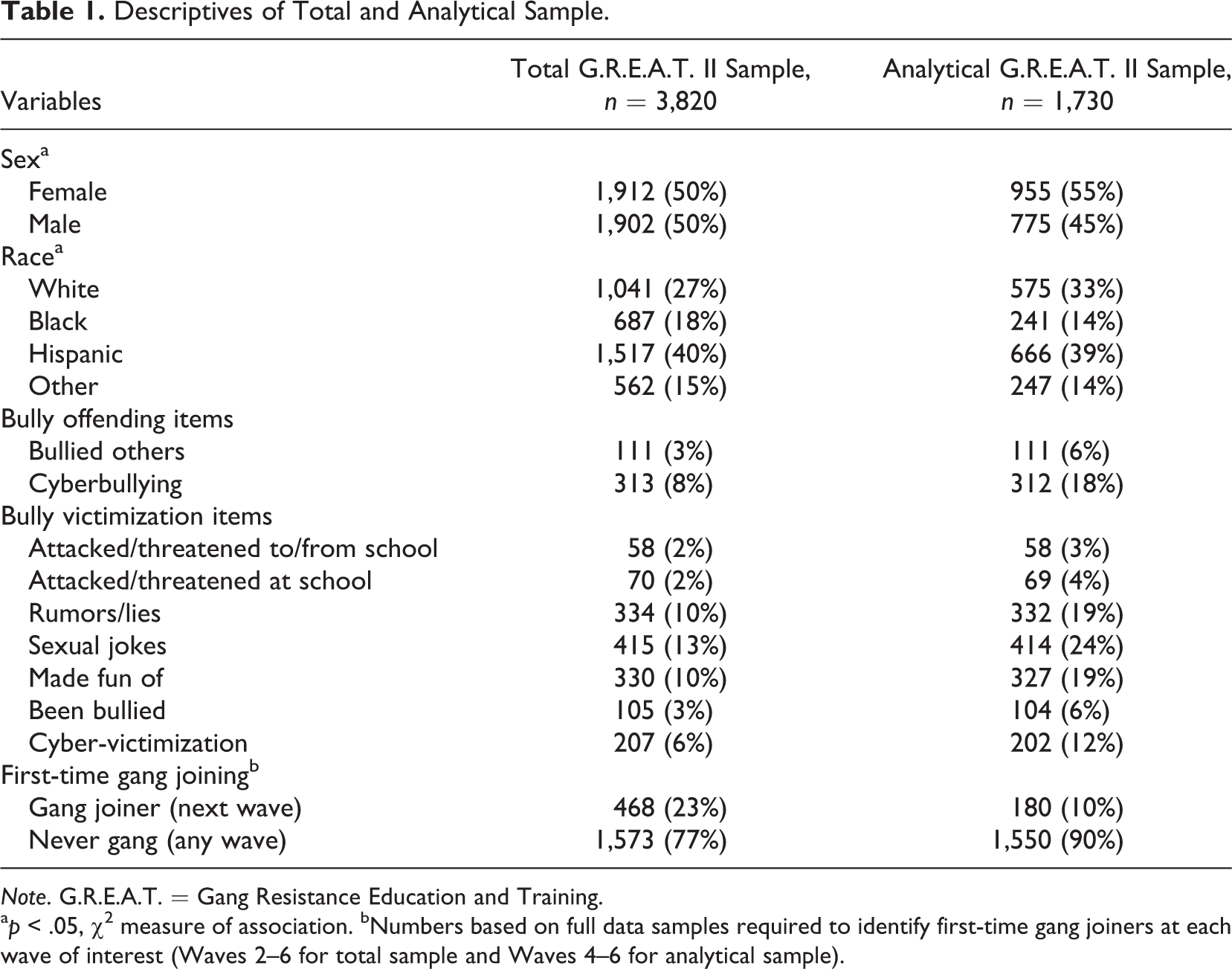
Note. G.R.E.A.T. = Gang Resistance Education and Training.
a p < .05, χ2 measure of association. bNumbers based on full data samples required to identify first-time gang joiners at each wave of interest (Waves 2–6 for total sample and Waves 4–6 for analytical sample).
Results
Table 2 presents descriptive information about the sample of youth who fall into each of the four bullying types, pooled from Waves 3–5. Consistent with prior research, most youth (54%) are not involved in bullying perpetration or victimization, with the second most common category being victims (24%), followed by bully-victims (15%) and bullies (6%). There are no significant differences by race/ethnicity, but representation does vary significantly by sex. The proportion of bullies and noninvolved is more equal (among bullies, 56% are male and noninvolved are split equally), while for the two types that include bullying victimization, females make up a greater proportion (65% of victims and 64% of bully-victims).
Descriptives of Bullying Typology.
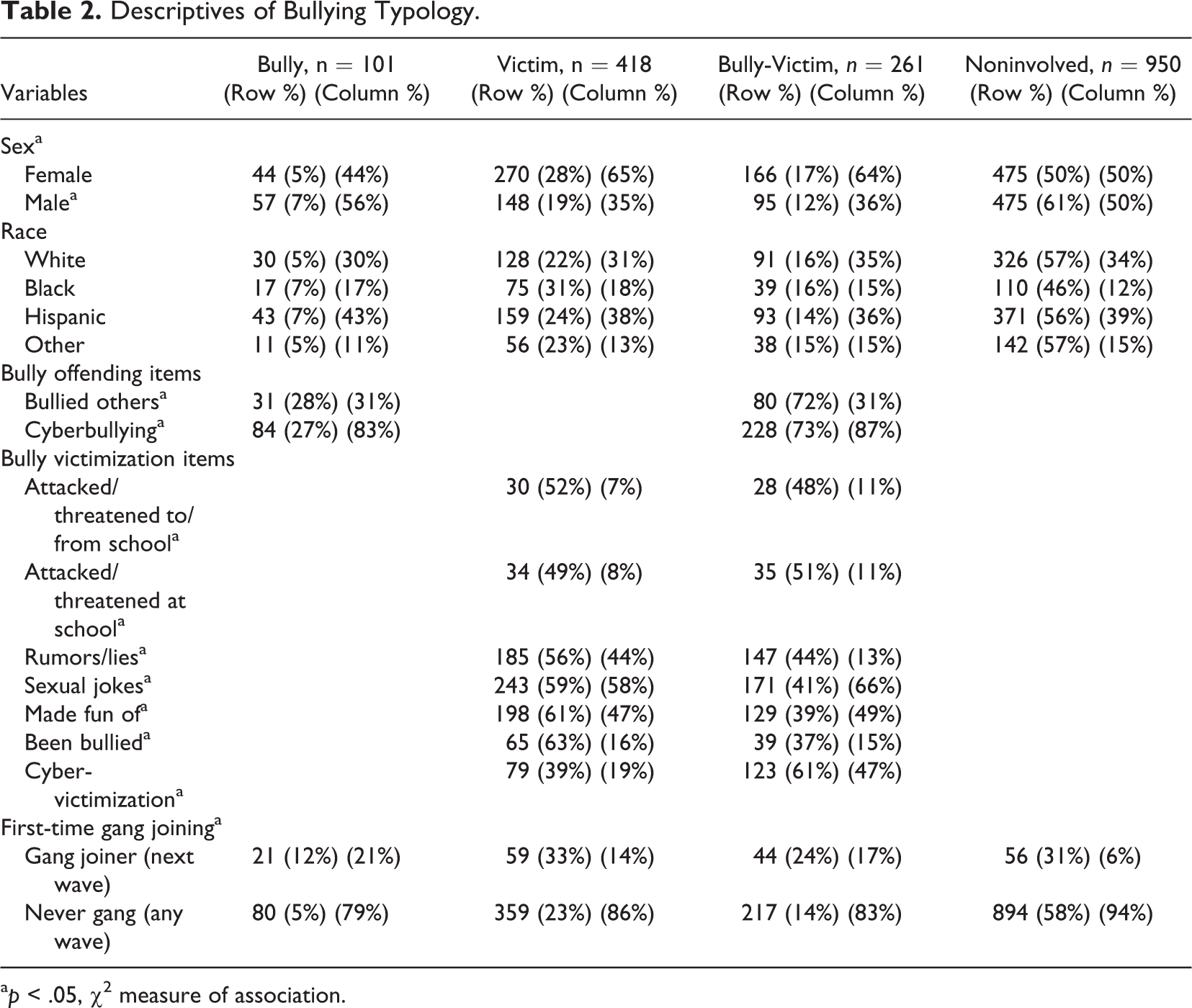
a p < .05, χ2 measure of association.
Presented next in Table 2 are each type’s prevalence rates for the individual bullying perpetration and victimization items. Among the bully offending items, there is a higher proportion of youths reporting cyberbullying than of bullying other students at school. Among the bully-victimization items, the greatest proportion of youth report experiencing sexual jokes, comments, or gestures at school (58% of victims and 66% of bully-victims), followed by nearly half (47% and 49%) reporting having been made fun of at school because of their looks or the way they talk. Being attacked or threatened on the way to/from or at school have the lowest prevalence rates (7–8% for victims, 11% for bully-victims), and there are two significant differences: Victims were more likely (44%) than bully-victims (13%) to have had mean rumors or lies spread about them at school, and bully-victims (47%) were more likely than victims (19%) to have been cyberbullied. The final rows of Table 2 indicate significant differences in the primary variable of interest (gang-joining Waves 4–6), with bullies having the highest prevalence rate (21%) of gang joining in the subsequent wave, followed by 17% of bully-victims, 14% of victims, and just 6% of noninvolved youth. 11
Table 3 contains descriptives and prevalence rates by sex. As with the overall sample, females make up a larger proportion of victims and bully-victims, regardless of race/ethnicity. For the individual bully offending items, males’ and females’ involvement prevalence was similar (regardless of whether they were bullies or bully-victims), while for the individual bully-victimization items (regardless of victim or bully-victim status), males’ prevalence was higher for being attacked/threatened on the way to/from or at school and for being made fun of, and females’ prevalence was higher for experiencing sexual jokes and cyber-victimization. The final rows of Table 3 indicate a significant sex difference in gang-joining prevalence: Among males, the highest prevalence is for bully-victims (23%), followed by bullies (19%), victims (15%), and noninvolved (7%), while female bullies (23%) were most likely to join a gang, followed by victims (14%), bully-victims (13%), and noninvolved (5%).
Descriptives of Bullying Typology by Sex.
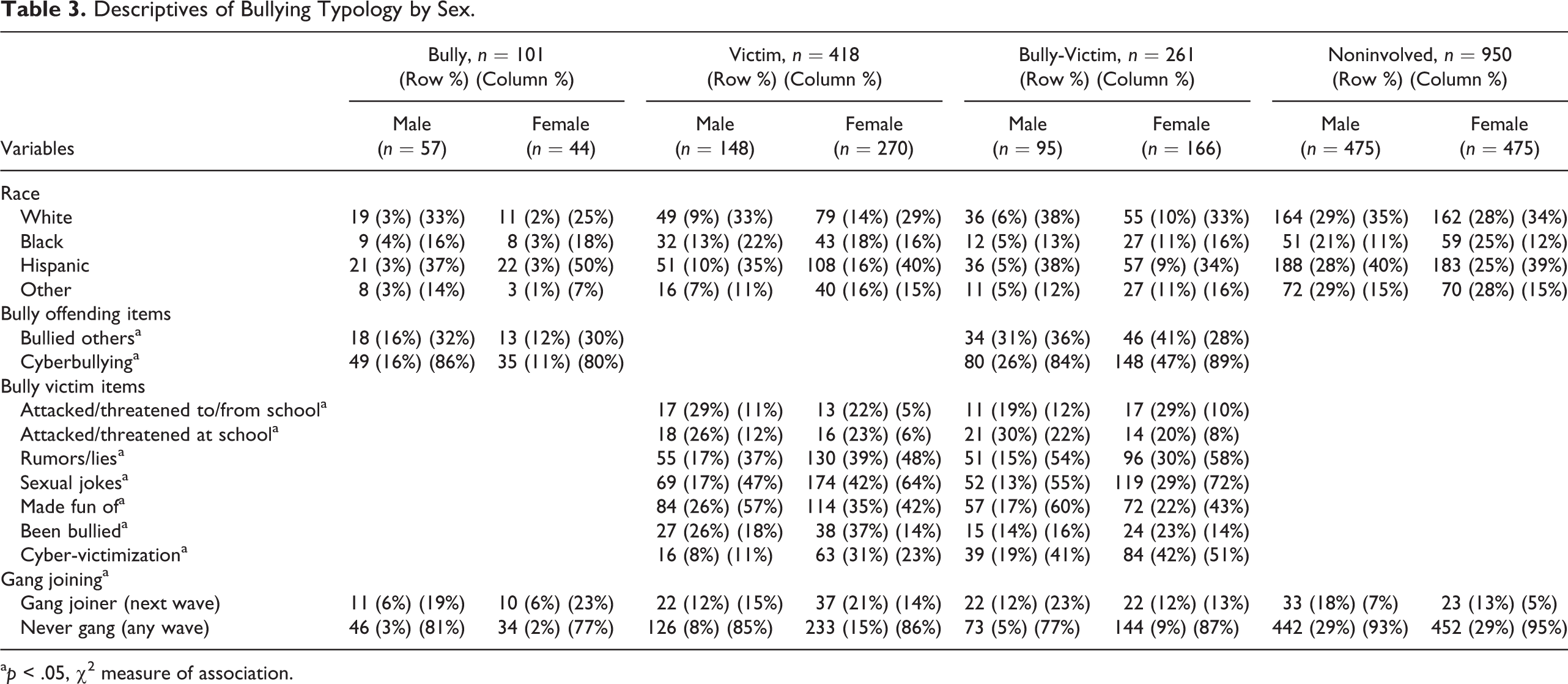
a p < .05, χ2 measure of association.
Table 4 presents results from a series of ANOVAs with Bonferroni post hoc tests comparing the groups’ means on each risk factor for gang involvement. As demonstrated in prior studies regarding the correlates and consequences of bullying involvement, the general overall pattern is for bully-victims to be “worst off” on these measures, followed by bullies, then victims, and for noninvolved youth to be “best off.” That is, on 17 of the 23 factors examined, bully-victims are most antisocial (or least prosocial), while on 20 of 23 factors, noninvolved youth are most prosocial (or least antisocial). Notably, bully-victims report the greatest levels of perceived school disorder (tied with victims); anger; impulsivity; risk-seeking (and lowest overall self-control); nonbully victimization and delinquency; association with and commitment to deviant peers; and least guilt, school commitment, and parental monitoring. Victims report the most fear of crime, 12 empathy, and parental monitoring, and bullies are most self-centered, least empathic, have the poorest conflict resolution skills, and report lowest prosocial peer associations and commitment. Post hoc tests reveal that the groups most similar to each other are bully-victims and bullies, with only two significant differences (empathy and substance use, with bully-victims scoring higher) between them. However, bully-victims differ significantly from noninvolved youth on 20 factors and from victims on 18 factors.
Analysis of Variance Comparisons of Risk Factor Means by Bullying Typology.
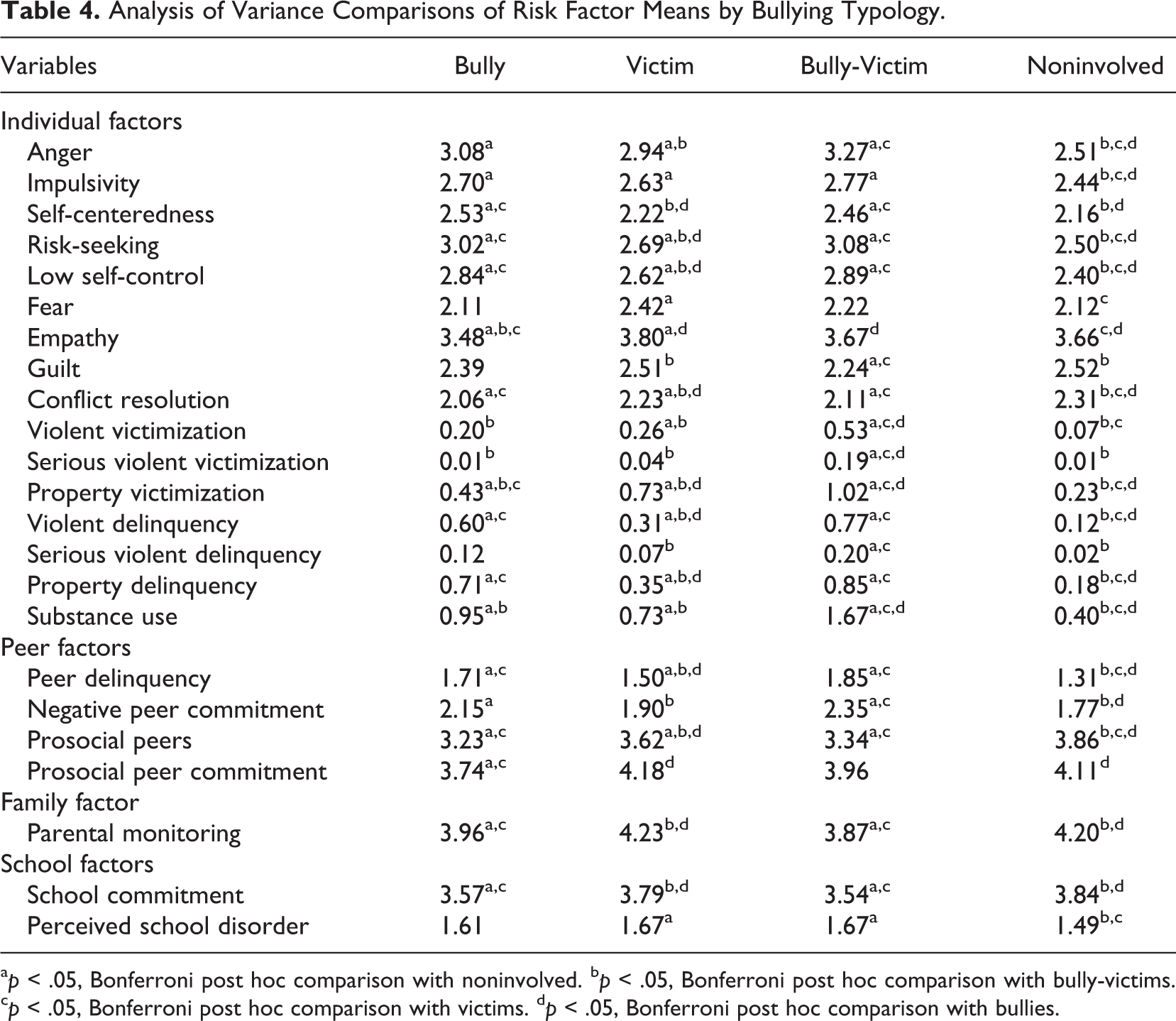
a p < .05, Bonferroni post hoc comparison with noninvolved. b p < .05, Bonferroni post hoc comparison with bully-victims. c p < .05, Bonferroni post hoc comparison with victims. d p < .05, Bonferroni post hoc comparison with bullies.
ANOVAs conducted separately by sex comparing the four bully-victim types are presented in Table 5. Looking within sex, the patterns for both males and females mirror that of the overall sample: For example, males and females who are bully-victims experience the highest levels of risk on 17 of the 23 factors compared to their counterparts in the other three types, while noninvolved males and females have the lowest levels of risk (on 20 of 23 factors for males and 18 of 23 for females). Comparing males and females within bully types, other interesting patterns emerge: There are no significant differences between male and female bullies or male and female bully-victims (except for empathy), male and female victims differ on six factors, and noninvolved males and females differ on 10 factors.
Analysis of Variance Comparisons of Risk Factor Means by Bullying Typology and Sex.
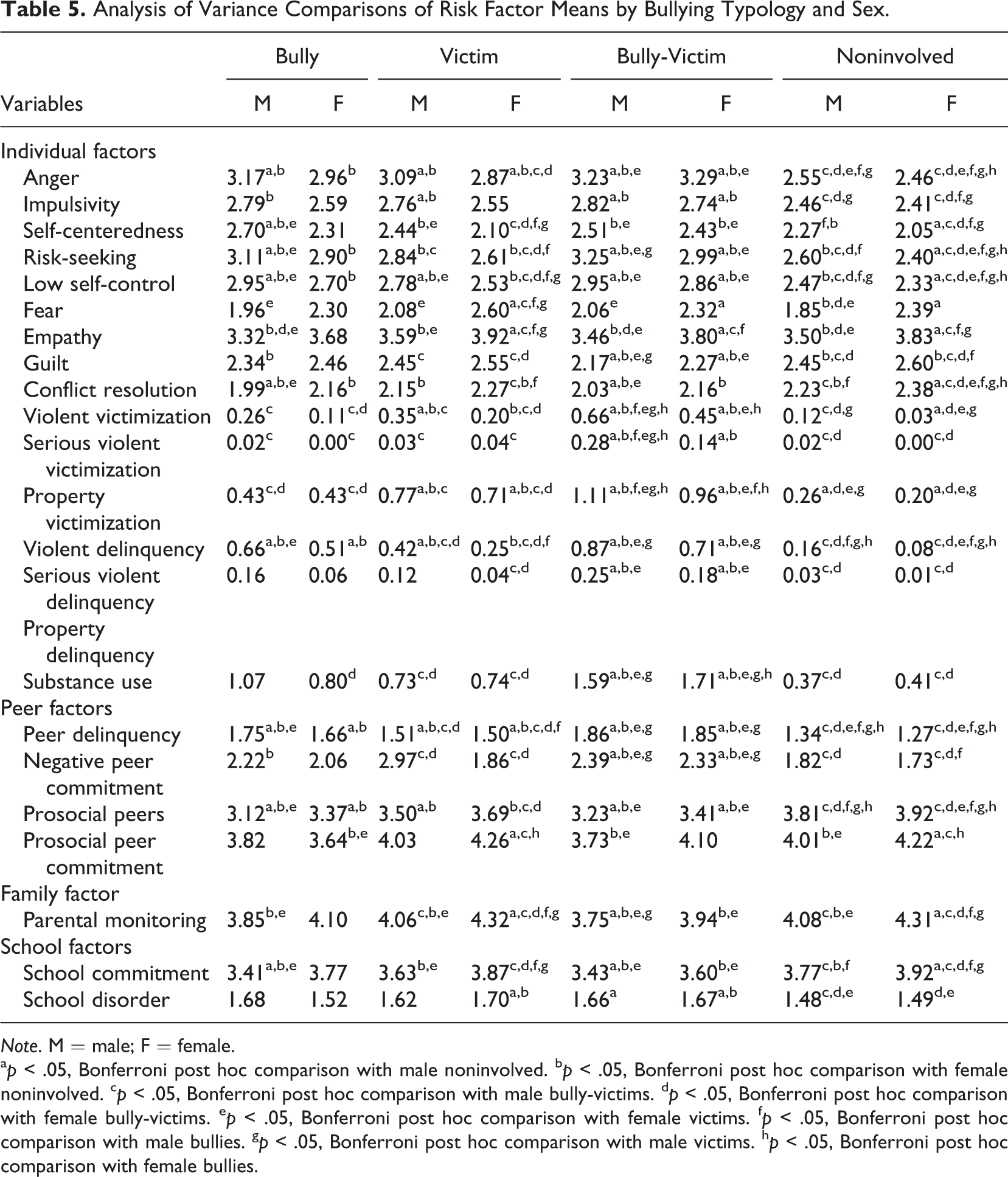
Note. M = male; F = female.
a p < .05, Bonferroni post hoc comparison with male noninvolved. b p < .05, Bonferroni post hoc comparison with female noninvolved. c p < .05, Bonferroni post hoc comparison with male bully-victims. d p < .05, Bonferroni post hoc comparison with female bully-victims. e p < .05, Bonferroni post hoc comparison with female victims. f p < .05, Bonferroni post hoc comparison with male bullies. g p < .05, Bonferroni post hoc comparison with male victims. h p < .05, Bonferroni post hoc comparison with female bullies.
We next examine bivariate relationships between Time 1 individual bullying offending and victimization items and Time 2 gang involvement. Table 6 presents these results for the overall analysis sample and by sex. Overall, both bullying and cyberbullying each increase odds of later gang joining, and among the victimization items, all but two (being cyberbullied and experiencing sexual jokes, comments, and gestures) statistically significantly increase gang-joining odds. For males, each bullying offending and victimization item, except sexual jokes, increases odds of gang membership; and cyber-victimization is related to gang involvement only for males. For females, all but sexual jokes, being cyber-victimized, and being attacked or threatened on the way to/from school significantly increase gang-joining odds. 13
Bivariate Logistic Regression Analyses, Time 1 Individual Bully Offending and Victimization Items Predicting Time 2 Gang Joining Overall and by Sex.
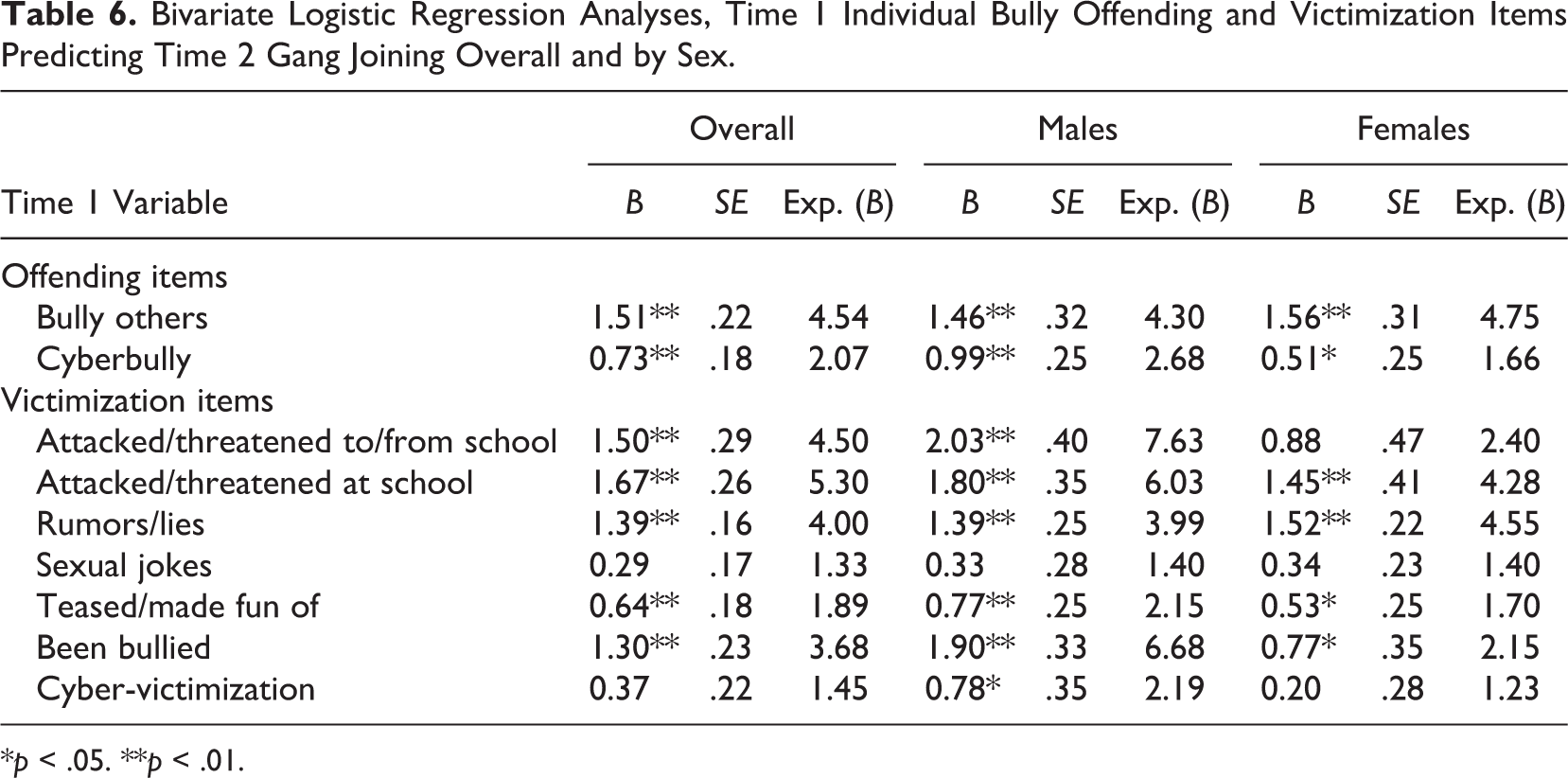
*p < .05. **p < .01.
Table 7 presents results of multivariate logistic regressions for the overall analysis sample with the bullying typology predicting youth gang joining (noninvolved is the reference category). 14 In the first model with just the bullying types included, being involved in bullying in any way significantly increases youths’ odds of joining a gang by the next wave. Odds of gang joining are greatest (over 4 times higher odds than noninvolved) for bullies, followed by bully-victims (over 3 times higher odds), and then victims (over 2.5 times higher odds). These patterns hold when youths’ demographics characteristics are added in Model 2. Although available numbers are too low to conduct separately by sex the full multivariate logistic regression analysis, we did analyze Models 1 and 2 by sex (not shown in table format). For both males and females, all three types (bully, bully-victim, and victim) compared to noninvolved significantly increased gang-joining odds, and when demographics were added to the base model, all three types remained significant predictors, in addition to being Hispanic/Latino and, for males only, being Black/African American. For males, highest ORs were for being a bully-victim (Model 1, OR = 4.037; Model 2, OR = 4.173), while for females, they were for being a bully (5.780 and 5.198).
Multivariate Logistic Regression Analyses, Time 1 Variables Predicting Time 2 Gang Joining.
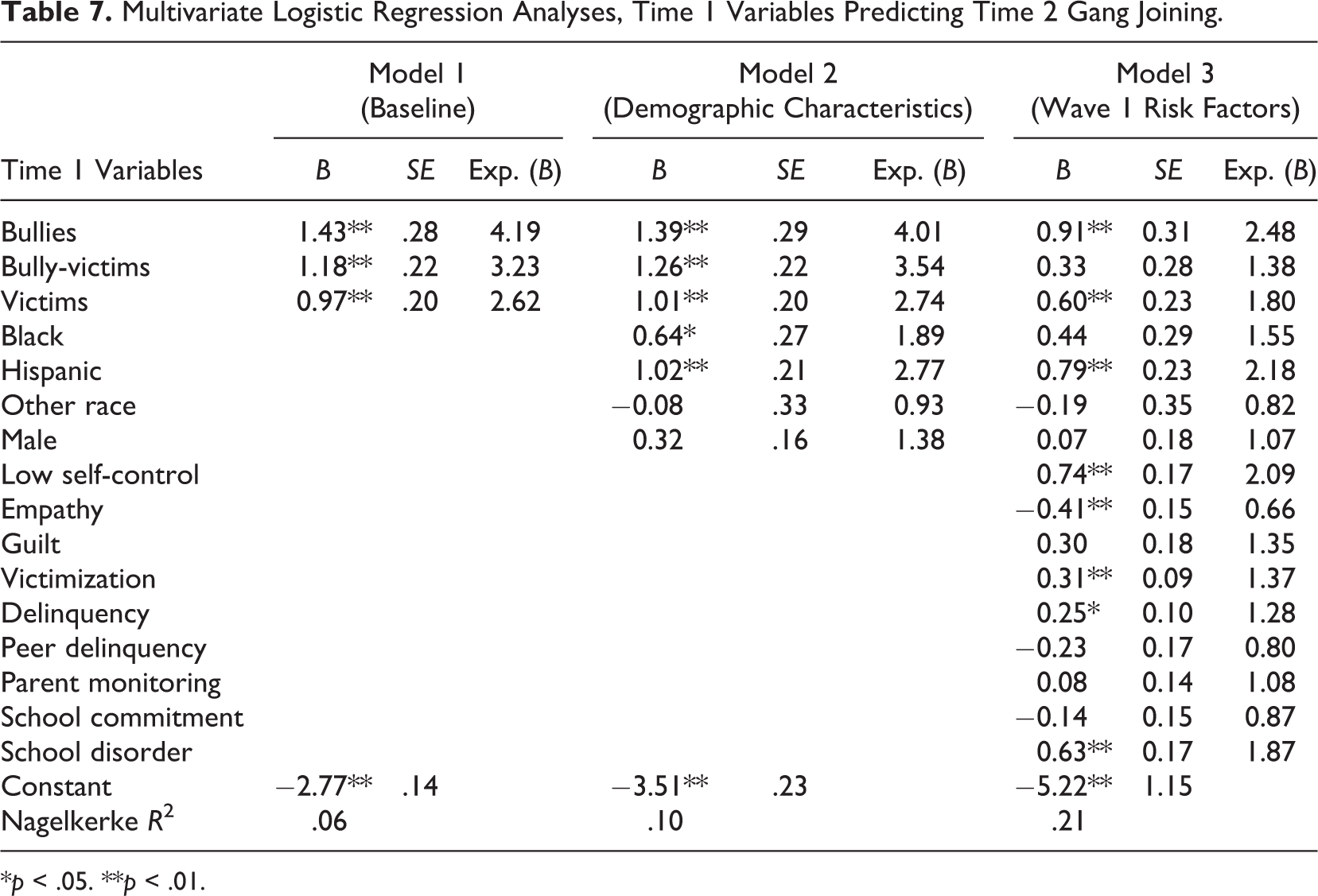
*p < .05. **p < .01.
The final model in Table 7 includes previously supported gang-joining risk factors (which also represent correlates/consequences of bullying perpetration or victimization found in prior research) to determine whether the effect of bullying involvement holds once accounting for known gang risk factors. 15 Five gang risk factors have statistically significant effects: lower self-control (OR = 2.09), perceptions of greater school disorder (OR = 1.87), more frequent victimization (other than bullying; OR = 1.37), greater delinquency (OR = 1.28), and lower empathy (OR = 0.66) increase youths’ odds of gang joining. With regard to the key independent variables of interest, being a bully or being a victim still significantly increases odds of gang involvement compared to noninvolved, but the effect for bully-victims is not statistically significant with the inclusion of gang risk factors. Further, the strength of the relationship for bullies and victims is lessened by the inclusion of risk factors. Although being a bully is still the strongest effect in the model, the effect of being a victim is weaker than perceived school disorder and self-control.
Table 8 presents the results of the multiple mediation analyses, assessing the potential mediating role of each gang risk factor in the relationship between bullying involvement and gang joining, while controlling for covariates (race/ethnicity and sex) and other risk factors simultaneously. Model C is the total effect each bullying type has on gang joining, net of covariates, risk factors, or other bully types. All three types are significant in increasing gang-joining odds net of other factors. Model A is the effect that the bullying type has on each of the risk factors, while controlling for covariates and other risk factors (the proposed mediators) that had a statistically significant effect on gang joining in the multivariate models. Model B is each risk factor’s effect on gang joining while controlling for that bullying type, the other risk factors, sex, and race/ethnicity. Model D is the direct effect each bullying type has on gang joining while controlling for all risk factors and covariates. Finally, Model E is the indirect effect each bullying type has on gang joining through each risk factor.
The Total, Direct, and Indirect Effects of Bully Typology and Risk Factors Associated With First-Time Gang Joining.
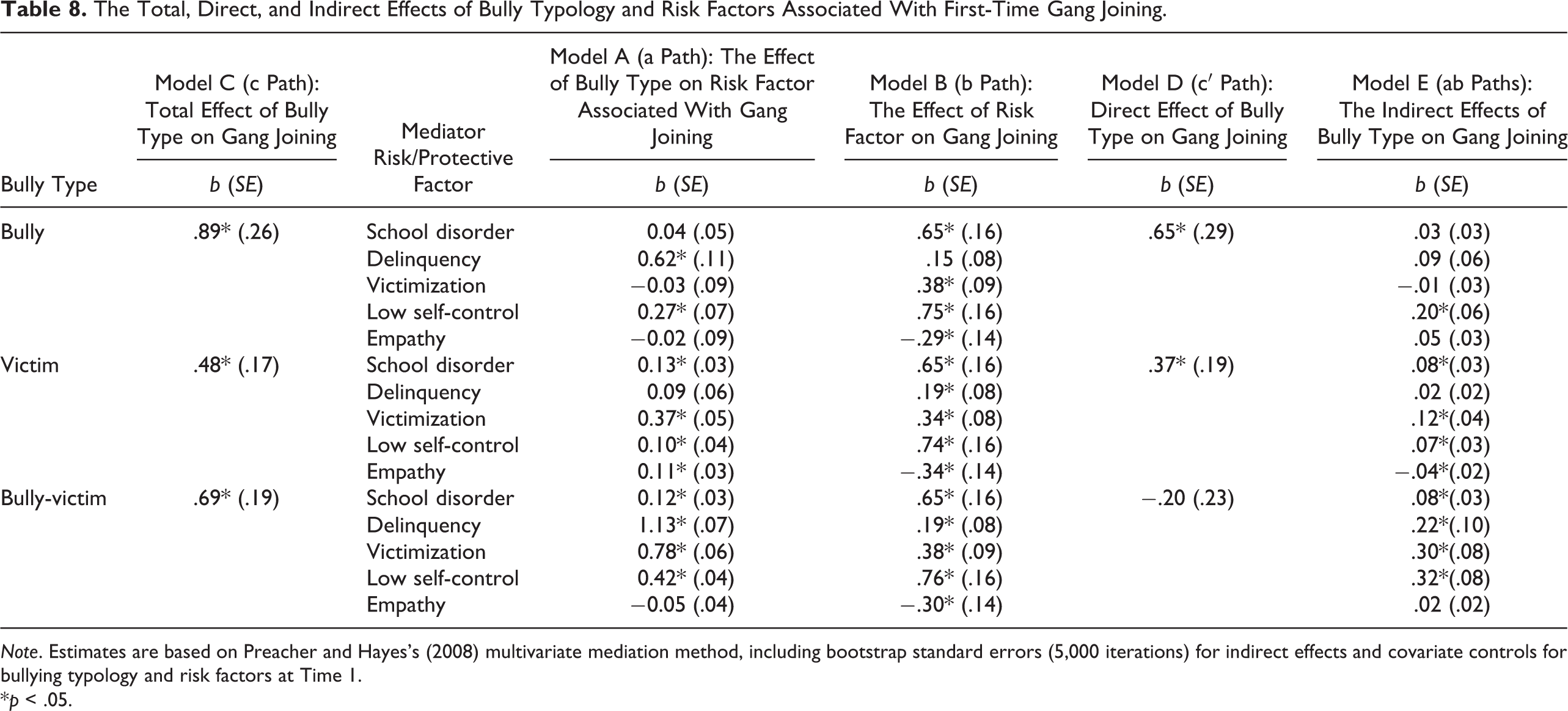
Note. Estimates are based on Preacher and Hayes’s (2008) multivariate mediation method, including bootstrap standard errors (5,000 iterations) for indirect effects and covariate controls for bullying typology and risk factors at Time 1.
*p < .05.
Being a bully is significantly related to two of the proposed mediators (increasing delinquency and decreasing self-control), and its effect on first-time gang joining is partially mediated through low self-control. Being a victim is related to all previously significant risk factors except delinquency, and its effect on gang joining is partially mediated through all risk factors except delinquency. Finally, the effect of being a bully-victim on gang joining is completely mediated through school disorder, delinquency, victimization, and low self-control. Thus, while being a bully or a victim still has significant direct influences on first-time gang involvement controlling for risk factors, the effect of being a bully-victim on gang joining is completely mediated through previously supported gang-joining risk factors.
Discussion
Our results demonstrate support for a positive relationship between bullying involvement and subsequent gang involvement. In descriptive analyses, a significantly greater proportion of bullying-involved youth reported next-wave onset of gang membership (21% of bullies, 17% of bully-victims, and 14% of victims, compared to 6% of noninvolved youth). Sex comparisons showed that males and females were fairly equally represented as bullies and noninvolved, but females made up a greater proportion of bully-victims and victims; further, their patterns of next-wave gang onset varied slightly, with female bullies and male bully-victims most likely among their same-sex counterparts to join gangs. Assessing levels of risk (i.e., correlates or consequences of bullying involvement and potential precursors to gang involvement), as expected, bully-victims face the greatest amount of risk (i.e., they are the most antisocial, psychologically and behaviorally), followed by bullies, victims, and noninvolved youth. These risk patterns were similar within sex, but between-sex comparisons within bully type revealed interesting results: The most sex differences were for noninvolved youth (with males less prosocial on half of the factors), and no sex differences were found for bullies or for bully-victims (except for empathy for the latter). That is, involvement in bullying perpetration is associated with higher levels of risk for both males and females, while more traditional sex differences in attitudes and behavior persist for youths who are uninvolved and, to a lesser extent, for youth who are victims (for whom sex differences were found on six risk factors).
As hypothesized, logistic regression analyses confirmed that males and females involved in bullying as perpetrators, victims, or both had statistically significantly greater odds of joining a gang in the subsequent year than noninvolved youth; contrary to our hypothesis, bullies (not bully-victims) had the greatest odds of gang joining, followed by bully-victims, then victims. These results appeared to differ by sex, with male bully-victims and female bullies having highest odds of joining a gang. In addition, the effect of being a bully-victim lessens with the inclusion of demographic characteristics (while it increases for the other two types) and disappears once risk levels are taken into account; that is, the effect of being a bully-victim is fully mediated by the gang risk factors (which, we argue, can also be considered correlates/consequences of bullying). For bullies and victims, the effect on gang joining is only partially mediated, through low self-control for bullies and through school disorder, victimization, empathy, and low self-control for victims.
This fully mediated effect of being a bully-victim through gang risk factors may be due to the sheer amount of risk faced by youth who are both bullies and victims. Prior research demonstrated that bully-victims face the “double-jeopardy” confluence of consequences associated with both engaging in and being victimized by bullying. While most prior studies could not disentangle the relationship between bully-victim behavior, characteristics associated with bully-victims, and gang involvement, our results suggest that the effect on gang joining of being a bully-victim is fully indirect, through the effect on factors such as school disorder, delinquency, victimization, and lower self-control associated with bully-victim behavior.
Our findings that bullying exhibited stronger effect sizes than previously supported gang-joining risk factors and that both bullying perpetration and victimization predicted gang joining above and beyond gang risk factors suggest that future gang research and practice should take bullying into account as an important predecessor or pathway to gang involvement. As well, bullying research and practice should take gang membership into account as a potential consequence. Connecting these two can illuminate additional explanations and highlight important prevention and intervention points in what have been largely disconnected efforts.
As noted in our introduction, studies summarizing pop culture references and academic literature on bullying argued that until as recently as the 1990s, bullying was considered an inevitable and relatively benign part of growing up, but more recently, the negative effects have been demonstrated, spurring preventive action (Pinker, 2011; Walton, 2005). Bullying perpetration and victimization have been found to be not only prevalent, but salient, producing a host of negative consequences for those involved. Our research adds to the small and growing literature that identifies gang involvement as one of those consequences, and, as argued previously, the additional negative consequences of gang involvement should redouble efforts to prevent and intervene with both bullying and gang involvement. We have acknowledged the concerted efforts currently undertaken to address both (though often in separate/parallel endeavors), and we encourage both bullying and gang prevention/intervention providers to consider the connections in their efforts with youth. Our findings provide avenues for optimism. First, a lack of sex differences in the relationship between bullying types and gang joining, as well as in risk levels for bullies and bully-victims, suggests that efforts to reduce bullying perpetration and victimization and their effects can be general in nature, supporting school-wide prevention (see Jeong, Kwak, Moon, & San Miguel, 2013). Second, even if school-based bullying is prevalent, concerted efforts to ameliorate the risk associated with or following bully victimization/perpetration might prevent gang joining and its further deleterious consequences.
Conclusion
In concluding our article, we want to acknowledge limitations facing our study in addition to those noted in the Data and Methods section and recap the strengths of the study for contributing to the limited body of knowledge about whether and how involvement in bullying and gangs are connected. Olweus (1993) described bullying as being repeatedly, over time, victimized by one or more persons, but in more recent work (Olweus, 2013), repetition has been excluded, given recognition that even a single incident can cause harm 16 . Also recently, Volk, Dane, and Marini (2014) proposed a new definition including goal directedness, power imbalance, and harm. In our study, we were able to capture some common bullying behaviors included in prior research and also some different types than have been captured in some prior research, with multiple measures, especially, of victimization; and we restricted our operationalization to two or more incidents to eliminate isolated incidents. However, we acknowledge that our measures fall short of both of the above definitions, as, for example, we are not able to determine with these data whether there are power imbalances between actors (a common shortcoming of bullying research noted by Bradshaw & Waasdorp, 2009, p. 357), we must assume intentionality of actions, and we have limited measures of “direct” bullying perpetration and victimization. We encourage additional research that can more effectively account for key elements of bullying behavior and victimization that we were unable to capture.
Another limitation lies in the methodology used to answer the research questions: Pooling multiple waves into a cross section ignores the potential developmental processes that might be occurring at different ages to influence gang joining (Howell & Egley, 2005). In other words, factors that influence gang joining at age 13 might be different than for individuals who join a gang at age 16. For example, Farmer and Hairston (2013) found that risk factors do shift in their significance on impacting gang joining as youth age. Future scholarship should unpack the developmental processes and impact that age can have on the relationship between bullying behaviors and gang joining.
Nonetheless, our study offers advantages over most prior research. While other studies included an examination of links between bullying and gang involvement as a part of their analyses, ours is the first we have identified to specifically focus on elucidating the connections between the two. We use longitudinal data from a multisite sample of diverse students, allowing us to determine the predictive relationship between bullying involvement and subsequent gang onset, as well as to conduct some analyses separately by sex. We explicitly examine the relationship between bully perpetration/victimization types and gang joining, while controlling for gang risk factors and also considering the mediating effects of these factors. Our study is one of the first, therefore, to suggest a specific pathway from bullying to gang involvement, both directly (for bullies and victims) and indirectly (for bullies, victims, and bully-victims).
Footnotes
Appendix
Authors’ Note
This research was made possible, in part, by the support and participation of seven school districts, including the School District of Philadelphia. The opinions, findings, and conclusions or recommendations expressed in this article are those of the authors and do not necessarily reflect the views of the Department of Justice or of the seven participating school districts.
Acknowledgments
Our thanks are extended to the numerous students, teachers, school administrators, and law enforcement officers for their involvement and assistance in this study. We also thank Finn-Aage Esbensen, Nadine Connell, the journal editor and anonymous reviewer, who provided feedback on earlier versions of this manuscript.
Declaration of Conflicting Interests
The author(s) declared no potential conflicts of interest with respect to the research, authorship, and/or publication of this article.
Funding
The author(s) disclosed receipt of the following financial support for the research, authorship, and/or publication of this article: This project was supported by Award No. 2006-JV-FX-0011 from the National Institute of Justice, Office of Justice Programs, U.S. Department of Justice.