






Abstract
A substantial body of research shows that a small group of repeat offenders accounts for a disproportionate share of criminal activity and that many high-rate offenders are already incarcerated. This pattern underlies the law of diminishing marginal returns, which predicts that continued expansion of incarceration should increasingly sweep in less dangerous offenders and yield declining public safety benefits. Using 2009 State Court Processing Statistics linked to county-level incarceration rates, we employ multilevel models to examine whether offense seriousness and prior criminal history exert weaker effects in higher-incarceration counties. Contrary to this expectation, both factors remain strong and stable predictors across counties, including those with very high incarceration rates. The composition of the incarcerated population does not shift toward less dangerous offenders as incarceration increases. These findings help explain why continued incarceration growth yields limited public safety gains and suggest that decarceration can be pursued with minimal risk to community safety.
Keywords
Introduction
Despite decades of research, the relationship between incarceration and crime remains unsettled. A large body of scholarship examines whether rising incarceration rates are associated with reductions in crime, yet findings remain mixed. This inconsistency in the extant literature has generated ongoing debate over whether the unprecedented growth of incarceration in the United States has delivered meaningful public safety benefits.
One limitation of prior research is its exclusive focus on aggregate crime–incarceration correlations, a focus that does not reveal whether the composition of the incarcerated population changes as incarceration rates rise. This oversight is noteworthy because the law of diminishing marginal returns predicts that as incarceration expands, progressively less dangerous individuals comprise a larger share of those imprisoned. This situation will attenuate the marginal crime-control benefit of each additional individual incarcerated (Austin & Fabelo, 2004; De Giorgi, 2015). As Durlauf and Nagin (2011, p. 53) point out, “Further, the magnitude of the incapacitation effect depends upon the mean rate of offending of the incarcerated population, which depends on the types of criminals a policy regime incarcerates.” If such a process is transpiring, it would explain why the crime-reducing effects of incarceration have appeared to plateau even as imprisonment rates have continued to rise.
This study does not seek to determine whether incarceration reduces crime per se. Instead, we examine whether the composition of those incarcerated shifts in jurisdictions with higher incarceration rates—a key mechanism posited by the diminishing returns thesis. Specifically, we link individual-level sentencing data to county-level incarceration rates to test two specific hypotheses. First, we examine whether the frequently observed positive relationship between offense seriousness (violent versus nonviolent crime) and the likelihood of incarceration weakens as county incarceration rates increase. Second, we evaluate whether prior criminal record maintains its strength in the sanctioning of offenders in high-incarceration counties, or whether its influence weakens as the incarceration rate rises. Empirical evidence consistent with the diminishing returns thesis would be reflected in negative cross-level interaction effects between a county’s incarceration and these two legally relevant predictors. The findings generated in this study are noteworthy because they speak directly to ongoing policy debates concerning the effectiveness and efficiency of mass incarceration and the potential benefits of decarceration strategies.
Although the data used in this analysis were collected in 2009, the State Court Processing Statistics (SCPS) dataset remains one of the most comprehensive sources linking case characteristics, defendant attributes, and sentencing outcomes in large urban counties. No more recent nationally representative dataset offers case-level linkage between charges, prior record, and sentencing outcomes, making SCPS uniquely suited for testing the diminishing marginal returns thesis. Nevertheless, it is important to recognize that this study does not seek to estimate contemporaneous crime trends or the causal effect of incarceration on crime rates. Rather, it evaluates the structural proposition of whether the profile of incarcerated offenders differs across incarceration contexts. Prior research indicates that the effects of legally relevant sentencing factors, particularly offense seriousness and prior criminal history, are highly stable over time and across policy environments (Hofer et al., 2004). Accordingly, the SCPS provides both a theoretically appropriate and analytically robust platform for this inquiry. In addition, by focusing on a period near the historical peak of U.S. incarceration, our analysis offers a particularly stringent test of the diminishing marginal returns framework and yields insights that are directly relevant to contemporary debates over decarceration and public safety.
Understanding whether higher incarceration rates are associated with shifts in the composition of those incarcerated has noteworthy theoretical and policy implications. If high-incarceration counties are confining less serious defendants, the marginal public safety benefit of additional incarceration is likely to be small, strengthening arguments for decarceration and community-based alternatives. Conversely, if incarceration continues to target defendants convicted of serious crimes or those with extensive criminal histories, then the absence of substantial crime declines must be explained by other mechanisms. With these considerations in mind, the following section reviews prior research on incapacitation, the diminishing marginal returns thesis, and the individual- and county-level determinants of incarceration.
Theoretical Perspectives on Incarceration and Crime
From a theoretical standpoint, the relationship between incarceration and crime is most commonly conceptualized through the lenses of incapacitation, deterrence, labeling, and social control. Incapacitation theory posits that crime is reduced when offenders are physically removed from the community, thereby preventing them from committing offenses while confined (Spelman, 1994). The magnitude of this effect depends critically on the rate at which incarcerated individuals would have offended had they remained free, implying that incapacitation is most effective when applied to high-rate offenders. As incarceration expands and increasingly encompasses lower-rate or less dangerous offenders, the marginal crime-preventive benefit of additional confinement should decline.
Deterrence theory similarly suggests diminishing returns. While the certainty and severity of punishment may discourage offending, marginal increases in punishment severity, such as expanding incarceration, are theorized to produce progressively weaker behavioral responses once a threshold level of punishment is reached (Beccaria, 1764/1986; Nagin, 2013). Individuals already embedded in high-risk environments or with extensive criminal histories may be less responsive to additional punitive threats, thereby limiting the deterrent impact of further incarceration.
Social control and labeling theories further complicate the incarceration–crime relationship by emphasizing criminogenic mechanisms. Incarceration can weaken informal social bonds to family, employment, and community institutions that ordinarily inhibit criminal behavior (Hirschi, 1969). Labeling processes may also amplify future offending by stigmatizing individuals and constraining access to legitimate opportunities following release (Becker, 1963). From this perspective, broad-based incarceration strategies may ultimately undermine public safety by destabilizing communities and increasing long-term offending, particularly when confinement extends beyond the most serious offenders.
These theoretical perspectives converge on a common implication. Incarceration is most effective when narrowly targeted at individuals who pose the greatest risk of offending. As incarceration rates rise, the law of diminishing marginal returns predicts that the composition of incarcerated populations will shift, reducing the marginal crime-control benefits of additional confinement. This theoretical logic motivates empirical scrutiny of whether higher-incarceration jurisdictions continue to prioritize the incarceration of serious and repeat offenders.
Empirical Evidence on Incarceration and Crime
These theoretical perspectives on the diminishing returns of incarceration have motivated an extensive empirical literature examining whether higher levels of incarceration continue to generate meaningful crime-control benefits, particularly as incarceration rates expand and the composition of the incarcerated population evolves. Policymakers frequently argue that despite the financial, personal, and societal costs associated with mass incarceration, imprisonment serves as an essential public safety function by incapacitating those who pose the greatest risk to the community. This reasoning reflects the incapacitation hypothesis, which holds that crime can be reduced by physically preventing individuals from reoffending while they are confined behind bars (Laqueur, 2019; Spelman, 1994). Empirical support for this perspective comes mainly from studies demonstrating that a relatively small group of repeat offenders accounts for a disproportionate share of the crime we experience in society. The classic study by Wolfgang et al. (1972) examined 9,945 boys born in Philadelphia in 1945 and found that a small fraction (6%) accounted for more than half of all arrests in the cohort, including the majority of the most serious crimes. This research spurred a policy focus on identifying and incapacitating chronic offenders as a means of reducing crime. Although reliance on arrest data may overestimate chronic offending due to statistical dependence (Stolzenberg et al., 2021), subsequent studies using self-report data largely confirm the finding that offending is highly concentrated within a small group (Sivertsson et al., 2024). If policymakers can successfully target this group for incapacitation, substantial reductions in crime may be achievable (Laqueur, 2019).
Since Wolfgang’s seminal study, an ongoing debate in the literature has centered on whether higher incarceration rates actually reduce crime. While some research finds that incarceration has a measurable crime-reducing effect (Cotter, 2022), others conclude that incarceration may increase crime (Stemen, 2017) or has no substantive effect (Ghandnoosh & Budd, 2024). Comprehensive reviews of the U.S. crime decline likewise conclude that rising incarceration rates account for only a small fraction of the nationwide drop in crime, with social, economic, and policing factors playing much larger roles (Roeder et al., 2015).
One widely cited explanation for the limited crime-control impact of incarceration is the law of diminishing marginal returns, which predicts that as investment in a given input rises, its marginal benefit declines (Mankiw, 2020). In criminal justice, this means that as the incarceration rate rises, any additional individuals imprisoned are likely to be less serious or less prolific offenders than those already incarcerated. Empirical studies report evidence that the crime-control payoff of incarceration does, in fact, decline as the scale of imprisonment increases (Liedka et al., 2006). Evidence gathered from California’s Public Safety Realignment also showed that large-scale reductions in the prison population did not generate significant increases in violent crime (Sundt et al., 2016), implying that many incarcerated individuals were not among the highest-rate offenders. Thus, at high levels of incarceration, further growth may therefore yield little additional public safety benefit.
Several mechanisms help explain why high-risk offenders may already be disproportionately represented among those incarcerated. Police tend to concentrate enforcement efforts on serious offenders and high-crime “hot spots” (International Association of Crime Analysts, 2018). Repeat offenders are more easily identified through fingerprints, DNA evidence, and prior criminal records (Doleac, 2017). Individuals with prior records are also more likely to be detained pretrial (Hood & Schneider, 2019), face mandatory sentencing enhancements (Nelson et al., 2023), and be denied parole (Caplan, 2010). As a result, jurisdictions with already high incarceration rates may have largely exhausted the pool of high-rate offenders, leaving future increases in incarceration to draw from less dangerous populations.
Despite these theoretical expectations, most research has relied on aggregate-level analyses, using national (Devine et al., 1988; Marvell & Moody, 1997), state (DeFina & Arvanites, 2002), or city-level data (Pepper, 2008; Vollaard, 2013), and rarely examines whether the composition of those incarcerated changes as incarceration rates rise. This omission is consequential. If the diminishing returns thesis is correct, the types of defendants sentenced to incarceration should become progressively less serious as incarceration rates increase. Consequently, once the highest-risk offenders are removed from the community, subsequent incarcerations are applied to less dangerous individuals, yielding progressively smaller crime-control returns (Travis et al., 2014).
The consequences of incarcerating less serious offenders extend well beyond their individual cases. Rather than addressing root causes of crime, such as substance use, mental illness, and limited economic opportunity, incarceration can exacerbate these conditions and contribute to future criminal behavior (Travis et al., 2014). For example, low-level offenders exposed to prison or jail may face amplified recidivism risk due to the criminogenic effects of incarceration and the disruption of pro-social ties (Clear, 2008). Collateral consequences associated with imprisonment further magnify these harms. Imprisonment reduces future employment prospects (Pager, 2003), destabilizes families, disrupts children’s development (Martin, 2017), and imposes substantial fiscal costs. Pettit (2012) argues that mass incarceration renders a significant share of Black men “statistically invisible” in labor market and poverty data, masking racial inequality. Recent evidence shows that approximately eight percent of adults in the United States have a felony conviction (Shannon et al., 2017), and the economy loses up to $65 billion annually in reduced workforce participation among formerly incarcerated individuals (Bucknor & Barber, 2016). Garin et al. (2025) further find that incarceration decreases post-release earnings, suggesting that imprisonment has an economic impact on individuals.
Beyond these compositional effects, mass incarceration also produces broader community consequences. High levels of incarceration can destabilize neighborhoods by eroding informal social controls and weakening community institutions (Nellis, 2024). Reentry is also concentrated in disadvantaged areas, amplifying these effects and reducing collective efficacy (Harding & Roman, 2017). These processes may inadvertently increase crime by disrupting family structures, labor markets, and social networks (Clear, 2008).
Methods
Understanding whether higher-incarceration jurisdictions are incarcerating progressively less dangerous individuals is, therefore, critical, as sweeping in lower-level offenders may intensify these community harms without generating meaningful public safety benefits. This insight underscores the need to examine directly whether the “who” of incarceration changes as incarceration rates increase, a question that motivates the current study. The current study seeks to address this gap by integrating individual-level data with county-level incarceration rates to examine whether offender characteristics that predict incarceration, namely, offense seriousness and prior criminal history, are conditioned by the local incarceration rate. Our multilevel approach enables us to test whether these legally relevant predictors retain their strength in high-incarceration counties after accounting for individual factors related to the criminal offender.
Data
This study analyzes 7,955 felony defendants sentenced in 36 large urban counties in the United States. The data are drawn from the 2009 SCPS dataset, which is particularly well-suited for testing hypotheses concerning the relationship between county incarceration rates and the composition of offenders sentenced to incarceration. The analytic sample was reduced from the original 9,148 cases following listwise deletion of observations with missing data. The SCPS provides detailed case-level information on felony defendants prosecuted in large U.S. counties, including demographic characteristics, arrest charges, prior criminal history, pretrial detention status, adjudication outcomes, and sentencing decisions (Bureau of Justice Statistics, 2014).
The data were collected using a two-stage stratified sampling design. Counties were selected in the first stage, followed by a systematic sample of felony filings within each county. Each case is weighted by the inverse of its selection probability, yielding estimates generalizable across the sampled jurisdictions. Cases were tracked until final disposition or for 1 year after filing, whichever occurred first. Because no more recent nationally representative dataset links individual-level felony case characteristics with county-level incarceration rates in a manner that permits a direct test of the diminishing marginal returns thesis, the SCPS remains an especially appropriate and valuable data source for evaluating the proposed compositional mechanism.
The SCPS is particularly advantageous for the present analysis because it integrates detailed individual-level sentencing information with contextual county-level incarceration measures, thereby allowing an explicit examination of whether legally relevant predictors, such as offense seriousness and prior criminal record, operate differently across jurisdictions with varying incarceration levels. Its broad geographic coverage enhances the generalizability of the findings, and its comprehensive case information has made it a widely used resource in prior sentencing and case-processing research (Fearn, 2005; Franklin, 2010; Sharma et al., 2022; Stolzenberg et al., 2013; Sutton, 2013). The dataset is publicly archived at the University of Michigan’s Inter-University Consortium for Political and Social Research (ICPSR).
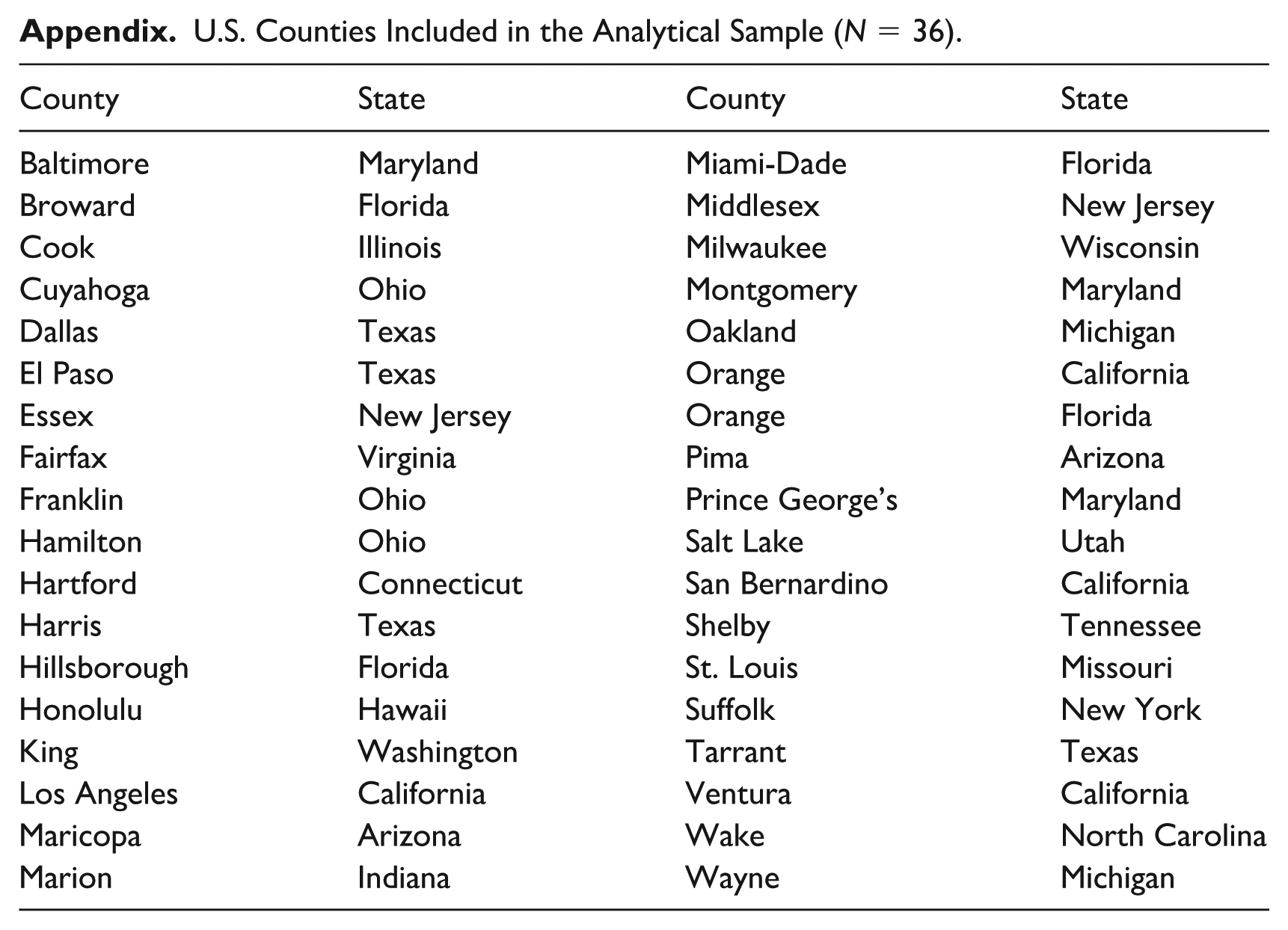
To test the diminishing marginal returns thesis, the analysis employs a multilevel design in which individual defendants (microlevel) are nested within 36 urban counties (macrolevel). The counties are listed in the appendix. The county constitutes the most appropriate contextual unit of analysis because felony prosecution and sentencing decisions are primarily organized and administered at that level. Moreover, county-level data permit the incorporation of structural characteristics previously shown to influence sentencing outcomes, including racial composition, regional location, unemployment, poverty, educational attainment, and family structure (Campbell et al., 2020; Donnelly, 2022; Fearn, 2005; Spohn & Holleran, 2000; Weidner & Frase, 2003).
Dependent Variable
The dependent variable is a dichotomous indicator of whether a convicted offender received an incarcerative sentence in jail or prison (coded 1) or a nonincarcerative sentence, such as probation, a fine, or another sanction (coded 0). This operationalization helps mitigate issues of reciprocal causation that can be problematic in the analysis of cross-sectional data. One complexity encountered when estimating the effect of the incarceration rate on the crime rate is that criminal activity likely influences the incarceration rate because people sentenced to jail or prison have been convicted of committing a crime. Consequently, while there is an expectation of a negative correlation between the incarceration and the crime rate due to an incapacitative effect, there is also a prospect of a positive relationship between the crime rate and incarceration rate because people are incarcerated for perpetrating a crime.
However, this issue of reciprocal causation, which would necessitate the use of longitudinal data and instrumental variables, is unlikely to arise when using the odds of incarceration for specific offender types. For example, let us say that violent offenders have a greater likelihood of incarceration than nonviolent offenders. How would such a finding impact the incarceration rate? Or the reverse. What if nonviolent offenders are more likely to be incarcerated than violent offenders? In both instances, the odds of a violent offender receiving an incarcerative sentence would have little direct effect on the overall incarceration rate. Consequently, our cross-sectional analysis of the impact of the incarceration rate on the likelihood of a violent or repeat offender receiving an incarcerative sentence is not methodologically problematic.
Individual-Level Independent Variables
Two primary measures capture the potential dangerousness of offenders who receive an incarcerative sentence. The first is offense seriousness, operationalized as a dichotomous indicator of whether the offender’s most serious arrest charge was for a violent crime (coded 1). Violent offenses include murder, rape, robbery, assault, and other violent crimes. Nonviolent offenses (coded 0) include burglary, larceny-theft, motor vehicle theft, forgery, fraud, other property crimes, drug offenses, weapons violations, driving-related offenses, and public-order offenses. Prior research consistently demonstrates a strong positive association between offense seriousness and the likelihood of incarceration (Nellis, 2024), in part because violent crimes are perceived as especially harmful and blameworthy (National Research Council, 1993). Violent offenders also tend to recidivate more quickly and for more serious offenses following release (Hunt et al., 2019) and have an increased proclivity to be rearrested for another violent offense (Antenangeli et al., 2021).
The second measure captures the seriousness of the offender’s prior criminal record. Consistent with long-standing research, prior record is a powerful predictor of sanction severity (Spohn & Welch, 1987), as repeat offending is widely viewed as evidence of greater culpability (O’Neill et al., 2004). A comprehensive meta-analysis of more than 130 studies further confirms that prior criminal history is among the most robust predictors of recidivism across offender populations (Gendreau et al., 1996).
The SCPS dataset includes multiple indicators of criminal history, including total prior arrests, prior felony arrests, prior misdemeanor arrests, total prior convictions, prior felony convictions, prior misdemeanor convictions, and prior incarcerations in jail or prison. To identify the most empirically informative measure of criminal history while minimizing multicollinearity, we conducted a principal components analysis (PCA). This procedure evaluates shared variance across indicators and supports a more parsimonious model specification. The PCA results indicated that the total number of prior convictions constituted the dominant dimension of criminal history, accounting for approximately 91% of the shared variance across measures. Based on these results, and to enhance interpretability while reducing redundancy and the risk of overfitting, criminal history was operationalized as the total number of prior convictions. This measure ranges from zero to ten or more convictions, with higher values indicating a more extensive criminal record. This variable was treated as continuous and was included in all multilevel models.
In addition to offense seriousness and prior criminal record, the analysis includes several legally relevant control variables shown to influence sentencing decisions, including the number of charges (Clark, 2023), active criminal justice status at arrest (Sharma et al., 2022), pretrial detention (Donnelly & MacDonald, 2018), and conviction for the original charge (Sutton, 2013). The models also control for extralegal factors known to shape sentencing outcomes, including sex (Gottlieb & Arnold, 2021), race (Beckman & Wang, 2022), Hispanic ethnicity (Girvan & Marek, 2023), age (Du & Kurlychek, 2025), and type of attorney (Sharma et al., 2022). Missing data among these variables were limited. Only the race variable exhibited elevated levels of missingness (15%) and was modeled using a missing-indicator approach to preserve sample size (J. Cohen & Cohen, 1983). The presence of missing data did not materially affect estimates of the focal independent variables.
County-Level Independent Variables
Several county-level contextual variables were included to account for structural conditions that may influence sentencing outcomes. Except for the incarceration rate, all county-level measures were obtained from the U.S. Census Bureau’s 2010 American Community Survey 5-year estimates. The principal contextual variable of theoretical interest, the county incarceration rate, was drawn from the Vera Institute of Justice’s Incarceration Trends dataset and is defined as the number of individuals incarcerated in local jails and state prisons located within a county per 100,000 residents ages 15 to 64 in 2008. To strengthen temporal ordering relative to the 2009 SCPS defendant data, the incarceration rate was lagged by 1 year.
This place-of-incarceration measure reflects the correctional burden experienced by counties, as measured by the scale of incarceration facilities within their boundaries. However, because it captures where incarceration occurs rather than the county of conviction or residence, it may include individuals from outside the county. Although this may overstate incarceration levels in counties that host large state prisons serving individuals from other jurisdictions, the measure is well-suited to the present analysis because it permits meaningful comparisons of sentencing decisions across counties with varying levels of incarceration activity and facility capacity.
To avoid spurious inferences regarding the diminishing marginal returns thesis, the analysis also incorporates additional county-level characteristics reported in prior research to influence prosecution and sentencing patterns. Including these county-level controls helps isolate the unique contribution of incarceration context to sentencing outcomes by adjusting for underlying social and economic conditions that might otherwise confound the observed relationships. These control variables include the unemployment rate (Crow & Gertz, 2008), the percentage of the population that is Black (Donnelly, 2022), South versus non-South (Weidner & Frase, 2003), the percentage of female-headed households (Myers & Wilkins, 2000), the poverty rate (Bagaric, 2015), and the percentage of the adult population without a high school diploma (Ewert et al., 2014). However, because the poverty, female-headed households, and educational attainment variables were highly intercorrelated, they were combined into a single community disadvantage index using principal component analysis. Higher index values indicate greater socioeconomic disadvantage in a county. Prior research consistently links elevated community disadvantage to higher incarceration rates and more punitive sentencing practices (Campbell et al., 2020).
Analytical Strategy
Given the nested structure of the data, individual felony offenders (Level 1) nested within 36 urban counties (Level 2), we employed a multilevel modeling framework using HLM 7.0 (Raudenbush et al., 2011) to estimate the effects of both individual- and county-level predictors on the likelihood of incarceration. This approach allows us to model within-county and between-county variation simultaneously and to test whether the effects of legally relevant predictors, specifically offense seriousness and prior criminal record, vary across counties with differing incarceration rates.
A penalized quasi-likelihood procedure was employed to generate parameter estimates for the binary outcome (Breslow & Clayton, 1993). Robust standard errors are reported for all estimates. Model estimation proceeded in stages. We first estimated a baseline population-average model including only individual-level predictors. We then introduced county-level covariates, including the incarceration and structural controls, to assess whether local context directly influences incarceration decisions. Finally, to provide a direct test of the diminishing marginal returns thesis, we estimated cross-level interaction models in which the effects of violent offense and prior convictions were specified as functions of the county incarceration rate. Offense seriousness and prior convictions were specified as random slopes, allowing their effects on incarceration to vary across counties. Both parameters exhibited statistically significant between-county variation, justifying the inclusion of cross-level interactions and indicating meaningful contextual differences in how legally relevant information is translated into sentencing outcomes.
Because interaction coefficients in nonlinear models are not directly interpretable, substantive interpretation is based on predicted marginal effects. We therefore estimated the marginal effects of violent offense and prior convictions on the probability of incarceration across the observed range of county incarceration rates, holding all other covariates at their sample means. Ninety-five percent confidence intervals were generated using 1,500 simulation draws. These results are presented graphically in Figures 1 and 2.
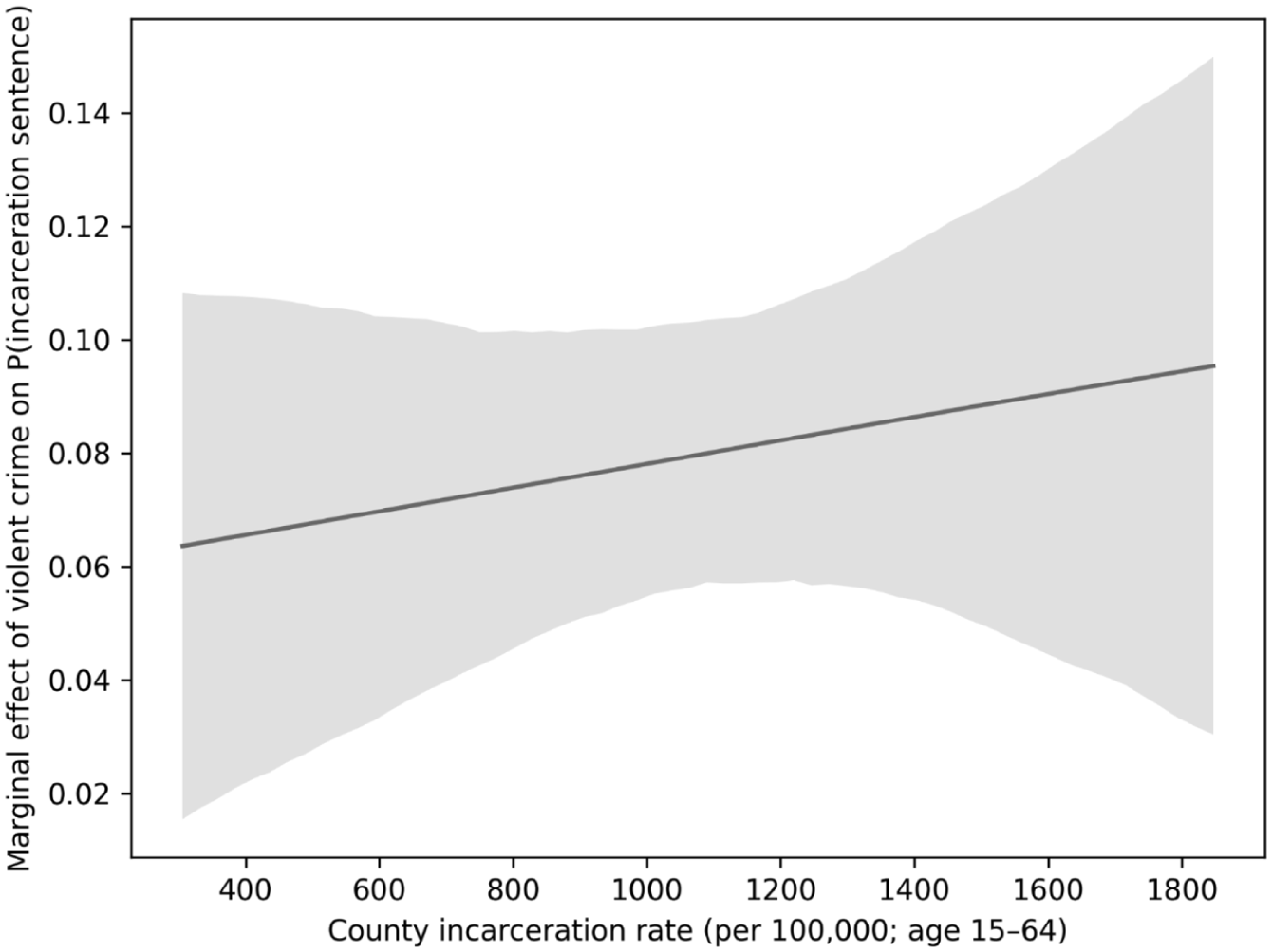
Marginal effect of violent crime on the probability of an incarceration sentence across county incarceration rates.
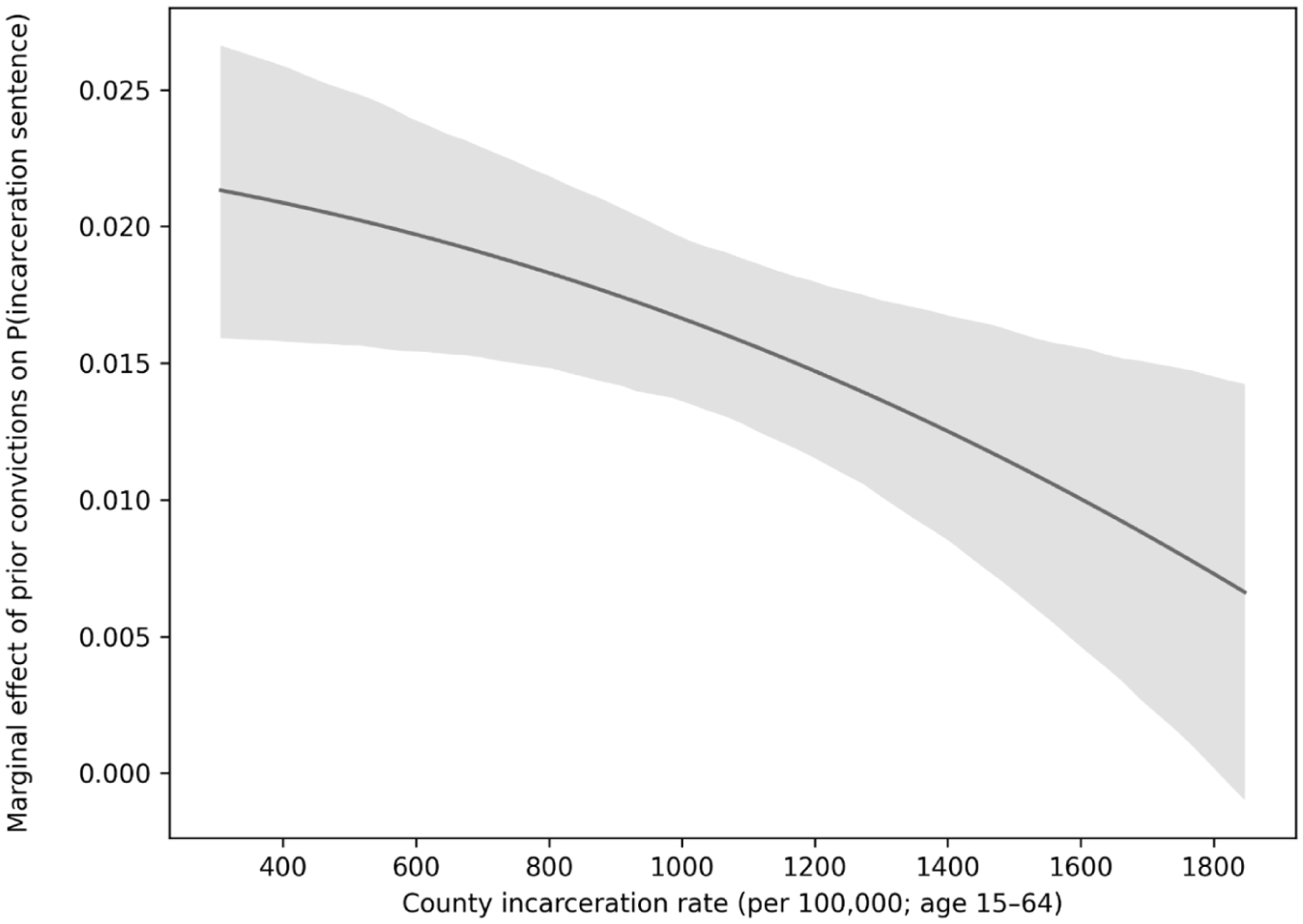
Marginal effect of prior convictions on the probability of an incarceration sentence across county incarceration rates.
All models were estimated using a uniform analytic sample of 7,955 defendants nested within the 36 counties, with listwise deletion applied consistently across all variables. To assess the robustness of the findings to the influence of individual counties, we conducted a leave-one-county-out jackknife analysis, re-estimating the full model 36 times while omitting each county in turn. The stability of the key coefficients across these replications indicates that no single jurisdiction drives the substantive conclusions.
Findings
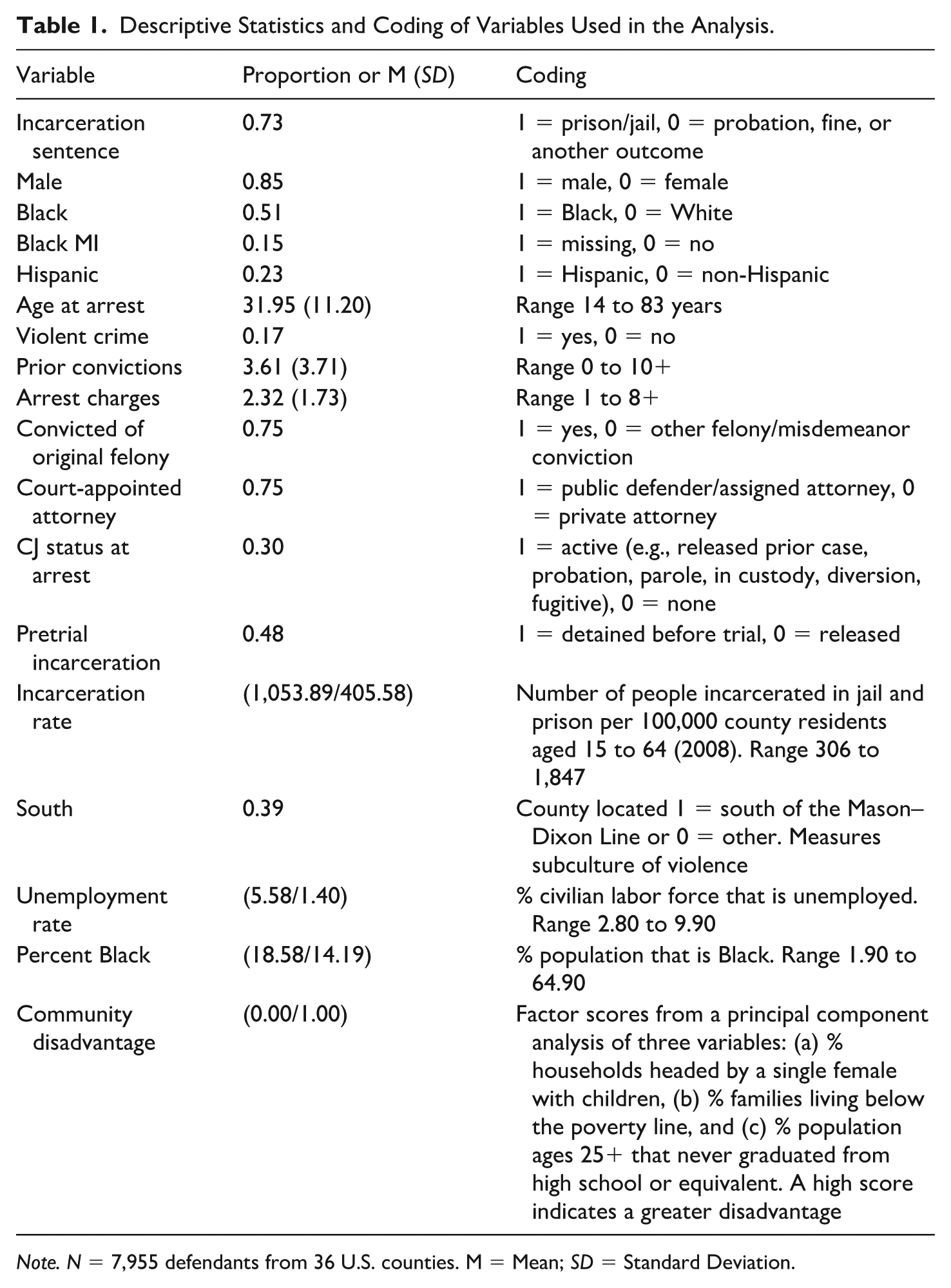
Table 1 presents descriptive statistics and coding for all variables used in the analysis. Approximately 73% of the felony defendants received an incarcerative sentence, underscoring the central role of custodial sanctions in felony case processing across major urban jurisdictions. Among those individuals incarcerated, roughly half were sentenced to jail rather than prison. This finding indicates that collapsing jail and prison into a single measure of incarceration is substantively important for testing the diminishing marginal returns thesis because nearly half of all felony offenders were sanctioned locally in jails. Most prior studies relied exclusively on prison incarceration measures.
Descriptive Statistics and Coding of Variables Used in the Analysis.
Note. N = 7,955 defendants from 36 U.S. counties. M = Mean; SD = Standard Deviation.
The sample is predominantly male (85%) and racially diverse, with 51% Black defendants and 23% Hispanic defendants. The mean age at arrest is 31.95 years (SD = 11.20), reflecting the concentration of felony involvement among young and early-middle-aged adults. Approximately 17% of defendants were charged with a violent offense. This finding indicates that most felony cases involve nonviolent crimes, despite incarceration remaining the modal sentencing outcome.
Defendants exhibit extensive prior criminal involvement. The mean number of prior convictions is 3.61 (SD = 3.71), with observed counts ranging from 0 to 10 or more. On average, defendants faced 2.32 arrest charges (SD = 1.73), indicating that multi-charge filings are common. Most defendants (75%) were convicted of their original felony charge, and court-appointed counsel represented an equal proportion (75%). Nearly half of the sample (48%) was detained pretrial, and almost one-third (30%) were under active criminal justice supervision at the time of arrest (e.g., probation, parole, pretrial release, or held in custody on another case).
County contexts display substantial heterogeneity. The mean county incarceration rate is 1,053.89 per 100,000 residents ages 15 to 64 (SD = 405.58), with observed values ranging from 306 to 1,847. The average county unemployment rate is 5.58%, the mean Black population share is 18.58%, and 39% of counties are situated in the South. The community disadvantage index exhibits wide dispersion, reflecting pronounced structural differences across jurisdictions.
In sum, the descriptive statistics suggest a sentencing environment characterized by extensive reliance on incarceration, substantial prior criminal involvement among defendants, and pronounced variation in county-level incarceration contexts. This combination of micro- and macro-level heterogeneity provides the empirical conditions necessary for evaluating whether the influence of legally relevant sentencing factors, particularly offense seriousness and prior criminal history, systematically weakens as incarceration rates rise, as predicted by the diminishing marginal returns thesis.
Multilevel Analysis Results
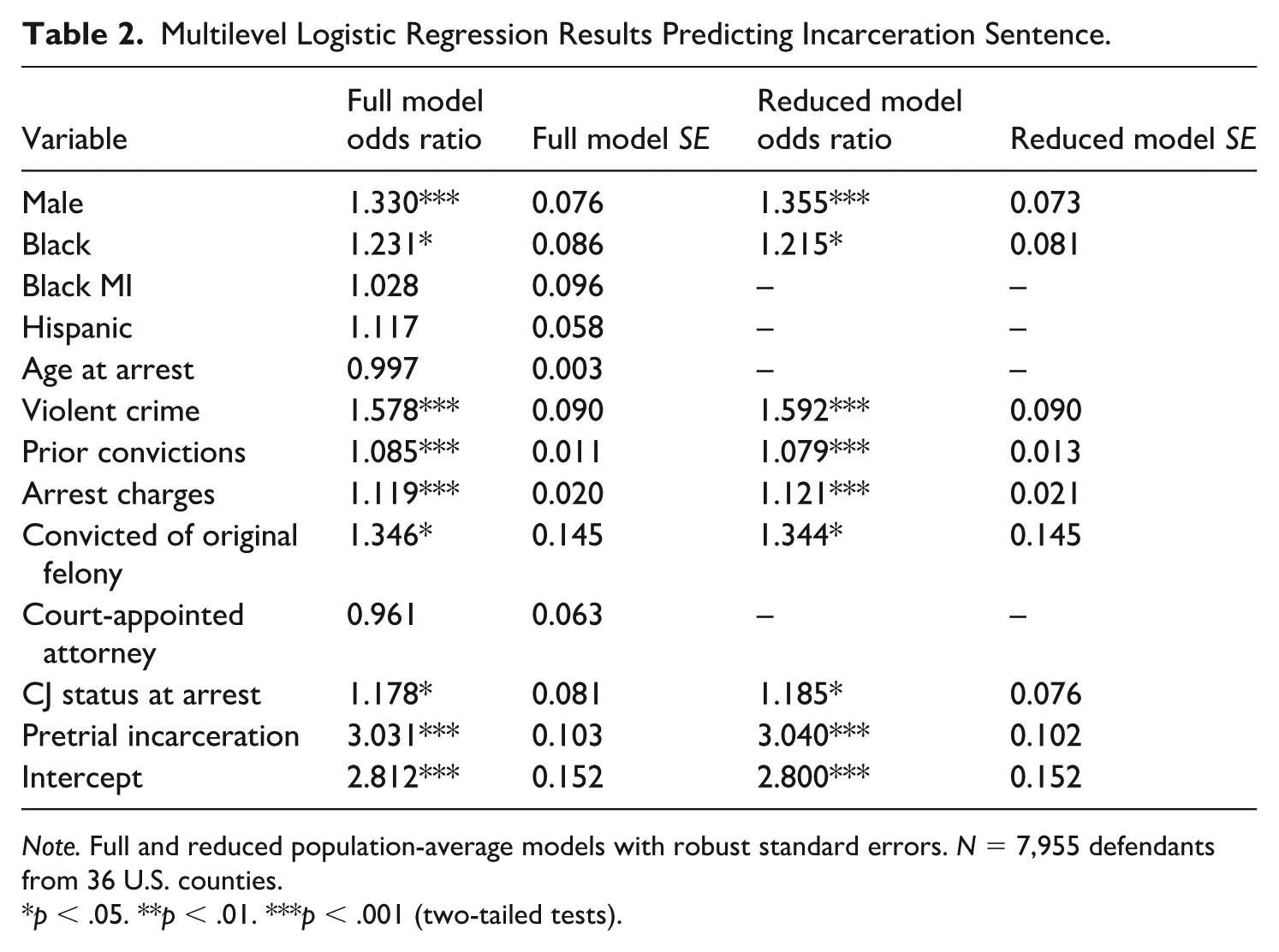
Table 2 presents the results of the within-county models, including both the full and reduced specifications. The pattern of significant variables is highly consistent across the two models. Violent offense and prior convictions emerge as the most powerful legally relevant predictors of incarceration. Defendants charged with a violent offense are approximately 59% more likely to receive an incarcerative sentence, and each additional prior conviction increases the odds of incarceration by roughly 8%. The number of arrest charges also exerts a strong independent effect, with each additional charge increasing the likelihood of incarceration by about 12%.
Multilevel Logistic Regression Results Predicting Incarceration Sentence.
Note. Full and reduced population-average models with robust standard errors. N = 7,955 defendants from 36 U.S. counties.
p < .05. **p < .01. ***p < .001 (two-tailed tests).
Several additional individual-level predictors perform as expected. Defendants detained pretrial are nearly three times as likely to receive an incarcerative sentence, and those under active criminal justice supervision at the time of arrest face significantly higher odds of incarceration. Conviction on the original felony charge increases the likelihood of incarceration by approximately one-third. Male defendants are 33% to 36% more likely than female defendants to receive a custodial sentence, and Black defendants experience roughly 20% to 23% higher odds of incarceration than White defendants. These effects are remarkably stable across both model specifications.
In contrast, several predictors commonly discussed in the sentencing literature, representation by court-appointed counsel, age, Hispanic ethnicity, and the race missing indicator, do not reach statistical significance and are excluded from the reduced model without altering the substantive conclusions. In addition, because offense seriousness and prior convictions were specified as random slopes, we examined their between-county variance components. Substantial and statistically significant heterogeneity exists for both offense seriousness (τ = .516, p < .001) and prior convictions (τ = .414, p < .001), indicating meaningful cross-county variation in how courts translate legally relevant information into incarceration decisions.
Tables 3 and 4 extend the analysis by incorporating county-level covariates and estimating the full and reduced cross-level interaction models. Once again, the results are highly consistent across specifications. None of the county-level structural characteristics, including incarceration rate, region, unemployment, percent Black, or community disadvantage, exerts a statistically noteworthy direct effect on the likelihood of incarceration, and including or excluding these variables does not materially affect the individual-level coefficients.
Multilevel Logistic Regression Models With Violent Crime Interactions Predicting Incarceration Sentence.
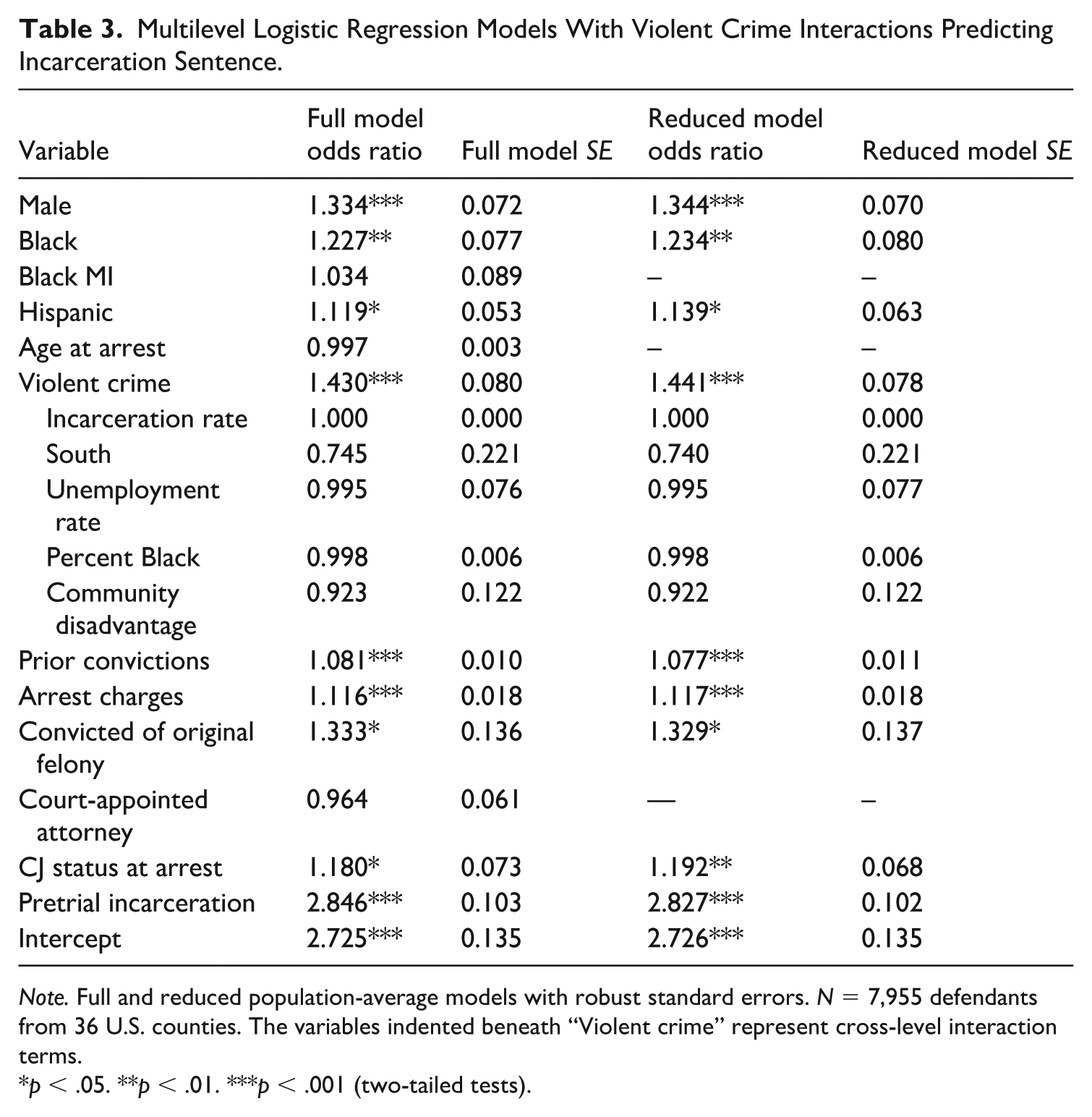
Note. Full and reduced population-average models with robust standard errors. N = 7,955 defendants from 36 U.S. counties. The variables indented beneath “Violent crime” represent cross-level interaction terms.
p < .05. **p < .01. ***p < .001 (two-tailed tests).
Multilevel Logistic Regression Models With Prior Convictions Interactions Predicting Incarceration Sentence.
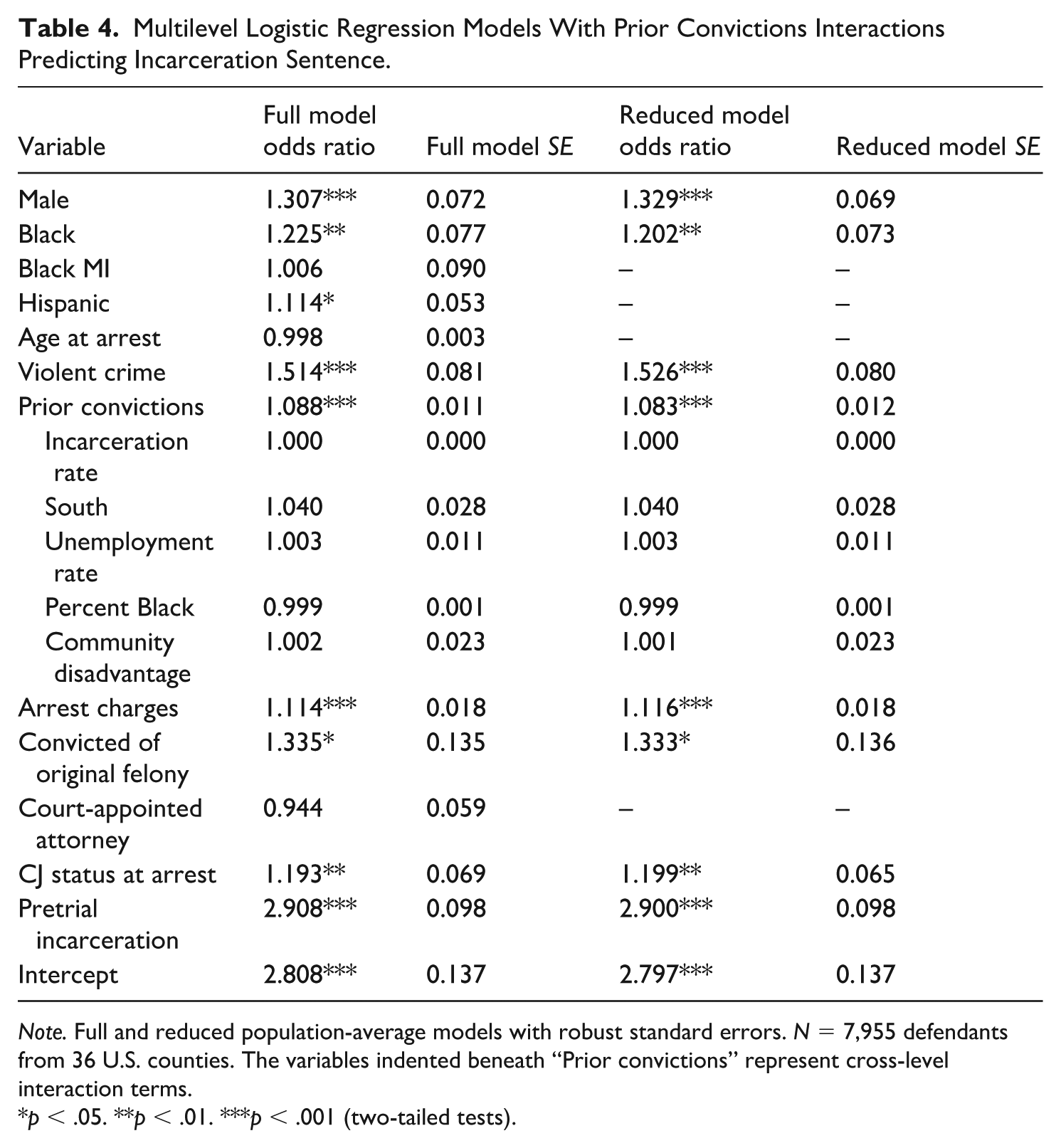
Note. Full and reduced population-average models with robust standard errors. N = 7,955 defendants from 36 U.S. counties. The variables indented beneath “Prior convictions” represent cross-level interaction terms.
p < .05. **p < .01. ***p < .001 (two-tailed tests).
The central test of the diminishing marginal returns thesis involves the cross-level interactions between county incarceration and the slopes for violent crime and prior convictions. In both the full and reduced models, neither interaction term is statistically significant. The main effects of violent crime and prior convictions remain strong and positive across all counties. In short, the probability that violent or repeat offenders receive an incarcerative sentence does not decline as county incarceration rates increase. High-incarceration counties do not appear to be incarcerating less dangerous offenders.
Although the interaction terms are not substantively important (see Tables 3 and 4), their implications are illustrated in Figures 1 and 2. Figure 1 plots the marginal effect of violent crime on the probability of incarceration across the observed range of county incarceration rates. The figure shows that the effect of violent offending remains positive, sizable, and stable throughout the entire incarceration-rate distribution, with no evidence of attenuation in high-incarceration counties.
Figure 2 displays the corresponding marginal effects for prior convictions. While the influence of criminal history on incarceration remains substantial across all levels of county incarceration, the pattern differs slightly from that of violent crime. Specifically, the slope is noticeably negative, which is consistent with the idea that the effect of prior convictions may attenuate as incarceration rates rise. However, this negative effect is not statistically significant. Taken together, these figures largely reinforce the regression results regarding the diminishing marginal returns hypothesis, though the visual pattern for prior convictions warrants this more nuanced interpretation.
Finally, Table 5 reports the results of a leave-one-county-out jackknife analysis. Each model was re-estimated 36 times, omitting one county per iteration. The coefficients for violent crime and prior convictions show minimal variation across replications, with no sign reversals and only modest percentage changes relative to the full-sample estimates. Interestingly, the interaction terms involving the incarceration rate remain centered near zero across all replications, confirming that no single county drives the null interaction findings. These diagnostics demonstrate that the substantive conclusions are highly robust to the influence of individual macro-level units.
Jackknife Robustness Diagnostics for Key Model Parameters (Leave-One-County-Out Analysis).
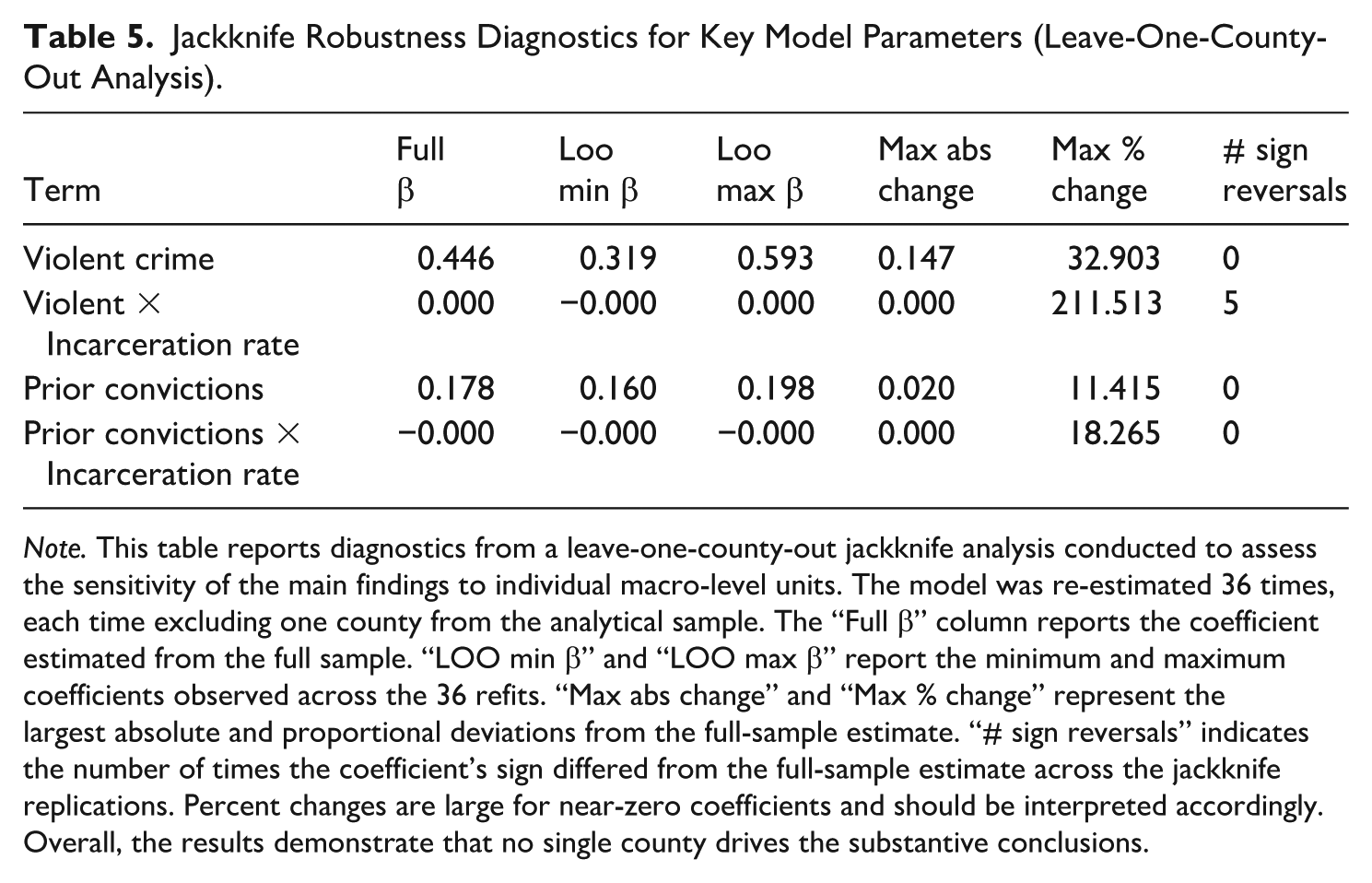
Note. This table reports diagnostics from a leave-one-county-out jackknife analysis conducted to assess the sensitivity of the main findings to individual macro-level units. The model was re-estimated 36 times, each time excluding one county from the analytical sample. The “Full β” column reports the coefficient estimated from the full sample. “LOO min β” and “LOO max β” report the minimum and maximum coefficients observed across the 36 refits. “Max abs change” and “Max % change” represent the largest absolute and proportional deviations from the full-sample estimate. “# sign reversals” indicates the number of times the coefficient’s sign differed from the full-sample estimate across the jackknife replications. Percent changes are large for near-zero coefficients and should be interpreted accordingly. Overall, the results demonstrate that no single county drives the substantive conclusions.
Discussion and Conclusion
Although motives such as retribution also underlie the use of incarceration (Singer, 1979), policymakers principally view incarceration as a tool for deterrence and incapacitation (Lee & McCrary, 2017). However, despite decades of empirical work, findings on the effect of incarceration on crime remain mixed and frequently null. These inconsistent results raise an enduring puzzle. If incapacitation removes offenders from the community, why do increases in incarceration not consistently translate into lower crime rates?
This study contributes to that debate by examining whether county-level incarceration rates shape the composition of offenders sentenced to jail or prison. Rather than focusing on aggregate incarceration–crime correlations, we adopted a multilevel framework that nests individual sentencing decisions within counties, allowing us to assess whether the influence of legally pertinent predictors, offense seriousness and prior criminal record, varies across jurisdictions with different incarceration levels. This design provides a direct test of a central mechanism underlying the law of diminishing marginal returns.
Our results provide little support for the diminishing returns thesis. Violent offending and prior criminal history remain strong and stable predictors of incarceration across counties, and the magnitude of these effects does not weaken as county incarceration rates increase. Moreover, none of the county-level contextual variables, including the incarceration rate, markedly condition these relationships. High-incarceration counties did not appear to be incarcerating systematically less dangerous offenders. In short, the marginal effect of incarceration does not decline because the newly incarcerated were less serious offenders; rather, legally relevant considerations continue to dominate sentencing decisions across local contexts.
The persistence of weak or null relationships between incarceration and crime in the broader literature, therefore, remains puzzling. One possible explanation is the replacement effect, whereby new offenders enter the criminal population as others are incapacitated. Torres et al. (2021), for example, show that as drug-selling offenders were increasingly incarcerated, those remaining in the community were less likely to have prior criminal records, suggesting replenishment of the offending population. If such dynamics are common, the supply of potential offenders may be sufficiently elastic that expanding incarceration yields diminishing returns to crime control.
Another explanation is that sustained emphasis on punitive policy has crowded out investments in crime prevention and rehabilitation (Cullen et al., 2011). Empirical evidence highlights the substantial unmet treatment needs within correctional populations. Turner et al. (2009) found that roughly two-thirds of California’s prison population exhibited moderate-to-high substance abuse risk and nearly half displayed moderate-to-high anger problems. Expanding access to substance abuse treatment (Tomaz et al., 2023), mental health services (Weatherburn et al., 2021), employment interventions (Mancino, 2025), and housing supports (E. Cohen, 2024) may therefore yield greater and more durable public safety benefits than continued growth in incarceration.
In addition, heavy reliance on plea bargaining, which resolves the vast majority of criminal cases (Subramanian et al., 2020), may produce unintended criminogenic effects. Although plea agreements conserve institutional resources and often reduce incarceration exposure, they also increase the risk of wrongful convictions and coerced guilty pleas (Covey, 2011). The resulting criminal records can impede employment, education, and community reintegration (Travis et al., 2014), reinforcing cycles of disadvantage and criminal justice involvement through labeling processes (Stolzenberg et al., 2021).
From a policy perspective, our findings suggest that efforts to reduce incarceration need not threaten public safety. Courts appear to continue to prioritize offense seriousness and prior criminal history even in jurisdictions with high incarceration rates. Policymakers can therefore pursue decarceration strategies, diversion programs, and community-based sanctions with less concern that such reforms will disproportionately release high-risk individuals. Redirecting resources away from incarceration expansion and toward rehabilitative and preventive services may yield more substantial and enduring crime reductions.
Several limitations warrant consideration. First, the cross-sectional design limits causal inference and precludes analysis of temporal change. Future studies should replicate this framework using longitudinal data to examine whether these patterns persist across different historical periods and policy environments. Second, although offense seriousness and prior criminal history are widely accepted indicators of offender dangerousness, future research could incorporate validated risk assessment tools or behavioral measures, while remaining attentive to concerns about algorithmic bias (Chouldechova, 2017; Dressel & Farid, 2018). Third, because the present analysis is limited to the large urban counties contained in the SCPS dataset, sentencing dynamics may differ in rural jurisdictions with distinct court structures and correctional capacities.
Finally, our measure of county incarceration rate uses a place-of-incarceration approach, capturing all individuals confined in jails and prisons located within a county, regardless of their county of conviction or residence. Although this measure is widely used and reflects the correctional burden experienced by counties (Vera Institute of Justice, n.d.), it may overstate incarceration rates for jurisdictions that host large state prisons serving individuals from other areas. Future research should address this limitation by using county-of-origin measures, where available, to more accurately capture the extent to which counties incarcerate their own residents.
By linking offender-level sentencing outcomes to county-level incarceration rates, this study provides a direct and theoretically informed test of the diminishing marginal returns framework. The results indicate that violent offense and prior criminal history remain robust predictors of incarceration regardless of local incarceration context, and that higher-incarceration jurisdictions are not systematically sweeping in less dangerous offenders. These findings help explain why the marginal public safety benefits of incarceration appear limited and underscore the importance of reorienting criminal justice policy toward evidence-based prevention and rehabilitation. We view this study as an initial step toward clarifying the mechanisms underlying the incarceration–crime relationship and encourage future research that continues to integrate offender-level, contextual, and temporal perspectives.
Footnotes
Appendix
U.S. Counties Included in the Analytical Sample (N = 36).
| County | State | County | State |
|---|---|---|---|
| Baltimore | Maryland | Miami-Dade | Florida |
| Broward | Florida | Middlesex | New Jersey |
| Cook | Illinois | Milwaukee | Wisconsin |
| Cuyahoga | Ohio | Montgomery | Maryland |
| Dallas | Texas | Oakland | Michigan |
| El Paso | Texas | Orange | California |
| Essex | New Jersey | Orange | Florida |
| Fairfax | Virginia | Pima | Arizona |
| Franklin | Ohio | Prince George’s | Maryland |
| Hamilton | Ohio | Salt Lake | Utah |
| Hartford | Connecticut | San Bernardino | California |
| Harris | Texas | Shelby | Tennessee |
| Hillsborough | Florida | St. Louis | Missouri |
| Honolulu | Hawaii | Suffolk | New York |
| King | Washington | Tarrant | Texas |
| Los Angeles | California | Ventura | California |
| Maricopa | Arizona | Wake | North Carolina |
| Marion | Indiana | Wayne | Michigan |

Funding
The authors received no financial support for the research, authorship, and/or publication of this article.
Declaration of Conflicting Interests
The authors declared no potential conflicts of interest with respect to the research, authorship, and/or publication of this article.
Data Availability Statement
The data analyzed in this study are drawn from the State Court Processing Statistics, 1990–2009: Felony Defendants in Large Urban Counties dataset (ICPSR Study No. 2038, Version 5), distributed by the Inter-university Consortium for Political and Social Research (ICPSR) and archived in the National Archive of Criminal Justice Data (NACJD). This collection provides detailed information on felony court processing in approximately 40 of the United States’ most populous counties, including variables on arrest charges, defendant demographics, pretrial release and detention, adjudication, and sentencing for felony cases filed in even-numbered years between 1990 and 2006 and in 2009. Researchers can access metadata and documentation via the ICPSR website, and public-use files are available for download after registering with ICPSR; some restricted files require a data use agreement and institutional review board (IRB) approval. The DOI for this version of the dataset is 10.3886/ICPSR02038.v5.