







Abstract
The authors supervised and trained pre-service teachers while conducting extended school year (ESY) services for pre-kindergarten and elementary students with autism spectrum disorder (ASD) and other developmental disabilities (DD). Each classroom was responsible for conducting communication assessments and developing interventions focused on increasing functional communication. One intervention, the Picture Exchange Communication System (PECS™), was taught to three pre-service teachers and staff who implemented PECS™ with four students who lacked functional communication skills. The teachers were mentored as they implemented the appropriate level of PECS™ and developed communication books for the students to use in school, home, and other settings.
Although estimates vary, approximately 35% to 40% of individuals with autism do not develop spoken language (Heflin & Alaimo, 2007; Mesibov, Adams, & Klinger, 1997). For this reason, it is important to teach and provide accessibility to alternate functional communication strategies for these individuals. When an individual develops functional communication skills, social interaction is often improved, individuals are empowered through meaningful interaction and communication, and behavioral issues are often minimized (Arthur-Kelly, Sigafoos, Green, Mathisen, & Arthur-Kelly, 2009; Magiati & Howlin, 2003; Marckel, Neef, & Ferreri, 2006).
The Picture Exchange Communication System (PECS™) is a visual communication system developed by Frost and Bondy (2002) utilizing a discrete trial format, incorporating preferred items and/or social rewards, which serve to reinforce the exchange. PECS™ is based on principles of Applied Behavior Analysis (ABA) to teach functional communication skills to those who do not communicate with words or sign (Bondy & Frost, 1994). The key features of PECS build on two significant strengths of students with autism, the use of concrete visuals and preferred reinforcers (Hart & Banda, 2010). There are six phases to teaching picture exchange. PECS™ closely parallels the typical development of language in that communication is bi-directional (using communication, understanding others, and attaining social or tangible outcomes). PECS™ is taught by creating many opportunities to naturally and spontaneously communicate without hindering the development of speech. It incorporates preferences, minimizes prompt dependence, and capitalizes on the student’s current skills while teaching the next skill, and incorporates an expectation of communication to access powerful reinforcers (Frost & Bondy, 2002; Kravits, Kamps, Kemmerer, & Potucek, 2002; Magiati & Howlin, 2003). PECS™ begins with teaching how to communicate (Phase I) in a 1:1 discrete trial setting and moves through 5 other phases, which include increasing distance from the communicative partner (Phase II), picture discrimination (Phase III), sentence structure (Phase IV), responding to “What do you want?” (Phase V), and commenting (Phase VI). Picture exchange is considered a “low-tech” assistive technology or type of augmentative and alternative communication (AAC) system (Ganz, Parker, & Benson, 2009).
Some children progress through the phases of PECS™ rapidly (Bondy & Frost, 1994; Frost & Bondy, 2002) with a concurrent increase in spontaneous social initiations and interactions (Canella-Malone, Fant, & Tullis, 2010; Carr & Felce, 2007a; Charlop-Christy, Carpenter, Le, LeBlanc, & Kellet, 2002; Ganz & Simpson, 2004; Johnston, Nelson, Evans, & Palazolo, 2003; Kravits et al., 2002). Others move at a slower pace and make more limited progress, depending on cognitive functioning, motivation, and fine motor skills (Howlin, Gordon, Pasco, Wade, & Charman, 2007; Magiati & Howlin, 2003; Pasco & Tohill, 2011). Hart and Banda (2010) systematically reviewed 13 published single-subject research studies to evaluate the effectiveness of PECS™ in areas such as increases in functional communication. They found that 29 of 36 participants with developmental disabilities (DD) increased functional communication skills.
Flippen, Reszka, and Watson (2010) reviewed eight single-subject and three group studies assessing effectiveness of PECS™ in increasing communication and speech output for children (ages 1-11) with autism spectrum disorder (ASD). Results of this meta-analysis identified PECS™ as a promising but not yet established evidence-based intervention for facilitating communication. The authors found Phase IV of PECS™ an important point for students who develop speech (effect size 0.73 for Phase IV compared with 0.37 for gains between Phases III and IV). There was an overlap of two studies in these meta-analyses, Tincani (2004) and Tincani, Crozier, and Alazetta (2006).
A randomized control trial conducted in the United Kingdom corroborated previous studies indicating that children with ASD and language impairments can learn to use PECS™ effectively, but this study found that even with 7 months experience using PECS™, there were no increases in spoken language. The authors acknowledged that the lack of spoken language development could be attributed to the children’s age (M = 6.8 years) as well as low developmental quotient which may have affected results (Howlin et al., 2007). Developmental level of cognitive functioning as a predictor of success with PECS™ was also evaluated by Pasco and Tohill (2011), who found that students who were non-verbal (ages 5 and 6) with developmental age scores of 16 months or above, as indicated in their Psycho-Educational Profile–Revised (PEP-R) mastered PECS™ Phase III (picture discrimination), while 6 of 7 with scores below 16 months did not.
The National Autism Center (2009) examined 13 peer-reviewed studies involving children, ages 2 to 9 diagnosed with autistic disorder or pervasive developmental disorder–not otherwise specified (PDD-NOS) and found PECS™ to be an emerging treatment for autism, indicating that PECS™ may produce favorable outcomes, but that additional high-quality studies are recommended before they are considered effective. According to Ostryn, Wolfe, and Rusch (2008), communication competence, including generalization, spontaneous communication, joint attention, and maintenance, as a result of the use of any communication system (including PECS™) should be the “gold standard” for evaluating intervention effectiveness.
Teachers of students with autism and other DD need to be proficient in assessing communication strengths and weaknesses (often in conjunction with a speech and language pathologist). They should be skilled in selecting and implementing evidence-based AAC systems and interventions to teach functional communication skills (Magiati & Howlin, 2003; National Autism Center, 2009; Ryan, Hughes, Katsiyannis, McDaniel, & Sprinkle, 2011; Yoder & Stone, 2006). The authors found only one other study that was specifically focused on training teachers to use PECS™ while working with actual students. Magiati and Howlin (2003) conducted a pilot study evaluating the effects of training teachers to implement PECS with fidelity to 34 children with ASDs across eight specialist schools. While these students increased in PECS™ level and proficiency, improvements in general level of communication were slower. It is important that teachers are proficient in implementing communication interventions such as PECS and there is lack of research regarding teacher preparation in this area. Therefore, the purpose of this study was to investigate the effects of instruction and mentoring for pre-service teachers in the use of PECS outside of the traditional university setting, in classroom settings with students in need of communication intervention. The main research questions were as follows:
Method
Teachers evaluated student’s communication levels in comparison with Individualized Education Programs (IEPs) received from the home school. Four students in three different classrooms were selected for PECS™ implementation based on assessment data that included observation, record review, and standardized language test scores. Three students started at baseline in Phase I, and one in Phase III (picture discrimination).
Setting
A university-sponsored summer program providing ESY services for students with DD was the setting for the study. The program consisted of 21 days of service, 3 hours a day, 5 days per week at a local elementary school. The students received instruction in classrooms with four to eight peers with disabilities similar in age, skill, and cognitive level. Two of the students (Terrence and Kameron) were in the same classroom. The other two (Miguel and Nigel) were in different classrooms. The daily schedule included language/reading instruction, writing and math instruction, a snack activity, and an incidental teaching session. Instructional content and scheduling varied based on student need and access to incidental teaching areas within the school. Strategies for instruction included small-group Direct Instruction (DI), discrete trial teaching (DTT), individual work systems, incidental teaching, and included the use of visual supports (e.g., visual schedules) as well as PECS™ (Bondy & Frost, 1994; Frost & Bondy, 2002) procedures. University faculty members supervised classroom staff members. The staff included graduate students in the role of lead teacher with undergraduate student assistants, each majoring in early childhood or special education participating in a practicum placement. Data collection occurred during snack activity and DTT (each session lasting 10-15 minutes) when powerful edible or other reinforcers could be used in a structured manner, and communication instruction for making requests could be implemented.
Participants
Participants were part of ESY services provided to 70 students with autism and other DD across four school districts. Students were selected by their IEP team based on the severity of the disability and the likelihood of regression in skills and difficulty recouping skills at the beginning of the next school year (Yell, 2012). Participants selected for PECS™ were 3 pre-school students with ASD or developmental delay and 1 elementary school student with an intellectual disability. These students were eligible for special education services as outlined in their IEPs with goals of teaching functional communication skills. Purposeful criterion sampling was used and there were no other students enrolled in the program that met these criteria. Language achievement was evaluated by a researcher through administration of the appropriate assessments which included the Test of Language Development–Primary, 4th edition (TOLD-P-4; Hammill & Newcomer, 2008b), and Test of Language Development–Intermediate, 4th edition (TOLD-I-4; Hammill & Newcomer, 2008a). The purpose of administering the TOLD was to obtain a global measure of language achievement. Each of the participants’ overall spoken language was significantly below average. The students were all from homes where English was the primary language used. While home language were not part of the criteria for selection, it is important to note as home language might have an impact on intervention implementation and results.
Behavior difficulties for these students included self-stimulatory behavior, tantrums, aggression toward others, self-injurious behavior, and property destruction. It was the hypotheses of the researchers that addressing communication needs would have a positive impact on behavior and that students would demonstrate fewer behavioral issues when taught functional communication using picture exchange.
Terrence was a 5-year-old Caucasian boy, diagnosed with autism, who exhibited self-injurious behavior and aggression toward others. Terrence’s behavior included hitting and biting himself and others, grabbing others around him, screaming and throwing items. His IEP indicated that he could say “bye-bye” to adults, could label such items as “dog” and “bear,” and that he could select items from a choice board. His parents wanted him to learn to communicate using picture exchange in the hopes that learning functional communication would also result in a reduction in problem behaviors. Preferred items for Terrence included crackers, drink, gummies, and a toy dinosaur.
Kameron was a 4-year-old African American boy diagnosed with developmental delay. Information from parents indicated that Kameron communicated mostly through crying and one-syllable vocalizations. They stated that he could use pictures to make choices. Behaviorally, parents indicated that he had inappropriate interactions with peers; that he would push, grab, and follow them very closely. Kameron’s preferred items included gummies and objects that would reflect light that he could flap close to his face.
Miguel was a 3-year-old African American boy diagnosed with developmental delay. Although his parents said he had a few words in his repertoire, Miguel did not regularly communicate using any verbalizations. His parents also said that Miguel was using picture exchange at home and could discriminate between pictures to make requests. The system used at home included flashcards purchased at a local store by Miguel’s parents or with pictures that his parents printed off the Internet. The parents had not received any formal picture exchange training and did not send a PECS™ book with Miguel to ESY services. Miguel displayed no preference for edibles. His preferences included a Swiffer™ dry mop, paintbrush, pencils, and an iPad™. The use of pictures without use of the actual PECS™ protocol is a common area of confusion for individuals. PECS™ involves more than simply the use of pictures (Bondy, 2012).
Nigel was a 10-year-old Caucasian boy with Down syndrome who received services under the intellectual disabilities category. Nigel used no words to speak and engaged in self-stimulatory behaviors. Nigel needed some assistance with eating and toileting. He would often take objects and repeatedly touch his chin with them as a form of self-stimulatory behavior. He often played alone and would walk away from others during free time. He had difficulties with both fine and gross motor skills. He received speech, language, and occupational therapy. The strongest preferred items for Nigel were pretzels and cheese puffs.
Pre-Service Teachers
The pre-service teachers involved in the program were enrolled in a master’s level special education program at a university in the southeastern United States. One teacher (Kathleen) worked in a rural elementary school and had just completed her first year of teaching. The other teachers had no previous teaching experience (Bethany and Lisa). All three teachers received classroom training in picture exchange during graduate classes, and they also received refresher training the week prior to the start of the summer program. The graduate-level practicum included participation in the ESY program as a field placement. Supervisors were graduate-level faculty in Special Education. One had been trained in PECS™ through Pyramid Educational Consultants. Both were Board Certified Behavior Analysts.
Data Collection Training and Data Collection
Teacher training
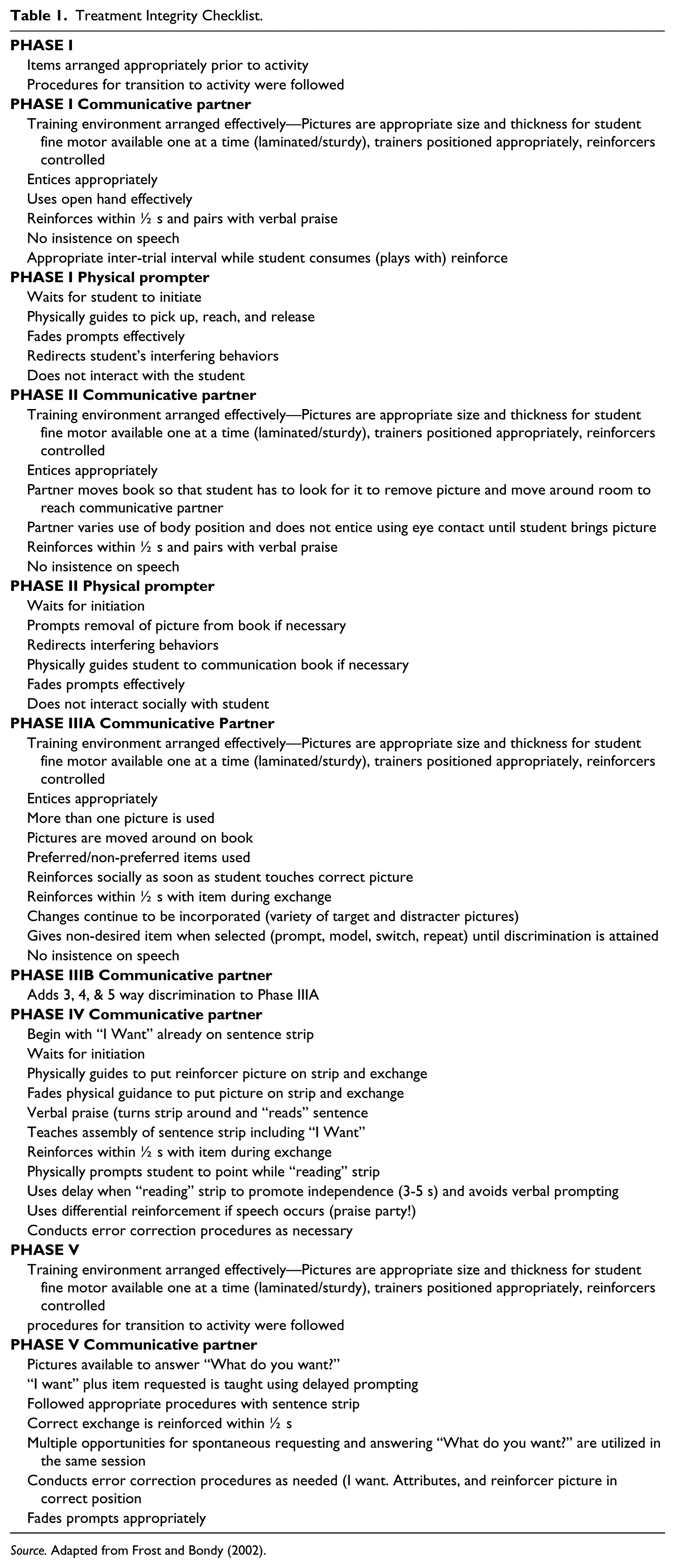
Training was conducted across six 3-hour sessions. One session was conducted to review PECS™ procedures taught in class the previous semester. The teachers had no “hands-on” experience implementing PECS™ with children with ASD or DD until the first day of the summer program. During the first sessions of the program, the researchers and a doctoral student modeled PECS™ with the students identified for PECS™ implementation and corrected the teachers as needed to ensure treatment fidelity. This opportunity for guided practice with actual students was an important component of the model used in this study. The teachers were considered trained when they demonstrated they could correctly implement the procedures of PECS™ independently. Once trained, a treatment fidelity checklist adapted from Frost and Bondy (2002) was used during implementation to assess the pre-service teachers (Table 1).
Treatment Integrity Checklist.
Source. Adapted from Frost and Bondy (2002).
Baseline
After training, during baseline for Phase I, the picture of an item was placed on the table near the student. The teacher held the preferred item. If the student made any attempt to access the reinforcer (e.g., reached, cried, looked at the teacher, exchanged the picture) the student was given access. A minimum of three baseline sessions was conducted prior to the intervention.
Intervention: Phases I to IV PECS
For students in Phase I, two teachers worked with each student; one teacher sat behind the student (the physical prompter) and one teacher sat across from the student (the communication partner). The physical prompter waited for the student’s initiation and physically provided prompts for the student to pick up the picture, reach the communication partner, and release the picture into the open hand. These prompts were then systematically faded as the student performed the exchange independently. The other teacher (the communication partner) sat in front of the student and enticed the student with a preferred item, as determined by a preference assessment. This teacher placed/held the preferred item close to the student to entice an independent initiation. When/if the student completed an exchange (picked-up the picture, reached to the communication partner, and released the picture into the open hand) the teacher provided tangible reinforcement (snack or other preferred item) coupled with praise. If the exchange was not independent, the other teacher (the physical prompter) prompted him from behind to grasp the picture card, move his hand toward the teacher acting as the communication partner, and release the card into the teacher’s open hand. Reinforcement was provided for the prompted sequences, but not to the same degree as independent responses.
For students in Phase IV, a teacher controlled access to the reinforcer. In the appropriate order, the student was required to place the “I want” card on the sentence strip, as well as the card for the appropriate food item. The teacher provided any necessary partial (part of the exchange or at the start the initiation) or full physical (hand over hand) prompts for making the sentence. Then, the student handed the sentence strip to the teacher. The teacher accepted the sentence strip, turned it toward the student and, as the student pointed to each picture, prompted or unprompted, the teacher read the sentence (e.g., “I want swiffer.”). Then, the teacher (communicative partner) immediately provided the item and praised the student for asking (e.g., “Great asking for swiffer”). The physical prompter (located behind the student) provided any necessary partial or full physical prompts necessary for exchanging the sentence strip or pointing to the words/phrases on the sentence strip.
Results
After three sessions of baseline with Terrence, Phase I PECS™ was introduced. The first PECS™ session was 100% prompted by the physical prompter located behind Terrence; the remaining sessions of Phase I resulted in 38%, 82%, and three sessions of 100% independent requests. At this point, the picture was moved around the table during the first session of Phase II, then the PECS™ book was added with the picture placed on the top. Terrence began to seek out the book with the picture and return the picture 100% independently during all three sessions. The next five sessions were conducted with at least two pictures on the book. Terrence made all requests independently in all five trials, when pictures displayed two preferred items (Phase IIIA), or when distractor items (neutral) were placed on the binder (Phase IIIB; Figure 1).
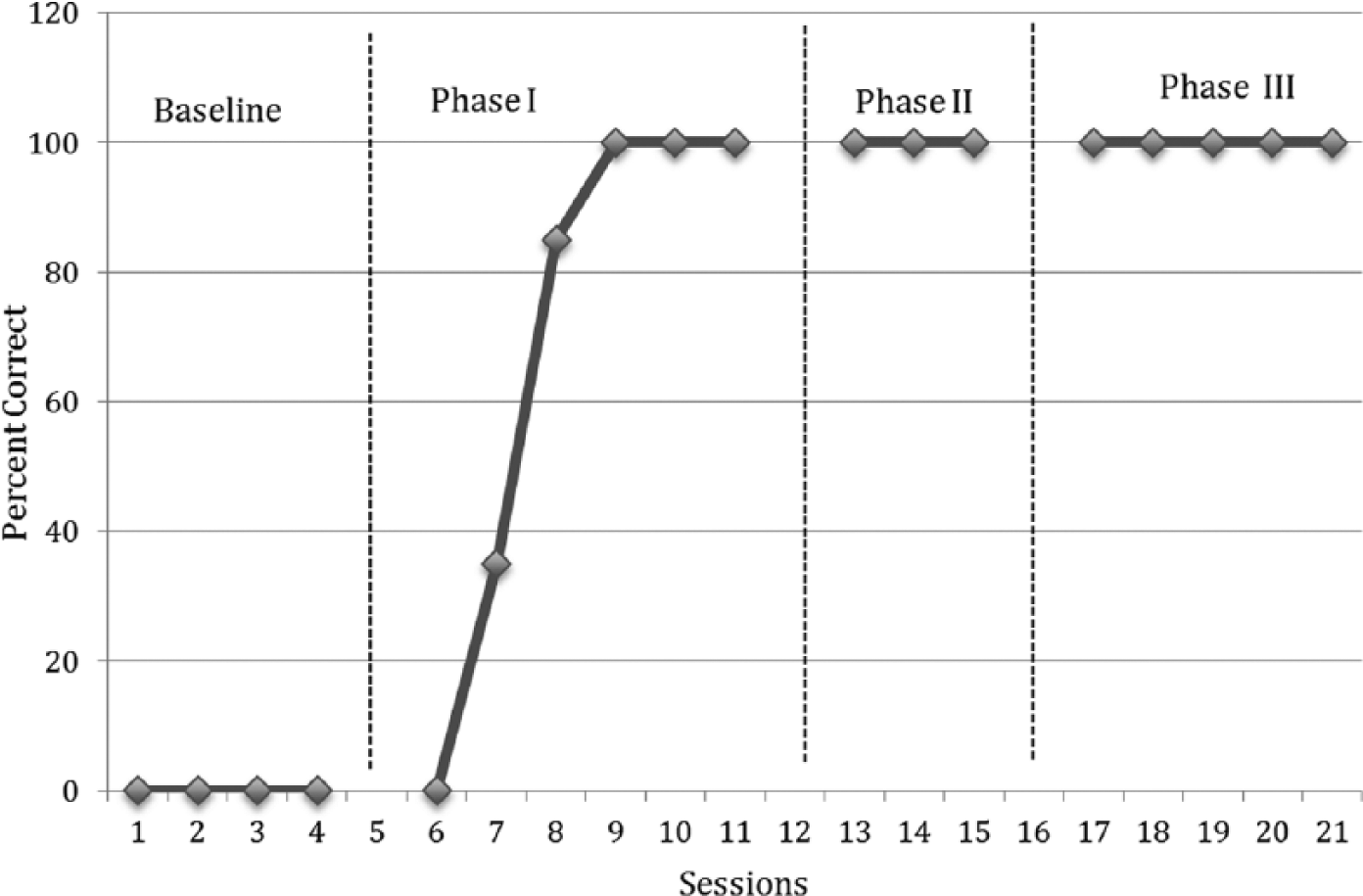
PECS phases for Terrence.
For Kameron, three baseline sessions were also conducted. The first Phase I session resulted in 22% of independent requests toward the end of the prompted session. The next two sessions resulted in 40% and 90% of independent requests, and 100% of requests made independently for the next two Phase I sessions. The picture was then moved around the table. Kameron sought out the picture in the first Phase II session independently in 95% of trials, and 100% for the next two sessions after the picture was placed on the book. During Phase III, a gummy picture was used as well as a dinosaur toy, which he also preferred. A juice icon was used as a neutral (distractor item) because he did not request or drink liquids at school. Kameron requested using the correct picture (responding to the item placed on the table by the teacher) in 100%, 85%, 82%, and 100% of trials (Figure 2).
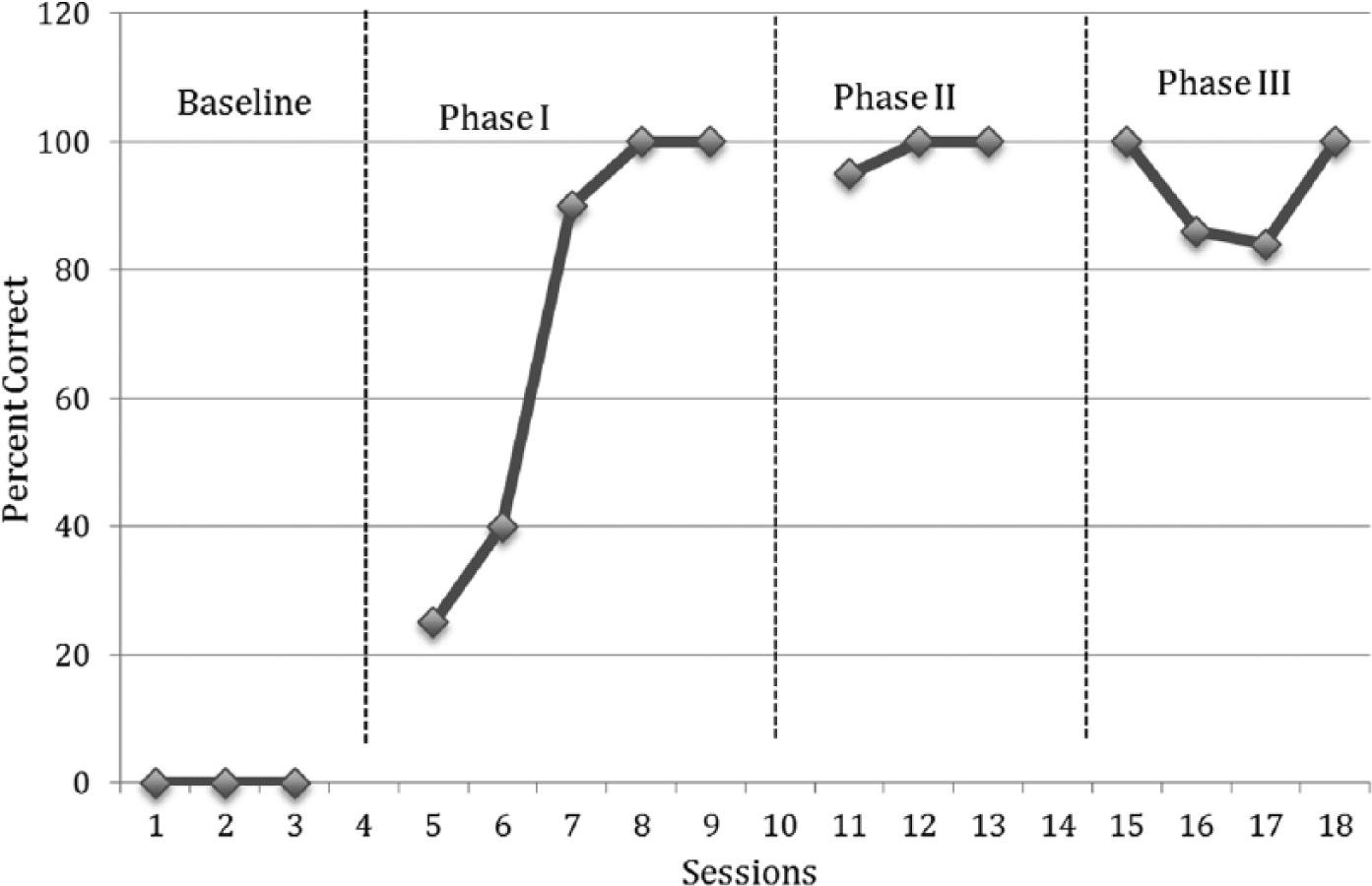
PECS phases for Kameron.
Miguel demonstrated proficiency at Phase III PECS™ when assessed on arrival for ESY services as indicated in his IEP. His parents indicated that he would exchange several different pictures at home. The only preference indicated by the parents for edibles was peas. Observation revealed that he would work for a turn at sweeping with a Swiffer™, touching the bristles of a paintbrush, playing/looking at a pencil, and using the iPad™. Use of the peas during Phase III did not reveal that they were preferred. The Swiffer and paintbrush were selected each time. After three sessions of independent requests in Phase III using a PECS™ book constructed by the teacher, Miguel moved to Phase IV. After several trials with physical prompting by another adult, he completed the session with 40% independent requests. The next four sessions resulted in 20%, 10%, 20%, and 10% independent requests using the sentence strip. At that point, independent requests increased to 50%, 80%, 80%, 90%, 100%, and 90% over the next six sessions (Figure 3).
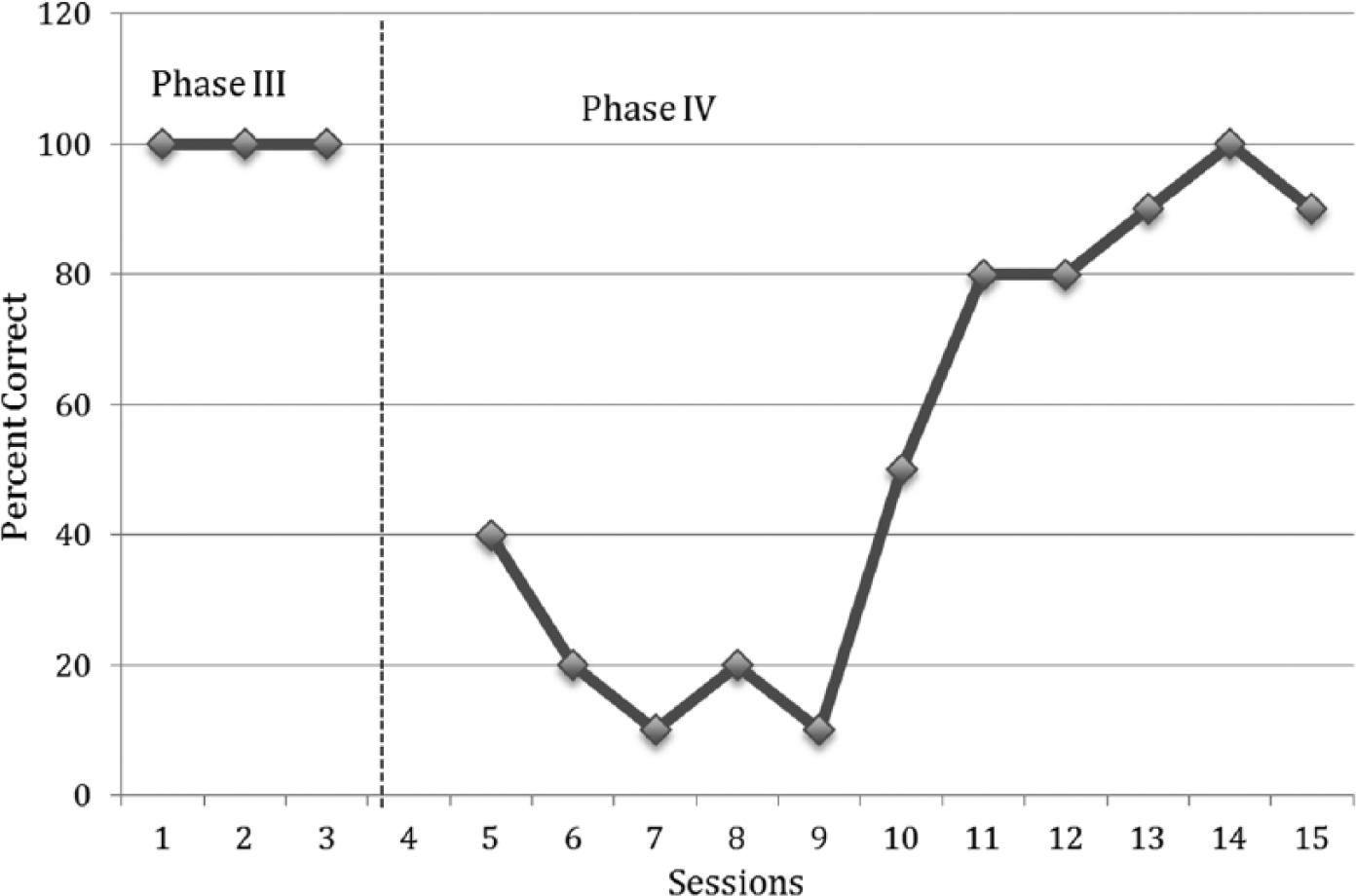
PECS phases for Miguel.
Nigel made no exchanges during baseline. After three sessions, the teacher began Phase I PECS™ with a physical prompter behind Nigel. During the first Phase I session, Nigel was able to independently exchange for a reinforcer (pretzels) in 55% of trial. The rate of independent requesting increased to 75%, 95%, 95%, and then decreased to 75%, and back down to 55%. A preference assessment was conducted and cheese puffs were determined to be Nigel’s strongest preference when offered simultaneously among similar edible reinforcers (goldfish, popcorn, and pretzels). When offered the new reinforcer, independent responding again increased. During the following three sessions, Nigel independently requested in 100%, 85%, and 80% of trials. The teacher introduced the book and began to move it around the table to implement Phase II. Nigel independently requested in 55%, 20%, 48%, 15%, 0%, 0%, 55%, 30%, and 50% of trials. The book was never moved more than 2 ft during the implementation of Phase II due to the low percentage of independent trials (Figure 4).
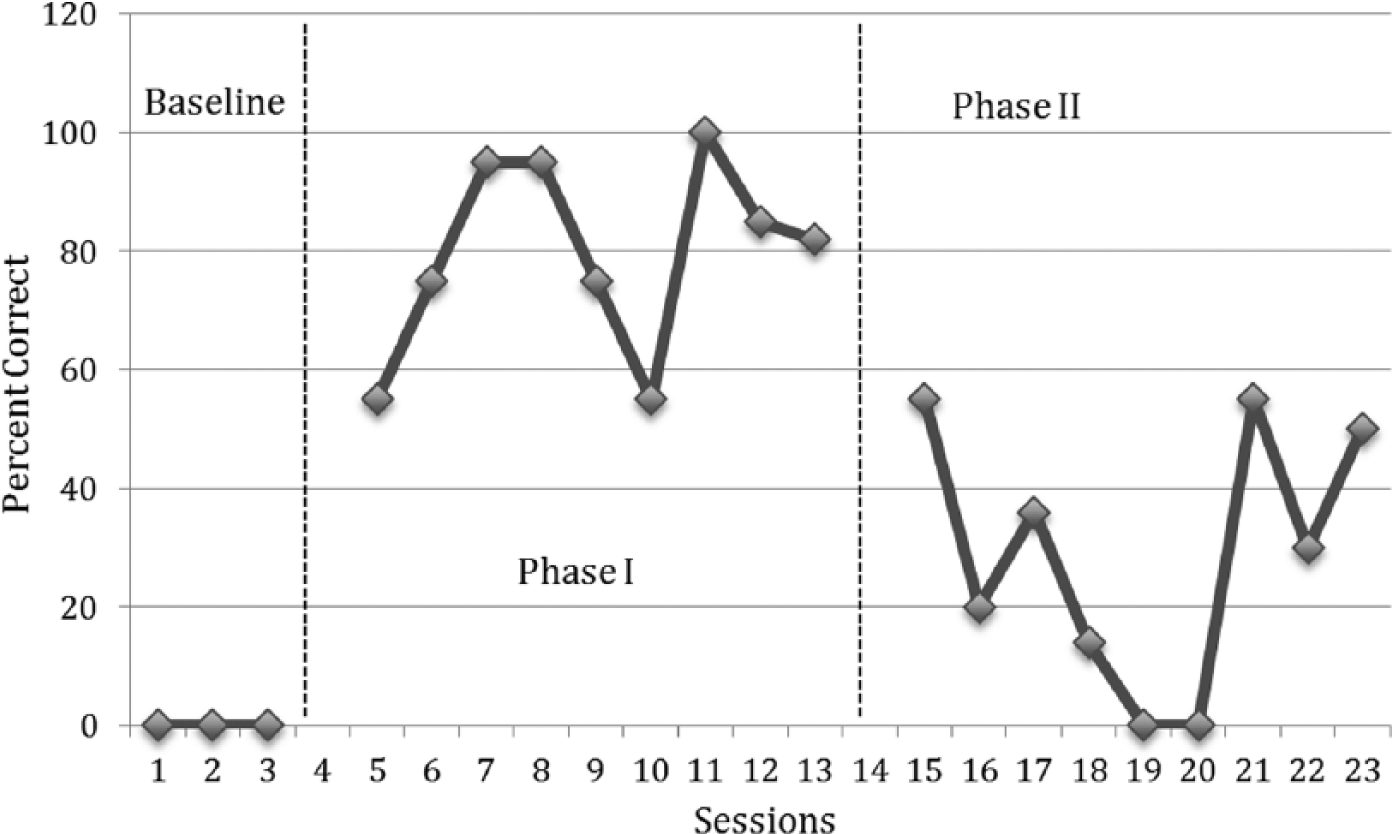
PECS phases for Nigel.
Treatment Integrity was assessed using checklists for each phase (Table 1) in addition to the teacher modeling and feedback. Treatment integrity using the checklist was conducted for Terrence during 33% of Phase I sessions, 66% of Phase II, and 20% during Phase III. For Kameron, treatment integrity using the checklist was conducted during 50% of Phase I sessions, 33% of Phase II, and 25% of Phase III. For Miguel, the checklists were utilized during 33% of Phase III sessions, and 20% of Phase IV. Checklists were used for Nigel during 20% of Phase I sessions, and 30 % of Phase II. Teachers implemented the PECS™ protocol with close to 100% accuracy during assessments.
Discussion
The purpose of this study was to investigate pre-service teachers’ implementation of and progress monitoring associated with PECS™ as well as the effects of this instruction on the communication of students with ASD and DD. (a) The pre-service teachers who participated in the study all demonstrated effective practice and fidelity of implementation of PECS™ procedures as outlined in the study’s purpose. (b) The teachers demonstrated competence in collecting and graphing PECS™ data to communicate progress to parents. (c) Within the context of an ESY program, the students with disabilities demonstrated progress and improved communication as a result of PECS™ instruction.
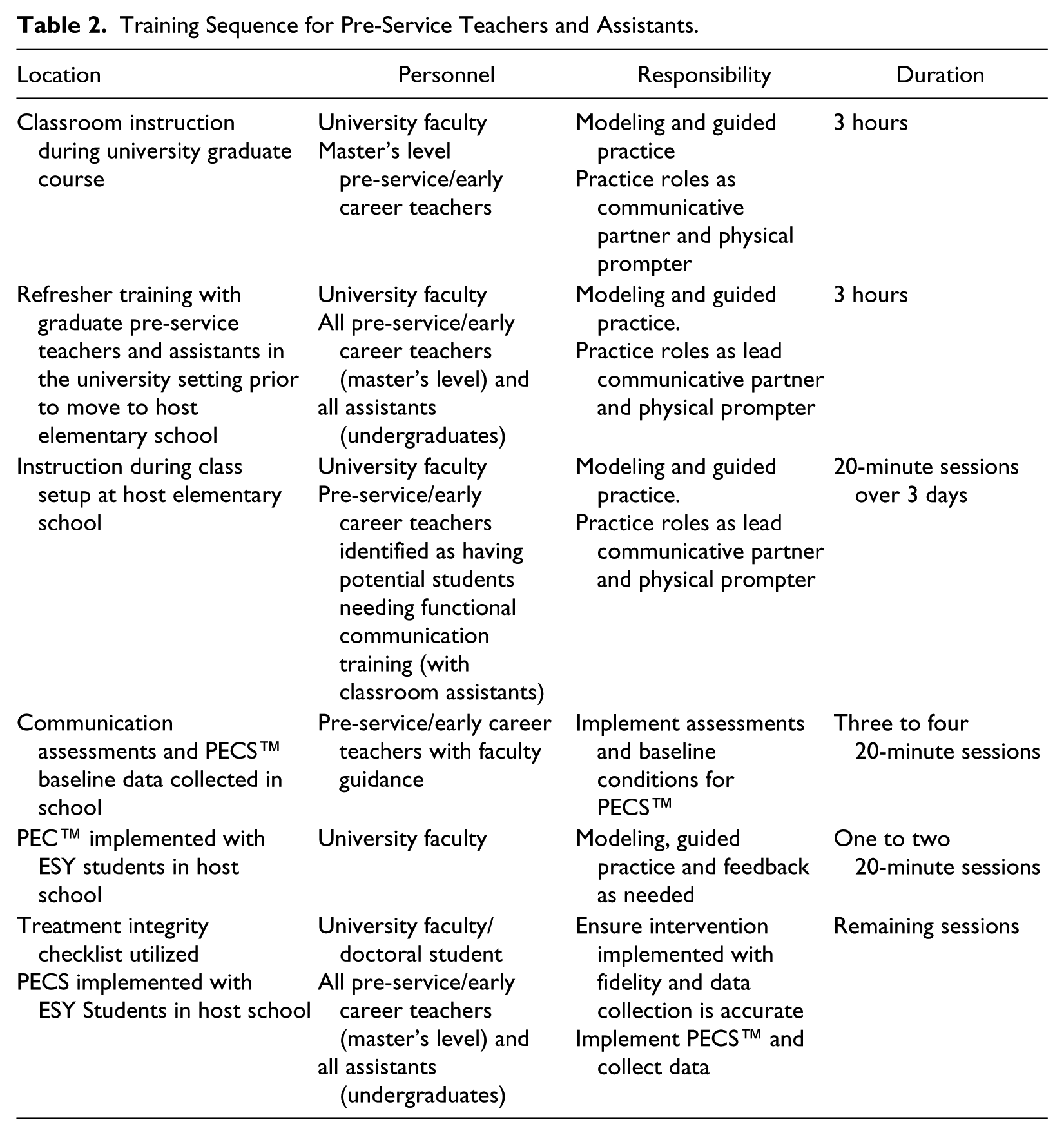
An important component of teacher training was implementation within the context of a classroom of students with disabilities. Implementation of each phase was more meaningful in practice and each teacher practiced the steps and received feedback, opportunities that are not readily available in a traditional course. For example, during coursework, PECS™ was practiced, but with peers or an instructor. These practice situations cannot replicate all of the factors involved in working with a student with ASD or DD. Although pre-service special education teachers participate in many hours of field experience, opportunities for full implementation and data recording associated with PECS™ may not be available. Field experiences such as this ESY program provide pre-service teachers with practice situations that may lead to their implementation of methods such as PECS™ with higher fidelity than if they only had traditional experiences through university coursework and practicum experiences (Table 2).
Training Sequence for Pre-Service Teachers and Assistants.
All of the students made progress and increased their communication. Terrence and Kameron’s communication increased significantly, moving through the phases in a manner that allowed them to reach Phase III within a short amount of time. The complexity with which Miguel used PECS™ increased, moving from Phase III to Phase IV. Nigel’s communication increased, moving through Phase I; however, his progress within Phase II was less pronounced. Perhaps more time was needed or other preferences determined to observe more significant increases in his communication.
Although data regarding improvement were recorded based on correct exchanges within each phase, other observations were made regarding students’ progress. Terrence would seek out the book, pull off the picture, and return it to the teacher, gaining access to the reinforcer. The book was moved around the table or even placed on a chair and floor during these sessions. Terrence displayed the ability to seek out the book in multiple locations at varying distances from the table. The gummies picture had several different gummy bears on the picture. Terrence would look from the reinforcer to the picture, point to the gummy of the same color on the picture, and then pull it off the book and exchange the picture.
Kameron would vocalize with the sound “yaya” during most trials as he looked at the picture. Miguel attempted to vocalize during PECS™ instruction, a behavior that had not been observed before in the classroom. Miguel was pointing to the sentence strip and responding with approximations of the entire sentence (“I want Swiffer™) during Trials 10 to 14. This increase in spoken communication is consistent with previous research that demonstrated that PECS™ resulted in spoken language (Frost & Bondy, 2002).
For Nigel, it was difficult to identify a reinforcer strong enough to elicit strong independent responses. Even when responding was high during Phase I, the latency between seeing the reinforcer (enticing), picking up the picture and subsequently offering it for the exchange was higher than that for the other three students. Nigel also attempted to add self-stimulatory behavior to the exchange by swiping the picture repeatedly against his chin. The prompter would wait for the indication that this behavior was going to occur and redirect the exchange (prompted response).
Communication and collaboration with parents was an important component of the PECS™ intervention. Each child’s parents provided information about their child’s communication at home, as well as his preferences, and this helped each teacher in her successful design and implementation of PECS™ in the classroom. For example, the preferred items used in the trials may not have been identified so readily without parent input. Teachers also collaborated with each child’s parents in designing PECS™ books for use at home. After the summer program, each teacher was able to graphically communicate progress during the program. They also worked with the parents to show them how to maintain use of the system and included pictures of items pertinent to each child’s home experiences.
Limitations and Future Research
Two limitations are noted for this study. The first is the short length of ESY services (although similar published study was conducted by Carr and Felce, 2007b, in a slightly longer period of 4-5 weeks). The investigators sought to conduct follow-up observations in the students’ home schools during the following school year. Miguel was using functional speech in all settings. Nigel continued to use picture exchange in the classroom, but finding powerful reinforcers continued to be difficult and contributed to limited progress in Phase II. Kameron is no longer in the school system so a follow-up assessment of PECS™ implementation could not be conducted. When the author’s checked on Terrence’s progress, they found that his current teacher was not trained to implement picture exchange. The primary author was asked by the school district to conduct that training for Terrence’s teacher in the school setting. Terrence now uses PECS™ and he and the teacher are becoming more proficient communicating utilizing Phase III picture exchange and moving to Phase IV. A strength of the project was implementation of ESY model to teach pre-service teachers, because this model allowed them the opportunity to set up their own classroom, conduct assessments, and implement interventions such as picture exchange. The second limitation is that not all school systems (or universities) have the opportunity to implement this novel and effective training model.
Footnotes
Declaration of Conflicting Interests
The author(s) declared no potential conflicts of interest with respect to the research, authorship, and/or publication of this article.
Funding
The author(s) received no financial support for the research, authorship, and/or publication of this article.