






Abstract
Background, Objectives:
The Ten Steps to Successful Breastfeeding are not, as yet, the norm in the United States. This study examined how noncompliance with each of the Steps, and combinations of 2 Steps, influence duration of breastfeeding at the breast.
Methods:
Data were from the national Infant Feeding Practices Study II. The outcome was duration of any breastfeeding at the breast. Propensity scores modeled the probability of exposure to lacking 1 or more of the Ten Steps. Inverse probability weights controlled for confounding. Survival analyses estimated the relationship between the lack of a Step and breastfeeding duration.
Results:
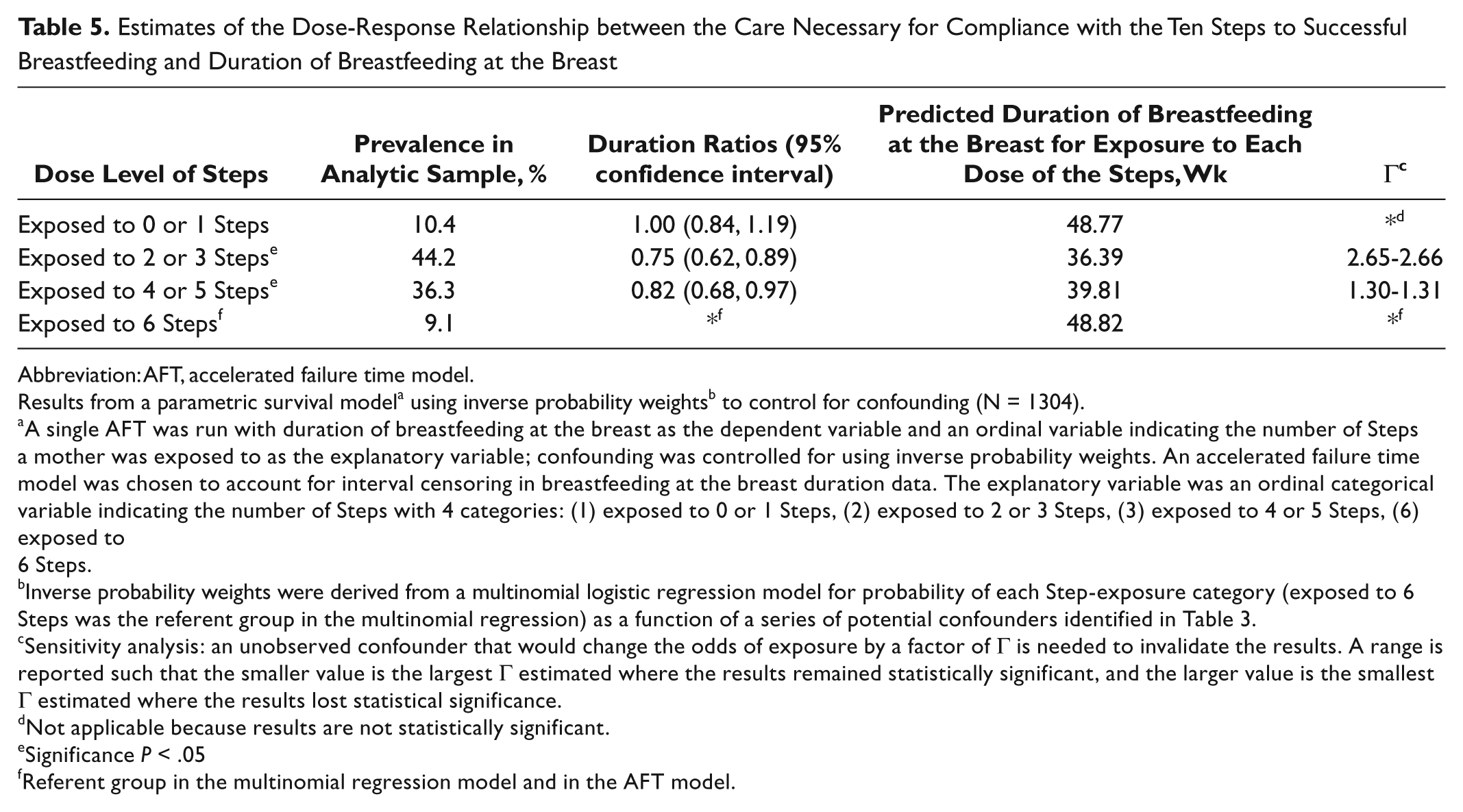
Lack of Step 6 (No human milk substitutes) was associated with shorter breastfeeding duration, compared with being exposed to Step 6 (10.5-wk decrease). Lack of both Steps 4 (Breastfeed within 1 hour after birth) and 9 (Pacifiers), together, was related to the greatest decrease in breastfeeding duration (11.8-wk decrease). The findings supported a dose-response relationship: being exposed to 6 Steps was related to the longest median duration (48.8 wk), followed by 4 or 5 Steps (39.8 wk), followed by 2 or 3 Steps (36.4 wk).
Conclusions:
Prevalent US maternity care practices do not, as yet, include all of the Ten Steps. This lack of care may be associated with poor establishment of the physiological feedback systems that support sustained breastfeeding. Breastfeeding at the breast is compromised when specific combinations of Steps are lacking. Efforts to increase implementation of specific Steps and combinations of Steps may be associated with increased duration of breastfeeding.
Keywords
Well Established
The Ten Steps to Successful Breastfeeding are hospital-based practices shown to support breastfeeding both collectively and individually. However, normative maternity practices in the United States do not reflect the Ten Steps.
Newly Expressed
This study examined the relationship between noncompliance with the Steps and duration of any breastfeeding at the breast. Propensity score methods were used. The study identified individual Steps and combinations of 2 Steps to target for implementation.
Background
Breastfeeding improves health and economic outcomes.1-7 However, breastfeeding duration in the United States falls short of recommendations.8,9 Efforts to achieve national goals might be more effective if they focused on those actions that support women in achieving recommended durations. The United Nations Children’s Fund and the World Health Organization codified a set of health care practices known as the Ten Steps to Successful Breastfeeding (Table 1).10,11 The practices underlying each Step are described in the Baby-friendly Hospital Initiative (BFHI).10,11 Implementing and practicing the Steps supports breastfeeding initiation, exclusivity, and duration.12-17 The American Academy of Pediatrics endorsed the Steps as optimal maternity care. 18
The Ten Steps to Successful Breastfeeding
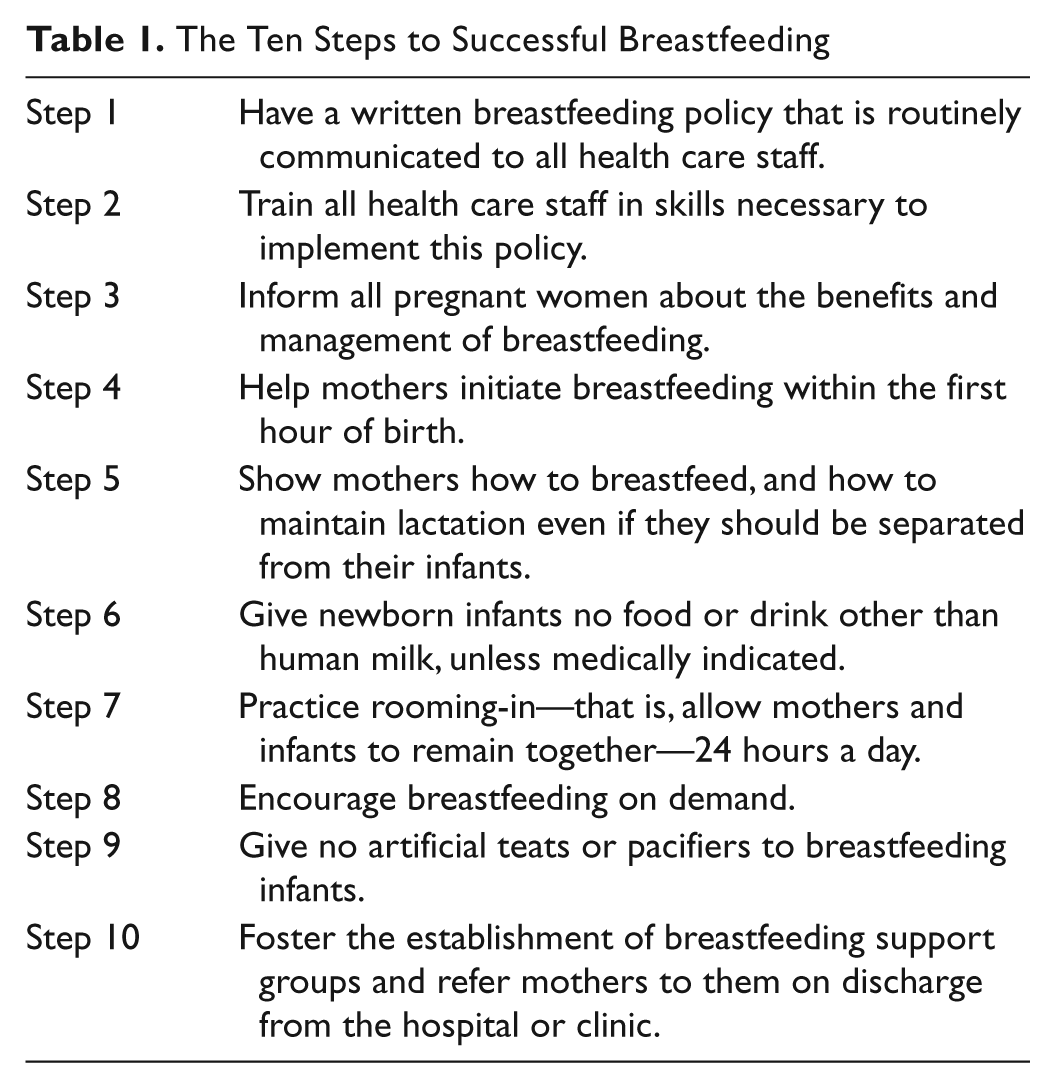
The prevalence of the Steps, individually and comprehensively, remains low in spite of the evidence and the endorsement and promotion by the American Academy of Pediatrics and other health organizations. 19 Approximately 4% of US maternity facilities have received designation that they practice all Ten Steps. 20 Data from the 2009 Centers for Disease Control (CDC) Maternity Care Practices Survey (mPINC) suggest that 54% of facilities practice only 3-5 of the Steps and a minority (37%) practice more than 6 Steps. 19 The 5 Steps with the lowest prevalence rates are Step 1 (Policy) at 14% of facilities, Step 6 (No human milk substitutes) at 22%, Step 10 (Post-discharge support) at 27%, Step 9 (Pacifiers) at 30%, and Step 7 (Room-in) at 33.4%. Taken together, this evidence indicates that the Ten Steps are not part of normative US maternity practice.
Studies have examined the effect of the Ten Steps as a whole, and at least 1 study has used the same dataset explored herein to look at the likelihood of breastfeeding at 6 weeks as opposed to breastfeeding duration.13-16,21 This study explored the relationship of specific combinations of Steps with duration of breastfeeding at the breast (BFB duration). Breastfeeding at the breast duration was chosen since previous work has documented that maternity practices are associated with increased breastfeeding for intermediate and long-term durations including breastfeeding at 12 months postpartum.16,22
This study explored how noncompliance with the Steps influences BFB duration. The exposure variables included (a) lacking each specific Step, (b) lacking combinations of 2 Steps, and (c) maternity care that reflects a decreasing number of Steps. The hypothesis was that being denied care outlined in the Steps will lead to shorter BFB duration.
Methods
Data
This study was exempt from IRB approval based on publicly available data. Data came from the Infant Feeding Practices Study II (IFPS II). 23 The IFPS II is a national, longitudinal study of women conducted by the US Food and Drug Administration (FDA) in collaboration with the US Centers for Disease Control. 23 The IFPS II followed a sample of women from the third trimester of pregnancy to 1 year postpartum and collected data every month to every 2 months; study details were outlined elsewhere. 23
Infant feeding data were collected on monthly questionnaires. Data on maternity care practices came from the neonatal questionnaire. Data used to control for confounding came from the demographic, prenatal, and neonatal questionnaires.
Analytic Sample
The analytic sample included women who initiated breastfeeding at the breast, had data on exposure to the Steps, and had complete data on covariates (N = 1304). Of these women, 44.1% were still breastfeeding at the breast on the final questionnaire they returned (ie, they were right censored). A nonresponse analysis examined whether right-censored women differed from women who remained in the study until BFB cessation.
Measures
Outcome measure
The outcome was duration of any breastfeeding at the breast (BFB). Any BFB was defined by 2 criteria: (1) a mother indicating that she fed her infant any amount of human milk, and (2) the mother did not report that her “Baby is only fed pumped milk.”
Breastfeeding at the breast was chosen to study the long-term impact of maternity practices on the maintenance of the behavior and physiology of breastfeeding. We posit that sustained BFB is reactive to initial physiological establishment of lactation. Breastfeeding at the breast reflects the maintenance of the physiology and behavior of breastfeeding; that is, the mother–infant dyad is maintaining a behavior supported by the physiological interaction, as opposed to the mother alone maintaining a behavior (eg, expressing milk). This decision was also based on evidence suggesting that differences may exist in some outcomes when BFB is compared with feeding expressed milk.24-26
Data on BFB duration came from the neonatal through the month 12 questionnaires. Two variables were generated, BFBa and BFBb. BFBa is the infant’s age on the last questionnaire when a mother indicated BFB, and BFBb is the infant’s age on the first questionnaire when she indicated not BFB. Cessation occurred between BFBa and BFBb. Some women left the study before they stopped BFB. Survival analyses allow all women who ever reported BFB to contribute to duration estimates.27,28
Step exposure
The construct of interest was “not receiving the care necessary for compliance with the Steps.” Compliance with a Step was measured using BFHI assessment criteria.10,11 The BFHI criteria are the standard used by designating agencies to assess Step compliance.20,29 If a hospital does not meet all the criteria for a Step, the hospital is considered as not practicing that Step.
The IFPS II collected data on maternal perception of compliance with 6 of the Ten Steps: Step 4 (Breastfeed within 1 hour after birth), Step 6 (No human milk substitutes), Step 7 (Room-in), Step 8 (Hunger cues), Step 9 (Pacifiers), and Step 10 (Post-discharge support). Table 2 presents the criteria used to assess exposure to the Steps.
Criteria Used to Assess Exposure to the 10 Steps to Successful Breastfeeding
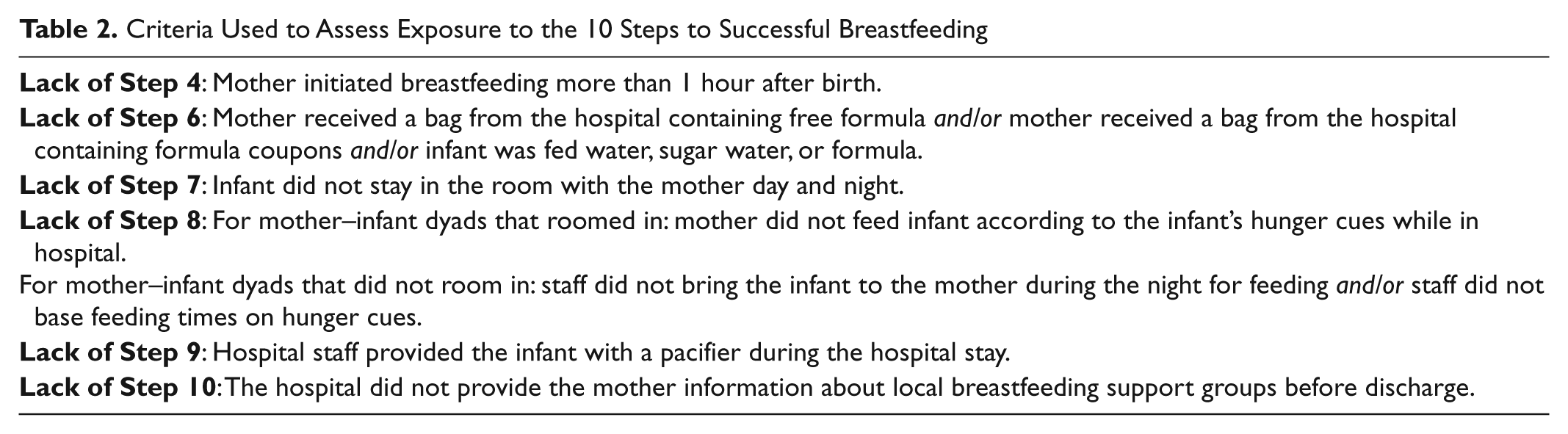
A second set of measures classified mothers by whether they received care that was lacking combinations of 2 Steps (eg, a mother reports that she was unable to breastfeed within the first hour and she reports her infant received a pacifier—lacking Steps 4 and 9).
A categorical variable was created to measure Step dosage levels, for which a dose is every 2 additional Steps received: (1) “0 or 1 Step,” (2) “2 or 3 Steps,” (3) “4 or 5 Steps,” (4) “6 Steps.” 13
Confounders
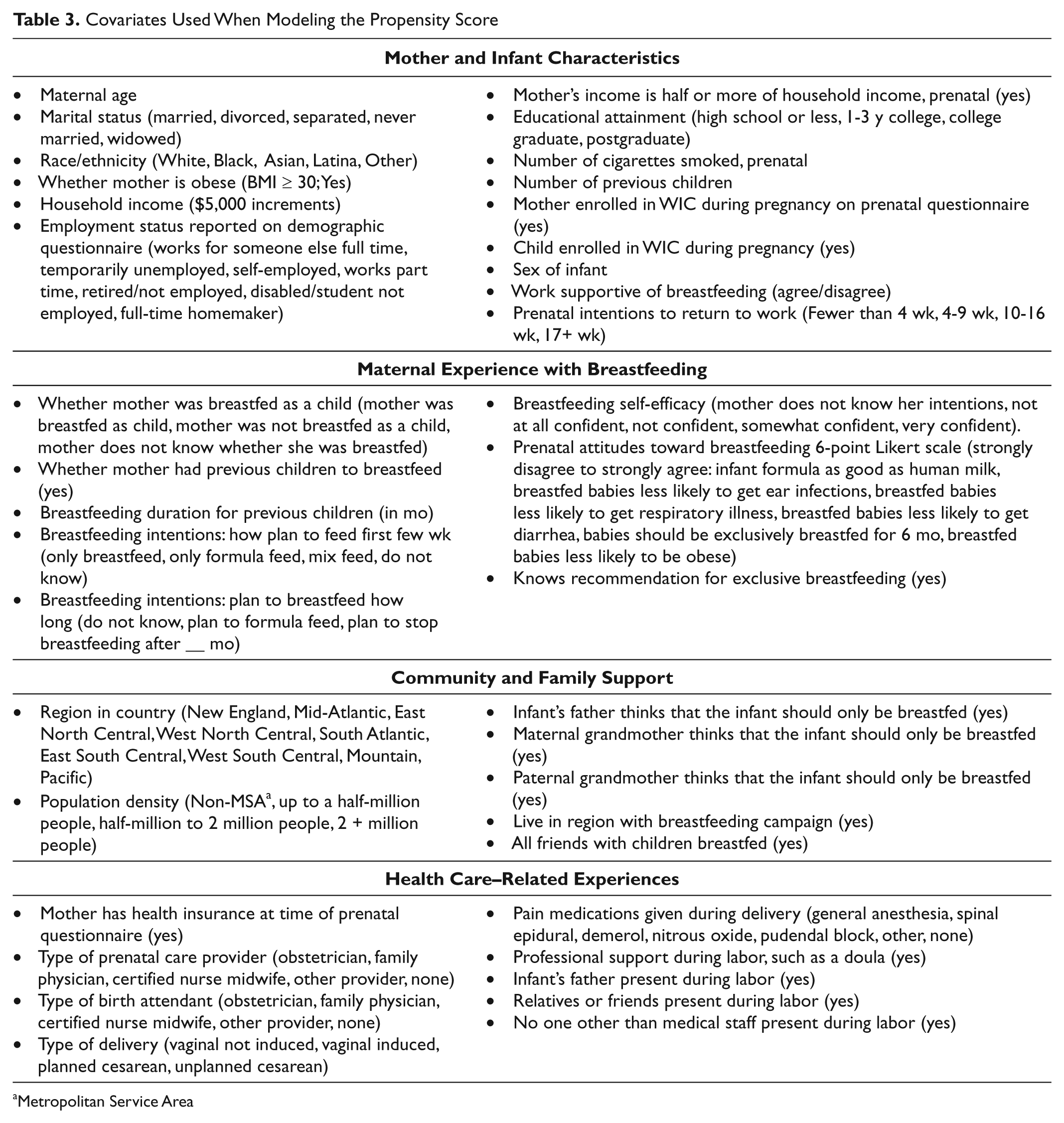
Region of the country and pain medications may be predictive of exposure to breastfeeding-supportive policies.19,30-32 Several variables may confound the relationship between maternity practices and breastfeeding duration: maternal race33,34; maternal age34-36; marital status34,36; educational attainment34-37; socioeconomic status34,38; WIC enrollment 34 ; maternal obesity34,39-41; maternal tobacco use34-37,41; parity 34 ; method of delivery34,35; time until return to work34,35,42,43; family support and attitudes toward breastfeeding34,44,45; appropriate professional support 34 ; whether mother breastfed previous children35,46,47; prenatal breastfeeding intentions34,41,46,48; breastfeeding self-efficacy46,49,50; maternal attitudes toward breastfeeding34,35,50; and maternal knowledge about breastfeeding. 46 Table 3 presents the covariates used in this study to control for confounding.
Covariates Used When Modeling the Propensity Score
Metropolitan Service Area
Descriptive Analyses
Life tables, with 4-week intervals, provided an estimate for the survivor function, that is, the probability that a dyad BFB for a time greater than or equal to time t. The estimated survivor function was used to estimate the sample’s descriptive median BFB duration. Following IFPS II study precedence, the midpoint between BFBa and BFBb was used for this descriptive statistic. 51
Statistical Analyses for Causal Inference
This study followed a potential outcomes framework.52-59 The propensity score (PS) can be used in the potential outcomes framework to draw causal inferences from estimated relationships.60-65 More information on causal inference is presented elsewhere.52-68
The PS is defined as the conditional probability woman i is exposed to the treatment of interest, given her observed characteristics.53, 60-63, 65 The PS reduces a woman’s characteristics into a single summary score that captures her likelihood of receiving the treatment.60,61 The PS can sometimes accommodate more covariates than many traditional approaches. 61 Conditional on the PS, each woman has the same probability of exposure to the treatment (ie, care nonadherent with the Steps).61-63, 65
A separate PS was estimated for each Step and each combination of 2 Steps, for a total of 21 PSs per respondent. Propensity scores were modeled with 21 logistic regressions, where exposure to “lacking the Step” and “lacking the combination of 2 Steps” served as the dependent variables. The confounders presented in Table 3 were all selected as independent variables to include in the PS using Shrier’s method. 68 Exposures to the other Steps were also included in the PS as predictors (eg, if lack of Step 7 was under consideration, Steps 4, 6, 8, 9, and 10 were included as predictors). Descendants, or variables occurring after exposure to the Steps (such as time to return to work), were not included in analyses, as they may bias results.53,68 Stabilized inverse probability weights (IPWs) were constructed for each woman using her estimated PSs. 52
For the dose-response analysis, a multinomial regression modeled the probability of exposure to each decreasing number of 2 Steps: (a) 6 Steps, (b) 4 or 5 Steps, (c) 2 or 3 Steps, or (d) 0 or 1 Steps, as a function of the confounders presented in Table 3. Stabilized IPWs were constructed for each woman using the inverse probability of the dosage-level she reported. 52
All PSs were assessed to ensure that after applying the IPWs, each confounder was no longer correlated with exposure.53,64,66
An accelerated failure time (AFT) model with a log-normal distribution modeled the relationship between Step exposure and BFB duration (results from likelihood ratio tests suggested BFB duration followed a log-normal distribution).27,28 A parametric AFT model was used to accommodate interval censoring.27,28 The midpoint between BFBa and BFBb was not used; rather, the AFT modeled the relationship between Step exposure and the outcome measures BFBa and BFBb, along with a censoring indicator variable. A detailed explanation of how to model interval censored time-to-event data (eg, when exact BFB duration is not observed) is presented elsewhere.27,28
A separate AFT model was run for each Step and combination of 2 Steps with “lack of the Step(s)” as the exposure. An AFT model was run for the dose-response analyses with a categorical variable for the number of Steps as the exposure. The stabilized IPWs were applied to the models to control for confounding. For each Step, combination of 2 Steps, and dose level, the predicted difference in median BFB duration, measured in weeks, attributable to lack of the Step(s) was calculated from the model estimates.27,28
Γ is the degree of hidden confounding needed to invalidate statistically significant results;62,67 Γ was estimated for each significant relationship to assess sensitivity to bias from hidden confounding. For example, Γ = 1.8 means that, for the results to be invalidated, there would need to exist an unobserved confounder that would change the odds of exposure by a factor of 1.8.
Results
Descriptive Analysis
Table 4 presents descriptive statistics for the analytic sample. The median BFB duration was 44.1 weeks. Prevalence of lack of exposure to the Steps is presented in Tables 5 and 6. Almost 90% of respondents reported receiving care that was lacking Step 6 (No human milk substitutes). More than half reported not experiencing Steps 8 (Hunger cues) and 9 (Pacifier).
Analytic Sample Characteristics

Analytic sample is limited to women in the IFPS II study who initiated breastfeeding and who had complete data on covariates (N = 1304).
Obese is a dichotomous variable indicating whether or not the respondent is obese. Obese was constructed from respondent’s height and weight, as reported on the prenatal questionnaire.
Data recorded in categories. The modal category is reported.
Respondent answered 6 mo to the question, “As best you know, what is the recommended number of months to exclusively breastfeed a baby, meaning the baby is only fed breast milk?”
Estimated using the survivor function obtained from the Life Tables method (with 4-wk intervals).
Estimates of the Dose-Response Relationship between the Care Necessary for Compliance with the Ten Steps to Successful Breastfeeding and Duration of Breastfeeding at the Breast
Abbreviation: AFT, accelerated failure time model.
Results from a parametric survival modela using inverse probability weightsb to control for confounding (N = 1304).
A single AFT was run with duration of breastfeeding at the breast as the dependent variable and an ordinal variable indicating the number of Steps a mother was exposed to as the explanatory variable; confounding was controlled for using inverse probability weights. An accelerated failure time model was chosen to account for interval censoring in breastfeeding at the breast duration data. The explanatory variable was an ordinal categorical variable indicating the number of Steps with 4 categories: (1) exposed to 0 or 1 Steps, (2) exposed to 2 or 3 Steps, (3) exposed to 4 or 5 Steps, (6) exposed to 6 Steps.
Inverse probability weights were derived from a multinomial logistic regression model for probability of each Step-exposure category (exposed to 6 Steps was the referent group in the multinomial regression) as a function of a series of potential confounders identified in Table 3.
Sensitivity analysis: an unobserved confounder that would change the odds of exposure by a factor of Γ is needed to invalidate the results. A range is reported such that the smaller value is the largest Γ estimated where the results remained statistically significant, and the larger value is the smallest Γ estimated where the results lost statistical significance.
Not applicable because results are not statistically significant.
Significance P < .05
Referent group in the multinomial regression model and in the AFT model.
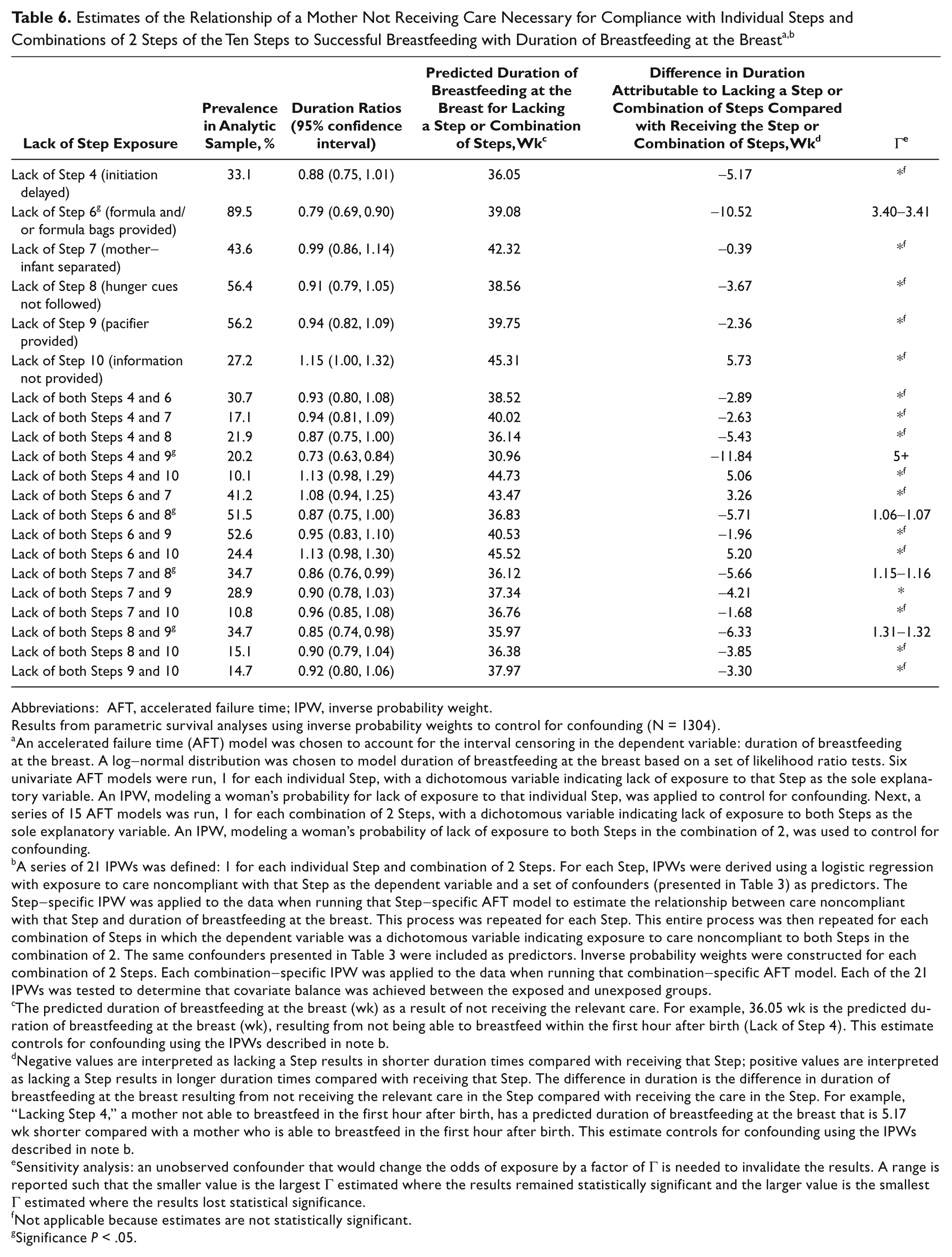
Abbreviations: AFT, accelerated failure time; IPW, inverse probability weight.
Results from parametric survival analyses using inverse probability weights to control for confounding (N = 1304).
An accelerated failure time (AFT) model was chosen to account for the interval censoring in the dependent variable: duration of breastfeeding at the breast. A log-normal distribution was chosen to model duration of breastfeeding at the breast based on a set of likelihood ratio tests. Six univariate AFT models were run, 1 for each individual Step, with a dichotomous variable indicating lack of exposure to that Step as the sole explanatory variable. An IPW, modeling a woman’s probability for lack of exposure to that individual Step, was applied to control for confounding. Next, a series of 15 AFT models was run, 1 for each combination of 2 Steps, with a dichotomous variable indicating lack of exposure to both Steps as the sole explanatory variable. An IPW, modeling a woman’s probability of lack of exposure to both Steps in the combination of 2, was used to control for confounding.
A series of 21 IPWs was defined: 1 for each individual Step and combination of 2 Steps. For each Step, IPWs were derived using a logistic regression with exposure to care noncompliant with that Step as the dependent variable and a set of confounders (presented in Table 3) as predictors. The Step-specific IPW was applied to the data when running that Step-specific AFT model to estimate the relationship between care noncompliant with that Step and duration of breastfeeding at the breast. This process was repeated for each Step. This entire process was then repeated for each combination of Steps in which the dependent variable was a dichotomous variable indicating exposure to care noncompliant to both Steps in the combination of 2. The same confounders presented in Table 3 were included as predictors. Inverse probability weights were constructed for each combination of 2 Steps. Each combination-specific IPW was applied to the data when running that combination-specific AFT model. Each of the 21 IPWs was tested to determine that covariate balance was achieved between the exposed and unexposed groups.
The predicted duration of breastfeeding at the breast (wk) as a result of not receiving the relevant care. For example, 36.05 wk is the predicted duration of breastfeeding at the breast (wk), resulting from not being able to breastfeed within the first hour after birth (Lack of Step 4). This estimate controls for confounding using the IPWs described in note b.
Negative values are interpreted as lacking a Step results in shorter duration times compared with receiving that Step; positive values are interpreted as lacking a Step results in longer duration times compared with receiving that Step. The difference in duration is the difference in duration of breastfeeding at the breast resulting from not receiving the relevant care in the Step compared with receiving the care in the Step. For example, “Lacking Step 4,” a mother not able to breastfeed in the first hour after birth, has a predicted duration of breastfeeding at the breast that is 5.17 wk shorter compared with a mother who is able to breastfeed in the first hour after birth. This estimate controls for confounding using the IPWs described in note b.
Sensitivity analysis: an unobserved confounder that would change the odds of exposure by a factor of Γ is needed to invalidate the results. A range is reported such that the smaller value is the largest Γ estimated where the results remained statistically significant and the larger value is the smallest Γ estimated where the results lost statistical significance.
Not applicable because estimates are not statistically significant.
Significance P < .05.
Causal Inference Analyses
Table 5 presents the dose-response analysis. The results indicated that being exposed to 6 Steps results in a predicted BFB duration of 48.8 weeks. Exposure to 4 or 5 Steps resulted in a 9-week reduction in BFB duration compared with exposure to 6 Steps. Exposure to 2 or 3 Steps resulted in a 12-week reduction in BFB duration compared with exposure to 6 Steps. Being exposed to 0 or 1 Steps, the smallest dose level, was not significantly different from exposure to the other doses.
Table 6 presents the relationship between individual and combinations of 2 Steps with BFB duration. Lack of Step 6 (Human milk substitutes) led to a decrease in duration, a 10.52-week reduction compared with being exposed to Step 6. This was the only Step that, individually, decreased duration.
Lacking both Steps 4 (Delayed initiation) and 9 (Pacifier) was associated with the largest decrease in duration, 11.8 weeks. Lacking both Steps 8 (Not fed according to hunger cues) and 9 (Pacifier) led to a 6.3-week reduction in duration. Lacking both Steps 7 (No rooming-in) and 8 (Not fed according to hunger cues) led to a 5.6-week reduction.
The findings for “Lacking both Steps 6 and 8” (Γ = 1.06-1.07) and “Lacking both Steps 7 and 8 (Γ = 1.15-1.16) may be sensitive to hidden confounding. The findings for “Lacking Step 4 and 9” (Γ = 5+), “Lacking Step 6” (Γ = 3.40-3.41), and “Lacking Steps 8 and 9” (Γ = 1.31-1.32) may be robust to hidden confounding.
Nonresponse Analysis
Right-censored women (ie, they left the study before cessation of BFB) were more likely to be from the Pacific region, married, white, Latina, employed, not continue beyond high school, know the recommendations for breastfeeding, intend to breastfed for less than a few weeks or for more than 11 months, intend to begin supplementation after 5 months, and have confidence to achieve breastfeeding intentions.
Discussion
This study provides a unique contribution to the BFHI literature: (a) it framed the study to explore whether noncompliance with the Steps may reduce breastfeeding duration; (b) it defined breastfeeding duration to consider maintenance of a physiologically based interactive behavior that reflects the mother–infant dyad, BFB; (c) it estimated the relationship between individual Steps and breastfeeding duration and estimated the relationship of combinations of 2 Steps and breastfeeding duration to identify potential “low-hanging fruit” for implementation; and (d) it used causal inference methods, ie, PS weights, to the estimate effects of the Step(s). Furthermore, this study examined longer duration of breastfeeding than other studies, such as the DiGirolamo study, where the outcome was “breastfeeding cessation before 6 weeks” or Declercq at 1 week.13,15
This study confirmed previous work on the impact of the Ten Steps on breastfeeding duration. For example, the finding that lack of Step 6 (No human milk substitutes) was associated with shorter durations of breastfeeding is similar to previous work using the IFPS II. 15 Unlike previous work, such as the DiGirolamo study, this study developed measures for the Ten Steps using the assessment criteria from BFHI and other health organizations as a guiding framework.11,15,29 Under these criteria, a hospital that provides formula discharge bags is not compliant with Step 6.11,29 To measure the effect of noncompliance with Step 6, this study included both formula discharge bags and formula supplementation, since both practices are assessed by designating organizations vis-à-vis Step 6, which may provide a more robust estimate of the effect of noncompliance with Step 6 compared with measuring Step 6 using supplementation alone. In this study, Step 6 was the only Step individually related to BFB duration; other Steps, individually, were not related to BFB duration.
DiGirolamo noted an inverse relationship between pacifier use and breastfeeding at 6 weeks. 15 This analysis did not find a significant relationship between pacifier use and BFB duration. However, an additive relationship was observed when providing a pacifier was combined with lack of Step 4 (Breastfeed within 1 hour after birth) or lack of Step 8 (Hunger cues). Combining these practices may inhibit the establishment of the physiology that supports maintenance of BFB; if the infant is not put to the breast early and often, then milk production is not adequately stimulated, leading to a pattern of behavior that reduces milk production and shortens duration. The additive effects observed with the various combinations suggest that there exists a synergistic relationship between specific Steps, perhaps because of the impact on the biology of lactation, and the interactions that might occur in the early hours/days of life. The relationship between pacifier use and inhibiting the observation and response to hunger cues may also explain the additive effect observed between Steps 8 (Hunger cues) and 9 (Pacifiers).
There may be interactive relationships between identified combinations (ie, Steps 4 and 9, Steps 8 and 9, and Steps 7 and 8) that result in a significant reduction in BFB duration. It is unclear whether the interaction reflects system changes that might readily complement each other, and/or whether it reflects the creation of a biological synergy between the effects of the Steps. Nonetheless, these findings allow consideration that some of the combinations with large observed impact may be “low-hanging fruit” that hospitals and public health interventionists can target and prioritize to increase BFB duration.
Translational research (research into how to translate scientific evidence into applied settings) in hospitals serving low-wealth communities has also found that implementation of Steps 6 (No human milk substitutes), 9 (Pacifiers), and 4 (Breastfeed within 1 hour after birth) is associated with increased breastfeeding rates. 69
These analyses also suggest that there may be a dose-response relationship between Step exposure and BFB duration. This result supports previous study findings.13,15 It is worth noting that no significant difference was observed between the duration associated with the lowest dose (exposed to 0 or 1 Step) and BFB duration associated with other doses. The 95% confidence interval on the duration ratio spans the confidence intervals for all other dosage levels. This finding may be a result of the small number of respondents in this category. Further research is needed to identify the mechanisms at work for these dosage levels and whether other dose levels (eg, groupings of 3 Steps rather than 2) may be beneficial.
Comparing these results with the prevalence rates of Step practice in the United States suggest that prevalent maternity care may reduce BFB duration. According to data from the 2009 mPINC survey, approximately 49% of facilities do not practice Step 4 (Breastfeed within 1 hour after birth) and as many as 69% do not practice Step 9 (Pacifiers). 19 This finding suggests that a significant proportion of women may be receiving care that potentially shortens their BFB duration by as much as 11 weeks. Furthermore, nonadherence to the Step 4 may have discouraged some women from breastfeeding at all, which may lead to an increased effect than was measured in this study.
Limitations
The first limitation of this study is that the hospital practices used for measuring each Step were based on mothers’ self-report. As a result, all the results are subject to the mother’s perception of care that she received as opposed to actual care that she received. The practices that a mother perceived and reported may be a poor reflection of what actually happened to her. It should be noted that prevalence of Step exposure reported in the database is similar to reports found elsewhere, such as in the mPINC. Potential bias from maternal self-report, therefore, may be minor. These data also fail to capture facility-level factors relating to exposure to the Steps. This study was unable to measure certain hospital-level Steps such as Steps 1 (Have a policy) and 2 (Training). Further research is needed to explore how these facility-level Steps may influence long-term BFB duration.
Second, some of the findings may be confounded by reverse causality. For example, providing a pacifier and/or formula supplementation may be indicative of unaddressed breastfeeding difficulties as opposed to nonadherence to the Steps, per se.
A third limitation is that BFB behaviors are self-reported. However, research suggests that mother-reported breastfeeding behaviors, as reported in the IFPS II, may provide valid and reliable estimates. 70
A fourth limitation is that our definition of BFB may bias duration estimates. Specifically, the interval-censoring nature of the construct may lead to higher estimates of duration. However, we conducted a sensitivity analysis in which we used the breastfeeding variable provided in the IFPS II database, excluding women when they fed exclusively pumped milk, and we used both Kaplan Meier and Life Tables approaches to estimate duration. There was no statistically significant difference between our constructed variable and these alternative estimates.
Fifth, the study had attrition over the first 2 rounds of data collection. The results from nonresponse analyses suggested that censoring might not have occurred at random. Factors related to censoring may confound the relationships observed in these analyses.
Finally, generalizability is limited in that participants in the IFPS II sample were slightly older, more highly educated, less likely to be low income, more likely to be employed and white, had fewer children, were less likely to smoke, and took longer maternity leave than a random sample of US mothers. 23 The sample, necessarily, was limited to women who had ever initiated breastfeeding; questionnaires only asked women who had initiated breastfeeding about their exposure to the Steps. Analyses cannot assess whether denial of care led to women not initiating breastfeeding.
Conclusions
The results from this analysis indicate that noncompliance to specific Steps, or sets of Steps, may reduce breastfeeding duration. This study offers the first assessment of the relationships of combinations of Steps with the duration of breastfeeding; the results suggest possible combinations of Steps may be targeted to accelerate improvement.
Translational research is needed to identify whether implementation of identified combinations of Steps results in increased BFB duration. Operational research would help inform programs that support hospitals in how to implement the practices outlined in the Steps.
Footnotes
Declaration of Conflicting Interests
The authors declared no potential conflicts of interest with respect to the research, authorship, and/or publication of this article.
Funding
The authors disclosed receipt of the following financial support for the research, authorship, and/or publication of this article: This project was supported by grant number R03HS019757 from the Agency for Healthcare Research and Quality. The content is solely the responsibility of the authors and does not necessarily represent the official views of the Agency for Healthcare Research and Quality. This research was also funded by the Carolina Global Breastfeeding Institute Endowment.