







Abstract
Background:
A donor milk bank provides an alternative source of human milk for mothers who cannot breastfeed or provide their own milk. Although wet-nursing is a common practice, there is currently no donor milk bank in Turkey.
Research Aims:
The aims of our study were (1) to determine the knowledge and opinions of Turkish women in regard to donor milk banking; and (2) to raise awareness of donor milk banking.
Methods:
This was a prospective cross-sectional descriptive study, in which the data were collected with an online survey consisting of 22 questions. The link to the online survey was distributed through the social media accounts of the researchers, with a statement inviting women aged 18–64, who were literate and actively using social media, to participate in the survey. There were 648 female participants.
Results:
Of those who responded to the questionnaire, 54.1% had not previously given birth, and 54.2% had heard about donor milk banks before. The implementation of donor milk banks in Turkey was desired by 56.4% of the participants, and 50.8% of the participants considered donating their milk. It was determined that the reasons why the women did not want to benefit from donor milk banks were the risk of disease transmission to the baby and the possibility of their child marrying his or her milk sibling in the future.
Conclusion:
It appears that Turkish women lack information about donor milk banking. We recommend public awareness activities to be organized concerning donor milk banking.
Key messages
Women’s views about donor milk banking in Turkey are largely unknown.
We discovered the reasons why our participants did not want to benefit from donor milk banks were lack of information about donor milk banks, fear of infection risk, and religious objections.
Education level was a determining factor in forming the opinions of the participants about donor milk banking, and solutions should be offered to hesitations about milk banking, considering sociocultural values and attitudes.
Background
Approximately 2.4 million infants die each year in the first 4 weeks of their lives worldwide (World Health Organization [WHO], 2019a), with about three-quarters of these deaths occurring within the 1st week of birth (United Nations Children’s Fund [UNICEF], 2020). Human milk and breastfeeding have an important effect in preventing infant mortality (Victora et al., 2016). The WHO (2020) has stated that in the first 6 months, infants should be given only human milk without any additional food, including water, and recommends starting additional liquid and solid foods after 6 months and continuing human milk until at least 2 years of age, in addition to these complementary foods. Fresh human milk should always be the first choice for newborn infants (Kair et al., 2020). However, not all newborns have the same rate of access to their mother’s own milk in the 1st hour after birth and in the early neonatal period. Common causes of this condition include the mother’s absence due to illness, death, or abandonment; some medications; and inability to breastfeed due to adoption or prematurity (Centers for Disease Control and Prevention [CDC], 2019). This situation might cause infants to be deprived of this miraculous nutrient.
The WHO (2019b) and the American Academy of Pediatrics (American Academy of Pediatrics Committee on Nutrition, 2017) have highlighted that pasteurized donor human milk is the best option in the absence of the mother’s own milk. Researchers have shown that premature and low-birth-weight infants who were fed with milk from donor milk banks are protected from many diseases, and their immune systems are stronger than formula-fed infants (Kantorowska et al., 2019). Additionally, for premature infants born to mothers with transferable infections, including cytomegalovirus, some researchers have recommended pasteurization of the mother’s own milk (Prendergast et al., 2019). Regarding the use of pasteurized donor milk, priority should be given to sick or preterm newborns (Mansen et al., 2021).
A donor milk bank is a service established to recruit human milk donors, collect donated milk, and then process, screen, store, and distribute the milk to meet infants’ specific needs for optimal health. The mission of a donor milk bank is to promote and support breastfeeding by providing safe, high-quality donor milk to fill a gap for those who need mother’s milk but are not able to receive it. The first donor milk bank was established in 1909 in Vienna, Austria, followed by those established later in the United States, Germany, and the United Kingdom. In 1985, the modern Human Milk Banking Association (HMBANA) was created in North America with an effort to establish the necessary standards for safe and efficient milk banking (Jang et al., 2016). Additionally, the European Milk Bank Association (EMBA) was established in Italy in 2010 to encourage milk banking in Europe and international collaboration among the donor milk banks of European countries (EMBA, 2021). The number of milk banks is increasing worldwide. In many countries, donor milk banking is protected, encouraged, and supported as an extension of national breastfeeding policies by being included in child healthcare policy (Demarchis et al., 2017).
Donor milk banking is a common practice in European society. In Turkey, although preparations had started for the opening of a donor milk bank in 2013, differences in opinions emerged. Milk kinship and the possibility of milk siblings marrying in the future caused great controversy. For this reason, the bank was never opened. The authorities stated that the opening was postponed until legal regulations had been established (Ergin & Uzun, 2018). Currently, there is no active donor milk bank in Turkey. It is a common opinion that this situation is negatively affecting the lives of sick and premature infants (Fonseca et al., 2021).
The support of healthcare staff and families is extremely important in establishing a donor milk bank (Doshmangir et al., 2019; Meneses et al., 2017). It is thought that the knowledge of individuals and their views on the topic are important in the establishment and provision of the beneficial services of these milk banks. The aims of our study were (1) to determine the knowledge and opinions of women in regard to donor milk banking; and (2) to raise awareness about donor milk banking.
Methods
Research Design
This was a prospective cross-sectional descriptive study, in which the data were collected with an online survey consisting of 22 questions. The rationale for the choice of this design was that it provides fast, easy data collection at a low cost, and it was suitable for studying the variables of interest, including beliefs and opinions (Zangirolami-Raimundo & Oliveira, 2018). Ethical approval for the study was obtained (GOKAEK-2020/5.02 2020/86) and the study was conducted in accordance with the principles of the Declaration of Helsinki.
Setting and Relevant Context
Approximately half of the population in Turkey is women (49.8%; Turkish Statistical Institute, 2019). The Breastfeeding Promotion and Baby-Friendly Health Facilities Program, whose main purpose is to sustain, encourage, and support breastfeeding, has been operating in Turkey since 1991 (Ministry of Health, 2017). According to this program, midwives and other health professionals who deal with women and their infants provide free education and consultancy about breastfeeding and human milk during the pregnancy and postpartum period at public hospitals. Families can receive special education and counseling about breastfeeding and human milk from midwives by paying a fee if they desire.
Although breastfeeding is common in Turkey, breastfeeding rates are still not at a desired level. Although currently 71% of infants under the age of 2 are breastfed within 1 hr of birth and 86% are breastfed within 1 day of birth, only 41% are exclusively breastfed in the first 6 months, and 42% receive pre-lacteal food. Additionally, contrary to the suggestion that infants who are under the age of 6 months should be fed only human milk, 23% receive milk other than human milk including cow or goat milk, 15% receive human milk and water, 12% receive human milk and supplementary food, and 2% receive liquids including fruit juice and broth. Moreover, 7% of infants in general are not breastfed (TNSA; Turkey Demographic and Health Survey, 2018).
Sample
The target population included women who were 18–64 years of age and actively using social media in Turkey. In the calculation of the sample size, the rate of women in Turkey hearing about donor milk banks (22.9%) was used based on the information provided in a study by Ergin and Uzun (2018). The sample size was calculated using the sample formula of unknown population (n = t2pq/d2; α = 0.05; t = 1.96; p = .229; q = 0.771; d = 0.05 with a design effect of 1.5). The adequate minimum sample size was found to be 407.
All volunteering women who were 18 and older, literate, and spoke Turkish, were included in the study. The language of the survey form was Turkish. Potential participants who did not respond to all questions were excluded from the study. The exclusion criteria were women who were older than 64 and younger than 18, illiterate, did not accept the consent text, and did not complete the questionnaire fully. We had 650 participants who responded to the questionnaire. Two participants who did not meet the inclusion criteria were excluded from the study. Eventually, 648 eligible participants were included in the sample.
Measurement
The questionnaire was created based on the clinical experience of the researchers and the issues highlighted by researchers in previous studies and assessed by professionals in the field (AlHreashy, 2018; Alnakshabandi & Fiester, 2016; Demarchis et al., 2017; Ekşioğlu et al., 2015; Ergin & Uzun, 2018; Kul Uçtu & Özerdoğan, 2017; Ozdemir et al., 2015). The questionnaire (see Supplemental Material) consisted of 22 questions including eight closed-ended questions examining sociodemographic and obstetric characteristics including age, educational status, delivery type, and the infant’s need for intensive care in the postpartum period; eight closed-ended questions examining the women’s beliefs and attitudes about wet-nursing and donor milk banking; and six statements about donor milk banking, requiring the marking of one of the options of true, false, or indecisive.
Data Collection
The data were collected between 18 November and 15 December 2019 using an online questionnaire form. The original questionnaire is included in the supplementary material of this article. The link to the online questionnaire was distributed through the researchers’ social media accounts (WhatsApp, Instagram, Facebook, etc.). An online information text was shared with the participants about the purpose of the study, assurance that their personal information would be kept confidential, and that there were no questions requiring identifying information. Participants who agreed to participate in the study after opening the online survey link, confirming the informed consent text, and declaring that they were women in the gender option, could access the survey questions. The research data were stored on an encrypted computer.
Data Analysis
The responses were analyzed using SPSS (Version 20.0). Descriptive statistics, including mean (M) and standard deviation (SD) were used to describe “age” which was one of the sociodemographic variables. Other responses to all questions are reported as frequencies and percentages. Pearson’s chi-squared test was used to test the relationships between the sociodemographic variables and the women’s beliefs and attitudes about wet-nursing and donor milk banking and statements about donor milk banking. p ≤ .05 was accepted as statistically significant.
Results
The sociodemographic and obstetric characteristics of the participants are given in Table 1. The age range was 18–58, and the mean age of the participants was 28.13 (SD = 7.90). Just under half of the participants had children. Almost all participants had had their latest birth between 37 and 42 weeks of gestation (n = 275, 92.5%), and their infants did not need intensive care (n = 272, 91.5%), and 22 participants (7.5%) gave birth between 26–36 weeks of gestation. Over half of the participants had previously heard about donor milk banks and had wanted the presence of donor milk banks in Turkey (Table 2). While a few of the participants who had given birth before the survey stated that they had been a wet nurse before and that their infants were breastfed by a wet nurse, more than half of the participants stated that they were thinking of donating their milk, and approximately one third stated that they would like to benefit from a donor milk bank if there was a situation that prevented them from breastfeeding (Table 2). The reasons why the participants did not want to benefit from a donor milk bank were the risk of infection to their infant, finding it religiously objectionable, and the possibility of their child marrying his/her milk sibling in the future.
Sociodemographic and Obstetric Characteristics of the Participants (N = 648).
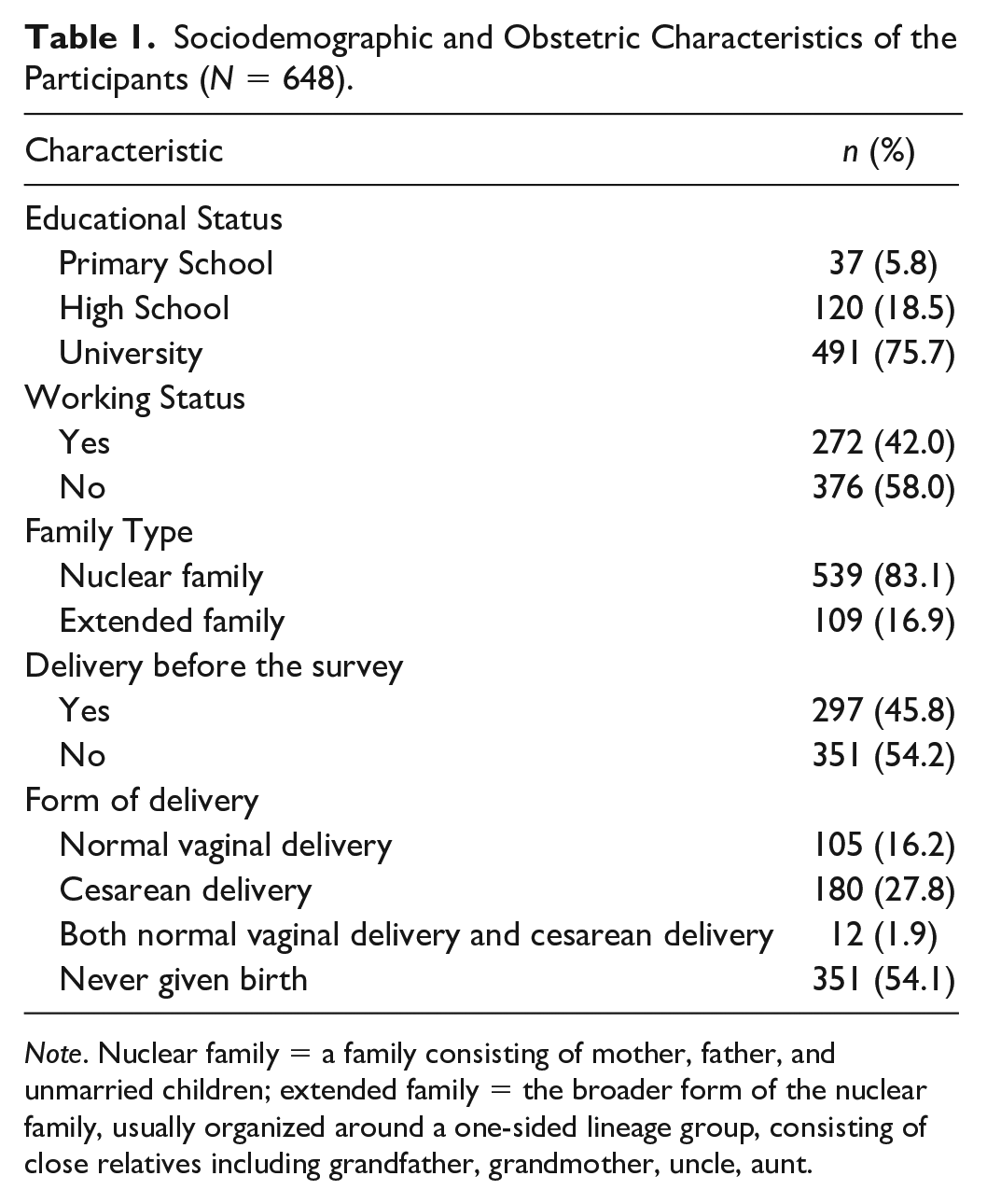
Note. Nuclear family = a family consisting of mother, father, and unmarried children; extended family = the broader form of the nuclear family, usually organized around a one-sided lineage group, consisting of close relatives including grandfather, grandmother, uncle, aunt.
Beliefs and Attitudes of Participants about Donor Milk Banking (N = 648).
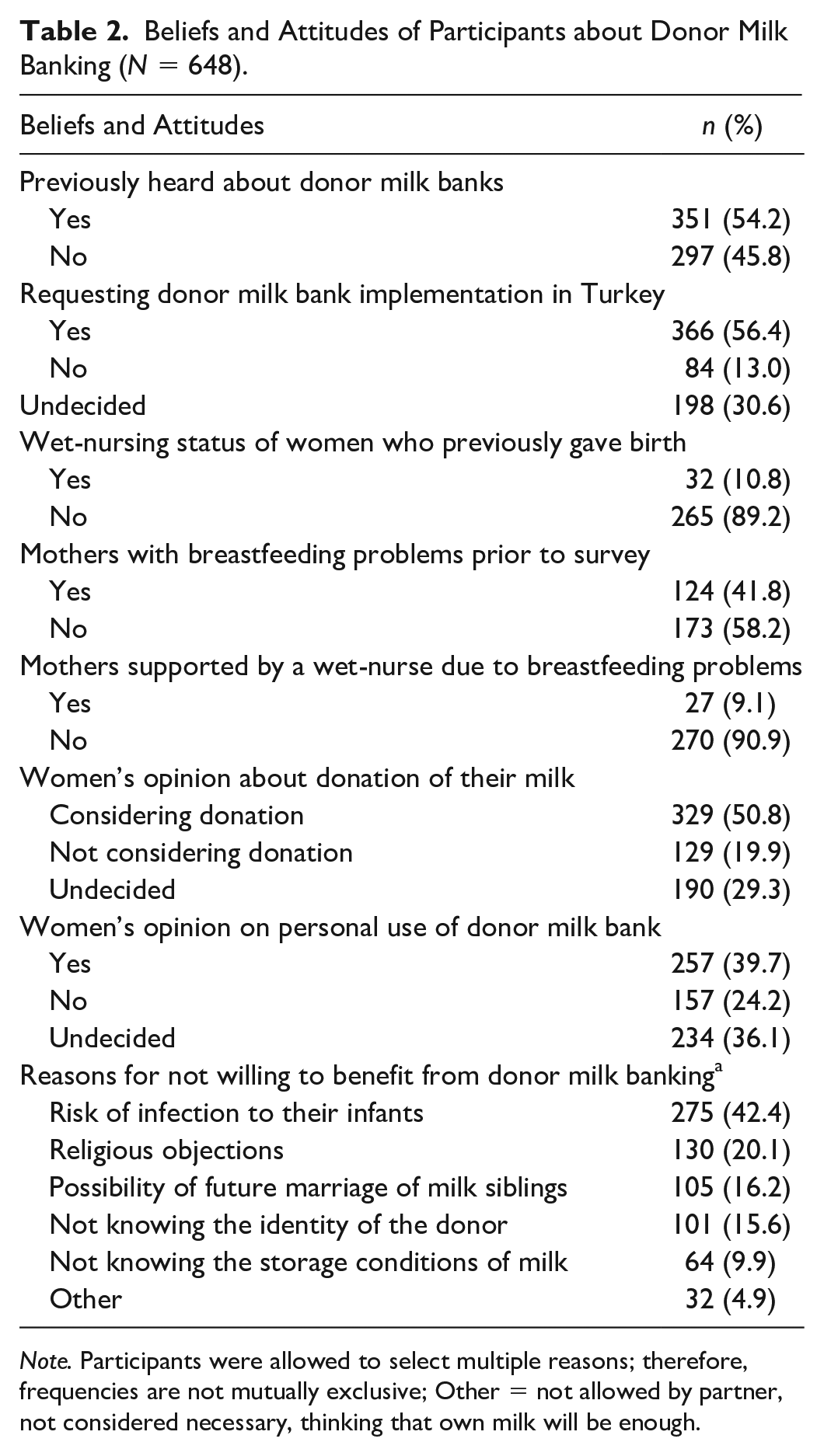
Note. Participants were allowed to select multiple reasons; therefore, frequencies are not mutually exclusive; Other = not allowed by partner, not considered necessary, thinking that own milk will be enough.
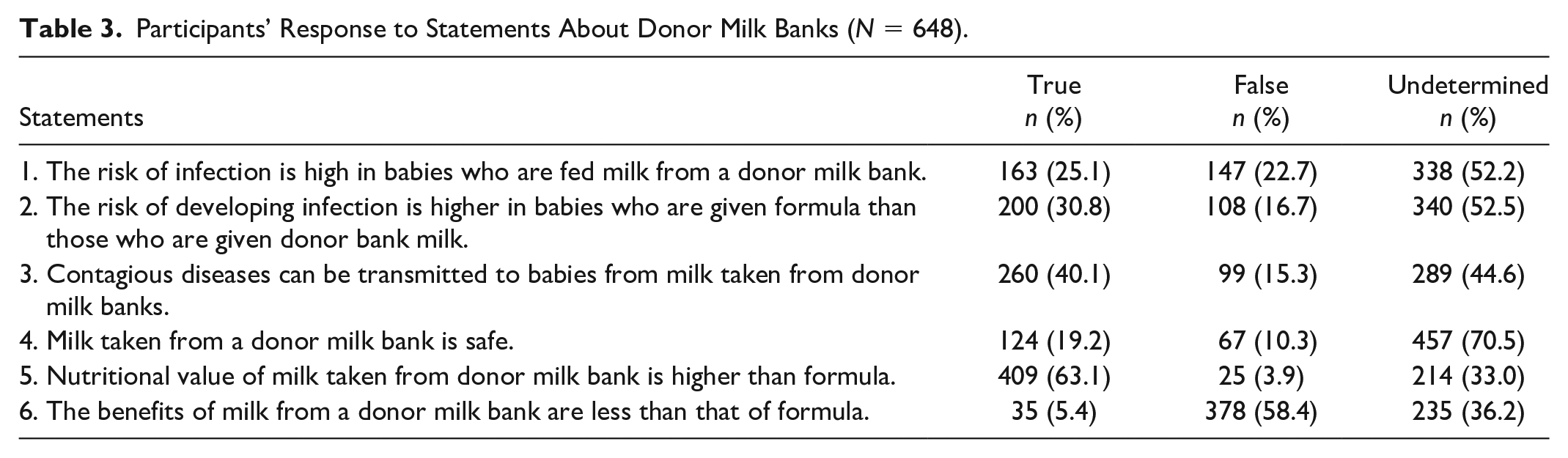
The responses of the participants to the statements about donor milk banks are presented in Table 3. The participants mostly thought that Statement 5 was true, Statement 6 was false, and they were undecided about Statement 4. Additionally, the relationships between the education levels of the participants and other sociodemographic and obstetric variables are summarized in Table 4. Accordingly, the education level of the participants who had not given birth before was higher. It was found that the participants with a university-level education had higher rates of having heard about donor milk banks before and were considering using donor milk bank in the case of obstacles to their breastfeeding. These data are summarized in Table 5.
Participants’ Response to Statements About Donor Milk Banks (N = 648).
Comparison of Sociodemographic and Obstetric Characteristics Grouped by Educational Status (N = 648).
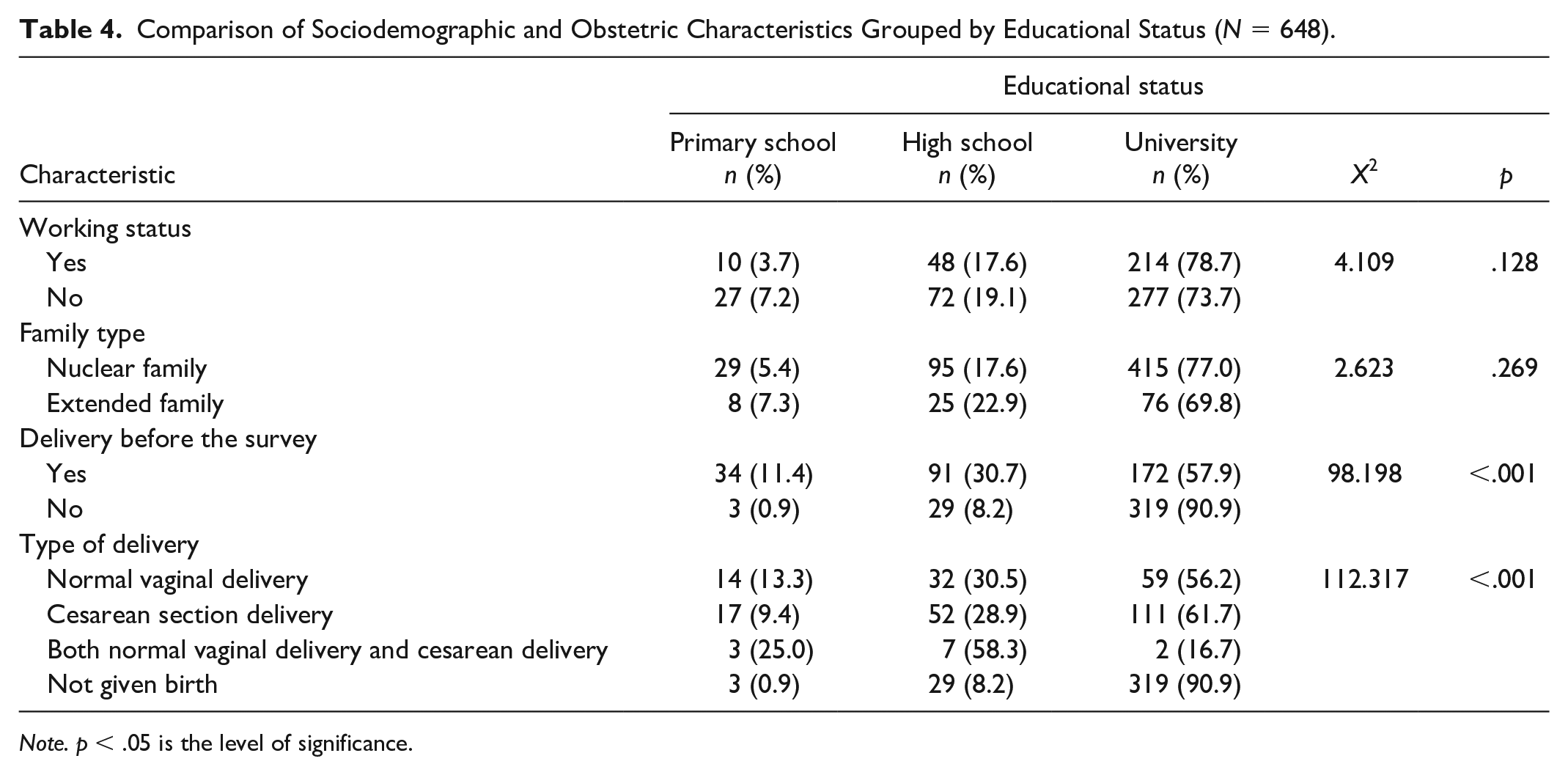
Note. p < .05 is the level of significance.
Comparison of Participants’ Sociodemographic Characteristics Grouped by Their Beliefs About Donor Milk Banks (N = 648).
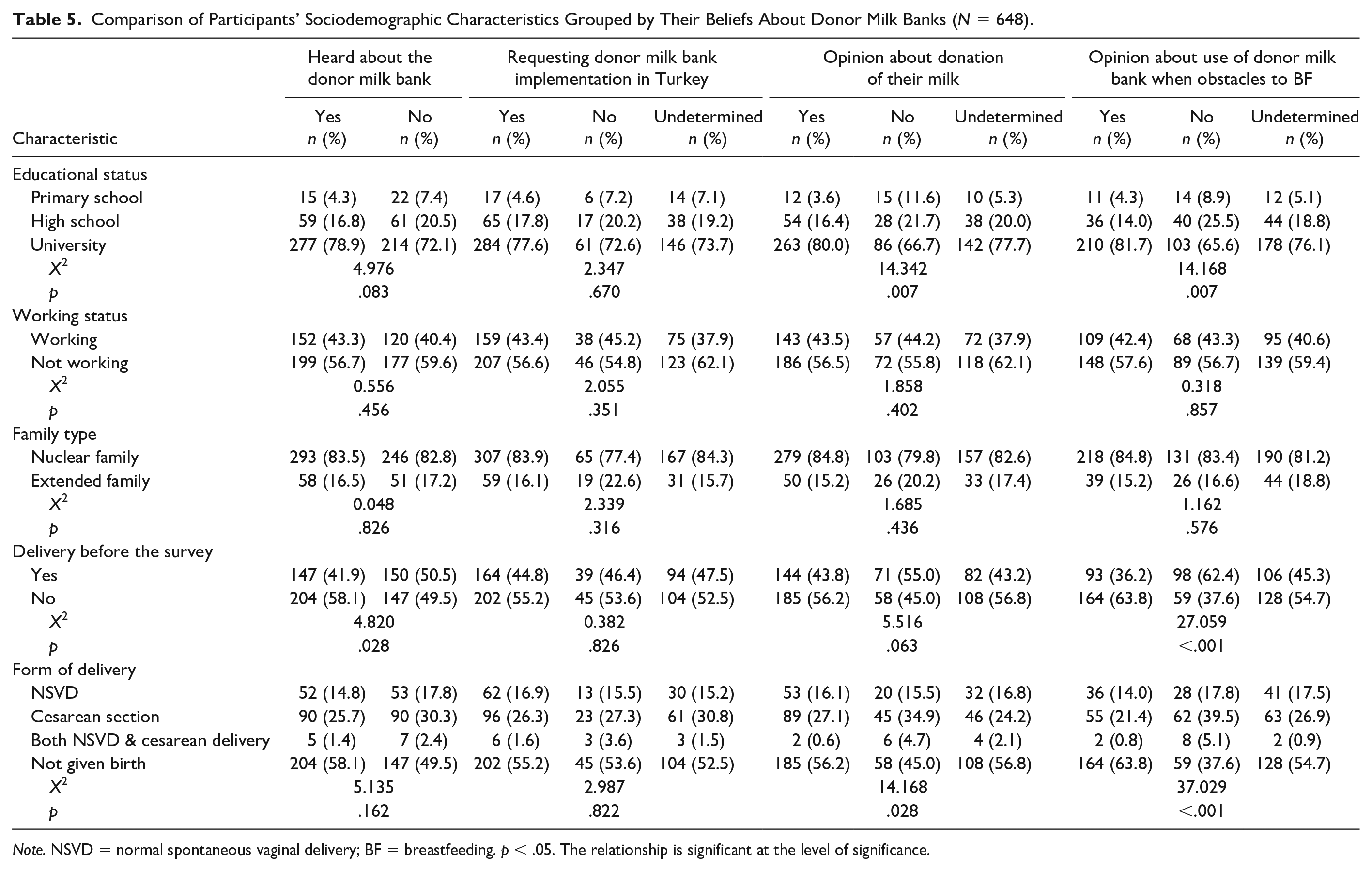
Note. NSVD = normal spontaneous vaginal delivery; BF = breastfeeding. p < .05. The relationship is significant at the level of significance.
Discussion
In this study, we aimed to determine the knowledge and beliefs of women about donor milk banking. In 2018, a similar study was conducted with 240 women from a semi-rural area (Denizli) in Turkey, and the researchers showed that 62.5% of their participants had heard about donor milk banking (Ergin & Uzun, 2018). Researchers of other studies conducted in Turkey (in İzmir and Çankırı) have obtained similar results (Ekşioğlu et al., 2015; Pekyiğit et al., 2019). One of the strong and unique features of this study was that it also included the views of women who had no children; the participants in previous studies consisted of only mothers.
In a study conducted by Ekşioğlu et al. (2015), the researchers showed that 71.3% of the participants were willing to have the practice of donor milk banking in Turkey. There is no active donor milk bank in Turkey. Discussions about donor milk banks in Turkey continue and are not settled mostly due to the risk of “milk kinship,” which is a religious concern (Religious Affairs Supreme Council Presidency, 2020).
In Muslim societies, wet-nursing is a well-established practice in feeding newborn infants (Kul Uçtu & Özerdoğan, 2017). Wet-nursing is also a practice, especially in rural areas in Turkey, when the mother cannot breastfeed for any reason (Yılmaz et al., 2018). However, due to the increase in formula use, there has been a decrease in the rate of wet nursing (AlHreashy, 2018). In studies in various provinces of Turkey, researchers have shown that the incidence of wet-nursing of infants was 5.2%–12.5% (Ekşioğlu et al., 2015; Ergin & Uzun, 2018; Yılmaz et al., 2018). Our study, having quite a large sample, was similar to other studies in terms of the data we collected. In our study, about one in every 10 mothers who had given birth had been a wet nurse before, and the same number had been supported by a wet nurse, due to their own breastfeeding problems. In fact, the rate of wet-nursing has not changed in the last 10 years.
In the study conducted by Ergin and Uzun (2018), the researchers showed that most participants (78.3%) agreed with being a wet nurse or sharing their milk if necessary, but only one fifth (19.1%) would donate their milk to a donor milk bank. Ekşioğlu et al. (2015) reported that only 26.7% of mothers wanted to benefit from a donor milk bank if there was a situation that prevented them breastfeeding. In previous studies, researchers have shown that there is no problem in sharing human milk, but the problem stems from the issue of getting it from a milk bank or sharing it with a milk bank.
In our study, it was determined that the reasons for the participants not wanting to benefit from a donor milk bank were the risk of infection to their baby, finding the issue religiously objectionable, and the possibility of their child marrying their milk sibling in the future. The results of our study were similar to the results of other studies conducted in Turkey (Ergin & Uzun, 2018; Pekyiğit et al., 2019). The most critical demand for human milk is for the most vulnerable newborns who are either premature or in need of neonatal intensive care (Quitadamo et al., 2018). Additionally, if the mother is ill, or experiencing excessive stress for her baby at the intensive care unit, she might not be able to provide enough milk for her baby (Coşkun & Günay, 2020). In our study, it was seen that most of the women did not know that the milk obtained from a donor milk bank is safe in terms of infection risk, and they were undecided about this issue. It may be thought that an institutional structure as a donor milk bank can eliminate the risk of infection and be reliable by following strict policies and procedures regarding the screening, careful collection and use of milk, as well as the pasteurization and culturing of milk with serological tests. However, the majority of the participants agreed that the statement “Nutritional value of milk taken from donor milk banks is higher than formula” was correct. Nevertheless, it is controversial that the nutritional value of milk taken from a donor milk bank is higher than formula (Brownell et al., 2018; McGee et al., 2020; Soares et al., 2019). Furthermore, finding the issue religiously objectionable and the possibility of the child marrying their milk sibling in the future, which we discussed under two different options in our study, were also important issues. According to Islamic sources, the marriage of people sharing the same human milk with each other raises concerns (Alnakshabandi & Fiester, 2016; Onat & Karakoç, 2019; Özdemir et al., 2015). In a study conducted by religious officials in Turkey, the researchers reported that 63.3% of the participants were in favor of donor human milk, 71.3% would approve the establishment of milk banks if only a limited number of recipients benefit from the donor milk bank (1–3 milk donors in each pool, provided that the donor and the recipients know each other’s identity), and only 1.7% of them leaned towards a western type of donor milk bank (Özdemir et al., 2015). In fact, it is thought that women do not have enough information on these issues. Before the establishment of donor milk banks, the concerns and anxieties of the society must first be resolved. In addition to the criteria of donor milk banks operating in the rest of Europe, there are several recommendations for donor milk banks to provide services in Turkey. These recommendations are a regular control mechanism that can prevent issues (e.g., mutual knowledge regarding the identities of the donor and the recipient) that Islam does not approve (e.g., marrying recipients to their milk siblings in the future; Kabasakal & Bozkurt, 2019; Onat & Karakoç, 2019; Clifford et al., 2020; Subudhi et al., 2021). In this context, women should be informed that donor milk banks are safe in terms of infectious disease risk, and that milk obtained from a donor milk bank is more effective than formula in cases where their mother’s milk is not available for premature and sick newborns. Additionally, if the concept of milk kinship is taken into account with appropriate legal regulations, it is assumed that milk banks will find support in Turkey.
One of the surprising results of this study was that the participants who knew more about donor milk banks and were willing to use donor milk were more frequently the women who had not given birth before. This situation is thought to be due to the higher education level of the women who had not given birth. Another surprising result was that the participants who were university graduates and had not given birth before were considering donating their milk and using donor milk banks in the case of obstacles to breastfeeding. In line with these results, it may be considered that education level was a determining factor in forming the opinions of the participants about donor milk banking. Therefore, more detailed studies are needed to examine how education level affects women’s beliefs about donor milk banking.
Limitations
We did not count the total number of people the online link of the questionnaire reached. This may have created a bias whereby the questionnaire was answered by women who were interested in the topic of donor milk banks. At the same time, sharing the data form via social media may have caused the questionnaire to be answered according to the ability of the women to use the internet. The questionnaire was created by the researchers and therefore was not externally validated. In general, closed-ended questions were used in the questionnaire, but if there had been open-ended questions, the participants’ views could have been understood more clearly. Additionally, regional differences (rural, industrial area, urban, or suburban districts) were not taken into account in the study. Therefore, other researchers could increase the sample size by taking into account regional differences in future studies.
Conclusions
Donor milk banks are particularly important for sick and premature infants whose mothers cannot breastfeed them or do not have enough milk. Breastfeeding is an informal kinship system that still prevails in Turkish society. Most women are welcome to donate human milk. It is seen that the obstacle stems from the risk of disease transmission, finding the issue religiously objectionable, and the possibility of the child marrying their milk sibling in the future. It may be thought that the reason for this is that women do not have enough information about the subject. Especially, it can be thought that women’s views can change positively if adequate restriction and identification requirements are applied to donors who donate human milk to a donor milk bank as well as to the recipients. In order to inform people about this issue, which is vital for the health of premature newborns, first of all midwives, neonatal physicians and nurses, pediatricians and pediatric nurses, and clergy should organize public awareness meetings and campaigns through social media and the press.
Supplemental Material
sj-docx-1-jhl-10.1177_08903344211037989 – Supplemental material for Turkish Women’s Beliefs Concerning Human Milk Banking
Supplemental material, sj-docx-1-jhl-10.1177_08903344211037989 for Turkish Women’s Beliefs Concerning Human Milk Banking by Suzi Özdemir, Sena Dilek Aksoy and Gaye Soyaslan Akdağ in Journal of Human Lactation
Footnotes
Disclosures and Conflicts of Interest
The authors declared no potential conflicts of interest with respect to the research, authorship, and/or publication of this article.
Funding
The authors received no financial support for the research, authorship, and/or publication of this article.

Supplementary Material
Supplementary Material may be found in the “Supplemental material” tab in the online version of this article.
References
Supplementary Material
Please find the following supplemental material available below.
For Open Access articles published under a Creative Commons License, all supplemental material carries the same license as the article it is associated with.
For non-Open Access articles published, all supplemental material carries a non-exclusive license, and permission requests for re-use of supplemental material or any part of supplemental material shall be sent directly to the copyright owner as specified in the copyright notice associated with the article.
