







Abstract
Background:
Pasteurized donor human milk provides a safe and desirable alternative when a parent’s own milk is insufficient or unavailable. Currently, the demand for donor human milk exceeds the available supply. Little is known about the beliefs breastfeeding individuals have about milk bank donation.
Research Aims:
The aims of this exploratory study were to (a) provide a preliminary estimate of how well intention can be predicted, and to suggest which of the global constructs of the Reasoned Action Approach has the most influence on intention; and (b) identify the salient, top-of-the-mind beliefs underlying the intention to donate some of the milk an individual is currently producing to a milk bank.
Methods:
An exploratory, cross-sectional study design, based on the Reasoned Action Approach, was used to measure the theory’s global constructs and elicit beliefs underlying the intention to donate milk of lactating individuals (N = 118) living in Indiana, Illinois, Missouri, and Kentucky. Thematic and frequency analyses and multiple regression were performed.
Results:
Quantitative analyses found that injunctive norm and the autonomy component of perceived behavioral control were independently associated with intention. Qualitative analyses identified the advantages (e.g., help and save babies, won’t waste milk), referents who support (e.g., husband, family), and facilitators (e.g., having a convenient, close location, having more knowledge and information) of donating milk.
Conclusions:
This research provides insight into how milk banks might recruit and retain donors. Additional quantitative research with a larger sample is necessary to confirm the preliminary findings of this study.
Keywords
Key Messages
Despite the increased demand for pasteurized donor human milk, little is known about the beliefs lactating individuals hold about donating their milk.
Findings suggest that autonomy and injunctive norm are important influences on the intention to donate some of the milk an individual is currently producing to a milk bank. That is, people who feel they can donate on their own, and who believe that others who are important to them think they should donate, are more likely to intend to donate.
This is the first study to use a theory-based approach to explore the belief structure underlying the decision to donate milk to a milk bank in the United States.
Background
Human milk is the optimal nutrition source for infant health and development (Victora et al., 2016). Pasteurized donor human milk (PDHM) is a safe and desirable alternative when a parent’s own milk is insufficient or unavailable, and is especially beneficial for preterm and low-birth-weight infants (American Academy of Pediatrics Committee on Nutrition, Section on Breastfeeding, & Committee on Fetus and Newborn, 2017). In the United States, pasteurized donor milk is primarily obtained through nonprofit human milk banks. These milk banks collect, screen, pasteurize, and distribute donor milk in accordance with guidelines established by the Human Milk Banking Association of North America (HMBANA).
Despite the importance of PDHM, the demand for donor milk often exceeds the supply of donor milk available (PATH, 2019). The shortfall of donors is often attributed to low breastfeeding rates and limited breastfeeding support in the United States, a lack of knowledge of milk banks, and peer-to-peer milk sharing diverting milk away from milk banks (Ellsworth et al., 2021; Updegrove, 2013). The motivations of milk donation are under-researched (Fang et al., 2021). However, researchers have found that women donate due to a combination of practical and altruistic factors ( K.Wambach et al., 2019). Reasons for donating include helping others, having an oversupply/excess milk, needing freezer space, and not wanting to waste milk (Osbaldiston & Mingle, 2007; K.Wambach et al., 2019).
To ensure an adequate supply of human milk for the infants who need it, it is necessary to encourage lactating individuals to donate their excess milk. To facilitate the recruitment of donors, it is critical to develop interventions that address the many factors underlying their decision to donate. Behavioral science theories provide a systematic approach to identifying and measuring these factors. They can help identify the beliefs that might differentiate donors from non-donors. Furthermore, evidence suggests that health promotion interventions developed using behavioral science theories are more effective than those not using theory (Glanz & Bishop, 2010). The Reasoned Action Approach (RAA), and its previous iteration, the Theory of Planned Behavior, have been used successfully to investigate numerous health behaviors (McEachan et al., 2016), including breastfeeding duration, exclusivity, and milk expression and pumping ( Y. Y. K.Bai et al., 2016; K. A.Wambach, 1997). In addition, a meta-analysis confirmed the effectiveness of interventions based on this theory (Steinmetz et al., 2016). Criticisms of the theory include the insufficiency of its constructs, its emphasis on deliberate action, its limited applicability to non-Western cultures, issues related to measurement, and the limitations of testing causal effects with correlational data (Fishbein & Ajzen, 2010). We selected the RAA because it provided a clear way to measure its constructs as well as an explicit approach to identifying the underlying belief structure.
According to the RAA (Figure 1), intention is the most immediate determinant of a behavior (Fishbein & Ajzen, 2010). Intention is determined by three global constructs: attitude toward the act, perceived norm, and perceived behavioral control (Fishbein & Ajzen, 2010). Attitude toward the act refers to the favorableness or unfavorableness of performing a specific behavior, and is comprised of experiential and instrumental attitudes (Fishbein & Ajzen, 2010). Experiential attitude captures the affective feelings toward the behavior (Fishbein & Ajzen, 2010). Instrumental attitude refers to one’s evaluation of the behavior’s outcome (Fishbein & Ajzen, 2010). Perceived norm is the social pressure one feels to perform a behavior or not and includes injunctive and descriptive norms (Fishbein & Ajzen, 2010). Injunctive norm is how an individual feels they are perceived by others in doing a specific behavior (Pedersen et al., 2017). Descriptive norm is the perception of whether others are performing or not performing a given behavior (Fishbein & Ajzen, 2010). Perceived behavioral control is an individual’s perception of the degree to which they can perform a behavior, and consists of the autonomy and capacity components (Fishbein & Ajzen, 2010). Autonomy refers to the degree to which one has control, and capacity is the perceived confidence in carrying out the behavior (Fishbein & Ajzen, 2010).
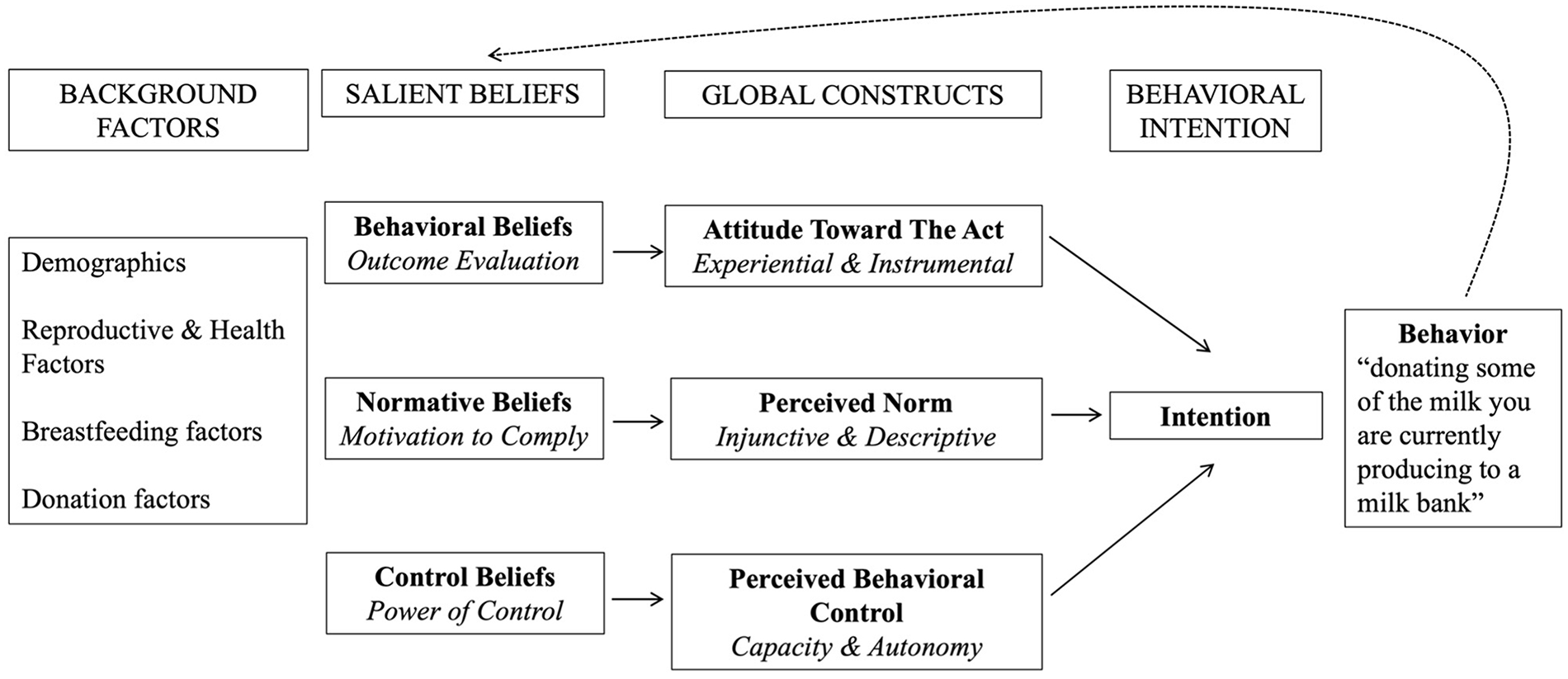
Reasoned Action Approach.
Salient beliefs underlie the three global constructs. Salient beliefs are the top-of-the-mind, easily accessible beliefs that an individual holds (Fishbein & Ajzen, 2010). Although an individual may hold numerous beliefs, the RAA assumes that only a small number of beliefs influence an individual’s behavior at a given moment (Fishbein & Ajzen, 2010). Attitude is based on behavioral beliefs, which refer to the consequences of engaging in a behavior. Normative beliefs refer to perceptions of what social referents (individuals or groups) think, and control beliefs are the circumstances that facilitate or hinder the behavior (Fishbein & Ajzen, 2010).
The first step in applying the RAA to develop a behavioral intervention is to conduct formative research that defines the behavior; elicits salient beliefs; assesses attitude, perceived norm, and perceived behavioral control and intentions; and collects demographics and self-reports of the behavior (Fishbein & Ajzen, 2010). To the authors’ knowledge, this is the first study to use the RAA to explore the belief structure underlying the decision to donate milk to a milk bank. The aims of this exploratory study were to (a) provide a preliminary estimate of how well intention can be predicted and to suggest which of the global constructs of the Reasoned Action Approach has the most influence on intention, and (b) identify the salient, top-of-the-mind beliefs underlying the intention to donate some of the milk an individual is currently producing to a human milk bank.
Methods
Research Design
An exploratory, cross-sectional study design based on the Reasoned Action Approach was used to measure the theory’s global constructs and elicit beliefs underlying the intention to donate milk of lactating individuals. This design allowed for the assessment of the knowledge and beliefs about donating milk to a milk bank held by lactating individuals who are potential milk donors. An online survey was administered through Qualtrics. This study was granted exempt status by the Indiana University Institutional Review Board on April 16, 2018 (1804973013).
Setting and Relevant Context
Participants lived in the United States in Indiana, Illinois, Kentucky, and Missouri. Compared to the national average of 24.9%, exclusive breastfeeding at six months in Indiana is 21.5%, 21.2% in Kentucky, 24.6% in Missouri, and 28.3% in Illinois (United States Centers for Disease Control and Prevention [CDC], 2022). At the time of the study, these states represented the geographical catchment area of The Milk Bank, an HMBANA member milk bank in Indianapolis, Indiana, that was founded in 2005 (The Milk Bank, 2024). The Mothers’ Milk Bank of the Western Great Lakes in Elk Grove, Illinois, founded in 2015, and Saint Luke’s Heart of America Mothers’ Milk Bank in Kansas City, Missouri, were also in operation (Mothers’ Milk Bank of the Western Great Lakes, 2015). Saint Luke’s closed in January 2022 due to funding and staffing issues (Leon, 2022; Skalicky, 2023).
The number of nonprofit milk banks in the United States has seen significant growth. In 1998, only three were in operation; by 2013, 13, and as of writing, 30 are in operation (Human Milk Banking Association of North America [HMBANA], 2024; Updegrove, 2013; Wilson-Clay, 2006). Despite this growth, there is variability in milk bank operations and limited infrastructure and coordination between milk banks (Fang et al., 2021; Israel-Ballard et al., 2019). Nonprofit milk banking relies on volunteer, screened donors, who are not financially compensated (Haiden & Ziegler, 2016).
Sample
The target population for this study was lactating individuals living in the Midwestern United States. Self-selection and virtual snowball sampling were used to recruit participants through Facebook (Berndt, 2020; Pedersen & Kurz, 2016). Eligibility criteria included: currently chest/breastfeeding a child under the age of 2 (including pumping and expressing milk and supplemental feeding), at least 18 years of age, and living in Indiana, Illinois, Kentucky, and Missouri. Individuals expressing milk after loss (bereavement) were excluded. The start of the survey provided information that described the purpose and process of the research, risks, benefits, incentives, how confidentiality would be protected, and how to contact the researchers. The first set of survey questions screened for eligibility. Participants were offered compensation for their time with a $20 gift card. Respondents were removed from the sample due to not finishing the survey, not completing any open-ended RAA elicitation questions, not completing any closed-ended RAA questions, being identified by Qualtrics as fraudulent, bot, or duplicate responses, or unusual responses to open-ended questions. The final sample size was 118. Given the exploratory nature of the study, a power analysis was not conducted (Haile, 2023). For Aim 2, Fishbein and Ajzen (2010) recommend that an elicitation be conducted with “a small sample.” Thus, the final sample was judged to be adequate for this exploratory study.
Measurement
The authors developed a survey instrument consistent with established guidelines for constructing an RAA questionnaire and eliciting salient beliefs (Fishbein & Ajzen, 2010). The survey had seven sections: questions assessing participants’ demographic, reproductive and health, and breastfeeding factors; open-ended RAA questions to identify the most frequently mentioned salient consequences, referents, and circumstances of donating some of the milk an individual is currently producing to a milk bank; closed-ended questions assessing the RAA global constructs in predicting the intention to donate some of the milk an individual is currently producing to a milk bank; additional demographic, reproductive, and breastfeeding factors; donation factors; participants’ desire to receive the survey incentive; and participants’ willingness to complete a follow-up interview. The survey included the following description of milk bank donation:
Sometimes individuals will have extra milk while they are breastfeeding. Some will donate this milk to a milk bank. A milk bank collects human milk from screened donors and distributes it to hospitals for infants in Neonatal Intensive Care Units. We are interested in your feelings and beliefs about donating some of the milk you are currently producing to a milk bank. You do not need to have extra milk to answer the following questions.
Participants were asked six open-ended questions to elicit salient beliefs that form the underlying belief structure of the intention to donate their milk to a milk bank (Supplementary Material). Participants were asked to list three top-of-the-mind responses for each question. Two items asked about consequences, two assessed social referents, and two assessed circumstances. Closed-ended RAA constructs were assessed with items using 7-point semantic differential or agree/disagree response scales. Three items were designed to measure intention and instrumental attitude; two items assessed the other five close-ended constructs (Supplementary Material). Items measuring the RAA constructs were recoded from 1 to 7 to -3 to +3. Then the two or three items for each construct were averaged to create measures of the seven RAA constructs. For example, the three items that assessed intention according to the RAA were averaged to form a measure of intention. Demographic, reproductive, and health factors, breastfeeding factors, and donation factors were obtained through close-ended questions. Questions captured participants’ age, race/ethnicity, reproductive histories, marital status, education level, type of birth, employment, household income, whether they had ever engaged in blood or organ donation blood, tissue, organ, and questions related to their participation with milk banking, sharing, or selling.
Participant Characteristics (N = 118).
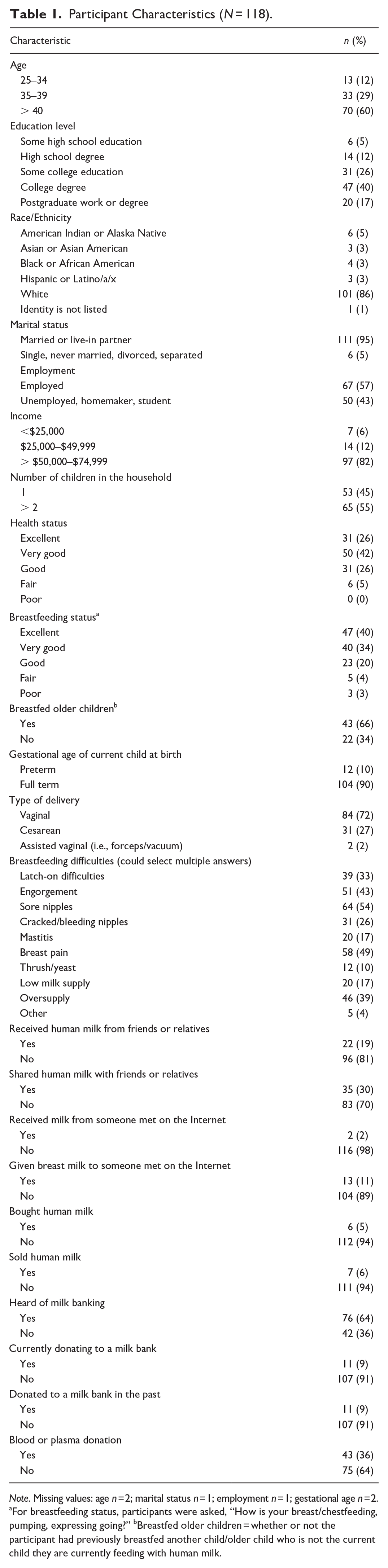
Note. Missing values: age n = 2; marital status n = 1; employment n = 1; gestational age n = 2.
For breastfeeding status, participants were asked, “How is your breast/chestfeeding, pumping, expressing going?” bBreastfed older children = whether or not the participant had previously breastfed another child/older child who is not the current child they are currently feeding with human milk.
Data Collection
Recruitment for the online survey took place December 6–9, 2019. Messages were placed on Facebook, and recruitment relied on social networking. Recruitment messages were posted to the first author’s personal Facebook page, one local breastfeeding coalition page, and one local La Leche League page. The post was shared seven times from the researcher’s personal page and five times from the La Leche League page. The Milk Bank had planned to share the survey on its social media accounts; however, the survey closed before it was posted.
Before proceeding with the survey, participants had to agree/disagree as an indication of their voluntary consent to participate. To maintain confidentiality, survey data were kept on the researchers’ password-protected computers.
Data Analysis
To describe the sample, descriptive statistics were used to summarize the demographic, reproductive, breastfeeding, and donation factors. Data were analyzed using STATA (Version 15).
To assess the reliability of the close-ended constructs, Cronbach’s alpha was calculated. During the first phase of RAA research, regression analysis can provide a preliminary estimate of how well intention can be predicted from the global constructs, as well as initial estimates of the importance of each of these constructs (Fishbein & Ajzen, 2010). To examine Aim 1, we conducted a single multiple regression analysis predicting intention from the six global constructs that are presumed determinants or predictors, as shown in Figure 1. Since this was an exploratory study with a limited sample size, all predictors were entered at once, and there were no control variables.
For the six open-ended elicitation questions a content analysis was conducted. Verbatim responses for each question were exported from Qualtrics as an Excel file. Exact answers were placed together and items of similar meaning were also placed together. To ease in coding, more frequent responses were placed at the top of the document and infrequent responses at the bottom. The first and second authors held multiple conversations until a consensus was reached on categorizing responses into narrow codes. A coding manual was created with 174 codes.
The first author coded all the responses, and a second coder familiar with conducting an RAA belief elicitation coded a random subset of 25% of cases for each of the six belief elicitation questions. Interrater agreement using the Kappa statistic was used to measure the degree of consistency between coders. Following the reliability analysis, preliminary frequency analyses of the narrow codes were conducted. Lastly, closely related narrow codes were combined. After combined codes were finalized, additional frequency analyses were conducted. This provided the most frequently mentioned salient advantages, consequences, social referents, facilitators, and barriers to donation.
Results
Characteristics of the Sample
The majority of participants were White, married, college-educated, employed, earned more than $50,000 a year, and had a mean age of 39.9 (SD = 4.45). More than half reported that they had heard of milk banking, but fewer than 10% reported donating to a bank currently or in the past (Table 1).
Aim 1: Provide a Preliminary Estimate of How Well Intention Can Be Predicted and Suggest Which of the Global Constructs of the Reasoned Action Approach Has the Most Influence on Intention
Table 2 presents the reliability, means, and standard deviations for the seven RAA constructs. As shown in Table 3, all six global constructs had a medium to large positive bivariate Pearson correlation with intention. The results from the regression indicate that intention is predicted by the combination of the six constructs of the RAA (F [6, 111] = 19.21, p < 0.001) with an adjusted R2 of 0.48. The constructs account for 48% of the variance of intention. The unstandardized regression weights for just two of the components, injunctive norm (b = 0.24, p = 0.013) and autonomy component of perceived behavioral control (b = 0.52, p < 0.001), were statistically significant. This indicates that these were the only two components independently associated with intention (Table 3).
Construct Scale Characteristics (N = 118).
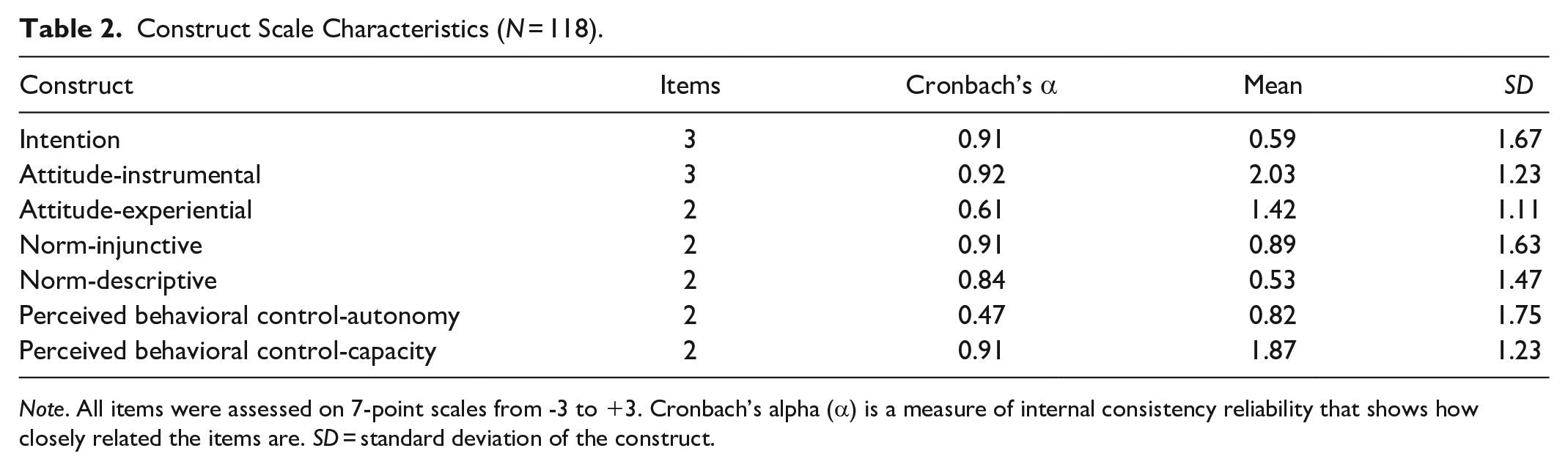
Note. All items were assessed on 7-point scales from -3 to +3. Cronbach’s alpha (α) is a measure of internal consistency reliability that shows how closely related the items are. SD = standard deviation of the construct.
Predictors of Intention to Donate Milk to a Milk Bank (N = 118).
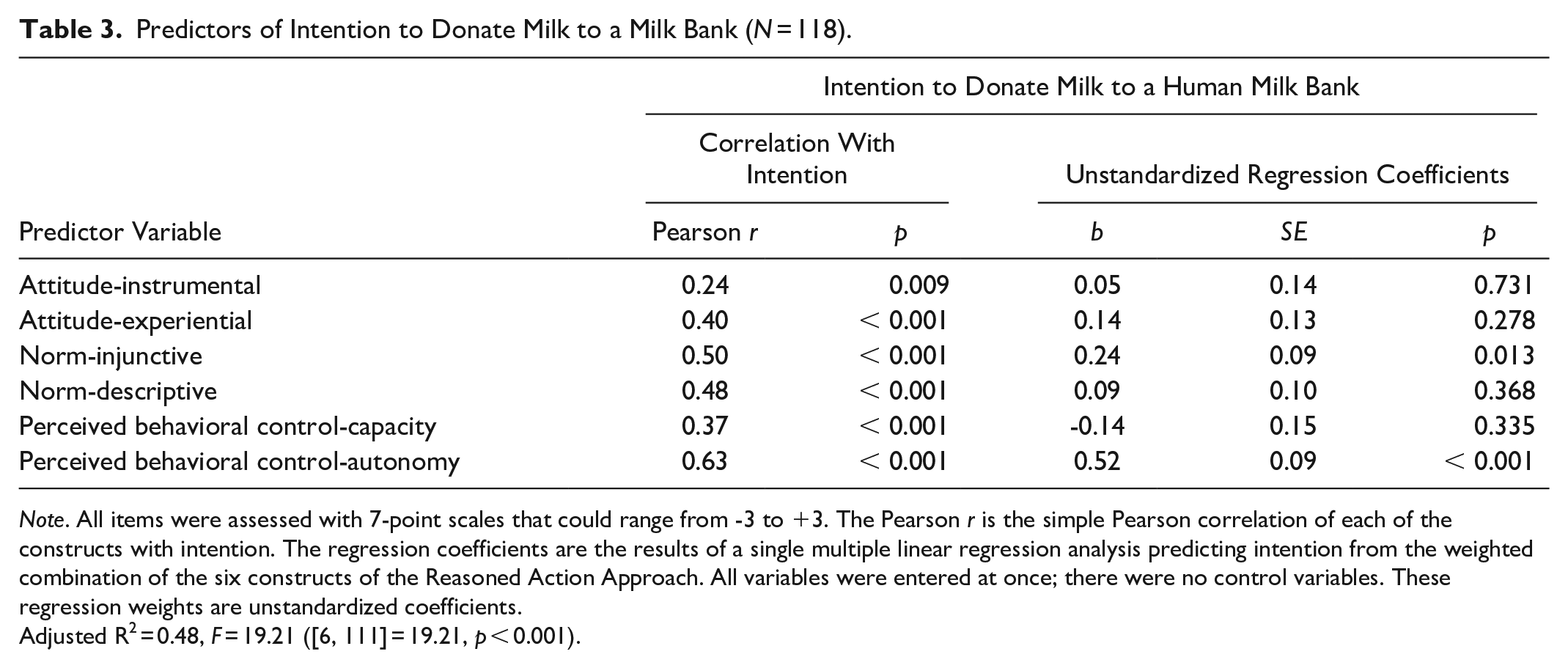
Note. All items were assessed with 7-point scales that could range from -3 to +3. The Pearson r is the simple Pearson correlation of each of the constructs with intention. The regression coefficients are the results of a single multiple linear regression analysis predicting intention from the weighted combination of the six constructs of the Reasoned Action Approach. All variables were entered at once; there were no control variables. These regression weights are unstandardized coefficients.
Adjusted R2 = 0.48, F = 19.21 ([6, 111] = 19.21, p < 0.001).
Salient Consequences of Donating Milk to a Milk Bank (N = 118).
Note. Each participant could list multiple answers.
Aim 2: Identify the Salient Beliefs Underlying the Intention to Donate Some of the Milk an Individual Is Currently Producing to a Milk Bank
The Kappa statistic for each belief yielded a high level of reliability (0.98 for advantages, 0.94 for disadvantages, 0.94 for approvers, 0.94 for disapprovers, 1.00 for easy circumstances, and 1.00 for hard circumstances; Landis & Koch, 1977).
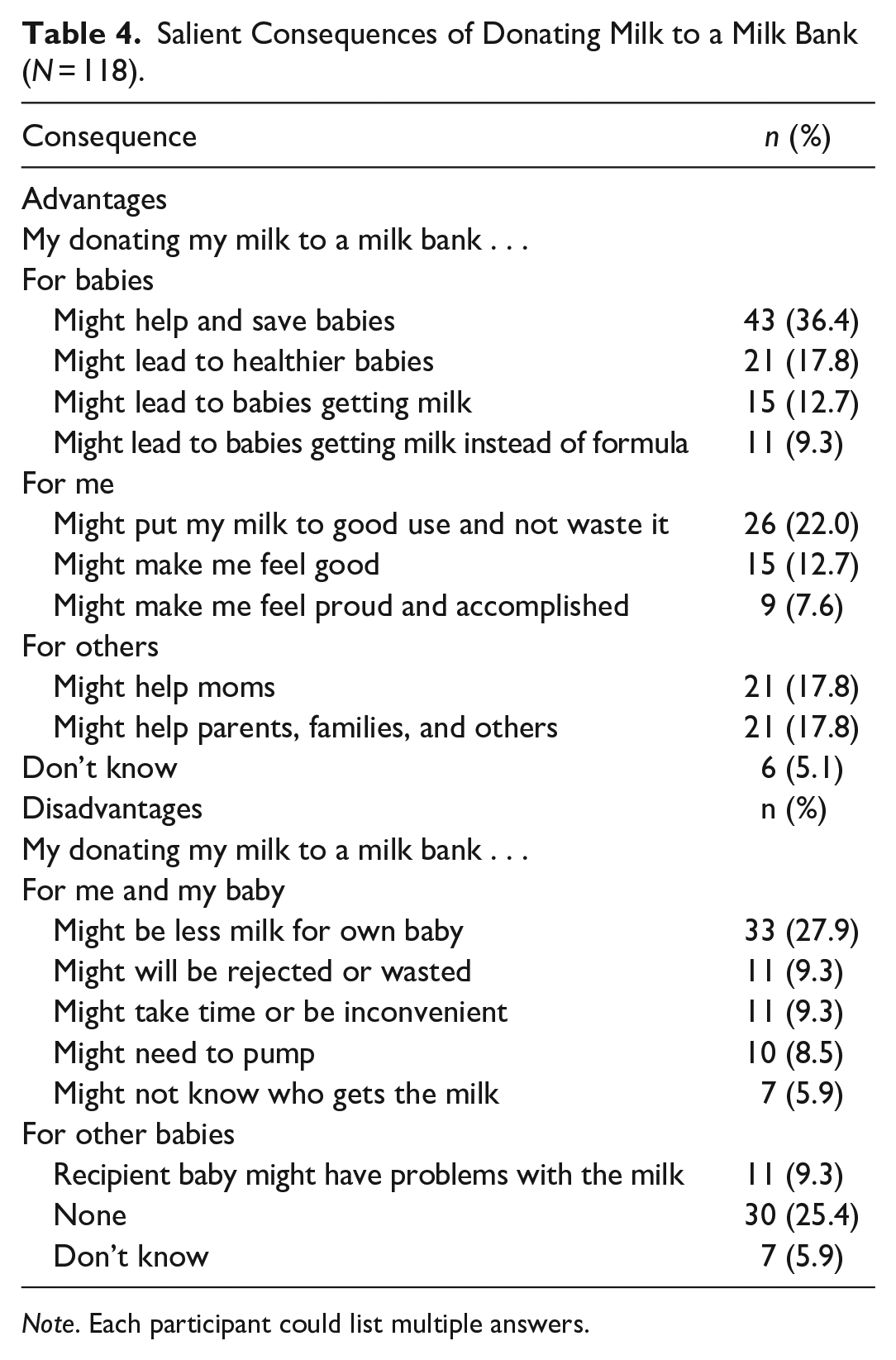
Table 4 shows the salient consequences of donating milk to a milk bank. The use of the word milk refers to expressed milk outside of the body, and not co- or cross-nursing. Responses are categorized as to whether the consequence/advantage is for babies, for oneself, or for others. The most mentioned advantage of donation was might help and save babies (36.4%, n = 43). This category included responses of “help babies,” “help NICU [neonatal intensive care unit] babies,” and “saving babies.” The second most common advantage was that “donating might put their milk to good use and not waste it” (22%, n = 26). Responses for this category included “not waste extra milk,” and “good use for extra milk.” Nearly 18% (n = 21) of participants identified that donating might lead to healthier babies, might help moms, and might help parents, families, and others as other advantages. Example responses for these categories were “babies are healthier,” “immune system help,” “providing a baby with the best nutrition possible,” “help other moms,” “help others,” and “help families who don’t have enough breast milk.”
Salient Referents for Donating Milk to a Milk Bank (N = 118).
Note. Each participant could list multiple answers.
The most common disadvantage was that donating might mean less milk for their own baby (27.9%, n = 33). Responses in this category included “run out of milk for my own baby,” “my freezer stash may run out,” and “might need it for my baby in the future instead.” Many participants noted that there were no disadvantages (25.4%, n = 30), sharing “I don’t think there are any disadvantages,” and “honestly can’t think of anything bad.” Nine percent (n = 11) were concerned that donating milk might take time or be inconvenient, that their milk will be rejected or wasted, or that the recipient infant might have problems with the milk. Responses in these categories included “it takes time and effort to donate,” “it could be rejected if I wasn’t careful in the way I pumped/cleaned/stored milk,” and “donate contaminated milk and make baby sick unintentionally.” Some participants were worried about the need to pump (8.5%, n = 10) and that they might not know who gets the milk (5.9%, n = 7).
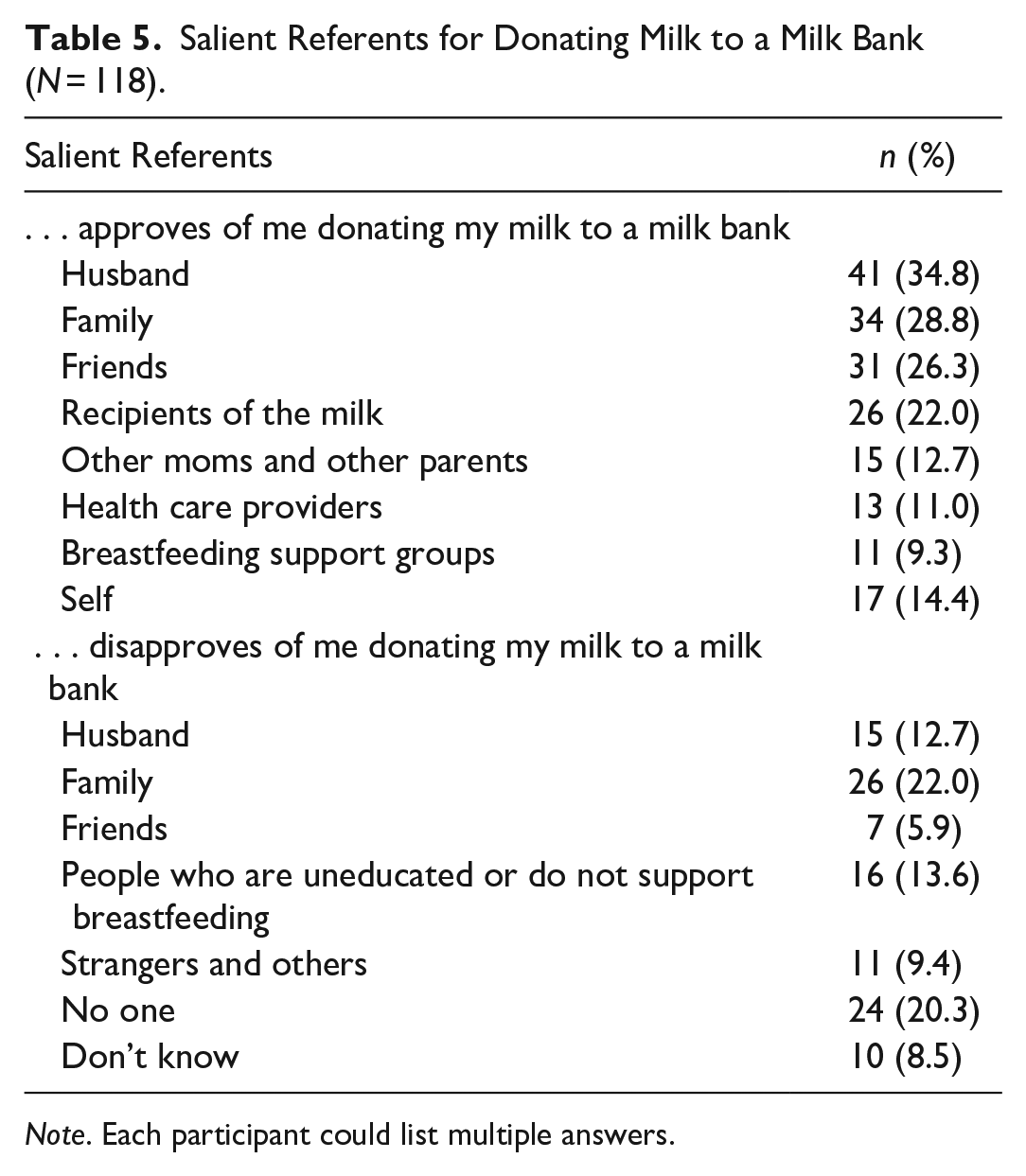
As seen in Table 5, husband (34.8%, n = 41) and family (28.8%, n = 34) were the social referents most frequently mentioned as approving milk donation. Friends were the next frequently mentioned approving referent (26.3%, n = 31), followed by recipients of the milk (22%, n = 26). Some participants also felt that other mothers and parents (12.7%, n = 15), health care providers (11%, n = 13), and those from breastfeeding support groups (9.3%, n = 11) would approve of their donating milk. Although identified as approving referents, husbands (12.7%, n = 15) and family (22%, n = 26) were also identified as individuals and groups that might be disapproving of donating milk. Others that might disapprove were people who were uneducated or who did not support breastfeeding (13.6%, n = 16). This included responses of “people who oppose breastfeeding,” “ignorant people,” and “people who think it’s weird.” Nearly one in five shared that no one would disapprove of them donating milk (20.3%, n = 24).
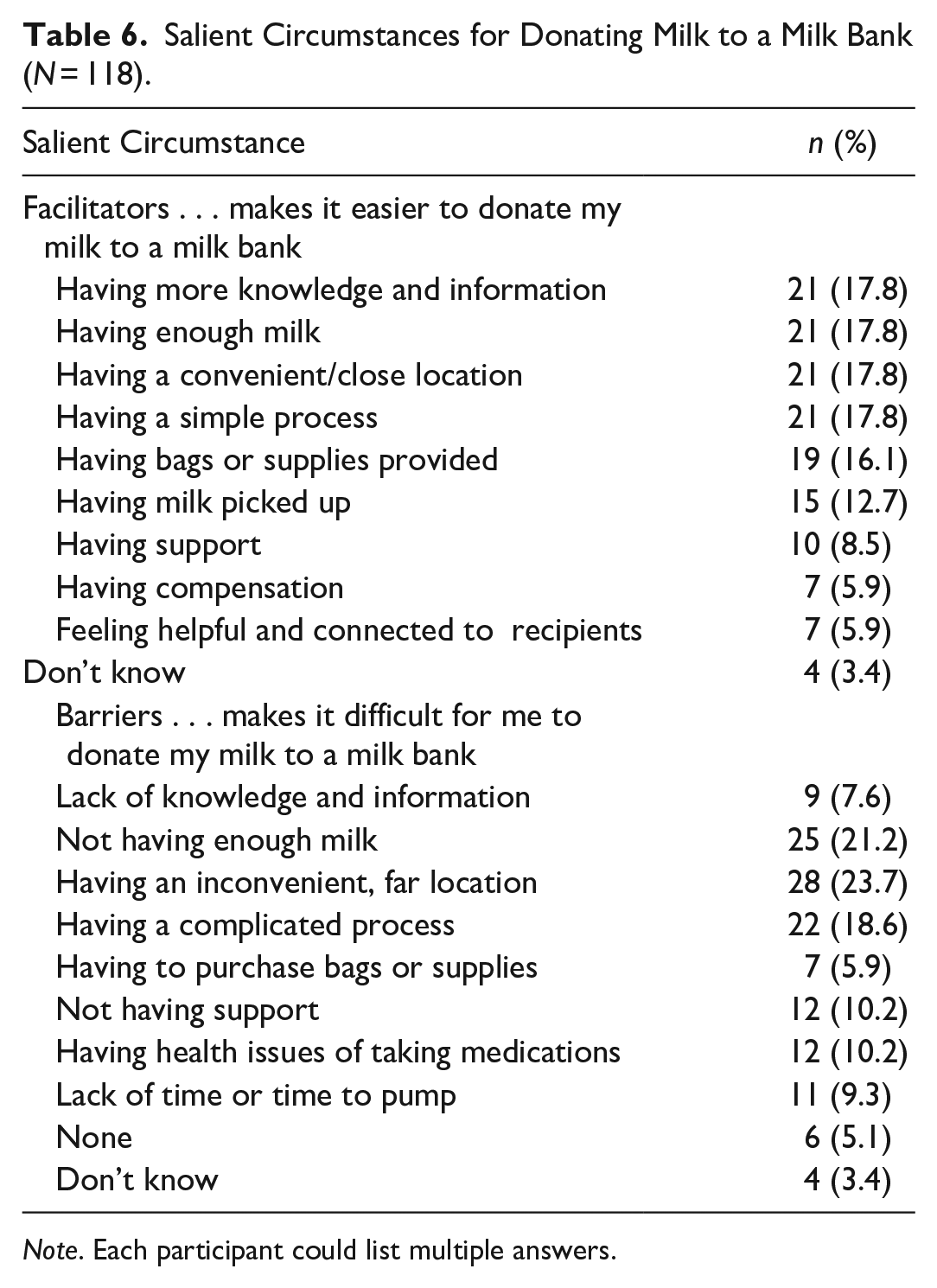
Participants identified top-of-the-mind facilitators and barriers underlying the control component of donating some of the milk they were currently producing to a milk bank (Table 6). Four categories of responses were mentioned by 17.8% (n = 21) of participants as being a facilitating circumstance. These categories were: Having a convenient, close location; having more knowledge and information; having a simple process; and having enough milk. Typical responses for these categories included: “convenient location,” “easy drop off locations close to me,” “easier screening,” “simple process,” “knowing how to donate,” “more information,” “knowing the requirements,” “if I have enough milk,” and “you have a lot extra.” Other identified facilitators were having bags or supplies provided (16.1%, n = 19), having milk picked up (12.7%, n = 15), and having support (8.5%, n = 10). The two most frequently mentioned barriers were an inconvenient, far location (23.7%, n = 28) and not having enough milk (21.2%, n = 25), followed by having a complicated process (18.6%, n = 22), not having support (10.2%, n = 12), and having health issues or taking medications (10.2%, n = 12).
Salient Circumstances for Donating Milk to a Milk Bank (N = 118).
Note. Each participant could list multiple answers.
Discussion
This exploratory study used a behavior science theory to suggest the belief factors underlying the decision to donate milk to a milk bank, filling a gap in the lactation research by using a sound application of theory to develop effective breastfeeding interventions ( Y. K.Bai et al., 2019; Duckett, 2017). Participants were lactating individuals who were potential human milk donors to whom the RAA was applied to determine how well the constructs of the RAA might explain their intention to donate, and to suggest which constructs were more important to their donation. Additionally, we identified the behavioral, normative, and control beliefs that potentially underlie an individual’s decision. To increase the number of human milk donors, a critical first step would be to increase intention to engage in the behavior by influencing the beliefs that influence intention.
The demographics and characteristics of participants were similar to those more likely to breastfeed in the United States (CDC, 2020). Although the majority of participants had heard of milk banking, their intention to donate milk was neutral. This neutrality may suggest a lack of familiarity or indifference towards the behavior. The majority had never donated milk, in the past or currently. Previous researchers have found that 12% of parents provided their milk to another individual and that 37% of those individuals donated to a milk bank (O’Sullivan et al., 2018).
A regression model explained 48% of the variance of the intention to donate. This supports the relevance of the RAA to understanding the behavior of donating milk to a milk bank and is consistent with the 58% identified in a meta-analysis of the RAA of over 70 studies related to a variety of health behaviors (McEachan et al., 2016). McEachan and colleagues’ (2016) meta-analysis found experiential attitude and capacity to be the strongest predictors of intention, followed by instrumental attitude, injunctive norm, and descriptive norm. Autonomy was not a significant predictor (McEachan et al., 2016). However, in the present study, the autonomy component of perceived behavioral control was the construct with the highest correlation and largest unstandardized regression weight. Injunctive norm had the second-highest unstandardized regression weight.
Our findings suggest that autonomy and injunctive norm are important factors in influencing the intention to donate some of the milk an individual is currently producing to a milk bank. Autonomy is the perception that donating or not donating is up to the individual (Fishbein & Ajzen, 2010). The promotion of autonomy has the potential to influence behavioral change. Facilitators of donation identified in the salient belief elicitation were: Having a convenient, close location; a simple process; more knowledge and information; and having enough milk. For milk bank donations to be successful, individuals need to feel they can do it on their own. These findings are consistent with previous research that has identified a lack of knowledge, dealing with rules and restrictions, and the need to travel/distance to milk banks as barriers to donation (Mackenzie et al., 2013; K.Wambach et al., 2019). Although most participants reported that they had heard of milk banking, it is apparent that there is a need for more education about the process of milk donation. The variability between milk banks regarding donation requirements (e.g., baby’s age and minimum donation amounts), and differences between for-profit and nonprofit milk banks may confuse potential donors.
Injunctive norm is the perception that people who are important to them think that they should donate milk (Fishbein & Ajzen, 2010). Social referents identified in the elicitation included recipients of the milk, other mothers, and other parents. Many participants considered their husbands and family to be supportive referents underlying their injunctive and descriptive norm to donate. Previous research has identified an individual’s spouse as a key source of support (Mackenzie et al., 2013; K.Wambach et al., 2019). This support is seen in encouragement, packing and freezing milk, and taking care of the infant during milk expression (K.Wambach et al., 2019). Healthcare providers and breastfeeding support groups were mentioned less frequently. Some research has found that health professionals are a major reason an individual donates milk (Candelaria et al., 2018; Pimenteira Thomaz et al., 2008; K.Wambach et al., 2019), while other studies have noted that health professionals are not a key resource for information about milk donation (Ellsworth et al., 2021; Perrin et al., 2016). Educating health professionals about milk donation may have the potential to improve the awareness of milk donation for parents (Ellsworth et al., 2021).
Investing in milk banks and recruiting donors is vital to meeting the demand for PDHM in the United States. The development of milk banks must occur in tandem with the investment in attracting milk donors (Doshmangir et al., 2019). A donor pool will only thrive when breastfeeding is promoted and supported (DeMarchis et al., 2017). Additional research with a larger, more representative sample is needed to better understand individuals’ decisions about donating milk to a milk bank. The next step in applying the RAA is to develop a survey instrument based on this initial phase that contains quantitative measures of RAA constructs and beliefs to identify the beliefs more strongly associated with intention (Fishbein & Ajzen, 2010). Per the RAA, influencing the underlying beliefs an individual holds can lead to behavior change. By identifying the specific beliefs that hold the most influence, interventions focused on the recruitment and retention of donors can prioritize these components.
Limitations
This exploratory study does have limitations. It used a convenience sample that lacked diversity, involved self-selection and social desirability biases, and was small. The sample was largely comprised of White, educated, and middle-class individuals from only four states in the United States. Participants were self-selected from a convenience sample recruited from Facebook. Only those with access to the Internet and who use Facebook were able to participate. The survey, which was titled Beliefs About Milk Donation, may have attracted those already interested in donation who hold positive beliefs about milk donation or a stronger intention to donate. Participants may have also answered survey questions in a manner that is viewed more favorably by others. While appropriate for an exploratory study, the small sample size also limits the analyses that can be conducted and conclusions that can be made about the relative weights for the predictors of intention. Findings only demonstrate associations and not causal relationships. Additionally, data were collected prior to the COVID-19 pandemic and the formula recall and shortage crisis in 2022. Finally, although the survey instrument was developed according to the procedures of the RAA (Fishbein & Ajzen, 2010), it was not pretested with individuals from the target population nor tested for validity.
Conclusions
To the authors’ knowledge, this was the first study to use the RAA to identify beliefs about donating some of the milk currently being produced to a milk bank. Given the importance of PDHM for vulnerable infants, it is vital to increase the number of donors to meet the demand for donor milk. The findings from this exploratory study suggest the factors that underlie the decision to donate milk to a milk bank. The findings may prove useful in developing and applying interventions to recruit and retain milk donors for human milk banks. Additional research with a larger, more representative sample is needed to confirm and expand these preliminary findings.
Supplemental Material
sj-docx-1-jhl-10.1177_08903344241274348 – Supplemental material for Beliefs About Donating Human Milk to a Milk Bank: A Theory-Based Salient Belief Elicitation
Supplemental material, sj-docx-1-jhl-10.1177_08903344241274348 for Beliefs About Donating Human Milk to a Milk Bank: A Theory-Based Salient Belief Elicitation by Lydia J. Hamilton and Susan Middlestadt in Journal of Human Lactation
Footnotes
Acknowledgements
We would like to acknowledge Drs. Lucia-Guerra-Reyes, Priscilia Barnes, and Sarah Phillips for their mentorship during the research process and review of the article, Dr. Kristina Hunter Mullis for her assistance with coding, and The Milk Bank for providing input into the development of this research and insight into nonprofit milk bank operation.
Author Contributions
Disclosures and Conflicts of Interest
The authors declared the following potential conflicts of interest with respect to the research, authorship, and/or publication of this article: The authors declared no potential conflicts of interest with respect to the research, authorship, and/or publication of this article. All research was conducted prior to the first author’s current affiliation. Views represented herein do not represent the Indiana Department of Health.
Funding
The authors received no financial support for the research, authorship, and/or publication of this article.

Supplemental Material
Supplementary Material may be found in the “Supplemental material” tab in the online version of this article.
References
Supplementary Material
Please find the following supplemental material available below.
For Open Access articles published under a Creative Commons License, all supplemental material carries the same license as the article it is associated with.
For non-Open Access articles published, all supplemental material carries a non-exclusive license, and permission requests for re-use of supplemental material or any part of supplemental material shall be sent directly to the copyright owner as specified in the copyright notice associated with the article.
