






Abstract
Background:
Pasteurised donor milk in the United Kingdom (U.K.) contains low levels of polyunsaturated fatty acids (PUFAs), which are essential for brain, eye development, and immune system function. Maternal diet influences human milk nutritional profile; however, it is known that milk banks in the U.K. do not provide specific dietary information to donors.
Research Aims:
The principal research objectives were to identify milk donation patterns, dietary habits and omega-3 PUFA intakes of milk donors in the U.K. Additionally, the study aimed to assess the donors’ attitudes towards receiving nutritional guidelines and taking dietary supplements.
Method:
From November 2024 until June 2025, we conducted a semi-structured online survey of milk donors from five representative milk banks across the U.K. Data are presented with median, interquartile range (IQR), minimum and maximum values for demographics; numbers of responses and percentages for donation and dietary patterns; mean and standard deviation values for PUFA intake.
Results:
Out of 55 respondents, 80% completed all survey questions (n = 45). The answers identified low dietary intake levels in omega-3 PUFAs. Responses to supplement use questions highlighted lack of awareness of the type of supplement to choose and intake recommendations. Additionally, while 87% (n = 39) of the donors participating in the survey confirmed they had not received nutritional advice, they expressed strong interest in structured guidance, preferably digital. However, concerns around dietary restrictions increasing donors’ stress suggest the need for supportive, non-judgmental education.
Conclusion:
Our findings emphasise the importance of developing nutritional information resources for milk donors in the U.K.
Background
Pasteurised donor human milk is widely acknowledged as the preferred alternative for preterm infants when maternal milk is in short supply (Embleton et al., 2023; Picaud, 2022). However, pasteurised donor milk contains low levels of long-chain omega-6 and omega-3 polyunsaturated fatty acid (PUFAs), particularly the omega-3 PUFA docosahexaenoic acid (DHA, 22:6n-3; De Rooy et al., 2017; Nessel et al., 2020), which are essential for optimal brain, eye, and immune system development (Dyall, 2015).
The nutritional profile of human milk is strongly influenced by maternal diet, particularly levels of DHA, which are highly responsive to maternal fish and omega-3 PUFA intake (Falize et al., 2023). However, dietary fish and omega-3 PUFA intake is low in the U.K, especially for women of childbearing age and pregnant mothers (Derbyshire, 2019). Moreover, milk banking practices, such as prolonged storage and changing containers, further lowers the overall fat and DHA content of pasteurised donor milk (Nessel et al., 2019, 2020).
Evidence suggests that mothers who have received a combination of dietary education along with a report of their own human milk PUFAs content are more likely to be motived to undertake dietary modifications and increase their omega-3 PUFA intake (Juber et al., 2016). The concept of donors’ acceptability of milk testing will be explored within this research.
There are currently 14 HMBs in the U.K. (Brown, Griffiths, et al., 2024). Based on our 2022 survey we estimated the number of active donors to be around 1,300 in the U.K (Falize et al., 2024). Human milk donation is altruistic and can be motivated by varied factors, including the desire to help other babies and/or excessive milk production; but also, recommendation from healthcare professionals and knowledge of infant needs (Bocci et al., 2019; Pimenteira Thomaz et al., 2008). In the U.K., pasteurised donor milk is usually used for extremely vulnerable premature infants at high risk of necrotising enterocolitis (NEC), when there is a shortfall of maternal milk supply (Quigley & McGuire, 2014; Quigley et al., 2019).
While there has been interest in developing global guidance on human milk banking practices, there has been little focus on the benefits of providing nutritional recommendations to milk donors (Kaech et al., 2025; Nessel et al., 2020; Tyebally Fang et al., 2021). Therefore, currently, milk banks are not required to provide specific nutritional information to donors.
As already mentioned, milk donation to non-profit milk banks in the U.K. is altruistic, with donors receiving no financial remuneration. This lack of compensation, combined with psychological and logistical barriers, may influence donor retention and participation. For example, stress associated with health assessments has been shown to deter participation in milk donation programs (Monti et al., 2024). Consequently, any interventions or resources developed to support donors in improving milk quality must consider donors’ perspectives and avoid implying inadequacy of their contributions.
Acknowledging the urgent need to develop nutritional guidelines for milk donors, we conducted a national survey to understand their experiences, motivations, and preferences, ensuring that any educational materials created would be accessible, acceptable, and respectful of the donors’ altruistic contribution.
Ultimately, it is hoped that the findings of our study will contribute to the development of guidelines and public health initiatives for milk donors and lactating mothers of preterm infants in the U.K.
Methods
Design
We conducted a cross-sectional online survey with milk bank donors from five representative HMBs from across the U.K. The participating institutions were: Western Trust Milk Bank, Ireland; Milk Bank Scotland; The Southwest Neonatal Network Donor Milk Bank, England; St George’s Hospital Milk Bank, England; and The Milk Bank at Chester, England.
Key Messages
Pasteurised donor milk in the U.K. contains low levels of DHA, which is essential for brain, eye development and immune system function of infants, particularly preterm infants.
Respondents were interested in receiving nutritional information when it was easy to apply and did not add unnecessary restrictions.
Most respondents were willing to consume dietary supplements; however, they need further guidance to meet intake and frequency recommendations.
Our findings emphasise the importance of developing nutritional information resources for donors that will benefit both donors themselves and pasteurised donors’ milk recipients.
The study followed the Checklist for Reporting Results of Internet E-Surveys (CHERRIES) guidelines (Eysenbach, 2004). Ethical approval for this research was granted by the University of Roehampton Ethics Committee (Reference: LSC 22/ 379) and the Dulwich Research Ethics Committee (Reference: 24/PR/0255). Written informed consent was obtained from all participants prior to survey participation.
Setting
The breastfeeding rate in the U.K. is one of the lowest in the world, although it has improved over the past years (United Nations Children’s Fund [UNICEF], 2026). In England in 2019, 54% of all mothers ceased any breastfeeding between 6 and 8 weeks after birth (Simpson et al., 2022) and exclusive breastfeeding at 6 months (as recommended by the World Health Organisation [WHO]) remained low, at around 1% (UNICEF, 2026).
Human milk donors in the U.K. share similar demographics, donation patterns, and experiences to other countries. Birth history frequently includes a donor’s number of children, and the percentage of donors that had preterm births are in the minority in most studies (Gutierrez Dos Santos & Perrin, 2022). Common reasons for donation include altruism, having excess milk, and avoiding waste; it also had a special meaning for bereaved mothers. The type of milk commonly donated is mature milk (Gutierrez Dos Santos & Perrin, 2022) as donors start donating once lactation is well established. There is still limited research regarding donors’ lifestyle characteristics, including diet, exercise, and legal and illegal drug use (Gutierrez Dos Santos & Perrin, 2022).
Sample
The survey was conducted between November 2024 and June 2025. The intended sample size was determined to be 93 using the Slovin formula, for a total population of 1300 and assuming 10% margin of error (Falize et al., 2024; Ryan, 2013). The five HMBs recruited the donors who participated to the survey via screening of medical records and direct email and social media. Participants were excluded if they were under 18 years of age and/or did not have sufficient comprehension of English to understand the information sheet and the consent form, and complete the questionnaire. Participation was voluntary, and when donors agreed to participate in the study they received an email with the Participant Information Sheet, the Consent Form, and the link and QR code to the online Questionnaire.
Participants were active milk donors aged 18 years or older and considered eligible by HMBs. When interested in participating, the donors received a survey pack by e-mail comprising the Consent Form, Participant Information Sheet, a cover letter with the survey link, and a QR code for online access. Donors were asked to sign a consent form and return it via e-mail to the research team prior to survey commencement. HMB staff issued three reminders during the period the survey was open to maximise the survey completion rate.
Measurement
The questionnaire (see the online Supplemental Material) comprised 48 questions organised into five thematic sections: Demographic Information, Motivations for Donation, Validated Omega-3-PUFA Food Frequency Questionnaire (Herter-Aeberli et al., 2019); Preferences for Receiving Nutritional Information (including desired format and frequency); and Practices related to Dietary Supplement Use. It included both closed- and open-ended questions.
The questionnaire was developed based on the learnings from a pilot study we undertook in 2018 at Hearts Milk bank in the U.K. (unpublished data). The questionnaire was further refined through an iterative approach between the different members of the research team, and discussions with HMB staff.
The Food Frequency Questionnaire (FFQ) comprised 16 questions assessing consumption of foods containing omega-3 PUFAs over the past 6 months (Herter-Aeberli et al., 2019). Participants provided information about quantity and frequency of fish, canola (rapeseed) oil, flax seeds, flaxseed oil, walnut, walnut oil, and cod oil intake.
The final survey was configured using Qualtrics software (Version 2021; Qualtrics Software, Seattle WA) and was open from November 4, 2024, until June 20, 2025. The survey was open 1 week earlier at the Milk Bank Scotland to address any potential technical issues, and then in the four remaining locations simultaneously. The survey incorporated adaptive logic to streamline the experience and reduce respondent burden by bypassing non-relevant questions. Participants were permitted to navigate backward to revise previous responses.
Data Collection
The survey was anonymous, voluntary, and non-incentivised. When donors had queries, they could contact the study coordinator. Consent forms were collected separately and could not be linked to survey responses. Because of the anonymous nature of the survey, view rates could not be calculated, and IP addresses were not collected. To mitigate duplicate responses, the research team tracked submissions via receipt of signed consent forms.
Data Analysis
Due to the response rate, descriptive statistics were preferred to summarise categorical variables. Microsoft Excel was used to analyse the data. Numerical variables (median, interquartile range, minimum and maximum values) were calculated for milk donors’ age and number of children. PUFA intakes were measured through a validated FFQ (Herter-Aeberli et al., 2019). A daily DHA, EPA and ALA mean intake was calculated for each donor in milligram per day, and expressed as mean value and standard deviation.
Results
Participant Demographics
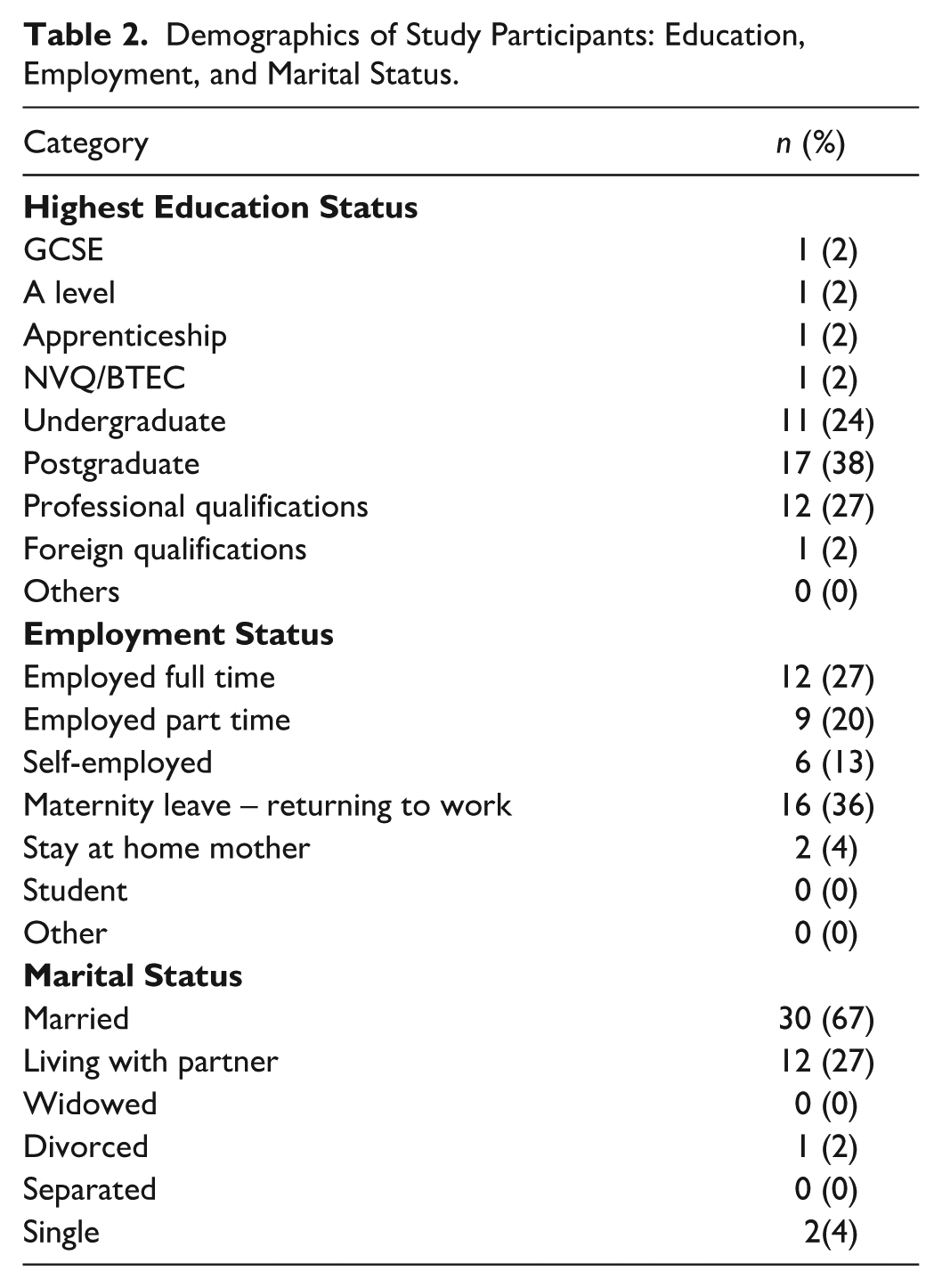
A total of 55 participants responded, but only 45 donors returned the signed Consent Form and completed the survey in full. Participants were spread across the five milk banks: The Western Trust Milk Bank, Northern Ireland (n = 16), Milk Bank Scotland (n = 8), The Milk Bank at Chester (n = 6), The Southwest Neonatal Donor Milk Bank, Bristol (n = 14), and St George’s Hospital Milk Bank, London (n = 1). The demographic information on the study participants is shown in Tables 1 and 2.
Demographics of Study Participants: Age and Number of Children.*
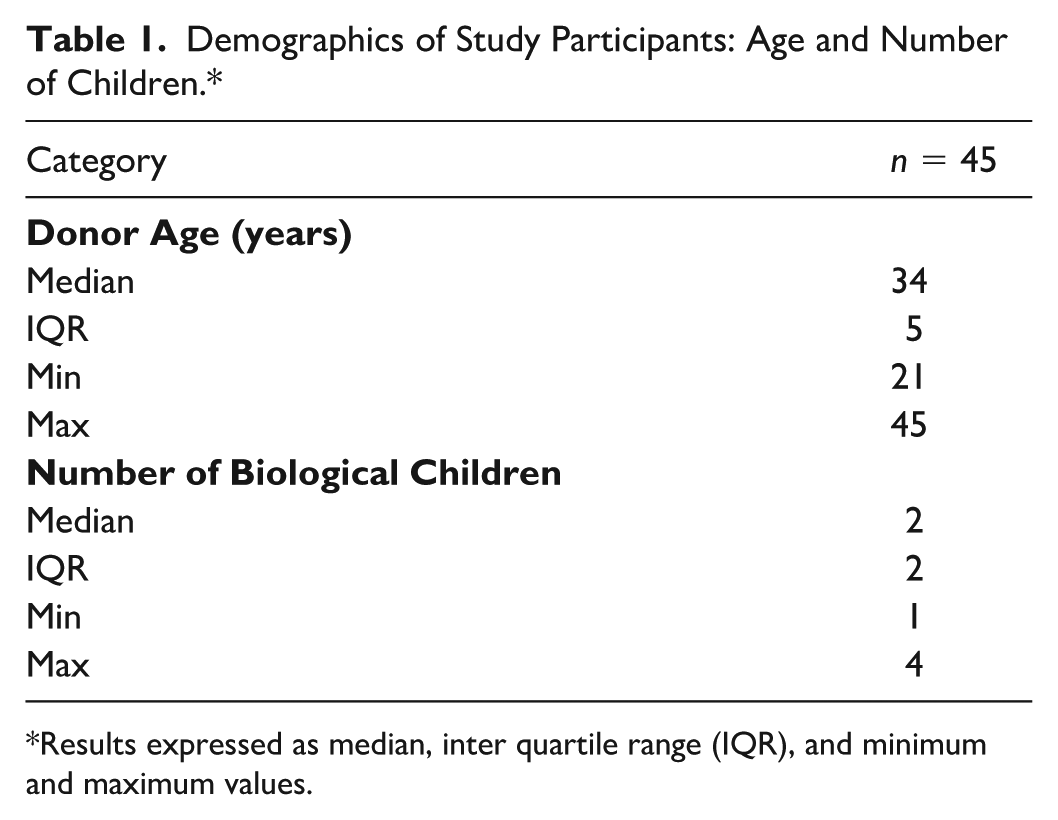
Results expressed as median, inter quartile range (IQR), and minimum and maximum values.
Demographics of Study Participants: Education, Employment, and Marital Status.
Milk Donation History and Patterns
Results are summarised in Table 3. Participants’ donation patterns were analysed through six questions. The distribution of donor experience in terms of being a first-time donor, milk donation initiation, and motivations, were consistent across collection sites. Only one participant started milk donation right after delivery as both donor and baby were in Neonatal Intensive Care Unit (NICU) and had excess of milk.
Participants’ Patterns.
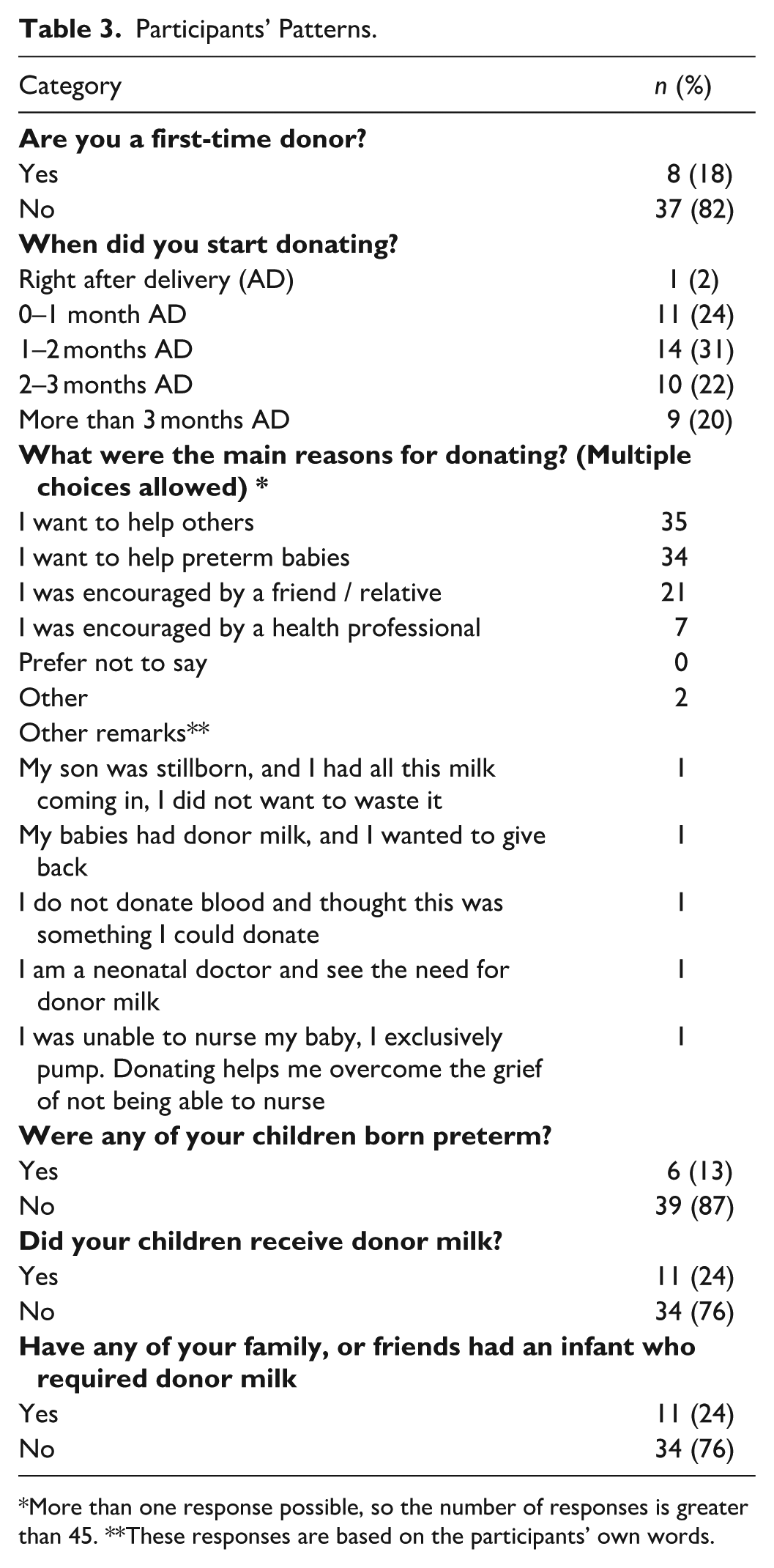
More than one response possible, so the number of responses is greater than 45. **These responses are based on the participants’ own words.
Dietary Practices
We asked participants whether they were following a specific diet while lactating. A total of 20% of participants (n = 9) reported adhering to a specific dietary regimen. Among these nine individuals, 11% (n = 5) indicated limiting their intake of caffeine and alcohol; one followed a vegan diet; one adhered to a low-fat diet; one reported intolerance to cow’s milk, gluten, and tomatoes; and another was following a dairy-free diet.
We then enquired about the nutritional resources that participants had access to, and preferences if they were to receive further nutritional guidance. These findings are summarised in Table 4.
Participants’ Nutritional Resources Preferences.
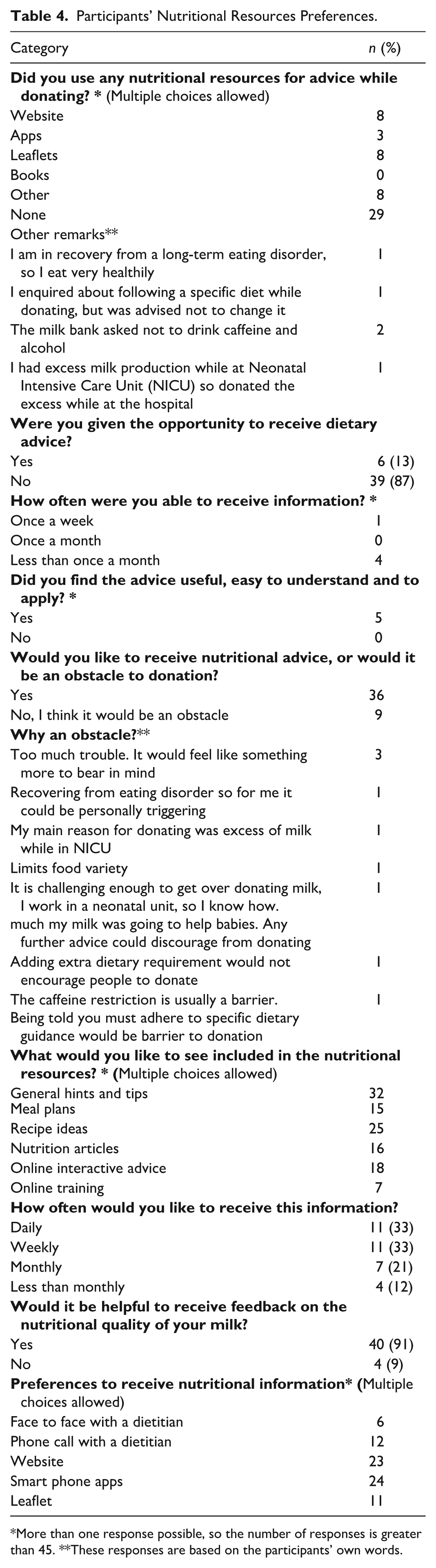
More than one response possible, so the number of responses is greater than 45. **These responses are based on the participants’ own words.
Omega-3 PUFA Intake
Results are summarised in Tables 5 and 6. Our survey estimated the daily omega-3 PUFAs intake of participants from food and dietary supplements. While DHA and EPA intakes were consistent across participants, independently of the collection sites; there was a much wider range in ALA intakes across HMBs. The minimum intake of ALA was 0-mg/day in Ireland, Scotland and Chester, whereas the maximum intake was 2,470 mg/day with one participant from Bristol MB consuming a daily 2000 mg/day flaxseed oil supplement.
Participants’ PUFAs Daily Intakes.

Participants’ Supplements Daily Intakes.
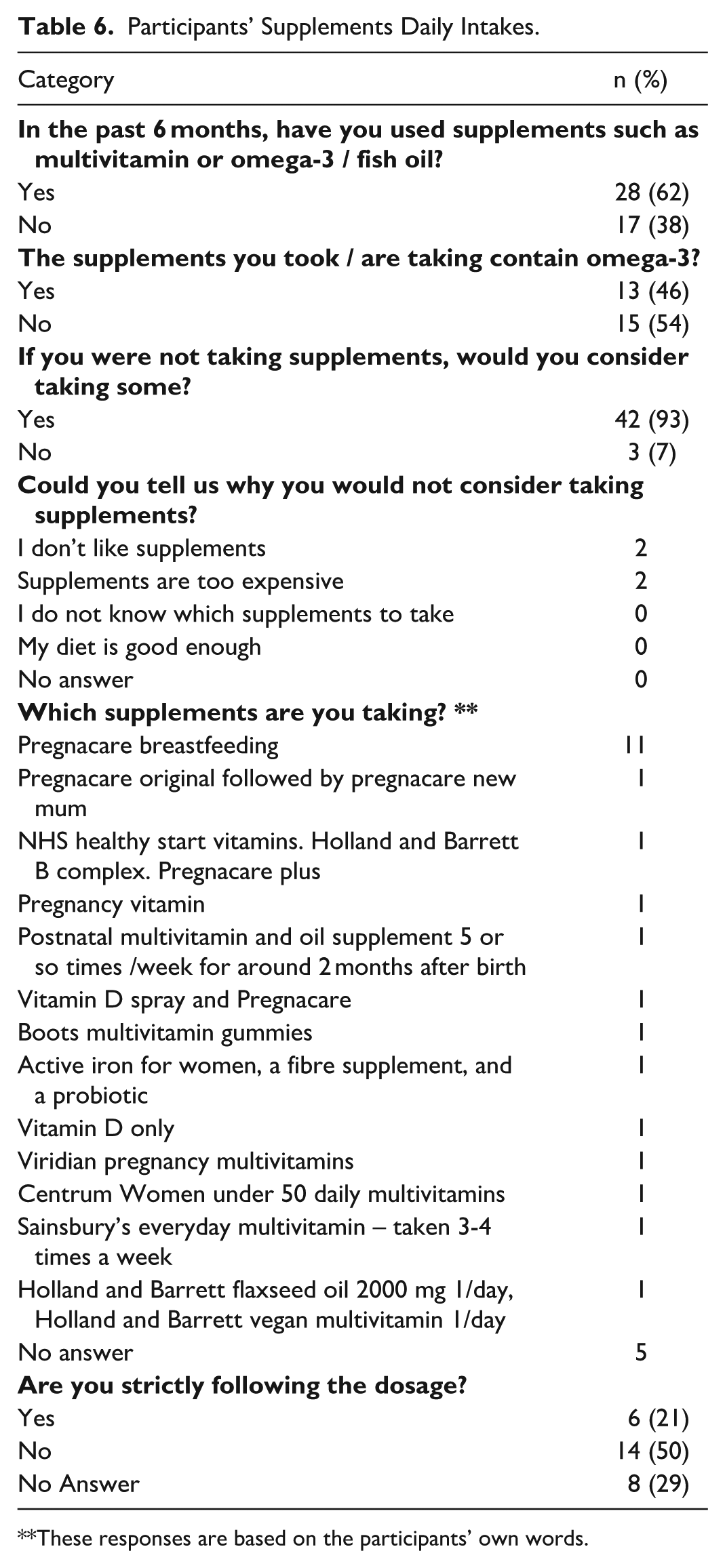
These responses are based on the participants’ own words.
Discussion
Implications and Strengths
To our knowledge this is the first study to explore the nutritional habits of human milk donors with a specific focus on omega-3 PUFA intake, supplement use, and preferences regarding the delivery of nutritional information.
Overall, we found that the demographic characteristics of donors and donation motivations were very similar to those reported in prior larger studies. Participants were highly educated; married or living with partners; not first-time donors; initiating donation between 1 and 3 months postpartum; and were donating to help others (Barbarska et al., 2017; Gutierrez Dos Santos & Perrin, 2022; Osbaldiston & Mingle, 2007; Pimenteira Thomaz et al., 2008).
Few participants had access to dietary advice while donating, and, in the U.K. women of childbearing age and pregnant mothers have very low oily fish and omega-3 PUFA intakes; it has consequently been suggested that public health campaigns are needed to improve intakes (Derbyshire, 2019). However, it is essential that nutritional advice is perceived as helpful and supportive rather than an additional pressure or barrier to donation, as it has been previously shown that some donors may experience increased anxiety following guidelines (Brown, Griffiths, et al., 2024).
The use of a FFQ (Herter-Aeberli et al., 2019), alongside targeted questions addressing supplement types and usage, allowed us to estimate participants’ omega-3 PUFA intake, and revealed a notably low intake of omega-3 PUFA among donors. These findings are consistent with prior reports highlighting suboptimal breastmilk omega-3 PUFA levels among lactating cohorts (Brenna et al., 2007; Innis, 2014), but also among the general population (Derbyshire, 2019; Pot et al., 2012). Our findings also indicated that while food sources provide the majority of ALA, dietary supplementation was the main source of EPA and DHA intakes. However, considering food and supplements together, omega-3 PUFA consumption by donors in the U.K. still falls below the European Food Safety Authority (EFSA) recommended amounts for pregnant and lactating women: between 100 mg and 200 mg/day for EPA and DHA (EFSA, 2019). Intake levels above the EFSA recommendations are needed for donors, and therefore the levels of dietary intake identified in this study are not sufficient to meet these additional needs and the needs of preterm infants (Falize et al., 2023).
Our data also provided valuable insights into both donor attitudes and behavioural patterns related to dietary supplementation. While a considerable proportion of donors reported using postpartum or general multivitamin supplements, many of these products did not contain omega-3 fatty acids. Notably, some nutritional supplements marketed for postpartum women, such as “Pregnacare New Mum,” were found to be devoid of omega-3 PUFAs. The “New Mum” label on the front of the pack was found to be potentially misleading as lactating mothers could think this supplement contains all they need for themselves and their baby. We therefore identified a need for clearer product labelling and targeted education on supplement selection.
Another important aspect of our study is the discordance between recommended supplement dosing and actual usage patterns. A large proportion of donors reported irregular intake, potentially reducing the intended nutritional benefit (Doru et al., 2023; Picciano & McGuire, 2009). Despite these inconsistencies, most respondents indicated a willingness to take supplements if recommended by the HMBs. However, enthusiasm for supplementation coexisted with the acknowledgment of several perceived barriers. A few respondents cited challenges such as lack of time, information overload, complexity of guidance, and the belief that their diet was already good enough (Brown, Griffin, et al., 2024).
Our findings suggest that providing nutritional education alone may be insufficient without accompanying strategies to enhance accessibility and comprehension (Caut et al., 2020; Jin et al., 2025; Rahmannia et al., 2025). This is a fundamental element to consider; maternal diet might not be a priority for lactating women in the first postpartum weeks when they have just welcomed a new-born and lactation is not yet fully established. Therefore, it would be wise to socialise dietary resources during pregnancy before lactation even starts. A recent study published in Spain showed that during the first month of lactation mothers did not satisfy the nutritional requirements of the healthy Food Pyramid Guidelines, and that women would benefit more from individual supplementation based on their nutritional status (Gila-Diaz et al., 2021). As such, tailoring educational materials to be concise, visually engaging, and directly relevant to the health outcomes of preterm infants may increase donor engagement. Moreover, future interventions should consider integrating brief educational modules within the donation process, possibly via digital platforms preferred by donors (Kassianos et al., 2019).
A key strength of this study lies in its methodological design and the combined use of closed- and open-ended questions together with an FFQ estimating omega-3 PUFA intakes. This approach allowed us to produce a more holistic understanding of donors’ patterns and habits to better support them in optimising their diet and the nutritional quality of their milk.
Limitations
Several limitations should be acknowledged. First, the study’s sample size was modest: despite major recruitment efforts, response rates were particularly low in some regions, such as London, where only one donor completed the survey. This observation is not specific to our survey, response rates to online surveys tend to be low, besides respondents receiving personalised invitations and regular reminders for completion (Shiyab et al., 2023). The survey was run in the U.K. exclusively, and therefore the results cannot be generalised outside of the U.K. Additionally, there may be a selection bias as participants who completed the survey were recruited only from those that had English as a first language and were more likely to be more interested in nutrition; they may not represent the entire U.K. donor base. Additionally, there may be a selection bias as donors with insufficient english undertsanding were excluded and naturally donors interested in nutrition were more likely to participate. Therefore, the sample of respondents may not represent the entire U.K. donor base.
Conclusion
This study highlights gaps in nutritional education among milk donors, particularly regarding omega-3 PUFA intake. It also reveals strong donor interest in receiving guidance on nutrition and supplementation. Given the known importance of long-chain PUFAs (especially DHA) in the neurodevelopment and immune function of preterm infants, it is critical to develop evidence-based nutritional interventions to optimise milk donors’ diet and the nutritional quality of donors’ milk. Further research is required to better understand the perceptions that donors and lactating mothers have regarding the nutritional quality of their milk; and also to explore scalable strategies to optimise lactating mothers’ and human milk donors’ dietary education, supplement access, and compliance, while accounting for the real-world barriers reported (Kassianos et al., 2019).
Supplemental Material
sj-docx-1-jhl-10.1177_08903344261434722 – Supplemental material for National Survey of Human Milk Donors in the United Kingdom: An Additional Step Towards the Development of Nutritional Guidelines for Donors
Supplemental material, sj-docx-1-jhl-10.1177_08903344261434722 for National Survey of Human Milk Donors in the United Kingdom: An Additional Step Towards the Development of Nutritional Guidelines for Donors by Coralie Falize, Yvonne M Jeanes and Simon C. Dyall in Journal of Human Lactation
Footnotes
Acknowledgements
The authors wish to sincerely thank the milk banking staff for their help and support with this research, and all of study participants for their involvement and for making this research possible.

Author Contributions
Funding
The authors received no financial support for the research, authorship, and/or publication of this article.
Declaration of Conflicting Interests
The authors declared no potential conflicts of interest with respect to the research, authorship, and/or publication of this article.
Data Availability Statement
The data that support the findings of this study are available on request from the corresponding author.
Supplemental Material
Supplementary Material may be found in the “Supplemental material” tab in the online version of this article.
References
Supplementary Material
Please find the following supplemental material available below.
For Open Access articles published under a Creative Commons License, all supplemental material carries the same license as the article it is associated with.
For non-Open Access articles published, all supplemental material carries a non-exclusive license, and permission requests for re-use of supplemental material or any part of supplemental material shall be sent directly to the copyright owner as specified in the copyright notice associated with the article.
