







Abstract
Background:
Breastfeeding is essential for infant nutrition, survival, and development. Identifying factors associated with breastfeeding success is important for improving early postpartum care and breastfeeding support in hospital settings.
Purpose:
This study aimed to identify determinants of successful breastfeeding among postpartum mothers in a private hospital in Yogyakarta, Indonesia.
Methods:
A cross-sectional study was conducted among 124 postpartum mothers who had delivered vaginally and had healthy infants. Participants were recruited using convenience sampling. Data were collected using a structured questionnaire during the postpartum hospital stay. Variables included maternal education, occupation, knowledge, early initiation of breastfeeding (EIBF), supplementary feeding, rooming-in, breastfeeding frequency, breastfeeding experience, health worker support, and family support. Data were analyzed using univariate analysis, Pearson’s chi-square test for bivariate analysis, and binary logistic regression for multivariable analysis. Multivariable analysis results were presented as adjusted odds ratios (AORs) with 95% confidence intervals (CIs), with p < 0.05 considered statistically significant.
Results:
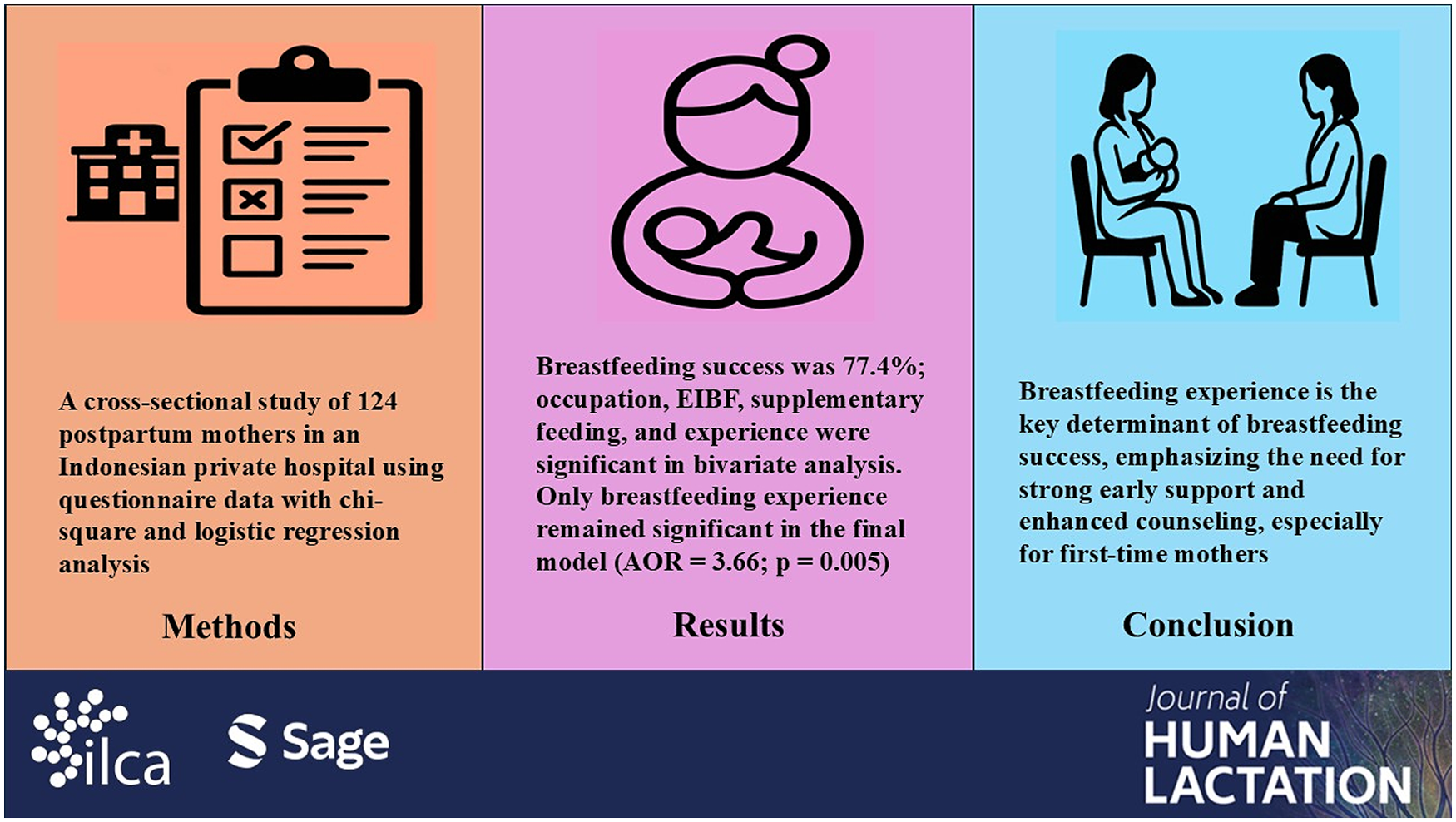
Bivariate analysis showed that maternal occupation (p = 0.040), EIBF (p = 0.024), supplementary feeding (p = 0.017), and breastfeeding experience (p = 0.002) were significantly associated with breastfeeding success. In multivariable analysis, only breastfeeding experience remained significantly associated with breastfeeding success. Mothers with previous breastfeeding experience were 3.66 times more likely to achieve breastfeeding success than those without prior experience (AOR = 3.66; 95% CI [1.47, 9.12]; p = 0.005).
Conclusion:
Breastfeeding experience emerged as the most consistent factor associated with breastfeeding success. Early postpartum breastfeeding support, especially for first-time mothers, should be strengthened to improve breastfeeding success.
Background
Improving infant health and nutrition is an important component of human resource development in Indonesia. One of the preparations needed to accomplish this goal is the development of high-quality human resources. The development of high-quality human resources must begin at a young age, even in infancy. Optimal nutrition from infancy, particularly through breastfeeding, contributes to healthy growth and long-term development (Katsinde & Srinivas, 2016).
Breast milk is the optimal source of nutrition for infant growth and development during the first 6 months of life. For the first 6 months of their lives, newborns receive all the energy and nutrition they require from breast milk. During the second half of a child's first year of life, breast milk meets half or more of their nutritional demands, and it continues to have a major nutritional impact until the child's second year of life. Breastfeeding should be done whenever a baby requests it, day or night (World Health Organization [WHO], 2020). Early breastfeeding within the first hour of life can reduce neonatal mortality by 22%–44% and can lower the risk of severe illness and death in the first 28 days of life (Karim et al., 2018; Phukan et al., 2018). Breastfeeding provides complete nutrition, protects babies from infection, aids in the development of the digestive, nervous, and immune systems, and can reduce the risk of infant mortality (Kim & Yi, 2020; Le Doare et al., 2018; Ramiro-Cortijo et al., 2020). Additionally, breast milk can enhance cognitive development, communication, and social interaction in infants at 12 months of age (Choi et al., 2018).
Regulations regarding exclusive breastfeeding have been released by the Indonesian government, but the coverage of exclusive breastfeeding in this country is still below the desired level. Only 40% of mothers in Indonesia exclusively breastfeed their children (Agushybana et al., 2018). Based on 2017 data, 42.7% of mothers in Java and Bali reported that they did not initiate breastfeeding within the recommended early period after birth, while 48.9% reported that they did not breastfeed exclusively (Saputri et al., 2020). These findings highlight the need to identify factors associated with breastfeeding success.
Key Messages
Prior breastfeeding experience emerged as the key factor associated with breastfeeding success among postpartum mothers.
Postpartum mothers with previous breastfeeding experience were more likely to achieve breastfeeding success than those without prior experience.
Strengthening early postpartum breastfeeding support for mothers without prior experience may improve breastfeeding success in hospital settings.
Various factors influence a mother's decision to breastfeed. Mothers face many barriers to breastfeeding, including cultural and sociodemographic factors (Colombo et al., 2018). These factors include the mother's education (Chineke et al., 2017; Kostecka et al., 2020; Roshan et al., 2018; Tang et al., 2019), the mother's occupation (Chineke et al., 2017; Habibi et al., 2018; Tadesse et al., 2019), the mother's knowledge (Hamze et al., 2019; Kostecka et al., 2020), Early Initiation of Breastfeeding (EIBF; Karimi et al., 2019), supplementary feeding (Chineke et al., 2017), rooming-in (Karimi et al., 2019), breastfeeding frequency (Karimi et al., 2019; Kostecka et al., 2020), breastfeeding experience (Wagner et al., 2019), support from health workers (Hasan & Hasan, 2020), and family support (Jama et al., 2017; Wagner et al., 2019).
Research on factors influencing breastfeeding success is essential, given the substantial benefits of breast milk for children's physical health, mental development, and cognitive outcomes. Breast milk not only provides optimal nutrition from birth, but also offers immunological protection, reduces the risk of infection, and supports brain development and overall growth. However, successful breastfeeding is not determined solely by maternal willingness; it is shaped by a range of internal and external factors. Identifying these factors is therefore important to support mothers in providing optimal nutrition for their infants from birth. Although previous studies have investigated determinants of breastfeeding practices, evidence regarding factors associated with early breastfeeding success during postpartum hospitalization in Indonesian private hospital settings remains limited. Therefore, this study aimed to identify the determinants of successful breastfeeding among postpartum mothers in a private hospital in Yogyakarta, Indonesia. The findings may inform the development of appropriate interventions at the hospital, community, and public health policy levels.
Methods
Research Design
This study used a cross-sectional design to identify factors associated with breastfeeding success among postpartum mothers. This design enables the analysis of relationships between maternal, infant, and healthcare-related factors, as well as breastfeeding outcomes, at a single point in time. It is therefore well-suited to exploring multiple determinants simultaneously in a clinical hospital setting.
Setting and Relevant Context
This study was conducted at a private hospital in Yogyakarta, Indonesia, from April 2020 to February 2021. The hospital provides maternal and newborn care services and implements standard breastfeeding support practices, including EIBF and rooming-in. This setting represents an urban healthcare context in which mothers have relatively good access to healthcare services, health worker support, and information on breastfeeding from a variety of sources.
Sample
The study population consisted of postpartum mothers who had delivered vaginally at the study site during the study period. A total of 124 mothers were recruited through convenience sampling. Because participant recruitment depended on availability during the study period, no formal a priori sample size calculation was conducted. However, the final number of participants was considered acceptable for multivariable logistic regression, referring to the commonly used recommendation that logistic models should have an adequate number of outcome events relative to the number of predictor variables included. Mothers who had delivered vaginally and had healthy infants met the inclusion criteria. Mothers who experienced medical complications or whose infants required specialized neonatal care were excluded to minimize potential confounding factors that could influence breastfeeding outcomes.
Measurements
Data were collected using a structured questionnaire to measure breastfeeding success and its potential determinants. The variables included maternal education, occupation, knowledge, EIBF, supplementary feeding, rooming-in, breastfeeding frequency, breastfeeding experience, support from health workers, and family support. A standardized questionnaire with 20 questions about breastfeeding practices and advantages was used to assess maternal knowledge, which was divided into three categories: good, moderate, and poor. Prior to data collection, the instrument underwent expert review to establish content validity and ensure that each item was clear, relevant, and appropriate for measuring the intended constructs. Mothers' perceptions of the practical and informational help they received throughout the perinatal period were used to assess health worker and family support. Each construct was evaluated using a six-item structured questionnaire. Responses were categorized as supportive or not supportive after being rated on a 5-point Likert scale from 1 to 5, where higher scores indicated greater perceived support. Breastfeeding success was assessed using predefined clinical and behavioral breastfeeding indicators during postpartum hospitalization. Breastfeeding success was categorized as either successful or unsuccessful.
Data Collection
Data collection took place after delivery, during the postpartum hospital stay. Mothers were asked to complete the questionnaire after receiving an explanation of the study and providing written informed consent. Trained personnel were on hand to assist respondents and ensure accurate responses. The Panti Rapih Hospital Health Research Ethics Subcommittee approved this research under the reference number 025/SKEPK-KKE/II/2020.
Data Analysis
Data were analyzed using univariate, bivariate, and multivariate procedures. Pearson’s chi-square test was used to assess the association between categorical independent variables and breastfeeding success at a significance level of p < 0.05. Multivariable analysis was performed using binary logistic regression to identify factors associated with breastfeeding success. Variables with p values < 0.25 in the bivariate analysis were included in the initial multivariable model. Variable selection was conducted using a backward elimination approach while considering statistical significance (p < 0.05) and changes in odds ratios of ≥ 10% to identify potential confounders. Regardless of their statistical significance, variables considered to be confounders were kept in the final model. The strength of the associations in the multivariable analysis was expressed as adjusted odds ratios (AORs) with 95% confidence intervals.
Results
A total of 124 mothers participated in this study. Most mothers had higher education, were employed, and reported good knowledge regarding breastfeeding practices. In addition, the majority of respondents performed early initiation of breastfeeding, practiced rooming-in, and breastfed on demand during the postpartum period. Support from health workers and family members was also widely reported among the study participants.
Among the participants, 96 mothers (77.4%) were categorized as having successful breastfeeding, while 28 mothers (22.6%) were categorized as unsuccessful. The distribution of breastfeeding success according to maternal sociodemographic characteristics, breastfeeding practices, and support factors is presented in Table 1. Differences between groups were assessed using Pearson’s chi-square test.
Determinants of Successful Breastfeeding Among Postpartum Mothers (N = 124).
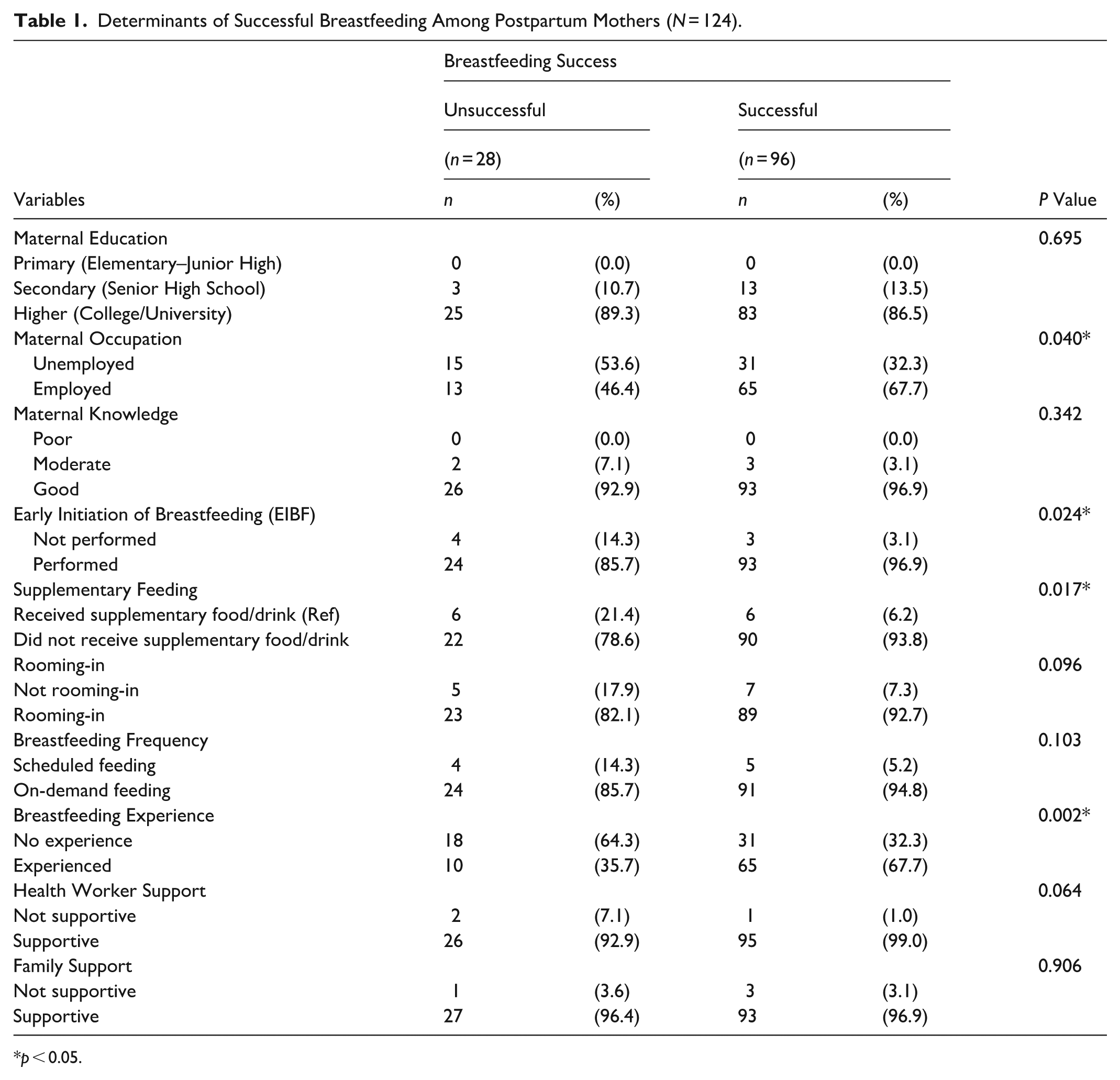
p < 0.05.
Based on Table 1, no significant difference in breastfeeding success was observed according to maternal education (p = 0.695), although most mothers in both groups had higher levels of education. A significant difference between groups was observed for maternal occupation (p = 0.040), where employed mothers were more frequently found in the successful breastfeeding group (67.7%). No significant difference was found between the groups in terms of maternal knowledge (p = 0.342), although the majority of mothers in both groups had good knowledge regarding breastfeeding. A significant difference between groups was observed for EIBF (p = 0.024), with a higher proportion of mothers in the successful breastfeeding group performing early initiation (96.9%). Supplementary feeding also showed a significant difference between groups (p = 0.017), where did not receive supplementary food/drink was more common among mothers who successfully breastfed (93.8%) compared with those who were unsuccessful (78.6%). No significant differences were observed between groups in terms of rooming-in (p = 0.096), although most mothers in both groups practiced rooming-in (82.1% and 92.7%). Similarly, breastfeeding frequency did not differ significantly between groups (p = 0.103), although on-demand breastfeeding was more common among mothers who successfully breastfed (94.8%). There was a significant difference between the two groups in terms of breastfeeding experience (p = 0.002). The successful breastfeeding group had more mothers who had breastfed before (67.7%). Health worker support did not differ significantly between groups (p = 0.064), although almost all mothers who successfully breastfed reported receiving support (99.0%). Family support also showed no significant difference between groups (p = 0.906), as the majority of mothers in both groups reported supportive families (96.4% and 96.9%).
Multivariable logistic regression analysis was conducted to identify factors associated with breastfeeding success. The results are presented in Table 2.
Multivariable Logistic Regression Analysis of Factors Associated with Breastfeeding Success (N = 124).
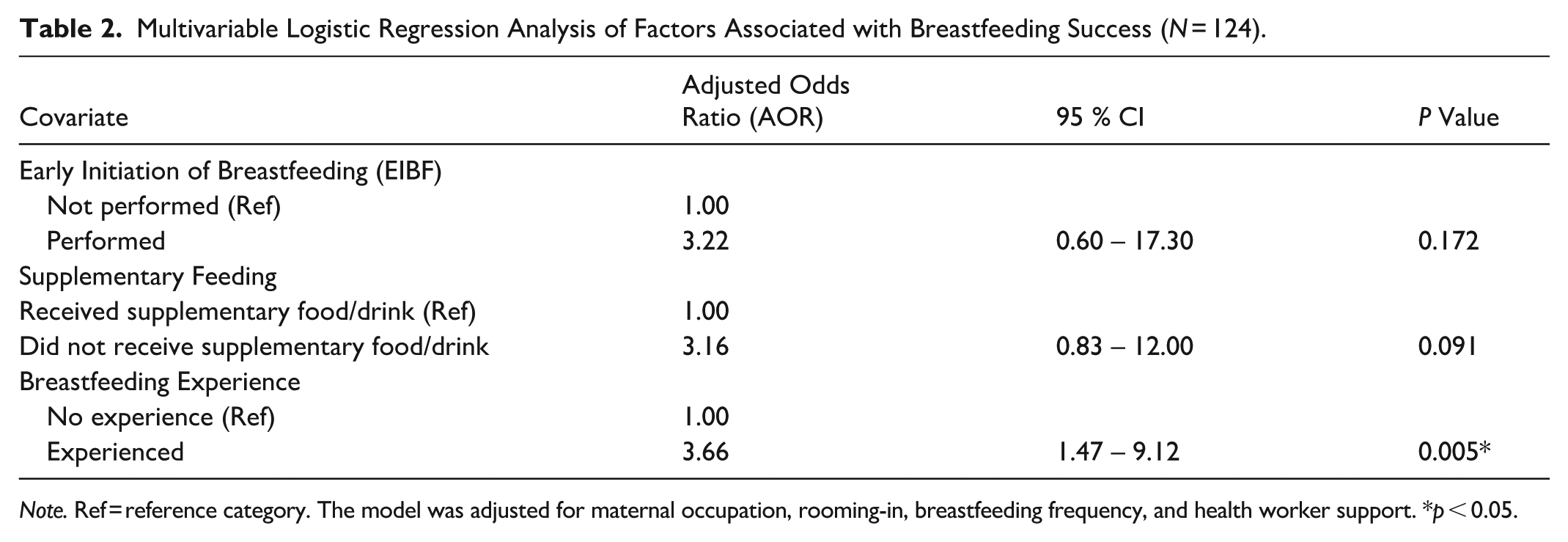
Note. Ref = reference category. The model was adjusted for maternal occupation, rooming-in, breastfeeding frequency, and health worker support. *p < 0.05.
After adjusting for potential confounders, breastfeeding experience remained a significant predictor of breastfeeding success. Mothers with prior breastfeeding experience were 3.66 times more likely to achieve breastfeeding success compared with those without previous experience (AOR = 3.66; 95% CI [1.47, 9.12]; p = 0.005). In contrast, early initiation of breastfeeding was not significantly associated with breastfeeding success (AOR = 3.22; 95% CI [0.60, 17.30]; p = 0.172). Likewise, not receiving supplementary food/drink compared with receiving supplementary food/drink was not significantly associated with breastfeeding success (AOR = 3.16; 95% CI [0.83, 12.00]; p = 0.091).
Discussion
Maternal Education
Maternal education was not significantly associated with breastfeeding success in this study (Table 1). Mothers with higher educational attainment did not demonstrate significantly different breastfeeding outcomes compared with those with lower education levels. In addition, the distribution of maternal education in this study was relatively homogeneous, which may have limited variability between groups and reduced the ability to detect statistically meaningful differences. Previous studies have reported inconsistent findings regarding the influence of maternal education on breastfeeding practices. Mothers with higher levels of education tend to have better access to breastfeeding information and greater awareness of infant nutrition (Kalhor et al., 2025; Wako et al., 2022). Higher education may also increase maternal self-efficacy and decision-making capacity related to infant feeding practices. However, maternal education alone may not be sufficient to determine breastfeeding success because breastfeeding practices are also influenced by social support, healthcare access, psychosocial factors, and health system interventions (Ekayanthi & Besral, 2024; Habibi et al., 2018; Kalhor et al., 2025). In this study, breastfeeding promotion programs and clinical support available in the hospital may have reduced differences between education levels, which may explain the lack of significant association.
Maternal Occupation
Maternal occupation was significantly associated with breastfeeding success (Table 1). A higher proportion of employed mothers was found in the successful breastfeeding group compared with the unsuccessful group. Employment status can influence breastfeeding practices because working mothers often face challenges, such as limited maternity leave, time constraints, and lack of breastfeeding facilities in the workplace. Previous studies also report that mothers who remain at home or have longer maternity leave are more likely to maintain breastfeeding (Indrasari et al., 2024; Kalhor et al., 2025). Nevertheless, successful breastfeeding among working mothers is still possible when supportive workplace policies are available. Breastfeeding-friendly workplaces that provide lactation rooms, flexible working hours, and pumping breaks have been shown to improve breastfeeding continuation after mothers return to work (Brugaillères et al., 2024). Therefore, employment status should be considered together with workplace policies that support breastfeeding mothers.
Maternal Knowledge
According to Table 1, maternal knowledge was not significantly associated with breastfeeding success. Although mothers with better knowledge tended to have higher breastfeeding success, the association was not statistically significant. In addition, the distribution of mothers’ knowledge was highly centralized in the “good” category, which may have reduced intergroup variability and limited the ability to detect statistically significant associations. Previous studies suggest that maternal knowledge plays an important role in shaping breastfeeding behavior, particularly when access to health information is limited (Fairuz & Fadilah, 2025). Knowledge regarding breastfeeding techniques, benefits of exclusive breastfeeding, and infant nutritional needs can support mothers in maintaining breastfeeding practices. However, knowledge alone may not be sufficient to ensure breastfeeding success. Practical skills, counseling, and continuous postnatal support are often required to translate knowledge into practice (Hamze et al., 2019; Rodríguez-Gallego et al., 2024). Therefore, breastfeeding education programs should be combined with counseling and practical guidance to strengthen mothers’ confidence and breastfeeding skills.
Early Initiation of Breastfeeding (EIBF)
Based on the multivariable analysis presented in Table 2, early initiation of breastfeeding was not significantly associated with breastfeeding success (AOR = 3.22; 95% CI [0.60, 17.30]; p = 0.172). Although mothers who practiced EIBF had higher odds of successful breastfeeding, the association was not statistically significant. Nevertheless, previous studies consistently emphasize the importance of early initiation of breastfeeding for improving breastfeeding outcomes. Initiating breastfeeding within the first hour of birth helps stimulate milk production, promotes skin-to-skin contact, and strengthens maternal–infant bonding (Huang et al., 2022; Karim et al., 2018; Shofiya et al., 2023). EIBF also allows newborns to receive colostrum and stimulates oxytocin release, which supports milk ejection and breastfeeding continuation. Studies have shown that EIBF is associated with increased exclusive breastfeeding rates and reduced neonatal mortality (Rifat et al., 2025; Walle et al., 2024). Therefore, although the association was not statistically significant in this study, EIBF remains an important recommended practice in maternity care.
Supplementary Feeding
According to Table 2, supplementary feeding was not significantly associated with breastfeeding success (AOR = 3.16; 95% CI [0.83, 12.00]; p = 0.091). However, mothers who did not receive supplementary food/drink tended to have higher odds of breastfeeding success compared with those who introduced supplementary feeding. Previous studies have shown that early formula or prelacteal feeding may diminish breastfeeding frequency and breast stimulation, which may interfere with milk production (Neves et al., 2022). Supplementary feeding before the age of 6 months reduces the likelihood of achieving exclusive breastfeeding (Huang et al., 2022; Kalhor et al., 2025). Research has suggested that providing education to mothers and families regarding the importance of exclusive breastfeeding can reduce unnecessary supplementation during the first 6 months of life (Kalhor et al., 2025). Therefore, strengthening breastfeeding education and discouraging prelacteal feeding practices remain essential strategies for promoting successful breastfeeding.
Rooming-In
Rooming-in was not significantly associated with breastfeeding success (Table 1). However, the proportion of successful breastfeeding was slightly higher among mothers who practiced rooming-in. Rooming-in allows mothers and infants to remain together for 24 hours after birth, facilitating breastfeeding on demand and promoting maternal–infant bonding. Mothers can identify early hunger cues and respond to breastfeeding more quickly when they are near their infants. Previous studies indicate that rooming-in can improve breastfeeding initiation and duration when combined with lactation support from healthcare providers. Implementing rooming-in alongside structured lactation support increases the likelihood of successful and sustained exclusive breastfeeding (Ayuningrum et al., 2025; Huang et al., 2022). However, if mothers encounter worry, exhaustion, or inadequate nursing assistance from medical professionals, rooming-in alone might not ensure successful breastfeeding.
Breastfeeding Frequency
The results presented in Table 1 show that breastfeeding frequency was not significantly associated with breastfeeding success. This finding suggests that the number of breastfeeding sessions alone may not determine successful breastfeeding outcomes. Previous studies also indicate that factors such as correct breastfeeding technique, maternal education, and breastfeeding counseling may be more influential than feeding frequency alone (Hassounah et al., 2023; Kitil et al., 2024). Nevertheless, interventions such as Kangaroo Mother Care encourage frequent breastfeeding through increased skin-to-skin contact and have been shown to improve early breastfeeding outcomes (Iqbal et al., 2022). Therefore, breastfeeding frequency may contribute to success when supported by other factors such as appropriate breastfeeding techniques and maternal support.
Breastfeeding Experience
The breastfeeding experience was the only variable that remained significantly associated with breastfeeding success in the multivariable analysis (Table 2). Mothers with previous breastfeeding experience were more likely to successfully breastfeed compared with mothers without prior experience. This finding is consistent with previous research indicating that previous breastfeeding experience improves maternal self-efficacy, practical breastfeeding skills, and the ability to overcome early breastfeeding challenges (Ekayanthi & Besral, 2024; Kalhor et al., 2025). Experienced mothers are generally more confident and familiar with breastfeeding techniques, enabling them to manage common breastfeeding difficulties more effectively. Previous breastfeeding experience may also shape positive attitudes and expectations regarding breastfeeding success. Health workers can use mothers’ previous breastfeeding experiences to tailor counseling, strengthen self-efficacy, and improve breastfeeding outcomes.
Health Worker Support
Table 1 shows that support from health workers was not significantly associated with breastfeeding success. However, a slightly higher proportion of successful breastfeeding was observed among mothers who received professional support. Health workers play an important role in providing breastfeeding education, correcting breastfeeding techniques, and supporting mothers during the early postpartum period. Previous studies indicate that counseling and support from healthcare professionals can increase maternal confidence and improve breastfeeding practices (Huang et al., 2022; Maulida et al., 2023). Although the association was not statistically significant in this study, strengthening breastfeeding counseling services in maternity care settings may still contribute to improving breastfeeding outcomes.
Family Support
Family support was also not significantly associated with breastfeeding success in this study (Table 1). One possible explanation is that most mothers in both groups reported receiving family support, which may have reduced variability in this factor. Nevertheless, previous studies emphasize the important role of family members, particularly husbands and grandmothers, in influencing breastfeeding practices (Vázquez-Vázquez et al., 2022). Emotional support, assistance with childcare, and positive attitudes toward breastfeeding can help mothers overcome breastfeeding challenges. Family-centered breastfeeding interventions have been shown to improve breastfeeding practices by creating a supportive home environment for mothers (Chang et al., 2021; Jama et al., 2017).
Limitations
This study has several limitations. First, the cross-sectional design does not allow causal inferences regarding the relationship between the studied factors and breastfeeding success. Second, the study was conducted in a single private hospital using convenience sampling, which limits the generalizability of the findings to mothers in other settings, such as public hospitals, rural areas, or different sociocultural contexts. Third, the use of self-reported data may have introduced recall bias and social desirability bias, particularly for variables related to breastfeeding practices and perceived support. In addition, the possibility of a ceiling effect should be considered, as relatively high scores on some variables may have limited score variability and reduced the ability of the instrument to detect meaningful differences. Fourth, while a number of relevant factors were investigated, certain potentially significant variables were not considered, including cultural attitudes, parity, intention to breastfeed, maternal breastfeeding self-efficacy, and specific workplace support. Finally, the relatively small sample size and homogeneity may have limited the statistical power to detect significant associations for some variables in the multivariable analysis.
Conclusion
This study showed a bivariate association between breastfeeding success and maternal occupation, EIBF, supplementary feeding, and breastfeeding experience. However, only breastfeeding experience remained a significant predictor after adjusting for other variables. The likelihood of breastfeeding success was higher among mothers with previous breastfeeding experience than among those without such experience. These findings suggest that mothers who lack prior breastfeeding experience should receive special attention when it comes to breastfeeding support, especially in the first 24 hours after giving birth. Improving early counseling, targeted support for new mothers, and practical breastfeeding support could all contribute to better breastfeeding outcomes in hospital settings. Future studies should examine psychological, cultural, and contextual factors that may influence breastfeeding success.
Footnotes
Acknowledgements
The researchers would like to thank all postpartum mothers who were willing to be respondents and participated in this study.

Ethical Considerations
This study was approved by the Health Research Ethics Subcommittee of Panti Rapih Hospital (Ref. No. 025/SKEPK-KKE/II/2020).
Author Contributions
Funding
The authors disclosed receipt of the following financial support for the research, authorship, and/or publication of this article: This study was supported by a grant from the Panti Rapih Yogyakarta School of Health Sciences.
Declaration of Conflicting Interests
The authors declared no potential conflicts of interest with respect to the research, authorship, and/or publication of this article.