






Abstract
Background and Aim:
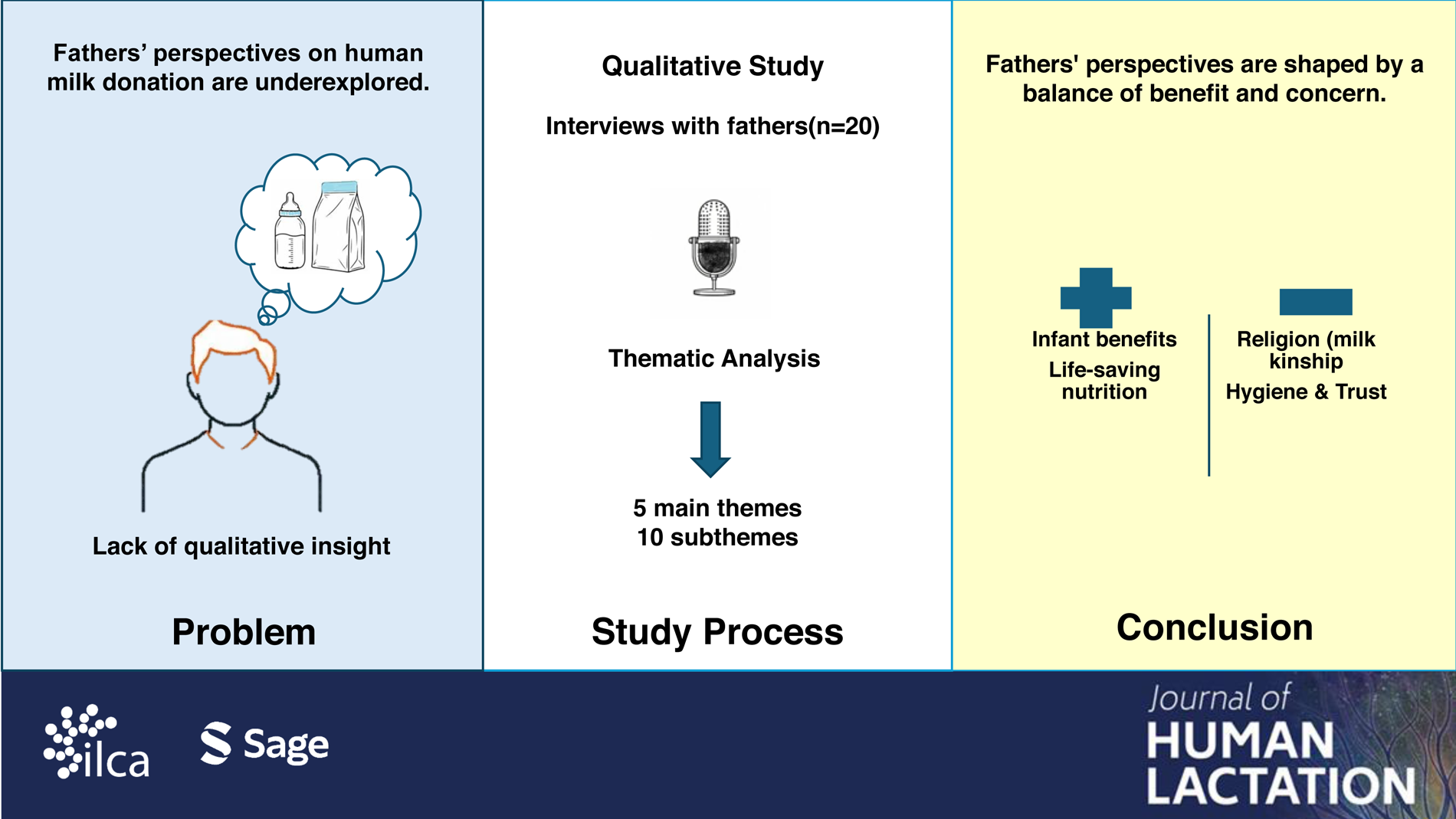
Most research on human milk donation and human milk banking has focused on mothers, while fathers’ perspectives remain insufficiently explored. Although mothers may be willing to donate milk or use donor milk for their own infants, these decisions are often shaped by their spouses’ viewpoints. This study aimed to explore fathers’ views on human milk donation and human milk banking.
Methods:
This qualitative study used an inductive thematic analysis approach. Data were collected between August and December 2024 through semi-structured interviews with 20 fathers who brought their infants for routine checkups at a state hospital in Türkiye via semi-structured interviews and a descriptive form. Data were analyzed using thematic analysis. MAXQDA software was used during the analysis process.
Results:
Five main themes with 10 subthemes were identified. Fathers’ perspectives reflected a balance between perceived benefits of donor human milk for infants in need and concerns related to religious beliefs, milk kinship, hygiene, and trust. Acceptance of donor milk use for their own infants was conditional and depended on hygienic handling, professional supervision, and transparency regarding donor information. Fathers expressed divided opinions about allowing their wives to donate milk, and views on establishing human milk banks in Türkiye ranged from acceptance to conditional acceptance or rejection.
Conclusion:
Fathers’ perspectives on human milk donation and milk banking are shaped by the interplay between infant benefits and religious, cultural, and hygiene concerns. Spouses’ attitudes and approval regarding milk donation are important family factors influencing decisions about human milk donation.
Key Messages
Fathers’ perspectives on human milk donation and banking have been largely understudied, despite their influence on family decision-making regarding infant feeding.
Fathers’ views ranged from support to conditional acceptance depending on hygiene, safety, and knowledge of the donor, with some expressing concerns due to religious and cultural beliefs.
Fathers often play a decisive role in allowing or not allowing their partners to donate milk, highlighting their influence on the use of donor human milk.
Recognizing fathers’ views can help guide family-centered strategies and clinical support for human milk donation and infant feeding practices.
Background
Human milk is universally recognized as the most biologically appropriate and irreplaceable source of nutrition for optimal infant growth and development (Kilci Erciyas et al., 2021). In addition to its immunoprotective properties, it plays a vital role in neurodevelopmental maturation and immune system modulation, thereby contributing to both immediate and long-term health outcomes for infants and lactating mothers (Mampane & Wolvaardt, 2024; Ouyang et al., 2025). Despite the vital importance of breastfeeding and human milk, not every infant can be fed with their mother’s own milk due to various health problems, separation of mother and infant, or maternal death (Doshmangir et al., 2025). In such circumstances, human milk banks serve as essential clinical infrastructures that provide safe, screened, and processed donor human milk to medically vulnerable neonates (Mampane & Wolvaardt, 2024). The World Health Organization (WHO) recommends that low and very low birth weight infants who cannot access their mother’s milk, and who require supplementation, should be fed with donor human milk (WHO, 2022).
Human milk banks operate by collecting expressed human milk from screened donors, conducting serological and microbiological analyses to ensure biosecurity, and applying Holder pasteurization to ensure microbiological safety while preserving bioactive components. Distribution is managed via standardized systems encompassing labeling, batch traceability, cold chain logistics, and documented informed consent (Weaver et al., 2019). These services are particularly critical in neonatal intensive care units (NICUs), where they offer essential nutritional and immunological support for preterm and low birthweight infants. Accurate documentation of donor demographics, milk volume, and processing data is a critical component of quality assurance. Furthermore, aseptic technique, temperature monitoring, and compliance with ethical standards are strictly maintained throughout the collection, storage, and transport processes (Kilci Erciyas et al., 2021; Ouyang et al., 2025; Weaver et al., 2019).
Despite the global expansion of human milk banking, its implementation within the health system remains limited in some countries due to religious and sociocultural factors. Qualitative studies highlight that such concerns significantly hinder public acceptability and utilization of human milk banks (Karacan et al., 2024; Kilci Erciyas et al., 2021). In Islamic jurisprudence, milk kinship (rada’a)—established through repeated breastfeeding—constitutes a non-marriageable bond, rendering donor anonymity a culturally sensitive issue. Consequently, lack of transparency in donor-recipient identity can lead to societal resistance against the use of donor human milk (Karacan et al., 2024).
To date, most empirical research has focused on maternal perspectives and behaviors regarding human milk donation and human milk banking, while paternal attitudes have remained largely underexplored (Doshmangir et al., 2019; Sherriff et al., 2014). A 2024 qualitative systematic review highlighted a significant gap in the literature on human milk donation. It noted that the views of fathers and other close family members, who may have an impact on decision-making, are insufficiently included. The review emphasizes that including these groups in the process can provide a more holistic and societal perspective on human milk donation and donor human milk use. This makes the paternal perspective, which this study focuses on, even more relevant (Li et al., 2024).
Increasing evidence suggests that fathers’ perspectives on breastfeeding and their infants’ feeding patterns can influence mothers’ decisions regarding human milk feeding and breastfeeding continuation (Atkinson et al., 2021; Sherriff et al., 2014). Furthermore, Doshmangir and colleagues (2025) emphasize that family and spousal support are among the most influential determinants of human milk donation behavior (Doshmangir et al., 2025). In their study, Copland and colleagues position fathers as important caregivers who enable their partners’ decisions during human milk donation by providing both operational support and assuming caregiving responsibilities (Copland et al., 2025). Moreover, providing human milk for feeding a premature infant or an infant admitted to the neonatal intensive care unit also becomes a responsibility for fathers (Mӧrelius et al., 2021).
This study uses a qualitative approach to examine fathers’ perspectives on human milk donation and banking, offering in-depth insights into where fathers stand in relation to human milk donation and human milk banking practices.
Methods
Study Design
This study was conducted using a qualitative research approach with inductive thematic analysis. The study was conducted in accordance with the Standards for Reporting Qualitative Research (SRQR; O’Brien et al., 2014; Supplementary File S1).
Setting and Sample
The study population consisted of fathers who brought their children for examination at a state hospital between August and December 2024. A purposive sampling strategy was used to recruit fathers who met the inclusion criteria and agreed to participate verbally and in writing. The study sample included fathers who were knowledgeable about human milk banking, spoke Turkish as their native language, were literate, were over 18 years of age, had no communication barriers, and had no psychiatric disorders. During recruitment, fathers were asked whether they had previously heard about human milk banking, and only those reporting prior awareness of the concept were included in the study. Fathers who wished to withdraw from the study during the research process were excluded.
In qualitative research, sample size is determined by considering the purpose of the study, the research questions, and data saturation. In this study, interviews with participants continued until similar concepts began to recur and no new expressions emerged. Data collection was terminated when data saturation was reached (Baltacı, 2018; Bradshaw et al., 2017; Saunders et al., 2018). The data collection process was completed with 20 fathers included in the study using purposive sampling.
Data Collection Methods
The data of the study were collected using a “Father Descriptive Information Form” and a “Semi-Structured Interview Form.”
Semi-Structured Interview Questions.

Researcher Characteristics and Reflexivity
The research team consisted of three academics with backgrounds in maternal health: two nurse researchers specializing in maternity nursing and one midwife researcher. To minimize potential bias, the researcher involved in data collection did not participate in the analysis process. The qualitative data analysis was conducted independently by the two nurse researchers with expertise in maternity nursing and experience in qualitative research, after which codes and themes were compared and consensus was reached. In addition, the researchers engaged in regular reflexive discussions to ensure that their knowledge and perspectives on human milk banking did not influence the coding or theme development. There was no prior professional relationship between the researchers and participants. Participants were informed that their participation was voluntary, their responses would not affect the healthcare their children received, and all information would be kept confidential. This ensured that participants could freely express their views.
Data Collection
The research data were collected between August and December 2024 in the pediatric outpatient clinics of a state hospital. During the data collection process, initial contact with fathers was established in the waiting areas of the outpatient clinics. Those who met the inclusion criteria and voluntarily agreed to participate were invited to the study. Prior to the interviews, fathers were informed that audio recordings would be taken, and written informed consent was obtained. The data collection process was carried out through face-to-face, semi-structured interviews. To ensure that participants felt comfortable and could respond openly and independently from their spouses, interviews were conducted in a private, quiet room within the hospital waiting area. The duration ranged from 10 to 30 minutes; although some interviews were relatively short, all key topics were covered, and data collection continued until saturation was reached, ensuring sufficient depth and richness of information.
Data Analysis
Inductive thematic analysis was used to analyze the data in this study. Thematic analysis enables qualitative data to be systematically coded and structured into meaningful themes (Braun & Clarke, 2006). The data set of the study consisted of statements obtained from semi-structured interviews conducted with fathers regarding human milk banking. The audio recordings were transcribed into written form with careful attention to preserving meaning integrity and content accuracy. Thus, a reliable and analyzable data set was obtained for the purposes of the study (Halcomb & Davidson, 2006). The data set was then uploaded to MAXQDA Analytics PRO (2024), a widely used software program in qualitative data analysis. During the analysis process, tools provided by the software, such as coding, the development of subthemes, thematic mapping, and visualization were utilized. MAXQDA provides substantial support to researchers by ensuring systematic organization, traceability, and ease of data management in data-driven analysis (Kuckartz & Rädiker, 2019).
Coding and theme development were carried out independently by two researchers. Using the tools offered by the software, coding was performed, and frequency tables, subtheme-theme diagrams, and various graphical representations were generated to visualize the findings. The researchers then discussed their analyses and reached consensus on the final codes and themes. The coding process followed an inductive (data-driven) approach. Participant statements were examined in detail, and recurring meaningful expressions were identified as codes. The identified codes were grouped based on conceptual similarity and contextual relevance, and then classified under higher-level themes and subthemes (Nowell et al., 2017). Direct quotations from fathers were included in the findings. Fathers were cited as “Father,” and each father was assigned a number (e.g., Father 1; F1) at the end of the quotations.
Trustworthiness and Rigor
To ensure the rigor of the data analysis, the criteria of credibility, dependability, confirmability, and transferability proposed by Guba and Lincoln were followed (Lincoln & Guba, 1986). To establish credibility, interview transcripts were carefully examined, and participant statements were analyzed using an inductive approach. Coding and theme development were conducted independently by two researchers and finalized through consensus. Direct quotations from fathers were included in the findings to support the interpretations. To enhance dependability, the interview questions were developed based on expert feedback, and the coding process was systematically planned. Inter-researcher consistency was maintained, and the analysis process was supported through the use of MAXQDA software to ensure traceability. For confirmability, transcripts were reviewed thoroughly and the analysis process was re-evaluated, with coding conducted systematically. The findings were supported with frequency tables, thematic diagrams, and visual representations. To ensure transferability, data were collected until saturation was reached, increasing the representativeness of the context. Presenting participant characteristics directly in the text enabled readers to better understand the study context. The study was reported in accordance with the Standards for Reporting Qualitative Research (SRQR) to ensure transparency and methodological rigor.
Results
The descriptive characteristics of the fathers who participated in the study are presented in Table 2.
Descriptive Characteristics of the Fathers.
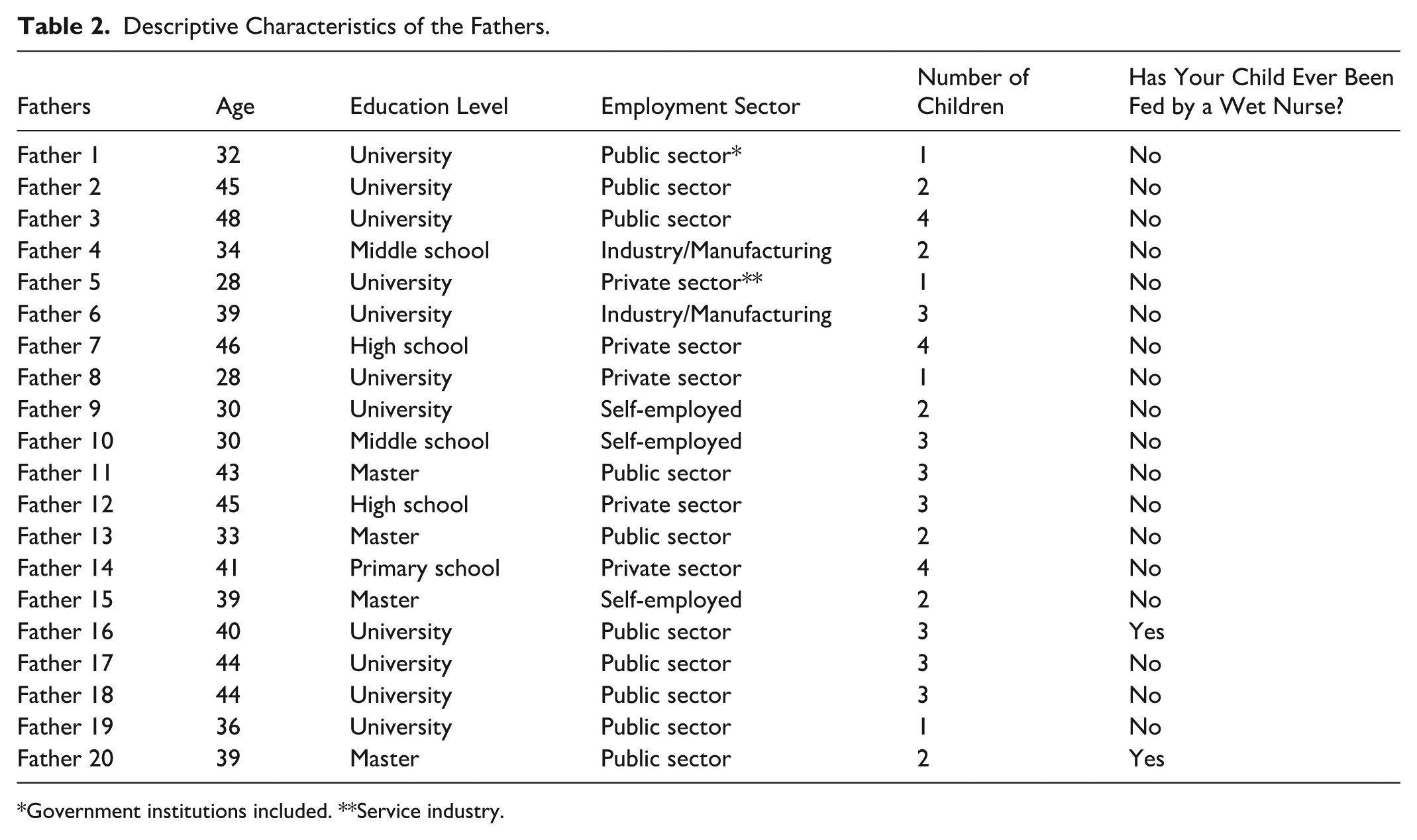
Government institutions included. **Service industry.
As a result of the analysis, five main themes were identified. These themes were: “Fathers’ Views on Human Milk Banking,” “The Use of Donor Human Milk for One’s Own Infant’s Nutrition,” “Perspectives on Donating to a Human Milk Bank,” “Fathers’ Attitudes on Allowing Their Wives to Donate to Human Milk Banks,” and “Fathers’ Views on the Establishment of Human Milk Banks in Türkiye.” Under these main themes, 10 subthemes were derived. A detailed framework including the themes, subthemes, and analysis codes is presented in Table 3. A diagram illustrating the themes and subthemes is provided in Figure 1.
Detailed Thematic Framework.
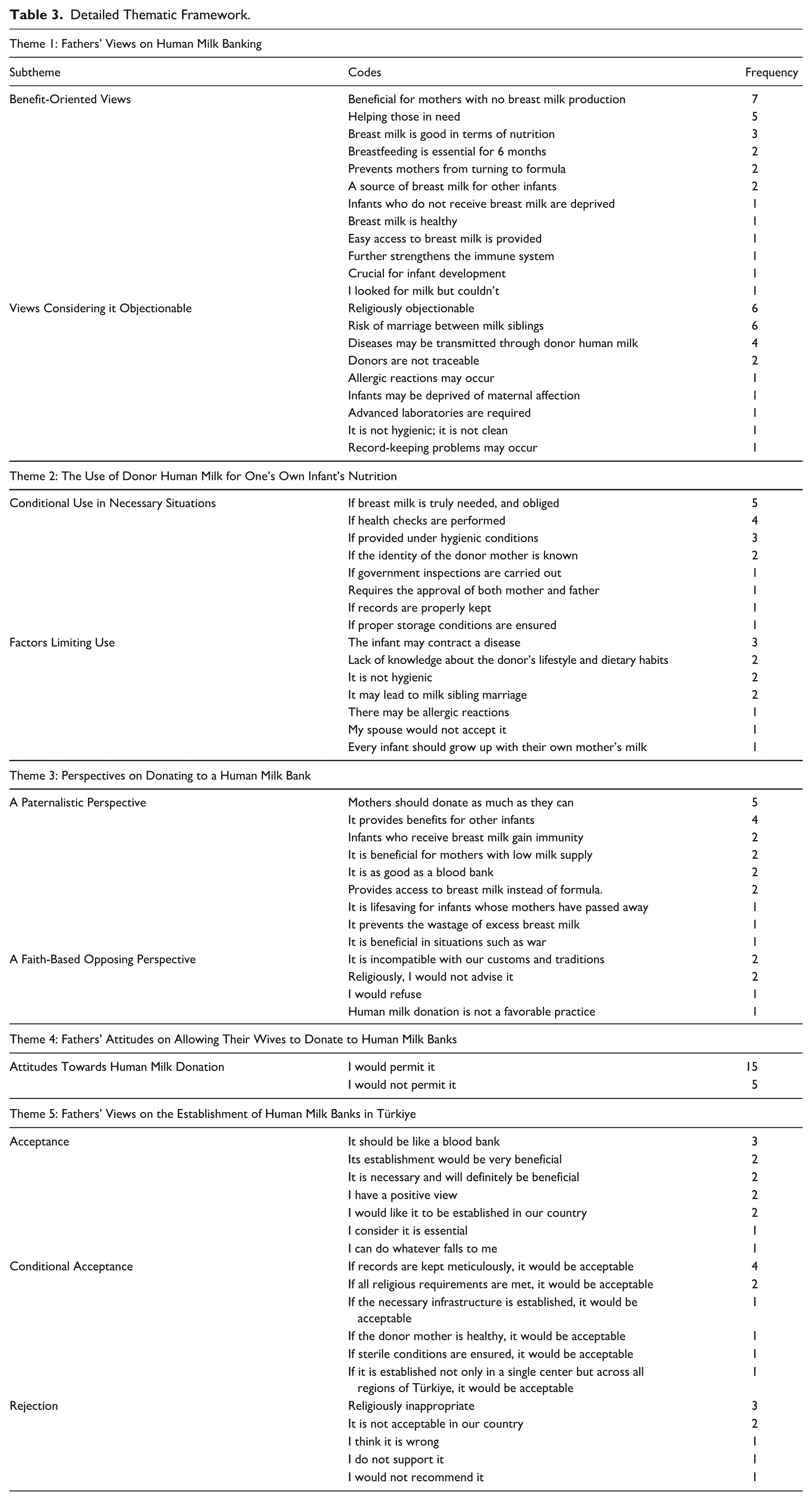
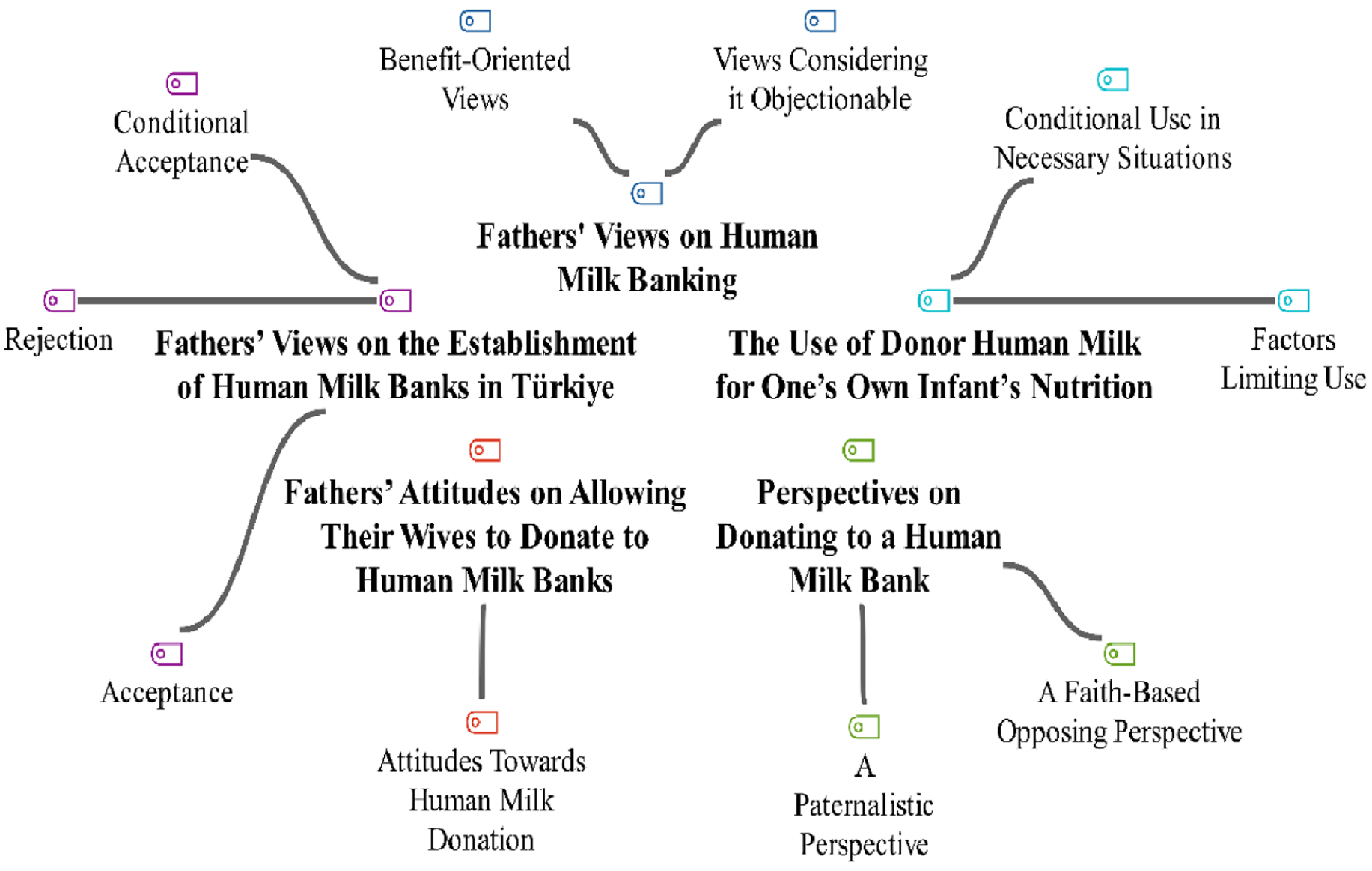
Diagram of themes and subthemes.
Theme 1: Fathers’ Views on Human Milk Banking
This theme consists of two subthemes: “Views Focused on Benefits” and “Views Considering it Objectionable.” In the subtheme “Views Focused on Benefits,” fathers emphasized that human milk banking can provide important advantages in terms of infant nutrition, growth, immune support, accessibility, and preventing the need for formula use. Fathers highlighted that human milk is unique and irreplaceable, and therefore, human milk banks may serve as an essential source of nutrition for infants who cannot receive milk from their own mothers.
An infant who is fed with human milk has a stronger immune system and becomes healthier, and they start life in a more positive way. (F 6) I looked for human milk, but I could not find it. We had to express the milk using a breast pump. (F 3)
In the subtheme “Views Considering It Objectionable,” fathers expressed that the use of donor human milk may pose risks in terms of health, hygiene, religious concerns, emotional factors, record-keeping, and legal issues.
From a religious perspective, there is the issue of milk kinship. We may donate to the milk bank, but to whom will it go? Without knowing, it could lead to a marriage between milk siblings. In this sense, it has disadvantages, and this is a matter of debate in my opinion. (F 4) Will the laboratory be able to maintain the quality of that milk? This may create problems. There needs to be a clear and reliable record of which mother the milk is obtained from (F 19) I don’t think it would be hygienic, so I do not find the storage of milk appropriate. For this reason, I would not want milk banks. (F 17)
Theme 2: The Use of Donor Human Milk for One’s Own Infant’s Nutrition
Under the theme of benefiting from human milk banks, two subthemes were identified: “Conditional Use in Necessary Situations” and “Factors Limiting Use.”
In the subtheme “Conditional Use in Necessary Situations,” Fathers stated they might use donor milk for their infants if medically necessary and hygiene, storage, donor identity, and supervision were ensured.
I would use it, especially if it is hygienic and under government supervision. (F 3) If it is clear which mother the milk comes from, then it can be used, but if it is not known, I find its use objectionable. (F 6) Under normal circumstances, I would not use it, but if I were in a situation where I had no choice and could not find human milk, then I would. (F 14)
In the subtheme “Factors Limiting Use,” fathers expressed reluctance to use human milk banks due to concerns about milk kinship, hygiene, disease risk, donor lifestyle, and the belief that infants should be fed their own mother’s milk.
For example, from a religious standpoint, I do not find it appropriate to give my child milk from someone I do not know. (F 11) No, I would never use it. The mother who donates the milk might have an illness, and I cannot know how clean it is. Maybe formula is even more harmful, but still, I would prefer formula. (F 17) What is the donor mother’s diet like? Could a genetic disorder be passed from the donor mother to my child? Because I would have such concerns, I would not prefer it. (F 19) We want everything for our baby to belong to us as the mother and father. The child should grow up with their own mother’s milk. (F 5)
Theme 3: Perspectives on Donating to a Human Milk Bank
Under this theme, two subthemes were identified: “A Paternalistic Perspective” and “An Opposing Perspective Shaped by Faith.” Some fathers viewed milk donation as a meaningful, altruistic act, while others opposed it due to religious and cultural beliefs. Selected statements illustrating fathers’ perspectives are presented below.
I would want my wife to donate her milk. All mothers should do this. Because, inevitably, situations like war can happen. (F 9) Having a human milk bank is just like having a blood bank, it is a very good thing. (F 12) Some babies lose their mothers right after birth. When a woman donates her milk, it becomes life for a baby whose mother has passed away. (F 9) Since our religion, customs, and traditions come to the forefront, human milk donation remains secondary for me. (F 4)
Theme 4: Fathers’ Attitudes on Allowing Their Wives to Donate to Human Milk Banks
Within this theme, findings were gathered under a single subtheme titled “Attitudes Toward Human Milk Donation.” It was determined that 15 fathers stated they would allow their wives to donate human milk, while five fathers reported that they would not permit such donation.
Yes, I would allow it. Rather than my wife’s milk going to waste, it makes more sense to me that it reaches someone in need. (F 1) I would definitely allow it. Human milk is important for raising healthy individuals, so I would fully support my wife in this, as long as she wants it. (F 8) To put it clearly, I would not allow it. (F 2) It could be possible if the necessary conditions are met. If our own child does not need the milk and another child does, then I would allow my wife to donate. (F 18)
Theme 5: Fathers’ Views on the Establishment of Human Milk Banks in Türkiye
Fathers’ views on the establishment of human milk banks in Türkiye were categorized into three subthemes: “Acceptance,” “Conditional Acceptance,” and “Rejection.”
Fathers who expressed acceptance of the establishment of human milk banks in Türkiye demonstrated a positive and supportive attitude, indicating that they were willing to fulfill any responsibilities required of them in this process.
It would be good for mothers who do not have milk or who lack the means, so that their infants could receive nutritional support from a human milk bank. I would like it to be established in our country. (F 7) As a man, I am a bit distant from such matters, but I see it similar to blood donation. I believe that having it in our country would be beneficial. (F 15) I think it should exist in our country. Because unfortunately, some mothers do not produce milk. In such cases, milk can be obtained. Artificial formulas are not as beneficial as human milk. Human milk is very important for strengthening the infant’s immune system. (F 13)
Fathers in the “Conditional Acceptance” category stated that milk donation would be acceptable if records, religious and health requirements, and sterile handling and storage were ensured.
It can be done if both the donor mother and the recipient are recorded in detail. (F 16) It depends on how thoroughly the milk is tested and how sterile the storage conditions are. (F 12) If everything aligns with religious requirements, I would support it. (F 4)
Fathers who rejected the establishment of human milk banks in Türkiye viewed human milk donation as culturally and religiously inappropriate and believed that such a practice would not be implemented effectively in the country.
I do not believe it would work well in our country. That is why I think differently. (F 20) If it is established, there is nothing I can do, but I do not think it is right. If it were established, I would not use it myself and would not recommend it to others. Our religious beliefs shape our way of life as a society. (F 11)
The frequency distribution of the identified codes reflecting fathers’ views on human milk banks and human milk donation was visualized in the form of a code cloud. Codes that appeared more frequently in the data are represented in larger font size, while less frequent codes appear in smaller size (Figure 2).
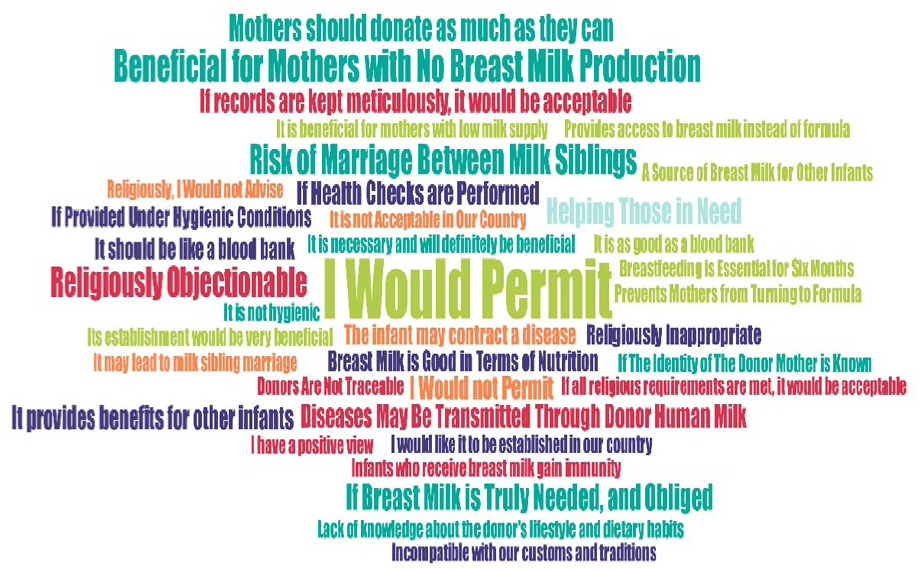
Code cloud.
Discussion
In countries where Islam is widely practiced, human milk banking is considered controversial due to traditional and religious beliefs, concerns about the safety of donor human milk, ethical considerations, and limited public awareness. For this reason, human milk banks have not yet been implemented in Türkiye, where Islam is the predominant religion (Kuluçtu & Özerdoğan, 2017). In contexts like Türkiye, where patriarchal norms and predominantly Muslim cultural values influence family decision-making, mothers often require their husbands’ approval to donate or use donor milk. Most previous research has focused solely on mothers, but our findings highlight that fathers’ attitudes and perceptions play a crucial role in human milk donation practices. Recognizing fathers’ roles is essential for supporting women’s decisions, encouraging donor milk use, and developing culturally sensitive, family-centered strategies for infant feeding.
The study revealed a dichotomy among Turkish fathers regarding human milk banking. Some fathers viewed human milk banking as a lifesaving and beneficial practice, while others viewed it as objectionable due to religious and cultural factors. Fathers with a benefit-focused view stated that human milk banks are vital, particularly in cases of premature infants, insufficient maternal milk, or the death of the mother. This view aligns with the goals of “increasing access to human milk” and “reducing nutritional inequities,” as emphasized by the WHO (2023).
On the other hand, some fathers viewed human milk banking as objectionable due to religious reasons, such as the risk of marriage between milk siblings (milk kinship) and concerns about lineage and familial belonging. The findings align with literature indicating that cautious approaches to human milk banking are common in societies where Islamic cultural norms are predominant, such as Türkiye (Pramono & Hikmawati, 2024; Ramachandran et al., 2024). This study demonstrates that cultural and religious beliefs in Türkiye significantly shape fathers’ views on human milk banking, and that policy development should include fathers as well as mothers. Awareness-raising strategies should engage fathers in education and decision-making while respecting their cultural and religious values to support safe and acceptable human milk banking practices.
Participating fathers stated that they were not absolutely against the use of donor human milk; however, they emphasized that it could be acceptable if conditions such as hygiene, safety, health screenings, government oversight, and knowledge of the identity of the donor mother were met. However, many participants were cautious about its use due to concerns such as the risk of infectious diseases, distrust regarding the donor mother’s lifestyle and dietary habits, the possibility of marriage between milk siblings (milk kinship), health concerns, and religious and cultural beliefs. The literature similarly demonstrates a cautious approach to donor human milk (Mathias et al., 2023; Yaşar et al., 2023). In our study, fathers likewise exhibited conditional acceptance alongside rejection regarding the use of donor human milk. Therefore, it is thought that reservations about donor human milk may be related not only to individual factors but also to a structural lack of trust. Furthermore, religious concerns, such as milk kinship, carry elements of faith that cannot be resolved solely through technical or clinical measures. Therefore, it becomes evident that policies regarding human milk banking should consider sociocultural and religious dynamics alongside medical and operational aspects.
In our study, some fathers exhibited a paternalistic perspective on human milk donation, arguing that donating human milk generates not only individual but also societal benefits. Fathers associated human milk banks with blood banks and emphasized their importance for infants with special needs. Fathers’ statements indicate that they position human milk banking as a health and benefit focused practice, citing reasons such as preventing the waste of excess breast milk, supporting mothers with low milk supply, providing access to donor human milk instead of formula, and strengthening infants’ immune systems. The literature also emphasizes the vital importance of human milk banking, particularly for preterm and medically vulnerable infants, and highlights that involving fathers as well as mothers in the process may increase social acceptance (Chang et al., 2013; Zhang et al., 2020). Similarly, human milk donation has been described not only as a nutritional support source but also as a lifesaving resource in crisis situations such as the COVID-19 pandemic or adverse socioeconomic conditions (Nguyen et al., 2025; Weaver et al., 2019). Nguyen’s study emphasizes that mothers generally hold positive attitudes toward human milk donation and consider this practice a moral and humanitarian responsibility (Nguyen et al., 2025). Similarly, in the study by Sürmeli and Vefikuluçay Yılmaz, a significant portion of fathers demonstrated positive attitudes toward human milk banking (Sürmeli & Vefikuluçay Yılmaz, 2023). These findings indicate that fathers’ protective perspective on human milk donation considers both benefits for their own child and broader social benefits, such as supporting infants in need.
In the subtheme “A Faith-Based Opposing Perspective,” fathers expressed their opposition to human milk donation, stating that it was incompatible with their traditions and religious beliefs. Relevant literature emphasizes that religious and cultural concerns are among the most frequently cited obstacles to human milk donation (Doshmangir et al., 2019; Obeng et al., 2023). The findings of this study revealed that fathers, who influence the decision-making process regarding human milk donation, also harbor faith-based reservations. Consistently, the religious and cultural concerns expressed by fathers align with the obstacles identified in previous studies with mothers, healthcare professionals, and students. This demonstrates that resistance to human milk banking stems not only from individuals but also from the shared religious and cultural codes of society. Furthermore, by examining the perspective of relatively underrepresented fathers, this study adds a unique dimension to the existing literature.
This study determined that fathers’ attitudes toward human milk donation are shaped by whether they allow or do not allow their wives to donate. Gender literature frequently emphasizes that men play an influential role in women’s health-related decisions, including infant feeding and breastfeeding (Mukembo et al., 2021; Simal Yavuz & Ozerdogan, 2024). Our study highlights that fathers’ permission or non-permission significantly influences the decision-making process regarding human milk donation. Therefore, policies and practices should be designed in a way that actively incorporates fathers’ perspectives, rather than focusing solely on mothers.
In our study, the majority of fathers supported the establishment of human milk banks, similar to blood banks in Türkiye, believing that they would provide social and public health benefits. However, conditions such as appropriate infrastructure, strict hygiene standards, and comprehensive record-keeping systems were frequently emphasized. On the other hand, there were fathers who remained distant from the idea due to religious and cultural concerns. Similarly, national and international studies demonstrate the existence of acceptance, conditional acceptance, and rejection attitudes toward the establishment of human milk banks (Kilci Erciyas et al., 2021; Mampane & Wolvaardt, 2024). While perceptions of trust and benefit provide a strong basis for acceptance, the presence of conditional and opposing attitudes highlights the need for transparent procedures and comprehensive information for families. These findings underscore the importance of including fathers’ perspectives in the planning and implementation of human milk bank systems.
Strengths and Limitations
The study’s strength lies in its ability to address fathers’ perspectives within their sociocultural contexts, filling a significant gap in the literature, and making an original contribution to the field. Conducted in a country where Islam is prevalent, this study provides data that will contribute to a better understanding of fathers’ perspectives on human milk banking and human milk donation processes for policymakers and practitioners. Because the study employed a qualitative research design, the results cannot be generalized to all fathers. Additionally, because the study was conducted at a single hospital and the majority of participants were college graduates working in the public sector, the sample is homogeneous. There is a possibility that fathers may have tended to provide socially acceptable responses during the interviews (social desirability bias). Since the study was conducted in a hospital setting, the environment may have influenced participants’ responses. The short duration of some interviews is another limitation.
Conclusion
This study provides in-depth insights to the limited literature in this area by revealing fathers’ perspectives on human milk donation and human milk banking. While some participating fathers viewed milk banking positively and considered it beneficial for infants in need, others approached it cautiously due to religious beliefs, hygiene concerns, lack of regulation, and the risk of milk consanguinity. Decisions regarding the use of donor milk were shaped by specific conditions such as hygiene, health screenings, and donor information. Furthermore, fathers’ attitudes towards allowing their wives to donate milk showed significant differences; this highlights the influence of fathers on decision-making processes regarding milk donation practices.
The findings suggest that, in patriarchal and predominantly Muslim cultural contexts, participating fathers believe that their own opinions may influence their wives’ decisions to donate human milk or use donor milk. This study provides practical implications for nurses and lactation counselors, enabling them to understand the role of fathers in family-centered milk banking practices and plan the counseling process accordingly, by presenting the perspectives of fathers. Lactation counselors, nurses, and midwives can actively involve fathers in the counseling process, promote open and supportive communication between partners, provide culturally and religiously sensitive guidance, and support safe and informed decision-making regarding the use of donor milk or milk donation.
Supplemental Material
sj-docx-1-jhl-10.1177_08903344261452004 – Supplemental material for Human Milk Donation and Human Milk Banking from the Perspective of Fathers: A Qualitative Study
Supplemental material, sj-docx-1-jhl-10.1177_08903344261452004 for Human Milk Donation and Human Milk Banking from the Perspective of Fathers: A Qualitative Study by Zehra Çerçer, Gamze Acavut and Fadime Biçer Şahin in Journal of Human Lactation
Footnotes
Acknowledgements
We thank all the fathers who participated in the study.

Ethical Considerations
Ethical approval was obtained from the Gaziantep Islam Science and Technology University Non-Interventional Clinical Research Ethics Committee (Decision No: 427.38.10, Date: May 21, 2024). Legal institutional permission was obtained from the Provincial Directorate of Health (Decision No: 132, Date: July 5, 2024). The purpose of the study and the voluntary basis of participation were explained to all participants, and written informed consent was obtained. Personal information was kept confidential and anonymized, and the study was conducted in accordance with the principles of the Declaration of Helsinki.
Author Contributions
Funding
The authors received no financial support for the research, authorship, and/or publication of this article.
Declaration of Conflicting Interests
The authors declared no potential conflicts of interest with respect to the research, authorship, and/or publication of this article.
Data Availability Statement
The datasets generated and/or analyzed in this study are not publicly available due to ethical restrictions. Data may only be made available in an anonymized form to the extent permitted by ethical approval and upon reasonable request to the relevant author.
Supplemental Material
Supplementary Material may be found in the “Supplemental material” tab in the online version of this article.
References
Supplementary Material
Please find the following supplemental material available below.
For Open Access articles published under a Creative Commons License, all supplemental material carries the same license as the article it is associated with.
For non-Open Access articles published, all supplemental material carries a non-exclusive license, and permission requests for re-use of supplemental material or any part of supplemental material shall be sent directly to the copyright owner as specified in the copyright notice associated with the article.
