







Abstract
Agricultural waste is utilized as filler to mitigate manufacturing constraints and brittleness in polylactic acid (PLA). However, the hydrophilic nature of fillers leads to moisture absorption and swelling, diminishing material’s strength. Thus, this study investigates the impact of hydrophobic fillers such as waste feather (WF) and graphite powder as reinforcements to enhance mechanical properties and reduce moisture absorption in PLA. Three hybrid PLA-composites (HPLAC) are produced, with varying WF and graphite percentages: HPLAC1 (15% WF, 5% graphite), HPLAC2 (10% WF, 10% graphite), and HPLAC3 (5% WF, 15% graphite). HPLAC3 demonstrates higher tensile strength (45 ± 0.7 MPa) and flexural strength (124 ± 2.3 MPa), exceeding pure PLA by 181.3% and 191.7%, respectively. The addition of WF and graphite enhanced compression strength and hardness, while higher graphite content reduced impact strength due to its lower density and higher stiffness. The glass transition and melting temperatures are increased to 64.4°C and 178.5°C corresponding to an increased crystallinity from 16.6% (PLA) to 35.5% (HPLAC2). Furthermore, HPLAC2 has a 38.6% lower water absorption than pure PLA, showing that the HPLACs with WF and graphite have higher mechanical properties and reduced water absorption than PLA. Consequently, they can provide a wide range of applications across several sectors, setting up a balance between performance, sustainability, and cost-effectiveness.
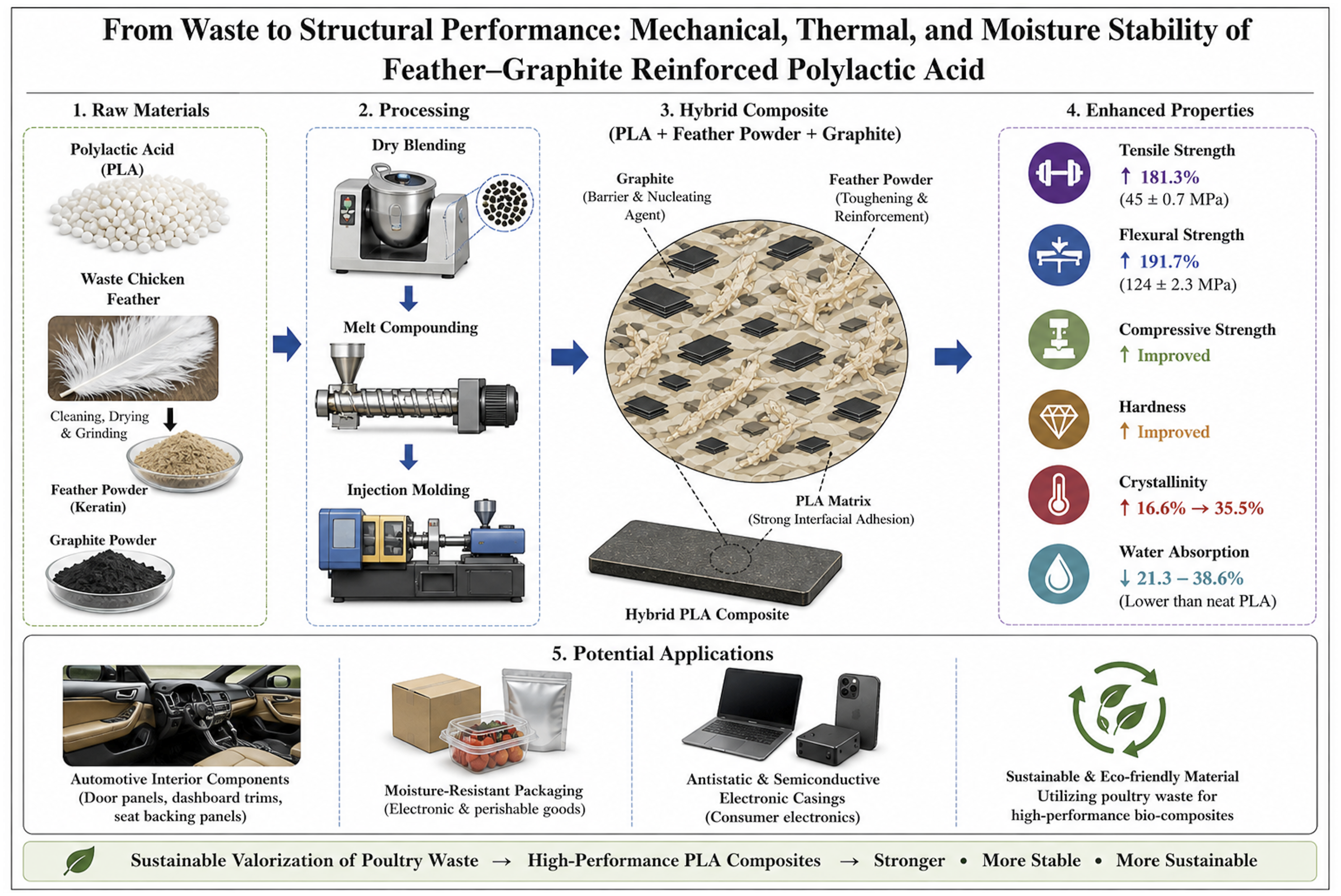
➢ Hybrid bio-composites are developed using waste feathers and eco-friendly graphite. ➢ Hydrophobic fillers enhance mechanical strength and reduce water absorption. ➢ Tensile and flexural strengths are increased by 181.3% and 191.7%, respectively. ➢ The degree of crystallinity has increased from 16% to 35.5% for the composite PLA. ➢ Water absorption is reduced by 21.3–38.3% compared to pure PLA.Highlights
Introduction
Improper disposal of petroleum-based plastics results in annual plastic waste dumps of 8 million metric tonnes into the ocean, with the amount expected to rise to 100–250 million metric tonnes by 2025. 1 Biopolymers provide a sustainable alternative to traditional plastics, sourced from renewable materials and biodegradable. They reduce reliance on fossil fuels, lower carbon footprint, and minimize greenhouse gas emissions. 2 They address the worldwide plastic pollution challenge by breaking down into harmless molecules and reducing plastic trash buildup. 3 Polylactic Acid (PLA), derived from corn starch is a prominent biodegradable polymer with strong economic potential. 4 PLA, with its comparable mechanical and thermal properties, thermoplastic processability, biocompatibility, and biodegradability, is an effective material with numerous potential applications. 5 However, manufacturing constraints and brittleness are key drawbacks. The substantial initial raw material requirement raises economic and sustainability concerns. Blending PLA with natural fibers and sustainable byproducts (various industrial and agriculture waste) offers a potential solution to maintain its benefits while reducing production. 6
The natural fibers and fillers are the most used reinforcement due to their abundant availability, non-toxic nature, and biodegradability. 7 Composites incorporating natural fibers and fillers hold promising applications in industries such as automobile, aerospace, and sports goods manufacturing, attributed to their enhanced mechanical strength and reduced weight. 8 PLA reinforced bio composites were made using natural fibers like bagasse, 9 Jute, 10 sisal, 11 sea grass, 12 banana, 13 pineapple leaf fiber, 14 and Pinus roxburghii fibre, 15 The fillers in the form of powders from wood, 16 seed, 17 Olive husk, 13 rice husk, 18 coconut shell, 19 almond shell,20,21 pomegranate peel 22 and chitin particles, 23 are also reinforced with PLA to make a sustainable composite.
The sustainable composites using natural fibers and fillers have greater mechanical and thermal characteristics than the parent material. 24 They are affordable and renewable, with greater accessibility and recyclability, making them a desirable alternative to synthetic fibers. However, the hydrophilic nature of fillers can cause challenges in composite materials due to their tendency to swell when absorbing moisture, leading to voids at the fiber-matrix interface.25,26 This weakens the bond, reducing the mechanical characteristics of the composites. This can lead to lower strength, stiffness, and durability. 3
Chicken feather waste is a global issue arising from poultry farms, keep on increasing by rising demand for poultry meat. The environmental and health consequences of dumping chicken feathers on open ground demand their reuse in the production of sustainable products. 27 Waste feathers, a globally abundant byproduct of poultry farms and industries, offer a sustainable alternative to conventional natural fillers and fibers by overcoming the limitations associated with their hydrophilic nature. The environmental and health issues caused by the throwing chicken feather waste in open land creates a need of reusing those feathers for making sustainable products. It contains a hydrophobic protein called keratin, which has a smaller diameter and strength comparable to that of nylon. Furthermore, it is resistant to mechanical stress and exhibits a higher elastic modulus due to its cross-linked, semi-crystalline structure. 28 The unique properties of chicken feathers enable them to effectively address the limitations of conventional synthetic and natural fiber reinforcements. The waste from poultry farms has been used as additives and fillers with a wide range of polymers. The incorporation of waste chicken feathers into polymer composites presents a promising strategy to address environmental challenges related to synthetic polymer manufacturing and the landfill disposal of poultry feather waste. The thermal and mechanical behavior of polymers have been improved using waste feathers. 29 Cheng et al. 28 found that stiffness and tensile modulus were improved by reinforcing waste feathers by up to 5%. Further, thermal stability of the composite was better than neat PLA. 30 In addition, the lower density of CFW produced the light weight composites with lower density (30-40%) better mechanical properties.
The reinforcement of graphite with the PLA leads to reduced moisture absorption and improved mechanical, thermal, and electrical properties. Graphite acts as a barrier to moisture absorption, reducing intermolecular motion and slowing moisture growth. It also enhances mechanical, thermal, and electrical properties, making it suitable for various applications. 31 Studies have shown increased tensile strength and flexural modulus in PLA-graphite composites with varying graphite fractions. 32 Graphite also enhances stiffness and tensile characteristics in PLA filaments for 3D printing. 33 The PLA–graphite composite exhibits a higher Young’s modulus than pure PLA, and its self-lubricating property enhances wear resistance. Interestingly, incorporating graphite into PLA does not affect its biodegradable properties. 34
Further, hybrid composites have been developed by adding more than one filler material to enhance the mechanical and thermal properties of PLA composites for specific applications. Avci et al. 35 found that the addition of boron compounds (zinc borate, borax: boric acid combines, and ulexite) decreased the mechanical properties of PLA-flax composites by up to 20%. However, the measured mechanical and thermal properties were still found to be suitable for automobile applications. Govindan et al. 36 found that basalt and sisal fiber-reinforced PLA hybrid composites have higher hardness and wear resistance, making them suitable for moving parts. Although existing studies show that the addition of dual fillers improves mechanical properties, only a few studies have been conducted on hybrid PLA composites. The hybrid Banana/Kenaf/PLA/Walnut composite exhibited the highest performance, with a tensile strength of 59.08 MPa, Young’s modulus of 3.9 GPa, hardness of 99 Shore D, and thermal conductivity of 0.41 W/m·K. 37 Ghorbanpour et al. 38 showed that incorporation of nanofillers such as graphene significantly enhances mechanical and thermal properties. The enhancement is attributed to improved interfacial interaction and load transfer between the matrix and reinforcements. Dejene et al. 39 have explored hybrid reinforcement strategies in PLA-based composites to achieve both functional and mechanical performance, particularly for packaging applications.
The above literature review highlights that natural fibers in composites suffer from inadequate interfacial adhesion and high moisture absorption due to their hydrophilic nature, which compromises the overall performance of the composite. 40 Hence, feather waste, one of the most promising hydrophobic bio-waste, is used in this study to improve the moisture resistance of the PLA. 29 However, despite the hydrophobic and sustainable nature of chicken feathers, their incorporation as filler material may lead to a reduction in the mechanical properties of PLA-based composites. 41 This downside of waste fathers can be compensated by adding graphite powder, which may lead to enhanced moisture resistance of the composite without decreasing the mechanical properties. Furthermore, adding graphite increases the thermal conductivity of polymer composites, which is crucial for manufacturing electronic circuit boards, as it helps dissipate electronic components' heat, prevent overheating, and ensure optimal performance and reliability. 33 The hybrid polymer composites, reinforced with waste chicken feathers and graphite as additional reinforcing materials, have superior mechanical strength compared to other polymer composites.42,43 However, an extensive literature review reveals a lack of detailed analysis on the effect of waste feather and graphite reinforcement on the properties of biopolymers. Though graphite improves composite mechanical strength, its effect on PLA-waste feather composites is unknown.
Numerous studies have examined PLA composites reinforced with natural fibers, agricultural biofillers, graphite, graphene, and hybrid reinforcements; however, the majority of these investigations predominantly concentrated on enhancing specific properties, including mechanical strength, thermal stability, wear resistance, or functional performance. Nevertheless, little focus has been directed towards the advancement of sustainable PLA composites that can concurrently enhance mechanical performance, crystallinity, hydrophobicity, and moisture resistance. The synergistic application of keratin-rich waste feather powder and graphite as dual hydrophobic reinforcements remains inadequately investigated.
Therefore, the present study presents a new PLA hybrid composite that combines the waste feather powder and graphite, as both materials complement each other by virtue of their properties. The keratin-based nature of the waste feather serves as a bio reinforcement material and is moisture-resistant, whereas graphite enhances the barrier properties, crystallinity, and stiffness of the PLA hybrid composite. Therefore, this study aims to address this gap by developing a hybrid bio-composite using waste feather powder as additional fillers alongside graphite powder to mitigate moisture absorption and enhance mechanical strength. To the best of the authors knowledge, the performance of PLA composite reinforced with waste feather and graphite as dual fillers has not been studied. Thus, the authors assert that this study constitutes a novel contribution toward improving the properties of sustainable bio-composite materials.
Materials and experimental test methodology
Materials and processing
The biodegradable PLA pellet (PLA3052D) is purchased from Nature Tech India Pvt. Ltd. As per the supplier data, the melt flow rate of PLA is 6 g/min (210°C, 2.16 kg) with density of 1.24 g/cm3 and average molecular weight of 116,000 gmol−1. Further, the glass transition and crystalline temperature ranges are 50–60°C and 145–160°C. Fine graphite powder is also utilized as a reinforcing ingredient to increase the moisture absorption and mechanical properties of the PLA biopolymer composite. It is purchased in powder form from Bangalore Fine Chem, Bangalore-60, and has a 100-mesh size.
Waste feather used in this study were procured locally from a local poultry farm in Chennai, Tamil Nadu, India due to their quantity, uniform quality, and ease of handling. Feathers from various chicken varieties are primarily composed of keratin (85%–90%), which affects the structure, mechanical properties, and hydrophobicity of the feathers. Minor variations in composition and microstructure may exist depending on the source. However, factors like as fiber shape, surface chemistry, and hydrophobicity are nearly identical in feathers from various poultry sources. The pre-treatment is done to get rid of the dirty and unnecessary impurities present in them, resulting in the elimination of the unpleasant odor. Previous studies have shown that chemical treatment of biofillers significantly influences the biodegradation behavior of PLA-based composites.
44
The WF is immersed in a NaOH solution (0.5 wt%) for 2 hours, followed by washing in distilled water several times until a pH value of 7 is observed. The NaOH concentration is selected based on existing literature on fiber-reinforced biopolymer green composites.45,46 Next, the WF is sun-dried for 3 days to completely remove the moisture. Again, it is dried in a hot air oven at 60°C for 12 hours before being ground into fine powder with a mixer grinder. Natural filler materials often recommend a powder particle size of 50–100 mesh. In the current investigation, the powdered WF is sieved using a particle size of 100 mesh. Figure 1 shows the graphical representation of the step-by-step process of making WF powder. Waste feather processing and powder making.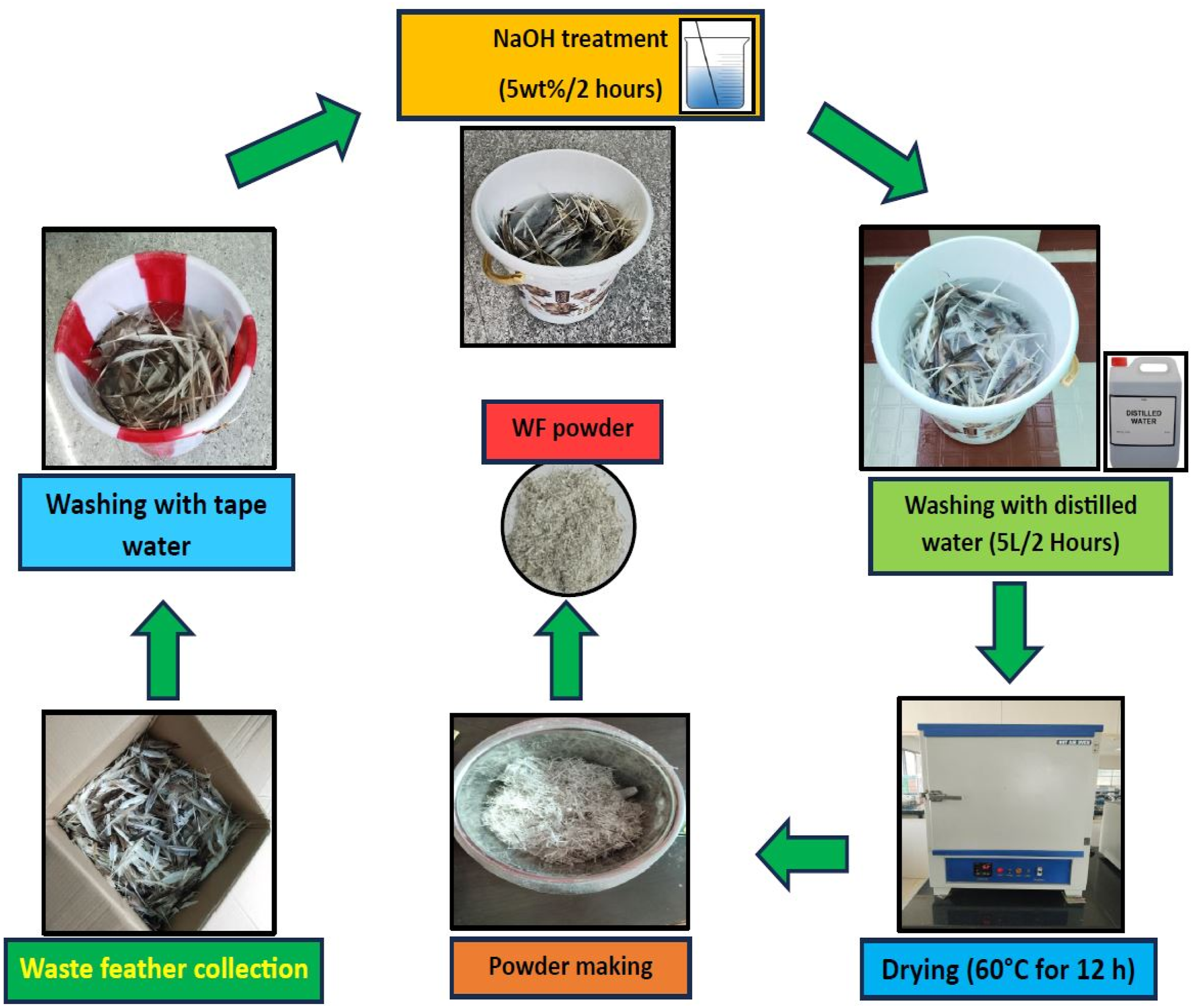
Composite preparation method
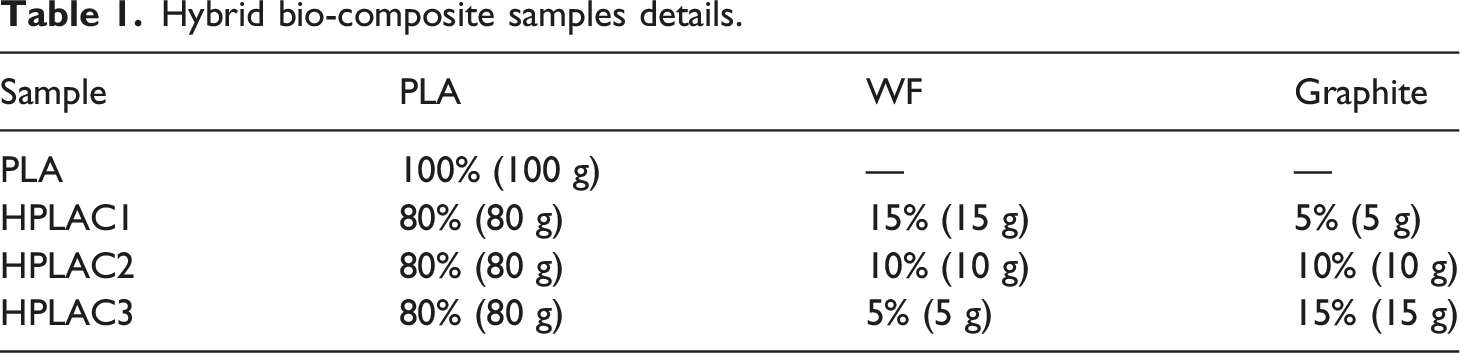
In this study, WF and graphite have been chosen as hybrid fillers. WF is chosen for its lightweight, biodegradable, keratin-rich structure, which provides modest reinforcement while lowering the composite’s total density. Graphite is used because of its high heat conductivity and barrier characteristics. Notably, both WF and Gr have hydrophobic properties, which aid to limit moisture absorption and increase water resistance in the PLA composite. The current hybrid composition has been discovered based on decreased water absorption, enhanced interfacial bonding, and compatibility with the injection molding process.
Hybrid bio-composite samples details.
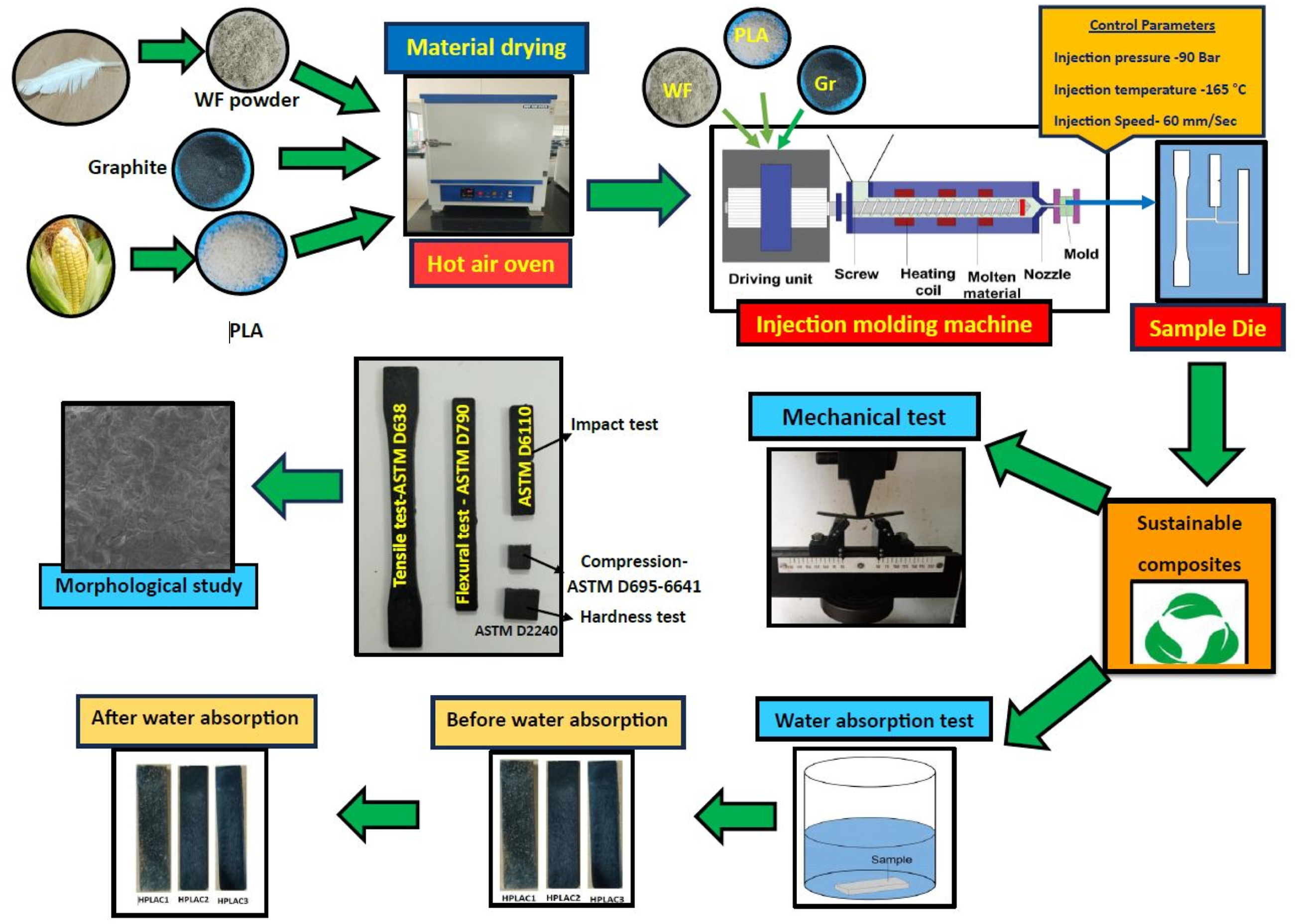
Schematic view of process of making composites and tests.
Characterization
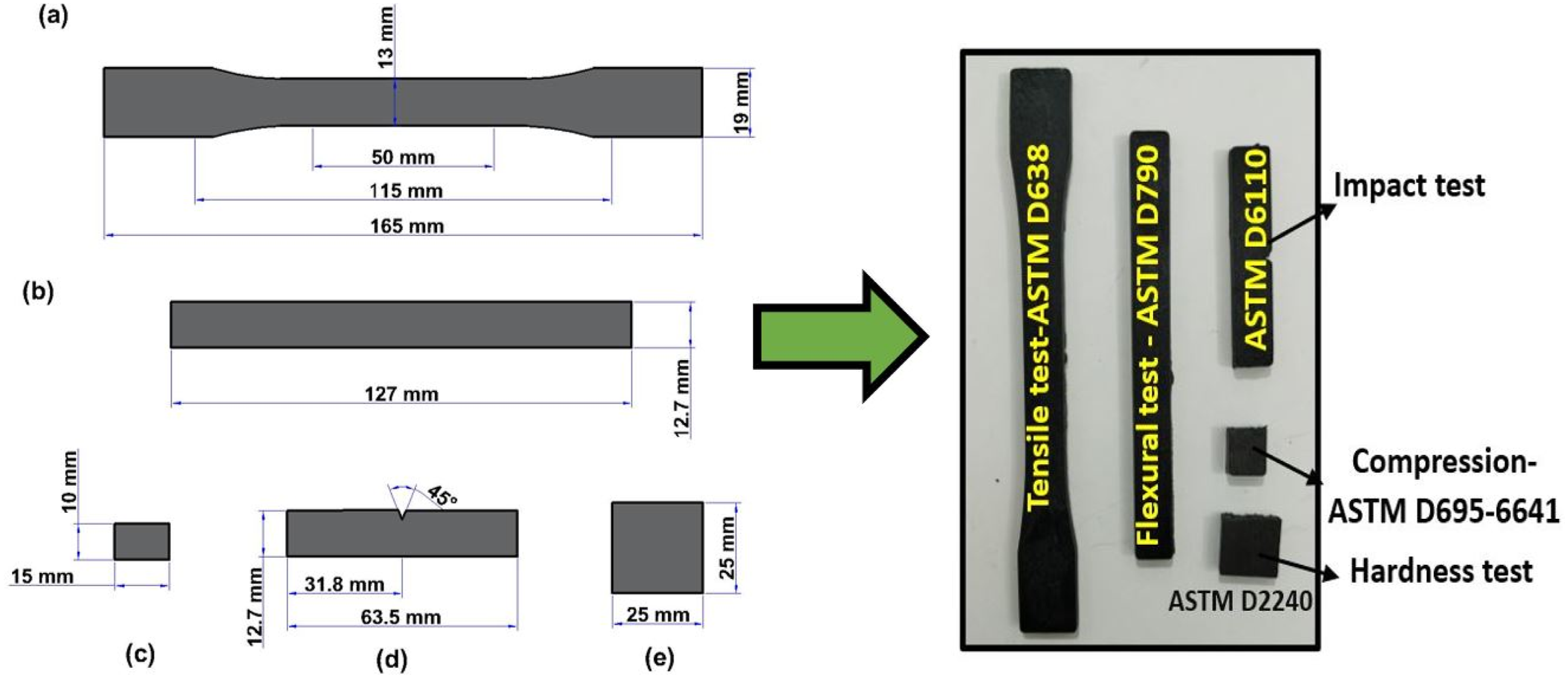
Tensile, flexural, and compression strength properties were tested using Universal Testing Machine, Make: Tinius Olsen with load cell capacity of 50 kN (Figure 3(a)–(c)). Tensile and flexural properties were determined according to ASTM D638 and ASTM D790 at room temperature with a loading rate of 0.008 mm/s. Compressive strength was measured following ASTM D695 to understand the stiffness and failure response under axial compressive loads. Impact resistance was assessed using the Izod impact test in accordance with ASTM D256-23, where notched rectangular specimens were fractured at an impact velocity of 2.6 m/s. Surface hardness was evaluated using a Shore D digital durometer. The current mechanical test samples prepared through injection moulding process is shown in Figure 4 with respective ASTM standards. The morphology of fractured tensile specimens is examined using high-resolution scanning electron microscopy (HR-SEM) (Thermosceintific Apreo S). Initially the samples are gold coated in the sputtering unit in an inert atmospheric. Further, the water absorption properties of the present hybrid polymer composites are assessed following ASTM D570 standard. FTIR spectra were recorded for pure PLA and HPLAC2 composite in the range of 4000-400 cm−1. Differential Scanning Calorimetry (DSC) analysis was done for pure PLA and HPLAC2 in the temperature range of 20-230°C with a heating rate of 10 K min−1 in a nitrogen atmosphere. Mechanical testing of hybrid bio-composite samples, (a) Tensile test, (b) Flexural test, (c) compression test, (d) Impact test, (e) Hardness. Mechanical test specimen details as per the ASTM standards, (a) Tensile, (b) flexural, (c) Compression, (d) Impact, (e) Hardness.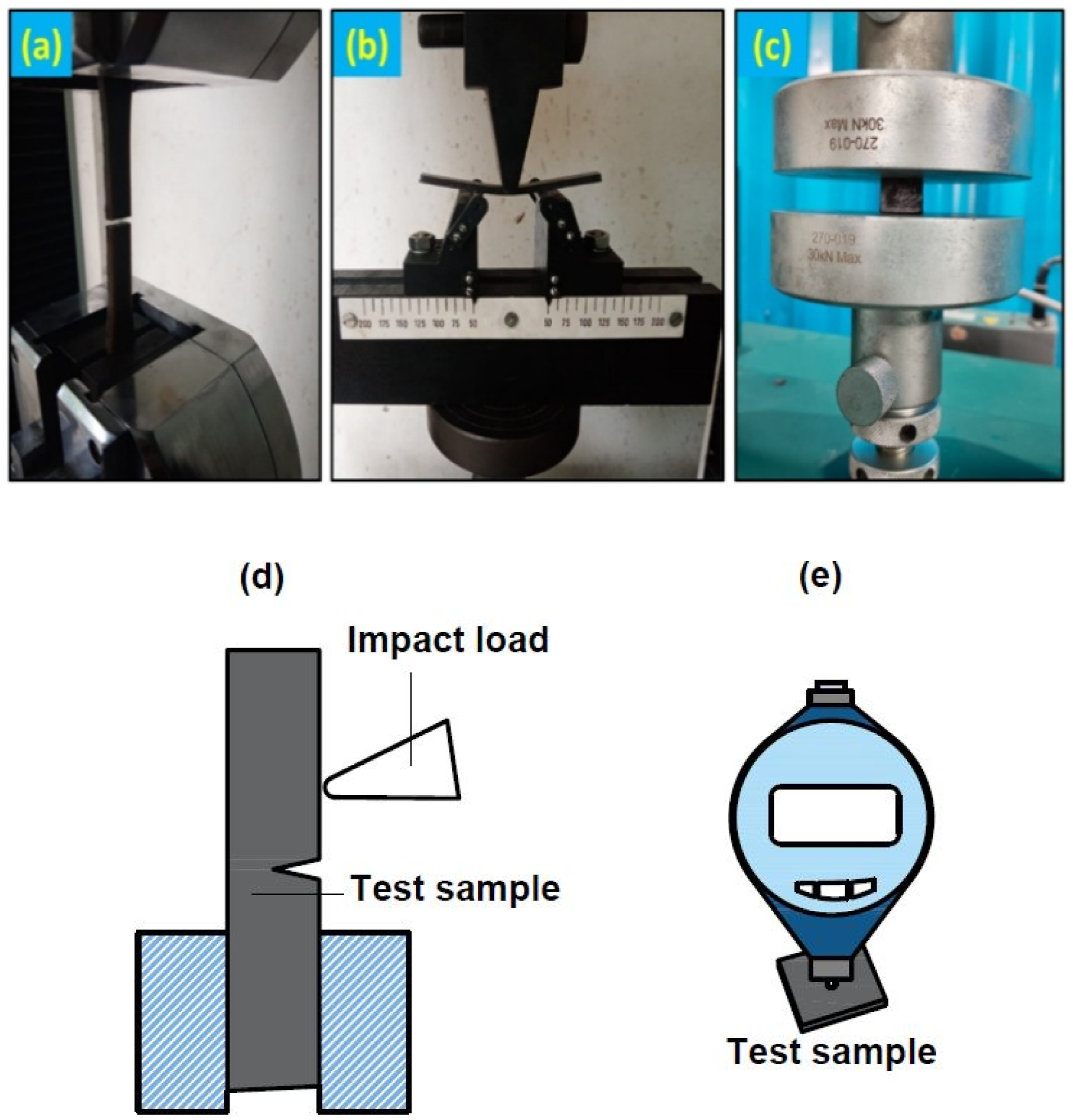
Results and discussion
Tensile behavior
The tensile behavior of the present hybrid bi-composite material is investigated using an axial tensile load in the universal testing machine. The results of the tensile strength test included the maximum ultimate stress, Young’s modulus, and percentage of elongation. Figure 5(a) shows that the present hybrid bi-composite material has a higher tensile strength than pure PLA. The hybrid composite HPLAC1, reinforced with 15% WF and 5% graphite, exhibited a tensile strength of 38 ± 1.1 MPa and a Young’s modulus of 480 ± 24 MPa. They are 137.5% and 46.3% higher than the tensile strength (16 ± 1.2 MPa) and Young’s modulus (328 ± 23 MPa) of pure PLA. This improvement is due to the presence of the fibrous nature and semi-crystalline nature of keratin in WF that enhance stress distribution and energy absorption under tensile loads. Simultaneously, graphite acts as a rigid carbonaceous reinforcement with high stiffness and surface area, facilitating efficient stress transfer between the matrix and fillers. Tensile behavior at various waste feather and graphite percentages. (a) Tensile strength and modulus, (b) Elongation.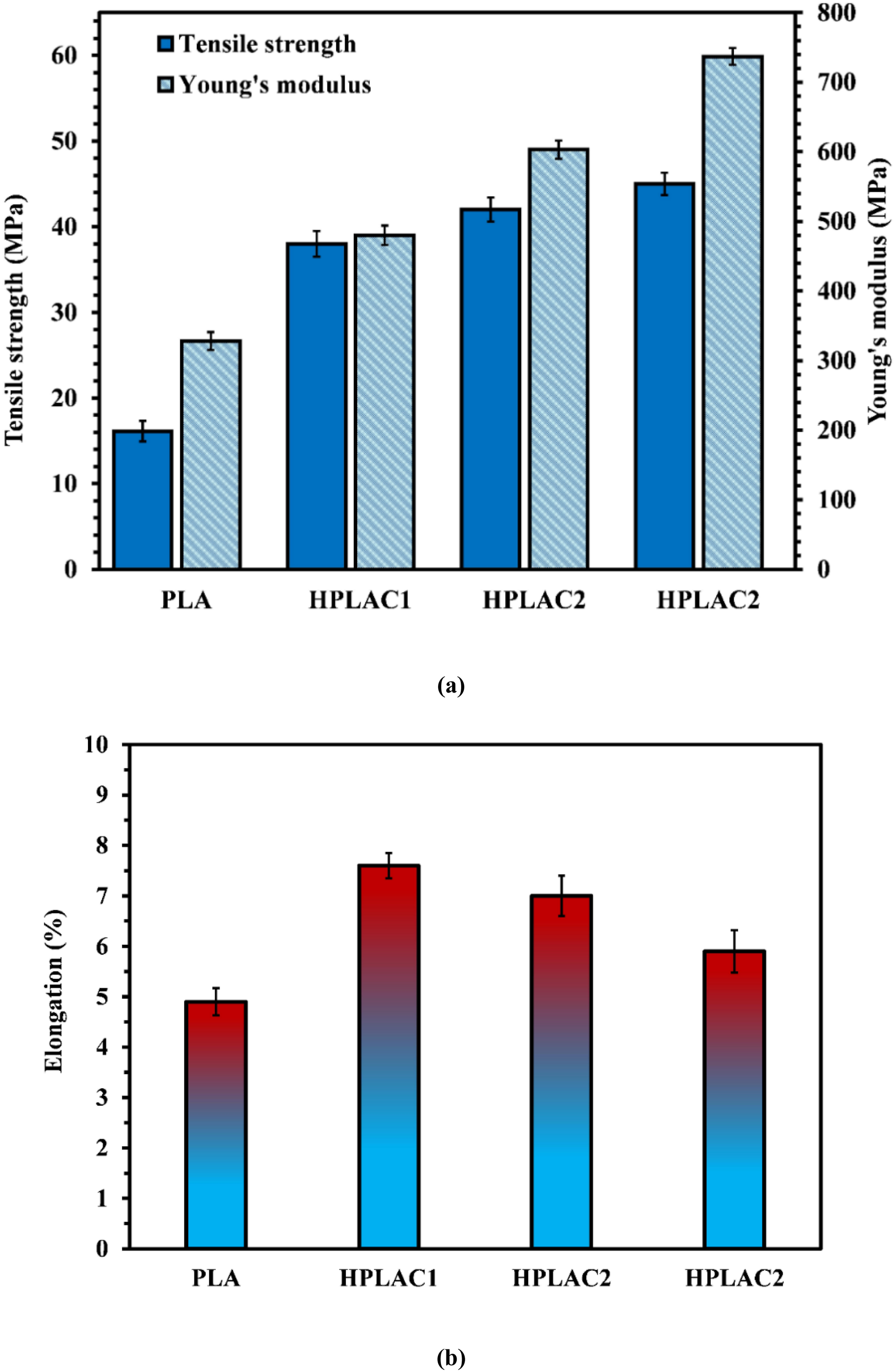
The higher Young’s modulus obtained for the present hybrid composites shows a better interaction between the filers and PLA matrix. It is still improved when the graphite content of the hybrid composite is increased, as shown in Figure 5(a), due to the higher surface area of the graphite. The tensile and Young’s modulus of HPLAC2 with equal amounts of WF and graphite are 42 ± 0.9 MPa and 606 ± 23 MPa, which are 162.5% and 83.8% higher than the neat PLA matrix. These properties are further improved to 45 ± 1.0 MPa for tensile strength and 737 ± 22 MPa for Young’s modulus when the graphite content is increased, representing enhancements of 181.3% and 124.7%, respectively, compared to the neat PLA matrix. The improvement in modulus indicates increased stiffness of the composite due to better molecular interaction and enhanced reinforcement dispersion. The layered structure and higher surface area of graphite promote stronger interfacial interaction and improve stress transfer efficiency by restricting localized deformation of the PLA matrix. An increasing trend of tensile strength and modulus of the composite is obtained similar to the studies conducted by Shalwan and Yousif 50 Nagarjun et al 17 Esparza et al 51 and Guo et al. 52
Further explanation of the elongation characteristics as depicted in Figure 5(b) provides an understanding of the deformation mode of the hybrid composite materials. The elongation percentage was observed to increase initially to 7.6 ± 0.25% for HPLAC1 compared with the 4.9 ± 0.27% for the pure PLA, suggesting that the inclusion of the keratin-based fibrous reinforcement material increased the toughness and energy-absorbing ability of the hybrid composite materials. The introduction of a fibrous reinforcement would have slowed down crack growth and hence increased the capacity for plastic deformation at low graphite contents. However, as the graphite content increased, the elongation percentage decreased steadily to 7 ± 0.4% for HPLAC2 and 5.9 ± 0.42% for HPLAC3. This is scientifically due to the high rigidity and stiffness of graphite, which thereby limits the movement of polymer chains. An increasing trend of elongation percentage at lower graphite content and the decreasing trend of elongation percentage at higher graphite content are observed similar to existing studies.53,54 Overall, an increasing graphite content improved the tensile strength and decreased the elongation, which shows the inverse relationship between strength and elongation.
Flexural behavior
The flexural strength test of the current hybrid bio-composite demonstrates that WF and graphite enhance both the flexural strength and modulus, as shown in Figure 6. The fibrous nature of WF acts as an additional support structure for the PLA, while the better interface bonding between the PLA and fillers, facilitated by the graphite, further enhances the composite’s performance. Together, they effectively resist bending forces during flexural loads and prevent failure. This effect is further enhanced by increasing the graphite content, owing to its superior mechanical strength and stiffness. Flexural strength and modulus of the hybrid bio-composite.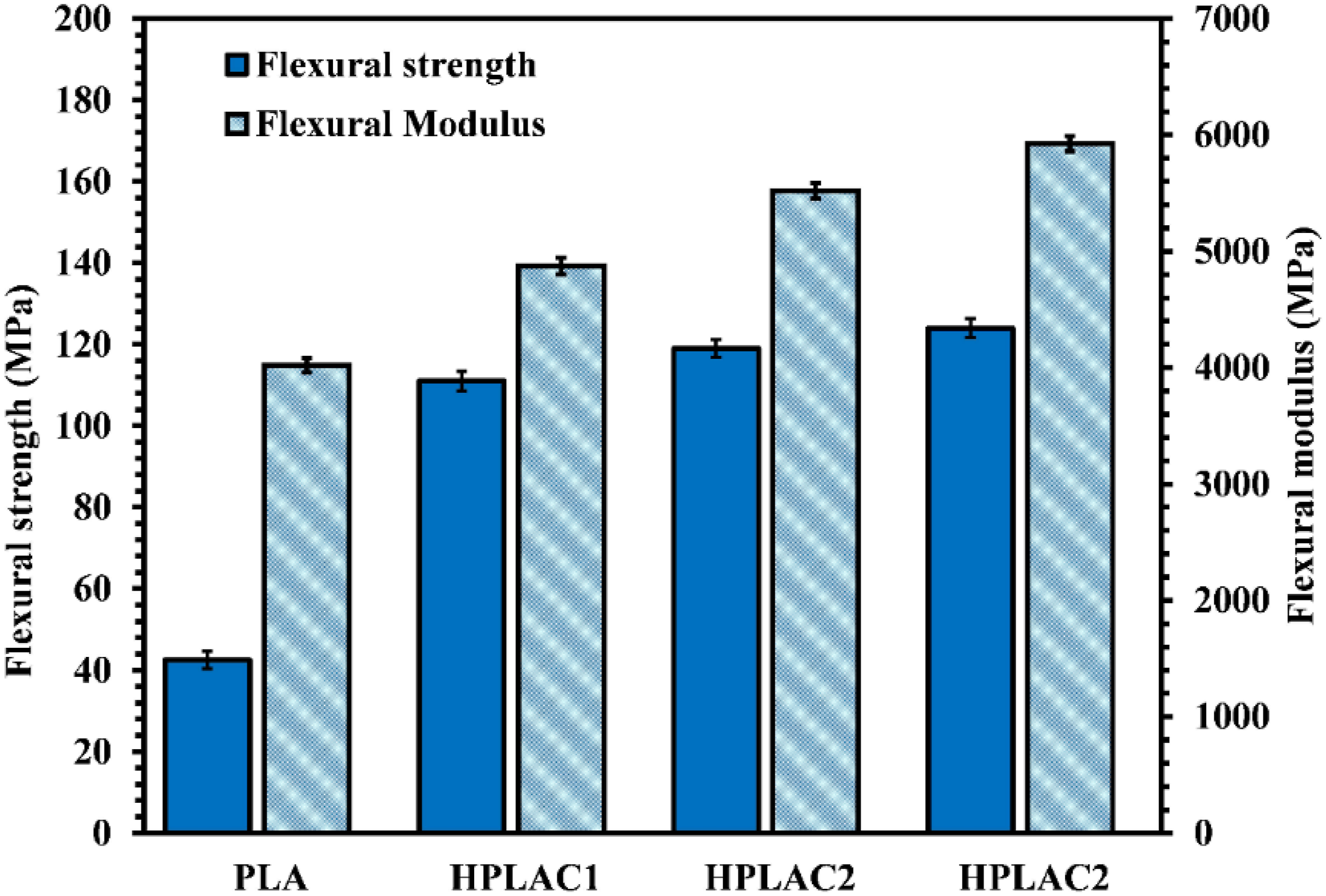
The flexural strength and modulus of HPLAC1 are measured at 111 ± 2.4 MPa and 4874 ± 72 MPa, respectively, which represent increases of 161% and 21.3% compared to pure PLA (42.5 ± 2.2 MPa and 4019 ± 62 MPa). The enhancement in flexural properties confirms improved filler dispersion and stronger matrix–filler bonding within the hybrid system. Properly dispersed reinforcements reduce localized stress concentration and enable uniform stress distribution throughout the composite structure. Similarly, HPLAC2 and HPLAC3 exhibit flexural strengths of 119 ± 2.2 MPa and 124 ± 2.3 MPa, respectively, representing improvements of 180% and 191.7% over pure PLA. The corresponding moduli are 5519 ± 68 MPa and 5925 ± 65 MPa, marking increases of 37.3% and 47.4% over PLA. An increasing trend is obtained for the current hybrid composites similar to the findings of existing study,17 which discuss the effect of fillers on mechanical strength improvement of PLA.
From the achieved results, it is clearly understood that the introduction of WF and graphite enhances the resistance of the PLA matrix to bending by virtue of reinforcing actions of both the materials. The fibrous keratin-based nature of WF plays the role of a supportive reinforcement in the polymer matrix system and helps in stress distribution in the system when flexural deformation occurs. The WF reinforcement helps in delaying the crack formation and its growth. Simultaneously, graphite works as a rigid carbon-based reinforcement that possesses higher mechanical strength; thus, the composite becomes resistant to bending due to the presence of graphite. In contrast to many traditional natural fiber reinforced composite materials which fail under bending loads due to low interfacial bonding between matrix and reinforcement materials, the current hybrid composite material demonstrates better compatibility between the PLA matrix and reinforcements.
Compression behavior
Figure 7 presents a comparison of the compressive strength measured for pure PLA (49 ± 1.4 MPa) and the current hybrid composites. The compressive strength values for HPLAC1, HPLAC2, and HPLAC3 are recorded as 62 ± 1.2 MPa, 68 ± 2 MPa, and 75 ± 1.8 MPa, respectively. Notably, pure PLA exhibits compressive strength 20.9%, 27.9%, and 34.7% lower than HPLAC1, HPLAC2, and HPLAC3, respectively. This is due to the fact that the fibrous keratin-based structure of WF provides a reinforcement role within the polymer matrix, thus assisting in the distribution of compressive forces applied on it. In addition, the use of feathers as reinforcement in PLA can possibly help prevent deformation and cracking since it provides additional strength within the matrix. However, it does not contribute greatly to the compressive strength of WF since fibers are more effective in tensile and bending loads. Compressive strength of hybrid bio-composite material.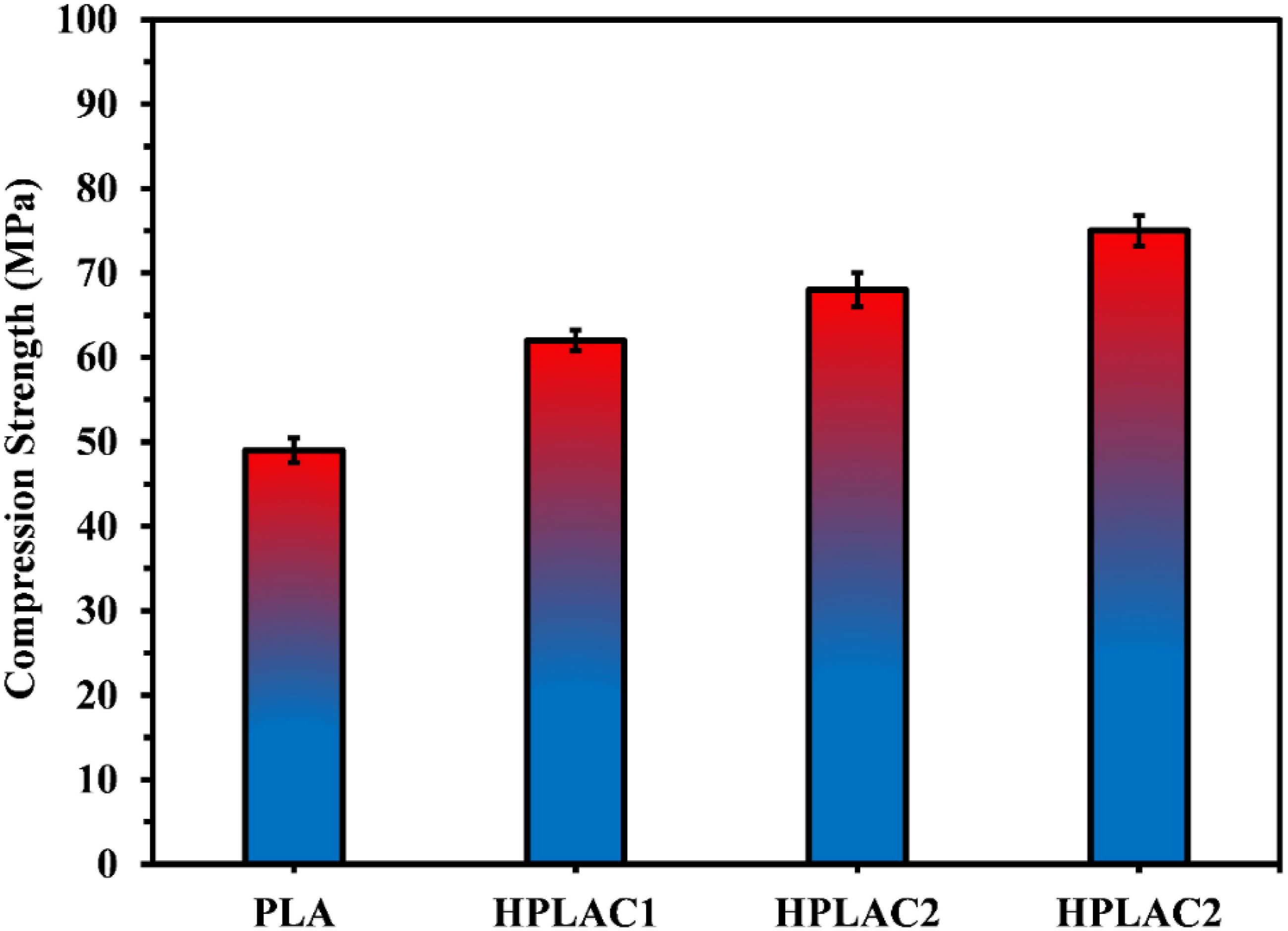
However, the addition of graphite is more effective in the improvement of the compressive properties of the hybrid composites. This is because graphite is stiff, rigid, and can take heavy loads due to its physical properties. The carbonaceous material is stiff and cannot easily deform in a matrix since it prevents deformation in the matrix by resisting compressive force. The rising trend in the compressive strength of the hybrid material with the increasing amount of graphite shows that graphite dominates the hybrid material in terms of its stiffness.
Additionally, improved filler dispersion and reduced void formation, along with enhanced crystallinity at higher graphite concentrations, contribute to minimizing stress concentration regions, structural defects, matrix compactness, and dimensional stability, all of which further increase resistance to compressive deformation.
Impact strength
The results obtained from the current impact test demonstrate that the present hybrid bio-composite material exhibits higher impact strength than pure PLA, as depicted in Figure 8. The impact strength for the HPLAC1, HPLAC2, and HPLAC3 composites is measured as 5.14 ± 0.2 kJ/m2, 5.01 ± 0.15 kJ/m2, and 4.93 ± 0.3 kJ/m2, respectively. This represents improvements of 97.7%, 92.7%, and 89.6% over the impact strength of pure PLA (2.6 ± 0.1 kJ/m2). This enhancement is attributed to the incorporation of dual fillers into the pure PLA matrix. Impact strength analysis of a hybrid bio-composite material.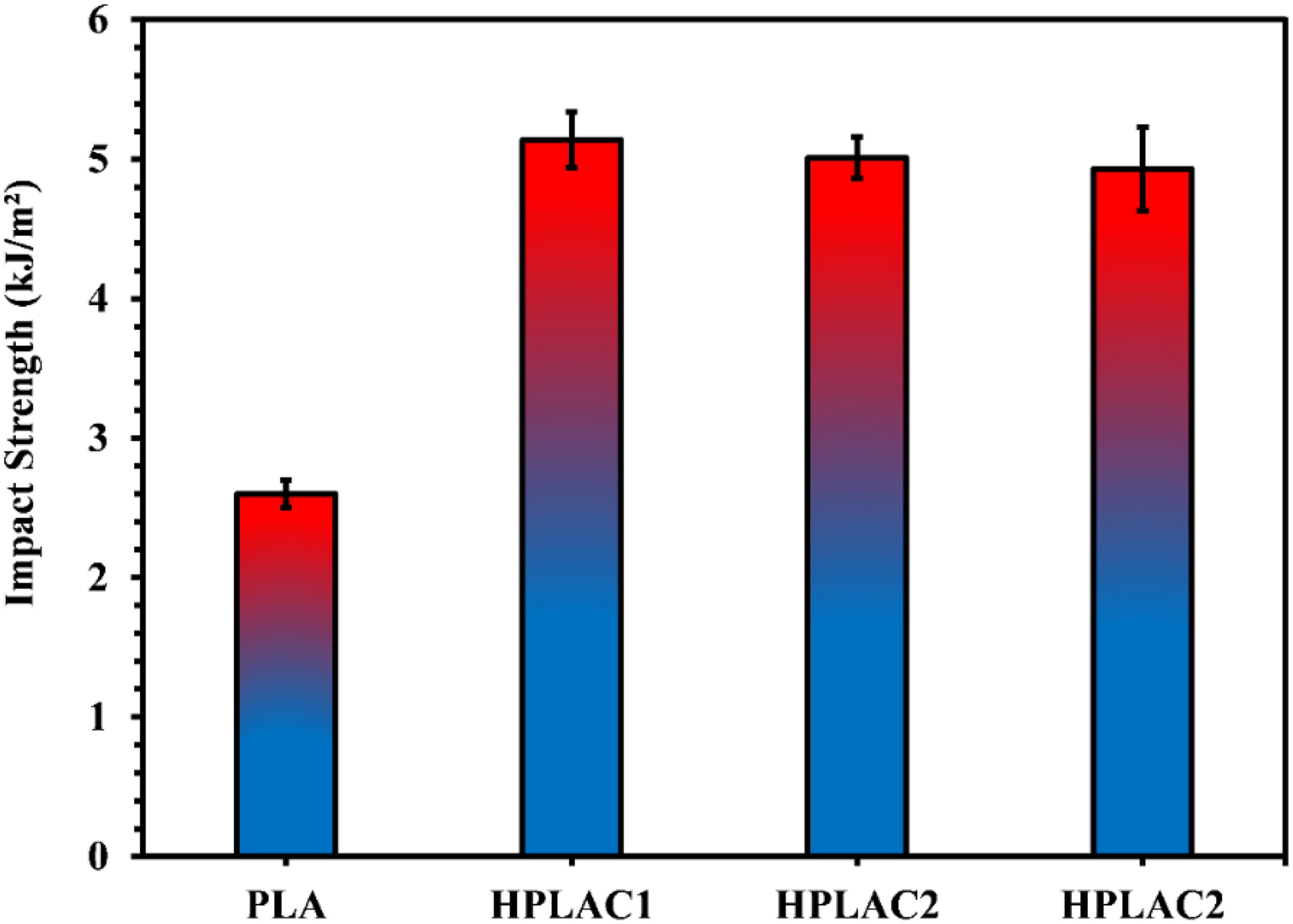
The toughened nature of the composite is attributed largely to the high keratin-containing fibrous system in the WF composite. During impact loading, the feather reinforcement is expected to serve as a bridging and deflection phase of cracks formed, thus delaying crack formation and increasing dissipation of impact energy via deformation. The enhanced interfacial bond strength between the matrix and reinforcement will facilitate effective stress transfer and reduce the possibility of brittle failure associated with neat PLA. On the other hand, the observed reduction in impact resistance of the material with increased amounts of graphite suggests that the properties of the composite materials have shifted from a ductile material to a more rigid one. Graphite is a material with high rigidity and stiffness, which helps enhance mechanical resistance and stiffness but, on the other hand, does not allow the movement of polymer chains and hampers the plasticity of the material under impact load.
Though there is a drop in the values, the impact strength of all hybrid composites is still much higher than that of neat PLA because of the synergistic effect of both fillers. In composites having a lesser amount of graphite filler, the toughness contribution by WF is dominant, and hence they have better impact strength. As the amount of graphite increases, the stiffness contribution becomes significant and hence makes the material brittle. This decrease in impact strength is consistent with the results reported by Nagarjun et al. 19 and Guo et al. 52 The adhesion and dispersion at the matrix-filler interface significantly affect the material’s impact strength. Improved interface adhesion and dispersion in the hybrid composite material leads to smoother load transfer from the polymer matrix to the fillers. However, increasing the graphite content reduces the impact strength due to the material’s lower density and increased brittleness.
Hardness
The obtained Shore D hardness values for HPLAC1, HPLAC2, and HPLAC3 are 81.5 ± 1.5, 84 ± 1.2, and 88 ± 1.6, respectively, as shown in Figure 9. In contrast, the hardness value for Pure PLA is measured as 55 ± 2.3, reflecting reductions of 32.5%, 34.5%, and 37.5% compared to HPLAC1, HPLAC2, and HPLAC3, respectively. Shore D hardness comparison of the hybrid bio-composites with pure PLA.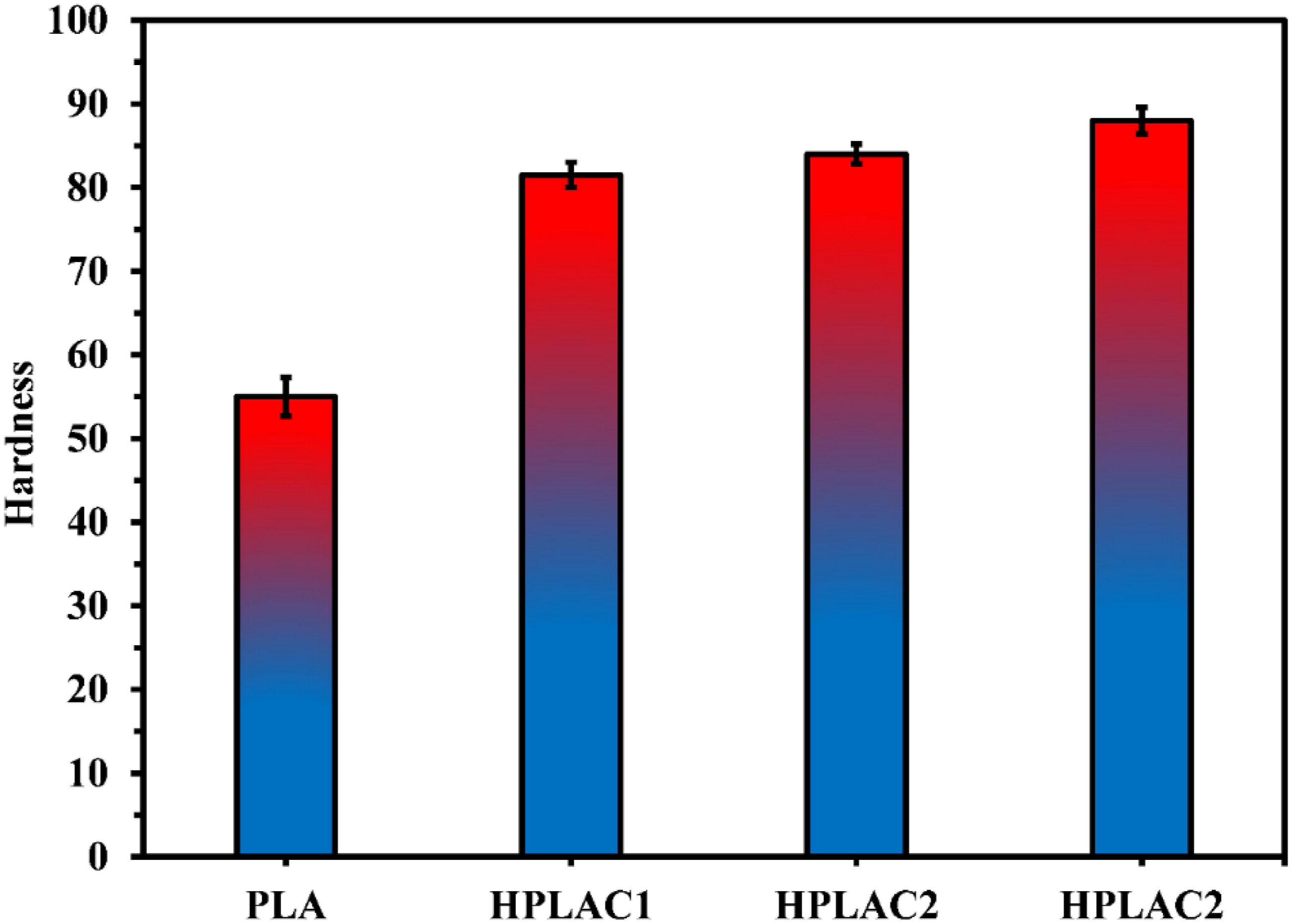
The addition of graphite plays a major role in enhancing the hardness of the PLA matrix because of its high inherent stiffness and rigid layered carbonaceous structure. The graphite acts as a hard reinforcing phase and reduces the local deformation of the polymer surface by indenters. An increase in the graphite amount makes the PLA chains difficult to move, thus enhancing the resistance to surface deformation and plastic flow. Thus, there is an increasing trend in the hardness values of HPLAC1 to HPLAC3 due to the increasing amounts of graphite. Despite being relatively insignificant as compared to graphite, the feather reinforcement enhances the compactness and stress distribution in the composite through the structural rigidity of the WF. The combination of both materials increases the dispersion of the fillers and interaction between the matrix and fillers, leading to increased resistance to indentation.
This rising shore D hardness tendency of the present hybrid composites is comparable to that of the studies by Shalwan and Yousif 50 and Nagarjun et al. 17 Maximum hardness is achieved when the graphite content is higher with lower WF. The higher rigidity and stiffness of the hybrid composites might be responsible for this. Thus, the hardness of the current hybrid composites is influenced more significantly by the addition of graphite than by the inclusion of WF. However, the mixed effects of these dual fillers can be mitigated through enhanced dispersion and improved interfacial adhesion.
Morphological study
The surface morphology of the fractured tensile specimen is analyzed using SEM, as depicted in Figure 10(a)–(d). The images reveal that both the WF and graphite fillers are uniformly dispersed within the PLA matrix and exhibit interface adhesion with the polymer. This is evident from Figure 10(a), where the fillers are encased in a thin layer of PLA matrix, showing no signs of voids or agglomeration. Therefore, it verifies the excellent interfacial adhesion between the polymer matrix and fillers, which is an important factor in enhancing the mechanical strength of the hybrid bio-composite material. Figure 10(b) displays the fractured surface of HPLAC1, characterized by the uniform dispersion of WF (marked by yellow arrows) and graphite fillers (marked by red arrows). The fibrous and semi-crystalline keratin structure of WF acts as an energy-absorbing reinforcement that helps resist crack propagation during tensile deformation. However, a few micro-voids (marked by dotted line) and micro-cracks (marked by white arrows) are visible in the fractured region, indicating localized debonding and crack initiation under tensile stress. These defects are mainly associated with stress concentration regions generated during fracture. Nevertheless, the absence of severe agglomeration indicates relatively stable filler distribution within the matrix. Fractured surface morphology, (a) uniform dispersion of fillers with PLA matrix (HPLAC1), (b) HPLAC1, (c) HPLAC2, (d) HPLAC3.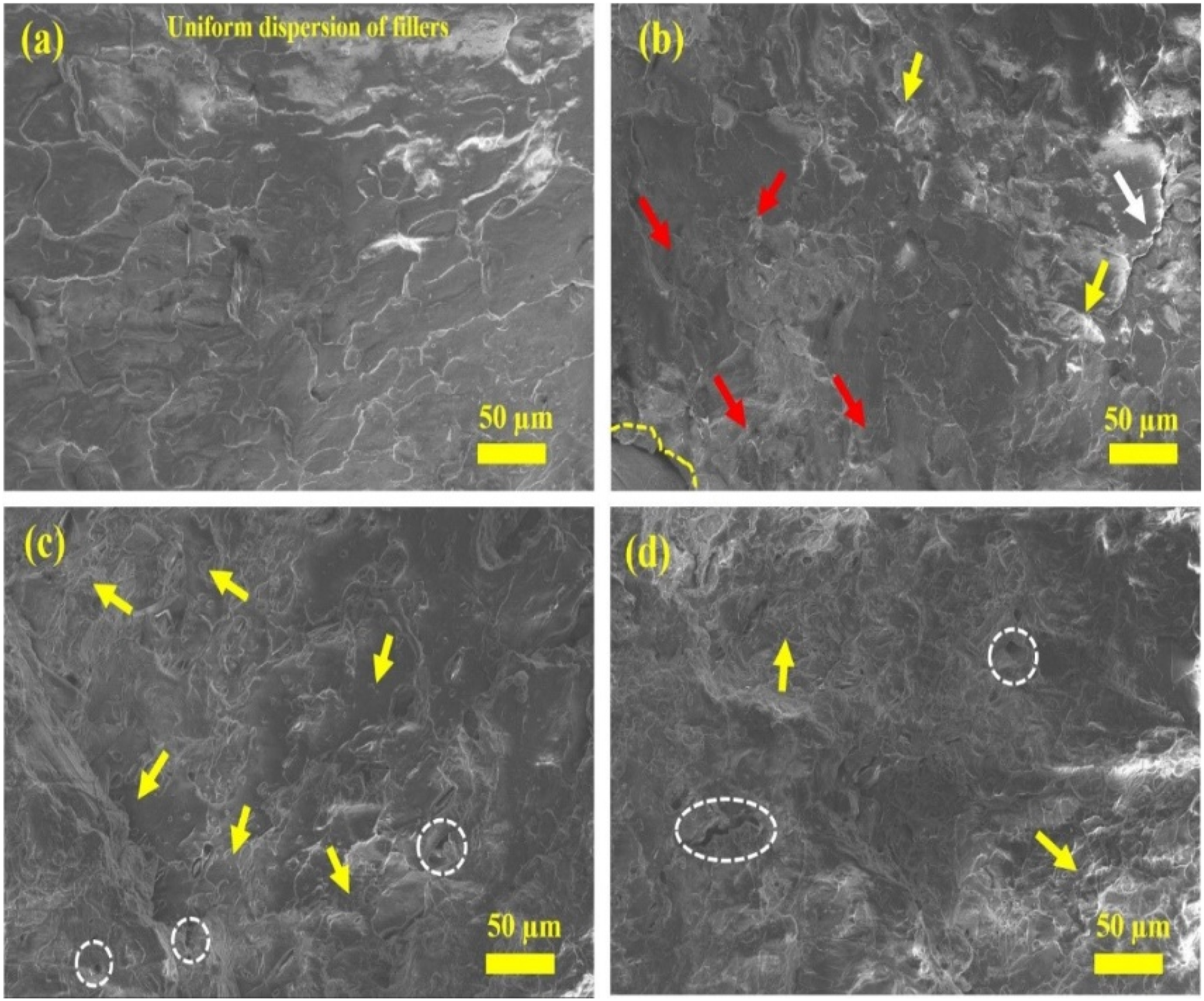
Figure 10(c) and (d) show that the graphite is spread out more evenly in PLA than WF. The graphite particles are evenly distributed in the PLA matrix, occupying the interfaces of the PLA-WF composite. It is apparent that graphite particles enhance interfacial compatibility, and thus lead to better interaction between the fillers and the matrix. Graphite, because of its layered structure, helps in efficient load transfer and also helps in arresting cracks by creating a physical barrier for the cracks. In addition, graphite helps in minimizing micro-voids in the matrix, which leads to better structural integrity. The regions of uniform dispersion of fillers are pointed by yellow arrows in Figure 10(c) and (d). Graphite thereby improves the fillers’ interface adherence to the PLA matrix. Nonetheless, a few microcracks and voids are still noticeable with no agglomeration for HPLAC2 (Figure 10(c)) and HPLAC3 (Figure 10(d)) (marked by dotted lines), contributing to the failure of these samples. The improved dispersion and reduced agglomeration observed in the present hybrid composites are scientifically significant. The enhanced mechanical properties obtained in the present study are therefore directly associated with the synergistic interaction between keratin-rich waste feather powder and graphite, which collectively improve interfacial adhesion, stress transfer capability, and crack resistance behavior.
Overall, from the SEM analysis, it can be concluded that better dispersion of fillers in the PLA matrix combined with superior matrix-filler bonding resulted in improved mechanical strength of the developed hybrid composite. The presence of lesser voids and micro-cracks with little agglomeration significantly contributes to the failure mechanism of the sample failure during tensile testing. The tensile test also confirms this result of improved characteristics, showing that the composites’ tensile strength increases with filler addition over plain PLA.
Spectroscopic evaluation of chemical compatibility in PLA hybrid composites
FTIR analysis was conducted for plain PLA and HPLAC2 to investigate the chemical structure and possible interfacial interactions between the matrix and reinforcements. The FTIR spectrum of pure PLA (Figure 11) displays the typical absorption peaks of polylactic acid. The strong and sharp peak at approximately ∼1750 cm−1 is due to the stretching vibration of the ester carbonyl (C = O) functional group, which is the most dominant group in PLA. The peaks between 1180 and 1080 cm−1 are assigned to the C-O-C stretching vibrations of the ester functional group, thus verifying the polymer backbone. The peaks at 1450-1360 cm−1 are assigned to the CH3 bending vibrations, while the weak broad absorption bands between 3500 and 3200 cm−1 verify the presence of small amounts of hydroxyl (-OH) functional groups, which may arise from the terminal groups or moisture absorption. The fingerprint region below 1000 cm−1 is assigned to the C-H bending and skeletal vibrations, which are characteristic of semicrystalline PLA. FTIR spectra of pure PLA and PLA composite.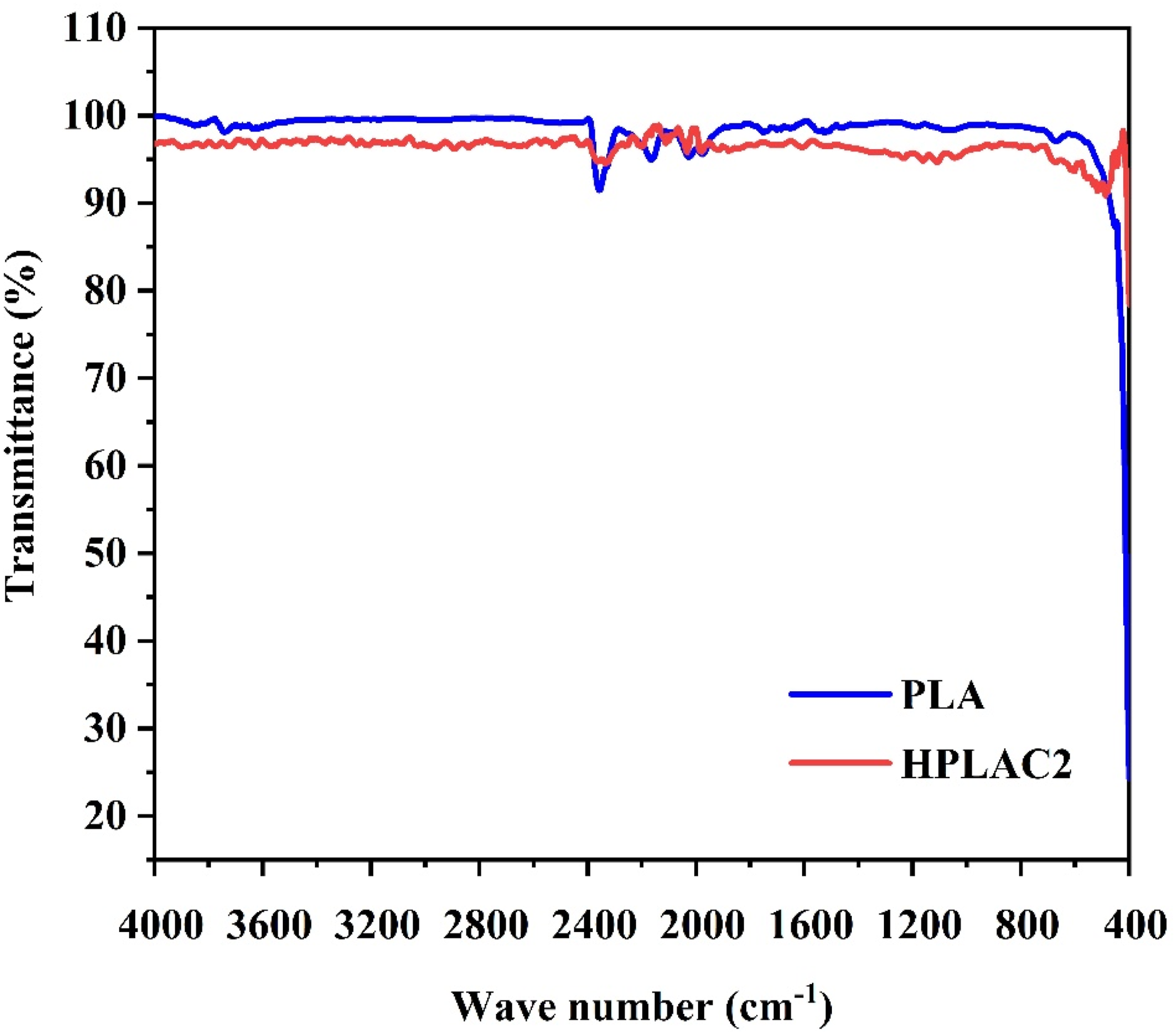
In the HPLAC2, there are observable changes in peak intensity and shifts in wavenumber values, which reflect molecular interactions between the matrix and the reinforcements. The presence/development of absorption peaks around ∼3300 cm−1 can be related to the N–H and O–H stretching vibrations of keratin found in chicken feather, thus confirming the successful addition of the protein-based material as a reinforcement. The amide I band (1650 cm−1) and amide II band (1540 cm−1), which are associated with keratin molecules, also support the successful addition of chicken feather fibers. The stability of the ester carbonyl peak around 1750 cm−1 with minor changes in intensity confirms physical contact rather than chemical degradation of PLA. Furthermore, the minor changes in the 1100-1000 cm−1 region also suggest the development of interfacial bonds and hydrogen interactions between PLA molecules and the functional groups of chicken feather. Graphite, being chemically inactive, does not produce any new functional peaks but may cause minor changes in the baseline related to its carbonaceous nature.
Thermal transition behavior and crystallinity analysis
The DSC heating thermograms of plain PLA and HPLAC2 shown in Figure 12 reveal significant modifications in thermal transition behavior due to the incorporation of chicken feather and graphite. For neat PLA, the glass transition temperature (Tg) is observed at 61.4°C, followed by a cold crystallization peak (Tcc) at 87.7°C with an enthalpy of −12.6 J g−1, indicating rearrangement of amorphous chains during heating. A melting peak (Tm) appears at 158.6°C with a melting enthalpy (ΔHm) of 28.06 J g−1, confirming the semicrystalline nature of PLA. DSC thermograms of plain PLA and HPLAC2 composite.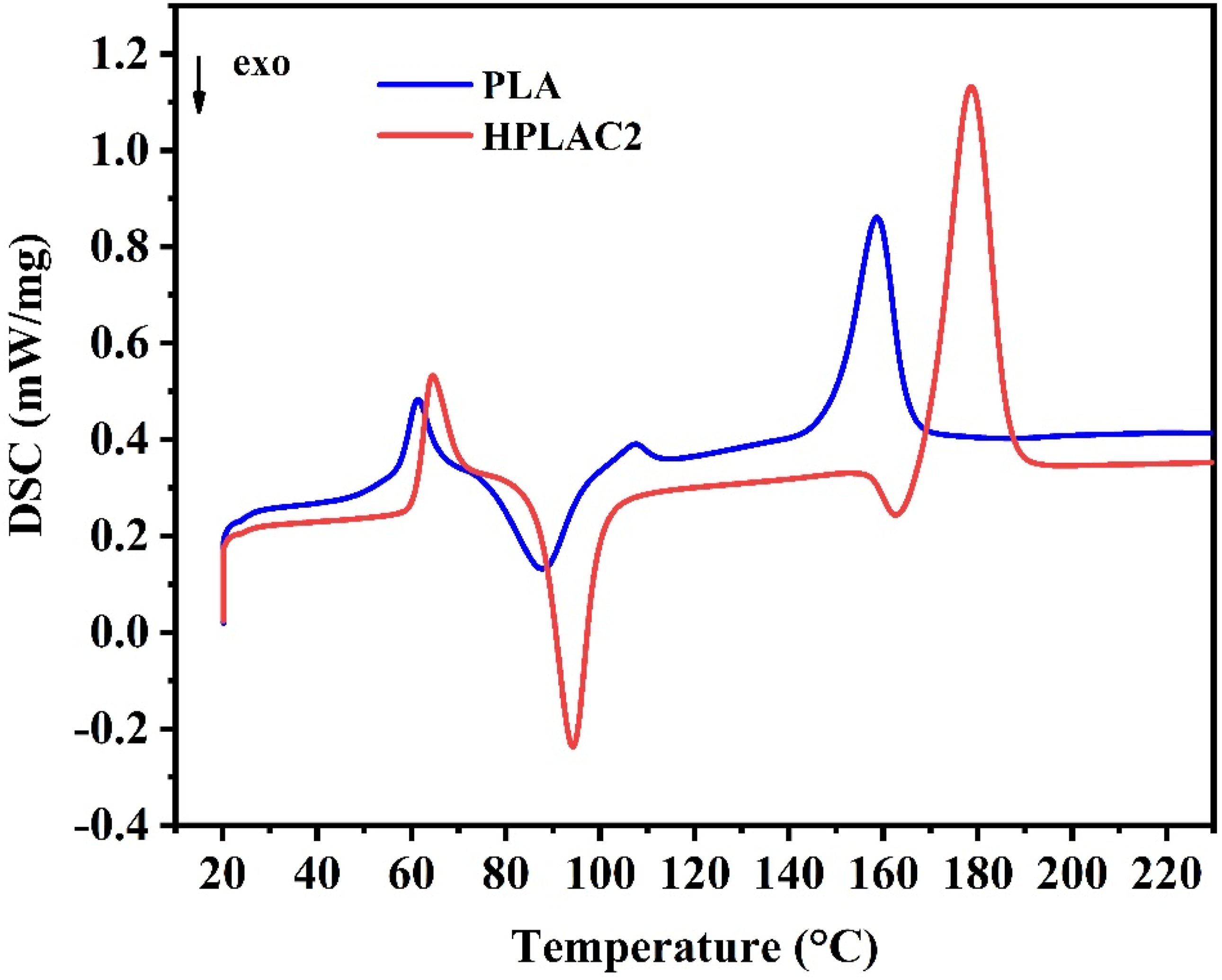
In contrast, the HPLAC2 composite has a higher Tg value of 64.4°C, indicating restricted segmental mobility of the PLA molecular chains. This phenomenon can scientifically be attributed to the good interfacial interaction between the PLA matrix and hybrid reinforcements. Feather waste powder rich in keratin has polar functional groups like amino groups, hydroxyl groups, and amide groups that react with ester groups of PLA via secondary interactions and hydrogen bonds. At the same time, the stiff graphite particles serve as a physical barrier in the matrix system, thus preventing the motion of the chain by restricting the available free volume for relaxation of the polymer chain. Consequently, high thermal energy is needed for chain mobility, resulting in a rise in Tg.
The value of the cold crystallization temperature increases to 94.2°C, and the crystallization enthalpy is significantly higher at 24.71 J g−1, suggesting that the crystallization kinetics are affected. The aforementioned observations indicate that the fillers play an important role in influencing the restructuring of the molecular chain and growth of crystals during heating. This is because the graphite possesses a carbonaceous layer structure along with a high surface area and thus provides efficient heterogenic nucleation sites, which favor the formation of nuclei in PLA. Due to the presence of graphite, there will be alignment of the polymer chain in an organized manner around the surface of the filler, leading to nucleation and formation of the crystalline region. At the same time, the structure of keratin from feathers inhibits the movement of chains to some extent.
DSC analysis summary.

Degree of Crystallinity (Xc):
Here, ΔHm and ΔHcc are melting enthalpy and cold crystallization enthalpies (J/g). ΔH0m is a theoretical enthalpy of 100% Crystalline PLA taken as 93 J/g.
Water absorption behavior
The water absorption properties of the present hybrid polymer composites are assessed following ASTM D570 standard. The dried water absorption test samples are immersed in to the ordinary water in the container. The weight and thickness of the test sample are recorded every 24 hours for several days. The test continues until the same sample weight and thickness are achieved. The water absorber percentage and thickness of the swelling are calculated using equations (2) and (3).
53

The thickness of swelling
54
:
The water absorption test lasted for 22 days in this study. The obtained results indicate that PLA exhibits a higher water absorption percentage (1.41 ± 0.08%) compared to the present hybrid composite, as depicted in Figure 13(a). Water absorption increased linearly with the number of days and reached saturation after 16 days. However, the hybrid bio-composite absorbed less water than simple PLA because it included hydrophobic additives such as WF and graphite. Maximum water absorption for HPLAC1, HPLAC2, and HPLAC3 was measured at 1.11 ± 0.1%, 0.8 ± 0.11%, and 1.01 ± 0.12%, respectively, which are 21.3%, 38.3%, 28.4% higher than pure PLA. This indicates that the hybrid composite with equal proportions of hydrophobic fillers absorbed less water than the other hybrid composites. It is also noted that the current hybrid bio-composites reached their saturation water absorption level earlier than the pure PLA matrix. Further, it also shows that an increase in graphite content led to lesser water absorption due to better resistance to moisture absorption. The similar trend was obtained by Dhanunjayarao et al.
34
from the water absorption study conducted for 9 days. Water absorption analysis, (a) Percentage of water absorption, (b) Welling thickness, (c) Saturated percentage of water absorption and swelling thickness.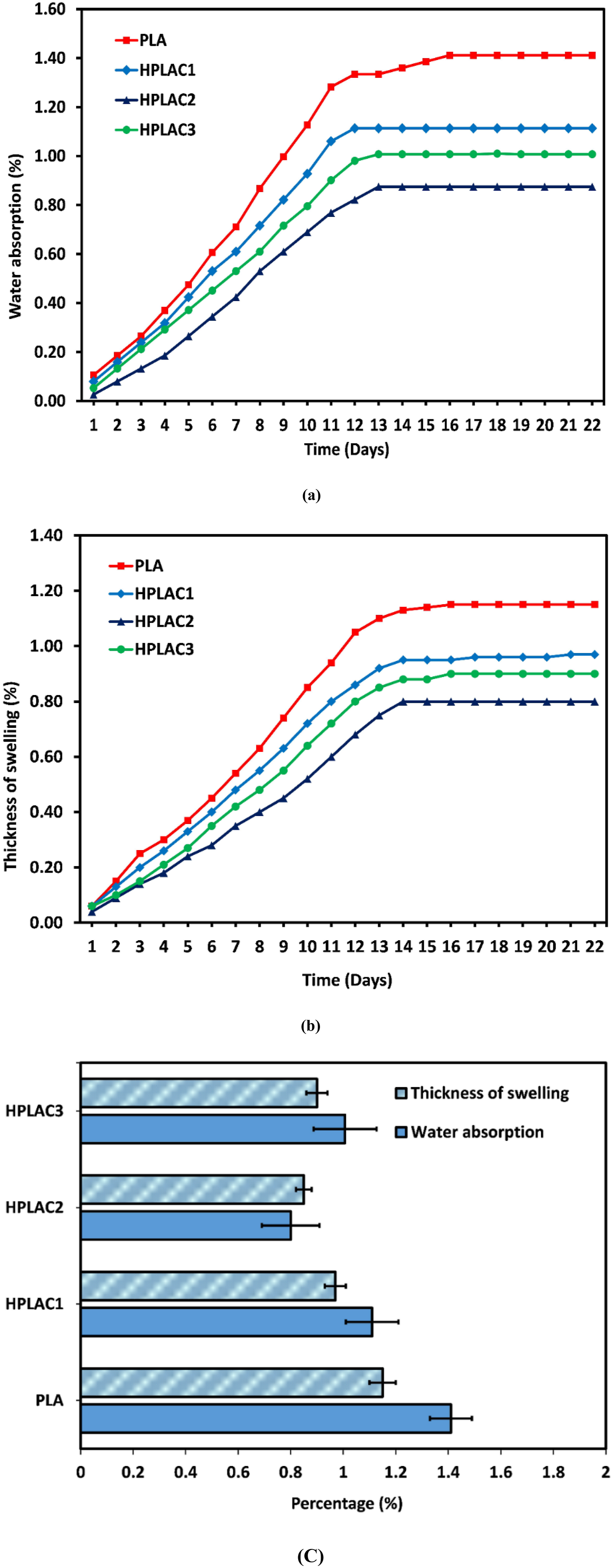
It should be noted that low water absorption capability can be mainly due to a hydrophobic property between waste feather powder and graphite. Graphite is known as a moisture barrier due to its layered carbon structure as well as low surface energy, and, therefore, it can make water diffusion more difficult. On the other hand, waste feather powder is known as having a certain level of hydrophobic properties owing to the protein-based semi-crystalline structure of feather keratin. Both hydrophobic fillers can inhibit continuous paths for moisture diffusion throughout the PLA matrix. Due to matrix densification and enhanced interfacial bonding, there was less presence of voids and gaps between the interface, and it inhibited moisture diffusion through capillarity.
Moreover, the swelling thickness due to water absorption is greater for pure PLA compared to the hybrid bio-composite material, as shown in Figure 13(b). The swelling thicknesses of 0.97 ± 0.04%, 0.85 ± 0.03%, and 0.9 ± 0.04% are measured for the hybrid bio-composites of HPLAC1, HPLAC2, and HPLAC3, respectively. Whereas, the pure PLA had 1.15 ± 0.05% swelling thickness due to its higher moisture absorption behavior. Figure 13(c) illustrates that HPLAC2 has reduced water absorption and swelling thickness relative to pure PLA and other hybrid composites.
As shown in Figure 14, the contact angle progressively increases with the incorporation of chicken feather waste and graphite into the PLA matrix. This trend indicates enhanced surface hydrophobicity of the developed composites compared to neat PLA. The hybrid reinforcement system modifies the surface characteristics by lowering surface energy and improving matrix densification, thereby reducing the availability of moisture diffusion pathways. Consequently, the water absorption behavior of the present study indicates that the hybrid bio-composite material, utilizing dual hydrophobic fillers, effectively reduces the moisture absorption behavior of pure PLA material. Contact angle measurements, (a) PLA, (b) HPLAC1, (c) HPLAC2, (d) HPLAC3.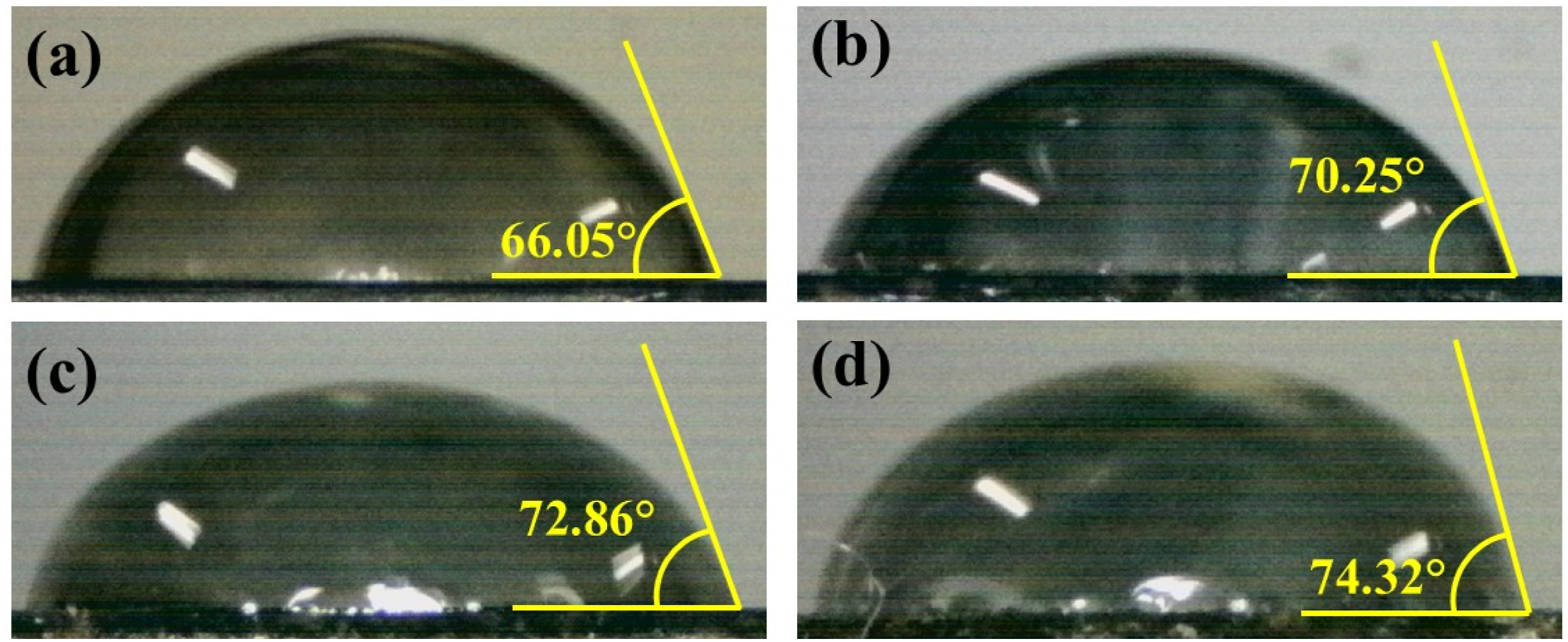
As can be observed from the obtained results, the current hybrid composite containing waste feather powder and graphite as reinforcements offers a multifunctional improvement compared to the existing PLA-based composites reported in the literature. The earlier PLA-based composites, which incorporated natural fibers, biofillers, graphite, graphene, or mineral fillers, have concentrated their efforts on the individual improvement of the specific properties, including mechanical strength, thermal stability, wear resistance, and function. At the same time, the simultaneous improvement in mechanical properties, crystallinity, hydrophobicity, and moisture resistance is rare in sustainable hybrid reinforcement composites. Scientifically, the current research offers an innovative approach to developing a unique dual hydrophobic filler system comprising keratin-rich waste feather powder and graphite in the PLA composite matrix. Unlike previous PLA composites reinforced with natural fibers, the current research overcomes the drawback of high moisture absorption caused by the hydrophilic nature of the fillers through the incorporation of hydrophobic keratin-based feather powder and graphite into the PLA matrix.
The current hybrid composite showed an increase in tensile and flexural strength along with an crystallinity enhancement from 16.6% to 35.5%. The increase in crystallinity and thermal transition properties indicates that graphite serves as an efficient nucleation agent, whereas the keratin structure from feathers enhances the interaction with the matrix and prevents moisture from diffusing through its pathway. Additionally, the improved moisture resistance property is scientifically important. This is because, in previous research work on natural filler reinforced PLA composites, the moisture absorption properties enhanced due to the presence of hydrophilic fillers and poor filler-matrix interactions.
Overall, the unique scientific contribution of the present study lies in establishing a low-cost, sustainable, and multifunctional dual-filler reinforcement strategy using waste feather powder and graphite in a PLA matrix. Compared with earlier PLA-based single and hybrid filler systems, the developed composite simultaneously improves mechanical strength, crystallinity, thermal stability, surface hydrophobicity, and moisture resistance while utilizing sustainable waste-derived reinforcement materials.
Conclusion
The mechanical and water absorption characteristics of hybrid PLA bio-composites are examined in the present work, employing dual hydrophobic WF and graphite as reinforcements. The fibrous nature of WF and the higher stiffness of graphite significantly enhanced the tensile and flexural strength of the new hybrid bio-composites by 187.5% and 191.5%, respectively, compared to pure PLA. The increased tensile strength and Young’s modulus indicate improved filler dispersion and interfacial adhesion between the polymer matrix and fillers. Due to the higher graphite content, which increases stiffness, HPLAC3 exhibited a maximum compression strength of 75 ± 1.8 MPa, surpassing that of PLA and other hybrid composites. Additionally, the greater stiffness of HPLAC3 resulted in an increased hardness of 88 ± 1.6, which is 60% higher than that of pure PLA. However, although the addition of dual fillers enhanced impact strength compared to pure PLA, an increase in graphite content from 5% to 15% decreased the impact strength of HPLACs due to the lower density and higher stiffness of graphite. DSC analysis revealed that the melting temperature is significantly higher at 178.5°C, with a much higher melting enthalpy of 57.72 J g−1. An increased crystallinity from 16.6% (PLA) to 35.5% (HPLAC2) suggests that more thermally stable and developed crystalline regions are formed in the composite. Moreover, HPLAC2, with an equal amount of WF and graphite, exhibited the lowest percentages of water absorption (0.8 ± 0.11%) and swelling thickness (0.85 ± 0.03%) due to the hydrophobic nature of the filler. Overall, these findings underscore the potential of utilizing hydrophobic fillers as reinforcements to enhance mechanical performance and mitigate moisture-related issues in PLA-based materials. This contributes to the development of sustainable bio-composites for diverse applications.
The improved properties developed hybrid composite, make it suitable for non-load-bearing automotive interior components such as door panels, dashboard trims, and seat backing panels, lightweight structural panels, and consumer products. Additionally, the reduced water uptake and enhanced surface hydrophobicity enable its use in moisture-resistant packaging and household applications. The incorporation of graphite introduces the potential for antistatic and semi-conductive behavior, enabling possible applications in electronic casings. In addition, the sustainable nature of the bio-based reinforcement contributes to the development of environmentally friendly engineering materials.
Future research should look at the long-term durability and environmental aging impacts of different humidity and temperature environments to give useful insights for real-world applications. Electrical conductivity and antistatic behavior testing may validate the current composites’ suitability for advanced consumer electronics applications. Finally, life cycle assessment and recyclability studies will be required to fully understand the environmental effect and encourage the long-term usage of hybrid composites in the automotive, packaging, and electronic sectors.
Footnotes
Acknowledgements
We gratefully acknowledge Chennai Institute of Technology, India, and the Nanotechnology Research Centre (NRC), SRM Institute of Science and Technology (SRMIST), India for providing research support and laboratory facilities.
Author contributions
Declaration of conflicting interests
The authors declare that they have no known competing financial interests or personal relationships that could have appeared to influence the work reported in this paper.
Funding
The authors received no financial support for the research, authorship, and/or publication of this article.

Data Availability Statement
All the data are discussed in the article.