







Abstract
In this work, the effect of surface modification of palygorskite (Pal) on its dispersion and on the morphological, thermal, wettability, mechanical, optical, and gas transport properties of blown polypropylene (PP)/Pal films was investigated. PP/PPma/Pal composites containing 1 wt% modified Pal were prepared via twin-screw extrusion, followed by blown film processing. The results demonstrated that surface modification significantly improved filler dispersion within the polymer matrix, leading to a reduction of approximately 15% in crystallinity, as confirmed by SEM and XRD analyses respectively. In addition, the films exhibited enhanced thermal stability, with an increase of ∼25% in the onset degradation temperature, and improved wettability, while maintaining mechanical performance. The films showed high transparency (>91%) and reduced haze (32–37%), attributed to changes in crystallinity that increased the amorphous fraction and improved optical clarity. Notably, in contrast to the typical barrier effect reported for layered clays, the incorporation of fibrous Pal led to a substantial increase in gas permeability, with O2 and CO2 permeability rising by 190% and 220%, respectively. This behavior is attributed to reduced polymer chain packing and the presence of polar functional groups introduced during surface modification. These findings demonstrate a novel strategy for tuning gas transport properties in polymer films and highlight their potential for agricultural applications, particularly as greenhouse covering materials where enhanced gas exchange can promote plant growth and productivity.
Introduction
Materials science is increasingly focused on the development of technologies that enhance agricultural productivity within a sustainable framework. Greenhouse systems play a central role in these efforts, as they enable the controlled microclimates required for optimal plant growth. Among these technologies, polymeric films reinforced with nanoclay have been widely used as greenhouse coverings to regulate internal environmental conditions. These films contribute to temperature and soil moisture control by modulating incident solar radiation, thereby promoting more stable thermal conditions.1,2 Currently, greenhouse infrastructure remains essential for meeting global food demand.
Among the critical properties required for greenhouse films are adequate gas permeability and humidity regulation. Controlling the CO2 and O2 permeability of greenhouse covering materials, together with controlling internal humidity, is considered essential for optimizing crop photosynthesis and respiration, thereby enhancing physiological efficiency and ultimately improving agricultural productivity. Therefore, the use of materials capable of maintaining indoor humidity within an optimal range is important, as they require low energy consumption when functioning as humidity regulators and provide energy-saving advantages.2–4
Additionally, the anti-drip behavior of greenhouse films is significant because water condensation on the inner surface of hydrophobic polymeric materials can lead to the formation of droplets, reduced light transmission, and undesirable fluctuations in humidity inside the greenhouse.3,5 Consequently, considerable research efforts have focused on modifying polymeric films to improve their barrier and surface properties.
Nanoclay-reinforced polymeric films have attracted attention for their potential to improve the mechanical, thermal, optical, and transport properties of polymer matrices. Notably, laminar montmorillonite has shown a remarkable ability to decrease gas permeability be creating tortuous pathways for diffusion.6,7 Previous studies have demonstrated that clay morphology, dispersion, and orientation within the polymer matrix play a critical role in determining barrier performance. Highly aligned clay structures, for example, have been reported to significantly reduce oxygen permeability compared with pristine polymers.8,9
Gas transport properties in polymer nanocomposites are commonly described using the solution–diffusion model, in which permeability depends on both gas solubility and diffusion through the polymer matrix. 12 In semicrystalline polymers such as polypropylene (PP), gas transport occurs predominantly through the amorphous phase, as crystalline domains are essentially impermeable.10–12 The incorporation of nanoclays modifies the structure of polymers and introduces tortuous diffusion pathways that can significantly alter permeant mobility.13,14
Besides influencing barrier properties, nanoclays may also affect the surface wettability of polymeric films. Contact angle measurements reported in previous studies indicate that increasing clay content generally decreases the water contact angle, which is often associated with enhanced surface roughness and improved wettability.15,16 These changes may contribute to reducing droplet formation and improving the anti-drip performance of greenhouse covering materials.
Different types of nanoclays have been added as particulate fillers into thermoplastic matrices to improve the performance of polymer films without the need for additional additives.17–19 Among these materials, palygorskite (also known as attapulgite) has gained significant attention due to its fibrous morphology and unique structural characteristics. Unlike laminar clays, palygorskite can create various diffusion pathways within the polymer matrix, which may lead to distinctive gas transport behavior.
Previous studies have examined the dispersion of palygorskite in thermoplastic matrices and its impact on the mechanical and thermal properties of nanocomposites. Enhanced clay dispersion has been linked to increases in modulus, tensile strength, and thermal stability, particularly at low filler concentrations.17,18
Therefore, this work focuses on the development and characterize blown polypropylene/palygorskite nanocomposite films for potential use as greenhouse covering materials. Special attention is given to the influence of palygorskite incorporation on gas transport behavior and surface wettability, with the objective of improving environmental regulation inside greenhouses through enhanced gas exchange and anti-drip performance.
Materials and methods
Materials
Palygorskite, a local clay collected from a quarry outside the city of Ticul in the state of Yucatán, México. Hydrochloric acid (HCl) reagent grade, 37% purity, (3-chloropropyl) triethoxysilane (CPTES) 95% purity, (3-aminopropyl)trimethoxysilane (AMPTES) 97% purity, all from Sigma Aldrich.
The polypropylene (PP) used as polymeric matrix was: Valtec HP423 M brand with a melt index of 3.8 g/10 min, a molecular weight (Mn) of 232,400 g/mol and a density of 0.9 g/cm3. Polypropylene grafted with maleic acid (PPma) G-3015 provided by Eastman with a molecular weight (Mn) of 46,870 g/mol.
Palygorskite modification
Pristine palygorskite purification
Pristine palygorskite was pulverized in a porcelain mortar and sieved through a No. 70 mesh (212 nm sieve opening). Then, 100 g of pulverized palygorskite was dispersed for 1 h in 3 L of distilled water using a mechanical mixer and a Ruhston type dispersing element. Subsequently, the mixture is filtered through a plastic mesh (212 nm sieve opening) to remove stone debris.
Palygorskite purification (Pal-Pur)
Palygorskite Chemical activation was performed following a technique described by Li et al. 20 with few modifications. The filtered phase from 2.2.1 is poured into a 2 L 1N HCl solution, keeping it under stirring for one hour. Next, several distilled water washes were carried out on the palygorskite in suspension to eliminate the excess of hydrochloric acid until the pH is 7. The treated palygorskite suspension was centrifuged and the recovered clay was dried in a convection oven at 100°C for 24 h. Finally, dry palygorskite was crushed in a ball mill and it sieved through a No. 70 mesh (260 nm sieve opening).
Palygorskite surface modification with different silane agents
Silanization of palygorskite with (3-aminopropyl) trimethoxysilane (Pal-AMPTES)
A methodology like that reported by Xue et al. 21 was used to graft AMPTES onto the palygorskite surface (Pal-AMPTES). Distilled toluene was used to increase and optimize the reaction yield. The procedure used is summarized as follows:
10 g of purified Palygorskite are mixed in 200 mL of toluene under stirring for 15 min and then, sonicated for 5 min. Subsequently, the mixture is stirred and heated at 45°C for 10 min. After that, 10 mL of AMPTES are added dropwise maintaining the stirring for 70 min.
Once the time has elapsed, the mixture is transferred to 50 mL centrifuge tubes for centrifugation at 3000 rpm for 25 min. Afterwards, the Pal-AMPTE is washed with 25 mL of ethanol to each centrifuge tube, the mixture is shaken and the solvent is decanted. Then, a second washing is performed adding 25 mL of distilled water and the tubes are centrifuged at 3000 rpm for 15 min. Finally, 40 mL of distilled water are poured to each tube to be sonicated during 10 min and then centrifuged at 3000 rpm for 20 min. The clay from each centrifuge tube is recovered and vacuum dried at 80°C and subsequently ground in a ball mill. Figure 1 shows a possible mechanism for the activation and anchoring of the silane agent on purified palygorskite. Schematic representation of the activation and anchoring mechanism of the silane agent Aminopropyltrimethoxysilane (APTMS) on the surface of purified palygorskite (PalP).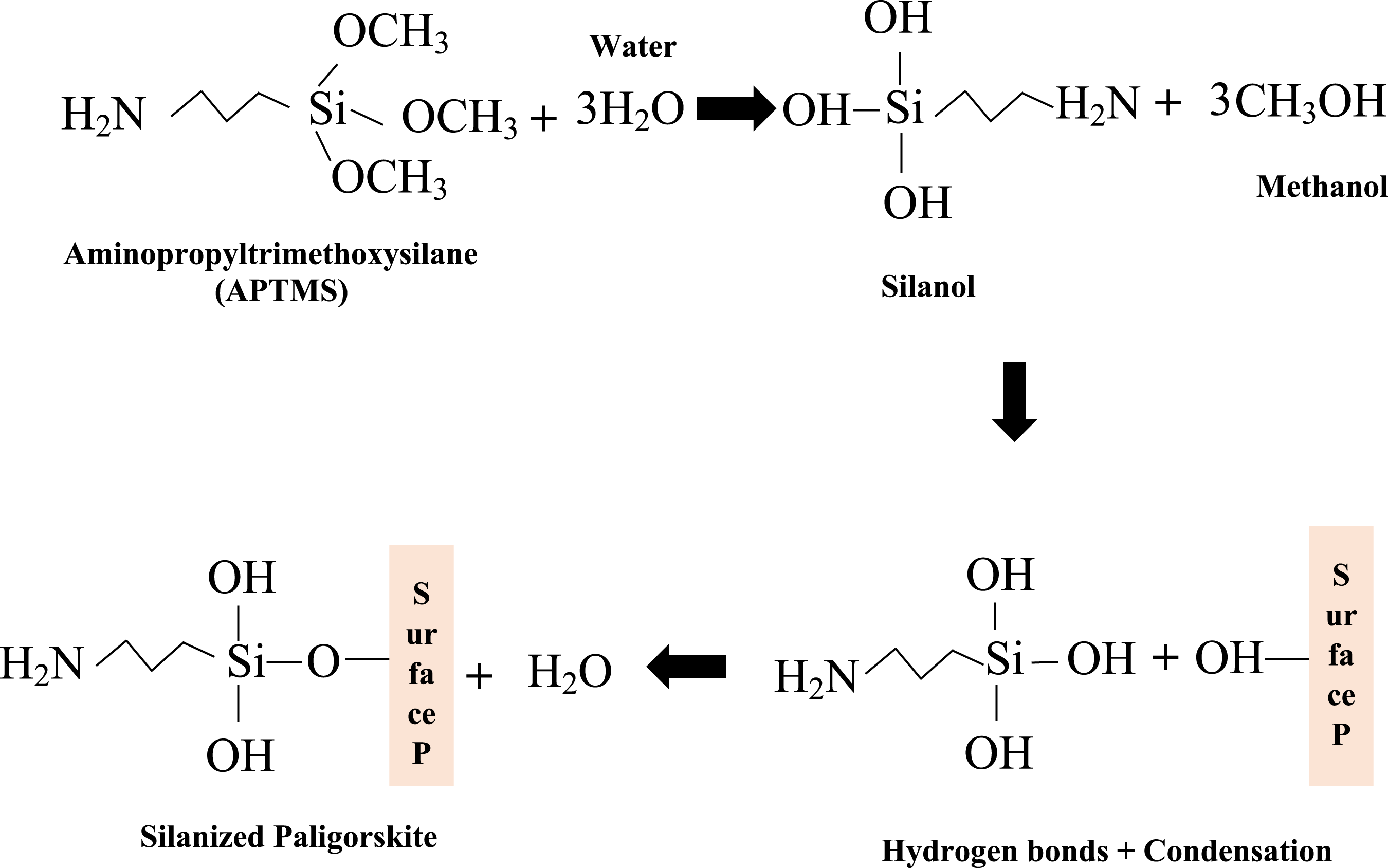
Palygorskite silanization with (3-chloropropyl) triethoxysilane (Pal-CPTES)
A similar methodology to the reported by Abu et al 22 was applied using toluene as the reaction medium to surface grafting the CPTES to the palygorskite (Pal-CPTES). The procedure used is summarized as follows:
10 g of purified palygorskite are mixed in 40 mL of distilled water and stirred for 20 min and sonicated for 3 min. Next, 200 mL of toluene are added to the palygorskite/water mixture and stirred for 20 min. At that point, 10 mL of CPTES are added dropwise to the mixture for 90 min under magnetic stirring at 90°C. Once this time has elapsed, the mixture is transferred to 50 mL centrifuge tubes for centrifugation at 3000 rpm for 20 min. After this procedure, the palygorskite is washed adding 25 mL acetone to each centrifuge tube and centrifuged again at 3000 rpm for 20 min. Finally, 40 mL of ethanol are poured into each tube and centrifuged again at 3000 rpm for 20 min. The palygorskite clay obtained from each centrifuge tube was vacuum dried at 80°C and subsequently ground. Figure 2 shows a possible mechanism for the activation and anchoring of the silane agent on purified palygorskite. Schematic representation of the activation and anchoring mechanism of the silane agent Chloropropyltriethoxysilane (CPTES) on the surface of purified palygorskite (PalP).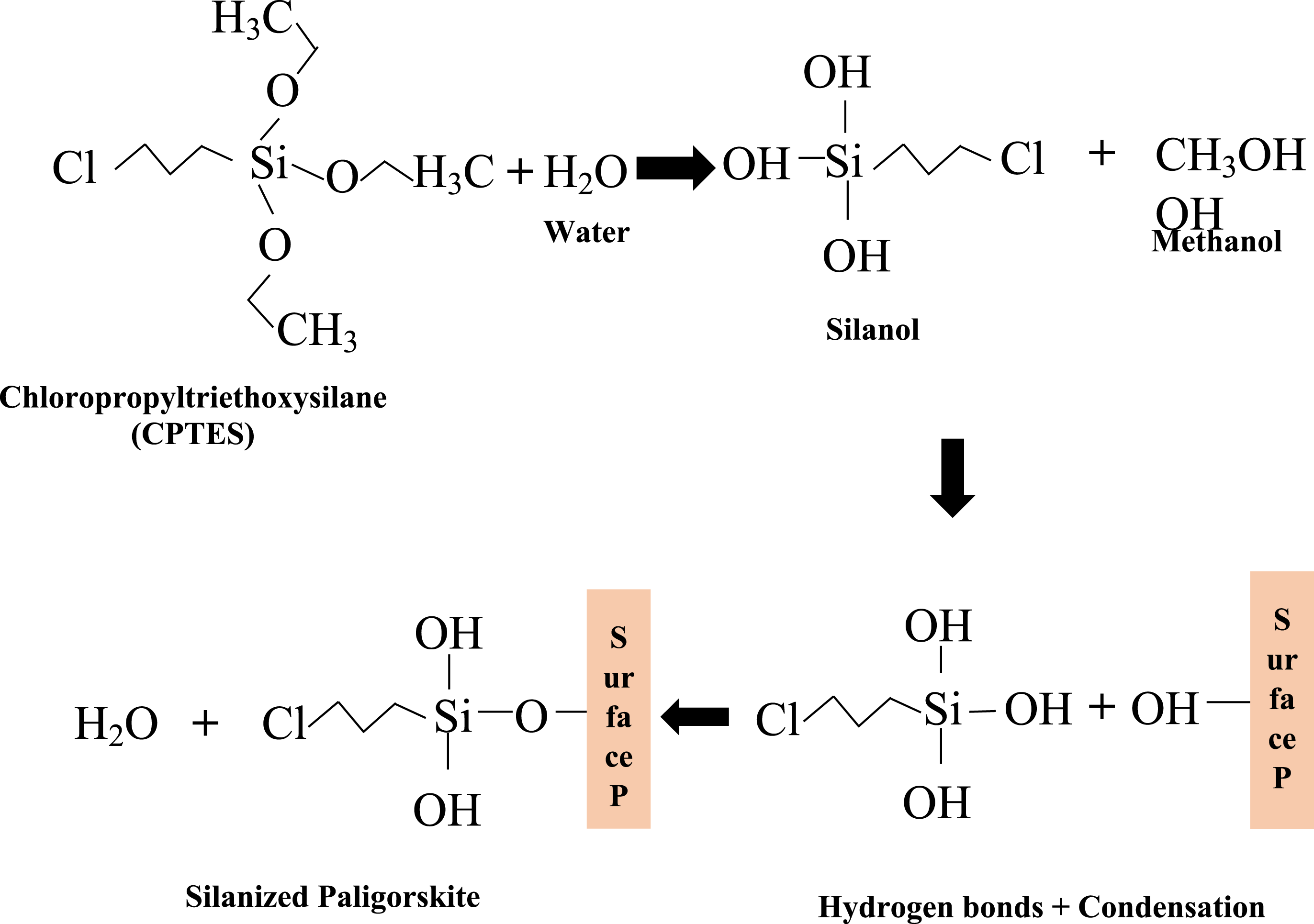
Modified palygorskite characterization
Chemically modified palygorskite with silane agents (Pal-AMPTES and Pal-CPTES) were characterized by Fourier Transform Infrared Spectroscopy (FTIR) with a Nicolet infrared spectrophotometer from Thermoscientific model 8700 at ambient temperature. The modified clays were analyzed by X-ray diffraction (XRD) with a Diffractometer Bruker D2 phaser using Kα (Cu) radiation with a wavelength of 1.542 Å using a 2θ range from 3° to 70°. Furthermore, the materials were studied by Thermogravimetric analysis (TGA) with a Perkin-Elmer Thermogravimetric balance TGA-7 analyzer; 5 mg of each sample was loaded into a platinum crucible and subjected to a heating from 50 to 600°C at a 10°C/min controlled rate.
Composite material preparation
Preparation of PP/Pal-AMPTES and PP/Pal-CPTES composite materials by modular extrusion
The composites were manufactured using PP/PPma (96/4%) as polymeric and as discontinuous phase, 1% of different types of palygorskite, either silanized with (3-aminopropyl)triethoxylane (AMPTES) or (3-chloropropyl)triethoxysilane (CPTES). The composites were prepared in a TSE 20/40 Brabender extruder equipped with modular spindles (co-rotating and interconnected) of 80 cm length and an L/D of 40, with five heating zones 180, 190, 200, 200 and 210°C, respectively, and 210°C for the die. The extruder mass flow rate was 50 g/min at a 100 rpm speed. The screw configuration used to generate medium shear stresses (Figure 3) was three right kneading elements with open transverse channels at 45° (KBW 45/5/30R) to develop a good mixing level in the materials. In addition, three restrictive left kneading elements with open transversal channels at 45° (KBW 45/5/20L) and a left restriction with closed channels at 20° (SE 20/10L). This configuration helped the material to retreat when carrying the mixing to generate a better dispersion. Screw configuration diagram used for a modular twin-screw extruder Ref. 13.
Film processing of PP/Pal-AMPTES and PP/Pal-CPTES
To obtain the composite blown film, a single-screw extruder with three heating zones (model CTSE-V/MARK-II, Brabender), coupled to a drive unit Plasti-Corder Brabender PLE 330, was used. The extruder is 50 cm long with a 25 mm spindle diameter and L/D ratio of 13:1. A 30 rpm processing speed was used with a temperature profile of 180, 185, 185°C, with a fourth heating zone of 195°C assigned to the annular blow die. The blowing tower pull rollers a 30 rpm, a single orifice cooling ring was used to cool at pressure 10 psi the melt upon exit from the die, and the screw speed was set at 30 rpm, with the haul-off adjusted to produce films of 60 µm thickness.
Characterization of PP/modified palygorskite films
Scanning electron microscopy (SEM)
The fracture surfaces of blown films were observed using a JEOL scanning electron microscope (SEM) model JSM-6360LV, with a current of 30 kV in high vacuum mode. PP/modified palygorskite samples films were fractured under liquid nitrogen and coated with a thin layer of gold.
X-ray diffraction (XRD)
The diffractograms of the composite blown films were obtained using a Bruker D2 phaser diffractometer using Kα (Cu) radiation with a wavelength of 1.542 Å, with a 2θ range from 3° to 70°.
Thermogravimetric analysis (TGA)
The blown film samples (5 mg) were analyzed using a Perkin Elmer Thermogravimetric Analyzer TGA-7, subjected to a heating interval ranging from 50 to 600°C at a controlled rate of 10°C/min under a nitrogen atmosphere.
Mechanical tensile properties
Mechanical tensile testing was carried out using a universal tensile machine (Mini SHIMADZU model AGS-1 KN). Specimens were deformed at 10 mm/min according to the standard test method ASTM D 882-02. Tensile strength and elongation at break were measured. Figure 4 shows the dimensions of the tensile tests specimens: thickness of 60 µm, length of 160 mm and width of 25 mm. The specimens were cut using the central section of the tubular film folded in the flow direction (Figure 4(a)). For the mechanical radial tests, the specimens were cut from the central part in the direction of the tubular film diameter (Figure 4(b)). Dimensions of the specimens in (a) longitudinal direction (b) radial direction, for the tensile test.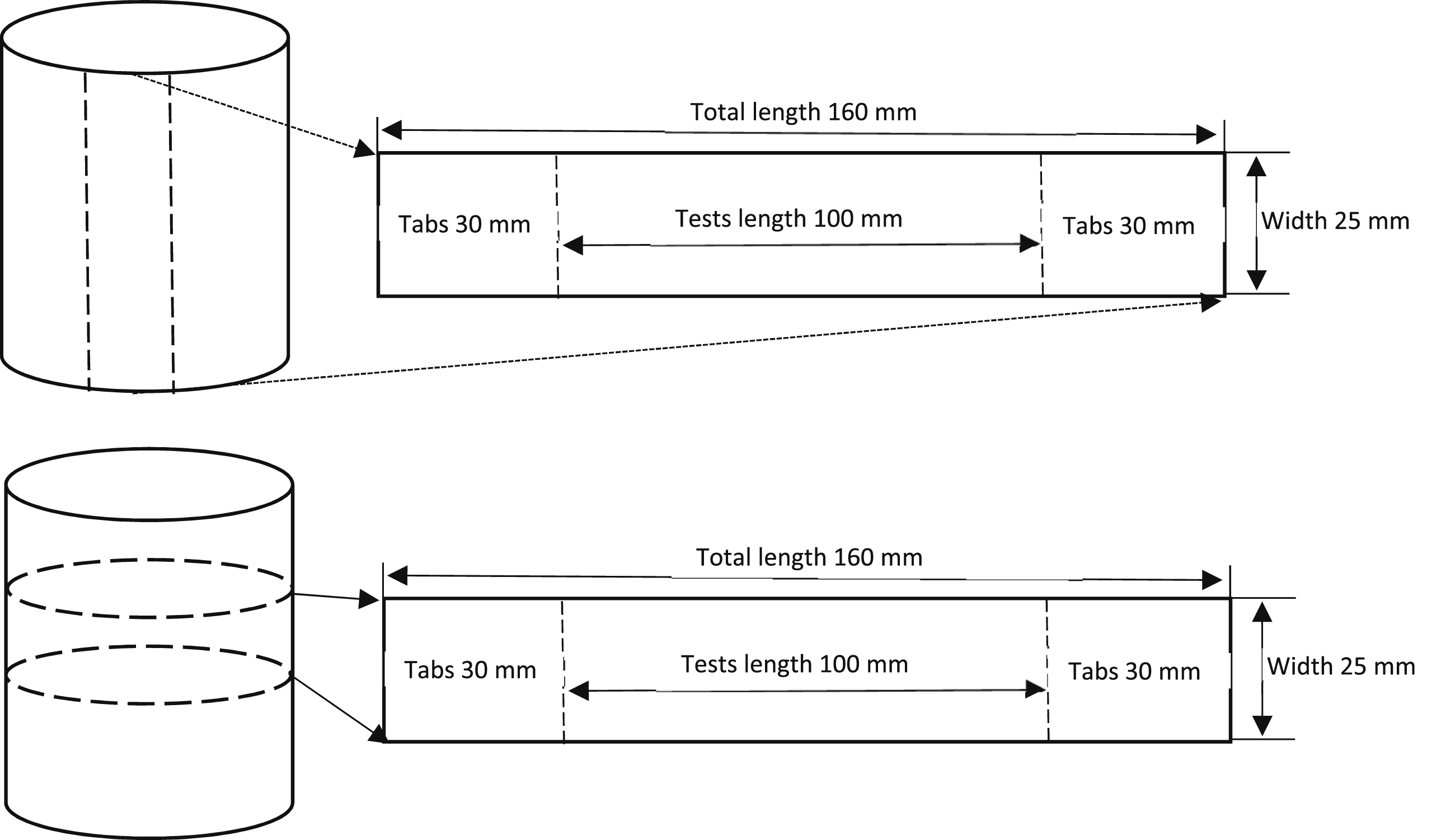
Transmittance, clarity and percentage of transmitted light (Haze characterization)
The Total Transmittance, Haze and Clarity of the polypropylene-based extruded films (PP/Pal-AMPTES and PP/Pal-CPTES) were simultaneously measured with a BYK Haze-Gard Plus equipment. Samples with a 7 cm-diameter and a 60 µm thickness were analyzed by triplicate.
Contact angle
The contact angle was measured by placing distilled water drops on the surface of 1 cm x 1 cm and 1 mm thick specimens of PP/Pal-AMPTES and PP/Pal-CPTES blown films. Drop images formed from 5 µL of water were taken with a goniometer Ramé-Hart 200 series Instrument, co. model 150. 10 images were taken for each drop to measure the contact angle and analyzed with the computer software Droplet Profiler.
Gas transport properties
Permeability of PP/Pal-AMPTES and PP/Pal-CPTES films (O2 and CO2)
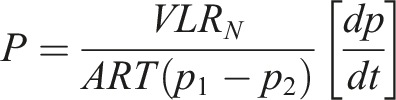
O2 and CO2 permeability coefficient (P), diffusion coefficient (D), and solubility coefficient (S) of PP/Pal-AMPTES and PP/Pal-CPTES films were measured at 35°C and 2 bar upstream pressure (p1). Gas permeability coefficient, P, for the three pure gases (He, O2, and CO2) were determined using a constant volume permeation cell described elsewhere, according to the following equation:
Results and discussion
Characterization of Pal-Pur, Pal-AMPTES and Pal-CPTES
Fourier transform infrared spectroscopy (FT-IR)
The infrared spectrums of Pal-Pur, Pal-AMPTES and Pal-CPTES are shown in Figure 5. The band at 3615 cm−1 corresponds to the stretching of di-octahedral Mg-OH bonds. 3547 cm−1 is a band related to the stretching of the coordinated water bonds with Al and Mg. Bond stretching vibrations of the absorbed and zeolitic water (water absorbed in the internal channels) are visualized as a pronounced band at 3400 cm−1. The band at 1650 cm−1 corresponds to the OH bonds bending of the coordinated, adsorbed and zeolitic water. Similarly, the low intensity band at 1450 cm−1 is due to OH bending of the structural and zeolitic water. FTIR spectra of Pal-Pur, Pal-CPTES and Pal-AMPTES.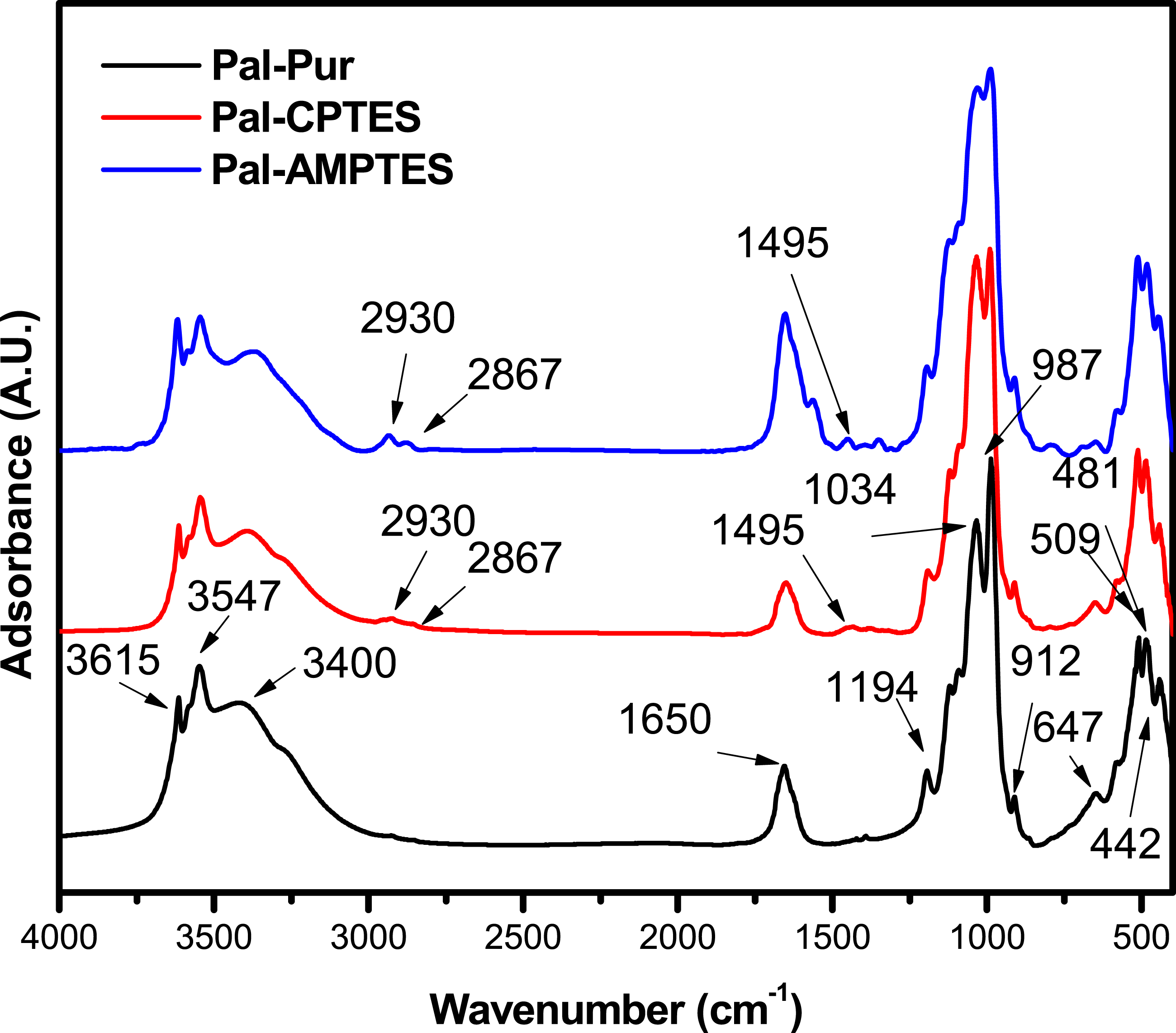
The bands at 1194 and 1034 cm−1 correspond to the asymmetric Si-O-Si bonds stretching, and those around 987 cm−1 are due to perpendicular Si-O bonds plane stretching. 23 Al-Al-OH bonds in bending mode are found at 912 cm−1 and the band at 647 cm−1 corresponds to stretching bonds for water coordinated with Mg. 24 The band at 509 cm−1 is associated to the deformation of octahedral Si-O bonds, while the one found at 481 cm−1 is related to the bending parallel to the Si-O bonds plane. Additionally, the band exhibited at 442 cm−1 is correlated to the rotation of Mg bonds coordinated with six oxygen atoms.
The spectra corresponding to Pal-CPTES and Pal-AMPTES show the bands of the stretching of C-H bonds in the organosilane at 2930 and 2867 cm−1. 21,25 The peak at 1650 cm−1 corresponds to OH bonds bending of coordinated, absorbed and zeolitic water while the band at 1495 cm−1 belongs to N-H bonds deformation.
The bands at 2936 cm−1, 1495 cm−1 and 1390 cm−1 coincide with IR spectra corresponding to Pal-AMPTES 24 associated with the N-H symmetrical bending of organosilane. Such bands indicate that amino groups were successfully grafted to palygorskite surface.
X-ray diffraction (XRD)
Figure 6 shows X-ray diffraction patterns of the three Palygorskite types (Pal-Pur, Pal-CPETES and Pal-AMPTES). The peak 2θ = 8.3° corresponds to a basal space between the (110) planes (1.04 nm) of the clay crystal lattice. The peaks occurring at 13.62, 16.36, 19.78, 20.80, 26.6, 28.2, and 35.4° correspond to the primary diffraction in the Si-O-Si planes (200), (130), (040), (121), (400), (231), and (161) of the clay crystalline structure. Figure 4 shows no evidence of any change in the characteristic peaks of these planes. Therefore, the purification and surface modification of the clay did not modify its crystalline structure. The palygorskite diffractogram coincides with that reported at the American Mineralogist Crystal Structure Database.
26
Pal-Pur, Pal-CPTES and Pal-AMPTES X-ray diffraction patterns.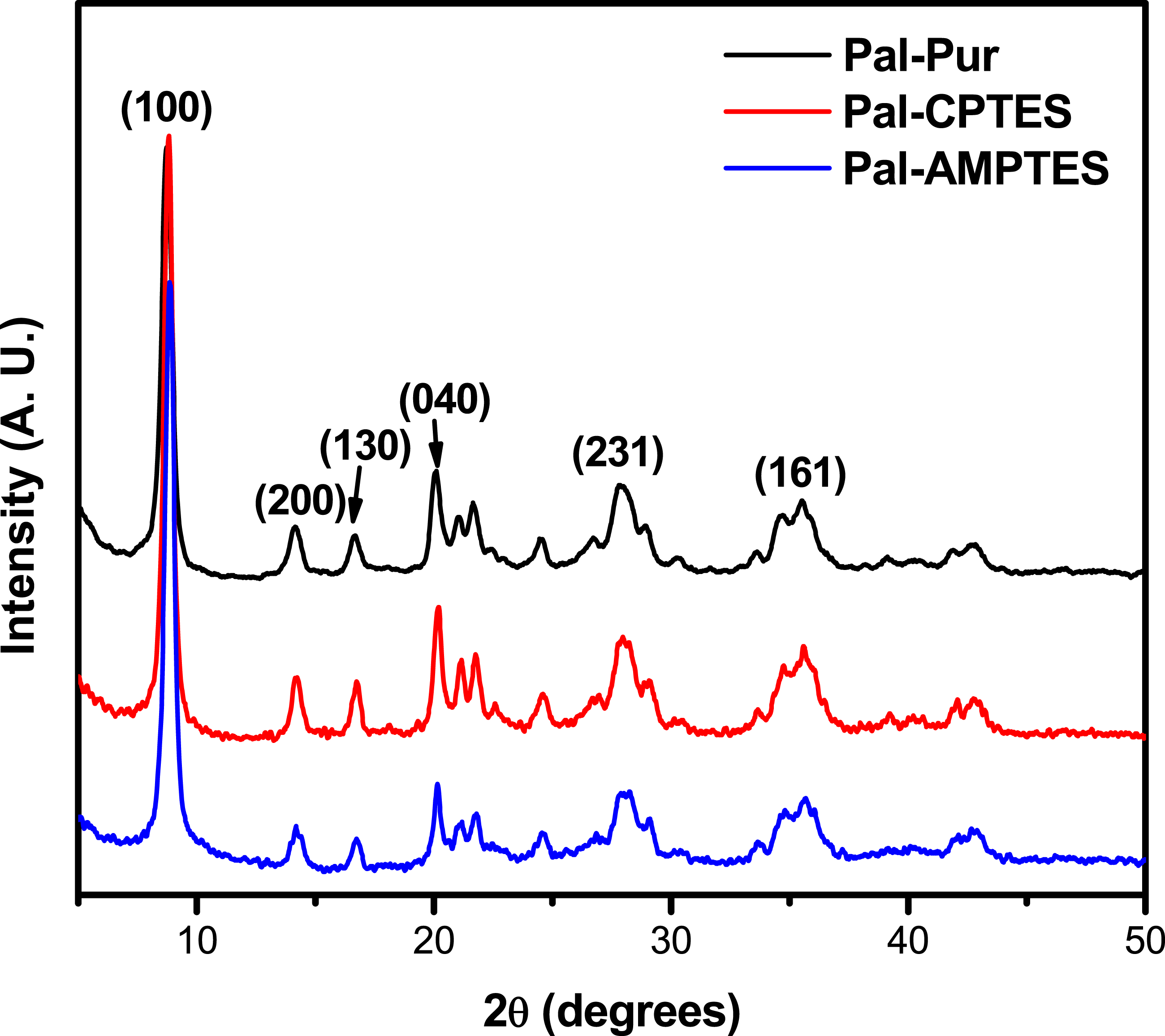
Thermogravimetric analysis (TGA)
TGA thermograms corresponding to purified and modified palygorskite are shown in Figure 7. Purified palygorskite (Pal-Pur) exhibited three mass loss stages; firstly, between 50°C and 140°C palygorskite loses about 6.5 wt % associated with absorbed and zeolitic water. Then, in the next intervalo, between 140°C and 270°C, a 5 wt % decrease is noticed due to the loss of coordinated water. Finally, in the third stage, between 320°C and 570°C a 7 wt % loss is observed due to dehydroxylation of palygorskite crystalline structure. Pal, Pal-CPTES, and Pal-AMPTES TGA thermograms and derivative thermograms DGTA.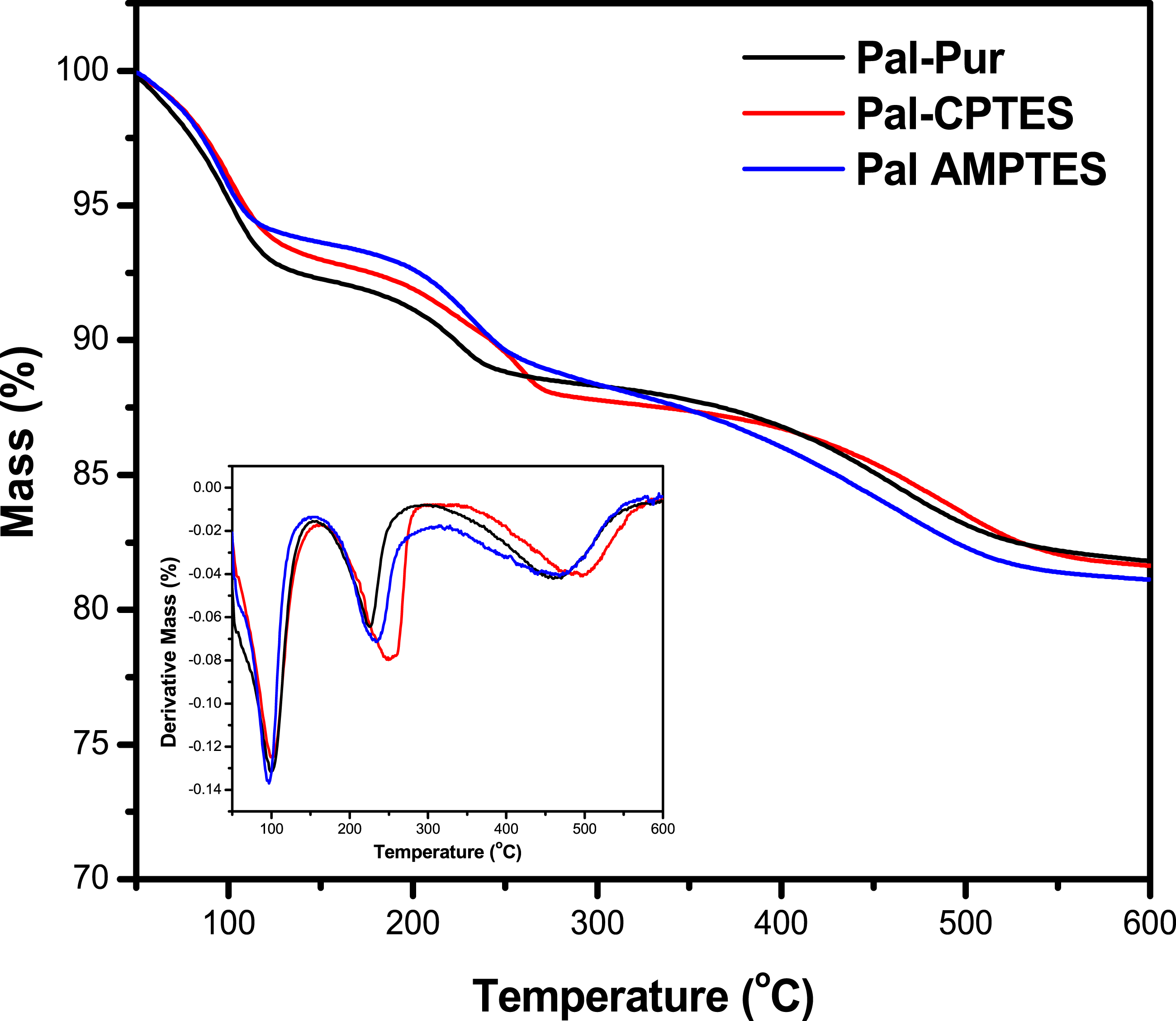
On the other hand, the thermograms of silanized palygorskite with CPTES and AMPTES presented a lower mass loss associated with adsorbed and zeolitic water in comparison with the purified palygorskite (Pal-Pur). The observed difference in mass loss can be attributed to the presence of silane molecules grafted onto the clay surface, which reduce the water adsorption capacity of palygorskite (Pal). Consequently, the modified clay exhibits a lower water content compared to the purified palygorskite sample. This reduction confirms the successful functionalization of the Pal surface with silane groups. 17
Characterization of the composite blown films PP/Pal-CPETS and PP/Pal-AMPTES
Scanning electron microscopy (SEM)
The morphology of PP/Pal-CPETS and PP/Pal-AMPTES blown films was examined by scanning electron microscopy (SEM) to evaluate the dispersion of Pal within the PP matrix at the fracture cross-sections (Figure 8). SEM micrographs were obtained at two different magnifications. The micrographs of neat PP films (Figure 8(a) and (b)) exhibit smooth fracture surfaces, indicating no apparent damage to the polymer matrix after the extrusion blow-molding process. In contrast, films containing Pal-AMPTES and Pal-CPETS (Figure 8(c)–(f)) display bright spots on the fracture surfaces, which correspond to the fractured ends of Pal fibrous crystals.17,18 These observations suggest that the extrusion process partially fragmented Pal nanofibers into individual fibers with submicron dimensions. Cross-section SEM micrographs of films: PP (a-b) PP/Pal-AMPTES (c-d) and PP/Pal-CPTES (e-f).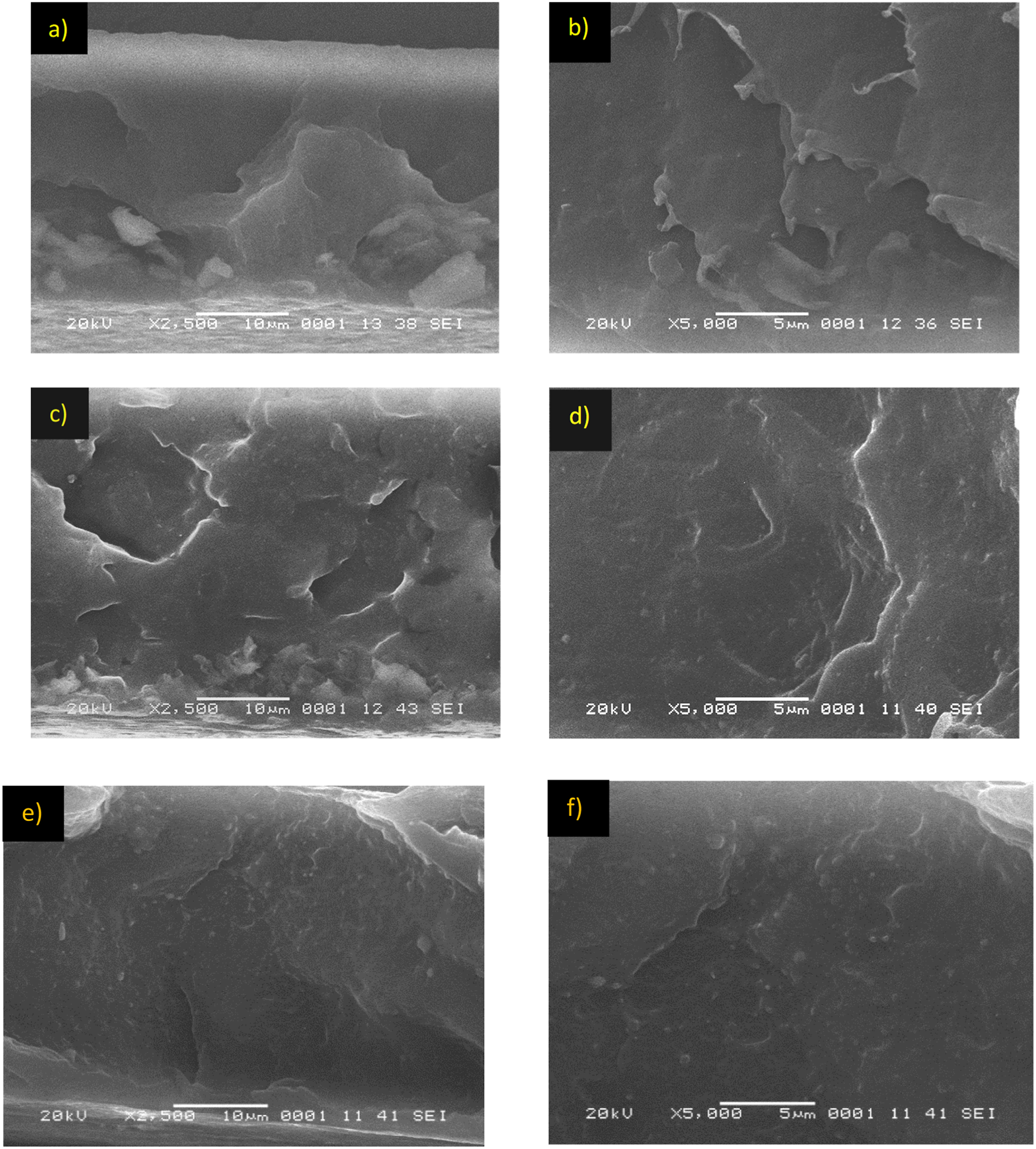
At lower magnification (Figure 8(c) and (e)), a homogeneous dispersion of clay particles within the polymer matrix is observed. This behavior indicates that silane modification of Pal effectively enhances the compatibility between the filler and the polymer, promoting uniform distribution and minimizing particle agglomeration. Furthermore, higher-magnification micrographs (Figure 8(d) and (f)) reveal good interfacial adhesion between the matrix and the clay, as evidenced by the presence of well-embedded, nanoscale clay particles within the PP matrix.
X-ray diffraction (XRD)
The properties of a thermoplastic polymeric material depend greatly on its micro-structural and morphological characteristics, which are controlled by the crystallization kinetics and crystallization mechanisms of the material itself. Polypropylene (PP) is a semicrystalline polymer that crystallize into various crystalline forms, such as α form (monoclinic), β (hexagonal), or γ (triclinic), a phenomenon known as polymorphism. In the alpha form (α phase), PP chains are parallel and packed into a monoclinic cell, which, thermodynamically, is the most stable crystal and dominates PP crystallization under normal processing conditions and it is present in most industrial applications. Figure 9 shows the diffractograms of the PP, PP/Pal-CPETS and PP/Pal-AMPTES films. They all have a predominant monoclinic phase, with no difference between them. The same characteristic peaks at the same diffraction angles are found since the films were blown under the same thermal processing conditions. PP, PP/Pal-AMPTES and PP/Pal-CPTES blown films X-ray diffraction patterns.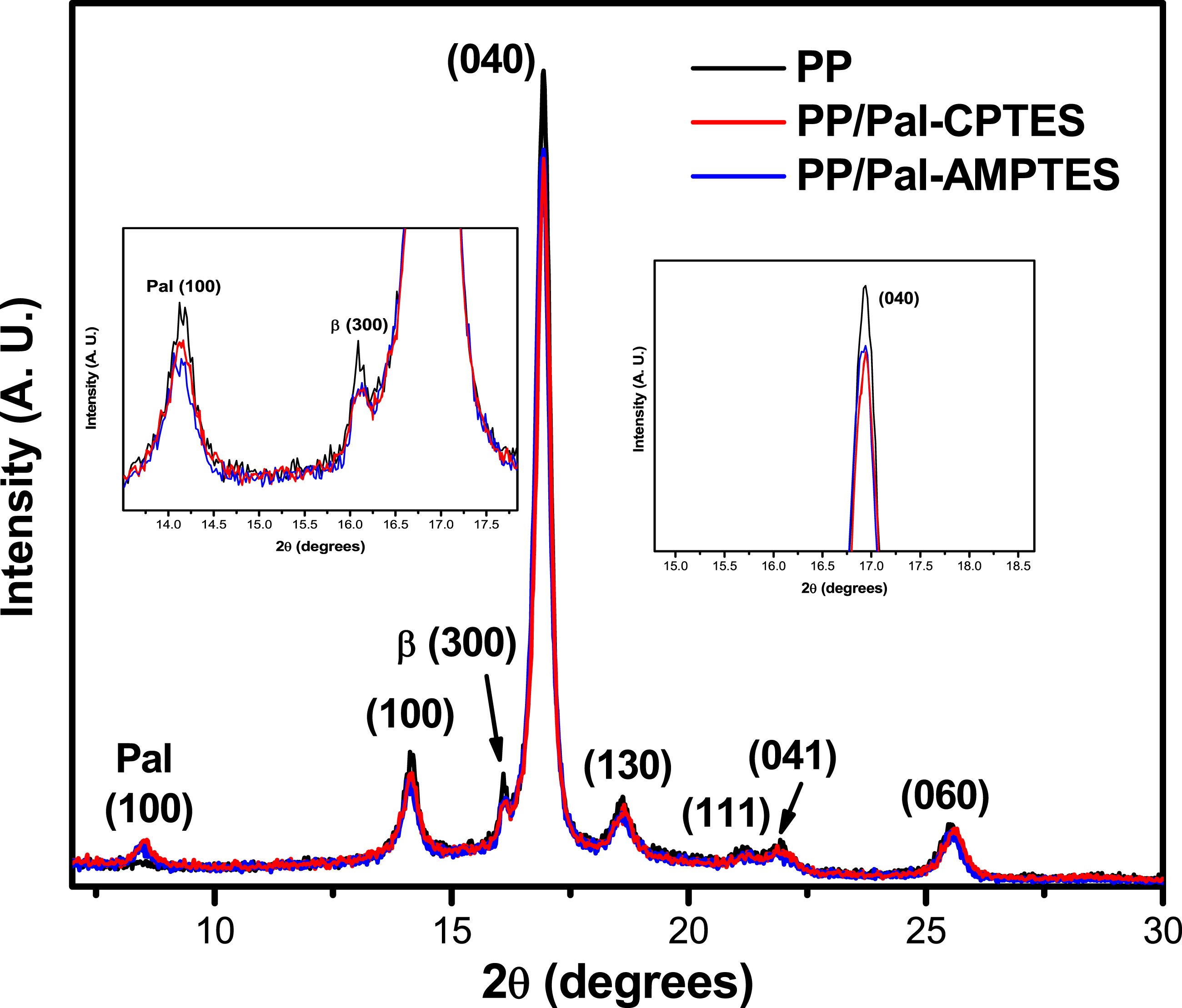
α phases (110 and 040) peaks intensities in samples of the different evaluated films.
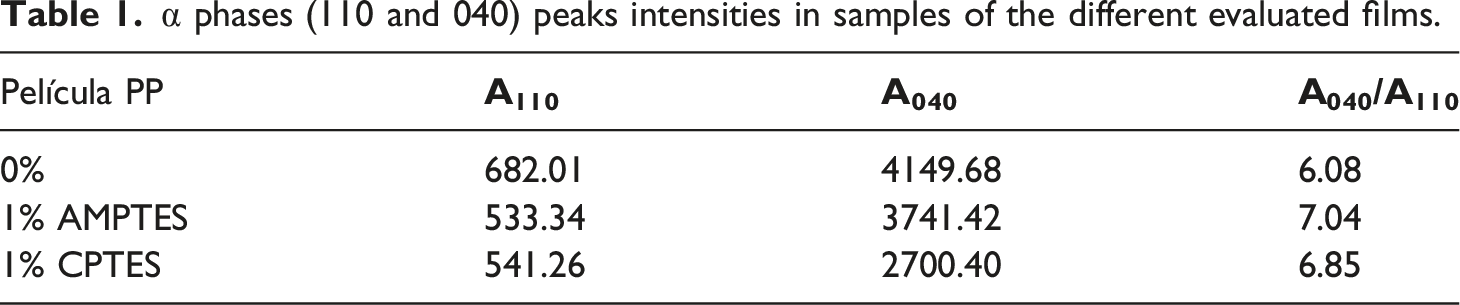
The analysis of PP/Pal-CPETS and PP/Pal-AMPTES apparent crystallinity is associated to the relationship between the normal or perpendicular phases α (110) and α (040), the greater the ratio A040/A110, the lower the apparent crystallinity of the material.26–28 Therefore, an analysis of peaks intensities of PP vs PP/Pal-CPTES and PP/Pal-AMPTES diffractograms showed an increase in alpha phases relationship which could be caused by the preferred material orientation. The variations in this ratio provide insight into changes in the crystalline structure and preferential orientation of the α-phase, which may be influenced by the presence and surface modification of Pal with both silane agents (Pal-AMPTES and Pal-CPTES). In particular, differences in the A110/A040 ratio suggest that the incorporation of modified clay affects the crystallization behavior of the PP matrix, potentially promoting alterations in crystal growth and orientation. 12
Thermogravimetric analysis (TGA)
TGA analysis was used to determine thermal stability of films containing palygorskite surface treated with different silane agents. Figure 10 illustrates the TGA thermograms of the different films obtained with 0% and 1 wt % of the two types of modified palygorskite (Pal-CPTES and Pal-AMPTES). In general, the addition of clay increased the decomposition temperatures; Figure 10, shows that the films without Pal initiate the mass weight loss at 200°C, while in those samples containing palygorskite, their initial mass weight loss is observed around 250°C, indicating a better thermal stability of the blown films. The films containing 1 wt % Pal-CPTES and Pal-AMPTES maintain their thermal stability up to around 300°C where the onset of thermal decomposition and of mass loss are observed. These values agree with similar thermal behavior reported else ware: an increased thermal stability of polymeric nanocomposites reinforced with modified clays.
29
TGA curves of PP blown films with 0 wt%, 1 wt% CPTES and 1 wt% AMPTES.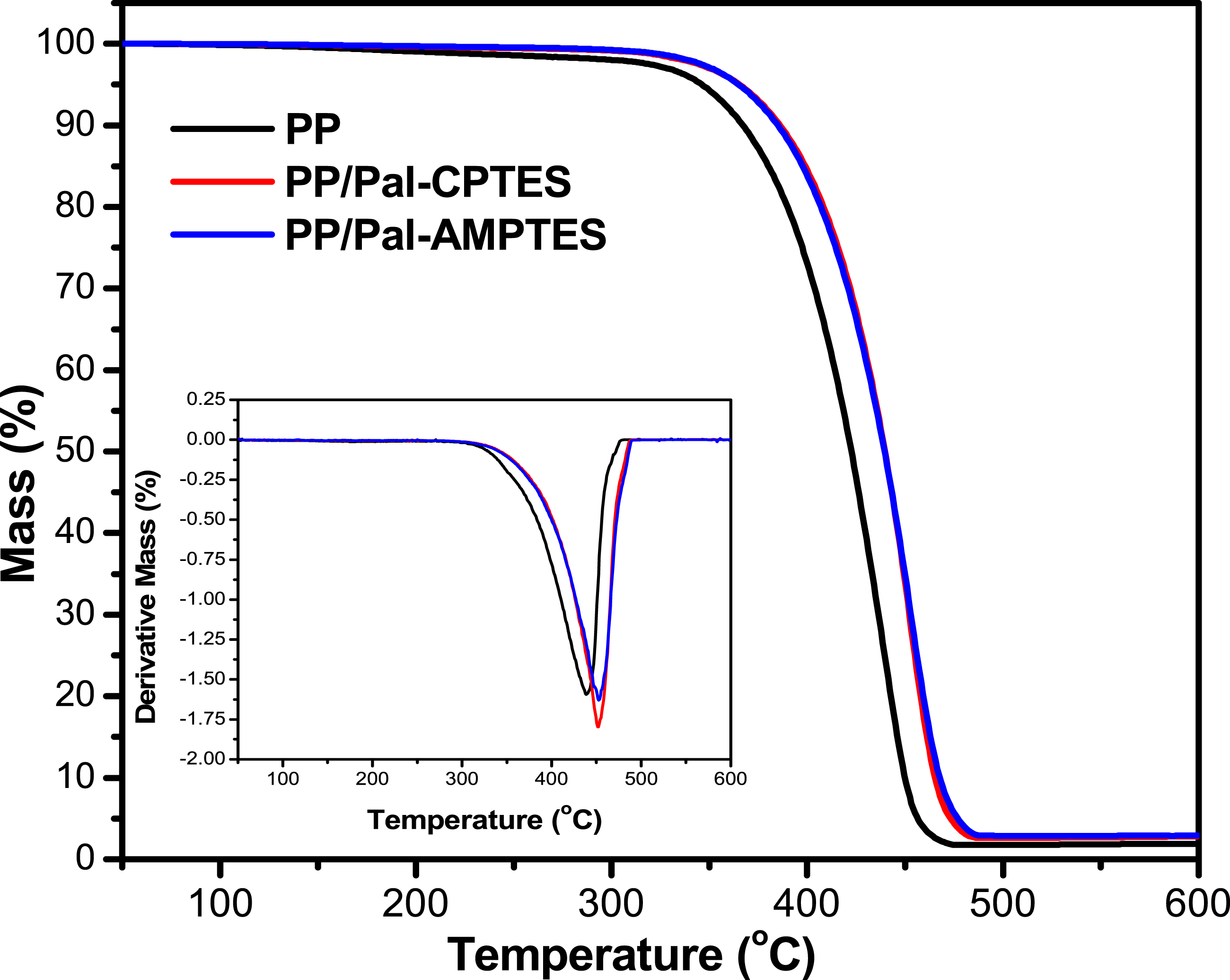
The increment of Tmax of films containing palygorkite in comparison with pristine Polypropylen can be attributed to the formation of a carbonaceous layer (generated by Pal) during the thermal decomposition, such cumulated char layer tends to retard the escape of decomposed volatile products generated during thermal decomposition.30–32
Tensile test
The tensile properties of PP, PP/Pal-CPTES, and PP/Pal-AMPTES films are presented in Figure 11. Overall, the tensile strength of PP (Figure 11(a) and (b)) remains essentially unchanged upon the incorporation of Pal in both testing directions. This observation contrasts with previous reports, where the addition of mineral fillers typically leads to a reduction in tensile strength due to stress concentration effects and poor interfacial adhesion.29,33 In the present case, the films containing Pal-CPTES and Pal-AMPTES exhibit tensile strength values comparable to those of neat PP, as confirmed by the overlap of standard deviations, indicating the absence of statistically significant differences. This behavior can be attributed to the effective surface modification of Pal with silane agents, which enhances interfacial interactions between the filler and the polymer matrix. Improved compatibility likely facilitates stress transfer across the interface and prevents the formation of defect sites that could act as crack initiation points. Additionally, the adequate dispersion of modified Pal, as evidenced by morphological analysis SEM, may contribute to maintaining the structural integrity of the films. Consequently, the incorporation of silane-functionalized Pal allows for the preservation of the mechanical performance of PP films without compromising tensile strength. PP/Pal-CPETS and PP/Pal-AMPTES films mechanical properties: Maximum strength for longitudinal and radial test directions (a-b) and Elongation at the break longitudinal and radial test directions (c-d).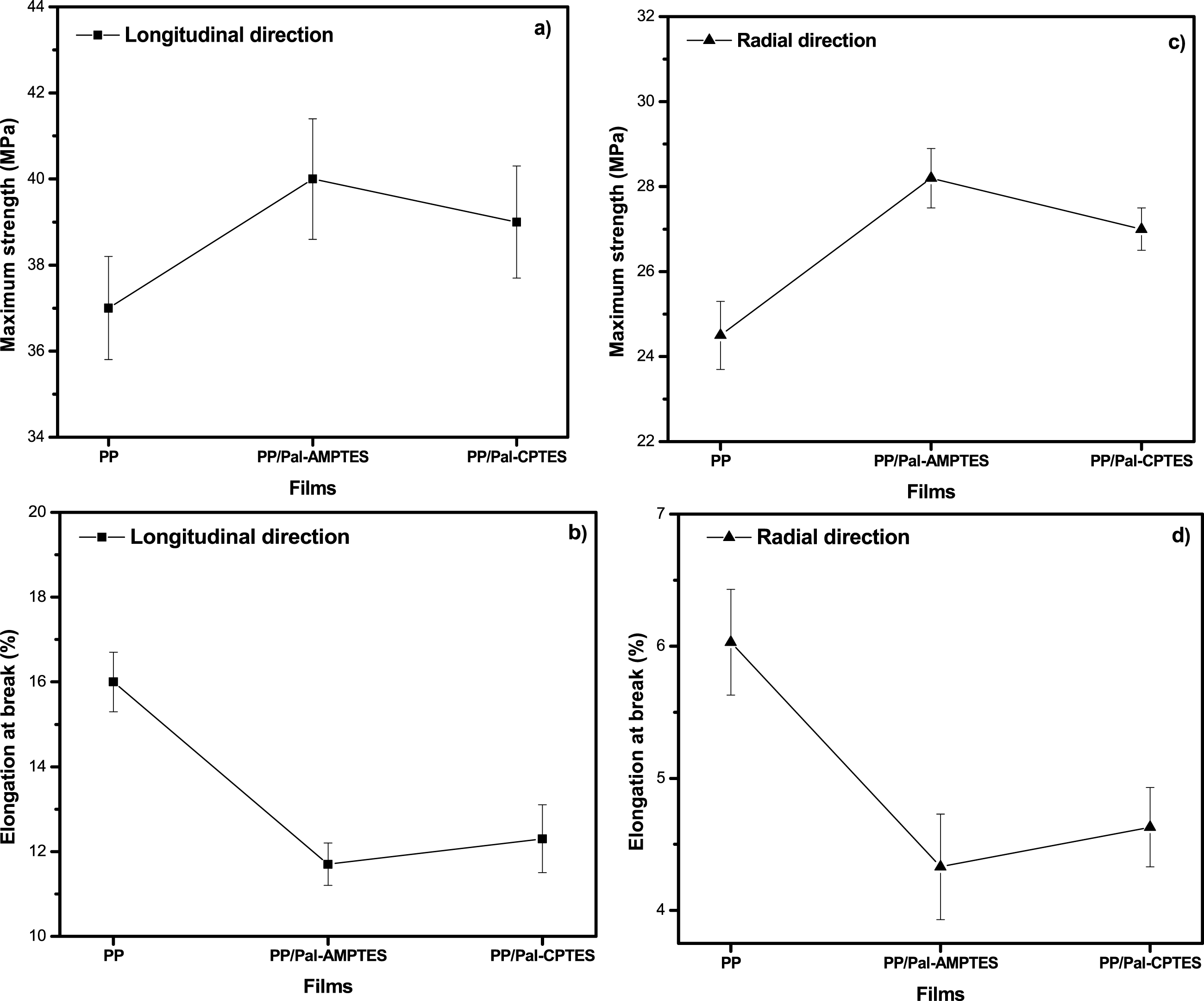
Elongation at break of PP/Pal-CPETS and PP/Pal-AMPTES (Figure 11(c) and (d)) decreases with Pal content regardless of the type of Pal used (Pal-CPTES, Pal-AMPTES). This trend is expected, since the addition of clays as a reinforcing phase in polypropylene (PP) generally increases the material’s stiffness and reduces its ductility reducing the elongation at break.34,35
The decrease in deformability can be primarily attributed to the formation of polymer regions with a mobility partially restricted resulting from the interactions between macromolecular chains and the organic groups present in the modified clays. Furthermore, a good dispersion and distribution of a nanoparticle promotes this mobility restriction of the polymer chain, reinforcing this effect. Additionally, the possible alignment of palygorskite fibers with the molecular orientation induced by the material flow during the tensile test, may also contribute to the reinforcement effect observed.36,37
Optical properties
Optical properties obtained: Transmitance, haze and clarity.
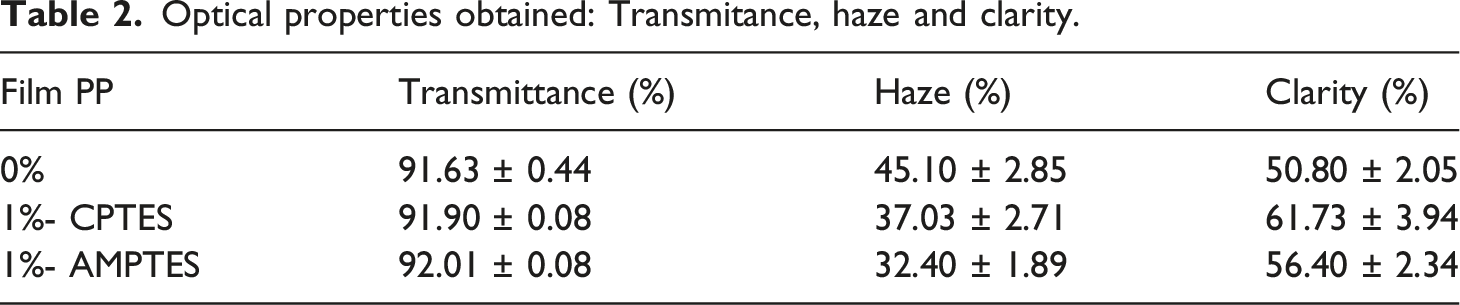
In contrast, the light transmittance of PP/Pal-CPTES and PP/Pal-AMPTES films remained higher than 91%. Transmittance in the 380–780 nm range is particularly important for chlorophyll activity and photosynthesis, directly influencing plant growth. finally in semicrystalline polymers, optical clarity is strongly related to the amorphous phase. Therefore, the incorporation of palygorskite modified the crystalline structure of the blown films, resulting in reduced crystallinity, as evidenced by the XRD analysis. This reduction in crystallinity increased the amorphous fraction. It is well established that lower crystallinity in semicrystalline polymers generally improves optical clarity.
It is noteworthy that the addition of 1 wt % Pal-CPTES and Pal-AMPTES enhances the optical properties, as it offers improves clarity combined with low haze and high light transmittance, which are crucial properties required for its use as greenhouse cover films.
Contact angle of the blown films
Water contact angle (θ) provides insights about the wettability of a solid surface. A high contact angle (typically >90°) indicates that the water does not spread on the surface, the surface is hydrophobic. On the other hand, a low contact angle (typically <90°) suggests that the water wets the surface well, indicating a hydrophilic nature. Figure 12(a) shows the image obtained from the angle formed in the surface of polypropylene films without palygorskite when placing a water drop. The average contact angle obtained was of 97.8°, the non-polar nature of polypropylene produces a hydrophobic effect.
34
Contact angle for films: (a) PP and (b) PP/PPma.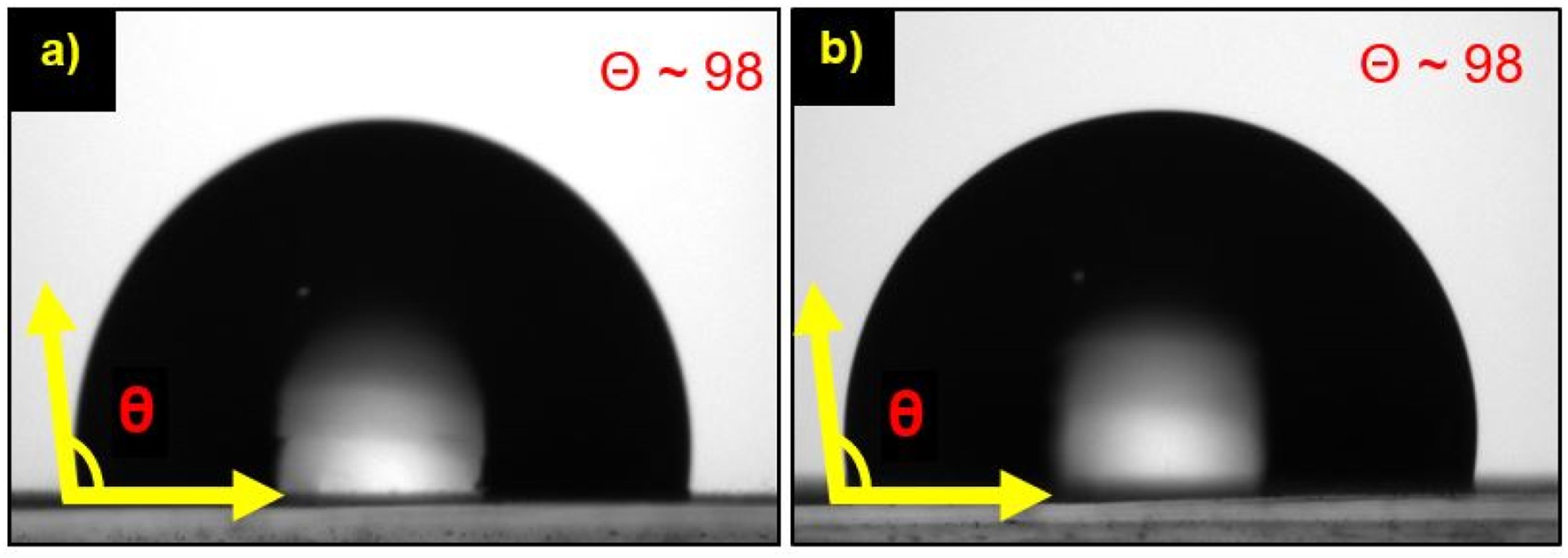
The PPma used as compatibilizing agent contains polar functional groups, it could contribute to improve PP films wettability and mask the influence of Pal; therefore, the contact angle of PP films with 4.0 wt% PPma was measured (PP/PPma). Figure 12(b) shows a representative image of the angle formed by a water drop over the films surface. The average angle obtained was 98°, which is similar to that obtained in the pristine PP films, hence, the PPma does not influence hydrophilic properties of the PP films.
Figure 13 presents the contact angle formed by a water drop deposited on the film of PP/Pal-CPTES (Figure 13(c)) and PP/Pal-AMPTES (Figure 13(d)), giving an average value of 86° for each of them; the water drops spreads over the surface of the film, which reduces the contact angle indicating a better wettability in films containing clay. Contact angle for blown films with (a) PP/Pal-CPTES and (b) PP/Pal-AMPTES.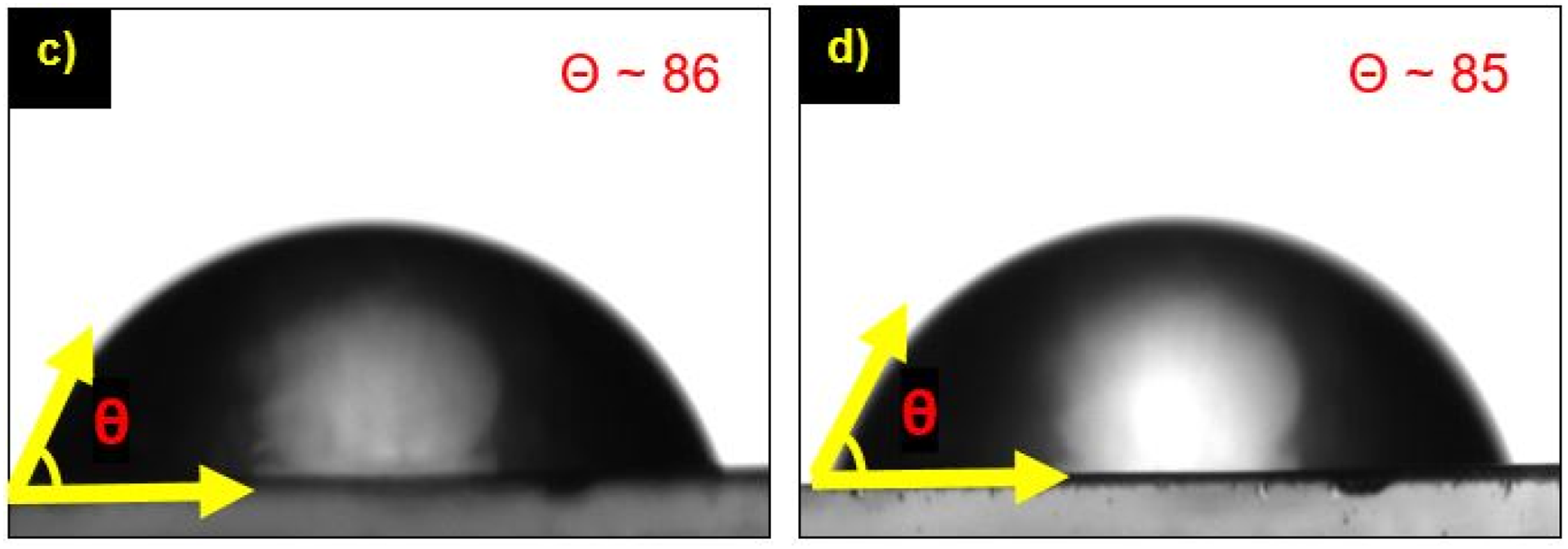
The change in the wettability of the formulated films can be attributed to the presence of clay, since the incorporation of clay-modified particles into the polymer matrix increases the concentration of polar functional groups introduced by the silane coupling agent. This enhanced polar character promotes stronger interactions with water molecules, thereby facilitating and accelerating their diffusion through the nanocomposite. Moreover, the modified clay surface may generate additional pathways or microstructural heterogeneities that further contribute to the increased water transport rate within the material.
The presence of organic Pal increases free energy on the surface of the film, which causes the contact angle to decrease. The variations in the contact angle and surface free energy can be explained in terms of two mechanisms attributed to accession: (1) the improvement of wettability conferred by increasing the polar characteristics of the clay, and (2) increasing the anchoring effect, or roughness conferred by increasing surface free energy of the dispersed phase. 35
Gas transport properties of the PP, PP/Pal-CPTES and PP/Pal-AMPTES films
Experimental determination of the permeability coefficient (P)
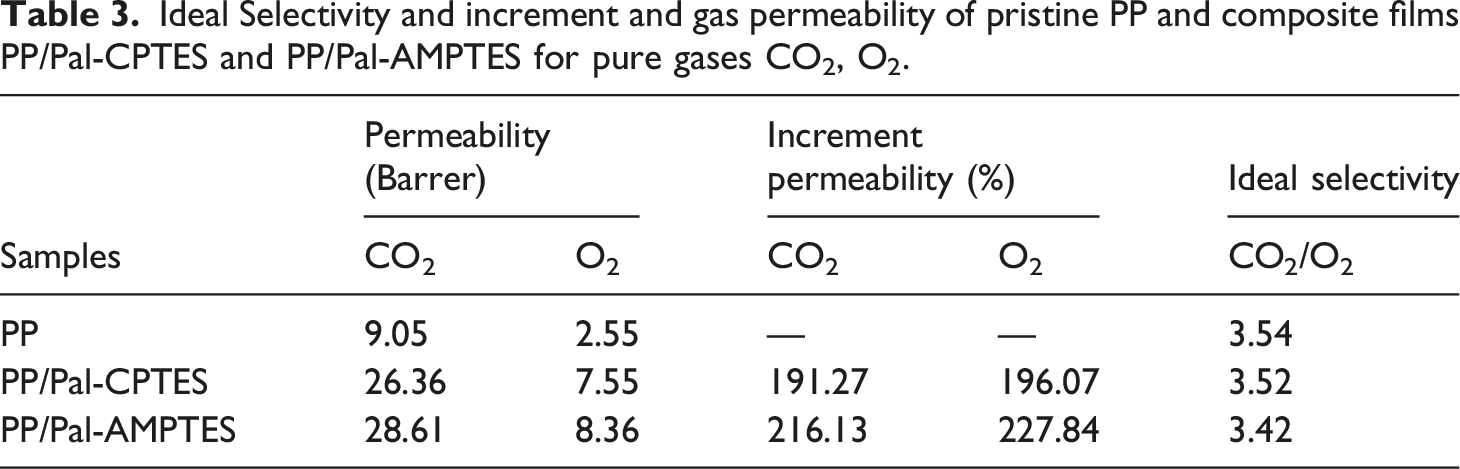
The gas permeability and the ideal gas selectivity properties were analyzed using pure gases He, O2, and CO2, and tested at 2 bar and 35°C. Figure 14 shows a comparative analysis of the permeability of films formulated with silane-functionalized palygorskite (PP/Pal-AMPTES and PP/Pal-CPTES) versus pristine polypropylene films. Gas permeability of PP/Pal-CPETS and PP/Pal-AMPTES films increased with the incorporation of the modified clay due to the presence of silane groups; the composite films were three times more permeable than the PP film for CO2 and O2. This behavior is attributed to the presence of CPTES and AMPTE; the clay nano-fibers have a fibrillar structure that can act as a path for the permeant gas,
38
also, the homogeneous distribution and dispersion of Pal limits the polymer chain packing, resulting in a lower percentage of crystallinity (as observed in the XDR results) increasing the PP amorphous phase,
9
consequently, the gas molecules cross faster through the films. For semicrystalline polymers, such as polypropylene, the drawing process and the incorporation of nanoparticles, produce a decrease in crystallinity and a change in size and orientation of the crystallites, affecting the chain mobility for both gases CO2 and O2. Gas permeability coefficient of blown films: PP, PP/Pal-CPTES and PP/Pal-AMPTES.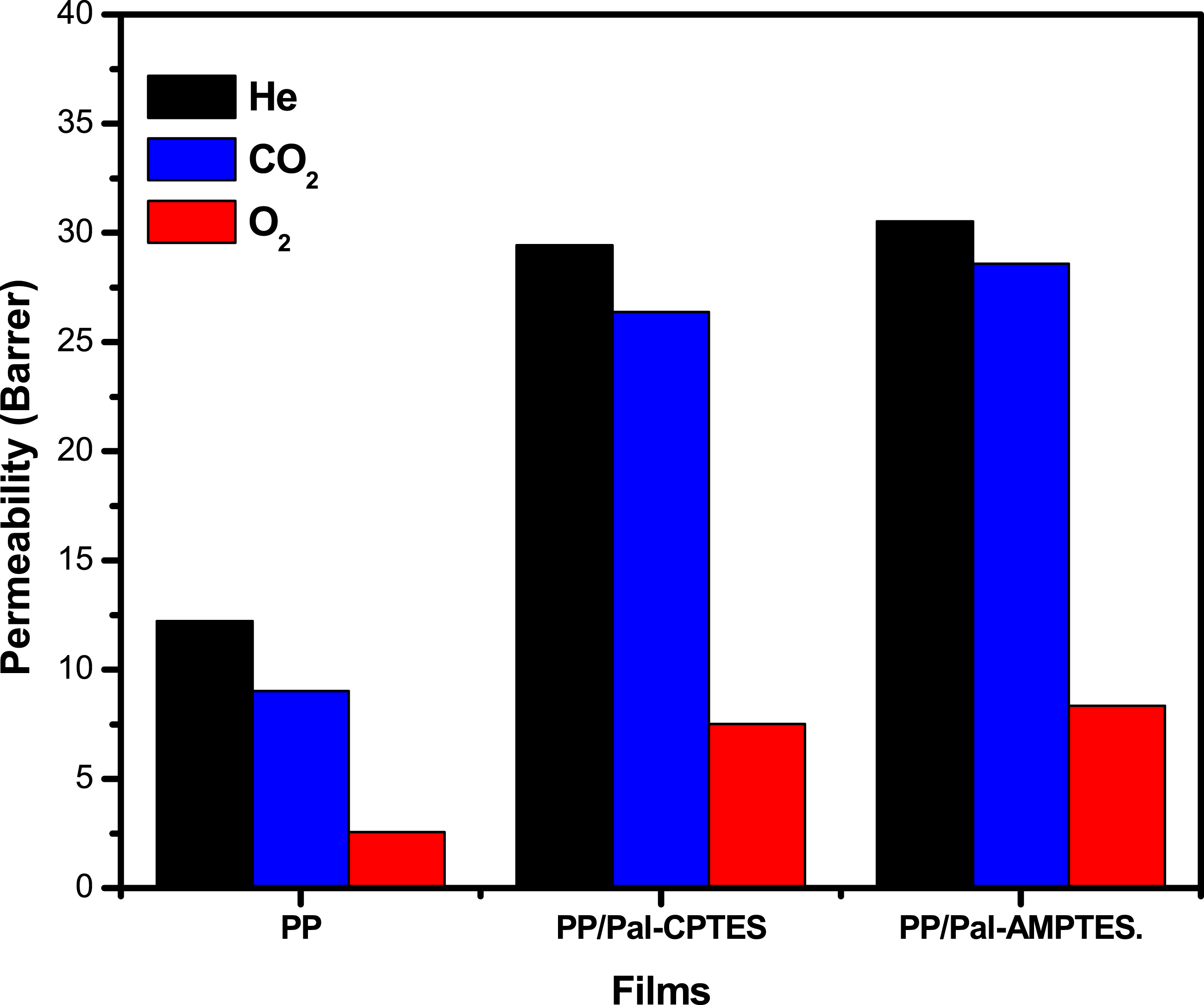
Ideal Selectivity and increment and gas permeability of pristine PP and composite films PP/Pal-CPTES and PP/Pal-AMPTES for pure gases CO2, O2.
Conclusions
The palygorskite clay was modified with two types of silane agents: 3-chloropropyltriethoxysilane (CPTES) and 3-aminopropyltrimethoxysilane (AMPTES). FT-IR, TGA, and XRD analysis confirmed that the clay modification was successful. This modification improved dispersed the Pal nanofibers more effectively in the polymer matrix, as observed in the SEM analysis of the nanocomposite films.
The optical properties of the films demonstrate that the incorporation of clay improves film performance by enhancing clarity while maintaining low haze and high light transmittance. These characteristics make the films suitable for greenhouse cover applications, where efficient light transmission is required to support photosynthesis. In addition, the wettability of the films increased due to the hydrophilic nature of the clay and the possible increase in surface roughness. Improved wettability may reduce water droplet formation and dripping inside the greenhouse environment, thereby helping to prevent the growth of fungi and other harmful microorganisms.
The permeability of the films containing clay increased for both evaluated gases (CO2 and O2), which can be attributed to the reduction in crystallinity caused by the incorporation of palygorskite, as evidenced by the XRD analysis. In addition, gas permeability is strongly influenced by the morphology and orientation of the nanofibers within the composite material. The presence of silane groups on the clay surface may also promote the solution–diffusion mechanism, facilitating the transport of CO2 and O2 through the films.
The incorporation of modified palygorskite did not affect the maximum tensile strength of the films, thereby preserving their mechanical properties. This behavior can be attributed to the improved interfacial adhesion between the polymer matrix and the reinforcement, promoted by the presence of silane coupling agents.
Footnotes
Acknowledgements
The authors gratefully acknowledge the SECIHTI (Mexico) for the scholarship granted during the post-doctoral stay. Also, the authors gratefully thank Dra. Rita Sulub, M.S.C. María Isabel Loría, M.S.C. Santiago Duarte, M.S.C. Martin Baas Lopez, M.S.C. Enrique Escobedo Hernández, Dra. Beatriz Escobar Morales for their technical support, Dra. IPM. G Castruita-de León, Jesús Alejandro Espinosa Muñoz and María del Rosario Rangel Ramírez for the analyses carried out at CIQA.
Declaration of conflicting interests
The authors declared no potential conflicts of interest with respect to the research, authorship, and/or publication of this article.
Funding
The authors received no financial support for the research, authorship, and/or publication of this article.
