






Abstract
Here, the PVC/MgO nanocomposite films containing 1, 2, and, 3 wt. % MgO were prepared using the casting solution technique. EDX and Elemental mapping analyses confirm the successful MgO incorporation inside PVC without impurities. EDX, elemental mapping, and FTIR analyses confirmed the successful incorporation of MgO nanoparticles into the PVC matrix without impurities, while preserving the polymer chemical structure. SEM/TEM results also revealed well-dispersed MgO nanoparticles (17–30 nm) within the PVC matrix, with increasing surface roughness and slight agglomeration observed at higher loadings. The optical studies show that MgO incorporation significantly enhances the absorbance and reduces the reflectance in PVC films. Tauc analysis demonstrated that adding 3 wt% MgO reduced the direct and indirect optical band gaps of PVC from 5.88 to 5.62 eV to 4.98 and 4.57 eV, respectively, accompanied by an increase in Urbach energy. Moreover, the incorporation of 3 wt% MgO nanoparticles increased the extinction coefficient and optical conductivity (from 1.23 × 10¹¹ to 6.12 × 10¹¹ s/cm2), while reducing the refractive index from 1.41 to 1.20 at approximately 300 nm. The real and imaginary dielectric constant analyses reveal that MgO incorporation decreases εr, whereas εi, VELF, and SELF exhibit increasing trends. The dispersion, oscillation energy, and relaxation time (Ed, Eo, and τ) were estimated to be 3.12, 6.08, and 0.88 ×10⁻⁵ sec for the PVC film, which decreased to 2.13, 5.71, and 0.73 × 10⁻⁵ sec after insertion 3% MgO, respectively. Nonlinear optical parameters, including χ(1), χ(3), and n2 decreased with MgO incorporation due to reducing the electronic polarizability. These findings confirm that MgO incorporation effectively tunes the optical and nonlinear properties of PVC nanocomposites, making them highly promising for advanced photonic and UV-shielding applications.
Introduction
Polymer nanocomposites (PNCs) have emerged as one of the most versatile classes of materials in the field of optoelectronic, photonic, and UV shielding applications.1,2 Their appeal is owing to the ability to combine between the lightweight, low cost, processability, and mechanical flexibility of polymers and the functional optical properties of the fillers.3,4 The addition of inorganic nanoparticles into a polymer host can increase its physical and chemical properties through modification of electronic structure, interfacial polarization, and photon absorption pathways. 5 Therefore, these hybrid materials play a crucial role in several applications such as optical coatings, microelectronic, photodetectors, light-emitting diodes (LEDs), waveguides, and UV-protective encapsulation systems.6,7 The rapid expansion for the flexible electronics has intensified the demand for polymer composites because of high precision tailoring their absorbance, refractive index, and nonlinearities optical. 8
Among available polymer matrices, polyvinyl chloride (PVC) which is a linear, mostly amorphous, and thermoplastic. 9 In addition, PVC occupies a prominent position due to its chemical stability, low cost, mechanical durability, and polar C–Cl groups that create significant dipole moments along the polymer backbone. 10 However, the pure PVC suffers from intrinsic limitations, e.g.; it exhibits a wide optical band gap and relatively weak intrinsic absorption in the ultraviolet region. 11 Meanwhile, PVC also displays optical dispersion remains largely fixed owing to the polymer chain structure, restricting its usefulness in devices requiring tailored refractive indices. 12 Overcoming these obstacles requires modification of the electronic environment of the polymer matrix through the incorporation of inorganic nanoparticles like metal Oxide.13,14 Meanwhile, metal oxide/polymer composites are applied in several device, including transistors, gas sensing, light-emitting diodes, and microelectronics. 15 In particular, magnesium oxide (MgO) nanoparticles represent an attractive filler because it is used in many applications, such as optical coatings, sensors, water process, fuel additives, adsorbents material, and catalysis. 16 Numerous reasons have led to these diverse applications of MgO are high dielectric constant, rich defect chemistry, low cost, chemical and thermal stability, UV blocking ability, and large surface area.16,17 In addition, MgO possesses abundant surface defects, such as oxygen vacancies results in localized electronic states within the forbidden gap of the host polymer. 18 This reason results in a reduction in the band gap energy, an increase in the polarization of the interface, and a change in the electron density distribution. 12 Madivalappa et al, have reported that the direct band gap of the PVDF decrease from 3.5 eV to 2.5 eV, while the indirect band gap decreased from 3 eV to 1.5 eV as the amount of MgO boosted to 2 wt %. 19 Alaa et al, 20 have also showed that the absorbance, absorption coefficient, extinction coefficient, and optical conductivity of the PVP/CMC blend increased with the increase in contents of MgO NPs. The nanocomposite films also appeared a high absorbance in the UV zone, which can be applied in UV shielding application.
The novelty of this study stems in development of PVC/MgO nanocomposite films with different contents of MgO nanoparticle and the comprehensive investigation of their linear/non-linear optical properties. Unlike previous studies that focused mainly on the structural characterization, this work systematically examines how MgO incorporation influences the optical absorption, bandgap energy, refractive index, dielectric behavior, dispersion characteristics, relaxation time, and nonlinear optical parameters. The results also provide a detailed understanding of the interaction between MgO nanoparticles and the PVC matrix, highlighting the effectiveness of MgO as a functional nanofiller for tuning the optical performance of PVC-based materials. These findings open new opportunities for the use of PVC/MgO nanocomposites in photonic devices and UV-protective applications.
Experimental
Materials
Polyvinyl chloride (PVC, Mw ≈ 80,000 g/mol, analytical grade) was purchased from Sigma-Aldrich and used as the polymer matrix without further purification. Magnesium oxide nanoparticles (MgO, purity ≥99%) were obtained from Sigma-Aldrich. Tetrahydrofuran (THF, purity ≥99.9%, HPLC grade) and N,N-dimethylformamide (DMF, purity ≥99.9%, analytical grade) were used as solvent for dissolving PVC and MgO. Deionized water was employed throughout the preparation and washing processes. All chemicals were used as received without further purification.
Preparation of PVC/MgO Nanocomposite Films
PVC/MgO nanocomposite films were fabricated using the solution casting technique, which allows uniform dispersion of nanoparticles within the polymer matrix and provides high control over film thickness. Initially, 1 g of PVC powder was gradually dissolved in 80 mL of THF under continuous magnetic stirring at 60°C for 2 h until a clear and homogeneous polymer solution formed. The solution was then allowed to cool to room temperature while stirring continued to prevent premature gel formation. Magnesium oxide nanoparticles were incorporated into the PVC solution at different weight fractions of 1 wt.%, 2 wt.%, and 3 wt.% relative to the polymer weight. The required amount of MgO nanoparticles was first dispersed separately in 10 mL of DMF using ultrasonic treatment for 30 min. This step ensured the breakdown of nanoparticle agglomerates and promoted uniform dispersion. The sonicated MgO suspension was then added slowly to the PVC solution under continuous magnetic stirring. The mixture was stirred for 3 hour at 30°C to allow adequate interaction between the MgO nanoparticles and the PVC chains. To obtain films, the resulting viscous solution was cast onto Petri dish. The cast films were left to dry in vacuum oven at 60°C. The resulting films exhibited uniform thickness of approximately 80–120 μm, measured using a digital micrometer. The prepared samples were labeled according to MgO concentration as follows: PVC (pristine film), PVC/MgO-1 (1 wt.% MgO), PVC/MgO-2 (2 wt.% MgO), and PVC/MgO-3 (3 wt.% MgO). The thicknesses of the prepared PVC and PVC/MgO films were measured using a digital thickness gauge (micrometer) and were found to be approximately 475 μm
Physicochemical and Optical Characterization
Fourier-transform infrared spectroscopy (FTIR) measurements were carried out using a Bruker Alpha spectrometer operating in the 4000–400 cm−1 range to identify functional groups and interfacial interactions between PVC and MgO nanoparticles. XPS was performed using a scanning XPS microprobe (ULVACPhi, Inc./Japan) to reveal the chemical states and atomic percentages of samples. Scanning electron microscopy (SEM) images and energy-dispersive X-ray spectroscopy (EDX) elemental analysis were obtained using a Hitachi SU8220 microscope equipped with an Oxford Instruments EDX detector. UV–Vis–NIR optical measurements were carried out using spectrophotometer Jasco V-570 in the 190–2000 nm spectral range.
Results and Discussion
The EDX spectrum in Figure 1(a) establishes the chemical component of the PVC/MgO nanocomposite. The dominant C K and Cl K peaks (∼77 at.% and ∼17 at.%, respectively) correspond to the polyvinyl chloride backbone and confirm that the polymer structure remains chemically preserved after MgO incorporation. The detection of O K and Mg K signals (∼6 at.% combined) verifies the presence of MgO within the matrix without introducing extraneous impurity phases. The relatively low Mg atomic fraction, compared with carbon and chlorine, aligns with controlled nanoparticle loading and indicates dispersion within the organic matrix rather than the formation of an inorganic-rich segregated region. The absence of additional peaks further confirms chemical purity and suggests that no secondary magnesium-containing compounds formed during processing. Figure 1(b) displays the elemental mapping of the PVC/MgO-2 nanocomposites films. This figure provides spatial confirmation of nanoparticle distribution within the matrix of polymer. Carbon and chlorine signals form a continuous background across the scanned region, which reflects the homogeneous PVC matrix. Meanwhile, Mg and O elements appear uniformly distributed without clumping. This uniform distribution directly affects the nanocomposite’s optical properties. Furthermore, the homogeneous distribution of the Mg nanoparticles prevents the scattering losses and enhances absorption, which is crucial for UV protection and optical attenuation applications. The well-distributed MgO domains also maximize the effective surface area, promoting defect-mediated electronic transitions, which are responsible for the marked increase in absorption in the UV region.21,22 (a) EDX spectrum and (b) corresponding elemental mapping images of the PVC/MgO-2 nanocomposite film.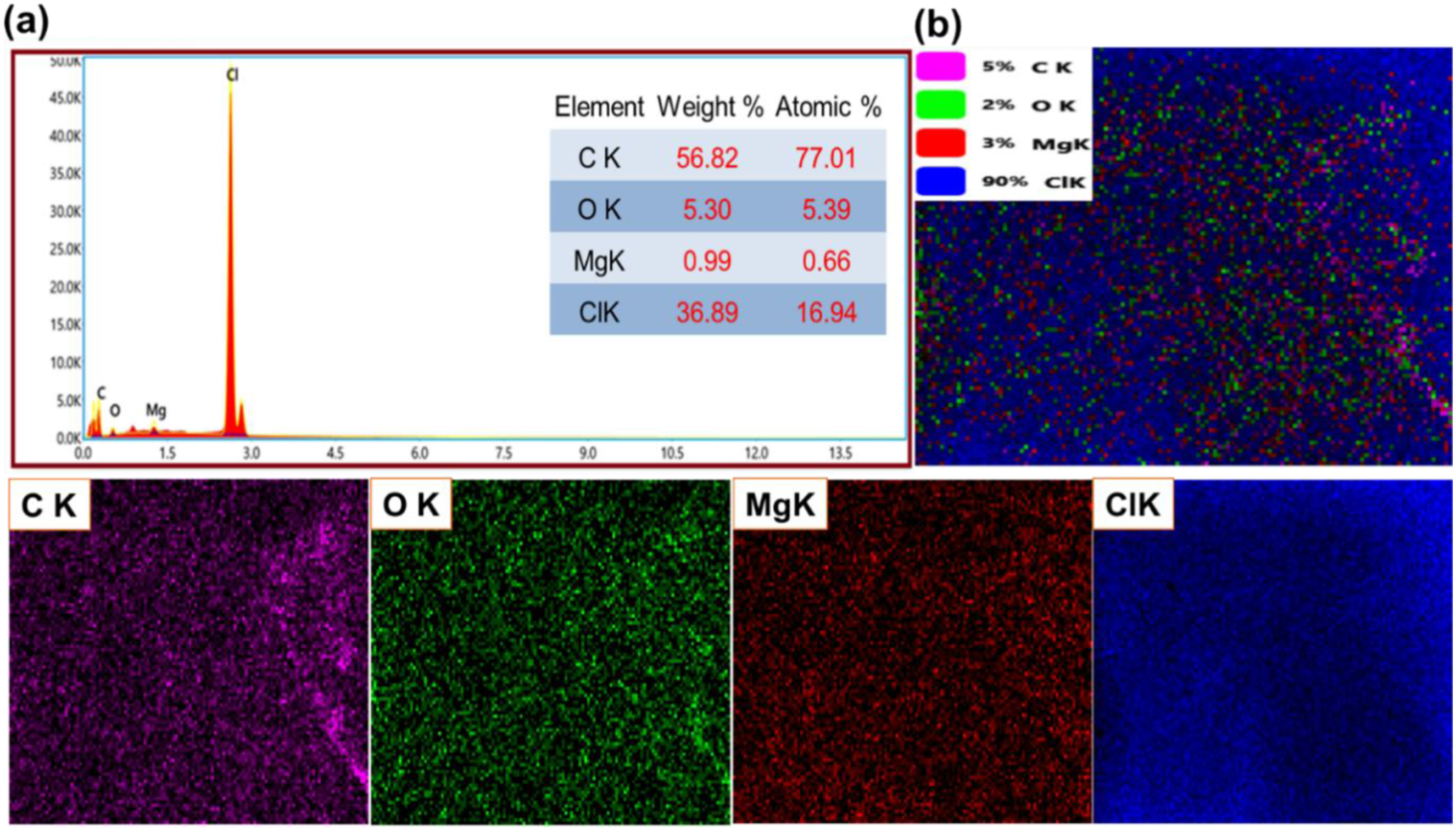
The FTIR spectra presented in Figure 2 provide the chemical structure of the pristine PVC and the interfacial interactions induced by MgO incorporation. The pristine PVC spectrum exhibits respectively bands near 2913 and 2852, 1067, 1255 cm−1 associated with asymmetric C–H, symmetric C–H, C–C, and CH2–Cl stretching vibrations.
23
The strong absorption near 610 cm−1 and 693 cm−1 correspond to the stretching of C–Cl.
24
The non-doped film also appeared two peaks near 1427, 1331and 955 cm−1 are related to angular deformation of CH2–Cl, deformation of CH2, and wagging vibration of CH, respectively.
25
A weak bands also presented in this spectrum near 834 and 505 cm−1 are owing to the stretching modes of the tertiary Cl in the main chain.
26
FTIR spectra of the pristine PVC and PVC/MgO nanocomposite films with increasing MgO concentration.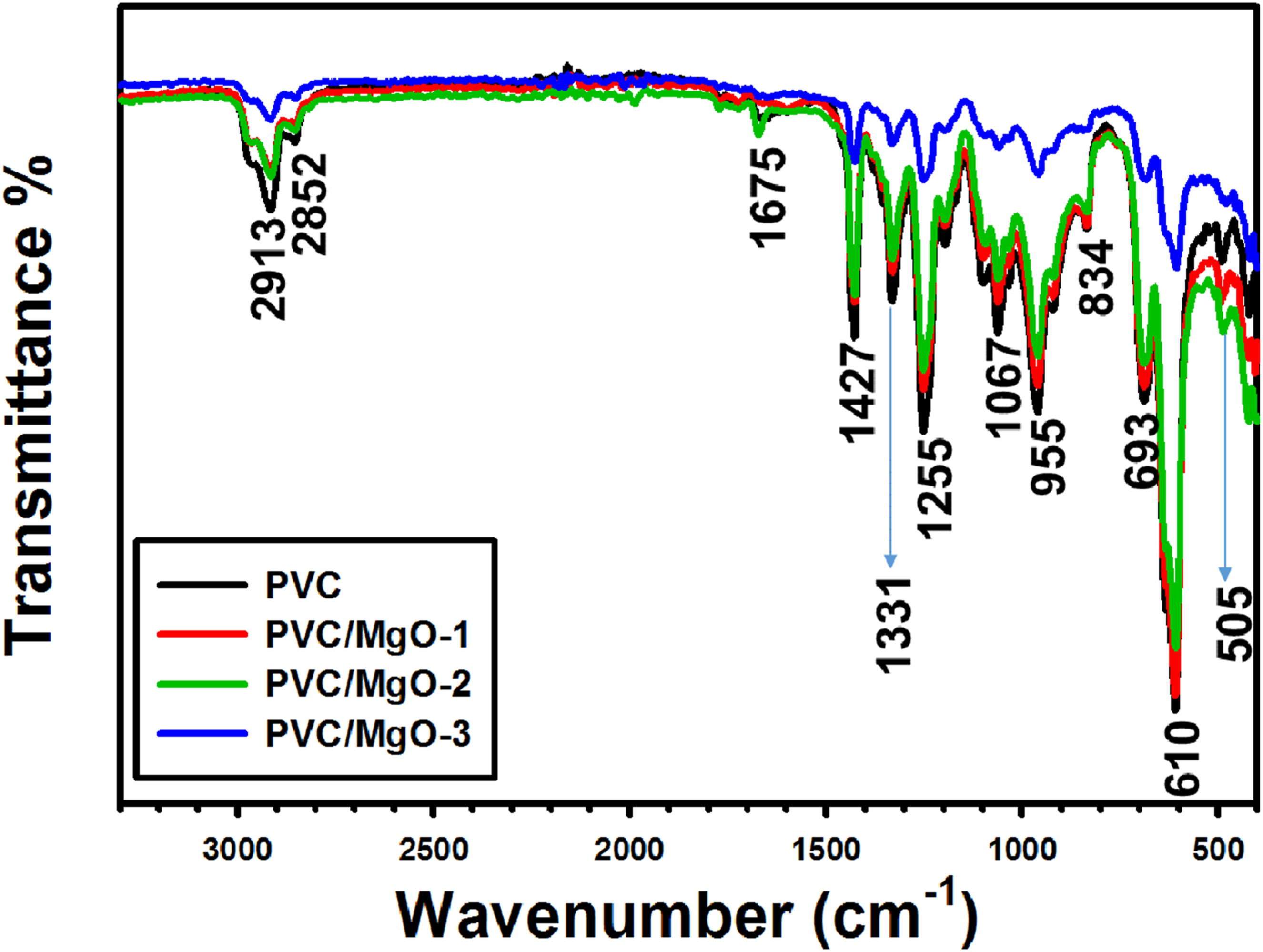
Upon MgO addition, no new peaks are appeared cause of the smaller content of MgO. However, subtle yet systematic modifications are observed. For example, the bands at 2913, 2852, 1313, 1067, and 834 cm−1 are shifted and the intensity of most bands are decreased. This variations indicate the interfacial interactions between the MgO nanoparticles and C-Cl, C-H bonds of PVC matrix. 27 Therefore, this analysis confirms that the addition of MgO nanoparticles preserves the PVC without chemically degrading.
The XPS analysis appears the essential information about compositions and chemical states of the prepared nanocomposite films. Figure 3(a) presents the XPS survey spectrum of the PVC/MgO-2 nanocomposite. This spectrum confirms the presence of C (290.8 eV), Cl (205.87 eV), O (538.2 eV), and Mg (1305.7 eV) as the primary constituent elements of the nanocomposite, with no detectable impurity signals. The dominant C 1s and Cl 2p peaks reflect the presence of PVC backbone, while the Mg1s and O 1s signals verify the successful incorporation of MgO nanoparticles into the PVC matrix. Figure 3(b) displays the C 1s spectrum. One can be seen that this spectrum is DE-convoluted into three peaks at ∼ 285.1, 286.4, and 288.3 which are assigned to C–H, C–OH, and C–Cl bonds, respectively.28,29 The Cl2p spectrum in Figure 3(c) appears two respectively singles near 199.1 and 200.9 eV are corresponded to Cl 2p3/2 and Cl 2p1/2, indicating to the C–Cl bonds.
30
Figure 3(d) presents the Mg 1s spectrum. This spectrum reveal two peaks near the binding energy 1306 and 1308.5 eV which are grown due to the Mg-OH and Mg–O bond in MgO, respectively.31,32 The O 1s spectrum shown in Figure 3(e) consists of two distinct peaks located at approximately 531 and 532.4 eV. These peaks are attributed to lattice oxygen originating from MgO and to chemisorbed –OH groups present on the MgO surface, respectively. These findings verify the interaction between the PVC matrix and MgO nanoparticles, as well as confirm the incorporation of MgO within the PVC structure. XPS spectra of PVC/MgO-2 nanocomposite film (a) survey spectrum, (b) C 1s, (c) Cl 2p, (d) Mg 1s, and (e) O 1s.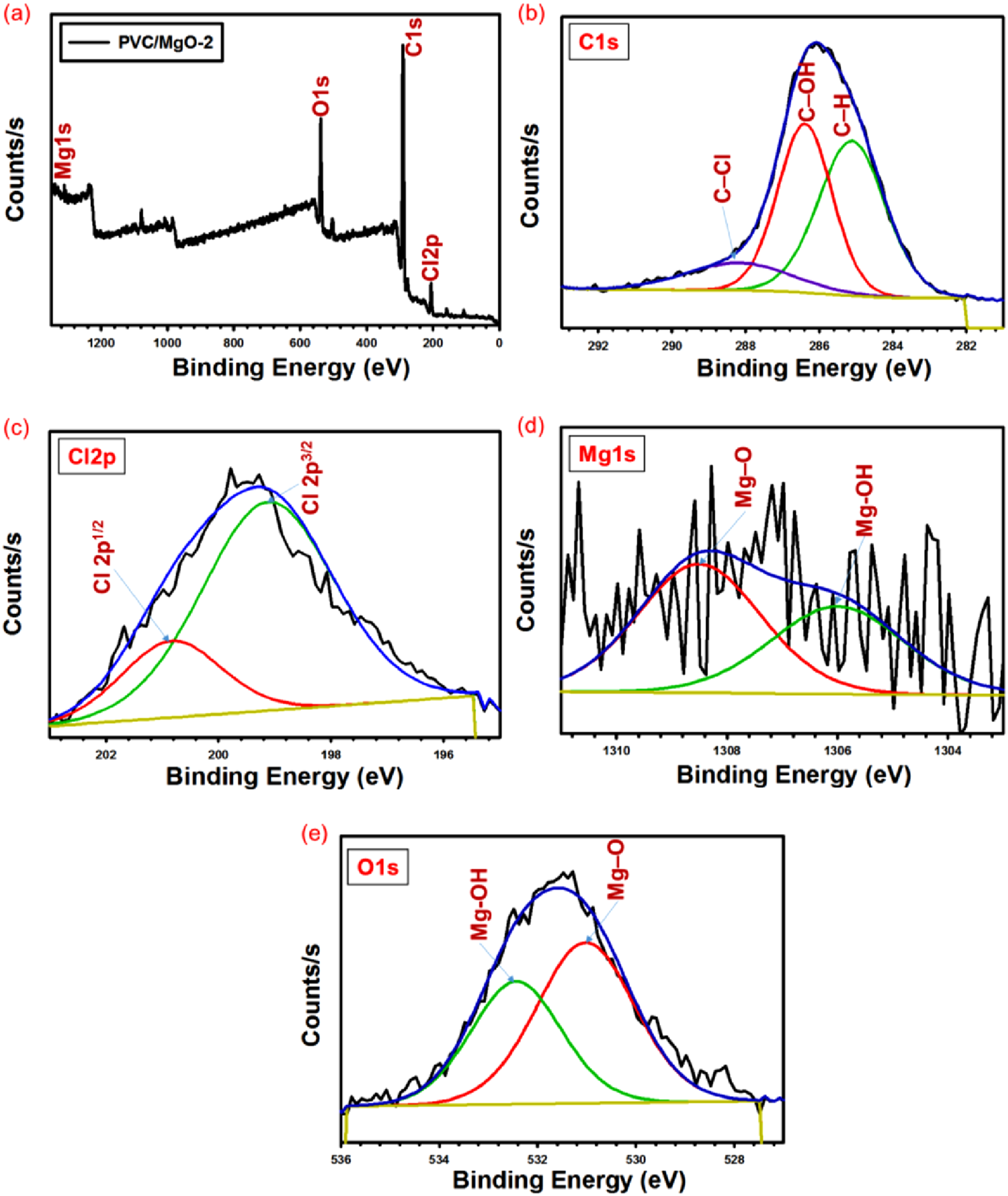
The surface morphology of the pristine PVC and MgO-loaded PVC film with different contents of nanoparticles appears in Figure 4(a)-(c). It can be seen that the pristine PVC film (Figure (4(a)) exhibits a relatively smooth and compact surface. The uniform surface indicates the homogeneous polymer chain packing. Upon introducing the MgO nanoparticles with low concentration (Figure (4(b)), the surface becomes noticeably textured and discrete bright features emerge. These bright features are related to the MgO nanoparticles that embedded within the PVC matrix. One can see that the distribution of MgO nanoparticles remains relatively uniform, and no large agglomerates dominate the micrograph. This suggests that MgO nanoparticles disperse effectively and interfaces with the PVC matrix. Moreover, this dispersion also enhances interfacial polarization and optical absorbance efficiency. At higher MgO concentrations, as illustrated in Figure 4(c), the number of bright particulate features increases significantly. Nevertheless, the MgO nanoparticles remain fairly uniformly distributed across the surface, although small clusters can also be observed. These micro-aggregated regions increase the interfacial area, thereby enhancing absorption pathways, particularly in the UV region.
33
The findings confirm the successful incorporation of MgO nanoparticles within the PVC matrix, resulting in an optically active nanocomposite suitable for UV attenuation and photonic applications. The TEM image reveals well-dispersed MgO nanoparticles embedded within the PVC matrix, with an average size ranging from 17 to 30 nm (Figure 4(d))). The particles are randomly oriented and exhibit a predominantly spherical shape. SEM micrographs of (a) pristine PVC, (b) PVC/MgO-1, (c) PVC/MgO-3, and (d) TEM micrographs of PVC/MgO-2 nanocomposite films.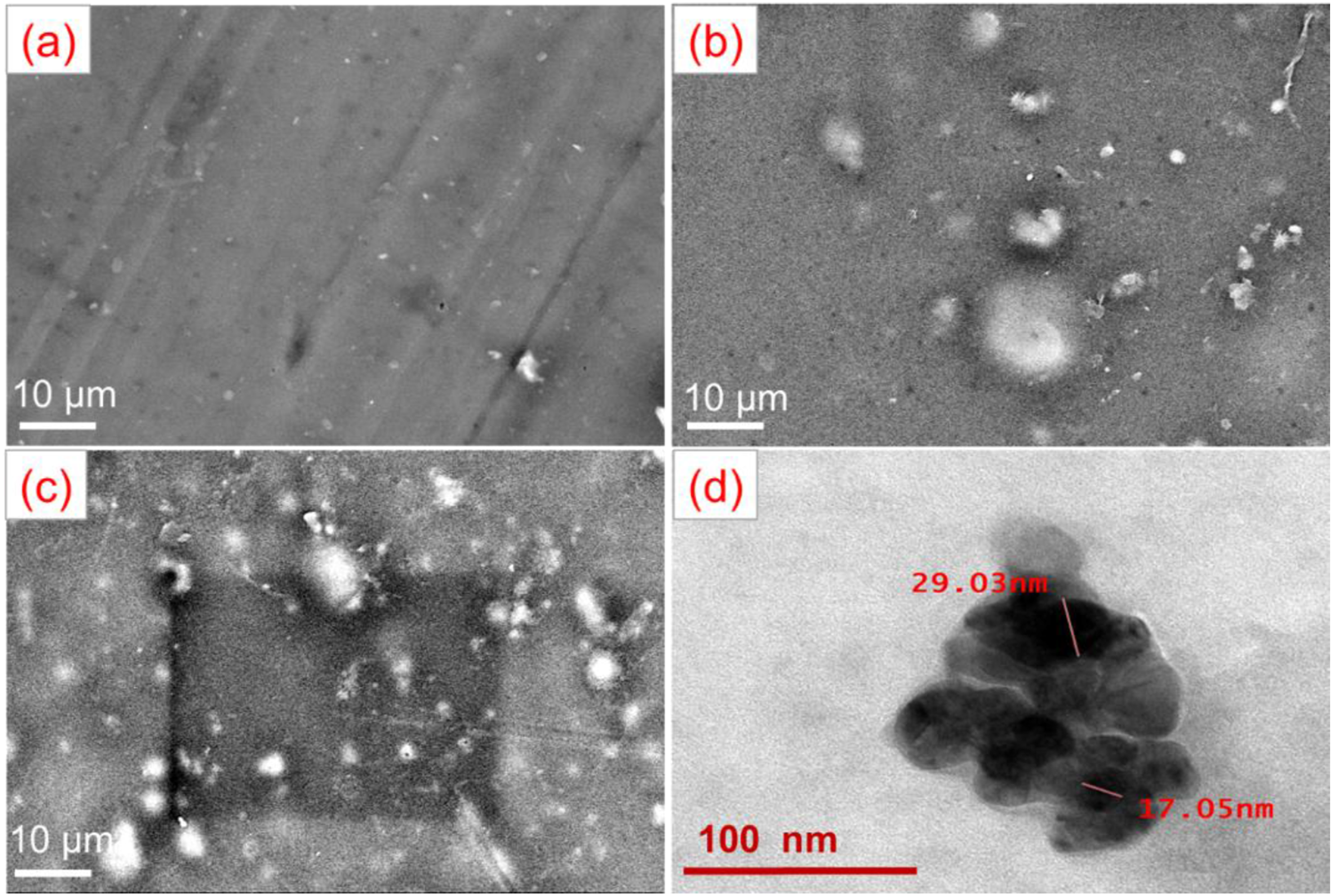
Figure 5(a) reveals the optical absorbance of the pristine PVC and PVC/MgO nanocomposite films with increasing loading of MgO nanoparticles. The pristine PVC film exhibits very low absorbance across the visible–NIR region, consistent with the wide band gap of the PVC. This spectrum exhibits a peak around ∼280 nm, which is related to electron transitions of π→π* and n→π* associated with the presence of unsaturated (C = C) bonds.
34
Moreover, the absorbance gradually decreases in the 250–350 nm range and becomes nearly constant beyond 350 nm, while the pronounced absorbance below 260 nm is attributed to C–Cl bonds.
35
In PVC doped with MgO nanoparticles, all spectra exhibit behavior similar to that of the pristine film. However, the incorporation of MgO significantly increases absorbance across the entire wavelength range, indicating its influence on the composite’s electronic structure. This enhancement is attributed to interfacial defect states and localized energy levels introduced by MgO nanoparticles.
36
These states also shift the absorption edge toward lower photon energies (redshift), resulting in a reduced band gap. The pronounced absorbance makes these composites promising for UV shielding and optoelectronic applications, including photodetectors, optical filters, and sensors. The increase in the optical absorbance for the PVC/MgO nanocomposite films is consistent with previous reports on PbO-filled PVC systems.
37
Figure 5(b) displays the reflectance (R) spectra of the pristine and MgO-loaded PVC films. It is observed that the pristine spectrum shows no distinct peaks. However, upon incorporating MgO, a single peak emerges around 330 nm, confirming the presence of MgO within the PVC matrix.
17
Moreover, all spectra reveals the decrease in reflectance with the increase in wavelength. Moreover, a pronounced reduction in reflectance values was observed after incorporation of MgO nanoparticles. This decline suggests diminished scattering and enhanced interaction between PVC and MgO, which alters the electronic structure, degree of disorder, vacancy concentration, and atomic agglomeration, thereby influencing the material’s optical properties.
38
The reduction in reflectance is convenient for application, including photonic coatings, optical fibers, and light-management films. (a) Absorbance and (b) Reflectance spectra of the pristine PVC and PVC/MgO nanocomposite films with increasing MgO loading.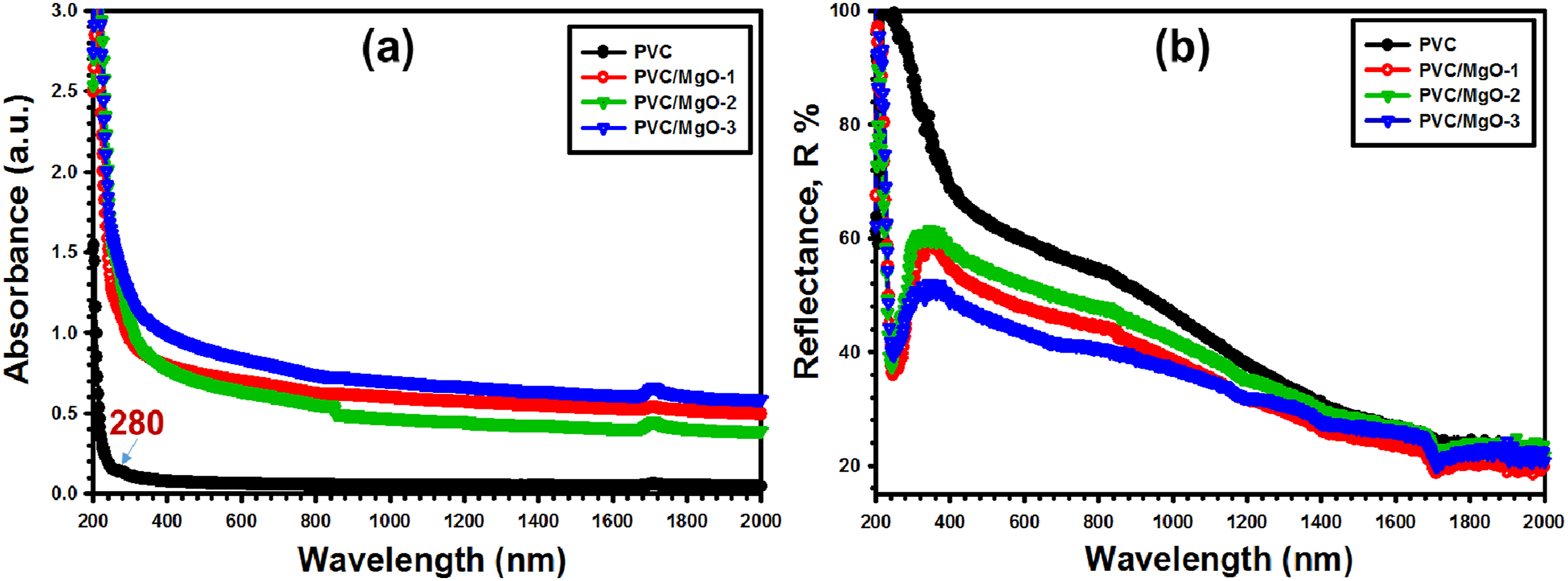
The Beer–Lambert law can be used in calculation the absorption coefficient (α) from values of absorbance (A) as the following
39
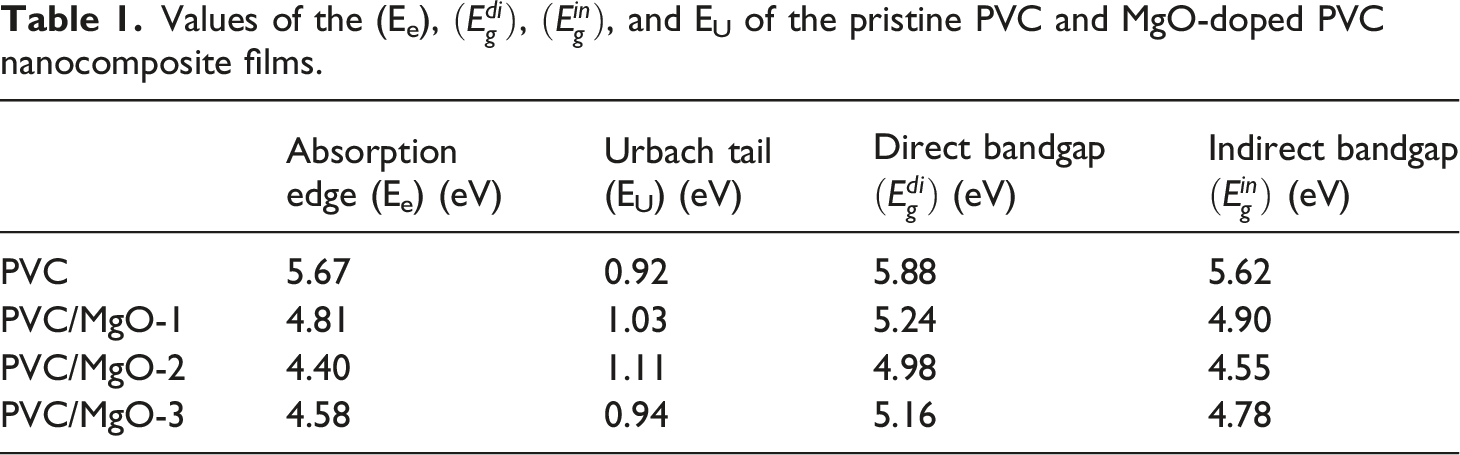
: (a) Absorption coefficient (α) as a function of photon energy (E) and (b) ln(α) versus photon energy for the pristine PVC and PVC/MgO nanocomposite films. Values of the (Ee), 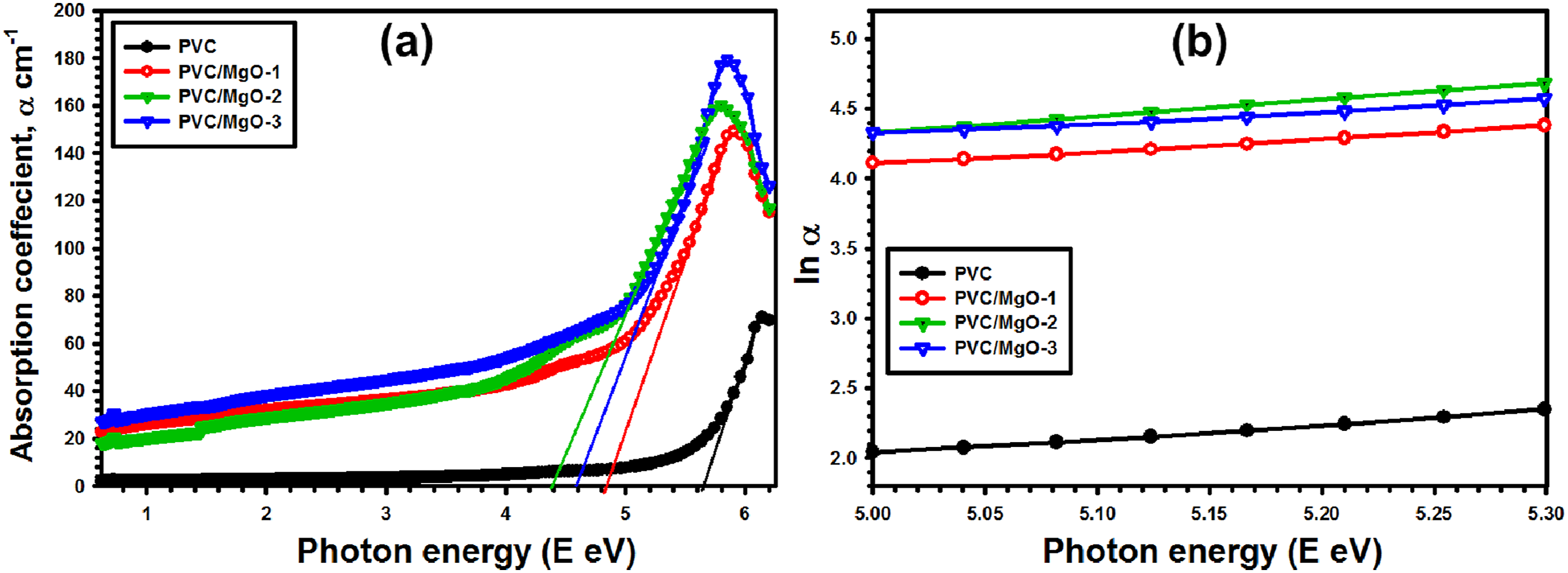

The Urbach energy is used to determine the increase or decrease in defect states and structural disorder within the band gap after the incorporation of nanofillers. Figure 6(a) presents the variation of (ln α) with photon energy (hν) for the pristine and MgO-loaded PVC films, from which the Urbach energy (EU) can be determined using the following expression
40
:
Therefore, Urbach energy values were extrapolated of all films from the inverse slope and were summarized in Table1. The Urbach energy of pristine PVC was found to be 0.92 eV, which increased to 1.03 and 1.11 eV after insertion MgO-1and MgO-2, suggesting the formation of additional localized states and increased structural disorder within the PVC matrix. However, a slight decrease to 0.94 eV was observed for the PVC/MgO-3 film owing to the partial aggregation of MgO nanoparticles at higher loading levels, reducing their effectiveness in creating localized defect states. The increase in Urbach energy confirms the polymer–nanoparticle interfacial interactions, which increases the chain mobility, decreasing the packing in localized regions. 40 This behavior also indicates a reduction in the band gap of PVC upon the addition of MgO nanoparticles, optimizing its performance for photonic and UV-protective applications. Comparable increases in Urbach energy with higher oxide content have been observed in PVC-based nanocomposites and other polymer–metal oxide systems.34,41 Comparable behavior has been noticed in PVC/ZnFe2O4 nanocomposites, in which EU increased from 0.82 eV for pristine PVC to 2.04 eV upon the addition of ZnFe2O4 NPs. 42
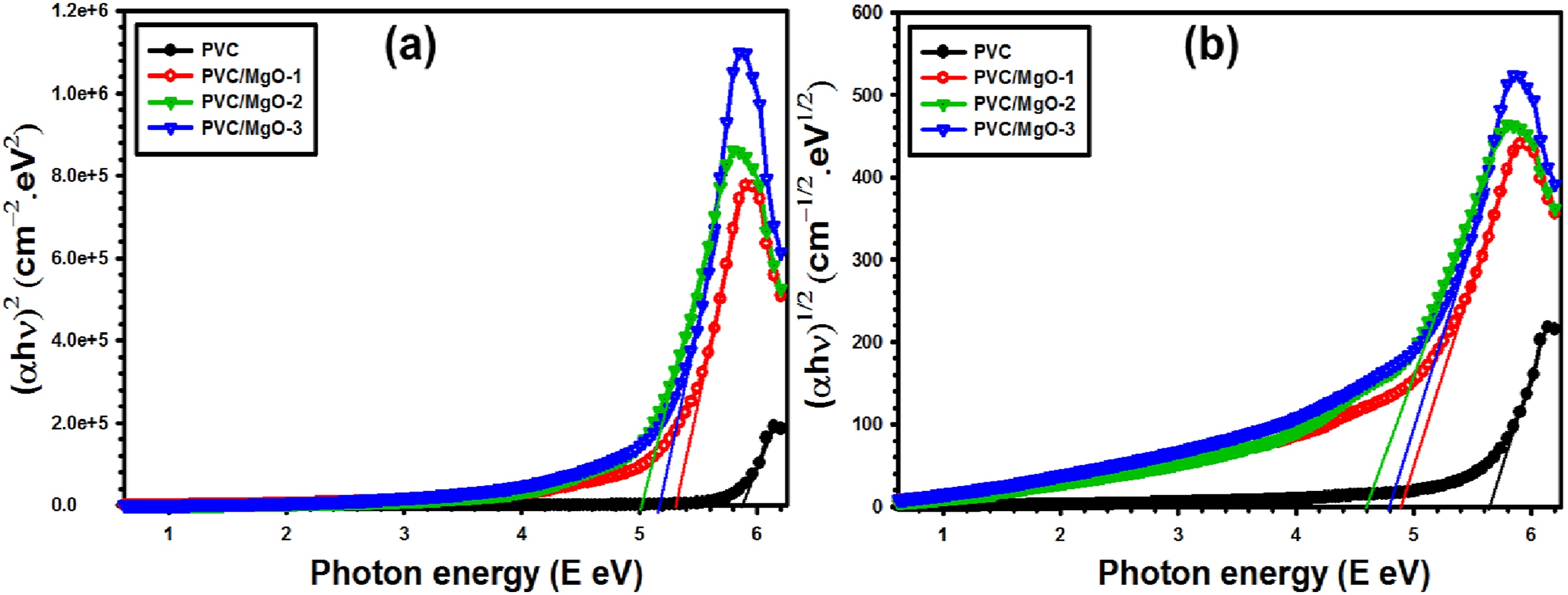
The optical bandgap energy (Eopt) is utilized to determine the energy required for electronic excitation and is therefore central to evaluating UV-shielding and photonic performance. The optical band gap can be estimated using the Tauc formalism
43
: (a) Direct and (b) indirect band gaps of the pristine PVC and PVC/MgO nanocomposite films at various MgO loadings.
The extinction coefficient is used to identify the attenuation of electromagnetic waves within the studied films as a result of absorption and scattering processes. The extinction coefficient (K) can be given from the following expression
47
:
Figure 8(a) presents the extinction coefficient spectra of the pristine and doped films. The pristine PVC exhibits extremely low values across the visible–NIR region, consistent with its weak intrinsic absorption and wide optical band gap. For the doped films, the MgO incorporation leads to a systematic increase in values of the extinction coefficient over the entire investigated wavelength range. The enhancement becomes more pronounced as the MgO loading increases from PVC/MgO-1 to PVC/MgO-3, owing to the rise in localized states that facilitate photon-assisted transitions and promote absorption. This increase is indictor for the stronger light–matter interaction that introduced by MgO nanoparticles. Additionally, determining the refractive index (n) of the investigated films is essential for the design of optoelectronics and photonic device. Based on the reflectance data and the extinction coefficient (K), the refractive index (n) can be fixed using Fresnel’s formula
48
: (a) Extinction coefficient (k) and (b) refractive index (n) versus wavelength for the pristine PVC and PVC/MgO nanocomposite films at various MgO loadings.
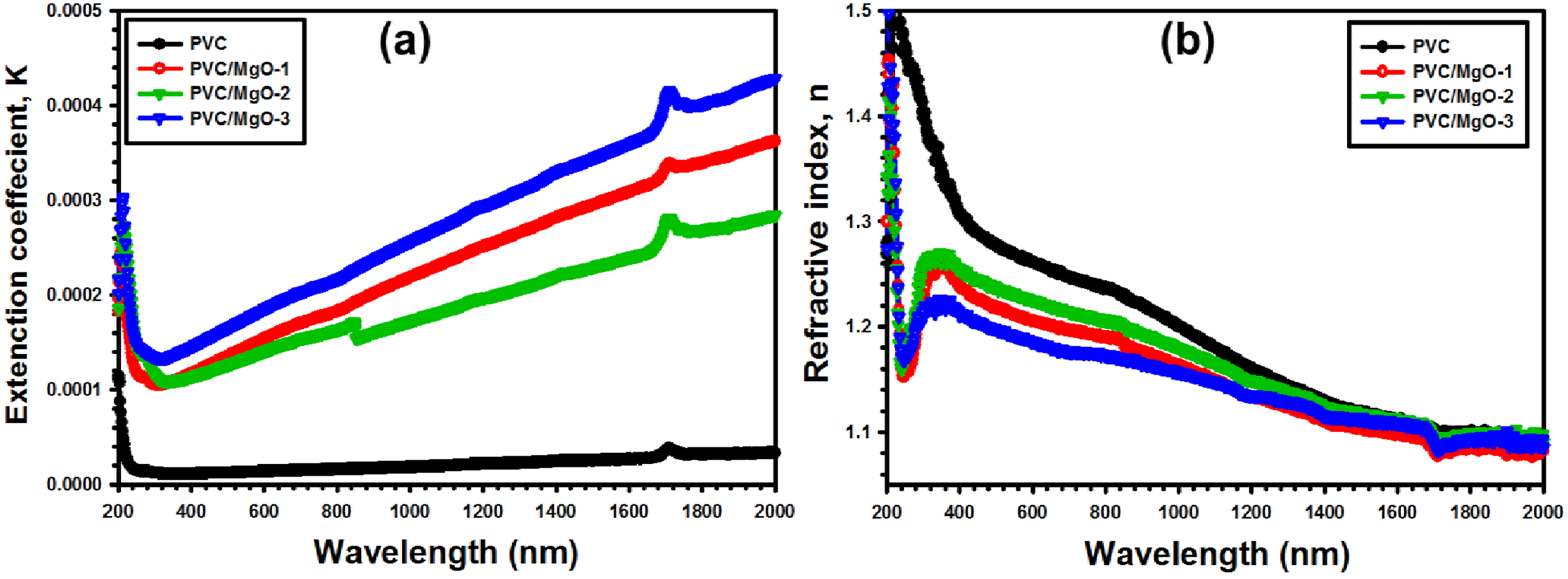
Figure 8(b) displays the variation in refractive index as a function of wavelength of the pristine and MgO-loaded films. This figure indicates that the refractive index of both pristine and loaded films decreases as the wavelength increases, becoming constant at larger wavelengths. The spectra also exhibit normal dispersion behavior at wavelengths greater than 400 nm. In addition, the pristine PVC shows the highest refractive index values, which decrease progressively with increasing nanofiller concentration. For example, at wavelength ∼300 nm, the refractive index of the pristine PVC is 1.41, decreases to 1.25, 1.22, and 1.20 of the PVC/MgO-1, PVC/MgO-2, and PVC/MgO-3, respectively. The observed decrease in refractive index can be attributed to the incorporation of MgO nanoparticles, which introduces interfacial regions and defect states, reducing the macroscopic polarization that governs the refractive index. 49 This finding suggests that MgO-loaded PVC films can function effectively as cladding layers in optical fibers, waveguides, and photonic sensor applications. This trend is consistent with previous studies on PVC-based composites reinforced with PS and silica, which also showed a reduction in refractive index upon filler addition. 50
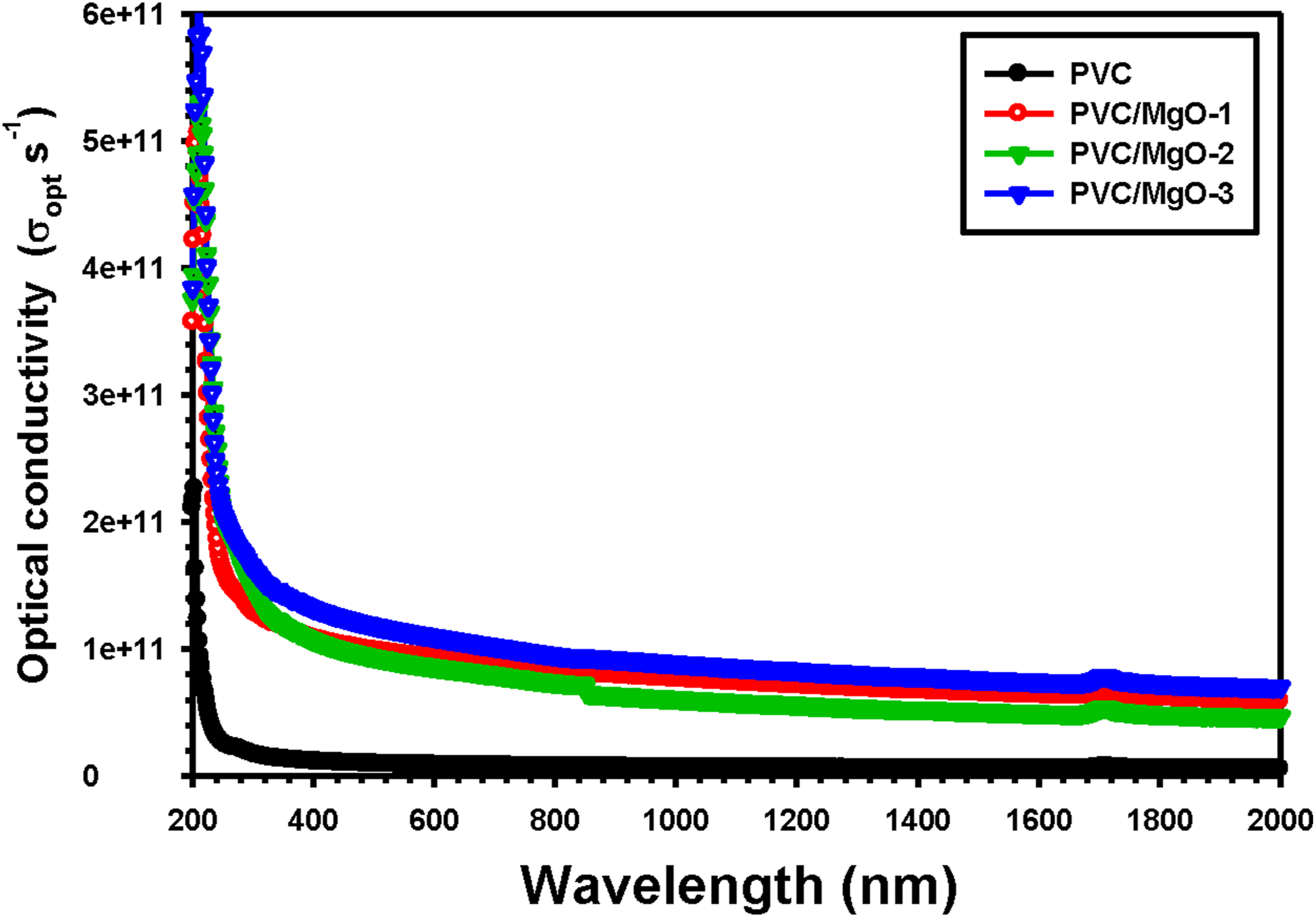
The optical conductivity (σopt) is used to identify the photon-assisted charge transport in polymeric composite system, which could be calculated from the absorption coefficient (α) and refractive index (n) using the well-known relation
51
: The optical conductivity (σopt) for the pristine PVC and PVC/MgO nanocomposite films.
The real (εr) and imaginary (εi) parts of the optical dielectric constant describe how a material interacts with electromagnetic radiation. Specifically, εr represents the reduction in the speed of light within the medium, while εi corresponds to the energy absorption from the electric field due to dipole oscillations. Both εr and εi can be determined from the values of the refractive index and the extinction coefficient using the following relations
53
:

Figure 10(a) shows the relation between εr versus λ of the pristine PVC and PVC/MgO nanocomposite films. It can be seen that the pristine and loaded films have the highest εᵣ values across the UV–visible region, which followed by a gradual decline toward larger wavelengths. This trend reflects the normal dispersion of the bound-electron polarization in the polymer system. Moreover, this figure also shows that the increase in contents of MgO nanoparticles leads to decreasing the values of εr. This reduction can be interpreted through the polarization considerations. In which, the MgO addition presents interfacial heterogeneity that disrupts the dipolar in PVC, weakening the polarization and therefore the real dielectric.
53
Figure 10(b) reveals the variation of εr as a function of λ. A clear increase in εᵢ values were observed after insertion the MgO nanofiller. This trend supports the previously observed increase in absorbance, indicating that it arises from actual electronic energy dissipation rather than simply being a result of surface scattering effects. These results show a reduction in εᵣ, which improves the optical coupling efficiency within photonic layers. At the same time, the increase in εᵢ leads to stronger attenuation of high-energy photons, thereby enhancing the material’s UV-shielding capability. (a) Real dielectric constant (εᵣ) and (b) imaginary dielectric constant (εᵢ) as a function of wavelength for the pristine PVC and PVC/MgO nanocomposite films.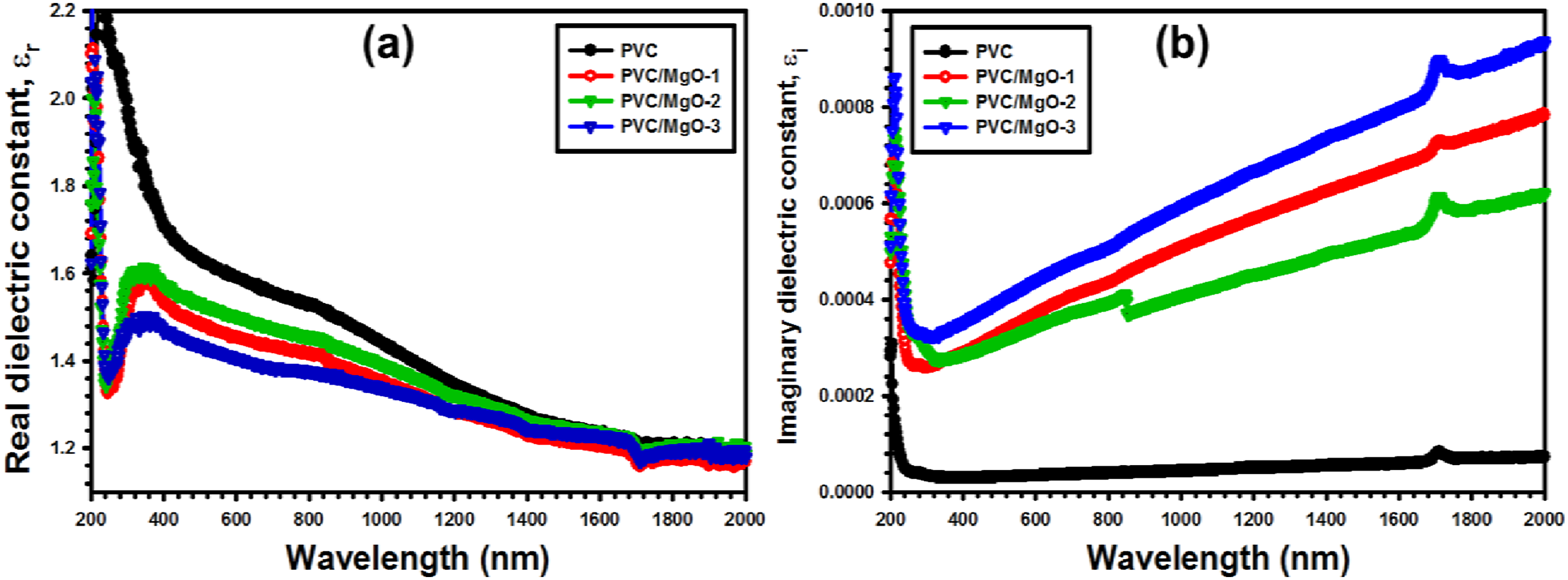
The volume energy loss function (VELF) and surface energy loss function (SELF) represent the material’s ability to dissipate electromagnetic energy through bulk and near-surface electronic excitations, respectively. These functions can be determined from the real and imaginary parts of the dielectric function as follows
54
:

Figure 11(a) and (b) illustrates the variation of the volume energy loss function (VELF) and surface energy loss function (SELF) with photon energy for both pristine PVC and PVC/MgO nanocomposite films. These figures display that VELF values remain higher than the SELF values for both pristine and loaded films, indicating that bulk polarization and electronic losses dominate over surface-related losses in all samples. In addition, these figure also appear an increase in both VELF and SELF with introducing the MgO nanoparticles. These increase in VELF and SELF with MgO loading indicates increased the electronic active centers and stronger UV light–matter interaction, enhancing UV-shielding and photonics performance. The variations in (a) VELF and (b) SELF for the pristine PVC and PVC/MgO nanocomposite films.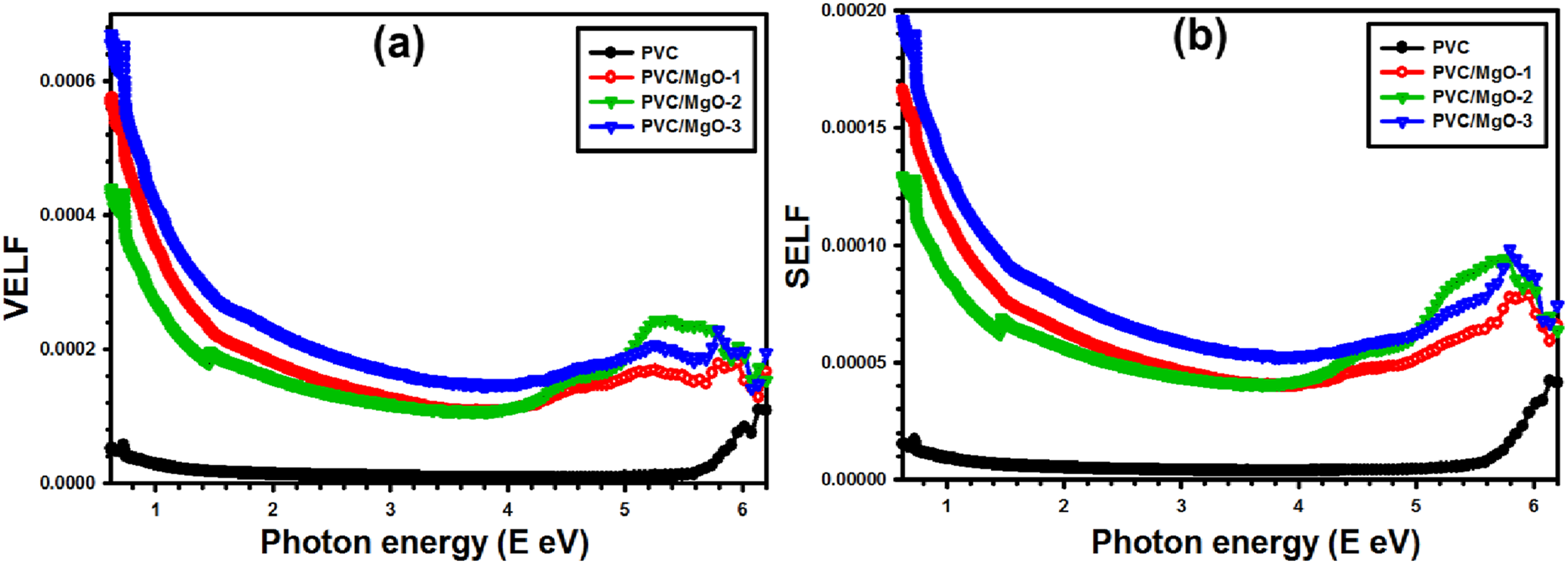
Determining key optical parameters, including the dispersion energy (Ed), oscillator energy (Eo), plasma resonance frequency (ωp), long-wavelength refractive index (n∞), and average interband oscillator wavelength (λ0) is essential for the design and optimization of optical and photonic applications. For calculating the Ed and Eo, the refractive index (n) in dispersion region can be given using the single-oscillator Wemple–DiDomenico (WDD) model as follow
55
: (a) Plot of (n2 − 1)−1 versus (hν)2 and (b) the real dielectric constant (εᵣ) versus λ2 for the pristine PVC and PVC/MgO nanocomposite films. Values of n
o
, f, E
d
, E
o
, ε
l
, W
P
, and N/m* of the PVC and MgO-doped PVC films.


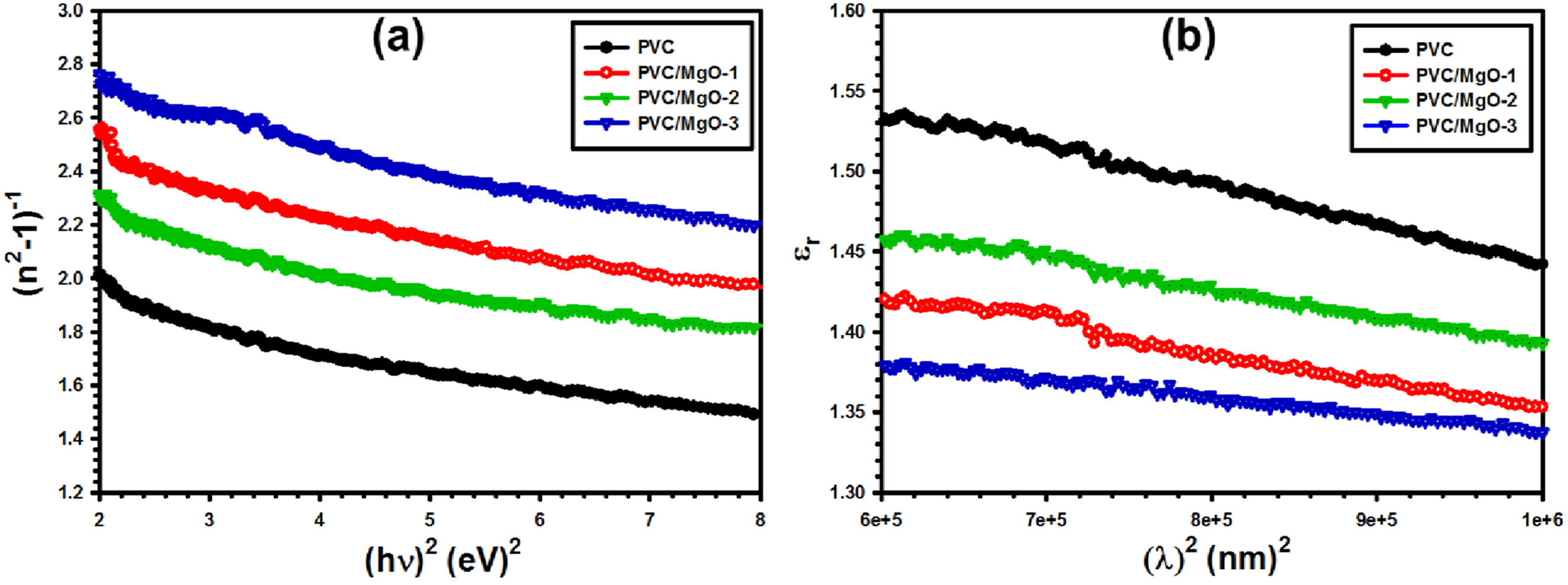
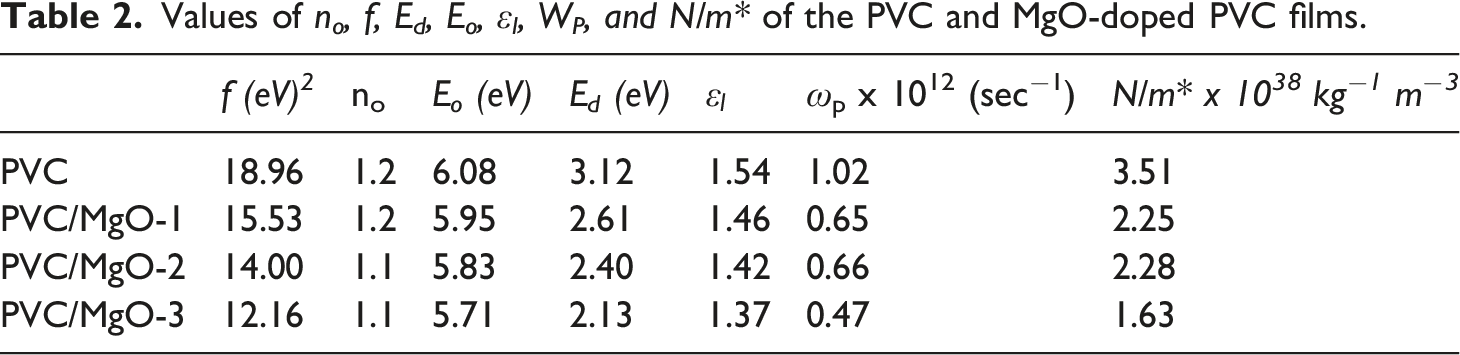
The calculated values of f and no for both the pristine PVC and MgO-doped PVC films are presented in Table 2. It is clearly observed that the oscillation strength significantly decreases from 18.97 eV2 for the pristine PVC film to 12.16 eV2 after addition the MgO-3. This clear decrease suggests that adding MgO nanoparticles significantly alters the structure of the PVC matrix. The results also reveal the decrease in static refractive index from 1.23 to 1.17 after incorporation the MgO-3 nanoparticle.
The real dielectric constant in dispersion region can be calculated from the dispersion expression
57
:

It is found that ωp value also decreases as the concentration of MgO increases. In which, ωp respectively increased from 1.02 × 10¹² sec−1 for the pristine PVC to 0.65 × 10¹², 0.66 × 10¹² and 0.47 × 10¹² sec−1 for the PVC/MgO-1, PVC/MgO-2, and PVC/MgO-3 films. The simultaneous reduction in these parameters reflects a shift toward a more dielectric and optically tunable material, making it well-suited for photonic applications such as waveguides, sensors, and coatings, as well as efficient UV-shielding systems.
Additional optical parameters, including the long-wavelength refractive index (n∞), the average dipole oscillator strength (So), and the average oscillator wavelength (λo) can be evaluated using the corresponding relations
58
:

From these equations and plotting (n2−1)−1 versus λ−2 (Figure 13(a)), n∞ and λo are extracted from the slope and intercept of the linear region, respectively (see Table 3). The incorporation of MgO nanoparticles into the PVC matrix leads to noticeable changes in values of n∞, λo, and So. In which, n∞, λo, and So were extracted to be 1.23, 235.2 nm, and 9.4 × 10⁻⁶ nm−2 of the pristine PVC, which decreased to 1.16, 210.8 nm, and 8.0 × 10⁻⁶ nm−2 of the PVC/MgO-3 films, respectively. This reduction in these parameters also reflects improved the optical tuning, allowing the material to maintain visible transparency while enhancing UV-blocking capability and ensuring better performance in photonic devices.
2
(a) Plot of (n2 − 1)−1 versus λ−2 and (b) εi versus λ3 for the pristine PVC and PVC/MgO nanocomposite films. n
∞
, S
o
, λ
o
for the pristine PVC and MgO-loaded PVC films. The relaxation time (τ) can be calculated from the following equation
59
: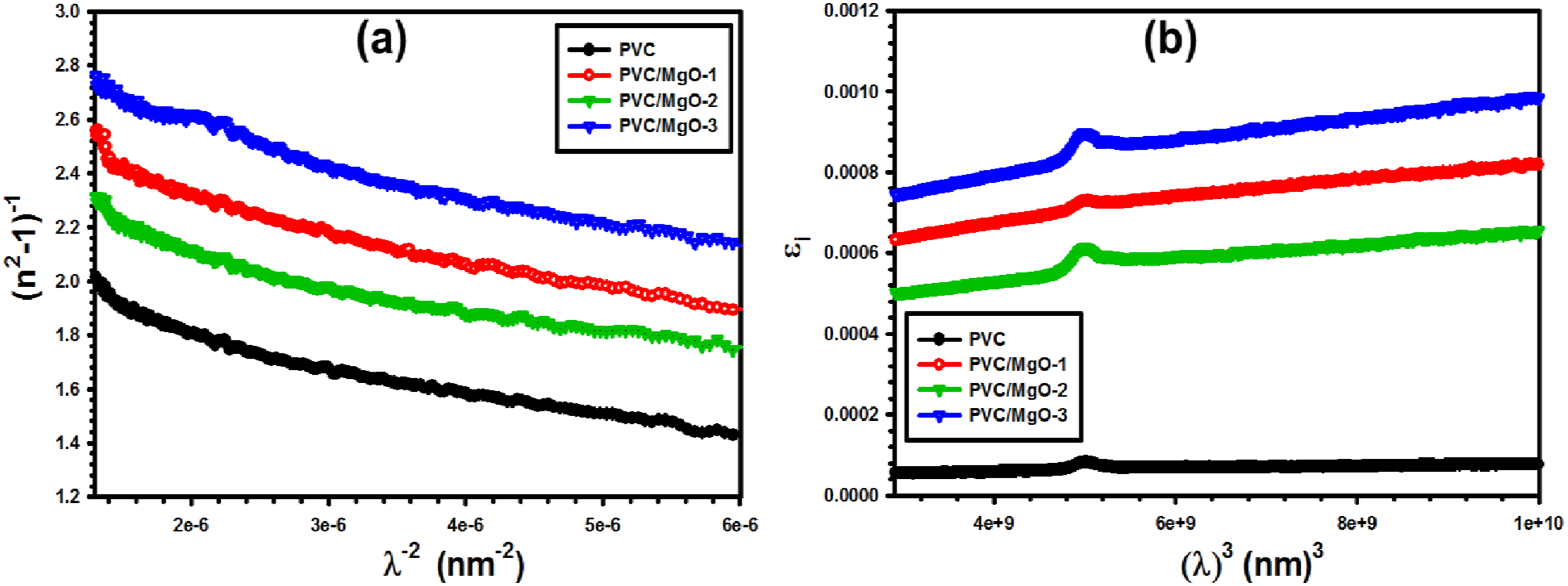
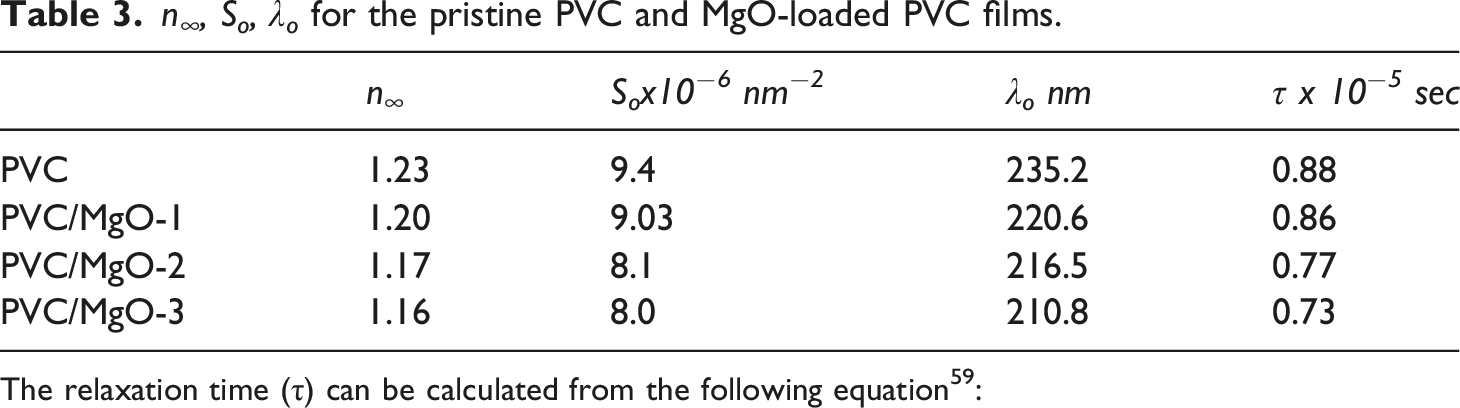

Using this equation and plotting the correlation between εi versus λ3 (Figure 13(b)), the relaxation time can be derived from the slop of the linear portions. The relaxation time value for the pristine PVC was decreased from 0.88 × 10⁻⁵ sec to 0.86 × 10⁻⁵, 0.77 × 10⁻⁵, and 0.73 × 10⁻⁵ sec PVC/MgO-1, PVC/MgO-2, and PVC/MgO-3 films, respectively, as scheduled in Table 3. This decrease suggests a faster dissipation of energy within the MgO-doped PVC films, which improves the optical stability, enables quicker response to light, and enhances UV absorption. As a result, the films become more effective for use in photonic devices and UV-shielding applications.
Understanding the nonlinear optical behavior of polymer nanocomposites is essential for designing advanced photonic devices, especially in applications such as optical switching, optical fibers, and waveguides. This nonlinear response is governed by the material polarization (P), which is typically represented as a power series expansion with respect to the applied electric field (E):


The spectral variations of χ(1) and χ(3) with wavelength for the pristine PVC and PVC/MgO nanocomposite films are illustrated in Figure 14(a) and (b), respectively. For all films, as the wavelength increases χ(1) and χ(3) gradually decreases due to the reduction in photon energy and the corresponding decrease in electronic transition probability. These figures also appear decreasing values of χ(1) and χ(3) across the entire spectral range upon incorporation of MgO nanoparticles. For instance, at 300 nm, the pristine PVC exhibits χ(1) and χ(3) of 0.077 and 6.09 × 10⁻¹⁵ esu, respectively. Upon incorporation of MgO nanoparticles, these values decrease markedly, reaching 0.04 and 4.37 × 10⁻¹⁶ esu for the PVC/MgO-3 nanocomposite film. This behavior originates from the change in the electronic polarizability of the nanocomposite films. Additionally, the nonlinear refractive index (n(2)) can be computed using the following expression
60
:
where n0 is the linear refractive index. The variation in nonlinear refractive index with wavelength is illustrated in Figure 14(c). It is noticed that the spectral trend of n2 closely follows that of χ(3). Moreover, the value of n2 decreases after insertion MgO nanoparticles within the PVC matrix. In which, n2 decreased from 1.62 × 10⁻¹³ esu of the PVC to 1.34 × 10⁻¹⁴, 2.34 × 10⁻¹⁴, 8.9 × 10⁻¹⁵ esu for the PVC/MgO-1, PVC/MgO-2, and PVC/MgO-3 films at 300 nm. This reduction in nonlinear optical properties indicates a more stable, less intensity-dependent response, which is beneficial for optical fibers, waveguides, and cladding layers. Meanwhile, this reduction also reflects the changes in the electronic structure and the formation of additional absorption centers, which renders the doped films more effective at attenuating UV radiation. (a) Linear susceptibility χ(1), (b) third-order nonlinear susceptibility χ(3), and (c) nonlinear refractive index n2 for the pristine PVC and PVC/MgO films.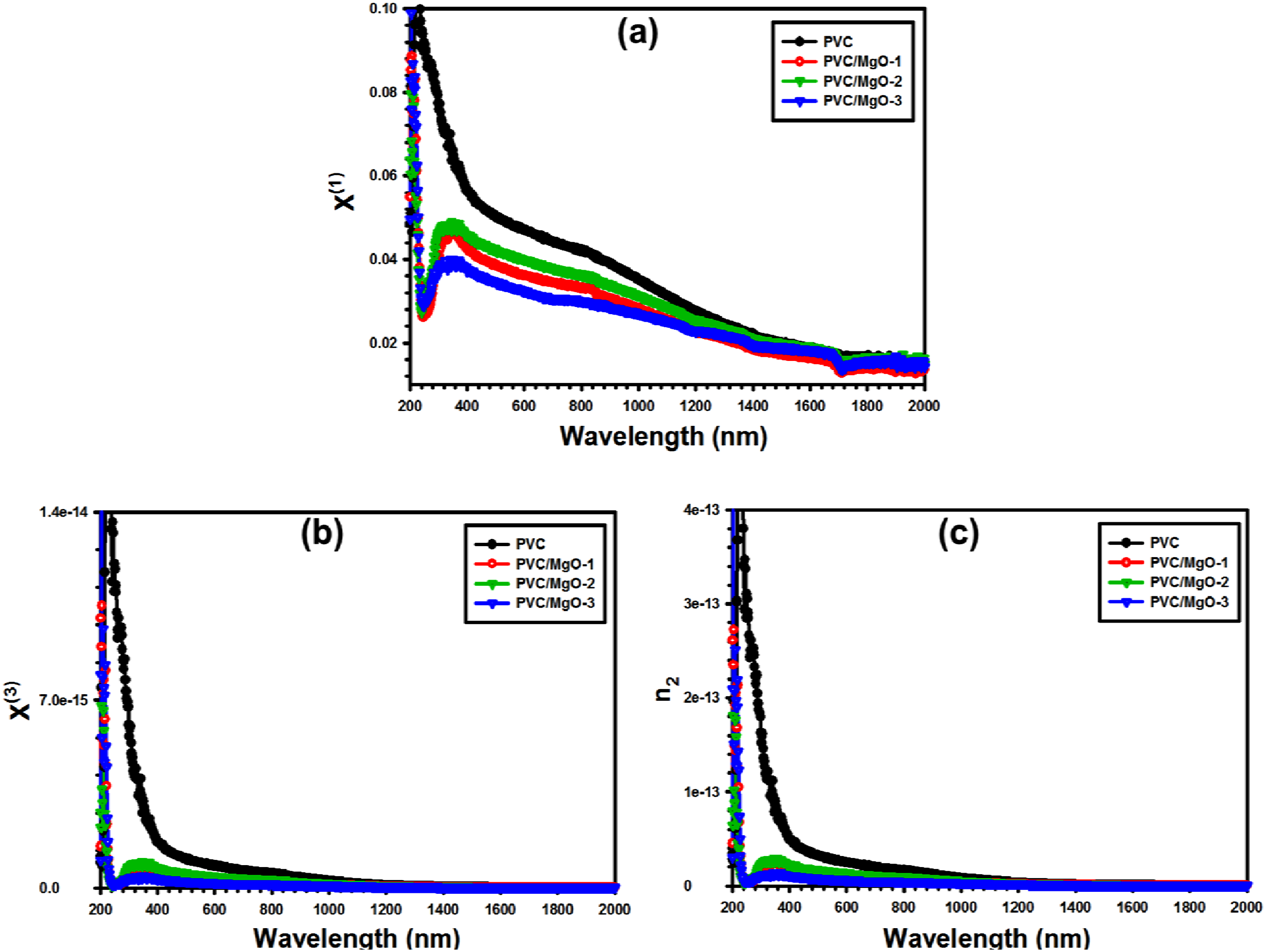
Conclusions
The successful incorporation of MgO nanoparticles into the PVC matrix was confirmed by EDX, FTIR, SEM, and TEM analyses. Optical investigations showed that MgO incorporation enhanced the light absorption, reduced the reflectance, decreased the direct and indirect band gaps from 5.88 to 5.62 eV to 4.98 and 4.57 eV, respectively, accompanied by an increase in Urbach energy. Meanwhile, the MgO incorporation significantly decreased the refractive index and dielectric behavior of PVC, confirming the photon–matter interactions. WDD parameters including, Ed, Eo, wp, N*/m, n∞, So, λo and τ also decreased with increasing MgO content, indicating modified electronic structure and faster energy dissipation. Additionally, nonlinear optical parameters (χ(1), χ(3), and n2) decreased from 0.077, 6.09 × 10⁻¹⁵, 1.62 × 10⁻¹³ esu of the PVC to 0.04 and 4.37 × 10⁻¹⁶, and 8.9 × 10⁻¹⁵ esu for the PVC/MgO-3 due to reducing the polarizability, respectively. These combined results confirm that MgO incorporation effectively tunable optical behavior and improved UV-light attenuation capability of the PVC, making them highly promising for UV-shielding and advanced photonic applications.
Footnotes
Acknowledgements
The authors extend their appreciation to the Deanship of Scientific Research at Northern Border University, Arar, KSA for funding this research work through the project number “NBU-FFR-2026-1072-02”.
Author contributions
Declaration of conflicting interests
The authors declared no potential conflicts of interest with respect to the research, authorship, and/or publication of this article.

Data Availability Statement
All data generated or analyzed during this study are included in this published article.