






Abstract
Introduction:
During ureteroscopic laser lithotripsy (URSL), unsafe elevations in ureteral temperature are thought to contribute to ureteral stricture formation. Cellular damage begins at 43°C, and proteins denature instantly at 60°C. Air bubbles may inadvertently migrate into the collecting system during URSL. The purpose of this study was to evaluate ureteral temperatures during simulated URSL in an air bubble with a holmium (Ho:YAG) and thulium fiber laser (TFL).
Methods:
BegoStone phantoms were positioned distal to the ureteropelvic junction in a model kidney and ureter submerged in a 35°C saline bath. A 7.5 Fr flexible ureteroscope was advanced to the stone, and continuous saline irrigation at 22°C was maintained at 15 mL/min. A needle thermocouple positioned 2 mm from the laser fiber tip monitored ureteral wall temperature. A 200 µm laser fiber was then advanced until it contacted the stone. The Ho:YAG and TFL were used in 5 trials each to ablate stones at 3, 10, and 20 W in saline and in a 3 mL air bubble.
Results:
In the control condition, neither laser exceeded 43°C at 3, 10, or 20 W. In an air bubble, ureteral temperatures exceeded 43°C after 1 second at 3 W for both TFL and Ho:YAG. At 10 W, the Ho:YAG exceeded 43°C after 1 second, while the TFL exceeded 60°C. The average temperature exceeded 60°C at 20 W for both lasers after 1 second. Both lasers generated much higher temperatures in an air bubble than in saline at all time points (p = 0.008), with maximum temperature exceeding 250°C for both lasers.
Conclusion:
In this benchtop model, laser activation in an air bubble for 1 second exceeded the thermal safety threshold at ≥ 3 W and risks protein denaturation at ≥ 20 W. This study highlights the importance of avoiding air bubbles during URSL to maintain safe ureteral temperatures. Further studies are needed to validate these findings in vivo.
Introduction
The prevalence of nephrolithiasis has been increasing in recent years, with a concomitant increase in ureteroscopic laser lithotripsy (URSL).1,2 During URSL, thermal effect from lasers likely secondary to unsafe elevations in ureteral temperature are related to ureteral stricture formation. 3 Previous research has shown that temperature rises with higher power settings, larger laser fiber sizes, and smaller volumes of fluid in which laser activation occurs.4,5 During ureteroscopy, the volume of fluid in the ureter is small, which portends greater risk of thermal injury compared to the kidney or bladder. 6 Thus, this has been an area of active research to help improve patient outcomes. Previous studies have shown that adequate irrigation, chilled irrigation, shorter laser activation cycles, and lower power settings can reduce thermal injury.7,8 Additionally, the thulium fiber laser (TFL) is now known to produce higher temperatures than the holmium:yttrium aluminum garnet laser (Ho:YAG), prompting extra caution when using the TFL. 9 There is no clear threshold for thermal injury in the current literature. Several studies have shown that proteins denature at 60°C using proteins in vitro, this has been used as a thermal damage limit previously in urologic research, although this is not specific to the urinary tract. 10 In cell culture, a breakpoint in the rate of cell death was detected around 43°C, so this too has been used as a thermal damage limit in urologic studies.11,12 Likely the most specific measurement for this area of research uses the cumulative equivalent minutes at 43°C (CEM43), which converts temperature over time into a single number (the CEM43 or thermal isoeffect dose), which can quantify thermal dose exposure.11,13 Prior research has shown that CEM43 >70 minutes has caused significant injury (including coagulative necrosis) specifically to the kidney; they also showed acute and minor damage was observed even at CEM43 <20 minutes.11,14 Despite this, there is still no defined safe thermal dose for the human urinary tract, but these thresholds are used in research evaluating the thermal impact of laser lithotripsy. Based on the aforementioned research, we can presume that temperatures reaching or exceeding 43°C are unsafe and temperatures reaching or exceeding 60°C and a CEM43 > 70 cause irreversible thermal injury.
Air bubbles may be inadvertently introduced into the collecting system during URSL. There has been no investigation of the safety of laser lithotripsy in an air bubble. This benchtop study evaluates ureteral temperatures and thermal dose during simulated URSL in an air bubble with a Ho:YAG and TFL.
Materials and Methods
A computed tomography scan of a kidney was converted into a three-dimensional (3D) model of a kidney using 3D slicer 5.2.2 (Kitware, NY), and a ureter was created using Autodesk Fusion 360 (Autodesk, San Francisco, CA). These models were used to print molds using an Ultimaker 3 Extended (Ultimaker, Geldermalsen, Netherlands) 3D printer. Liquid Dragon Skin™ 20 silicone (Smooth-On, Inc., Macungie, PA) was used in conjunction with the molds to create the model kidney and ureter. Identical, spherical, 10 mm calcium oxalate monohydrate consistency BegoStone phantoms (Bego GmbH, Germany) were created and positioned 1 cm distal to the ureteropelvic junction to simulate a ureteral stone. The model with a ureteral stone was submerged in a 35°C saline bath using an electric immersion heater (Pong-Dang, Gyeonggi-do, South Korea) to simulate ureteral temperature during an endoscopic surgical procedure (Fig. 1). A 7.5 Fr single-use digital flexible ureteroscope (Pusen Medical Technology, Zhuhai, China) was introduced into the model ureter and advanced up to the stone. A 3 mL air bubble was introduced through the ureteroscope for the air bubble arm of the study; the bubble remained in a stable position during irrigation and laser lithotripsy. Continuous saline irrigation at room temperature (22°C) was maintained at 15 mL/min using the Thermedx FluidSmart System (Thermedx LLC, Solon, OH). A 200 µm laser fiber was advanced through the scope until the laser fiber contacted the stone. A T-29X Micro Needle Insect Type T Thermocouple Probe (ThermoWorks, American Fork, UT) was inserted through the ureter wall perpendicular to the laser fiber at the level where the fiber contacted the stone and positioned 2 mm lateral to the laser fiber tip (Fig. 1C). The laser fiber was positioned in saline during the saline trials and air during the air bubble trials. The thermocouple response time is 1 second in liquid, with an accuracy of ± 0.1°C. A digital data acquisition system, including a MAX31855 T-Type Thermocouple Sensor breakout board (ThermoWorks, American Fork, UT), recorded temperature data with readings every 6.0 seconds. The Empower H100 Ho:YAG laser (Olympus, Center Valley, PA) and SOLTIVE™ Premium SuperPulsed TFL laser (Olympus, Center Valley, PA) were each used with their respective 200 µm laser fibers to ablate stones for 7 seconds at three different power settings: 3 W (0.3 J/10 Hz), 10 W (1 J/10 Hz), and 20 W (1 J/20 Hz) in saline (as a control) and within a 3 mL air bubble. Both lasers used the manufacturer’s preset short pulse width/duration setting for all powers tested. The model was allowed to return to baseline temperature, and the saline in the model was replaced between each trial. For the saline arm, temperature was recorded at baseline (0 seconds, pre-laser activation), after 6 seconds of laser activation, and after 12 seconds of laser activation. For the air bubble arm, temperature was recorded at baseline (0 seconds, pre-laser activation), after 1 second of laser activation, and after 7 seconds of laser activation. Five measurements were taken for each unique combination of laser type (TFL, Ho:YAG), power setting (3, 10, and 20 W), and medium (saline, air bubble) at the above time points for a total of 180 measurements.
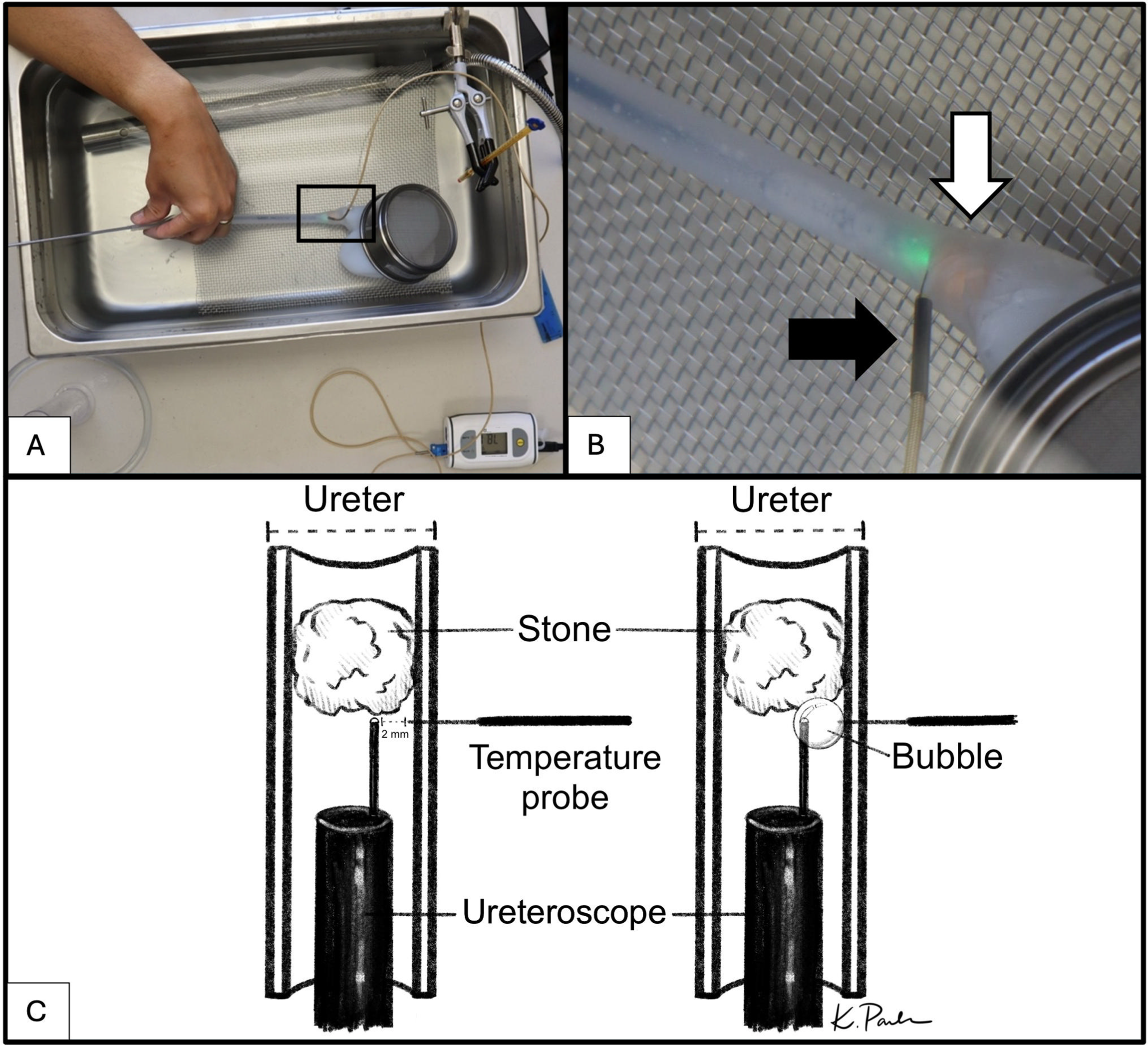
Model kidney and ureter experimental setup.
Thermal dose exposure was calculated using the CEM43 equations established by Sapareto and Dewey. 13 Unsafe temperature was defined as >43°C, and the threshold for thermal injury was defined as CEM43 >70 minutes or temperature >60°C. Data analysis was conducted using SPSS Statistics (IBM, Chicago, IL). Statistical significance was assessed using the Mann–Whitney U tests with Bonferroni correction for multiple comparisons. The Mann–Whitney U tests were performed to compare temperature and CEM43 values between saline control and 1 second air bubble activation for each laser at each power setting. With six comparisons performed, the corrected significance level was set at p < 0.0083 (α = 0.05/6).
Results
Temperature profiles were substantially different between the saline control and air bubble groups across all tested power settings (Table 1). Average temperatures in the saline control never exceeded the 43°C safety threshold for either laser at any power setting. At the highest power setting (20 W) after 12 seconds of laser activation, temperatures only reached 38.6°C for TFL and 37.9°C for Ho:YAG. In contrast, laser activation within air bubbles resulted in unsafe temperatures across all tested conditions. At one second of laser activation in an air bubble, the average temperature exceeded the 43°C safety threshold for both lasers at all power settings. Even at the lowest power setting (3 W), mean temperatures were 44.1°C for TFL and 45.0°C for Ho:YAG. At one second of laser activation in an air bubble, average temperature exceeded the 60°C thermal injury threshold at 10 W and 20 W for TFL and at 20 W for Ho:YAG. At 20 W, the maximum temperatures recorded were 98.4°C for TFL and 92.8°C for Ho:YAG at 1 second and 257.2°C for TFL and 278.2°C for Ho:YAG at 7 seconds. Temperature increase in air bubbles demonstrated both power-dependent and time-dependent patterns (Fig. 2), with 1 second of laser activation producing an average of 68% increase in temperature at 3 W across both lasers, 82% at 10 W, and 113% at 20 W. Continued laser activation for 7 seconds resulted in even more dramatic increases of 139% at 3 W, 165% at 10 W, and 394% at 20 W.
Average Temperature by Laser Type, Power, and Activation Time
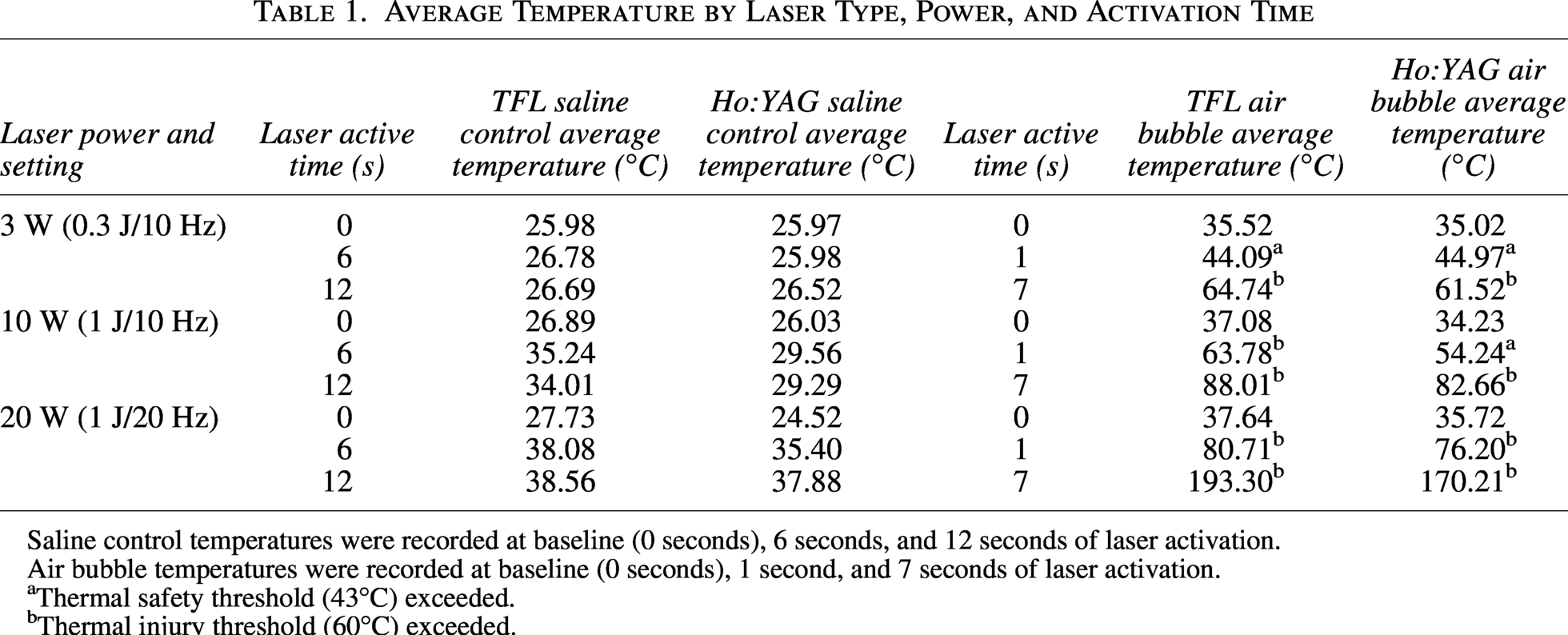
Saline control temperatures were recorded at baseline (0 seconds), 6 seconds, and 12 seconds of laser activation.
Air bubble temperatures were recorded at baseline (0 seconds), 1 second, and 7 seconds of laser activation.
Thermal safety threshold (43°C) exceeded.
Thermal injury threshold (60°C) exceeded.
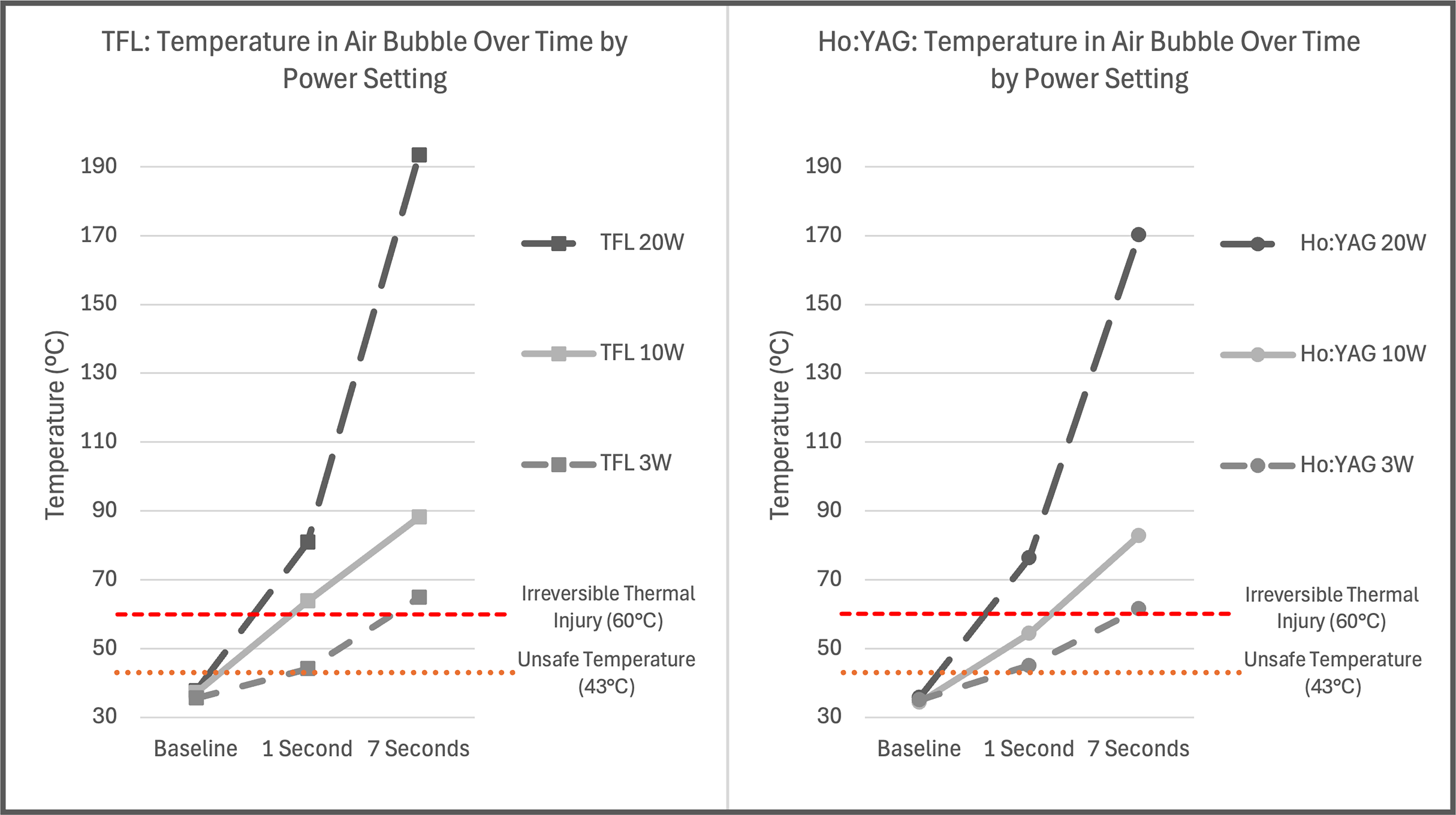
Laser temperature profiles by power setting and time. Temperature measurements for TFL and Ho:YAG laser activation in an air bubble at three power settings (3, 10, and 20 W) over time (baseline without laser activation, after 1 second of laser activation, and after 7 seconds of laser activation). Unsafe temperature threshold (43°C) and irreversible thermal injury threshold (60°C) are shown. Both laser types demonstrate power-dependent and time-dependent increases in temperature.
In addition to temperature measurements, CEM43 values were calculated to account for both the magnitude of temperature and the length of exposure. CEM43 of saline controls remained well below the thermal damage threshold (CEM43 < 70 minutes) for both lasers across all power settings. At 1 second, air bubble CEM43 exceeded the thermal damage threshold at 10 W for the TFL alone and 20 W for both lasers. At 7 seconds, air bubble CEM43 values exceeded the thermal damage threshold at all power settings for both lasers (Table 2).
Average CEM43 by Laser Type, Power, and Activation Time
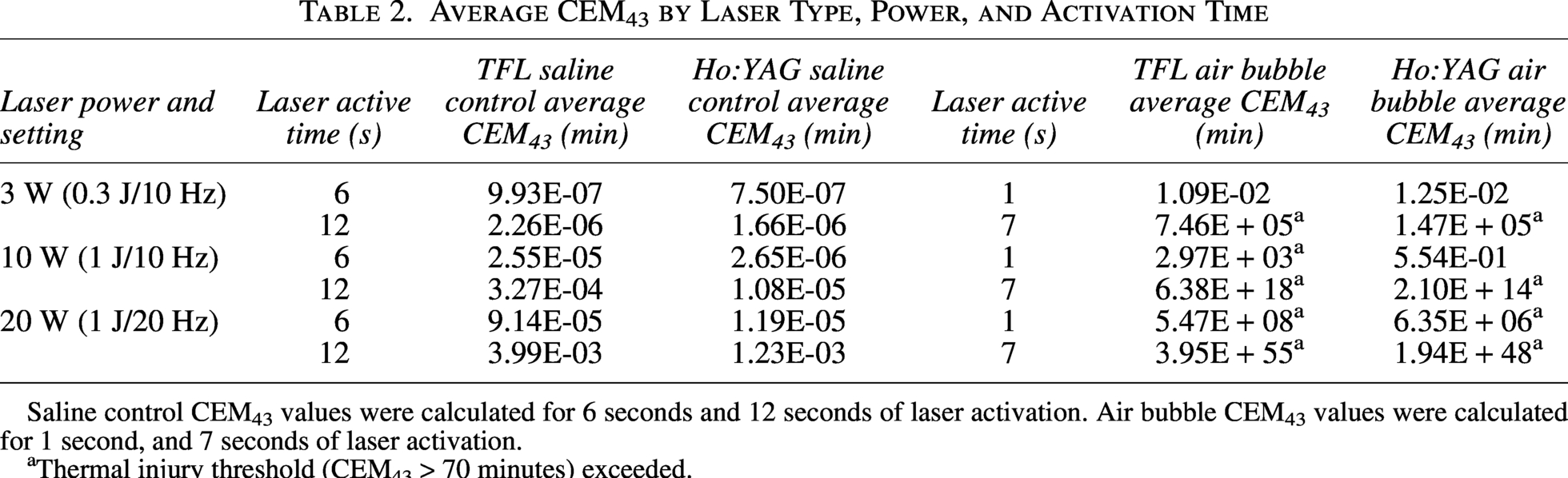
Saline control CEM43 values were calculated for 6 seconds and 12 seconds of laser activation. Air bubble CEM43 values were calculated for 1 second, and 7 seconds of laser activation.
Thermal injury threshold (CEM43 > 70 minutes) exceeded.
Comparisons demonstrated statistically significant temperature and CEM43 increases for 1-second air bubble activation compared to saline controls for both lasers across all power settings (p = 0.008 for all comparisons) with complete statistical separation between conditions (U = 25.0 for all comparisons) (Table 3).
Statistical Analysis of Saline and Air Bubble Temperature and CEM43
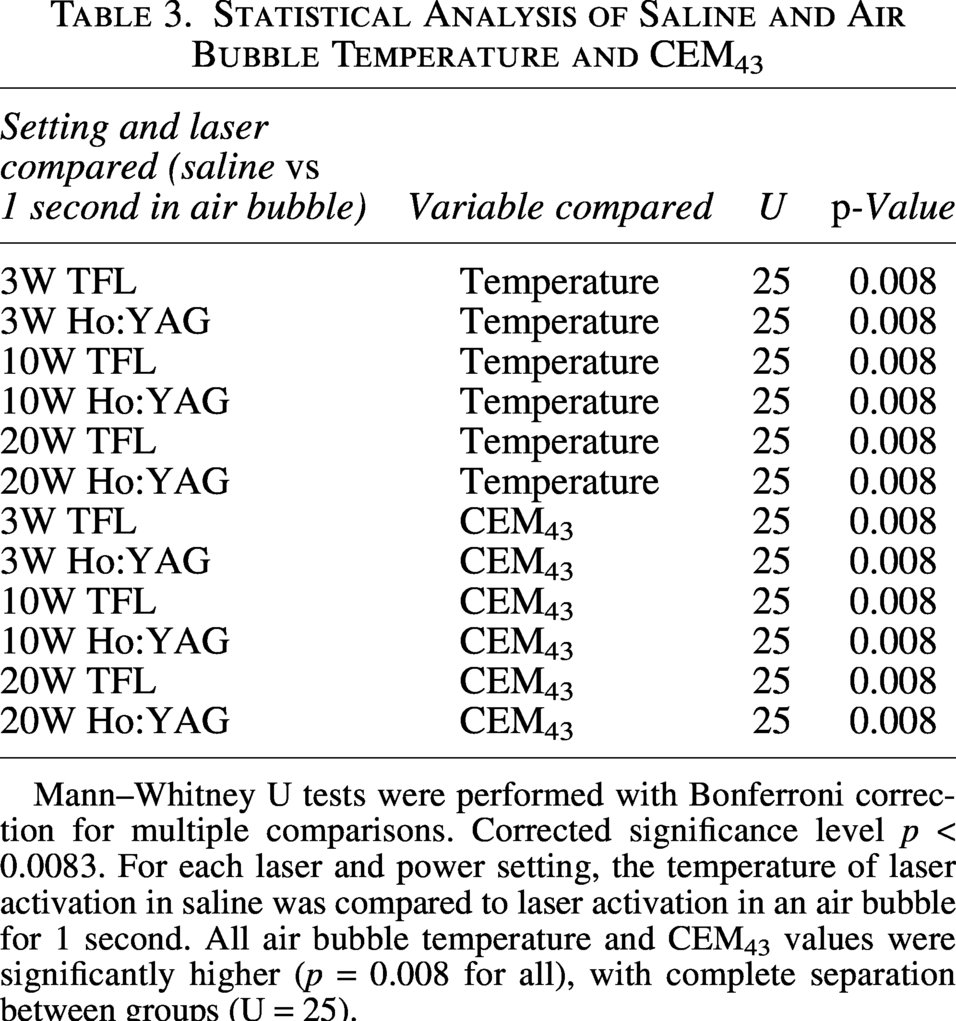
Mann–Whitney U tests were performed with Bonferroni correction for multiple comparisons. Corrected significance level p < 0.0083. For each laser and power setting, the temperature of laser activation in saline was compared to laser activation in an air bubble for 1 second. All air bubble temperature and CEM43 values were significantly higher (p = 0.008 for all), with complete separation between groups (U = 25).
Discussion
The findings of this study demonstrate that laser activation within air bubbles poses immediate thermal risk during URSL, with unsafe temperatures occurring at all tested power settings, regardless of laser type or activation duration. This study represents the first investigation of thermal safety during laser lithotripsy in an air bubble, revealing a previously unrecognized and potentially serious intraoperative hazard.
Looking at the data from the saline controls alone, the average temperature never exceeded the 43°C safety threshold with up to 12 seconds of laser activation for either laser at any power setting. This demonstrates what is known, that laser lithotripsy in saline with irrigation is generally safe, with faster irrigation and lower power settings providing safer thermal profiles.7,8
In stark contrast, laser activation for even 1 second in an air bubble exceeded the thermal safety threshold for both lasers at all power settings. At the lowest power setting (3 W), both TFL and Ho:YAG exceeded the 43°C safety threshold at 1 second and the 60°C thermal injury threshold at 7 seconds in an air bubble. At 20 W, both lasers exceeded the 60°C thermal injury threshold at 1 second in an air bubble. At all power settings, temperature readings were significantly higher at 1 second in air compared to saline with complete separation between groups. Even at a minimal clinical power of 3 W, the findings are concerning, suggesting that no safe operating parameters exist for laser activation within air bubbles. In addition, the maximum recorded temperatures are alarming. The maximum temperature recorded after 1 second of laser activation at 20 W was near the boiling point of normal saline at 98°C, and the maximum temperature after 7 seconds at 20 W was comparable to temperatures reached by electrocautery devices at 278°C. 15 This suggests that even brief, inadvertent laser activation in an air bubble could have devastating consequences for the ureter.
The CEM43 thermal dose analysis provides a separate, meaningful assessment of thermal damage risk, accounting for temperature and duration. At all power settings, the CEM43 values were significantly higher at 1 second in air compared to saline with complete separation between groups. The minimum average increase in CEM43 in an air bubble was 1,099,819% at 3 W 1-second compared to saline control. The maximum average increase was 9.9 × 1059% at 20 W at 7 seconds. Importantly, previous research demonstrated CEM43 < 20 minutes still caused acute minor thermal damage, but acute and severe thermal damage occurred at CEM43 > 70 minutes. 14 Despite the drastic increase in CEM43, the 1 second air bubble group did not exceed the thermal damage threshold (CEM43 >70) for either laser at 3 W, or for Ho:YAG at 10 W. This adds value to the temperature data, suggesting that 1 second activation damage may be less severe at 3 W for both lasers or 10 W with Ho:YAG, while the remainder of the conditions are much more severe, drastically surpassing the thermal damage threshold. This confirms that moderate and high-power settings operating in an air bubble have no margin for error.
The dramatic temperature differences between operating a laser in saline compared to an air bubble can be attributed to several converging physical mechanisms. The specific heat of a substance is the amount of heat energy required to raise the temperature of one gram of a substance by one degree Celsius. Water has a high specific heat, of 4.184 Joules per gram per degree Celsius (J/g °C), while air at sea level has a much lower specific heat of 1.007 J/g °C.
16
With a specific heat four times that of air, water can absorb significantly more thermal energy before experiencing a rise in temperature. In addition, the speed at which heat leaves the region of light absorption, termed thermal diffusion time, is a function of optical penetration depth and thermal diffusivity of the medium (the rate of heat transfer within a material).
17

Optical penetration depth is much greater and thermal diffusivity is much smaller in air/vapor compared to liquid water. Thus, thermal diffusion time is significantly decreased in air/vapor compared to liquid water.18,19 Taking this a step further, we consider the “Moses effect.” Upon laser activation, saline is evaporated rapidly, creating an expanding vapor bubble. As the density of water vapor is ∼1672 times less than that of liquid water, the vapor bubble allows laser energy transmission directly to the exposed calculus surface. 20 This is concerning when considering that in a macroscopic air bubble, the heat generated by the laser is transmitted not only to the stone but the ureteral wall. In the context of our study, air behaves more closely to water vapor than liquid water, with greater photon transmission and conversion of photons to heat. These principles illustrate that laser activation within air (rather than saline) allows for greater heat generation, accumulation, and transfer to surrounding tissue.
Recent data examining thermal properties of TFL demonstrated that pulse width/duration increased as pulse energy increased, with pulse duration being 3–4 times longer on the long preset (compared to short). The authors concluded that TFL has the potential for long pulse durations, potentially exceeding thermal relaxation time, which poses an independent risk for excessive heat generation and nonspecific thermal injury. 21 This may help explain why TFL breached the 60°C thermal injury threshold at a lower power setting (10 W) compared to Ho:YAG, as TFL pulse durations lengthen with increasing pulse energy even on the short preset.
Moreover, the flow of irrigation fluid provides heat removal through the process of convective cooling. Water runs over the surface of the stone and nearby tissue, removing heat and cooling them. 22 In contrast to flowing water, the air bubble is stagnant, with the temperature rising commensurate with the energy it is absorbing. The air bubble hinders the effectiveness of this convective cooling by creating a microenvironment where water is absent and unable to absorb excess heat. The heat continually accumulates in the air bubble, on the surface of the stone, and the surrounding tissue, and convective cooling is limited only to the surface of the air bubble.
Given the thermal injury risk posed by laser activation in an air bubble, urologists should take precautionary measures to avoid lasering within them. In particular, care should be taken by the person irrigating to prevent inadvertent air bubble introduction into the collecting system.
This benchtop study clearly demonstrates the potential thermal danger of laser lithotripsy in an air bubble but has several limitations. The in vitro silicone model and stone do not perfectly replicate every aspect of clinical ureteroscopy, including true impact on ureteral tissue, but use of a benchtop model allowed us to better understand the thermal effect of lasering in an air bubble and standardize conditions for all trials. Future clinical studies in an animal model with histopathologic assessment would help better assess thermal injury. The thermocouple sensor was only capable of recording temperatures at 6 second intervals. Because the temperature was so great in an air bubble at 12 seconds that the endoscope and temperature probe risked damage, temperature measurements were taken at 1 second of laser activation and 7 seconds of laser activation for the air bubble trials; further study could evaluate second-by-second temperature changes that are directly compared between saline and air. The 3 mL volume was selected as a worst-case scenario to maximize sensitivity for detecting thermal differences. Further study should evaluate different sized air bubbles.
In our experience, several simple actions can help avoid bubble introduction into the collecting system, including priming/flushing the irrigation tubing, expelling bubbles from irrigation syringes prior to connecting, irrigating with the syringe oriented vertically and pointed toward the floor (to keep bubbles trapped at the top of the syringe), and not instilling the entire volume of the syringe (in case any bubbles are trapped at the top of the syringe). Future research should explore other methods of preventing air bubble migration into the collecting system and techniques for removal when present.
These findings highlight a previously unrecognized yet significant safety hazard that may be silently contributing to ureteral injury and stricture formation. The universal breach of the thermal safety threshold at all power settings at 1 second of laser activation and progression to thermal injury with moderate-to-high power settings at 1 second is alarming. This study provides clear guidance for clinical practice: surgeons should avoid laser activation within an air bubble, regardless of power setting or intended activation duration.
Conclusion
In this benchtop model, laser activation within an air bubble for even 1 second exceeded the thermal safety threshold at power settings ≥3 W; further clinical studies are needed to validate these findings in vivo. Introduction of air bubbles during ureteroscopic laser lithotripsy should be avoided, and further techniques to remove air bubbles once present should be developed.
Authors’ Contributions
G.E.M.: Conceptualization (lead), methodology (supporting), formal analysis (lead), investigation (lead), data curation (lead), writing—original draft (lead), writing—review and editing (lead), and visualization (lead). K.R.: Methodology (lead), investigation (supporting), data curation (supporting), writing—original draft (supporting), and project administration (lead). D.J.: Investigation (supporting) A.B.: Investigation (supporting), and methodology (supporting). N.B.: Investigation (supporting) J.P.: Investigation (supporting). F.A.: Investigation (supporting). Z.O.: Supervision (supporting). D.D.B.: Conceptualization (supporting), supervision (lead).
