






Abstract
We describe the first successful case of posaconazole salvage therapy for mucormycosis with concomitant sirolimus (SRL) maintenance immunosuppression following liver transplantation, despite black box drug interaction following intolerance to first-line tacrolimus and amphotericin due to nephrotoxicity and neurotoxicity. This case describes a 55-year-old female who developed rhinocerebral mucormycosis 108 days after liver transplantation. After 3 months of posaconazole therapy, the patient remains free of disease at 3 years posttransplant. This case report illustrates successful resolution of mucormycosis without SRL toxicity to resolve nephrotoxicity of long-term amphotericin on top of already nephrotoxic immunosuppression. With higher bioavailability of recently FDA-approved posaconazole delayed release tablets, this azole may be a therapeutic option for transplant patients who need to remain on CYP3A4-metabolized immunosuppressive agents.
Introduction
Mucormycosis posttransplant is difficult as balancing immunosuppression to prevent rejection complicates treating infection. First-line therapy for mucormycosis includes amphotericin B, a nephrotoxic agent with potentiated toxicity when combined with nephrotoxic tacrolimus or cyclosporine. Evidence to support the use of posaconazole, an azole antifungal, exists for salvage therapy in the treatment of mucormycosis. 1 However, major drug interactions exist between azoles and immunosuppressive agents. Simultaneous use of sirolimus and posaconazole is contraindicated due to cytochrome P450 3A4 inhibition causing an increase in sirolimus serum concentrations by approximately 9-fold. 2
We report a case of mucormycosis following liver transplant treated successfully with combination sirolimus and posaconazole after a failure of therapy with tacrolimus and amphotericin due to neurotoxicity and nephrotoxicity. The limited data concerning the use of posaconazole as salvage therapy for mucormycosis as well as the posaconazole and sirolimus drug interaction are reviewed.
Patient Case
A 55-year-old female, 3 months post-orthotopic liver transplant for cryptogenic cirrhosis, presented to the hospital with myalgia, fever to 38.8°C, chills, and rigors. Two weeks prior to admission, she developed brown, bloody, and foul-smelling sinus discharge, mild headache, nausea, and vomiting. She denied cough, diarrhea, neck pain, photophobia, dysphagia, odynophagia, rash, or skin changes.
In addition to cirrhosis, medical history included well-controlled type 2 diabetes with most recent hemoglobin A1c 5.6%, chronic kidney disease with a posttransplant baseline serum creatinine (SCr) of 1.5 to 2.4 mg/dL, hyperlipidemia, cervical spine trauma with bone fusion surgery, and history of skin melanoma removal 20 years prior. Patient denied use of illicit drugs, tobacco, alcohol, and exposure to livestock.
Model for end-stage liver disease score was 27 at the time of transplant. Liver graft was from a standard criteria donor, which did not meet the Centers for Disease Control Prevention guidelines for “high-risk” category. The patient received induction with methylprednisolone and basiliximab. Tacrolimus was started with a goal trough of 6 to 8 ng/mL. Mycophenolate mofetil (MMF) 750 mg orally twice daily was started postoperatively, and steroids were tapered. On postoperative day (POD) 11, the patient was diagnosed with biopsy-confirmed mild acute rejection, rejection activity index (RAI) score 4/9. Successful rejection therapy was completed with intravenous methylprednisolone. Three months posttransplant, tacrolimus was stopped due to headaches, tingling, and elevated SCr to 2.34 mg/dL. Sirolimus 3 mg daily with a goal trough 6 to 8 ng/mL was initiated.
Laboratory values on readmission (POD 108) included white blood cell 3.8 × 10⁹/L, absolute neutrophil count 3.3 × 10⁹/L, absolute lymphocyte count 0.2 × 10⁹/L, and SCr 2.11 mg/dL. Admission liver function tests revealed mild transaminitis from the patients baseline including aspartate aminotransferase (AST) 80 U/L, alanine aminotransferase (ALT) 122 U/L, alkaline phosphate (ALP) 197 U/L, gamma-glutamyl transpeptidase (GGT) 251 U/L, and total bilirubin of 0.4 mg/dL. Sirolimus dose upon admission was 3 mg daily with a trough of 2.3 ng/mL. The patient initiated amoxicillin/clavulanic acid for sinusitis. After failure to improve, antibiotics were empirically broadened to vancomycin, ceftazidime, and doxycycline. Liver allograft Doppler ultrasound remained normal, with repeat liver biopsy negative for rejection.
Maxillofacial computed tomography (CT) on admission revealed osseous destruction of the hard palate, with an increase in sinus disease from a prior CT performed following unwitnessed fall 3 months earlier (Figure 1). Repeat CT also revealed no air-fluid level to suggest acute sinusitis. Tissue biopsy included fungal elements consistent with mucormycosis. The maxillary sinus was aggressively debrided and opened widely including a small portion of the inferior turbinate. The portion of the posterior septum with exposed bone was removed and tissue debrided to normal mucosa. The palatal bone and all inflammatory tissues were removed.
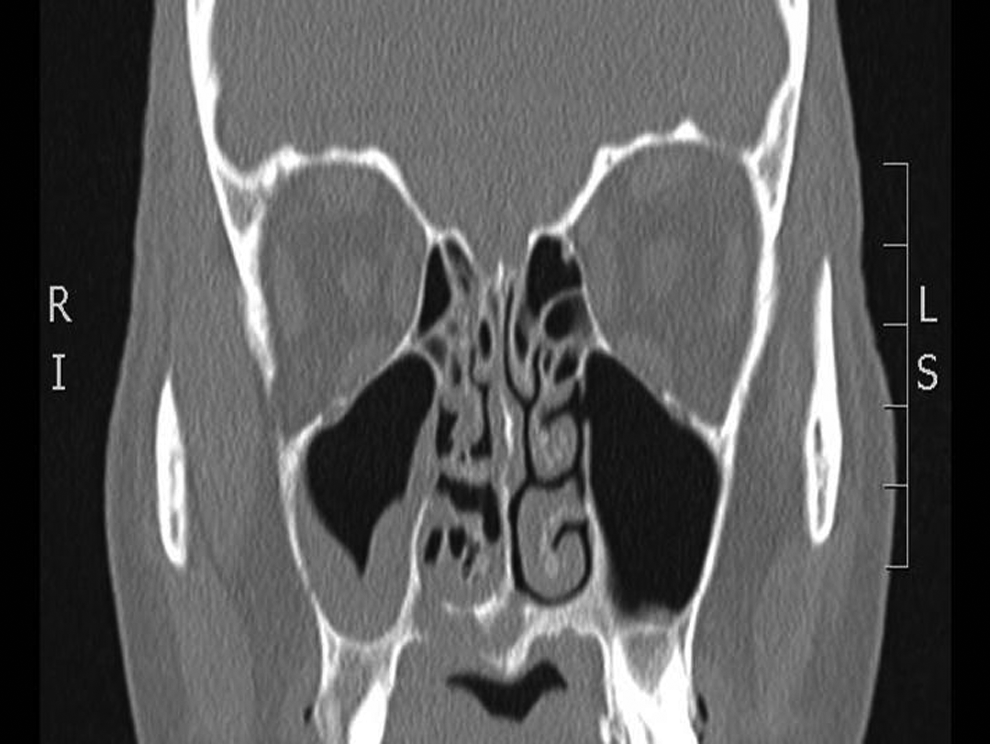
Computerized tomography at the time of mucormycosis diagnosis. Osseous destruction of hard palate, right maxillary sinus.
Biopsy of the hard palate, nasal septum, and right maxillary contents from the debrided specimen showed necrotic bone with invasion of osseous and soft tissue of the sinuses by fungal hyphae consistent with mucormycosis (pauciseptate with variable caliber and ribbon-like appearance). Bacterial cultures from all 3 biopsy sites were also positive for pan-sensitive Pseudomonas aeruginosa.
Following culture results, antibiotics were narrowed to ceftazidime and then levofloxacin to complete 6 weeks of antibacterial coverage for the treatment of P aeruginosa. Daily intravenous liposomal amphotericin B and hydration were started on hospital day 4 after readmission. Following 14 days of amphotericin therapy, SCr rose to 2.8 mg/dL, and the decision was made to switch to posaconazole 200 mg orally every 6 hours. A summary of the following immunosuppression medication changes is described graphically (Figure 2). On hospital day 4, sirolimus was changed back to tacrolimus 2 mg orally twice daily, and MMF was discontinued. Sirolimus dose at this time was 3 mg daily, with a corresponding trough of 3.8 ng/mL. Immediately after tacrolimus initiation, headaches returned and SCr began to rise. At this time, she was switched to cyclosporine 150 mg orally twice daily with a trough level set at 100 to 150 ng/mL. After 14 days of cyclosporine (day 6 of posaconazole therapy), the patient was changed back to sirolimus due to tremor, headaches, and worsening renal function. Sirolimus trough goal was set at 6 to 8 ng/mL. The sirolimus dose was restarted at an 83% reduction in previous dosing, 0.5 mg orally daily instead of the previous dose of 3 mg daily. The significant interaction between posaconazole and sirolimus was acknowledged. In order to prevent toxic serum concentrations, the lowest possible dose of sirolimus was initiated.
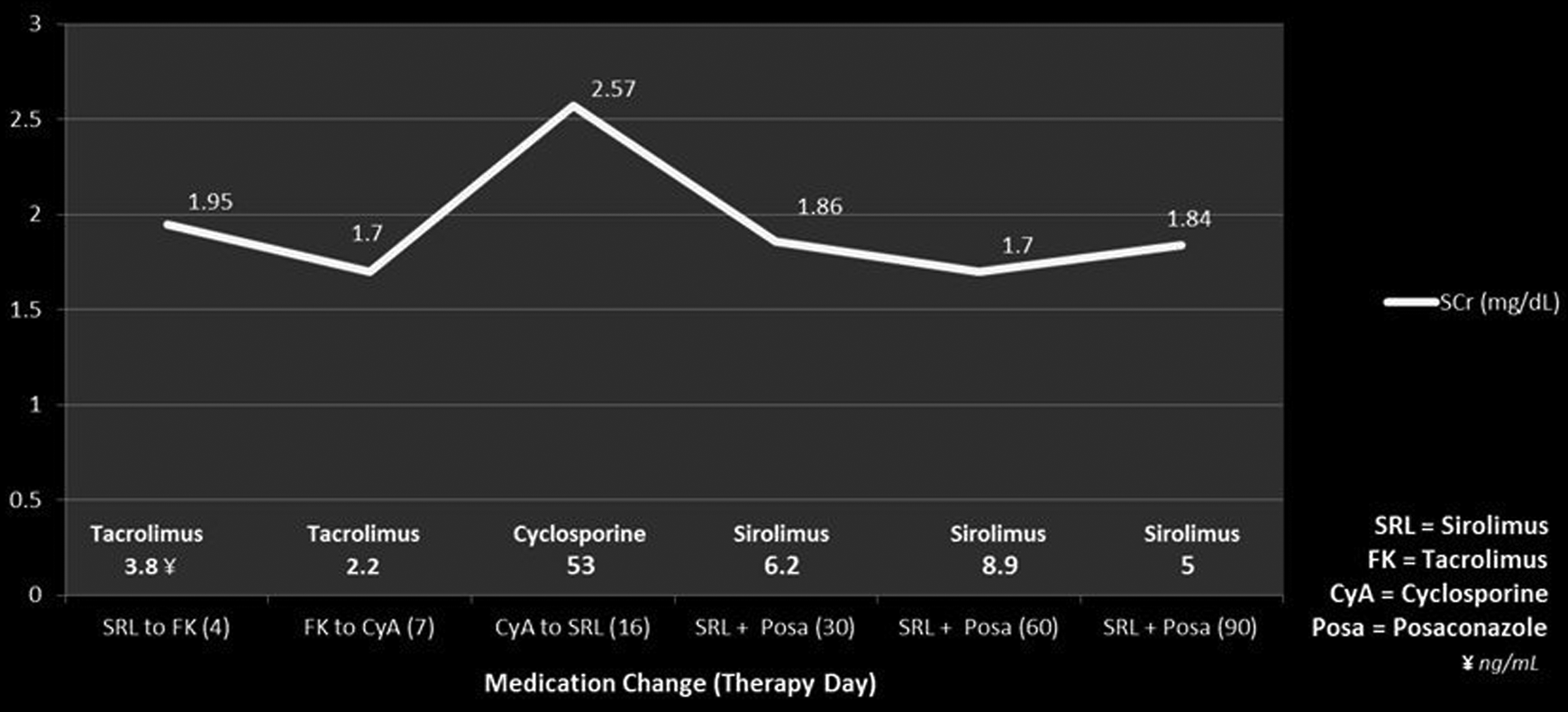
Immunosuppression changes in relation to nephrotoxicity.
One month after sirolimus initiation, liver biopsy revealed mild acute cellular rejection. This rejection episode was successfully treated with increased oral prednisone dose from 5 to 60 mg with subsequent taper. The highest sirolimus concentration while on combination therapy was 11.8 ng/mL on day 90 of posaconazole and day 55 of sirolimus. Sirolimus dose at this time was 1.5 mg. Thirteen sirolimus levels were drawn during the course of posaconazole ranging from 4.3 to 11.8 ng/mL (mean: 7.1 ng/mL and median: 7.7 ng/mL). Trough levels were checked on average every 4.6 days while the patient was receiving posaconazole. Patient remained free of commonly encountered toxic effects associated with sirolimus including anemia, mouth ulcerations, pneumonitis, hypertriglyceridemia, and proteinuria. Elevated liver enzymes, AST 152 U/L, ALT 457 U/L, ALP 379 U/L, GGT 2562 U/L, and total bilirubin 2.2 mg/dL, triggered repeat liver biopsy on POD 183. Biopsy revealed centrilobular hepatocellular cholestasis with minimal ductular reaction and multiple single necrotic lobular hepatocytes and was negative for acute cellular rejection (RAI 1/9).
On day 6 of posaconazole, day 1 of sirolimus reinitiation, the patient’s posaconazole regimen was consolidated to 400 mg orally twice daily. A posaconazole concentration on day 15 of the therapy was 326 ng/mL. Because of her subtherapeutic concentration, posaconazole dose was reverted to 200 mg orally every 6 hours with encouragement for consumption of high-fat meals to improve absorption. Next and last posaconazole concentration was therapeutic at 890 ng/mL 2 months later. After 3 months of treatment of mucormycosis (including the 2 weeks of amphotericin B), posaconazole was discontinued because of liver enzyme elevation in AST 47 U/L, ALT 90 U/L, GGT 2025 U/L, ALP 698 U/L, and total bilirubin 2.1 mg/dL. The patient remains free of recurrent mucormycosis radiographically in addition to the absence of symptoms at 3 years posttransplant with stable renal function, SCr 1.9 mg/dL.
Discussion
Tissue invasive mucormycosis is a severe life-threatening infection in immunosuppressed hosts. Risk factors for disease include poorly controlled diabetes, malnutrition, metabolic acidosis, high-dose glucocorticoid therapy, penetrating trauma or burns, persistent neutropenia, and chelation therapy with deferoxamine in patients chronically transfusion dependent. The 3 most common sites of disease include pulmonary, rhinocerebral, and cutaneous infection. 3
Specifically focusing on rhinocerebral disease, CT of the sinus typically reveals mucosal thickening, air-fluid levels, and bony erosion. Nasal endoscopy is critical for confirming tissue ischemia and extent of disease. Biopsy and culture of lesions are also important. Despite the angioinvasive nature of mucormycosis, blood cultures rarely grow. There are no well-established minimal inhibitory concentration break points to guide treatment. 3
Management of mucormycosis should include reversal of predisposing factors as much as possible, early surgical debridement, and systemic antifungal therapy. Due to the lack of prospective studies to define primary antifungal therapy, most evidence comes from small case series or case reports. Most data have used conventional amphotericin B deoxycholate 1 to 1.5 mg/kg/d. Clinical experience correlates nephrotoxicity with this formulation, and most clinicians utilize lipid compounds for first-line treatment. Combination therapy for mucormycosis, primarily liposomal amphotericin with an echinocandin for induction therapy, has been used but remains controversial. 3,4
The only other antifungal agent with clinically useful activity against mucormycosis is posaconazole. There is no renal dosing adjustment necessary for treatment with posaconazole. 2 Steady state concentrations of posaconazole are achieved after 1 week of therapy, so therapy is often overlapped with amphotericin initially if possible. Trough serum drug concentrations should be monitored. Our institution targets troughs >700 ng/mL, however, other experts recommend goals varying between 500 and 1000 ng/mL. 1 Data regarding the use of posaconazole monotherapy for first-line treatment are limited with numbers. 5 Despite evidence of successful treatment as salvage therapy, posaconazole does not carry a US Food and Drug Administration-approved indication for mucormycosis. 3
A review of 23 case reports of patients receiving posaconazole as salvage therapy with or without amphotericin B for mucormycosis detected a complete or partial response rate of 83%. 5 Another retrospective summary looked at 91 cases with proven (n = 69) or probable (n = 22) zygomycosis that were refractory to prior antifungals (n = 48), intolerant to prior antifungals (n = 10), or both (n = 33). These patients were given oral posaconazole 200 mg 4 times daily or 400 mg twice daily with meals or enteral feedings for at least 30 days in 80% of patients. Only 10 of these patients had received a solid organ transplant, but some patients were immunosuppressed for other reasons. Complete response (resolution) was documented in 14%, partial response (clinically meaningful improvement) in 46%, stable disease (no improvement but no deterioration) in 21%, and failure (deterioration or not able to determine) in 19%. Mucor species was the primary pathogen in 17 patients, and 13 (76.5%) of these 17 had success. 6
There is a lack of data concerning treatment with posaconazole in solid organ transplant recipients. One case report of cutaneous Cunninghamella bertholletiae in a 16-year-old multivisceral transplant patient showed success with 3 weeks of posaconazole salvage therapy following an initial course of amphotericin. Although it does appear that posaconazole was given in conjunction with sirolimus, the drug interaction and serum drug concentrations were not discussed. 7
A subset of large, phase 3, open-label, multicenter trials followed 23 patients post-solid organ transplantation with proven or probable invasive fungal disease refractory to or intolerant of standard therapy. These patients received oral posaconazole suspension dosed as 200 mg 4 times daily or 400 mg twice daily. Concurrent immunosuppression included cyclosporine (n = 12), tacrolimus (n = 10), and sirolimus (n = 1). Eleven patients were also on MMF. Complete or partial response was determined for 13 (57%) patients with a variety of different fungal infections. This included 1 of the 2 patients with zygomycosis. Mean duration of therapy with posaconazole was 119 days. Treatment-related adverse events were documented for 12 of the 23 patients. Severe adverse events were noted in 4 patients, including increased serum concentrations of cyclosporine or tacrolimus requiring dose adjustments in 3 and termination of posaconazole in 1 patient. Posaconazole was concluded to be an alternative therapy for difficult-to-treat fungal infections. 8
As stated previously, package insert recommends avoiding posaconazole and sirolimus combination. Posaconazole is a strong inhibitor of cytochrome P450 isoenzyme 3A4 and the P-glycoprotein enzyme system, and sirolimus is a substrate of these pathways. 2 A phase 1, open-label, single-center, multiperiod study with 12 healthy subjects evaluated this drug interaction. These patients received sirolimus 2 mg orally on day 1, a 28-day washout period, and then posaconazole 400 mg orally twice daily for 16 days. After about a week of posaconazole therapy (day 36), another dose of sirolimus 2 mg was given with a dose of posaconazole. A review of blood samples showed that coadministration increased sirolimus maximum observed plasma concentration (Cmax) and area under the curve by 6.7-fold and 8.9-fold, respectively. Adverse events were documented in 5 (42%) subjects on the day of coadministration, 3 (25%) subjects presirolimus dose, and 8 (67%) subjects postsirolimus dose. This study concluded that coadministration of posaconazole and sirolimus should be done with extreme caution because of the effect on sirolimus exposure. 9
Another retrospective chart review aimed to help determine an appropriate initial empiric dose reduction in sirolimus when coadministrated with posaconazole. This chart review included 15 recipients of hematopoietic stem cell transplant on sirolimus for graft-versus-host disease prophylaxis (14 patients were also on tacrolimus). At initiation of posaconazole, the daily sirolimus dose was empirically reduced by a median of 50%. Most patients tolerated the combination therapy well. However, 6 patients had sirolimus troughs >12 ng/mL during the first month. Only 1 patient experienced an adverse event potentially related to this increased concentration. This review concluded that coadministration is well tolerated with an empiric sirolimus dose reduction of 33% to 50% and close monitoring of trough concentrations. Median length of combination therapy was 78 days, implying that prolonged administration may also be possible. 10
Lastly, an extensive review of interactions between azole antifungals and immunosuppressive agents thoroughly reviewed the mechanisms behind these drug–drug interactions. They looked at the data associated with each of the combinations separately and recommended percentage dose reductions in immunosuppressive agents during combination azole therapy. Unfortunately, no data to evaluate the interaction between sirolimus and posaconazole were reported. 11
During treatment months, increased monitoring of liver function tests to assess for toxicity from posaconazole and increased immunosuppressive serum drug concentrations should be performed. Posaconazole’s mean half-life of 35 hours requires 7 days of antifungal therapy without changes in dosage prior to obtaining serum trough concentration. If at all possible, dual therapy with a lipid formulation of amphotericin is recommended until posaconazole serum concentrations exceed 700 ng/mL. After attaining therapeutic troughs on a stable antifungal regimen, we suggest obtaining posaconazole serum drug concentrations weekly to assure drug concentrations remain therapeutic.
Drug monitoring and dosage adjustment will differ depending on immunosuppressive agent. If sirolimus-based, calcineurin-free, maintenance immunosuppression is used in combination with posaconazole, it is imperative to monitor sirolimus trough serum concentrations 2 times per week, at least 72 hours apart, until steady sirolimus troughs at the intended goal are attained. Based on our clinical experience along with published literature including higher numbers of patients receiving hematopoietic stem cell transplant, for sirolimus goal concentrations <10 ng/mL, we suggest decreasing sirolimus by 60% to 75% at the initiation of posaconazole therapy. For goal concentrations 10 to 15 ng/mL, an empiric dose reduction in sirolimus by 30% to 50% is suggested. 12 Once 3 sirolimus concentrations are attained at goal, providers may consider reduction in sirolimus concentrations to weekly for at least the first month of therapy. We recommend obtaining liver function tests to monitor for azole-induced liver toxicity at the same schedule of drug monitoring outlined previously. Additionally, monotherapy with mammalian target of rapamycin inhibitors post-liver transplant is associated with higher rejection rates than calcineurin inhibitor-based immunosuppression, furthering the importance of frequent liver function tests. 13 It is imperative to adjust sirolimus dose and increase liver function monitoring with any dose adjustment of posaconazole.
Conclusion
We consider posaconazole as a reasonable alternative therapy for mucormycosis in situations where other treatments may not be possible, barring dose reduction and frequent monitoring are combined with surgical treatment and vigorous follow-up. Posaconazole should be continued for at least 3 months based on our case experience and literature review. More data are necessary to support our conclusion.
Footnotes
Authors’ Note
J. Deyo participated in concept design, background research, data collection, and manuscript preparation. N. Nicolsen participated in background research, collection, and analysis of data and manuscript preparation. A. Lachiewicz participated in clinical data review and manuscript review. T. Kozlowski participated in critical revision of the case and the manuscript.
Declaration of Conflicting Interests
The author(s) declared the following potential conflicts of interest with respect to the research, authorship, and/or publication of this article: T. Kozlowski serves as an independent chair and a member of Data Monitoring Committees for 2 clinical trials by Dompe, Italy, and as a principal investigator of pharmaceutical industry-sponsored multicenter studies with Astellas, Alexion, Novartis, BMS, and Sanofi.
Funding
The author(s) received no financial support for the research, authorship, and/or publication of this article.