






Abstract
Background:
Immunizations are a common source of pain and anxiety within the pediatric population. Implementation of lidocaine 4% cream, which has a short onset of action, as a standard of care for immunization practices may be feasible.
Objective:
The objective of this study was to assess the efficacy of lidocaine 4% cream as pain management during immunizations and to evaluate satisfaction of caregivers and nursing staff.
Methods:
This study was a prospective, randomized, placebo-controlled trial in an urban clinic, which included patients who were ≤ 14 months old accompanied by a caregiver who witnessed the patient receiving an immunization within the previous 7 months. Patients were randomized to receive either lidocaine 4% cream or placebo cream prior to vaccination. Time to cry and duration of cry were recorded. Caregivers completed surveys evaluating attitudes toward pain associated with immunizations as well as their satisfaction with the immunization process through Likert Scale ratings. Nurses completed a questionnaire assessing efficacy and feasibility of lidocaine 4% cream for pain management.
Results:
A total of 44 patients were included in the analysis in order to achieve 80% power with a p-value < 0.05. Mean duration of cry in patients receiving lidocaine 4% cream was 48.6 seconds in comparison to 65.9 seconds in patients receiving placebo (95%CI, −33.97 seconds to −0.48 seconds; p < 0.05).
Conclusions:
Lidocaine 4% cream decreased total duration of cry following vaccinations in comparison to placebo with both caregivers and nurses willing to utilize lidocaine 4% cream in a clinic setting if available
Introduction
Immunizations are a common source of pain among children. 1 It is estimated that children receive approximately 17 vaccinations by the time that they are 5 years old. 2 In addition, pain is reported as one of the most common reasons for vaccine hesitancy. 3 Non-pharmacologic interventions include distraction techniques, breastfeeding and the use of oral sweetening agents such as sucrose. There is data to support breastfeeding for pain management, however not all mothers breastfeed and therefore this is not a universal option.4,5 Topical anesthetics are a pharmacologic intervention that also may be utilized. 6 However, there is often not a standard of care among healthcare facilities regarding pain prevention for immunizations. Furthermore, lack of adequate pain management may have long-term repercussions. Recent studies estimate that nearly 25% of adults report a phobia of needles and, more concerning, 10% of adults avoid vaccinations or procedures due to such fears. 7 The use of the topical anesthetic, lidocaine 4% cream, may provide a safe option for pain management during immunizations in the pediatric population.
Lidocaine 4% cream is available as an over the counter product and works through blocking initiation and conduction of nerve impulses by decreasing the neuronal membrane’s permeability to sodium ions. 8 Several formulations of topical lidocaine are available. A study by Taddio et al evaluated the use of the combination cream containing lidocaine 2.5% and prilocaine 2.5% for pain prevention versus a placebo in infants receiving their 4 or 6 months DPT (diphtheria, pertussis and tetanus) vaccination. 9 The study found that post-vaccination pain scores were significantly lower in patients treated with lidocaine 2.5% and prilocaine 2.5% cream in comparison to placebo cream (p = 0.001). Infants who received lidocaine 2.5% and prilocaine 2.5% cream also had a significantly longer period between needle puncture and crying (p = 0.0004). Furthermore, total duration of cry was lower in patients receiving lidocaine 2.5% and prilocaine 2.5% when compared to placebo cream (p = 0.027). 9 While this study supports the use of lidocaine 2.5% and prilocaine 2.5% cream, the onset of action is approximately 60 minutes. 10 The delayed onset of action makes the usage of lidocaine 2.5% and prilocaine 2.5% cream less feasible and potentially more difficult in a clinic setting. Lidocaine 4% cream has a shorter onset of action of only 30 minutes. 8 Despite a lack of research regarding the use of lidocaine 4% cream for immunizations, it has the potential to be both an efficacious and promising agent for pain control in a pediatric clinic setting. While the availability of lidocaine 4% cream is one aspect necessary in implementing a standard of care, it is also imperative that staff, caregivers, and patients share a common goal.
Schurman et al enforced a quality improvement program employing a “Plan-Do-Study-Act” framework. 2 Strategies such as comfort positioning, non-nutritive sucking, sucrose analgesia and distraction were introduced to the clinic. The pain management strategy did not include pharmacotherapy. Caregivers had greater satisfaction when specific pain management, although non-pharmacologic, was utilized (p < 0.05). This study offers evidence toward the importance of proper education regarding pain management and its effect on the overall mind-set of caregivers and staff attitudes toward pain. 2 Furthermore, Connelly et al evaluated caregiver attitudes, willingness to pay and potential barriers toward pain management in childhood immunizations. 11 The study found that 80% of caregivers agreed that they would be willing to use pain prevention strategies during immunization. Half of the caregivers agreed that there were lasting, negative effects associated with pain from immunizations. Negative caregiver attitudes were associated with willingness to spend less money on prevention strategies. 11 Therefore, multiple variables must be taken into account when evaluating attitudes toward pain management such as socio-economic circumstances of the caregivers and families of pediatric patients.
The current study focused on assessing the efficacy of lidocaine 4% cream in the treatment of pain associated with vaccination as well as evaluating the attitudes and satisfaction levels of caregivers and staff in a pediatric clinic. By assessing the efficacy of lidocaine 4% cream and the attitudes of both caregivers and staff, clinicians are able to determine if implementing lidocaine 4% cream as a standard of care for immunization practices is feasible, offers pain relief to the infant and has the potential to increase caregiver satisfaction.
Materials and Methods
This study was a prospective, randomized, double-blind, placebo controlled, single center trial in a pediatric clinic in Brooklyn, New York. The study protocol was approved by the institutional review board (IRB) within the hospital. The inclusion criteria included patients who were ≤14 months old who had received previous SC or IM immunizations and were accompanied by a caregiver who had witnessed the patient receiving an immunization within the previous 7 months and who was willing to participate. Exclusion criteria included patients with a contraindication to lidocaine 4% such as an allergy or hypersensitivity to lidocaine or if patients had received analgesia within 6 hours prior to immunization. Furthermore, patients were excluded if they received lidocaine cream less than 30 minutes prior to immunization or if greater than 60 minutes had elapsed from application of the cream to time of immunization. Participants including infants and caregivers were excluded if they were already enrolled in the study at an earlier date. Incomplete surveys were excluded from analysis. All nurses and physicians involved in the clinic visit were informed of patient and caregiver participation. Training of nurses and physicians occurred prior to study enrollment in the clinic by research personnel. Nurses and physicians were instructed to apply lidocaine cream to the area (thigh or arm depending on type of vaccination and age of patient) at least 30 minutes prior to immunization and to wipe off any excess medication prior to immunization or 60 minutes after application of cream.
Upon arrival at the clinic, caregivers of the patients meeting inclusion criteria were recruited during check-in to the appointment. After informed consent was obtained, caregivers were asked to complete a brief, anonymous survey (Figure 1) evaluating attitudes toward pain through Likert Scale ratings, which included the options of strongly agree, agree, disagree and strongly disagree. The survey did not include a neutral option due to concern that it may inhibit response rate in respondents that would prefer not to take a position regarding the topic of pain management. Patients were randomized to receive either lidocaine 4% cream or a placebo (Lubriderm lotion). A pharmacy employee labeled the vials in order that the research personnel remained blinded to the contents. Each vial was randomized in a 1:1 fashion so that 3 vial assignments contain LMX-4 and 3 vial assignments contain Lubriderm. The LMX-4 and Lubriderm were repackaged in vials labeled a letter assignment (eg. “A,” “B,” “C”). Envelopes were also randomized and given a letter assignment (eg. “A,” “B,” “C”). Once the participant was consented, a member of the research team retrieved a pre-randomized envelope containing the letter assignment and then retrieved the vial correlated to the letter assignment. All research personnel, physicians, nurses, and caregivers were blinded to the randomization. The placebo was matching in color, texture and consistency to lidocaine 4% cream in order that nursing staff remained blinded during application of the cream. Once the research personnel obtained the study medication, the nurse applied the cream on the infant. During the vaccination process, time to cry from first injection and duration of cry from last injection was collected by research personnel using a stopwatch. Non-pharmacologic interventions (breastfeeding, distraction techniques or oral sucrose agents) were not allowed due to potential for confounding results. Immediately following the vaccination, caregivers completed an additional, anonymous survey evaluating their satisfaction with the overall immunization process with Likert Scale ratings (Figure 2). Nurses completed an anonymous questionnaire assessing efficacy and perceived feasibility of lidocaine cream in pain management with “yes or no” responses after the vaccinations were administered (Figure 3). Research personnel recorded time of check-in, medication administration and vaccination. In addition, baseline demographics including number of older siblings, age of patient, and number of prior vaccinations were collected.
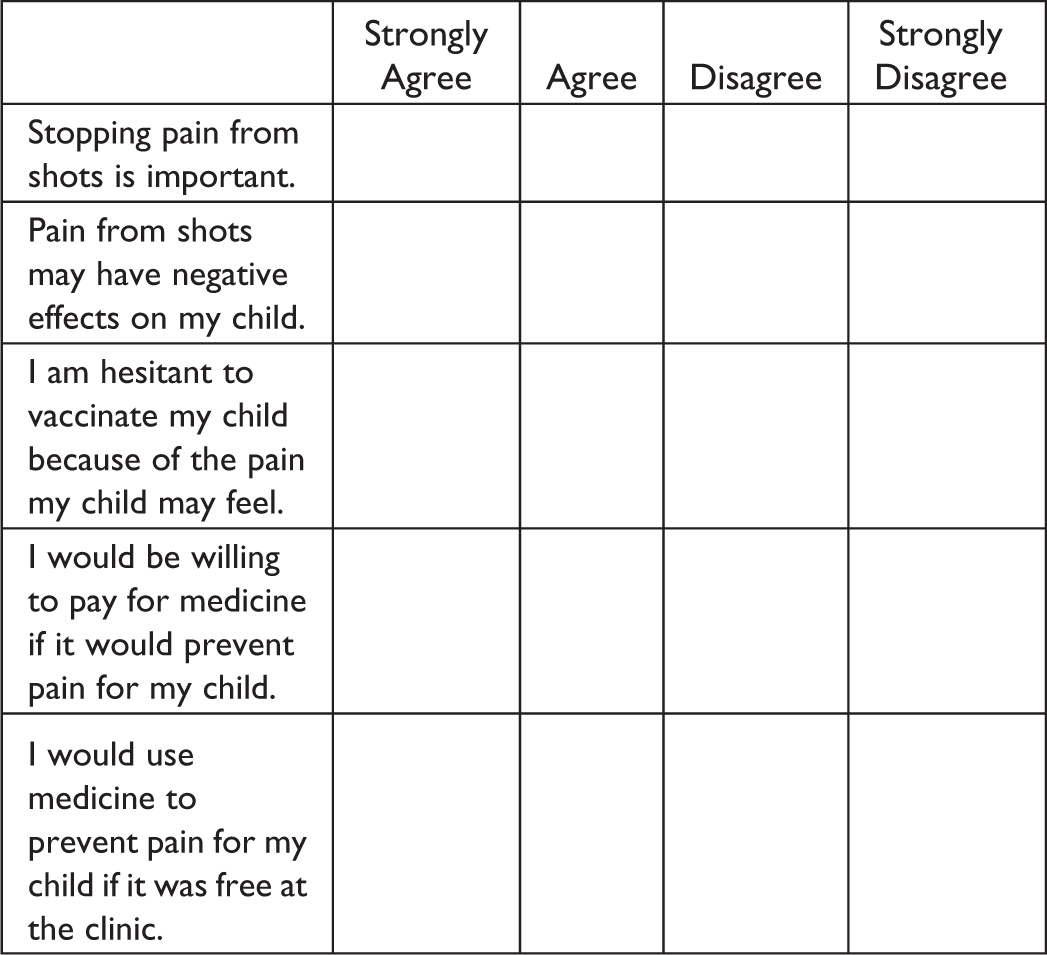
Survey evaluating caregiver’s attitude toward pain.
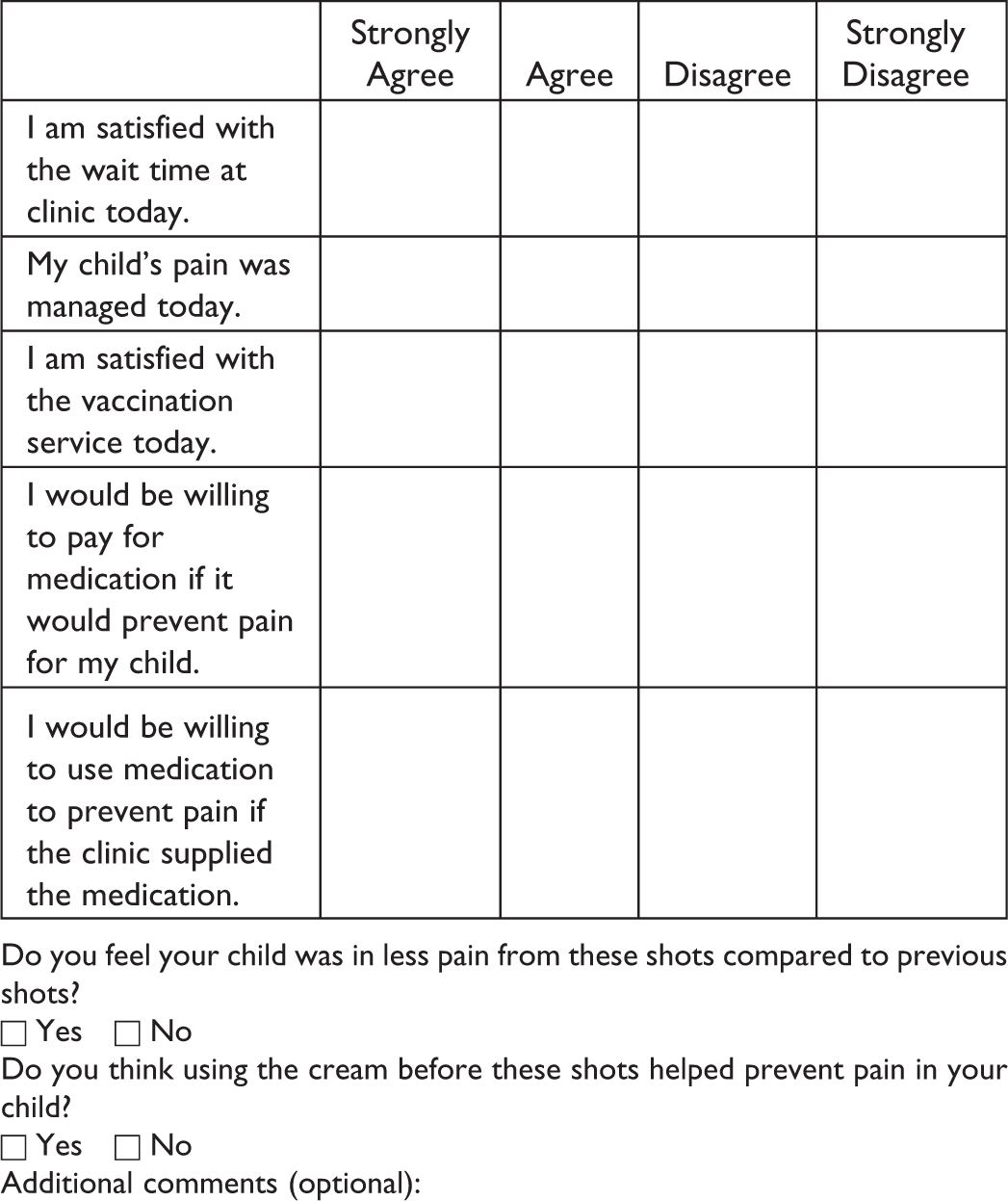
Caregiver survey evaluating overall satisfaction with immunization process.
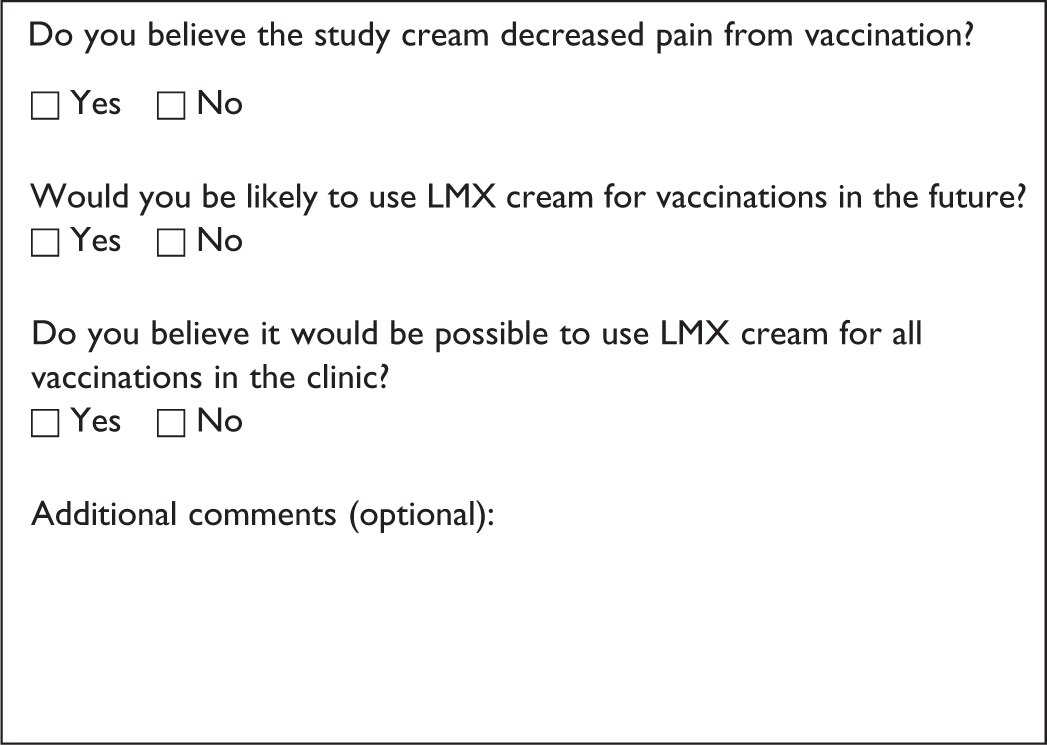
Nurses questionnaire assessing efficacy and feasibility of lidocaine 4% cream.
The expected sample size of the study was approximately 44 patients in order to achieve 80% power with a p-value < 0.05. The cost of the medication in the study was free to caregivers. While rare, potential risks of the study included adverse effects of lidocaine 4% cream such as erythema, dermatitis, urticarial and methemoglobinemia. Nurses and physicians monitored patients for adverse effects throughout the clinic visit. Caregivers were also provided with information for reporting adverse events if they occurred following the clinic visit. The primary outcome was the total duration of cry in seconds following immunization. Secondary outcomes include time to cry from first injection as well as level of satisfaction of caregivers and nurses with the overall immunization process and their willingness to use lidocaine cream in the future. An unpaired t-test was used to evaluate duration of cry following immunization and time to cry from first injection. Descriptive statistics were used to evaluate baseline characteristics and satisfaction scores of caregivers and nurses.
Results
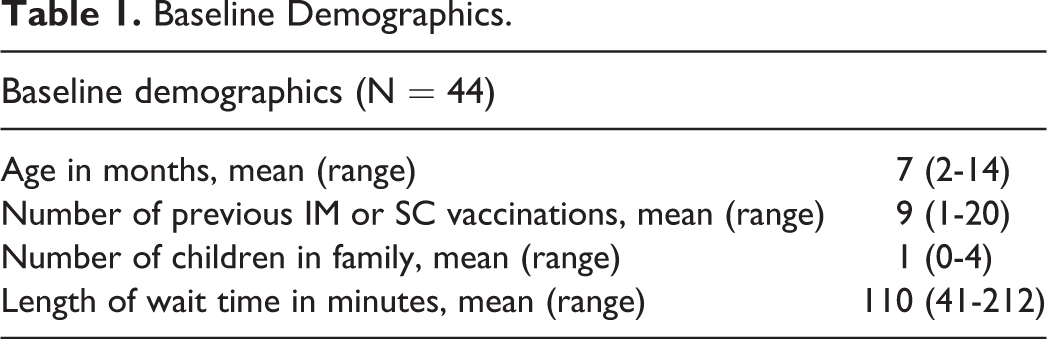
A total of 44 patients met inclusion criteria and were included in the study. Participants were recruited from March 2018 to April 2019 at which time recruitment ended following obtaining the expected sample size. Infants ranged from 2 to 14 months old. Patients had received, on average, approximately 11 vaccinations prior to the clinic visit (Table 1). The average length of wait time in the clinic was 110 minutes. The primary outcome of mean duration of cry following last injection was 48.6 seconds in the lidocaine 4% group versus 65.8 seconds in the placebo group (95%CI, −33.97 seconds to −0.48 seconds; p < 0.05). The mean time to cry from first injection was 7.6 seconds in the lidocaine 4% group versus 11.2 seconds in the placebo group (95%CI, −12.3 to 5.2, p = 0.42). When evaluating caregiver attitudes during the pre-vaccination survey, 95% of caregivers agreed that preventing pain from vaccinations was important to them. Fifty-two percent of caregivers also agreed that they were hesitant to vaccinate their child because of the pain that the child may experience. Furthermore, a majority of caregivers (93%) reported that they would be willing to pay for medications if they were able to prevent pain in their child. An even larger amount of caregivers (98%) reported that they would use medications to prevent pain if they were supplied by the clinic for free.
Baseline Demographics.
The secondary outcome of mean score of caregiver satisfaction was slightly higher in the lidocaine 4% group at 3.2 versus 3.1 in the placebo group with elevated scores indicating higher rates of satisfaction. Sixty-four percent of caregivers in the lidocaine 4% group felt that their child was in less pain in comparison to 55% of caregivers in the placebo group. Also, 73% of caregivers in the lidocaine 4% group reported that they felt the study cream helped prevent pain during the vaccination in comparison to 50% of caregivers in the placebo group. Overall, 75% of caregivers in the post-vaccination survey reported that they would be willing to pay for medication if it prevented pain regardless of whether the child had received lidocaine 4% or placebo. A total of 3 nurses were present in the clinic during the study. The nurses completed a post-vaccination survey following each vaccination. The nurses reported that the placebo cream was effective in patients 14% of the time versus 23% of the time in patients who received lidocaine 4% cream. Seventy-five percent of the responses from the nurses supported that they would be likely to use lidocaine 4% cream for vaccinations in the future. However, 82% of the responses were in disagreement that implementation of lidocaine 4% cream in clinics for all vaccinations would be feasible. There were no adverse effects reported in the lidocaine 4% or placebo groups by physicians, nurses or caregivers.
Discussion
The use of lidocaine 4% cream significantly reduced total duration of cry by approximately 17 seconds in infants undergoing immunizations when compared to those who received placebo demonstrating that lidocaine cream may be more efficacious in prevention of pain in infants. However, the wide confidence interval may indicate less precision potentially due to the small sample size. Interestingly, the time to first cry was longer in the placebo group when compared to the lidocaine 4% cream group, while not statistically significant. A potential explanation for this difference may be due to lidocaine cream possibly preventing intramuscular pain versus the pain associated with the initial needle prick. Another hypothesis for this difference is the type and order in which vaccinations were given. Depending on the individual immunization schedules, patients received a range of vaccinations throughout the study period. Caregivers had extensive experience witnessing previous vaccinations of their infant. Overall, caregiver satisfaction scores were similar between both the lidocaine 4% and placebo groups. However, a majority of caregivers in the lidocaine 4% group felt that their child was in less pain compared to previous vaccinations compared to only half of the caregivers in the placebo group. Regardless of randomization, 75% of caregivers reported that they would still be willing to pay for medication if it would decrease pain associated with immunization in their child.
The study had several strengths as it evaluated the use of lidocaine cream in an infant population as previous studies focused solely on older subsets of pediatric patients. Caregivers were specifically selected if they had seen their child receive prior vaccinations in order that they had a baseline experience to compare the pain management of the current visit. Furthermore, the attitudes of both caregivers and nurses were assessed, which is significant as both caregivers and the medical team including nurses and staff members play a large role in the implementation of standards of care within a pediatric clinic.
While this study was innovative in its design, there were several limitations including a small sample size and limited nursing personnel. Difficulty in recruitment methods played a large role in the limited sample size as many caregivers were reluctant to place an unidentified medication on their child. Furthermore, the nursing sample size was limited to 3 nurses, which was not known prior to initiation of the study. The study took place in a high volume clinic, which was demanding on the limited nursing staff. The addition of the study methods to the clinic added to the daily workflow, which may have ultimately played a role in the responses of the nurses. The average wait time of 110 minutes during the study was similar to average wait time of 150 minutes in the clinic, indicating the addition of lidocaine cream to the vaccination process is not expected to increase wait times for patients and caregivers. However, these results may not translate into other clinic models that have a shorter average wait time. Another limitation of the study was the exclusion of non-English speaking caregivers and patients as the area of Brooklyn is a highly diversified population. Therefore, many caregivers were ineligible, which hindered the recruitment process and potentially led to inclusion bias.
Although the primary outcome was found to be statistically significant, it is difficult to quantify what duration of crying is clinically significant. In an ideal world, children would not experience pain during immunizations. However, this is not realistic or achievable. Furthermore, signs of pain may be exhibited through other parameters besides crying such as facial expressions, breathing pattern or body movement. In addition, the likelihood of the child crying can be due to many other factors such as age and environment. With that said, the shorter duration of cry observed in the lidocaine 4% group may have contributed to the secondary outcomes that 64% of caregivers in the lidocaine 4% group felt that their child was in less pain in comparison to 55% of caregivers in the placebo group and 73% of caregivers in the lidocaine 4% group reported that they felt the study cream helped prevent pain during the vaccination in comparison to 50% of caregivers in the placebo group.
Conclusion
Despite several limitations, the current study was able to assess the efficacy of pain management through measurement of time to and duration of cry in infants, but also caregiver and nursing attitudes toward pain management in vaccinations. Lidocaine 4% cream led to a significant decrease in total duration of crying in infants. Furthermore, a majority of caregivers and nurses reported willingness to utilize 4% cream in a clinic setting if made available. Therefore, lidocaine 4% cream may be an effective and feasible option for implementation of standard of care in pain management for vaccinations in a pediatric clinic.
Footnotes
Abbreviations
DPT, diphtheria, pertussis and tetanus; IRB, institutional review board.
Authors’ Note
This study was approved by the Institutional review board of The Brooklyn Hospital Center and Long Island University.
Declaration of Conflicting Interests
The author(s) declared no potential conflicts of interest with respect to the research, authorship, and/or publication of this article.
Funding
The author(s) received no financial support for the research, authorship, and/or publication of this article.
