






Abstract
The high morbidity and mortality rates associated with invasive fungal infections have led to the overutilization of empiric antifungal therapies. With increasing antibiotic resistance, the careful consideration of prophylactic or empiric antifungal use is critical. The purpose of this review is to evaluate the available literature regarding the current practice of utilizing antifungal agents for intra-abdominal infections based on specific surgical procedures and patient risk factors. Relevant articles were identified through a comprehensive literature search of several databases using the keywords antifungal agents, postoperative period, preoperative care, surgical procedures, and intra-abdominal infections. Only articles that evaluated the use of empiric antifungals for suspected or confirmed intra-abdominal infections and surgical procedures were included in this review. Based on the available literature, antifungal prophylaxis is appropriate in patients who meet the criteria for high-risk invasive candidiasis, kidney or liver transplant recipients, severely-immunocompromised patients with perforated peptic ulcer, peritonitis, and patients on peritoneal dialysis who are failing on a therapeutic antibiotic regimen. We acknowledge that the evidence for using antifungal therapy empirically for all surgical procedures is lacking, and the following review is based on available literature and current guidelines.
Keywords
Background
Post-surgical intra-abdominal infections (IAI) are commonly managed in patients in the surgical intensive care unit (SICU) with invasive candidiasis (IC) being a significant cause of morbidity and mortality up to 40%.1-3 Candidemia is the fourth most common nosocomial bloodstream infection (BSI) in the United States, with mortality rates of 40-60%.4,5 Hospitalized intensive care unit (ICU) patients are at a higher risk for Candida and Aspergillus infections, as they are more likely to require surgical procedures and be immunocompromised. 6 Candida is a commensal colonizer of the human body and can be found on the skin, gastrointestinal (GI) tract, female genital tract, expectorated sputum, and urine, without signs of infection. 7 Prior to prophylaxis or treatment of suspected Candida spp. infection, the distinction should be made between being colonization vs active infection. 7 Challenges regarding Candida diagnosis have led to a focus on empiric therapy for patients deemed high-risk. 8
Antibiotic resistance is a growing global health concern that is associated with increased morbidity and mortality. 9 Candida spp. (exception C. krusei) are widely susceptible to systemic antifungal agents (e.g., azole, echinocandins), thus favoring their utilization empirically. 7 Recently, C. auris emerged as multidrug-resistant (MDR) to fluconazole, amphotericin B, and echinocandins.7,9 Additionally, C. auris is recognized on the Centers for Disease Control and Prevention’s Antibiotic Resistance Threats List as an urgent threat.7,9
C. albicans is the most common cultured Candida spp. among patients with candidiasis infections. 10 Non-C. albicans spp. (i.e., C. glabrata, C. parapsilosis, and C. tropicalis) are becoming a concern due to the increased resistance rates in different geographic regions and healthcare institutions. 10 The difference in resistance rates may result from different azole prescribing patterns for empiric treatment of IC. 10 Retrospective, single-centered studies demonstrated an increase in C. krusei and C. glabrata infections with fluconazole prophylaxis.11,12 Empiric antifungal therapy is commonly initiated in the following patient populations: septic or febrile with suboptimal antibacterial response in the ICU, having an indwelling catheter, recent abdominal surgery, or are on chemotherapy. 13 Since fluconazole is relatively inexpensive and well-tolerated, it is the most common azole antifungal used for prophylaxis and treatment of Candida infections.10,13 Azoles are fungistatic and therefore require the host’s immune system and source control to eradicate the infection. 13 Intrinsic resistance against azoles can occur due to point mutations within the ERG11 gene, which encodes the pathogen-specific target.10,13 Acquired resistance can develop as a result of extended antifungal exposure.10,13
The Infectious Diseases Society of America’s (IDSA) clinical practice guideline for managing candidiasis strongly recommends initiating empiric antifungal therapy for patients with clinical evidence of an intra-abdominal candidiasis infection and significant risk factors. 1 Risk factors identified for IC include major abdominal surgery, necrotizing pancreatitis, immunosuppression, broad-spectrum antibiotics, central vascular catheters, and Candida colonization. 14 Despite its low sensitivity (50%), the gold standard for diagnosing IC is collecting blood cultures and/or surgically obtained cultures. 1 The following alternative diagnostic tests emerged into clinical practice to supplement traditional blood culture: antigen and antibody detection assay, 𝛽-D-glucan detection assay, and polymerase chain reaction. 1 These tests have been utilized to diagnose IC in patients with a negative blood culture. 1 However, these non-culture-based tests (NCBT) are limited in their way.1,14 The purpose of this literature review is to evaluate the available literature regarding the current practice of utilizing antifungals for IAI based on specific surgical procedures and patient risk factors.
Literature Search
Search
A literature search of PubMed, Ovid, Embase, and the Cochrane Library was conducted with the incorporation of forward and backward research methods and included available literature prior to July 2021. Additional information was obtained from a comprehensive review of the reference lists of identified articles. The keywords utilized for search criteria were as follows: antifungal agents, postoperative period, preoperative care, surgical procedures, and intraabdominal infections. The criterion for inclusion included publications written in English that evaluated the use of antifungals empirically for suspected or confirmed IAI or the use of antifungals for surgical procedures that involved a higher risk of invasive fungal infections (IFI). Reference lists of identified publications were manually evaluated to identify additional relevant literature.
Results
A total of 108 publications were identified, of which 48 references were deemed eligible for evaluation. All authors reviewed the publications identified and excluded 60 articles from the review for the following reasons: the studies were not relevant to the main subject, repetitive publications, and no reports on IC outcomes or antifungal utilization.
Discussion
The proposed justification of empiric antifungal therapy for IC is a consequence of the associated high morbidity and mortality risk, in addition to suboptimal utilization of diagnostic tools. 15 Primary and secondary resistance to antifungal agents is a repercussion of increasing antifungal use. 15 C. albicans is most commonly treated with fluconazole, however, has developed resistance mechanisms with potential for cross-resistance to other azoles.15,16 More than 70% of resistant C. glabrata or C. krusei isolates demonstrate resistance to fluconazole and echinocandin. 17 A French multi-centered surveillance program demonstrated an increased risk of reduced susceptibility to fluconazole (odds ratio [OR]: 2.17, 95% confidence interval [CI]: 1.51-3.13, P < .001) or caspofungin (OR: 4.79, 95% CI: 2.47-9.28, P < .001) with previous fluconazole or caspofungin therapy. 4 Reportedly, 30-50% of antifungal outpatient prescriptions from hospitals in the United States are inappropriate or suboptimal. 18 Proper utilization of antifungal agents may prevent future resistance. Antifungal stewardship programs are available to assess the appropriateness of antifungal regimens, including dosing, duration of therapy, and route of administration. 15 Antifungal stewardship programs have demonstrated effectiveness when utilizing a comprehensive care bundle consisting of an appropriate antifungal regimen, intravenous (IV) catheter removal, adequate diagnostics with repeat blood cultures, and ophthalmologic exams. 15
The IDSA recommends that centers that frequently manage IFI have access to conventional blood culture and NCBT. 18 Early and accurate diagnosis is a critical factor in improving patient outcomes. 18 The gold standard for diagnosing IC is through 2 sets of both aerobic and anaerobic cultures, since this provides a sensitivity of 50%.1,4,15 On average, it takes 2-3 days for a positive culture result, with an additional 1-2 days for species identification. 4 The IDSA emphasizes obtaining azole susceptibility results for all BSI with Candida isolates. Additionally, the IDSA emphasizes obtaining echinocandin susceptibility results for cultures positive with C. glabrata or C. parapsilosis in patients who have been previously treated with an echinocandin. 1
Proper specimen collection is critical for evaluating a true intra-abdominal candidiasis. The preferred culture should be obtained from a normally sterile specimen or an intra-abdominal drain placed within 24 h. 1 To minimize the risk of contamination, a swab from a superficial wound or intra-abdominal catheter left in place for more than 24 h should not be considered clinical evidence for infection. 1 If cultures are positive for fungi, appropriate antifungal therapy should be initiated within 24 h. 15 The IDSA recommends an echinocandin as initial therapy for critically ill patients and fluconazole as an alternative in non-critically ill patients who are unlikely to have resistance. Clinically stable patients and those with susceptible isolates should be de-escalated to oral fluconazole. Blood cultures are recommended every 1-2 days until negative; treatment should be continued for an additional 14 days post negative cultures. 1
In addition to appropriate antifungal therapy, treatment of intra-abdominal candidiasis should also include adequate source control (e.g., surgical diversion, resection, drainage/debridement, and removal of central venous lines (CVL) including implanted catheters that can be colonized with yeast).1,15 Adequate source control is critical to restoring anatomic structure and physiological function. 19 Irrespective of the source of infection, all CVLs are considered infectious, and sterilization of the bloodstream can only be achieved once removed. 15 Removal of all CVLs are associated with a reduction in the subsequent mean duration (±SE) of candidemia (5.6 ± 0.8 days vs 2.6 ± 0.5 days, P < .001). 20 Additionally, failure to remove CVLs are associated with higher mortality and extends the duration of candidemia from 3 days to 6 days. 15
Non-Culture-Based Diagnostic Tests for Candida Species.
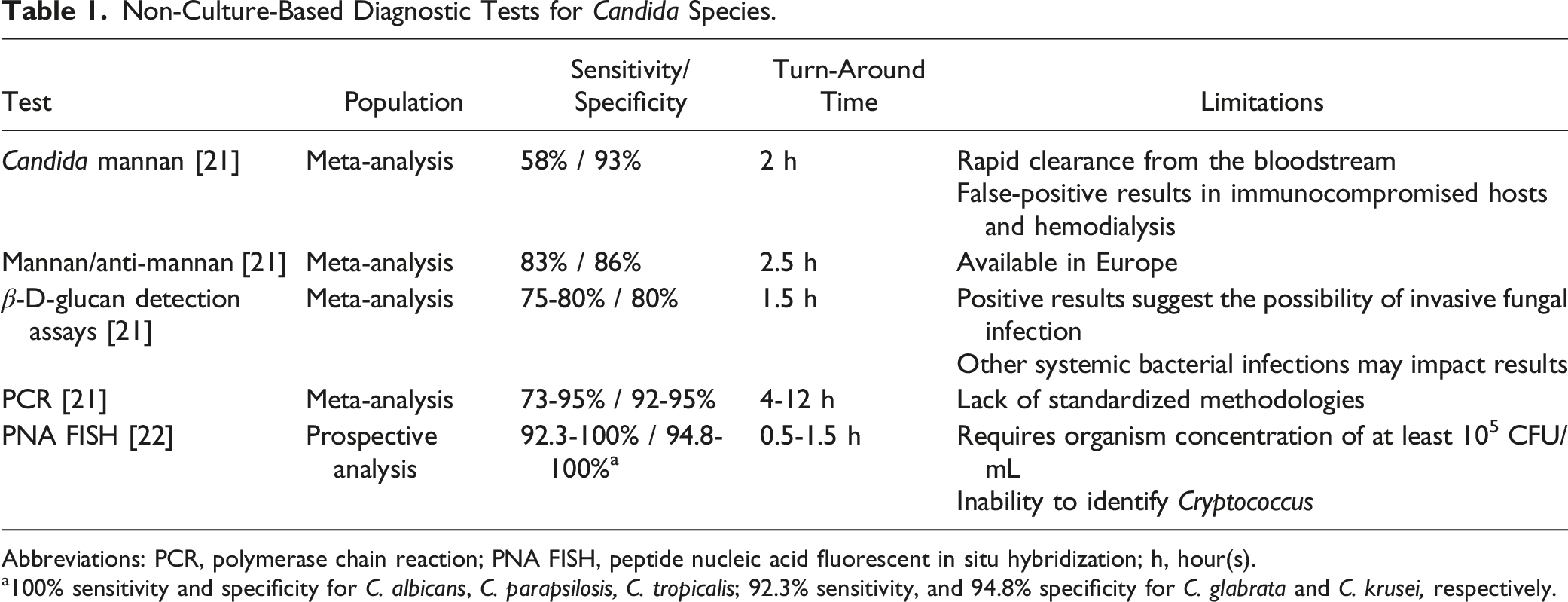
Abbreviations: PCR, polymerase chain reaction; PNA FISH, peptide nucleic acid fluorescent in situ hybridization; h, hour(s).
a100% sensitivity and specificity for C. albicans, C. parapsilosis, C. tropicalis; 92.3% sensitivity, and 94.8% specificity for C. glabrata and C. krusei, respectively.
Score Based Prediction Tools.
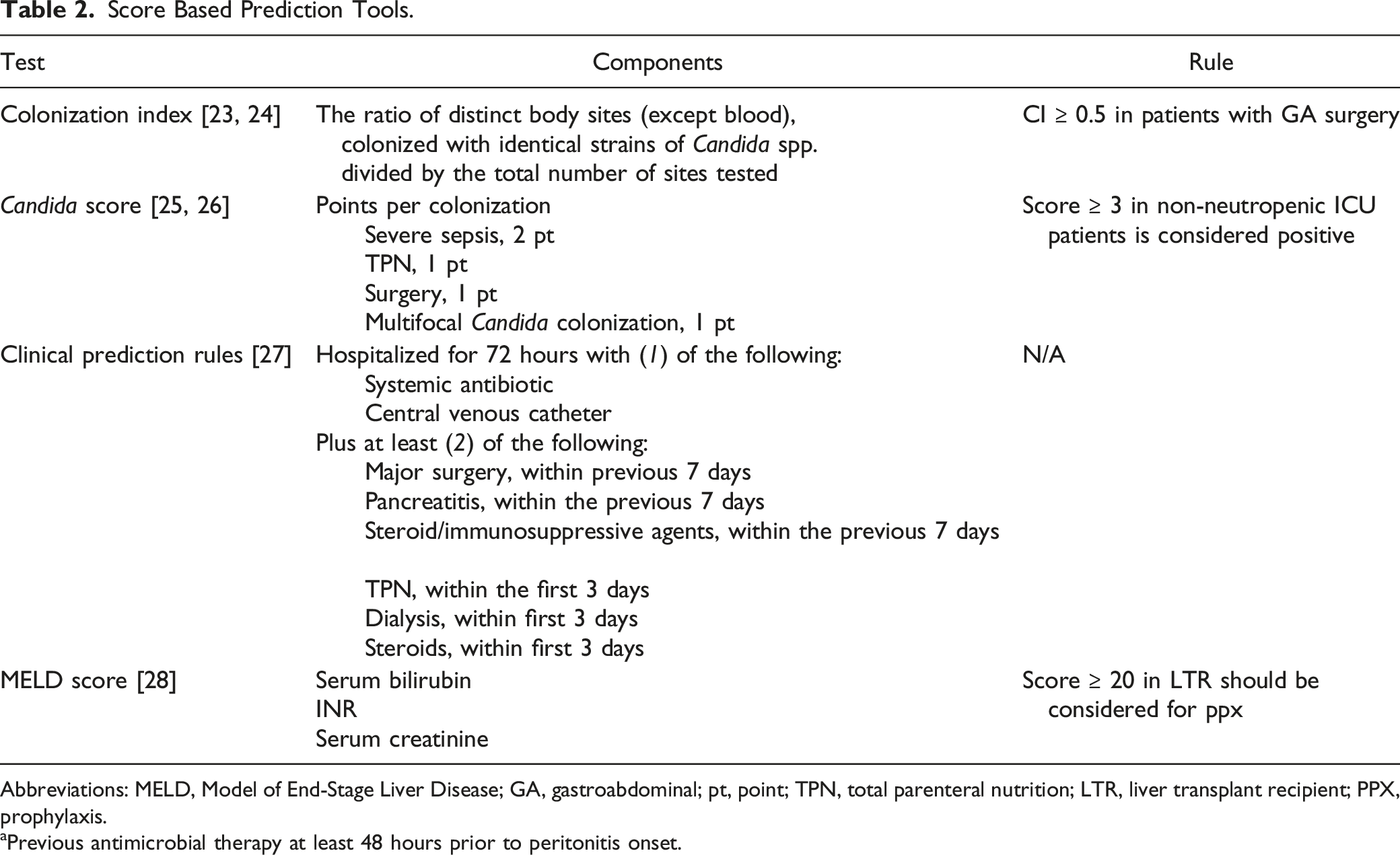
Abbreviations: MELD, Model of End-Stage Liver Disease; GA, gastroabdominal; pt, point; TPN, total parenteral nutrition; LTR, liver transplant recipient; PPX, prophylaxis.
aPrevious antimicrobial therapy at least 48 hours prior to peritonitis onset.
Colonization Index
Unless a patient is severely immunocompromised or is being treated for a critical illness in an ICU, the patient does not require antifungal prophylaxis for Candida colonization. 7 A prospective cohort study of critically ill surgical patients tested an average of 5.3 sites with a range of 3-8 sites. 29 A standardized number of sites needed for testing has not been established. 29 Colonization Index has been utilized to predict if colonization would develop into candidiasis. 23 A prospective cohort study evaluated the Candida Colonization Index to determine if the severity of illness and degree of colonization could predict candidiasis development. 23 The study demonstrated that a Colonization Index of at least 0.5 could predict IC an average of 6 days before documented IC (0.47 vs 0.70, P < .01). 23 A subsequent prospective study of ICU patients showed a statistically significant association between higher Colonization Index values post major abdominal surgery and IC. 24 A Colonization Index of ≥ 0.5 in patients with extensive GI surgery was shown to be a significant risk factor in the IC development (OR: 19.1, 95% CI: 2.38-4.35, P = .0013). 24 These results suggest early antifungal therapy is beneficial in this patient population. The Colonization Index’s time-consuming and resource-burdening nature may hinder its utilization.23,24 There appears to be a trend towards an increased risk of IC based on the number of sites colonized. Currently, there is no established guidance on what sites to evaluate; however, it is appropriate to obtain samples from locations where the probability of fungi isolation is higher (e.g., pharynx swab, tracheal aspirate, and rectal swab). 30 Additional studies need to be conducted with universally accepted standardized index scoring scales.
Candida Score
The Candida score is comprised of four components to assess the risk of Candida infection based on adding points from each component (Table 2). 25 A prospective cohort analysis of 1007 patients in ICUs demonstrated 2.3% of patients with a Candida score < 3 developed IC, compared to 13.8% seen in patients with a score ≥ 3 (relative risk [RR]: 3.7, 95% CI: 1.8-7.7). 23 The association of increasing Candida scores and IFI was also demonstrated in a prospective, observational, multi-centered cohort study.23,25 The rates of IC observed in Candida scores of 2, 3, 4, and 5 were 0%, 0%, 17.6%, and 50%, respectively (P < .0001). 25 This study suggests a Candida score > 3 in patients with hospital-acquired severe sepsis or septic shock may aid in the identification of who would benefit from prompt antifungal therapy. 25 The study reported a Candida score > 3 had a positive predictive value (PPV) and negative predictive value (NPV) of 23.8% and 100%, respectively. 25 A prospective, multi-centered study evaluated the Candida score in critically ill ICU patients admitted for a minimum of 7 days without treatment with antifungal agents during the first 7 days of admission. 26 Of the patients who had a Candida score of < 3 and were not treated with antifungals, there was a 2.3% incidence rate of IC (95% CI: 1.1-3.5) with a linear association between incidence rates and Candida scores. 26 Incidence rates of IC for a Candida score of 3, 4, and 5 were 8.5% (95% CI: 4.2-12.7), 16.8% (95% CI: 9.7-23.9), and 23.6% (95% CI: 12.4-34.9), respectively. 26 A Candida score ≥ 3 had a sensitivity and specificity of 77.6% and 66.2%, respectively. 26 This study reported a PPV of 13.8% and an NPV of 97.7%. 26 These findings suggest that a Candida score cut off of 3 may be beneficial in determining colonization with Candida vs IC. 26
Clinical Prediction Rules
Prediction rules are based on a series of risk factors to identify ICU patients at high risk for IC. 23 It is essential to note there are variations in the prediction rules across different studies that should be taken into account when comparing results. 27 A retrospective, multi-centered, international study of 2890 hospitalized patients utilized the prediction rule (Table 2) to evaluate the ability to identify high-risk patients for IC. 27 Patients who developed IC stayed an average of 11 days longer in the ICU (10.8 days vs 21.6 days, Wilcoxon rank-sum test P < .0001). 27 A total of 88 cases of IC were reported, of which 16 cases of Candida were recovered from sterile sites, and there was an overall proven-probable IC rate of 3.0%. 27 Of the 303 patients identified by the predictive rule, 9.9% developed an infection, compared to the 2.3% of patients who developed an infection among the population not recognized by the rule (P < .0001). 27 This study concluded that the prediction rule identified IC in 34.1% of cases with a PPV and NPV of 10% and 97%, respectively.23,27 Subsequent studies summarized in Ahmed A, et al, with slight variations in the prediction rule had similar PPV (< 5%), and NPV (> 98%), which demonstrates the usefulness of clinical prediction rules can be in identifying patients who would not benefit from antifungal therapy. 31
Studies have demonstrated the early empiric antifungal therapy in the highest risk patients reduces mortality. Empiric antifungal treatment should not be the standard of care for low-risk patients. Appropriate identification of low-risk patients is crucial to prevent overuse. The use of antifungal prophylaxis in low-risk ICU and surgical patients has not been demonstrated to provide benefit; reinforcing the selection of high-risk patients is necessary. 23 Surgical intensive care units have been associated with a greater risk for the development of Candida bloodstream infections (CBSI) in comparison to other ICUs. 5 The National Epidemiology of Mycosis Survey, a prospective, multi-center study of SICUs and neonatal ICUs, examined the risk factors and associated rates of developing postoperative CBSIs in patients admitted for > 48 h. 5 Overall, 76% of CBSI cases occurred within three weeks of SICU admission, and 75% underwent a surgical procedure (RR: 8.7, 95% CI: 1.2-63.5, P = .03). 5 Although not statistically significant, intra-abdominal surgery demonstrated a trend toward increased risk of CBSI (RR: 1.8, 95% CI: .9-3.4, P = .06). 5 As discussed previously, Candida colonization has been reported higher in patients after intra-abdominal surgery. 24 The National Epidemiology of Mycosis Survey obtained rectal and urine swabs at admission, and weekly for all patients admitted to the SICU to monitor fungal colonization. 5 The presence of Candida recovered in rectal (RR: 1.4, 95% CI: 0.7-2.7, P = .78) and urine (RR: 1.6, 95% CI: 0.9-3.1, P = .13) swabs alone, as well as recovery from both rectal and urine swabs (RR: 1.1, 95% CI: 0.6-2.1, P = .78), were not statistically significant in predicting developing of CBSI. 5
Solid Organ Transplantation.
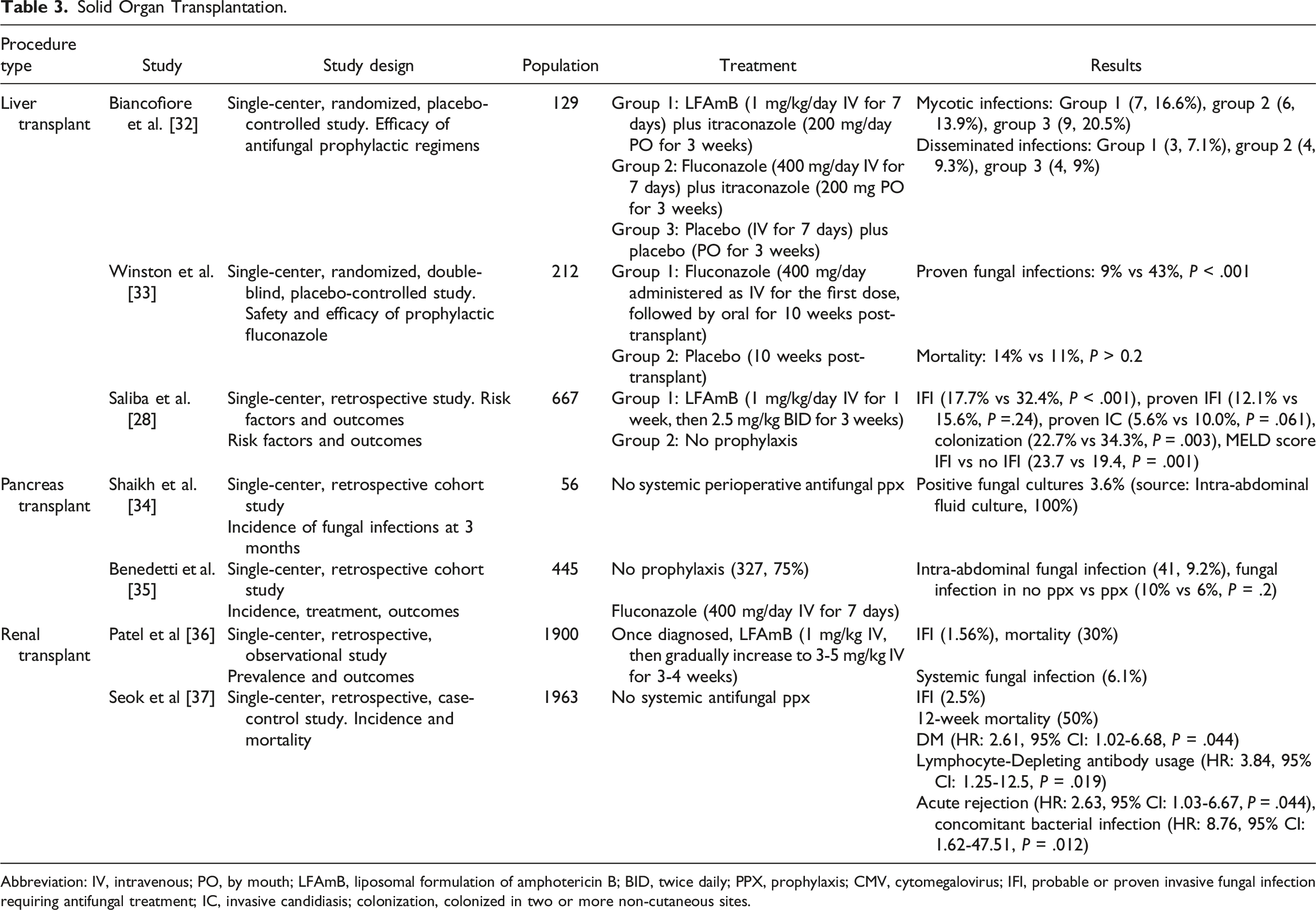
Abbreviation: IV, intravenous; PO, by mouth; LFAmB, liposomal formulation of amphotericin B; BID, twice daily; PPX, prophylaxis; CMV, cytomegalovirus; IFI, probable or proven invasive fungal infection requiring antifungal treatment; IC, invasive candidiasis; colonization, colonized in two or more non-cutaneous sites.
Other Intra-Abdominal Procedures.
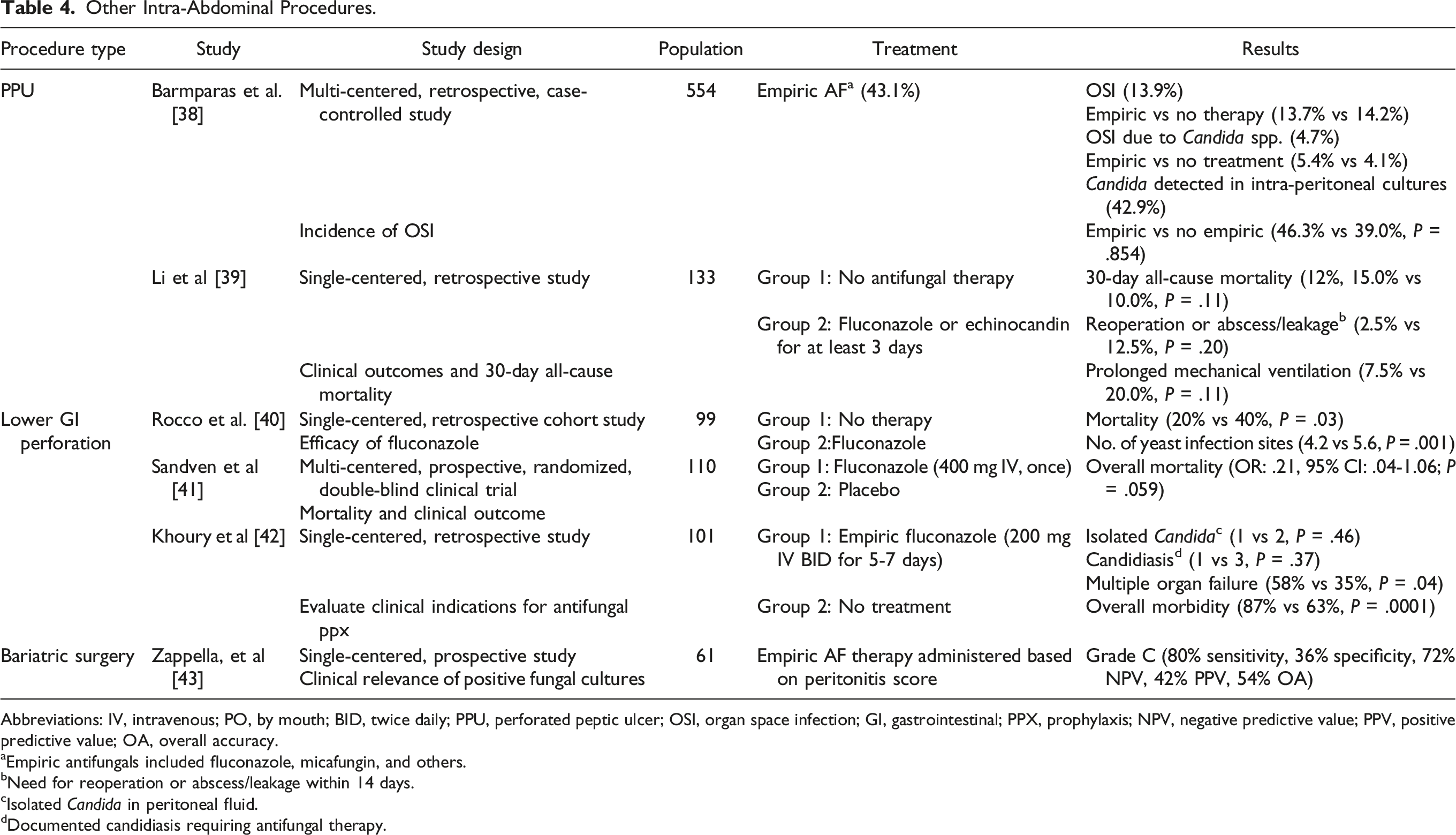
Abbreviations: IV, intravenous; PO, by mouth; BID, twice daily; PPU, perforated peptic ulcer; OSI, organ space infection; GI, gastrointestinal; PPX, prophylaxis; NPV, negative predictive value; PPV, positive predictive value; OA, overall accuracy.
aEmpiric antifungals included fluconazole, micafungin, and others.
bNeed for reoperation or abscess/leakage within 14 days.
cIsolated Candida in peritoneal fluid.
dDocumented candidiasis requiring antifungal therapy.
Solid Organ Transplant
A meta-analysis of 14 randomized trials evaluated the efficacy of antifungal prophylaxis in all SOT included 1497 patients, and reported antifungal prophylaxis did not provide a significant reduction in mortality rates (RR: 0.90, 95% CI: 0.57-1.44).36,44 Severity of illness and complications of the surgical procedure significantly impacts IC development.45-47 Surgical complications may include prolonged operative time, increased utilization of blood products, blood loss, antibiotic or corticosteroid usage, and retransplantation.45-47 The utilization of antifungal prophylaxis demonstrated effectiveness in lowering the incidence of fungal infections; however, observational studies showed a decrease in Candida infections to < 10% in the absence of antifungal prophylaxis.45,47 Presumably, the decrease in infection rate can result from improved surgical techniques and decreased corticosteroid use. 47
Liver Transplantation
Intra-Abdominal Surgical Procedures with Support for Antifungal Prophylaxis.
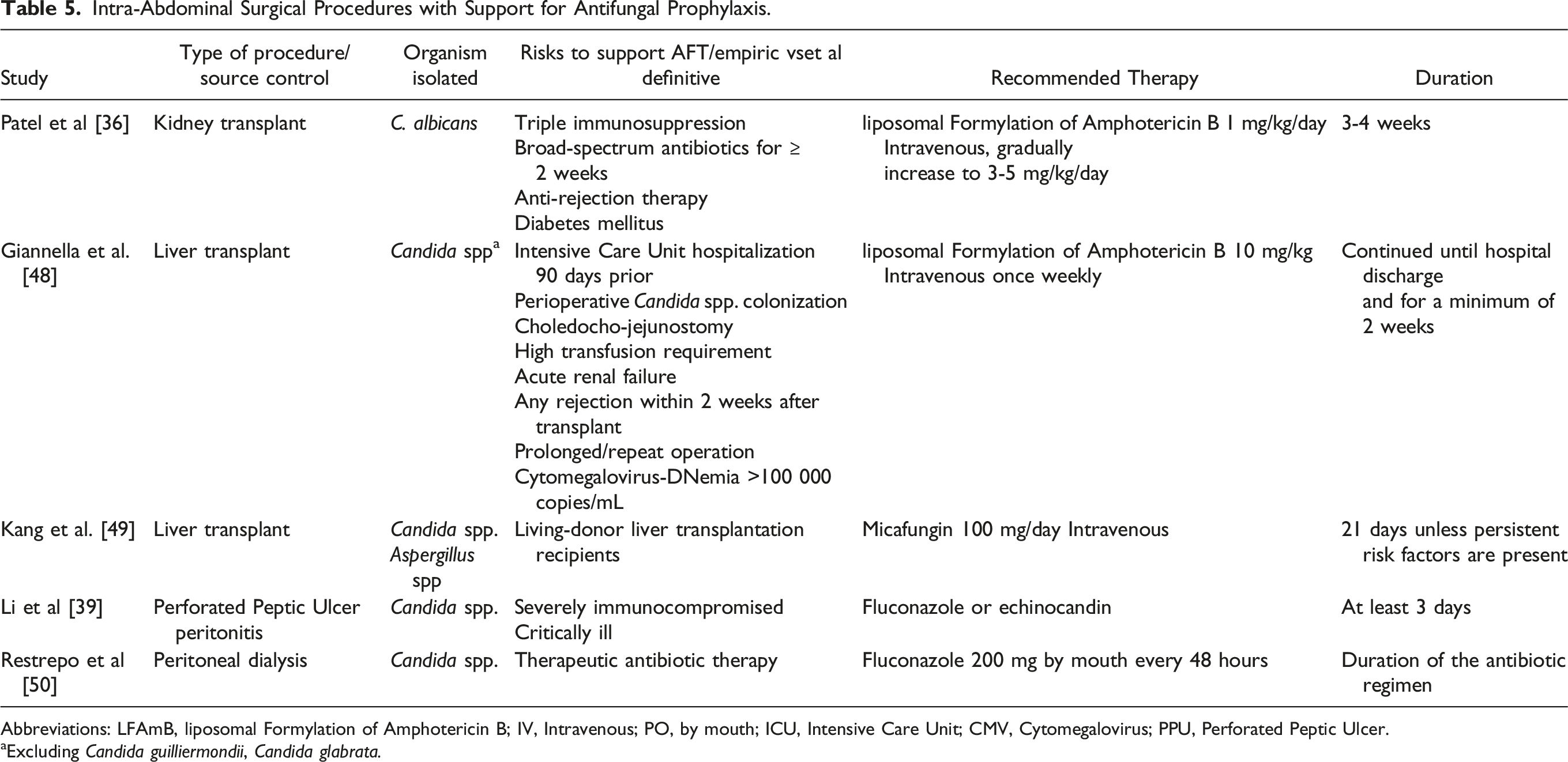
Abbreviations: LFAmB, liposomal Formylation of Amphotericin B; IV, Intravenous; PO, by mouth; ICU, Intensive Care Unit; CMV, Cytomegalovirus; PPU, Perforated Peptic Ulcer.
aExcluding Candida guilliermondii, Candida glabrata.
Pancreas Transplantation
The evidence to support the use of systemic antifungal prophylaxis in pancreas transplant recipients is limited. 34 This patient population is at a higher risk of post-transplantation infections due to diabetes mellitus (DM). 29 Candida spp. are the most common cause of IFI with a prevalence of 3-9% in pancreas transplants. 34 Only retrospective studies have evaluated the utilization of antifungal prophylaxis in pancreas transplantation.34,51 A review article suggested using perioperative fluconazole to minimize infections in pancreas transplant recipients; however, there is a concern with fluconazole resistance developing and management of drug-drug interactions with concomitant immunosuppressive agents.34,51 With the lack of clear evidence to support its use, a single-centered retrospective cohort study was conducted to characterize the outcomes of fungal infections post pancreas transplant in the absence of antifungal prophylaxis (Table 3). 34 The study recommendation is to refrain from using antifungal prophylaxis for pancreas transplants because fungal infection rates without prophylaxis were observed to be similar to other reported literature results. 34
The American Society of Transplantation recommends prophylactic fluconazole for enteric-drained pancreas transplant recipients based on a retrospective study. 52 The study included 445 pancreas transplant recipients, of which only 43 (9.7%) were enteric-drained (compared to bladder-drained).34,35 The study stated the overall incidence of fungal infections occurred in 41 patients (9.2%), with a higher rate for enteric-drained as compared to bladder-drained (21% vs 10%, P = .4).34,35 There are many limitations to this study. 34 The discrepancy between the overall incidence and the incidence based on drainage type, along with the disproportionate sample size in each drainage type without performing a multivariate analysis to confirm enteric-drainage type as a risk factor, makes this study inconclusive in its recommendation to use prophylactic fluconazole.34,35 Based on the available evidence for antifungal prophylaxis in pancreas transplant recipients, antifungal prophylaxis does not provide a significant reduction in the prevalence of fungal infections; however, it does increase the risk of drug-drug interactions and antifungal resistance. 34
Renal Transplantation
Among SOT recipients, the incidence of IFI in renal transplant recipients (RTR) is reportedly the lowest at 1-10%, but, is associated with a high mortality rate.36,37,44 This patient population also has increased susceptibility for IFI due to the transplant immunosuppressive therapy used to prevent graft rejection. 36 The highest incidence of IFI in SOT recipients is during the first 6 months due to the intense period of immunosuppression but has been reported beyond 6 months. 37 A retrospective observational study reported 1.56% of RTR experienced IFI, with C. albicans (53.3%) as the most common fungal species (Table 3). 36 The study attributed their low mortality rates to early diagnosis and treatment. 36 The most common presentation of a fungal infection in the study was a prolonged fever of ≥ 37.8°C for 7 days while on antibiotics, followed by pulmonary manifestations. 36 Prior to diagnosing IFI, all patients were on triple immunosuppressive therapy (i.e., calcineurin inhibitors, mycophenolate, and prednisone) and received at least a two-week course of broad-spectrum antibiotics. 36 Risk factors noted among the study population with IFI were anti-rejection therapy (50%), cytomegalovirus infection (33.3%), and DM (23.3%). 36
An additional retrospective case-controlled study of RTR reported that 50% of the IFI cases occurred within 6 months after transplant. 37 The 12-week mortality rate was 50%, and statistically significant risk factors are described in Table 3. The study found a higher mortality rate than previously reported studies, suggesting early detection and treatment, especially in immunocompromised patients, is crucial. 37 No association was found between the timing of fever to appropriate antifungal therapy and mortality (hazard ratio [HR]: 1.00, 95% CI: 0.84-1.20, P = .970). 37 Universal administration of antifungal agents to all RTR has not been observed. To improve clinical outcomes and mortality in RTR, it is recommended to identify patients at the highest risk to ensure early diagnosis and proper management.36,37,44
Other Intra-Abdominal Procedures
Perforated Peptic Ulcer
Clinicians have justified the utilization of empiric antifungal agents in patients with perforated peptic ulcers (PPU) due to the high prevalence of fungal isolates detected in peritoneal cultures. 38 However, empiric antifungals do not appear to decrease complications or mortality. 38 In the setting of emerging resistance to antifungal agents, the benefit of antifungals in this population was analyzed. A retrospective, multi-center analysis assessed the surgical outcomes of patients with PPU who received empiric antifungals therapy compared to those who did not. 38 Both cohorts had similar baseline characteristics, including age, sex, and Charlson Comorbidity Index. 38 Clinical outcomes are described in Table 4. The study concluded there was no significant benefit to the utilization of empiric antifungal therapy in patients undergoing PPU.
A retrospective study of patients with community-acquired PPU with Candida spp. Isolated from their peritoneal fluid, was conducted to observe mortality rate based on the utilization of post-operative antifungal therapy. 39 Kaplan-Meier survival analysis was utilized to match patients in the empiric antifungal group to the no empiric treatment with < 1% difference in propensity scores. 39 The survival analysis demonstrated there was not a statistically significant difference between the 2 cohorts (P = .472). 39 Comparing deceased patients (n =16) to survived patients (n = 117), the following statistically significant risk factors were identified: malignancy (31.3% vs 11.1%, P = .04), preoperative fever (43.8% vs 17.9%, P = .04), tachycardia (81.3% vs 51.3%, P = .02), shock (56.3% vs 18.8%, P = .002), acute kidney injury (62.5 vs 34.2%, P = .03), APACHE II score >20 (93.8% vs 50.4%, P < .001), empiric antifungal therapy (31.3 vs 7.7%, P = .01), and inadequate source control (62.5% vs 29.9%, P = .01). 39
It is typical for fungal species such as Candida spp. to be isolated in intra-peritoneal cultures in patients with PPU as Candida naturally colonizes the upper GI tract.5,27 The benefit of using empiric antifungal agents has not been demonstrated in PPU disease nor peptic ulcer-associated peritonitis.38,39
Lower GI Perforation
Candida species can be found as part of the bowel’s normal flora, thus creating concern after GI perforation. 42 However, the intestinal microflora has a relatively stable composition and protects against infections. 42 The IDSA recommends the use of prophylactic anti-infective therapy with aerobic gram-positive cocci coverage for 24 h for acute stomach and proximal jejunum perforations. 19 Antimicrobial therapy for confirmed IAI should be limited to 4-7 days unless source control is inadequate. 19 The IDSA does not recommend the utilization of antifungal agents for acute perforations of the GI tract even if C. albicans or other species are identified. 19 However, the utilization of empiric antifungals remains controversial. 42
A RCT demonstrated the recovery of yeast from intra-abdominal samples varied depending on the site of perforation. 41 This study exhibited a higher risk of mortality when intra-abdominal yeast is present preoperatively (OR: 11.5, 95% CI: 2.3-58.6, P = .003). 41 However, both the RCT and retrospective studies have not demonstrated a mortality benefit with the utilization of empiric antifungal therapy (Table 4).40-42 A single-centered, retrospective study evaluated the use of empiric fluconazole in post-operative patients with positive cultures. 42 The study reported no harm in delaying treatment for 3-5 days while cultures were pending. 42 The limited benefit of empiric antifungal therapy does not support the universal use in patients with lower GI perforations.
Peritoneal Dialysis
A serious and common complication of peritoneal dialysis (PD) is peritonitis, a major contributor to patient mortality.50,53 If left untreated, it can lead to diminished peritoneal ultrafiltration capacity and require a modality change to long-term hemodialysis.53,54 Among the causes of peritonitis, fungal species account for 2.0-23.8% of cases, and the most common species isolated is Candida. 50 Patients receiving antibiotic treatment for bacterial peritonitis have been associated with a higher risk of developing secondary fungal infections due to the disruption of normal flora, allowing for fungal overgrowth.50,53,55 Preventative measures have been identified through RCTs and observational studies to prevent PD-associated peritonitis.50,53,54 Preventative measures include the use of prophylactic antibiotics prior to PD catheter insertion, method of catheter placement, site of skin incision, PD training program for nurses, utilization of disconnect systems with “flush before fill”, and application of antibiotic cream/ointment at the catheter exit site.50,53,55
A RCT sought to evaluate the evidence described in observational studies that the administration of oral fluconazole during the treatment of bacterial peritonitis would prevent secondary fungal infections. 50 A total of 434 episodes of peritonitis were identified in 226 patients, of which there were 14 cases of primary mycotic peritonitis. 50 The remaining 420 were randomized to receive no antifungal therapy or prophylactic oral fluconazole 200 mg every 48 h for the duration of antibacterial treatment. 50 There were 3 cases reported of fungal peritonitis in the treatment group vs 15 cases reported in the non-treatment group. 50 Fluconazole demonstrated the ability to prevent secondary fungal peritonitis when used prophylactically to treat bacterial peritonitis (Z = 2.8021, P = .0051). 50
Bariatric Surgery
One of the most common complications of bariatric surgery is postoperative peritonitis. 43 Anastomotic leaks occur at a low rate (0.7%) after bariatric surgery but are the most common complication leading to ICU admission.43,56 Anastomotic leaks are associated with high morbidity (53%) and mortality (34%) rates. 57 A single-center cohort study analyzed outcomes in patients with postoperative peritonitis after bariatric surgery. 43 Patients were administered empiric antibiotic therapy at the time of operation.43,58 Empiric antifungal therapy was administered in 41 patients (67%) based on the risk for fungal infections using the peritonitis score.43,58 The peritonitis score consists of four components (i.e., cardiovascular failure, upper GI origin of peritonitis, intraoperative cardiovascular failure, previous antimicrobial therapy), each worth one point each and was assigned a grade of severity. 58 Grade C (three or more risk factors) is considered high-risk for yeast detection. 58 All patients with a positive fungi culture received empiric antifungal therapy. 43 The mortality rates between those with and without positive fungal cultures were insignificant (28% vs 14%, P = .20). 43 Additionally, there was no statistically significant difference in mortality when assessing adequate empiric antifungal therapy (92% vs 86%, P = .59). 43 The study reported a low PPV for the peritonitis score, which may be a result of a higher female population (70%). 43 The study suggests empiric broad-spectrum antifungal therapy may be appropriate due to the frequency of cultured Candida strains. 43 A clinical trial is needed to support the need for treating Candida peritonitis.
Conclusions
Clinical trials and cohort studies have demonstrated prophylactic antifungals are efficacious in preventing IC in specific populations. The studies discussed in this review illustrate the potential use of antifungal agents in high-risk patients undergoing intra-abdominal surgery, those who meet the criteria for high-risk IC, kidney or liver transplant recipients, severely-immunocompromised patients with PPU, peritonitis, and patients on PD who are failing on a therapeutic antibiotic regimen. Utilization of antifungal stewardship may aid in the determination of which patients may benefit from using the Colonization Index, clinical prediction rules, and Candida scores. Further clinical trials are needed to evaluate additional intra-abdominal surgical procedures that utilize antifungal therapy.
Footnotes
Declaration of Conflicting Interests
The author(s) declared no potential conflicts of interest with respect to the research, authorship, and/or publication of this article.
Funding
The author(s) received no financial support for the research, authorship, and/or publication of this article.
