







Abstract
The objective of this study is to analyze the studies that evaluated the performance of Lian Gong in 18 therapies as a health promotion strategy for individuals of different age groups, followed in the Primary Health Care (PHC) services of the Sistema Único de Saúde (SUS). This is a systematic review study, following the Preferred Reporting Items for Systematic Reviews and Meta-Analyses model, from the Lilacs, MedLine, SciElo, PubMed, Virtual Health Library, and Capes Periodicals Portal databases, using the descriptors: PHC, Health Promotion, Complementary therapies, Chinese Traditional Medicine, Lian Gong, Qigong, PHC, and Health Promotion. Following the inclusion and exclusion criteria, 25 articles published between 2006 and 2023 in the national and international literature were analyzed. The best evaluated attributes with the practice of Lian Gong in primary care include the improvement of symptoms of pain and depression, while the worst performances found were related to changes in the individuals’ immune systems. Most of the services evaluated were Brazilian and Chinese, applied in Basic Health Units and Family Health Strategies. The services evaluated showed a need to strengthen the components of the structure and process to facilitate the population's access to integrative and complementary practices and obtain better performance of PHC in health promotion.
Introduction
Lian Gong in 18 Therapies (LG18T), or simply Lian Gong, is a body practice associated with Traditional Chinese Medicine (TCM), but it is also based on modern medicine. The set of exercises proposed by this practice combines martial arts movements and oriental therapeutic arts movements, with the aim of preventing and treating pain throughout the body and chronic diseases (Netto & Camargos, 2022).
In Brazil, the practice was first introduced in 1986 and again in 2006, through Ordinance No. 971, of May 3, 2006, the Unified Health System (Sistema Único de Saúde—SUS) incorporated it into the National Policy of Integrative and Complementary Practices (PNPIC) as a TCM body practice (Brazil. Ordinance GM/MS No. 971, of May 3, 2006). The PNPIC consists of a set of regulations and guidelines that aim to incorporate and implement integrative and complementary practices (PICS) within the scope of the SUS and is based on the perspective of disease prevention, health promotion and recovery with an emphasis on continued, humanized and comprehensive health care (Brazil. Ordinance GM No. 849, of March 27, 2017; Brazil. Ordinance GM no. 702, of March 21, 2018). In 2017 and 2018, the PNPIC was expanded to 29 practices with the publication of Ordinances No. 849/2017 and No. 702/2018.
In this context, LG18T achieved greater visibility and became more accessible, especially to people who regularly attend Primary Health Care (PHC) services, since PICS contribute to the expansion of care approaches and allow new therapeutic possibilities for users, favoring greater comprehensiveness and resolution of health care (Brazil. Ordinance GM/MS No. 971, of May 3, 2006).
The World Health Organization (WHO) defines health as a state of physical, mental, and social well-being and not just the absence of disease. Therefore, it is understood that for an individual to be healthy, he or she must value comprehensive care and not just focus on the physical aspect. Thus, health promotion strategies frequently used in primary care make it possible to improve the health condition of individuals or populations in some way. These initiatives are essential as they bring practices to the population that also have an effect on the individual's emotional spectrum, as is the case with LG18T. The practices are slow, work on breathing techniques and exercise concentration, so that, by the end of the exercise, the practitioner will have worked not only the physical structure, but also the mental component (Brazil. Ordinance GM/MS No. 971, of May 3, 2006; Brazil. Ordinance GM No. 849, of March 27, 2017).
In the meantime, LG18T can be a great tool to promote health, quality of life, and general well-being, encompassing care that integrates body and mind. The individuals always are considered as a whole, and even receiving social support is one of the expected results during the practices, which are usually applied in groups (Andrade et al., 2012).
Based on this premise, the [Extension Program] linked to the[Institution] has proposed, since 2019, to study and promote Lian Gong practices in 18 therapies inside and outside the campus, expanding the population's access to the practice of LG18T, in the municipality of Divinópolis, in Minas Gerais, Brazil (LAPPIS, 2022).
The proposal to implement [Extension Program] at the [Institution] and in the municipality of Divinópolis is in line with the teaching, research, and extension activities provided for in the work plans of the professors involved in the Program, with the Political Pedagogical Projects of the Undergraduate Courses in the areas of Health at [Institution]. In addition, it beings in line with the recommendations of the Ministry of Education and Culture (MEC) regarding the inseparability and integration of teaching-research-extension and with the global agenda for sustainable development, by presenting a model that articulates teaching, research and extension in actions that aim at the construction of transformative knowledge and practices, based on the integration between different areas of knowledge. It also aligns with the demands and social causes expressed in the 17 sustainable development goals (SDGs) of the UN 2030 Agenda for Sustainable Development, with an emphasis on actions that aim to ensure a healthy life and promote well-being for all, at all ages (SDG 3)—Good Health and Well-being) and actions aimed at ensuring inclusive and equitable quality education and promoting lifelong learning opportunities for all (SDG 4—Quality Education) (LAPPIS, 2022; United Nations, 2015).
Based on the practices and studies at this topic, and considering the contact with the community and the awareness of the Brazilian and local reality, about the inclusion and access of the population to PICS in the SUS, the following question arose: How does Lian Gong perform as a health promotion strategy for individuals of different age groups followed up in PHC services? Based on this question and the scarcity of evidence on the topic, this review study's proposed, which aims to analyze the studies that evaluated the performance of Lian Gong in 18 therapies as a health promotion strategy for individuals followed up in PHC services.
This study is justified because, despite being ancient, TCM practices are still recent in Brazil and other countries besides China and, therefore, lack scientific evidence to support its recommendation in different cultures. Therefore, the proposal to develop a review study has an exploratory character and aims to analyze what the literature has to offer about this topic. In addition to evaluating the impacts of Lian Gong on health, it is important to investigate the use of PICS in the daily routine of primary care services of the SUS as a way to complement conventional treatments and improve the quality of life of users.
Holistic nursing seeks to integrate approaches that consider the individual as a whole, including physical, emotional, and social aspects, promoting a more humanized and effective form of care. In this context, Lian Gong emerges as a promising strategy for promoting well-being. The theoretical framework guiding this study aligns with the principles of holistic nursing, emphasizing the integration of physical, emotional, and spiritual dimensions in patient care. Jean Watson's Theory of Human Caring provides a foundational perspective, advocating for a transpersonal approach that fosters meaningful connections between caregivers and patients while acknowledging the role of integrative practices in health promotion (Watson, 2008).
Lian Gong serves as a practical embodiment of these holistic principles. The practice integrates gentle physical movements (Netto & Camargos, 2022) designed to alleviate pain and improve functional capacity with conscious breathing and focused attention, directly addressing the inseparable connection between body and mind that Watson advocates for. Furthermore, as it is often conducted in group settings, it fosters a sense of community and social support, which aligns with Watson’s (2008) emphasis on creating a healing environment and fostering transpersonal relationships. By simultaneously targeting physical ailments, promoting mental tranquility, and strengthening social bonds, Lian Gong operationalizes the core tenets of Watson's Theory of Human Caring, offering a tangible method to promote health from a whole-person perspective rather than merely treating symptoms.
In addition to its foundation in Traditional Chinese Medicine, Lian Gong incorporates concepts from modern medicine, offering benefits such as pain relief, stress reduction, and improved quality of life—essential aspects for a nursing model that prioritizes the balance between mind and body. Therefore, this manuscript contributes to broadening the understanding of Lian Gong's role in holistic nursing, reinforcing its scientific and practical relevance for patient-centered care (Watson, 2008).
Method
This systematic literature review (Apostle, 2017; Conforto et al., 2011) aims to group and synthesize the results of studies that address the effects of Lian Gong, a Traditional Chinese body practice, as a health-promoting strategy for individuals of different age groups followed in the primary care network of the SUS. The study followed the guidelines outlined by the PRISMA (Preferred Reporting Items for Systematic Reviews and Meta-Analyses) (Moher et al., 2015) checklist and the research protocol were registered in the PROSPERO database (ID CRD42023463130) (Page et al., 2021).
The question proposed for this study was: What is the performance of Lian Gong as a health promotion strategy for individuals of different age groups monitored in SUS Primary Health Care services?
Considering the fundamental elements of a research question, the acronym PICO (Population, Interest, and Context) was used to construct the research question for the bibliographic search for evidence to assist in categorizing the articles. The process was carried out in the design of P (Population), formed by users of PHC services of different age groups who actively perform Lian Gong practices. The primary intervention adopted (phenomenon of Interest) was the practices of Lian Gong in PHC, and the setting chosen for the study (Context) was the PHC services of the SUS (Apostle, 2017; Lopes & Fracolli, 2008). The main outcome are the changes in the quality of life and physical, social, and mental well-being of LG18T practitioners in primary care, after performing these practices among the population studied.
The sources of information for data collection were based on research into articles available in the electronic databases Lilacs, MedLine, SciElo, PubMed, national databases of the Virtual Health Library Portal (BVS), and Capes Periodicals Portal, which are databases compatible with the object of the study because of the greater concentration of documents aligned with the health area. The search strategy for this study took into account an advanced search in the databases recognized in the academic environment as the best bases for health research in the national and global scenario. For the research, the following descriptors (DeCS/MeSH) were considered in the searches by subject: “Complementary therapies,” “Integrative Medicine,” “Chinese Traditional Medicine,” “Lian Gong,” “Qigong,” “Primary Health Care,” and “Health Promotion” and its correlates in Portuguese and Spanish. Thus, considering the PICO strategy, the Boolean descriptors OR and AND were applied in the advanced searches of the research sites used, resulting in a search strategy structured as follows: “Lian Gong” OR “Qigong” OR “Complementary therapies” OR “Integrative Medicine” OR “Chinese Traditional Medicine” AND “Primary Health Care” AND “Health Promotion.” Tests were carried out with ballers to search for more articles and avoid biases and sample loss.
The scope of this systematic review is specifically delimited to the application and effects of mind-body practices within primary care settings. This focus was adopted due to the fundamental role of primary care as the principal gateway for the implementation and dissemination of integrative and complementary practices within public health systems. The objective of this delimitation is to synthesize evidence that is most relevant to practitioners and policymakers working at the foundational level of community health. Consequently, studies conducted exclusively in specialized care settings, such as oncology, cardiology, or tertiary pain management clinics, were not included in this review.
The selection of articles was based on reading the abstracts of the selected publications with the aim of refining the sample through inclusion and exclusion criteria. Based on the eligibility criteria, the sample selection, reading, and analysis were carried out by two independent researchers to identify those potentially eligible for the study. The selected or excluded studies underwent double analysis, avoiding selection and analysis bias. Since there was no divergence between the two researchers in the selection or exclusion of data, there was no need for a third evaluator with expertise in the case to endorse the articles that entered the review.
Inclusion and exclusion criteria were established to select the relevant studies used in this research. The sample included original scientific articles available electronically and free of charge, indexed in the databases of choice and published from the implementation of the PNPIC in the SUS (2006) until 2023, in Portuguese, English, and Spanish, and fitting the proposed theme that evaluated Liang Gong as a strategy to promote the health of PHC users.
Duplicate articles that were not published in the cited languages, as well as unpublished manuscripts, preprints, conference abstracts, opinion or reflection articles, study registration data, study reports, e-books, monographs, dissertations, course completion papers, controlled study protocols, government reports, book chapters, paid articles, those that do not fit the proposed theme (Lian Gong and/or Qigong as their focus) or that were published before 2006 and those without an abstract in online search platforms were excluded based on a manual search for primary studies and a cursory reading of the title, abstract, and keywords.
We also excluded from the research the articles that did not have PHC as their place of action, the full text was not freely available, and there were repeated articles.
Information regarding the title of the article, year, journal in which it was published, country in which the study was developed, keywords, authors, type of study, methods used, level of health service assessed (primary, secondary, or tertiary care), and results found was extracted from the selected articles.
The articles were grouped in a spreadsheet, divided according to the items extracted from the sample, to compose the text. The articles selected for analysis in this review were organized according to the descriptions presented previously.
The analysis consisted of reading the complete study, the strategy chosen for presenting the results of individual studies through the preparation of synoptic tables and then, the synthesis of the data was done through descriptive statistical analysis and simple frequency calculations, with comparisons of data from studies with methodological equivalence (Lopes & Fracolli, 2008).
The ATLAS.ti software was used to organize the data and analyze the data of interest (Atlas.ti Scientific Software Development GmbH, 2022), and the Mendeley program served as a support tool in formatting the study (Mendeley Reference Manager, 2022). The GRADE method was used to classify the levels of evidence of the publications (Brazil. Ministry of Health, 2014).
As this is a review study, there are no risks in carrying out the study, and its benefits include analyzing how Lian Gong helps PHC users to promote their health, favoring its safe indication by SUS professionals.
Ethical Considerations
Since this study is a systematic literature review, it does not involve direct research with human participants and therefore does not require procedures for informed consent, confidentiality, or anonymity. However, ethical considerations remain crucial in ensuring transparency and integrity in the research process. This review adhered to rigorous methodological standards, including a comprehensive and unbiased selection of studies, accurate data extraction, and proper citation of sources to maintain academic integrity. Additionally, all included studies were evaluated based on their ethical compliance, ensuring that the findings presented align with established ethical research guidelines. The review process followed principles of research ethics to avoid misrepresentation, bias, or misuse of analyzed data, reinforcing the commitment to scientific rigor and responsible scholarship.
Results
The search conducted in the databases, based on the abstracts, selected 680 articles, from which, after classification based on the inclusion criteria to achieve the proposed objective, resulted in the selection of 49 works, which were fully read. After reading the pre-selected texts in full, it was still necessary to exclude another 24 works because they did not fully meet the inclusion criteria, namely: they did not have Lian Gong and/or Qigong as their focus (n = 5), did not have PHC as their place of action (n = 14), the full text was not freely available (n = 3) and there were repeated articles (n = 2). Thus, 25 studies remained to compose the systematic literature review, as shown in Figure 1.
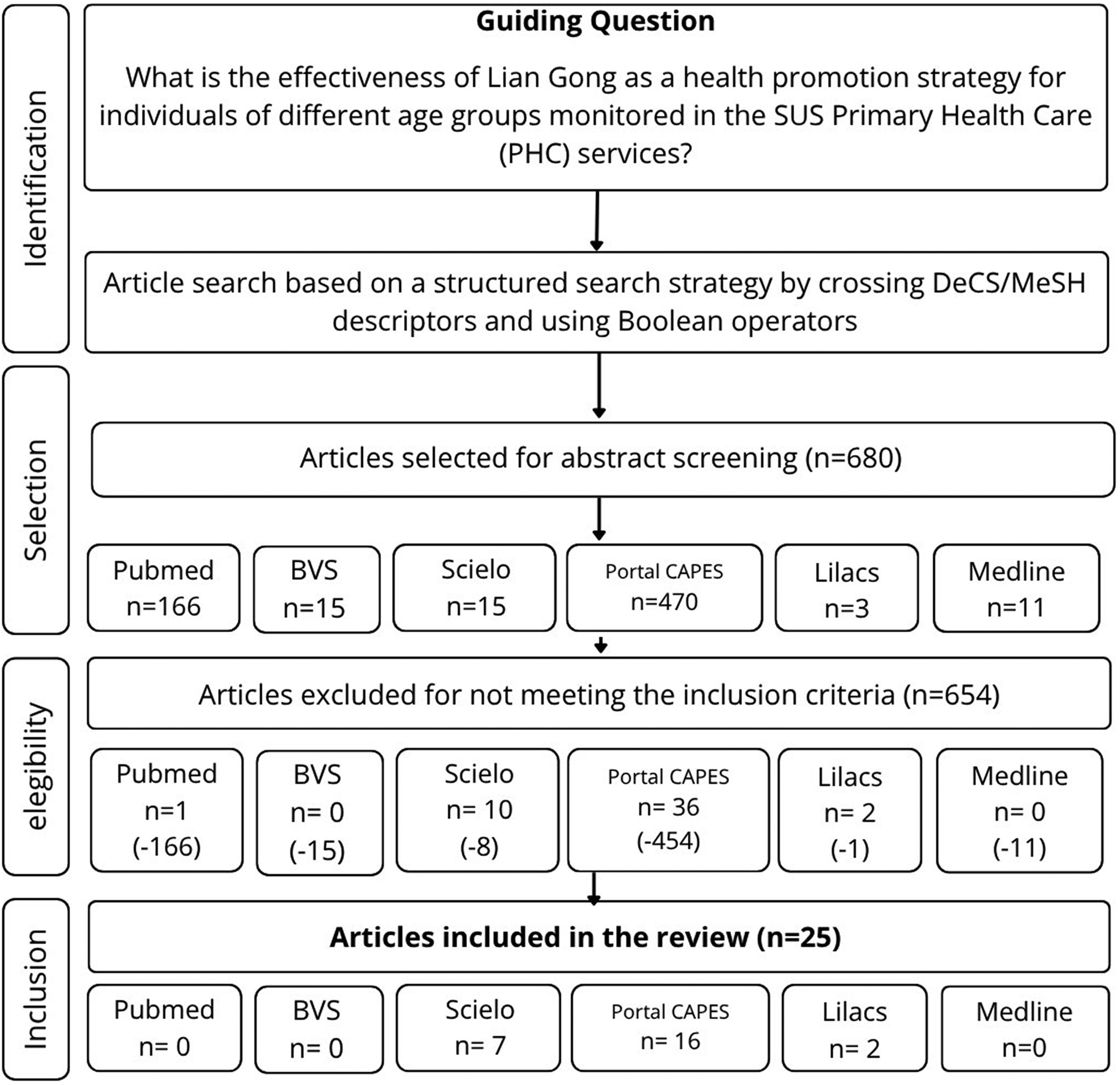
Flowchart of the study selection process to compose the systematic review, 2024.
From the sample, it can be observed that all studies indexed in the BVS, MedLine, and PubMed databases were excluded from the sample because they did not meet the criteria. Of the 15 studies found in the BVS and of the 11 found in MedLine, no article was selected. Of the 166 found in PubMed, only one was selected, but after reading the full text, it was excluded. Of the databases whose studies filled up the sample, three studies are indexed in Lilacs, two were selected and are included in the final sample, one of which was excluded from the analysis of the abstracts. Of the 15 studies found in SciElo, 10 were selected, and after reading the full text, three were excluded; and of the 470 studies from the Capes Periodicals Portal, 36 were selected, and after reading the full text, 20 were excluded.
All scientific articles selected in the sample were read in full to compose the review, whose characteristics extracted from the reviewed studies will be shown in above.
Of the total eligible sample (n = 25), the methodological representation is composed of systematic review meta-analysis (32%), randomized clinical trial (32%), comparative cross-sectional study and qualitative observational study (8% each), in addition to comparative analysis study, observational cross-sectional study, observational case study, evaluative research with a qualitative approach and comparative study (4% each) (Table 1).
Characterization of Articles Included in the Systematic Literature Review, 2025.

Source: Material prepared by the authors Nunes and Santos (2009), Ho et al. (2011, 2012), Chan et al. (2013), Kim et al. (2015), Randow et al. (2017), Galvanese et al. (2017), Wayne et al. (2017), Song et al. (2017), Bobbo et al. (2018), Santos et al. (2018), Manfroi et al. (2019), Wu et al. (2019), Guo et al. (2019), Pölönen et al. (2019), Phansuea et al. (2020), Jin et al. (2020), Oh et al. (2020), Ye et al. (2020), Lopes et al. (2021), Carcelén-Fraile et al. (2021), Park et al. (2022), Carcelén-Fraile et al. (2022), Manzaneque et al. (2023), and Tao and Li (2023).
Regarding the year of publication, most articles were published in the last 5 years (56%). Considering the GRADE method, the publications present high (64%), low (20%), and moderate (16%) levels of evidence (Brazil. Ministry of Health, 2014).
Most of the studies were published in China (32%), between 2012 and 2023, in the journals Frontiers in medicine (8%), Frontiers in Physiology (12%), as well as Annals of behavioral medicine, The Scientific World Journal, Parkinsonism & Related Disorders, Medicine (Baltimore) and Environmental Research and Public Health (4% each), available on the Capes Portal database (64%), addressing the effects of Lian Gong on people with different health conditions, such as chronic fatigue, COPD, Parkinson's disease, major depressive disorder, metabolic syndrome and osteoarthritis in the knee.
In the Brazilian literature (24%), the studies were published between 2017 and 2021, in the journals International Archives of Otorhinolaryngology, Brazilian Journal of Pain, Revista Mineira de Enfermagem, Ciência & Saúde Coletiva, Cadernos de Saúde Pública and Revista Brasileira de Promoção da Saúde (with 4% each). Most of the national studies are available in the Capes Portal database (64%) and address the benefits of the practice and its relationship with health promotion in primary care.
Analyzing the descriptors, it is observed that Qigong (60%), Exercise (28%), Complementary Therapies (20%), Quality of life (16%), in addition to Elderly and PHC (12% each) were the most used. The descriptor Tai Chi appears in 13% of the results, since it was a technique used together with Qigong in the selected articles.
Most article titles directly mentioned Qigong (72%), followed by Lian Gong (16%), and the remainder only emphasized the term body, meditative, or complementary practices (12%).
A detailed analysis of the participant demographics reveals a significant concentration of research on specific age cohorts. The data indicate that 92% (23 out of 25) of the reviewed studies focused on middle-aged and older adult populations, with the mean age of participants consistently exceeding 50 years. Furthermore, a substantial portion of this research, 56% (14 out of 25) of the studies, specifically targeted participants aged 60 and older. This demographic focus is consistent with the prevalent application of these mind-body practices for managing age-related health conditions and promoting well-being in later life.
Regarding the health level, all articles address the practice of LG18T in a primary care setting, albeit in a way that complements actions originating from secondary or tertiary care services.
All articles reported positive results after Lian Gong or Qigong practices by interest groups. Most reported improvement in symptoms of pain, depression, fatigue, insomnia, motor function, and overall improvement in quality of life (64%). Others reported positive results in relation to chronic cardiovascular diseases (8%), immune system (8%), cognitive function (4%), dizziness (4%), post-menopause (4%), functional recovery of stroke survivors (4%), and osteoarthritis (4%).
Discussion
The results of this study were qualitatively analyzed, leading to the construction of a Map Tree that visually organizes the main findings (Figure 2). The analysis reveals a broad overview of the effects of Lian Gong in Primary Care, ranging from impacts on physical and motor conditioning to benefits for mental health and psychosocial aspects, in addition to highlighting the challenges in its implementation. To further analyze the most prominent points, the following discussion will focus on three central axes: the role of Lian Gong as a tool for non-pharmacological pain treatment; its impacts on physical conditioning and muscle strengthening; and finally, the improvement in interpersonal relationships and the mental health of practitioners.
Lian Gong/Qigong as a tool for non-pharmacological pain treatment. Pain is a subjective and variable experience, the effects of which are modulated by multiple factors (Lopes et al., 2024). It is a consensus that living with chronic pain has a negative impact on quality of life, since it is related to individual expectations and frustrations despite the ability to perform activities of daily living and work. Thus, the lack of health education on pain management in everyday life causes the majority of the population to view health care only through curative means, in which drugs end up being the only viable way to meet their needs (Vieira et al., 2022).
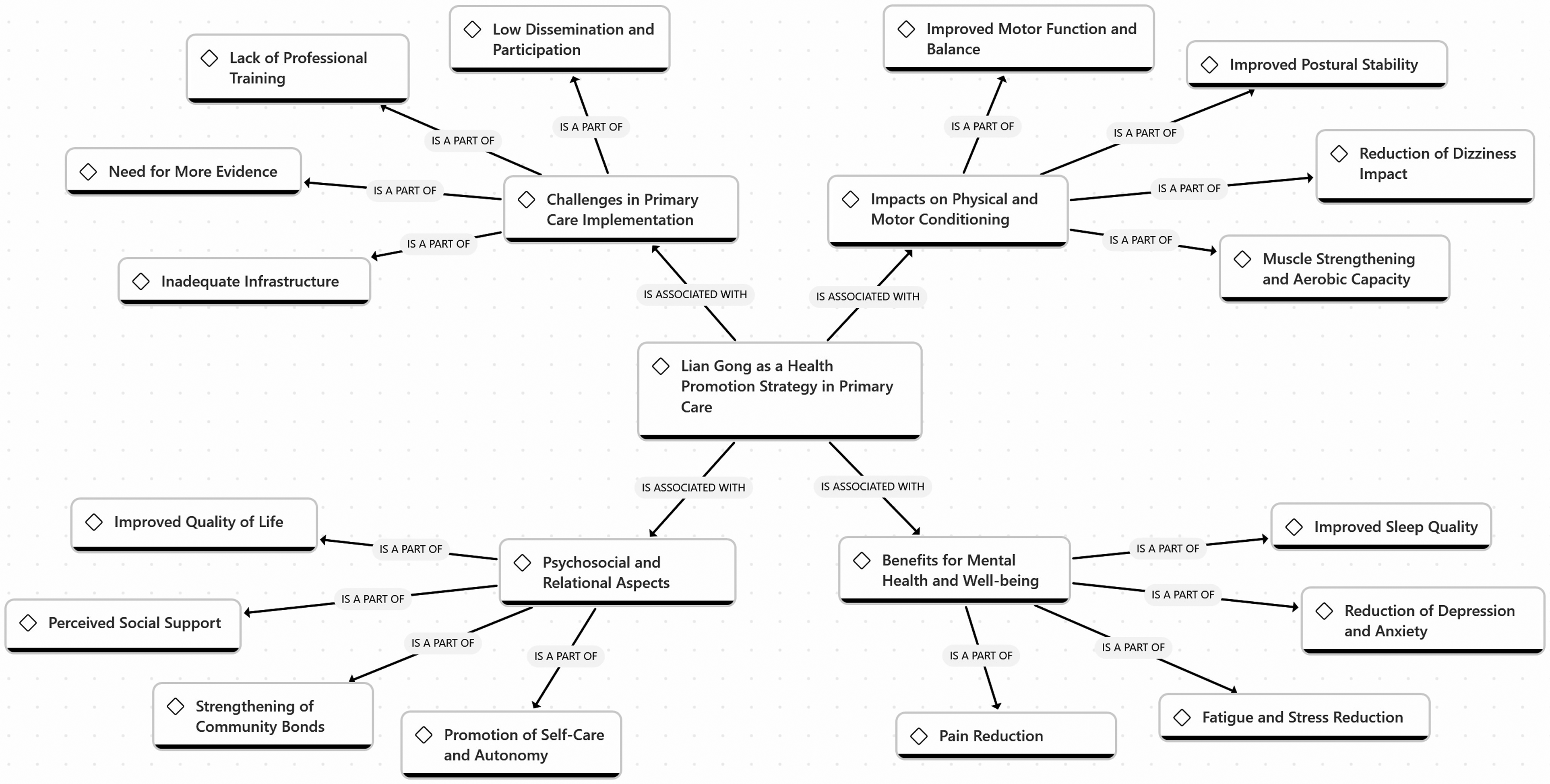
Thematic map of the main findings on Lian Gong as a health promotion strategy in Primary Care.
Unlike the chronic use of pain relief medications, which can lead to adverse events such as nausea, dizziness and drug tolerance, in addition to possible drug dependence (Moens et al., 2024), the practice of regular physical activity, such as Lian Gong, in addition to other approaches, such as psychotherapy, help to reduce the perception of pain and overcome deficiencies related to chronic pain in individuals (Bäckryd et al., 2024; Leźnicka et al., 2024).
At this point, the research results are convincing in linking the continued practice of Lian Gong as a non-pharmacological resource for relieving muscle and osteoarticular pain. Studies show that the breathing and relaxation techniques used in the practice of Lian Gong reduce psychosomatic symptoms, while the dynamic and symmetrical movements promote greater control of joint flexion and extension, reducing pain (Lopes et al., 2021; Ye et al., 2020).
Corroborating what is described in the literature, physical activities provide positive relief in the daily lives of individuals, ultimately offering a kind of reward, both physical and mental, to practitioners, generating a determination to continue with physical activity for a longer period of time (De Andrade et al., 2023). In addition, body movement helps to improve cognitive functioning, as well as providing greater physical disposition to the practitioner (Corrêa & Dias, 2023).
Impacts on physical conditioning and muscle strengthening. The literature review makes it clear that the practice of Lian Gong improves physical conditioning and muscle strengthening, since the movements performed promote energy consumption and fat burning (Tao & Li, 2023), helping to reduce cardiovascular risk factors and improving the mobility and stability of practitioners (Park et al., 2022).
Therefore, encouraging the practice of physical and bodily activities, such as Lian Gong, is part of public policies associated with a context of combating chronic non-communicable diseases (Vieira & Carvalho, 2024), given that improving flexibility and balance helps prevent falls and bone fractures, in addition to promoting the maintenance of muscle mass (Palma et al., 2014).
However, access to physical activity is unequal in Brazil, linked to the socioeconomic context of individuals (Carvalho et al., 2024). Thus, considering the practices offered by the SUS, Lian Gong can act as a facilitator of access to physical activity and, therefore, proves to be an important tool for improving quality of life, accessible to the entire population.
On the other hand, excessive physical activity can lead to fatigue not only of the muscle group, but also of the central nervous system (Zhang, 2023). In this sense, for safe physical exercise, it is necessary to perform preparatory and final activities, such as aerobic exercises and exercises using one's own hands or with adequate weightlifting. Finally, considering the practice of physical activities in the elderly, it is essential that this group receives constant guidance to avoid the development of injuries (Sang, 2023). To this end, it is recommended to perform stretching exercises before practicing physical activity, followed by relaxation exercises after finishing.
Improvement in interpersonal relationships and the way of dealing with everyday life events, directly impacting people's mental health. Studies show that the collective practice of Lian Gong promotes social relationships, since the feeling of belonging to a group of regular practitioners of physical or mental activity brings comfort and security, as well as ongoing motivation to maintain the practice as a healthy lifestyle habit, as highlighted by studies conducted in Brazil and in various parts of the world (Carcelén-Fraile et al., 2022; Galvanese et al., 2017; Jin et al., 2020; Phansuea et al., 2020). Other authors emphasize in their studies that involvement in physical, mental, and sports activities in general makes individuals feel like they belong to a social group, favoring the development of bonds and friendships within and outside the context of the activity (Baptista & Brandão, 2022; Corrêa & Dias, 2023).
In general, public leisure spaces are places where social relationships occur and, for this reason, many individuals, especially the elderly, seek out city gyms, health units, or other social spaces in order to avoid social isolation (Nascimento & Gomes, 2024). Considering that the elderly population has greater difficulty in social integration due to ageism (Fuente et al., 2023), social groups created to encourage physical and mental activity constitute an important socialization strategy for this group, encouraging the recovery of autonomy and self-care (Experiences of elderly people living alone, 2020).
In this sense, we can consider the impacts of the COVID-19 pandemic and restrictions on social interaction, changing the dynamics of the population, especially the routine of the elderly, reducing their socialization and contact with family and friends, and the repercussions on the mental health of this group (Fuente et al., 2023).
Furthermore, stress management is essential for dealing with everyday life events. Studies show that techniques such as mindfulness and progressive muscle relaxation have proven effective in reducing anxiety and improving quality of life, since the person acts as their own controller, developing skills to accept, without judgment, unpleasant physiological and psychological responses. In addition to focusing on the present moment, these practices promote a state of calm and mental clarity, allowing a more balanced response to challenges, which can be explained by the reduction in the frequency of negative thoughts observed in the practices, resulting from the non-judgment implicit in the procedure (Guimarães et al., 2021). These resources prove to be important strategies in reducing symptoms of anxiety and depression.
Some studies, however, highlight that, although practices such as Qigong and Tai Chi can have beneficial effects on the immune system, there are attributes that perform worse. In particular, they indicate that, despite the increase in the number of cells of the innate and adaptive immune system, there was no significant reduction in the levels of inflammation, measured by biomarkers such as C-reactive protein and cytokines (Oh et al., 2020), and that, although there was a distinct immunological modulation, some parameters of white blood cells showed a decrease, which can be interpreted as a less robust immune response (Manzaneque et al., 2023). These results suggest that, despite the general benefits, there are limitations to the effectiveness of these practices in reducing systemic inflammation and maintaining a balanced immune response.
Despite the benefits discussed, it is crucial to consider the challenges of implementing PICS in Primary Care, a theme that also emerged prominently from the data analysis (Figure 2). Implementing PICS in PHC settings faces significant challenges due to a lack of adequate training. Many health care professionals lack specific education or ongoing training in PICS, which limits their ability to effectively integrate these practices into daily care. Furthermore, PHC facilities often lack the infrastructure to accommodate the specific needs of PICS, such as adequate spaces for group activities or materials needed for certain therapies (Galvanese et al., 2017). Furthermore, the lack of standardized protocols and robust scientific evidence on the effectiveness of some practices contributes to hesitation in adopting these approaches (Santos et al., 2018). Consequently, PICS integration in PHC settings is often fragmented and inconsistent, undermining the potential of these practices to promote patient health and well-being.
Final Considerations
The research was focused on works that contained LG18T or Qigong as a theme, associating it with health promotion and PHC. This decision was made to analyze national and international scientific production on the subject in the main health databases. The inclusion of Lian Gong in holistic nursing practice and healthcare research presents significant implications for advancing knowledge and improving patient-centered care. The analysis of the literature shows that among the attributes best evaluated for Lian Gong practitioners, the improvement of symptoms of pain and depression stands out, while the worst performances found were related to changes in the individuals’ immune systems.
Lian Gong stands out as a non-pharmacological method of pain treatment, offering a holistic approach that goes beyond physical relief. It's regular practice not only contributes to muscle strengthening, but also promotes a significant improvement in interpersonal relationships and how individuals deal with everyday challenges, positively impacting the mental health of practitioners.
It is worth noting that most of the services involved in the studies were Brazilian and Chinese, applied in Basic Health Units and in the Family Health Strategy, showing that the services evaluated need to strengthen the components of the structure and process to facilitate the population's access to PICS and obtain better performance of PHC in health promotion. Lian Gong's accessibility is one of its greatest assets, requiring few resources and presenting minimal negative impacts.
To integrate Lian Gong into PHC, it is necessary to overcome some obstacles, since the services evaluated showed a need to strengthen the components of the structure, in addition to the lack of training for health professionals. Furthermore, the incipient recognition of these practices contributes to inadequate implementation, making it important to have greater dissemination of their scientific recognition, facilitating access by the population.
A limitation of the present review is its exclusive focus on primary care settings. While this approach was intentionally chosen to synthesize evidence most relevant to community and public health systems, it necessarily omits a significant and growing body of research from specialized care arenas. For example, promising findings on the application of these practices in fields such as oncology and cardiac rehabilitation were not included. Therefore, the conclusions of this review should be interpreted within the context of primary care, as they do not represent the full spectrum of evidence for these mind-body practices across all healthcare settings. Future reviews dedicated to these specialized contexts are warranted.
The benefits of practicing Lian Gong, on the other hand, are vast and well-documented, especially among the elderly population. However, there is a gap in the literature regarding the applicability of Lian Gong among the younger population. Future research should explore how this practice can benefit different age groups, considering the specific needs of each group.
In short, Lian Gong presents itself as a valuable therapeutic practice, with the potential to improve the physical and mental health of individuals, being a beneficial addition to comprehensive care strategies in public health.
Footnotes

Author Contribution(s)
IMDR participated in the conception, elaboration of the project, collection, analysis, and interpretation of data, writing of the article, and final approval of the version to be published. GBD participated in the elaboration of the project, collection, analysis, and interpretation of data, writing of the article, and final approval of the version to be published. LN participated in the conception, elaboration of the project, collection, analysis, and interpretation of data, writing, and relevant critical review of the intellectual content of the article, and final approval of the version to be published. The authors are responsible for all aspects of the work in ensuring the accuracy and integrity of any part of the work.
Funding
The author(s) disclosed receipt of the following financial support for the research, authorship, and/or publication of this article: This work was carried out with the support of the Institutional Scientific Initiation Scholarship Program – Scientific and Technological Development National Council.
Declaration of Conflicting Interests
The author(s) declared no potential conflicts of interest with respect to the research, authorship, and/or publication of this article.