







Abstract
Moral license researchers find that White people more readily agree with racial discrimination after interacting with nonprofits, but nonprofit organizations often support racial diversity. This study explores whether White nonprofit workers who are prompted to describe their work will identify with the equality espousals of their employers by indicating lower levels of discrimination or indicate higher levels of discrimination as the moral license literature predicts. An online experiment examines how describing nonprofit work influences race and gender opinions, finding that White nonprofit workers indicate lower agreement with a discrimination index after describing their work. These findings imply that racial institutional context is important for moral license and organizational identification. For nonprofits, the finding supports the use of strategic practices to manage diversity even when those practices do not have explicit linkages to race and gender equality.
Many nonprofits work to make the world more equitable while serving diverse communities (Jung et al., In Press). Contrarily, moral license researchers find that White people who describe their own virtuous deeds are likely to decrease support for racial equality (Effron et al., 2012), and nonprofit workers do work that many consider virtuous (Cascio & Plant, 2015). This theoretical tension is complicated by race. Research indicates that White workers more readily identify with predominantly White organizations (Cole et al., 2016; Gusa, 2010), and most nonprofit organizations are predominantly White (Kunreuther & Thomas-Breitfeld, 2020).
This study grounds an investigation of nonprofit work, morality, and race on the theories of organizational identification, moral license, and institutional Whiteness. Organizational identification is the theory that workers incorporate the values of their organizations as their own, even defining their own identities with reference to their workplace (Kreiner & Ashforth, 2004). Moral license is the psychology theory that people manage perceptions and/or feelings of morality for social and psychological reasons, sometimes using virtuous actions to justify support for racial discrimination (Monin & Miller, 2001). These two theories generate competing hypotheses for nonprofit workers who describe their work that is often perceived as virtuous (Cascio & Plant, 2015) while working for organizations that generally support race and gender equality (Weisinger et al., 2016). How, then, does moral license and organizational identification of White nonprofit workers influence support for race and gender equality?
Heeding the recommendations of Bertelli and Riccucci (2022), this study places these behavioral theories in an institutional framework by contextualizing the research in a White institutional presence (Gusa, 2010). White institutional presence conceptualizes race as a collection of actions including rule following, norm acquiescence, and cultural engagement benefiting those who appear phenotypically White (Perry, 2012). White institutional presence has implications for diversity management in nonprofits. Research into nonprofit diversity management explicates arenas of diversity practices including strategic planning, recruitment, hiring, training, and monitoring (Mason, 2020). White institutional presence informs diversity management in each of these areas.
To explore how White institutional presence influences organizational identification and moral license, I conducted an online experiment of nonprofit workers who were asked to describe their work either before or after taking the Quick Discrimination Index (QDI) (Ponterotto et al., 2002). White nonprofit workers who described their work first indicated more support for racial diversity and gender equality compared with White workers who described their work after taking the QDI and compared to workers of other racialized identities. In the conclusion, I describe the implications of this study for different arenas of diversity management to provide a roadmap for understanding how psychology and White institutional presence can be better managed for more effective nonprofit organizations and a more equal society.
Moral License
Moral license researchers use experimental methods to find that people earn moral capital when they inform researchers of their virtuous deeds and use this moral capital to justify lower support for racial diversity (Effron et al., 2012). Moral capital is psychological currency that is earned as people do virtuous deeds to increase their moral perceptions (Monin & Miller, 2001). Moral license studies regularly use support for racially discriminatory ideas to measure moral license. Monin and Miller (2001) introduce the concept of moral license finding that participants were more likely to express racist ideas after selecting a Black candidate for a job even when the candidate was objectively more qualified. Effron et al. (2012) find that White participants who described past virtuous behavior were more likely to express support behavior that could be considered racist such as a White woman at night crossing the street when seeing a Black man. Also, Effron (2014) finds that White people who anticipated making a decision that could appear racist were less tolerant of racist ideas, while Effron et al. (2009) find White people who told interviewers they were going to vote for Barack Obama were more likely to agree that Whites were better suited for certain jobs. Bradley-Geist et al. (2010) find that White participants were more likely to claim they had a friend of Hispanic ethnicity after being asked to write an essay opposing affirmative action for Hispanic people than after being asked to write a neutral essay. Overall, this research indicates that White people are more willing to agree with racist ideas after they have had an opportunity to prove that they are virtuous in some way.
Moral license literature also indicates a cross-domain licensing effect where moral license created through interactions with nonprofits is measured as greater tolerance of racist ideas unrelated to the nonprofit. For instance, Sachdeva et al. (2009) find that people were less likely to donate to a nonprofit after writing an essay about a time they performed a good deed than after writing a critical essay about themselves. Giebelhausen et al. (2021) find that donating to nonprofits at checkout in a grocery store increased the likelihood of indulging in a “guilty pleasure,” and Chang and Chu (2020) find that buying a cause-related marketing product increased the likelihood that people eat cookies higher in fat, calories, and sugar than those who got a discount on a non-cause related product. Finding cross-domain moral license between nonprofits and race, Cascio and Plant (2015) find that people who agreed to give time, blood, or receive information about a nonprofit were more likely to agree with racist ideation than if they were asked to donate afterward.
As with most psychological experiments, the moral license literature should be approached with healthy skepticism. Some scholars argue that the moral license phenomenon is overstated by publication bias (Kuper & Bott, 2019). Several attempts to replicate moral licensing experiments have failed. In one study, Blanken et al. (2014) fail to replicate three studies. In another, Rotella and Barclay (2020) fail to replicate a cross-domain licensing effect and hypothesize that something about the online environment made moral license less likely. These studies indicate that more research on moral licensing is needed. One area of moral licensing that has almost no research is how nonprofit employment is related to moral license.
Overall, moral license theory supports the hypothesis that White nonprofit workers will indicate higher scores on a discrimination index after having boosted their self-perception with moral licensing by describing the virtuous work they do. This supports the hypothesis labeled H(+) because the hypothesis predicts a positive correlation between moral license and discrimination.
Nonprofit Organizational Identification
If moral license theory infers that doing good deeds with nonprofits may generate higher levels of discrimination, organizational identification theory provides a competing hypothesis. Organizational identification is the theory that employees align their opinions and approaches with their employers. Kreiner and Ashforth (2004) describe organizational identification as when employees “define themselves at least partly in terms of what the organization is thought to represent” (p. 2). There are many prosocial benefits to organizational identification including belongingness, cohesion, citizenship behaviors, and a sense of control at work (Ashforth & Mael, 1989). However, at least one study finds that organizational identification may be moderated by racial congruence between those who control the organizational culture and the employee identifying with it (Cole et al., 2016). In other words, since most nonprofit workers are White, workers who are White may be more likely to identify with nonprofit organizations.
The mission orientation of nonprofit organizations may also influence organizational identification. Some research indicates that workers in nonprofits are more driven by mission than similarly situated organizations in the for-profit and government sectors (Borzaga & Tortia, 2006; Stater & Stater, 2019). For example, nonprofit workers choose to work for organizations and stay in their jobs longer when the organizations’ missions align with their own values (Kim & Lee, 2007; Wang, 2022).
Organizational identification contextualizes moral license by setting normative expectations for workers. Falomir-Pichastor et al. (2018) find that Swiss high school and college students were more likely to espouse egalitarian beliefs after being exposed to polling indicating that majorities of their peers also held egalitarian beliefs, but their support for equality fell away when researchers told them they received pro-egalitarian scores on a discrimination test. Also, there is some indication that racialization changes how people identify with nonprofit organizations. Drezner (2018) finds that White supporters of universities identified less readily with people who shared their identities in marketing materials than supporters from other racialized groups. Given that most nonprofits are populated predominantly by White people (Weisinger et al., 2016) and are likely to espouse a dedication to equality (Jung et al., In Press), the increase in organizational identification among White nonprofit workers provides an alternative hypothesis. Contrary to the moral license hypothesis, H(+,), the organizational identification hypothesis predicts a negative correlation between describing one’s work and discrimination agreement (H(
Nonprofit White Institutional Presence and Diversity Management
Most nonprofits operate within a social context that is predominantly White. Bertelli and Riccucci (2022) argue that behavioral research will not meaningfully contribute to the management of public organizations without deliberate attention paid to integrating experimental research into theoretical frameworks. Behavioral models must examine the congruence between institutions and the values of public organizations like nonprofits to determine when institutions create conflict or facilitate more effective service (Bertelli et al., 2022). Of particular interest is the influence of race and gender. “The reason we consider race and gender as likely sub-groups that may respond differently to a given intervention is because of the historical, systemic, and institutional contexts that shape gendered and racialized behavior” (Bertelli et al., 2022, p. 10). There is arguably no racial identity that has had more influence over nonprofits than Whiteness (Nickels & Leach, 2021).
Even within a national context where White people control a disproportionate share of resources, White people are overrepresented among nonprofit workers and especially among nonprofit executives and board members, more so than the for-profit or government sectors. White nonprofits in the United States are about 68% non-Hispanic White, as opposed to the U.S. population which is only 58% non-Hispanic White (Census, 2020; Independent Sector, 2021). Leadership in U.S. nonprofits is even more unrepresentative, with White people serving as 87% of chief executives, 83% of board chairs, and 78% of board members (BoardSource, 2021).
Whiteness is an institution benefiting those who are phenotypically White (Portillo & Humphrey, 2018). Institutional Whiteness is a collection of rules, norms, and culture transmitted through organizational inertia, the influence of other organizations, and the presence of people who are themselves influenced by Whiteness (Portillo & Humphrey, 2018; Scott, 2001). The influence of institutional Whiteness on universities has been described as White Institutional Presence (Gusa, 2010). There have been multiple calls for more research on the influence of Whiteness on the third sector (Feit et al., 2021; Nickels & Leach, 2021).
White institutional presence is particularly relevant when conducting research on moral license because so many questions have been raised about the relationship between Whiteness and morality. Philosophers (Mills, 1997) and public administration theorists (Nickels & Leach, 2021) remark upon a connection between institutional Whiteness and how White people view morality. Although few studies and almost no experiments have tested the theory, the literature on institutional Whiteness relies on the assumption that White people are conditioned to approach morality and race differently than their peers who are racialized otherwise. The case is made in the historical understanding of Whiteness as an institution (Mills, 1997), in ethnographic studies of White public servants (Matias, 2016), sociologically through civic activities like voting (Metzl, 2019), and in psychological studies including moral license (discussed above) and implicit association experiments (Banaji & Greenwald, 2013). Several moral license experiments have found that White people tend to react with higher levels of racial discrimination than other racialized groups when they are given a prompt meant to generate more license (e.g., Effron, 2014; Effron et al., 2009). Because these studies use racial discrimination as a measure of moral license, it is important to note that multiple studies find that White people are more likely to have implicit associations in preference of White faces, White children, and lighter skin tones, than Black people are to prefer Black faces, Black children, and darker skin tones (Morin, 2015; Nosek et al., 2007). The majority of racialized groups apart from Black show preferences for racial stereotypes that benefit White people (Nosek et al., 2007). Although quantitative and experimental evidence is still lacking in this area, if moral license researchers are correct to measure morality at least partially as racial discrimination, the bulk of the quantitative and experimental evidence indicates that exposure to White institutional presence causes people of all races to prefer White people, with the possible exception of their own racialized identities (Banaji & Greenwald, 2013; Morin, 2015; Nosek et al., 2007).
White institutional presence also relies on assumptions of homogeneity that are self-reinforcing (Gusa, 2010) and are likely to influence organizational identification. Heckler (2019) argues that nonprofits exchange donations for moral license in ways that amplify the voices of wealthy mostly-White donors, while Nickels and Leach (2021) argue that color consciousness is an important step toward dismantling this Whiteness in nonprofits. In Feit et al.’s (2021) study of organizations doing outreach for the 2020 Census, nonprofit workers describe themselves as walking a tightrope between supporting a system that harms members and encouraging members to challenge that same system. Also, Perry (2012) finds that donation structures in religious nonprofits maintain advantages for White members by benefiting those who more easily conform to White norms. One national survey of nonprofit workers and managers indicates that White people have structural advantages in nonprofits, most of which are predominantly White-run (Kunreuther & Thomas-Breitfeld, 2020). These studies indicate that most employees who organizationally identify with nonprofits work within a White institutional presence. As Danley and Blessett (2022) find, even workers who are working in nonprofits founded by people who are racialized as Black and Latino navigated a sector saturated with incentives to conform to institutional Whiteness. Most research indicates that these incentives act most powerfully upon people racialized as White, but that almost all workers in the sector are influenced by the White institutional presence regardless of their race (Nickels and Leach, 2021).
With White institutional presence operating on nonprofit organizations, nonprofit leaders turn to diversity management to attempt to generate equality and inclusion in ways that are in tension with theories of institutional race and gender. Much of the diversity management research in nonprofits and business literature focuses on recruitment and retention of diverse employees, executives, and board members (Mason, 2020; Roberson, 2019). In a synthesis of diversity management research, Roberson (2019) finds that most research focuses on programs and practices to support diversity and realize the benefits of diverse organizations. Borrowing from literature on best diversity practices in academic libraries (Kreitz, 2008), Mason (2020) divides diversity management practices into categories including (a) linking diversity to strategic planning such as mission alignment tasks, (b) recruiting a diverse workforce, (c) selecting a diverse workforce, (d) training and development of diverse staff, (e) monitoring effectiveness of diversity initiatives, and (f) providing work–life balance through flexibility and other human relations management tools (Mason, 2020). Of these six types of practices, all but one, linking diversity to mission, are focused on diversifying the workforce. Researchers of institutional race and gender argue that the emphasis on diversifying employees places the onus for change back on the shoulders of those who are excluded from decision-making in the first place by White institutional presence (Heckler, 2019).
The preliminary stage of many successful diversity management programs is the incorporation of diversity directly into the mission of an organization. Ewoh (2013) argues that diversity management must become integrated into the overall mission of an agency. Konrad et al. (2016) find that injecting diversity as a priority in business strategies created higher measures of diverse hiring and retention, concluding that diversity management must be a holistic enterprise. In these studies, there is a connection between overall organizational mission that includes diversity and more diverse, but the pathways of that link are less clear. This opaque pathway is part of the reason that Roberson (2019) argues for better understanding of the individual and intrapersonal psychology of diversity commitments in the workplace. Combined with findings that nonprofits are working to integrate diversity into their work (Jung et al., In Press), this research indicates that diversity management could be a promising way to mitigate the effects of moral license by leveraging effective organizational identification to the cause of equality, while the White institutional presence pervades the nonprofit organizational environment.
Method: An Online Experiment
I used an online experiment with nonprofit workers of many different races in Omaha to test how White nonprofit workers’ support for racial diversity and gender equality changed after describing their work, and how that compared with workers from other racialized groups.
Sampling
The sample included 229 workers who completed an online survey distributed to the membership of an Omaha-area nonprofit association supporting member nonprofits by providing low-cost HR systems, trainings, and other services. Ethical review was provided by the institutional review board of the University of Nebraska Medical Center. The survey was distributed from the nonprofit directly to all members in a periodic listserv email sent in November 2019 to 6,241 individuals. Respondents were encouraged to help the researcher better understand the “race and gender opinions of nonprofit workers.” Two hundred and twenty-nine people completed the entire survey for a 3.67% participation rate. Seventy-nine people completed the consent form but did not complete the survey, and that most of those (44) were in the treatment group, indicating a possible randomization issue discussed in more detail below.
Using text-entry descriptions of participants’ workplaces, I determined that the vast majority (87%) worked for nonprofits engaged in human services such as youth service organizations, domestic abuse shelters, and foodbanks (Table 1). Another 7% worked for foundations, 2% worked for membership organizations, 3% worked for environmental nonprofits, and about 4% worked for various other kinds of nonprofits such arts organizations or groups dedicated to promoting activities/sports/games. Around 76% of the sample was between 18 and 54 years old and 43% reported household incomes of <US$80,000 a year (Table 1). The sample is 76% White and 21% men, statistics that are similar to the nonprofit sector generally (Kunreuther & Thomas-Breitfeld, 2020). Although it is impossible to determine the demographics of the group that declined to continue after consenting to participate, the treatment group (N = 106) has 17 fewer participants than the control (N = 123). The treatment group is two percentage points more White (78%) and three percentage points more men (24%) than the sample, and a lower percentage of adults older than 65 (Table 2).
Summary Statistics of QDI, Treatment, and Income.
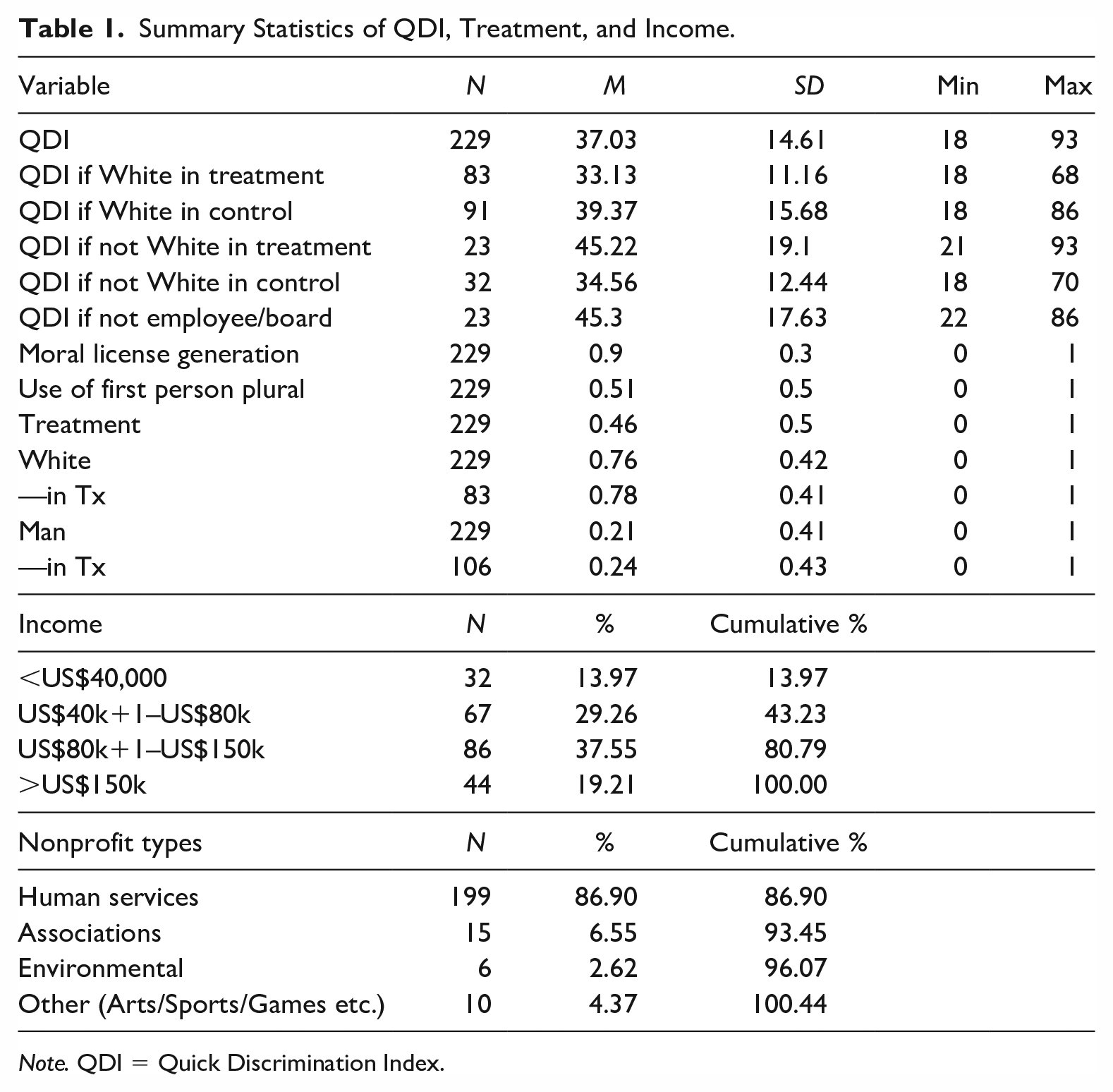
Note. QDI = Quick Discrimination Index.
Summary Statistics of Age and Position.
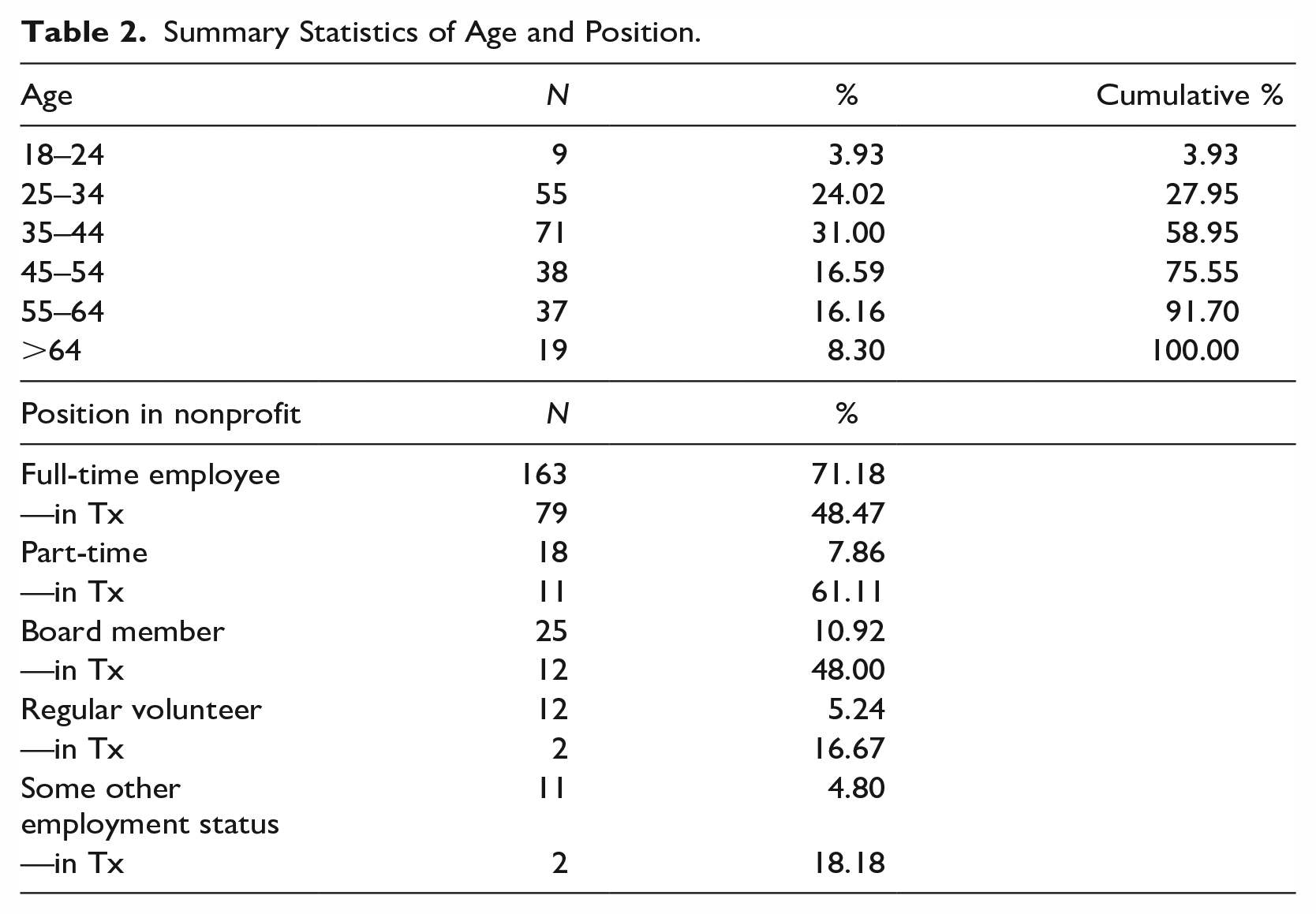
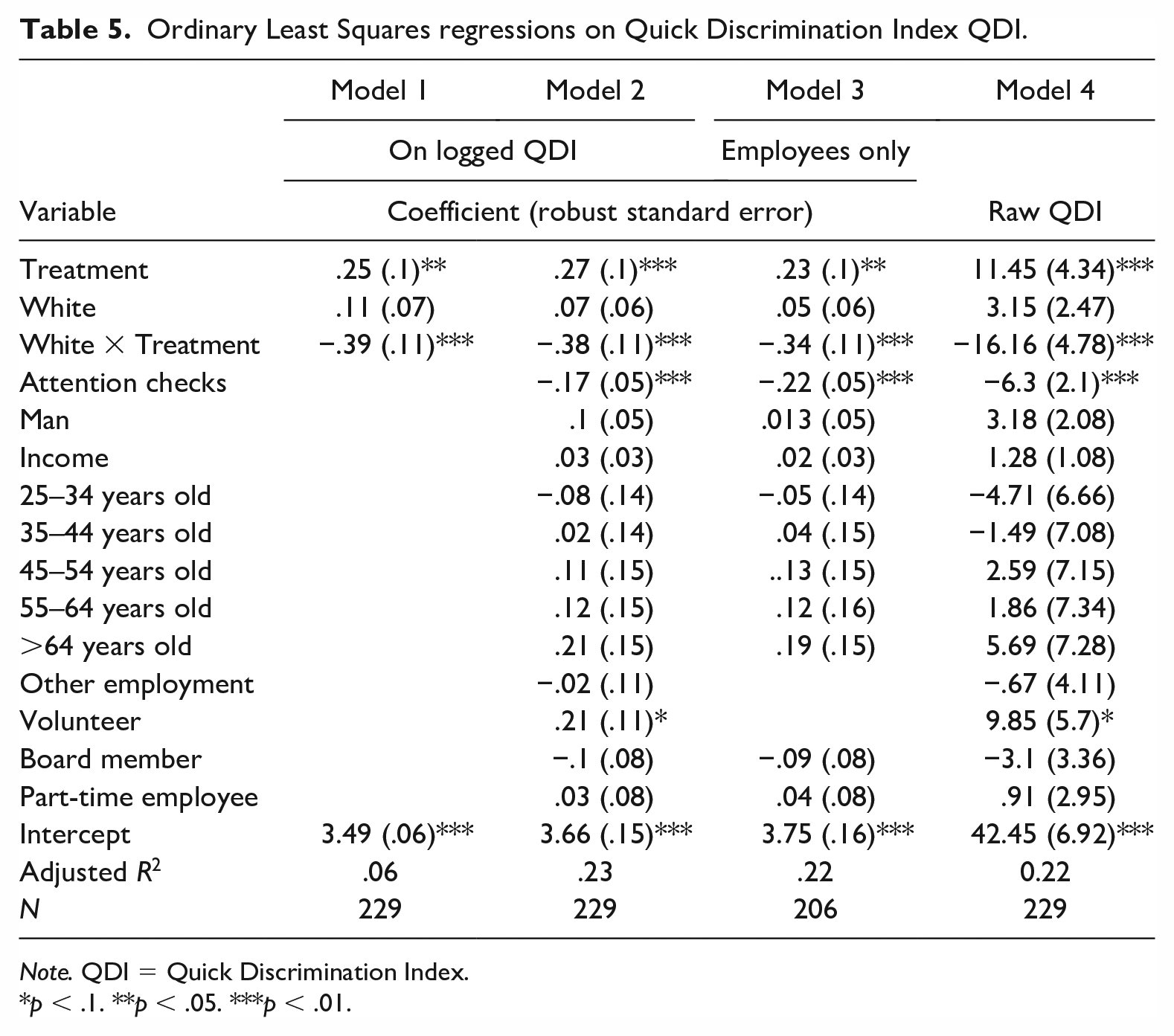
When considering employment status, the differences between the treatment group and the control group become most apparent. Of board members and employees, 49.5% were in the treatment (Table 2). Of those who were regular volunteers or “some other status” in the organization, including contractors and temporary workers, 17% were in the treatment group, accounting for 19 extra responses in the control group. A probit regression of race, gender, income, categorical age, attention checks, and volunteer/other work status on the treatment condition indicates that the only group that is statistically significantly less likely to be in the treatment group is non-employees (p < .05; Table 3). It is possible that those in this group did not have a ready answer for questions about their nonprofit’s mission, while the volunteers and contractors who had already taken the survey may have completed the text-entry portion after the Likert-type discrimination index in line with the sunk-cost fallacy (Kahneman, 2011). To account for this potential bias, I control for work status, and separately report results of the analysis on a sample excluding non-employees (Table 5).
Randomization Check Probit Regressions on Treatment.
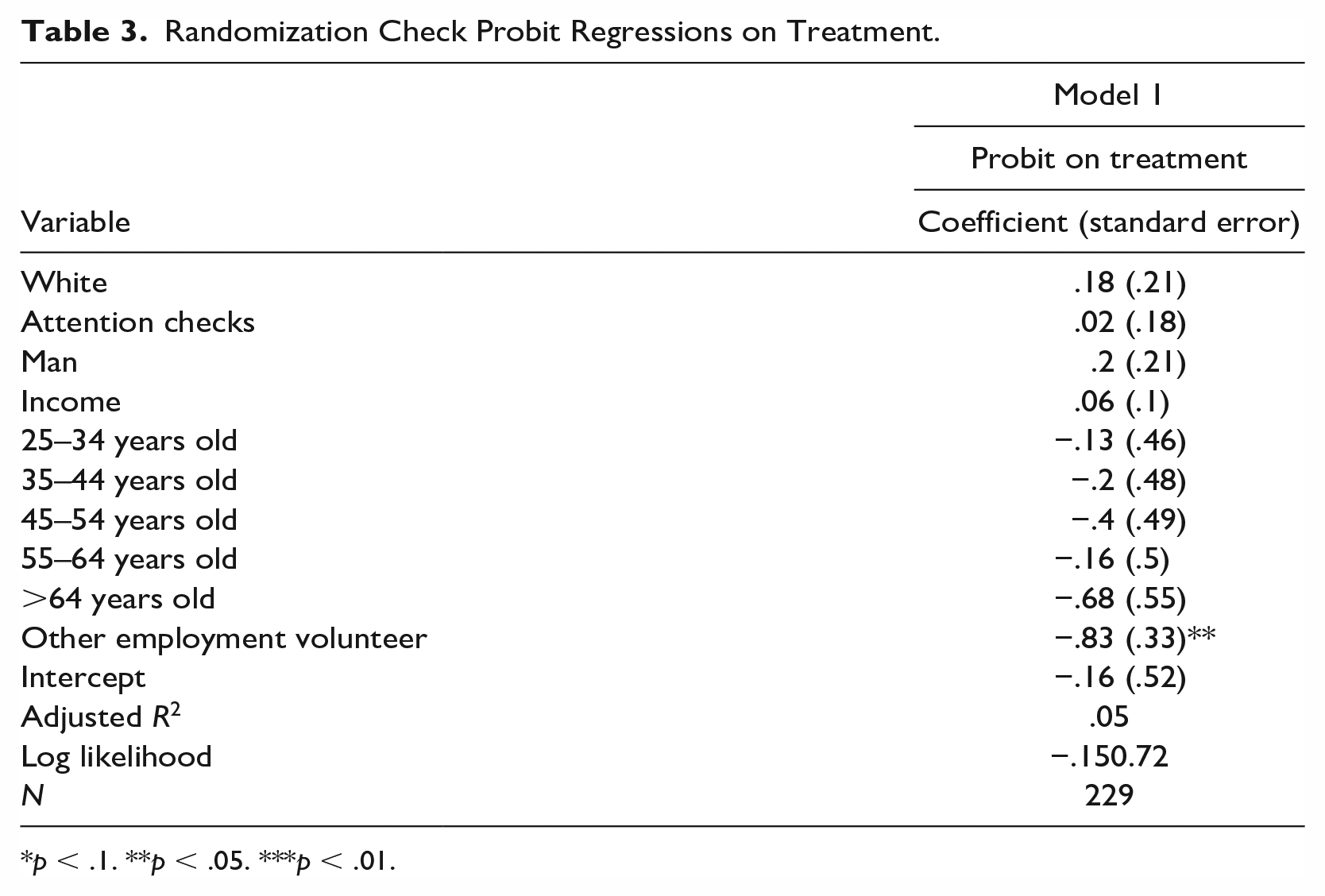
p < .1. **p < .05. ***p < .01.
Treatment
The treatment group was asked to describe their work before completing a measure of race and gender discrimination. The control group completed the measure of race and gender discrimination first, and then described their work. The treatment was a series of prompts for participants to describe (a) the nonprofit mission, (b) the nonprofit’s clients or customers, (c) how the nonprofit makes “the world a better place,” and (d) what work the participant does to achieve the nonprofit’s mission. The moral license literature indicates that specific and concrete descriptions of virtuous behavior trigger moral license in participants (Mullen & Monin, 2016). In this experiment, the virtuous behavior participants described was their work. Therefore, the virtuous behavior described was designed to simultaneously produce organizational identification. The same treatment, then, is able to elicit both moral license and organizational identification.
I conducted two manipulation checks of the treatment to support the case that the treatment was eliciting (a) moral license and (b) organizational identification as hypothesized.
Moral License Manipulation Check
I coded text entries to analyze whether the treatment elicited the kinds of statements that the research finds is associated with moral license. Researchers find that moral license is most likely to occur when descriptions of virtuous behavior are (a) specific and (b) concrete (Mullen & Monin, 2016). I coded the phrases “strengthen our community,” “provide opportunities,” “providing resources,” or “promote the arts” as likely to create moral license only when they were combined with description of how the participant (a) specifically and (b) concretely supported those prosocial goals. Examples of (a) concrete and (b) specific actions included “direct support,” “securing funding,” “overseeing logistics,” or “providing leadership” supporting an organization described as having a prosocial mission. Contrarily, when participants responded with short, pro-forma, and incomplete answers that were neither (a) concrete nor (b) specific, it was coded as not likely to illicit moral license. Examples of descriptions of work coded as 0 for moral license included respondents who said they did “various” activities or answered with the vague phrase “support the mission.” Similarly, I coded responses as 0 if the respondent described a prosocial organizational mission but did not describe (a) concretely and (b) specifically how they supported that mission. For example, “vision from alternate perspectives” and “it keeps many youth from being incarcerated” were not considered mission statements that would generate moral license because they were (a) too abstract in the former case and (b) too general in the latter. Overall, I find that 90% of respondents entered text likely to induce moral license generation, including 89% of the control group and 91% of the treatment group (Table 1). The large majority of text responses in both treatment and control were both (a) concrete and (b) specific and so are of the kind predicted by the literature to generate moral license (Effron, 2014).
Organizational Identification Manipulation Check
To test if the treatment was likely to generate organizational identification, I analyzed the relationship between work status and language indicating self-inclusion in the nonprofit described by the participant. Research indicates that the majority of contractors and Board members in nonprofit organizations also hold jobs outside of the nonprofits they support (Turner et al., 2020). Organizational identification literature indicates that workers are most likely to identify with their primary workplace (Kreiner & Ashforth, 2004). To test if the treatment was creating organizational identification, I coded text-entry responses for whether the participant used “we,” “our,” or “us” to refer to the organization in the first-person plural. When participants typed their job tasks without a pronoun or in the third person as “it” or “they,” I coded the statement as 0 (e.g., “securing funding for the arts” or “they secure funding for the arts” as opposed to “we secure funding for the arts”). I then ran a probit regression on the organizational identity variable expecting that employment status would correlate. Fifty-one percent of participants indicated organizational identity in their text entries, and employment status is correlated to identifying with the organization by using a first-person plural pronoun (Table 4). Full-time workers (p < .05), volunteers (p < .05), and part-time workers (p < .1) are more likely to indicate organizational identification in their text entry than are contractors with the nonprofit (Table #). Men are less likely to refer to their organizations in the first-person plural (p < .05). Because these statements were a part of the experimental treatment, it supports the operationalization of this treatment as likely to trigger organizational identification.
Probit Regressions on Organizational Identification.
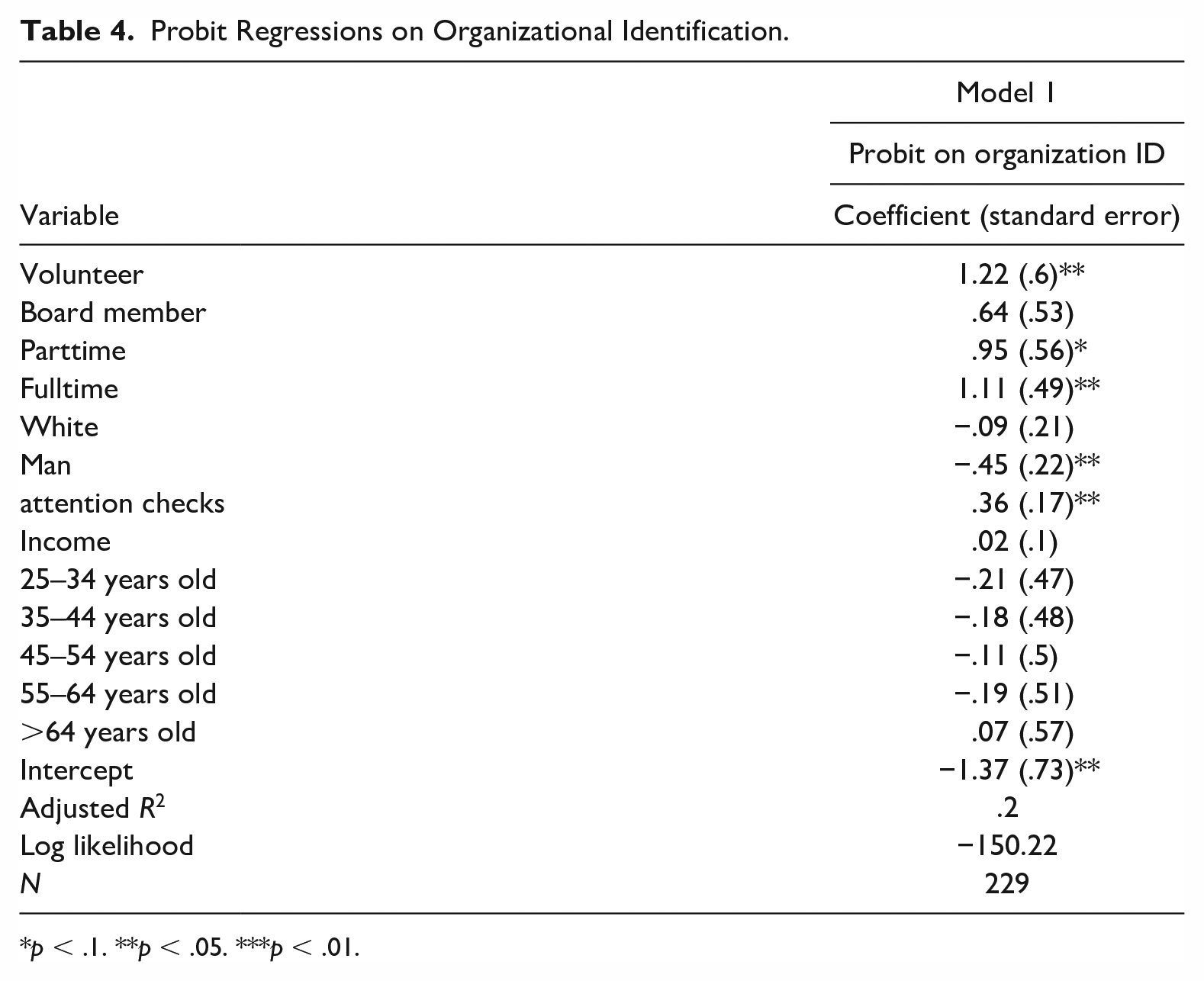
p < .1. **p < .05. ***p < .01.
Dependent Variable
The dependent variable was a modified QDI (Ponterotto et al., 2002; see Appendix for survey details). The QDI has exhibited strong internal and external validity in studies on organizational diversity training and is more sensitive than many of the other common indices that are used to measure race and gender attitudes (Ponterotto et al., 2002). The QDI is particularly well-suited for this sample with over 80% social services organizations as it was initially designed for and tested on social work organizations, something that is untrue of most other measures of prejudice. The QDI is one of the few tests of its kind that has shown longitudinal consistency across a wide variety of mission-oriented nonprofits and government agencies (Kumaş-Tan et al., 2007). The QDI has since been used in many other types of organizations as well, including many studies in the third sector (Koehn et al., 2019). The index is internally consistent in three subscales (Kumaş-Tan et al., 2007); cognitive attitudes toward racial diversity (e.g., “I think that affirmative-action programs on college campuses are reverse discrimination against White people”), affective levels of comfort with interracial interaction (e.g., “I would feel okay about my son or daughter dating someone from a different race”), and cognitive gender attitudes (e.g., “Generally speaking, men work harder than women.”). Like other measures, the QDI’s operationalization of discrimination has limits, but aligns with definitions of discrimination and prejudice in moral license studies and nonprofit diversity management (Monin & Miller, 2001; Ponterotto et al., 2002; Weisinger et al., 2016). The QDI was modified by eliminating questions that were anachronistic and shortening the syntax for questions when applicable to make it more accessible. The QDI has been similarly modified to be shorter and more contextual previously (e.g., Callander et al., 2015; Koehn et al., 2019).
Two attention-check questions were added to the QDI. One question asked participants to disagree with the statement that the earth has multiple moons and rings, and another asked the participants to agree with the statement that the United States shares a land border with Canada. The order of each question on the QDI and the attention checks was assigned randomly by Qualtrics. For each question in the QDI and the attention-checks, the respondent was given a seven-point Likert-type scale from “Completely Disagree” to “Completely Agree.” Higher scores on the QDI equate to more agreement with discriminatory statements. The attention check questions were coded according to the number of questions the respondent answered correctly from 0 to 2.
The final section of the survey captured demographic information about respondents’ age, household income, race, gender, and employment status. Respondents could answer multiple races and ethnicities including White, Black, Indigenous, Asian, Native Hawaiian or Pacific Islander, Hispanic, Latino, other, mixed, or no answer. Only those who selected White and no other choice were coded as White.
Analysis
Ordinary least squares were used to test the hypotheses. Factorial variables accounted for age of respondents, while the model indicated better fit when income was linear. Gender was coded as a dummy variable for man, and job status coded as categorical with full-time employees as the base. The treatment condition and being White were interacted to test whether being White had a statistically significant effect that differed from the overall treatment effects. The complete model was QDI = experimental condition * White + attention checks + man + income + i.age + i.employee status with robust standard errors. The Breusch-Pagan post-estimation indicated that heteroskedasticity was a problem, therefore analyses were run on the natural log of the QDI which cured the heteroskedasticity.
Findings
White workers indicated lower levels of discrimination after describing their nonprofit work (Table 5). This finding is statistically significantly different than White workers who described their work after taking the QDI and than the effect of describing nonprofit work for people of other racialized identities in the sample which included Black, Latino, Asian, and Native American/American Indian. This finding supports H(−) stating that organizational identification would lead White workers to lower levels of race and gender discrimination after describing their work. These findings contradict H(+) that nonprofit work creates moral license for White nonprofit workers.
Ordinary Least Squares regressions on Quick Discrimination Index QDI.
Note. QDI = Quick Discrimination Index.
p < .1. **p < .05. ***p < .01.
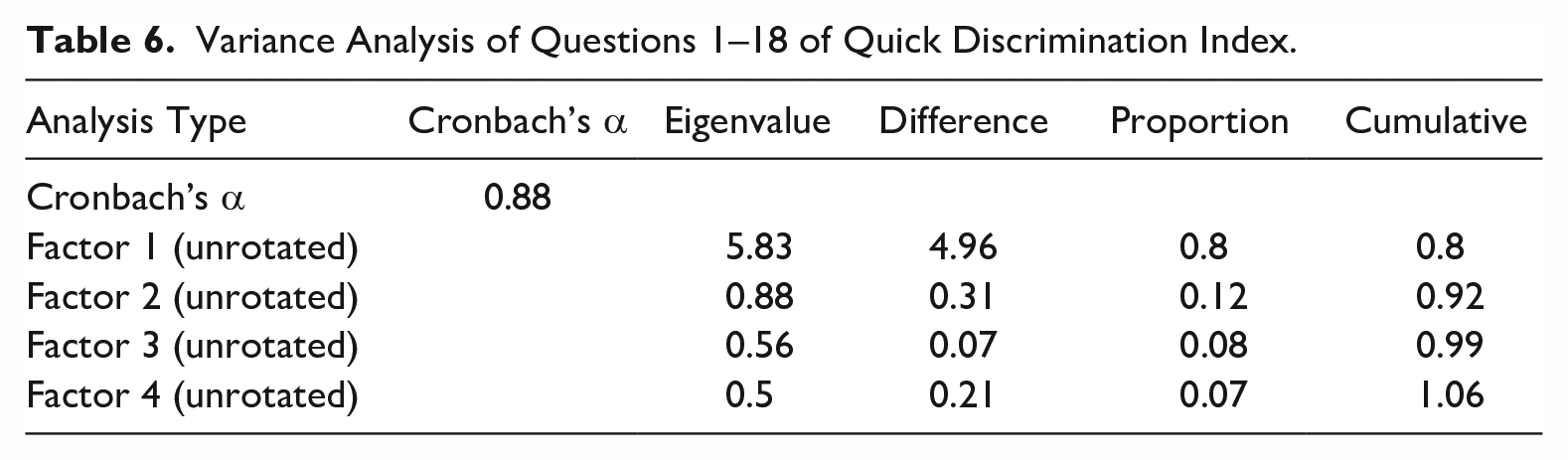
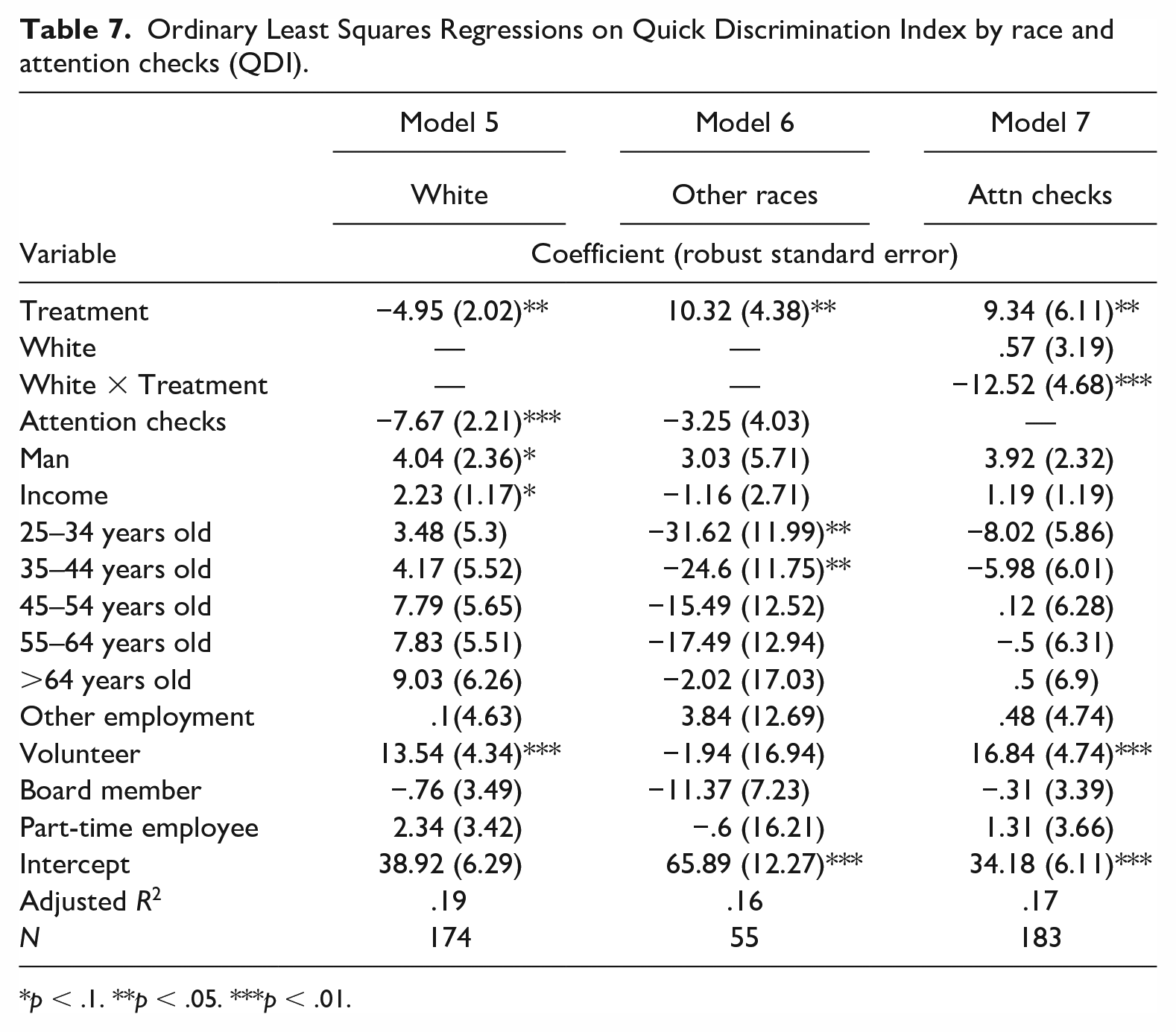
I find the QDI carries a Cronbach’s alpha of .88 and an eigenvalue of 5.83 (Table 6). The next highest eigenvalue was .88, indicating a single factor for the entire QDI including race and gender discrimination. Given this analysis, tests were run on the complete QDI. Whiteness played a significant role in the experiment, with White workers indicating lower QDI scores after describing their work. After accounting for the treatment effect in workers of other racialized identities, age, income, gender, attention checks, and employee status, White workers who described their work before taking the QDI indicated lower scores than White workers in the control group with a logged coefficient of −.38 (p < .001). It should also be noted that work status was statistically significant, with volunteers indicating a QDI that was higher than full-time employees as the comparator group with marginal statistical significance (p < .1). Attention checks were consistently statistically significant. Those who paid closer attention to the survey indicated statistically significantly more support for racial diversity and gender equality (p < .001). An analysis of the sample without those who missed the attention checks did not change the direction or statistical significance of any key variables (Table 7: Model 7).
Variance Analysis of Questions 1–18 of Quick Discrimination Index.
Ordinary Least Squares Regressions on Quick Discrimination Index by race and attention checks (QDI).
p < .1. **p < .05. ***p < .01.
Models 5 and 6 (Table 7) confirm that whiteness is an important factor by considering the treatment effects on White nonprofit workers and nonprofit workers from other racialized identities separately. Model 5 once again confirms that White people who have just answered prompts about their nonprofit work indicate lower levels of discrimination than those White workers who have yet to answer the prompts (β = −4.95, p < .05, N = 174). Meanwhile, nonprofit workers who describe themselves as one or more racialized identities other than White indicate higher levels of discrimination after answering prompts about their work than if they took the QDI before answering questions about their work (β = 10.32, p < .05). This finding is notable because of an unusually small sample size for moral license research (N = 55); however, this finding could easily be overstated given the varied racialized identities in the sample and the differences between these many groups.
Limitations
It is important to acknowledge the limitations of this study. First, the Omaha nonprofit sector’s unique context limits generalizability. As with many experimental methods, the survey is not representative of nonprofit workers generally, and it is difficult to know how representative the demographics are because there is no authoritative census of nonprofit workers. The online survey itself was not controlled as well as an in-person experiment could have been. Attempts to mitigate this fact through the manipulation checks described above are important, but insufficient to fully replicate a laboratory setting. The respondents indicated their employment status in relation to the nonprofits they represented in the survey, but it is impossible to confirm that respondents were the nonprofit workers to whom the email was distributed.
An additional limitation worth mentioning is the possibility of systematic bias in the sample due to reluctance on the part of some participants to complete the text-entry portion of the survey first. Some respondents who otherwise would have completed the survey may have been dissuaded by seeing the text-entry treatment portion of the survey before the Likert-type portion as discussed in more detail above. The randomization tests reported in Table 1 provide an attempt to mitigate this limitation, and the results of that test led to the inclusion of Model 3 (Table 5) that excludes volunteers and “some other status” workers. All tests indicated the same statistical significance and direction of treatment coefficients.
Discussion
In this study, nonprofit workers at nonprofit organizations in the Omaha region answered questions about their opinions on race and gender. The email they opened to take the survey came directly from an organization that supports other nonprofits and requested nonprofit workers to answer questions about their opinions on race and gender. Despite a setting in which their organizational affiliation was already relevant, White nonprofit workers who were prompted to describe their work indicated lower levels of discrimination than those who described their work after taking the survey. This finding is in direct contradiction to the findings of psychologists studying moral license but could be predicted by organizational identification. The finding could also provide a lever for diversity management in nonprofit organizations, but with the important caveat that the lever does not appear to function with workers who are racialized in ways other than White.
It is important to note that several other racialized groups, including Asian, Native American, Latino, and Black nonprofit workers responded to the experiment, and the average response from these other workers was consistent with the moral license hypothesis. However, it is impossible to disaggregate which of these racial groups were responding in what ways because so many were mixed together. With the data available in this study, it is only possible to say conclusively that White nonprofit workers responded differently in a manner indicating the influence of Whiteness’ racialization. To better understand what is happening with other racialized groups requires disentangling the effects of the various other racialization processes. Although some scholars, including some Black feminists argue for a pan-racial grouping of people of color to facilitate political power, as an analytic group the inclusive categorization is severely limited by the likelihood of the ecological fallacy (Pérez, 2021).
Implications
Instead of reacting with moral license, White workers indicated lower levels of discrimination after describing their virtuous behavior on behalf of nonprofits. These workers, after reminding themselves of the reasons they do their jobs, either share or espouse opinions they feel are more aligned with their work and thus their organization. Organizational identification researchers find that White workers more easily identify with White-run organizations (Cole et al., 2016), and most nonprofit organizations continue to be predominantly White (Kunreuther & Thomas-Breitfeld, 2020). This experiment adds to those findings by suggesting that organizational identification in White workers also influences expressions of worker opinions on racial diversity and gender equality in ways that may provide a lever for managing diversity in nonprofit organizations.
Moral license research is increasingly finding what Bertelli and Riccucci (2022) assert; context is important. A treatment that could generate moral license in some people by describing specific and concrete examples of work that is generally perceived as virtuous did not generate net moral license in White nonprofit workers. Therefore, understanding institutions like Whiteness is important. This is in line with much of the moral license research finding that institutional context changes moral license (e.g., Mullen & Monin, 2016) and could explain some of the unpredictability of these and other experimental findings.
Finally, this study provides some understanding for nonprofit managers seeking to launch a diversity management initiative, while alleviating some of the tension between institutional approaches to race and gender (e.g., Portillo & Humphrey, 2018) and diversity management approaches (e.g., Mason, 2020). Focusing on the psychological effect of nonprofit missions in the context of diversity provides a starting point for diversification efforts that avoids immediately placing the onus of change on the shoulders of those who are most subject to burdens within the White institutional presence (Heckler, 2019; Roberson, 2019). Ewoh (2013) finds that incorporating diversity into a nonprofit mission is an effective diversity management tool, and this paper contextualizes that finding with an experiment revealing one mechanism through which missions statements influence worker commitment to race and gender equality.
Conclusion
This study does not provide a silver bullet for kickstarting diversity management in nonprofit organizations, but it does identify a point of leverage. Missions are already a strategic focus for many nonprofit organizations (Stater & Stater, 2019). Incorporating diversity in nonprofit missions can remind White workers of organizational commitments to a more equal society (Ewoh, 2013). This finding then serves as a psychological-level confirmation of studies at the organizational and societal level signifying that White nonprofit workers are ready to commit to race and gender equality under the right conditions (Mason, 2020; Roberson, 2019). Nonprofit managers can leverage this finding to better prepare nonprofit workers for work that implicates diversity by engaging in organizational identification activities but must bear in mind that this finding is only applicable for White nonprofit workers. Researchers looking to better understand how nonprofit workers make sense of their work can do so by further studying the ways moral license and organizational identification influence nonprofit workers of all racial identities including through larger more generalizable experiments and qualitative analyses of the rich connections between morality and nonprofit work.
Research Data
sj-xlsx-1-nvs-10.1177_08997640231185307 – Supplemental material for Nonprofit Organizational Identification, Moral License, and Whiteness: An Experimental Study of the Effect of Nonprofit Work on the White Morality Myth
sj-xlsx-1-nvs-10.1177_08997640231185307 for Nonprofit Organizational Identification, Moral License, and Whiteness: An Experimental Study of the Effect of Nonprofit Work on the White Morality Myth by Nuri Heckler in Nonprofit and Voluntary Sector Quarterly
Footnotes
Appendix
Appendix—The Quick Discrimination Index with Attention Checks
Note: Agree is high discrimination unless the question is marked as “[Reverse coded].”
Section 1—Quick Discrimination Index (higher scores indicate higher levels of discrimination)
Please indicate whether you (1) completely disagree, (2) mostly disagree, (3) somewhat disagree, (4) neither agree nor disagree, (5) somewhat agree, (6) mostly agree, or (7) completely agree with each of the following statements.
Race Discrimination Index
Gender Discrimination Index
Attention Check Questions

Declaration of Conflicting Interests
The author declared no potential conflicts of interest with respect to the research, authorship, and/or publication of this article.
Funding
The author received no financial support for the research, authorship, and/or publication of this article.
Author Biography
References
Supplementary Material
Please find the following supplemental material available below.
For Open Access articles published under a Creative Commons License, all supplemental material carries the same license as the article it is associated with.
For non-Open Access articles published, all supplemental material carries a non-exclusive license, and permission requests for re-use of supplemental material or any part of supplemental material shall be sent directly to the copyright owner as specified in the copyright notice associated with the article.
