







Abstract
This study systematically analyzes the organizational-level impact of the COVID-19 pandemic on nonprofit organizations. Based on 52 primary studies encompassing over 100 nonprofit organizations across 30 countries, our thematic analysis found that nonprofits have experienced adverse effects, including reduced funding, increased operating costs, and volunteer shortages. However, only 27 of the 52 studies reported a negative impact of COVID-19 on nonprofit organizations. The COVID-19 pandemic also had positive effects on nonprofit organizations, including the development of innovative service delivery models, accelerated digital fundraising, adaptation of communication strategies to keep stakeholders engaged, and increased cross-sector collaboration. These mixed effects underscore the gaps and opportunities in organizational resilience and adaptability, providing critical insights into future response strategies. To strengthen nonprofit organizations’ ability to absorb, respond to, and recover from future crises, we suggest a research framework that integrates external pressures, resource constraints, and adaptive capacities that affect key outcomes.
Introduction
Nonprofit organizations play a crucial role in creating social impact and upholding core societal values such as poverty relief, access to health care, and welfare (Benjamin et al., 2023; Salamon & Anheier, 1997). Nonprofit organizations frequently collaborate with public organizations, particularly during crises when a surge in capacity is required (Schwarz et al., 2026; Toepler et al., 2023). This became evident during the COVID-19 pandemic, a period marked by unprecedented global challenges and disruptions (Clifford et al., 2025; Kim & Mason, 2020). As of February 2025, COVID-19 has infected over 777 million individuals worldwide, representing approximately 9.75% of the global population, with more than seven million confirmed deaths since the onset of the pandemic in 2020 (World Health Organization [WHO], 2025). COVID-19 has affected not only individuals and communities but also organizations (Thiery et al., 2021), including nonprofit organizations (Guo et al., 2026; Santos & Laureano, 2022).
Nonprofit organizations were on the frontlines during the COVID-19 pandemic (Bynner et al., 2022), managing volunteers (Piatak & Sowa, 2024) to support various pandemic response efforts (Høgenhaven, 2025), from checking on older adults and other vulnerable individuals (D. Choi et al., 2024; Lam et al., 2023) to delivering groceries (Meier et al., 2024). Many nonprofit organizations established temporary clinics, testing sites, and vaccination centers, particularly in underserved areas with limited access to health care (Davis et al., 2024). Although several isolated studies have examined the impact of the COVID-19 crisis on nonprofit organizations, comprehensive reviews synthesizing these findings are lacking. To date, only one study (Santos & Laureano, 2022) has systematically reviewed the impact of COVID-19 on nonprofits. However, given that all the included studies were published in 2020, the scope of Santos and Laureano’s (2022) systematic review is temporally bounded to the earliest phase of the COVID-19 pandemic. Our study covers a substantially longer period. This synthesis integrates peer-reviewed studies published from January 2019 to September 15, 2025, to capture not only the acute onset and emergency-response period but also the protracted adaptation, recovery, and post-stimulus phases, thereby offering a more holistic and temporally detailed understanding of how nonprofit organizations navigated the pandemic’s evolving epidemiological, fiscal, legal, and policy trajectories. Whereas Santos and Laureano (2022) examined both individuals and organizations, our review focuses solely on organizations and excludes individual-level studies.
Some focused studies have explored nonprofits’ operational (Asogwa et al., 2023; Azevedo et al., 2022), staffing (D. Choi et al., 2024; Grønbjerg et al., 2021), and financial issues (Kim & Mason, 2020) during the COVID-19 pandemic. However, research on the effects of the COVID-19 pandemic shows a noticeable gap in the functionality and stability of these organizations (Santos & Laureano, 2022). By comprehensively examining these aspects, this study aims to provide insights into the vulnerabilities and adaptive capacities of nonprofit organizations in times of crisis. Unlike localized disasters, COVID-19 simultaneously constrained resources, regulatory environments, and demand patterns across virtually every jurisdiction in which nonprofit organizations operate. Understanding how nonprofit organizations navigated this universal shock can offer transferable lessons for future systemic crises (e.g., climate-driven disruptions, wars, and cyberattacks).
This systematic review addressed three research questions. First, we analyzed how the COVID-19 pandemic affected nonprofit organizations (Research Question 1). Second, we studied the strategies nonprofit organizations used to adapt to COVID-19 disruptions (Research Question 2). Third, we asked what research could be conducted to better prepare nonprofit organizations for future crises (Research Question 3). This study makes two key contributions to the literature by addressing these questions. First, we provide a comprehensive overview of how nonprofit organizations have been studied in the context of the COVID-19 crisis. We conducted a thematic analysis and examined the methodological and contextual features of the studies, uncovering important themes, including the financial impact of the pandemic on nonprofit organizations and the operational challenges they faced in addressing it. The second contribution is the development of a research agenda that proposes a holistic, multidimensional perspective on how crises affect nonprofit organizations. This framework was built based on the articles included in this review.
Theoretical Framing
We draw on four complementary theoretical lenses that together create a multilevel, temporal, and processual scaffold to explain how and why COVID-19 affected nonprofit organizations. First, institutional theory (DiMaggio & Powell, 1983) argues that the environment shapes organizational behavior and its responses. Institutional theory clarifies how coercive mandates (e.g., lockdowns and social distancing rules), normative expectations (e.g., donor pressure for transparency), and mimetic isomorphism (e.g., copying peers’ digital pivots) forced nonprofit organizations to redesign their governance structures, alter service logics, and re-legitimize their roles. Second, resource dependence theory (Pfeffer & Salancik, 1978/2003) argues that organizations must obtain resources from external sources to survive and thrive. Resource dependence theory is vital for analyzing sudden revenue shocks, lost donations, canceled events, frozen grants, and subsequent searches for alternative funding, such as emergency loans, digital crowdfunding campaigns, and cross-sector partnerships. Third, organizational resilience theory (Duchek, 2020; Kedia et al., 2025) refers to an organization’s ability to respond to disruption and challenges. Resilience captures service continuity and dynamic capabilities robustness (e.g., absorbing shocks without collapse), adaptive capacity (e.g., rapid re-skilling and digital delivery), and transformative learning (e.g., embedding digital governance for future crises), which allow nonprofits to avoid mission drift while innovating under strain (Raeymaeckers & Van Puyvelde, 2021; Richardson & Kelly, 2024). Finally, crisis management theory (Bundy et al., 2017) aims to reduce the likelihood of a crisis through pre-crisis prevention, minimize harm during a crisis, and restore order following a crisis. Crisis management theory links preparedness (e.g., contingency plans and operating reserves), real-time response agility (e.g., incident command teams and dynamic decision loops), and post-crisis recovery and learning (e.g., after-action reviews and scenario planning) to the long-term viability of organizations. Online Supplemental Material A summarizes these theoretical frameworks and illustrates how they serve as lenses for interpreting evidence across the four thematic clusters reported in our results.
Methods
Our review is a conceptual analysis, a purpose-specific type of systematic review that is well-suited for exploring the attributes of a concept and synthesizing relevant literature. This type of review outlines a literature selection that can inform recommendations for additional research to construct theoretical models (Liwanag et al., 2023). We followed the Preferred Reporting Items for Systematic Reviews and Meta-Analyses (PRISMA) framework (Page et al., 2021) to search the literature and systematically report our findings. As suggested by the PRISMA framework, we developed a structured search strategy for three high-quality databases: Web of Science, Scopus, and PubMed. We selected these databases for our literature search because they are among the most comprehensive and widely recognized bibliographic databases in academic research. Web of Science and Scopus were chosen for their extensive coverage across multiple disciplines, including social sciences, management, and nonprofit studies, thereby ensuring a broad multidisciplinary perspective. PubMed was included because of its strong indexing of public health and crisis-related research, which is particularly relevant given the pandemic’s health-centered nature. Other databases were excluded to maintain methodological rigor and focus, as the three selected databases already showed significant overlap with the indexing of peer-reviewed journals relevant to our research scope and objectives. This strategy ensured that we comprehensively captured the relevant literature by combining specific keywords and Boolean operators, facilitating the retrieval of articles that precisely matched our research criteria.
The nonprofit sector represents a diverse and complex domain comprising a broad spectrum of organizations, including charitable and voluntary organizations, social enterprises, foundations, and advocacy groups (Anheier & Toepler, 2022; Salamon & Anheier, 1997; Word & Sowa, 2017). These entities are distinguished by their primary commitment to advancing collective interests rather than generating profits for shareholders (Salamon & Anheier, 1997). For this study, we adopted Salamon and Anheier’s (1992) seminal structural-operational definition, which argues that nonprofit organizations have five basic characteristics: they are formally established, private, not-for-profit-distributing, self-governing, and voluntary. However, the legal definition of the nonprofit sector varies considerably across countries, reflecting differences in historical, cultural, and regulatory contexts (Salamon & Anheier, 1997). These variations influence which entities are formally recognized as part of the sector, the scope of their permissible activities, and the degree of state oversight or support they receive in each country.
Keywords related to the impact of COVID-19 on nonprofit organizations were carefully selected based on published literature to optimize the search. As public charities represent a common type of nonprofit organization (Newton, 2026), we searched for “charitable organizations” and other nonprofit variations. The keywords included “COVID-19,” “coronavirus,” “Nonprofit Organizations,” “Non-Governmental Organizations,” “NGOs,” “Public Service Organization,” “Voluntary Organization,” “Charitable Organization,” “Philanthropic Foundation,” “Third Sector Organizations,” “impact,” “effect,” and “influence.” The Boolean operators “AND,” “OR,” and “NOT” were used to refine the search further. Database searches were conducted for peer-reviewed studies published from January 2019 to September 15, 2025, thereby limiting the evidence base to studies available until that date. Online Supplemental Material B provides the search strings we used.
Screening and Selection
After searching, the results were downloaded, and duplicates were removed using the citation management software Zotero and MS Excel. The titles and abstracts were screened based on the inclusion and exclusion criteria (Table 1) to identify potentially relevant articles. A total of 1,874 records were obtained. After deduplication, we conducted title and abstract screening based on the criteria in Table 1, followed by a full-text eligibility assessment.
Inclusion and Exclusion Criteria.
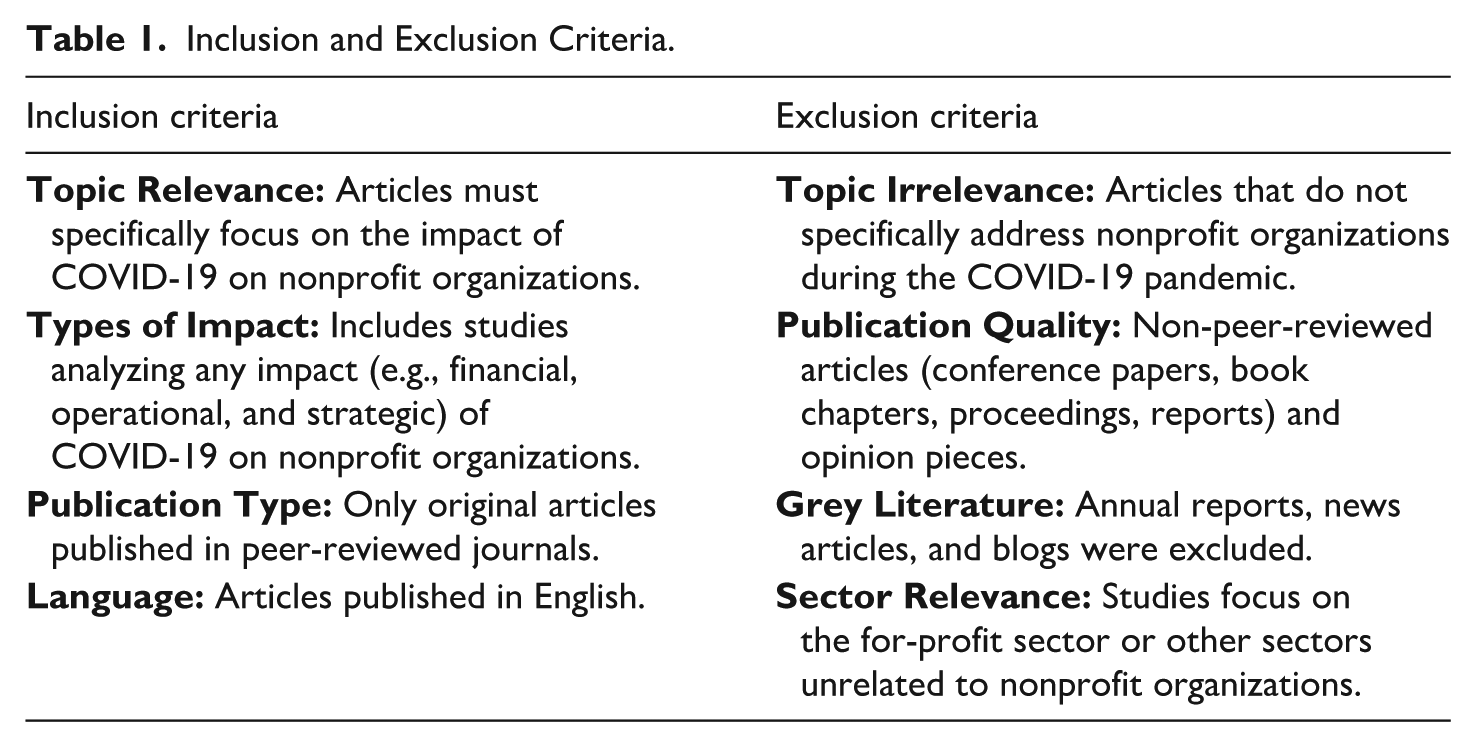
The unit of analysis in this review is the organization rather than individual staff members or volunteers. Studies primarily emphasizing individual experiences, such as burnout or personal coping strategies, without an explicit linkage to organizational-level outcomes, were excluded at the full-text screening stage, following the criterion in Table 1: “Articles must focus on organizational-level impacts.” This organizational-level focus was chosen because organizational responses to crises involve strategic decisions about resource allocation, service delivery adaptation, and stakeholder engagement, which are best captured at the institutional rather than the individual level. Although individual experiences are important, they are shaped by organizational contexts, structures, and strategies, making the organization the appropriate unit of analysis for understanding how nonprofits navigate systemic crises.
During the initial screening, 1,738 peer-reviewed articles were excluded because they focused solely on the impact of the COVID-19 pandemic on individuals or communities and did not address its impact on nonprofit organizations. The full-text versions of the remaining articles were obtained. The introduction and conclusion sections were reviewed to assess the relevance of the research questions, and the methodology sections were evaluated for robustness and applicability. An additional 85 articles were excluded because they did not adequately address the research questions of this study.
Data Extraction and Management
For each article that met the inclusion criteria, relevant data were extracted using a predefined template (see Online Supplemental Material C) that included fields for the authors, year of publication, study objectives, methodology, key findings, and conclusions. All full-text articles were assessed using a predefined 24-item coding protocol adapted from the Joanna Briggs Institute Manual (Aromataris et al., 2024). An article was deemed to adequately address our research questions only if it explicitly linked COVID-19 to nonprofit organizations and reported organizational-level empirical findings on at least one of the following: (a) impact (e.g., financial, operational, human resources, and service delivery) or (b) strategies adopted during the pandemic. Articles lacking these elements were excluded. Two coders independently coded an initial subset of a quarter of the included studies (n = 13) to calibrate the codebook and the cluster assignment decision rules. Discrepancies were discussed in structured consensus meetings to refine operational definitions (including theme boundaries, primary cluster assignments, and outcome direction coding) and standardize application across coders. Intercoder reliability was assessed using this calibration subset, with excellent agreement (Cohen’s κ = 0.84) before consensus adjudication. After calibration, the remaining studies were coded using a stabilized protocol. The exclusions are itemized in the PRISMA flow diagram (Figure 1). A total of 52 articles were included in this systematic review. Due to variability and limited specificity in the reporting of study samples, the precise number of nonprofit organizations represented cannot be definitively determined. However, based on the available information, the included studies collectively encompass data from an estimated 100 or more nonprofit organizations across approximately 30 countries worldwide.
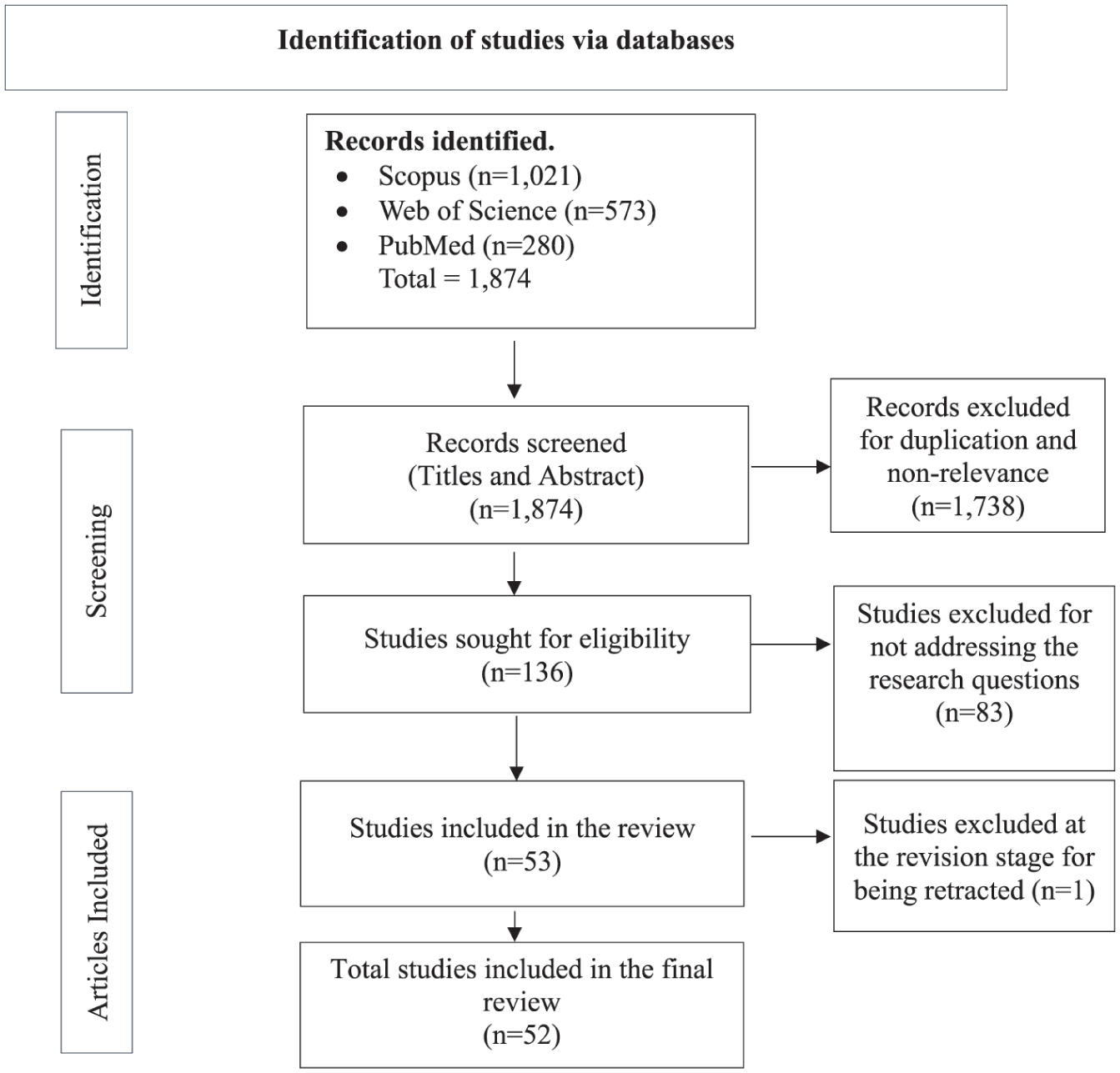
PRISMA flow diagram for systematic reviews.
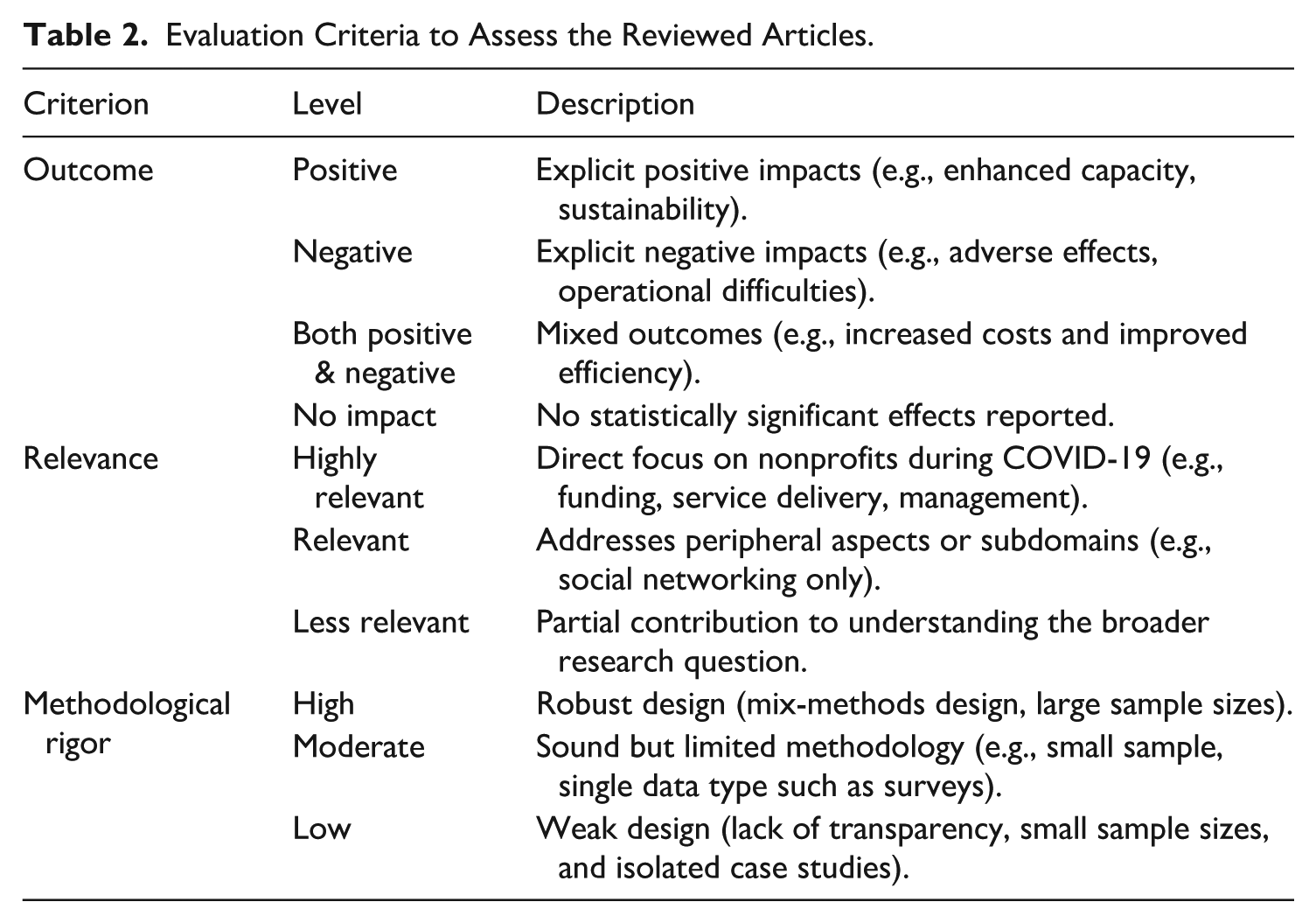
We adopted systematic criteria for assessing the outcomes, relevance, and methodological rigor of this systematic review (Table 2). These criteria ensured a consistent and transparent evaluation of each article included in the review.
Evaluation Criteria to Assess the Reviewed Articles.
Results
Table 3 summarizes the descriptive characteristics of the 52 studies (e.g., geographical scope, study design, and publication year). These studies span multiple regions and organizational contexts and employ diverse methods (e.g., surveys, qualitative designs, mixed-methods, and empirical data analysis), enabling a multidimensional synthesis of the pandemic’s impact on nonprofit organizations.
Descriptive Statistics of the Reviewed Articles (N = 52).
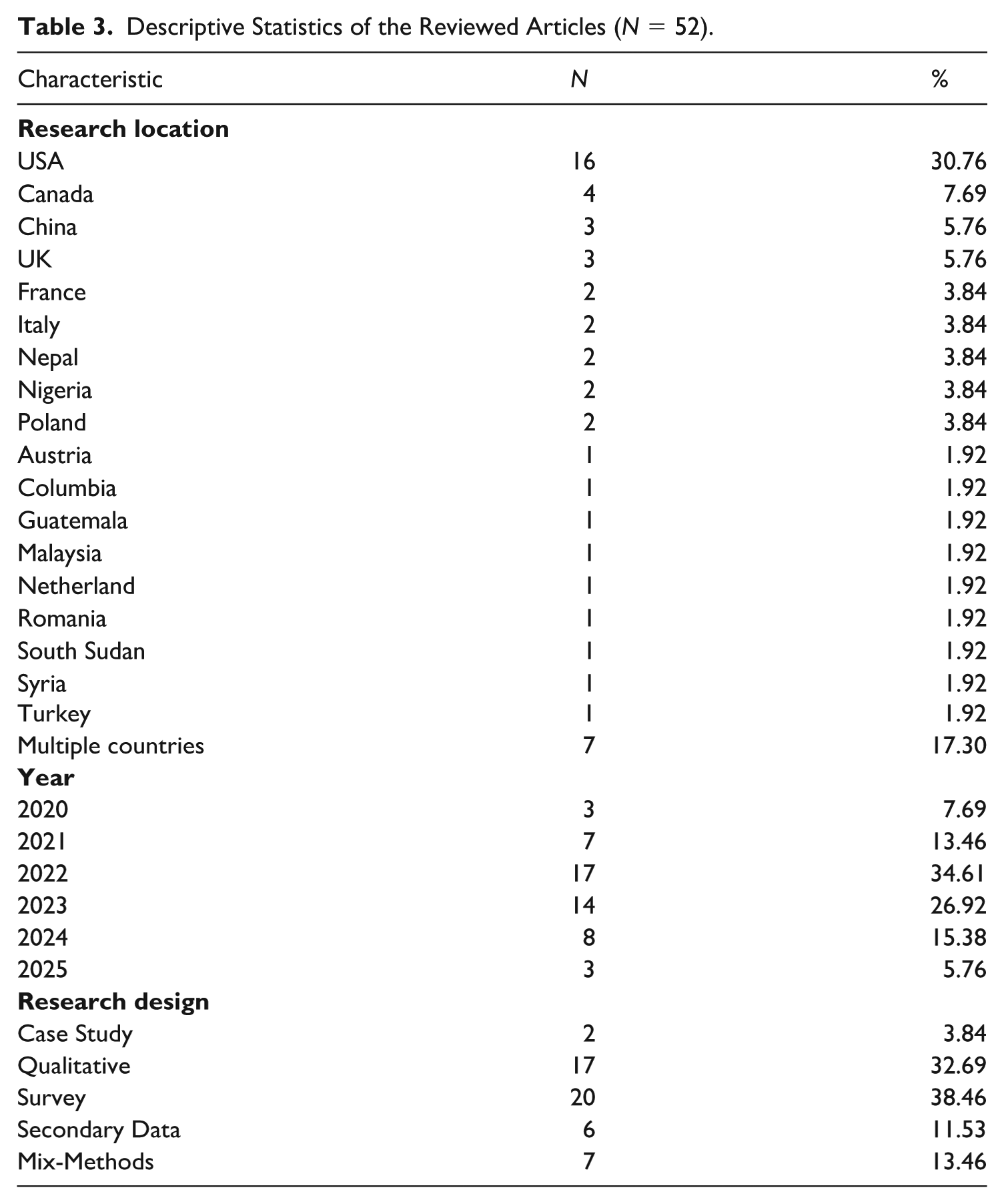
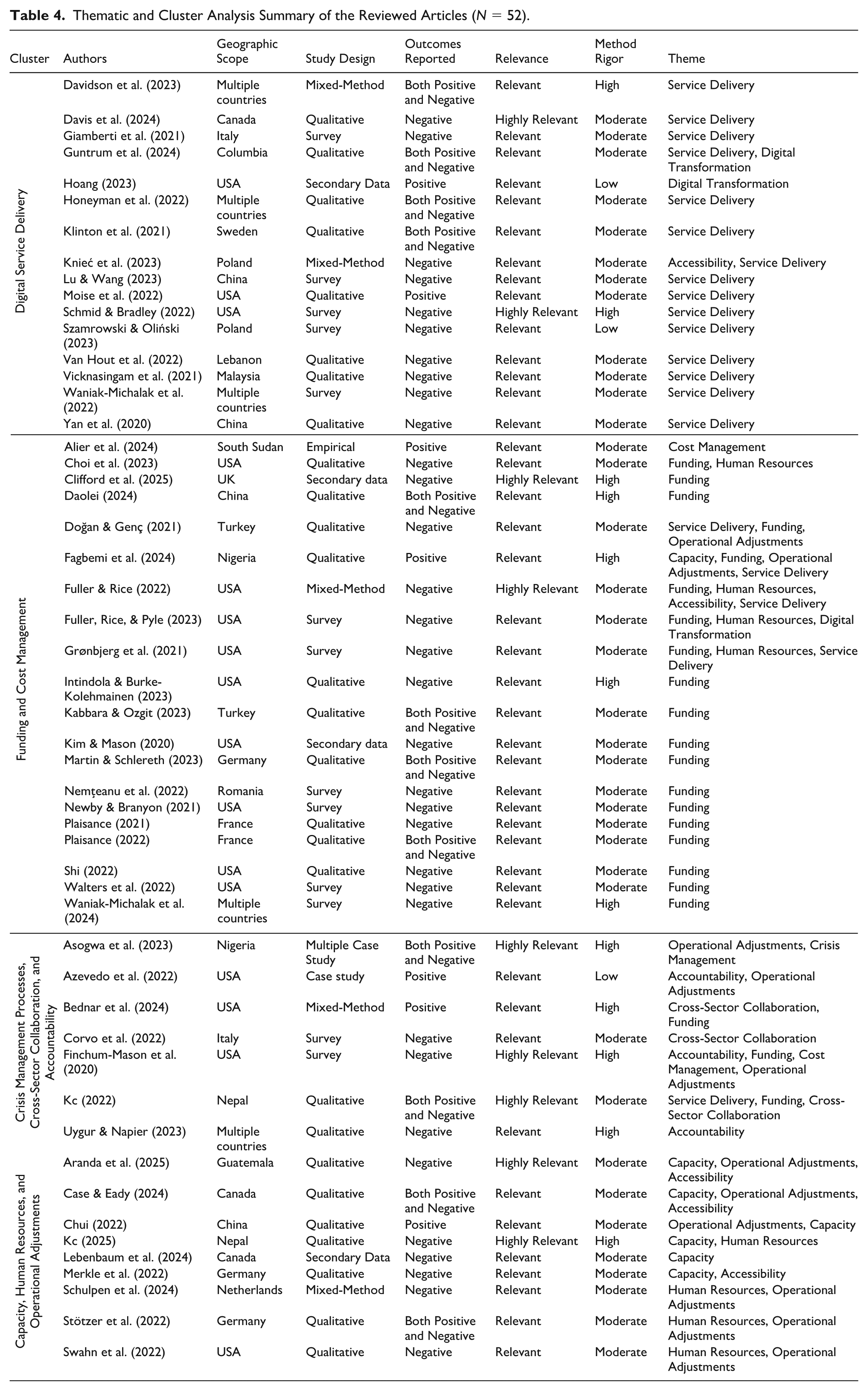
Table 4 reports the study-level themes (s), reported outcomes, indicators of relevance, methodological rigor, geographical scope, and other relevant details. Of the 52 studies, 27 reported predominantly negative impacts, 6 reported predominantly positive impacts, 16 reported mixed (positive and negative) impacts, and 3 reported no significant impacts (Figure 2). For example, studies reporting negative impacts documented median income declines of 13% among U.K. charities (Clifford et al., 2025), severe disruptions to volunteer recruitment and retention (D. Choi et al., 2024), and reductions in humanitarian surgical activities of 86%–96% (Giamberti et al., 2021). Studies reporting positive impacts have described increased social media peer-to-peer fundraising (Martin & Schlereth, 2024), enhanced stakeholder satisfaction through crisis reporting (Nemțeanu et al., 2022), and improved organizational efficiency through virtual tools (Azevedo et al., 2022). We coded the outcome direction as negative when findings indicated net deterioration in organizational outcomes (e.g., continuity, access, financial stability, or capacity) without offsetting gains; positive when net improvements were reported; and mixed when the study reported both gains and losses across outcomes, subgroups, or time.
Thematic and Cluster Analysis Summary of the Reviewed Articles (N = 52).
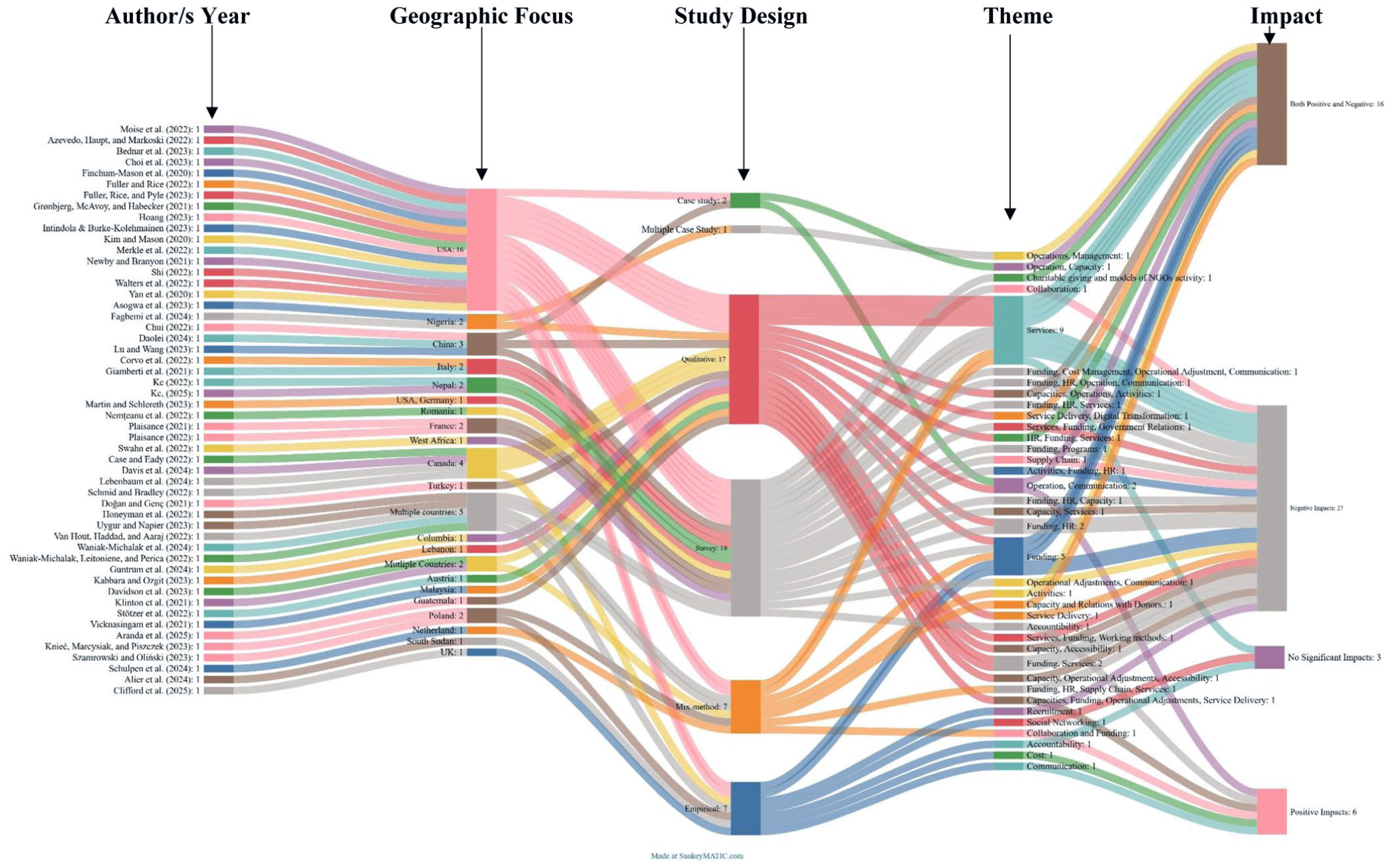
Sankey diagram to visualize summaries of the reviewed articles (N = 52).
We synthesized the findings using thematic analysis guided by an 11-theme codebook (see Online Supplemental Material D). We consolidated the 11 themes into four higher-order thematic clusters (Table 4) and reported the findings by cluster to improve clarity and reduce overlaps. The four theoretical perspectives introduced earlier (institutional theory, resource dependence theory, organizational resilience, and crisis management theory) were used as interpretive lenses across the clusters. When a study addressed multiple themes, we assigned it to the cluster that best matched its central dependent variable or outcome. When this was ambiguous, we assigned the study based on its stated purpose and the emphasis of the discussion. To maintain analytic transparency, the studies are discussed within the cluster(s) in which they are coded in Table 4. Online Supplemental Material D includes the operational definitions of all themes.
Cluster 1 – Digital Service Delivery
Across the studies in Cluster 1, a common pattern is that nonprofit organizations responded to pandemic disruptions by reconfiguring service delivery, rather than suspending services altogether. Organizations shifted along a continuum from fully onsite to hybrid and fully remote models, and these choices were shaped by service type, client characteristics, and digital infrastructure (Lu & Wang, 2023). Collectively, the evidence suggests that digital transformation functioned both as a continuity strategy and as a new source of inequality (Davidson et al., 2023; Guntrum et al., 2024; Hoang, 2024), depending on the extent to which client access barriers (e.g., connectivity, devices, and privacy) could be mitigated.
Though the included studies reported that the pandemic-induced rapid service delivery reconfiguration (Giamberti et al., 2021; Van Hout et al., 2022), the evidence does not support a single, uniform “pivot to remote.” Instead, the literature documents a hybridization of delivery models, in which nonprofit organizations combine remote/digital modalities with modified onsite delivery depending on mission requirements, organizational size, and local restrictions (Moise et al., 2022; Schmid & Bradley, 2022).
A recurring pattern in this cluster is the selective continuity under constraints. Several studies have described disruptions to services requiring close physical interaction and temporary discontinuation of certain activities, alongside continuity achieved through procedural modifications and targeted adaptations (Van Hout et al., 2022; Vicknasingam et al., 2021; Waniak-Michalak et al., 2022, 2024; Yan et al., 2020). This pattern extends to specialized service domains, where pandemic conditions led to sharp reductions in programs’ activities (Giamberti et al., 2021; Honeyman et al., 2022). Taken together, the evidence suggests that many nonprofit organizations prioritized maintaining core functions while filtering out service components that could not be sustained under public health constraints.
This cluster also features digital communication and online engagement as distinct, although related, domains of adaptation (Hoang, 2024). Studies reporting social media outputs have shown mixed effects. Some found no significant changes in posting activity, while others reported sustained declines in posting volume or shifts in content emphasis during the early crisis periods (Hoang, 2024; Lebenbaum et al., 2024; Szamrowski & Oliński, 2023). These mixed patterns caution against the assumption that “digital transformation” necessarily implies increased online activity. Instead, organizational attention and capacity constraints may reshape the quantity and types of communication.
Finally, the findings consistently indicate that service delivery changes were accompanied by access and equity challenges. Nonprofit organizations working with migrants and other vulnerable communities reported intensified barriers to access, including constraints linked to mobility restrictions and pre-existing access gaps (Klinton et al., 2021; Knieć et al., 2023). In homelessness policy contexts, implementation challenges prompted temporary solutions, illustrating how access depended not only on organizational decisions but also on policy feasibility and local infrastructure (Davis et al., 2024).
In synthesis, COVID-19 not only accelerated hybrid service models and digital experimentation but also exposed, and sometimes widened, disparities in organizational and client capacity to engage through remote modalities (Davis et al., 2024; Doğan & Genç, 2021; Klinton et al., 2021). For instance, organizations serving migrants and refugees could expand their reach by offering telehealth consultations to clients who previously faced transportation barriers, but only when clients had reliable internet access and digital literacy. Where these conditions were absent, as reported among rural and elderly populations, the same digital tools created exclusion, forcing organizations to maintain costly dual-track delivery systems or accept service gaps. When organizations had the capacity to redesign services based on client preferences (e.g., combining remote channels with targeted in-person outreach), digital tools expanded their reach and made certain services more resilient to disruption. However, where client access barriers remained high, the same tools shifted the burden of adaptation to clients and risked excluding those with fewer resources (Davis et al., 2024; Doğan & Genç, 2021; Klinton et al., 2021).
Cluster 2 – Funding and Cost Management
Across the 20 peer-reviewed COVID-19 studies in Cluster 2, most described financial impacts in aggregated terms as financial strain, resource scarcity, heightened uncertainty, or survival threat, without specifying whether disruptions arose from changes in earned income/fees-for-service, private donations, or government contracts/grants (Fuller et al., 2023; Fuller & Rice, 2022; Grønbjerg et al., 2021; Kabbara & Ozgit, 2023; Kc, 2022; Kim & Mason, 2020; Lebenbaum et al., 2024; Plaisance, 2022, 2024; Schulpen et al., 2024; Szamrowski & Oliński, 2023). Where stream-specific conditions are mentioned, they frequently lead to decreases in earned income/fees-for-service, which has traditionally been one of the largest revenue streams for nonprofit organizations (Young, 2017), such as those caused by lockdowns (Clifford et al., 2025). Governments compensated by offering emergency funding, such as the Coronavirus Aid, Relief, and Economic Security (CARES) Act in the United States, for which nonprofit organizations could qualify (Johnson et al., 2021). While previous research has examined revenue diversification under normal conditions (Choi, 2025; Froelich, 1999; Hung & Hager, 2019), COVID-19 revealed that crises create unique challenges that simultaneously affect earned income, donor behavior, government capacity, and the organizational capability to pursue alternative funding sources (Clifford et al., 2025; Kim & Mason, 2020; Schulpen et al., 2024). Shi (2022) linked greater vulnerability to weaker government financial support, indicating that public support can condition the severity of the impact, whereas other studies identified public funds and grants as part of a broader bundle of success conditions that depend on implementation capacity and cooperation (e.g., Waniak-Michalak et al., 2024).
These studies reflect the considerable heterogeneity in the effects of the pandemic. Clifford et al. (2025) found that COVID-19 reduced the median income of 90,000 charitable organizations in the United Kingdom by 13%. In contrast, smaller charities and charitable organizations in the culture and recreation sub-sector, as well as parent-teacher associations, had a higher median income decline due to COVID-19 distancing rules, which made it more difficult to host concerts or in-person fundraising events (Plaisance, 2022). Evidence of philanthropic dynamics was similarly heterogeneous. Donor relations and charitable giving experienced uneven effects across organizations rather than a single-directional collapse (Schulpen et al., 2024; Waniak-Michalak et al., 2022). Studies have also shown shifts in fundraising channels and positioning. Digital peer-to-peer fundraising appears to be a growing channel (Martin & Schlereth, 2024), and resource scarcity intensifies competition and pushes nonprofits toward survival-oriented postures (Daolei, 2024).
Regarding costs, studies have provided evidence of increased operating expenses and the need to modify budgets under pandemic conditions (Fuller & Rice, 2022; Newby & Branyon, 2021), such as increased costs due to the mandatory use of personal protective equipment and the need to adhere to evolving health guidelines (Schulpen et al., 2024). Several studies across diverse contexts have demonstrated that protocol-driven redesign can reduce costs or improve efficiency without apparent negative effects. Alier et al. (2024) found that community-based acute malnutrition program adaptations in South Sudan, including reduced follow-up visit frequency and simplified screening procedures, lowered costs while maintaining recovery rates, particularly for larger programs. Similarly, Nigerian NGOs reported improved efficiency through virtual tools and effective resource management (Asogwa et al., 2023), food banks in Texas leveraged social media to achieve cost savings in stakeholder engagement (Hoang, 2024), and tuberculosis programs across seven countries rapidly adapted by shifting tasks and budgets toward digital tools and patient-centric services (Klinton et al., 2021).
These examples illustrate that cost-reducing adaptations typically involve (a) shifting from in-person to virtual delivery, (b) simplifying procedures without compromising outcomes, (c) leveraging technology to reduce transaction costs, and (d) restructuring tasks to enable less-specialized staff to perform key functions. Buffering capacity is most explicitly captured through operating reserves, which determine whether organizations can absorb immediate program and financing shocks without resorting to reactive cuts (Kim & Mason, 2020). Alier et al. (2024) illustrated a distinct buffering mechanism: protocol redesign reduced resource dependence on specialized clinical staff and facility-based care, thereby lowering operational costs without compromising outcomes. This demonstrates that buffering capacity can be enhanced not only through financial reserves but also through operational adaptations that reduce resource requirements.
Taken together, Cluster 2 supports the conclusion that pandemic-era financial resilience is best characterized as a heterogeneous disruption often unspecified by revenue streams, with conditional stabilization tied to context-dependent access to public support, uneven philanthropic dynamics, selective fundraising-channel adaptation, and significant cost pressures. This heterogeneity reflects the mechanism of resource elasticity; organizations with diversified funding sources and stronger government support relationships were better able to buffer revenue shocks because they had alternative resource channels to activate when primary streams dried up. Conversely, organizations dependent on earned income from in-person activities (e.g., cultural events and direct service fees) experienced more severe impacts because lockdowns simultaneously eliminated their revenue sources while preventing alternative service delivery.
Cluster 3 – Crisis Management Processes, Cross-Sector Collaboration, and Accountability
Crisis management focuses on pre-crisis preparedness, in-crisis response, post-crisis recovery, governance, and decision-making processes (Aranda et al., 2025; Asogwa et al., 2023; Bednar et al., 2024; Corvo et al., 2022). For example, Kc (2022, 2025) characterized crisis management processes arising from a three-fold pressure comprising service demand spikes, reductions in support resources, and state-imposed mobility constraints, highlighting how crisis response is bounded by resource conditions and regulatory environments.
The literature further indicates that cross-sector relationships and partnerships function as key response mechanisms, but with meaningful variations in structure and effects (Asogwa et al., 2023; Bednar et al., 2024; Corvo et al., 2022; Merkle et al., 2022).
Research on collaboration between nonprofit and public organizations in Italy showed transformative changes in internal operating mechanisms during emergencies, including shifts from paper-based to digital administrative processes, reconfiguration of inter-agency communication protocols, and the integration of third-sector representatives into public emergency-response structures. These changes fundamentally altered organizational routines, rather than merely adding new activities. These changes are considered transformative because they altered the core infrastructure of how third-sector organizations operate, replacing established paper-based workflows with digital systems, restructuring communication hierarchies, and embedding nonprofit representatives within government decision-making structures rather than simply adding temporary COVID-specific activities alongside existing routines. Similar transformative patterns have been observed in other studies. Nigerian NGOs reported that crisis-driven network creation fundamentally changed how they conducted peer interventions (Asogwa et al., 2023), and Centers for Disease Control and Prevention partnerships reconfigured sustainability planning processes among the grantees (Bednar et al., 2024). Moreover, evidence from funded partnerships indicates positive contributions to organizational sustainability and capacity, implying that partnership design and resource flows can directly shape response capabilities (Bednar et al., 2024). The evidence supports the interpretation of cross-sector collaboration as a resource-conditioned, governance-embedded response strategy that can expand capacity and reconfigure internal operations during a crisis.
Studies have shown that crisis reporting can strengthen stakeholder satisfaction and trust, whereas the absence of formal reporting negatively influences stakeholder satisfaction and may increase the perceived need for auditing and formal oversight structures (Nemțeanu et al., 2022). These findings imply that accountability during systemic disruption functions as a resilience-relevant governance process, demonstrating that nonprofit organizations are effective even during a crisis, strengthening organizational legitimacy, stabilizing stakeholder expectations, and facilitating resource continuity (Carman, 2010).
Accountability-focused studies suggest that COVID-19 altered the practice of and emphasis on accountability, rather than simply increasing or reducing it (Fagbemi et al., 2024; Intindola & Burke-Kolehmainen, 2023; Liwanag et al., 2023; Uygur & Napier, 2023). Under crisis conditions, organizations face heightened reputational risks, constrained monitoring routines, and intensified demand for stakeholder communication (Azevedo et al., 2022; Finchum-Mason et al., 2020). Studies have reported that accountability practices are shaped by organizational responses aimed at preserving reputation and maintaining legitimacy, including measurable shifts in accountability dimensions such as accessibility and engagement (Uygur & Napier, 2023). Accountability appears to be intertwined with communication capacity in networked environments. Evidence from a nonprofit network indicates positive adaptation in partner communication and stakeholder engagement, suggesting that communication infrastructure and relational routines can serve as operational support during turbulence (Azevedo et al., 2022). Synthesized across the cluster, accountability is best conceptualized as an adaptive governance domain that mediates stakeholder trust and organizational continuity during crises.
Cluster 4 – Capacity, Human Resources, and Operational Adjustments
Across the studies in this cluster, the most consistent finding was that crisis impacts were mediated through internal operating capacity and workforce strain (Aranda et al., 2025; Case & Eady, 2022). Evidence from nonprofit organizations suggests reduced program implementation, increased operating burdens, and heightened staff demands, while also identifying improvements in efficiency via virtual tools and network creation, indicating the co-occurrence of internal strain and adaptive innovation (Asogwa et al., 2023). Similarly, rural third-sector organizations reported slowed tasks, abandoned projects, and volunteer/member attrition alongside reports of expanded activity fields and widened cooperation networks, suggesting both contraction and adaptive reorientation during the same crisis period (Knieć et al., 2023).
Operationally, the evidence highlighted rapid change, time pressure, uncertainty, and reliance on ad hoc solutions, accompanied by leadership fatigue and exhaustion. These conditions are consistent with sustained crisis operations rather than brief disruptions, emphasizing the durability of the capacity strain (Stötzer et al., 2022). Simultaneously, organizational learning and formalization of response routines were visible when adaptive capacity increased and crisis protocols were developed during the pandemic (Chui, 2022). These findings suggest that capacity dynamics encompass both depletion (e.g., burnout and volunteer turnover) and capability building (e.g., protocol development and new routines).
Evidence from international development contexts reinforces the fragility of organizational capacity in the face of systemic shocks. Southern nonprofit partners reported substantial and largely negative consequences for staffing, activities, and finances, highlighting how capacity constraints can translate into direct reductions in programmatic reach and stability (Schulpen et al., 2024). Public health prevention and service contexts have reported similarly high adverse impacts on organizational work and intensified pressure to maintain safe and timely service delivery (Swahn et al., 2022; Walters et al., 2022). Finally, evidence from nonprofit organizations illustrates how capacity strain, program curtailment, and online shifts co-evolved with revenue shortfalls and a shortage of volunteer labor, underscoring the interdependence of workforce, operations, and financial constraints (Grønbjerg et al., 2021).
Overall, this cluster supports a synthesis in which human resources and operational capacity function as the central mechanisms linking pandemic-induced crisis disruptions to service continuity, adaptation trajectories, and long-term organizational resilience. The mechanism operates as follows: when volunteer support became unavailable owing to mobility restrictions and health risks, organizations either had to absorb additional workloads with existing paid staff (increasing overtime pay, burnout, and turnover risk) or reduce service capacity. Organizations with stronger pre-existing digital infrastructure and formalized protocols could substitute for in-person volunteer support with virtual engagement, while those lacking these adaptive capacities experienced direct service reductions. This explains why similar revenue shocks produce divergent organizational outcomes and how capacity constraints mediate the relationship between financial stress and service continuity.
Discussion
The central questions this systematic review aimed to answer were as follows: How did the COVID-19 pandemic impact nonprofit organizations? What strategies did nonprofit organizations use to adapt to the disruptions caused by COVID-19? We systematically analyzed these questions by drawing insights from studies conducted in various regions and subsectors. Most nonprofit organizations experienced negative financial (Kim & Mason, 2020), operational (Asogwa et al., 2023), human resource (D. Choi et al., 2024), and cultural (Plaisance, 2022) consequences of the COVID-19 pandemic. Nonprofit organizations face significant challenges (Kc, 2022), such as reduced funding (Daolei, 2024) and volunteer shortages (D. Choi et al., 2024), which hinder their operations and service delivery (Davis et al., 2024). The pandemic resulted in significant human resource challenges for nonprofit organizations, such as staff turnover due to higher workloads and stress (Knieć et al., 2023).
Contrary to the prevailing belief that the pandemic’s effects were all negative, only 27 of the 52 studies reported a negative impact on nonprofit organizations. Nonprofits also experience various benefits. For example, some organizations leveraged the crisis to innovate and enhance their service delivery through digital platforms (Shen et al., 2023), thereby increasing outreach and efficiency. In addition, the pandemic fostered greater collaboration among nonprofit organizations, governments, and private entities, leading to more robust support networks and resource-sharing initiatives.
The pandemic introduced new logics centered on health and safety, digital transformation, and agile crisis management (Hu & Liu, 2022). These logics compelled nonprofit organizations to reconfigure their operations, such as transitioning to remote work, enhancing their digital infrastructure, and modifying their service delivery models to comply with social distancing rules (Fagbemi et al., 2024). Lockdowns and social distancing measures have created a new reality in the form of virtual connections that often replace physical interactions (Corvo et al., 2022). These virtual connections are not only limited to virtual meetings (e.g., Teams or Zoom) but also extend to other critical areas, such as virtual fundraising and remote work (Harrison, 2025). While it is necessary to maintain operations, this shift has introduced new challenges, such as ensuring cybersecurity, digital infrastructure, and training staff for new technologies. Despite these challenges, there was a renewed sense of community and volunteerism in some areas, demonstrating resilience (Kabbara & Ozgit, 2023; South, Stansfield, Amlôt and Weston, 2020).
The mix of positive and negative effects was not uniform across organizations. These effects differed across subsectors (e.g., health versus arts) and national or regional contexts (e.g., Scandinavian welfare states versus sub-Saharan African settings), reflecting divergent regulatory, fiscal, and cultural environments. Some nonprofit organizations managed to adapt quickly and secure more funding sources (Walters et al., 2022), especially those in the health and social services subsectors (Bednar et al., 2024; Davidson et al., 2023), and implemented new volunteer engagement strategies. This disparity underscores the importance of viewing resilience as a dynamic capacity, not merely as the result of funding size or an organization’s scale. Nonprofit organizations with higher adaptive capacity, such as diversified funding models, digital infrastructure, and network capital, demonstrate stronger agility in reconfiguring operations and continuing service delivery.
Future Research Framework for Nonprofit Organizations in Crisis
Young and Searing (2022/2023, p. 1) argued “. . . few if any nonprofits want to return to the state of vulnerability and existential risk that the pandemic exposed.” Building on the thematic clusters (Table 4), we propose a future research framework and agenda that shows how nonprofit organizations can translate crisis conditions into differentiated response pathways and outcomes over time (Figure 3). This framework is multilevel (linking field-level pressures to organizational responses) and processual (capturing preparedness, response, and recovery dynamics). Rather than treating “adaptation” as a unitary concept, the model specifies cluster-aligned response mechanisms through which crisis conditions shape organizational trajectories. These mechanisms, individually and in combination, shape key outcomes that warrant future research attention, including service continuity and equity, financial sustainability, legitimacy and trust, workforce well-being, post-crisis learning, and institutionalization.
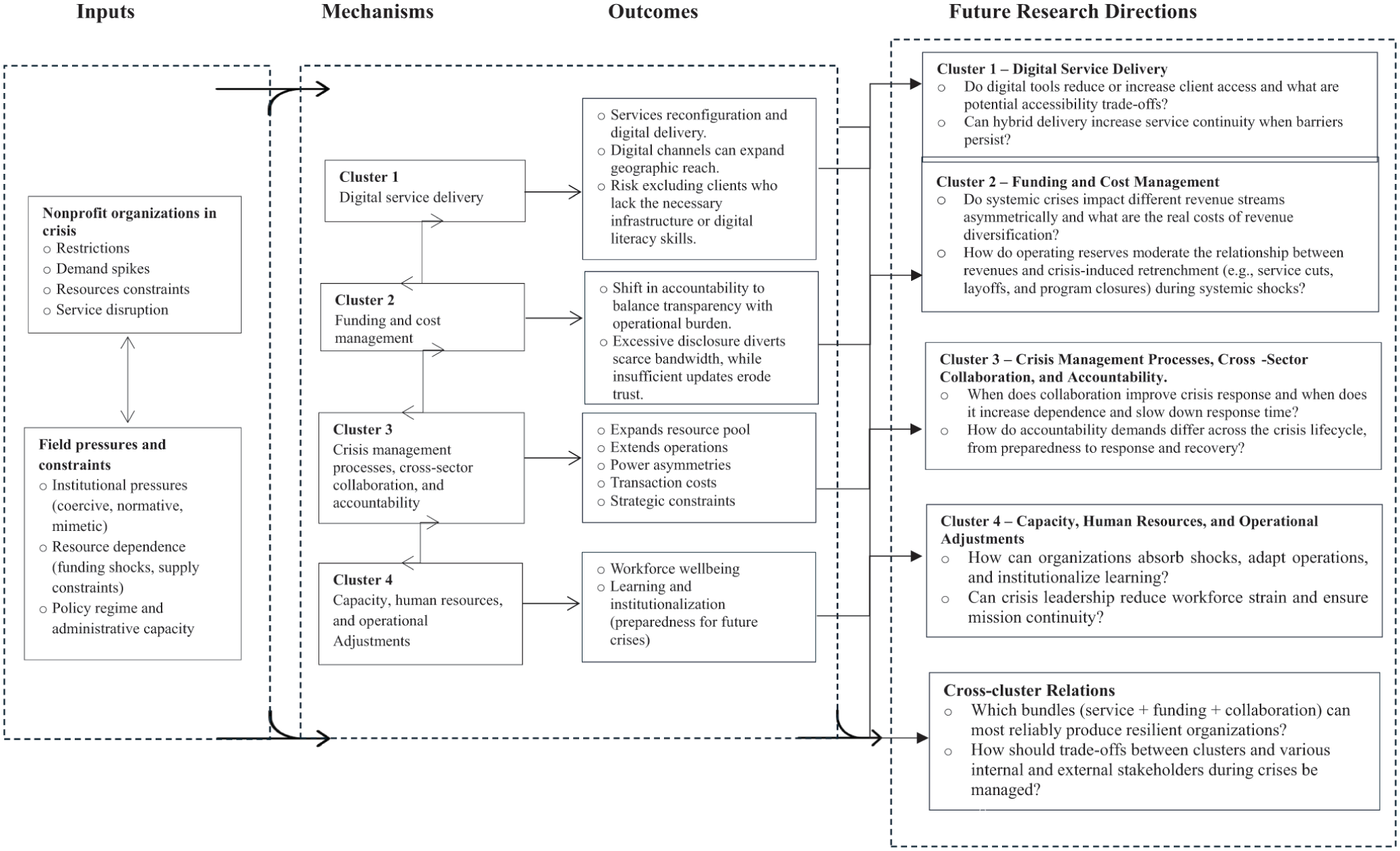
Framework for future research directions for nonprofit organizations in crises.
Crisis Context and Field Pressures
Future research could conceptualize crisis context not only as “shock severity” but also as a configuration of policy and regulatory constraints, volatility in resource environments, and shifts in community needs. Institutional and resource dependence theories jointly indicate that nonprofit organizations face simultaneous legitimacy pressures (to conform to new norms and mandates) and resource pressures (to stabilize funding and critical inputs) that vary across policy regimes, funder ecosystems, and subsectors. This variation creates heterogeneous starting conditions for organizational responses, suggesting that future comparative studies should treat institutional regimes and resource environments as boundary conditions rather than as background contexts.
Mechanisms and Outcomes
Cluster 1, Digital Service Delivery, captures how organizations reconfigure delivery modalities (onsite, remote, and hybrid) and how these shifts affect access. A key mechanism for future research is the accessibility trade-off. Digital delivery may expand continuity and reach for some clients while excluding others, depending on client resources, service type, and the digital infrastructure. Institutional theory further implies that these delivery choices are shaped by evolving expectations regarding equity, duty of care, and acceptable service standards under crisis conditions.
Cluster 2, Funding and Cost Management, examines how organizations stabilize cash flow and reduce cost exposure during crises. A central mechanism is resource elasticity, which reflects the extent to which organizations can adjust revenue and cost structures without undermining mission delivery, consistent with the resource dependence theory’s emphasis on dependence, bargaining power, and constraint (Froelich, 1999; Sukens et al., 2023). Although a meta-analysis (Hung & Hager, 2019) showed that revenue diversification can improve the financial health of nonprofit organizations, the overall effects were small and have not been explicitly examined in crises that create novel challenges and pressures on nonprofits. Future research could investigate (a) the vulnerability of different revenue streams to crisis-induced shocks, recognizing that earned income, private donations, and government funding exhibit differential sensitivity to crisis conditions; (b) the temporal sequencing of revenue recovery, as some streams rebound quickly, whereas others remain distressed; (c) the administrative costs and burden associated with diversification, particularly for smaller organizations with limited capacity to pursue potential donors; and (d) the trade-offs between revenue diversification and mission alignment when organizations are forced to attract emergency funding sources that may diverge from core mission priorities.
Cluster 3, Crisis Management Processes, Cross-Sector Collaboration, and Accountability, captures how nonprofit organizations maintain trust under uncertainty. Future studies should examine how nonprofit organizations coordinate actions across partners and sectors. The core mechanism is coordination capacity: collaboration can expand resources and operational reach while also creating coordination costs and power asymmetries that shape the outcome dynamics predicted by resource dependence theory when dominant actors control critical resources. Research should also focus on accountability reconfiguration during crises, which involves shifts in reporting cadence, communication channels, and stakeholder engagement to preserve legitimacy while managing administrative burdens. Future research could examine how accountability demands differ across the crisis life cycle, from preparedness to response and post-crisis recovery.
Cluster 4, Capacity, Human Resources, and Operational Adjustments, deals with internal execution capabilities. Future studies should examine crisis leadership, staffing stability, volunteer management, and the ability to convert ad hoc decisions into durable routines, consistent with the organizational resilience theory’s focus on how organizations absorb shocks, adapt operations, and institutionalize learning (Kedia et al., 2025; Wu et al., 2021). Crisis management theory implies that timing matters across these mechanisms. The same strategy may function differently in the pre-crisis phase than in the peak disruption or recovery phases (Bundy et al., 2017).
Cross-Cluster Interactions
A key implication of this framework is that the mechanisms identified across clusters are interdependent rather than additive. The effect of any response is likely contingent on how it co-occurs with others. Therefore, future research should model and test cross-cluster interactions that determine whether interventions stabilize services or redistribute costs. First, although digital transformation may enhance continuity and operational capacity by reducing transaction costs and sustaining contact, it may also undermine equity when it shifts compliance and access burdens to clients (e.g., devices, connectivity, and digital literacy), thereby amplifying their exclusion (Clusters 1 and 4). Second, financial stabilization can preserve organizational viability when cost controls buffer shocks; however, it may erode service continuity when fiscal discipline induces mission drift, narrowing of eligibility, or incremental service retrenchment (Clusters 1 and 2). Third, accountability may sustain trust when transparency and engagement are decision-relevant and proportionate, but weaken capacity when reporting requirements divert scarce managerial and frontline attention (Clusters 3 and 4). Fourth, collaboration can stabilize resources and expand capacity when partnerships diversify funding and expertise, but can deepen resource dependence when dominant partners constrain strategic choices and reorient priorities (Clusters 2 and 4). Therefore, research designs that examine the effects across clusters are needed.
Boundary Conditions and Feedback Loops
Future research should examine the moderators that influence whether response mechanisms produce positive, negative, or mixed outcomes, thereby strengthening explanatory leverage. The key boundary conditions include pre-crisis slack and operating reserves, revenue concentration and dependence structures, digital maturity, workforce structure (staff versus volunteer intensity), network position, and governance capacity (Chen, 2021; Kim & Mason, 2020). These boundary conditions map directly onto the four theoretical lenses: institutional theory suggests that legitimacy expectations and regulatory mandates can amplify or dampen the effects of response choices; resource dependence theory highlights how reliance on concentrated funders or partners conditions discretion and adaptation; organizational resilience theory emphasizes slack, routines, and learning capacity as determinants of absorptive and adaptive performance; and crisis management theory implies that the timing and sequencing of actions across the preparedness, response, and recovery phases shape downstream outcomes.
Finally, the model includes a feedback loop. Crisis learning and institutionalization can alter future preparedness (e.g., protocols, digital governance, and partnership routines), producing path-dependent trajectories across subsequent crises. In particular, crisis management and resilience perspectives imply that what begins as improvisation can be codified into durable routines that strengthen future readiness or become brittle practices that constrain flexibility in the face of the next shock, depending on leadership capacity, governance, and resource availability.
Overall, our proposed model provides a roadmap for future crisis research and a practical tool for nonprofit organizations seeking to strengthen their resilience (Schwarz et al., 2026). By linking field-level pressures and resource environments to cluster-aligned response mechanisms and outcomes, the model supports systematic and comparative investigations of how nonprofits sustain legitimacy, secure resources, maintain service continuity and equity, and protect workforce capacity across crises, not only during COVID-19 but also in the face of future systemic disruptions.
Limitations
Despite its contributions, this study has some limitations. First, the findings may have been influenced by publication biases. Our inclusion and exclusion criteria may have led to the omission of some studies because we only included articles published in indexed journals. Second, by design, we excluded grey literature and administrative data sets. Consequently, state-level impact and government relief fund reports (e.g., the CARES Act in the United States) lie outside the present evidence base and constitute important avenues for future synthesis. Third, the search was limited to English-language articles, which may have resulted in selection bias by excluding articles published in other languages. The fourth limitation is the adoption of a thematic analysis. We strictly followed the guidelines and protocols for thematic analysis and adhered to the rigorous coding criteria outlined in the developed checklist and templates. However, this study may still be affected by researcher bias. Fifth, future studies could draw on additional theoretical frameworks, such as stakeholder theory or complexity theory, to offer further critical insights and explore more comprehensively the role of the nonprofit sector in navigating global crises.
Conclusion
This systematic review helps move beyond observations such as “COVID-19 had a negative impact on nonprofit organizations” and “larger nonprofit organizations survived better” to explain how and why this is the case. Only 27 of the 52 studies reported a negative impact of COVID-19 on nonprofit organizations. Although factors such as organizational size and pre-existing financial health influenced the extent and nature of the impact, the findings reveal that nonprofit organizations’ resilience during the pandemic was shaped not only by their size and financial resources but also by their capacity to adapt, innovate, and collaborate. The COVID-19 pandemic was severely disruptive, which enabled nonprofit organizations to deviate from traditional ways of working. They adopted innovative approaches in almost every domain, from service delivery to fundraising, capacity building, and operations and management. By leveraging digital tools and fostering greater cross-sector collaboration, nonprofit organizations have continued their critical work. They set the stage for a more adaptive and resilient sector that is capable of withstanding future crises.
The pandemic’s impact was not uniform across all nonprofit organizations. Our review identifies how key resilience dimensions, including adaptive capacity, robustness, resource agility, and learning orientation, condition nonprofit organizations’ ability to absorb, respond to, and recover from the pandemic. While some organizations thrived by securing new funding sources and adapting to digital tools, others struggled with the severe disruption of their traditional operational models. Understanding the specific factors that enhance the resilience and adaptability of nonprofit organizations and identifying their vulnerabilities is essential for developing targeted strategies to strengthen the sector’s preparedness for future crises.
Supplemental Material
sj-docx-1-nvs-10.1177_08997640261448565 – Supplemental material for The Impact of COVID-19 on Nonprofit Organizations: A Systematic Review and Future Crisis Research Agenda
Supplemental material, sj-docx-1-nvs-10.1177_08997640261448565 for The Impact of COVID-19 on Nonprofit Organizations: A Systematic Review and Future Crisis Research Agenda by Qing Miao, Gary Schwarz and Junaid Ahmad in Nonprofit and Voluntary Sector Quarterly
Footnotes

Funding
The authors disclosed receipt of the following financial support for the research, authorship, and/or publication of this article: This research was supported by the National Social Science Foundation of China (25&ZD214).
Declaration of Conflicting Interests
The authors declared no potential conflicts of interest with respect to the research, authorship, and/or publication of this article.
Supplemental Material
Supplemental material for this article is available online.
Data Availability Statement
The data for this systematic literature review were extracted from publicly available published studies.
Author Biographies
References
Supplementary Material
Please find the following supplemental material available below.
For Open Access articles published under a Creative Commons License, all supplemental material carries the same license as the article it is associated with.
For non-Open Access articles published, all supplemental material carries a non-exclusive license, and permission requests for re-use of supplemental material or any part of supplemental material shall be sent directly to the copyright owner as specified in the copyright notice associated with the article.
