







Abstract
Graphene oxide (GO) sheets have captured the attention of the scientific community because of its excellent performance and applicability. Hence, studying its reinforcing effects on polyimide (PI) resin is an important research topic. In this study, samples of GO-reinforced PI resin were prepared by hot pressing. The effects of GO as nanofiller on the structure and morphology as well as on the mechanical, thermal, and dielectric properties of the GO/PI resin composites were investigated carefully to provide a practical strategy for the use of the polymer-based composites. The GO nanosheets were dispersed uniformly into the PI matrix by ultrasonication, as illustrated by scanning electron microscopic images (SEM). Compared with pure PI, the GO/PI resin composite loaded with 1 wt% GO showed improved tensile strength by 38.9%, flexural strength by 24.8%, and impact strength by 40.7%. Dynamic mechanical analysis test showed that the addition of GO (1 wt%) increased the glass transition temperature by nearly 9.1°C. In addition, the thermal stability and the dielectric constant were also enhanced by adding only a small amount of GO. This approach provides a strategy for developing simple and cost-effective GO-polymer resin composite materials.
Introduction
Nowadays, blending polymer composites with inorganic materials has become a prevalent topic in material science because of the suitable properties from both inorganic components (heat resistance, retention of mechanical properties at high temperatures, and good dielectric properties) and organic polymers (toughness, ductility, and processability). 1 –5 Being an important class of high-performance polymers, polyimides (PIs) are widely used in the preparation of hybrids owing to their excellent thermal stability, superior mechanical properties, high glass transition temperature (Tg), high volume resistivity, radiation, and chemical resistance. 6,7 These properties make PIs widely applicable in the production of electronic, fiber, adhesive, and film material. However, high softening temperatures and limited solubility in common solvents prevent the PI resin from intercalating into the inorganic filler to form these rigid materials with three-dimensional structures. In order to overcome these difficulties, some effective methods to disperse fillers have been utilized. For example, ultrasonication has been proved effective in dispersing fillers in the polymer matrix. 8,9 Moreover, the utilization of nano-sized fillers can also increase dispersibility in polymer resin and lead to improved mechanical, thermal and dielectric properties. 10,11
Graphene is a two-dimensional carbon sheet exfoliated from graphite, which has recently emerged as one of the most attractive and creative materials because of its remarkable chemical and physical characteristics. These properties include a large surface area, good thermal and electrical conductivity, and extremely high mechanical properties. These properties make graphene a promising material for many industrial applications, such as field-effect transistor, memory device, hydrogen storage, conducting electrode, ultra-capacitor, and solar cell. 12 –15 Although various studies have indicated that graphene is a good reinforcement for polymer resin, many unresolved problems restrict its development. For instance, the pristine graphene sheets have a tendency to agglomerate in a polymer matrix, which leads to difficulties in material processing and high cost of device fabrication. Considered as the precursor of graphene, graphene oxide (GO) contains reactive functional groups, including hydroxyl, carboxyl, carbonyl, and epoxy groups on the basal plane and edge. 16 –19 With these functional groups, GO possesses unique characteristics and various potential applications, such as good dispersion stability in water and other common organic solvents 20 and low manufacturing cost. These intrinsic properties of GO make it a suitable nanofiller for polymer matrix composite materials. For example, Yang et al. 21 reported that the mechanical and thermal properties of the PP composites were improved with low loading levels of GO. Zhang et al. 22 synthesized isocyanate-modified GO (GO-NCO)/PI nanocomposites and found that the mechanical properties (e.g. tensile strength and modulus) were significantly improved because the GO-NCO was incorporated into the PI chains by covalent bonding. Therefore, GO does not only increase dispersibility in polymer resin but also improves mechanical, thermal, and other properties.
To the best of our knowledge, all existing studies about GO/PI composites are focused on thin film and fiber, and there are no reports on GO/PI resin composite boards. Thus, it is necessary to study the effects of GO on the respective properties of PI composite boards. Based on the above considerations, the present study introduced GO nanosheets into the PI resin by ultrasonication, and a series of GO/PI resin composites were fabricated by hot pressing strategy. The chemical structure of GO/PI resin composites were analyzed, and the dispersity of GO in the PI matrix was explored. Both the thermal and mechanical properties of the GO/PI resin composites with different GO weights were investigated in detail. Furthermore, the dynamic mechanical analysis (DMA) and dielectric properties were also discussed in detail.
Experimental section
Materials
Natural graphite powder (325 mesh), sulfuric acid (H2SO4; 98%) and hydrogen peroxide (H2O2; 30%) were purchased from Sinopharm Chemical Reagent, China, and all of them were used as received. PI (powder, SK–0130, viscosity-average molecular weight: 80000–10000, end group: –NH2, density: 1400 kg m−3) resin was provided by Changzhou Sunchem High Performance Polymer Co. (China). The chemical structure of PI is shown in Figure 1. Sodium nitrate (NaNO3) and potassium permanganate (KMnO4) were commercially obtained from Aladdin Chemical Reagent (China). Unless otherwise stated, all reagents were of analytical grade and used as received without further purification.

The chemical structure of PI powder. PI: polyimide.
Preparation of graphite oxide
Graphite oxide powder was prepared from natural graphite flake by a modified Hummers and Offeman’s method. 23 In a typical synthesis, natural graphite powders (3 g) were mixed with NaNO3 (1.5 g) and concentrated H2SO4 (70 mL) in a 250 mL three-necked flask. The resulting mixtures were stirred in an ice bath for 30 min. After homogeneous dispersion of the graphite powders in the solution, KMnO4 (9 g) was added slowly for half an hour to the solution at 0°C. After that, the solution was heated to 35°C and the oxidation was allowed to proceed for 30 min. Then, the mixtures were distilled with 150 mL of deionized water (DI water) and heated to 95°C. After 15 min, the mixtures were poured into 300 mL of DI water containing 30% H2O2 (20 mL). The solution was washed several times and purified with hydrochloric acid and DI water, respectively. Finally, the sample of graphite oxide powder was obtained after drying in a vacuum oven at 60°C.
Preparation of GO/PI resin composites
Various loadings of oxidized graphite powder were re-dispersed in ethanol and exfoliated to generate GO suspension by ultrasonication over 24 h. Then, the as-obtained GO suspension was uniformly mixed with the PI resin with the assistance of mechanical and ultrasonic stirring simultaneously for 2 h. After that, the GO/PI powders were collected with filtration and dried at 60°C in a vacuum oven for 24 h. The GO/PI powders were filled into a mold and compressed under 15 MPa at 260°C for 20 min, followed by sintering at 325°C for 40 min. After cooling, target GO/PI composite specimens with a dimension of 1.5 ×10 ×10 mm3 were obtained and cut into desired sizes for testing. Notably, the GO could be partially reduced to graphene above 300°C due to the decomposition of hydroxyl, carboxyl, and epoxy group, as reported in other articles. 22,24 Components of the samples used in this article are listed in Table 1. The composites became highly brittle when the GO content was greater than 1 wt% due to the extensive agglomeration of GO in the PI resin.
Components and mechanical properties of the GO/PI resin composites.
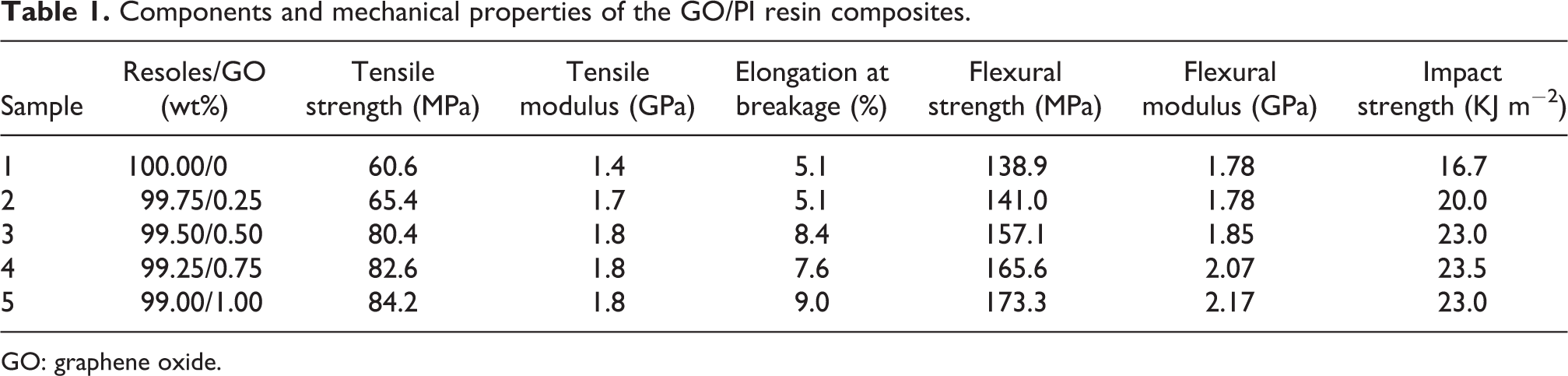
GO: graphene oxide.
Characterization
GO was confirmed with X-ray diffraction (XRD, Bruker D8 ADVANCE, Billerica, Massachusetts, USA), Raman spectrum (LabRAM HR800, Horiba Jobin Yvon, Bensheim, Germany), and atomic force microscopy (AFM, Veeco MultiMode, Nanoscope IIIa controllor). The chemical structure of GO, neat PI, and GO/PI resin composites were confirmed with Fourier transform infrared spectra (FTIR, Bruker Vertor 33) in the range of 4000–500 cm−1. The morphologies of the fracture surfaces of the PI resin and GO/PI resin composites were observed by scanning electron microscopy (SEM, Hitachi S-3700 N). The tensile and blending properties of the samples were tested with a universal testing machine according to GB/T 1447-2005 and GB/T 1449-2005 standards, respectively. Impact strength tests with non-notched specimens were performed on an Izod instrument in accordance with GB/T 1451-2005 standard. Thermal stability of the composites was obtained by Shimadzu TGA-50 thermogravimetric instrument (Kyoto, Japan) under nitrogen atmosphere. The temperature range was employed from 50 to 750°C with each ramp rate of 20°C min−1. DMA measurements were conducted on the sandwich specimens in three-point bending mode by a TA instruments Q800 dynamic mechanical analyzer (New castle, Delaware, USA). Dielectric constants and loss of the GO/PI resin composites were measured by Agilent Technologies 4294A Precision Impedance analyzer (Santa Clara, California, USA) in the frequency range of 1–103 kHz. Prior to the measurement, carbon electrodes were fabricated on the sides of these composites using conductive carbon paste. The diameter of the electrode of each sample was 5 mm.
Result and discussion
Characterization and morphology of GO, neat PI, and GO/PI resin composites
The XRD patterns of natural graphite and GO are shown in Figure 2. The XRD of natural graphite reveals the characteristic intense refraction peak of graphite at 2θ = 26.5°, which corresponds to the graphene interlayer of (002) with a d-spacing of 0.34 nm. After oxidation process, the characteristic peak of graphite disappears and dried GO shows a small and weak diffraction peak at 2θ = 9.42°, corresponding to a d-spacing of 0.93 nm, indicating the intercalation of hydroxyl, carbonyl, and epoxide groups in graphite interlayers, which confirms the successful oxidation of graphite. 25 Figure 3 compares the Raman spectra of graphite oxide and GO. For the graphite oxide, the G band located at 1584 cm−1, characteristic of C sp2 in-plane vibration (E2 g mode), and the D band located at 1337 cm−1, characteristic of the defect carbon structure, while GO shows G band at 1588 cm−1 and D band at 1337 cm−1, indicating that the GO nanosheets have been synthesized successfully. The high frequency (1588 cm−1) bandshift of G band in GO demonstrates the formation of a larger interlayer space of GO. Moreover, the ratios of D band to G band intensity (ID/IG) for graphite oxide and GO are 0.99 and 1.17, respectively. The similar values demonstrate that no more defects are introduced during ultrasonication process, preserving the basic structural properties of the carbon sheets. The few-sheet nature of the exfoliated GO nanosheet is further confirmed by AFM (Figure 4). The height profile measurement (by scanning along the marked black line) indicates that the crystallite terrace is rather flat with the thickness of about approximately 1 nm, which is the characteristic of a monatomic GO nanosheet, 26,27 demonstrating a successful delamination of graphite oxide in water. In addition, the GO surface is very clean, almost free of impurities, and has no defects.
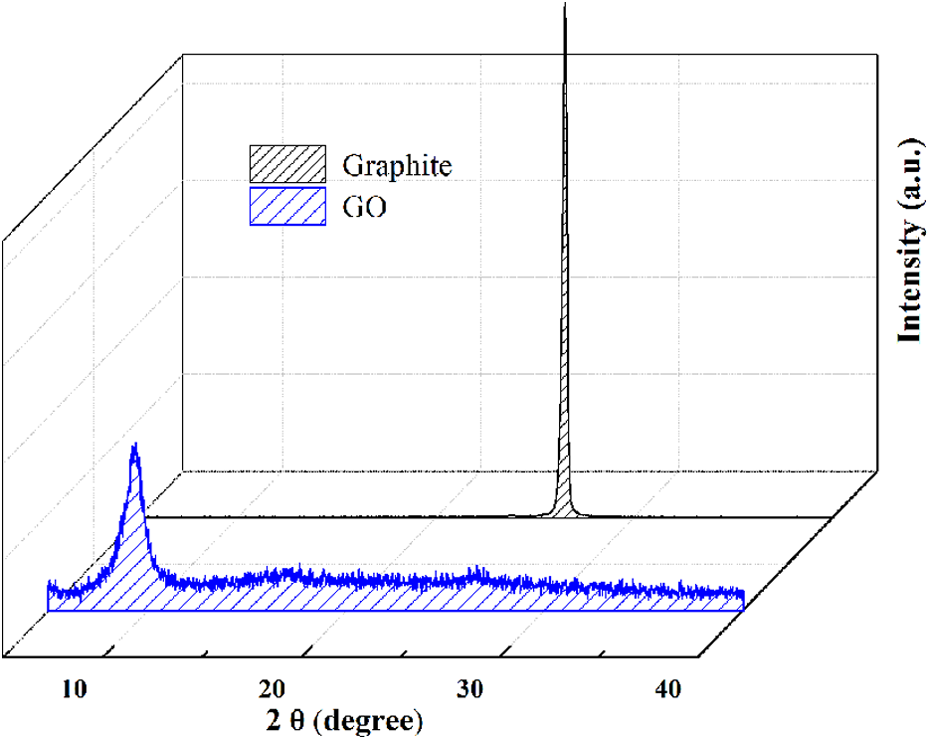
X-ray diffraction patterns of the pristine graphite and GO. GO: graphene oxide.
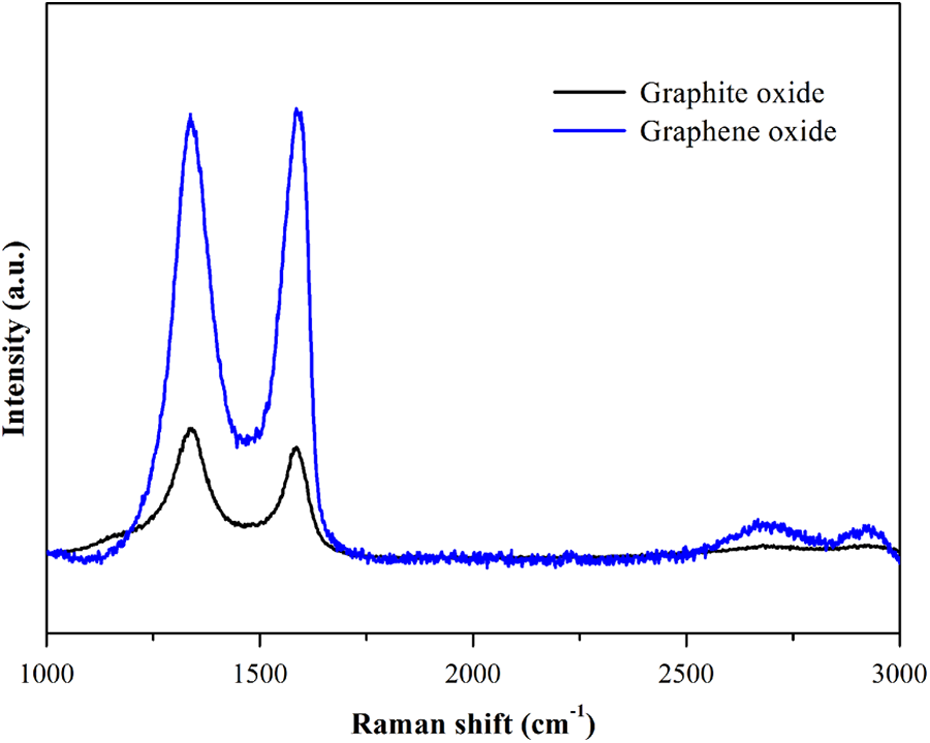
Raman spectra of graphite oxide and GO. GO: graphene oxide.
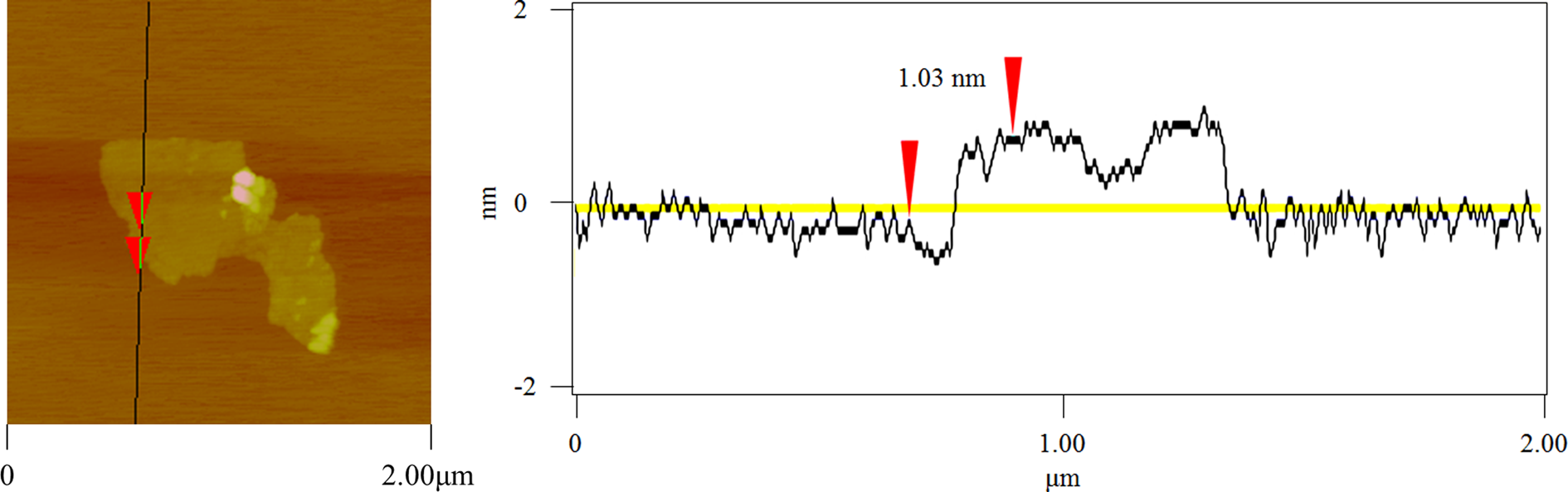
AFM image of GO exfoliated in water. AFM: atomic force microscopy; GO: graphene oxide.
The chemical structures of GO, the neat PI, and 1 wt% GO/PI resin composites are determined by FTIR. As shown in Figure 5 (curve a), the characteristic bands of the carboxyl group related to GO appear at about 1,729 cm−1 (C=O stretching) and 1386 cm−1 (O–H deformation vibration). The bands at 1084 and 1049 cm−1 are attributed to C–O stretching vibrations of the –OH groups and the C–O–C groups, respectively. 28 For the neat PI and GO/PI resin composite (curve b and c), the peaks at approximately 1782 and 1730 cm−1 are assigned to C=O asymmetry and symmetry stretching vibration of imide group of PI, respectively. In addition, the absorption peaks at 1374 and 723 cm−1 are attributed to the C–N stretching vibration and the imide ring deformation vibration. These characteristic peaks are close to the data reported previously. 29 –32 Comparing the two lines, there are no obviously different peaks. This finding suggests that a small amount of GO make no change to the chemical structure of GO/PI resin composite.
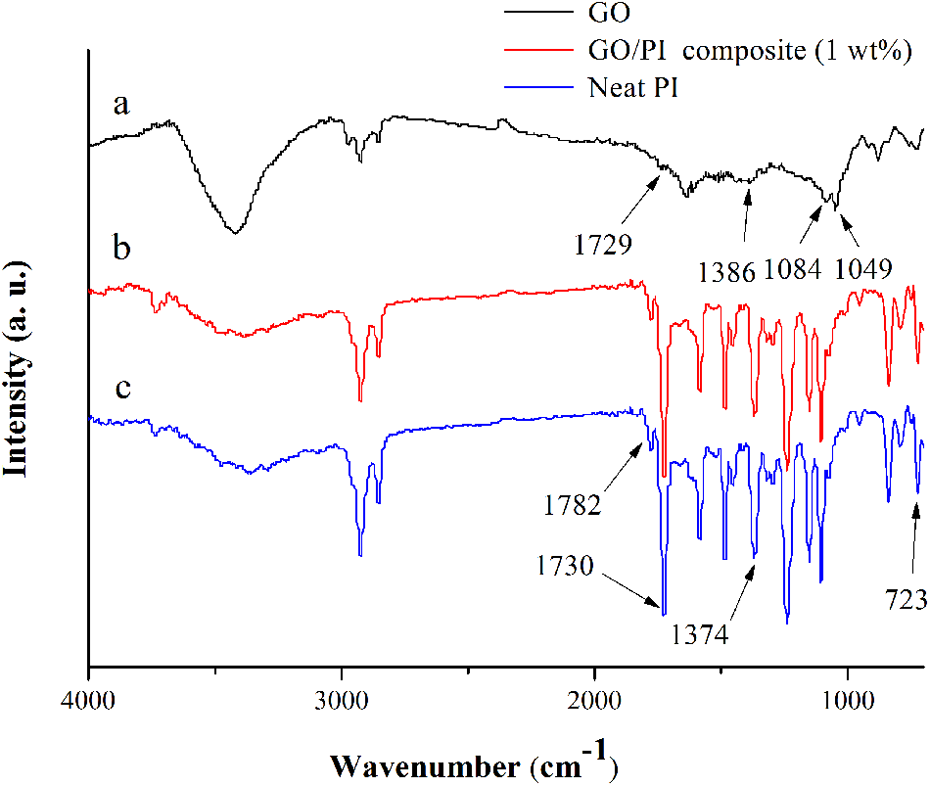
FTIR spectra of GO, pure PI, and GO /PI nanocomposites (1 wt%). FTIR: Fourier transform infrared; GO: graphene oxide; PI: polyimide.
The GO sheets, like other kinds of nanosheets, tend to attract each other and are difficult to be dispersed in polymers by traditional means such as blending. Sonication is an effective way to disperse GO sheets in polymer resin. It is conceivable that the well-dispersed GO sheets are fixed after the system is cured. In the present study, the GO sheets were wetted and dispersed in the polymer solution via sonication for 2 h, followed by hot pressing. To investigate the dispersion and morphology of GO in GO/PI resin composites, SEM measurements of the fractured surfaces for the pure PI and GO/PI composites were characterized upon tensile testing. As shown in Figure 6(a), pure PI resin has a smooth and river-like fracture surface, exhibiting a typical brittle feature. The bright dots and lines demonstrate that the PI matrix is stretched out upon mechanical deformation. For the GO/PI resin composites with 0.25–0.75 wt% GO (Figure 6(b) to (d)), the fractured surfaces are relatively rough and wrinkled compared with that of the neat PI. No significant aggregates can be found in the fractured surfaces. Judging from this fact, we can assume that reduced GO (rGO) sheets are dispersed in the PI matrix uniformly. More importantly, as the surface and hem of GO/PI composites are not smooth as those of neat PI, it is considered that the graphene framework is interlinked with PI by chemical bonding, bringing some positive effects on the modulus, Tg and mechanical property of the GO/PI resin composites. However, when the overfull GO (1 wt%) sheets are added, a few highly wrinkled GO aggregations with thickness of several nanometers are observed (Figure 6(e) and (f)). It is evident that the agglomeration of the dispersed GO phase increases with the increasing GO content. But this increase shows few influences on the performance of GO/PI composite, possibly due to the small amount of GO and the good dispersibility by sonication. Thus, sonication is an effective approach to maximize the efficiency of GO for providing superior performance composites.
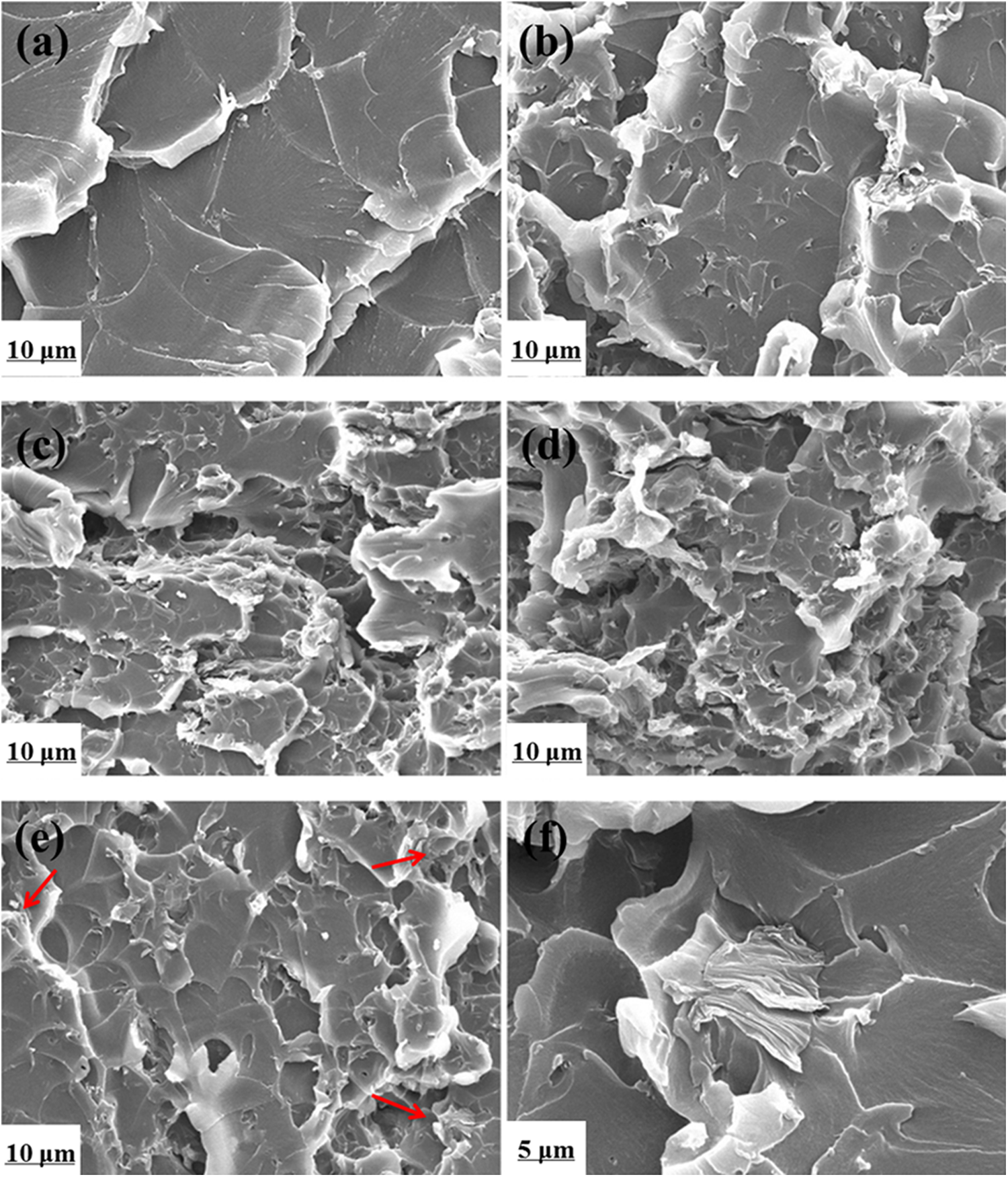
SEM micrographs of the fractured surface of (a) neat PI and (b to e) GO/PI resin composites at various GO contents of 0.25 wt%, 0.5 wt%, 0.75 wt%, and 1 wt%, respectively. The arrows indicate the dispersed GO in PI matrix. (f) The magnified image of GO from the 1 wt% GO/PI resin composite. SEM: scanning electron microscope; PI: polyimide; GO: graphene oxide.
Mechanical properties
Table 1 summarizes the mechanical properties of the PI resin composites with different GO concentrations. Figure 7 shows the tensile properties of the GO/PI resin composites. It can be seen that the tensile strength and tensile modulus improve apparently with the addition of GO. When the content of GO increases from 0.25 to 1 wt%, tensile strength of the composites changes from 65.4 to 84.2, showing significant enhance effect compared with the pure PI resin. Tensile modulus also exhibits an increasing trend. Tensile modulus of 1 wt% GO/PI is 1.8 GPa, which is higher than pure PI resin of 1.4 GPa, 29% increased. Furthermore, the tensile elongation markedly increases to 9.0% at 1 wt% GO content, which achieves about 75% increase. All the results apparently demonstrate that the GO/PI resin composites exhibit better tensile properties strength and modulus than other graphene-reinforced composites. 33 –35 Therefore, it can be seen that GO has a remarkable effect on tensile properties of GO/PI resin composites.
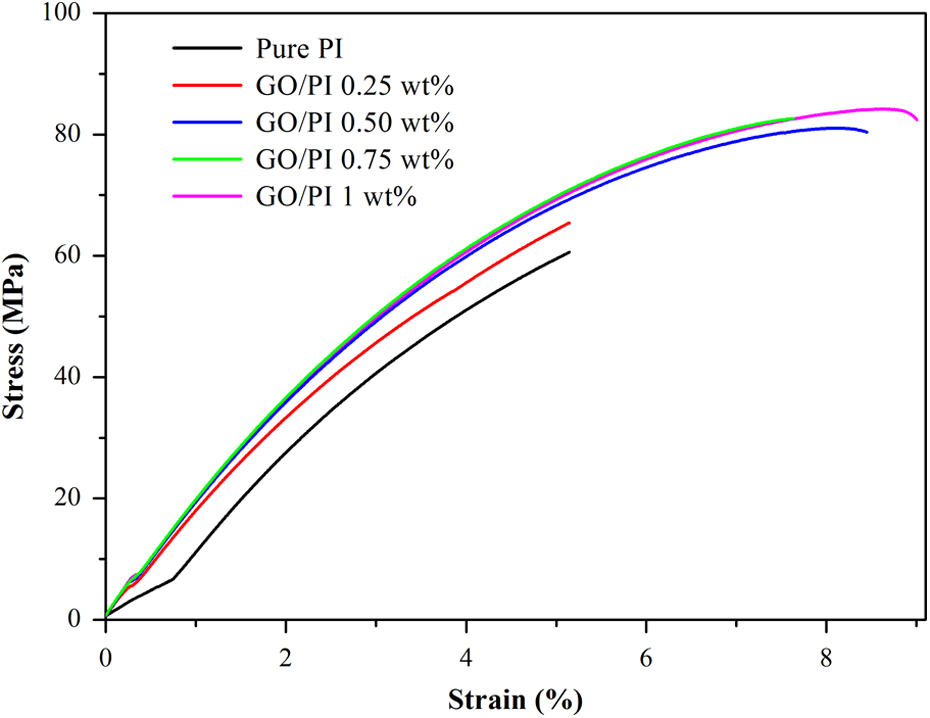
Stress–strain curves of neat PI and GO/PI resin composites. PI: polyimide; GO: graphene oxide.
Flexural properties are of great importance to any structural element. Composite materials used in structure are difficult to bend, and therefore new composites with improved bending characteristics are essential. Figure 8 shows flexural properties of GO/PI resin composites filled with different contents of GO. It can be found that addition of only 0.25 wt% GO to PI resin has no obvious effect on bending strength and modulus. When 0.5 wt% or more GO is added into PI resin, the bending strength and bending module increased apparently. Significant increases are observed with 1 wt% GO content, which are approximately 25% and 22% improvement in the flexural strength and modulus, respectively, compared with that of pure PI film. As a result, it can be concluded that GO as a kind of high strength and high modulus nanofiller is useful to transfer the blending stress.
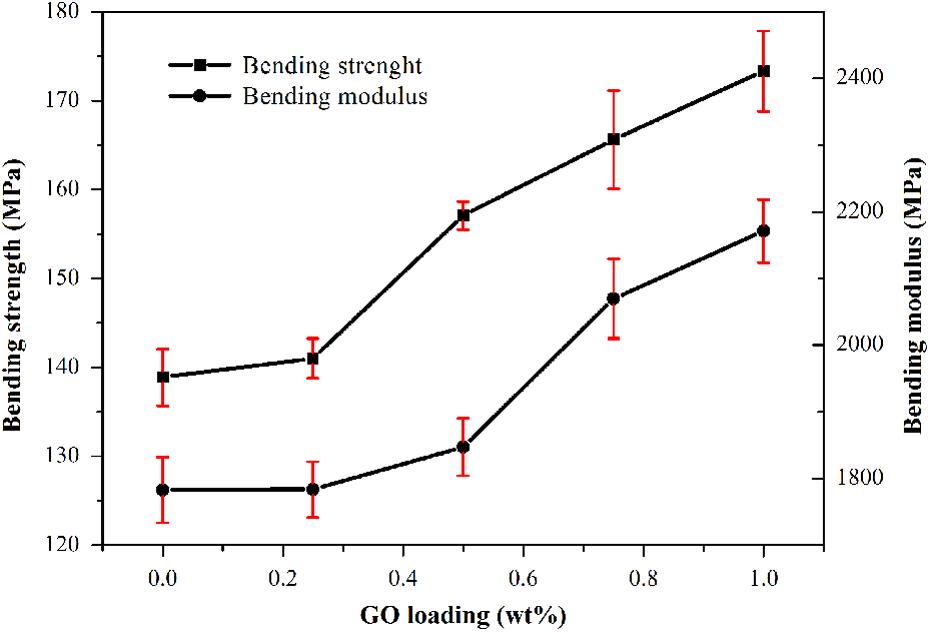
Bending properties of neat PI and GO/PI resin composites. PI: polyimide; GO: graphene oxide.
Impact strength of neat PI and GO/PI resin composites are shown in Figure 9. It is seen from this figure that the impact strength of PI resin composites increases gradually with increasing GO content up to a certain loading (approximately 0.75 wt%). However, when GO content is further increased to 1 wt%, the strength no longer increases. Therefore, only 0.75 wt% GO is enough to enhance the impact strength.
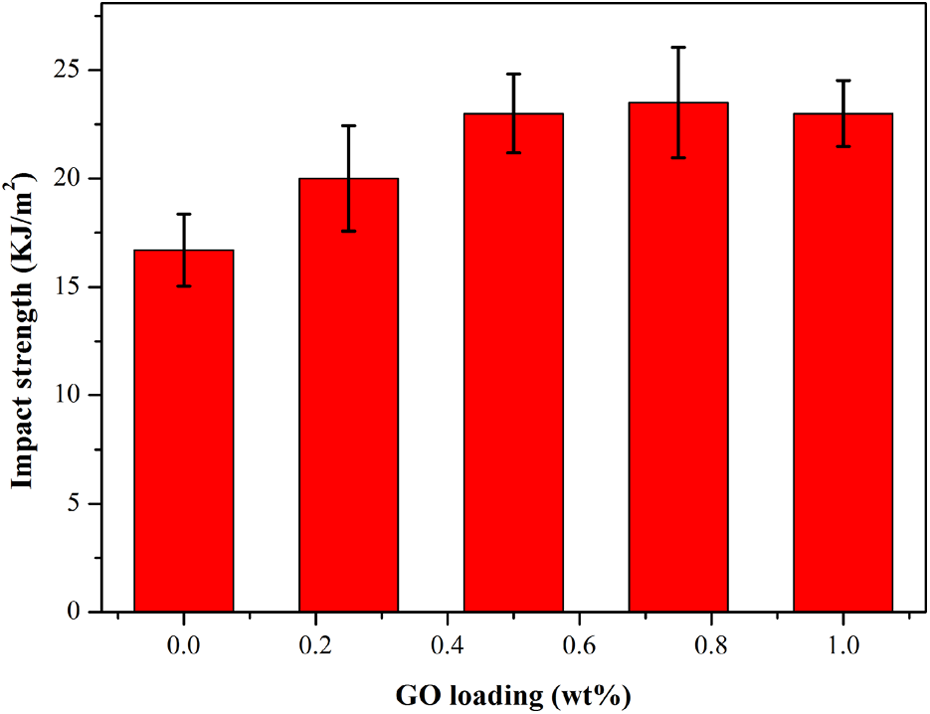
The effect of different GO contents on the impact strength of GO/PI resin composites. PI: polyimide; GO: graphene oxide.
The GO/PI resin composites exhibit an increasing trend in tensile, impact strength, and flexural properties, which are much higher than that of PMR-15 (tensile strength 56.8 MPa, flexural strength 92.6, and impact strength 3.9 kJ m−2). 36 This increase in mechanical properties can be explained as follows: the fine dispersion of GO in PI resin by sonication can result in enhanced interactions between nanofiller and polymer. Thus, when the distribution of the nanofiller is more homogeneous and no obvious agglomeration is observed, the interface can transfer load more effectively, resulting in the enhancement of mechanical properties. 37
Dynamic mechanical analysis
Figure 10(a) and (b) shows the results of DMA tests including storage modulus (E′) and damping factor (tan δ) as a function of temperature from 150°C to 280°C for the pure PI and GO/PI resin composites. The addition of GO results in an improvement in the elastic modulus of PI resin, and only a slight change is visible within the rubbery state (Figure 10(a)). E′ of the 1 wt% GO/PI resin composite is enhanced by approximately 10.3% compared with pure PI. These findings indicate that only a small modulus of GO can reinforce plastic effectively at ambient conditions.
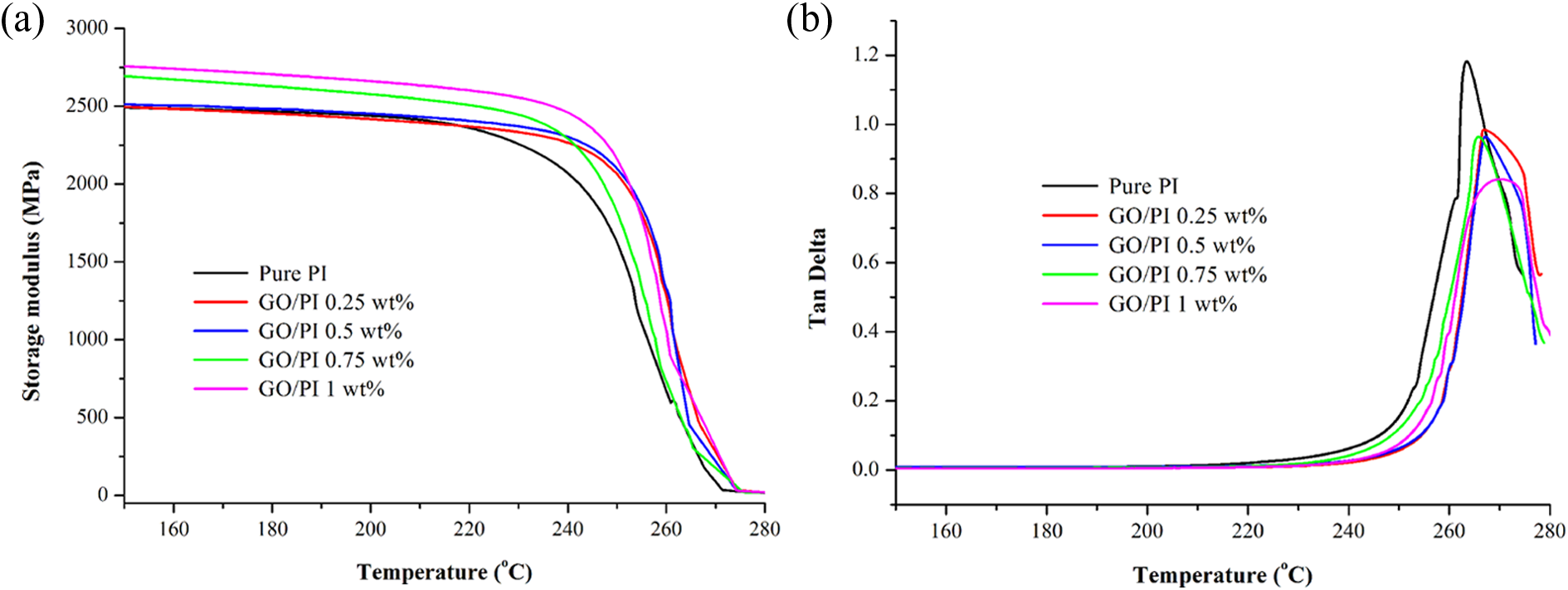
(a) Storage modulus and (b) tan δ versus temperature curves of pure PI and GO/PI resin composites. PI: polyimide; GO: graphene oxide.
Tan δ, which is defined as the ratio of storage modulus (E′) and loss modulus (E′′), is called damping. In polymer composites, such damping is often caused by the movement of main chain. In Figure 10(b), the tan δ in the GO/PI resin composites are decreased compared with that of neat PI resin. The decrease in tan δ peak is due to the reduced movement of the composites caused by the GO sheets which are uniformly dispersed in the PI matrix. In addition, the peak of tan δ is defined as a characteristic Tg which is an important indicator of thermostability. Some changes can be found in Tg of GO/PI resin composites compared with raw PI resin. It is shown that Tgs of PI resin and 1 wt% GO/PI resin composite are 262.5 and 271.6°C, respectively. In other words, the addition of 1 wt% GO improves the heat resistance of PI resin by 9.1°C.
Thermal properties
Interactions between GO and PI resin could produce changes in thermal behaviors. In order to study these changes, thermogravimetry (TG) and derivative thermogravimetry (DTG) were carried out under nitrogen atmosphere in the temperature range of 50–750°C. Figure 11(a) and (b) shows the thermogravimetric analysis (TGA) and DTG curves of pure PI and 1 wt% GO/PI resin composite. Both samples show the initial weight loss occurred below 60°C due to the loss of moisture adsorbed by the GO sheets. Then the significant mass losses of pure PI and GO/PI resin composite start at approximately 550°C, caused by the thermal decomposition process of the main chains of PI molecule. It can be seen that the 1 wt% GO/PI resin composite has higher decomposition temperature than pure PI resin. The decomposition temperature at 5% weight loss of pure PI resin is 558°C, while that of 1 wt% GO/PI resin composite is 563°C. The complete mass losses of pure PI and GO/PI composite at 650°C are approximately 34.9% and 35.0%, respectively. In the DTG curve, the temperature for peak decomposition of the 1 wt% GO/PI increases by approximately 10°C. According to the TGA and DTG results, the GO/PI resin composite possesses better thermal stability than pure PI resin. The enhanced thermal stability of the GO/PI composite may be mainly attributed to the excellent thermal stability of partial rGO, the strong interfacial interaction between the GO sheet and PI matrix and the trapping of the polymer moieties in nanofiller networks. 38,39
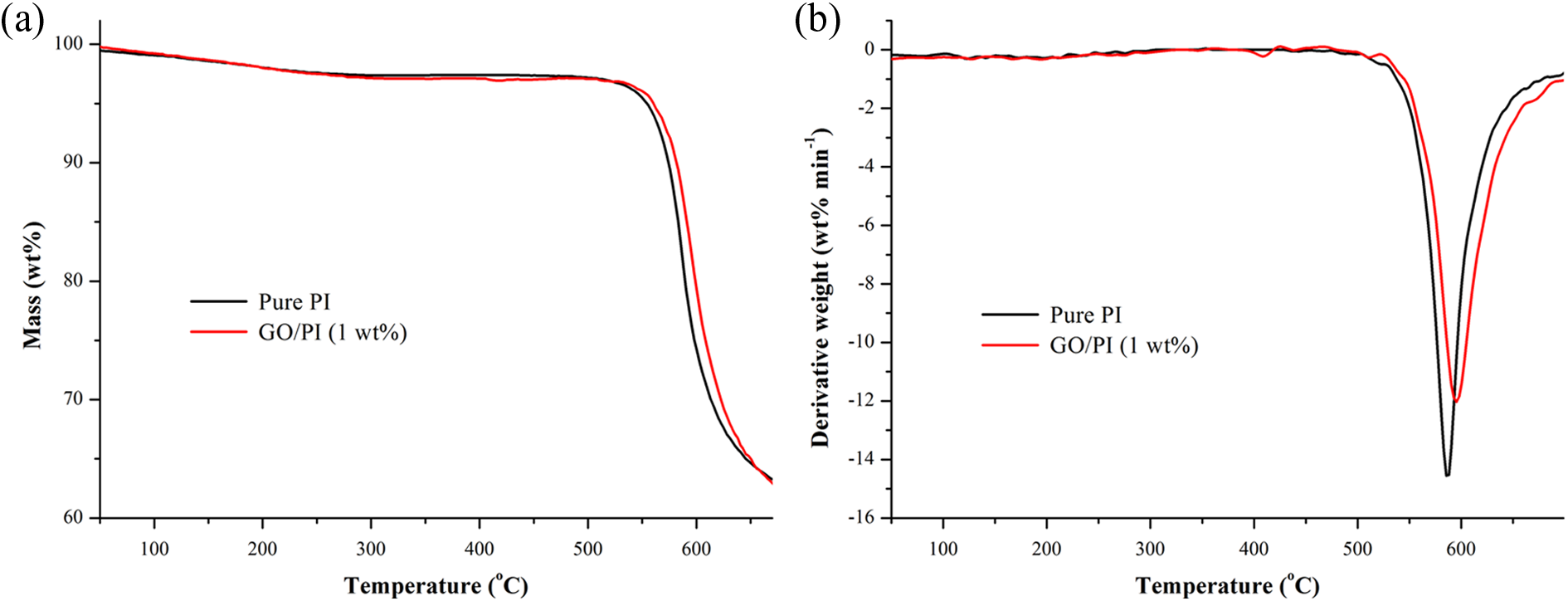
(a) TGA and (b) DTG curves of neat PI and 1 wt% PI/GO resin composite. TGA: thermogravimetric analysis; DTG: derivative thermogravimetry; PI: polyimide; GO: graphene oxide.
Dielectric properties
The dielectric properties of materials were measured following a capacitance method, and calculated using the following equation
40
:
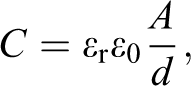
Figure 12(a) and (b) presents dielectric properties of neat PI and GO/PI composites, whcih were measured at room temperature as a function of frequency from 1 kHz to 1 MHz. It can be seen that the dielectric constants of all the GO/PI composites have relatively weak frequency dependence. For instance, in the studied frequency range of 1 kHz–1 MHz, the dielectric constant of GO/PI (1 wt%) composite slightly decreases from 8.35 to 7.72 as the frequency increases, while the dissipation factors are still less than 0.12 (Figure 12(b)), suggesting that it is a promising GO-based dielectric stable composite. Figure 12(a) also shows that the dielectric constants of the GO/PI composites monotonically increase with slight increasing of GO concentration. At 1 kHz, the dielectric constant of the GO/PI increases to 8.35 when the ratio of GO to PI is 1%, and this is approximately a 2.5-fold increase in comparison with 3.50 of the neat PI. More importantly, the dielectric loss tangent of the composites is still very low when the dielectric constant becomes high. For instance, when the ratio of GO to PI is 1%, the dielectric loss tangent of the composites is as low as 0.025.
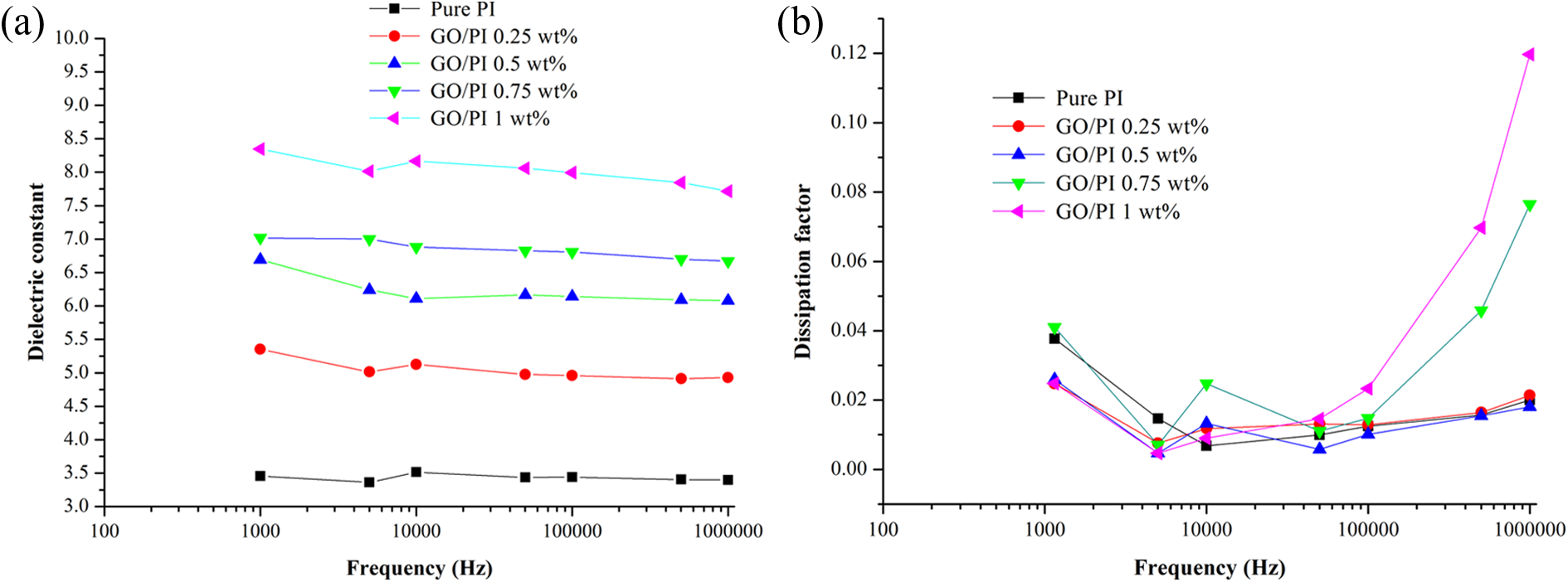
(a) Dielectric constant and (b) dielectric loss of neat PI and GO/PI resin composites with various contents. PI: polyimide; GO: graphene oxide.
This obvious increase of dielectric permittivity in GO/PI composites can be explained by the interfacial polarization 41 : the neighboring partially rGO platelets and a thin layer of PI resin in between could form internal barrier layer capacitors (IBLCs). Generally, IBLCs are formed by the conductive fillers with thin dielectric in between with each IBLC contributing a large capacitance. When an electric field is applied to the composite film, charge carriers originating from the external electrode migrate and accumulate at the interface due to the difference in relaxation time between the two phases. The accumulated charge carriers can induce a polarization, ultimately resulting in an increased dielectric constant. On the other hand, dispersion of GO in PI matrix also significantly influences the dielectric. Fine dispersity of GO, as shown in SEM images (Figure 6), leads to higher dielectric constant and lower dielectric loss. As a result, both the dielectric constant and dielectric loss of GO/PI composite are higher than that of neat PI. All these features of the GO/PI composite, including low dielectric loss, weak frequency dependence of dielectric, good dispersity, and the electric insulating characteristic are important for the practical application in the electric and electronic industry.
Conclusion
In summary, we have successfully prepared graphene-reinforced PI resin composites by hot pressing. The GO was successfully incorporated into the PI matrix by ultrasonication to fabricate the homogeneous composites, as evidenced by SEM. The chemical structures of neat PI and GO/PI resin composites were confirmed by FTIR. Being reinforced by GO sheet, the composites had an obvious improvement on mechanical, thermal, and dielectric properties. The GO/PI resin composite loaded with 1 wt% GO showed improved tensile strength by 38.9%, flexural strength by 24.8%, and impact strength by 40.7% compared with pure PI. DMA showed that the addition of GO, even a small amount (1 wt%), resulted in a significant improvement in the elastic modulus of PI resin, and improved Tg nearly by 9.1°C. Furthermore, the decomposition temperature at 5% weight loss and the dielectric constant were also enhanced by the addition of GO. All these good processing properties including enhanced mechanical, thermal, and dielectric properties make GO a great candidate for developing multifunctional polymer resin composites, which has extensive applications in thermal managements and aircraft industries.
Footnotes
Declaration of Conflicting Interests
The author(s) declared no potential conflicts of interest with respect to the research, authorship, and/or publication of this article.
Funding
The author(s) disclosed receipt of the following financial support for the research, authorship, and/or publication of this article: This present work was supported by A Project Funded by the Priority Academic Program Development of Jiangsu Higher Education Institutions and the Opening Project of Jiangsu Key Laboratory of Advanced Structural Materials and Application Technology (ASMA201405).