





Abstract
Novel flame-retardant phosphorylated chitosan-multiwalled carbon nanotubes (PCS-MWCNTs) were obtained by the loading of PCS on the surface of MWCNTs by a chemical deposition cross-linking method. A series of polyethylene terephthalate (PET) composites were prepared by melt compounding with MWCNTs or PCS-MWCNTs to investigate the flame-retardant properties. Field-emission scanning electron microscopy, transmission electron microscopy, and Fourier transform infrared (FTIR) spectrometry were employed to characterize the morphology, chemical structure, and functionalization effect of MWCNTs. The coating degree and thermal stability of PCS-MWCNTs were investigated by thermogravimetric analysis (TGA). Thermal decomposition products after TGA and flame-retardant properties of PET composites were characterized by FTIR and CONE measurements, respectively. The results indicated that PCS is loaded on the MWCNT surface. Modified PCS-MWCNTs exhibited better dispersion and efficient flame retardancy. TGA data indicated that PCS-MWCNTs can enhance the onset temperature of PET and increase the amount of the char residues. The char residue with 1 wt% PCS-MWCNTs/PET increased from 12.62% (pure PET) to 15.46%. The analysis of the decomposition products and morphology of the char residue indicated that PCS-MWCNTs not only retain the effect of alternating couplet carbon (C) and physical barrier by MWCNTs, but also form P–C compounds, improving the flame retardancy of PET. CONE tests demonstrated that the PCS-MWCNTs lead to the efficient decrease in the flammability parameters, such as the heat release rate (HRR), total release heat rate (THR), total smoke production (TSP), mean mass loss rate (MMLR), and the total combustion time. The peak HRR value decreased from 513.22 kW m−2 to 341 kW m−2. The THR, TSP, and MMLR values decreased by 20.38 MJ m−2, 1.1 m2, and 1.32 g s−1, respectively. The total combustion time decreased by 98 s, from 388 s to 290 s, indicating that PCS-MWCNTs extinguish fire.
Introduction
Polyethylene terephthalate (PET), which is an important thermoplastic polymer, has been widely used in practical applications, including packaging materials, thin films, and engineering plastics and fibers. 1 –3 However, PET exhibits high flammability, which limits its applications in certain fields. Thus, it is imperative to examine and develop new flame-retardant PET composites.
Recently, inorganic flame retardants for PET have been reported by several researchers. 4,5 Among inorganic flame retardants, nanocarbon materials have attracted attention as traditional flame retardants. 6 –10 Multiwalled carbon nanotubes (MWCNTs) as flame retardants have been extensively investigated, and the addition of a small amount of MWCNTs (0.1–5%) leads to the significant decrease in the heat release rate (HRR) of polymers. 7 –9 However, the dispersion of MWCNTs in polymers also considerably affects the flame-retardant efficiency. 3,7,11 Considerable efforts have been focused on the improvement of the compatibility between the MWCNTs and polymer and weakening of the intensive van der Waals interactions between the MWCNTs by various modification method. 12,13 Meanwhile, only MWCNTs cannot satisfy the flame retardant requirements for the polymer. With the exception of improving the dispersion of MWCNTs, some phosphorus (P) or nitrogen (N) flame-retardant elements can also be introduced on the MWCNTs surface to render high flame-retardant efficiency. Thus, it is crucial to load a large number of radicals on the MWCNTs’ surface. Compared to the traditional oxidation method by strong acid, the damage to the MWCNTs’ structure was relatively small via modification with polymers.
Chitosan (CS), which is a natural polymer, contains a large number of hydroxide and amino radicals. In recent years, natural polymer sugars, such as cyclodextrin, 14 CS, 15 and lignin, 16 have been investigated as carbon (C) sources in the field of intumescent flame retardants. A considerable number of radicals can be introduced on CNTs by the modification of CS. Recently, CNTs/CS composites have been used in some fields, including drug carriers, molecular recognition, and electrochemical transducers. 17 –19 However, CNTs/CS composites as flame retardants have rarely been reported to the best of our knowledge.
In this account, MWCNTs were first modified by CS to obtain CS-MWCNTs, which contain abundant hydroxyl groups. However, considerable hydroxyl groups also lead to dehydration during the processing of polymers, which induced the degradation of polymers at high temperatures, particularly for PET. To avoid this drawback and simultaneously enhance the flame-retardant efficiency, CS-MWCNTs were modified using phosphoric acid (H3PO4) by the reaction with the CS molecule on the MWCNTs’ surface, and a layer of phosphorylated CS (PCS) was formed, which can also improve the dispersion of MWCNTs in the PET matrix. The as-obtained PCS-MWCNTs enhanced the flame-retardant efficiency of MWCNTs by two aspects, namely, introduction of the flame-retardant element (P element) and improvement in the MWCNTs’ dispersion, respectively. The morphology and chemical structure of PCS-MWCNTs were characterized and analyzed. In addition, the flame-retardant mechanism and thermal property of PCS-MWCNTs/PET composites were investigated in detail.
Experimental
Materials
COOH-functionalized MWCNTs (>95% purity, an average outer diameter of 30–50 nm, and a length of 10–20 μm) were supplied by Chengdu Organic Chemicals Co., Ltd (China). CS (deacetylation degree > 90%) and H3PO4 (>85% purity, AR) were purchased by Shanghai Source Poly Biological Technology Co., Ltd (Shanghai, China). Glutaraldehyde (50%, AR), acetic acid (AR), carbamide (AR), dimethylformamide, N,N-Dimethylformamide(DMF, AR) and ammonia (AR) were purchased from Fengchuan Chemical Industries Co., Ltd (Tianjin, China). PET (fiber grade) was purchased from Zhongchen Chemical Fiber Co., Ltd. (Tongxiang, China)
Preparation of MWCNTs-loaded phosphorylated chitosan (PCS-MWCNTs)
CS-modified MWCNTs
First, 1 g of CS was dissolved in 200 mL of 2% acetic acid, followed by stirring at room temperature for 12 h. Second, 0.5 g of MWCNTs was dissolved in 50 mL of deionized water with ultrasonication for 30 min. Then, the MWCNTs’ solution was added into the CS solution. Under the condition of reflux condensation, the above mixture was heated at 95°C for 6 h to make the CS absorbed on the MWCNTs’ surface. After heating the MWCNTs/CS blend solution, it was cooled to room temperature. Then, 1 mL of a dilute ammonia solution (6%) was added dropwise into MWCNTs/CS and stirred for 60 min to make the absorbed CS non-dissolvable in solution. Next, 0.1 mL of glutaraldehyde as cross-linking agent was added to the solution and heated for 3 h at 60°C to make these CS deposited on the MWCNTs’ surface. Finally, the MWCNTs/CS solution was allowed to stand for 12 h. The product was separated by centrifugation and dried to obtain the final product (CS-MWCNTs).
Preparation of PCS-MWCNTs
First, 1.2 g of CS-MWCNTs and 2 g of carbamide were immersed in DMF. Second, the solution was heated at 110°C, and 0.5 mL of H3PO4 was added dropwise with simultaneous stirring. Next, the above solution was maintained at 110°C for 3 h under N2 atmosphere. The resulting solids were washed, filtered, and dried under vacuum, affording PCS-MWCNTs as the product.
Fabrication of PCS-MWCNTs/PET composites
First, PCS-MWCNTs powder and PET chips were dried in a vacuum oven at 120°C for 12 h, followed by the addition and blending in a twin-screw extruder (CET35-40D, Nanjing Kebeilong machinery Co., Ltd., China). At a screw rotation speed of 180 r/min, the extrudates were heated, cooled with water, cut into pellets, and referred to as PCS-MWCNTs/PET. The MWCNTs/PET composites were prepared by following the same method. Finally, the pellets were processed into flame-retardant materials by injection molding. Table 1 summarizes the detailed formulations of the PET composites.
Material composition of PET composites.
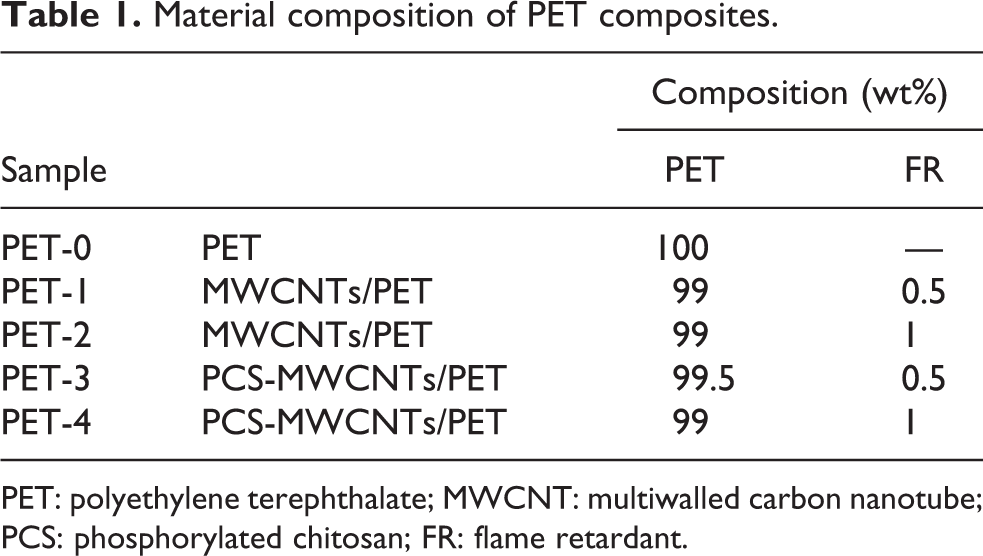
PET: polyethylene terephthalate; MWCNT: multiwalled carbon nanotube; PCS: phosphorylated chitosan; FR: flame retardant.
Material characterization
Field-emission scanning electron microscopy (SEM; JSM-6700F, JEOL, Tokyo, Japan) with X-ray energy-dispersive spectroscopy (EDS) and transmission electron microscopy (TEM, JEM100CXII, JEOL, Tokyo, Japan) were employed to observe the morphologies of different samples. Fourier transform infrared (FTIR) spectra were recorded using a Tensor 27 spectrometer (Bruker, Germany) in the infrared region between 4000 cm−1 and 500 cm−1 at a resolution of 4 cm−1. The dried samples were thoroughly mixed with KBr powder and then pressed into pellets before recording FTIR spectra. X-ray diffraction (XRD) analysis was performed with a D/MAX-2500V/PV (Rigaku, Tokyo, Japan) using Cu Kα radiation (40 kV and 200 mA) at a scanning speed of 0.5°/min over the 2θ range of 10−80° and λ = 0.154 nm. The thermal stability and mass percentage of the functional groups were investigated on a Netzsch TG 209F3 (PerkinElmer co., Ltd., China) instrument at a heating rate of 10°C min−1 under N2 atmosphere. The material was first maintained at a constant temperature of 100°C for 30 min in order to remove the residual moisture, and then heated from 100°C to 900°C. Cone calorimeter (CONE) measurements were carried out using a FTT-007 CONE (a judges scientific plc company, England) according to ISO5660-1:2002 under an external heat flux of 50 kW m−2. The sample dimension was 100 × 100 × 3 mm3. The measurement for each specimen was repeated three times, and the error values of the typical CONE data were reproducible within ±5%.
Results and discussion
Morphology and chemical structure of PCS-MWCNTs
SEM and TEM were employed for examining the microstructure of MWCNTs and PCS-MWCNTs. Pure MWCNTs exhibited a regular tubular shape with considerable adhesion and winding between the MWCNTs (Figure 1(a)). A smooth surface of MWCNTs was observed (Figure 2(a)). Compared to MWCNTs, PCS-MWCNTs exhibited a clearly significant improvement in the dispersion of PCS-MWCNTs (Figure 1(b)), probably because of the decrease in the van der Waals force between the tubes by PCS on the MWCNTs’ surface. As can be observed by the magnified image of PCS-MWCNTs, the surface of PCS-MWCNTs became rough with a lump-like layer as shown by the arrows (Figure 1(c)). According to the result in Figure 2(b), a layer was observed on the outer surface of PCS-MWCNTs. Compared with CS-MWCNTs, the diameter of PCS-MWCNTs has increased by about 10 nm. The EDS spectrum of PCS-MWCNTs showed the presence of C, oxygen (O), N, and P element on the surface, indicating that the material is PCS (Figure 1(d)).
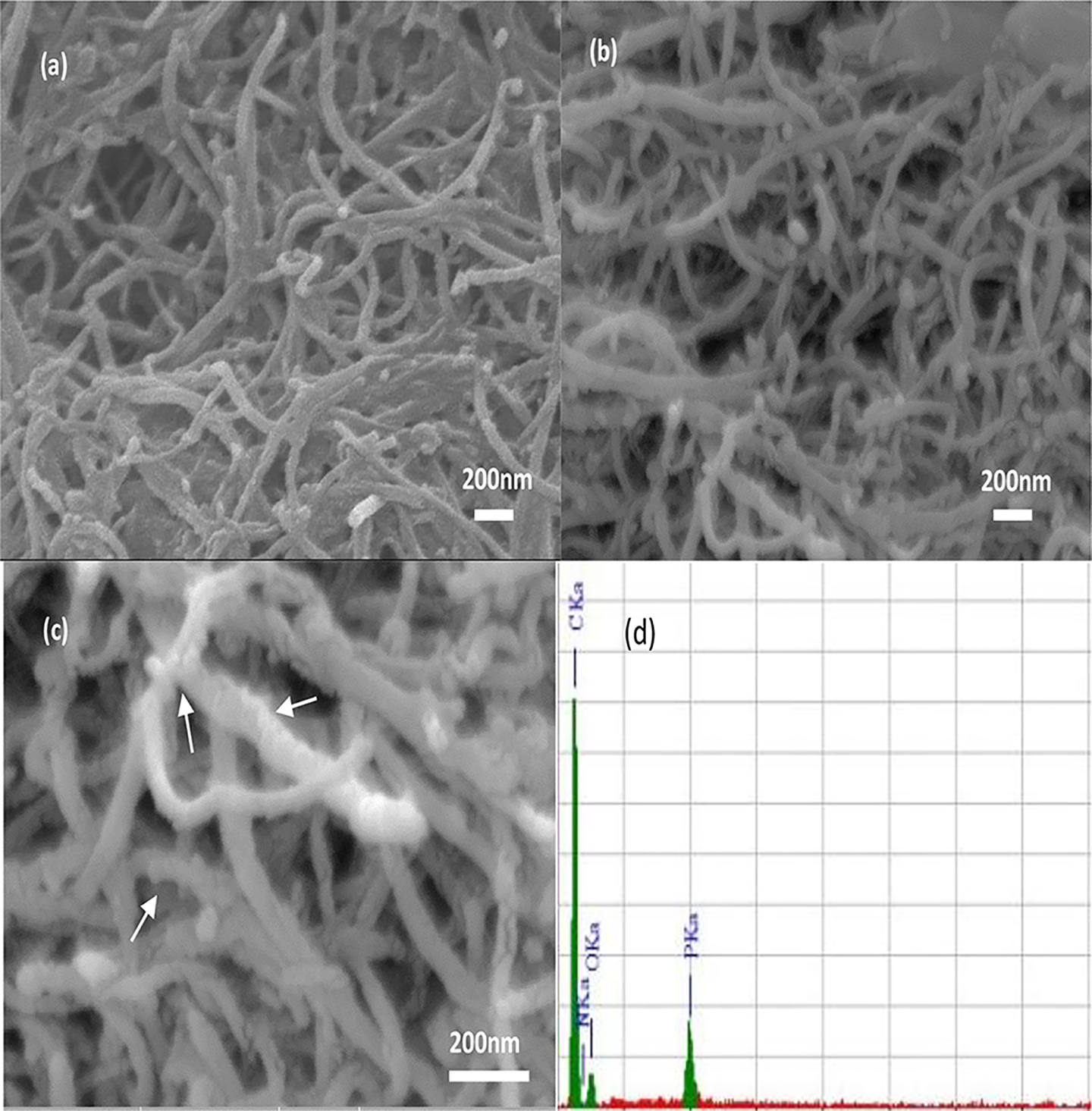
SEM images of (a) MWCNTs, (b) PCS-MWCNTs, (c) magnified image of PCS-MWCNTs, and (d) EDS results of PCS-MWCNTs. SEM: scanning electron microscopy; MWCNT: multiwalled carbon nanotube; PCS: phosphorylated chitosan; EDS: energy-dispersive spectroscopy.
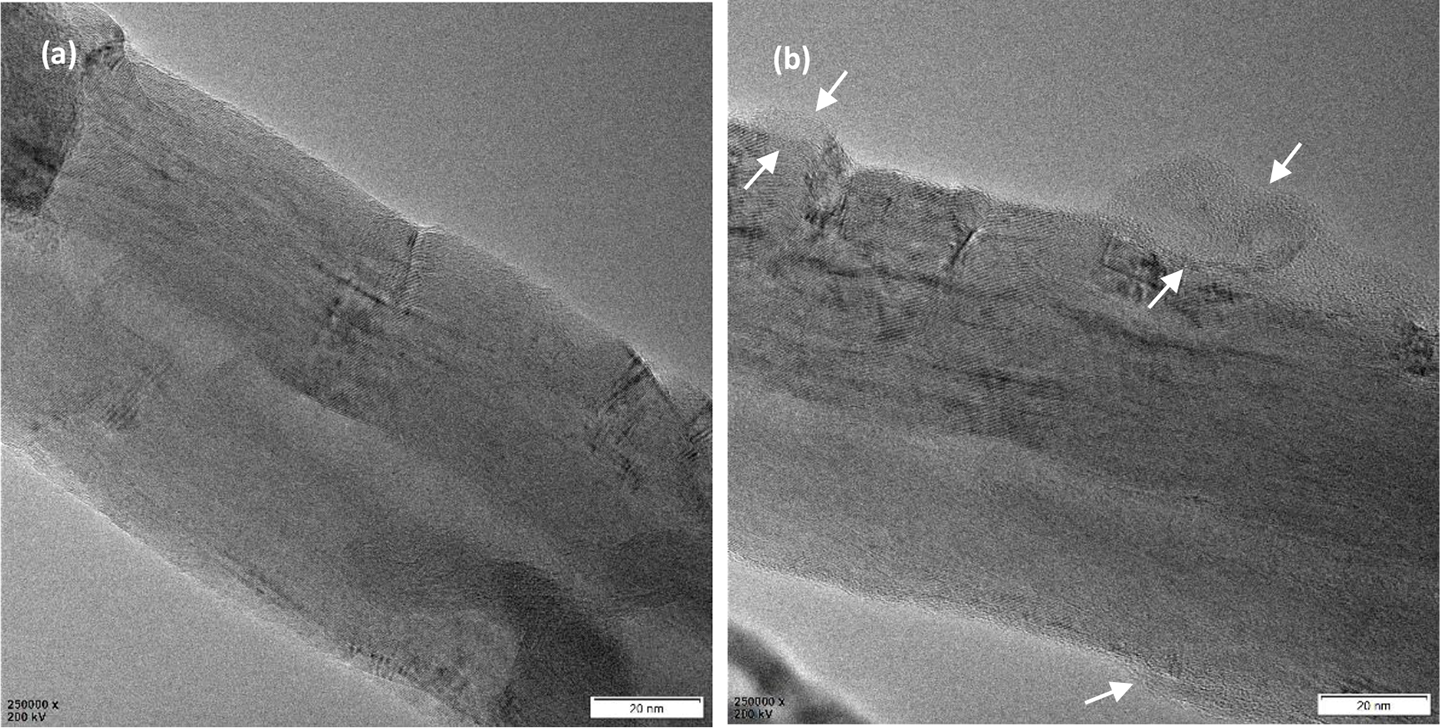
TEM images of (a) MWCNTs and (b) PCS-MWCNTs. TEM: transmission electron microscopy; MWCNT: multiwalled carbon nanotube; PCS: phosphorylated chitosan.
FTIR spectra (Figure 3) revealed the chemical structures of MWCNTs and PCS-MWCNTs. Bands were observed at 3433, 1391, 1623, and 1457 cm−1, and for pristine MWCNTs corresponded to O–H, C–OH, C=O, and C=C stretching vibrations, as well as bending vibrations, respectively. These data indicated that carboxyl groups are the major O-containing functional groups on the MWCNTs’ surface. After the modification of CS by MWCNTs, the O–H peak at 3422 cm−1 became strong. The band at 2976 cm−1 corresponded to the N–H stretching vibrations, and the characteristic vibration bands of amide II of CS was observed at 1630 cm−1. Bands were observed at 1095 and 1053 cm−1, which were all characteristic of –CH2OH, corresponding to the sensitive crystallization peak of CS. 20 Another band was observed at 883 cm−1, corresponding to the C–O peak. These data confirmed that CS is successfully loaded on the MWCNTs’ surface. After the further modification of CS-MWCNTs with phosphate in Figure 3(b), the sensitive crystallization peak of CS at 1095 and 1053 cm−1 decreased. The band at 1186 cm−1 corresponded to the P=O stretching vibrations. Bands were observed at 1294, 1057, and 547 cm−1, corresponding to CO–NH2, C–O–P, and P–OH stretching vibrations, respectively. 21 These data confirmed that the layer on the outer surface of MWCNTs is PCS. The modification scheme of PCS-MWCNTs is possibly based on the adsorption and deposition of CS on the MWCNTs surface by electrostatic forces, followed by the chemical cross-linking of the CS layer, and the final reaction between the phosphate and the hydroxyl groups of CS (Figure 4).
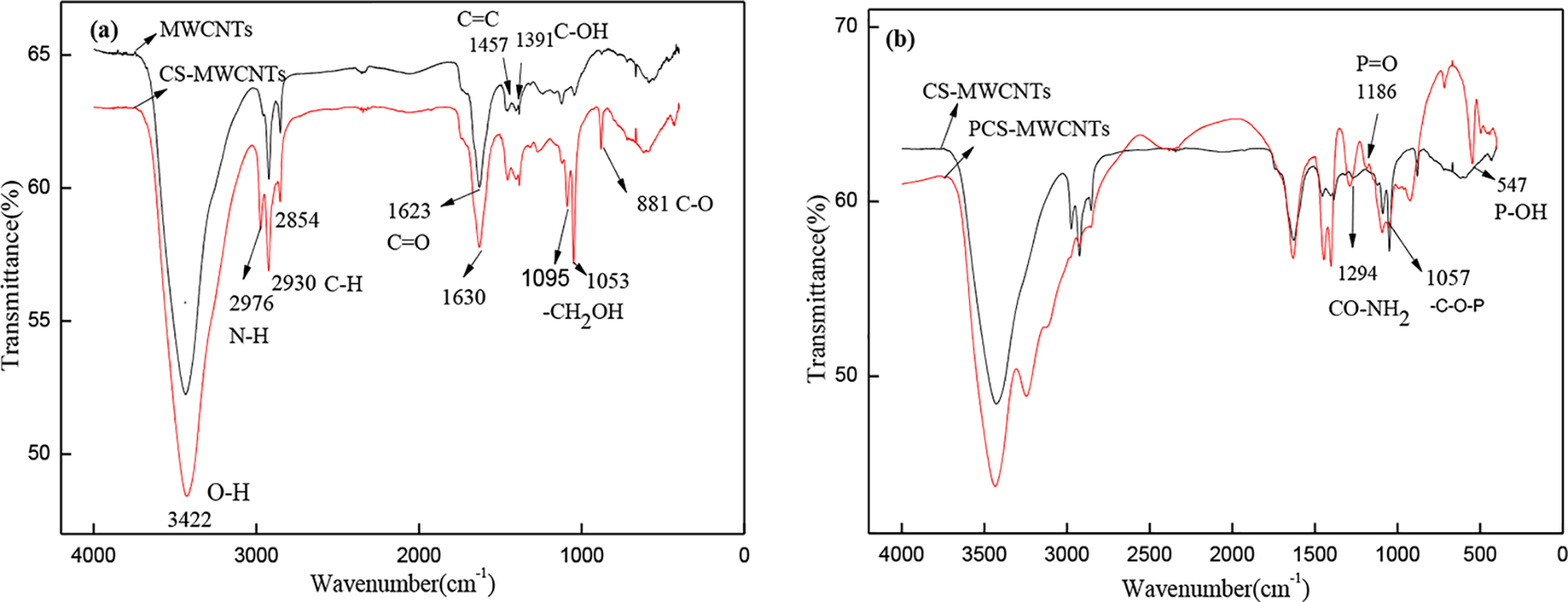
FTIR spectrum of (a) MWCNTs and (b) PCS-MWCNTs. FTIR: Fourier transform infrared; MWCNT: multiwalled carbon nanotube; PCS: phosphorylated chitosan.
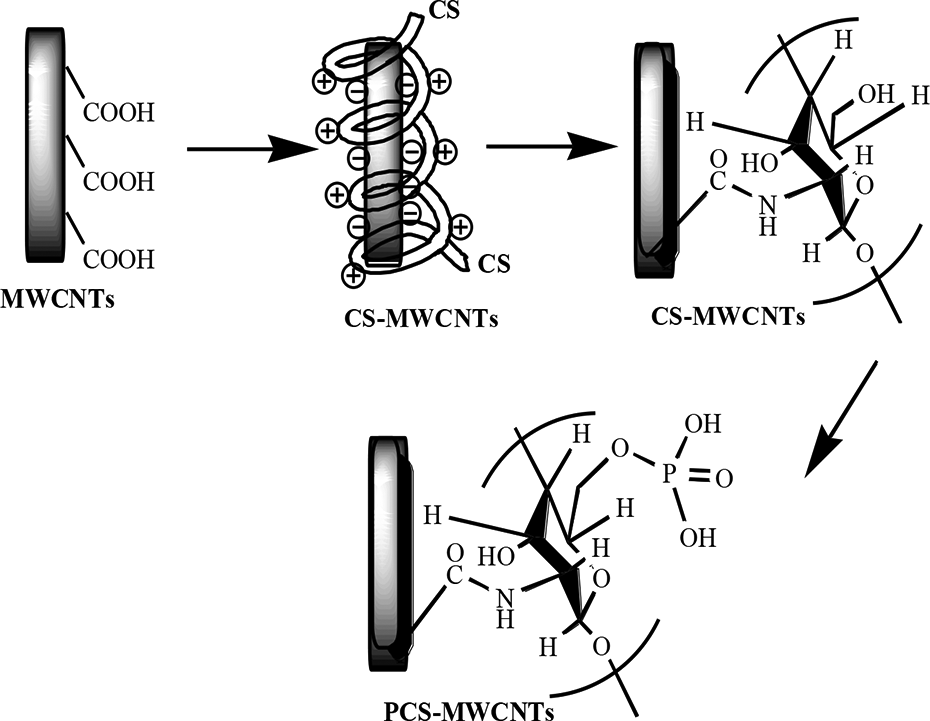
Modification scheme of PCS-MWCNTs. PCS: phosphorylated chitosan; MWCNT: multiwalled carbon nanotube.
The structure change of neat MWCNTs and modified MWCNTs can be reflected by the XRD analysis in Figure 5. Two new diffraction peaks of pure MWCNTs in Figure 5(a) located at 28.4° and 46.1°, corresponding to the (002) and (100) characteristic diffraction peak. After MWCNTs modified by CS, a new diffraction peak in Figure 5(b) occurred at 23.5°, which was the crystalline diffraction peak of CS, and the relative intensity of peak at 28.4° has weakened, demonstrating that CS existed in the MWCNTs’ surface. Compared with CS-MWCNTs, the intensity at 23.5° peak of PCS-MWCNTs decreased, which implied that the crystallinity of PCS was lower than CS. This result was consistent with the FTIR result. In addition, a new diffraction peak of PCS-MWCNTs in Figure 5(c) appeared at 26.9°, reflecting that the PCS can be successfully modified on the MWCNTs’ surface.
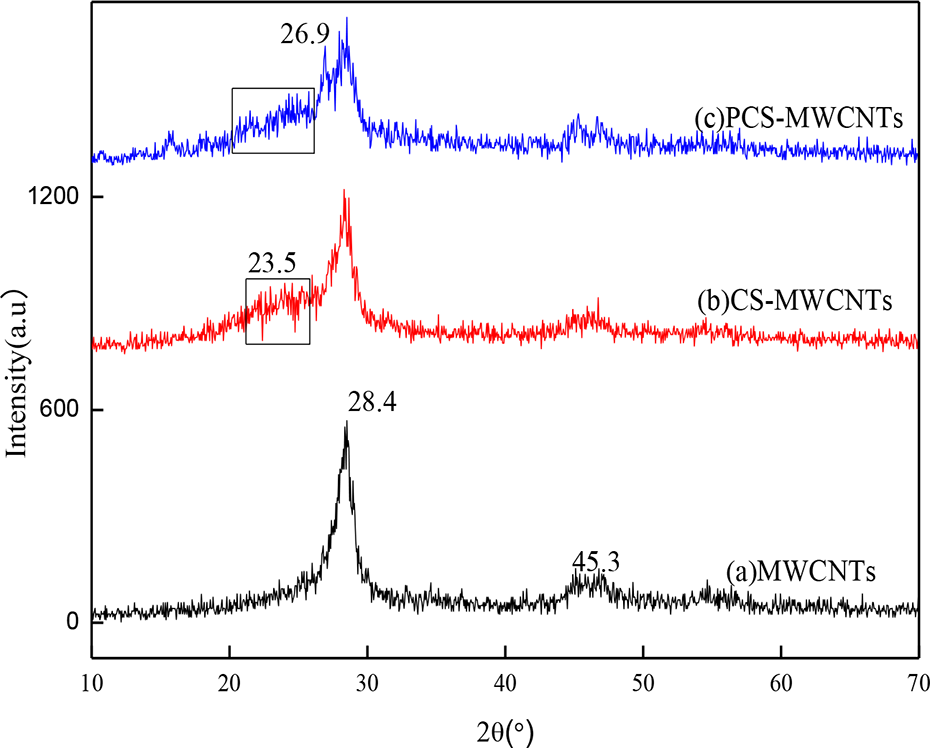
XRD spectra of (a) MWCNTs, (b) CS-MWCNTs, and (c) PCS-MWCNTs. XRD: X-ray diffraction; MWCNT: multiwalled carbon nanotube; CS: chitosan; PCS: phosphorylated chitosan.
In addition, thermogravimetric analysis (TGA) was employed to examine the thermal stability and weight ratio. Figure 6 shows the TGA curves of neat MWCNTs, CS-MWCNTs, PCS-MWCNTs, and PCS under N2 atmosphere. Neat MWCNTs started to decompose at approximately 500°C, corresponding to the O-containing functional groups. The residual weight reached 87.05% at 700°C. After MWCNTs modified by CS, the initial decomposition temperature of CS-MWCNTs was 338°C, which was due to the decomposition of CS on the MWCNTs’ surface. The synthesized PCS started to decompose in advance, and approximately 31.65 wt% of the residue was remaining at 700°C, indicating that PCS exhibits a good char-forming capability. After the modification of MWCNTs by PCS, the residual weight reached 67.02% at 700°C, lower than that of CS-MWCNTs (82.81%). According to the final residual weight of MWCNTs, PCS, and PCS-MWCNTs at 700°C, the content of PCS on the MWCNTs’ surface was roughly estimated using the following equation:
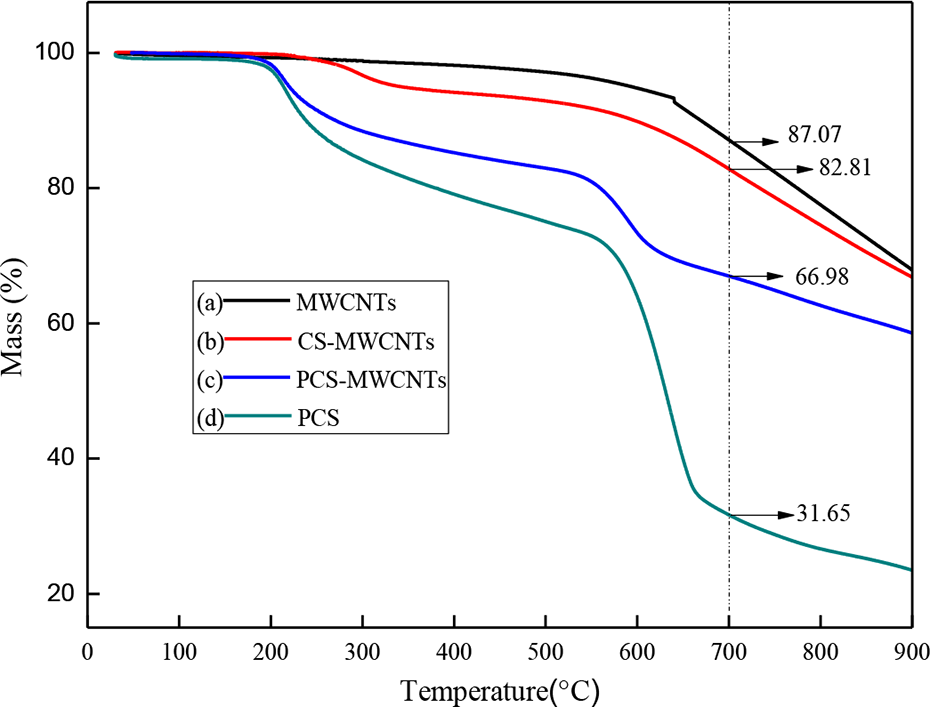
Thermogravimetric curves of different MWCNTs’ curves (a) MWCNTs, (b) CS-MWCNTs, (c) PCS-MWCNTs, and (d) PCS. MWCNT: multiwalled carbon nanotube; CS: chitosan; PCS: phosphorylated chitosan.
Here, WPCS-MWCNTs, WPCS, and WMWCNTs represent the residue content of MWCNTs, PCS, and PCS-MWCNTs at 700°C, respectively. XPCS-MWCNTs denotes the content of PCS on the MWCNTs’ surface. The loading amount of PCS on the MWCNTs’ surface was approximately 36.4%.
Dispersion of MWCNTs or PCS-MWCNTs in the PET matrix
The fracture morphology of PET composites was investigated by SEM to analyze the dispersion state of MWCNTs or PCS-MWCNTs in the PET matrix. As can be observed from Figure 7(a) and (b), some aggregation between MWCNTs was observed in the PET matrix, and the dispersion of MWCNTs turned poor, particularly at an MWCNTs’ mass fraction of 1 wt% (PET-2). This result indicated that the van der Waals force between the MWCNTs is intensive. Compared with MWCNTs/PET, the PCS-MWCNTs were uniformly dispersed and retained the network state. This result indicated that modification with PCS leads to the improved interfacial binding between the PCS-MWCNTs and PET matrix. The enhanced interfacial adhesion is related to two reasons: the weakening of the van der Waals force between the MWCNTs by PCS and the enhanced force between the hydroxide radicals of PCS and the PET matrix. In addition, no clear aggregation was observed between the PCS-MWCNTs in the PET matrix.
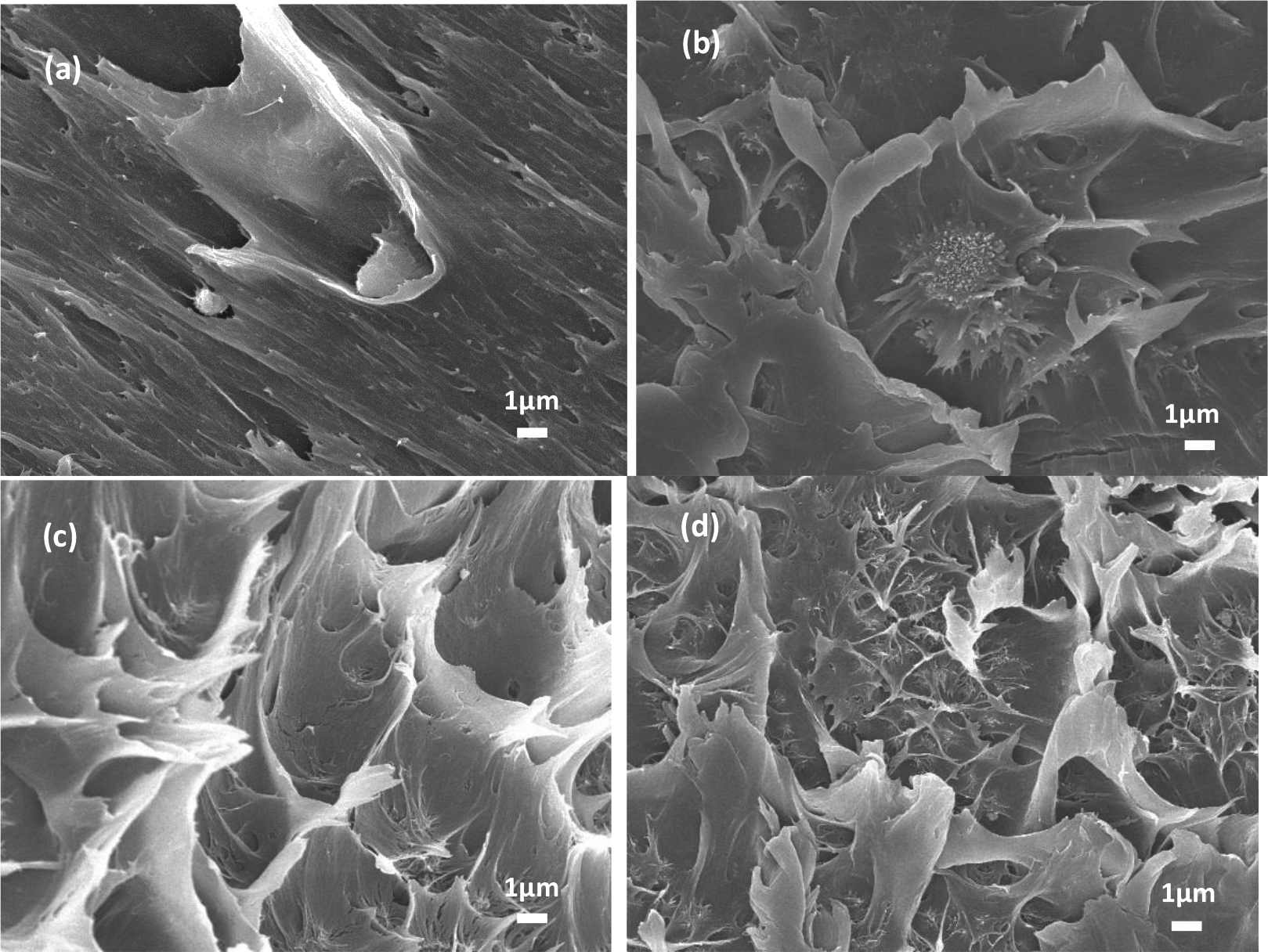
SEM images of the fractured surfaces of MWCNTs/PET composites ((a) PET-1 and (b) PET-2) and PCS-MWCNTs/PET composites ((c) PET-3 and (d) PET-4). SEM: scanning electron microscopy; MWCNT: multiwalled carbon nanotube; PET: polyethylene terephthalate; PCS: phosphorylated chitosan.
Flame-retardant property of PCS-MWCNTs/PET composites
The flammability characteristics and combustion behavior of PET composites were investigated by CONE tests. Figure 8 and Table 2 show the dynamic combustion curves and specific parameters of PET composites, respectively. The peak HRR (pk-HRR) was one of the most important parameters for evaluating fire safety. 22 pk-HRR decreased in the order of PET-0 > PET-2 > PET-1 > PET-3 > PET-4 (Figure 8(a)). Although the addition of 0.5% or 1% MWCNTs led to the decrease in the HRR of PET, the addition of the same amount of PCS-MWCNTs exhibited a more obvious flame-retardant effect. The pk-HRR value for 1 wt% PCS-MWCNTs/PET composites (PET-4) decreased from 513.22 kW m−2 (pure PET) and 463.66 kW m−2 (MWCNTs/PET) to 341.56 kW m−2. PET-4 exhibited the lowest total release heat rate (THR) value, which decreased by 40%. This result implied that the flame spread of PET and the PCS-modified MWCNTs can help in reducing the HRR of PET during combustion. The mean effective heat of combustion (MEHC) can characterize the flammable volatile components during polymer combustion. The MEHC values of the MWCNTs/PET composites were less than that of pure PET, indicating that MWCNTs serve as a barrier for heat and flammable volatile components. PET-4 exhibited the lowest MEHC value, which decreased from 23.00 MJ kg−1 to 19.84 MJ kg−1, indicating that PCS-MWCNTs also serve as an effective barrier during combustion.
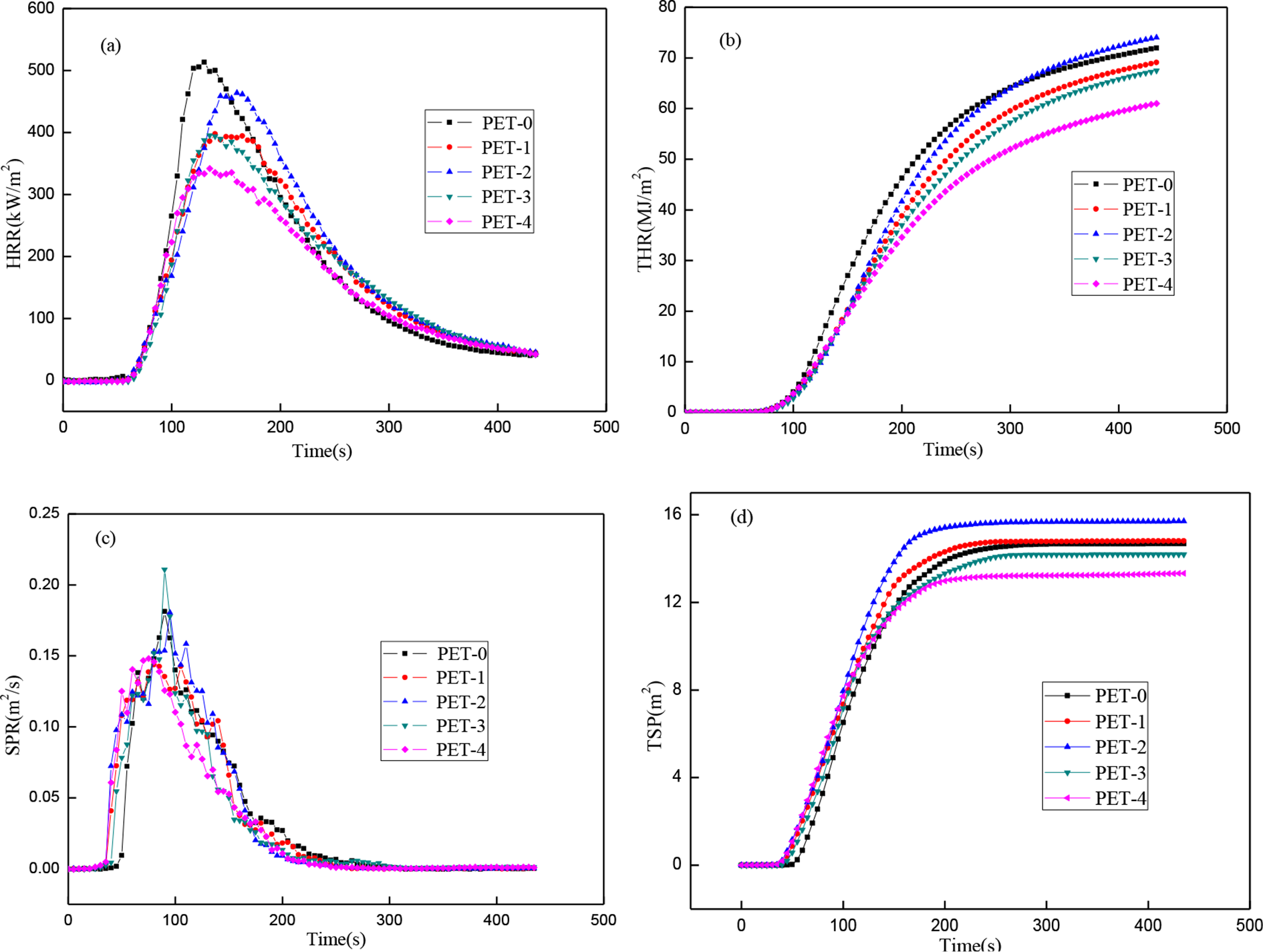
Combustion curves of the PET composites, (a) HRR curves, (b) THR curves, (c) SPR curves, (d) and TSP curves. PET: polyethylene terephthalate; HRR: heat release rate; THR: total release heat rate; SPR: smoke production rate; TSP: total smoke production.
Dynamic flammability data of the PCS-MWCNTs/PET composites determined from cone calorimeter tests (50 kW m−2).

PCS: phosphorylated chitosan; MWCNT: multiwalled carbon nanotube; PET: polyethylene terephthalate; pk-HRR: peak heat release rate; THR: total release heat rate; MEHC: mean effective heat of combustion; TSP: total smoke production; MMLR: mean mass loss rate; TTF: time to flame out; TTI: time-to-ignition.
Figure 8(c) and (d) shows the smoke production rate (SPR) and total smoke production (TSP) curves of all PET composites. The addition of only MWCNTs in the PET matrix cannot suppress the production of smoke, and the TSP values for PET-1 or PET-2 were greater than that of PET-0. However, the SPR and TSP values for PCS-MWCNTs/PET were 13.9 and 13.3 m2, respectively; these values were less than those of PET and MWCNTs/PET composites. These data indicated that PCS on the MWCNTs play an important role in the suppression of smoke production.
In addition, some important parameters from Table 2 could also confirm the flame-retardant properties of PCS-MWCNTs/PET. The mean mass loss rate (MMLR) of PET-4 was 6.99 g s−1, which is the lowest value among all of the samples, indicating that PCS-MWCNTs decrease the degradation rate of PET and increase the char amount. Considering the time-to-ignition (TTI) and the time to flame out (TTF), the TTI of all samples did not clearly change, but the TTF of MWCNTs/PET composites was changed to 100 s, further indicating a protective C layer can form during the combustion of MWCNTs/PET composites, which functioned as an isolation barrier for O and heat and final inhibition of the matrix from further decomposition. The overall combustion time decreased from 388 s (PET-0) to 316 s (PET-2). Compared with that of PET-2, the TTF of PET-4 further decreased to 327 s, with a combustion time of only 290 s, indicating that the PCS on the MWCNTs’ surface can make the fire extinguish in advance.
Thermal behavior of PCS-MWCNTs/PET composites
TGA was carried out to investigate the effect of PCS-MWCNTs on the thermal stability of PET. Figure 9 shows the TGA and derivative TGA curves of the PET composites with 1 wt% MWCNTs or PCS-MWCNTs under inert atmosphere, and Table 3 summarizes the related degradation data. Compared with those of neat PET, the onset decomposition temperature (T5) and the temperature at 50 wt% mass loss rate (T50) of MWCNTs/PET also exhibited a delay of 2°C, and the temperature of the maximum loss rate (Tmax) exhibited a delay of 2°C. The char residue amount of the MWCNTs/PET composite also increased from 12.62% to 15.29%, indicating that MWCNTs can improve the thermal stability and delay the decomposition of PET. Compared with that of MWCNTs/PET, the decomposition temperature at different mass losses of the PCS-MWCNTs/PET composites exhibited delay.
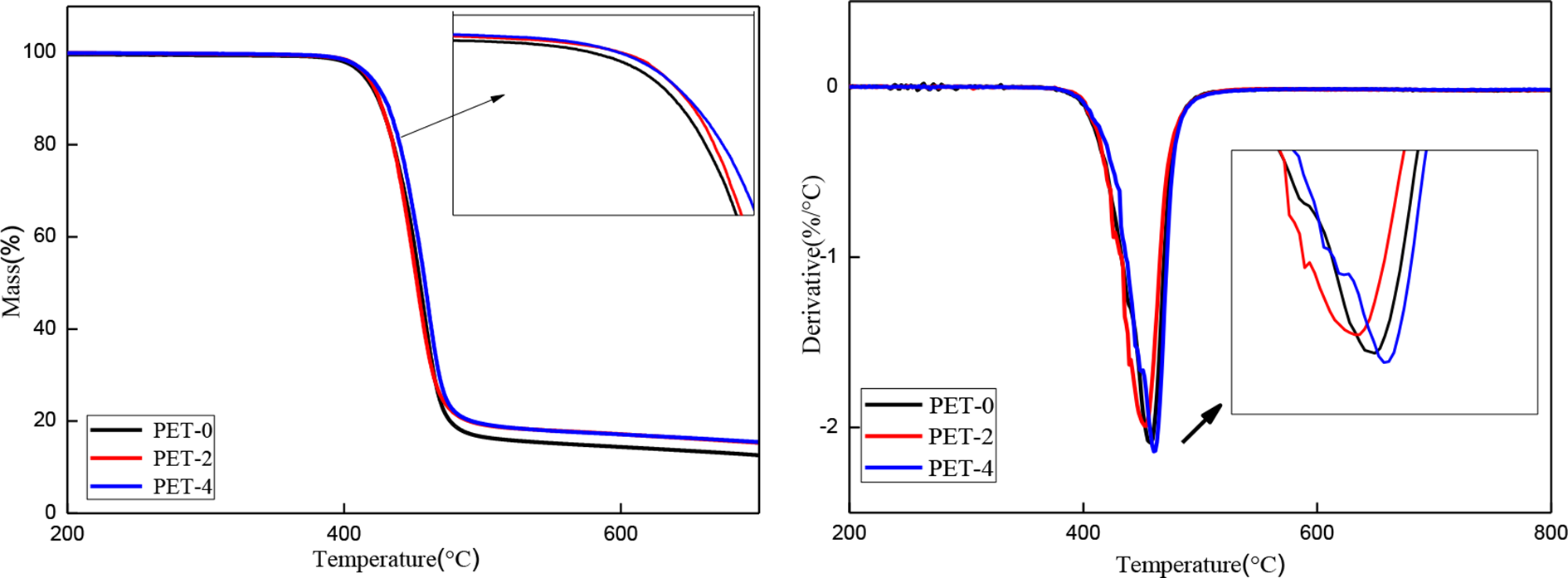
TGA-DTG curves of PET composites. DTG: derivative thermogravimetric; PET: polyethylene terephthalate.
Thermal decomposition data of PET composites from the TGA-DTG curves in Figure 9.
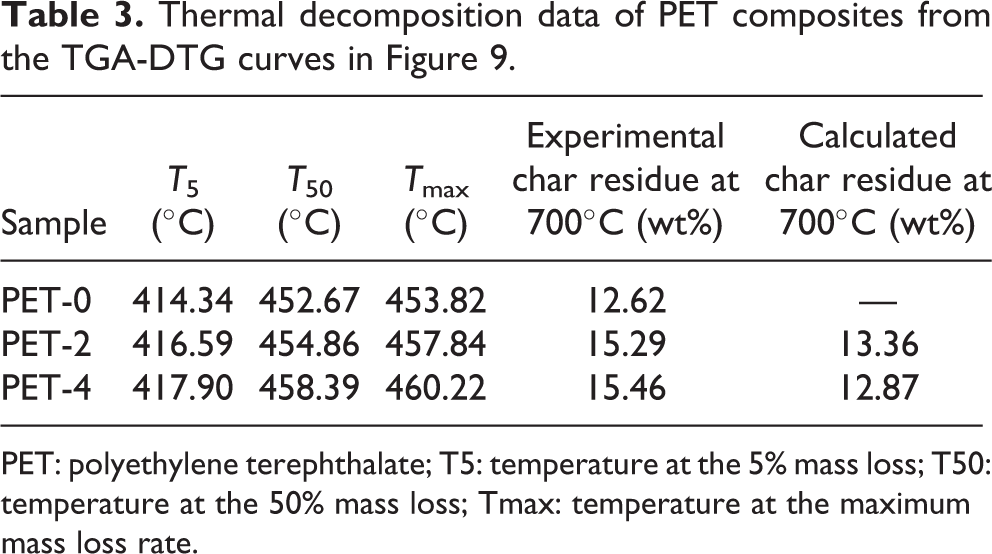
PET: polyethylene terephthalate; T5: temperature at the 5% mass loss; T50: temperature at the 50% mass loss; Tmax: temperature at the maximum mass loss rate.
In addition, the PCS-MWCNTs/PET composites exhibited the highest amount of char residue; this result was in good agreement with that obtained from the CONE analysis. The experimental char residues were greater than the calculated char residues.
Analysis of the products from the pyrolysis of PCS-MWCNTs/PET composites
The products obtained from the pyrolysis of the PET composites at different temperatures were utilized to elucidate the details of the effects of PCS-MWCNTs on the thermal behavior of PET by FTIR measurement. The pyrolysis products were obtained from the TG tests under N2 atmosphere. Figure 10 shows the change in the pyrolysis products of PET, MWCNTs/PET, and PCS-MWCNTs/PET.
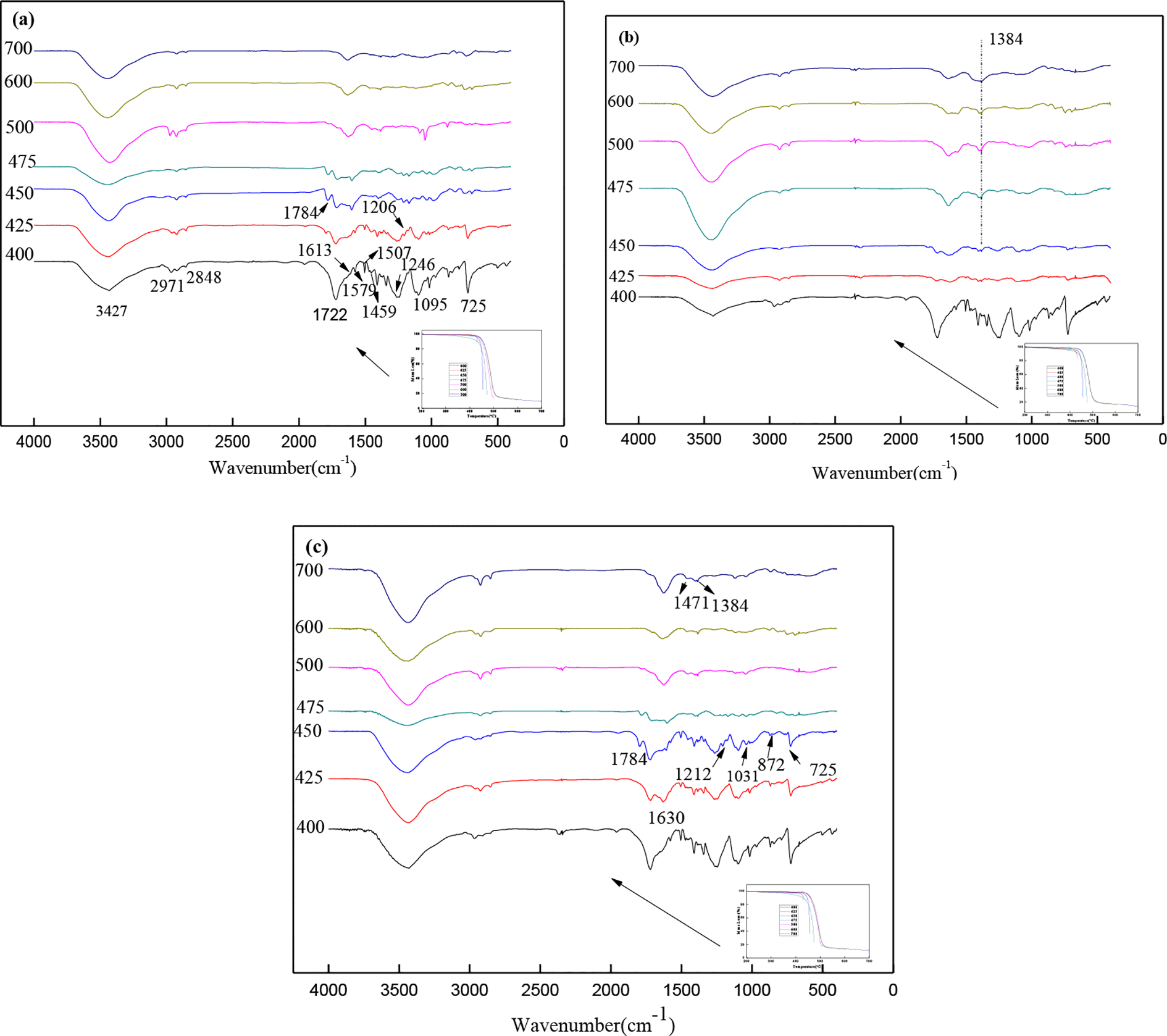
FTIR spectra of the products obtained from the pyrolysis of the PET composites at different temperatures, (a) PET, (b) PET- 2, and (c) PET-4. FTIR: Fourier transform infrared; PET: polyethylene terephthalate.
According to the FTIR spectrum of neat PET, with increasing temperature, –OH (3427 cm−1), –CH3 (2971 cm−1), –CH2 (2848 cm−1), and –C=O (1722 cm−1); benzene ring absorption peak (1613, 1579, and 1507 cm−1); –C(O)–C (1256 cm−1); C–O–C (1095 cm−1); and the H vibration absorption peak of the benzene ring (725 cm−1) 23 gradually weakened during the thermal decomposition of PET. Some new peaks appeared during heating. During the decomposition stage of 425–475°C, bands were observed at 1784 and 1206 cm−1, corresponding to the absorption peak of cyclic anhydride. This result indicated that after the cracking of PET, terephthalic acid forms acid anhydride by decarboxylation. The C=O band at 1722 cm−1 weakened, implying that the weightlessness of PET occurs in this decomposition stage.
Compared with neat PET, MWCNTs/PET exhibited some changes in pyrolysis products (Figure 10(b)). At the decomposition stage of 425–475°C, the cyclic anhydride absorption peak at 1784 cm−1 was weak, and the C=O peak at 1722 cm−1 was stronger, demonstrating that the addition of MWCNTs can inhibit the decomposition of PET. In addition, at the late decomposition (at temperatures greater than 500°C), a new band was observed at 1384 cm−1, corresponding to the cross-linked C absorption peak. 24 This result indicated that the thermal stability of the C layer formed by the MWCNTs/PET composites is stronger than that of PET, preventing the pyrolysis of the polymer and stopping the fire ahead of time, which was in good agreement with those obtained from CONE tests.
PCS-MWCNTs exhibited a clear effect on the thermal decomposition of PET. Except for the effect of MWCNTs on the pyrolysis of PET, at 425°C, the NH2 absorption peak was observed at 1630 cm−1, indicating that PCS on the MWCNTs first decomposes. With increasing temperature, the NH2 peak gradually disappeared and were observed again as ammonium ion (1471 cm−1) 20 at 700°C. On the other hand, at 450°C, the P–O (1212 cm−1) and P–O–C absorption (1031 and 872 cm−1) peaks were observed, and the benzene-ring absorption peak strengthened, implying that the PCS possibly catalyzes PET to form P–C compounds. Another obvious change was the band at 725 cm−1 (the H vibration absorption peak of the benzene ring). For neat PET and PCS-MWCNTs/PET composites, the peak disappeared at 450°C and 475°C, respectively, delaying the decomposition of PET. The PCS-MWCNTs not only retain the effect of alternating couplet C by MWCNTs but also form P–C compounds, improving the flame retardancy of PET.
Morphology of the char residue of the PCS-MWCNTs/PET composites
Figure 11 shows the morphology of the char residue obtained from the PET composites after the CONE tests. After the combustion of neat PET, a fragmented char layer was observed with a large number of holes (Figure 11(a) and (b)). Compared with that observed for neat PET, the char layer of MWCNTs/PET in Figure 11(c) exhibited an aggregated “island shape,” corresponding to a network layer formed by MWCNTs during burning. The poor dispersion of MWCNTs led to the separation of the “island.” From the magnified morphology of the char of MWCNTs/PET in Figure 11(d), a small amount of bubbles appeared on the C layer, indicative of a compact layer. By contrast, the “island shape” disappeared from the C layer of the PCS-MWCNTs/PET composites (Figure 11(e)), reflecting the improvement in the dispersion of PCS-MWCNTs. Combined with the EDS results on the upper right corner in Figure 11(f), C, O, N, and P were present, confirming that P–C compounds are formed during the thermal decomposition of PCS-MWCNTs/PET. This result is in good agreement with the analysis of the pyrolysis products in “Analysis of the products from the pyrolysis of PCS-MWCNTs/PET composites” section.

Digital photographs and SEM images of the char residues of PET ((a) and (b): PET-0, (c) and (d): PET-2, and (e) and (f): PET-4). SEM: scanning electron microscopy; PET: polyethylene terephthalate.
Conclusions
In this study, PCS was successfully loaded on the surface of MWCNTs by a chemical deposition cross-linking method, affording novel flame-retardant PCS-MWCNTs. The modified PCS-MWCNTs exhibited better dispersion and efficient flame retardancy. PCS-MWCNTs led to the enhancement in the onset temperature of PET and increase in the char residue formation. The char residue amount of PCS-MWCNTs/PET with an MWCNTs loading of 1 wt% increased from 12.62% (pure PET) to 15.46%. PCS-MWCNTs not only retained the effect of the alternating couplet C and physical barrier by MWCNTs, but also formed P–C compounds, improving the flame retardancy of PET. CONE tests demonstrated that the PCS-MWCNTs lead to the efficient reduction in the flammability parameters. The pk-HRR value decreased from 513.22 kW m−2 to 341 kW m−2. The THR, TSP, and MMLR values reduced by 20.38 MJ m−2, 1.1 m2, and 1.32 g s−1, respectively. The total combustion time shortened by 98 s, from 388 s to 290 s, indicating that PCS-MWCNTs can extinguish the fire.
Footnotes
Declaration of conflicting interests
The author(s) declared no potential conflicts of interest with respect to the research, authorship, and/or publication of this article.
Funding
The author(s) disclosed receipt of the following financial support for the research, authorship, and/or publication of this article: This work was financially supported by the National Natural Science Foundation of China (Grant No. 51302183, U1610255, U1607120, 51603142), Shanxi Provincial Key Innovative Research Team in Technology (Grant No.2015013002-10, 201605D131045-10), Natural Scientific Foundation of Shanxi Province (Grant No. 2012021021-6).