






Abstract
Multiwall carbon nanotubes with extraordinary mechanical properties have been widely used as effective nano-reinforcer of cement-based composites. In this research, multiwall carbon nanotubes were dispersed uniformly in aqueous solution using N,N-dimethylformamide as dispersant with ultrasonication. The structure and micromorphology of multiwall carbon nanotubes were characterized via X-ray photoelectron spectroscopy and transmission electron microscopy. The effect of N,N-dimethylformamide on multiwall carbon nanotubes dispersion was better than that of previous dispersants. The multiwall carbon nanotubes/cement composites with different multiwall carbon nanotubes contents were prepared and the mechanical performances of multiwall carbon nanotubes/cement composites were researched. Results showed that the flexural strength growth rate of multiwall carbon nanotubes/cement composites was 21.7% and the compressive strength growth rate of the multiwall carbon nanotubes/cement composites was 2.9% incorporating with 0.04 wt% multiwall carbon nanotubes at 28 days. The ratio of compressive strength to flexural strength of decline rate of multiwall carbon nanotubes/cement composites was 15.9% with 0.04 wt% multiwall carbon nanotubes at 28 days. The isothermal calorimetry (TAM Air) showed that multiwall carbon nanotubes could accelerate the hydration reaction. The X-ray diffraction and thermal gravity analysis (TG/DTG) suggested that multiwall carbon nanotubes could improve the hydration process and increase the number of hydration products. The mercury intrusion porosimetry revealed the porosity of multiwall carbon nanotubes/cement composites was decreased. There is an effect of multiwall carbon nanotubes on inhibiting the extension of cracks and promoting the degree of compactibility of the cement-based composites. The micromorphology of multiwall carbon nanotubes/cement composites was observed through scanning electron microscope.
Introduction
As a commonly used building material, cement-based materials are brittle material with poor resistance to crack formation.1,2 Numbers of studies have been carried out to improve the flexural strength, toughness, and decrease microcracks by adding nanomaterials in cement composites.3,4 Owing to the distinctive physical and chemical properties, the materials effectiveness can be improved using nanomaterials.5,6 Carbon nanotubes (CNTs) are one of appropriate cement nano-reinforcement, its have the ability to arrest propagating cracks owing to their high aspect ratio and large specific surface area.7,8 CNTs are seamless nanoscale tubes structurally built from rolled monolayer or multilayer grapheme sheets, which possess covalent sp2-hybrid bonds between individual carbon atoms. 9 Mechanically, Young’s modulus of CNTs up to 1 TPa and tensile strength is between 11 GPa and 63 GPa. 10 In addition, the aspect ratio is 1000, their special surface area usually is 200–300 m2/g and the density is 1330 kg/m3.3,11,12 Both strengths (flexural and compressive) and overall density of cement composites were enhanced and failure strain was decreased with the addition of CNTs. 13 However, it is very difficult to get homogeneous dispersion of CNTs in the aqueous solvents, especially in cement matrix owing to the strong intertube van der Waals interactions and highly aspect ratio. 14 Dispersion of CNTs includes physical and chemical methods. 15 The dispersion mechanism of physical method bases on amphiphilic surfactants that are adsorbed on the surface of the CNTs, resulting in generating electrostatic or steric repulsion. The chemical modified method relies on the attached functional groups that surfactants provided on the surface of the CNTs to come into being hydrophilicity and repulsion.16,17 The dispersion of CNTs in alkaline cement matrix and interfacial bonding force between CNTs with cement matrix are two main required solved problems.18,19 Effective load transfers from cement matrices to the CNTs were provided by the well dispersion of CNTs and strong interfacial bonding force, resisting load of CNTs resulted in improving mechanical properties of cement-based composites and controlling fracture of microcracks. According to plenty of researches, a combination of using of ultrasonic and surfactant dispersion methods is the most common way to dissociate CNT bundles in cement-based composites.20,21
Some studies have investigated the mechanical property of CNT/cement composites. Ali Naqi et al. 22 investigated multiwall carbon nanotubes (MWCNTs) as nano-reinforcement in improving mechanical properties of MWCNT/silica fume cement composites. It concluded that well-dispersed MWCNTs as nucleation site to format calcium silicate hydrate (C-S-H) in the cement matrix, which showed the increasing rate of compressive strength was 12.4% and the reducing rate of inautogenous shrinkage was 8.5% containing 0.01 wt% MWCNTs. Xu et al. 23 reported the use of dispersed MWCNTs to enhance the mechanical properties of the steel–polyvinyl alcohol hybrid fibers ultrahigh toughness cementitious composite (UHTCC), which indicated that the compressive strength, tensile strength, elastic modulus, and ultimate tensile strain were enhanced by 18%, 42%, 12%, and 16%, respectively (0.10 wt% of MWCNTs). Studies revealed that the MWCNTs can embed in the hydrates, which generate a very dense 3D cross network and restrain the cracks extension due to load transfer and bridging capacities of MWCNTs.
DMF is commonly used organic solvents to produce graphene by liquid-phase exfoliation of graphite, and also as a dipolar aprotic solvents in aqueous solutions. 24 In this research, MWCNTs were dispersed uniformly using DMF as dispersing agent with ultrasonication. The MWCNTs/cement composites were prepared and the hydration process was characterized using TAM Air, XRD, and TG/DTG. The pore structure and microstructure of MWCNTs/cement composites were researched though the MIP and scanning electron microscope (SEM).
Experimental
Materials
Ordinary Portland cement (OPC) 42.5 (P·O 42.5 R) was supplied by Dalian Onoda Cement CO., Ltd. (Dalian, China) and the properties of OPC are shown in Tables 1 and 2. The MWCNTs used in this research were supplied by Shenzhen NANO-Technology Co. Ltd., China. The physical properties of the MWCNTs are shown in Table 3 and their morphological structure is shown in Figure 1. N,N-dimethylformamide (DMF), was provided by Xilong Science Co., Ltd. (Guangdong, China). The polycarboxylate superplasticizer (PS) was purchased from Chenqi Chemical Technology Co., Ltd. (Shanghai, China). The defoamer was produced by Tianjin Chemical Reagent Factory (Tianjin, China).
X-ray photoelectron spectroscopy spectra of MWCNTs: (a) before dispersion and (b) after dispersion. Chemical composition of P·O 42.5 R cement. Physical parameter of P·O 42.5 R cement. Physical parameter of multiwall carbon nanotubes (MWCNTs).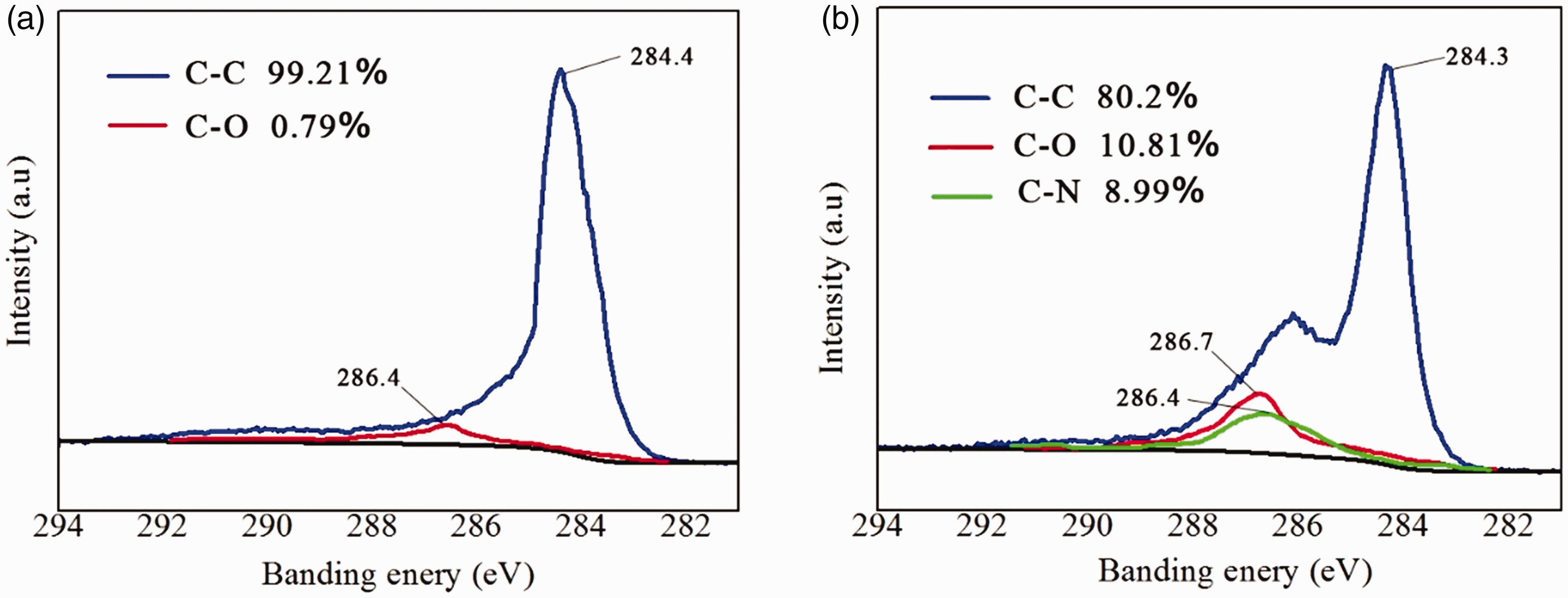



Dispersion of MWCNTs and preparation of MWCNTs/cement composites
In this paper, DMF was used as the dispersant of MWCNTs. A certain amount of DMF was gradually poured to MWCNTs solution with mechanical stirring for 10 min. Besides, individual MWCNTs solution (without DMF) with mechanical stirring for 10 min as a contrast. Then the mixture was subjected to ultrasonication for 60 min in a probe sonicator with output power of 360 W. Finally, the different content (0.02 wt %, 0.04%, 0.06 wt %, 0.08 wt%) suspensions of MWCNTs and defoamer were mixed with OPC in a planetary mixer under the condition of 2 min of low speed and at 4 min of high speed. The water–cement ratio is 0.3. The prepared samples were put in molds with dimensions of 40 mm × 40 mm × 160 mm, vibrated for 1 min, compacted. Then, the samples were covered with plastic films and demolded after casting 24 h. After demolding, the samples were cured for 28 days at a temperature of 25℃ and humidity of 98%.
Testing methods
Characterization the dispersibility of MWCNTs
The chemical structures and surface morphologies were characterized via X-ray photoelectron spectroscope (XPS; XSAM 800, Kratos, Manchester, UK) and transmission electron microscope (Tecnai G2 Spirit TEM; FEI Co., Hillsboro, OR, USA).
Mechanical property tests
According to China National Standard GB/T 17671-1999—“Testing method for strength of cement mortar.” The flexural strength and compressive strength of all samples were measured after 28 days at curing age. Flexural strength was performed using WHY-300/10 testing equipment with a loading rate 50 N/s ± 10 N/s and compressive strength was measured using the same equipment, the loading rate was 2400 N/s ± 200 N/s.
Structural characterization methods
The XRD patterns of samples (five different MWCNTs dosage) were measured with the help of diffractometer (Germany) with Cu radiation. The scan range 2θ was 5° to 80° and scanning speed was 0.5 θ°/min. The hydration heat analysis of the samples (five different MWCNTs dosage) was measured with TAM-Air (America). The microstructure of MWCNTs/cement paste composites (five different MWCNTs dosage) was tested using a QUANTA 450 SEM (USA). And the schistose cement samples were prepared and the SEM tests were taken with acceleration electric tension of 20.0 KV. In addition, the mercury intrusion porosimeter (USA) was used to analyze the pore structure of MWCNTs/cement composites (five different MWCNTs dosage). The TG/DTG patterns of sample(five different MWCNTs dosage) were analyzed by TGA-DTA (HCR-1) from 50 ℃ to 1000 ℃ with heating rate of 10 ℃/Min and shielding gas of nitrogen with purity greater than 99.7%, and the flow velocity of nitrogen is 20 mL/min with temperature of 20 ℃ and pressure of 101.3KPa.
Results
Dispersibility of MWCNTs
The structures and micromorphology of MWCNTs were characterized via XPS and TEM. Figure 1(a) showed the XPS curves of original MWCNTs, which was composed of a very strong C 1 s peak (99.21%) and a very weak O 1 s peak (0.79%). The peaks at 284.4, and 286.4 were corresponding to the C–C bond and C–O bond. Figure 1(b) shows the XPS curves of dispersed MWCNTs, it was composed of a very strong C 1 s peak (80.2%), O 1 s peak (10.81%), and a very weak S 2 p peak (8.99%). The peaks at 284.3, 286.7, and 286.4 were attributed to the C–C bond, C–O bond, and C–N bond, respectively. 25
Figure 2 shows the micromorphology of MWCNTs suspensions before and after dispersion. The dispersed MWCNTs were not severely bundled in suspension, which indicated that the MWCNTs poorly disperse in aqueous solution. While the MWCNTs were homo-dispersed in aqueous solution and single MWCNT had been observed clearly with the addition of DMF. The results indicated that the agglomeration of MWCNTs was broken up and single MWCNT emerged after DMF treatment.26,27 Dispersion of MWCNTs mainly depended on breaking the strong van der Waals attraction among the tubes using DMF molecules, which can weaken the bonding force between MWCNTs and disperse better by auxiliary means of sonication.
TEM images of MWCNTs in aqueous solution: (a) before dispersion, (b)–(d) after dispersion.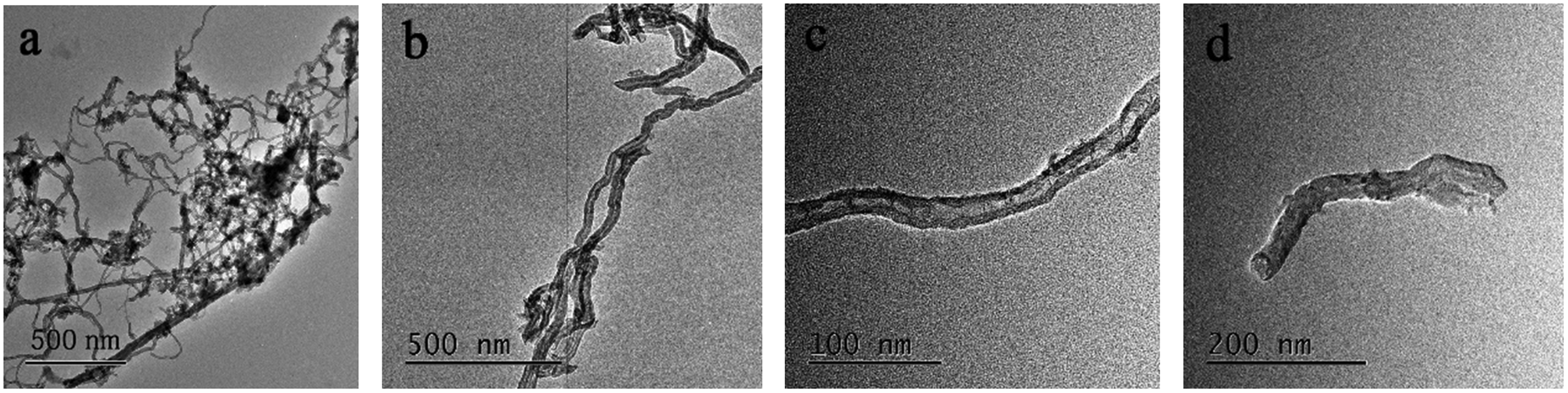
Mechanical properties of MWCNTs/cement composites
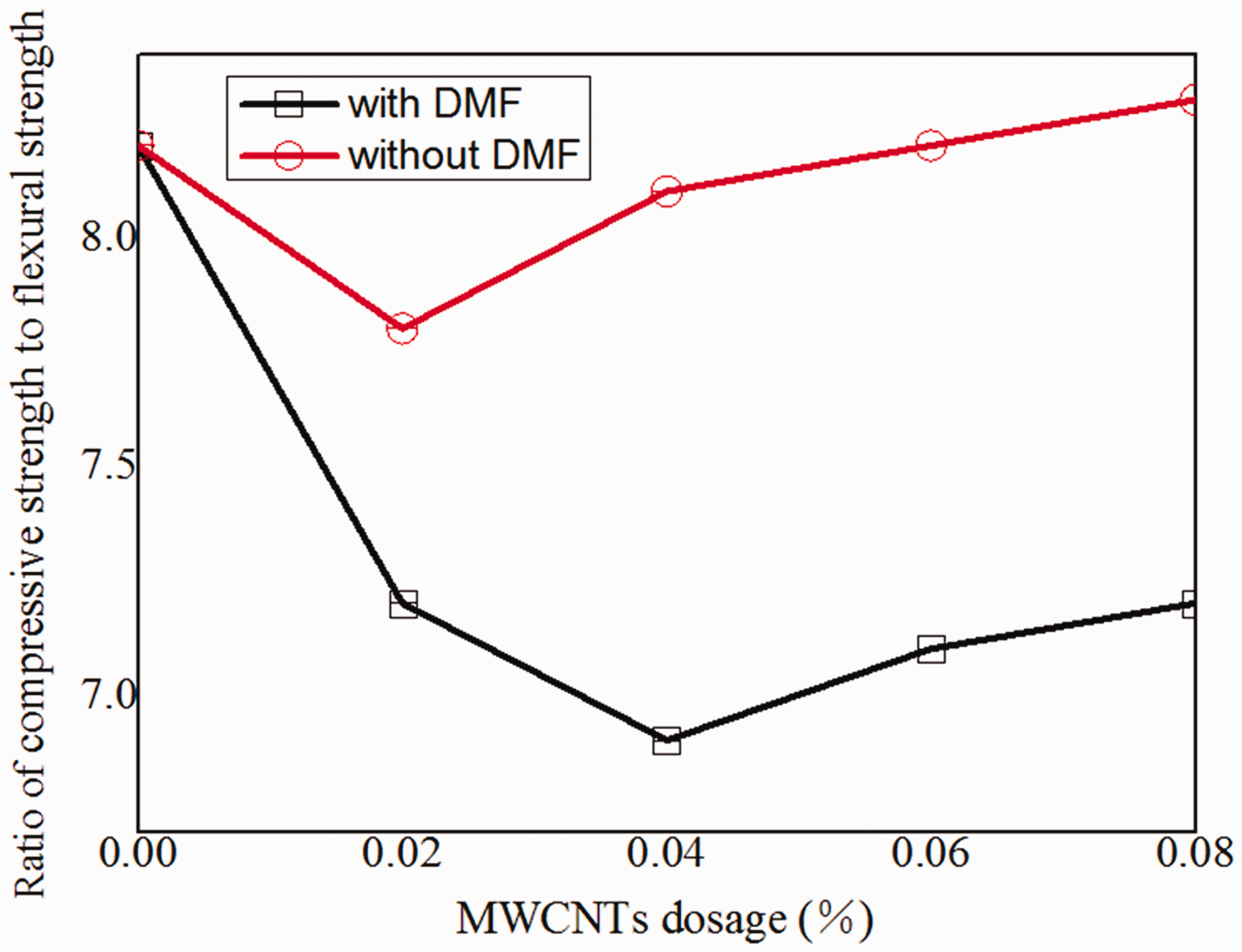
The mechanical strength and ratio of compressive strength to flexural strength of MWCNTs/cement composites at 28 days are shown in Figures 3 to 5. It was observed that the mechanical strength improved gradually with the increase of MWCNTs dosage, the mechanical strength started to drop until MWCNTs dosage reached 0.04 wt%. The maximum compressive strength and flexural strength of sample are 77.2 MPa and 11.2 MPa, respectively. The value is increased by 2.9% and 21.7% compared with control sample. Otherwise, the mechanical properties of MWCNTs/cement composite with individual dosage of MWCNTs (without DMF) were lower than MWCNTs/cement composite with dispersed MWCNTs (with DMF). MWCNTs can promote the flexural strength, while have little effect on the compressive strength. The ratio of compressive strength to flexural strength of MWCNTs/cement composites was decreased by 15.9% with the addition of 0.04 wt% MWCNTs at 28 days curing ages. The ratio of compressive strength to flexural strength refers to crack resistance and the smaller value was, the better the fracture resistance was. The crack resistance of MWCNTs/cement composite with individual dosage of MWCNTs (without DMF) was lower than MWCNTs/cement composite with dispersed MWCNTs (with DMF). MWCNTs play a certain role in promoting the crack resistance of MWCNTs/cement composites.
Compressive strength of MWCNTs/cement composites.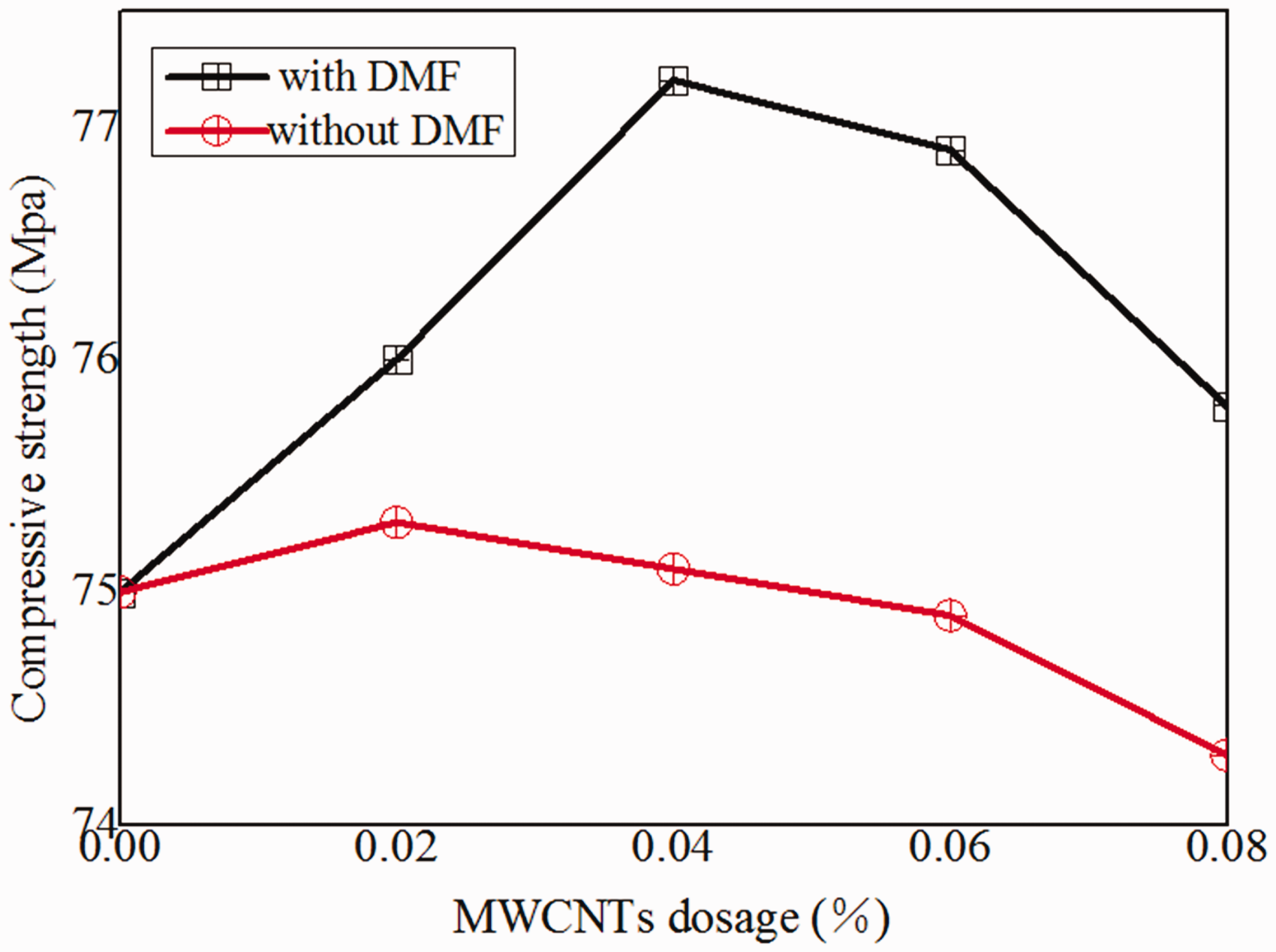
Hydration heat analysis
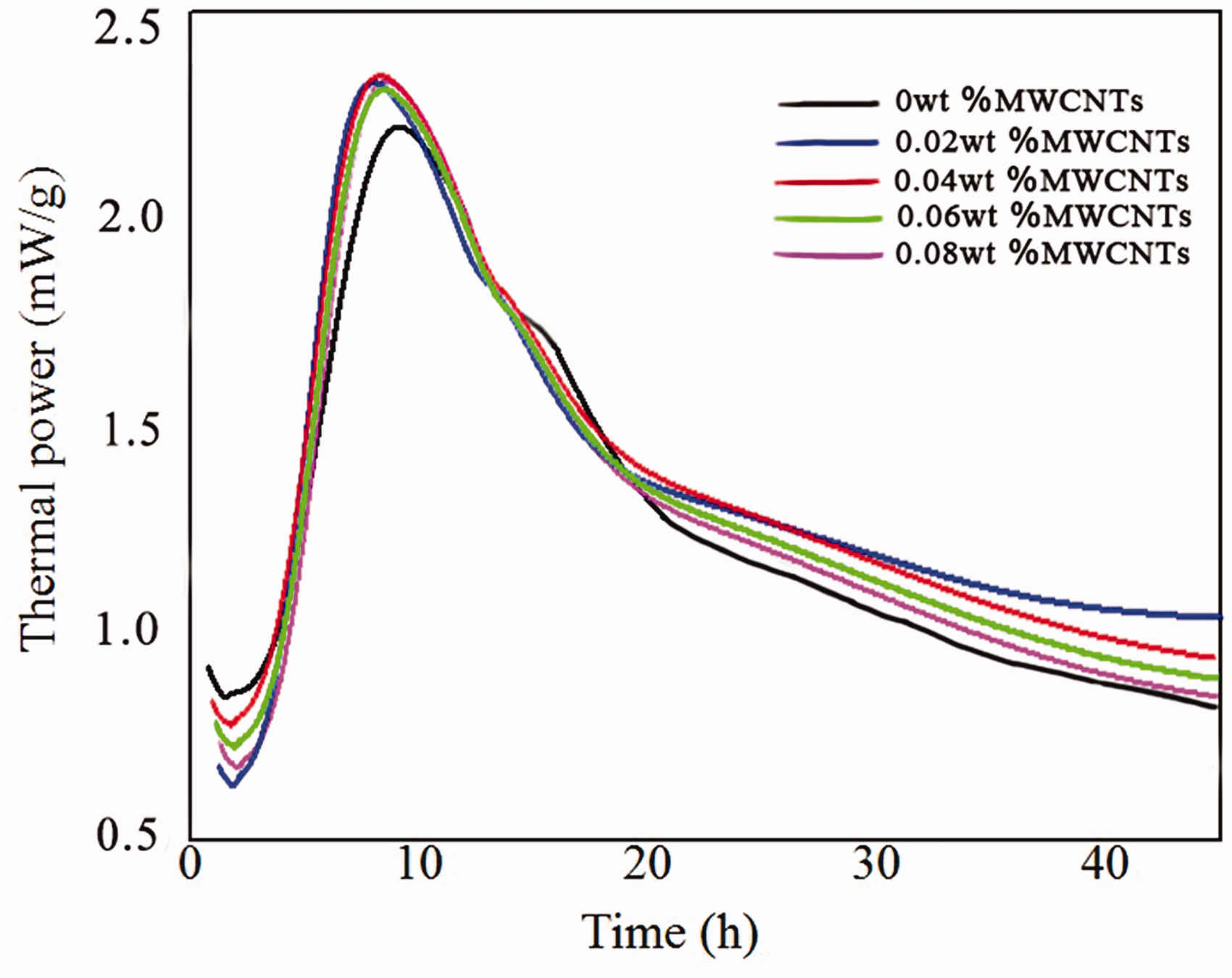
The influence of MWCNTs on the exothermic rate of cement paste is shown in Figure 6, which indicates the hydration heat curve. In the first few minutes, tricalcium aluminate (C3A) started to hydrate and formed ettringite (AFt). Then, a number of tricalcium silicate (C3S) began to hydrate quickly and form amounts calcium silicate hydrated (CSH) gel, calcium hydroxide (CH). Next, ettringite (AFt) changed into monohydrate aluminum sulfate (AFm). In the process, tetracalcium aluminoferrite (C4AF) and dicalcium silicate (C2S) participated in hydration reaction in varying degrees. As can be observed from Figure 6, there were some positive effects on the exothermic rate of cement composites with the addition of MWCNTs. The tendency of curves was same, hydration reaction was accelerated and thermal power was released more. Cement particles and MWCNTs provided reaction sites for hydration reaction, where calcium ions hydrolyzed and absorbed in high concentration. Due to the different content of MWCNTs, different dispersity and the effective adsorption area were different, so that degree of reaction was differential and the reaction curves were also inconsistent. In conclusion, MWCNTs in cement composites can significantly speed up hydration reaction of cement composites.
28
Flexural strength of MWCNTs/cement composites. The ratio of compressive strength to flexural strength of MWCNTs/cement composites. Thermal curves of samples.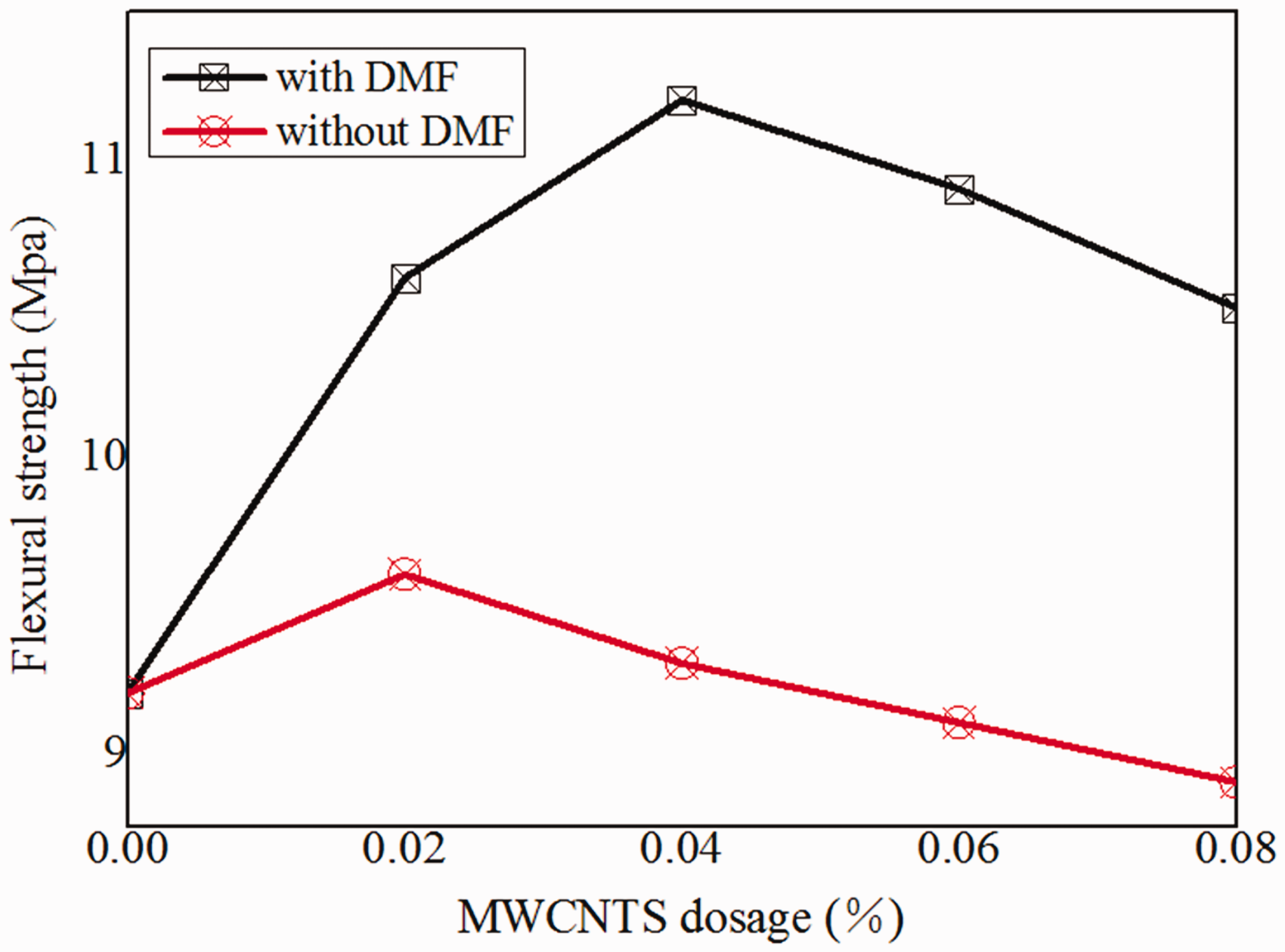
Hydration products of MWCNTs/cement composites
XRD analysis
The hydration characteristics of cement composites under the effect of MWCNTs may be characterized via XRD analyses. The XRD spectra of control sample and MWCNTs/cement composites at 28 days are shown in Figure 7, separately. The main components of cement are tricalcium silicate (C3S), dicalcium silicate (C2S), tricalcium aluminate (C3A), tetracalcium aluminoferrite (C4AF). The main hydration products of cement are calcium hydroxide (CH), ettringite (AFt), monohydrate aluminum sulfate (AFm), and hydrated calcium silicate (C-S-H) gel. Rough calculation of the ratio of the integral areas of the CH and C3S peaks can be considered as the indicators of hydration degree. Then, the integrated areas of the CH and C3S peaks were fitted and integral area of each peak using Origin software were calculated. Figure 7(a) showed the diffraction peak of CH phase appeared at 18°. The diffraction peak of C3S phase was attributed to 31.4°. The rough calculation integrated area ratio of the peaks referring to the (CH) and (C3S) phases (ACH/AC3S) of the MWCNTs/cement composites was plotted as a function of MWCNTs dosage in Figure 7(b). The XRD patterns showed that the diffraction peak shape of samples were approximately the same as plain cement. It suggested that there was no new phases generated and the structure of the final hydration product was unchanged in the MWCNTs/cement composites with the addition of MWCNTs. From Figure 7(b), the estimated value of integral peak area rate of MWCNTs/cement composites is increasing gradually with further increase in MWCNTs dosage. However, MWCNTs contents surpassed to the value (0.04 wt%), the ratio started to drop.
29
This phenomenon indicated that MWCNTs can accelerate the cement hydration reaction and this effect became negative with the increase of MWCNTs contents.
2
(a) XRD patterns of cement composites curing for 28 days. (b) Variation of ACH/AC3S ratio with different MWCNTs contents (%) in cement composites.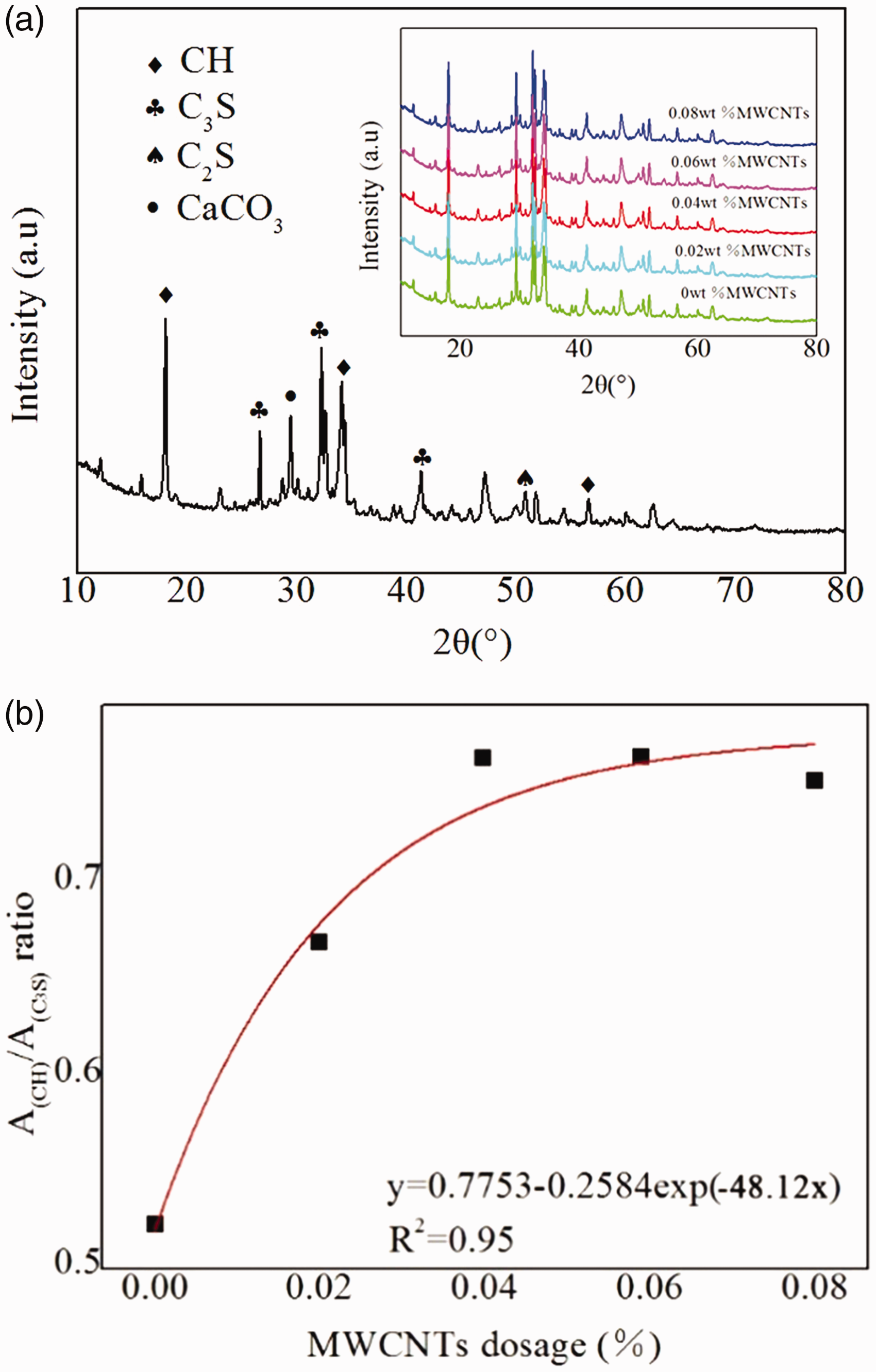
TG/DTG analysis
The effect of MWCNTs on the hydration process of cement composites was further studied using the thermogravimetric analyses. Figure 8(a) was the TG/DTG pattern of control sample and the DTG patterns of MWCNTs/cement composites with different MWCNTs contents. It can be seen that there were four remarkable mass loss peaks on the TG/DTG curve. The first and second peak appeared where the temperature was 105℃ and 180℃, representing the thermal decomposition of AFt and AFm, respectively. The third one was about 450℃ where decomposition reaction of calcium hydroxide happened. The last peak which were for decomposition of CaCO3 at 650℃.30,31 And there was similar trend at different MWCNTs contents of TG/DTG curves, no significant difference and no new hydration product appeared was proved. It was known that the decomposition quantity of CH representing the progress in hydration process. The more mass loss of CH, the more hydration products. The mass losses of CH decomposition for MWCNTs/cement composites and MWCNTs contents are plotted in Figure 8(b). It indicated that the mass loss of CH decomposition increase with the increase of MWCNTs contents, while MWCNTs contents were surpassed the 0.04 wt%, it showed downward trend.
18
These indicated that there are an effective effect on hydration process and increased the content of hydration products with the addition of MWCNTs, which was in accordance with the XRD analysis.
(a) TG/DTG analysis of cement composites curing for 28 days. (b) The variety of mass loss (%) with MWCNTs contents (%) in cement composites.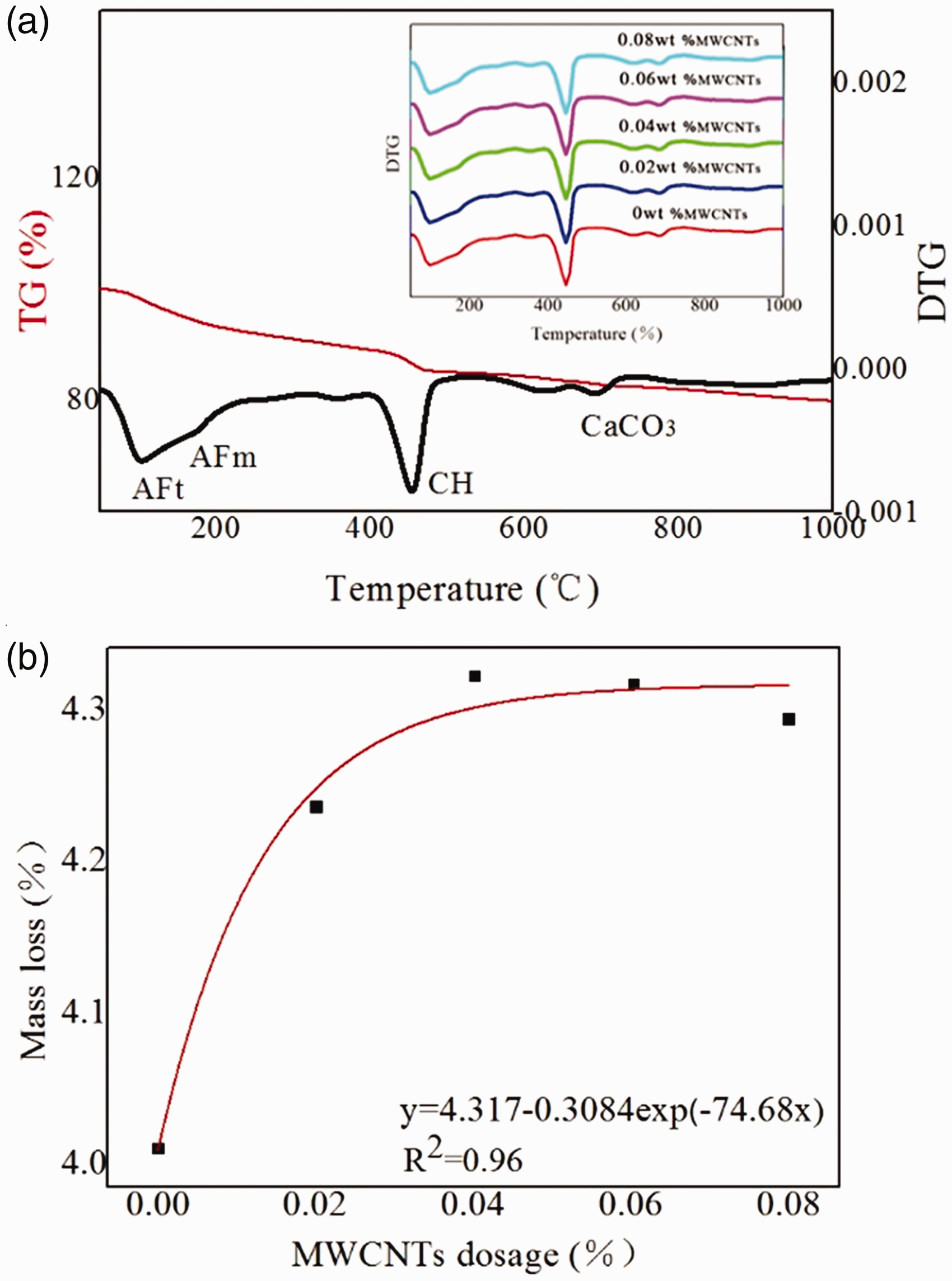
Pore structure of MWCNTs/cement composites
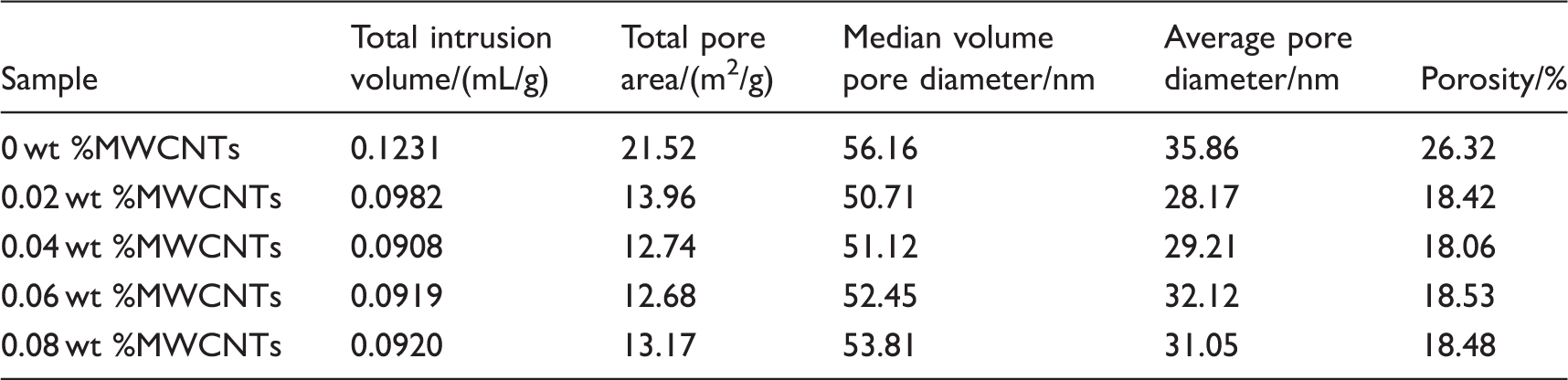
The pore characteristics of cement composites had been characterized using MIP, the curves for the log differential intrusion are presented in Figure 9. The total pore information is shown in Table 4. The log differential intrusion peak of pore size represented the size of pore throughout the pore system. The amount of small pores increased and the total intrusion volume of incorporating MWCNTs samples were lower. The porosity of MWCNTs/cement composites decreasing by 7.9% (0.02 wt%), 8.26% (0.04 wt%), 7.79% (0.06 wt%), and 7.84% (0.08 wt%) compared with control sample, respectively. The pore structure characteristic showed that MWCNTs had beneficial effect on the pore characterization of cement-based material. The total porosity was decreased and compactness of MWCNTs/cement composites was improved. The crack resistance was increased due to dense pore structure and structural integrity.
11
Pore size distribution of MWCNTs/cement composites. MIP analysis of multiwall carbon nanotubes (MWCNTs)/cement composites.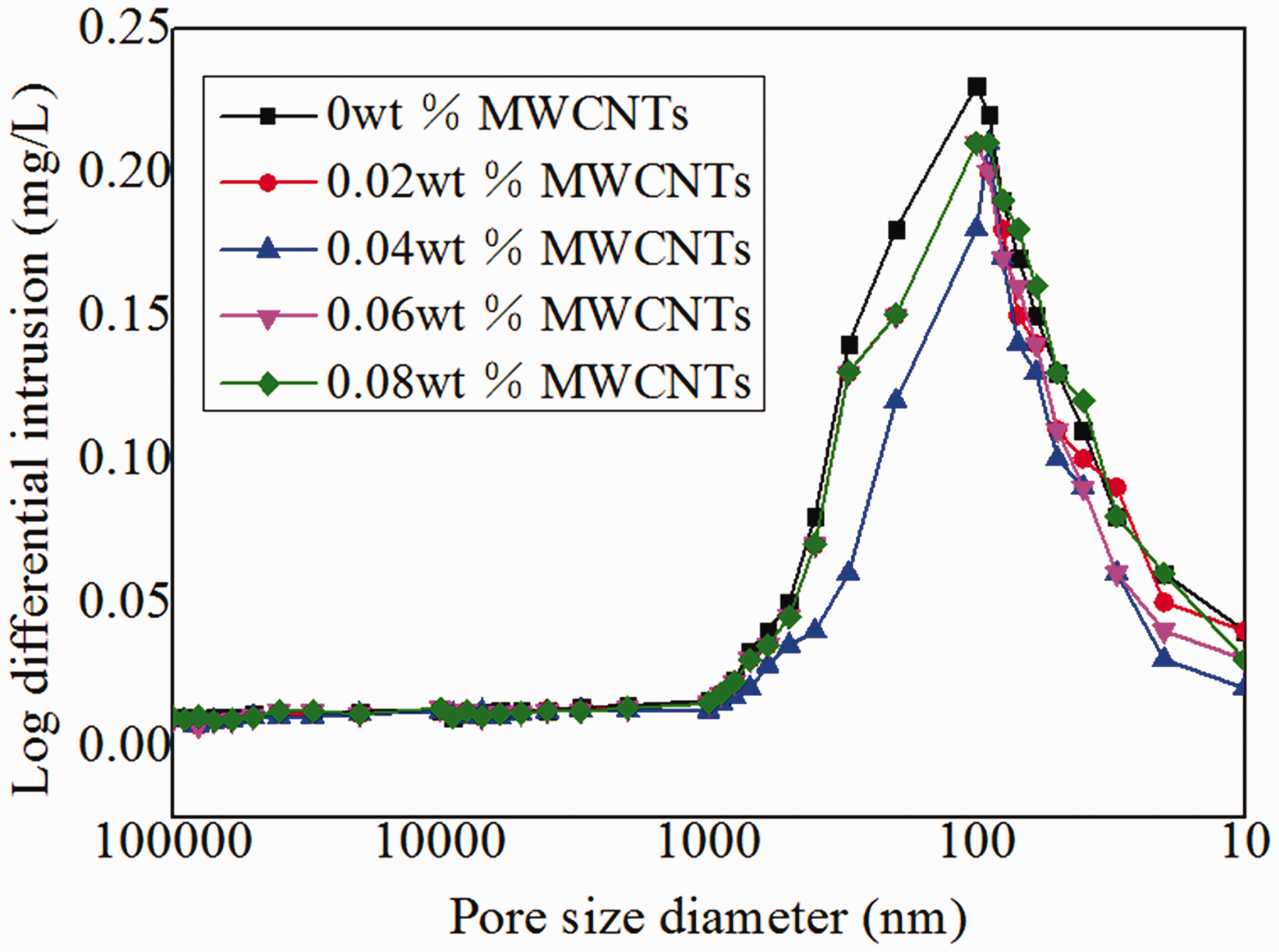
MWCNTs/cement composites microstructure
The microstructures of MWCNTs/cement composites are shown in Figure 10. Figure 10(a) shows SEM images and EDS spectrum of pure cement, the element of EDS spectrum included mainly calcium, oxygen, silica, and there were microcracks and macropores evidently on the surface of hydration product. Figure 10(b) shows SEM images and EDS spectrum of MWCNTs/cement composites, the element of EDS spectrum included mainly carbon, oxygen, calcium, silica that the carbon mainly from MWCNTs, and other elements from hydration products. Figure 10(b), 10(c), 10(d) clearly shows MWCNTs were filled in the hydration products of cement matrix. The MWCNTs acted as a connection like a bridge, which effectively prevented the extension of microcracks. Meanwhile, MWCNTs played a significant filling role and decreased the degree of porosity of the cement paste due to their minimal nano-size. The MWCNTs like network in the cement matrix, strong bond strength was come into being between the MWCNTs and hydrated products of cement-based composites.
32
From the microstructure point of view, consistent with a series of macroscopic results, such as, the increased mechanical properties, crack resistance and porosity reduction of MWCNTs/cement paste.
SEM images of samples at 28 days: (a) cement paste; (b)–(d) MWCNTs/cement composites.
Conclusion
This work studied that MWCNTs were dispersed using DMF as dispersant were added into cement-based materials. The influence of dispersed MWCNTs on the properties of cement-based composites was studied using TAM Air, XRD, TG/DTG, MIP, and SEM analysis. The results as followed:
It was concluded that there were some influences on compressive strength, flexural strength and crack resistance of cement-based composites with the addition of MWCNTs. The compressive strength and the flexural strength growth rates of MWCNTs/cement composites were 2.9% and 21.7% incorporating with 0.04 wt% MWCNTs after 28 days curing. The ratio of compressive strength to flexural strength decline rate of MWCNTs/cement composites was 15.9% incorporating with 0.04 wt% MWCNTs after 28 days curing. The results indicated that there were some positive effects on the cement composites with the addition of MWCNTs. MWCNTs can accelerate hydration reaction of cement composites and increase the number of formation of hydration products. The experimental results indicated that the total porosity was decreased and the compactness of MWCNTs/cement composites was enhanced with the introduction of MWCNTs. The porosity of MWCNTs/cement composites decreasing by 8.26% compared with control sample incorporating with 0.04 wt% of MWCNTs. MWCNTs were embedded in the hydration products and improved the microstructure of cement-based material.
Footnotes
Declaration of Conflicting Interests
The author(s) declared no potential conflicts of interest with respect to the research, authorship, and/or publication of this article.
Funding
The author(s) disclosed receipt of the following financial support for the research, authorship, and/or publication of this article: National Natural Science Foundation of China (51878116, 51578108) and the Fundamental Research Funds for the Central Universities (DUT18ZD219).
