






Abstract
Polyimide (PI)/graphene oxide (GO) nanocomposites with different loads of polydopamine-modified graphene oxide (PI/PDA-GO) were prepared. Meanwhile, the as-prepared PI/PDA-GO nanocomposites were compared with pure PI in terms of their morphologies, thermal and mechanical properties. Only a minor mass fraction of PDA-GO was required to enhance the mechanical and thermal properties of PI. The tensile strength of 1 wt% PDA-GO/PI was increased by 12% and the tensile modulus of 1 wt% PDA-GO/PI nanocomposites was increased by 25% compared to those of pure PI. Vickers hardness of the PI hybrid films increased with PDA-GO load and the maximum enhancement in Vickers hardness was observed at 2 wt% PDA-GO loading. On the other hand, the storage modulus of 1 wt% PDA-GO/PI was increased by 54% than that of neat PI. In consideration of the facile preparation of PDA-coated GO, superior physical properties over neat PI, PI/PDA-GO nanocomposites showed promising applications as functional films or composites.
Introduction
Graphene is a sp2-bonded monatomic thick quasi-two-dimensional carbonaceous material consisting of fused six-membered carbon rings with micrometer-sized lateral dimension, which is beneficial to the nanometer and material science because of their unique physical, 1 conductive, 2 and chemical performance. 3 Nevertheless, graphene oxide (GO) is greatly different from graphene regarding chemical structure, which can be used as a potential alternative for further functionalization. Therefore, it is feasible to improve the interface properties between GO and polymer matrices through all kinds of functionalization means. Deshmukh et al. 4 prepared a polyvinyl alcohol/polyethylene glycol/graphene oxide (PVA/PEG/GO) composite with addition mass fraction of 3% GO. The result showed that the dielectric constant of PVA/PEG-3% GO composite was about 644.39, which is much greater than those of pure PVA (10.71) and PVA/PEG blend (31.22). In addition, the PVA/PEG/GO composites also reveal low dielectric loss, making it possible to prepare a flexible dielectric material for high performance energy storage applications. Wan et al. 5 reported that a low content of diglycidyl ether of bisphenol-A functionalized GO revealed better mechanical properties than GO. Chen et al. 6 reported a significant increase in the compression modulus and breaking elongation of PVA/GO hydrogels after chemical treatment with β-cyclodextrin aldehyde. What’s more, the β-GO/PVA hydrogels showed similar cytotoxicity levels as low as that of pure PVA hydrogels and controls. Mao et al. 7 prepared graphene oxide/styrene butadiene rubber (GO/SBR) composites with slight loadings of butadiene–styrene–vinyl pyridine rubber (VPR) latex. According to the flocculation process, VPR can not only prevent GO sheets from aggregation during co-coagulation but also enhance the interfacial adhesion between GO and SBR matrix. The GO/SBR composites with small GO loadings reveal a low air permeability, low mass density, and superior mechanical properties. Wang et al. 8 reported that the functional rGO/PU foam exhibited a solar photothermal efficiency of approximately 81% at a light density of 10 kW m−2 and showed excellent mechanical, chemical stability, exhibiting a series of practical applications such as sterilization of waste and solar steam generation.
Polyimide (PI) is a kind of high performance engineering plastic with strong mechanical capacity, 9 satisfactory thermostability, 10 and outstanding dielectric properties. 11 Thus, PI materials are frequently used for microelectronics, adhesives, aerospace engineering, and fuel cells. 12 –16 However, the insulating nature of PIs would cause electrostatic accumulation on its surface via the radiation of lots of oxygen atoms or strong ultraviolet rays. As a consequence, this performance causes local heating and premature degradation of the materials. 9 On the other hand, it is necessary to meet the requirements for excellent PI materials with the increasing development of aircraft industries. Recently, Lu et al. 17 prepared a novel PI/GO film and confirmed it presented good mechanical properties, thermal stability, and electrical conductivity. However, the optical transmittance significantly decreased from 81.5% (pure PI) to 0.8% (PI-1.0% GO). Wang et al. 18 prepared new PI hybrid membranes containing isocyanate-modified GO by in situ polymerization. It was found that the PI hybrid membranes incorporated by modified GO samples showed a high gas permeability and ideal selectivity of membranes. Covalent functionalization of GO induced chemical bonding between GO and PI matrix, which could improve both mechanical and electrical properties. Nevertheless, the introduction of chemical bonds leads to the destruction of the GO structure. And the PI composites were prepared by being mixed with covalent-modified GO and relied on harsh reaction conditions, such as strong acid, exclusion of oxygen and water, and high temperature. It’s a challenge for researchers to explore mild and various modification ways for GO.
A nontoxic chemical compound called dopamine (DA) is derived from the brains of many organisms including mankind. 19 Recently, biomimetic DA from mussel protein was used to modify most substrates by simple and effective means. The self-polymerization of DA could produce thinner polydopamine (PDA) layers on the matrices’ surface by spontaneous oxidation, rearrangement, and intermolecular cross-linking reaction. Compared with the traditional chemical modification, PDA can adhere to the surface of most organic and inorganic matrices without damaging the structure of matrices. Furthermore, PDA functional nanofillers can achieve a strong interfacial adhesion between nanofillers and polymers. The non-covalent bond between PDA and substrates such as GO, 20 –22 carbon nanotubes, 23,24 and clay 25,26 implied that DA and derivatives can react with the dicarboxylic anhydride of PI, which could avoid the agglomeration of GO and further enhance the compatibility between GO and PI matrix.
In this study, the reduction and functionalization of GO were conducted using mussel-inspired DA, 27 which was further loaded into PI resin for evaluations of mechanical properties and thermal stability of the corresponding PI/GO nanocomposites. DA was found to release two electrons and protons by oxidative polymerization in tris(hydroxymethyl)aminomethane (pH = 8.5), which could attack those carbon atoms attached to oxygen-containing groups in GO (Figure 1). As a result, the reduction and functionalization of GO with PDA were obtained and π–π interactions between PDA and GO would contribute to the driving forces for the exfoliation of GO. Meanwhile, the abundant amine groups and phenolic hydroxyl groups of PDA-coated GO would react with the poly(amic acid) (PAA), which was prepared by in situ polymerization of 4,4′-oxydianiline (ODA), pyromellitic dianhydride (PMDA) under nitrogen gas (N2) at room temperature. At the same time, Fourier transform infrared (FTIR), Raman, and X-ray photoelectron spectroscopy (XPS) successfully verified PDA-coated GO and π–π interactions between PDA and GO. The morphology of GO with PDA was studied using scanning electron microscope (SEM), transmission electron microscope (TEM), and scanning probe microscope (SPM). The microstructure analysis of pure PI and polyimide (PI)/graphene oxide (GO) nanocomposites with different loads of dopamine-modified graphene oxide (PI/PDA-GO) nanocomposites were researched by X-ray diffraction (XRD) and SEM. Finally, further study on the mechanical and thermal properties of pure PI and its composites was conducted.
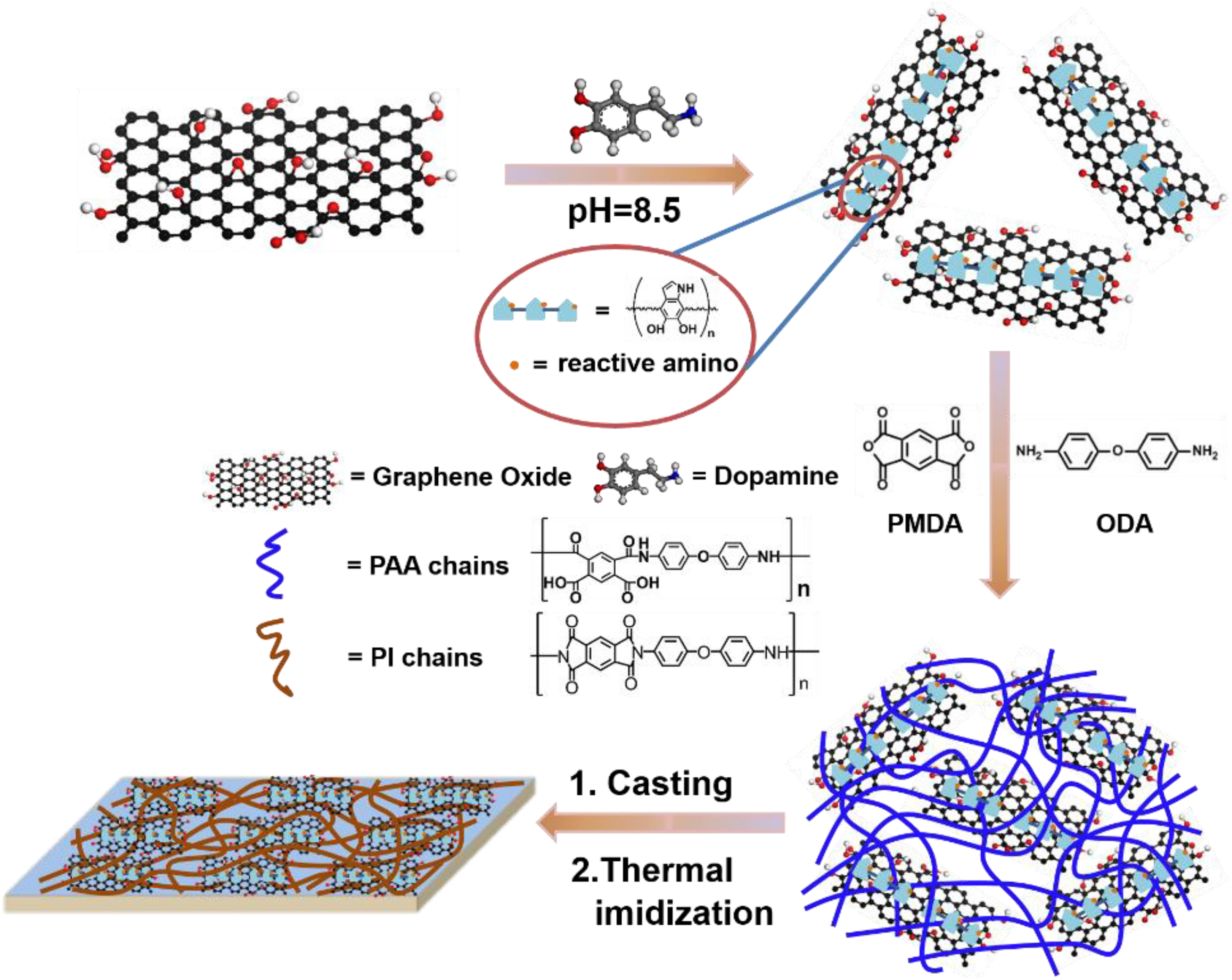
Preparation of PI/PDA-GO nanocomposite films by in situ polymerization. PI/PDA-GO: PI/GO nanocomposites with different loads of DA-modified GO; PI: polyimide; PDA: polydopamine; GO: graphene oxide; DA: dopamine.
Experimental section
Materials
Tris(hydroxymethyl)aminomethane, dopamine hydrochloride, 4,4′-ODA, PMDA, and dimethylacetamide (DMAc) were purchased from Aladdin Industrial Corporation, Shanghai. Hydrochloric acid solution was supplied from Sinopharm Chemical Reagent Co. Ltd (Shanghai). GOs were provided by Shanghai Ashine Technology Development Co. Ltd (Shanghai). All chemicals and solvents were used as received without further purification.
Preparation of PDA functional GO
A typical procedure for the preparation of PDA-coated GO is as follows. 22,24,28 DA hydrochloride (0.80 g) and GO (2.00 g) were added and dissolved in tris(hydroxymethyl)aminomethane (400 mL, pH = 8.5) under ultrasonic vibration for 3 h. After that, the mixture solution was stirred at 60°C for 24 h. The color of solutions changed to black owing to the oxidation of DA. Finally, the PDA-coated GO was obtained using centrifuge and rinsed with deionized water.
Synthesis of PI/GO composites with various mass fractions of PDA-GO in situ polymerization
Neat PI and PI/PDA-GO nanocomposite films were prepared through representative processes: PAA prepolymer cast on glass slide and subsequent thermal imidization method. We prepared PAA/GO nanocomposite suspensions with different mass fraction PDA-GO loadings (0.25–2%), corresponding to the quality of PDA-GO (10–80 mg). PDA-GO was added to solvent DMAc (28 mL) individually and equimolar number of ODA and PMDA was added slowly. Subsequent stirring was carried out under N2 atmosphere and allowed to react for 24 h at normal temperature, and the solid content of PAA/GO suspension was 15%. The degassed PAA/PDA-GO solutions were casted on glass slide substrates and cured at elevated temperatures. After that, all samples started gradient heating by the procedure: at a speed of 3°C min−1 to 100°C, 150°C, 200°C, 250°C, and 300°C; isothermal at each temperature for 1 h. Pure PI films were prepared in a similar procedure without the incorporation of nanofillers and the thickness of PI composites is approximately 0.2 mm.
Instruments and characterization
FTIR spectra of GO and PDA-GO were obtained using a FTIR (NICOLET 6700, Thermo, USA) spectrometer. The FTIR spectrum was recorded between 500 cm−1 and 4000 cm−1. The specimens of GO and PDA-GO were researched via a Raman spectrum (RENISHAW INVIA Reflex, Renishaw, England). XPS (AXIS ULTRADLD, Kratos, England) was used to confirm the chemical composition of GO and PDA-GO samples. SPM was conducted on Dimension 3100 (Vecco, USA). XRD spectra were performed on D8 ADVANCE (BRUKER, Germany). Thermogravimetric analyses (TGA) of PI/PDA-GO composite films were studied using Diamond TG/DTA (PerkinElmer, USA), the atmosphere was air, and the heating rate was 10°C min−1. The morphology of GO, PDA-GO, and PI/PDA-GO nanocomposite fracture films were investigated via SEM (HITACHI S4800, Hitachi, Japan). Besides, the microstructures of PDA-GO were also performed with TEM (Tecnai F20, FEI, USA). Tensile test of the PI/PDA-GO nanocomposite film samples was performed on a 5567 universal material testing machine (Instron, China) and the rate of extension was 0.5 mm min−1. Five specimens were used for each sample and the tensile strength, modulus, and elongation at break were given averaged values. A microhardness tester (HV-1000, Shanghai Jimin Measuring Equipment Co. LTD, China) was used to research the Vickers hardness of PI/PDA-GO nanocomposites and the loading force was 100 N. We investigated the mechanical properties of composites using dynamic thermomechanical analysis (DMA) analyses (DMAQ800, TA, USA).
Results and discussion
Characterization of PDA-GO suspension and PAA/PDA-GO precursor
GO presented limited solubility in hydrophobic solvent and poor compatibility with certain polymers. It can be seen from Figure 2(a) that the PDA-GO showed a stable dispersion in DMAc with and without PAA prepolymer. SPM photograph of PDA-GO indicated that the thickness of GO nanosheet was about 3.3 nm. On the other hand, the SEM images showed that the pristine GO nanosheets exhibited a typical corrugated and aggregated morphology (Figure 2(c)). Obviously, no obvious aggregation was observed in PDA-GO (Figure 2(d)) after the DA treatment. The noncovalent π–π interactions between PDA and GO contribute to the driving forces for the exfoliation of GO, which were verified by FTIR, Raman, and XPS spectroscopy.

Digital images of GO, PDA-GO, and PAA/PDA-GO in DMAc (a); typical SPM images of exfoliated PDA-GO (b); typical SEM images of pristine graphene oxide (c); and exfoliated PDA-GO (d). GO: graphene oxide; PDA: polydopamine; PAA: poly(amic acid); DMAc: dimethylacetamide; SPM: scanning probe microscope; SEM: scanning electron microscope.
FTIR spectra were used to successfully characterize GO and PDA-coated GO(Figure 3(a)). The absorption bands from GO are C=O in carboxyl moieties (carboxyl) at 1735 cm−1, C=C from unoxidized sp2 C–C bonds at 1624 cm−1, O–H stretching at 3400 cm−1, and C–O (alkoxy) stretching vibration at 1057 cm−1. A weak characteristic absorption of GO (1338 cm−1) is C–N stretching. In addition, the spectrum of PDA-GO showed a new peak at 1227 cm−1, owed to C–N stretching vibration. Moreover, the existence of C–N group indicated the occurrence of reduction process and the successful preparation of PDA-coated GO. On the other hand, the intensity of PDA-GO characteristic absorption peak at 1374 cm−1 (corresponding to C–N–C stretching vibration) was higher than that of GO, also indicating GO is successfully functionalized by DA. 19,29,30
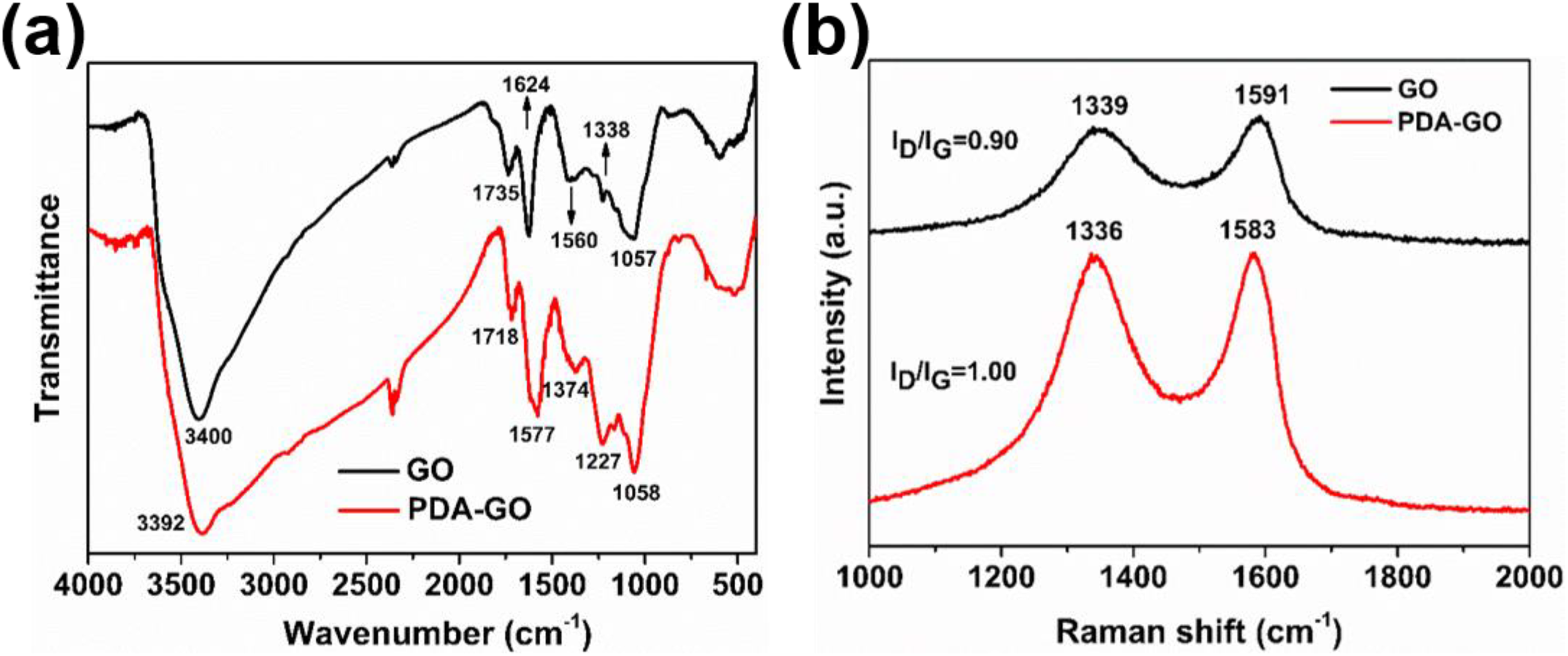
(a) FTIR spectra of GO and PDA-coated GO and (b) Raman spectra of GO and PDA-coated GO. FTIR: Fourier transform infrared; GO: graphene oxide; PDA: polydopamine.
Raman spectra of GO and PDA-GO are shown in Figure 3(b). Typical spectrum of GO showed two characteristic peaks, which centered at approximately 1339 and 1591 cm−1, respectively. The D band at 1339 cm−1 revealed that GO has inherent defects and G band at 1591 cm−1 was caused via sp2 carbon atoms. Compared with GO, the D and G bands of DA reduced GO transfer to lower region (1336 cm−1 for D band and 1583 cm−1 for G band). In addition, the intensity ratio of D band to G band (I D/I G) was changed from 0.90 to 1.00, suggesting some destruction of graphene was restored, which is due to the removal of oxygen functionalization and restoration of the sp2 structure after the reduction reaction. 19,31
XPS spectra were used to test the chemical compositions of GO and PDA-coated GO. As shown in Figure 4(a), the C1s signal of GO was decomposed into three components: C–C at 284.6 eV, C–OH at 286.8 eV, and C=O at 288.5 eV. We also observed a new peak at 285.81 eV on the spectrum of PDA-GO (Figure 4(c)), representing the C–N peak from DA, implying that PDA has been successfully adhered to GO by the self-polymerization of DA. Figure 4(d) exhibits a new peak at about 399.7 eV, corresponding to the N1s electron of DA on PDA-GO. As can be seen from Table 1, the value of C/O for PDA-GO (1.60) obviously decreased in comparison to that of GO (2.19). 19,32
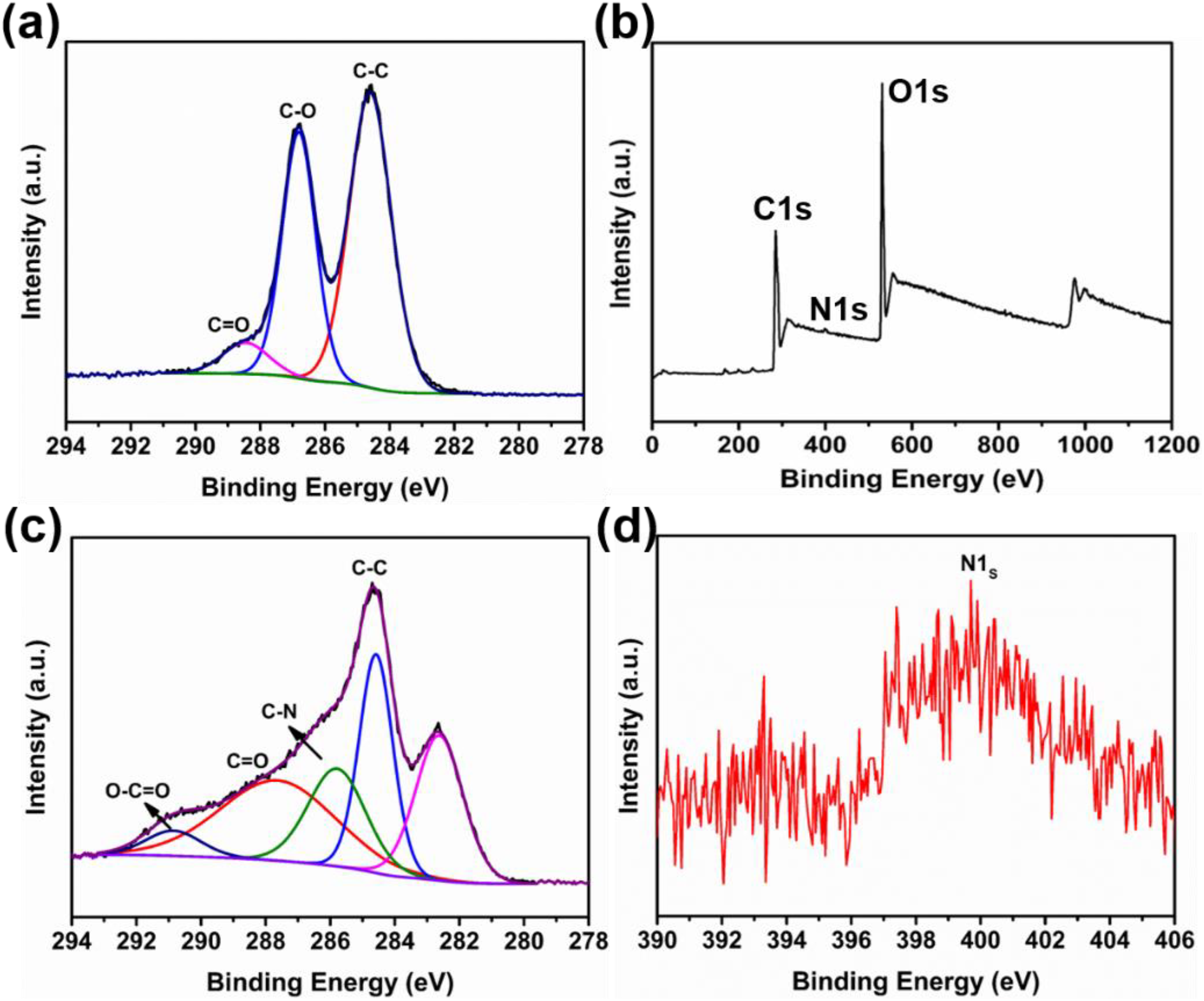
XPS spectra of GO and PDA-GO. (a) C1s core-level spectrum of GO, (b) wide-scan spectrum of PDA-GO, (c) C1s core-level spectrum of PDA-GO, and (d) N1s core-level spectrum of PDA-GO. XPS: X-ray photoelectron spectroscopy; GO: graphene oxide; PDA: polydopamine.
The mass concentration of C, O, N element of GO and PDA-GO.

GO: graphene oxide; PDA: polydopamine; C: carbon; O: oxygen; N: nitrogen.
Preparation and characterization of PI/PDA-GO nanocomposites
XRD was employed to characterize the structures of GO, PDA-GO, pure PI, and PI/PDA-GO nanocomposites. Figure 5 shows that the XRD spectrum of GO, which presents a sharp peak at about 2θ = 9.8°. By calculation, the interlayer spacing of GO is 0.90 nm. The interlayer spacing between GO and PDA-GO has no obvious change. However, the diffraction peak intensity of PDA-GO was significantly weaker than that of GO after the modification with PDA, indicating that PDA was introduced into GO to enhance structural heterogeneity. 33 For the XRD spectra of pure PI and PI nanocomposites, the broad peak of pure PI was seen at approximately 2θ = 18.9°, and it is concluded that the structure of PI belongs to amorphous nature. On the other hand, the XRD spectra of PI nanocomposites are similar to neat PI resin. The characteristic diffraction peak of GO disappears and this explains that PDA-GOs were adequately exfoliated in PI matrices. 29 Mechanical properties of neat PI and its nanocomposite films.
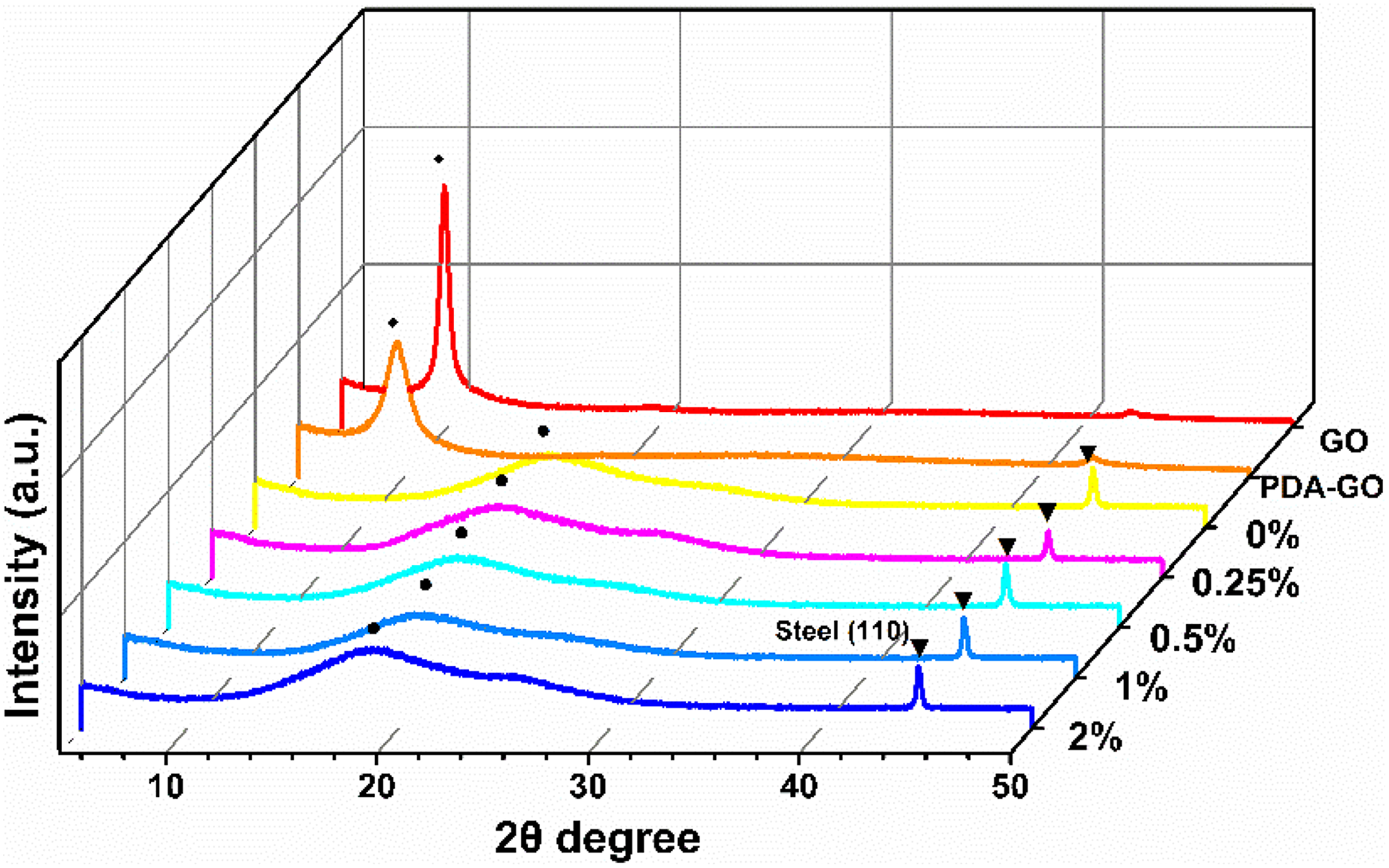
XRD spectrum of GO, PDA-GO, pure PI, and PI/PDA-GO nanocomposite films. XRD: X-ray diffraction; PDA: polydopamine; GO: graphene oxide; PI: polyimide.
Given the existence of strong interface adhesion between the PDA-GO and PI matrices and the uniform state of GO in the PI matrix, we speculate that the mechanical properties of nanocomposites have a significant improvement. Representative stress–strain curves of pure PI and PI/PDA-GO nanocomposites are presented in Figure 6(a) and the corresponding tensile properties including tensile stress, modulus, and elongation at break are described in Figure 6(b). As expected, the PI/PDA-GO composites show improved tensile strength and elasticity modulus with the incorporation of PDA-GO. With the only incorporation of 1 wt% PDA-GO, the tensile strength of PI/PDA-GO nanocomposites (106 MPa) was increased by 12% compared with those of pure PI (95 MPa), implying more absorbed energy and greater fracture resistibility. On the other hand, the tensile modulus of PI/PDA-GO nanocomposites was increased from 2.0 to 2.5 GPa when the PDA-GO load was increased from 0 to 1 wt%. Such superior mechanical properties can certainly be attributed to the strong interface adhesion and good compatibility between PDA-GO and the PI matrix, leading to load transfer effectively from the PI matrix to PDA-GO and then decrease the stress concentration during the stretch process. 33,34 The elongation at break firstly exhibits an obvious increase and then a decrease with increasing PDA-GO loading. It could be demonstrated that the chemical bonding between PDA and PI might change the flexibility of PI.
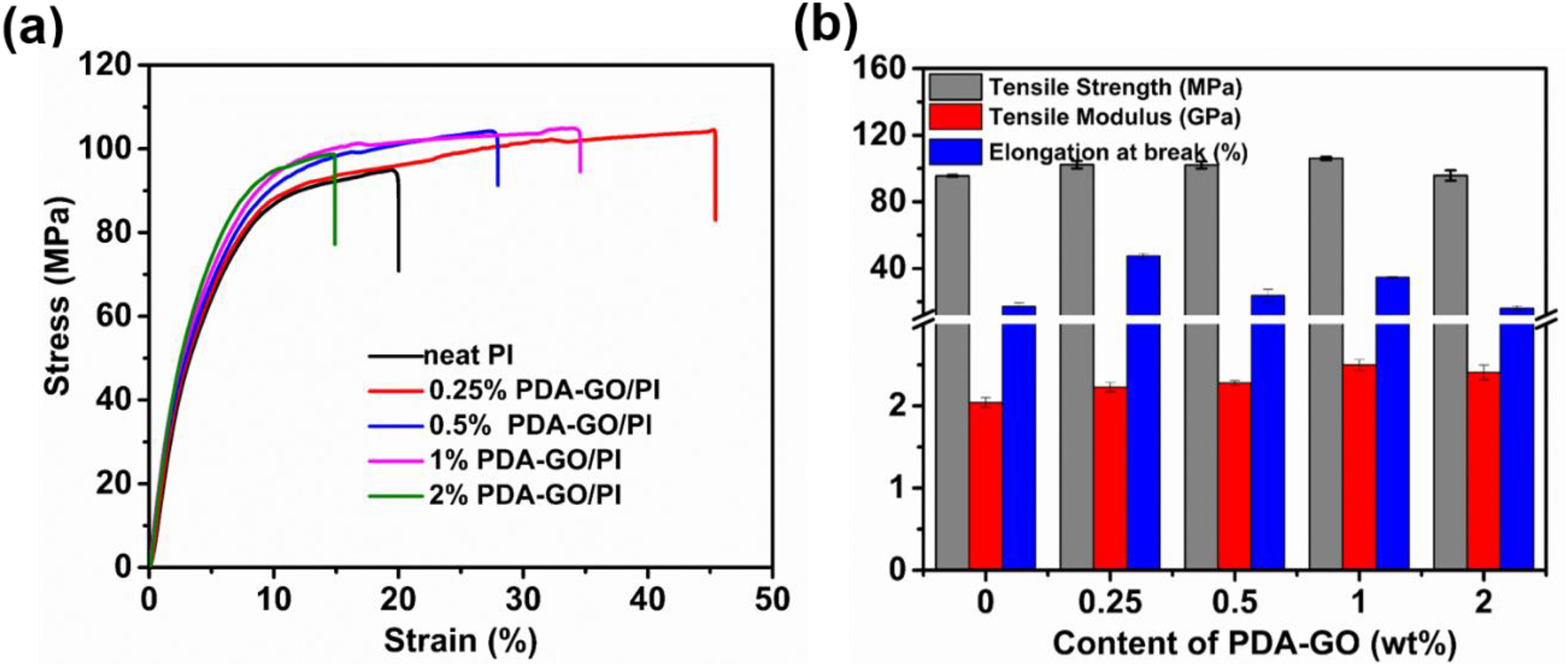
Tensile performances of neat PI and PI/PDA-GO composites. (a) Stress–strain curves of neat PI and PI/PDA-GO nanocomposites and (b) tensile strength, tensile modulus, and elongation at break of neat PI and PI/PDA-GO nanocomposites. PI: polyimide; PDA: polydopamine; GO: graphene oxide.
Figure 7 shows the tensile fracture surfaces of pure PI and PI/PDA-GO nanocomposite films. It was observed that the pure PI showed a smooth and flat morphology, while those of the PI/PDA-GO nanocomposite films showed a much rougher and wrinkled morphology. 35 In addition, a few crack initiation points were observed simultaneously for the nanocomposites, which attributed to the strong interface adhesion between PDA-GO and PI matrices. Moreover, the layered fractures upon tensile break attributed to the planar orientation of GO. 36 –38
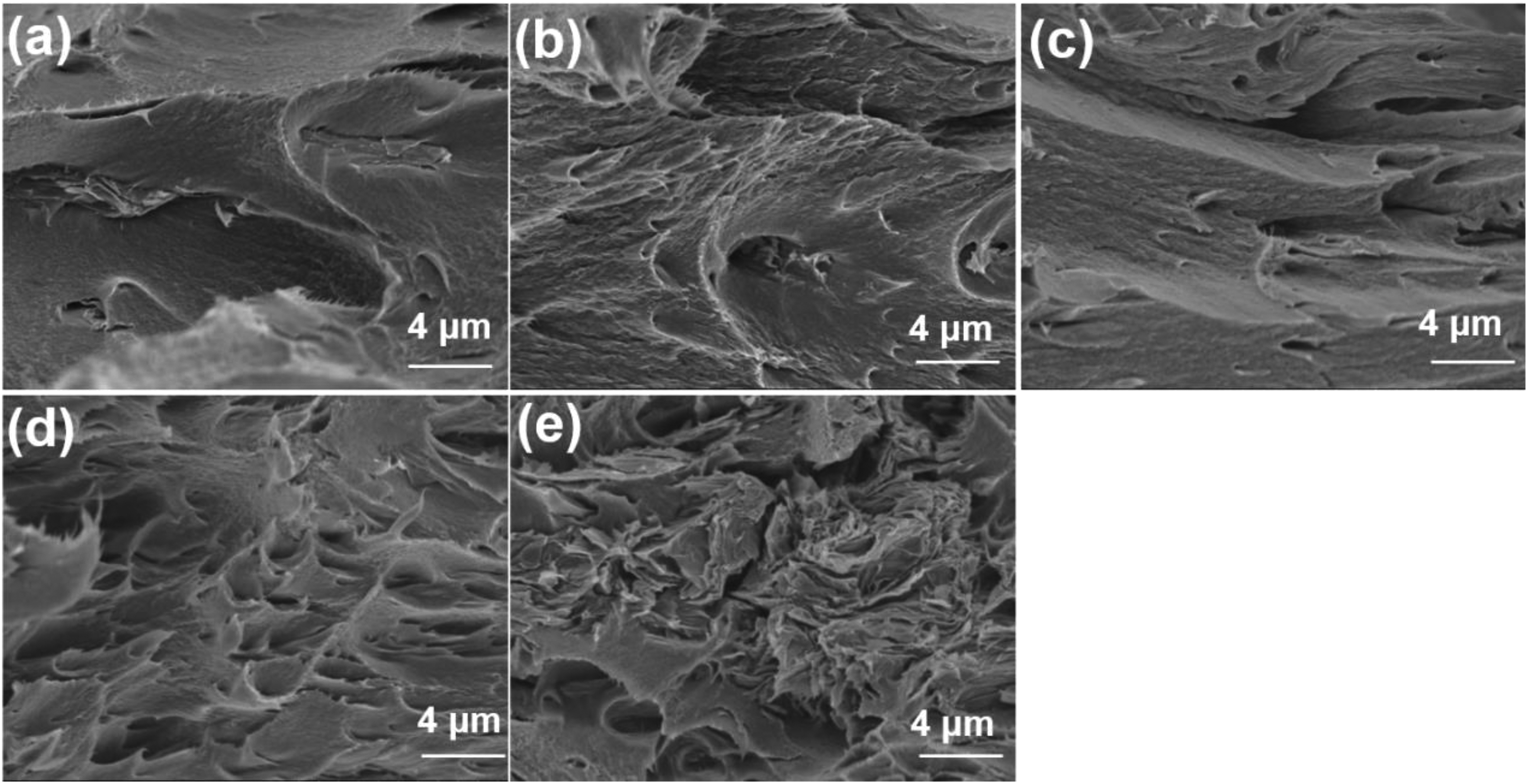
SEM images of (a) pure PI, (b) 0.25 wt% PDA-GO/PI nanocomposite film, (c) 0.5 wt% PDA-GO/PI nanocomposite film, (d) 1 wt% PDA-GO/PI nanocomposite film, and (e) 2 wt% PDA-GO/PI nanocomposite film. PI: polyimide; PDA: polydopamine; GO: graphene oxide; scanning electron microscope.
DMA experiments were also selected to deeply study the reinforcement effects of GO on PI nanocomposites. Figure 8(a) shows the storage modulus (E′) of PI and its nanocomposites. It is obvious that the E′ value of PI/PDA-GO nanocomposites with the quantities of 0.25 and 0.5 wt% PDA-GO were higher than that of pure PI. The storage modulus of pure PI at 30°C is about 1034 MPa, while the storage modulus of PI/PDA-GO composites was over 1334 MPa. Particularly, the storage modulus of PI/PDA-GO nanocomposites with 1 wt% PDA-GO load (1590 MPa) was increased by 54% than that of neat PI. Figure 8(b) revealed the loss modulus (E″) of pure PI and PI/PDA-GO composites. The loss modulus of PI/PDA-GO nanocomposites also increased with the amount of PDA-GO. In addition, the E″ of PI/PDA-GO nanocomposites displayed a maximum at about 365°C and it could be illustrated that the backbone motion of PI molecules was defined as α relaxation or the initial glass transition. 39,40 This significant enhancement is indicative of the uniform dispersion of PDA-GO in PI matrices and the movement of PI chain segment would be restrained effectively by the incorporation of PDA-GO nanofillers. Moreover, the external stress would be shifted to PDA-GO. 41 The glass transition temperatures (T gs) were determined by the peak temperature of damping spectra curves (tan δ vs. T). As shown in Figure 8(c), the PI/PDA-GO nanocomposites exhibited higher T gs (0.5 wt%: 396°C; 1 wt%: 388°C; 2 wt%: 392°C) compared with that of pure PI (386°C). The phenomena explain that the rigidity of PI was obviously increased after the incorporation of reactive PDA-GO.
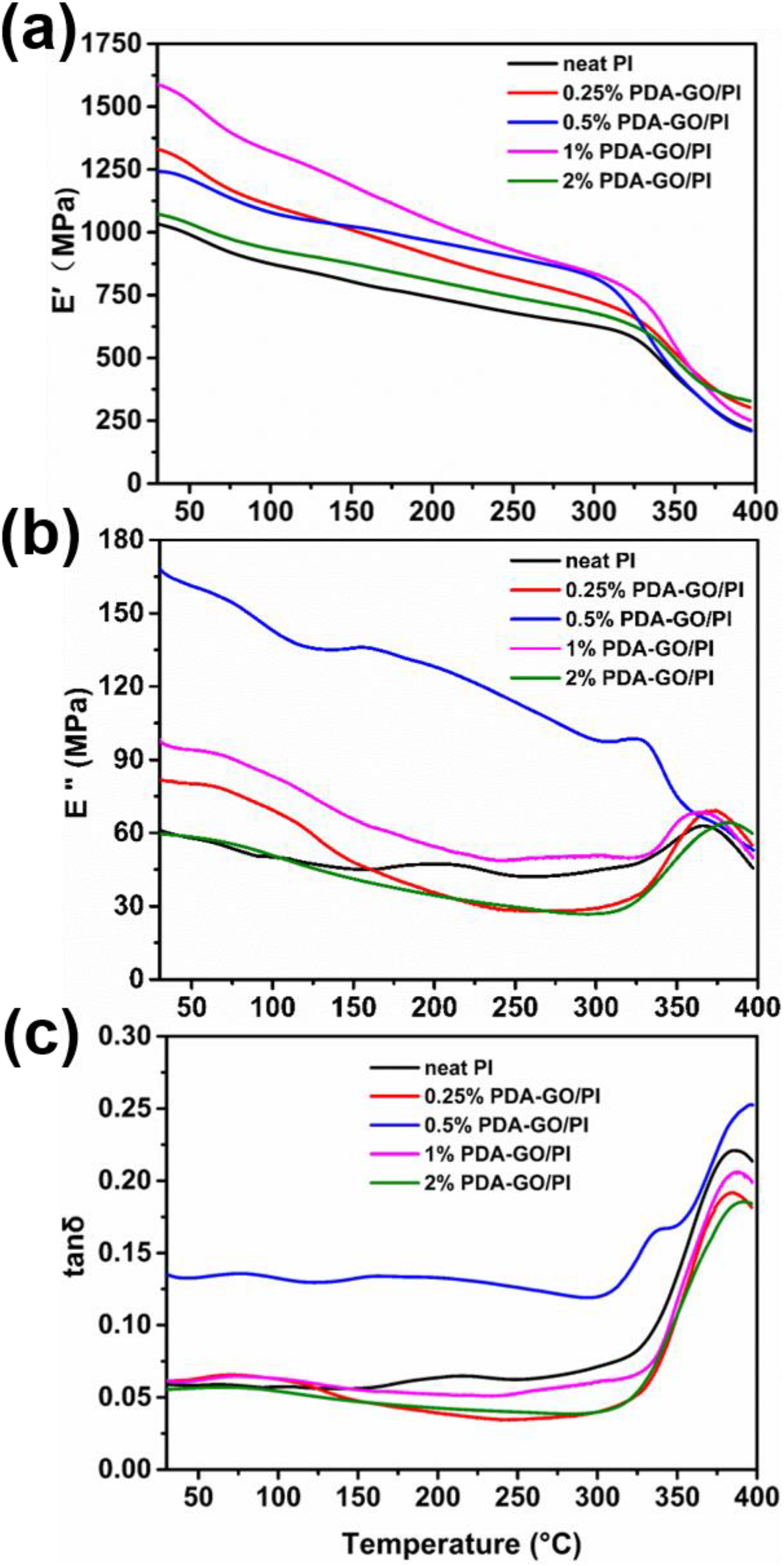
DMA experiments of neat PI and PI/PDA-GO composites. (a) Storage modulus E′, (b) loss modulus E″, and (c) damping spectra (tan δ vs. T). DMA: dynamic mechanical analysis; PI: polyimide; PDA: polydopamine; GO: graphene oxide.
It is considered that the hardness of PI will be improved with the incorporation of PDA-GO and this is because of the high modulus of GO and the good compatibility between GO and PI matrices. Figure 9 shows the Vickers hardness of PI/PDA-GO nanocomposites with different mass fractions of PDA-GO, and the loading force was 100 N. As a result, the Vickers hardness of neat PI was about 18.44 HV. However, the Vickers hardness of PI/PDA-GO nanocomposites increased slowly with the addition of PDA-GO. In detail, it went up to 20.08 HV at the content of 2 wt% PDA-GO and the value reached the point of maximum of the as-prepared PI nanocomposites.
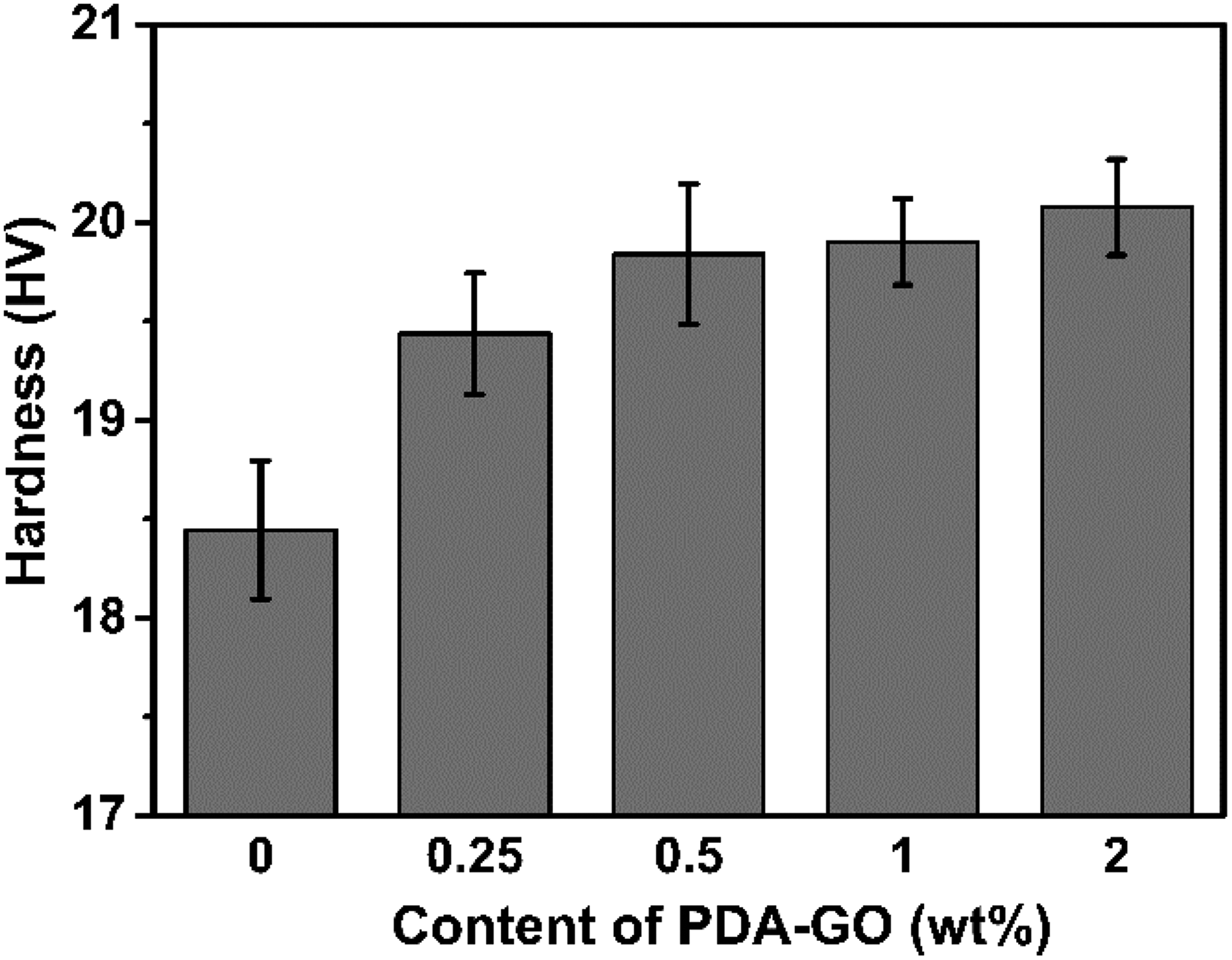
The Vickers hardness of pure PI and PI/PDA-GO nanocomposites. PI: polyimide; PDA: polydopamine; GO: graphene oxide.
Thermal properties of neat PI and PI/PDA-GO nanocomposite films
Thermal stability of neat PI and its nanocomposite films was investigated using TGA. The flow atmosphere was air and the imposed test temperature ranged from 25 to 800°C. As can be seen from Figure 10 and Table 2, no obvious weight loss was found below 400°C, and the T D10 (temperatures of 10% degradation) of 0.25 wt% PI/PDA-GO nanocomposite was slightly increased compared with that of neat PI. Nevertheless, the T D10 and T D50 (temperatures of 50% degradation) of PI/PDA-GO nanocomposites were lower than that of pure PI with the incorporation of excessive PDA-GO. Abundant carboxyl and hydroxyl groups on the surface of GO would accelerate the decomposition of PI chains. 42
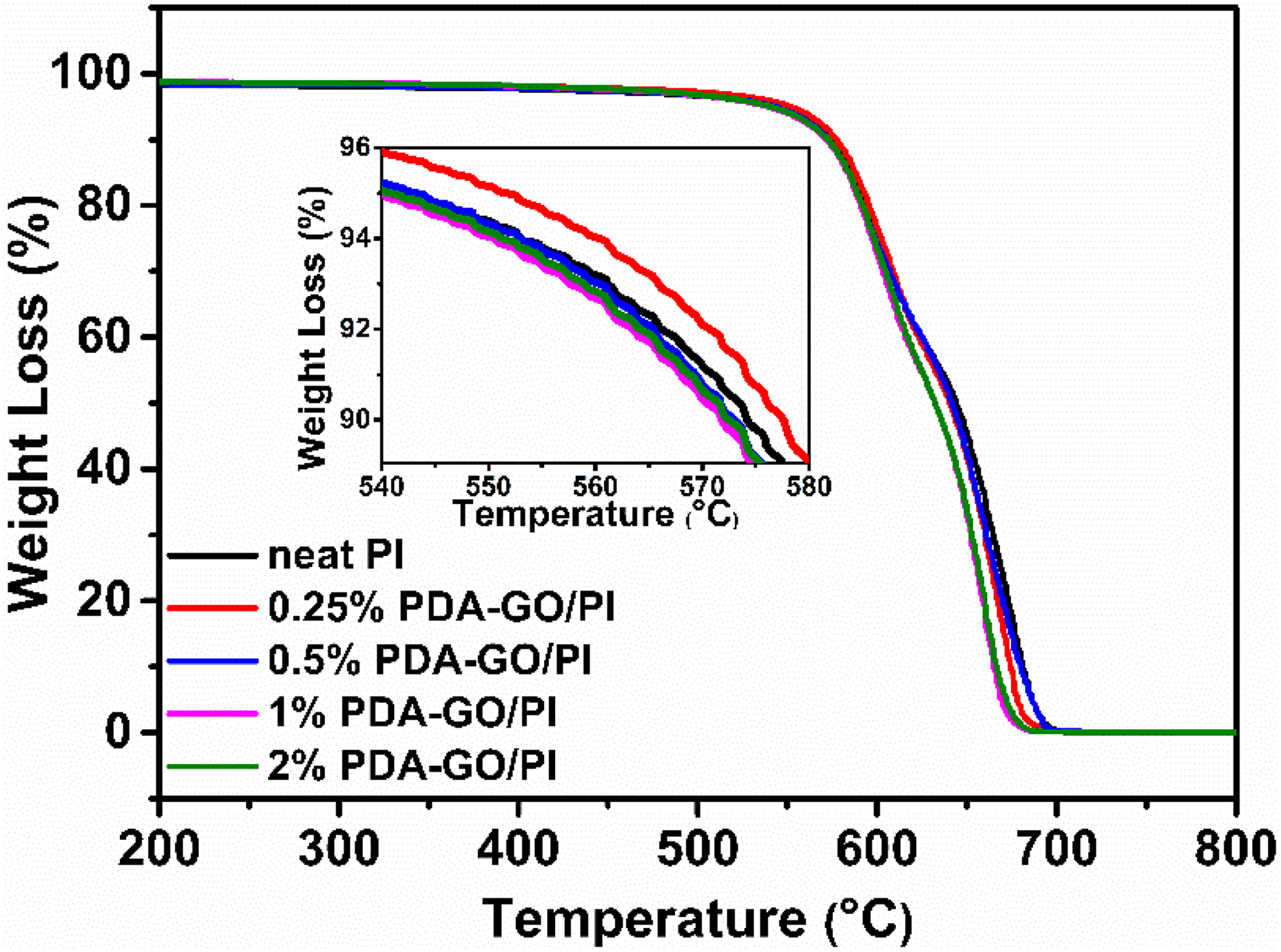
TGA curves of neat PI and PI/PDA-GO nanocomposites as a function of temperature. TGA: thermogravimetric analysis; PI: polyimide; PDA: polydopamine; GO: graphene oxide.
TGA of PI/PDA-GO composites.

T d10: temperatures of 10% degradation; T d50: temperatures of 50% degradation; PDA: polydopamine; GO: graphene oxide; TGA: thermogravimetric analysis.
Conclusion
We have successfully prepared PI nanocomposites containing PDA-modified GO. The noncovalent π–π interactions between PDA and GO facilitated the dispersion of GO in PAA solution as verified by FTIR, Raman, and XPS spectroscopy. A mechanical test revealed that the tensile strength and modulus of the PI/PDA-GO nanocomposite with 1 wt% PDA-GO increased by 12% and 25%, respectively, compared with those of neat PI. Additionally, the storage modulus and loss modulus of PI/PDA-GO nanocomposites were also significantly increased owing to good compatibility between GO and the PI matrix. The thermal stability of PI/PDA-GO nanocomposites was decreased with the content of PDA-GO, but PI/PDA-GO nanocomposites still retained superior thermal stability to satisfy its practical applications.
Footnotes
Declaration of Conflicting Interests
The author(s) declared no potential conflicts of interest with respect to the research, authorship, and/or publication of this article.
Funding
The author(s) disclosed receipt of the following financial support for the research, authorship, and/or publication of this article: This work is financially supported by “One Hundred Talented People” of the Chinese Academy of Sciences (Y60707WR04).