







Abstract
The crosslinking agent is a vital key which affects the mechanical properties of composite solid rocket propellants (CSRPs). Under this scheme, the effect of crosslinking mixtures (CMs) based on trimethylolpropane (TMP) as a triol crosslinker and butanediol (BD) as a chain extender on CSRPs based on hydroxyl-terminated polybutadiene was investigated. A series of 27 propellant compositions was formulated to study the mechanical properties of the prepared CSRPs. The effect of changing the weight ratio of TMP to BD in the CM was studied. In addition, the influence of increasing the percentage of CM (from 0% to 0.5%) in the prepared samples was investigated. Also, the effect of the CM on CSRPs containing different curing ratio of NCO/OH = 0.7, 0.75, and 0.8 was studied to generate the largest possible strain-ability with high strength over different levels of curing conditions. The mechanical characteristics (tensile strength and strain) of the prepared CSRPs have been measured and plotted versus CM content, NCO/OH and TMP:BD ratio. Generally, the addition of CM leads to a remarkable enhancement in the propellant mechanical properties. Samples containing TMP:BD (2:1) provide the highest strength while samples containing TMP:BD (1:2) show the highest strain over all the NCO/OH ratios. Formulations with TMP:BD (1:1) give high strength with moderate strain. Variation in CM content has a remarkable influence on the mechanical properties of CSRPs. A wide range of tensile strength and strain were obtained from this study to offer variety of results suitable for different applications in the CSRPs technology.
Keywords
Introduction
Among the most popular implementation of polyurethane (PU) elastomers is as a polymeric binder matrix in composite solid rocket propellant (CSRP). The main components of PU-based CSRP are elastomeric binder (inert or energetic), inorganic oxidizer, and metallic fuel all together as a heterogeneous mixture. 1 The polymer network with three-dimensional structure attaches both oxidizer and metal fillers to generate a rubbery network; it can be called a densely loaded PU structure. It provides the propellant grain with the sufficient microstructure to preserve its structural integrity. 1 –3 From the physical and chemical point of view, PU has several applications in the military and civilian fields. 4,5 PU is compatible with the traditional oxidizers and other materials under standard conditions of storage. As it basically has hydrogen and carbon, it decomposes throughout combustion to increase the rocket motor specific impulse by producing high amounts of stable compounds, such as carbon monoxide, carbon dioxide, and water vapors. 6,7 To accomplish its function efficiently through design considerations, a solid rocket motor needs to maintain its structural stability and should have appropriate tensile strength and strain under the wide range of mechanical stresses applied during production, transport and handling, storage, shipping, thermal cycling, instant ignition pressure, and acceleration overload during rocket engine flight. 8,9
Such propellants are designed to have a reliable long-lasting storage ability based on studies of chemical structural aging. The composite propellant has a PU binder of 10–15%. Nonetheless, the propellant grain mechanical and process-ability characteristics are determined primarily by the polymer matrix consisting of three parts: (1) a large chain prepolymer (polyol), (2) a di- or triisocyanate curing agent, and (3) a crosslinking mixture (CM) containing chain extender (1,4-butanediol (BD)) and crosslinker (1,1,1-trimethylolpropane (TMP)), together with other ingredients like plasticizer, burn-rate modifier, cure catalyst, and so on. 10,11 The mechanical characteristics of the propellants play a major role in the decision regarding the type of application to be performed to the grain (free standing or case bonded). 12,13 The hydroxyl-terminated polybutadiene (HTPB) is the most popular polyol applied in recent years. 14 This liquid prepolymer has outstanding physical characteristics including the low temperature of glass transition, high tensile ability, and strong chemical resistance. 14,15 HTPB-based propellants have distinct advantages such as very high reliability, good processing, and unequaled mechanical performance. 16,17 Hocaoğlu et al. 18 discussed the alteration in the mechanical behavior of the solid propellants based on HTPB and ammonium perchlorate (AP) during the curing process in relation to variation in the crosslink density (CLD) which was mainly calculated via the curing ratio (R value), defined as the equivalent ratio of diisocyanate to total hydroxyl value, besides the corresponding ratio of triol to diol (triol/diol).
Manjari et al. 10,19 investigated HTPB-based propellant composition adjustment for improved mechanical properties, in addition to using HTPB with various molecular weights and hydroxyl numbers in the production of CSRP samples to discuss the effect of the processing parameters on the resulting propellant properties. Based on their study, it has been concluded that HTPB prepolymer with hydroxyl numbers (OH value) of hydroxyl value 40–50 mg KOH/g is favorable for the production of large-scale propellants grains as this eliminates batch-to-batch fluctuation in mechanical properties. CSRP was prepared with curing ratio within 0.7–0.9. The composition was approved by performing experiments using a specified materials batch. However, certain shortcomings in production such as lack of appropriate HTPB grade allow researchers to use certain additives to achieve desirable mechanical and thermal properties in crosslinking processes. Both crosslinkers and chain extenders are two of the most effective additives categories besides bonding agents which enhance PU performance by transforming its structure from linear to branched network morphology. 20 –22 Chain extenders for PUs have been widely researched. Adding chain extenders, like diols of low molecular weight (BD), in gum stock compositions improves the elastomeric characteristics of the finished PU product, owing to the fact that the small diols link with diisocyanates and make hard sites to act as a physical crosslink for PU chains. 23,24
Transformation of the PU matrix from linear to branched network structure was needed to enhance its mechanical properties. 25,26 PU crosslinking could be performed in different ways. 27,28 Low molecular weight triols such as TMP and triethanolamine were used as crosslinkers in different types of research. 29 –35 The most significant key parameter for binder system is the CLD which defined as moles of elastically effective matrix chains per unit volume. In addition to CLD, there are other parameters which determine the mechanical and physical properties of the binder such as network configuration, micro inhomogeneity, and polymer chains chemical nature. Furthermore, it is possible to explain more accurately the gum stock structure of the binder system if the network molecular structure, side chains content, and length allocation in the elastically efficient and side chains are identified uniquely. 36,37 The CLD can be tailored by changing the proportional quantities of the prepolymer diol, curing agent, and CM consisting of triol crosslinker TMP/diol extender BD. 38,39 These components react with each other to produce one integral PU network that makes the matrix softer or tougher at the end of the curing period. Accordingly, the reacting species equivalent ratios, the NCO/OH ratio, the CM composition (triol/diol) ratio, and CM content, are important tools for adjusting and being tailored in a strict range, and for this reason the material will maintain its process-ability for casting. 40 From an applicable angle, those factors must be fine-tuned for obtaining satisfactory mechanical properties. This needs a complete understanding of the influence of NCO/OH and triol/diol ratios on the propellant mechanical behavior. 41 –43
In this contribution, 27 propellant samples based on PU binder were prepared. The purpose of this study is to enhance the mechanical properties of the propellant by using advanced crosslinking additives at various NCO/OH ratio ranging from 0.7 to 0.8. Three different CMs based on various combinations of TMP as a triol crosslinker and BD as a diol chain extender were used and overall study performed to discuss the impact of its content on the binder structure. Mechanical characteristics were investigated to know how the used CM influences it to determine the relationships of structural properties depending on NCO/OH, CM composition, and CM content.
Experimental section
Materials
HTPB (R-45M; density: 0.9 g/mL, hydroxyl number: 0.84 meq/g, manganese: 2800 g/moL, viscosity at 25°C: 5800 cps) and tris(1-(2-methyl)aziridinyl)phosphine oxide (MAPO) were purchased from Zibo Qilong Chemical Industry Co., Ltd (Shandong, China). TMP 97% and BD 99% were received from Aladdin Reagents (China) (Figures 1 and 2)). Dibutyltin dilaurate (DBTDL) 95%, hexamethylene diisocyanate (HMDI), and dioctyl azelate (DOZ) were supplied by Sigma-Aldrich (Germany). AP and aluminum obtained from commercial source were used.
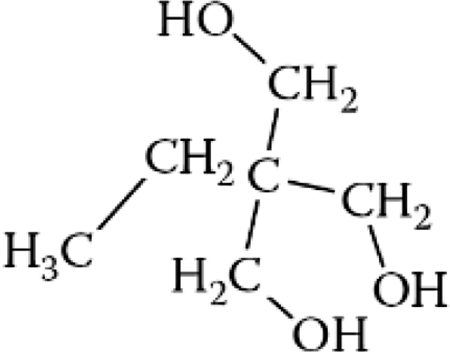
1,1,1-Trimethylolpropane.
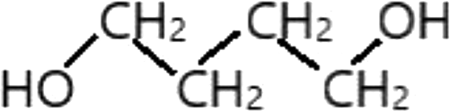
1,4-Butanediol.
Preparation of CSRP by casting technique
To study the effect of using CM on the improvement of propellant mechanical properties, we maintained the sizes, distribution, and solids amounts constant within 86% solid content (68% AP, 18% Al) in addition to the percentage and characteristics of the bonding agent (MAPO 0.3%) throughout all the propellant samples in the study. By using three different CMs consists of different combination of TMP as a triol crosslinker and BD as a chain extender (TMP:BD ratio = 1:1, 2:1, and 1:2). Twenty-seven CSRP compositions were prepared by changing the NCO/OH ratio (0.7, 0.75, and 0.8) with CM contents of 0.15, 0.3, and 0.5%. The CM was prepared separately by continual mixing of the proportional ratios of chain extender (BD) and crosslinker (TMP) in a vacuumed rotating mixer for 2 h with temperature of 50–60°C. A comparative study conducted by the preparation of propellant samples without the addition of CM (CM = 0%) to investigate the influence of both crosslinker and chain extender on the crosslinking process and propellant mechanical behavior.
Casting technique was used to prepare the propellant samples, starting with the mixing of various ingredients of HTPB prepolymer, CMs, bonding agent, and DOZ as plasticizer with the solids for 1 h using an 8 kg vacuumed stainless steel mixer followed by the addition of calculated quantity of the diisocyanate HMDI and catalyst DBTDL 0.018 % (curing catalyst: 10% solution of (DBTDL) in toluene) at 40°C, after that starting the vacuum casting into the preprepared JANAF (dumbbell-shaped) mold which left to be cured for 5 days at 60°C. The tensile stress–strain relationship was measured experimentally for each of the prepared samples using LLOYD universal test machine (AMETEK STC), for carrying out all the tensile mechanical tests. The tensile test was performed for a minimum of three trials of each prepared sample and the average value of the results obtained was reported. The test was carried out under normal temperature. The cross-head speed was 50 mm/min with 0.5 accuracy.
Results and discussion
Twenty-seven propellant experiments were produced using various CMs to analyze the dependency of the mechanical properties on network crosslinking additives. CMs contain selected combinations of the chain extender BD and triol crosslinker TMP while varying the total CM content from 0% to 0.5% over curing ratios (NCO/OH) 0.7, 0.75, and 0.8. All of the prepared propellant samples were studied for their mechanical properties such as tensile strength and elongation. The results obtained are presented in Tables 1 to 4.
Mechanical properties of propellant samples with different CM at NCO/OH = 0.7.
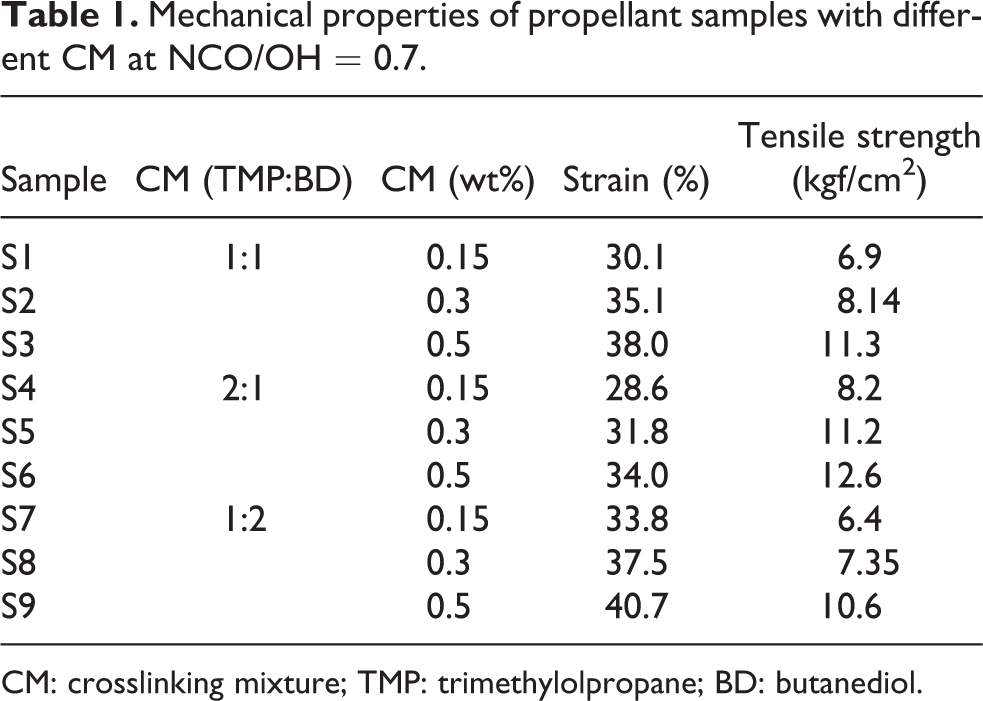
CM: crosslinking mixture; TMP: trimethylolpropane; BD: butanediol.
Mechanical properties of propellant samples with different CM at NCO/OH = 0.75.
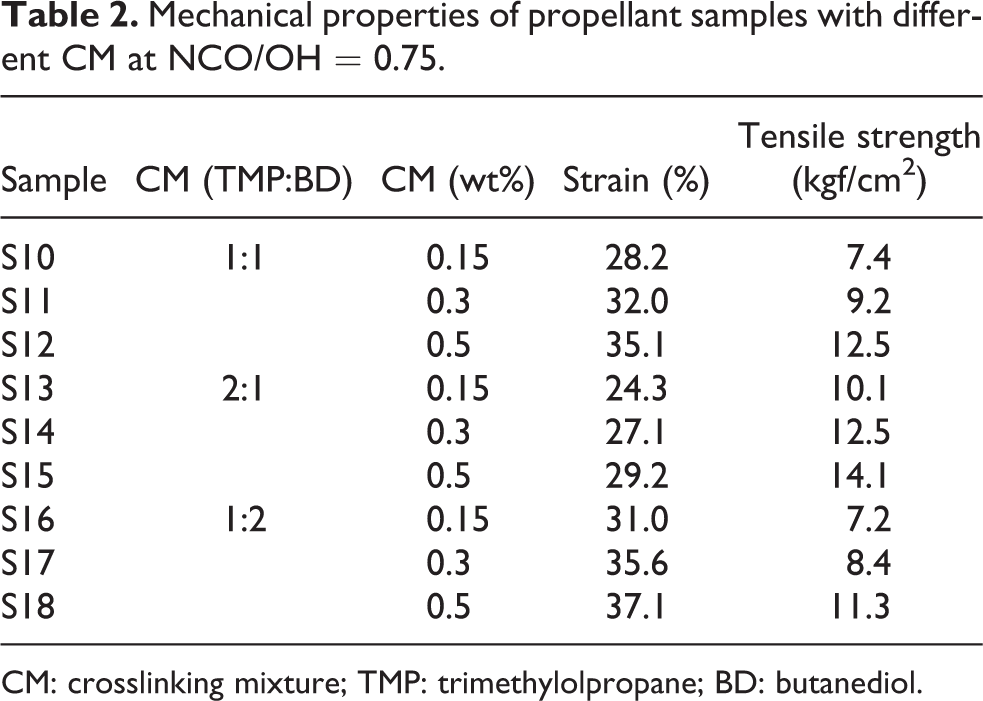
CM: crosslinking mixture; TMP: trimethylolpropane; BD: butanediol.
Mechanical properties of propellant samples with different CM at NCO/OH = 0.8.
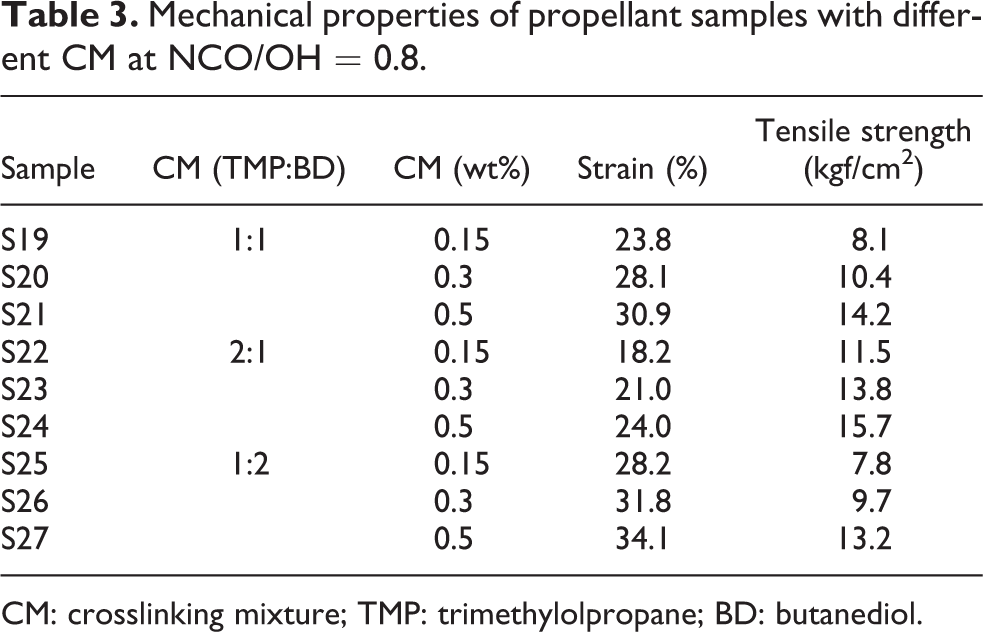
CM: crosslinking mixture; TMP: trimethylolpropane; BD: butanediol.
Binder compositions and mechanical properties of propellants without CM at different NCO/OH.
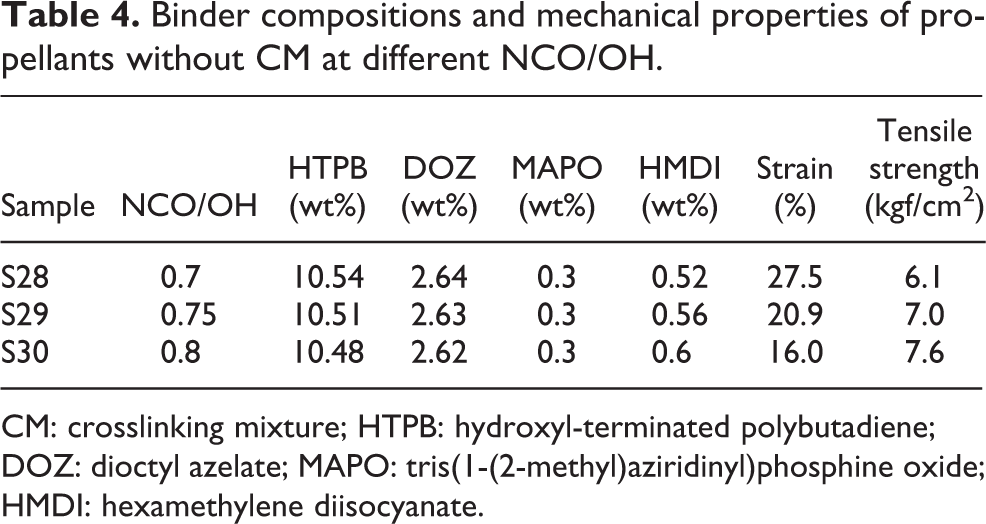
CM: crosslinking mixture; HTPB: hydroxyl-terminated polybutadiene; DOZ: dioctyl azelate; MAPO: tris(1-(2-methyl)aziridinyl)phosphine oxide; HMDI: hexamethylene diisocyanate.
Effect of changing NCO/OH ratio on the mechanical properties of CSRPs containing CM
Figures 3 to 5 illustrate the effect of the crosslinking additives on the tensile strength and elongation which determined as a function of curing ratio NCO/OH (R value) at different triol to diol ratios (TMP:BD = 1:1, 2:1, and 1:2), respectively. The triol/diol ratio was maintained constant for each figure to evaluate the impact of R value on the tensile properties.
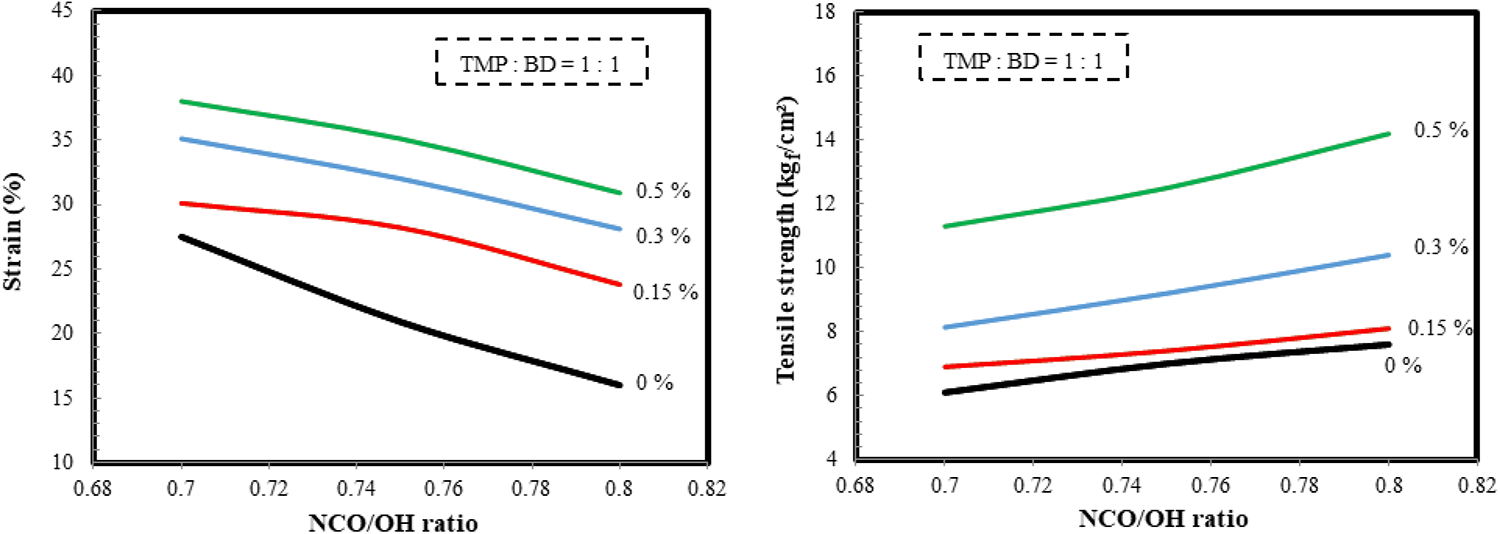
Variation of the tensile strength and strain with different curing ratio for CM ( 1:1). CM: crosslinking mixture.
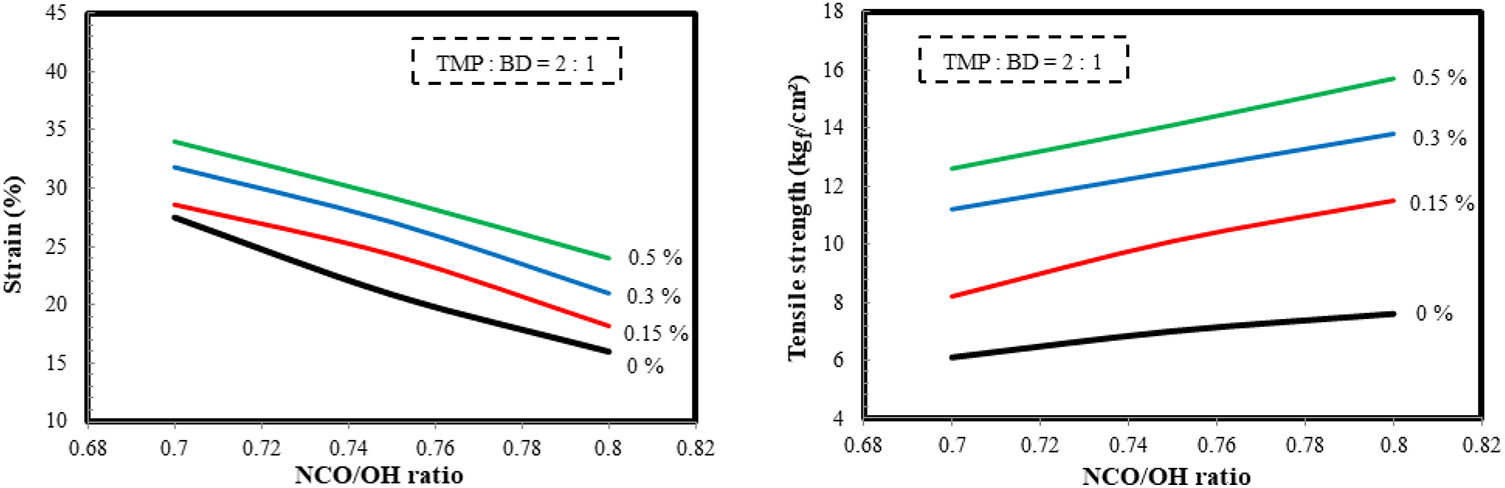
Variation of the tensile strength and strain with different curing ratio for CM (2:1). CM: crosslinking mixture.
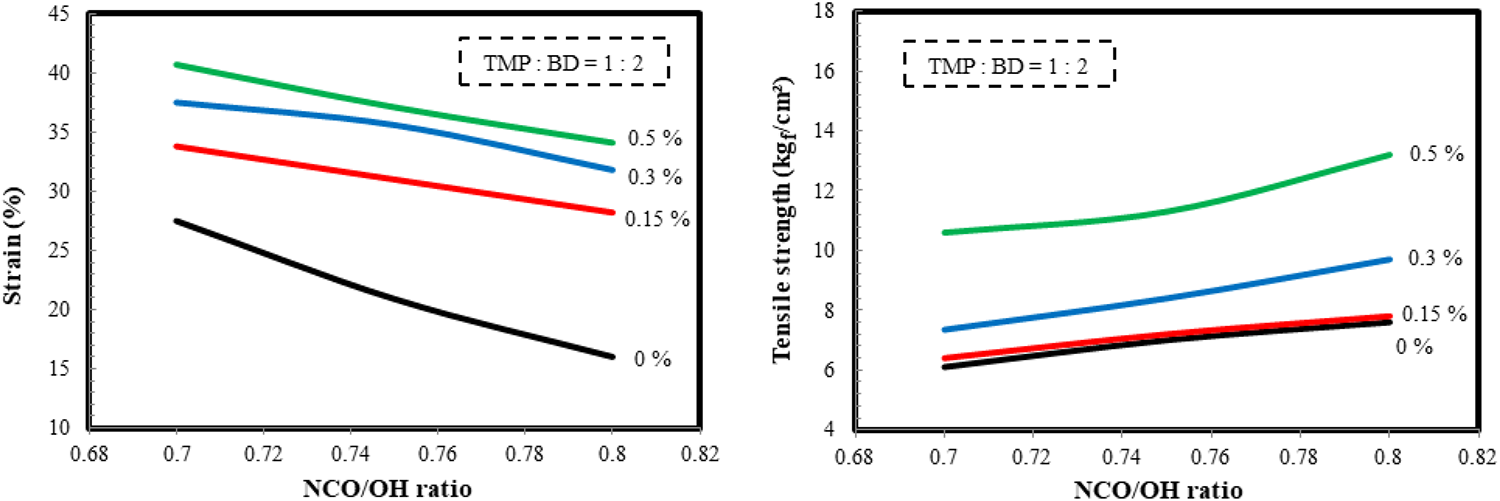
Variation of the tensile strength and strain with different curing ratio for CM (1:2). CM: crosslinking mixture.
A regular rise in the strength and a reduction in the strain were observed with increasing NCO/OH for all the various triol to diol mixtures because of the important role that NCO/OH plays in generating the crosslinking and binding between chains of the binder polymeric matrix. Mechanical properties were sensitive to triol/diol ratio and CM content.
Using CMs leads to a wide range of mechanical characteristics of the propellant compared to propellants without those additives over various NCO/OH ratios. For CM (1:1), the tensile strength increased and varied from 6.9 kgf/cm2 (CM 0.15%) to 14.2 kgf/cm2 (CM 0.5%) instead of 6.1–7.6 kgf/cm2 with CM 0%, while the strain was in the range of 23.8% (CM 0.15%) to 38.0% (CM 0.5%) instead of 16.0–27.5% with CM 0%.
The same trend observed in CM (2:1) to give strength range of 8.2 kgf/cm2 (CM 0.15%) to 15.7 kgf/cm2 (CM 0.5%) and strain of 18.2% (CM 0.15%) to 34.0% (CM 0.5%), while CM (1:2) shows strength of 6.4 kgf/cm2 (CM 0.15%) to 13.2 kgf/cm2 (CM 0.5%) and strain of 28.2% (CM 0.15%) to 40.7% (CM 0.5%).
Effect of CM weight percentage on the mechanical properties of CSRPs
Figures 6 to 8 demonstrate the tensile strength and strain variation with CM content (CM%) at curing ratio NCO/OH 0.7, 0.75, and 0.8, respectively. Generally, using CM increases both tensile strength and strain compared to samples prepared without CMs over the whole range of R value because of the higher degree of crosslinking induced by the triol and more strain capability achieved by the chain extender; for that reason, both strength and elongation are improved as CM content increases. With the R value of 0.7, for the propellant samples containing CM with TMP:BD = 2:1, with the increase in CM content, the rising rate in tensile strength is increasing giving the highest strength of 12.6 kgf/cm2 at 0.5% CM content compared to the other mixtures added due to its higher triol (TMP) ratio which causes more crosslinks between chains and three dimension polymeric matrix.
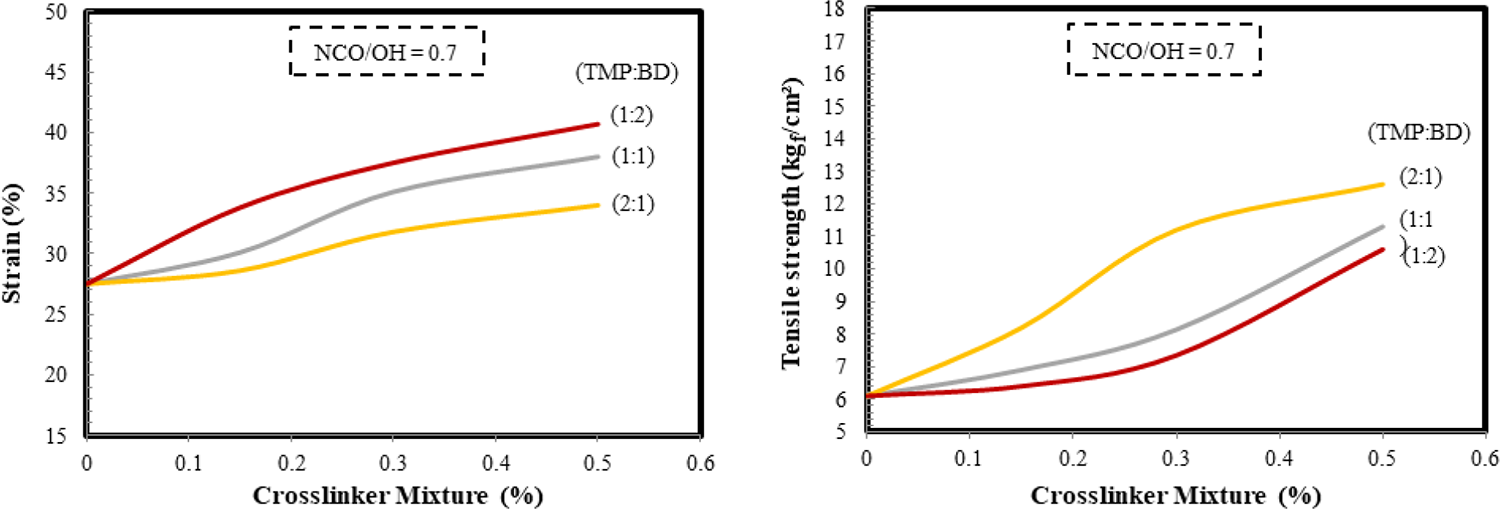
Variation of the tensile strength and strain with CM content at NCO/OH = 0.7. CM: crosslinking mixture.
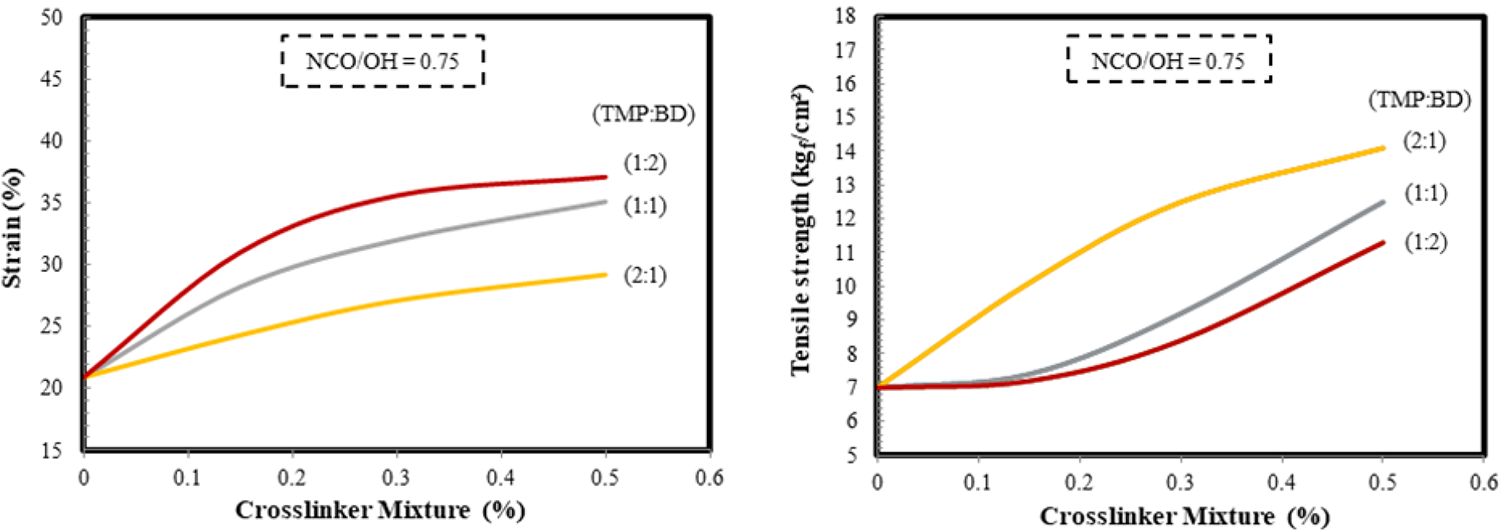
Variation of the tensile strength and strain with CM content at NCO/OH = 0.75. CM: crosslinking mixture.
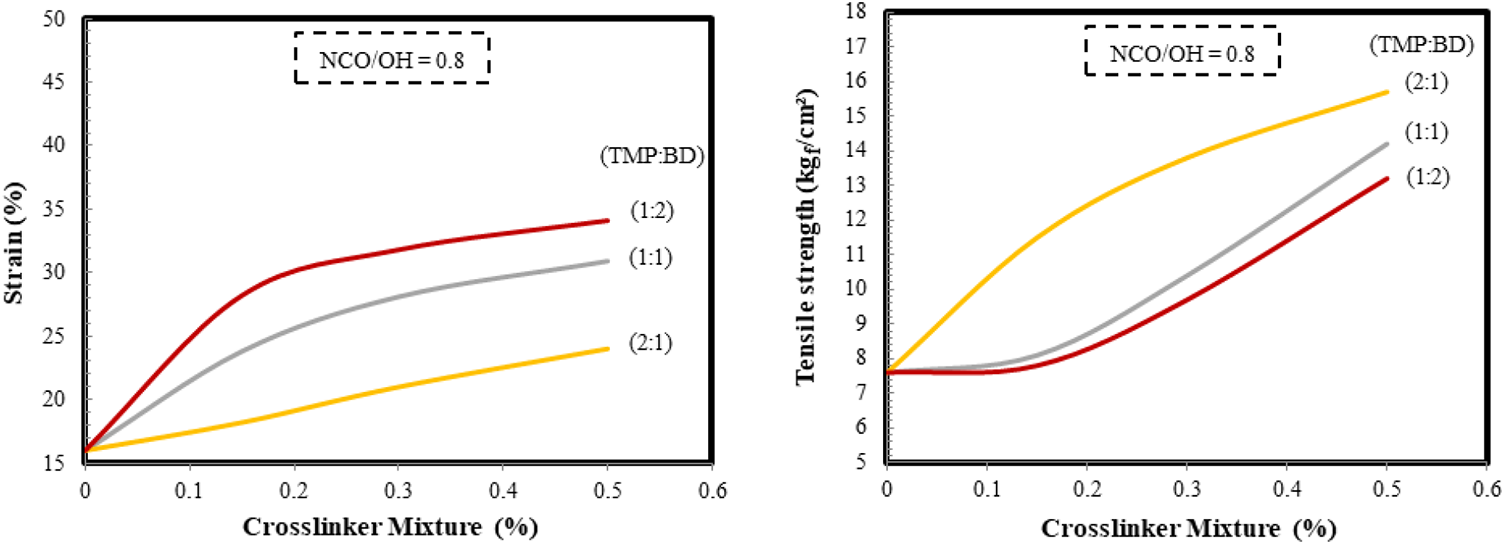
Variation of the tensile strength and strain with CM content at NCO/OH = 0.8. CM: crosslinking mixture.
While CM (1:2) shows almost the same trend as the CM content increases, this time the rate of increase of strain is increasing resulting in highest strain of 40.7% at 0.5% CM content as a result of the high chain extender (BD) content in the mixture leading to higher elongation capabilities of the extended chains; at the same time, CM (1:1) achieves higher strength than (1:2) mixture with moderately higher strain than samples containing (2:1) mixture.
At R value of 0.75 and 0.8, an expected increase was observed in the tensile strength following the same behavior regarding triol/diol ratios and CM content. As a result for both NCO/OH ratios, samples containing 0.5% CM (2:1) have the highest strength of 14.1 kgf/cm2 and 15.7 kgf/cm2, respectively, while samples with 0.5% CM (1:2) have the highest strain of 37.1 and 34.1%, respectively, and with the same trend, samples containing CM (1:1) show moderate mechanical properties among propellants based on the other two mixtures.
Effect of TMP:BD ratio on the mechanical properties of CSRPs
The variation of mechanical properties with triol/diol ratio in terms of TMP wt% at different NCO/OH is illustrated in Figures 9 to 11. It was observed from the figures that the tensile strength is low at the beginning due to the low triol content while higher elongation was obtained due to the high percentage of the chain extender diol, then strength starts to increase as a result of increasing triol content at the expense of diol leading to a decrease in the strain.
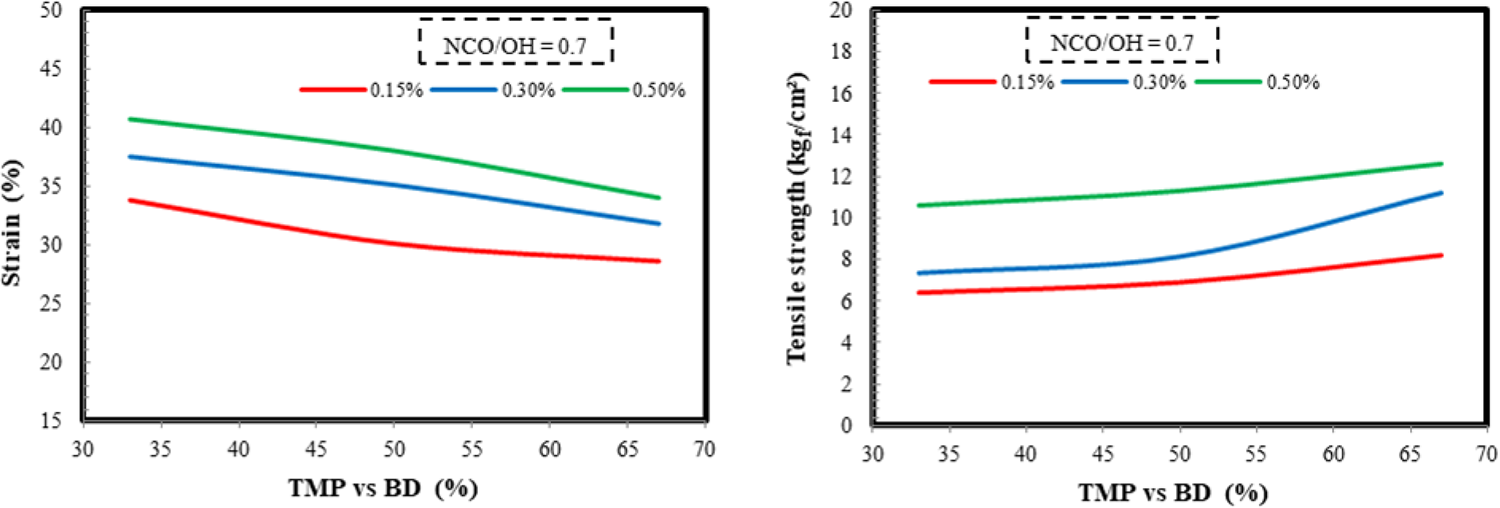
Variation of the tensile strength and strain with CM triol % at NCO/OH = 0.7. CM: crosslinking mixture.
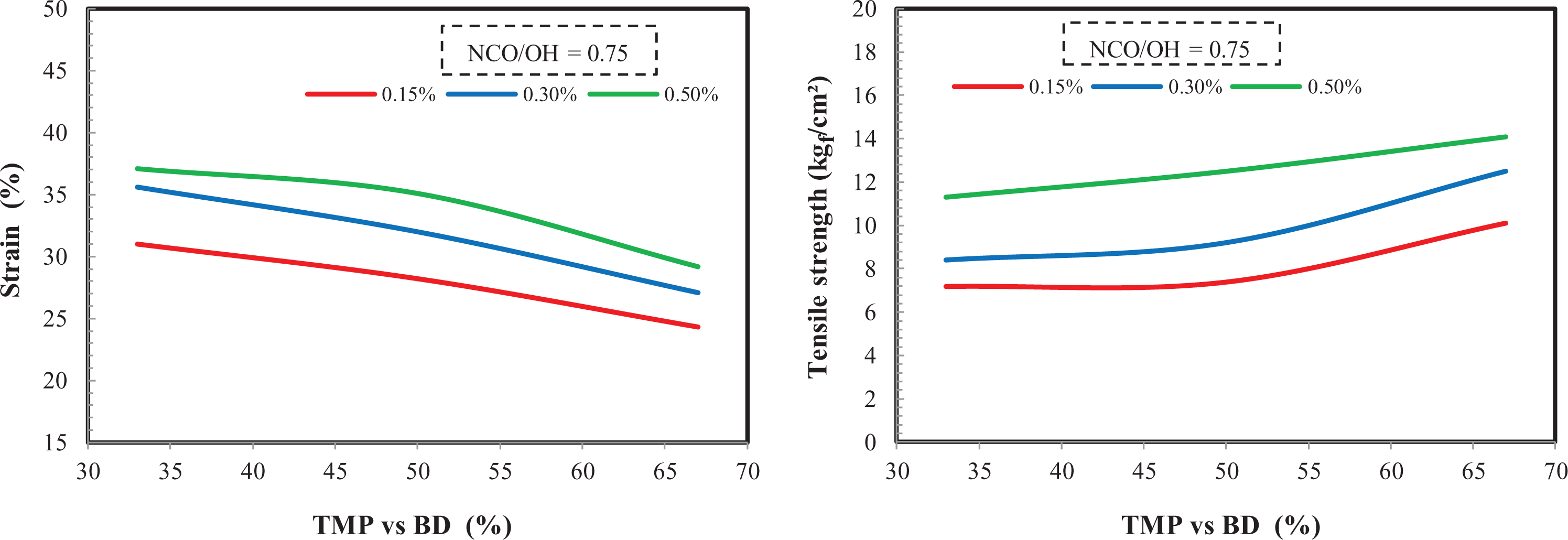
Variation of the tensile strength and strain with CM triol % at NCO/OH = 0.75. CM: crosslinking mixture.
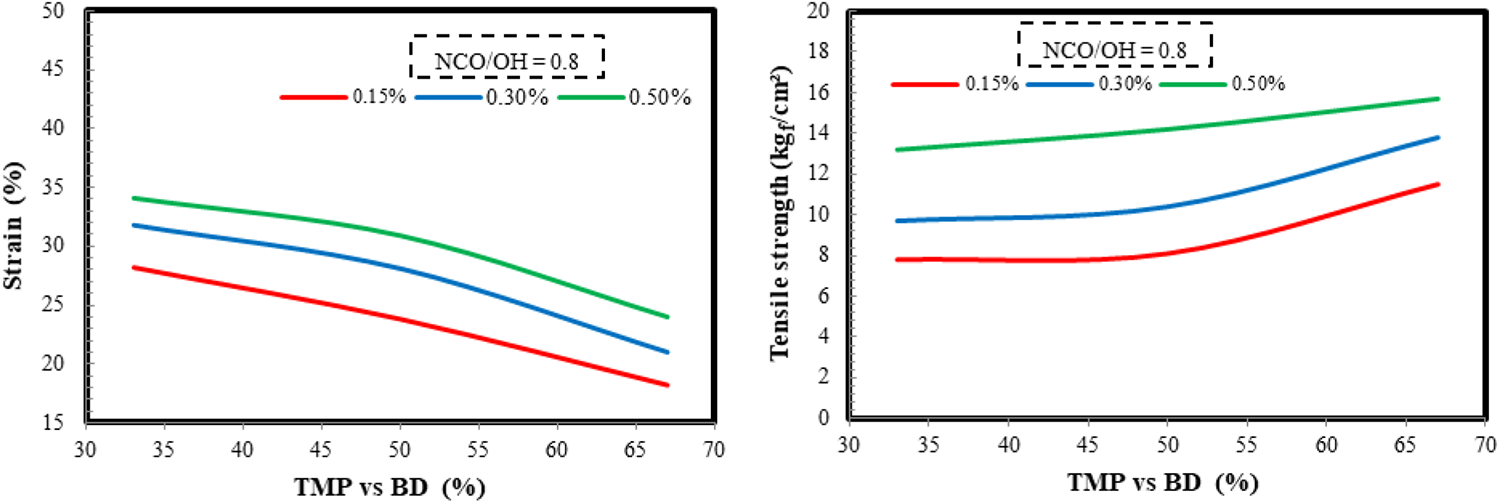
Variation of the tensile strength and strain with CM triol % at NCO/OH = 0.8. CM: crosslinking mixture.
The propellant surface at higher triol/diol ratios was shown to be more brittle and the strain results obtained were the minimum with maximum stress resulting from the high triol/diol ratio (2:1) over all the different CM percentages (0.15, 0.3, and 0.5%). The reason for this result was that with the increase of triol/diol ratio, the propellant gets harder resulting more CLD with high stiffness in the propellant, and at the same time, the strain capability is remarkably reduced at higher levels of TMP.
Effect of both CM wt% and TMP:BD ratio on the mechanical properties of CSRPs
The overall stress–strain results for the propellants of CMs of various triol/diol ratios with wt% of 0, 0.15, 0.3, and 0.5% at three different constant NCO/OH values (0.7, 0.75, and 0.8) are shown in Figures 12 to 14, respectively. Form the figures it is clear that, generally in all cases of triol/diol ratios over all the CM percentages, both stress and strain were increased in the direction of the CM content increase, and all mechanical properties were enhanced after the addition of CM compared to propellants with no crosslinking additives. Compared to CM (1:1) and because of the equal content of the crosslinker (TMP) and the chain extender (BD), propellants with CM (2:1) showed higher strength with lower elongation, while on the other side CM (1:2) showed the opposite behavior.
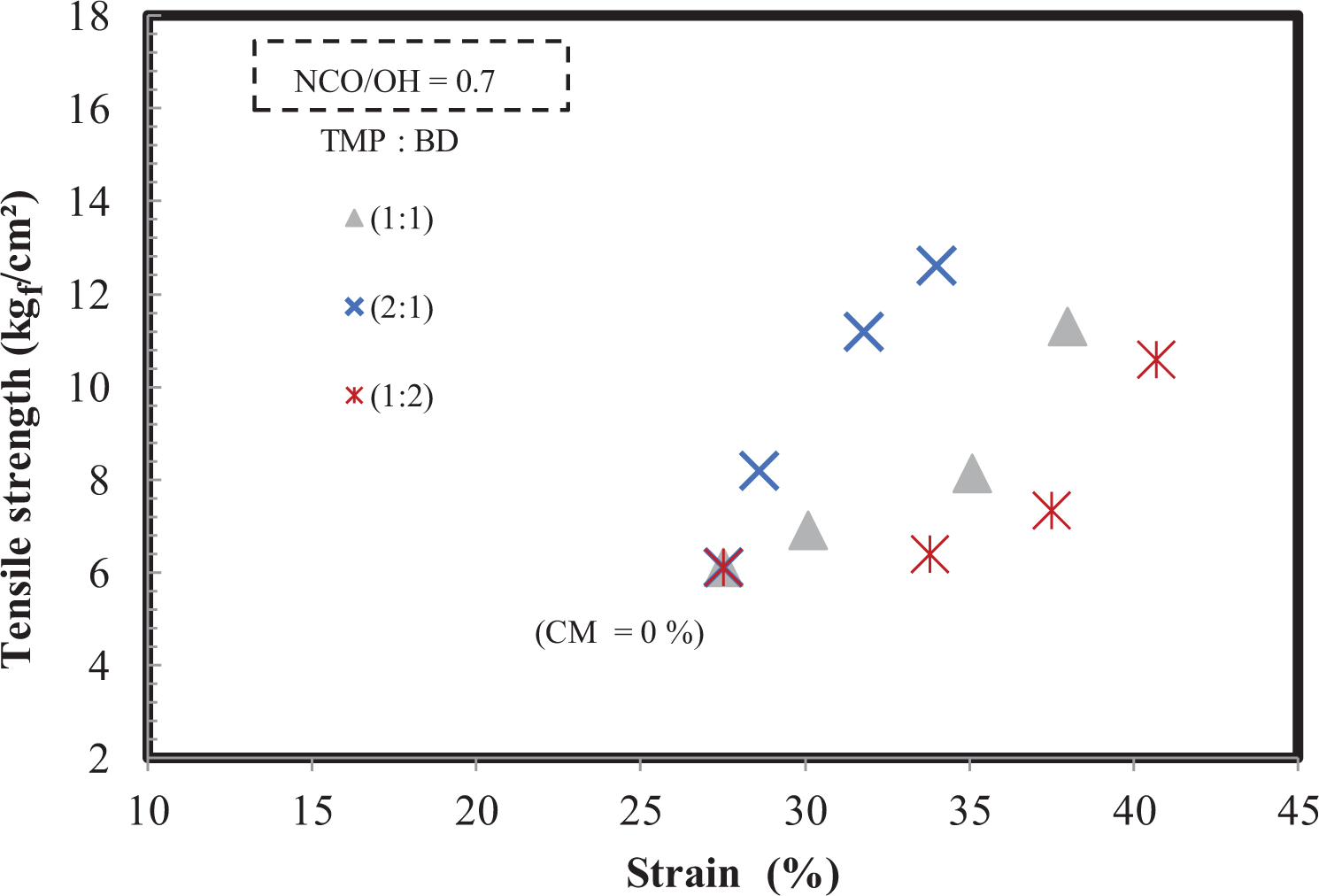
Strength–strain relation of all propellant samples prepared at NCO/OH = 0.7.
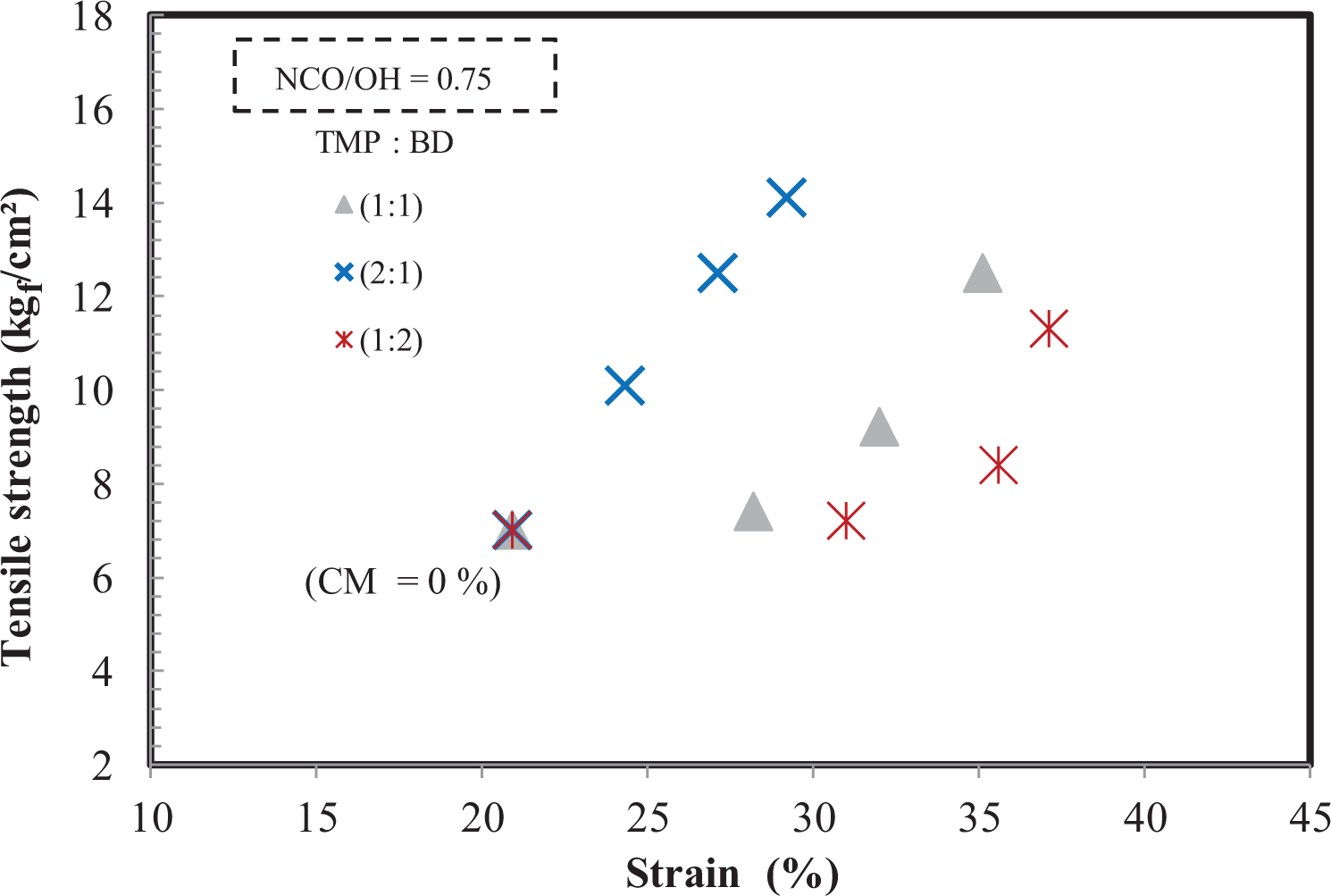
Strength–strain relation of all propellant samples prepared at NCO/OH = 0.75.
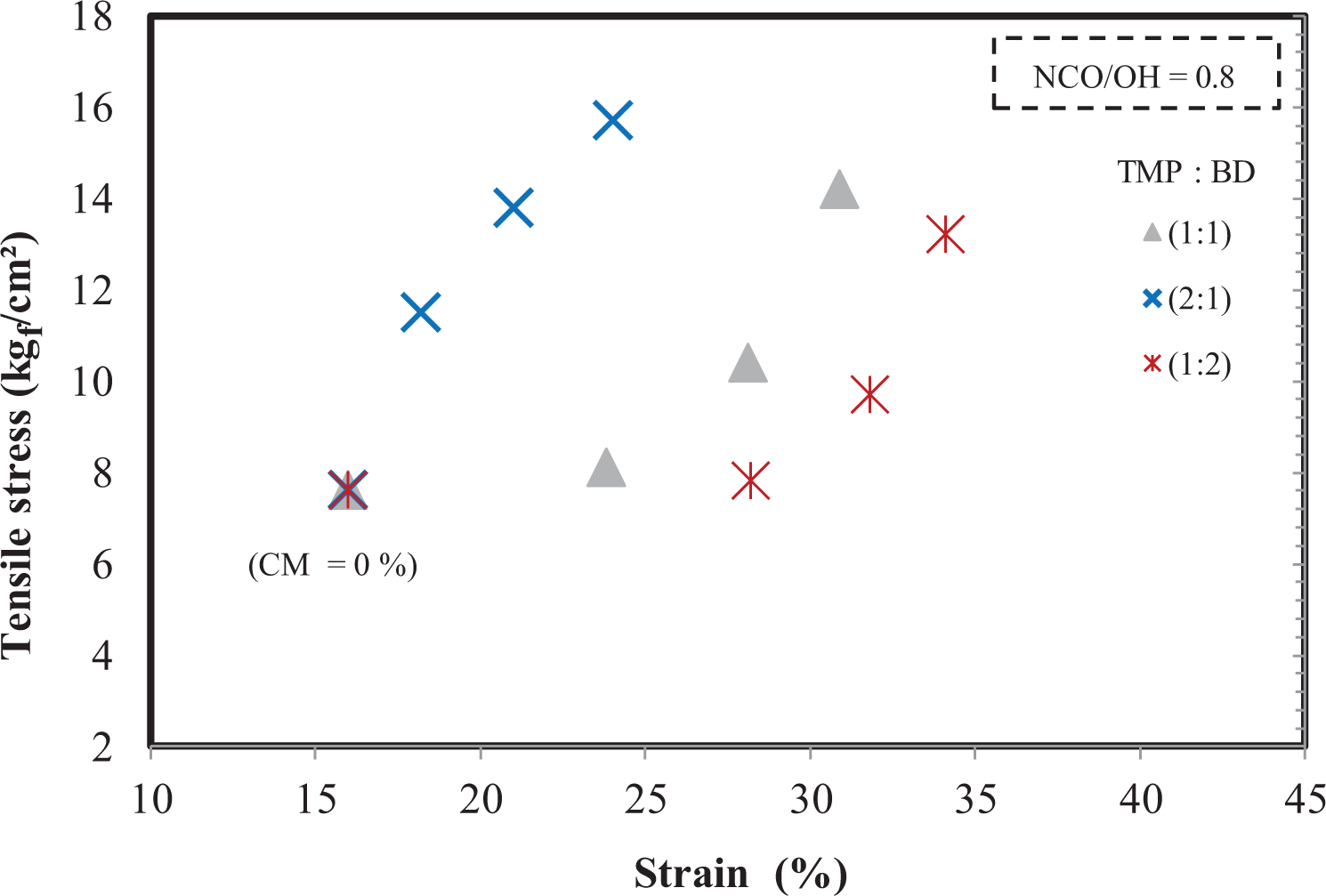
Strength–strain relation of all propellant samples prepared at NCO/OH = 0.8.
Those diagrams show us a full image of how the mechanical properties of the propellant at various curing ratios have been improved by the addition of CMs with different triol/diol ratios over various mixture percentages.
Conclusions
Both tensile strength and elongation were sensitive to the existence of triol crosslinker and chain extender. Overall mechanical characteristics were enhanced by the addition of CMs. The influence of TMP on the strength was clear as observed in CM (2:1) while the strain capabilities was affected by the presence of BD in the CM which was noted in CM (1:2). The inclusion of both TMP and BD in the propellant composition gives the binder matrix a balanced structure between soft and hard segments. The desired mechanical behavior needs the practical balance between crosslinker and chain extender through the variation of curing ratio NCO/OH. The different ratios of NCO/OH used enabled us to obtain a wide range of mechanical properties by using different CM content (0.15, 0.3, and 0.5%). Propellant samples with NCO/OH = 0.7 yield tensile strength of the order 6.4–12.6 kgf/cm2 and strain of 28.6–40.7% for different content and TMP:BD ratio of the CM. While NCO/OH = 0.75 imparts expected higher strength in the range of 7.2–14.1 kgf/cm2 and lower strain of 24.3–37.1%. Finally with the same trend as NCO/OH increases, samples with NCO/OH = 0.8 show strength of 7.8–15.7 kgf/cm2 and for the strain 18.2–34.1%. Consequently, this wide range of mechanical characteristics achieved from this study is so helpful for making the decision regarding the kind of application will be performed to the grain and which scale could be suitable for the propellant formulation by the diversity of results provided from this investigation.
Footnotes
Declaration of conflicting interests
The author(s) declared no potential conflicts of interest with respect to the research, authorship, and/or publication of this article.
Funding
The author(s) received no financial support for the research, authorship, and/or publication of this article.
