







Abstract
Modification of the tensile, thermomechanical, morphological and Fourier transform infrared properties of sulphur vulcanised ethylene propylene diene monomer (EPDM) nanocomposites filled with 0, 10, 30 and 100 parts per hundred rubber (phr) of halloysite nanotubes (HNTs) by electron beam (EB) irradiation in the presence of cross-link promoter trimethylolpropane triacrylate has been studied. The EB irradiation dosages of 0, 50, 100 and 150 kGy were applied on the EPDM/HNT nanocomposites after sulphur cross-linking. The tensile strength of the EPDM/HNT nanocomposites at low (<30 phr) and high (100 phr) HNT loadings increased and decreased respectively while the elongation at break decreased after applying EB irradiation.
Keywords
Introduction
Extensive attention has been given to polymer clay nanocomposites in recent years due to their strong mechanical properties, thermal resistance, barrier properties and other useful attributes.1–8 Halloysite nanotubes (HNTs) are the nanotubular form of a clay mineral, which recently has been used as reinforcing nanofiller for increasing the mechanical and thermal properties of some polymer composites.9–15 Halloysites are a kind of naturally occurring aluminosilicate [Al2Si2O5(OH)4.H2O, 1∶1] composed of tetrahedral (Si–O) and octahedral (Al–OH) sheets identical to kaolinite, except that halloysite has a generally higher water content in the interlayer spaces, which make it sensitive to the irradiation of electron beams (EBs), especially during observation of tubes under an electron microscope. HNTs have very good dispersibility even at high loading [>30 parts per hundred rubber (phr)] due to their tubular shape, unique crystal structure and the presence of silica and hydroxyl functional groups at the surface and inside the tubes respectively.16, 17
Conventional cross-linking systems such as sulphur and peroxide cross-linking have been used broadly to prepare vulcanisates of rubber/filler nanocomposites. However, to overcome some of the problems of conventional cross-linking, such as low dispersal ability of curatives in the matrix, Vijayabaskar and Bhowmick18 have developed a ‘mixed cross-linking’ system using EB irradiation as one of the cross-linkers in a sulphur vulcanised nitrile rubber network. A dual cross-link system has also been used by Nunez et al.19 to provide an improvement to control the final chemical, physical and structural characteristics of the resulting polymer to prepare polymeric materials for ophthalmic lenses. Polymerisable nanogels with a dual cross-linking structure (physically and chemically cross-linked) were also prepared by Morimoto et al.20
EB irradiation is a rapid, safe and clean manufacturing technology that utilises highly energetic electrons at controlled doses to form a three-dimensional network through polymerisation and cross-linking of the polymer materials. Cross-linking and scissioning of polymer chains are two competing factors that are predominant at a certain time during the EB irradiation.21–27
Usually, some polyfunctional monomers such as trimethylolpropane triacrylate (TMPTA) were used as cross-link promoter in such reactions to reduce the irradiation dose level, which helps to reduce deterioration of the base polymer with optimum properties and to reduce the scissioning effect of polymer chains. Trimethylolpropane triacrylate is a multifunctional vinyl monomer which is highly reactive towards free radicals.28 These polyfunctional monomers form a three-dimensional network structure with the base polymer and are generally used as radiation sensitisers, which give high yields of radicals under the influence of radiation, promote the cross-linking at a much lower radiation dose and consequently improve the properties of the base polymer.29–31
Radiation induced cross-linking can be a successful variant for conventional and chemical methods of cross-linking of elastomers.32 Ethylene propylene diene monomer (EPDM) rubber is widely used in practical applications, such as automotive industry and cables, due to its excellent properties, such as softness, elasticity and insulation.33–36 It is also used in nuclear power plants, where it is exposed to ionising irradiation for a long time. Synthesis and development of irradiation resistant polymeric materials are strongly desired since the aliphatic polymers are very sensitive to irradiation.37
It is known that some inorganic fillers can greatly improve the radiation resistance of polymers.38 Kalaivani et al.39 have studied the melt compounding of nitrile rubber and hydrogenated nitrile rubber with nanoclay in an internal mixer to investigate the intercalation/exfoliation behaviour and effects of radiating at high radiation temperatures. The effect of gamma irradiation on the thermomechanical properties of EPDM/organoclay nanocomposites was investigated by Ahmadi et al.33 Sharif et al.40 have reported an optimum EB dose of 250 kGy for cross-linking of natural rubber/clay nanocomposites, determined by gel content and tensile strength measurements for radiation cross-linking of natural rubber/clay nanocomposites, which were prepared by melt mixing and EB irradiation.
Regarding the curing chemistry, the main idea of the current study is to use a dual cross-linking mechanism in a way to apply EB irradiation on nanocomposites, which were first cured by sulphur. This mechanism is expected to increase the dispersion of curatives by applying the EB irradiation in the presence of TMPTA and increasing the cross-linking of nanocomposites by the formation of C–C bonds with the help of EB irradiation to cross-link and immobilise those unreacted free EPDM chains. However, Vallat et al. proposed that dual cross-linking, if the polymer is first cured by sulphur, may lead to an inhomogeneous structure as sulphur cross-linking will produce S–S chemical bonds, which are weaker compared to C–C bonds produced by EB irradiation.41
The properties of sulphur vulcanised EPDM/HNT nanocomposites have been reported in our earlier communications.9,17,42–44 Modification of these nanocomposites by EB irradiation and investigations of the effect of EB irradiation from 0 to 150 kGy on tensile, thermomechanical properties, swelling and morphology of the sulphur vulcanised EPDM/HNT nanocomposites in the presence of TMPTA as cross-linking promoter were studied in the present work.
Experiments
Materials
The HNTs (ultrafine) were supplied by Imerys Tableware Asia Limited, New Zealand. After 24 h drying at 80°C in an oven, the density of HNTs was found to be 2·136 g cm−3, measured by a Miromeritices Accupyc 1330 (gas pycnometer). The EPDM, Keltan 778Z with ethylene content of 67%, is an ethylidene norbornene (ENB) type with ENB of 4·3%, and a Mooney viscosity [ML (1+4) at 125°C] of 63 Mooney units was used as matrix. The density of EPDM, measured by a Precisa (XT220A), is 0·823 g cm−3. Zinc oxide, stearic acid, sulphur, tetramethyl thiuram disulphide (TMTD) and 2-mercapto benzothiazole (MBT) were all obtained from Bayer (M) Ltd and used as received. Trimethylolpropane triacrylate is a product of UCB Asia Pacific Ltd, Malaysia.
Preparation of samples
The mixing of the EPDM, HNTs and other compounding ingredients, such as zinc oxide, stearic acid, MBT, TMTD, sulphur and TMPTA, as shown in Table 1, was carried out using a laboratory sized two-roll mill (160×320 mm), model XK-160, at room temperature for 20 min. The cure time t90 of EPDM compounds was determined at 150°C using a Monsanto moving die rheometer (MDR 2000). The compounds were subsequently compression moulded at 150°C, based on respective t90 values.
Compositions of EPDM/HNT nanocomposites
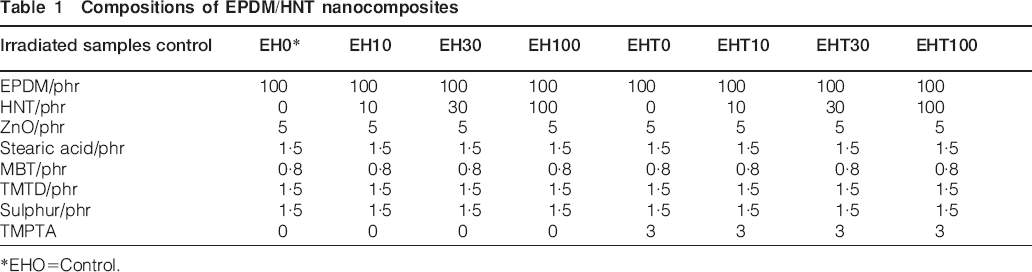
*EHO = Control.
Irradiation
The moulded sheets were irradiated using a 3 MeV EB accelerator NHV EPS-3000 at a dose range of 0–150 kGy. The acceleration energy, beam current and dose rate were 2 MeV, 2 mA and 50 kGy per pass respectively. Classification of the samples based on the materials used in the composition, HNT loading and applied EB irradiation dose was used to classify the prepared samples. For example, in the EHT10-100 sample, E, H and T stand for EPDM, HNT and TMPTA respectively at 10 phr HNT loading and irradiation dose of 100 kGy.
Measurements
Tensile properties
Compression moulded sheets having a thickness of ∼2 mm were punched to prepare the dumb bell shaped specimens for tensile testing. The tensile test was conducted following ISO 37 using an Instron 3366 universal tensile testing machine at room temperature (25±2°C) and at a crosshead speed of 500 mm min−1. Tensile modulus at 100% elongation (M100), tensile strength and elongation at break Eb were recorded.
Scanning electron microscopy
The morphologies of tensile fracture surfaces of EPDM/HNT nanocomposites were observed under a Supra-35VP field emission scanning electron microscope. Before being examined, the nanocomposites were coated with a thin layer of Pd–Au to prevent electrostatic charging during the evaluation.
Transmission electron microscopy (TEM)
Two transmission electron microscopes, i.e. Philips CM12 (100 kV acceleration voltage) and Zeiss LIBRA (120 kV), were used to study the morphology of the HNTs and their dispersion inside the EPDM matrix in order to explore the reinforcement mechanism of the irradiated nanocomposites. To observe the nanocomposites, specimens with a thickness of ∼100 nm were prepared using a cryogenic Ultra microtome Leica-Reichert supernova.
Fourier transform infrared (FTIR) spectroscopy
An FTIR model PerkinElmer System 2000 equipped with attenuated total reflectance was used to characterise the possible interactions inside the nanocomposites. Fourier transform infrared spectra were conducted over a range between 550 and 4000 cm−1 with a 0·4 cm−1 resolution. Halloysite nanotubes were ground thoroughly with KBr at approximately 1–3 wt-% and pressed into a pellet with a thickness of ∼1 mm.
Swelling resistance and cross-linking density
The swelling test was carried out in toluene in accordance with ASTM D 471-79. The cured testpieces of the compounds of dimension 30×5×2 mm were weighed using an electronic balance. The testpieces were then immersed in toluene for 72 h, and the pieces were weighed again. Calculation of the change in mass is as follows




Dynamic mechanical analysis (DMA)
The dynamic mechanical properties were measured using a dynamic mechanical analyser (PerkinElmer DMA7). The samples were subjected to cyclic tensile strain with force amplitude of 0·1 N at a frequency of 10 Hz. Storage modulus and mechanical loss factor (tan δ) were determined in the temperature range from −90 to 60°C at a heating rate of 2°C min−1.
Results and discussion
Tensile properties
The tensile properties of EPDM/HNT nanocomposites before and after EB irradiation at 50, 100 and 150 kGy are shown in Fig. 1. The M100 (Fig. 1a) and Eb (Fig. 1b) increased and decreased respectively with increasing irradiation doses from 0 to 150 kGy, while the changes in tensile strength (Fig. 1c) were complex. This was attributed to the fact that the EB irradiation of polymeric materials especially in the presence of a cross-linking promoter such as TMPTA formed a three-dimensional network of cross-linked polymer chains. It is believed that increasing the radiation dose would increase the cross-linking. The increase in cross-linking between the polymer chains led to improvements in M100, but more cross-linking formed in nanocomposites with increasing radiation doses restrained the chains from structural rearrangement during elongation and reduced the mobility of the chains and elongation. The EB irradiation of the EPDM/HNT nanocomposites increased the tensile strength of the nanocomposites at 0, 10 and 30 phr HNT loading (EHT0-50, EHT10-50 and EHT30-50), while the tensile strength of the nanocomposites at 100 phr decreased by irradiation even at 50 kGy. It has been reported by other researchers31, 33, 46 that cross-linking and degradation (through chain scission) are two competing processes occurring during the irradiation of polymeric materials. Scission yield of polymers due to EB irradiation can be reduced through blending with polyfunctional monomers, such as TMPTA. The decrease in tensile strength at 100 phr HNT loading was due to the insufficient TMPTA to promote the cross-linking and to form the expected three-dimensional network structure via grafting. The greater absorption of TMPTA to the edges of HNTs reduced the amount of TMPTA, which can participate in the formation of the cross-linked network of the EPDM chains at 100 phr loading. Owing to this reason, the scissioning of the polymer chains at high HNT loading was the predominant factor in comparison to the cross-linking of polymer chains inside the irradiated nanocomposites at low HNT loading, which increased the agglomeration of the HNTs.
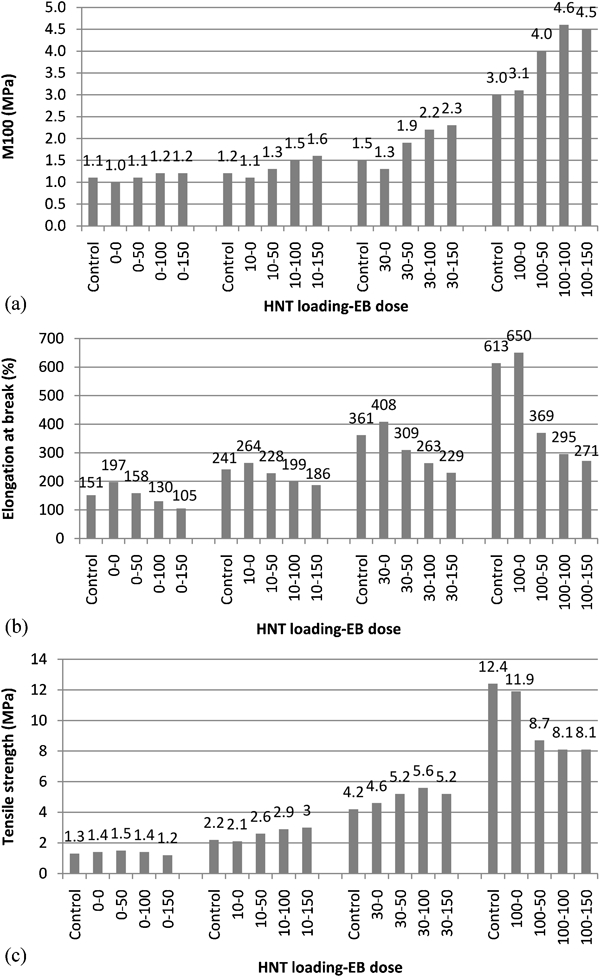
Comparison of changes in tensile properties against EB irradiation doses for EPDM/HNT nanocomposites at different HNT loadings
Swelling and cross-linking density properties
Swelling tests on filled compounds can be considered as a measure of the physical cross-linking in elastomeric compounds. The swelling percentages of the unirradiated and irradiated EPDM/HNT nanocomposites are compared in Fig. 2. By increasing the EB irradiation doses from 0 to 150 kGy, the swelling percentages of the nanocomposites were reduced continuously. This reduction is attributed to the enhancement of the cross-linking (Fig. 3) between the polymer chains due to the applied EB irradiation in the presence of TMPTA and is in good agreement with the M100 results.
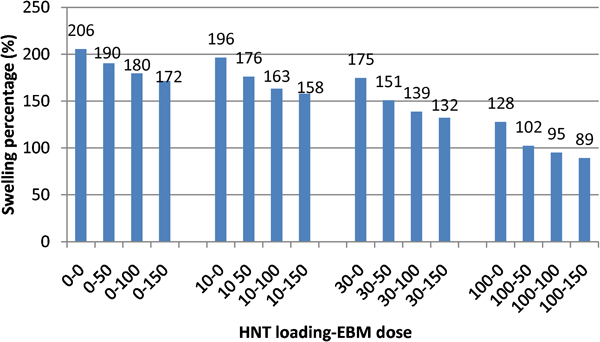
Comparison of changes in swelling resistance against EB irradiation doses for EPDM/HNT nanocomposites at different HNT loadings
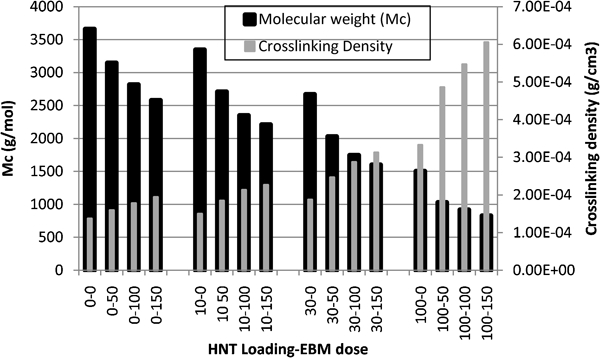
Comparison of changes in cross-linking density and molecular weight against EB irradiation doses for EPDM/HNT nanocomposites at different HNT loadings
Fourier transform infrared spectroscopy
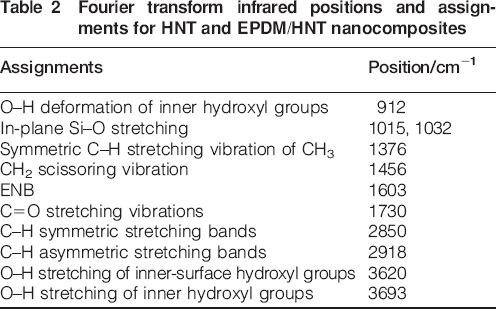
The IR spectra of unirradiated and irradiated EPDM/HNT nanocomposites reinforced with 10 phr HNT loading are given in Fig. 4 and Table 2. The peak at 912 cm−1 corresponding to absorptions of Al–OH librations of halloysite is much more complicated due to decomposition of the crystalline structure under the beam of electrons. Recently, it has been reported that the crystalline structure of the HNTs would be destroyed by encountering EB irradiation.47, 48
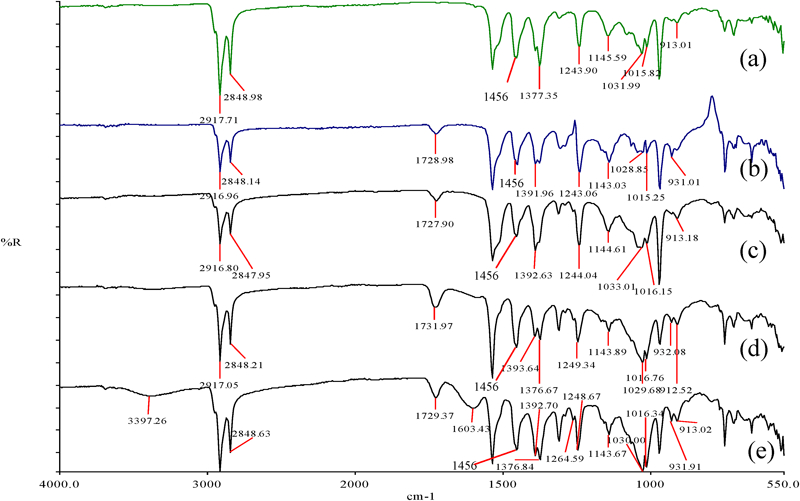
Fourier transform infrared spectra of irradiated and unirradiated EPDM/HNT nanocomposites at 10 phr of HNT loading in region of 4000–550 cm−1
Fourier transform infrared positions and assignments for HNT and EPDM/HNT nanocomposites
The intensity of the peak at 913 cm−1 (Fig. 4a) decreased after adding TMPTA and shifted to 931 cm−1 (Fig. 4b), which indicated the formation of hydrogen bonds, between TMPTA and OH groups located at the edges and inside the lumen of the HNTs. On the other hand, an increase in the intensity of spectra at 931 cm−1 with an increase in the EB irradiation dose from 50 to 150 kGy (Fig. 4c–e) was related to the interactions of OH deformation of the inner surface and edge hydroxyl groups with TMPTA from the application of EB irradiation. The increased number of more interactions between hydroxyl groups of the inner layers and edges of the HNTs in comparison to their surface Si–O groups may be related to the destruction of the crystalline structure of the HNTs from the application of EB irradiation. Decomposition of the crystal structure of HNTs led to an increase in the amount of hydroxyl groups in HNTs. The OH groups of the edges and lumen of the HNTs interacted with the H+ remaining from the EB irradiation of the EPDM in the presence of TMPTA. On the other hand, when TMPTA was added, the intensity of 1015 and 1032 cm−1 increased upon an increase in EB irradiation dose from 50 to 150 kGy. This increase is attributed to the fact that destruction of the crystalline structure of the HNT led to more Si–O groups becoming available, and this increased the intensity of peaks at 1032 and 1015 cm−1.
The band from 1728 to 1732 cm−1 (C = O stretching vibrations) remained almost constant with an increase in irradiation dose, as the carbonyl group had no active role to play in the polymerisation or cross-linking of the TMPTA molecule. However, the absorbance at 1456 cm−1 and the shoulder from 1375 to 1392 cm−1 increased continuously with increasing irradiation dose due to increases in grafting and cross-linking of TMPTA with the rubber matrix.26, 49 The increase in the broad band between 3200 and 3600 cm−1 corroborated the increase in the amount of hydroxyl groups. The peak at 1603 cm−1 is assigned to the C = C stretching vibration of ENB, which increased by increasing the EB irradiation dose from 0 to 150 kGy.50 The FTIR spectra of unirradiated and irradiated nanocomposites in Fig. 5 at 30 and 100 phr HNT loadings show that by increasing the HNT loading, the peaks at 3620 and 3693 cm−1 are related to the reappearance of absorption from O–H stretching of the inner surface hydroxyl groups and O–H stretching of the inner hydroxyl groups respectively. The appearance of these peaks confirmed that there was insufficient TMPTA to promote hydrogen bonding with the hydroxyl groups of HNTs. The peak at 913 cm−1 for unirradiated nanocomposites EHT30-0 and EHT100-0 shifted to 909 and 906 cm−1 (blue shift) respectively while it simultaneously shifted to 931 cm−1 (red shift). As mentioned before, these shifts were due to the formation of hydrogen bonds between OH groups of HNTs and TMPTA, and the simultaneous shift (red and blue) of the 913 cm−1 peak may be related to the creation of cooperative hydrogen bonding.51 The significant increase in the Eb of unirradiated nanocomposites after adding TMPTA (Fig. 1b) can be related to the formation of cooperative hydrogen bonding due to the addition of TMPTA.
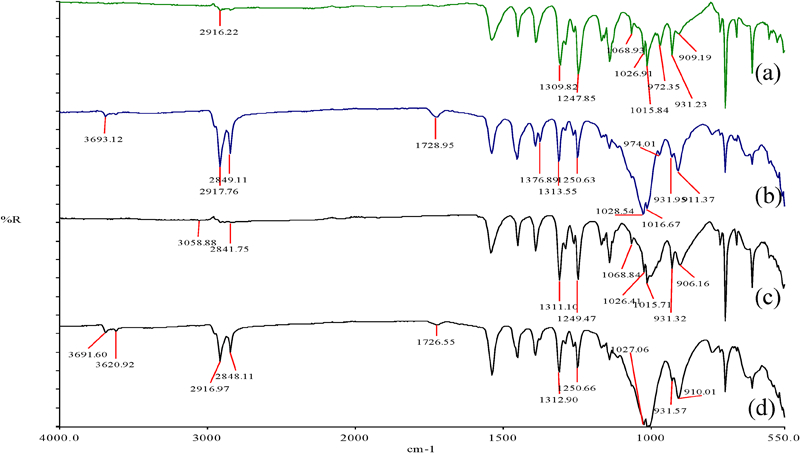
Fourier transform infrared spectra of irradiated and unirradiated EPDM/HNT nanocomposites at 10 phr of HNT loading in region of 4000–550 cm−1
Scanning electron microscopy
The concentration of tearing paths and roughness of the fractured surfaces at 10 phr HNT loading increased by increasing the irradiation dose from 50 kGy (Fig. 6a) to 100 kGy (Fig. 6b) and 150 kGy (Fig. 6c) respectively, which indicated that more cross-linking and stronger interactions occurred between the EPDM chains and also between EPDM and HNTs. As shown in Fig. 6dand e, in contrast to the fractured surface of nanocomposites at 10 phr, the roughness and concentration of tearing paths of the fractured surfaces of nanocomposite at 100 phr decreased after exposure to 50 kGy of EB irradiation. The aggregation of HNTs (circled in Fig. 6e) appeared after irradiation in comparison to Fig. 6d when there was no TMPTA present to create and distribute the new cross-linking inside the matrix. Figure 7a–c and e confirms that application of the EB irradiation enhanced the interactions between HNTs and EPDM. It is clear that fewer cavities were seen in the fractured surfaces of the nanocomposites after irradiation, and some HNTs have a blurry surface (Fig. 7d), which is a good indication of coating of HNTs by the matrix due to the application of EB irradiation. These blurry HNTs confirmed the better interaction between HNTs and EPDM after EB irradiation. The effect of scissioning on nanocomposites became dominant by increasing the HNT loading, which was confirmed by the appearance of some cavities (Fig. 7e–g). The magnified image of this structure at 100 phr HNT loading is shown in Fig. 7h.
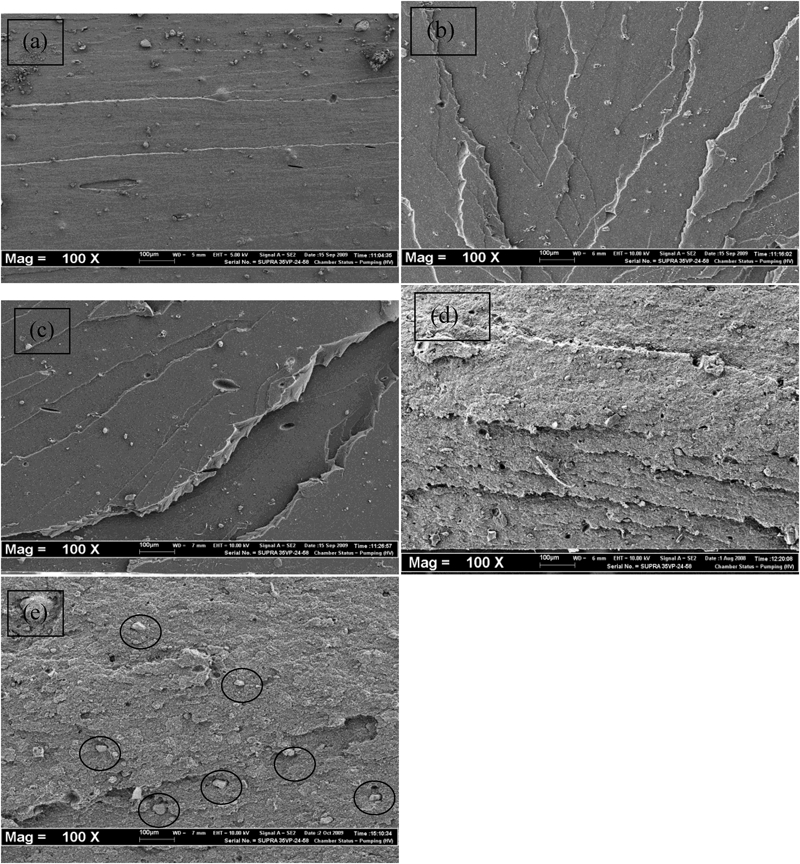
Tensile fractured surfaces of irradiated and unirradiated EPDM/HNT nanocomposites at 10 and 100 phr of HNT loading
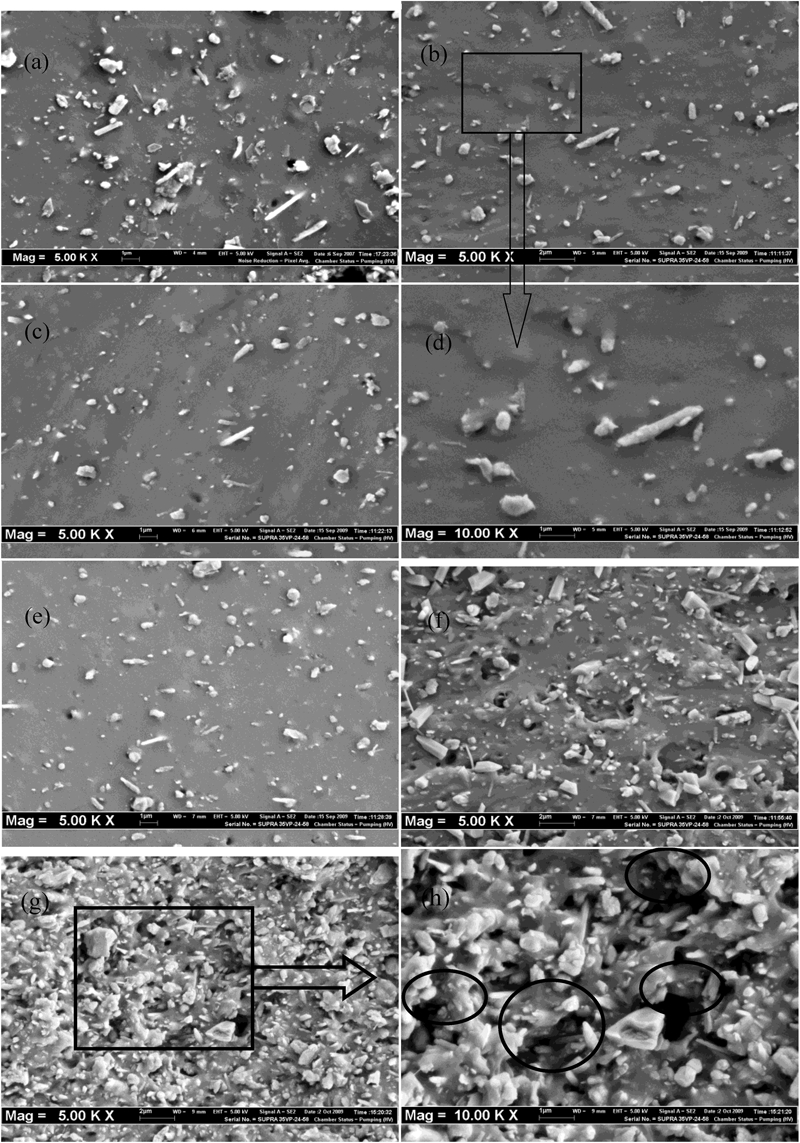
Tensile fractured surfaces of irradiated EPDM/HNT nanocomposites at 10, 30 and 100 phr of HNT loading
Transmission electron microscopy
Figure 8 compares the TEM images of nanocomposites at 10 phr HNT loading irradiated at 0, 50 and 100 kGy. The dispersion of HNTs within the EPDM was affected by increasing EB irradiation from 0 to 100 kGy, leading to a slight decomposition of the crystalline structure of HNTs. However, a clear improvement in dispersion of HNTs can be seen in Fig. 9, which demonstrates that by increasing the EB irradiation dose from 50 to 100 kGy, the decomposition of the crystalline structure of the HNTs led to better dispersion of the HNTs and separation of some stacks of aggregated HNTs, which had adhered to each other (circled in Fig. 10a). Further study of the TEM images of EHT30-100 in Fig. 10 shows that by increasing the HNT loading, HNTs showed a preference for edge to edge and edge to face interactions over aggregation with each other. These zigzag structures were the main reason for improvements in the tensile properties of nanocomposites at high HNT loading. A very good dispersion of the HNTs within the EPDM is seen in Fig. 11 with a diversity of HNTs in dimensions.
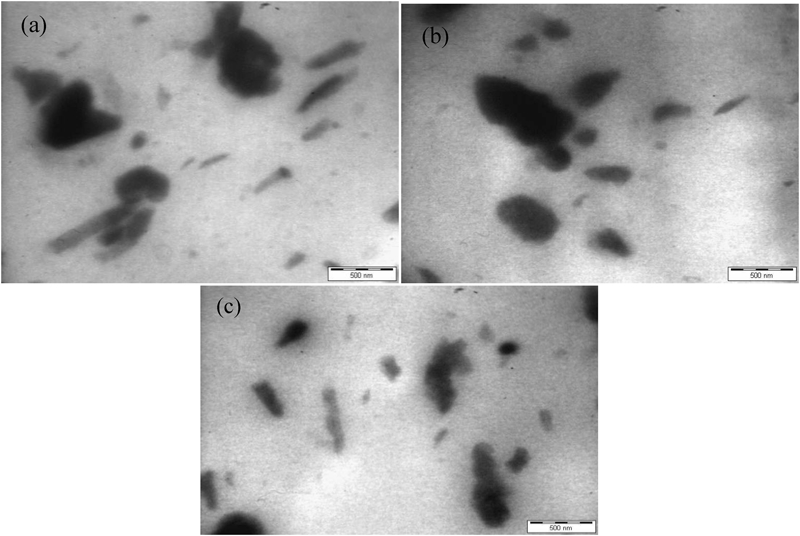
Images (TEM) of EPDM/HNT nanocomposite at 10 phr HNT loading cured by EB irradiation at a 0 kGy, b 50 kGy and c 100 kGy (magnification, ×23 000)
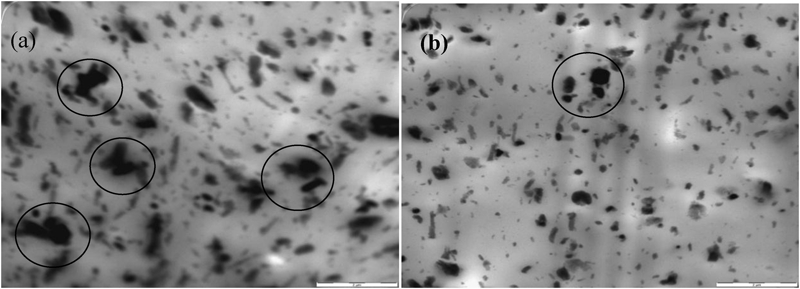
Images (TEM) of EPDM/HNT nanocomposite (magnification, ×7500)
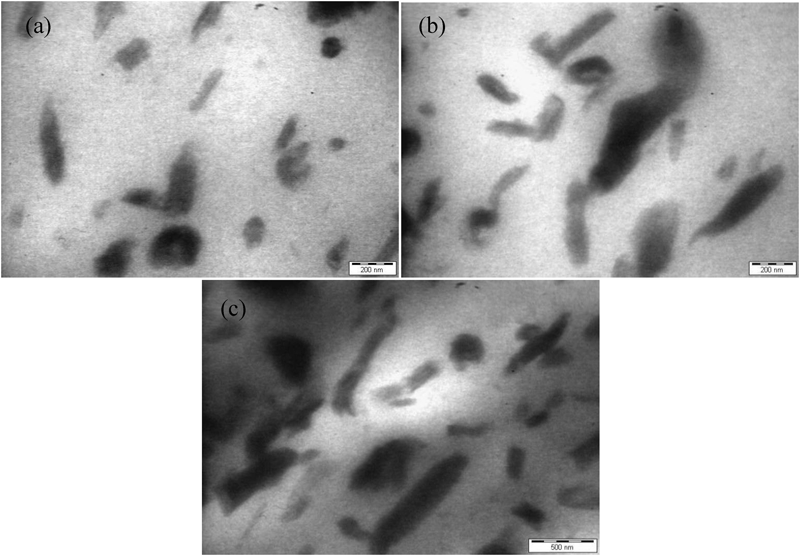
Images (TEM) of EPDM/HNT nanocomposite at 30 phr HNT loading cured by EB irradiation at 100 kGy
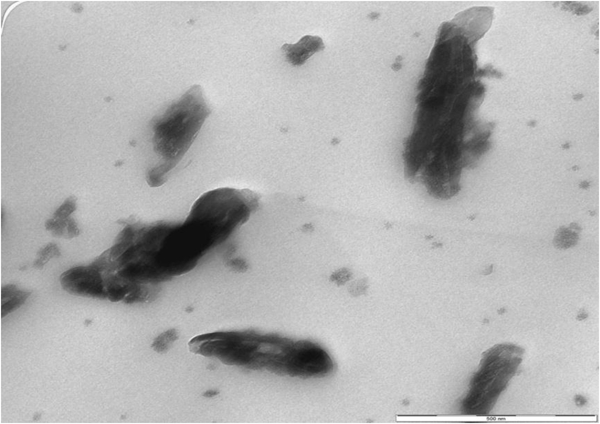
Images (TEM) of EPDM/HNT nanocomposite at 10 phr HNT loading cured by EB irradiation
Dynamic mechanical analysis
Figure 12 represents the dynamic storage modulus and tan δ of nanocomposites at 0, 10, 30 and 100 phr HNT loading respectively. The storage modulus of nanocomposites was increased by applying EB irradiation. This increase would start at the glass transition zone before the nanocomposites reached their Tg. By increasing the HNT loading, the starting temperature of this glass transition zone increased due to the fact that the interactions between EPDM chains and HNT were enhanced by increasing the HNT loading. The increase in storage modulus of the nanocomposites after irradiation by EB is in agreement with the tensile modulus results, which indicated more cross-linking within the nanocomposites after irradiation. On the other hand, the decrease in tan δ can be considered as another confirmation for increases in the interactions between HNTs and EPDM by means of EB irradiation of the nanocomposites. However, the Tg of the irradiated nanocomposites increased only at 0 and 10 phr of HNT loading due to the destruction of the EPDM network at higher HNT loading. As reported previously, reinforcement and destruction of the network are competing effects that were attributed to the changes in Tg of polymer nanocomposites.
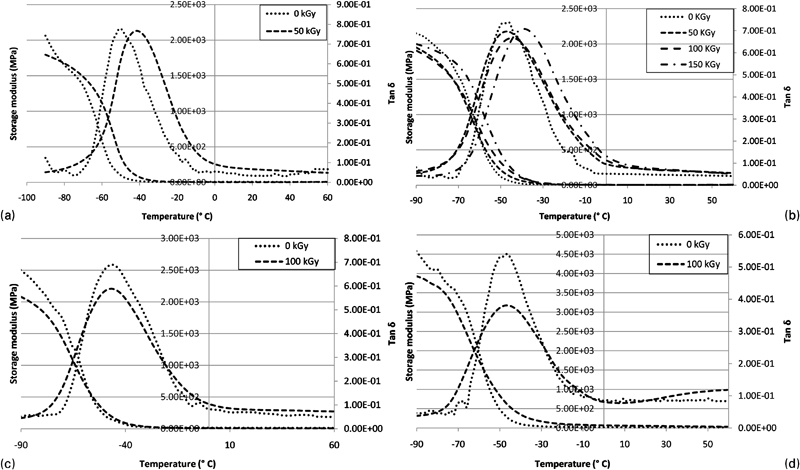
Effect of irradiation dose on dynamic storage modulus and tan δ of nanocomposites at different HNT loadings
Conclusions
The enhanced mechanical properties of irradiated EPDM/HNT nanocomposites at low HNT loading (>30 phr) were due to the better dispersion of HNTs within the EPDM after applying EB irradiation and were related to decomposition of the crystalline structure of HNTs and separation of their stacks and aggregates. However, insufficient amounts of TMPTA at high HNT loading (100 phr) led to the scissioning effect becoming dominant and decreased the tensile properties of irradiated nanocomposites. The M100 and Eb increased and decreased respectively with increases in the EB dose from 0 to 150 kGy, while the changes in tensile strength of the nanocomposites were complex. The DMA results showed that the storage modulus and tan δ of the EPDM/HNT nanocomposites increased and decreased respectively after the irradiation.
Footnotes
Acknowledgements
The authors wish to acknowledge the financial support provided by USM short term grant Ac no. 6035261 and also the USM fellowship scheme. The authors are thankful to Dr G. J. Churchman (University of Adelaide) for his very constructive comments on this work.