






Abstract
Since the Syrian conflict began in 2011, Lebanon has maintained an incomplete vision for its most recent wave of refugees, specifically through its “zero-camp” policy for displaced Syrians. However, it has provided no alternative shelter. In a country with no comprehensive affordable housing scheme, this has led displaced Syrians to seek informal ways of accessing spaces of refuge on their own and UNHCR to become the leading humanitarian organization in helping the most vulnerable refugees access shelter. The research reported in this field note, drawing on interviews, discussions, participant observation and analysis of secondary data, investigates how these displaced Syrians have accessed shelter and tenure in two upscale neighbourhoods in Beirut, navigating a delicate balance of legal, social, economic and spatial factors shared by both the displaced and local communities. The situation has been further complicated by Beirut’s historic sectarian divisions. The findings of the study provide an update on Syrian refugee self-settlement after the 2019 economic crisis in well-to-do neighbourhoods in Beirut, challenging the assumption that the shelter available to refugees in privileged areas might provide greater security in dire economic times.
I. Introduction
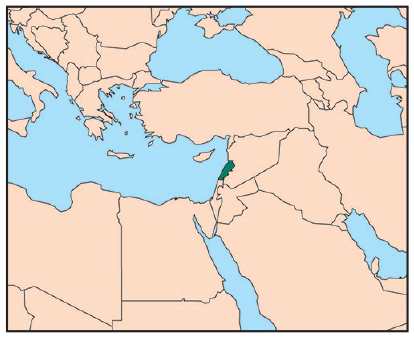
Lebanon today has the largest number of refugees per capita and per square kilometre in the world – an estimated 1.5 million Syrian refugees and 11,000 from other nations.(1) However, as Lebanon is not a signatory to the 1951 Refugee Convention, they are classified not as official refugees under international law(2) but as displaced persons or de facto refugees and migrants – categories that do not offer viable or long-term solutions. As a result, they survive in a state of permanent temporariness until they return to their homeland or are resettled elsewhere.
The situation is exacerbated by Lebanon’s “zero-camp” policy which was established shortly after the United Nations High Commissioner for Refugees (UNHCR) adopted its 2009 Policy for Refugees in Urban Areas,(3) aimed at assisting global South countries to manage large waves of refugees sheltering mostly in urban environments. This document extends humanitarian aid and protection beyond camp boundaries, which often limited where humanitarian aid reached in the past. While in the past two decades, the concept of the “urban refugee” has evolved, refugees have historically been a part of urban environments.(4)
Lebanon initiated this no-camp policy following its seven-decade failed history with Palestinian camps – a result of Lebanon’s complex sectarian political system, which impeded the formation of a unified policy towards Palestinian refugees. Sectarian tensions, exacerbated by the Palestinian camps, contributed to political paralysis and a lack of consensus on how to address the needs of this refugee population.(5) Palestinian refugees, mostly Sunni Muslims, have always been viewed with suspicion by other groups, particularly the Maronite Christians, who feared Palestinians would disrupt Lebanon’s delicate sectarian balance and political equilibrium.(6) The resulting reluctance to grant Palestinians basic civil rights perpetuated their exclusion from the formal labour market, property ownership and access to other public services, and restricted Lebanon’s ability to provide adequate infrastructure and services within the camps.(7) Consequently, Palestinian camps today, intended to be temporary structures, have evolved into permanent settlements suffering from severe overcrowding and dilapidated living conditions.(8)
Lebanon was adamant not to reproduce its failure with displaced Syrians but had no complete vision or comprehensive affordable housing scheme to provide an alternative. This led displaced Syrians to seek informal ways of accessing spaces of refuge, especially in the capital Beirut and its outskirts, which unsurprisingly were major magnets of economic opportunity. In recent years, the country has faced further struggles. The economic crisis that began in October 2019 – compounded by the COVID-19 pandemic and the August 2020 Beirut port explosion, which damaged considerable amounts of housing, approximately 77,000 apartments located across 10,000 buildings within 3 kilometres of the blast, impacting an estimated 300,000 people(9) – added immense pressures on local residents and the displaced population alike.
Syrian self-settlement has been well-documented in impoverished and low-income areas of Beirut and more broadly in Lebanon over the last decade. However, a fraction of these refugees were able to access shelters in middle- to high-income neighbourhoods in Beirut,(10) and this trend has not received the scholarly attention it deserves. This is particularly true in the aftermath of Lebanon’s 2019 economic crisis, still strongly felt five years later. More than a decade into the Syrian crisis, I question how displaced Syrian refugees in Beirut navigate informal and fatigued city systems to access shelter and secure housing tenure in these middle- and high-income neighbourhoods. What can we learn from this scenario when it comes to addressing housing precarity?
This field note is based on a qualitative case study method and mainly draws on unstructured interviews with 40 Syrian refugee households conducted in 2022 and 2023, in addition to semi-structured interviews with actors in the shelter and protection sectors of humanitarian organizations, participant observation and secondary data review. The analysis of data concludes that Syrian refugees in these upscale Beirut neighbourhoods, rather than being more securely sheltered, face a spectrum of challenges, and navigate a delicate balance of legal, social, economic, spatial and sectarian factors, particularly following the 2019 economic crisis.
II. Refugee shelter and self-settlement in beirut
The literature review explores the concept of “refugee” in countries such as Lebanon which are not signatories to the 1951 Refugee Convention, and discusses the importance of rental housing for refugee shelter, and the self-settlement of Syrian refugees in Lebanon and Beirut.
The figure of the refugee has been socially constructed by Malkki as “matter out of place”, a foreign entity that needs to be contained in order not to jeopardize “the national order of things”.(11) In Agamben’s terms,(12) the refugee figure represents a decoupling between human and citizen, and exposes the fragility of modern sovereignty. Refugees, asylum seekers and undocumented migrants continue to be represented as a dark side of globalization.(13) Refugees have been historically problematized and described in emergency terms, prompting humanitarian institutions and states to deploy mechanisms that are often, as Turner claims, “exceptional, temporary and often in legal grey zones”.(14) The largest such emergency mechanism is the refugee camp, but at present it is crucial to speak of refugee spaces beyond the confinement of the camp, as about 60 per cent of refugees and 80 per cent of internally displaced persons (IDPs) respectively and worldwide avoid camp settings, often preferring to self-settle in urban environments that act as lifelines to networks of information, services and economic opportunities.(15)
However, because Lebanon is not a signatory to the 1951 Refugee Convention, Syrians fleeing conflict to Lebanon since 2011 are not classified by the government as refugees but as migrants or de facto refugees. These categories do not offer legal protection. Consequently, as noted in the introduction, displaced Syrians in Lebanon live in a state of permanent temporariness, until they either return home or are resettled elsewhere. In order to recognize the agency of refugees in Lebanon,(16) this field note uses the term “refugee” to apply to Syrians in Lebanon fleeing the war, as a stance against the marginalization of displaced persons in countries that are not signatories to the Refugee Convention.
UNHCR defines shelter as an important survival mechanism in times of crisis or displacement, and an essential element that helps in restoring personal safety, dignity and self-sufficiency.(17) UNHCR’s Emergency Handbook outlines how persons of concern have the right to adequate shelter in order to benefit from protection from the elements, space to live with privacy, comfort and emotional security.(18) The handbook also refers to rental subsidies as a solution for shelter access. In Lebanon, many Syrian refugees live in what humanitarian agencies have termed: informal and self-constructed tented settlements, usually near agricultural lands (IS); collective shelters housing several displaced families (CS); and small shelter units (SSU), which are piecemeal units spread throughout the country.(19) This field note focuses on shelters in the SSU category and particularly on refugees who self-settle as opposed to refugees who received shelter aid from UNHCR. The process is different for each category.
Syrian refugees registered with the UN are often singled out and are particularly at risk of harassment from landlords or their representatives, who know they receive multipurpose cash for rent, food and other immediate expenses. Registered refugees also risk harassment and sometimes violence from the surrounding population, be it other refugees, migrants or locals, all of whom share an equally arduous socioeconomic reality and often dwell in equally dilapidated physical conditions but do not have the same access to humanitarian aid. Finally, the most frequently mentioned reason for changing accommodation was the high cost of rent.(20)
UN-Habitat defines tenure security as “—an agreement between an individual or group to land and residential property, which is governed and regulated by a legal and administrative framework (the legal framework includes both customary and statutory systems). Security of tenure derives from the fact that the right of access to and use of the land and property is underwritten by a known set of rules, and that this right is justiciable.” (21) This includes legal documentation, protection from arbitrary displacement and the ability to make long-term decisions regarding one’s dwelling.(22) In the context of Syrian refugees in Lebanon, housing tenure security is exceptionally complex. Their housing situation is often contingent upon informal agreements with landlords or intermediaries, lacking formal rental contracts and legal documentation.(23) Consequently, they are vulnerable to arbitrary eviction and exploitation, with their tenure security hinging on precarious and unstable social, economic and political dynamics. The Lebanese government’s failure to provide shelter for refugees pushes them into informal housing markets.(24) The 2019 economic crisis, further compounded by the Beirut port explosion in 2020, has intensified competition for affordable housing.(25)
Syrian self-settlement has been well-documented in impoverished and low-income areas of Beirut and Lebanon. Research is often focused on areas with a high concentration of refugees: in Naba’a,(26) a low-income and densely populated neighbourhood in the eastern suburbs of Beirut, and Ouzaii in the southern suburbs;(27) in Bar Elias(28) and Zahle(29) in the Bekaa valley; northern locations such as Akkar;(30) and in Saida in the south.(31) Another study explores the perceived stability (before 2019) of the Syrian settlement in Bourj Hammoud in eastern Beirut.(32)
Fawaz, Gharbieh and Harb(33) explore the discourse on refugees in international organizations and political and media channels. This portrayal often presents refugees as a passive, homogeneous group overwhelmed by crises and perceived risks.(34) Instead, the authors reveal how Syrian refugees in Lebanon have adeptly navigated urban environments.(35) These actions produce new representations of the urban spaces they inhabit, highlighting the transformative roles refugees undertake as active agents of city-making, becoming homemakers, urban navigators, producers and political actors.
Research on Syrian self-settlement throughout Lebanon examines the impact of refugee shelter on health and tenure security in Amayer (Akkar), Bar Elias (Bekaa) and Minie (north)(36) and in Halba (north).(37) Additionally, it investigates the spatial and social exclusion of Syrian refugees hosted in Saida (south).(38) Other research examines the intersection of forced displacement and planning processes in Zahle (Bekaa), providing novel insights into how rapid urbanization exacerbates the divides between refugee populations and local communities.(39) And some research challenges the contention that Syrian businesses compete with those of Lebanese, arguing instead that Syrian businesses complement Lebanese enterprises in Beirut.(40) Yassine and Al-Harithy, for instance, highlight how entrepreneurial systems of Syrian refugees act as catalysts for the host economy in the southern suburbs of Ouzaii.(41)
a. Refugee shelters, precarity and informality
Two studies are particularly relevant to the understanding of Syrian refugee self-settlement in Lebanon before the 2019 economic crisis. Fawaz(42) explored how Syrian refugees in Beirut secure housing in a market that predominantly operates through informal rental agreements. Focusing on a case study of Naba’a, a low-income neighbourhood in the eastern suburbs of Beirut, Fawaz contrasts the formal humanitarian approach, and highlights the informal practices that Syrian refugees employ to secure housing including accessing information, negotiating forms of contracts or agreements and ensuring a level of security in their living arrangements. Fawaz notes the resilience and active contributions of refugees in shaping their urban environment and emphasizes the importance of recognizing the informal mechanisms that govern the lives of refugees. Fawaz concludes by advocating for integrating these insights into urban planning and policy-making to better address the needs of the displaced population.
Sanyal’s research(43) explores the informal settlements of Syrian refugees in Lebanon, emphasizing the complex assemblage of factors – including humanitarian, hospitality, security, economic and political considerations – that lead to the formation and management of refugee informal settlements. Through a case study of Bar Elias in the Bekaa valley, she examines the role of different stakeholders, and the impact on refugees’ lives, highlighting the precarious yet flexible nature of these settlements. Her findings(44) brings to the fore the nuanced concept of a “spectrum of precarity”, and the relationship between confinement and informality. Thus, the informal settlements of Bar Elias contribute to a broader discourse on urban planning and refugee shelter, suggesting that informality – while often perceived as a gap or a lack within the formal urban fabric – is instead an integral part of survival for refugees, shaping and being shaped by the sociopolitical processes that govern refugee experiences.
III. Methodology
a. Case study methodology
I employ a qualitative case study methodology to examine the sheltering experiences of Syrian urban refugees in Hamra and Ashrafieh, two upscale Beirut neighbourhoods, following the 2019 economic crisis. Through a combination of in-depth and open-ended interviews with refugees, semi-structured interviews with humanitarian workers, participant observations and secondary document analysis,(45) I aimed to capture the multifaceted nature of their urban experiences. As an analytical framework, I position “shelter” – both as a spatial and symbolic element – at the centre of the research. I use “the process of accessing shelter” as the entry point to my analysis.
b. In-depth and unstructured interviews with Syrian refugees in Beirut
Interview data were gathered from in-depth and unstructured conversations with displaced Syrians in Beirut, sometimes over multiple conversations. I interviewed 40 Syrian refugees (or refugee households) living in Hamra and Ashrafieh in January, May and June of 2022, and in May and June of 2023. All refugees, or at least one member of each household, had experienced life in Beirut before the economic crisis began in October 2019. Through open-ended questions regarding their unique sheltering situations, I traced the complex web of social, economic, legal and spatial circumstances that shape their experiences. All interviews were conducted in Arabic, with the majority being audio recorded when permission was granted, and transcribed to English, ensuring identifiers were removed. The online programme Descript was used to transcribe audio data into text format, and the resulting documents were coded. To retain the privacy and anonymity of interviewed refugees, I refer to them as participants in the text.
c. Semi-structured interviews with humanitarian workers in the shelter and protection sectors
In interviews with displaced individuals, issues such as recall bias, incomplete information and socially desirable responses are not uncommon. To address these limitations, interviews were also conducted with five representatives from the UN agencies UNHCR and UN-Habitat in May 2022, and again in May and June 2023, and with four representatives from the international non-governmental organizations (INGOs) NRC, Intersos and Caritas in June 2023 and March 2024. The interviews were conducted in both English and Arabic. Notes were taken during the interviews, and where permission was granted, the interviews were audio recorded and transcribed.
d. Gatekeepers and partnerships
I partnered with an INGO based in Beirut to gain access to Syrian families, particularly those with children participating in an educational project funded by the organization. Initial contact involved calling the parents, enquiring whether they were interested in taking part in an interview at their home and, if so, arranging meetings. In exchange, I would provide updates about the families to the organization. This reciprocal arrangement ensured a degree of trust and cooperation. Since my visits occurred during the day, I typically met with the women of the household and their young children in their homes. As a female researcher, I was able to meet with them without their husbands present. This serendipitous situation of meeting primarily with mothers resulted in half of the interview sample of Syrian participants consisting of women ranging in age between their twenties and forties.
I also established a partnership with a young Syrian residing in Ashrafieh, essentially a gatekeeper, whom I met through an NGO friend. He was part of a large network of displaced young Syrian men residing in Beirut, and he leveraged his personal connections to reach out to friends and acquaintances within the community. Beyond providing introductions, he often orchestrated meetings and occasionally accompanied me to interviews. Interviews conducted with Syrian refugees in 2022, i.e. without the gatekeeper’s presence, revealed similar themes to those conducted in 2023, indicating that his selection did not introduce significant bias. He expressed a genuine desire for others’ voices to be heard and I am grateful for his efforts in facilitating this research.
IV. The Cases
a. Case 1: “Hamra”, a middle-income neighbourhood in West Beirut
Based on a socioeconomic vulnerability study in the Beirut central area conducted by the UN Office for the Coordination of Humanitarian Affairs (OCHA) in 2020, the western part of Hamra is classified as an “approximately 50% low-income zone”. The eastern part, along with Jamia, which is often considered part of Hamra, are designated as “minority low-income zones”, meaning that most households are middle- or upper-income. Given this socioeconomic range, I operationalize the combined Hamra-Jamia areas as middle-income zones. For the purpose of simplification throughout this field note, I refer to interviews conducted in western Beirut as the “Hamra interviews”.
Originally, Hamra consisted of agricultural fields and small villages. The transformation to a hyper-urbanized district exemplifies rapid urbanization. Khalaf and Kongstad’s seminal work Hamra of Beirut: A Case of Rapid Urbanization,(46) from 1973, details the swift changes that reshaped this area. In the mid-twentieth century, the district began to evolve rapidly due to several factors, including its strategic location, the establishment of educational institutions like the American University of Beirut (AUB), and significant capital influx.
However, the Lebanese Civil War (1975–1990) profoundly altered Hamra’s urban and demographic landscape. Once a symbol of Beirut’s pluralistic society, Hamra suffered extensive destruction due to the conflict. Many buildings were damaged, and commercial and social activities declined. The war’s violence and sectarian strife also led to significant demographic shifts – many Christian residents fled and Muslim populations became predominant.(47) The increased Syrian political presence in the area was marked by the activities of various Syrian political factions, including the Syrian Social Nationalist Party (SSNP) and the Syrian Communist Party. The former party’s influence extended to various sectors of society, contributing to the complex political landscape of the area.(48) The party’s presence in Hamra was part of a broader strategy to influence the Lebanese political scene and counteract the influence of right-wing and sectarian factions, establishing alliances with local Lebanese communist and socialist groups.(49)
Following the end of the civil war, the district’s strategic importance and historical significance attracted investment aimed at revitalizing its commercial and residential spaces, and Hamra underwent gentrification as part of Beirut’s broader post-war reconstruction efforts. This transformation re-established Hamra as a key commercial area, albeit with significant socioeconomic shifts that often marginalized long-time residents and small businesses. Despite these challenges, Hamra regained some of its pre-war vibrancy, blending modern developments with its historical legacy.(50)
The onset of the Syrian crisis in 2011 brought new challenges and transformations to Hamra. Despite the district’s gentrification, its infrastructure remained fragile and was further strained by the influx of Syrian refugees.(51) Hamra, relatively welcoming to these refugees, became a microcosm of the broader Lebanese response to the crisis.(52)
b. Case 2: “Ashrafieh”, a high-income neighbourhood in East Beirut
In the eastern part of Beirut, I conducted interviews with refugees living in the following zones: Ashrafieh, Hotel Dieu and Gemmayze, each designated as a “minority low-income zone” based on the same study, and in Furn El-Hayek, Adlieh and the northern part of Mar Nkoula, which each qualify as a “not low-income zone”. All these zones are generally known and referred to as Ashrafieh, and I refer to all interviews conducted in East Beirut as the “Ashrafieh interviews”. As the socioeconomic index edges closer to the “not low-income zone”, I operationalize this entire group as high-income zones.(53)
During the rapid urbanization of Ashrafieh in the post-independence era, modern apartment and commercial buildings gradually began replacing traditional Lebanese houses.(54) This shift was driven by Lebanon’s economic expansion in the 1960s and the increasing demand for both housing and commercial spaces. During the Lebanese Civil War between 1975 and 1990, Ashrafieh experienced widespread infrastructure destruction and the disruption of daily life and economic activities.(55) Social displacement was rampant, and many residents were forced to flee their homes due to the violence and insecurity.
Politically, Ashrafieh became a stronghold for Christian militias, such as the Lebanese Forces and the Kataeb Party, which vied for control within the district.(56) The presence of Syrian forces in Lebanon was met with considerable resistance and hostility from many residents of Ashrafieh, particularly the Christian communities.(57) The tension was deeply rooted in sectarianism, with many Lebanese Christians perceiving the Syrian forces as part of a broader effort to assert Muslim dominance over Christian areas. This divide continues to make Ashrafieh a focal point for anti-Syrian sentiment and resistance activities.(58)
The post-war reconstruction period saw substantial investment in rebuilding Ashrafieh, with local and international investments revitalizing its infrastructure and economy.(59) The development of high-rise residential buildings and upscale shopping centres spurred gentrification, and rising property values displaced long-term, lower-income residents. Luxury developments redefined Ashrafieh’s skyline and market dynamics,(60) and contributed to a real estate market that primarily caters to the wealthy, leading to a significant increase in property values and rental costs.(61) However, the Syrian crisis of 2011 had a profound impact on Ashrafieh. The sudden population increase placed considerable strain on Ashrafieh’s infrastructure, exacerbating existing urban challenges,(62) and the arrival of predominantly Sunni Syrian refugees heightened existing sectarian tensions, triggering historic fears among the local Christian community regarding their cultural and political influence in the area.(63) Many Lebanese residents in Ashrafieh expressed resentment towards the Syrian refugees, whom they perceive as contributing to their economic hardships.(64) This sentiment is further complicated by the legacy of the pre-crisis real estate boom and the presence of empty apartments that remain unaffordable for both the local population and the refugees.
V. Analysis and Findings
In analysing the in-depth interviews and through a process of coding, four main categories of themes emerged in response to interview questions focused on understanding the complex methods Syrian refugees use to access shelter in middle- and high-income neighbourhoods following the 2019 economic crisis. Figure 1 shows the locations in Beirut where interviews took place.
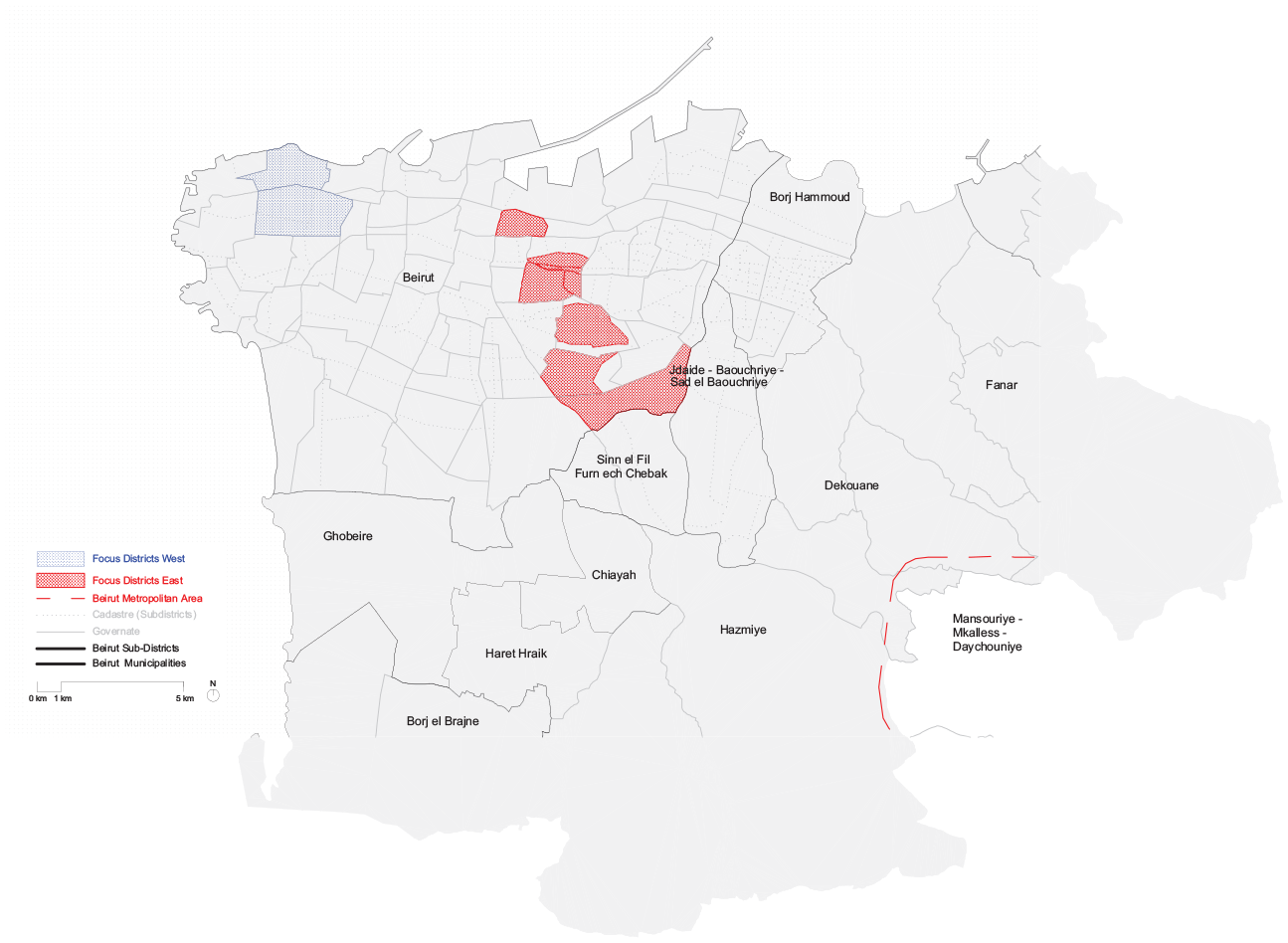
Map of Beirut highlighting the location of interviews
a. Category 1: Legal entrapment
The challenges faced by Syrian refugees in Lebanon are aggravated by an evolving legal framework designed to maintain their state of perpetual illegality and precarity, a situation I refer to as “legal entrapment”. Initially, Lebanon adopted a disassociation policy towards the Syrian conflict to maintain neutrality amidst the country’s sectarian and political divisions. The Lebanese government, viewing Syrian refugees as temporary migrants, was reluctant to integrate them and enacted policies restricting their access to formal employment, public services and legal residency status.(65) By the end of 2014, Lebanon introduced stricter regulations to curb the entry of Syrians and limit their stay. These regulations profoundly impacted Syrian refugees, many of whom became de facto illegal residents, facing risks of arrest and deportation. This policy exacerbated their vulnerability and socioeconomic stratification. This analysis does not aim to broadly criticize the rule of law, which is essential for maintaining societal order. However, it is crucial to critically examine the timing and targets of certain laws and policies in the context of Lebanon and Syrian refugees.
Currently, Lebanese policies continually evolve to address perceived loopholes in refugee regulations, affecting aspects such as geographic mobility, legal entry, residency status and arrival timelines. For instance, refugees who arrived before or after 2018 face different legal challenges. The ability to regularize their status often depends on securing formal rental contracts or adhering to the Kafala sponsorship system.(66) The Kafala system is a sponsorship-based immigration policy that ties refugees’ residency status to their employers or sponsors, who have considerable control over their legal and personal lives. Such control includes the ability to confiscate identity documents, dictate working conditions and restrict movement, often resulting in conditions akin to forced labour and exploitation.(67) Without legal residency, refugees cannot move freely within the country, hold secure employment or access essential services without fear of arrest or deportation. These restrictions increase the risk of eviction, further displacement and heightened visibility, making refugees more susceptible to harassment and exploitation.(68) A young Syrian, participant 1, shared his experience:
“At the beginning, I was moving apartments almost every month. Given my illegal situation, I [. . .] was not able to have direct communication with any of the landlords. The first apartment I moved to in Furn El-Chebbak was with a European musician who was renting the apartment, and I was subletting one of the rooms from him [. . .]. There was no contract, no receipt, and nothing that would prove that I lived there. I would just pay him every month what we had agreed on. This included rent and the bills, and he just dealt with everything. I don’t even know how much he paid for the whole apartment [. . .]. But given my legal situation in the country, it was the best situation I could be in [. . .]. The fact that he was dealing with all of this liberated me from having to deal one-on-one with the landlord.” (Participant 1, male, 29, Ashrafieh interviews, June 2023)
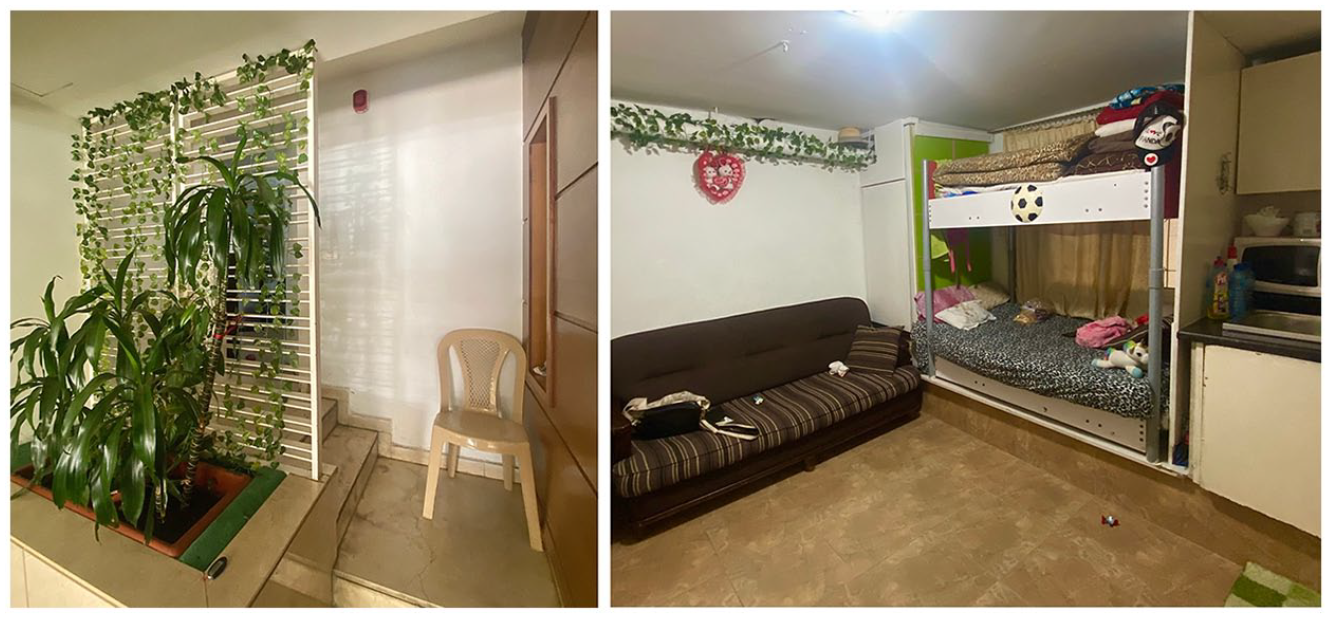
Despite receiving significant humanitarian aid over the past 13 years that was intended for shelter, sanitation and informal settlement upgrades associated with hosting refugees, the Lebanese government never provided affordable housing solutions. This has forced the vast majority of refugees into the informal economy, relying on informal networks to secure affordable shelter in a predatory housing market.(69) The Lebanese state’s approach effectively pushes refugees to breaking point, creating a legal environment where survival becomes nearly impossible without violating new, frequently emerging regulations. Syrian refugees now face punitive measures for utilizing these very systems.(70) Participant 2, a woman from a focus group discussion in Hamra, explained how they found the building where several members of her family live:
“A friend of one of our men put us in touch with the natour [concierge] of this building. There is no contract and no receipt. We have no idea who the owner is [. . .]. As you can see, the situation is miserable [see Figure 3]. The natour keeps telling us they will demolish the building at some point but it’s unclear when. We have nowhere else to go.” (Participant 2, female, 37, Hamra interviews, May 2023)
Obtaining legal papers often necessitates a formal rental contract or a kafeel (guarantor) who assumes financial responsibility. The former is difficult to acquire due to the prevalence of informal renting scenarios, and the rising costs of obtaining a guarantor make this option inaccessible to most Syrians, rendering them illegal. Participant 3 discussed the implications of lacking a contract:
“For this apartment, I met the owner. Initially, he wanted to have a formal rental contract. He is used to having university students rent the apartment contractually. But I told him that I couldn’t because of my [il]legal status. He accepted. However, he always makes me feel that he can evict me at any point. He refused to change the locks on the door [. . .]. He also reminds me he has a key and can come in at any point. Honestly, I would prefer to have a contract. It would take away a lot of my anxiety. But I can’t. [. . .] The only way to get my legal papers in order is to leave the country and re-enter, or to find a guarantor. But I can’t leave the country. I escaped mandatory military service in Syria. If I go back, I will be caught at the border, imprisoned and tortured. Or, I will be sent to the forefront of war without weapons. Either way, my fate would be death. So, I keep my head down and just go day by day.” (Participant 3, male, 30, Hamra interviews, June 2023)
This systemic exclusion and legal entrapment, masked as law enforcement, perpetuate a cycle of vulnerability and insecurity among the refugee population.(71) Figure 2 highlights the various ingredients that contribute to legal entrapment. In effect, the absence of a rental contract leads to the absence of residency papers, and vice versa. This pernicious approach not only entraps Syrians in legal precarity but also makes informal housing the mechanism by which Syrians are ensnared. This strategy turns Syrians into the scapegoats for Lebanon’s broader economic issues, diverting attention from the state’s governance failures, particularly highlighted by the port explosion, which underscored political corruption and mismanagement. This diversionary tactic shifts the blame onto refugees for problems fundamentally rooted in systemic governance issues.
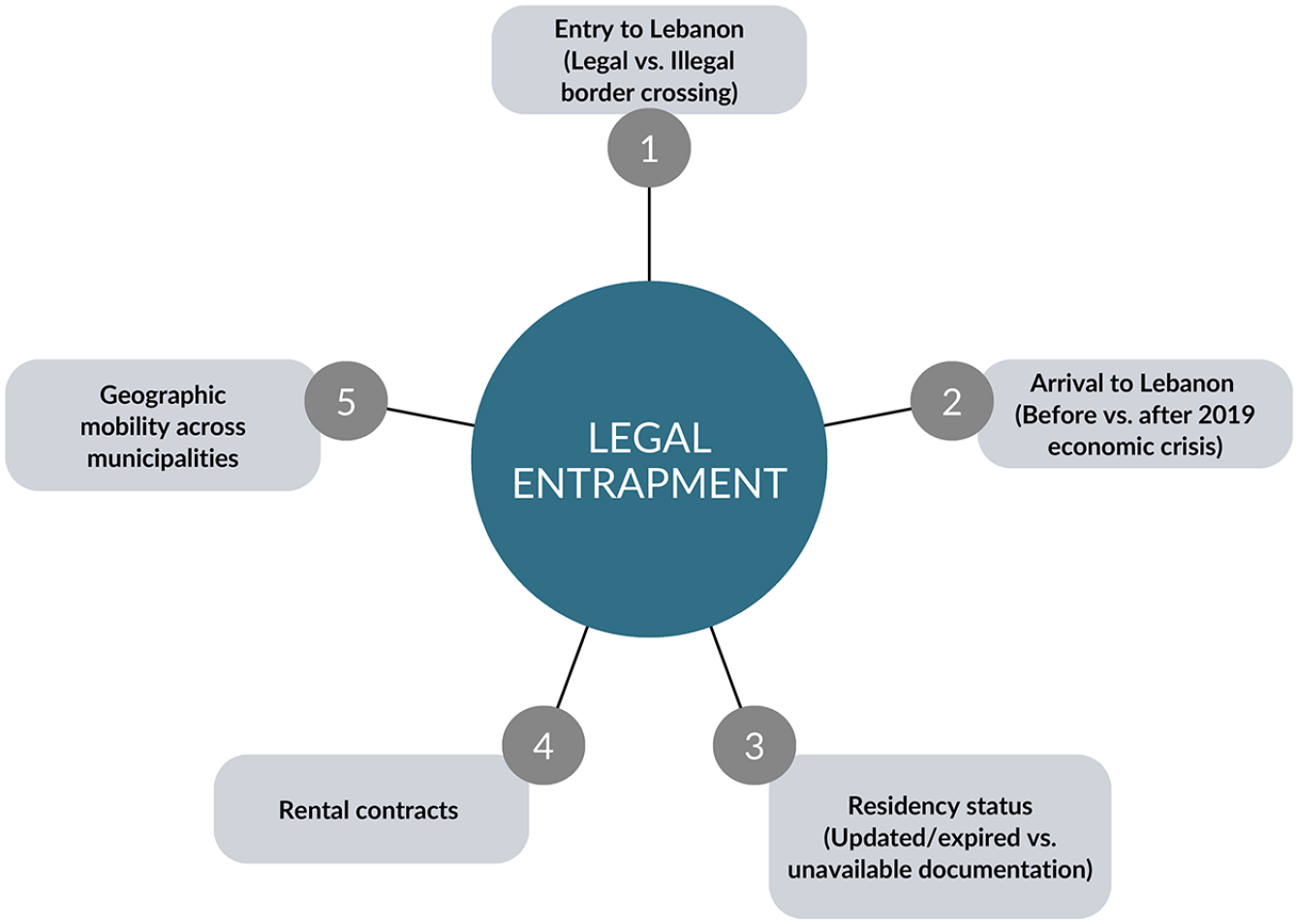
Factors contributing to legal entrapment
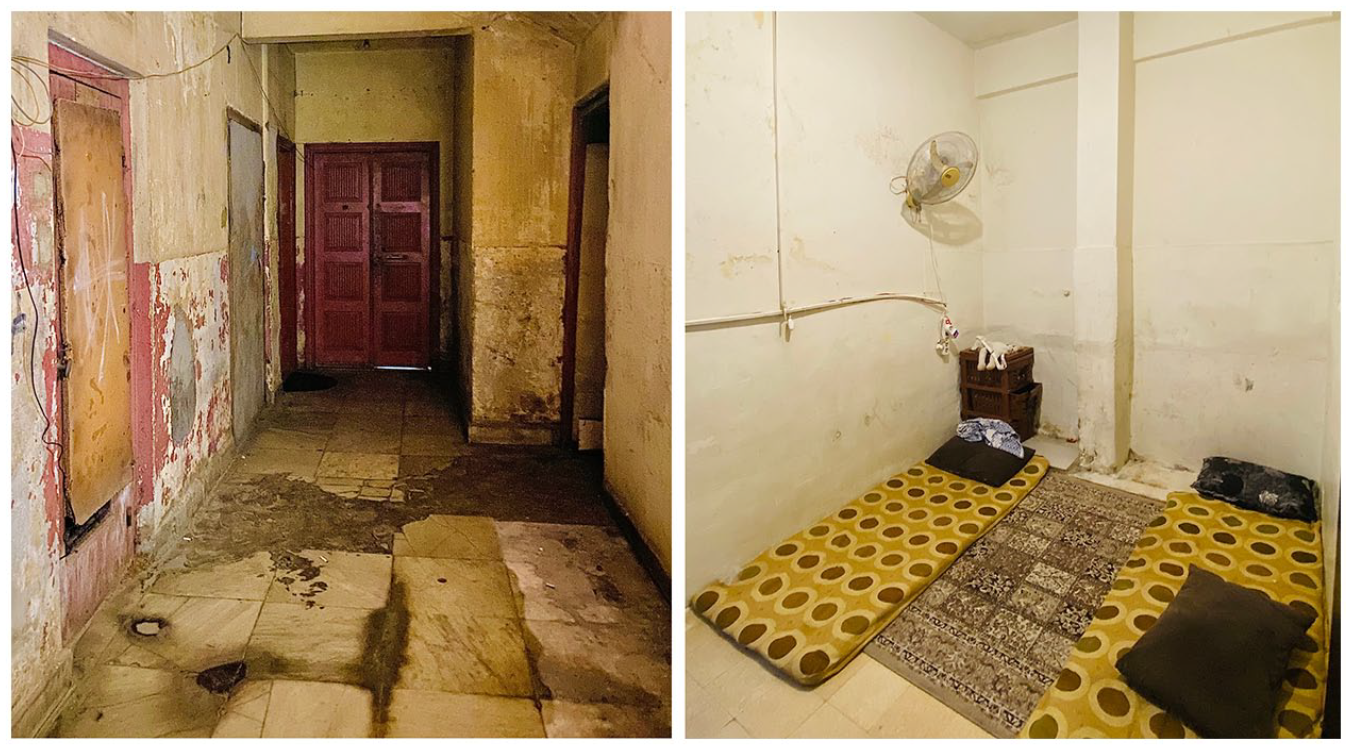
Participant 2’s shelter
b. Category 2: Social saviours and predators
A recurring theme identified throughout the interviews is the importance of social networks and relationships as crucial conduits for accessing information, including that related to shelter. The interviews also highlighted how strained social relationships with non-state and low-power actors could detrimentally affect refugee housing security. In Beirut, where formal support mechanisms may be limited or inaccessible for refugees, social networks act as essential bridges, helping them navigate the complexities of urban life, find shelter and secure livelihoods. These informal networks become lifelines, facilitating the sharing of information and resources within the community, and providing vital links to employment opportunities, essential services, humanitarian assistance, and updates. Conversely, strained relationships with landlords or their representatives, or conflicts with neighbours, significantly affected refugees’ stability, including their housing security, leading to further social exclusion. Participant 4, a mother, explained:
“I live here with my husband and three children. My husband found it through a friend. We lived elsewhere in the neighbourhood but got evicted three years ago. Our downstairs neighbour was an older Lebanese man who kept complaining that my kids made too much noise, even during weekdays when my kids would be at school. He would harass us by violently tapping on the walls. He didn’t like that he had a refugee family living upstairs. So, the landlord evicted us. This [new] landlord is better, but I don’t know if my husband signed a contract. All furniture you see is second-hand, sometimes we carry things in from the streets. I rarely ever leave the apartment, I feel depressed. And I have nowhere to go.” (Participant 4, female, 38, Ashrafieh interviews, June 2022)
Such tensions often exacerbate precarious tenure security. Misunderstandings or disputes sometimes result in threats of eviction, further jeopardizing refugees’ already vulnerable livelihoods. More specifically, low-power actors such as neighbours often appear to “police” refugees, specifically women who spend long hours at home during the day, pressuring them to conform to neighbourhood norms at the risk of eviction. Participant 5 described the tension:
“My husband found this room [see Figure 4] in exchange for being the concierge of this building. He’s known the owner for several years. He’s a good man [the owner]. My husband used to work here before the war. When the war started, I joined him here. We all live in this room. We live here in exchange for my husband’s work. He doesn’t get paid. He takes on random jobs for cash. The only place where I can cook is the terrace outside. However, my neighbour complains that the smell is too strong. She yells at me from the balcony upstairs and tells me to go inside. I worry that if I upset her, she will tell the landlord. So, I stopped cooking outside, now I cook in the middle of this room.” (Participant 5, female, 27, Ashrafieh interviews, May 2022)
Participant 5’s shelter
Social actors range from being saviours to predators. The uncertainty of who refugees might encounter creates pressure for them to become invisible, maintaining a low profile and symbolically losing their voice. This finding clashes with an earlier finding by Fawaz, Gharbieh, Harb and Salamé,(72) who studied the mobility of Syrian refugee men working as food delivery drivers. They uncovered that, through the perspective of urban mobility, these men ventured into the city and were able to assert their visibility thus claiming their right to the city and challenging the conventional categories often assigned to refugees, such as aid recipients or camp dwellers.(73) Perhaps the distance from their home and family led to courage. For example, my fieldwork shows that refugees make an informed decision to “invizibilize”, by keeping their children and themselves quiet, avoiding being seen outside too often in their neighbourhoods, following mandatory curfews for “foreigners” in certain areas, modifying some cultural practices, such as cooking aromatic foods, and sometimes even masking their accent. According to participant 6:
“I try to keep my kids inside. If they make too much noise playing on the terrace, some neighbours might yell at them from the balcony to go back inside. I worry about upsetting them. But some of them are nice and give our kids clothes and shoes they no longer use.” (Participant 6, female, 27, Ashrafieh interviews, June 2022)
Participant 3, who discussed rental contracts, also shared how the word “Syrian” has come to be a derogatory term:
“People are always shocked when they find out I’m Syrian. They’re used to Syrians looking and dressing a certain way. But we’re not all the same. [. . .] When I first arrived, I would joke around with one of my flatmates in Saleem Sleim by saying: “Shu ya Soure?” [What’s up, Syrian?] He would get so startled. He felt like I was insulting him! But now, I understand. Having lived here for almost three years, being called a Syrian is almost like a swear word. [. . .] So, I hide my accent when possible. This is how I speak now [spoken with a Lebanese accent].” (Participant 3, male, 30, Hamra interviews, June 2023)
Figure 5 illustrates the complexity and diversity of potential social saviours and predators.
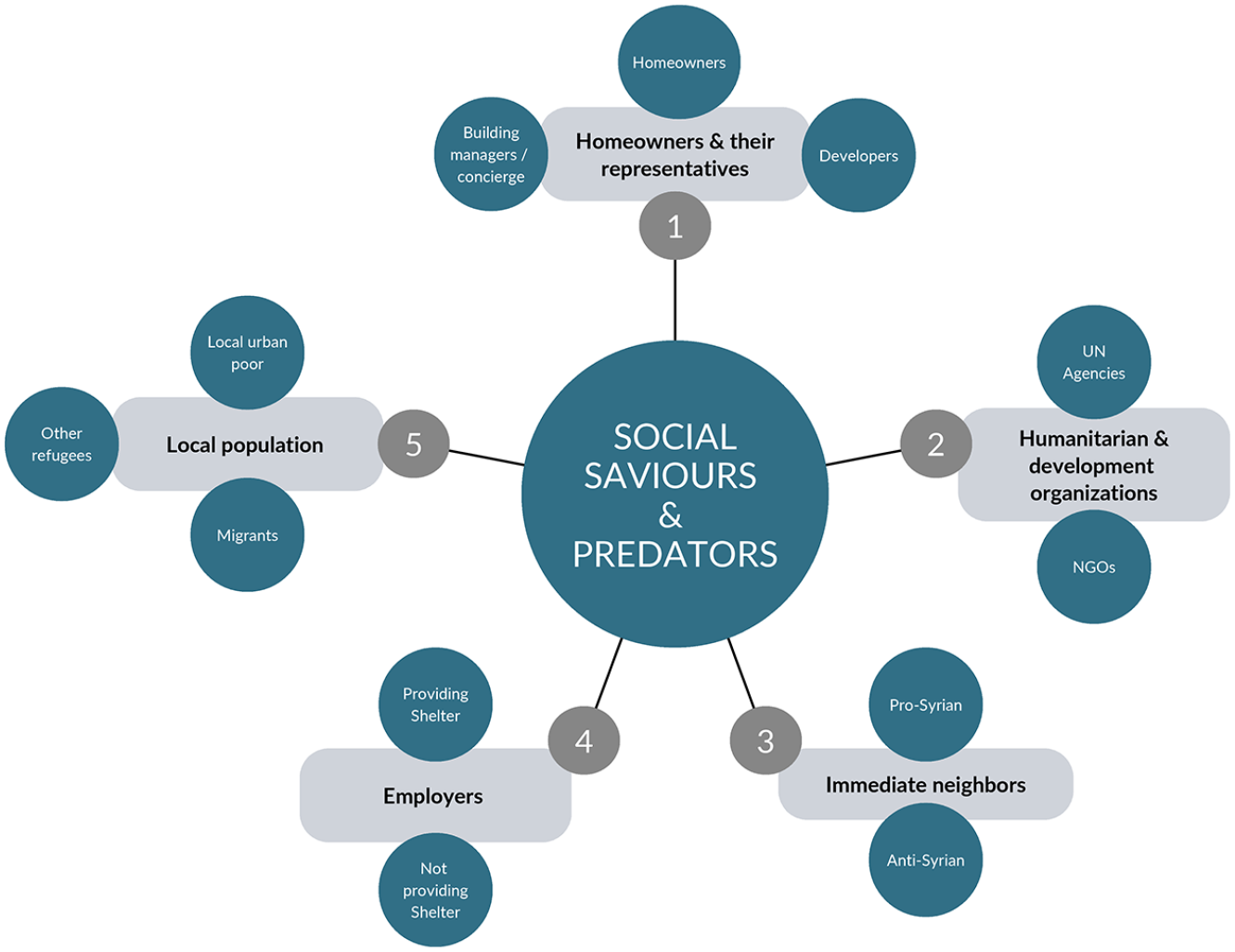
Actors as social saviours and predators
c. Category 3: “Dollars speak”
The economic struggle of urban Syrian refugees in Beirut has been markedly exacerbated by Lebanon’s economic crisis, which began in 2019, with roots in decades of political instability, corruption and mismanagement. The crisis was marked by banking sector turmoil, unsustainable public debt surges and a currency collapse. The Lebanese pound lost over 90 per cent of its value against the US dollar. Hyperinflation and daily fluctuations in the local currency have significantly impacted refugees’ ability to afford housing and other basic necessities. Rent, which consumes a large portion of refugees’ income, has become increasingly unaffordable, compounding their vulnerability. The economic instability diminished purchasing power and heightened the risk of eviction, further destabilizing refugees’ already precarious living conditions. Those registered with the UN and receiving multipurpose cash, and those expected to pay in US dollars, are particularly at risk. In 2022, rent increased by 176 per cent on the previous year, and around 58 per cent of Syrian refugees were living in substandard, risky or overcrowded shelters. Participant 3 shares the hardships:
“I found a job in a restaurant in Hamra. [. . .] Initially, I didn’t want to move to Hamra. But I did it for the job. I now share this apartment with my good friend and we spend our entire salaries paying for this apartment. Our rent is US$600! We survive on our tip money. I came to this apartment because it is very close to work. We finish work very late at night. Hamra is generally more expensive, and so is Ashrafieh. And I am always scared to move around the city. They can stop me at any time [. . .]. Every time I see him [the landlord], he always mentions wanting to increase the rent, or tries to ask for another month’s rent in advance, and so on. He tells me everything has become expensive and he needs to charge more [. . .].” (Participant 3, male, 30, Hamra interviews, June 2023)
d. Category 4: Spatial entrapment
Shelter for Syrian refugees in Beirut is as heterogeneous as that described by other scholars in various locations across the country. From concierge rooms, basements, makeshift units on rooftops, unfinished and dilapidated buildings, to regular apartments shared by multiple families, Syrian refugees have negotiated their ways into some of the most uninhabitable spaces, at great risk to their protection. As Harb notes,(74) the influx of refugees has led to the informal settlement of many Syrians in substandard housing conditions, often in poorly serviced neighbourhoods, exacerbating urban inequalities and social tensions. Many Syrian refugees reside in buildings that may look good from the outside but that were not intended for housing, often lacking basic services such as clean water, electricity and sanitation. In many instances, several families share an apartment to split the rent. Refugees often lack leverage to negotiate improvements to create more privacy, as the demand for shelter, particularly in central areas close to economic opportunities, remains high. The head of the Protection Department in Caritas Lebanon in Beirut highlighted a particular vulnerability related to overcrowding:
“Sometimes, several households live in one apartment to split the rent. Girls and young women are often at heightened risk in these situations. We’ve seen many cases where women get sexually assaulted just by having to share their living space with men that are not in their immediate family.” (Head of Protection Department, Caritas Lebanon, Beirut, June 2023)
Through the INGO I partnered with, I met a displaced Syrian family living in the basement of a luxury tower in Ashrafieh, in the room where the mechanics of building were housed, behind a fire hose cabinet. The husband met me outside and led me to a side door near the tower’s lobby. Two flights down into the basement was their single room with a makeshift bathroom area. The fire cabinet served as a storage shelf for the children’s shoes, and a makeshift opening in the wall with a small gas tank served as their cooking area (Figure 6). According to the mother, Participant 7:
“We have been living here for the last five years. My five-year-old daughter has polio, so we get some help from the UN to buy her shots. My husband cleans the stairs in the building [. . .], and in exchange, we live here. He is also night watchman, but the owner [. . .] doesn’t always pay. Sometimes he doesn’t answer his phone for weeks. When he does, he says: “you can accept me not paying this month or you can leave”. We have no choice. We don’t love living here but we can’t go back. We have no home and no land and no family that can take care of us. It’s better to stay here. And it’s too expensive to go anywhere else. At least we have this space [. . .].” (Participant 7, female, Ashrafieh interviews, January 2022)
The vast disconnect between luxury apartment buildings and the shelter available for refugees in the same structure is a sad yet often accurate example of refugee shelter in high-income neighbourhoods. Participant 7 lived in a tower where apartments are valued at several million dollars. One can scarcely imagine that in such a building, a family of seven lived in these abysmal conditions. The husband’s job overseeing the building’s safety and security is made nearly impossible by their confinement in a basement. If a theft or break-in were to occur, he would likely be the first suspect. The landlord of this multi-million building not only ignored paying his salary, but often threatened eviction, emphasizing the gratitude the family had to feel for their minimal shelter. Refugees endure such precarious living conditions due to the lack of alternatives. I term this situation “spatial entrapment”. These conditions underscore the urgent need for policies and interventions aimed at improving the housing situation for Syrian refugees in Beirut, addressing both the quality of shelter and the social, economic and spatial risks associated with overcrowding and inadequate living arrangements.
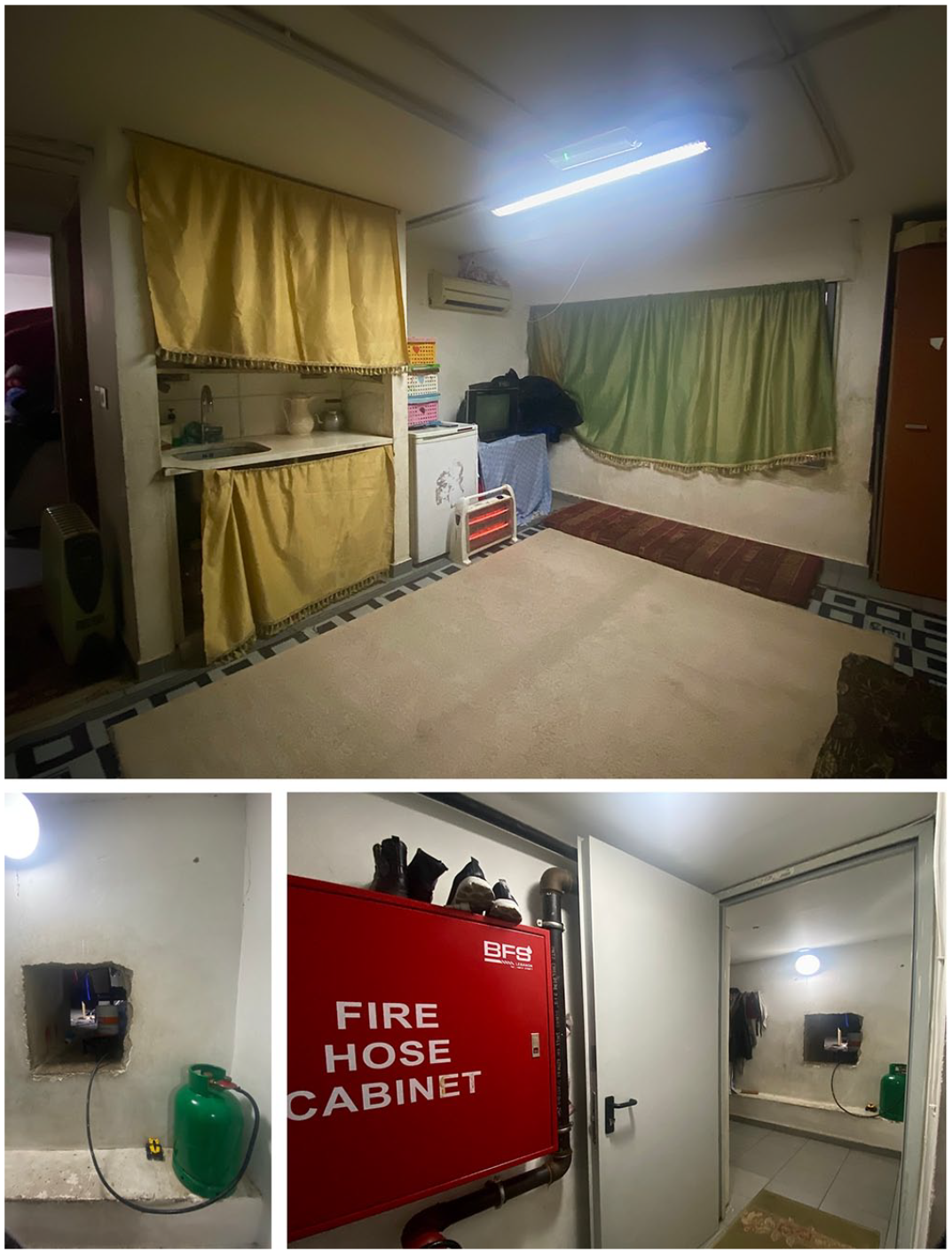
Participant 7’s shelter
VI. Conclusion
In conclusion, this field note finds that Syrian refugees in Beirut’s upscale neighbourhoods navigate a wide spectrum of shelter tenure security, which depends on a delicate balance of legal, social, economic and spatial factors shared by both the displaced and local communities. Humanitarian aid provided to refugees amidst a country-wide economic crisis has become a source of tension rather than relief. Furthermore, it is crucial to highlight the role of luck in determining the type of tenure security that Syrians achieve. Finally, shelter tenure security is further complicated by Beirut’s historic sectarian divisions. These historical wounds seem to have been revived, significantly impacting Syrian refugees’ access to shelter, especially as they are increasingly scapegoated in the wake of the economic crisis.
Tenure security for Syrian refugees sheltering in Beirut remains extremely precarious in middle- and high-income areas such as in Ashrafieh and Hamra. The shifting legal policies imposed on Syrian refugees, coupled with the lingering repercussions of the 2019 economic crisis, the social tensions between various social classes and sectarian factions, and the varied physical conditions, together create a spectrum of situations, where a deficit in any dimension can place refugees at risk of harassment, eviction and further displacement or even detention or forcible return.
Legal policies seem to morph and change all too often, with the calculated intent of trapping this displaced population in imposed criminality, making it almost impossible for the vast majority of Syrian refugees not to exist in a state of legal precarity. At present, securing legal residency necessitates a formal rental contract or the support of a guarantor, both challenging to obtain. The absence of a contract leads to the absence of residency papers, and vice versa, locking Syrian refugees in a vicious cycle.
Social relationships and networks play a crucial role in helping these refugees to access shelter and secure livelihoods. In the absence of a national housing scheme and the adoption of a no-camp policy, these networks are essential bridges, facilitating the sharing of information and resources. However, strained relationships with landlords, their representatives, neighbours or other low-power actors often exacerbate precarious tenure security. Misunderstandings or disputes can lead to threats of eviction, further destabilizing refugees’ vulnerable conditions. The pressure to conform to neighbourhood norms often forces refugees to remain invisible in their living quarters to avoid conflict. More broadly, the prevailing assumption is that refugees encounter racism and discrimination primarily in the global North. This perspective is often mirrored in international refugee policies designed to manage refugee movements in the global South. These policies are based on the belief that refugees and the local population often share similar ethnic and sociocultural characteristics, leading to the conclusion that refugees are unlikely to face racial discrimination or prejudice in these areas. However, as Fábos and Kibreab note, this assumption continues to be fundamentally flawed.(75)
The 2019 economic crisis has significantly impacted refugees’ ability to afford housing and other basic necessities. Surprisingly, humanitarian aid paid in US dollars amidst Lebanon’s crisis has become a source of social tension rather than relief. Syrian refugees registered with the UN are often singled out and are particularly at risk of harassment from landlords or their representatives, who know they receive multipurpose cash for rent, food and other immediate expenses. Registered refugees also risk harassment and sometimes violence from the surrounding population, be it other refugees, migrants or locals, all of whom share an equally arduous socioeconomic reality and often dwell in equally dilapidated physical conditions but do not have the same access to humanitarian aid.
Furthermore, the repercussions of Beirut’s historical sectarian divisions have been heightened by the 2019 economic crisis, with Syrian refugees viewed as scapegoats for broader governmental failures. Racist attitudes towards Syrians are prevalent among the Lebanese population, with notable differences between those living in Ashrafieh and those in Hamra. In Ashrafieh, which has a predominantly Christian demographic, Syrians are often viewed with suspicion and hostility. This attitude is rooted in historical sectarian divides and the perception that Syrians contribute to the region’s instability and economic difficulties. Incidents involving Syrians often result in widespread outrage against the entire refugee population, further entrenching the perception of Syrian refugees as a monolithic group deserving uniform treatment. Conversely, in Hamra, which is more diverse and has a significant Sunni population, there tends to be a slightly more tolerant view towards Syrians, although discrimination and prejudice still exist.
Urban Syrian refugees in the districts of Ashrafieh and Hamra in Beirut, regardless of the physical condition of their shelters, face precarious living conditions due to a complicated mix of legal, social, economic and spatial factors. The assumption that refugee shelter in middle- and high-income areas might provide greater security is challenged by this study, which demonstrates that challenges are not limited to low-income areas. Syrian refugees in Beirut remain precariously housed regardless of the neighbourhood, reflecting a broader crisis of housing insecurity that affects the displaced population and urban poor alike. The perception that humanitarian organizations provide adequate security is also questioned, as the insecurity imposed by social actors, economic conditions and legal status often overrides the protections offered by international aid. These insights contribute to the broader literature on urban refugee housing and highlight the need for comprehensive urban planning strategies to address these multifaceted challenges.
Footnotes
Acknowledgements
I am grateful to the anonymous reviewers and editors of Environment & Urbanization for their valuable guidance. Special thanks to Professor Tom Slater for his insightful feedback on earlier drafts. I also appreciate the support of my doctoral colleagues, Mekarem Eljamal and Ranjani Srinivasan, as well as others at GSAPP, Columbia, for their helpful comments. Deep thanks to Aline Abou Saad and Zaki Boulos for their editorial guidance during the writing process, and to Carol Abi-Ghanem for keeping me critically connected to unfolding events in Beirut. I also thank Susan Kassibarian for her connections within key communities. Lastly, I am deeply appreciative of the young gatekeeper who facilitated my research, the key informants from international organizations who provided valuable insights, and, most importantly, the individuals and families who generously welcomed me into their homes and shared their stories with me.
Funding
The author disclosed receipt of the following financial support for the research, authorship, and/or publication of this article: This publication was supported by a doctoral fellowship from Columbia University and the IJURR Foundation Studentship Award 2023.
