






Abstract
Background
Persistent postural-perceptual dizziness (PPPD) is a common yet challenging functional vestibular disorder. The Niigata PPPD Questionnaire (NPQ) is a simple diagnostic tool developed to assess the severity and presence of PPPD.
Objective
To validate the Korean version of the NPQ and to evaluate its reliability and diagnostic performance in differentiating PPPD from other vestibular disorders in comparison to Dizziness Handicap Inventory (DHI).
Methods
We recruited 255 patients, 150 with PPPD, 64 with peripheral vestibular disorders, and 41 with central vestibulopathy at a tertiary dizziness center in South Korea from January to December 2024. The NPQ was translated into Korean with a forward–backward translation procedure. In addition, all participants completed DHI, the Beck Depression Inventory-II (BDI-II), the State-Trait Anxiety Inventory (STAI), and the Perceived Stress Scale (PSS) to assess dizziness-related disability and psychological symptoms. Internal consistency was assessed using Cronbach’s alpha. Discriminative ability was evaluated through between-group comparisons, correlation analyses, and receiver operating characteristic (ROC) curve analyses.
Results
The Korean NPQ demonstrated excellent internal consistency (Cronbach’s α = 0.93). The total and subscale scores of the NPQ were significantly higher in PPPD than in other vestibular disorder groups. ROC analysis yielded an area under the curve of 0.670 with a cut-off score at 15.5 (sensitivity 59.3%, specificity 71.4%). The visual stimulation subscale showed the highest AUC (0.703). A logistic regression combined model using NPQ visual stimulation and dizziness handicap inventory (DHI) emotional subscales achieved the best diagnostic accuracy (AUC = 0.756). The NPQ total score was moderately correlated with the DHI (ρ = 0.65) and modestly correlated with psychological symptoms.
Conclusion
The Korean NPQ is reliable and provides acceptable diagnostic utility for distinguishing PPPD. Combining NPQ and DHI subscales enhances diagnostic accuracy, supporting its use as a screening tool in diverse clinical settings, including telemedicine.
Keywords
Introduction
Persistent Postural-Perceptual Dizziness (PPPD) is characterized by persistent and non-spinning dizziness, lasting 3 months or more, which is exacerbated by upright posture, active or passive movements, and exposure to moving or complex visual stimuli.1,2 PPPD had been referred to as various terms including phobic postural vertigo, visual vertigo, and chronic subjective vertigo. 1 PPPD is the second most common cause of dizziness/vertigo after benign paroxysmal positional vertigo (BPPV). 3 However, recognition of PPPD seems to be on the rise. 3 Given that PPPD has the highest incidence among adults aged 19 to 64, 3 a highly productive population, it may pose significant social costs.
The Niigata PPPD Questionnaire (NPQ) is a 12-item questionnaire designed to aid in diagnosis of PPPD. 4 It was first introduced by Yagi et al. in 2019 and has since been translated into Spanish, French, and German.5–7 In the original study conducted in Japan, a cut-off score of 27–29 was found to provide an optimal sensitivity (70%–68%) and specificity (68%–70%) for distinguishing PPPD from other vestibular disorders. 4
In this study, the NPQ questionnaire was translated into Korean and applied to Korean patients with various causes of vestibular disorders to validate its diagnostic value in comparison to the Dizziness Handicap Inventory (DHI).
Methods
Patients
We recruited 255 patients [age = 57.3 ± 13.2, 173 women (67.8%)], 150 with PPPD [age = 54.7 ± 13.0, 106 women (70.7%)], 64 with peripheral vestibular disorders [age = 62.4 ± 11.4, 43 women (67.2%)], and 41 with central vestibulopathy [age = 58.8 ± 13.4, 24 women (54.5%)] at the Dizziness Center of Seoul National University Bundang Hospital in South Korea during the year of 2024. The diagnosis of PPPD was made according to the criteria established by the Bárány Society. 2 The peripheral vestibular disorders included Meniere’s disease (n = 25), BPPV (n = 24), bilateral vestibulopathy (n = 5), vestibular paroxysmia (n = 5), unilateral vestibulopathy (n = 4), and superior canal dehiscence (n = 1). Diagnosis of central vestibulopathy was made for cerebellar ataxia (n = 13), vascular disorders (n = 12), vestibular migraine (n = 11), vestibular schwannoma (n = 2), idiopathic (n = 2), and Chiari malformation (n = 1).
Translation and cultural adaptation of the NPQ
The steps for translation into Korean and cultural adaptation are outlined in the Supplementary material (Supplemental Table 1). First, a bilingual translator—whose native language is Korean and who majored in neurology—carried out the forward translation of the instructions and questionnaire items into Korean. Next, the Korean version was back-translated into English by a bilingual English-native translator who was not familiar with the original NPQ or the study’s purpose. The back-translated version was compared with the original NPQ to ensure conceptual and semantic equivalence. As the two English versions were generally consistent or showed only minor differences, the Korean version was finalized.
Questionnaires for Evaluation of Dizziness/Vertigo, Anxiety, Depression, and Stress Patients self-administered the Korean versions of the DHI, 8 the Beck Depression Inventory-II (BDI-II), 9 the Spielberger State-Trait Anxiety Inventory (STAI), 10 and the Perceived Stress Scale (PSS) 11 to rate the severity of their dizziness/vertigo and psychological symptoms.
Statistical analyses
Statistical analyses were performed using R (version 4.2.1; R Foundation for Statistical Computing, Vienna, Austria; https://www.r-project.org/). A two-tailed p-value of less than 0.05 was considered statistically significant.
Descriptive statistics were calculated for demographic and clinical characteristics, including means and standard deviations for continuous variables, and frequencies and percentages for categorical variables. Group comparisons for categorical variables were conducted using chi-squared tests. Internal consistency of the Korean version of the NPQ was evaluated using Cronbach’s alpha for the total score and each of the three subscales (upright posture/walking, movement, and visual stimulation). The results were compared with previous validation studies conducted in Japan, Spain, and France. To assess group differences in questionnaire scores (NPQ, DHI, BDI-II, STAI, and PSS), either one-way analysis of variance (ANOVA) or the Kruskal–Wallis test was used depending on the normality of data distribution. When significant, post-hoc pairwise comparisons were performed using Tukey’s test for ANOVA or Dunn’s test for Kruskal–Wallis. Effect sizes were calculated using η2 for ANOVA and r for non-parametric tests. According to the interpretation guidelines of the rstatix package, benchmarks for η2 were 0.01 (small), 0.06 (moderate), and 0.14 (large), and for r were 0.1 (moderate), 0.3 (large), and 0.5 (very large). 12 For dichotomous comparisons such as PPPD versus non-PPPD (combined central and peripheral vestibular disorders), Wilcoxon rank-sum tests were used and effect sizes were similarly reported as r. Correlations between the scores of NPQ and other questionnaires were analyzed using Pearson’s or Spearman’s correlation coefficients, depending on the distribution of variables. Correlation coefficients were interpreted according to the Cohen’s criteria. Receiver operating characteristic (ROC) analyses were conducted to evaluate the discriminatory power of the NPQ, DHI, and psychological scales (BDI-II, STAI, PSS) in differentiating PPPD from other vestibular disorders. In addition, to assess the combined diagnostic utility of NPQ + DHI scores and NPQ visual stimulation subscale + DHI emotional subscale, a logistic regression model was constructed with both scores as predictors for PPPD diagnosis. ROC curve analysis was then performed using the predicted probabilities from this model to evaluate the discriminative ability of the combined approach.
Standard protocol approvals
All experiments followed the tenets of the Declaration of Helsinki. The institutional review boards of Seoul National University Bundang Hospital approved this study (IRB no. B-2506-979-101).
Results
Participant characteristics
Demographics and scores of the questionnaires.
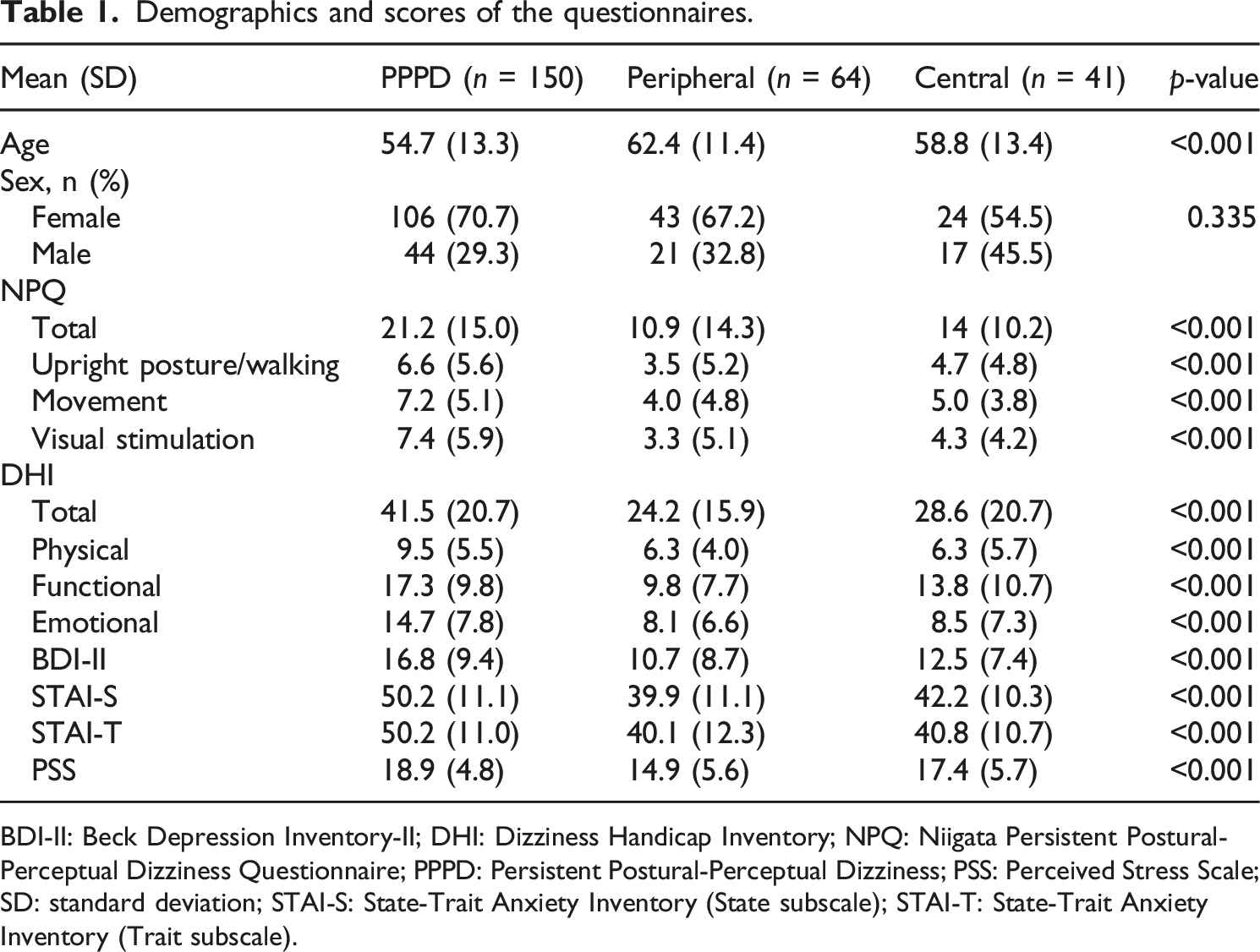
BDI-II: Beck Depression Inventory-II; DHI: Dizziness Handicap Inventory; NPQ: Niigata Persistent Postural-Perceptual Dizziness Questionnaire; PPPD: Persistent Postural-Perceptual Dizziness; PSS: Perceived Stress Scale; SD: standard deviation; STAI-S: State-Trait Anxiety Inventory (State subscale); STAI-T: State-Trait Anxiety Inventory (Trait subscale).
There was no significant difference in sex distribution among the groups (χ2 = 2.19, p = 0.335), with women comprising 70.7% of the PPPD group, 67.2% of the peripheral group, and 54.5% of the central group (Table 1). The effect size verified by Cramer’s V was 0.14, showing a small effect.
Internal consistency of the Korean NPQ
The internal consistency of the Korean version of the NPQ was excellent with a Cronbach’s alpha of 0.931 for the total score. Subscale analyses also showed a high internal consistency for upright posture/walking (α = 0.874) and visual stimulation (α = 0.861) subscales, and acceptable internal consistency for the movement subscale (α = 0.798). These results were comparable to those reported in the original Japanese validation study (total α = 0.91), the Spanish adaptation study (total α = 0.94), and the French validation study (total α = 0.92), and support the reliability of the Korean NPQ.
Group differences in questionnaire scores
The NPQ total scores were not normally distributed in any of the diagnostic groups (Shapiro–Wilk test: p < 0.001 for PPPD and peripheral groups; p = 0.042 for the central group). Therefore, a non-parametric Kruskal–Wallis test was conducted and revealed a statistically significant difference among the three groups (χ2 = 32.67, p < 0.001, Figure 1, Table 1) with a moderate effect size (r = 0.122). Post-hoc Dunn’s test with Bonferroni correction showed that the PPPD group had significantly higher NPQ total scores than the central (p = 0.039) and peripheral (p < 0.001) groups. There was no statistically significant difference between the central and peripheral groups (p = 0.136). Pairwise comparisons of NPQ total scores among the groups showed moderate to large effect sizes [PPPD versus peripheral (r = 0.372, large effect), PPPD versus central (r = 0.195, moderate effect), central versus peripheral (r = 0.239, moderate effect)]. Comparison of Niigata PPPD Questionnaire (NPQ) and Dizziness Handicap Inventory (DHI) scores.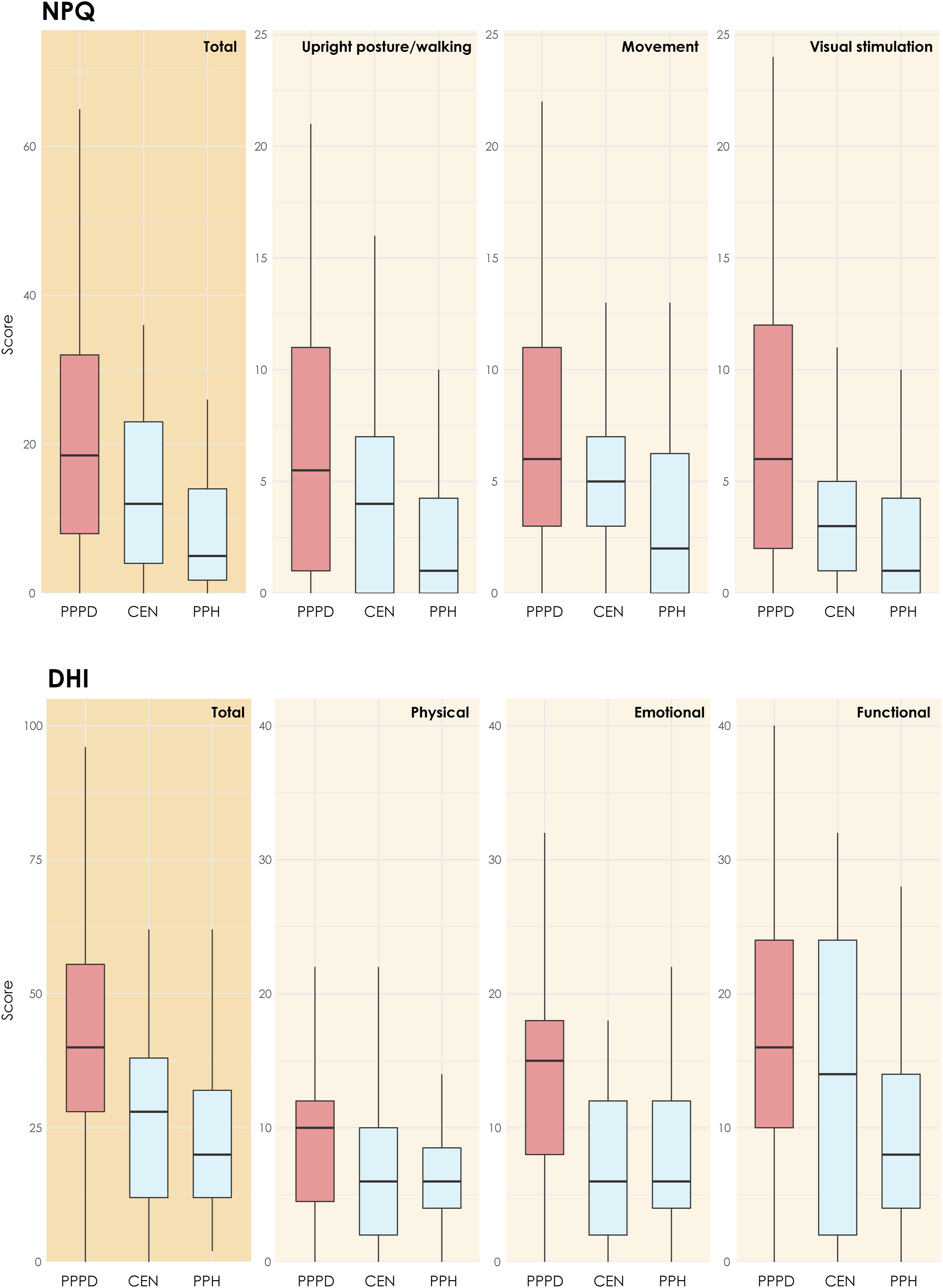
There were statistically significant differences in all three subscales among the groups (Figure 1): upright posture/walking (χ2 = 19.99, p < 0.001), movement (χ2 = 23.24, p < 0.001), and visual stimulation (χ2 = 34.12, p < 0.001). Post-hoc Dunn’s tests with Bonferroni correction revealed that the PPPD group scored significantly higher than the peripheral group across all subscales (all p < 0.0001). Compared to the central group, the PPPD group showed significantly higher scores for the visual stimulation (p = 0.017) subscales. However, the difference in upright posture/walking (p = 0.162) and movement (P = 0.074) did not reach a statistical significance between the PPPD and central groups. No significant differences were found between the central and peripheral groups for any subscale.
Significant differences in the DHI total and subscale scores were observed among the three groups (all p < 0.001, Figure 1, Table 1). Post-hoc Dunn’s tests revealed that the PPPD group showed significantly higher DHI total scores than both the central (p < 0.001, r = 0.26) and peripheral groups (p < 0.001, r = 0.39). Among subscales, physical, emotional, and functional scores were all elevated in the PPPD group compared to the peripheral group (all p < 0.001, r = 0.26–0.40). Compared to the central group, the PPPD group showed significantly higher scores on the emotional (p < 0.001, r = 0.34) and physical (p = 0.002, r = 0.24) subscales, whereas no significant difference was observed in the functional subscale (p = 0.131, r = 0.13). No significant differences were observed between the central and peripheral groups in any subscale.
Group comparisons for psychological measures revealed significant differences in BDI-II, PSS, STAI scores among the three groups (Table 1). The PPPD group showed significantly higher BDI-II scores compared to the central (p = 0.034, r = 0.19) and peripheral (p < 0.001, r = 0.34) groups, with no significant difference between the central and peripheral groups (p = 0.369, r = 0.16). Regarding anxiety, the PPPD group had significantly higher STAI scores than both the central (STAI-state anxiety: p < 0.001, r = 0.31; STAI-trait anxiety: p < 0.001, r = 0.32) and peripheral (STAI-state anxiety: p < 0.001, r = 0.38; STAI-trait anxiety: p < 0.001, r = 0.38) groups. No significant differences were observed between the central and peripheral groups in either anxiety measure. For PSS scores, ANOVA indicated significant group differences (p < 0.001). Post-hoc Tukey tests showed that both the PPPD (p < 0.001) and central (p = 0.040) groups scored significantly higher than the peripheral group, whereas the difference between the PPPD and central groups was not significant (p = 0.237).
Correlation analyses
Spearman correlation analyses showed that the NPQ total score was significantly correlated with all subdomains of the DHI, including the functional (ρ = 0.65), physical (ρ = 0.58), and emotional (ρ = 0.54) subscales (p < 0.001 for all analyses). Among the NPQ subscales, the movement subscale demonstrated the strongest correlations with the DHI physical (ρ = 0.61) and functional (ρ = 0.60) subscales, whereas the upright posture/walking subscale showed moderate correlations with the physical (ρ = 0.48) and emotional (ρ = 0.50) subscales. The visual stimulation subscale was moderately correlated with all DHI subscales (ρ = 0.45–0.58, p < 0.001 for all analyses). In addition, the NPQ scores (total and subscales) exhibited modest but statistically significant correlations with psychological measures. The NPQ total score was positively correlated with depression (BDI-II, ρ = 0.29), state anxiety (STAI-S, ρ = 0.27), trait anxiety (STAI-T, ρ = 0.27), and perceived stress (PSS, ρ = 0.31) with similar patterns observed across all NPQ subscales (p < 0.001 for all analyses) (Figure 2). Spearman correlation matrix.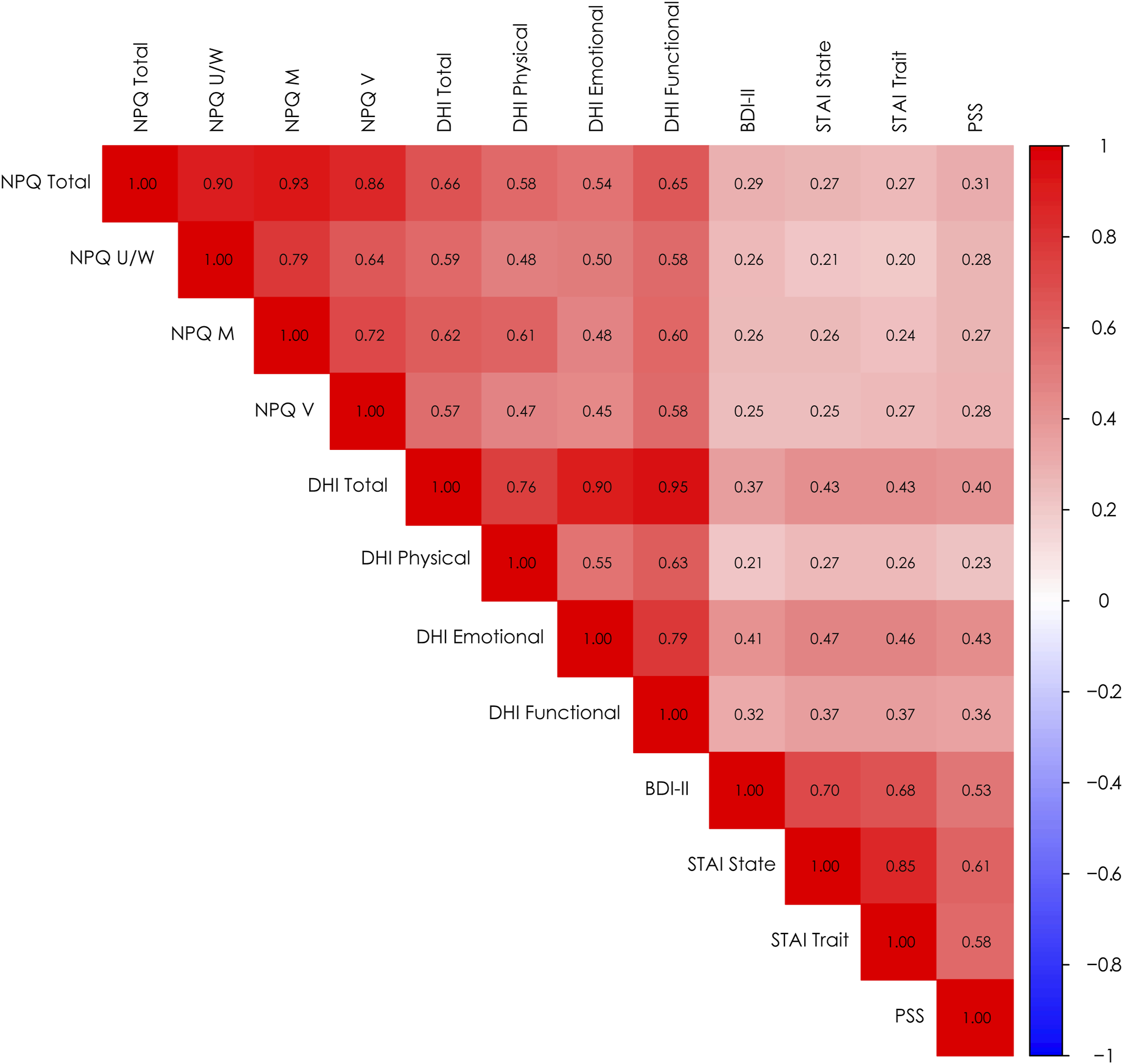
Diagnostic performance of the NPQ, DHI, and psychological scales
Diagnostic performance (AUC, optimal cut-off, sensitivity, and specificity) of NPQ, DHI, psychological scales, and logistic regression models in discriminating PPPD from other vestibular disorders.
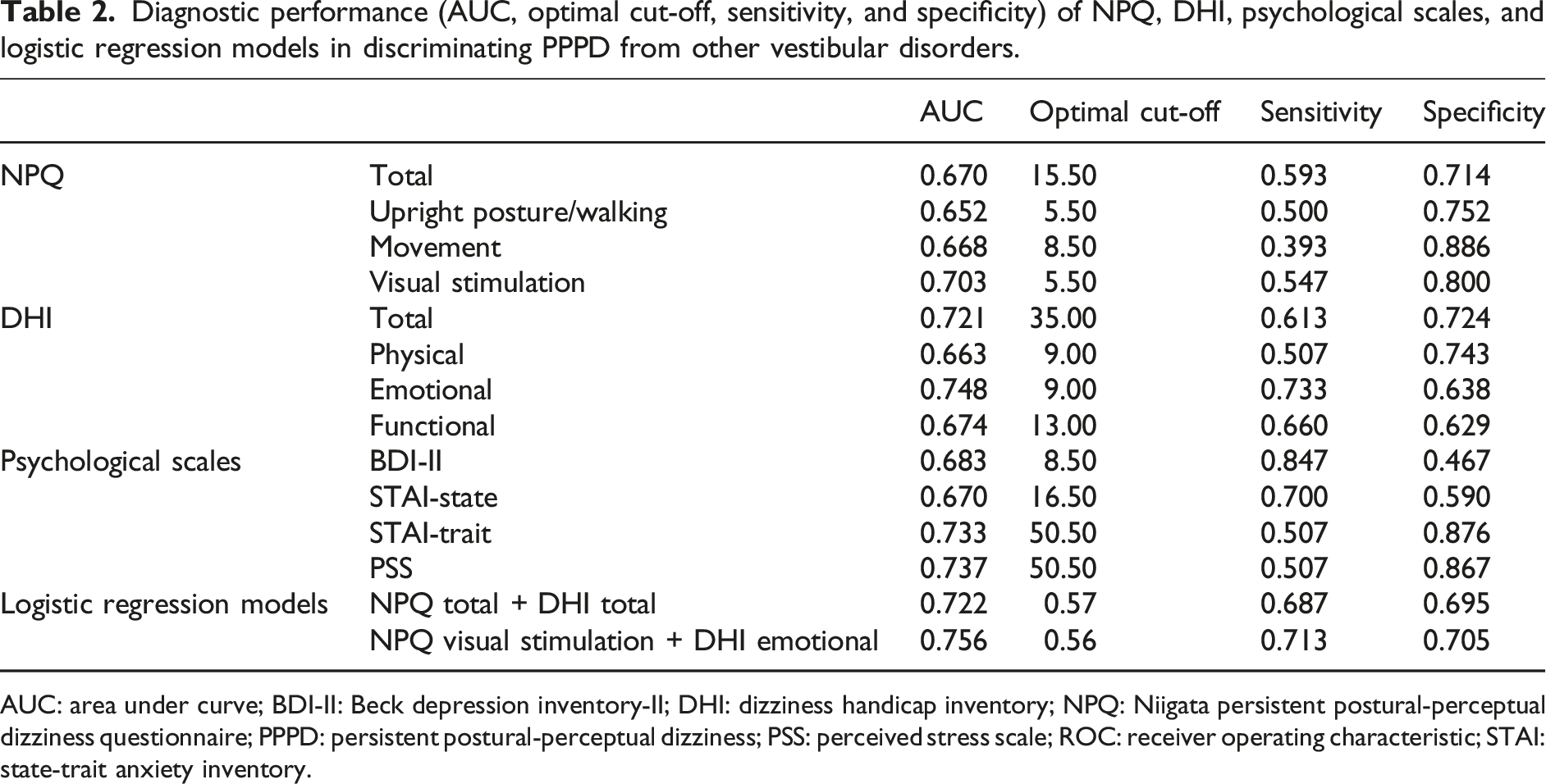
AUC: area under curve; BDI-II: Beck depression inventory-II; DHI: dizziness handicap inventory; NPQ: Niigata persistent postural-perceptual dizziness questionnaire; PPPD: persistent postural-perceptual dizziness; PSS: perceived stress scale; ROC: receiver operating characteristic; STAI: state-trait anxiety inventory.
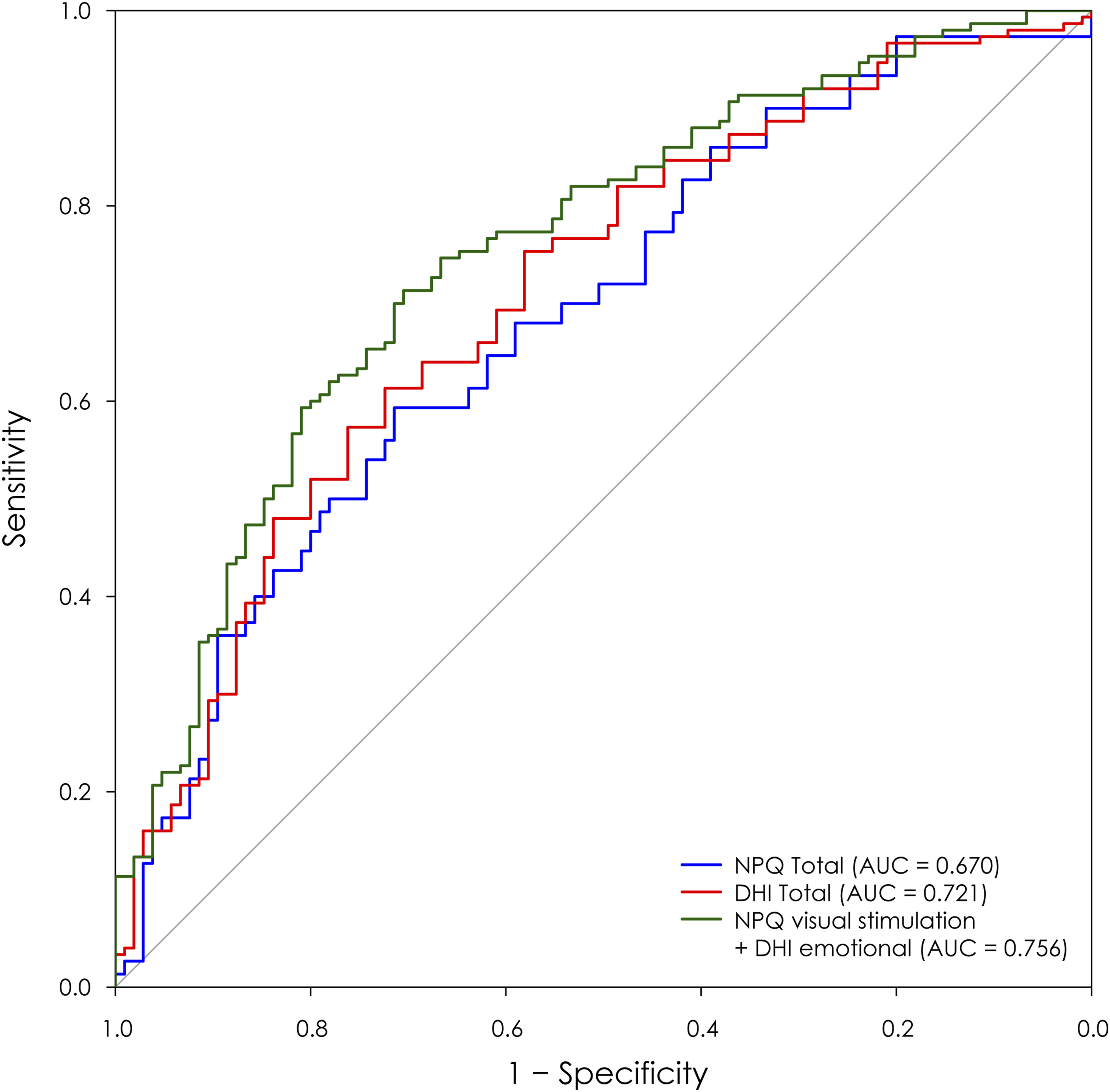
ROC curves.
Discussion
In this study, we evaluated the diagnostic utility of the NPQ in distinguishing patients with PPPD from those with peripheral or central vestibular disorders in a Korean population. The NPQ showed an excellent internal consistency (Cronbach’s α = 0.93), and group comparisons revealed significantly higher NPQ scores in the PPPD group. While the total NPQ score alone yielded a modest diagnostic performance (AUC = 0.670), a combined logistic regression model using the NPQ visual stimulation subscale and the DHI emotional subscale achieved a higher AUC (0.756), suggesting an improved discriminative power. This finding highlights the potential utility of multi-dimensional questionnaire data in enhancing PPPD diagnosis and may inform the future development of refined diagnostic tools or machine learning algorithms.
Comparison of the diagnostic performance of NPQ total scores among the studies.
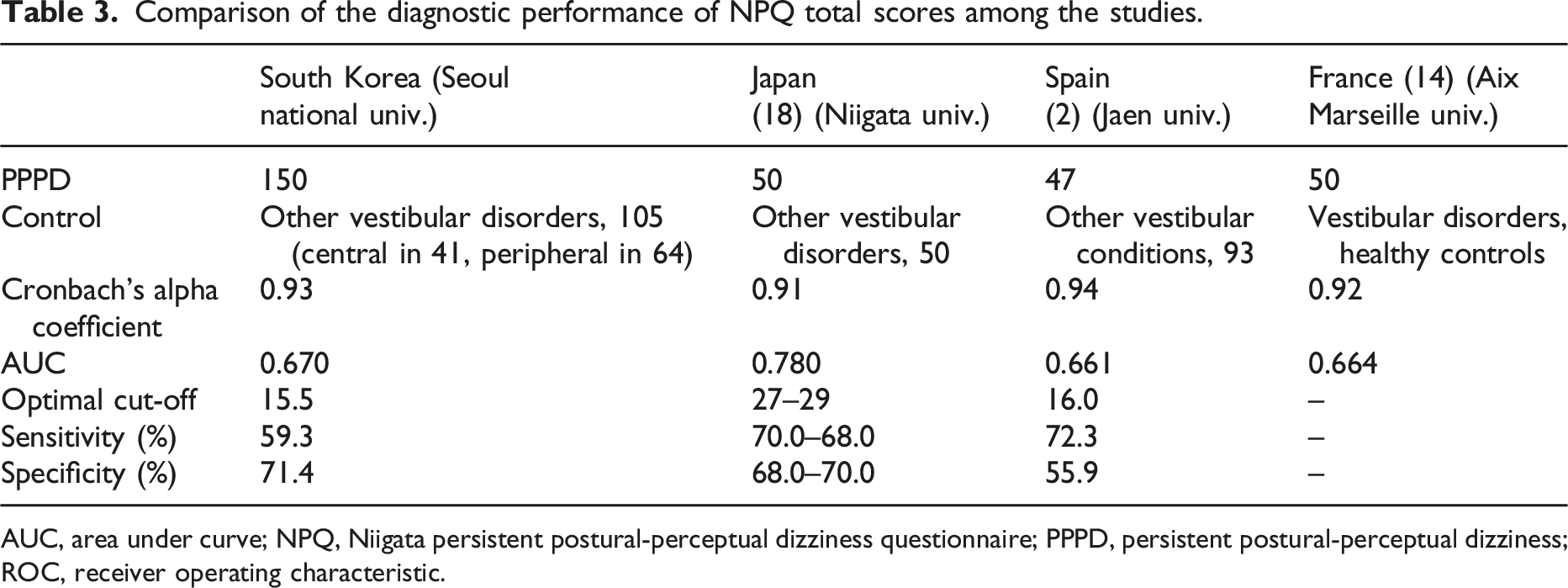
AUC, area under curve; NPQ, Niigata persistent postural-perceptual dizziness questionnaire; PPPD, persistent postural-perceptual dizziness; ROC, receiver operating characteristic.
Validation studies in Spanish and French populations also reported comparable psychometric properties. In the Spanish study, the NPQ total score yielded an AUC of 0.661, and the French adaptation showed an AUC of 0.664.6,7 Although slightly lower than the original Japanese study (AUC = 0.780), these values still support the questionnaire’s utility in differentiating PPPD from other vestibular disorders. 4 Notably, the AUC observed in our Korean cohort (0.670) was comparable to those reported in Western populations, suggesting consistent diagnostic performance across diverse cultural and linguistic contexts.
The results of this study support the clinical utility of the NPQ as a screening and supportive diagnostic tool for PPPD in real-world settings. The NPQ was able to distinguish PPPD from both central and peripheral vestibular disorders, with particularly notable differences observed in comparisons with peripheral vertigo (r = 0.372, large effect size). This suggests that the questionnaire may be especially helpful in differentiating PPPD from peripheral causes of dizziness, which are more commonly encountered in clinical practice.
The strong diagnostic performance of the NPQ visual stimulation subscale may be attributable to its close alignment with the core pathophysiological features of PPPD. This subscale consists of items that specifically assess symptom exacerbation in response to complex or dynamic visual environments, such as watching fast-moving television scenes, scrolling through screens, or navigating crowded store displays. Visual dependence is often described as a central mechanism in PPPD, and is sustained by heightened anxiety and hypervigilance following vestibular insults. 1 Neuroimaging studies further corroborate this mechanism by showing altered functional connectivity between visual and frontal regulatory areas in PPPD patients. 13 Thus, the visual subscale of the NPQ appears to reflect the core clinical and neurophysiological feature of PPPD, contributing to its superior discriminative power, as consistently shown in both current and prior validation studies.4,6,7
Emotional hypersensitivity and anxiety are common in patients with PPPD, and represent core clinical features that overlap with anxiety disorders.1,2 The emotional subscale of the DHI captures such affective responses with the items that assess frustration, embarrassment, social anxiety, isolation, and depressive mood related to dizziness. Recent neuroimaging evidence demonstrates that patients with PPPD show increased neural responses in emotion-processing brain areas, including the amygdala, hippocampus, insula, and inferior frontal gyrus, compared to both healthy controls and patients with anxiety disorders. 14 These findings suggest that dizziness-related emotional stimuli elicit stronger affective activation in PPPD, and contribute to the high scores observed in this subscale, which resulted in strong diagnostic performance (AUC = 0.748) in distinguishing PPPD from other vestibular disorders in our study.
In addition, the NPQ total and subscale scores were moderately correlated with the DHI and psychological measures of depression, anxiety, and perceived stress. These findings reflect the multi-dimensional symptom profile of PPPD and highlight the value of the NPQ in capturing both vestibular and psychological symptom burden. Although the diagnostic yield of the NPQ alone was moderate (AUC = 0.670), it improved when combined with the DHI (AUC = 0.723). This suggests that the NPQ may serve as a useful adjunct when used in conjunction with other validated dizziness questionnaires, enhancing the overall assessment of patients with chronic dizziness.
In clinical practice, the diagnosis of PPPD can be challenging due to its heterogeneous symptom presentation, the absence of a specific triggering event, and no diagnostic markers. This diagnostic difficulty is even more pronounced in non-specialist settings such as emergency departments or primary care clinics, where neuro-otologists are not readily available.15,16 A recent study, which involved more than 1,500 patients with dizziness in the emergency department, reported that 31.4% of all patients had their diagnosis revised at follow-up. This underscores the diagnostic challenges in acute care settings. 17 Altogether, these findings highlight the need for structured diagnostic tools such as the NPQ, which may improve identification of PPPD, especially in non-specialist environments.
Furthermore, the NPQ appears to hold enhanced value in future healthcare environments, such as telemedicine or remote consultation settings, where access to detailed clinical examination is constrained and standardized patient-reported data can play a critical role for the triage and diagnosis.
In our study, the NPQ demonstrated a strong correlation with the DHI, a widely used questionnaire for assessing the subjective impact of dizziness. 18 The DHI is applicable across a broad range of vestibular disorders including PPPD, and is often used for diagnosis, treatment planning, and monitoring prognosis. However, its relatively large number of items (25 questions) 18 and the inclusion of scenarios that some patients may not have experienced can occasionally lead to fatigue or confusion of the respondents during administration. In contrast, the NPQ consists of only 12 items and focuses on common, everyday situations that are frequently encountered by the patients, which may enhance its practicality in clinical settings. Although the NPQ was originally developed for patients with PPPD, its strong correlation with the DHI suggests that it may also be useful for assessing the subjective burden of dizziness in patients with other vestibular disorders. Further research is needed to determine whether the NPQ can be validated as a general-purpose tool for evaluating dizziness across different etiologies.
This study has several limitations. First, while the NPQ demonstrated a good discriminative power, the use of central and peripheral vestibular disorders as the comparison group may have led to smaller score differences than when compared with healthy controls. Second, the cross-sectional nature of the study precludes conclusions about the questionnaire’s sensitivity for symptom changes over time or treatment effects.
In summary, the Korean version of the NPQ demonstrated an excellent internal consistency and acceptable diagnostic utility in differentiating PPPD from other vestibular disorders. Although the overall diagnostic accuracy was moderate, specific subscales, particularly the visual stimulation domain, showed strong discriminative performance. These findings suggest that NPQ may serve as a useful adjunctive tool in the clinical evaluation of dizziness, particularly for identifying functional dizziness such as PPPD. Given its brevity, ease of administration, and relevance to common daily experiences, the NPQ may be especially valuable in routine outpatient settings and telemedicine-based care, in which efficient screening is essential.
Supplemental Material
Supplemental material - Diagnostic utility of Niigata Persistent Postural-Perceptual Dizziness (PPPD) Questionnaire (NPQ) for PPPD in comparison to dizziness handicap inventory
Supplemental material for Diagnostic utility of Niigata Persistent Postural-Perceptual Dizziness (PPPD) Questionnaire (NPQ) for PPPD in comparison to dizziness handicap inventory by Hyo-Jung Kim, Jae Han Park and Ji-Soo Kim in Journal of Vestibular Research
Footnotes

Ethical considerations
This study followed the tenets of the Declaration of Helsinki and was performed according to the guidelines of the Institutional Review Board of Seoul National University Bundang Hospital (B-2506-979-101).
Author contributions
H-J. Kim and J.H. Park acquired and analyzed the data, and wrote the manuscript. J-S. Kim designed and conceptualized the study interpreted the data and revised the manuscript.
Funding
The authors disclosed receipt of the following financial support for the research, authorship, and/or publication of this article: This study was supported by the National Research Foundation of Korea (NRF) grant funded by the Ministry of Science and ICT (Grant No. RS-2024-00357530).
Declaration of conflicting interests
The authors declared the following potential conflicts of interest with respect to the research, authorship, and/or publication of this article: Drs. H-J. Kim and J.H. Park report no disclosures relevant to the manuscript. Dr J-S Kim serves as an associate editor of Frontiers in Neuro-otology and on the editorial boards of Frontiers in Neuro-ophthalmology, Journal of Neuro-ophthalmology, Journal of Vestibular Research, and Clinical and Translational Neuroscience. Dr J-S Kim holds the position of Chief Technology Officer at SLMED and DZMED.
Data Availability Statement
Anonymized data will be shared by request from any qualified investigator.
Supplemental Material
Supplemental material for this article is available online.
References
Supplementary Material
Please find the following supplemental material available below.
For Open Access articles published under a Creative Commons License, all supplemental material carries the same license as the article it is associated with.
For non-Open Access articles published, all supplemental material carries a non-exclusive license, and permission requests for re-use of supplemental material or any part of supplemental material shall be sent directly to the copyright owner as specified in the copyright notice associated with the article.
