







Abstract
Adequate and appropriate illumination across the highway isessential for safety. High-pressure sodium luminaires (HPS) are usually standard throughout Pakistan. However, with the advancements in illumination technologies and growing trend of energy efficiency, retrofitting of conventional HPS luminaires with light-emitting diode luminaires (LEDs) is becoming popular. Low energy consumption, high color rendering index (CRI), longer life span, and variety in correlated color temperature (CCT) make LED luminaires ideal for replacing inefficient HPS lights. The retrofitting of HPS with LED illumination system comes with a capital cost, and its feasibility depends on the energy conservation potential. This study presents a case of 4,014 HPS luminaires installed across an 85 km long highway in second highly populated city of Pakistan. A targeted energy audit of HPS illumination system was conducted and compared with the proposed LED system of equivalent illumination quality. The results indicate that by retrofitting the HPS luminaires, the energy consumption can be reduced by 60% and with 83.3% reduction in the apparent power. Furthermore, the proposed LED illumination system will significantly improve the power quality, light noise, energy losses, carbon footprint, and operational cost.
Introduction
Adequate illumination is required for roads to facilitate the traffic at night. Almost 37% of the world’s energy is consumed in the transport sector, and around 15–20% of which is consumed in illumining the roads and highways.1–5 Pakistan is a developing country, and the power sector of the country is focusing to bridge the demand and supply gap through a two pronged approach of Demand and Supply Management using the concept of efficiency and conservation. 6 The inefficient lighting system is a major concern for the power sector in the country. Around 2,910 million US$is invested in the commercial sector for power outages, and most of it is utilized in public lighting.
Road infrastructure has significant importance in the economic growth of a country. The growing population in metropolitan cities demands modern transport infrastructure. Lahore is the capital of the Punjab province, and it is the second highly populated city in Pakistan. 7 Highways are crucial to accommodate the growing traffic of the city. An 85 kM long ring road across the perimeter of the city is one of the busiest highways. This 6 lane road facilities almost 0.55 million vehicles every day. The maximum speed limit for light and heavy transport vehicles is 120 km/h and 100 km/h, respectively.
In order to ensure the safety and comfort of the drivers at night, adequate illumination is required across the roadways. Traditionally, High intensity discharge (HID) lights have been used for highway illumination worldwide. High pressure sodium (HPS) lights, Lower pressure sodium (LPS) lights, and mercury vapor (MV) light also belong to the HID family. 8 HPS lights are widely utilized for road lighting owing to their longer life, lower ultraviolet radiation, and greater luminance efficiency.9,10 There are numerous factors such as CRI, CCT, illumination efficiency, energy usage, and optical spectrum that contribute to the selection of an illumination source.2,11 HPS lights are available in different power rating of 55–1000 W. HPS lamps have CCT in the range of 1800–200 K and CRI in the range of 0–70. Due to lower CRI, the HPS lights are not preferred in critical CRI applications. Another important factor is the correlated color temperature (CCT). The CCT defines the color appearance of any light source. HPS lamps have CCT in the range from 1800–2200 K. The main problem with the HPS lamp is the complicated process of establishment of arc for starting purpose. It is not possible to ignite the HPS lamp to full brilliance instantly. Besides, the HPS lights also have other disadvantages like poor power factor, startup delay and light noise. The HPS lamps are omnidirectional and give 360 degrees light spread, additional reflectors and fixtures are used to direct this light to the required surface.1,8
The rapid progress in the development of new lighting technology is replacing conventional luminaires with Light-emitting diodes (LED). LED luminaires have a higher CRI in the range of 70–85, larger CCT range of 2700–6000 K, zero startup delay, and lower energy consumption. These factors are convincing to replace the conventional lights with LED lights.1,12 As LED is an emerging technology in all over the world, but it also has some downsides. Reported studies indicate that LED has some negative effects on human health. Some wavelengths may harm the human eyes over time. Toxic materials are used to produce some wavelengths of lights, which would further damage our environment. Researchers have also analyzed the effect of LEDs on circadian action, but some LEDs like phosphor-converted LED have low circadian action factor. 13 Other disadvantages of the LED lights are lower fog penetration and higher skyglow pollution. The skyglow pollution is harmful to the ecology and sky aesthetics at night. However, these effects can be minimized by selecting the LED light suitable to the application.14–16 Furthermore, LEDs have some promising potential to reduce the energy requirement for lighting purposes. Therefore, LED lights are now widely considered and adopted as an efficient alternative to conventional lights.
Many case studies have been done related to energy-efficient retrofitting and reducing the energy consumption of streetlights.1,9,17–20 A related study was conducted in Rajika, Croatia, and findings show significant potential in energy conservation and reduction in carbon emissions. 21 Another study 22 was performed under the initiate of Gloucestershire County Council (GCC) in the United Kingdom, and halogen lamps were recommended to be replaced by LED lights. However, the actual energy consumption of the halogen lamps and their actual depreciation due to age and environmental conditions was not measured. Kostic et al. 23 evaluated the energy conservation potential of LED lights but instead of actual measurements, randomly LED lights from different manufacturers were selected. An accurate conservation potential cannot be obtained as different lights have varying input powers. Kinzey et al. 24 arbitrarily selected 146 W and 206 W LED lights to retrofit the 250 W HPS light. This case was not adequate to calculate a near accurate energy conservation potential and financial savings. In another detailed study, 18 LED lights from 12 different manufacturers were compared, and huge differences were observed. Therefore, experimental measurements of both installed and existing illuminations system are necessary to achieve the actual energy conservation potentials.
In our study, actual energy consumption and losses of the existing HPS system were measured. The actual electrical parameters for the proposed LED lights were also measured by laboratory setup and comprehensive analysis of both illumination systems was performed. The expected financial savings by retrofitting the inefficient existing system are also computed as per the utility (LESCO) tariff. Furthermore, it is the first energy conservation study on Pakistan's highway lighting system that is based on the targeted energy audit and laboratory experiments. The results show significant conservation potential in energy consumption, active and reactive power, and losses.
The illumination system of Lahore Ring Road
Lahore Ring Road (LRR) is one of the busiest highways in Pakistan. It not only serves the local traffic of Lahore, but it also provides the bypass route to heavy traffic that is not allowed to enter the city. LRR is precisely 87.35 km long 6 lane highway. It consists of three main regions known as the Northern loop that is 40 km long, a southern loop that is 47.35 km long, and a planned Western loop that will be 26 km long. The existing Southern and Northern loops are shown in Figure 2. LRR is further subdivided into 17 packages for adequate illumination. Each package has a different distribution power network to supply the installed luminaires. There are in total 4,014 HPS lights installed. Depending on the required illumination level, there are two categories of lights. The Category-1 of lights has a rated power of 250 W, and Category-2 has a rated power of 400 W. 3,187 HPS lights of Cat-1 and 827 HPS lights of Cat-2 are installed on single or double-armed poles with a height of 12–15 m. The electricity bill of each package is observed, and the energy consumption is analyzed with the experimental measurements.
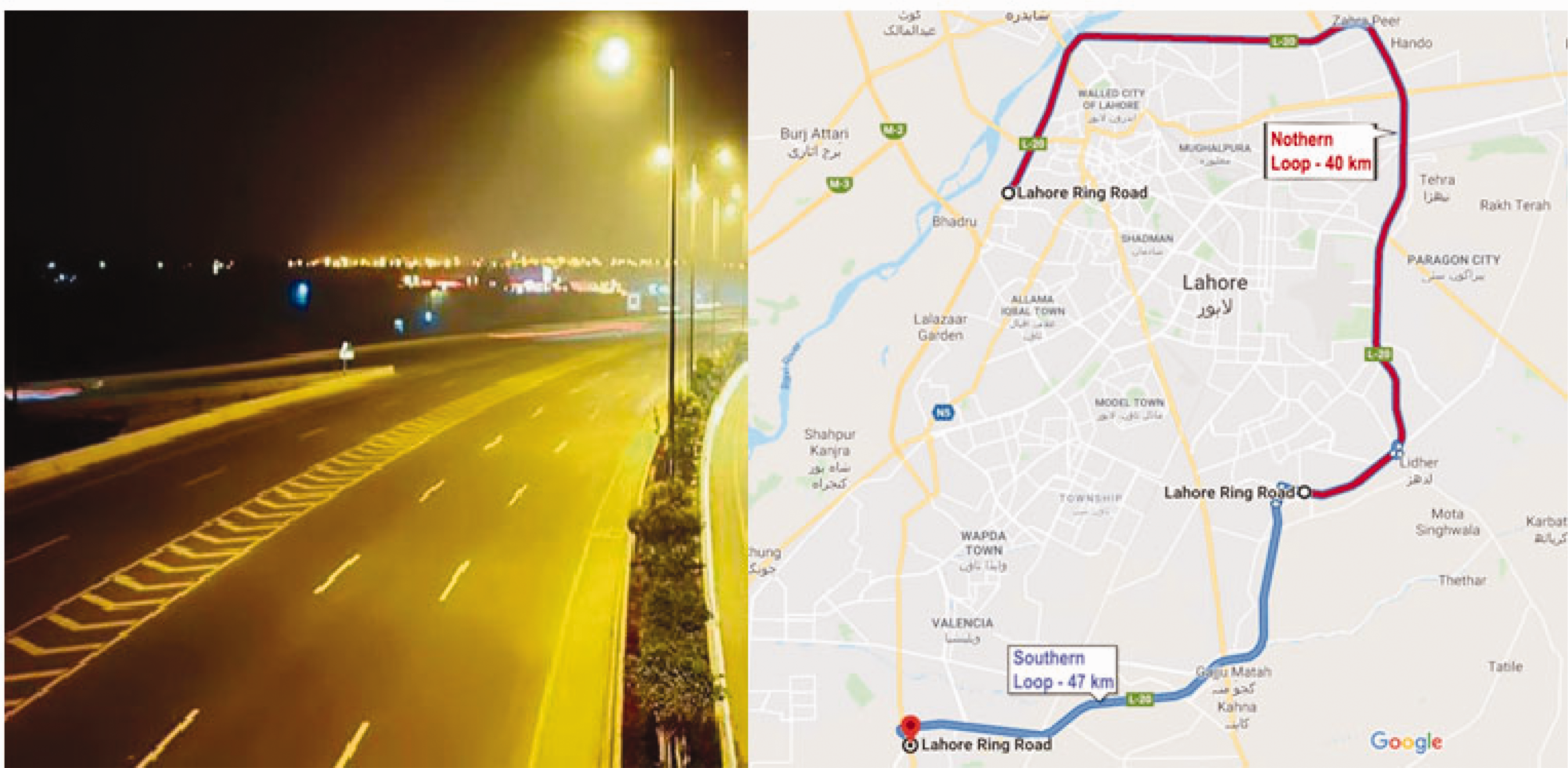
Map of Lahore Ring Road.
Energy audit of existing illumination system
A targeted energy audit is conducted by AERIL Lab, KICS, UET Lahore. As there are various areas for energy audit other than luminaires such as distribution network, line losses, and transformers, but this energy audit targeted the retrofitting of HPS lights. A flow chart demonstrating the process adopted for this energy audit is shown in Figure 3.
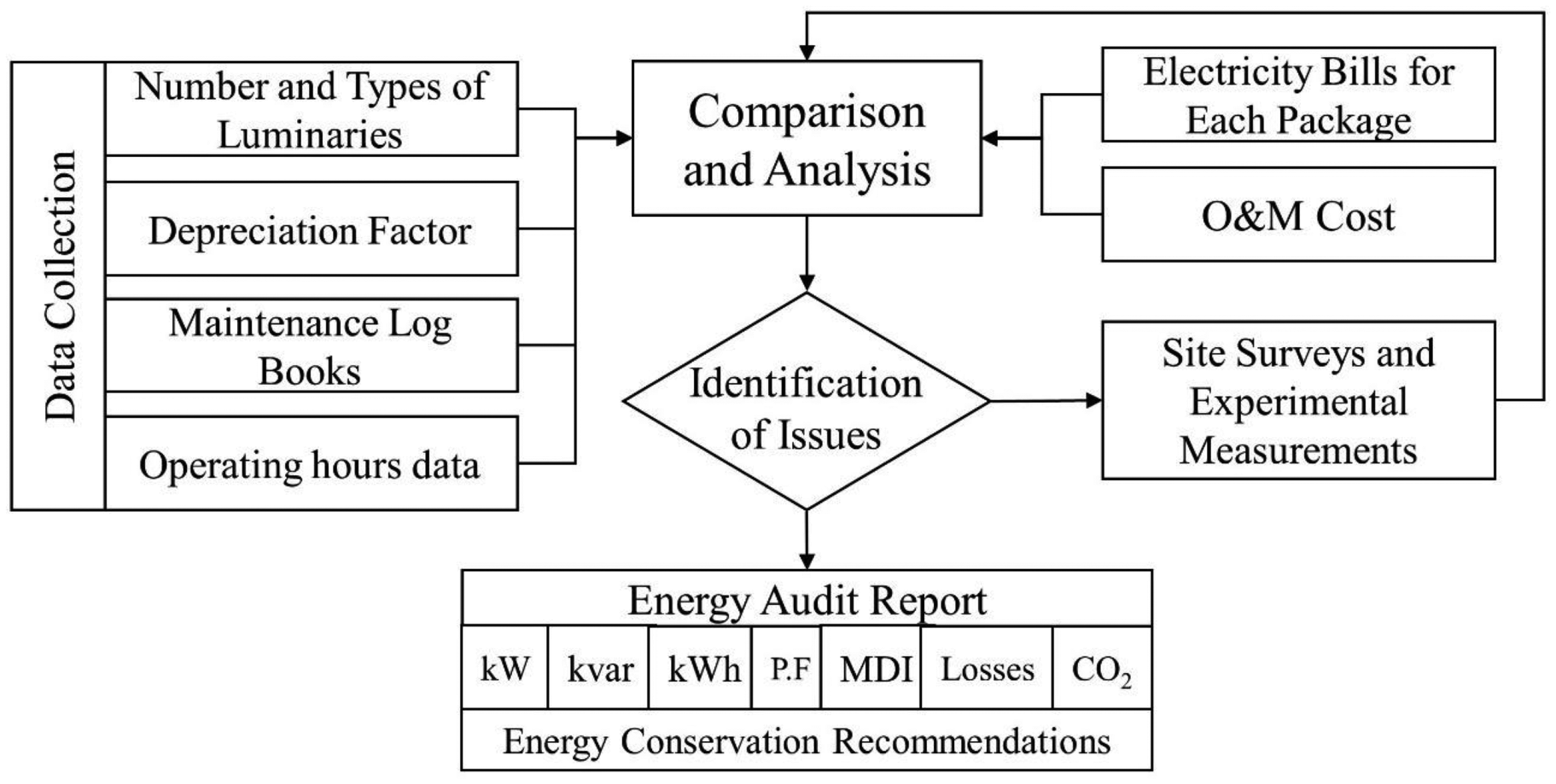
Energy audit methodology.
As shown in Figure 3, detailed information is collected and analyzed prior to the site surveys. The electricity bills for each of the 17 segments in Northern and Southern loops are collected and compared with the theoretical estimation of billing. The differences in the actual and estimated billing were marked for further surveys. Experiments were conducted during the surveys to measure the actual power of the lights. Final measurements of active power (kW), reactive power (kvar), annual energy consumption (kWh), maximum demand indicator (MDI), power factor (P.F), cold start-up time, losses, and carbon footprint were obtained and utilized for comparison with the proposed system to analyze the conservation potentials.
Experimental measurements
Experimental measurements of power and energy parameters provide accurate consumption details and conditions of the appliances that deteriorated over time. It is often observed that after a certain period, electrical appliances start to consume more power compared to the rated power. Furthermore, not always all the theoretical calculations provide us with accurate data. Therefore, to obtain an estimate of actual energy consumption and losses, experimental measurements are taken using different equipment. For experimental measurements, two different types of power analyzers were utilized. To measure the power parameters of installed lights that were not feasible to remove from poles, the handheld PCE-PA 8300 power analyzer from PCE Inst.™ was used. However, in most cases, the selected samples of lights from different packages were brought to the lab for testing on a stationary power analyzer, the 2510 Multifunction power analyzer from PeakTech®. The readings of kW, kvar, kVA, and P.F were used for the calculation of total power, energy consumption and losses of both existing and proposed lighting systems.
Energy conservation recommendations
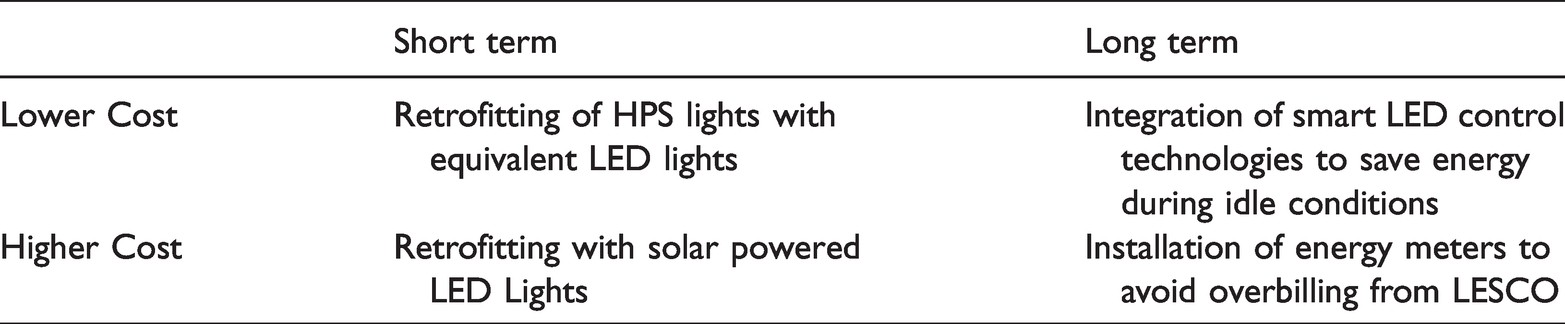
The energy conservation recommendations (ECRs) made after the energy audit are mentioned in Table 1. The short-term ECRs include replacement of the HPS lights with LED lights and installation IOT technologies based on vehicle speed, traffic volume, road occupancy.25–27 However, this study is focused on low cost and short-term ECRs, which is retrofitting of HPS lights with LED lights.
Energy conservation recommendations.
Calculation of energy consumption and losses
The total energy consumption of the existing installed lights can be estimated by using the following equation (1)

Here, 

Similarly, the total energy consumption of the proposed lights for future retrofitting can be estimated by using equation (4)



MDI charges
The maximum demand indicator (MDI) gives the maximum power demand of a user in a specific duration of time. The public lighting systems in Lahore are billed according to LESCO G-Tariff. The unit cost according to this tariff is mentioned in Table 5. To calculate the MDI charges following equation (7) is used.

Cold startup time (CSU)
The existing HPS lamps take some time to reach their maximum brightness. This time is known as cold startup time, and it varies from 10–15 minutes. However, the lights also do not draw the peak input power during this startup time. The energy loss due to this CSU time also contributes to total billing. By considering that the lights operate at 50% of the input power during CSU time, the total energy loss due to CSU is estimated by using equation (8)

LPF penalty
The minimum allowed power factor for an electrical system in Pakistan is 0.9. Consumers with P.F lower than this are charged a low power factor penalty (LPF) based on the MDI and actual deviation of P.F. The formula used for estimation of LPF is mentioned in equation (9)

Where, MDI is the maximum demand indicator,
All the above parameters are calculated for detailed analysis of both the illumination systems.
Results and discussions
Conservation potentials in terms of energy consumption, energy billing, reduction in carbon footprint and increase in the power capacity of wiring network are estimated. The research methodology for this study is presented in Figure 4. It shows that detailed observations of both HPS and LED illumination systems are collected and verified by the lab and on-site experiments. The obtained details are analyzed and compared to achieve the conservation potentials.
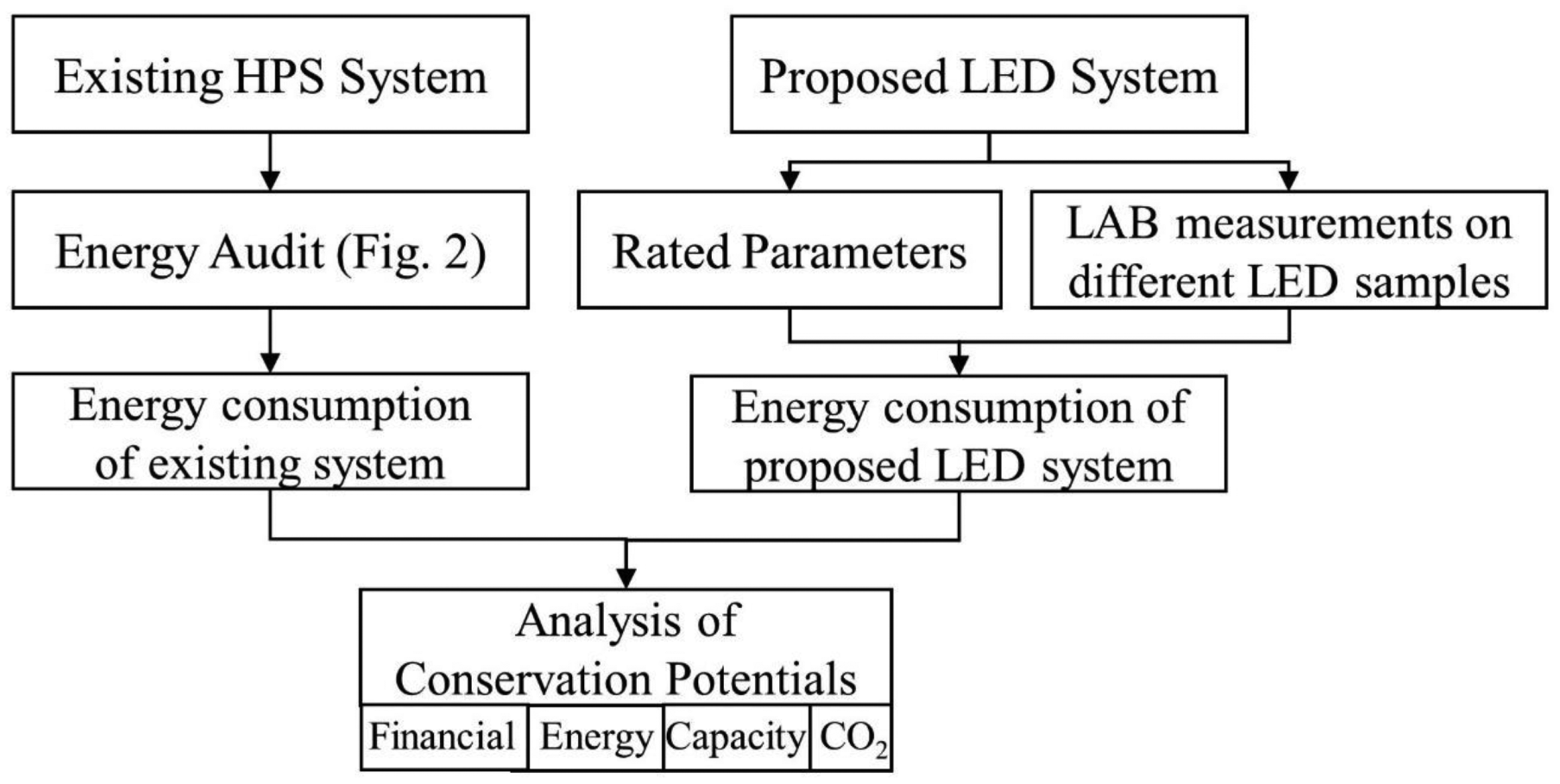
Research methodology.
Existing HPS system
The energy audit of the existing HPS system revealed that there are two different categories of HPS lights, 250 W and 400 W are installed at LRR. The detailed measurements of the existing HPS illumination system are summarized below in Table 2.
Measurements of HPS illumination system.
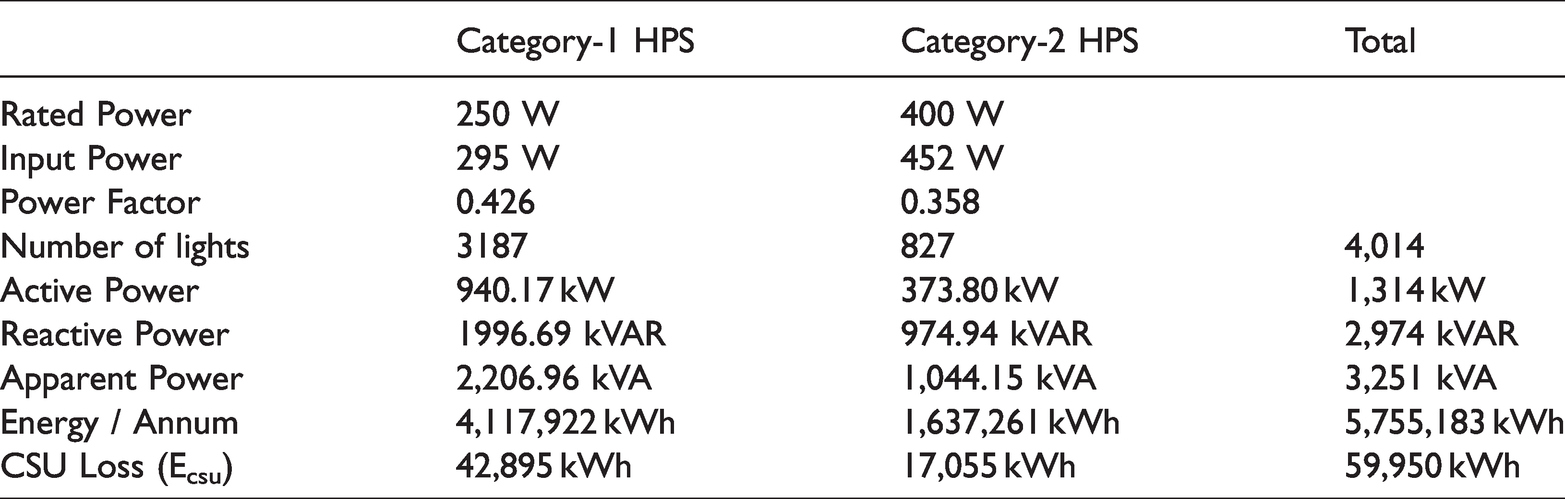
The annual energy consumptions for Category-1 and Category-2 HPS are calculated by using equations (2) and (3), respectively. The total annual energy is calculated by using equation (1). The losses due to cold start-up time are calculated by equation (8). The measured input power of the lights is higher than the rated power because of the power consumption in the electromagnetic ballast. The power factor of both the categories is very low that may be attributed to the depreciation of the lights. The lower power factor results in an increase of the reactive power in the system. To compensate the higher reactive power, the apparent power of the system is increased and therefore, the transformers for such systems are required to have a higher kVA rating. If the reactive power of the system is reduced, the overall apparent power is reduced, and this saves the capacity of installed transformers and distribution wires.
Proposed LED system
To achieve maximum energy conservation without compromising the illumination level, the LED lights with equivalent efficacy are proposed. The 400 W and 250 W HPS lights are proposed to be retrofitted by 180 W, and 120 W LED lights, respectively. The details and measurements of the proposed LED illumination system are mentioned in Table 3.
Measurements of proposed LED illumination system.
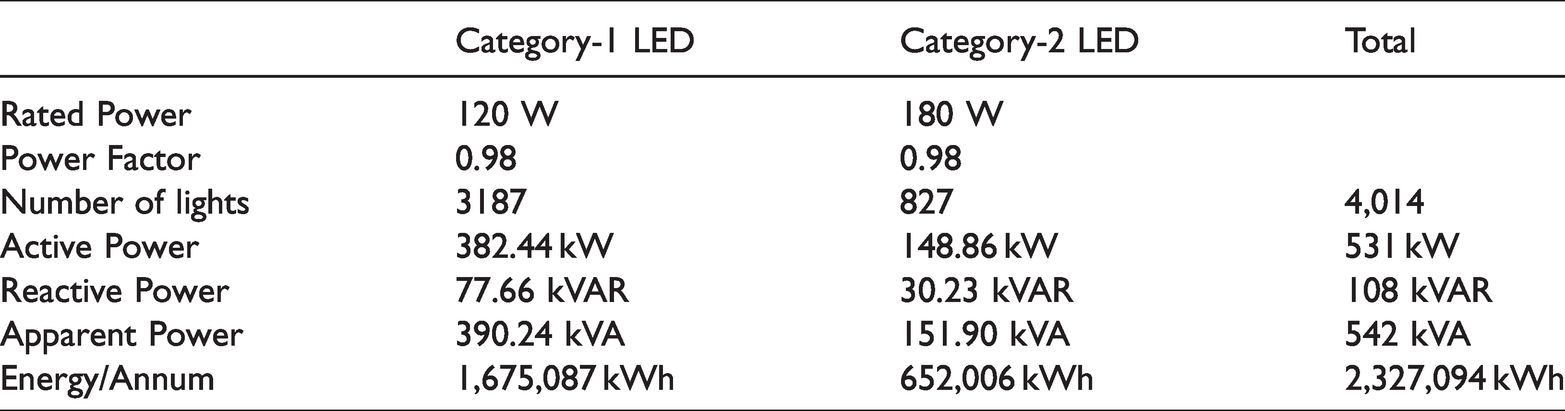
The power factor of the LED lights was measured using the power analyzer in the laboratory. The annual energy consumption of category-1, category-2, and their total is calculated by using equations (5), (6), and (4), respectively. Although LED lights have electronic driver circuits instead of ballasts in HPS, their power consumption is very low. Therefore, the P.F of the proposed LED lights is 0.98, which is very high compared to the HPS lights. The reactive power and apparent power of LED illumination are therefore very low, and it helps conserve the line and transformer losses and capacity. The CSU loss in the case of LED lights is zero as LED lights turn on without any cold startup delay.
Analysis of conservation potentials
The results show significant energy and financial conservation potential. The improved P.F of the proposed illumination will increase the power quality and stability of the complete system by reducing the reactive power and line losses. The zero-startup time of LED lights will completely eliminate the CSU losses. Consequently, significant amount of annual energy consumption will also be reduced. This will also indirectly increase the capacity of the national grid as this conserved energy will be available to other consumers without installation or upgradation of power generation plants.
Figure 5 shows that the apparent power of the existing HPS and proposed LED illumination system is 3,251 kVA and 542 kVA, respectively. This means 83.3% of the apparent power will be conserved if the proposed retrofitting is executed. This huge reduction in apparent power will reduce the required wire and transformer capacities. In fact, after retrofitting, the existing distribution network and transformers will be able to accommodate more electrical load in the future without any upgradation.
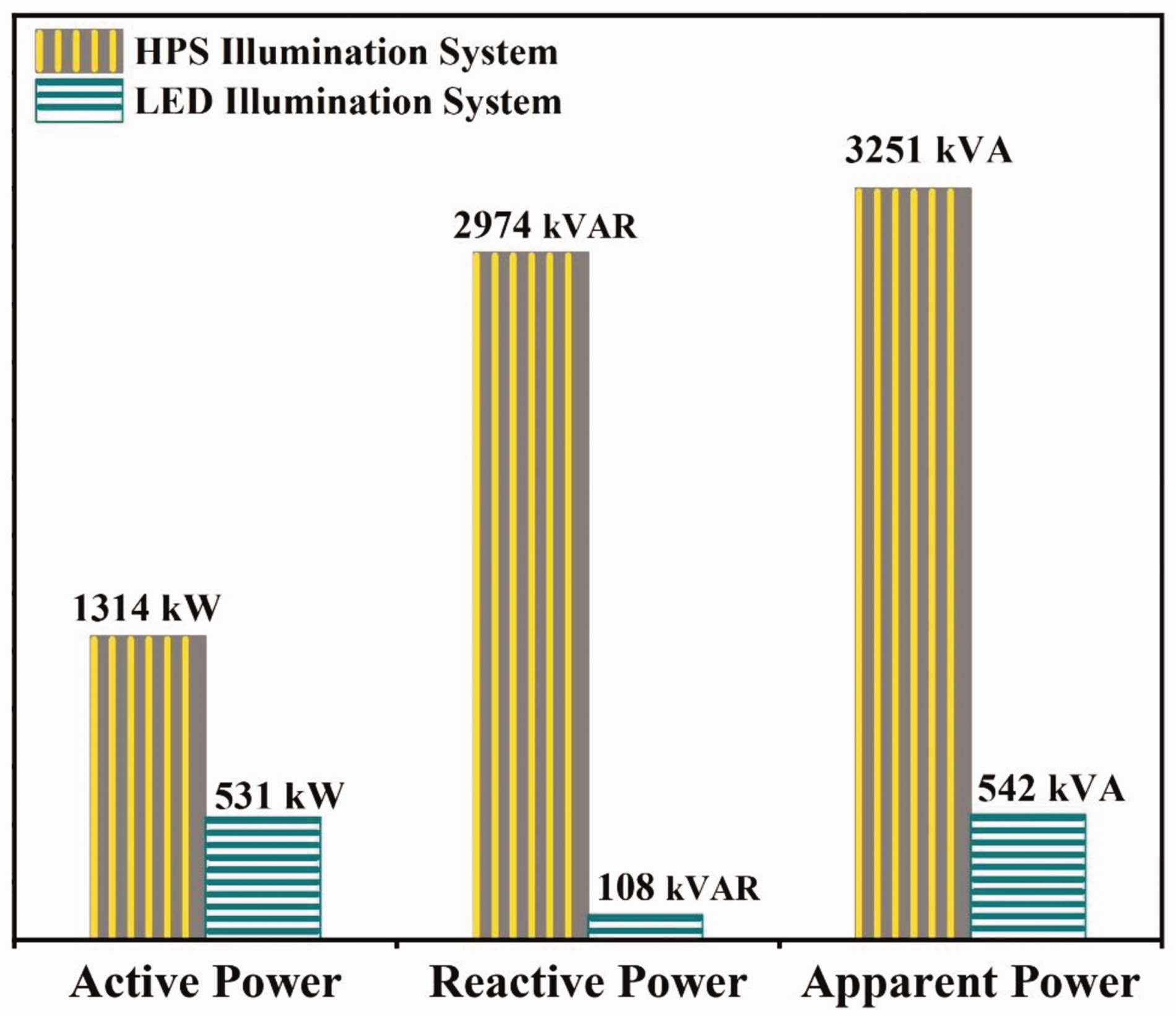
Potential of reduction in system power.
Also, the active power of the system is reduced to 531 kW from 1,314 kW. This 59.6% reduction in the active power of the system results in lower energy consumption and lower MDI of the system.
Furthermore, the huge 96.4% reduction in reactive power from 2,974 kVAR to 108 kVAR is credited to the lower power factor of the proposed LED lights. LESCO charges its commercial users with quite high power factor penalties, which are also calculated later in this section. There is a direct relation between apparent and reactive power. Therefore, by reducing the reactive power, the apparent power is also reduced. Although the capacitor banks are installed to improve the P.F and reduce the reactive power that also comes with additional capital investment. So, by retrofitting, not only the apparent power is reduced but also the costs of power factor penalties and capacitor banks are avoided.
The annual energy consumption of both HPS and LED illumination system for each category is shown in Figure 6. The existing system consumes 5.82 GWh/annum, including the CSU losses. The energy consumption can be reduced by 60% if retrofitted by an LED system as its energy consumption will be 2.33 GWh/annum.
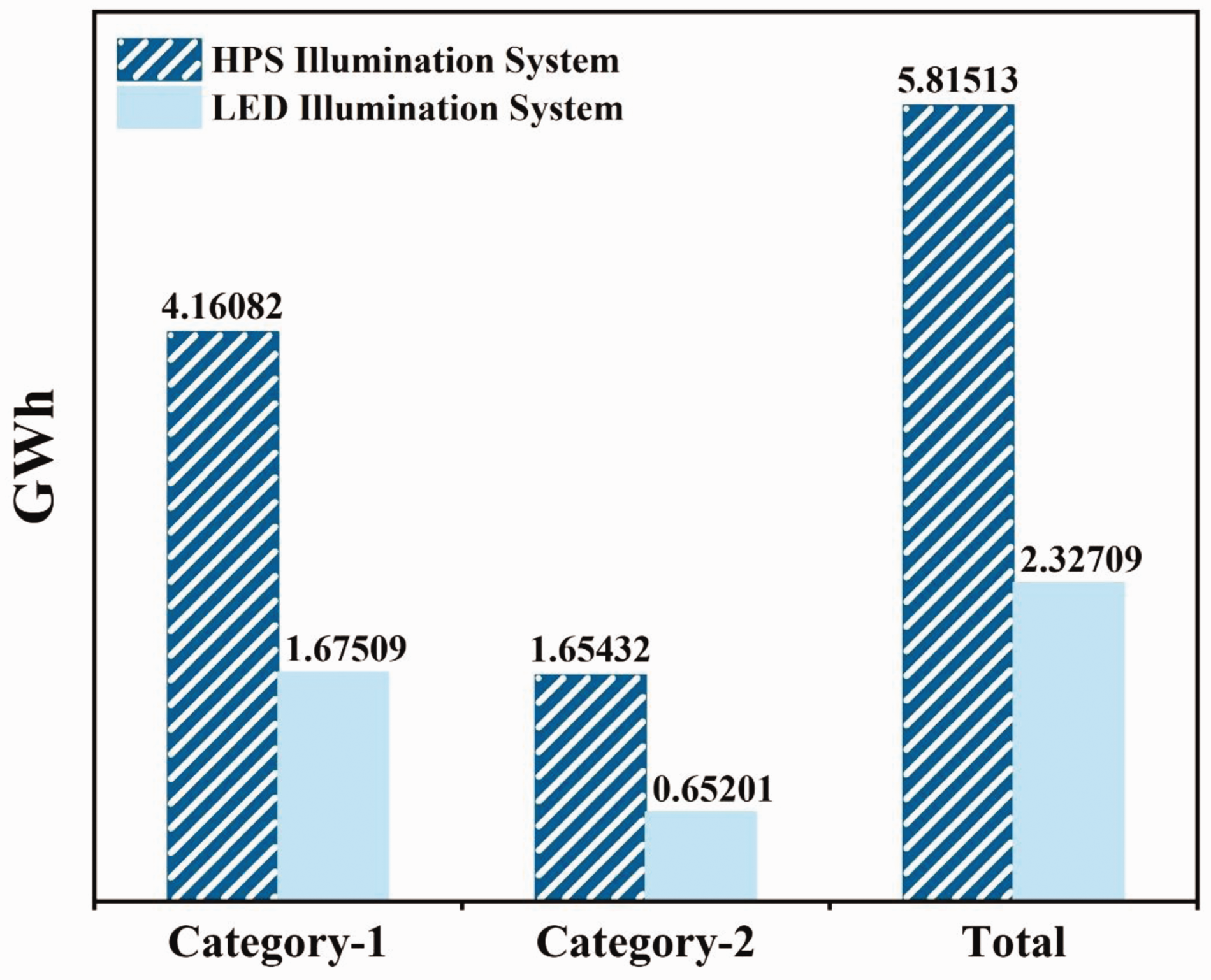
Energy conservation potential.
This energy conservation will not only reduce the electricity demand of LRR illumination system from the utility grid, but it will also allow the grid to supply this saved energy to other users. The electrical energy demand of an average house in Pakistan is 3600 kWh/annum. It is estimated that the conserved energy from proposed retrofitting can power 969 houses per year in Pakistan.
Besides energy conservation, the second benefit is financial saving. Numerous sectors are related to power generation. Reducing the energy demand directly impacts the reduction in these sectors, such as installing new power plants and importing fuel oil for thermal power plants. The unit cost of electricity is very essential in the calculation of power and energy billing. The utility tariff for LRR is mentioned in Table 4. The final unit cost of electricity used in the analysis of this study is 11.86 US Cents.
Cost per unit (kWh) for public street lighting in Lahore.
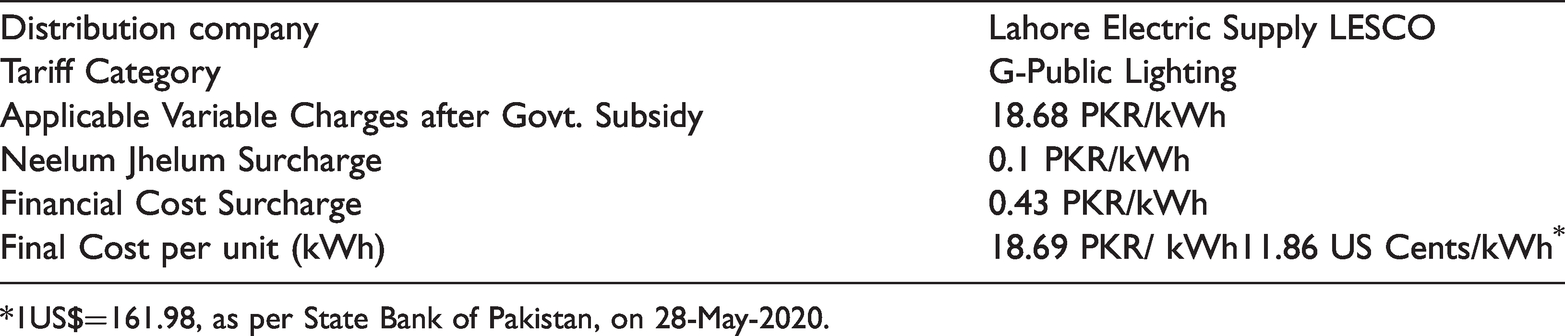
*1US$=161.98, as per State Bank of Pakistan, on 28-May-2020.
By retrofitting the existing HPS illumination system, not only the active power of the illumination system is reduced, but other factors such as MDI, LPF penalty, line and CSU losses are also reduced. There is a direct saving potential of approximately half-million US$in the operational cost of the HPS illumination system. The detailed financial saving potentials are summarized in Table 5.
Savings from the retrofitted system per year.
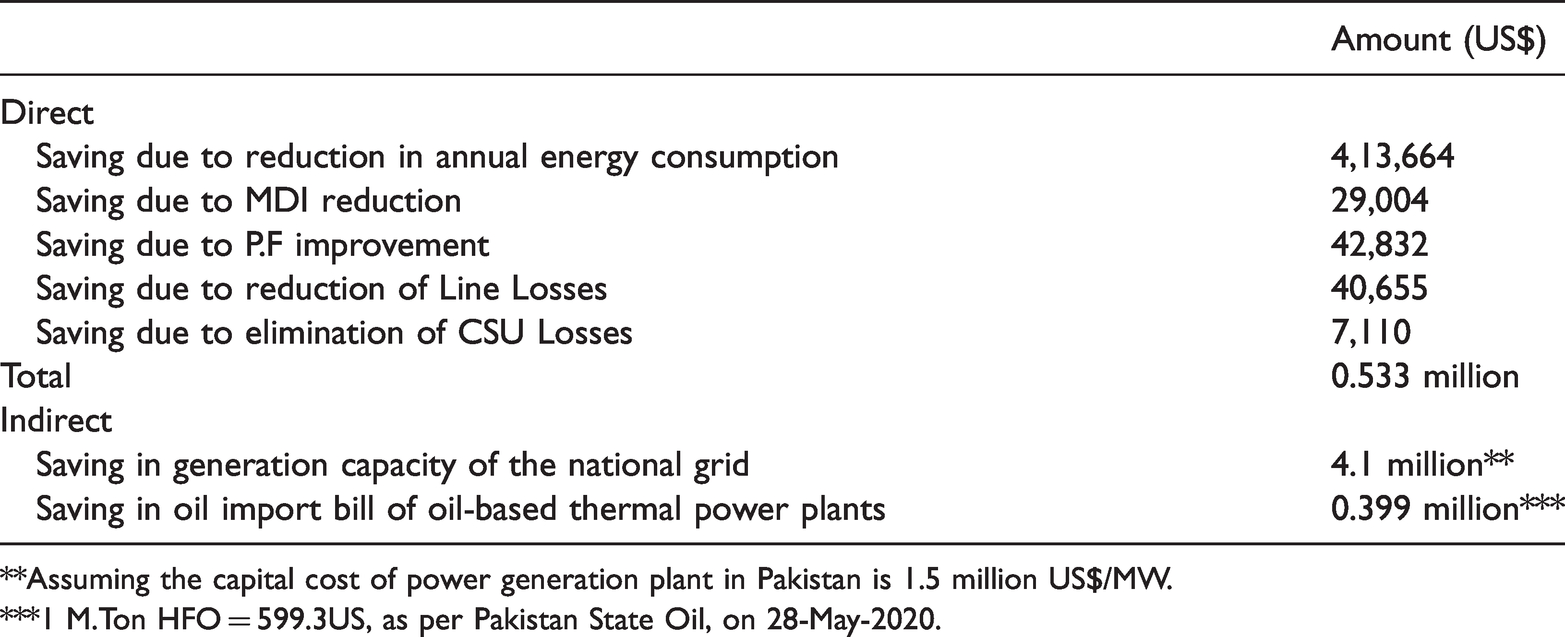
**Assuming the capital cost of power generation plant in Pakistan is 1.5 million US$/MW.
***1 M.Ton HFO = 599.3US, as per Pakistan State Oil, on 28-May-2020.
The expected financial saving due to a reduction in the annual energy demand is mentioned in Table 5. The unit price according to the LESCO tariff for public lighting is mentioned in Table 4. The capacity charges are applicable to load exceeding 20 kW as MDI. Therefore, by reducing the active load of the system, the corresponding MDI charges will be also be reduced, as mentioned in Table 5.
HPS lamp has 10 to 15 minutes CSU time, and it results in loss of energy, as mentioned in Table 2. This loss of energy will be eliminated if the HPS illumination system is retrofitted with an LED illumination system. The saving due to CSU loss stated in Table 5. The other main factor that significantly contributes to the billing system is the low power factor penalty. The customers are charged by utility companies if the P.F of the system is lower than 0.9. LPF penalty is charged depending on the MDI of the system and the difference in P.F. The measured P.F of HPS luminaires is 0.426 and 0.358 for Category-1 and for Category-2, respectively, which is quite low. So, a significant amount is charged by LESO as a low P.F penalty. The power factor of LED lights 0.98, and this will significantly reduce the reactive power and financial losses due to LPF penalty. By reduction in the active load of the illumination system, the line losses are also reduced. The financial savings due to lower MDI, power factor, and line losses are also mentioned in Table 5. Collectively, a huge amount is paid to illuminate the HPS lights, and a significant part of it can be avoided by retrofitting these with LED lights.
The analysis shows that the total direct financial saving is approx. 0.53 million US$per annum. The indirect saving from this proposed project has great significance. For the existing system, the government is investing a huge amount on the generation of electricity. By proposed retrofitting, the approximate capital cost of 4.1 million US$can be saved for a generation capacity of 2.71 MVA. Reduction in unit consumption has an indirect impact on foreign exchange. The import bills are linearly decreased with energy consumption. It is observed that approximately 0.4 million US$can be saved from the import bill of oil every year. LED are also environmentally friendly as there is no mercury or other toxic material. LED lights are green lights as it requires lower input energy that ultimately reduces the carbon footprint. The amount of carbon footprint reduction is shown in Figure 7. The carbon emission of HPS and LED illumination systems is approx. 4,652.10 and 1,861.67 tCO2, respectively. This shows that the CO2 emission of the existing system will be reduced by 60% if retrofitted with the proposed LED illumination system.
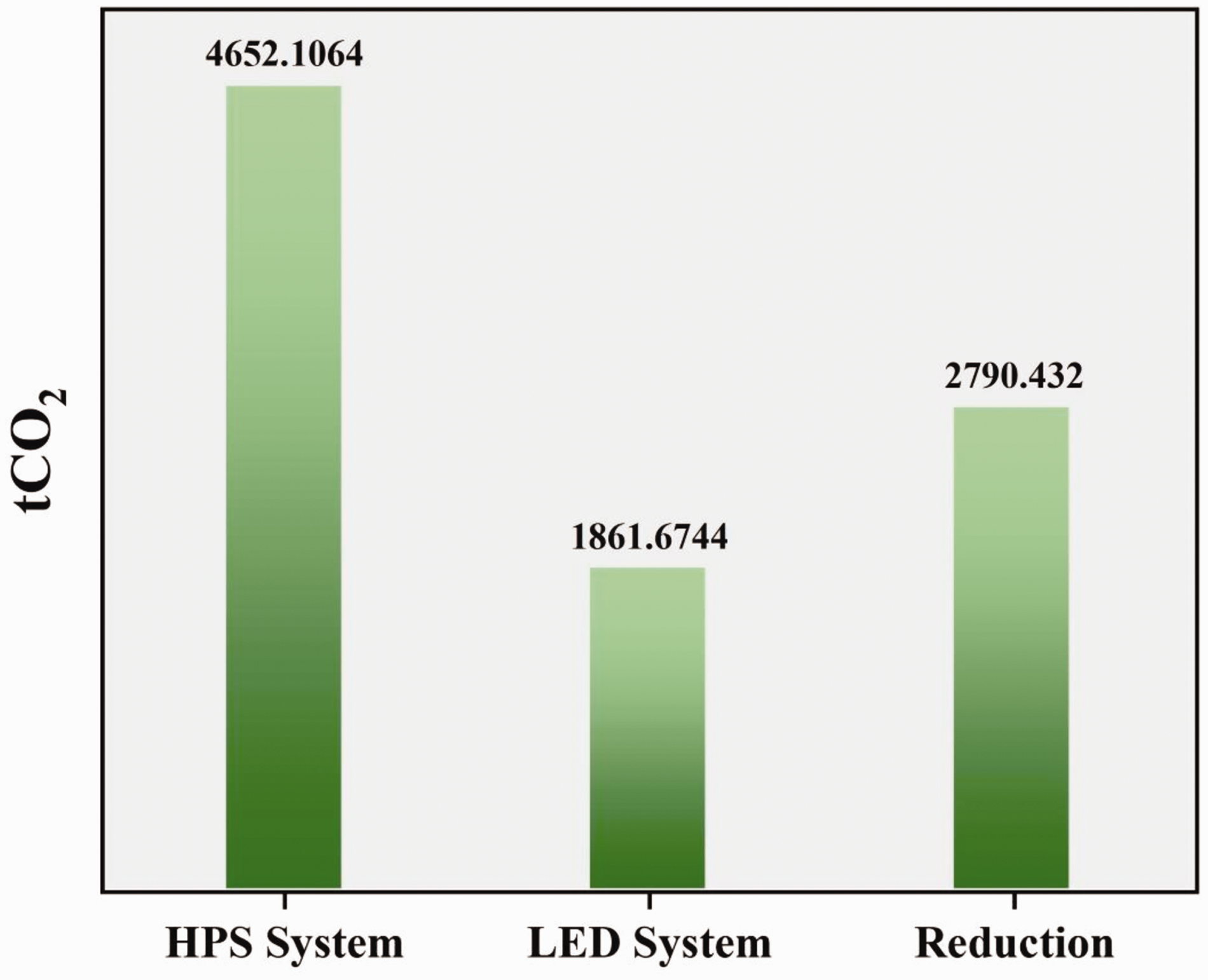
Reduction in carbon footprint.
Conclusion
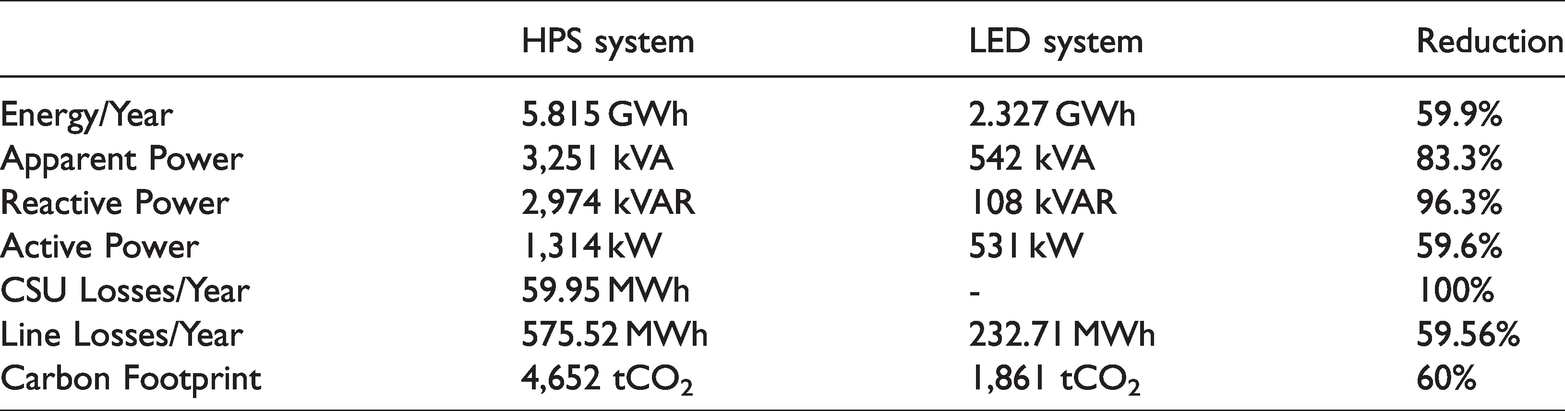
This study presents the retrofitting feasibility and conservation potential of an 85 km long ring road in Lahore. The existing HPS illumination system is proposed to be retrofitted with an LED illumination system. The results show that LED luminaires offer a better replacement to existing HPS luminaires ensuring both energy and environment conservation. Various electrical parameters, as mentioned below were observed to analyze the performance of both systems.
To find out the actual energy consumption and losses of existing HPS illumination system, a targeted energy audit is conducted by a research team from AERIL Lab, UET Lahore. A detailed analysis of installed HPS lights is performed, and major electrical parameters are measured by onsite and laboratory experiments. It was observed that power factor of HPS system was 0.426 and 0.358 for 250W and 400W HPS lights, respectively. The low power factor leads to the higher reactive and apparent powers in the system, which significantly increases the losses. The losses mainly include the energy loss from cold startup, higher MDI, lower power factor, and line losses, which increases the overall operational cost of the system. An equivalent LED illumination system with higher lighting quality, lower losses, and more energy efficiency is proposed for retrofitting. The samples of the proposed LED lights were also tested in the laboratory to obtain accurate electrical parameters. The results show that the total peak power consumption will be reduced without compromising the demand thresholds. Table 6 shows that 59.9% of the annual energy demand will be reduced after the retrofitting. These lights achieve maximum illumination in zero time that will eliminate the cold startup losses. The lower input power and power factor of LED lights result in 83.3% reduction in apparent power and a 59.6% reduction in active power. Financial savings based on the cost analysis of both systems are also estimated. A direct saving of 0.533 million US$per annum is possible in operational cost. The indirect savings include the reduction in import bill of oil and in power generation demand of national grid. The retrofitted illumination system will also contribute in environment conservation by reducing carbon footprint by 60%. In the future, dedicated energy meters can be installed to avoid overbilling from LESCO. We can also further optimize the power consumption by utilizing smart IoT technologies according to traffic schedules.
Conservation potentials.
Footnotes
Declaration of conflicting interests
The author(s) declared no potential conflicts of interest with respect to the research, authorship, and/or publication of this article.
Funding
The author(s) received no financial support for the research, authorship, and/or publication of this article.
