






Abstract
Many studies examine a stressors-professional burnout (PB) relation, but only few consider the role of ethical conflicts (ECs) in this context. The aim of this study was to characterize ECs' frequency and level of burden with them among nurses and to establish the relations between ECs' frequency, burden and PB. One hundred nurses participated in this study. ECs' frequency and burden were tested with an originally developed questionnaire. PB was examined with Maslach Burnout Inventory. Most frequent ECs concerned a nurse-patient relationship. PB was positively related to ECs' frequency (r = .54; p = .001) and burden (r = .22; p = .03). Frequency of specific conflict did not imply burden with it and vice versa. ECs' frequency seems more important for PB than a level of burden with them. The most frequent and the most burdening conflicts may lead to development of PB but the less frequent and less burdening ones are also dangerous.
Introduction
Nursing as a profession is bound with coping with numerous difficult and burdening situations. McVicar 1 identified the following factors as the most stressful at the workplace: workload, relationship with other clinical staff, leadership and management issues, emotional demands of caring, shift working, and lack of reward. Additionally, major changes in nursing practice, principles and requirements of this profession, as well as in the health system in general, are taking place in many countries all over the world. 2 Central and Eastern European countries, which joined the European Union (EU) most recently, are a specific example as they had to adjust the regulations of nursing’ functioning to EU standards. In Poland, the main changes were connected with modifications in nurses' education system and in the scope of their competences. Currently, nurses' education is conducted only on the higher education level and obtaining a Bachelor’s degree is a condition of receiving nurses' right to practice. Further academic education and obtaining a Master's degree is also possible. Simultaneously, nurses who obtained their qualifications previously to such changes (e.g. in nursing trade schools) faced an obligation to complete higher education. Additionally, the scope of nurses' competence has broadened, especially in terms of their independence and realization of educational and health promotion tasks. 3 As the indicated factors accumulate, nurses keep on facing new challenges and their profession becomes increasingly stressful. As well as positive changes in the nursing profession, negative changes such as decreased work satisfaction and professional burnout also occur. 4
Theory of psychological stress as an umbrella concept
Psychological stress theory, created by Lazarus and Folkman, 5 may be extremely helpful in analysing conditions contributing to the development of professional burnout. It delivers the general theoretical framework for the hypotheses and interpretations and has been broadly discussed in the literature.6,7 Stress is ‘a particular relationship between the person and the environment that is appraised by the person as taxing or exceeding his or her resources and endangering his or her well-being’. 5 Stress thus defined is caused by a variety of factors called stressors. Their common element is the fact that they exceed personal resources or endanger personal well-being. The personal meaning of the situation is evaluated in the midst of stress appraisal. According to Lazarus, ‘this term connotes an evaluation of the significance to the individual of what is happening for well-being’ (p. 198). 8 As a result, a process of coping is activated. Stress may lead to a number of consequences: direct (immediate) and distant. Even though it is well known that both direct and distant stress consequences may be positive as well as negative (see also concepts of distress and eustress by Selye 9 ), usually more attention is paid to the negative ones. Excessive stress unmodified by effective coping creates conditions for the development of professional burnout.
Professional burnout
Burnout is defined as a state of ‘physical, emotional and mental exhaustion that results from long-term involvement in work situations that are emotionally demanding. 10 It can occur when individuals try to reach unrealistic goals and end up depleting their energy and losing touch with themselves and others. 4 This syndrome encompasses emotional exhaustion, depersonalization and reduced personal accomplishment.4,10 Emotional exhaustion refers to state of lack of energy and enthusiasm for work and/or feeling of being drained by others. Depersonalization is a callous or indifferent treatment of people who are recipients of one’s services. Reduced personal accomplishment is described as a decline in one’s feeling of competence and successful achievements in one’s work with people.10,11 It is accompanied by the feeling of being unable to cope with job demands. The time devoted to fulfilling some duties grows longer whereas their quality becomes lower.
The consequences of professional burnout may be dangerous not only to the person experiencing this syndrome, but also to his/her care-recipients, colleagues, family members and the whole employing institution.4,12 Therefore, it is important to identify factors taking part in its development. As was mentioned before, many kinds of stressors at the workplace were identified. It appears that nurses, independently from their country and area of practice, indicate similar stressors; however, they rank them differently. 13
Ethical conflicts
Among different kinds of stressors, situations causing a conflict of goals and values deserve special attention. Ethical conflicts are a good example of such situations. According to Jameton, 14 nurses experience ethical conflicts as: (a) moral distress (when they cannot carry out the morally appropriate action, because of a variety of institutionalized obstacles); (b) moral dilemma (when two or more moral principles apply but they support mutually precluding courses of action); and (c) moral uncertainty (when they are unsure what moral principles or values apply to a situation). There is no doubts that the profession of nursing is an ethically grounded profession infused by moral standards.14,15 On the other hand, currently growing institutional constrains (inadequate staffing, legal limits, institution policy) severely hamper the possibility of applying these standards, causing moral distress.
Because of the prevalence and seriousness of these types of ethical conflicts, they have been the subject of many empirical studies.16,17 Experiencing ethical conflict affects the mind and body of the individual, social relationships, and the whole organization.
The Code of Professional Ethics as a source of moral standards
The vast majority of ethical conflicts refer to moral obligations and principles included in professional code of ethics.
18
Detailed ethical principles enclosed in the Polish Code of Professional Ethics for Nurses and Midwives belong to five domains: nurse and patient relationships; nurse and staff cooperation; nurse and professional practice and research; nurse and the self-governing body of nurses; nurse and rules of conduct towards society.
19
Every domain includes number of principles connected to nurses duties in a specific field of practice. Conflicts between nurses' current goals (resulting from necessity of acting within institutional constrains) and standards stated in the code of ethics are not unusual in their everyday practice. For instance, being a witness of breaking the patient's right to intimacy and dignity is a common example of such conflict concerning a nurse-patient relation, while being a witness of committing a medical error is an example of nurse-practice relation.
Research problem
The relation between ethical conflicts in nurses' practice and the level of professional burnout was a main focus of our study. It is worth noticing that there are two, to some extent independent, aspects of ethical conflict: its frequency and the feeling of being burdened with it. Some conflicts may occur quite frequently but do not entail much ethical distress, while others may be relatively rare but extremely burden-provoking. The key issues of the research problem are presented in Figure 1 .
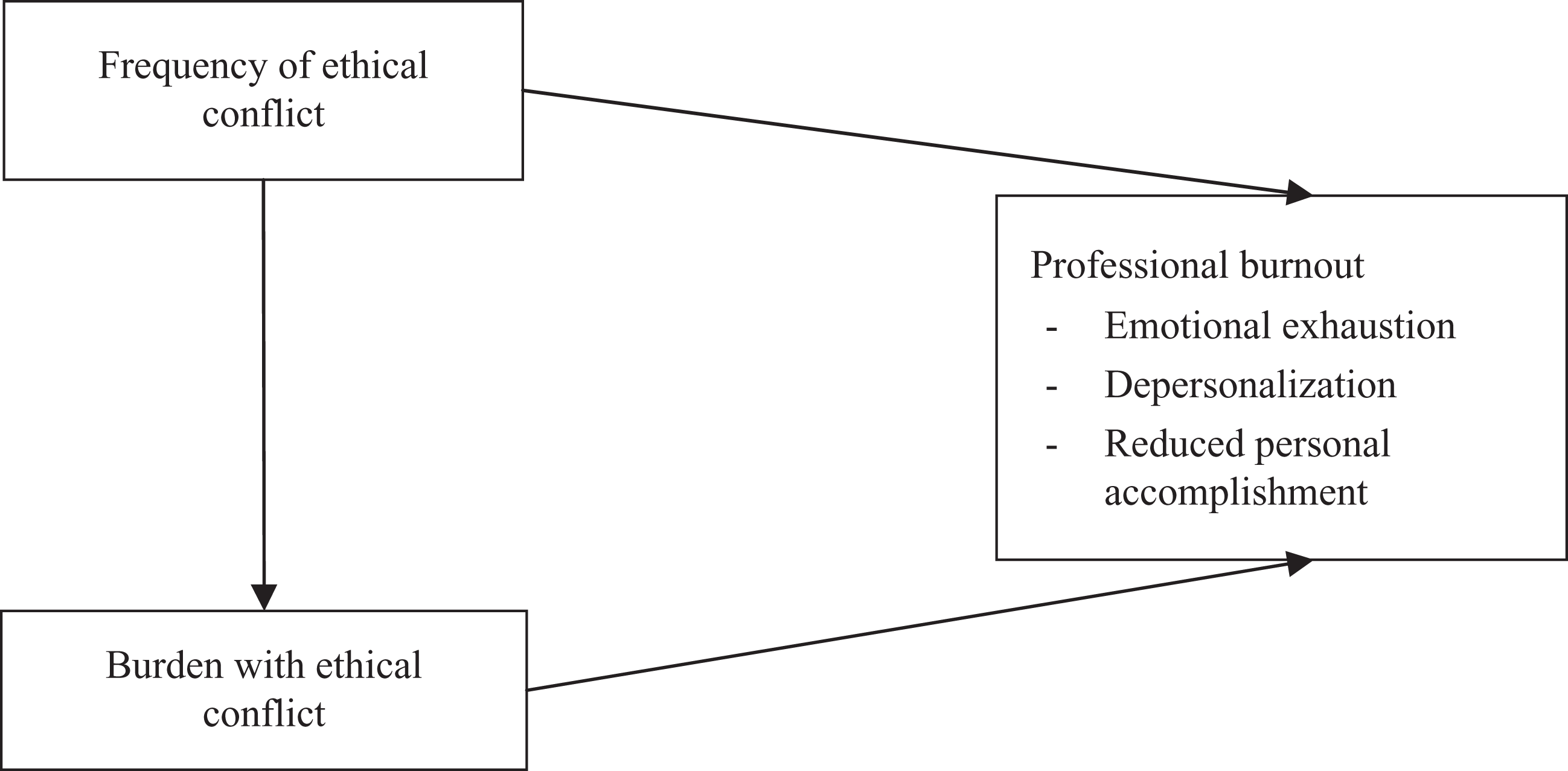
Model of research problem: ethical conflict and professional burnout
In the current study, we formulated the following research questions: What is the frequency and level of burden with ethical conflicts in the studied sample? What is the relationship between frequency and burden with particular ethical conflict? What is the relationship between frequency of ethical conflicts occurrence and level of professional burnout? What is the relationship between burden with ethical conflicts in the studied sample and level of professional burnout?
Method
Ethical considerations
Permissions necessary in Poland for conducting a questionnaire study were obtained before data collection. The institutional review board supervised by the Dean of the Faculty approved the project. All participants received written information about the goal and the procedure of the study. Study participation was voluntary and responses were anonymous.
Sampling and procedure
A convenience sample was recruited using the following inclusion criteria: nurses with a Bachelor’s degree employed by the health care sector on a full-time bases as direct-care providers. The research was conducted among nurses studying a 2nd year of extramural master’s course at the Nursing Division of the Faculty of Health Sciences, Medical University of Warsaw. The study was conducted in seminar groups. All of the nurses invited to participate in the study agreed to take part in it.
The main study was preceded by a pilot study with a primary goal to check if the research instruments are intelligible. It was conducted among students in one of the aforementioned seminar groups (n = 20). It showed no problems with understanding of the procedure and instruments, therefore, no modification of the study design was needed. As a result the pilot group was included into the main study group.
Sample
The study included 100 professionally active nurses studying in a 2nd year of university extramural master’s course in nursing. Table 1 presents a detailed description of this sample.
Background data of nurses participating in the study (N = 100)
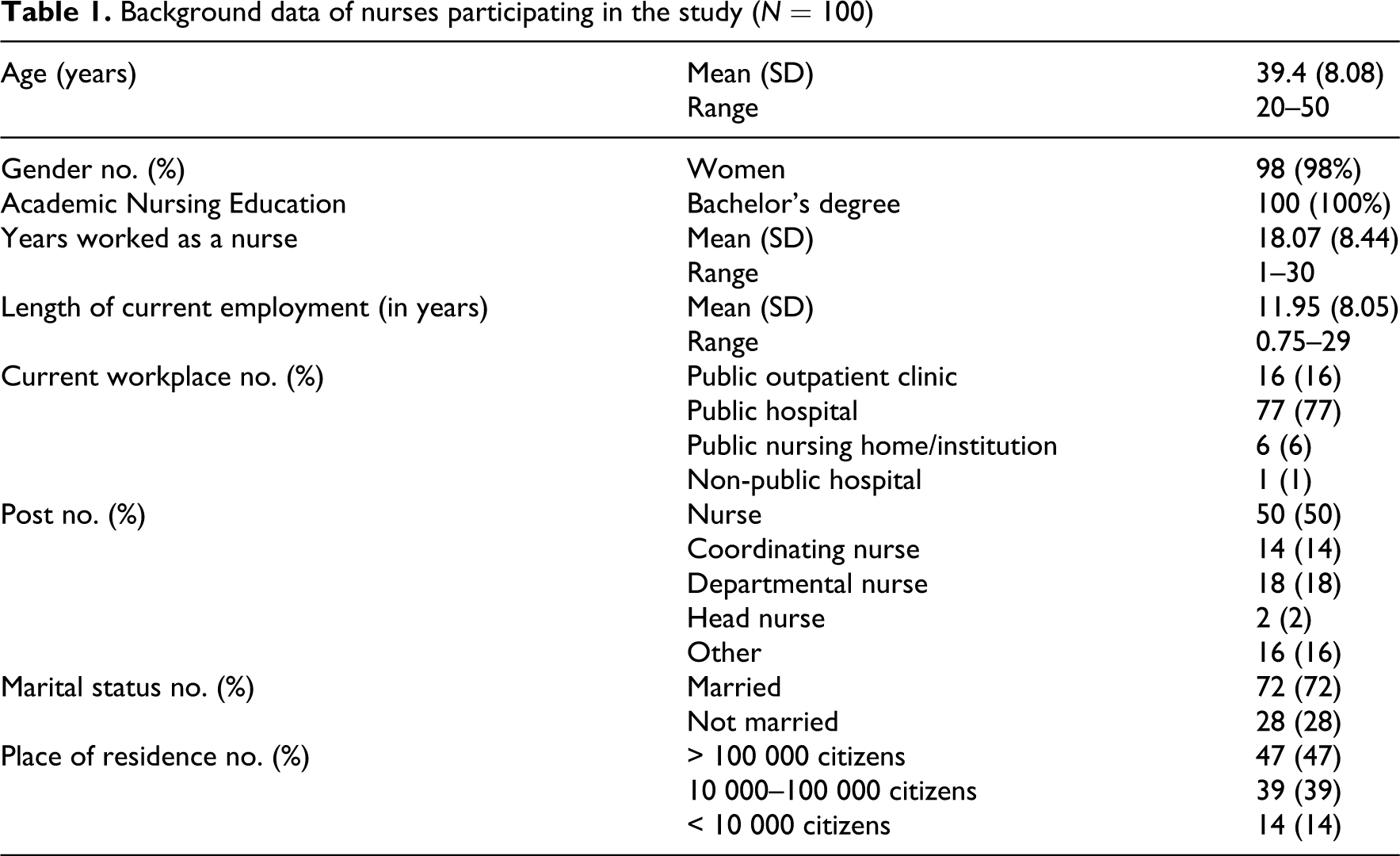
The studied sample consisted mainly of female nurses. The majority worked in public hospitals. Most of the surveyed nurses were married and living in big or medium-size city.
Instruments
The following instruments were used in the study: original Ethical Conflicts Questionnaire (ECQ) created for the purpose of this study to test the frequency and burden with ethical conflicts; Polish version of Maslach Burnout Inventory (MBI) (used by assent of the authors of the Polish adaptation).
The
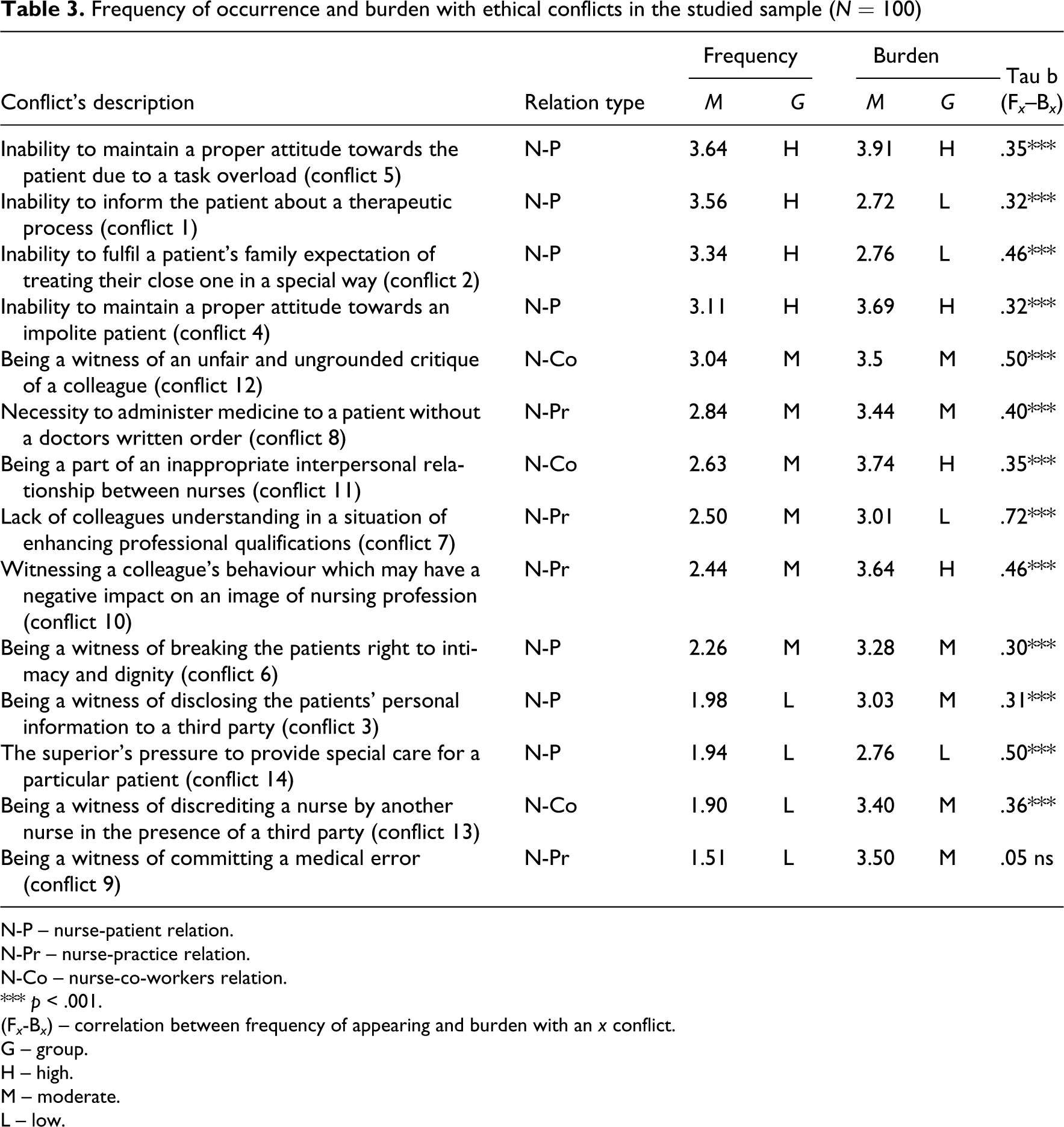
Frequency of occurrence and burden with ethical conflicts in the studied sample (N = 100)
N-P – nurse-patient relation.
N-Pr – nurse-practice relation.
N-Co – nurse-co-workers relation.
*** p < .001.
(F x -B x ) – correlation between frequency of appearing and burden with an x conflict.
G – group.
H – high.
M – moderate.
L – low.
In case of each situation, a participant answers two questions: ‘How often does a described situation occur at your work?’ (response scale: from 1 = hardly ever, to 5 = almost all the time) and ‘To what extent is experiencing such a situation a burden for you?’ (response scale: from 1 = very little extent, to 5 = large extent).
The results obtained by means of this questionnaire may be analysed in two ways. The first possibility is to calculate total scores for frequency and burden questions: ‘global frequency’ as a sum of all responses to the question related to frequency, and ‘global burden’ as a sum of all responses to the question related to burden. The second possible way of analysing this questionnaire’s results is to examine each of the ethical conflicts separately and for both: the frequency (14 items) as well as the level of burden (14 items). The preliminary psychometric analyses showed high reliability of global indexes used in the study: Cronbach’s Alpha Coefficient for an indicator of frequency of ethical conflicts equals .82 and .90 for an indicator of burden with them.
The Polish version of the
Descriptive data of Maslach Burnout Inventory

In the study group Cronbach’s Alpha Reliability Coefficients are satisfactory (between .73 and .90) but coefficient for depersonalization is the lowest (.62). It suggests its relatively low reliability. These results are consistent with data on psychometric properties of this tool from other studies conducted in different countries.21,22
Additionally, the significance of chosen socio-demographic characteristics (e.g. age, marital status, place of residence) and work-related factors (e.g. years worked as a nurse, post, workplace) were controlled.
Data analysis
To assess frequency and burden, mean values were used. To examine the correlations between continuous variables (global frequency and global burden and all indicators of burnout) r Pearson’s correlation was used. When at least one variable was ordinal Kendall tau-b correlation coefficients were calculated. Both coefficients have values between -1 to 1 and are interpreted in the same way (coefficient below 0 means negative correlation and above 0 positive correlation). 23 The data were analysed using SPSS version 14.
Results
Frequency of occurrence and burden with particular ethical conflicts
The data analysis began with a specification of the ethical conflicts' frequency of occurrence and level of burden with them in the studied sample (Table 3). The mean values for individual conflicts were used. Conflicts were organized according to the level of frequency and burden with them: four most frequently occurring/provoking most burden were qualified to the high level group (H); four least frequent/least burdening to the low level group (L), and all the rest to the moderate level group (M). In Table 2 the ECs are presented from the most to the least frequently occurring, while the burden results for each of them are shown in the next column. Areas of practice in which a conflict occurs is also indicated (nurse-patient, nurse-practice or nurse-co-workers). Moreover, to establish the relationship between frequency and burden with a certain conflict Kendall tau-b correlation coefficient was calculated.
As presented in Table 3, the following conflicts appear most frequently: inability to maintain a proper attitude towards the patient due to a task overload (conflict 5), inability to inform the patient about a therapeutic process (conflict 1), inability to fulfil a patient’s family expectation of treating their close one in a special way (conflict 2) and inability to maintain a proper attitude towards an impolite patient (conflict 4). All of them concern nurse-patient relation. The results show that the most burdening ethical conflicts are: inability to maintain a proper attitude towards the patent due to a task overload (conflict 5), being a part of incorrect interpersonal relationships between nurses (conflict 11), inability to maintain a proper attitude towards an impolite patient (conflict 4) and witnessing a colleague’s behaviour which may have a negative impact on an image of the nursing profession (conflict 10). There were two ECs classified as highly frequent and highly burden provoking: conflict 5 and conflict 4.
The findings indicate that correlations between frequency and burden with a particular conflict are positive and mainly moderate. The more frequent ethical conflicts are, the stronger the feeling of burden with them is experienced, but only to some extent. In other words, we cannot assume that nurses who face ECs often, will feel more burden and vice versa. The only exceptions are: conflict 7 (lack of colleague’s understanding in a situation of enhancing professional qualifications), where this correlation is the strongest, and conflict 9 (being a witness of committing a medical error) in which case the relationship is not statistically significant. As was mentioned before, the Ethical Conflicts Questionnaire also allows use of global indicators of frequency and burden with ECs (considered as sums of responses for all conflicts). In the studied sample the correlation between those two indicators was .63 p < .001. Such a result reflects the general character of association between frequency of occurrence and burden with the ECs, which is also moderate.
Frequency of ethical conflicts' occurrence and professional burnout
In a second stage of analysis the association of the ECs frequency with intensity of burnout symptoms were examined. In the case of PB, both a total score as well as components' scores were included in the analysis. First, relationships between a global indicator of the frequency of ECs and burnout were examined (Table 4 ).
Frequency of ethical conflicts occurrence (global indicator) and intensity of professional burnout symptoms (Pearson r correlations) (N = 100)
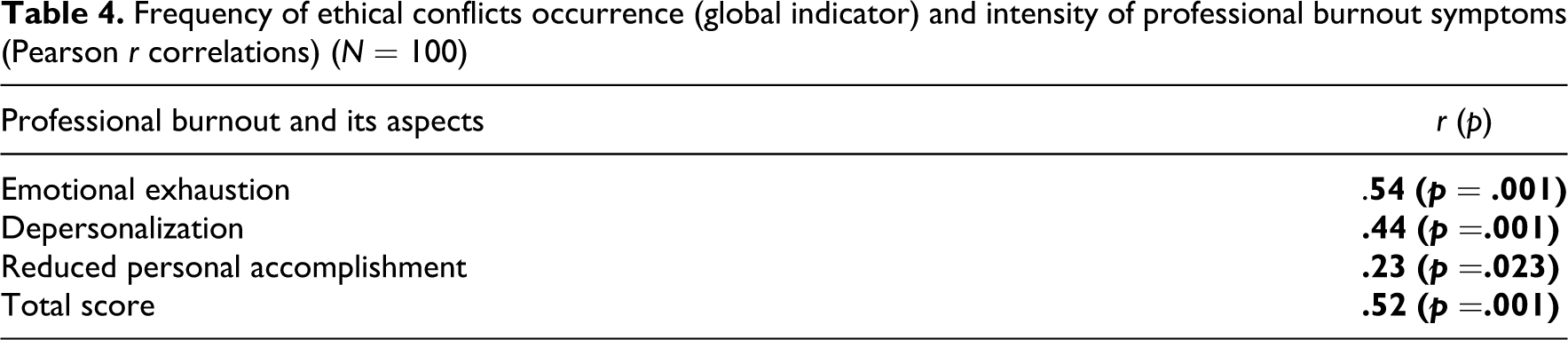
The frequency of ECs occurrence is significantly correlated with all of the aspects of the PB syndrome. The strongest correlations are with emotional exhaustion and depersonalization, while the association with reduced personal accomplishment is slightly weaker. All of the correlations are positive, which means that the more frequently ECs occur in the nurses' practice, the higher the level of burnout and its three aspects.
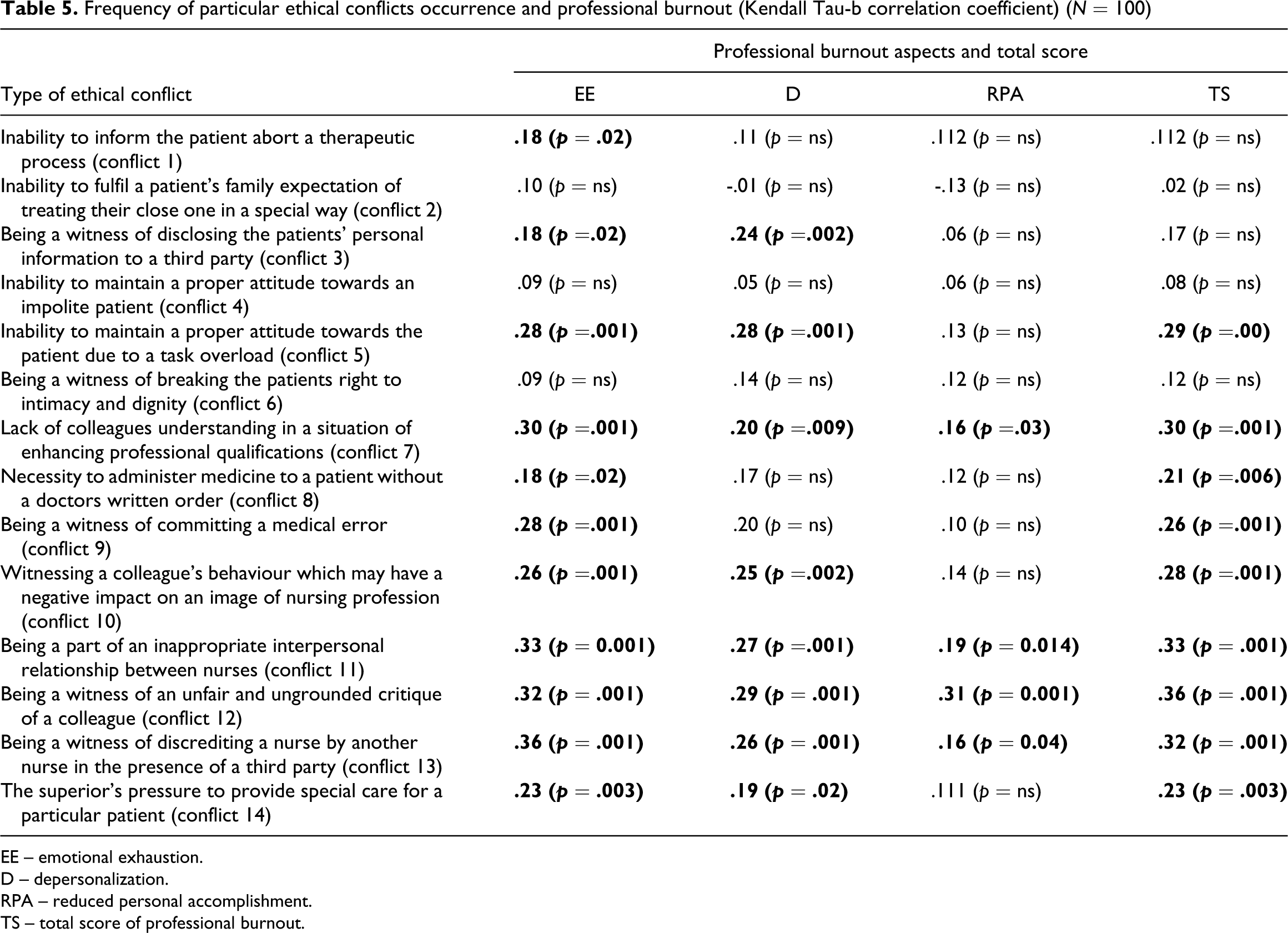
Subsequently, the association of frequency of particular ethical conflicts occurrence with PB and its aspects has been examined. The main goal of this analysis was to distinguish those conflicts which frequency may be most important in relation to PB syndrome. The results are presented in Table 5 .
Frequency of particular ethical conflicts occurrence and professional burnout (Kendall Tau-b correlation coefficient) (N = 100)
EE – emotional exhaustion.
D – depersonalization.
RPA – reduced personal accomplishment.
TS – total score of professional burnout.
The frequency of nine out of 14 examined ECs was significantly associated with a total score of professional burnout. The strongest correlations (Kendall’s tau-b ≥ .30) were with: being a witness of an unfair and ungrounded colleagues critique (conflict 12, H), being a part of inappropriate interpersonal relationships between nurses (conflict 11, M), being a witness of discrediting of a nurse by another nurse in the presence of a third party (conflict 13, L), and lack of colleagues' understanding in a situation of enhancing professional qualifications (conflict 7, M). The frequency of conflicts was also associated with separate burnout aspects. Eleven conflicts were correlated with emotional exhaustion and eight with depersonalization. Reduced personal accomplishment was related to four ECs from nurse-practice and nurse-co-workers areas of professional practice. In all cases the correlations are weak or moderate but positive, which means that the more frequently those ECs occur in the nurses' practice, the higher the level of particular aspects of PB syndrome.
The frequency of only three conflicts was not associated with burnout. It occurred in the case of situations described in conflict 2 (inability to fulfil a patient’s family expectation of treating their close one in a special way, while knowing that all of the patients should receive an equal and consistent standard of care), conflict 6 (witnessing breaking the patient’s right to intimacy and dignity), and conflict 4 (inability to maintain a proper attitude towards an impolite patient).
Ethical conflicts' burden and professional burnout
A parallel analysis schema was used to examine an association of ethical conflicts' burden with intensity of PB symptoms. The results of correlational analysis for a global indicator of burden with ECs and burnout are presented in Table 6 .
Burden with ethical conflicts (global indicator) and intensity of professional burnout symptoms (Pearson r correlations) (N = 100)
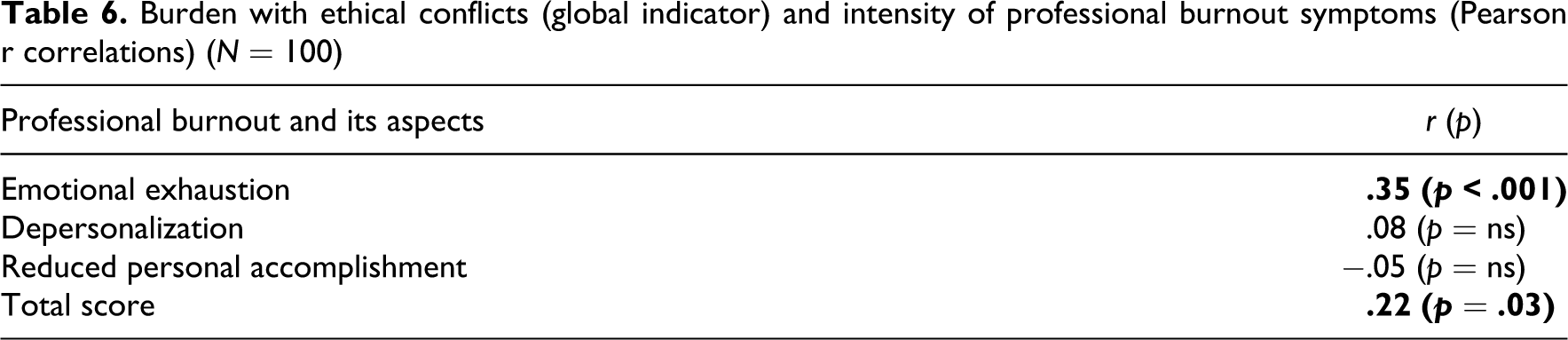
Global score of burden with ECs is significantly correlated with a total score of PB syndrome and with emotional exhaustion. However, it is not associated with depersonalization and reduced personal accomplishment.
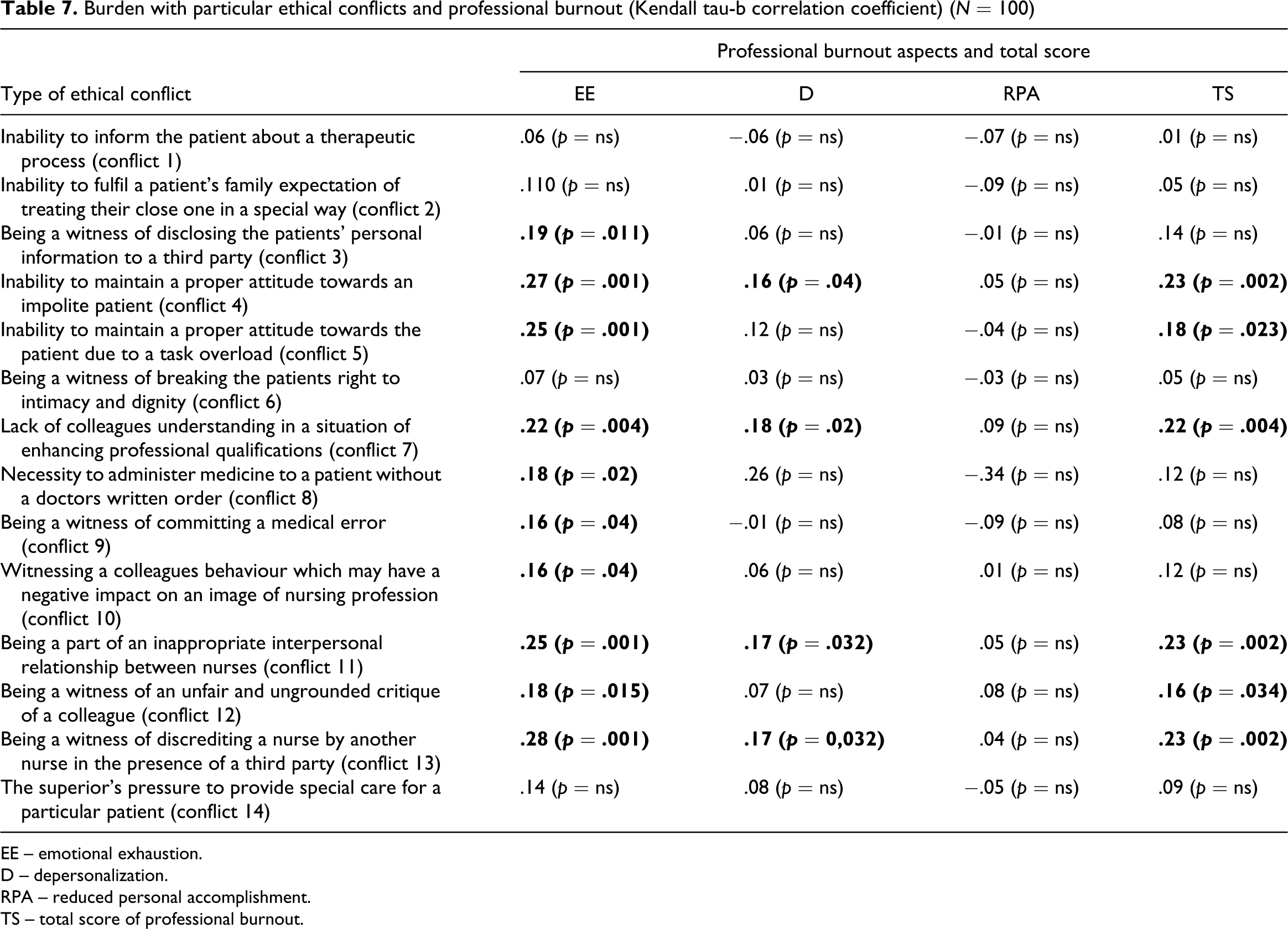
Eventually, a relationship between burden with particular ethical conflicts and burnout was examined. Those analyses aimed at finding out burden with which conflicts had the strongest association with burnout syndrome. The results are presented in Table 7 .
Burden with particular ethical conflicts and professional burnout (Kendall tau-b correlation coefficient) (N = 100)
EE – emotional exhaustion.
D – depersonalization.
RPA – reduced personal accomplishment.
TS – total score of professional burnout.
The level of burden with six out of 14 examined ECs was significantly associated with a total score of burnout. It concerns the following conflicts: inability to maintain a proper attitude towards an impolite patient (conflict 4), being a part of inappropriate interpersonal relationships between nurses (conflict 11), being a witness of discrediting a nurse by another nurse in the presence of third party (conflict 13), lack of colleagues' understanding in a situation of enhancing professional qualifications (conflict 7), inability to maintain a proper attitude towards the patient due to a task overload (conflict 5), and being a witness of an unfair and ungrounded critique of a colleague (conflict 12).
In the case of components of PB, emotional exhaustion correlated significantly with a burden with 10 conflicts, while depersonalization with four of them. There were no significant relationships between reduced personal accomplishment and any of the conflicts analysed in the context of burden.
Finally, it is worth mentioning that in the studied sample no significant relationships were found between controlled socio-demographic and work-related factors and professional burnout syndrome.
Discussion
Starting with the first research question we may say that most frequent ethical conflicts identified in the studied sample concern a nurse-patient relationship: low quality of nursing due to overload, inability to inform the patient about a therapeutic process, and situations in which a particular patient is not to be treated in a standard way (he or she is to be treated in a better way than other patients or treating the patient in the same way as others is not possible due to his/her behaviour). Simultaneously, low quality of nursing due to overload was the most burdening conflict for nurses participating in the study. This result stays in line with reports from other studies, where this particular factor was also listed among those most frequently causing ethical concern.24–26 Concern related to contact with an impolite patient also belongs to the group of most frequent and most burdening conflicts. Whereas the other two most frequent conflicts (1 and 2) appeared in a group of least burdening. It may mean that in spite of the fact that such situations are very common, nurses cope with them very well. In the case of conflict 1, knowledge and nurses competences in scope of passing information (their right to inform the patient on the nursing process, while information on the therapeutic process is to be passed by a doctor) can be an effective method of overcoming such difficulty in everyday practice. In the second case, conflict resulting from inability to fulfil patient’s family expectations, may be easily explained (or rationalized) with objective reasons like shortage of staff or equipment. Such strategy may paradoxically decrease potential psychological consequences of such conflict.
Other conflicts qualified as most burdening concerned inappropriate nurse-nurse relationships (conflict 11) and situations which have a negative impact on an image of nursing as a profession (conflict 10). Both of those issues are extremely important, as they are key elements of nurses' professional environment. Working in a team in which interpersonal relationships are disturbed, is a potential source of feeling threatened, mutual aggression and mistrust. However, positive image of a profession and sense of belonging to the professional group have a beneficial influence on professional identification. Disturbances in those aspects cause unfavourable changes in self-esteem and, therefore, they touch the nurses' most personal values. Support for these explanations may be found in Espeland's 4 careful analysis of factors inoculating against burnout.
One of the most important findings in this study is that correlation coefficients between frequency of occurrence and burden with particular conflicts are rather moderate. It proved that they are distinct issues and should be clearly differentiated. Similar results were obtained in studies conducted with usage of the Moral Distress Scale (MDS) developed by Corley.27,28 This tool allows to assess both frequency and intensity of moral distress. As reported, the correlations between them were moderate, which indicates that they reflect different aspects of this issue. In our study most correlation coefficients oscillated between .30 and .50 but there were two exceptions. The first one concerns lack of colleagues understanding in a situation of enhancing professional qualifications, where correlation between frequency and burden was relatively high (.72). In the second case, the ethical conflict was qualified as least frequently occurring (being a witness of committing a medical error) and correlation was not statistically significant. It may suggest that burden with this conflict is indeed not related to its frequency. However, it may also suggest that nurses' responses concerning frequency of occurrence of such situations were not honest and were probably underrated. Such behaviour may be related to the need for social approval, which sometimes leads to unconsciously presenting oneself (or a group with which he or she identifies) in a more positive light.29,30
The study also allowed us to investigate relations between ethical conflicts and professional burnout. Analysing only total scores, we may see that frequency as well as burden with a conflict are significantly related to burnout. However, the relation concerning frequency is stronger (.52) than the one concerning burden (.22). Frequency of ethical conflicts' occurrence correlates with all aspects of burnout, while burden is related only to emotional exhaustion. Such results are coherent with data stating that being exposed to stressful situations is connected to a variety of negative health consequences (see also classic Rahe and Holmes' research30,31). However, they are in contradiction with concepts stating that consequences of hard situations do not depend on simply experiencing them but on the way a person copes with them.5,8 In such cases, sense of burden with ethical conflicts expresses psychological costs borne by nurses. Presented results suggest that this subjectively experienced burden relates to burnout only to a limited extent and that burnout’s correlation with frequency of conflicts is stronger. This result should provoke some caution when we look for risk factors for burnout. When the nurses do not report feeling of burden with ethical conflict, it does not mean that they are not exposed to such conflict and consequently at higher risk of burnout.
But we cannot rule out the presumption that the results concerning level of burden with ethical conflicts do not fully reflect reality, because nurses were reluctant to report their feeling of burden. Nurses in Poland often see themselves and are seen by others as persons who should cope with everything (especially with obstacles resulting from deficit in the health care system), preferably alone (it is hard to count for any support) and with the possible highest standard (tendency towards perfectionism). Additionally, confessing to own weaknesses is not taken well in the professional environment. The above explanations are formulated partly on the basis of individual experiences of the authors of this article who for several years have conducted workshops for nurses aimed at preventing burnout. On the other hand, the relationship between perfectionism and professional burnout has been reported in many studies. 32
The study allowed us to identify those ethical conflicts which have the strongest connections to burnout. On the assumption that this relationship is a cause-and-effect one, they can be labelled as ‘most toxic’. Among them we rated those ECs which frequency and burden were connected to the total score of burnout. Finally, there are: being a part of an incorrect interpersonal relationship between nurses (N-Co), being a witness of discrediting a nurse by another nurse in the presence of a third party (N-Co), lack of colleagues' understanding in a situation of enhancing professional qualifications (N-Pr), being a witness of an unfair and ungrounded critique of a colleague (N-Co), inability to maintain a proper attitude towards the patient due to a task overload (N-P). Frequency of occurrence of one of them was characterized as high, three as medium and one as low. They effected emotional exhaustion at most, while depersonalization and reduced personal accomplishment to a much smaller extent.
Practical implications
Preventing PB by influencing the experience of ECs and modifying factors favouring their appearance, are important directions for action. This study confirms that ECs are related to PB: the more frequent they are, the higher PB is. At the same time, PB's relationship with ECs' burden is weaker. It suggests that not reporting a specific problem on a subjective burden scale does not mean lack of its existence. Therefore, analyses of work environment done by exterior observers could be a good solution. Then, modifications of work environment should be applied to limit situations potentially provoking experiencing such conflicts. Research on ethical work environment 27 may be especially useful in planning accurate interventions. However, such actions are still at the infant stage, even in well-developed countries, so it is recommended to begin the modifications with most ‘toxic’ areas. First of all, not all of the most frequent conflicts are simultaneously the most toxic ones (e.g. conflict 1 and 2). Results from the presented study suggest that although conflicts resulting from nurse-patients relationship are the most frequent ones, PB is mainly related to those resulting from nurse-co-workers relationships. They may have some specific, more personal, dimension. It is also possible that nurses cope with them least effectively because they lack appropriate skills, e.g. in interpersonal communication, coping with emotions, problem-solving or negotiating. Ability to build and maintain valuable and healthy relationships and a good social network based on taking support as well as giving it, is essential. Therefore, organizing workshops and training aimed at the development of such skills and stimulation of personal growth is extremely important. 4 Moreover, easy and constant access to persons able to help with ethical issues is also of great importance and reflects a need for the existence of well-established, broadly-respected and independent Ethical Committees in the workplace. 33
Limitations
However, the study also has its limitations. The biggest shortcomings are the relatively small sample size and the fact that only extramural master’s course students were included in this research project. We may hypothesize that persons deciding to participate in such courses, motivated for personal growth and, due to the course of education, more familiar with both ethical code and burnout issues, will experience ECs in a specific way. It is also probable that there are some gender differences in that matter. Moreover, as it was already mentioned in the introduction, major changes in nurses' education system and in the scope of their competences were recently conducted in Poland, leading to modifications of their work environment. 3 Thus, it is possible that at least some of the results of this study are limited only to Polish nurses. Intercultural studies could be a very interesting direction for future research. Also, some shortcomings may be connected to the limited number of ethical conflicts presented to participants in the developed Ethical Conflicts Questionnaire. In future, a wider spectrum of ECs may be included and devised into general and specific to nursing specializations sections.
Conclusions
Summarizing the research presented above we may state that in the studied sample relations between frequency and burden with particular conflicts are moderate. This finding indicates that these are different aspects of ethical conflict and both of them should be taken into account in the study examining the consequences of moral situations in nursing practise. Moreover, frequency of ethical conflicts' occurrence is related to PB in a stronger way than burden with them. Thus, relying only on nurses' subjective reports of feeling of burden with ethical conflicts may be insufficient to predict a real risk of burnout. Finally, conflicts most significant to PB refer to a nurse-nurse relationship. This suggests the necessity of deeper insight in the quality of nurse-nurse relationships and the need to take action to modify these relationships.
Footnotes
The authors declare that there is no conflict of interest.