






Abstract
Background
Several ethical issues are associated with providing living organ transplantation services, and there is limited information on these issues faced by the teams providing service to refugees or asylum seekers.
Aim
To determine the challenges healthcare professionals face in organ transplant centers providing services to Syrians under temporary protection status and discern whether these difficulties align with ethical issues in living organ transplantation.
Research design
This study employed a qualitative design and conducted individual semi-structured, in-depth interviews with 18 transplant team members in Istanbul between September and November 2022. Data analysis was based on Braun and Clarke’s thematic analysis.
Participants and research context
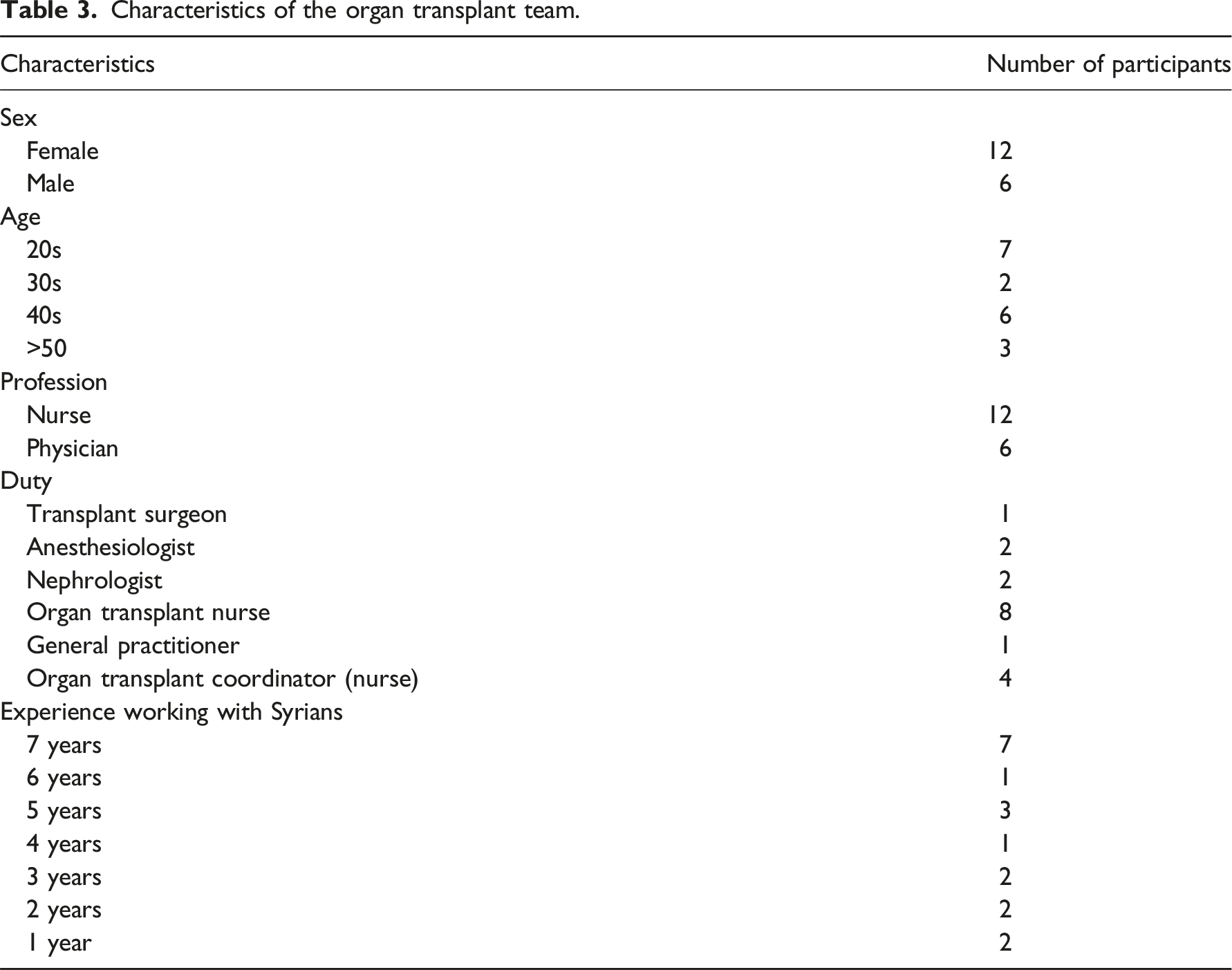
The participants comprised 18 healthcare professionals, including 6 physicians and 12 nurses working in organ transplant teams in Istanbul.
Ethical considerations
The University’s Ethics Committee provided approval. Participants were informed regarding confidentiality and signed an informed consent form.
Results
Three themes emerged from the data on ethical issues faced by organ transplantation services to Syrians: (a) beneficence or double equipoise, (b) autonomy, and (c) justice. Transplant teams experience problems related to preserving double equipoise in the provision of living donor organ transplantation because of language barriers, poor socioeconomic conditions, and cultural factors, which increases transplant teams’ individual and indirect social burden. Although problems arise from the language barrier when obtaining informed consent in the autonomy theme, institutional and national policies in preventing donor abuse have a comforting effect. Health workers had the least problems with the justice theme, wherein national health policies are determined.
Conclusion
Fewer issues related to autonomy and justice were reported in providing organ transplantation services to Syrians, with the most intense reported issues being maintaining double equipoise. The results revealed the need to develop institutional, national, and international policies with individual solutions to prevent difficulties healthcare professionals face in this process.
Introduction
The Syrian Civil War caused the largest wave of migration and one of the most severe refugee crises in recent history. Since the beginning of the war, more than five million people left their country, and Turkey, which adopted an “open door” policy, took in more than 3.5 million of them. 1
Studies on refugees and asylum seekers constituting as a vulnerable group that may face many problems arising from social, cultural, economic, and political factors in the countries where they seek asylum remain up-to-date.2–4 Accessibility of health services remain at the forefront of these problems. 5
Turkey provides the most inclusive access to health care services among countries that have opened their doors to Syrian refugees. Syrians under temporary protection in Turkey were provided primary and emergency healthcare services, secondary and tertiary healthcare services in public hospitals, and training and research hospitals affiliated with the Ministry of Health free of charge.
Background
Although there is a wide range of
Organ and tissue transplantation is one of the most limited and complex procedures among health services. Organ transplantation services are provided with limited medical resources, and the use of these services by foreign nationals, including those with refugee or asylum seeker status, has caused several ethical debates.10, 11 The legal status of these people, whether they can benefit from cadaveric transplantation, how to cover the costs of organ transplantation and subsequent treatment, the status of the donor in the country in living donor organ transplantation, how to carry out follow-up and treatment, and how to prevent organ trafficking are among the issues under discussion.12,13 At the heart of these debates is the principle of justice, the principle of reciprocity, and the duties of healthcare professionals towards vulnerable populations. 10
There are currently no studies on medical ethics and clinical ethics in Syria or Syrians as refugees after the war. In addition to theoretical studies on the ethical dimension of organ transplantation to refugees or asylum seekers,12,13 few studies on the ethical dimension of organ transplants to undocumented migrants.14,15
In Turkey, foreigners can only benefit from living donor organ transplantation services. Living donor organ transplantation carries severe risks and responsibilities. Although various national and international guidelines ensure standardization, ethical problems may arise when providing this service. Each country attempts to solve problems within its structure; however, the problems may differ concerning individuals who are not citizens of their own country, such as refugees. Limited studies have examined the difficulties, risks, and responsibilities encountered during the provision of specialized health services such as organ transplantation services to refugees, a disadvantaged group.
Number of kidney and liver transplants in Turkey since 2015.
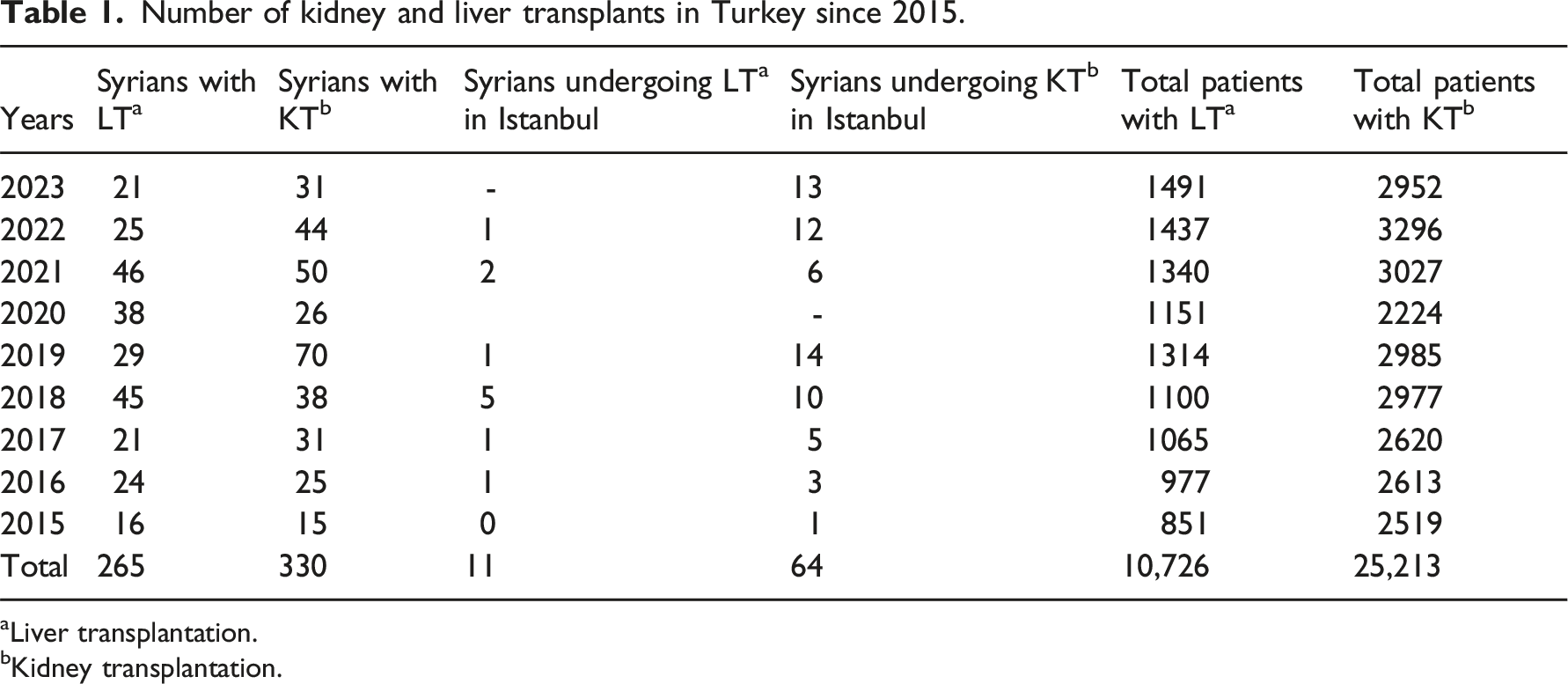
aLiver transplantation.
bKidney transplantation.
Transplant centers provide organ transplantation services to both pediatric and adult patients. Between 2015 and 2023, when transplantation to Syrian refugees began, a total of 132 children (0–17 years of age) received liver transplants, and 25 children (0–17 years of age) received kidney transplants in Turkey. In Istanbul, a total of four children received liver transplants, and fourteen children received kidney transplants in all centers. 16
No studies examine the cost calculation of organ transplant patients in Turkey. The duration of hospitalization and medications used in kidney and liver patients and donors differ. Therefore, although there are no clear cost figures available, the liver transplantation varies between 50 and 55 thousand dollars and kidney transplantation between 25 and 30 thousand dollars. 17 Health services, including organ transplantations, are provided by the Ministry of Health and the Presidency of Migration Management (GİGM) under the Ministry of Interior in line with the “Protocol on Health Procurement on Lump Sum Basis” and the directive on “Principles on Health Services to be Provided to Persons Under Temporary Protection.” 18
Studies on organ transplantation in undocumented immigrants stipulate that healthcare professionals are concerned about their patients’ access to immunosuppressive medications necessary for graft survival after transplantation and may consider transplantation to be even more harmful owing to graft loss and patient loss due to lack of follow-up and treatment after transplantation. Consequently, they may be conflicted between the duties of providing care without discrimination and doing no harm. 19
In addition, the problems of documenting patients’ illnesses, the degree of proximity of the donor, language barriers in accessing health services, and difficulties in accessing treatment follow-up and medication are among the main ethical issues attracting attention.20–23
Since 2015, living donor organ transplantation services have been provided free of charge to Syrian refugees in Turkey. To the best of our knowledge, no previous study has examined the ethical and value problems faced by healthcare professionals in providing this service.
Therefore, this study aimed to explore the experiences of organ transplant teams when providing services to Syrian patients under temporary protection status and to determine the ethical dimension of the process by identifying the challenges they face.
In this framework, the research questions were as follows: • What difficulties do health professionals working in organ transplant centers experience during organ transplantation in Syrians under Temporary Protection Status? • Are these difficulties parallel to the ethical issues in living organ transplantation?
Methods
This qualitative, descriptive study used a phenomenological approach. Using this method, it is necessary to understand how individuals perceive events and situations and how the perceived phenomenon is experienced. 24 Semi-structured in-depth interviews were conducted to explore the experiences of physicians, nurses, and organ transplant coordinators who provide organ transplantation services to Syrians and identify the challenges they face in service delivery.
Research setting: Istanbul has eight kidney and four liver transplant centers affiliated to the Ministry of Health that provide services to Syrians under temporary protection. 16 During the study process, there were one liver and six kidney transplant centers in Istanbul that were actively providing transplantation to Syrian refugees. For the study, three centers, where the most organ transplants were performed to Syrian refugees, were selected.
Participants: The participants comprised 18 healthcare professionals, including six physicians and 12 nurses working in organ transplant teams.
Inclusion criteria: Health workers in organ transplant centers in Istanbul.
Exclusion criteria: Health workers who did not have experience in organ transplantation with Syrian refugees and those who did not volunteer.
Data collection
Participants were selected using the snowball technique and purposive sampling. This technique made it possible to select the participants who could provide the most information pertaining to the study’s purpose. The researcher (DB), an organ transplant coordinator, sent invitation letters (WhatsApp or e-mail) to the identified health workers. Face-to-face interviews lasting 20–55 min were conducted at a time and place determined by the health worker who agreed to participate in the study. Interviews were conducted with 18 health workers and were terminated as the data and findings reached saturation.
The researcher (DB) asked the following questions to these healthcare professionals: “What are your experiences during the organ transplantation preparation process for Syrians under temporary protection status?” “What are your experiences during the surgery process?” “What are your experiences during the follow-up process after the surgery?”
Interviews were conducted with four of the 18 participants via videoconference. All interviews were recorded using a voice recorder, with the consent of the participants.
The same researcher transcribed all the interviews. To ensure anonymity, participant codes were used for the data (transcripts and field notes).
Data analysis
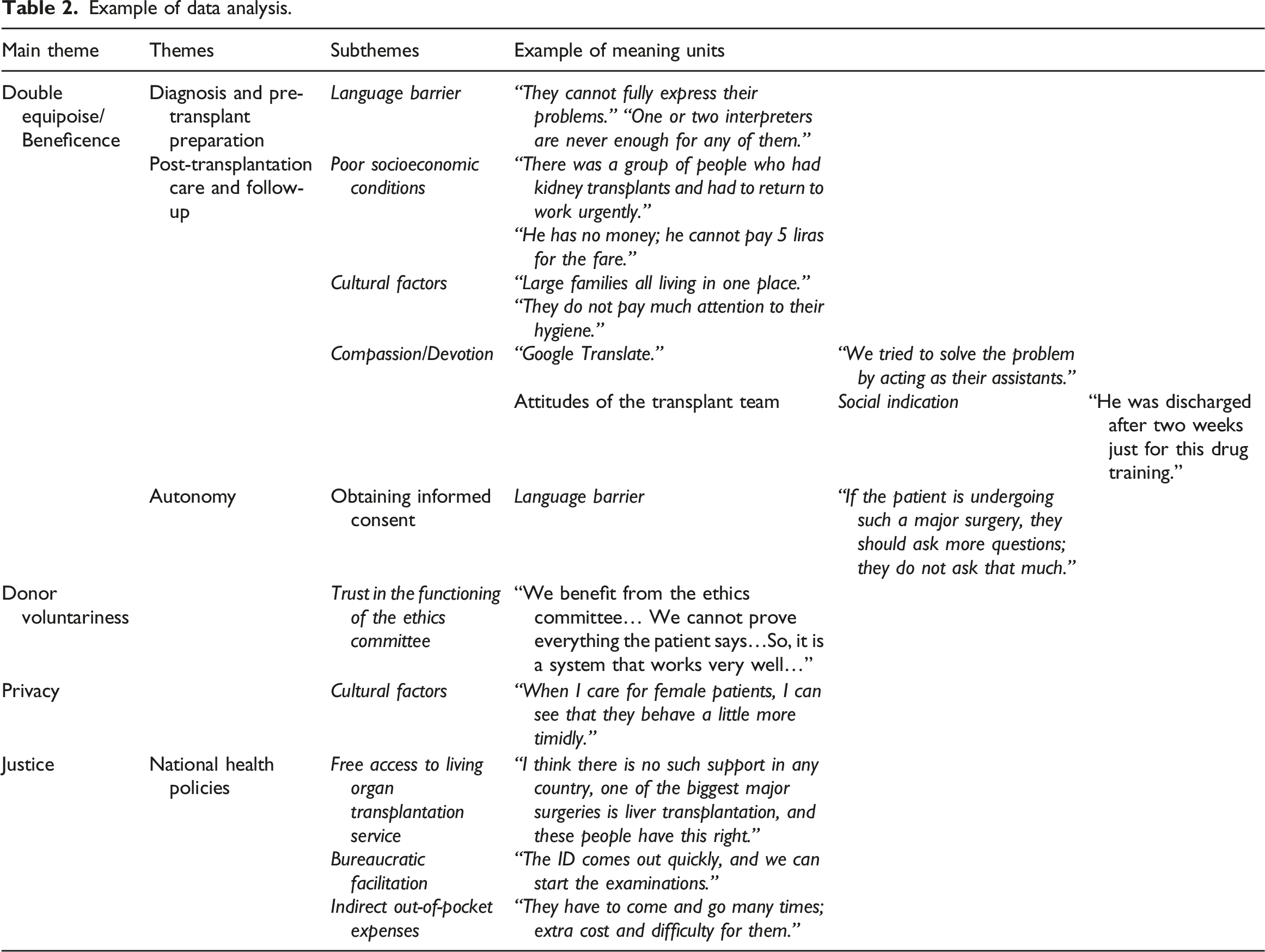
Data analysis was conducted by two independent researchers (DB and AA), following Braun and Clarke’s stages of thematic analysis.
25
In the first stage, reading repetitions were conducted to familiarize themselves with all the data. In the second stage, the salient features of the data were systematically combined to create codes, and the data associated with the codes were collected. In the third stage, themes were identified by collecting the created codes. In the fourth stage, the themes were reviewed. In the fifth stage, the themes were defined and named. In the sixth stage, the first author wrote a preliminary report, which was then discussed and developed by the other researcher. The
Example of data analysis.
Ethical considerations
This study was approved by the Marmara University Clinical Research Ethics Committee (protocol number: 09.2022.921).
Preliminary interviews were conducted with participants who agreed to participate; information about the study was provided, and a date was set for the interview. The interviews were conducted at places and times agreed upon by the participants. Before the interview, the participants were verbally informed about the research and signed an informed consent form. Written permission was obtained from them to record the interview with a voice recorder. The recorded interviews were deleted after transcription. Interviewees were informed that their participation was voluntary and that they could withdraw from the project at any time.
Results
Description of participants
Characteristics of the organ transplant team.
While evaluating the ethical issues faced by organ transplant teams in the provision of organ transplantation services to Syrians under Temporary Protection Status in Turkey, three themes emerged: (a) beneficence or double equipoise, (b) autonomy, and (c) justice. The themes and subthemes are presented in Table 3.
Beneficence or double equipoise
The results indicated that transplant teams experience problems related to preserving double equipoise for both donor and recipient in the process of Diagnosis and Pre-Transplant Preparation and Post-Transplant Care and Follow-up in the provision of living donor organ transplantation to Syrians due to language barriers, poor socioeconomic conditions, and cultural factors, which increases the individual and indirect social burden of transplant teams in their relationship with this patient group.
This language barrier makes it difficult to conduct medical evaluations of the donor and recipient during the diagnosis and pre-transplant preparation process. “Even if a patient in Turkey cannot express themselves, I can access their medical history from the records and understand their disease. However, you cannot access any medical history of a refugee patient in any way; you have to understand it only with what that patient tells you.” (2.F.MD.A) “We cannot take a comfortable anamnesis because they do not really… understand… or explain their problems… You take an anamnesis, and ten days later, the patient says something else… they should have told us that in the first anamnesis…” (17.F.RN.TC)
The “They need to use a lot of medication in the first period. While it is already very difficult to explain to any individual, it is extra difficult to explain to these patients…” (6.M.RN.OTN) “For example, the patient became pregnant. We told her that she should not get pregnant in the first two years, but she did. After she became pregnant … She had to abort her child because her kidney function had been affected… Complete communication problem…” (10.M.MD.N)
Although hospitals employ interpreters, the “insufficient number of interpreters” is a severe factor hindering the “ Interpreters are available in all hospitals… not only in kidney transplantation but also in many areas of hospitals. One or two interpreters is never enough since there are many Syrian patients” (6.M.RN.OTN)
Additionally, transplantation teams have concerns regarding the “competence of the interpreters.” “I think the interpreter should be a more carefully selected interpreter who can explain the medical history better… Not just a translator who speaks the language, but a translator who can explain the medical complications to the patient and the patient’s questions to me; they should be able to translate everything I tell them.” (2.F.MD.A)
Although organ transplantation is free of charge in Turkey, the “Most people do not have money, they cannot pay five liras of travel money…they reside in very remote places; it is a big problem for them to come…” (18.F.RN.TC)
This situation also causes concerns in the “There is a group of people who received kidney transplants and had to return to work immediately… these people generally do not have the luxury of choosing a job…we have been following a patient for seven months, whom we operated for transplantation… We told him that he cannot do something like portering for at least one and a half years, but he can work in relatively, let us say ‘medium-heavy’ jobs. However, as far as I know, he has started portering again in the last few months.” (10.M.MD.N)
Another issue that makes preserving double equipoise in organ transplantation difficult is the “When I entered the patient’s room, I saw his relatives sitting on the floor, eating. They sit on the floor, and then they sit on the patient’s bed … So, I could not explain to them that they were in a hospital and how much harm their behavior could cause to the patients. I felt helpless.” (12.F.RN.OTN) “Very crowded families, they all live in one place, they all probably live in the same house, 9 to 10 people… After the operation, they want to go back and forth to each other…” (13.F.RN.TC)
These issues, which may raise concerns regarding beneficence in the preparation and follow-up process, cause health workers to turn to solutions that may increase their burden, especially in the absence of institutional or national policies. First, all participants learned commonly used Arabic words, such as pain, to communicate. In addition to body language in communication, Google Translate, reaching interpreters or Arabic-speaking friends by phone, and asking for assistance from Turkish-speaking Arab patients are frequently used solutions. “I remember translating Arabic sentences with Google Translate and making the patient read them and listen to them out loud; I remember some things, apart from that, like trying to reach an interpreter by phone…” (2.F.MD.A)
However, transplant teams may need to use problem-solving methods that increase their workload. “Sometimes we take them to outpatient clinics ourselves, sometimes we take them to USG ourselves so that they can be taken to complete their examinations… Sometimes we cannot explain, so we go with them… we try to solve the problem by acting as their hosts.” (8.F.RN.TC)
In addition, they may be forced into solutions that may indirectly increase the social burden, such as early or prolonged hospitalization. “We hospitalize patients who have difficulties coming and going, who we think will not be able to handle their work while going back and forth to the hospital…” (13.F.RN.TC) “The patient was discharged two weeks later than expected just for this medication; for the medication training…” (15.F.RN.TC)
Autonomy
The second ethical issue healthcare professionals encountered while providing organ transplantation services to Syrians was
The transplant teams stated they had experienced different processes while “…so, I think the interpreter simplified it because none of them have asked me a single word or question so far…I mean, I do not know; no one has asked me, “Will I eat dinner after the operation?” (3.M.MD.TS)
However, the nurse or transplant coordinator team, who is not responsible for obtaining surgical consent, experienced this process more smoothly and perceived the process positively concerning institutional arrangements, such as sworn interpreters and Arabic consent forms. “All the details, accompanied by an interpreter, regarding the operation, are given to the recipient, and the donor is given information concerning the problems they may experience if they become a donor, the duration of the operation, the hospitalization period after the operation, and the things to pay attention to. The recipient is also given a brochure in Arabic regarding the operation process, the treatment process after the operation, the medications they should use, and the medications they should use for life… We both explain it and give brochures.” (17.F.RN.TC)
Health workers report no concerns about ascertaining donor voluntariness. “…since they all come voluntarily, I mean they come ready…they say ‘I will give my kidney to my daughter’…Even the third donor of one of our patients…no, he insisted ‘we want to save our brother, whichever one of us’…” (13.F.RN.TC)
Syrian recipients and donors are evaluated and approved by the ethics committee which stands out as an element that builds trust in the “We benefit from the ethics committee… we cannot prove everything the patient says…So, it is a system that works very well…” (3.M.MD.TS) “Sometimes we cannot understand documents clearly because they are complicated. To reveal their kinship relationships, irrespective of whether there is suspicion, they go through the ethics committee process.” (10.M.MD.N)
Healthcare professionals stated that they experienced reservations of patients, especially female patients, due to “…‘Will I be naked during the surgery? Will I be catheterized? I do not want to be catheterized.’…(smiles)… that was a problem for female donors. We realized that they had such reservations, and we gave them the necessary information.” (4.F.MD.N) “Since I am a male nurse…when I care for female patients, I can see that they behave more timidly … If I have a female colleague with me, I let them enter … Ensuring the patient’s comfort is important because it is an important issue in the care process.” (6.M.RN.OTN)
Justice
Finally, healthcare professionals encountered “One of the biggest major surgeries is liver transplantation, and these people have this right. I think they are very fortunate in this regard…The medicines are also very expensive…we were able to obtain those medicines during the hospitalization … after they are discharged, they can access the medicines with these reports…” (11.F.RN.OTN) “I can say that working with them is as easy as working with Turkish patients; I can say that there is no disruption in their medical tests… They can easily make appointments for their clinic follow-up… They can obtain their prescriptions very easily and have no problems.” (4.F.MD.N)
In addition, “We wrote a petition stating that the patient’s brother could be considered as a donor, and necessary procedures should be taken for him to come to Turkey (from Syria). He can obtain an identity card quickly by stating that he is being treated, and we can start the examinations.” (8.F.RN.TC)
However, health workers are concerned about the refugees’ access to organ transplantation services for the future, if not at present. “Sending them back is one thing, but… Necessary work can be done to ensure that they can reach an accessible health service, and different channels can be created to ensure that they receive this medical service wherever they go.” (1.M.MD.A)
Although organ transplantation services are free of charge for Syrians with “… commuting is more difficult; they have to come and go many times, extra cost, extra difficulty for them because they come from far away… We send the patient and donor with the hospital’s vehicle; we make it easier for them… You know, they cannot find them most of the time.” (17.F.RN.TC)
Discussion
This qualitative study aimed to identify ethical issues based on the experiences of healthcare professionals who provided organ transplantation services to Syrians under temporary protection in Turkey. Our research was conducted with healthcare professionals in three centers in Istanbul that perform the most organ transplants for Syrian refugees under temporary protection status. This helped understand the experiences of healthcare professionals who provide services in different institutions. However, healthcare professionals providing organ transplantation services to Syrian asylum seekers in hospitals in other provinces may have different experiences.
No studies used in this study’s discussion were related to organ transplantation of Syrian asylum seekers. In general, no study has been found on the ethical issues that may be experienced by healthcare professionals who provide organ transplantation in Turkey. Moreover, Syrian refugees are the first and only group in Turkey to receive organ transplantation services under temporary protection status since Turkey is one of the few countries that accepts the highest number of asylum seekers and provides organ transplantation services to these groups.
Within the framework of these limitations, when evaluating the findings of this study in the context of the autonomy theme, healthcare professionals stated that they experienced the process positively when they provided information accompanied by a sworn interpreter during the informed consent process when the surgical consent forms were prepared in the native language of the patients, and when consent was obtained from witnesses. In contrast, some healthcare workers stated they were concerned about the interpreter’s competence and believed the information they provided was not fully understood. For patients to understand the process better, they met Syrian patients who had already received transplants. When providing organ transplantation services to asylum seekers, translation by interpreters who do not have a good command of medical terminology leads to incomplete translation and understanding of the information. This may prevent healthcare workers and patients from establishing healthy communication. 22 Previous studies indicated that health professionals are concerned about how much information is translated and whether the translation is accurate.26,27 Meghan et al. reported that patients had difficulty understanding the information in the consent form and could not write their names. 28 In a study conducted by Yazar et al. with anesthesiologists providing services to Syrian asylum seekers, most participants reported that the preoperative information was insufficient, the information was not fully understood, and they did not use an Arabic informed consent form. 29 Having a sufficient number of interpreters who have a good command of medical literature in the institutions and using information and consent forms in the patient’s native language enables patients to make decisions after understanding the information and reduces the problems experienced in communication. The use of videos, information booklets, and drug use visuals prepared in the native language of the patients may help patients understand the information better. In a systematic review, Gesualdo et al. showed that the use of digital tools in the informed consent process increased patients’ ability to understand the information better. 30
In addition, similar to some health workers’s experiences, Makaroff et al. also reported that coming together with kidney donors, transplant recipients, and donors reduced their anxiety about the surgery and helped them better understand the transplant process. 31 Trainings provided under the mentorship of transplant recipients and donors who speak the same language and have the same culture can help normalize the process by reducing the anxiety and concerns of recipient and donor candidates. Establishing these mentor groups in transplant centers may also reduce the workload of transplant teams.
The risk of living organ donors making decisions under pressure or organ trafficking poses ethical concerns for vulnerable groups such as asylum seekers and refugees.22,32,33 In Turkey, according to Article 13/10 of the Regulation on Organ Transplantation (2022), all Syrian organ recipients and donors under temporary protection status are evaluated by the Organ Transplantation Ethics Committee. These committees examine the donor and recipient’s kinship relations, financial relations, and whether the donation was made under coercion or pressure. After concluding that there is no unethical or illegal situation between the recipient and the donor, the committee decides on the ethical appropriateness of the transplantation. The discourse of health workers shows the comforting effect of the detection of relations of interest by this committee or the approval of transplantation by this committee. In the present study, healthcare professionals did not express concerns about the donors’ voluntariness and stated that they performed organ transplants according to the ethics committee’s decision.
The discourses of health workers show the comforting effect of the detection of relationships of interest by this committee or the approval of the transplant by this committee. In this study, healthcare professionals did not express concerns about the voluntariness of donors and stated that they performed organ transplants according to the decision of the ethics committee.
Additionally, the participants stated that they experienced reservations about patients, especially female patients, owing to cultural factors such as receiving care from the opposite sex, entering the surgery naked, or wearing a catheter. They found individual solutions using culturally respectful approaches or by informing them. The findings are similar to those of studies on asylum seekers in previous studies.34–36 Healthcare workers’ sensitive behavior after understanding the patient’s culture and paying attention to gender harmony while providing services increases patient privacy and strengthens the trusting relationship between healthcare workers and patients.
Organ transplants for Syrians under temporary protection are performed free of charge at state hospitals in Turkey. When evaluating this study’s data in the justice theme context, all participants stated that Syrian asylum seekers do not pay any fees for treatment, care, and medication while receiving organ transplantation services. Some participants stated that bureaucratic facilitation is provided to evaluate the medical suitability of living donor candidates residing outside the country or in different provinces. Studies conducted with undocumented migrants have reported that this patient group has difficulty accessing organ transplantation, follow-up treatment, and immunosuppressive drugs.14,22,37
Previous studies indicated that health workers have ethical concerns regarding refugees’ access to experienced health personnel, full-fledged hospitals, and immunosuppressive drugs after they return home,20,32,33,38 aligning with the current study. Some healthcare professionals stated that they were concerned about the access to immunosuppressive drugs, follow-up, and treatment of Syrian asylum seekers after they return home. An international refugee policy should be established to ensure the sustainability of the treatment and care of asylum seekers upon their return. When this study’s data were evaluated in the context of double equipoise, all participants stated that they had problems communicating with patients due to language barriers when providing organ transplantation services. This result is consistent with the findings of previous studies conducted among healthcare professionals caring for asylum seekers and refugees.37,39,40 In this study, healthcare workers reported difficulty accessing patients’ and donors’ anamnesis and past medical records due to language barriers during the preparation phase. Previous studies have also indicated that healthcare workers providing organ transplantation services had difficulty accessing asylum seekers’ medical records. 22 Additionally, in a study evaluating renal replacement treatment in Syrian refugees, Lemke et al. indicated that healthcare professionals reported difficulties in accessing patients’ medical histories and diagnosing diseases. 20 In addition to organ transplantation studies, this was also reported in a study conducted with family physicians providing services to Syrians in Turkey 41 and other studies conducted with refugees.42,43
In the present study, healthcare workers reported difficulty communicating with patients during treatment and care and that they spent more time with this patient group during care, increasing their workload. This result is similar to the findings of other studies conducted with internal medicine nurses,44,45 neonatal nurses, 46 and family physicians 41 serving Syrians in Turkey and organ transplantation in the USA. 40
In the present study, health workers stated that although there was an interpreting service, the number of interpreters was insufficient, and they could not use this service as needed. This is consistent with previous study findings.8,20,26,27,44 Participants stated that when they could not access an interpreter, they attempted to overcome the language barrier through Google Translate, Turkish-speaking patient relatives, or Arabic-speaking healthcare professionals (“ad hoc” interpreters). Previous studies indicated that they communicated through a website, patients’ relatives, and friends when they could not reach a healthcare interpreter.47–49 Providing competent interpreters in a sufficient number of institutions can reduce communication problems and increase the level of care provided.
Most healthcare professionals in this study reported that they had great difficulty in providing discharge and medication education, providing education with an interpreter, and were concerned about whether the patient would use medications correctly and understand the education. Additionally, they stated that they created written and visual forms in Arabic concerning drug use and discharge education, and only discharged the patient after ensuring that they fully understood. A study by Lemke et al., evaluating renal replacement treatment given to Syrian asylum seekers, stated that patients had difficulty in compliance with the treatment because of inadequate communication and incorrect drug use. 20 Patients can be educated in their mother tongue using training booklets, information videos, and visual materials to make the information comprehensible. Healthcare professionals in the present study stated that patients experienced economic difficulties, transportation to the hospital, and difficulty preparing ethics committee documents. These findings are similar to those reported in previous studies21,50–52; therefore, they stated that these patients and donors were prepared by hospitalizing them in the pre-transplantation phase. Finally, healthcare workers in the present study stated that they experienced difficulties during treatment and follow-up due to sociocultural differences such as hygiene and crowded families. These findings are similar to those of previous studies conducted on Syrian refugees in Turkey.27,44,53
Conclusion
This is the first study conducted with transplant teams providing organ transplantation services to Syrian refugees in the world, which aimed to evaluate the difficulties experienced by healthcare professionals regarding the process and their relationship with ethical issues related to organ transplantation.
The transplant teams reported fewer issues related to autonomy and justice in providing organ transplantation services to Syrians, with the highest number of problems reported in maintaining double equipoise.
The establishment of national and institutional policies related to organ transplantation services is suggested to reduce the problems that healthcare professionals face concerning autonomy and justice. For example, determining donor voluntariness and the legal appropriateness of the recipient-donor relationship by organ transplant ethics committees established by national policies relieved transplant teams’ burden.
Institutional policies, such as the preparation of consent forms in Arabic and access to interpreters by appointment, reduce problems in this process. However, the interpreter’s lack of knowledge of medical literature caused concerns among transplant teams regarding the competence of the interpreter.
Within the framework of justice, the provision of free transplantation services and bureaucratic facilitators that enable access to voluntary relative donors alleviate the burdens emphasized by health workers. However, the fear of being unable to access the service due to uncertain policies in the process of their return to Syria or the interruption of its sustainability stands out as a source of concern.
Sustaining double equipoise, as an issue in which national or institutional policies are unclear and functioning is partially difficult, was the theme with the most negative experiences and difficulties. In this process, transplant teams experience significant anxiety and turn to solutions that increase their workloads. Notably, transplant teams who already work with high dedication or sacrifice face more workload when providing organ transplantation to Syrians. It is envisaged that institutional and national policies be established by considering the individual solutions of transplant teams to reduce their burden.
Healthcare professionals providing organ transplantation services to Syrians under temporary protection in Istanbul have similar experiences to those of other healthcare professionals providing healthcare services to refugee groups both in Turkey and worldwide. Considering the refugee crisis may continue, it is essential to establish international policies that can prevent ethical problems without increasing the burden of healthcare professionals providing services to these groups. Using digital tools in the informed consent process and in education for medication and discharge and forming groups of former transplant recipients to mentor the donor and recipient in pre-transplant education can be helpful. Further, the organ transplant ethics committees established in Turkey are an important organization that eliminates the question marks about living donors making decisions under pressure or organ trafficking, and can be an example for other countries.
This study evaluates the experiences and ethical issues faced by transplant teams providing organ transplant services to Syrian refugees, and these findings have important implications for nurses caring for refugees in different cultural contexts. Nurses need adequate support and training to deal with challenges such as language barriers and cultural differences. Furthermore, this study highlights the need to develop national and international policies and training programs to overcome language and cultural barriers faced by nurses to promote an ethical and equitable approach to healthcare. This will not only lead to more effective and inclusive healthcare services for refugees but also reduce the ethical challenges faced by nurses.
Footnotes

Declaration of conflicting interests
The author(s) declared no potential conflicts of interest with respect to the research, authorship, and/or publication of this article.
Funding
The author(s) received no financial support for the research, authorship, and/or publication of this article.