







Abstract
Humane entrepreneurship postulates an innovative strategic posture assuming that entrepreneurs should concomitantly focus on the enterprise, the human and the societal cycles of the firm to achieve organisational excellence. Scholars have stressed the economic and societal gains triggered by humane entrepreneurship. However, little is known about its implications for work–life balance (WLB). The article fills in this gap, shedding light into the dark side of humane entrepreneurship on the entrepreneurs’ ability to handle the interplay between work and life. Adopting a humane entrepreneurship posture negatively affected the ability to achieve a WLB, paving the way for work-to-life conflicts. Work engagement and subjective well-being moderated the side effects of humane entrepreneurship on WLB. Tailored initiatives are required to address the overlapping between work and life generated by humane entrepreneurship. Inter alia, employees’ empowerment and the improvement of organisational culture are needed to foster the effective implementation of humane entrepreneurship.
The scientific debate about the need for making organisations humane started in the first half of the past century. Claiming that ‘…a reorientation toward a consideration of man’s adventure in life from the vantage point of humanity in general is needed…’, Meltzer (1942, p. 527) argued that humane management involves: (a) pursuing people-centredness, (b) introducing an interdependent leadership approach and (c) implementing a democratic way of coping with organisational dynamics. However, scholars do not agree on how to achieve humane management (Bangaruswamy & Rao, 2016). Manifold conceptualisations of humane management approaches can be retrieved in literature, ranging from people-centric firms (Sanders, 2008) to democratic companies (Viggiani, 1999). More recently, a general, firm-level strategic posture has been advanced as an attempt to shed light on the preconditions to humane management: humane entrepreneurship (Kim, ElTarabishy, et al., 2018). It assumes that entrepreneurs should avoid focusing on profit margin generation, striving to merge external pressures and internal challenges to concomitantly accomplish economic, societal and environmental gains (Parente et al., 2018).
Humane entrepreneurship results from a mix of entrepreneurial orientation with a tripartite, ecological-social-economic vision of the firm (Parente et al., 2021) and puts human values at the basis of strategic and management decisions (Argandoña, 2003). From an organisational perspective, this is achieved by taking into account the employees’ emotions, feelings and concerns, acknowledging that these dimensions deeply affect internal dynamics (Shapiro & Naughton, 2015). From an institutional perspective, this implies embracing an ecosystem view of the firm, which acknowledges the interplay between the organisation and the context in which it operates (Song, 2019). From this standpoint, humane entrepreneurship aims at minimising the risk that individual, organisational and societal goals may diverge (Lurie, 2004). For this purpose, it presumes that strategic, organisational and management decisions should be crafted in light of the general needs of human beings, recognising the mutual exchanges between the firm, the society and the environment (Rao, 2014). Hence, a humane entrepreneurship posture involves ‘…an effort to create more meaningful jobs [and] improved working conditions’ for people (Brytting & Trollestad, 2000, p. 55), as well as an enhancement of firms’ contribution to environmental, social and economic sustainability (Talim, 2019).
The alignment between entrepreneurial priorities, societal challenges and environmental viability allows to timely address the diverging issues that affect the enterprise, the human and the societal cycles of the firm (Bae et al., 2018). Balancing these cycles requires a complex and adaptive management approach, which takes humane values as its reference points (Melé, 2003). This may engender an amplification of entrepreneurs’ commitments, which are intensified by the need for designing a broad and comprehensive management scheme, which evenly accounts for concerns for the firm’s profitability, for people-centredness and for environmental sustainability (Lee, 2020). Extant literature has largely discussed the attributes of humane entrepreneurship and its potential outcomes at the firm level (see, among others: Kim, ElTarabishy, et al., 2018; Parente et al., 2018; Parente et al. 2021). However, limited attention has been paid to the implications of embracing a humane entrepreneurship posture at the individual level. Previous studies have found that generally speaking, ‘…entrepreneurs prioritise “work” over “life” and… have little desire for boundaries as they work everywhere’ (Adisa et al., 2019, p. 1634). Work prioritisation is propelled by the adoption of a humane entrepreneurship strategic posture, which urges entrepreneurs to assess management decisions in light of their multiple implications on the enterprise, the human and the societal cycles of the firm (Dempsey & Sanders, 2010). This may lead to increased work-related burdens, which are heightened by the entrepreneurs’ willingness to self-sacrifice in order to enhance the firm’s viability (Dacin et al., 2011). From this standpoint, humane entrepreneurs may face greater difficulties in managing their work–life interplay, experiencing boundaries’ contamination between work commitments and everyday life affairs (Humbert & Lewis, 2008). Engendering an extensification of entrepreneurs’ efforts, humane entrepreneurship may herald an increased overlapping between work and life and may determine an encroachment of work-related concerns into everyday life (Matlay et al., 2013).
To the best of the author’s knowledge, there is limited empirical evidence of the side effects of humane entrepreneurship on work–life balance (WLB). Moreover, little is known about the factors which underpin the entrepreneurs’ ability to embrace a humane entrepreneurship strategic posture without falling into a damaged work–life interplay. The article attempts to fill in these knowledge gaps, investigating the dark side of humane entrepreneurship. In particular, the following research questions inspired this study:
Research question 1: Does humane entrepreneurship impair the entrepreneur’s WLB, engendering work-to-life and life-to-work conflicts?
Research question 2: How is it possible to address the side effects of humane entrepreneurship on WLB?
The article proceeds as follows. The second section develops the conceptual framework against which this study was conceived. Besides, it envisages the research hypotheses that steered data analysis. The third section describes the study design, alongside detailing the measures employed for statistical elaborations, it presents the study sample. The fourth section reports the research findings, which are critically discussed in the fifth section in light of the study limitations and implications. The sixth section ends up the paper, emphasising its theoretical and practical contributions.
Conceptual Background and Research Hypothesis
The Side Effects of Humane Entrepreneurship on WLB
Humane entrepreneurship is understood as a ‘…pursuit of entrepreneurial growth and humane development for opportunity realization and sustainable organisation’ (Kim, Bae, et al., 2018, p. 23). Embracing humane entrepreneurship requires a renewal of management skills and competencies to dismantle the profit-oriented view of the firm and embrace a people-centric perspective (Kwang-Hyun & Dong, 2019). People-centeredness entails a revised approach to managing the firm’s exchanges with relevant stakeholders. On the one hand, external stakeholders are engaged in multiple collaborative interactions to enhance the inter-organisational economic, social and environmental performances of the firm (Parente, 2020). On the other hand, internal stakeholders are understood as key players of the value creation processes enacted by the firm and as the main originator of a sound organisational culture (Kim & Park, 2020).
Humane entrepreneurship implies a balanced mix of entrepreneurial orientation, human resource orientation and sustainability orientation to be effectively implemented (Kim, ElTarabishy, et al., 2018; Parente et al., 2018). Lack of one of these ingredients impairs the entrepreneurs’ ability to adopt a strategic posture that consists of the tenets of humane entrepreneurship (Kim, ElTarabishy, et al., 2018). From this standpoint, humane entrepreneurship leads to an extension of the entrepreneurs’ areas of concern. Alongside a focus on profit generation, it demands an agile and meaningful approach to human resource management, acknowle- dging and emphasising the employees’ contribution to organisational excellence (Bailey & Madden, 2016; Heilmann et al., 2020). Besides, it calls for more attention to the implications of the firms’ activities on social and environmental sustainability (Pullman et al., 2009; Yoon et al., 2018). The greater the entrepreneur’s ability to manage the trade-offs between internal and external stakeholders’ diverging demands and expectations, the better the alignment among the enterprise, the human and the societal cycles of the firm, which—in turn—paves the way for increased value-creation capability (Kim, ElTarabishy, et al., 2018).
Drawing on these considerations, it can be argued that humane entrepreneurs face greater challenges to steer value creation processes as compared to their counterparts who do not stick to a humane entrepreneurship posture. This circumstance is primarily related to the need for balancing the economic interest for profit maximisation with the purpose of accounting for the human and the societal manifestations of the firm. Facing these issues may lead to an increased entrepreneurial euphoria and a greater involvement in managing the entrepreneurial venture, which derive from the entrepreneurs’ awareness of their contribution to organisational and societal growth (Cooper et al., 1998). However, striving to concomitantly address the tripartite economic, social and environmental concerns of the firm may herald a decision overload for humane entrepreneurs. It translates into a work extensification, which may engender an encroachment of work-related concerns into everyday life (Harris et al., 1999; Humbert & Lewis, 2008; Ute, 2018).
In sum, embracing a humane entrepreneurship posture is an immersive experience, which is demanding for entrepreneurs (Cooke, 2011). The greater efforts required for dealing with polarised interests and the attempt to preserve people-centredness in undertaking and accomplishing management decisions come at cost of self-sacrifice and work intensification (Jardim da Palma et al., 2013). This pushes forward the privileging of organisational commitments over private life (Dempsey & Sanders, 2010), which is a distinctive trait of entrepreneurs (Adisa et al., 2019). Whilst entrepreneurship has been somehow depicted as a potential solution to achieve greater control over personal life and work-related issues due to increased work flexibility (Agarwal & Lenka, 2015), it also generates emotional struggles and time pressures, which put at stake the entrepreneurs’ ability to handle the work–life interplay effectively (Bunk et al., 2012). Such pressures may escalate throughout entrepreneurial life, due to growing organisational demands (Racine, 2021). Work-related pressures intensify when a humane entrepreneurship posture is adopted, in light of the difficulties that are met in merging the diverging economic, social and environmental issues faced by entrepreneurs: this triggers an overlapping between private life and work, with side effects on WLB (Darcy et al., 2012).
Entrepreneurs may fall short in dealing with business decisions from different angles and concomitantly safeguarding their own well-being (Peters et al., 2019). The entrepreneurial orientation nurtures a commitment to work, which reduces the perception of exhaustion. Moreover, it engenders a greater willingness to work out of conventional working hours, fostering unbalance between work and life (Kattenbach & Fietze, 2018). At the same time, the human resource orientation produces exhausting pressures on entrepreneurs, which are primarily related to the difficulty of arranging a people-centric management approach that is aligned with the need for rapid and sustained economic growth (Ferguson & Reio, 2010). This further implies an encroachment of work into private life, impairing the entrepreneurs’ ability to manage the work–life interplay (Heneman et al., 2000). Lastly, the sustainability orientation is an onerous purpose, which embeds a persistent duality between conflicting criteria inspiring entrepreneurs’ decisions (DiVito & Bohnsack, 2017). Such a duality generates a decisional overload for entrepreneurs, which has negative implications on their WLB (Bertels et al., 2010). Synthesising these insights, it can be hypothesised that:
H1: Humane entrepreneurship negatively affects the individual ability to handle the interplay between work and life.
Work Engagement and Subjective Well-Being of Humane Entrepreneurs
Being associated with the adoption of a people-centric managerial model, humane entrepreneurship entails passion and engagement to work, which is likely to produce a sort of obsession with taking care of the business affairs (Spivack & McKelvie, 2018). Drawing on the self-determination theory (Deci & Ryan, 2002), it can be argued that the focus on the economic cycle, the human cycle and the societal cycle of the firm which is triggered by embracing a humane entrepreneurship posture increases the entrepreneurs’ satisfaction with basic needs at work, thus soliciting their commitment to organisational endeavours (Santos et al., 2021). This determines a greater willingness to self-sacrifice in order to accomplish organisational purposes and, consequently, a greater proclivity to accept overlapping between work and life due to a greater engagement with work (Ezzedeen & Zikic, 2017).
Work engagement can be conceived of as a ‘…a positive, fulfilling work-related state of mind that is characterised by vigour, dedication and absorption’ (Schaufeli et al., 2006, p. 702). Involving a greater willingness to sustain work-related efforts and a larger commitment to organisational dynamics, it is expected to determine a lower perception of job-related stress (Coetzee & de Villiers, 2010). Moreover, it has been argued to reduce the ability to withdraw from entrepreneurial activities when anxieties and exhaustion appear (Spivack et al., 2014). This leads to an overvalued perception of the individual capability to manage the interplay between work and life (Hakanen et al., 2019). In other words, positive feelings produced by work engagement are likely to increase the entrepreneurs’ satisfaction with their work. In turn, this is expected to curb the perceived negative implications of adopting a humane entrepreneurship posture on WLB (Kattenbach & Fietze, 2018). Hence, it is assumed that:
H2: Work engagement moderates the drawback of humane entrepreneurship on WLB.
Self-determination theory also calls for paying attention to the relationship between entrepreneurship and subjective well-being (Nikolaev et al., 2020). Generally speaking, entrepreneurship brings with itself a greater plasticity of organisational commitments and increased perception of control over work and life (McKie et al., 2013), which enhance subjective well-being and decrease the recognition of work-to-life and life-to-work conflicts (Ramón-Llorens et al., 2016). Perceived well-being is fostered by the humane entrepreneurs’ focus on the human and societal cycles of the firm, which increases satisfaction with intrinsic aspirations at work (Parente & Kim, 2021). Better subjective well-being fosters the entrepreneurs’ motivation and commitment to work, which is thought to weaken the awareness of work–life conflicts (Annink et al., 2016). Subjective well-being increases the entrepreneur’s satisfaction with working life, implying a lower perception of role conflicts between personal life and work commitments. From this perspective, it increases the self-assessed ability to achieve good functioning at work and during everyday life (Sirgy & Wu, 2009). Drawing on these points, it is hypothesised that:
H3: Subjective well-being moderates the drawback of humane entrepreneurship on WLB.
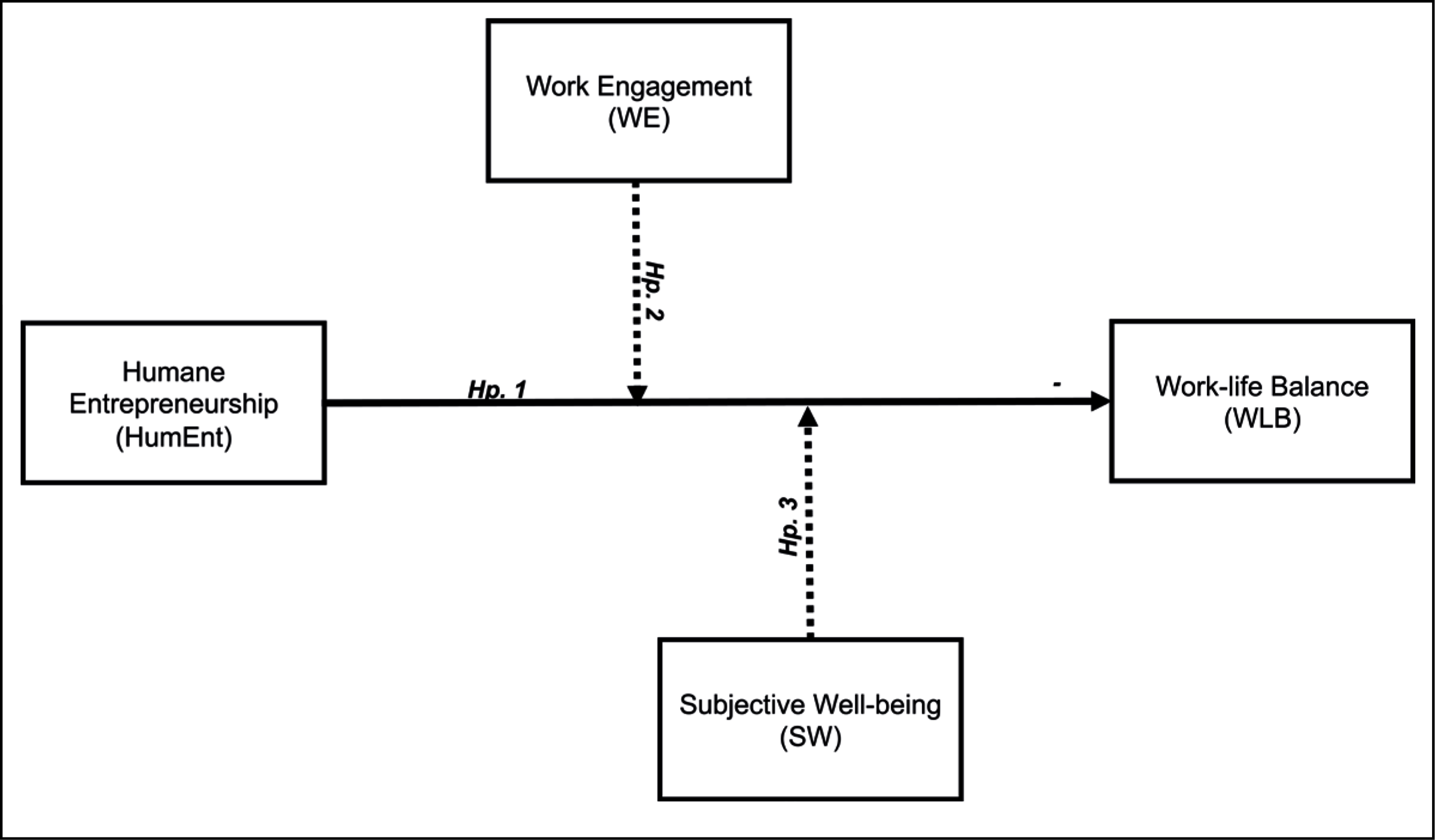
Figure 1 graphically depicts the conceptual background against which this empirical study was conducted; besides, it displays the three research hypotheses presented above. A quantitative approach consisting of an additive moderation analysis was undertaken to assess the implications of humane entrepreneurship on WLB and to check the moderating role of work engagement and subjective well-being on work-to-life and life-to-work conflicts.
Research Methods and Materials
Study Design
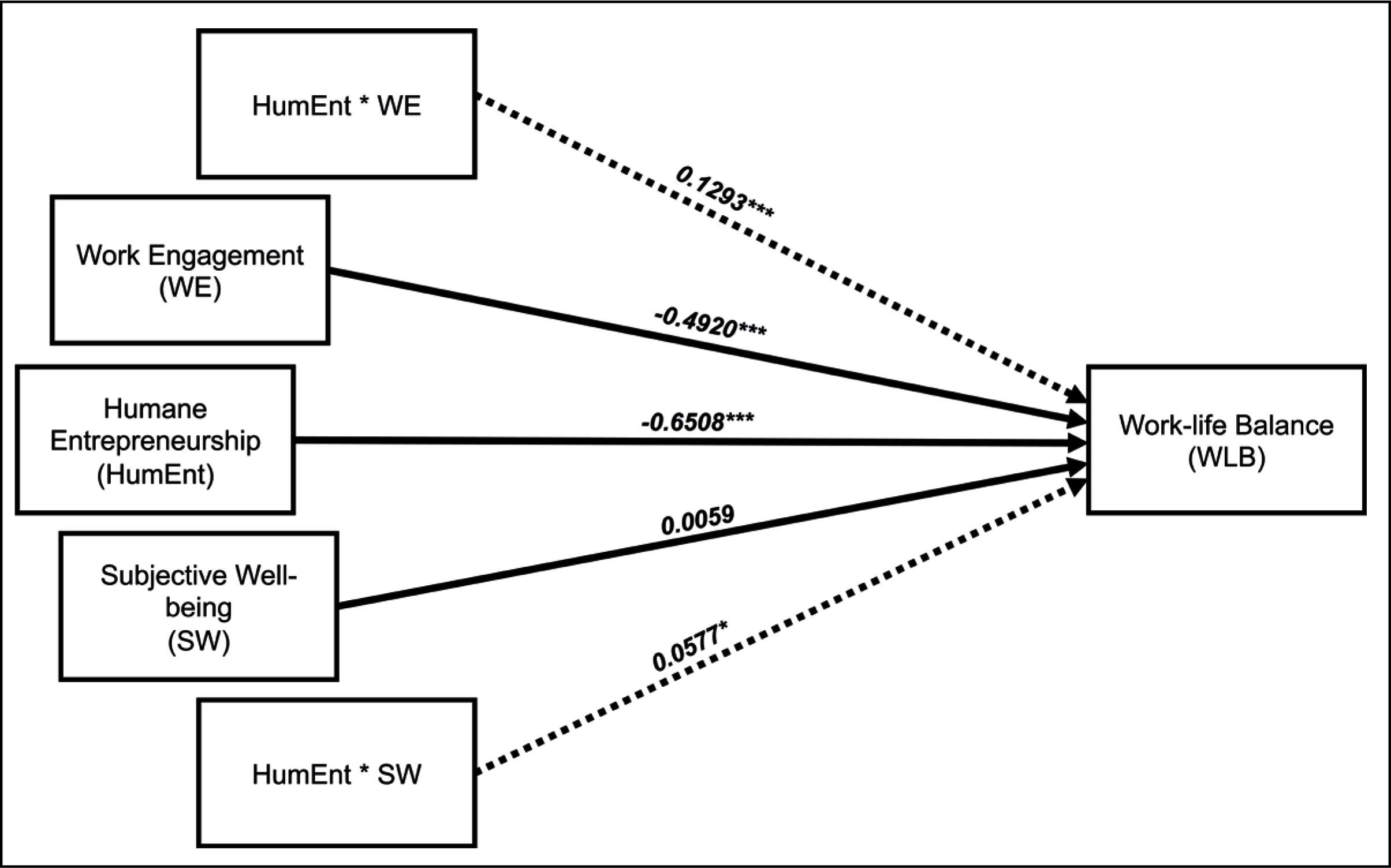
An additive, double moderation study designed was arranged to investigate the manifold implications of humane entrepreneurship on WLB. As recommended by Hayes (2018), a regression-based path analysis approach was undertaken to conduct statistical elaborations. Attention was primarily focused on humane entrepreneurship’s direct effects on WLB, in order to collect some evidence of the size, sign and strength of the relationship between these two variables. Besides, drawing on the conceptual framework depicted above, two independent moderating variables were included in the statistical model: work engagement and subjective well-being. The methodology proposed by Hayes (2018) based on the bootstrapping procedure was used to perform calculations. Elaborations were run in the IBM Statistical Package for Social Science (SPSS, vers. 24) through the PROCESS macro (Hayes et al., 2017). Model no. 2 included in PROCESS macro was implemented, which allowed us to test for parallel moderation. Figure 2 graphically depicts the statistical model.
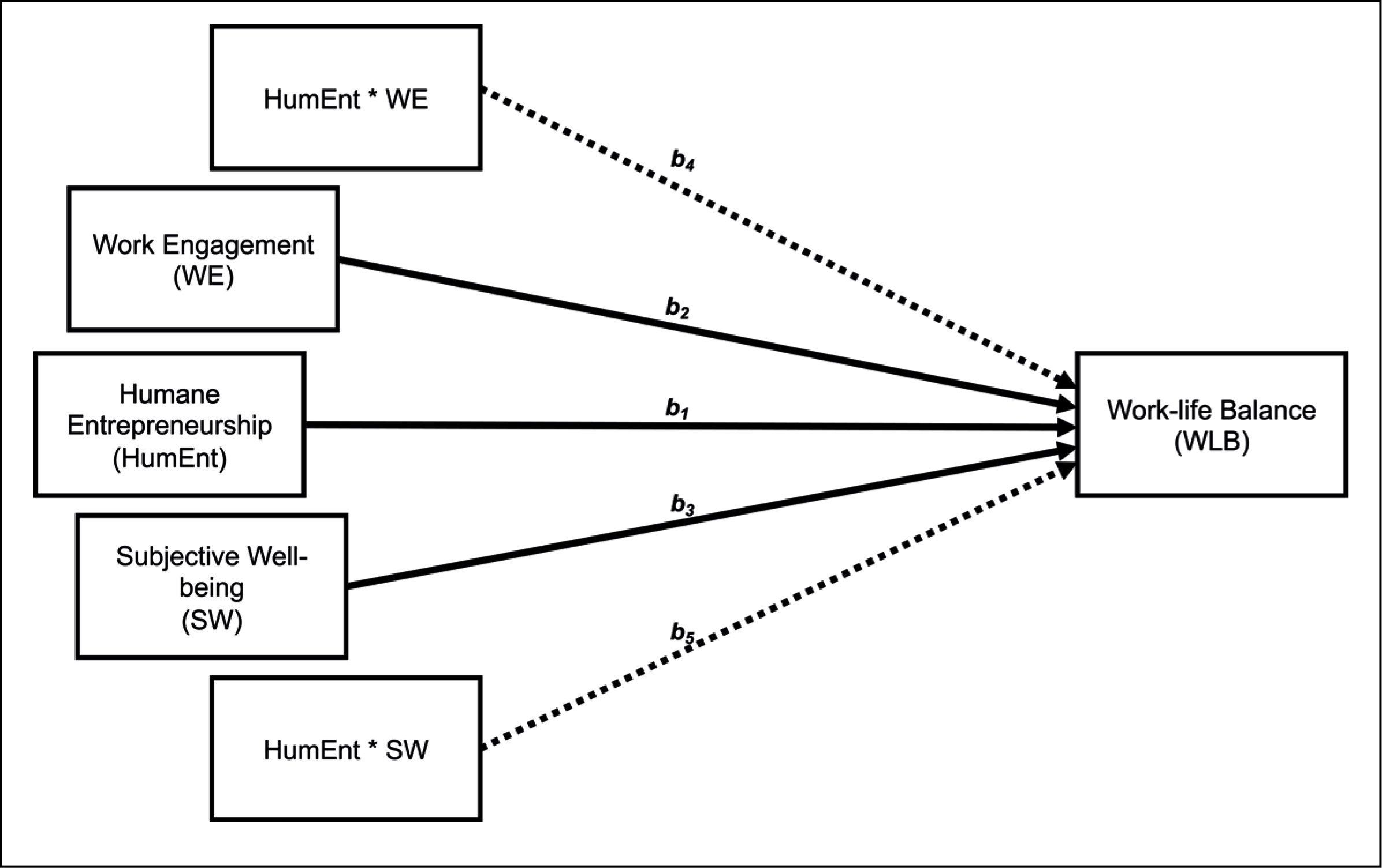
Secondary data were collected from the sixth wave of the Eurofound’s European Working Conditions Survey (EWCS). It is an international, pan-European survey aimed at providing an overview of working conditions of employed and self-employed people across Europe. Alongside the 27 member countries of the European Union, Albania, Montenegro, Norway, Serbia, Switzerland, the former Yugoslav Republic of Macedonia, the United Kingdom and Turkey were involved in the EWCS. Only people who reported to be self-employed and to own a business were admitted to the analysis. The sample consisted of 2,235 people, who were representative of the whole European entrepreneurial scene. Details about the sample are reported below.
Data and Measures
Table 1 includes an overview of the measures run in the parallel moderation analysis. The individual propensity to adopt a humane entrepreneurship posture (HumEnt) represented the independent variable of the statistical model. Different approaches have been proposed in the literature to gauge humane entrepreneurship (e.g., Bae et al., 2017). However, a validated comprehensive scale is still not available (Parente et al., 2021). Hence, a heuristic approach was used to measure HumEnt. Some proxies focusing on the three shades of humane entrepreneurship (entrepreneurial orientation, human resource orientation and sustaina- bility orientation) were employed to build an ad hoc measurement tool. The construction of this heuristic measure was established to match the conceptual components of humane entrepreneurship with the items available in the EWCS dataset. First, two items related to self-reported autonomy (i.e., the independent action in bringing forth an idea or a vision and carrying it through to completion) and proactiveness (i.e., the ability to act in anticipation of future problems, needs, or change) were used to measure the respondents’ entrepreneurial orientation (Lumpkin & Dess, 1996). Second, sustainability orientation was assessed through two items concerning the entrepreneurs’ perception of meaningfulness and eco-social relevance (i.e., feeling of doing useful work for society) of entrepreneurial action (Wagner, 2012). Thirdly, human resource orientation was self-reported by respondents through three items that looked at the implementation of a working climate based on fairness, empowerment and involvement (Pfeffer, 1998). The assessment of humane entrepreneurship derived from the aggregation of 7 items. An additive approach was used to compute this measure. It was a continuous variable ranging from 1 (lowest degree of HumEnt) to 5 (highest level of HumEnt). The variable had a good internal reliability, as assessed by the Cronbach’s alpha (α = 0.869). Inter-item correlations were positive, ensuring that all variables included were measuring the same characteristic (μ = 0.49, min = 0.33, max = 0.68, σ = 0.11). Moreover, HumEnt showed an acceptable validity (CR = 0.88, AVE = 0.51).
The Independent, Dependent and Moderating Variables
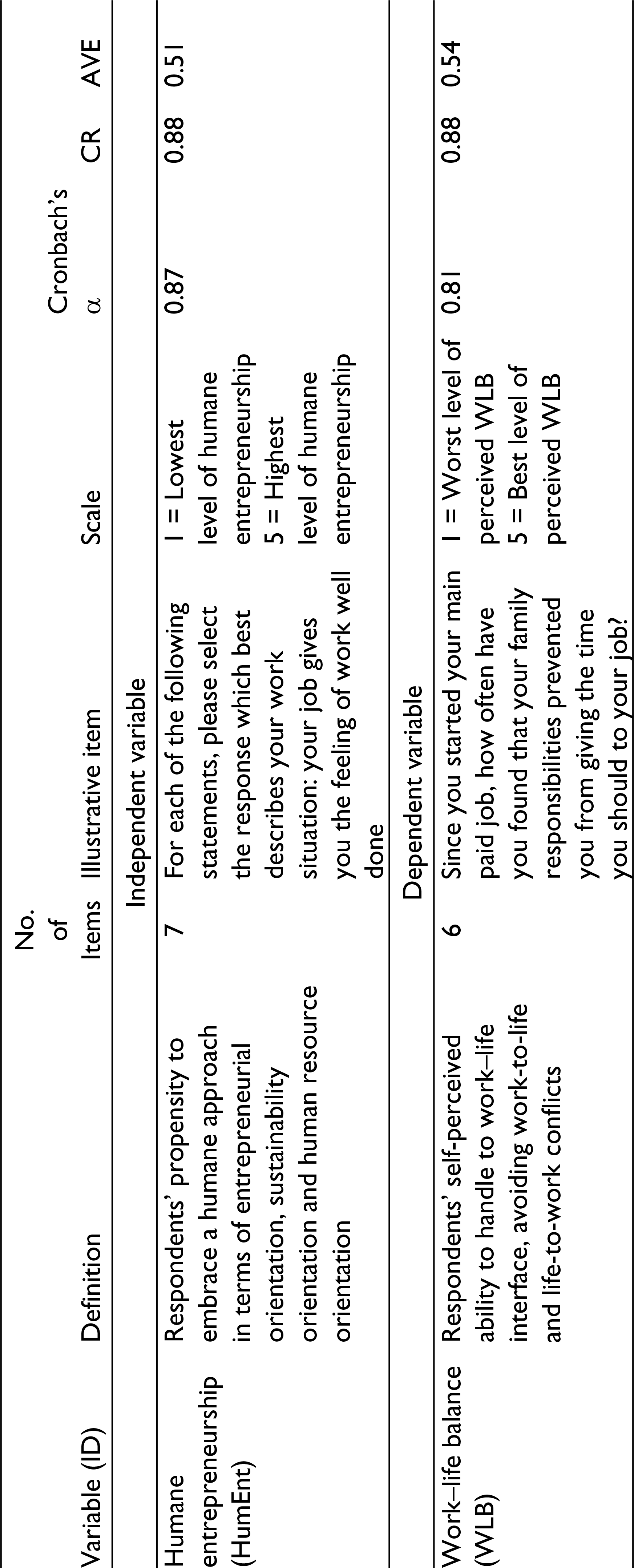
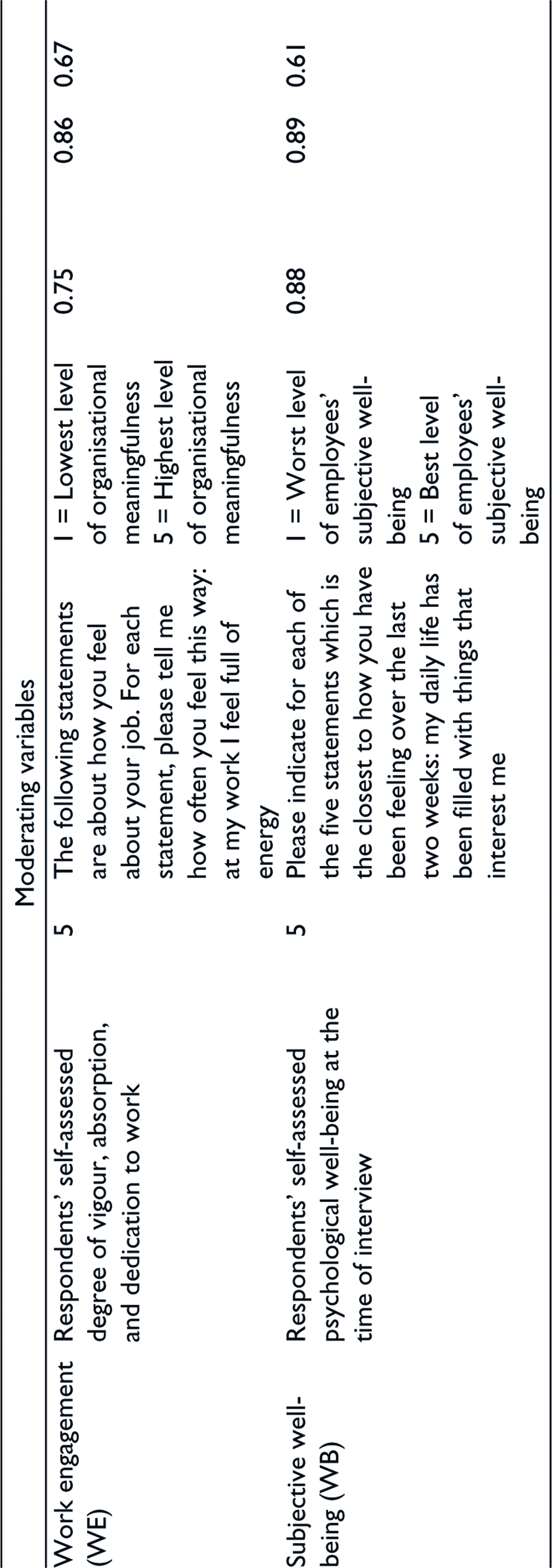
WLB was run as the dependent variable of the moderation analysis. As recommended by extant literature (e.g., Borgmann et al., 2019), WLB was measured through six items that accounted for the respondents’ perception of life-to-work conflicts, that is, contamination of work-related worries with everyday life commitments and apprehensions, and work-to-life conflicts, that is, overlapping of everyday life and work concerns. An additive scheme was used to compute this measure. WLB was a continuous variable ranging from 1 (worst level of WLB) to 5 (best level of WLB). It had a good internal reliability (α = 0.81). Inter-item correlations were positive (μ = 0.41, min = 0.20, max = 0.63, σ = 0.15). This measure showed an acceptable validity (CR = 0.88, AVE = 0.54)
Work engagement (WE) acted as the first moderating variable. It was assessed using the Ultrashort version of the Utrecht work engagement scale (Schaufeli et al., 2019). More specifically, three items were employed to gauge the entrepreneurs’ dedication, vigour and absorption at work. WE was a continuous variable, ranging from 1 (lowest level of work engagement) to 5 (highest level of work engagement). An additive approach was implemented to compute WE. It had an acceptable internal reliability, as assessed by the Cronbach’s alpha (α = 0.753). Inter-item correlations were positive, supporting the consistency among the work-engagement related items (μ = 0.50, min = 0.47, max = 0.58, σ = 0.07). This variable had a good validity (CR = 0.86, AVE = 0.67).
The second moderating variable involved the perceptions of subjective well-being (WB) disclosed by respondents. The well-being index proposed by the World Health Organisation was used for this purpose (Topp et al., 2015). It is a short rating scale measuring subjective well-being through five items focusing on different shades of daily life. An additive scheme was implemented to compute this variable. It was a continuous variable ranging from 1 (worst level of subjective well-being) to 5 (best level of subjective well-being). The internal reliability of this variable was good (α = 0.882). Inter-item correlations were positive, supporting the reliability of this measure (μ = 0.64, min = 0.51, max = 0.68, σ = 0.05). WB had a good validity (CR = 0.89, AVE = 0.61).
Constructs’ Reliability and Robustness
Some checks were accomplished to test the statistical model’s robustness. An exploratory factor analysis was run to get evidence of the underlying constructs that characterised the dataset (Hayton et al., 2004). The eigenvalue-greater-than-one rule proposed by Kaiser (1960) was followed. The four components had an initial eigenvalue higher than 1 and explained 57.5% of the total variance. This supported the four constructs structure suggested by the conceptual framework that inspired this research. The Kaiser–Meyer–Olkin (KMO) test (KMO = 0.909) and Bartlett’s test of sphericity (approx. χ2 = 15,451.78, df = 253, sig. = 0.000) confirmed the adequacy of the four-factors model.
Then, a confirmatory factor analysis (CFA) was run to check the four underlying constructs against which the empirical analysis was realised (Harrington, 2009). The results of the CFA backed the theoretical framework against which this study was established. The fit indexes (χ2 = 1,476.145, df = 183, p < .001; CFI = 0.932, RMSEA = 0.056, PClose = 0.000, NFI = 0.924, TLI = 0.922, SRMR = 0.0471) met the sufficiency thresholds to justify the articulation of the items included in the dataset in the four constructs which were envisioned in the conceptual background (Hooper et al., 2008, Kline, 2005).
The four constructs were positively and significantly correlated with each other. However, all nonparametric correlations were lower than 0.5. The variance inflation factors of the constructs ranged between 1.076 and 1.422, suggesting that the study design did not suffer from multicollinearity. Harman’s one factor test was performed to account for common method bias (Fuller et al., 2016). A single factor explained 25.4% of the total variance, which is significantly lower than the 50% threshold recommended to detect common method bias. Moreover, a common latent factor was added to the CFA in order to check for multicollinearity. The common latent factor accounted for 13% of the model variance, thus supporting that common method bias was not an issue for this study.
Sample
The socio-demographic characteristics of sample (n = 2,235) are reported in Table 2. Respondents were evenly distributed per gender, even though men (59.8%) prevailed over women (40.2%). The average age was 48 years (σ = 13 years). The majority had between 45 and 54 years (28.5%) at the time of the survey. Only 1 in 10 respondents reported a foreign nationality (10.3%). More than a third had upper secondary education (36.3%). About 1 in 3 entrepreneurs had tertiary education (31.8%). Only a small part reported either childhood education (1.2%) or primary education (10.3%).
The Socio-Demographic Attributes of the Sample (n = 2,235)
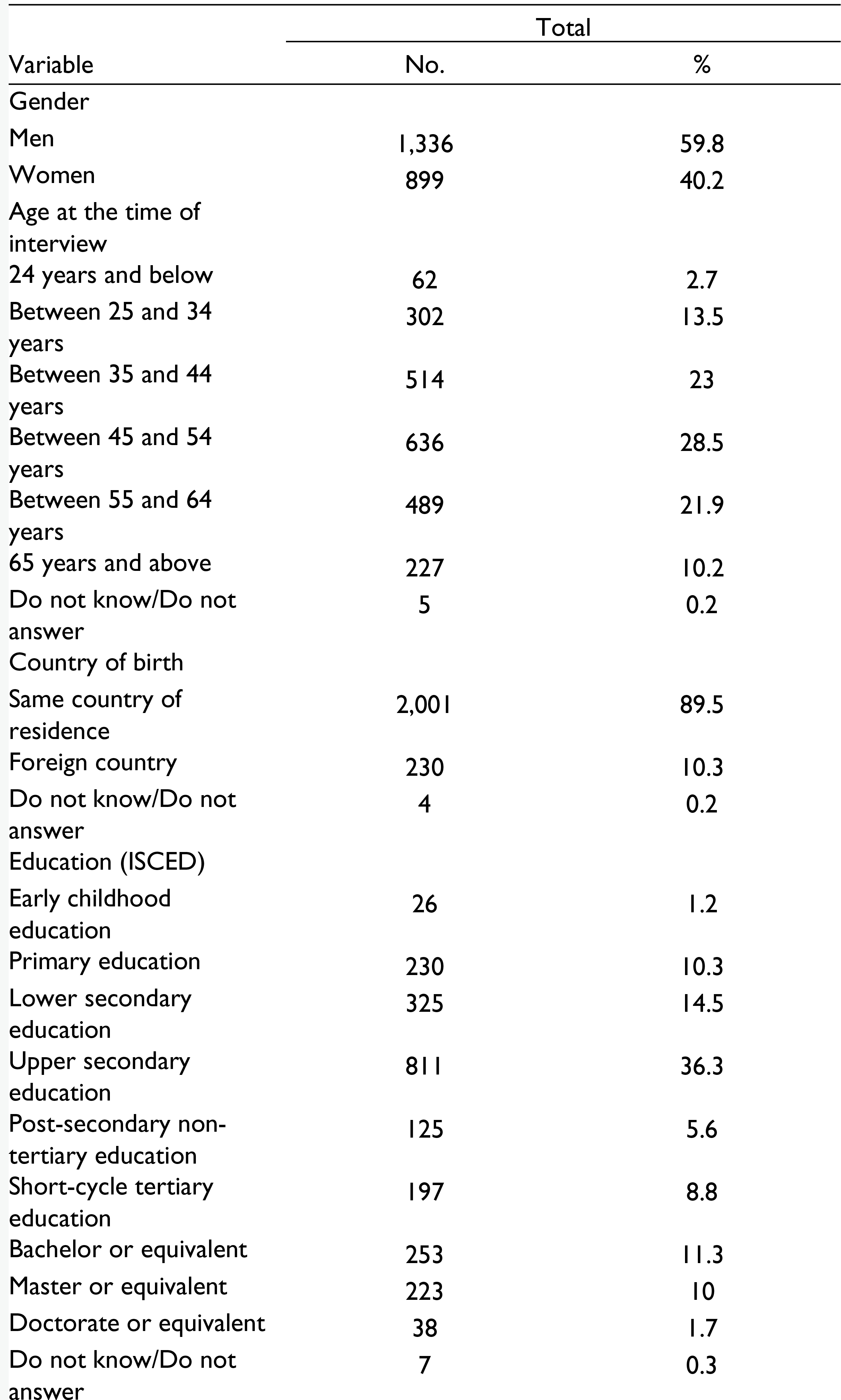
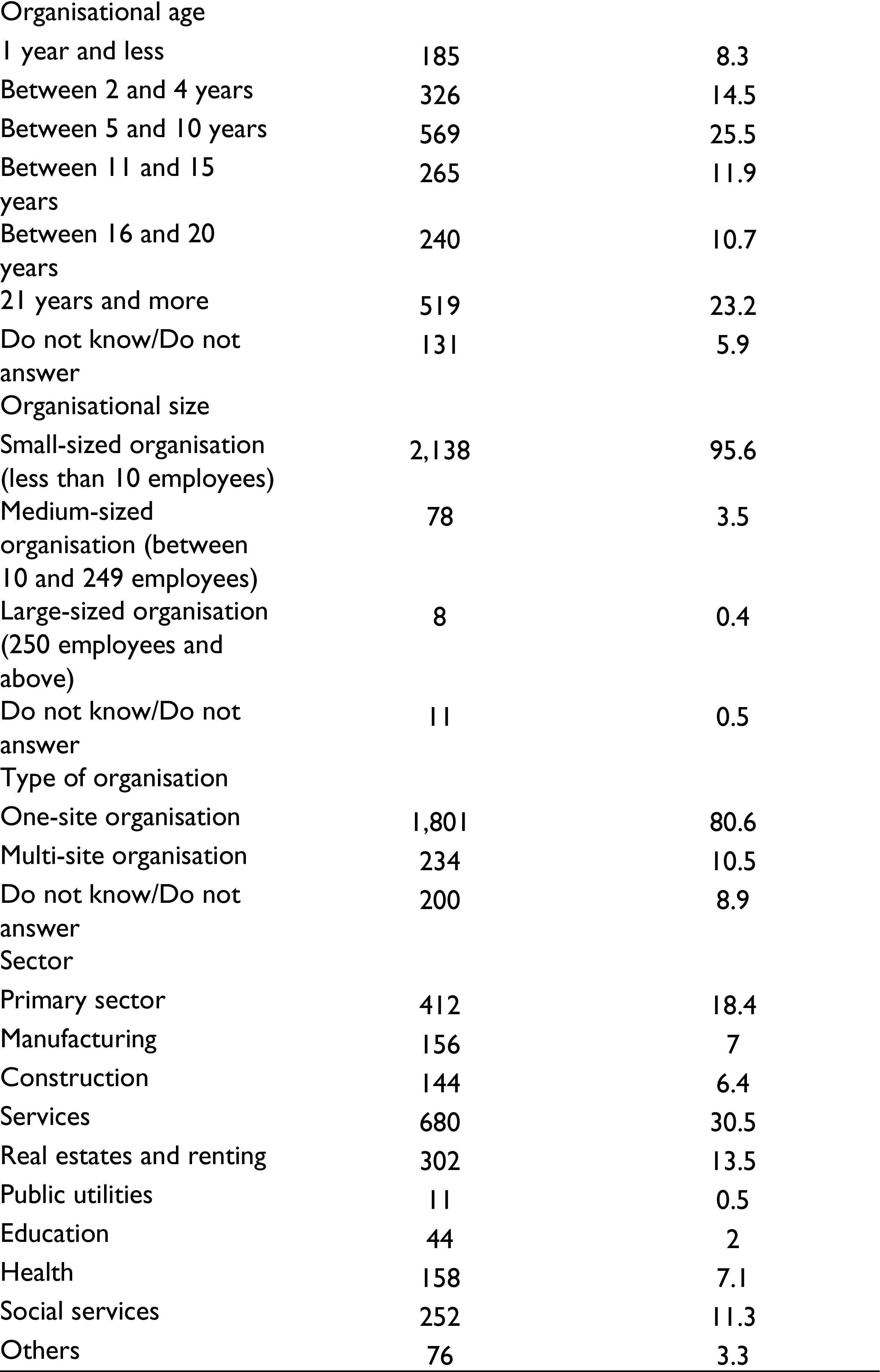
On average, respondents had an organisational tenure of more than 14 years (σ = 12 years). About a fourth had a tenure ranging from 5 to 10 years (25.5%). The majority of the sample consisted of entrepreneurs managing small-sized firms with less than 10 employees (95.6%). About a tenth managed a multi-site organisation (10.5%). Most of the entrepreneurs operated in the service industry (30.5%). The primary sector (18.4%), real estates and renting (13.5%), social services (11.3%), health (7.1%), manufacturing (7%) and construction (6.4%) followed.
Findings
Some descriptive statistics allow us to obtain preliminary insights into the entrepreneurs’ propensity to embrace a humane entrepreneurship posture and into its effects on the individual ability to achieve a WLB. About 5% of respondents reported that they were not used to embracing a humane entrepreneurship posture. However, the sample performed well in terms of HumEnt (μ = 4.4, σ = 0.7). In general, entrepreneurs reported a satisfactory WLB, even though most of them were revealed to suffer from common work-to-life and life-to-work conflicts (μ = 3.8, σ = 0.8). The work-related vigour, dedication and absorption stated by entrepreneurs were significant, suggesting a relevant work engagement (μ = 4.2, σ = 0.6). Entrepreneurs’ subjective well-being was acceptable (μ = 3.6, σ = 0.9), even though about 1 in 5 entrepreneurs disclosed an endangered psychological status (20.1%).
On average, people who were more willing to adopt a humane entrepreneurship posture worked more hours per week (μ = 41.1, σ = 17.6) than those who did not stick to humane entrepreneurship (μ = 39.1, σ = 17.7). On the one hand, humane entrepreneurs were used to work at night (μ = 1.2, σ = 4 vs μ = 0.7, σ = 3.4) and were more willing to work more than 10 hours a day (μ = 4.4, σ = 7.2 vs μ = 2.4, σ = 6). On the other hand, non-humane entrepreneurs were more likely to work on Saturdays (μ = 2.7, σ = 1.7 vs μ = 2.5, σ = 1.7) and on Sundays (μ = 1.8, σ = 1.9 vs μ = 1.3, σ = 1.7) and to have less than 11 hours between two working days (μ = 2.1, σ = 1.3 vs μ = 1.8, σ = 0.8).
Table 3 reports the output of the moderation analysis. Confirming H1, a negative and statistically significant relationship between the adoption of a humane entrepreneurship orientation and WLB emerged (Coeff. = −0.65, significant at the 0.001 level). People who embraced a humane entrepreneurship posture experienced greater exposure to work-to-life and life-to-work conflicts. Besides, work engagement had a negative and statistically significant relationship with WLB (Coeff. = −0.49, significant at the 0.001 level). In other words, the greater the respondents’ vigour, dedication and absorption at work, the lower their perception of WLB, due to increased risks of contamination between daily work commitments and life activities. The link between subjective well-being and WLB was positive, but it was not statistically significant.
The Output of the Moderation Analysis
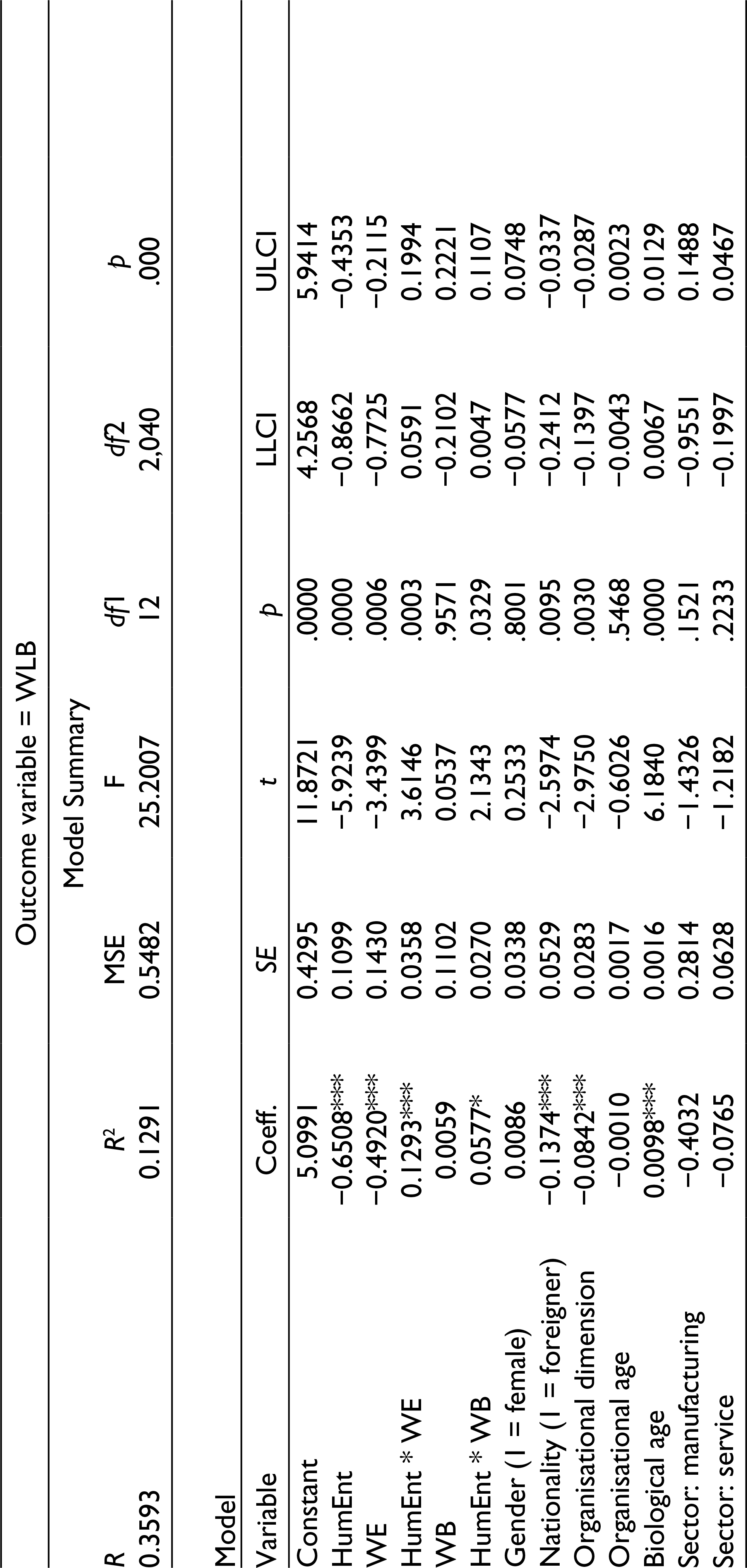
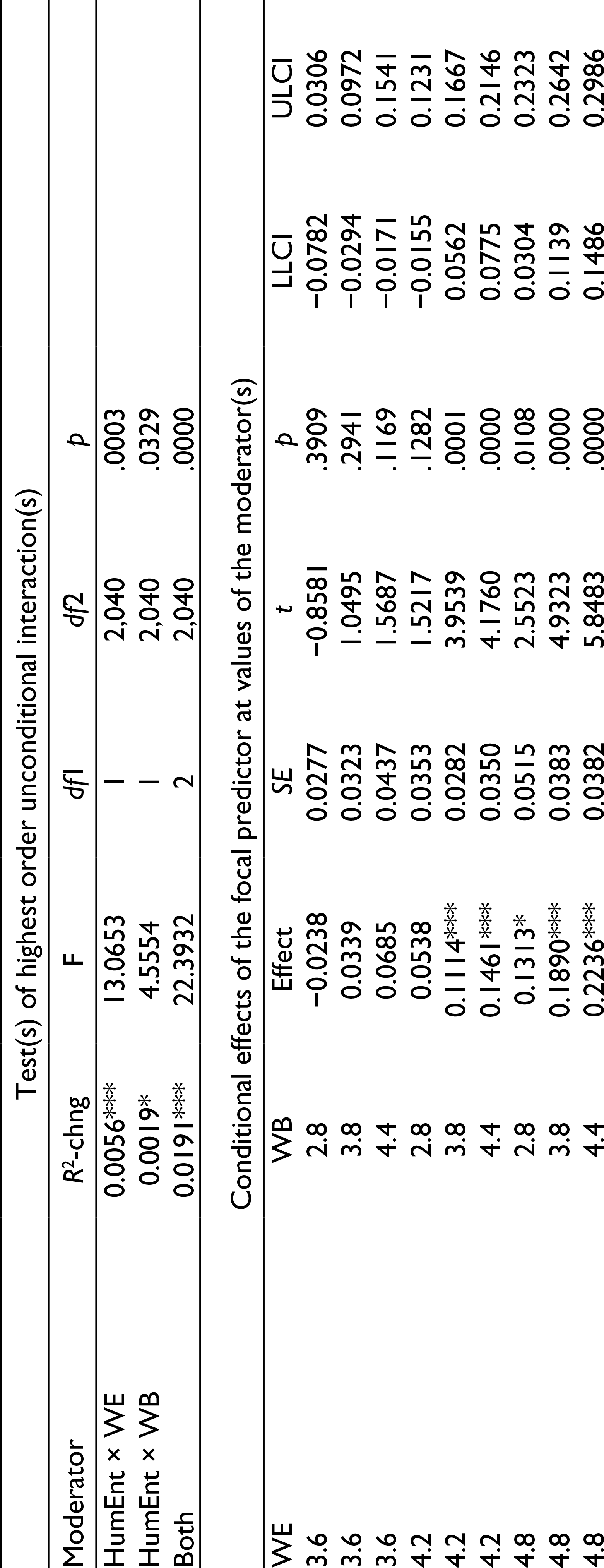
In line with H2, work engagement moderated the relationship between humane entrepreneurship and WLB. It seemed that people who disclosed greater work-related vigour, dedication and absorption perceived lower levels of work-to-life and life-to-work conflicts when they embraced a humane entrepreneurship posture. In addition, supporting H3, subjective well-being had a positive moderating effect on the relationship between humane entrepreneurship and WLB. That is to say, people who experienced better levels of psychological well-being were more likely to disclose a better WLB.
Figure 3 graphically depicts the effects of humane entrepreneurship on WLB, shedding light on the moderating role of work engagement and subjective well-being. It is interesting to note that people who embraced a humane entrepreneurship posture reported lower scores in terms of WLB than their counterparts. However, the differences between them disappeared after taking into consideration the respondents’ work engagement and subjective well-being. Whilst subjective well-being increased the perceived WLB regardless of the adoption of a humane entrepreneurship posture, work engagement was found to worsen the non-humane entrepreneurs’ ability to handle the work–life interplay. Otherwise, it positively affected the implications of humane entrepreneurship on WLB. When work engagement and subjective well-being were contemplated, humane entrepreneurs performed better than their counterparts in terms of WLB. In other words, greater vigour, dedication and absorption to work and better psychological well-being seemed to trigger lower perceptions of work-to-life and life-to-work conflicts among those who adopted a humane entrepreneurship posture.
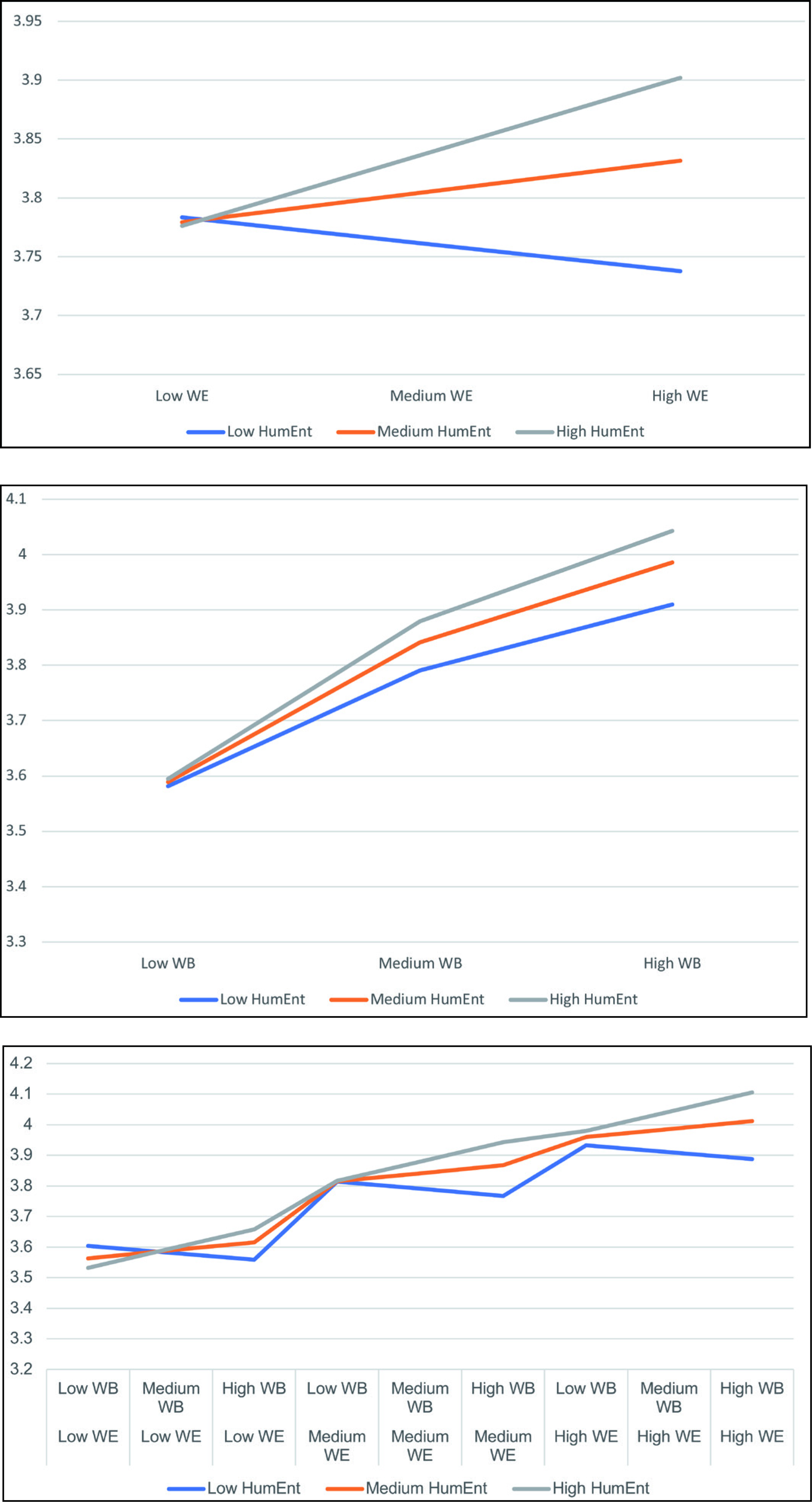
Neither gender nor organisational age affected the respondents’ WLB. Besides, the economic sector did not seem to influence the respondents’ perception of work-to-life and life-to-work conflicts. Nationality was negatively and significantly associated with WLB: entrepreneurs living in the country where they were born suffered from greater work–life conflicts. Organisational dimension was negatively and significantly related to WLB, with people managing larger organisations facing greater difficulties in handling the work–life interface. Lastly, age was related by a positive and statistically significant link to WLB: elderly entrepreneurs were more likely to report impaired WLB.
Figure 4 provides an overview of the research findings, contextualising them in the statistical diagram which graphically displays the relationships between the constructs investigated in this study. In sum, a negative link related humane entrepreneurship and WLB. Both work engagement and subjective well-being moderated the effects of humane entrepreneurship on WLB, decreasing the individual perception of work–life conflicts.
Discussion
Embracing a humane entrepreneurship posture may negatively affect the entrepreneurs’ WLB. Scholars have argued that entrepreneurial roles inherently trigger a greater permeability between work and everyday life (Jennings & McDougald, 2007; Winn, 2004). Even though entrepreneurship engenders greater job plasticity and enables the arrangement of flexible practices to deal with overlapping work and life commitments (Kirkwood & Tootell, 2008), it paves the way for boundarylessness in addressing work-related concerns and implies more common work-to-life and life-to-work conflicts (Ezzedeen & Zikic, 2017). Such a permeability impairs the entrepreneurs’ capability to create a buffer between daily life and work responsibilities. Lack of clear boundaries generate a greater encroachment of work into private affairs and a greater intrusion of life into work-related activities, which heralds an impairment of individual WLB (Lewis et al., 2015).
This is especially true when entrepreneurs are willing to self-sacrifice in order to achieve an increased economic, social and environmental performativity of the firm (Teasdale et al., 2012), as it happens in the case of humane entrepreneurship (Song & Kim, 2018). Actually, embracing a humane entrepreneurship posture leads towards a heroic understanding of the entrepreneur’s figure and role (Matlay et al., 2013), which is based on empathy, equity, enablement and empowerment (Kim, Bae, et al. 2018). Humane entrepreneurship relies on the desire to find a balance between the economic, the human and the societal cycles of the firm, combining the traditional entrepreneurial orientation with sustainability and a human resource orientation (Parente et al., 2018). Expanding the breadth of organisational concerns and enriching the contents of the entrepreneurial decision-making process, humane entrepreneurship may engender a work overload, which is nurtured by passion and commitment (Ratten & Miragaia, 2020). This phenomenon is likely to exacerbate conflicts between work and life, thus generating negative backlash on the entrepreneurs’ ability to handle the work–life interplay (Meliou, 2020).
Work engagement involves the profusion of increased efforts and dedication to put the entrepreneurial idea in motion (Gorgievski et al., 2010). Even though it is expected to involve an amelioration of the organisational climate, which is propelled by the entrepreneur’s acknowledgement as a role model amongst employees (Steffens et al., 2018), engagement may produce a sort of addiction to work (Spivack et al., 2014). The psychological, cognitive and emotional addiction for dealing with entrepreneurial challenges constrains the individual autonomy (Spivack et al., 2014) and generates a larger overlapping between work and life (Annik & den Dulk, 2012). Humane entrepreneurs have been argued to express strong work-related vigour, dedication and absorption in steering the enterprise, the human and the societal cycles of the firm (Bae et al., 2018). Their greater work engagement may shrink their awareness of the contamination between work and everyday life activities. This reduces their readiness to set clear boundaries between work and life (Annink et al., 2016), paving the way for a work–life unbalance (Gorgievski & Bakker, 2010).
Also, humane entrepreneurs’ orientation to help others and to make a contribution to society may alter their ability to effectively manage the work–life interplay (Kibler et al., 2019). Even though literature has recognised that subjective well-being and entrepreneurship are linked by a positive relationship (Audretsch & Belitski, 2015; Wiklund et al., 2019), humane entrepreneurs are likely to suffer from a greater exposition work-related stress, due to the need for finding a continuous balance between the economic, human and societal manifestations of the firm (Palumbo, 2016). At the same time, a humane entrepreneurship posture produces intrinsic satisfaction with work-related commitments and personal life (Kim et al., 2021). Such positive sensations are expected to determine the perception of better subjective well-being, which reduces the awareness of work–life conflicts (Sherman et al., 2016).
Acknowledging the study limitations allows us to better contextualise the research findings. The use of secondary data prevented us from tailoring the research design to the specific study aims. However, the sixth EWCS turned out to be a timely and rich data source, which provided us with interesting insights into the implications of humane entrepreneurship on individual WLB. Moreover, the inclusion of entrepreneurs from more than 30 European countries, which exhibit cultural and behavioural specificities, may have blurred the study findings’ interpretation. Nevertheless, the results collected from this large sample of respondents increased the research findings’ generalisability. The cross-sectional nature of this empirical analysis delivered a snapshot of the entrepreneurs’ ability to manage the work–life interplay. Nonetheless, it did not shed light on the longitudinal effects of humane entrepreneurship on WLB, thus constraining the breadth of this empirical study. Lastly, yet importantly, since there is still limited agreement on the measurement tools to assess humane entrepreneurship, a heuristic approach based on proxies was used. Even though this approach accounted for the key factors that underpin a humane entrepreneurship posture and was supported by the outputs of statistical robustness checks, it may have affected the research findings’ dependability.
Further research is required to fully illuminate the implications of humane entrepreneurship on entrepreneurs’ WLB. In-depth qualitative research is needed to shed light on the work–life interplay experienced by entrepreneurs who stick to a humane entrepreneurship posture. This will increase the understanding of the triggers that lead to work-to-life and life-to-work conflicts and will inspire practical interventions aimed at addressing humane entrepreneurship’s implications on WLB. Additionally, longitudinal qualitative studies are useful to collect more reliable and dependable evidence on the direct and indirect effects of humane entrepreneurship on entrepreneurs’ personal life, providing information about the potential side effects of prosocial behaviours related to humane entrepreneurship. Finally, yet importantly, longitudinal quantitative research is needed for enhancing our acknowledgement of the humane entrepreneurship’s effects at the individual, organisational and social levels, illuminating its contribution to entrepreneurial ventures’ excellence.
Conclusions
The contribution of this study is twofold. From a theoretical point of view, the research stresses the need for paying attention to the manifold effects of humane entrepreneurship on the entrepreneurs’ ability to manage the work–life interplay. Humane entrepreneurship is a strategic posture based on people-centredness, which is aimed at reconciling the enterprise, the human and the societal cycles of the firm. Triggering an extensification and an intensification of entrepreneurial concerns may bring a greater absorption and dedication to work, which is likely to endanger the entrepreneurs’ WLB. From this standpoint, the adoption of a humane entrepreneurship posture may have some drawbacks at the individual level, feeding work-to-life and life-to-work conflicts due to a larger overlapping between the entrepreneurial life and private life. Work engagement and subjective well-being are likely to reduce the entrepreneurs’ awareness of the encroachment of work into everyday life which is propelled by the prioritisation of work over private affairs, thus diminishing the entrepreneurs’ perceptions of work–life unbalance. This situation may lead, in the long term, to entrepreneurs’ mental and/or emotional exhaustion, which negatively affects the viability of the entrepreneurial venture.
From a practical point of view, the findings point out that tailored interventions should be undertaken to address the negative side of humane entrepreneurship on entrepreneurs’ WLB. Empathy, equity, empowerment and enablement have been recommended as key ingredients of the recipe for a strategic posture that is consistent with humane entrepreneurship. However, a fifth ingredient should be included in such a recipe to address the humane entrepreneurship’s side effects on WLB. The engagement of employees in handling the strategic, organisational and management challenges met by the firm is essential to establish a viable humane organisational posture. Employees’ engagement boosts the humanisation of managerial practices, triggering an organisational-wide commitment towards the promotion of the eco-social-environmental sustainability of the firm.
For this to happen, several organisational champions should be identified and trained to assist entrepreneurs in catalysing the organisational transition towards a fully-fledged human entrepreneurship posture and to avoid an intensification and an extensification of entrepreneurs’ efforts. Organisational champions should act as initiators and facilitators of targeted organisational change processes which are intended to boost the amalgamation of the entrepreneurial orientation with a human resource orientation and a sustainability orientation, in a perspective of humane entrepreneurship. To catalyse such amalgamation, humane entrepreneurship should be handled as a cultural artefact, which creates involvement and commitment amongst people. Conceiving humane entrepreneurship as a cultural artefact sets the conditions for the establishment of a people-centred and socially sustainable strategic posture, which underpins the long-term viability of the entrepreneurial venture.
Footnotes
Declaration of Conflicting Interests
The author declared no potential conflicts of interest with respect to the research, authorship and/or publication of this article.
Funding
The author received no financial support for the research, authorship and/or publication of this article.