







Abstract
Popular Kacchi Biryani restaurant, Sultan’s Dine in Bangladesh, faced a major obstacle when a false and damaging rumor spread on social media that they were using dog meat in their dishes. This case study focuses on how Sultan’s Dine experienced damage from the food rumor issue, specifically how the restaurant’s brand reputation and consumer trust were affected by the rumors, which went viral. To escape the rumor and win back the public’s trust, the restaurant used a smart strategy that included Internet marketing, arguments, and public relations. Sultan’s Dine somehow managed the situation by applying strategies to overcome negative word-of-mouth and used viral marketing because of regular engagements with customers, which transformed the problem into an opportunity for development through social media and consumer feedback. Media reports, corporate representative interviews, and social media evaluations were used to collect data for this study. This case highlights the importance of quick crisis management, the contribution of viral marketing to reputation management in the food industry, and the challenges businesses face in the modern age. This case study shows how careful use of digital channels can reduce the negative impacts of rumors while building strong brand loyalty.
Keywords
Introduction
Sultan’s Dine, a well-known restaurant known for its traditional Kacchi dinner, had a reputation problem when a false rumor arose on social media saying that dog meat was being used rather than mutton in its famous Kacchi. This accusation mostly hurt the Gulshan Branch, which gets a lot of different kinds of customers, but mostly young people and grown-ups who love Kacchi Biryani. This group of people is very important to the restaurant’s popularity. A Facebook post that went viral created a lot of rumors that quickly got out of hand and hurt the restaurant’s reputation. At first, this made fewer customers come in since they started to doubt the food’s quality (The Business Standard Report, 2023). Further investigations showed that these accusations were false and there was no proof to back them up (Star Digital Report, 2023).
The management quickly put out official announcements and worked with food safety organizations to reassure the public that they were serious about quality (Rahman & Ali, 2023). This quick response helped rebuild confidence and, without meaning to, made the restaurant more visible, which brought in more customers. This is known as “viral marketing” (BDnews24 report, 2023). Viral marketing is when people utilize social networks to quickly spread messages and get others to share them, frequently by utilizing emotions like shock, laughter, or controversy (Casais & Gomes, 2022; Caterina, 2019; Pinto et al., 2025). Viral marketing uses social media to quickly get people to know about and interact with a business (Bejanaru, 2000; Hasanah & Nasution, 2023; Zhang et al., 2025). This is usually done through sharing content and word-of-mouth (Anastasiei et al., 2023; Bae et al., 2023; Diez-Martin et al., 2019; Hesse et al., 2021). Online networks and influencers are important for making this effect stronger. With the right digital methods, brands can utilize viral marketing to bounce back from a crisis, promote new items, or get more people to see them (Kamay, 2024; Razali et al., 2023; Sihombing & Husein, 2025).
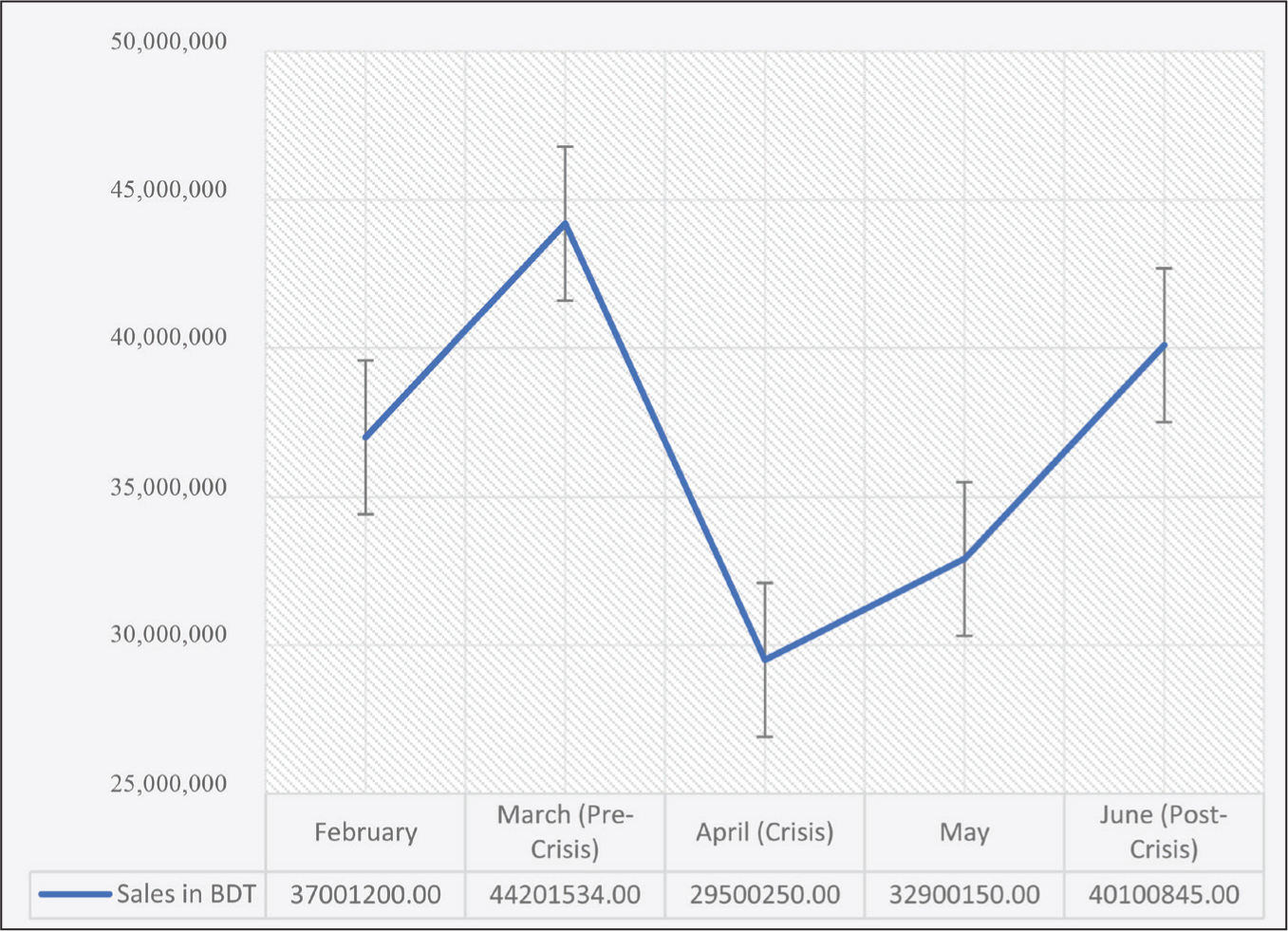
Sales fell at first (see Figure 1) but as the truth came out, Sultan’s Dine saw a huge increase in customer interest. The restaurant was able to turn the issue into a chance to get more attention and flourish, showing that bad press may occasionally help a brand’s identity (Cardoso et al., 2023; Testa, 2025). Kacchi Biryani’s popularity, which is known for its complex flavor and quality components, was a big part of Sultan’s Dine’s long-lasting reputation.
Sales Report of Sultan Dine (Estimated).
Background
Sultan’s Dine, founded in 2017 by Foysal Ahmed and his partners, quickly became a prominent brand in Bangladesh, known for its authentic, halal Kacchi Biryani. The founders, with backgrounds in business and corporate experience, including roles at IT Farms, Evercare Hospital, and Partex Group, saw a gap in the market for high-quality, wedding-style meals (Ovee, 2023). Their initial venture into fast food, offering items like Thai, pasta, and pizza, met with little success, leading them to pivot toward offering Kacchi Biryani, a dish typically served at weddings. This decision marked the beginning of their rise, despite early operational losses and low customer attendance (Peoples Time Desk, 2023). After overcoming these challenges, Sultan’s Dine gained popularity and became a respected brand with multiple locations in Dhaka, Chattogram, and Rajshahi. The success of Kacchi Biryani, a dish known for its rich flavor and high-quality mutton, played a pivotal role in establishing its stellar reputation.
In 2023, though, Sultan’s Dine had a big problem when a false rumor surfaced on social media saying that the restaurant made use of dog meat in its Kacchi Biryani. Customers started to doubt the food’s legitimacy because of this story, which hurt the restaurant’s brand reputation. The speedy spread of false information on digital platforms shows how hard it is for firms to operate in today’s linked environment, where rumors can have big effects right away (Shahid et al., 2024; Wu et al., 2022). In response, Sultan’s Dine quickly put out official comments and cooperated with food safety groups to put an end to these bogus accusations. Even though sales fell at first, the restaurant was able to convert the crisis into an opportunity by using good crisis management techniques to get people to pay attention again (Celliers & Hattingh, 2020; Johnson & Peppas, 2003). This case shows that, under some circumstances, bad press can actually make a brand more well-known (Benoit, 2018; Huang, 2006). As the truth about the accusations came out, Sultan’s Dine saw a surge in consumer interest. This shows that well-managed crises can improve both reputation and financial success (Daily Bangladesh Staff, 2023; The Financial Express, 2023). This instance shows how reputation management is changing in the digital age, where quick, clear reactions and good crisis communication are very important. Sultan’s Dine handled the problem quickly, which shows how bad things may be used to help a business expand and strengthen its brand.
Why the Study Is Important?
This study gives us useful information about how social media, public perception, and crisis management all come together in the Bangladeshi restaurant business. Sultan’s Dine’s handling of a potentially detrimental rumor teaches businesses how to deal with such problems in a world that is becoming more digital, where rumors circulate quickly and can have a big effect on a company (Staff Correspondent, 2023). The study adds to the increasing body of research on viral marketing by showing how a crisis may be transformed into a marketing opportunity that makes a restaurant more popular. Sultan’s Dine’s experience shows how important it is to respond quickly to a crisis and communicate openly. It also shows how hard times may be used to reinforce good brand values (Anderson, 2018; Tribune Desk, 2023). This study shows how important it is to have crisis management in fields where trust is very important.
Objective
The objective of this study is to explore the impact of online misinformation on a brand’s reputation, using Sultan’s Dine as a case example. By investigating false rumors about dog meat in the Kacchi dish, this study examines crisis management strategies, reputation rebuilding, and the potential for viral marketing. This study aims to provide insights into how companies can manage social media crises and turn them into opportunities for growth and brand reinforcement.
Case Dilemma
In 2023, Sultan’s Dine had a big problem when a false rumor surfaced on social media saying that the restaurant made use of dog meat in its Kacchi Biryani. This story hurt the brand’s reputation and sales a lot since people started to doubt the quality of its food. To fix the crisis, rebuild consumer trust, and deal with bad public opinions, management had to act fast and efficiently (Almaliki, 2019; Buchanan, 2020; Liang & Huang, 2023). This problem raises two important questions:
How can Sultan’s Dine stop the spread of misleading information while yet being honest and trustworthy?
Sultan’s Dine has to act quickly and smartly to stop false information from hurting its brand. It’s important to act quickly, but being too combative or confrontational could have made things worse and pushed people away even more (Choi & Seo, 2021; Delgado-Ballester et al., 2021). Research on crisis communication shows that the focus should be on being open, clear, and reassuring without being defensive or angry. When correcting lies, it’s important to keep the brand’s dignity and not be too defensive. When things go wrong, clear and open communication is very important for regaining trust (Holland et al., 2021; Lopes, 2023).
What long-term plans should Sultan’s Dine make to get people to trust their brand again and be ready for future problems?
Studies show that businesses that have good ties with their customers and clear lines of communication are better able to handle emergencies. Long-term plans to keep customers coming back include making sure the food is always safe, getting customers involved, and being open about food safety (Bryanov & Vziatysheva, 2021; Chen, 2016). Sultan’s Dine needs to focus on these long-term measures to build customer trust, in addition to responding to the present problem. Focusing on getting feedback from the community and responding to it will help rebuild and bolster brand loyalty over the long run (Al Balawi et al., 2023; Wali et al., 2015).
A Look at the Literature
Rumors and incorrect information are becoming a bigger problem, especially in the food market, because they make people less likely to trust the business. Handling these kinds of crises correctly can help reduce damage and even transform bad events into opportunities for growth through viral marketing (Zhang et al., 2025). Studies on food-related rumors indicate how crucial it is to have effective crisis communication plans and how to stop rumors from spreading so they do not hurt your business and, in some cases, even help it get more attention (Arif et al., 2017; Ovi & Sohel, 2022). The literature shows how crucial it is to be honest and quick to respond to misleading information, especially in areas like food, where trust is so significant.
In 2020, for instance, the American fast-food chain Popeyes had an issue when a fake story spread on social media alleging that the company offered chicken dishes that included rat meat. The rumors spread quickly, and sales fell for a brief time. People were scared, but Popeyes’ immediate and honest response helped ease their anxieties and rebuild confidence. This shows how crucial it is to talk to people during a crisis (Amoruso et al., 2020; Lutzke et al., 2019). This anecdote highlights how crucial it is to communicate well amid a crisis to protect your reputation. The study reveals that companies need to talk to one another quickly, openly, and honestly to make the damage caused by food gossip less severe (Chang et al., 2023; Kim et al., 2023). Greggs, a bakery in the UK, also had to deal with false allegations in 2021 that its vegan goods contained non-vegan components. These rumors affected the brand’s reputation, but Greggs used the situation as an opportunity for viral marketing by responding to customers on social media and releasing videos of how they create their products. This highlighted how dedicated they are to quality (Burbach et al., 2019). This proactive plan not only put an end to the false allegations, but it also got the company additional attention and helped the brand get back on its feet through viral marketing. Browns Dairy in Australia had to deal with the same concerns in 2023 when false claims propagated online that harmful substances were being added to milk (Chen & Cheng, 2020). At first, the rumors impacted sales, but the company cooperated with food safety inspectors and utilized a lot of different ways to talk to people to put an end to them. This effort ended up increasing sales, which shows that excellent crisis management and good viral marketing go hand in hand (Bapaye & Bapaye, 2021; Chang et al., 2022). These examples show that incorrect information can affect a business’s reputation, but if you know how to deal with it, you can utilize it as a chance to attract more people to see and interact with the brand.
These case studies show that rumors about food can affect a company’s reputation, but they can also help businesses interact with customers, rebuild trust, and get the word out about their brand. You have to know how to deal with crises successfully to turn them into opportunities for progress. This includes being able to talk to people swiftly and clearly and using digital media wisely.
Viral marketing and terrible WOM—Viral marketing is a powerful method that uses social media and the Internet to quickly disseminate a message from person to person, like a virus. As social media has gotten more prominent, viral marketing has become a handy way to spread the word about a product. It helps get to many people quickly and makes them want to share them (Brashier & Schacter, 2020; Rini et al., 2024). The secret to successful viral marketing is creating content that evokes strong emotions, such as astonishment, hilarity, or controversy, prompting people to share it with their friends (Hasanah & Nasution, 2023; Kamay, 2024). Sultan’s Dine is a brilliant example of viral marketing. In 2023, a false rumor spread on social media that the restaurant utilized dog meat in its Kacchi Biryani. At first, the rumor affected its reputation, but it gained a lot of attention and led to a lot of press coverage and public discussion (Sandu et al., 2024). The refutation of the claims restored people’s faith in the brand. People learned more about the company as a result of the event going viral. The dispute itself went viral (Loeb et al., 2020), which made people want to go to the eatery.
The impact of social media—When there is a crisis, social media influencers are incredibly crucial for changing how people think about things. Sultan’s Dine has used Facebook, Instagram, YouTube, and TikTok to talk to clients. It has a lot of fans on Facebook (Covello, 2021a). Influencers are particularly vital for keeping things moving during viral crises like false food allegations. For Sultan’s Dine, well-known media figures used their platforms to fight the false claims, which set diners’ minds at ease about the restaurant’s true components (Jagonews, 2023). The Two-Step Flow of Communication Theory by Lazarsfeld and Katz outlines how messages from the media reach people. First, they distribute the information to opinion leaders (influencers), who check it and then send it to a larger group of people. For Sultan’s Dine, influencers were people who influenced people’s ideas and made incorrect information less harmful (Peoples Time Desk, 2023; The Financial Express, 2023; Tribune Desk, 2023). Social media influencers were very helpful in spreading rumors and rebuilding confidence with customers because they are trustworthy and have a lot of followers.
Brand loyalty and how people act as customers—How people act is greatly affected by how much they think knowledge is worth, how it affects their minds, and how reliable the sources are. When it comes to viral marketing, these things have a big effect on how people respond to rumors. Brands like Wendy’s and Tesla indicate that emotional reactions to shocking allegations can quickly spread incorrect information. When erroneous reports said that dog meat was in Sultan’s Dine’s Kacchi Biryani, people were really frightened (Ovee, 2023; Peoples Time Desk, 2023; Tribune Desk, 2023). On the other side, the restaurant’s open and proactive approach helped limit the damage. This illustrates that talking to clients well amid situations will help them come back (Amoruso et al., 2020; Anderson, 2018; Cheng, 2018; Sultan’s Dine, 2024).
Research shows that customers are more likely to stay loyal to a brand if the company handles challenges well (Edinger et al., 2023). Sultan’s Dine exhibited this by keeping to its values of honesty and quality, turning a negative situation into a chance to earn customers’ trust and loyalty. Sultan’s Dine established brand loyalty by taking care of client problems before they happened and presenting proof of the quality of their meals. This helped the restaurant’s reputation and trust expand (BDnews24 report, 2023; Kaler Kontho, 2023; Star Digital Report, 2023; The Business Standard, 2023).
Theoretical Anchoring
Roger Kasperson developed the Social Amplification of Risk Theory (SART) in the late 1980s. It examines how public awareness may lead individuals to perceive threats as more significant than they actually are, despite the minimal genuine threat. To comprehend how food-related rumors can escalate into significant societal issues, one must grasp this concept (Anderson, 2018; Celliers & Hattingh, 2020). SART asserts that “amplification stations,” such as social media, news organizations, and influencers, play a crucial role in shaping public perceptions of risk. False rumors proliferated rapidly on these platforms regarding Sultan’s Dine, exacerbating public anxiety and significantly damaging the restaurant’s reputation. The concept also addresses “ripple effects,” wherein misinformation proliferates and exacerbates, heightening public anxiety. The Sultan’s Dine episode exemplifies this, since allegations of dog meat heightened public fear and anxiety (Almaliki, 2019; Celliers & Hattingh, 2020).
The erroneous allegation that Sultan’s Dine incorporates dog meat in its Kacchi Biryani exemplifies how a trivial, inaccurate assertion may gain significant momentum and proliferate rapidly through both social and traditional media. (Burbach et al., 2019) assert that such amplification may adversely affect a restaurant’s reputation by leading individuals to perceive elevated hazards. Social media platforms are effective at disseminating rumors, and in the instance of Sultan’s Dine, the narrative proliferated rapidly, leading many individuals to accept and propagate the inaccurate information. This exacerbated the situation rapidly, disseminating additional misinformation and aggravating the issue significantly (Chang et al., 2023). This myth significantly influenced behavior, as food-related misinformation frequently results in substantial alterations in actions, particularly in civilizations where dietary practices are intricately linked to cultural norms. In this scenario, numerous loyal patrons refrained from visiting the restaurant due to perceptions of unhealthiness. This case illustrates the rapidity with which a rumor can escalate into a significant issue that undermines brand loyalty and customer trust (Covello, 2021b). Food possesses significant cultural connotations, and any suggestion of non-traditional habits, such as the consumption of dog meat, can provoke considerable distress among individuals. The cultural awareness rendered Sultan’s Dine’s predicament considerably more perilous, complicating effective communication throughout the crisis (Kim et al., 2023).
The Bovine Spongiform Encephalopathy (BSE) problem, commonly referred to as Mad Cow Disease, has a resemblance to a historical occurrence. Although the risk of consuming contaminated beef is minimal, the media’s portrayal and public hysteria amplified the perceived threat significantly. This illustrates the potency of public perception in influencing behavior, even when the actual risk is minimal. Similarly, during the situation involving Sultan’s Dine, social media and cultural sensitivity exacerbated the perceived threat, complicating the management of the company’s reputation and heightening public anxiety (Daily Bangladesh Staff, 2023; Liang & Huang, 2023).
Methodology
Research Design
In order to offer a thorough examination of the food speculation crisis at Sultan’s Dine, this investigation implements a qualitative research methodology. The research aimed to investigate the perceptions, experiences, and responses of critical stakeholders, such as management, staff, and consumers, in order to gain a comprehensive understanding of the crisis management process. This was accomplished through the use of qualitative methods. A qualitative approach enables a more profound comprehension of the emotive and social consequences of the rumor on the brand’s reputation and consumer behavior as a result of the crisis’s nature. The study aims to elucidate the cumulative impact on consumer trust and brand perception, in addition to the immediate responses of Sultan’s Dine, by collecting rich narrative information derived from interviews, observations, and media coverage analysis.
The research is informed by the knowledge that food-related rumors can disseminate rapidly through digital platforms and cause substantial harm to a brand’s reputation. As a result, the objective of the investigation is to investigate the manner in which Sultan’s Dine’s management responded to the crisis and the impact of their actions on public perceptions, the media narratives, and purchasing habits.
Data Collection
In order to acquire a thorough comprehension of the crisis encountered by Sultan’s Dine, this case study implemented a variety of qualitative methodologies. Initially, the researcher performed site visits to numerous Sultan’s Dine locations, which included the Gulshan and Dhanmondi branches. These visits were primarily aimed at observing real-time consumer behavior and management practices, especially during the crisis when allegations were circulating. The researcher also engaged in informal conversations with customers to gain insight into their apprehensions and the ways in which these apprehensions affected their decision to partake at the restaurant. These observations were documented as field notes, which captured the general public ambience related to the crisis, customer traffic, and customer sentiment (positive, impartial, or negative).
Second, five in-depth interviews took place with key stakeholders at Sultan’s Dine, including Mr. Kamal Ahmed (Manager, Sultan’s Dine Gulshan Branch) and other staff members, including a communications specialist and a customer service representative. The purpose of these interviews, which lasted an average of two hours each, was to gain insight into the management’s perspective on the disinformation crisis, their response methods, and the effect of the crisis on the brand’s reputation. The process of the interview was semi-structured, allowing for latitude in responses while concentrating on critical topics such as managing emergency responses, consumer queries, and interpersonal interaction processes.
In order to augment the interviews along with site visits, the author conducted document analysis of pertinent media coverage, such as newspaper articles, online articles, and social media posts discussing the rumor incident. Key sources encompassed The Financial Express, The Business Standard, and Daily Bangladesh. This analysis offered a perspective on the media’s portrayal of the crisis as well as the role that social media played in exacerbating the situation.
Data Analysis
Qualitative content analysis, a technique for recognizing and interpreting trends in written and verbal communications, was employed to analyze the data.
The examination necessitated numerous procedures:
Coding and categorization: In order to identify recurring themes, data from assessments, site visits, and news reports were systematically coded. Key subjects included the efficacy of communication strategies, consumer sentiment, and crisis response. Thematic analysis: The data that were coded were categorized into themes, including the rapidity of crisis response, how brands are perceived, and changes in the purchasing habits of consumers. This thematic approach facilitated a more profound comprehension of the impact of Sultan Dine’s crisis management initiatives on public opinion. Comparative analysis: In order to determine whether there were any discrepancies or alignments in the perceptions of the crisis among different categories of stakeholders (management, customers, and media), the responses were compared. This facilitated the evaluation of the company’s communication strategy and general response. A comparison with external data: To evaluate the alignment between the company’s message and public comprehension, insights from conversations with management were cross-referenced with public media narratives. This facilitated the assessment of the efficacy of Sultan’s Dine’s crisis communication strategy.
Note on Data Limitation—Due to the confidentiality agreements with Sultan’s Dine, quantitative data, including sales figures, foot traffic, and customer surveys, were excluded from this qualitative study. The qualitative data, compared to interviews, observations, and the investigation of documents, provided rich cultural insights into the manner in which the crisis affected both the company and consumer behavior, despite the fact that quantitative data would have helped improve the study. Quantitative data could be incorporated into future studies to offer a more comprehensive understanding of the crisis’s impact on consumer behavior and sales.
What Sultan’s Dine Authority Did to Get Over the False Rumor Situation
The restaurant management put in place a full crisis management plan to limit damage, restore brand image, and win back customers’ faith after the false rumor that Sultan’s Dine served dog meat in their Kacchi Biryani (Huang, 2006). The plans were meant to deal with the current problem and set the brand up for long-term recovery. Here is a summary of the main tactics used:
Open and honest public statement right away—Sultan’s Dine’s first answer was quick and open. Management made a public statement strongly denying the bogus accusations and reaffirming their commitment to food safety and quality. They also made their meat procurement processes clearer by giving thorough information about their suppliers and putting strict quality control systems in place (Benoit, 2018). To show that they were serious about being open, the corporation asked unbiased investigators or food safety testers to check the claims and made the findings public. This measure was meant to clarify the air and show that Sultan’s Dine was a responsible and open company.
Getting involved on social media—Sultan’s Dine knew that social media was a big part in spreading rumors; thus, they aggressively used their official social media accounts. They utilized social media to talk to clients directly and provide them with frequent updates and answers to their questions. They quickly and pleasantly handled customers’ issues, making sure that their contacts were open and honest. They also provided behind-the-scenes photos of how they prepared meals to create trust and demonstrate that they were working hard to make sure the quality was good (Rahman et al., 2025). The goal of this quick digital interaction was to keep consumers informed and reassure them that the company is committed to high standards.
Partnerships with influencers—Sultan’s Dine knew that social media influencers may help them fight bad press, so they worked with well-known culinary bloggers. Influencers were asked to come to the restaurant, see the kitchen, and watch the chefs make meals. These influencers told their followers about the good things they had to say about Sultan’s Dine and how real the restaurant’s methods were (Abrahms, 2020; Ehrl & Hinck, 2021). Using influencers helped the restaurant reach more people and fight back against the bad stories by focusing on the facts and regaining trust.
Training staff and talking to each other within the company—To make sure that all branches worked together, good internal communication and staff training were very important. Sultan’s Dine met with personnel on a regular basis to tell them what was going on and what they were doing about it. Staff members were taught how to be cool and courteous and provide correct answers to consumer questions. Customers were told that the restaurant was serious about food safety and quality (Liz-López et al., 2024; Loeb et al., 2020). This training made sure that staff could handle client complaints well while keeping the same message across all locations.
Watching and Giving Feedback—During the crisis, Sultan’s Dine kept a careful eye on how people felt and asked customers for input. People spoke about it on social media, left reviews, and filled out questionnaires to keep an eye on it. Sultan’s Dine might change their plans on the fly based on how the audience reacted, which would help them keep recovering and becoming better over time (Burbach et al., 2019; Chang et al., 2022). This step was important for keeping up with changing customer issues and making sure the restaurant listened to what customers said.
Clear Rules for Dealing with Customers—During the crisis, management made it clear how personnel should handle consumer encounters. The personnel were told to:
No matter how angry the consumer is, be cool and courteous. Give consumers accurate information so they know what’s going on and what steps are being taken to fix it. Tell consumers that the ingredients are real and that the restaurant is serious about food safety. Encourage consumers to talk to each other and ask questions, and make sure the staff is honest when they answer. Customers were told to go to management for further information if their problems were not remedied. To help balance out the bad press, ask happy customers to write good reviews.
These measures helped Sultan’s Dine get through the crisis in a way that showed they were responsible and committed to making customers happy, which helped rebuild customer trust.
Discussion of the Case
Since it opened in 2017, Sultan’s Dine, a well-known restaurant chain in Bangladesh, has become a major participant in the dining business. In 2023, a false rumor arose on social media saying that the restaurant was using dog meat in their Kacchi Biryani (Ovee, 2023). This caused a major dilemma for the business. The story spread rapidly, making a lot of people angry and making fewer people shop. This case looks at how Sultan’s Dine handled the crisis, repaired its image, and won back the faith of its customers (The Financial Express, 2023). A single social media post started the whole thing off. It rapidly went viral and was reported on by several news agencies (Jagonews, 2023).
The restaurant’s reputation took a big hit, and fewer people came in. Sultan’s Dine’s management responded quickly and firmly. The first thing they did was make a public statement right away, denying the erroneous claims, reaffirming their dedication to food safety, and asking independent food safety experts to check out their kitchen and share their results with the public (Kaler Kontho, 2023; Peoples Time Desk, 2023). This openness was very important in calming the situation and winning back customers’ trust. Sultan’s Dine also used social media well to connect with clients and keep them up to date. They showed their dedication to food safety and quality control by showing behind-the-scenes pictures of how they prepare their meals (Tribune Desk, 2023). Social media influencers helped fight false information by going to the restaurant, talking about their good experiences, and reiterating the brand’s dedication to quality and authenticity. This plan helped the brand get back trust and credibility. Sultan’s Dine also worked on communication and training for its employees to make sure that all of its sites gave the same answer. Employees have the resources they need to deal with consumer complaints and make sure that the correct information is delivered (Staff Correspondent, 2023).
The corporation could keep an eye on how people felt about them and change their plans based on that. In the end, their initiatives resulted in a rise in sales, which went beyond pre-crisis levels and brought in new consumers (Shahid et al., 2024). Sultan’s Dine’s remarkable turnaround shows how important it is to respond quickly to crises, be open about what happened, and reach out to both consumers and influencers. Sultan’s Dine was able to limit the damage, rebuild its reputation, and come out of the crisis stronger by using these techniques (Arif et al., 2017; Daily Bangladesh Staff, 2023).
Conclusion and Suggestions
Sultan’s Dine smart reaction to the false rumors shows how important strategic communication and strong crisis management are in today’s business world. The restaurant’s quick and honest measures, including talking to consumers on social media, using influencers, and making sure that communication inside the company was clear, were crucial to regaining customers’ confidence and restoring the brand’s reputation. This case study shows that a well-planned crisis management strategy may not only limit harm but also improve brand loyalty and reputation (Rini et al., 2024; Sandu et al., 2024). Sultan’s Dine should use continual web monitoring and public sentiment analysis to find new problems before they become worse. This will help them avoid such situations in the future. Customers will continue to trust you if you keep working with trustworthy influencers and are open about everything. Also, teaching personnel how to handle crises and how to treat customers will make sure that the team is ready for any problems that may come up in the future. Building stronger relationships with the community and clearly following quality standards can help make the brand more trustworthy and keep customers coming back.
Footnotes
Acknowledgements
We extend our heartfelt gratitude to all the interviewees and the team at Sultan’s Dine for their invaluable support and cooperation in this case study. Their insights, time, and feedback were instrumental in shaping our research, and we deeply appreciate their willingness to share their perspectives and review the manuscript to ensure its accuracy and integrity. Thank you for being a vital part of this journey.
Availability of Data Statement
The data will be made available upon reasonable request.
Declaration of Conflicting Interests
The authors declared no potential conflicts of interest with respect to the research, authorship, and/or publication of this article.
Ethical Approval
Ethical approval was not required as no human participants were involved. Interviewees signed NDAs, reviewed the manuscript, and confirmed no sensitive information was disclosed, ensuring data security.
Funding
The authors received no financial support for the research, authorship, and/or publication of this article.