






Abstract
Objective
Describe patterns of substance use and comorbid conditions among clinic attenders in homeless shelters in Sydney.
Method
Retrospective cohort study of 2498 people who attended a psychiatric clinic at one of three homeless hostels between February 2008 and May 2020. Multivariable logistic regression was used to identify factors associated with self-reported substance use, psychiatric diagnosis and measures of social function.
Results
A total of 2041 of the 2498 (81.7%) reported the harmful use of at least one substance, with alcohol (61.8%), cannabis (50.9%) and stimulant drugs (34.9%) the three most common. Those reporting the regular use of two or more substances (1466, 58.7%) were more likely to have a history of early life and adult trauma, a diagnosis of personality disorder, a criminal conviction, receive the Disability Support Pension, be chronically homeless and sleep in the open.
Conclusions
The study found a high rate of polysubstance use among homeless clinic attenders in Sydney, and an increase in the prevalence of substance use compared to previous studies. Substance use is both a cause and a consequence of homelessness, and services to address substance use have to be part of any program to reduce homelessness and sleeping in the open.
There is a high prevalence of substance use disorder (SUD) among homeless populations in high income countries 1 and rates of substance use among homeless people in Australia are reported to be higher than elsewhere.2,3 Estimates of the prevalence of alcohol use disorder in homeless populations range from 8.1% to 58.5%, and the range from 4.5% to 54.2% for other drug dependence, influenced by both age and gender and the relative availability of both alcohol and patterns of drug use in the communities being studied. 4 An earlier study of a subset of the current sample, recruited over a period of 8 years, reported that 66.1% met the accepted criteria for a current substance use disorder. 5
Patterns of substance use have changed considerably since the most recent comparable study in Sydney, conducted in 1999, which reported rates of alcohol use disorder of 49% in males and 15% in females, and rates of any drug use disorder of 34% and 44%, respectively. 2 Surveys reported by the Australian Institute of Health and Welfare (AIHW) note the changing patterns of substance use in Australia in the last 20 years, with a decline in the use of heroin and an increase in the use of stimulant drugs, especially methamphetamine. 6 While methamphetamine users might not seek to use the drug every day in the same way as users of heroin and prescription opioids, the regular use of methamphetamine is associated with the exacerbation of all forms of psychiatric disorder and an increased likelihood of admission to psychiatric hospitals. 7 A high proportion of homeless populations around the world have mental illness, especially persistent psychotic illness, but also acquired brain injury, mood disorder and trauma related conditions, and comorbid substance use is associated with a less favourable course of those disorders. 8
The aims of this study were to: (1) provide updated rates and patterns of substance use among people attending clinics conducted in Sydney homeless shelters; and (2) describe the demographic and clinical factors associated with substance use.
Method
A retrospective cohort study of 2498 people who attended mental health clinics conducted in homeless hostels in New South Wales (NSW), Australia, using linked clinical and mortality data. Approval from the relevant research ethics committee was obtained to conduct the study.
Data sources and record linkage
The sample comprised of people who attended psychiatric clinics performed at the three main homeless hostels in inner city Sydney, the Matthew Talbot Hostel run by St Vincent De Paul, the Edward Eager Lodge run by the Wesley Mission, and Foster House run by the Salvation Army, from 17 February 2008 to 19 May 2020. Demographic and clinical variables collected included the diagnoses made by the psychiatrists, patterns of substance use, experience of trauma as a child or adult, problem gambling, being homeless for more than a year, sleeping in the open, type of social security benefit, being the subject of a financial management order, criminal conviction during the study period and having been discharged from a psychiatric hospital to homelessness at the time of initial contact. Deaths were identified using the NSW Registry of Births, Deaths and Marriages to 30 June 2021 and where available, the cause of death was coded according to International Classification of Diseases, 10th Revision Australian-modification (ICD-10-AM).
Probabilistic record linkage was conducted by the Centre for Health Record Linkage (CHeReL). Upper and lower probability cut-offs for a link were 0.75 and 0.25, and record groups with probabilities between the cut-offs were clerically reviewed.
Data analysis was conducted using SPSS version 28. A descriptive analysis compared clients who did not report substance use with those who reported the use of a single substance, mainly alcohol, and those who reported the use of multiple substances. Pearson chi-square tests were used to identify significant difference and a Bonferroni-adjusted p-value <.05 was used. Significant univariate factors were entered into a multivariable logistic regression model to examine predictors of death and odds ratios and 95% confidence intervals reported.
Around 20% of the sample identified as being of Indigenous heritage, but that was not included in the model as separate ethical review had not been obtained. Model fit was assessed using Hosmer-Lemeshow test for logistic regression (p = .143). 9
Results
Type of substance use in whole sample (n = 2498).
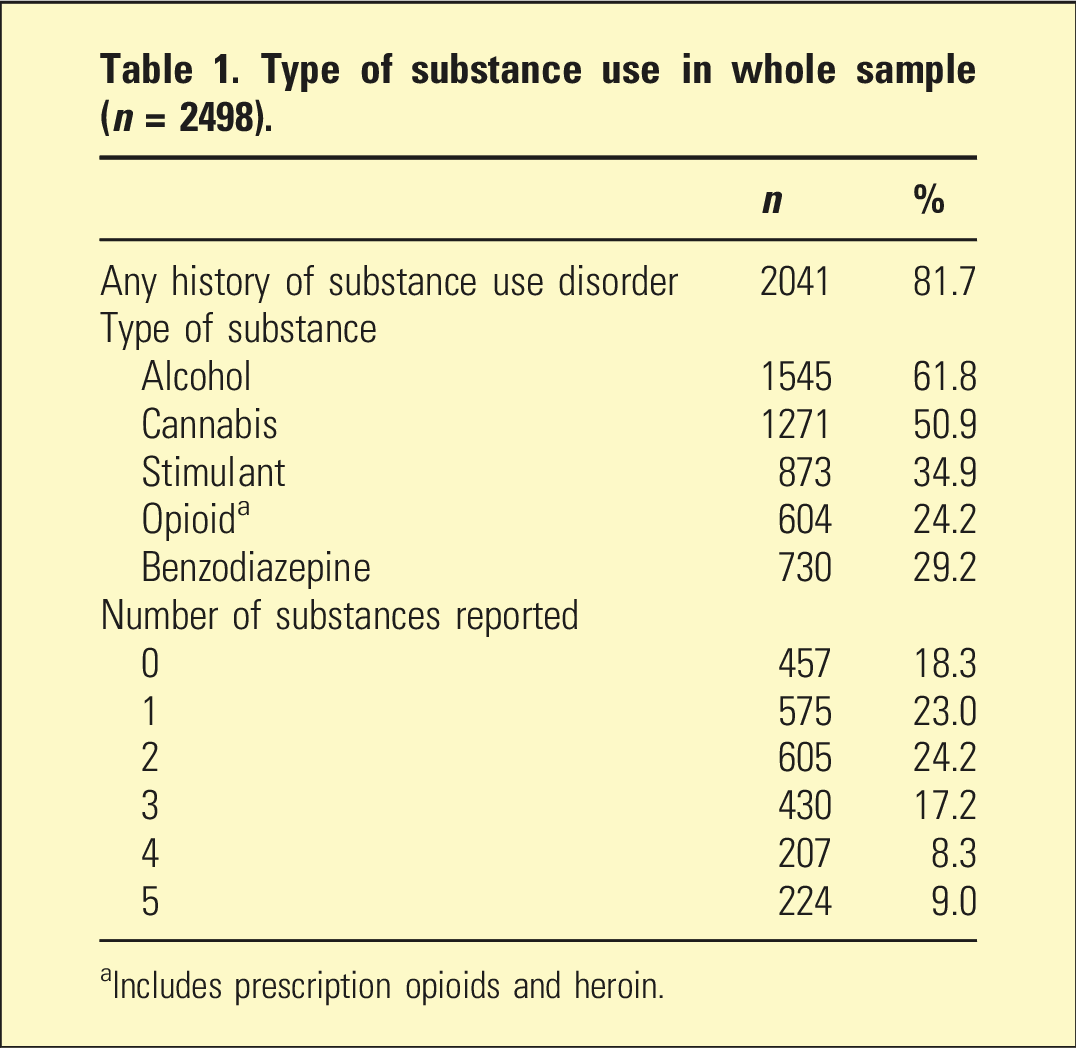
aIncludes prescription opioids and heroin.
Comparison of demographic and clinical characteristics in non-users, single substance use and polysubstance use.
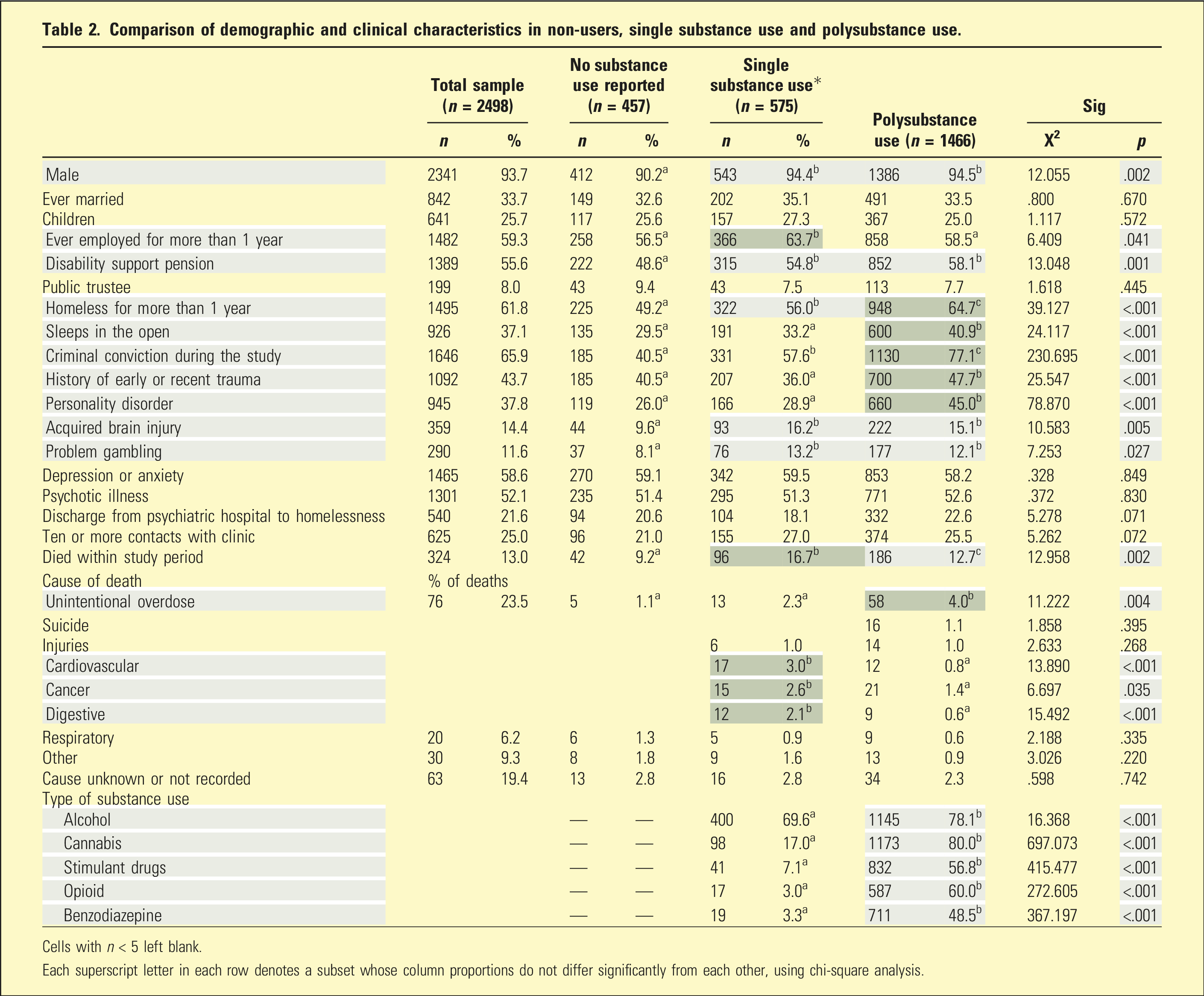
Cells with n < 5 left blank.
Each superscript letter in each row denotes a subset whose column proportions do not differ significantly from each other, using chi-square analysis.
Multivariable logistic regression of factors associated with substance use.
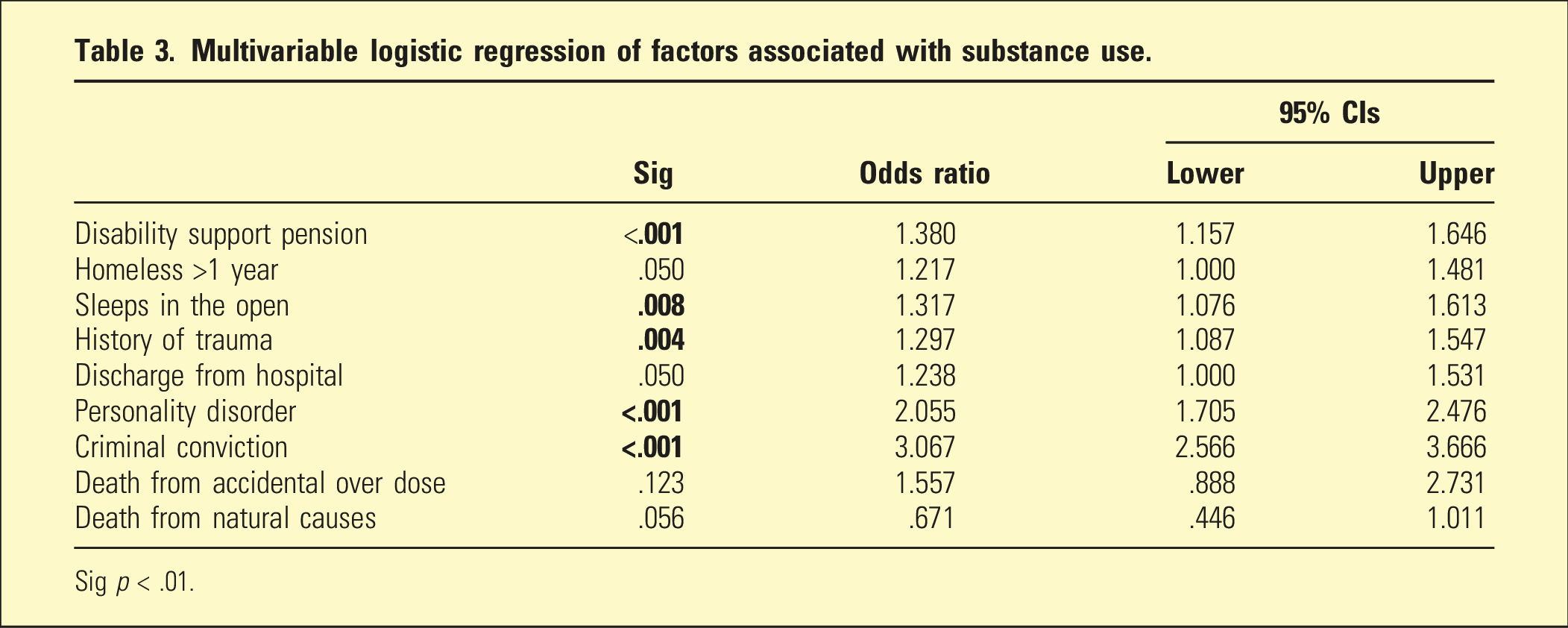
Sig p < .01.
Discussion
This study of a large sample of predominantly male attenders of clinics performed at hostels for the homeless found that 81.7% had a past or current substance use disorder, and that the majority of those (71.8% of substance users) reported the use of two or more substances. This proportion is higher than the range reported in a study comparing mental disorder among homeless people in high income countries 1 and is much higher than the rates reported in a study of a similar population conducted in 1999 2 and by the proportion of 8.6% of all homeless people estimated by the AIHW. 10 The higher proportion found in this study might be in part due to the different methodology, which included more detailed observations that were possible through regular contact with the clinics, as most of the sample had been seen more than once and nearly a quarter had been seen on more than ten occasions. However, the results also suggest an increase in the proportion of substance use among the homeless in the 20 years since the last study.
The study confirmed the changes in the patterns of substance use over the last 20 years reported by the AIHW surveys, with a marked increase in the use of stimulant drugs and the abuse of benzodiazepine medication, and also the more ubiquitous use of cannabis. The use of opioids was stable, although the experience from the clinics was of a reduction in the regular use of heroin and an increase in the abuse of prescription opioids, especially among polysubstance users. The study also confirms the high propensity to other forms of addiction in homeless populations, as around 85% of the sample were daily tobacco smokers 11 around 12% reported problem gambling 12 and a high proportion had obesity and metabolic disorder, despite low income. 13
Substance use, especially polysubstance use, was associated with more severe disability, despite being more likely to have been employed for more than a year, with significantly higher proportions in receipt of the Disability Support Pension and being more likely to be homeless for more than a year and to sleep in the open. Those outcomes are an understandable consequence of prioritising substance use over rent. Polysubstance users were also far more likely to have a criminal conviction during the study period, and hence attract a diagnosis of antisocial personality disorder, both because of illegal activity to obtain money for drugs, but also because of drug possession, behaviour arising from intoxication, and being more visible to the police as a result of living in the open. 14
Substance use has been described as both a cause and a consequence of homelessness, 15 with substance use known to result in the loss of employment and tenancy and the breakdown in relationships, and because being homeless is demoralising, increasing the attraction of mind altering substances, and being homeless often results in exposure to a substance using milieu. 15 Because of the high prevalence of substance use, and the high exposure to substance use among clinic attenders, nearly every clinic consultation included some degree of motivational interviewing to help attendees address addictions and other impediments to recovery. There is some evidence that a Housing First strategy results in a reduction in the use of alcohol and cannabis, 16 although the effect on all substance use reported in a review of four controlled trials was inconclusive. 17 The results of this study confirms the need for the integration of mental health, addiction treatment, and housing services.
The main strength of this study is the large sample and the detailed history available from many of the subjects, including in many cases copies of records from other health care agencies. However, the study has a number of limitations. The study only includes people who attended the clinics, and does not reflect the entire homeless population, or even all those who access the hostels. There were only a small number of women, despite women making up a significant and increasing proportion of people defined as homeless, and the sample was too small to report on changes in patterns of substance use in homeless women. The study only reported the overall results from the 12 years of the study, and does not report on temporal trends in substance use in that time, for example, the effect of the more recent restriction in the availability of prescription benzodiazepine medication. A further limitation was the absence of housing data including information on patterns of substance use during the Covid period, when many of the sample were temporarily housed, which might have shown the effect of a housing first approach on substance use.
Conclusion
This study reports disturbingly high rates of substance use among people who attend clinics at homeless hostels in Sydney, and the high level of disability associated with severe substance use. The results confirm the need for comprehensive programs that address both substance use and other causes of homelessness. Contact with the clinics provided an opportunity for collaborative intervention with the Housing Department and housing advocacy services to secure housing and the integration of treatment for mental illness and substance use.
Footnotes
Acknowledgements
The authors wish to acknowledge the homeless clinic clients and to thank the NSW Ministry of Health for providing access to the NSW ED, ambulatory mental health contact, hospitalisation and mortality data, and the CHeReL for conducting the record linkage.
Author contributions
Kirra Solteberck initiated the study and prepared the first draft. Lauren Staples and Rebecca Mitchell cleaned the data and performed statistical analyses, and reviewed the draft. Nicholas Burns collected data and reviewed the manuscript. Logan Woodman reviewed the manuscript. Olav Nielssen conceived the study, collected data, obtained ethical consent and prepared the final draft. All authors reviewed a near complete draft of the paper.
Disclosure
The author(s) declared the following potential conflicts of interest with respect to the research, authorship, and/or publication of this article: Professor Nielssen has received payment for participation in a Jansen advisory board. The remaining authors declare that there is no conflict of interest.
Funding
The author(s) disclosed receipt of the following financial support for the research, authorship, and/or publication of this article: The study was assisted by an Investigator Initiated Research Grant From Janssen.
